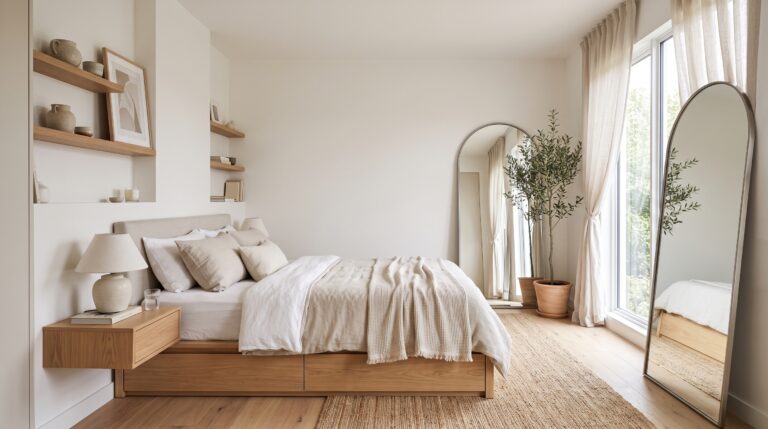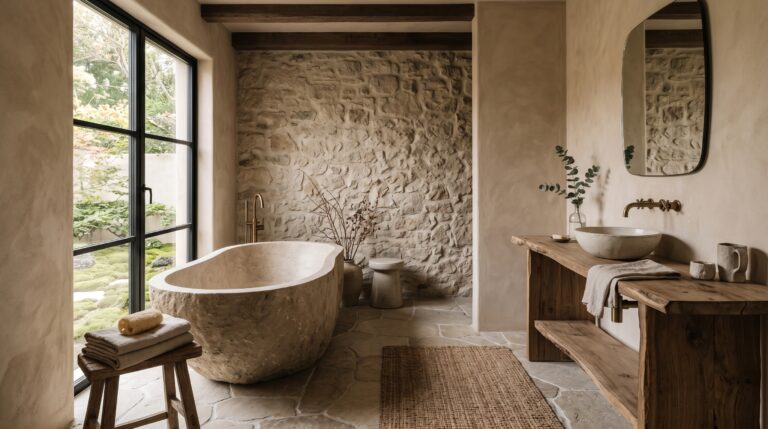
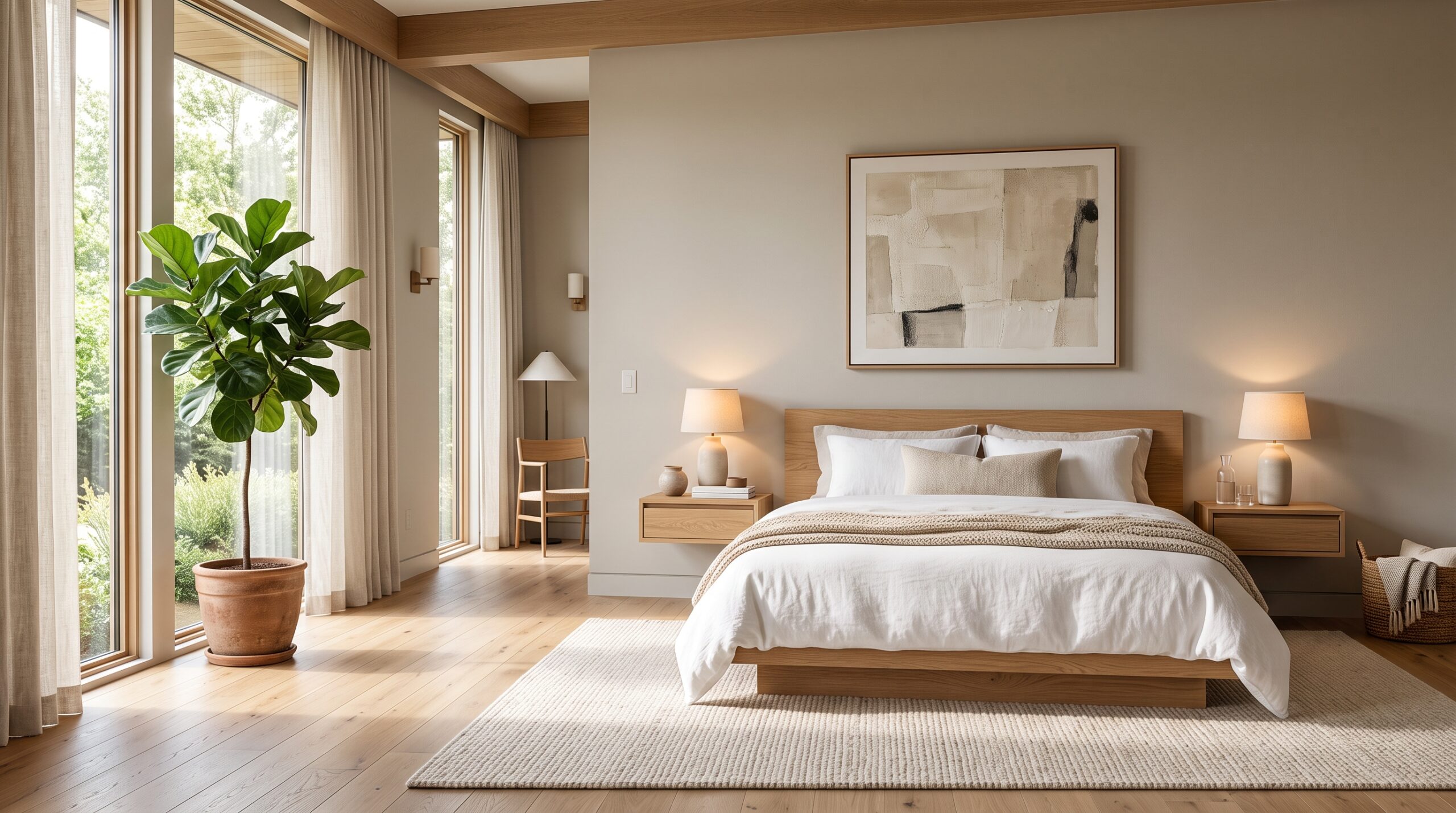
Your bedroom should feel like an exhale, not another item on your to-do list. Yet so many bedrooms end up crowded with furniture, decor, and half-finished projects that quietly work against rest. 22 minimalist bedrOOM ideas for a calm and stylish space design offers a different path: fewer things, chosen more carefully, arranged with intention. The result isn’t a cold or empty room — it’s a warm, breathable retreat where every object earns its place.
Interestingly, the appeal of a pared-back bedroom isn’t just aesthetic. Research from Princeton’s Neuroscience Institute suggests the brain struggles to filter out competing visual information, and the more objects present in a space, the harder it has to work to block them out — a strain that builds up over time and can reduce overall focus. In other words, a cluttered bedroom doesn’t just look busy — it can make it genuinely harder to relax and unwind. You can read more about this research from Princeton Alumni Weekly.
The good news is that you don’t need a total renovation or a designer’s budget to get there. Minimalist bedrooms are, by definition, achievable — they rely far more on editing and intention than on spending. Swapping a cluttered nightstand for a bare one costs nothing. Choosing one meaningful piece of art instead of five mismatched frames costs less than buying all five in the first place. The philosophy rewards restraint, not renovation.
It also helps to think of minimalism as a spectrum rather than an all-or-nothing rule. Some people want a nearly bare room with a bed, a lamp, and little else. Others want warmth, texture, and a few personal touches layered over a simple foundation. Both are valid versions of minimalist design — the common thread is that nothing in the room is there by accident.
Below are 22 practical, easy-to-apply ideas for building that kind of restful room, whether you’re starting from scratch, moving into a new space, or slowly editing down what you already have. Use them individually or combine several at once; even adopting three or four will noticeably change how the room feels.
22 Minimalist Bedroom Ideas for a Calm and Stylish Space
1. Anchor the Room in a Neutral Palette
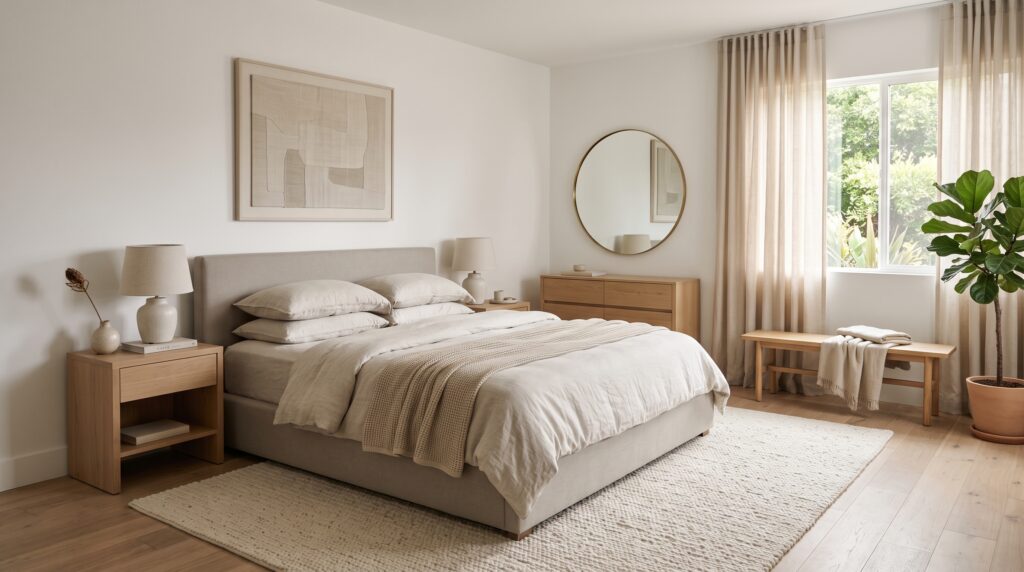
Soft whites, warm greige, oatmeal, and gentle taupe tones make a bedroom feel open and unhurried. Because these shades don’t compete for attention, they let the architecture, light, and textures of the room take center stage instead of the color itself. If an all-neutral room feels flat to you, introduce depth through slightly varied undertones — a warm white wall against a cooler white ceiling, for example — rather than reaching for a bold accent color. This keeps the palette cohesive while still giving the eye something subtle to notice.
2. Go Low with Your Bed Frame
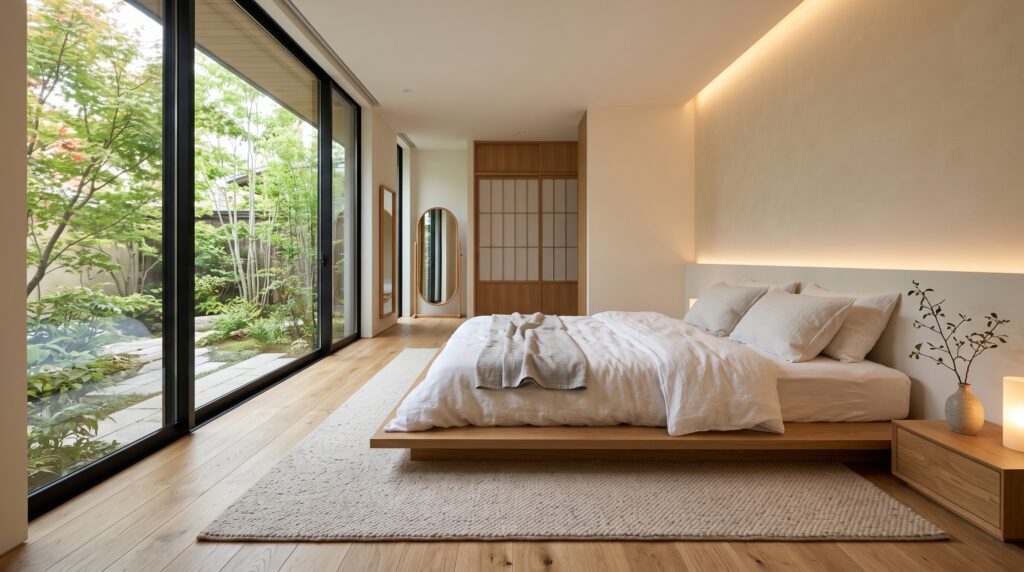
A platform bed sitting close to the floor gives a room a grounded, horizontal line that reads as calm rather than heavy. It also tends to make ceilings feel taller and rooms feel roomier, especially useful in smaller bedrooms. Look for frames without a tall footboard or ornate headboard carving — the simpler the silhouette, the more the bed recedes into the background rather than dominating the space visually.
3. Simplify Your Nightstands
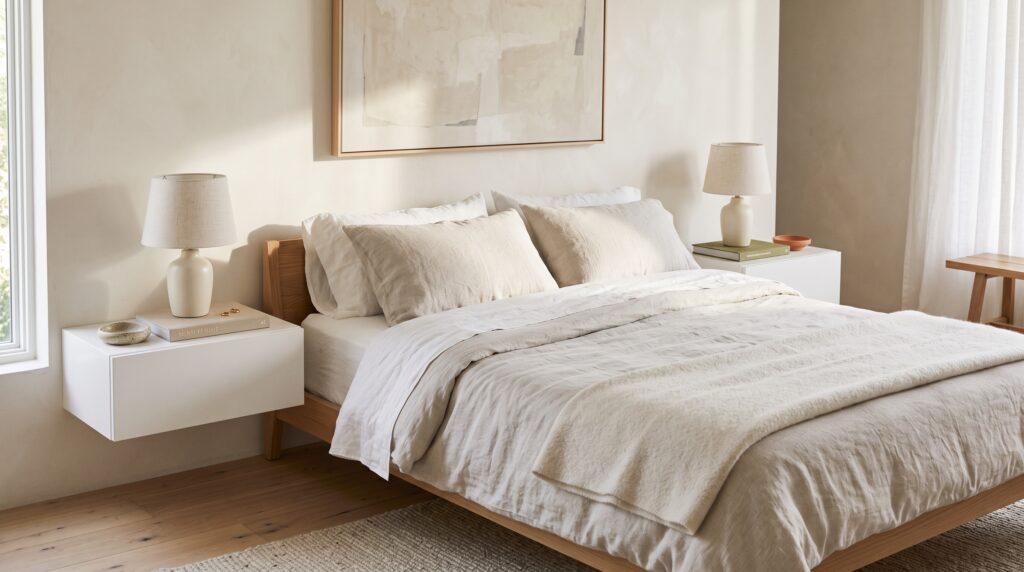
Pick nightstands with clean edges and no ornate hardware. A lamp, a book, maybe a small dish for jewelry — that’s enough. The fewer decisions your eyes have to make when you glance at them, the calmer the space feels. If you tend to accumulate chargers, tissues, or lip balm on top, choose a nightstand with a drawer specifically so those items have a home out of sight rather than living permanently on the surface.
4. Bring in Natural Wood
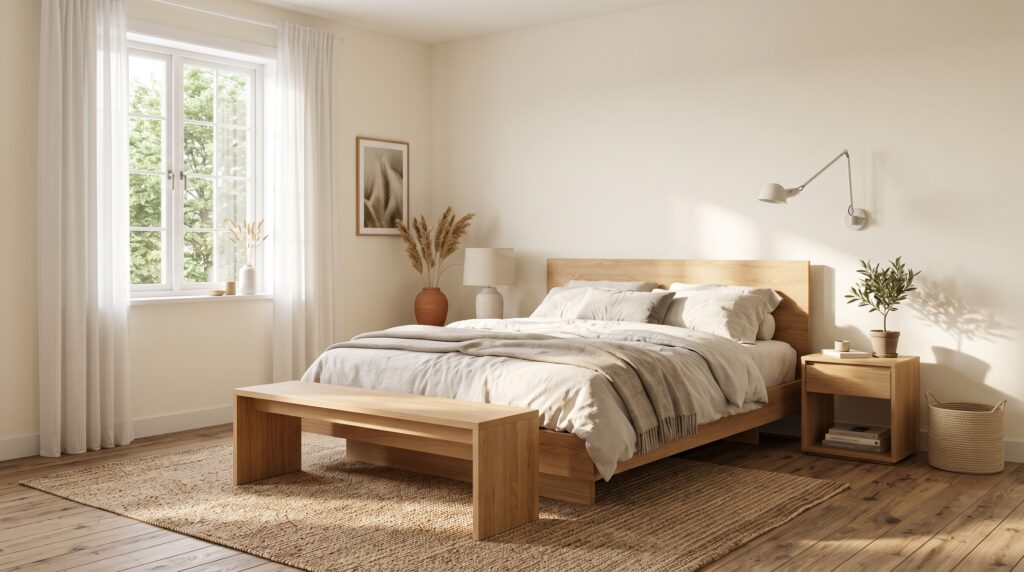
Pure white-on-white can feel sterile. Warm, unfinished, or lightly stained wood — in a headboard, a bench, or a side table — softens the palette and keeps minimalism from tipping into starkness. Even one wood element, like a single oak nightstand against white walls, is often enough to make a neutral room feel inviting rather than clinical.
5. Dress the Bed in White or Off-White Linens
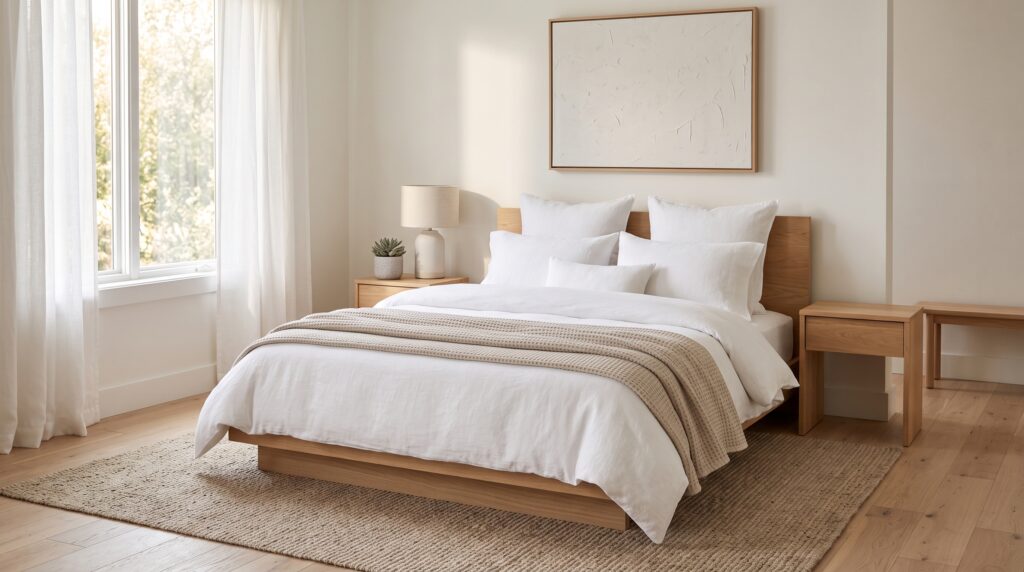
Crisp white bedding reads as fresh and hotel-like, and it pairs effortlessly with almost any other color in the room. If pure white feels too clinical, ivory or oatmeal linen gives the same simplicity with more warmth. Stick to one or two layers — a duvet and a single throw — rather than piling on decorative pillows, so the bed still looks inviting rather than staged.
6. Swap Bulky Storage for Floating Shelves
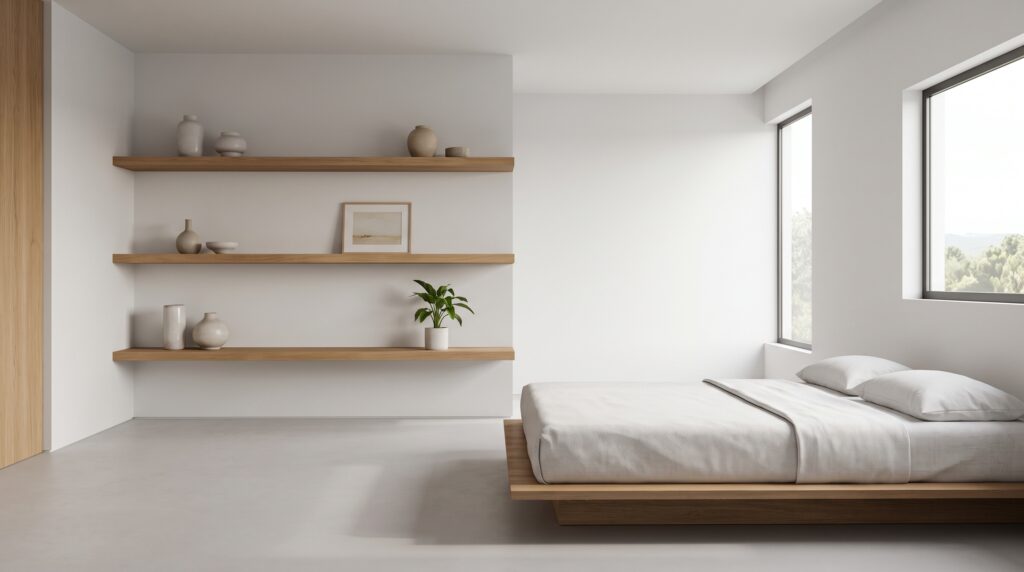
A wall-mounted shelf holding two or three objects does more for the room than a heavy bookcase crammed with knick-knacks. Floating shelves also keep the floor visually open, which makes the whole room feel bigger. Group items by height and leave visible gaps between them — a shelf that’s only two-thirds full often looks more intentional than one that’s completely styled.
7. Prioritize Warm, Soft Lighting
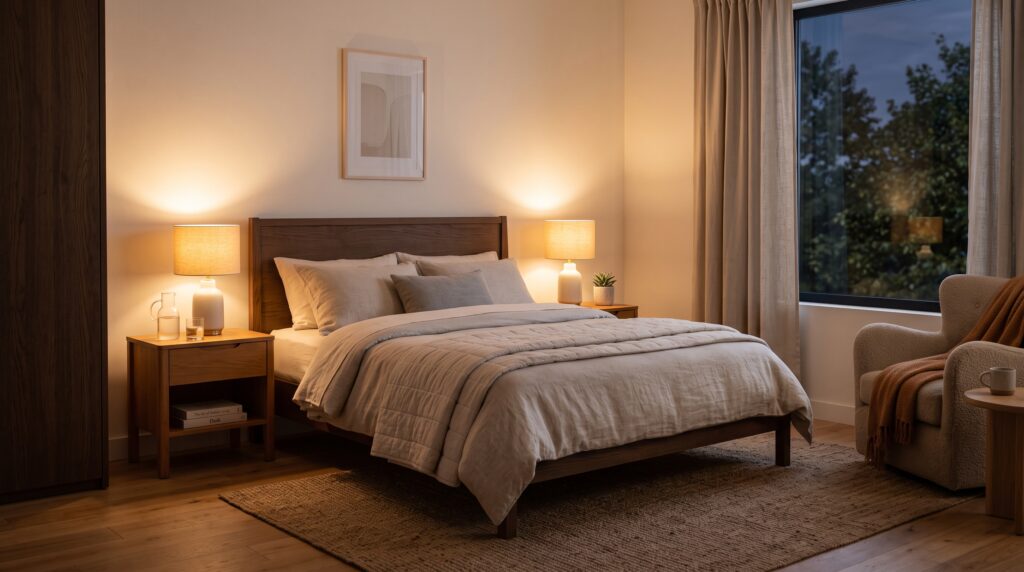
Skip harsh overhead lighting in favor of a bedside lamp, a wall sconce, or a simple pendant with a warm bulb. Lighting sets the emotional temperature of a bedroom more than almost any other element. Look for bulbs in the 2700K–3000K range, which mimic candlelight, and avoid multiple light sources competing at different brightness levels in the same room.
8. Hide What You Can
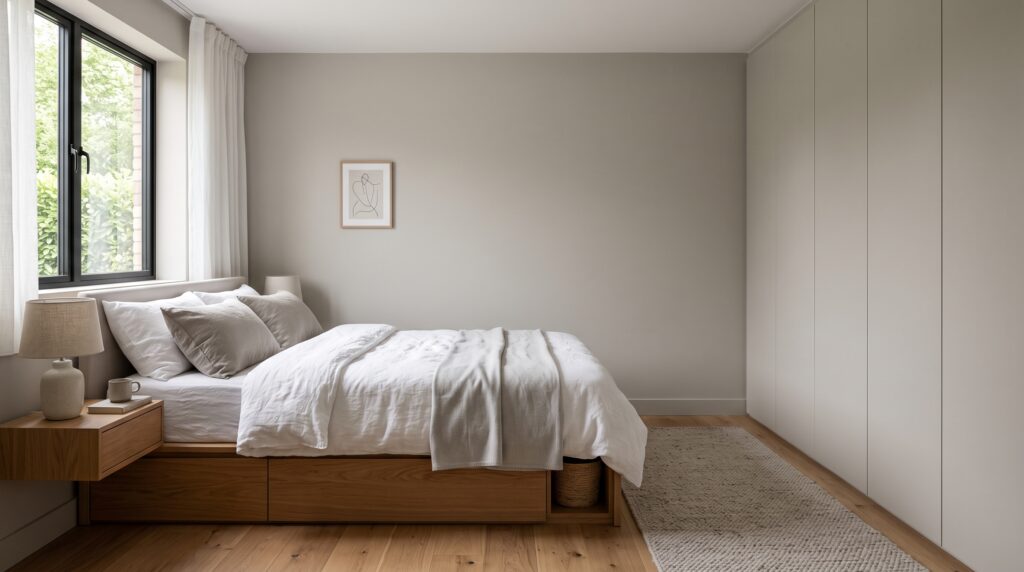
A storage bed with drawers underneath, a built-in wardrobe, or a simple closet system keeps daily items out of view. The goal isn’t to own less (though that helps) — it’s to make sure what you do own isn’t visible all the time. Under-bed storage bins, closed baskets, and cabinet doors all do the same job: they let a room stay functional without looking busy.
9. Edit Your Decorative Objects
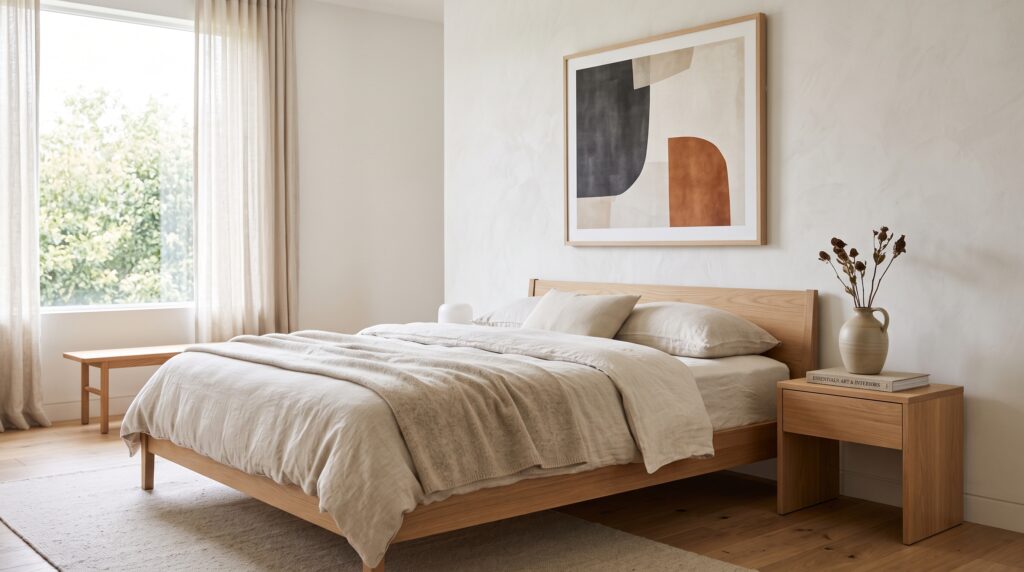
Instead of a shelf full of trinkets, choose two or three pieces that genuinely mean something to you. A single ceramic vase or one framed photo has more presence when it isn’t competing with a dozen other small items. A useful test: if you removed an object and wouldn’t notice its absence within a week, it probably doesn’t need to be on display.
10. Hang Curtains Floor to Ceiling
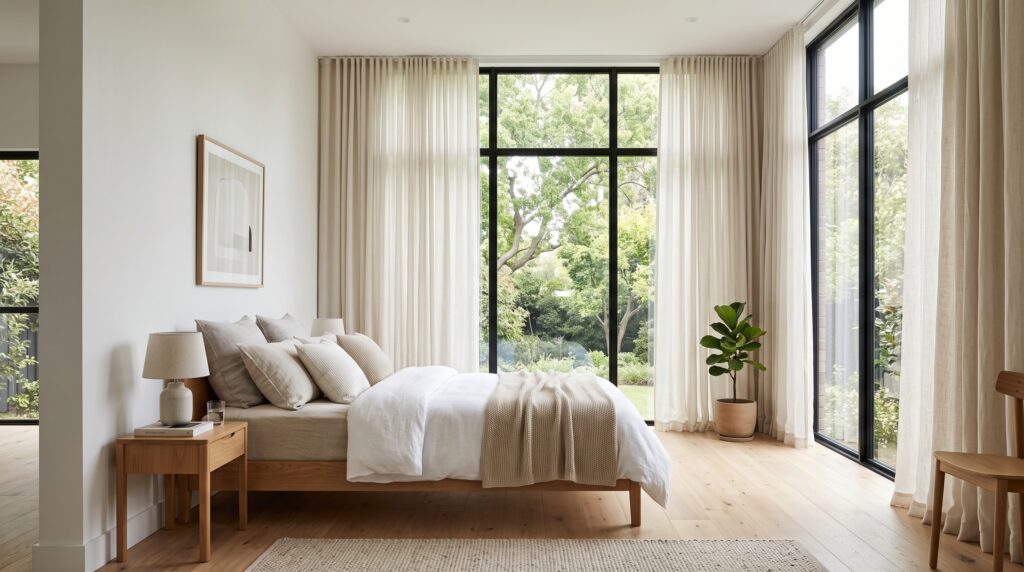
Long curtains mounted close to the ceiling — rather than just above the window frame — draw the eye upward and make the whole room feel taller and more elegant. Stick to a solid, neutral fabric. Let the panels graze or slightly pool at the floor rather than hovering above it; this small detail makes curtains look intentional instead of undersized.
11. Try a Monochromatic Color Story
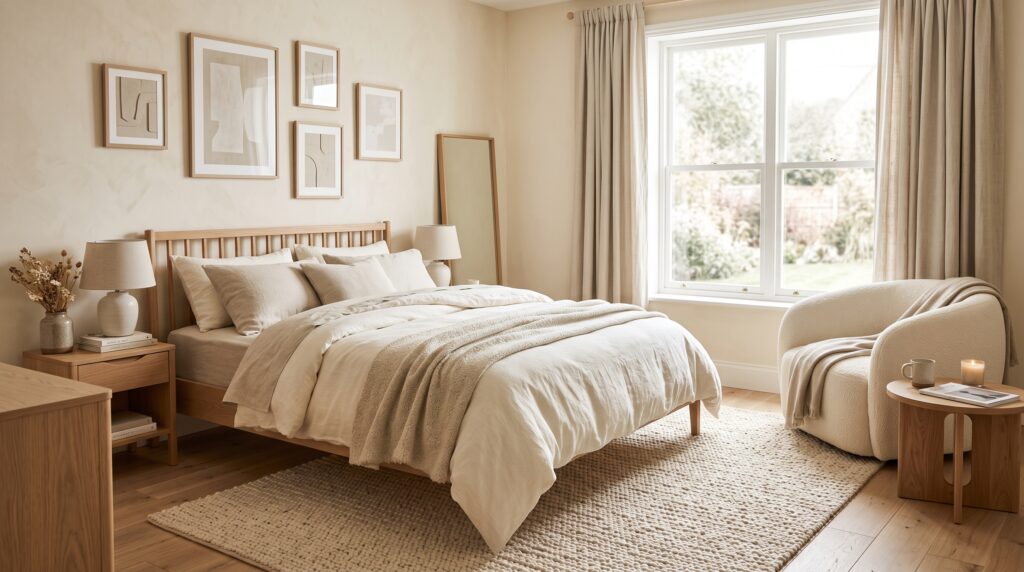
Layering different shades and textures of a single color family — ivory, oatmeal, and soft camel, for instance — creates depth without introducing visual noise. It’s one of the easiest ways to make a room feel curated, and it works especially well when you combine a few different materials, such as linen, wood, and ceramic, within that same tonal range.
12. Let the Headboard Do the Talking
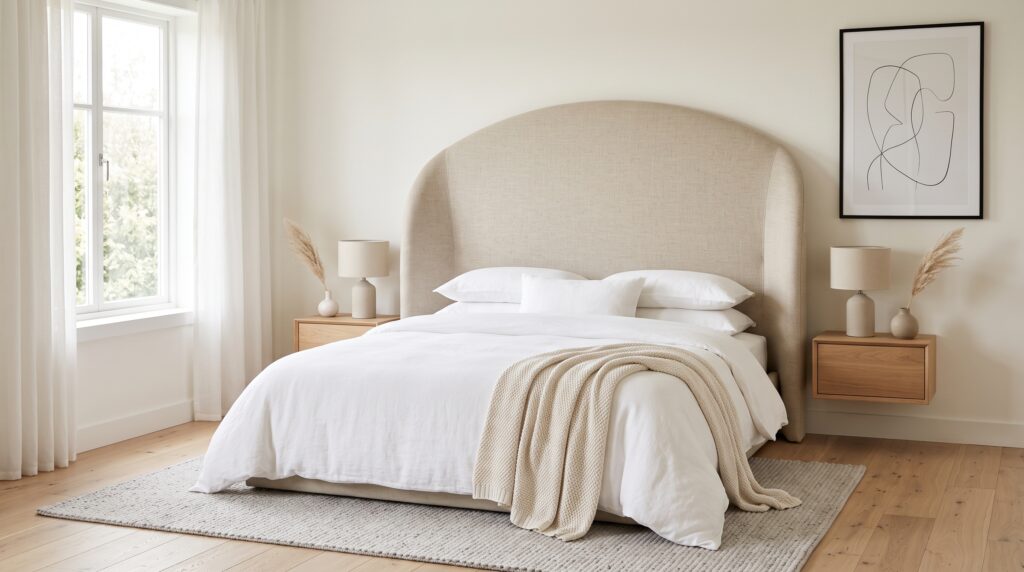
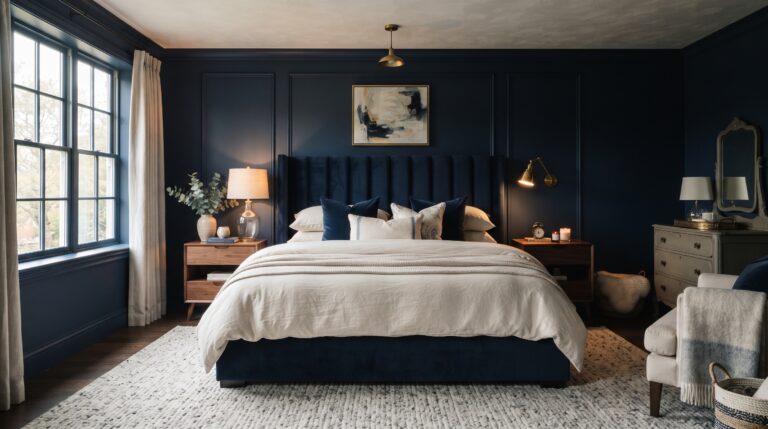
If you want one statement piece, make it the headboard. An upholstered, curved, or wood-paneled headboard can anchor the whole room’s style while everything else stays quiet. Because it sits directly behind where your eyes rest each night, it has an outsized influence on how calm the room feels, even when nothing else in the space is particularly bold.
13. Choose One or Two Large Art Pieces
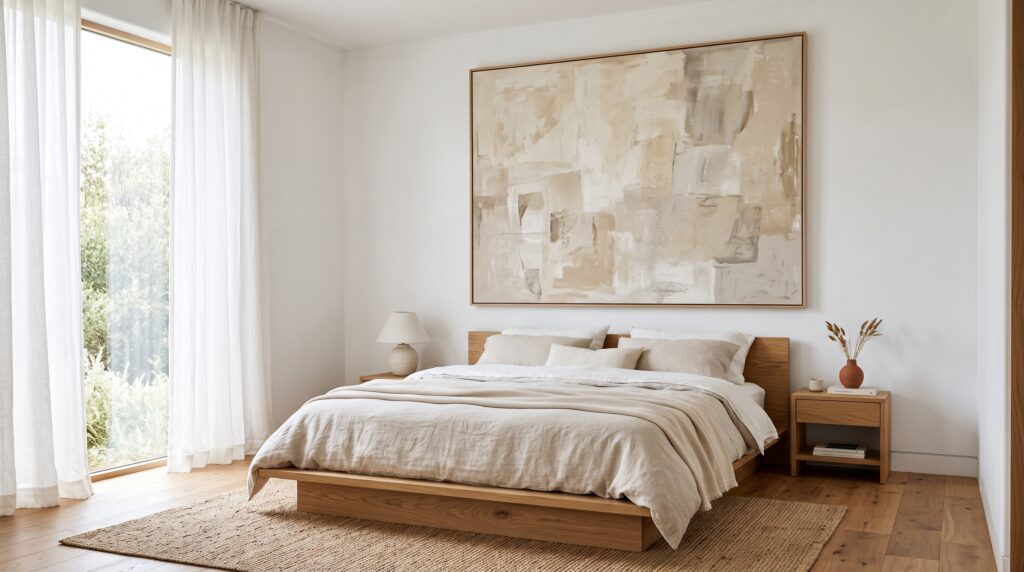
A single oversized print or painting has more impact — and creates far less visual clutter — than a wall covered in smaller frames. Let it breathe with plenty of empty wall space around it. If you’re drawn to a gallery-wall look instead, keep the frames uniform in color and matting so the grouping reads as one cohesive piece rather than several competing ones.
14. Add a Plant or Two
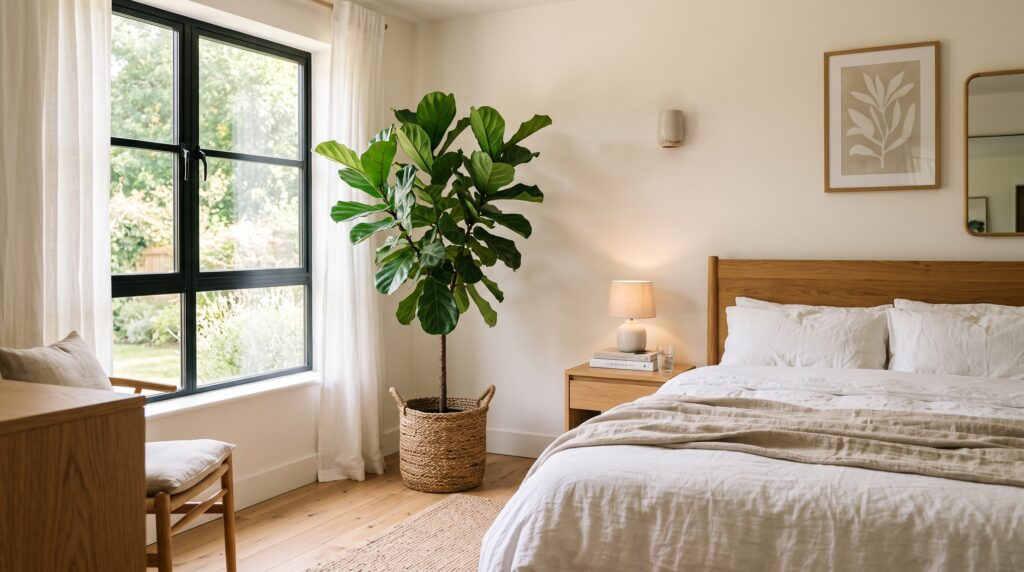
A fiddle leaf fig, snake plant, or small potted olive tree brings life and a touch of organic irregularity into an otherwise clean-lined room. One or two well-placed plants go further than a windowsill full of them. Choose a low-maintenance variety if your bedroom gets limited natural light, so the plant stays a source of calm rather than another thing to worry about.
15. Layer in Texture Through Bedding
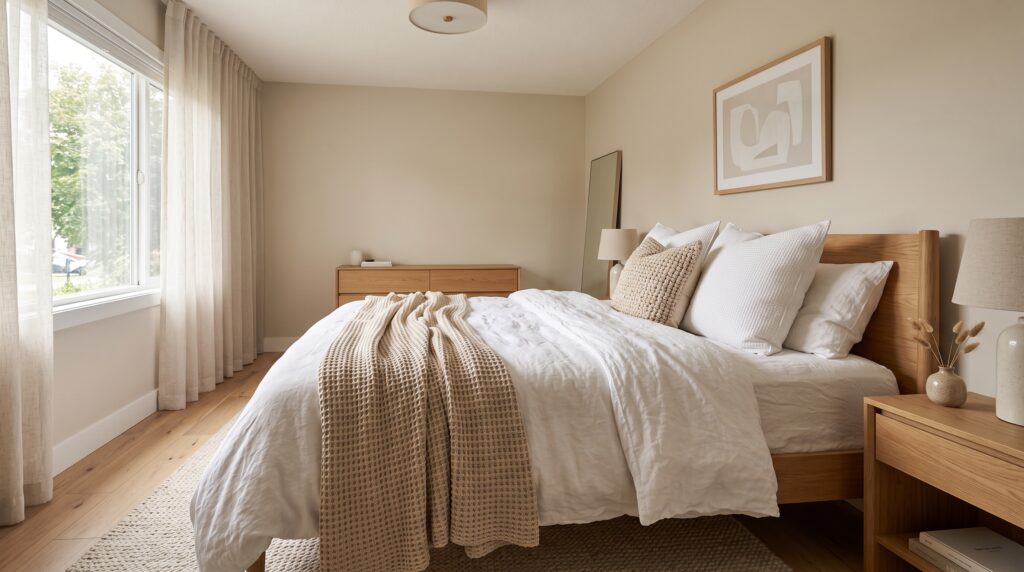
Linen, waffle-knit throws, and cotton textures add richness to a neutral room without adding “stuff.” Texture is minimalism’s best friend — it creates interest through touch rather than through more objects. Mixing two or three textures within the same tonal range, like a linen duvet paired with a chunky knit throw, keeps the bed feeling layered rather than flat.
16. Choose Furniture That Multitasks
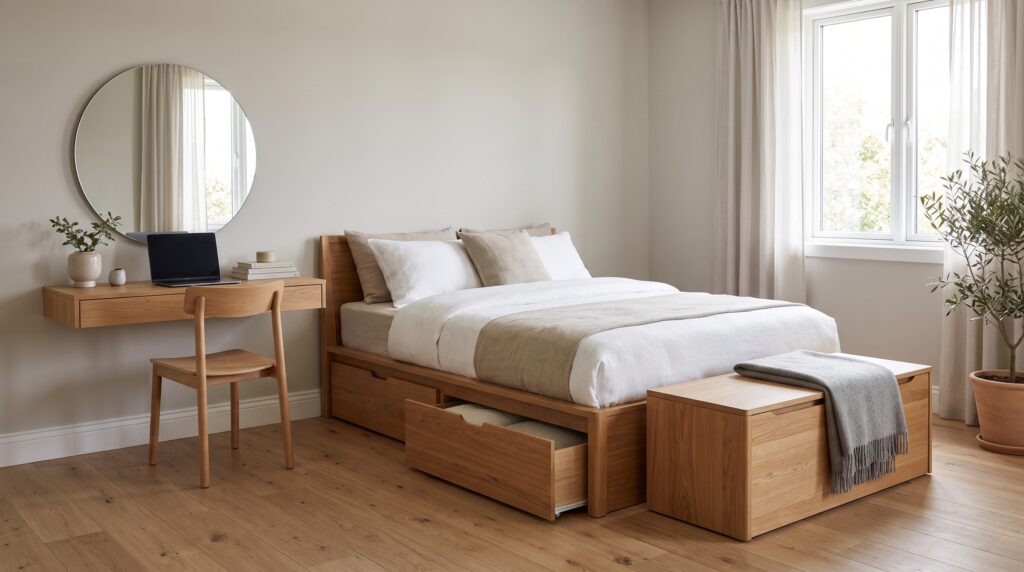
A bench that stores blankets, a nightstand with a hidden drawer, or a bed frame with built-in storage lets you keep the room functional without adding extra pieces of furniture. Before buying anything new, ask whether a single piece could realistically replace two — a desk that also works as a vanity, for example, or an ottoman that doubles as extra seating and storage.
17. Add a Simple Bench at the Foot of the Bed
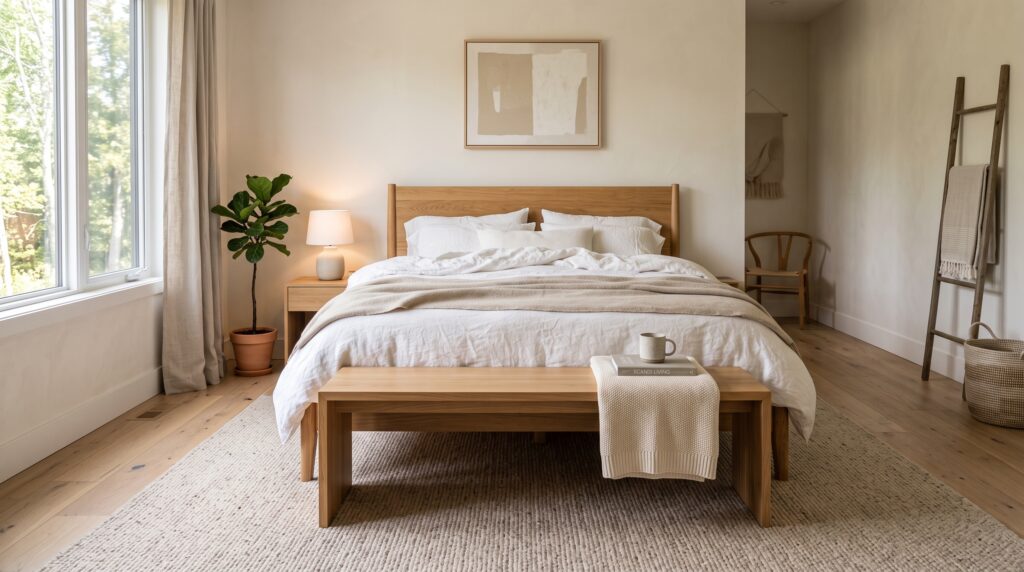
Beyond function — a place to sit while putting on shoes or to fold a throw blanket — a low bench adds a subtle horizontal line that echoes the platform bed and keeps the room feeling composed. Choose one in a material that complements your existing wood tones rather than introducing a new finish into the room.
18. Let Architecture Be the Decoration
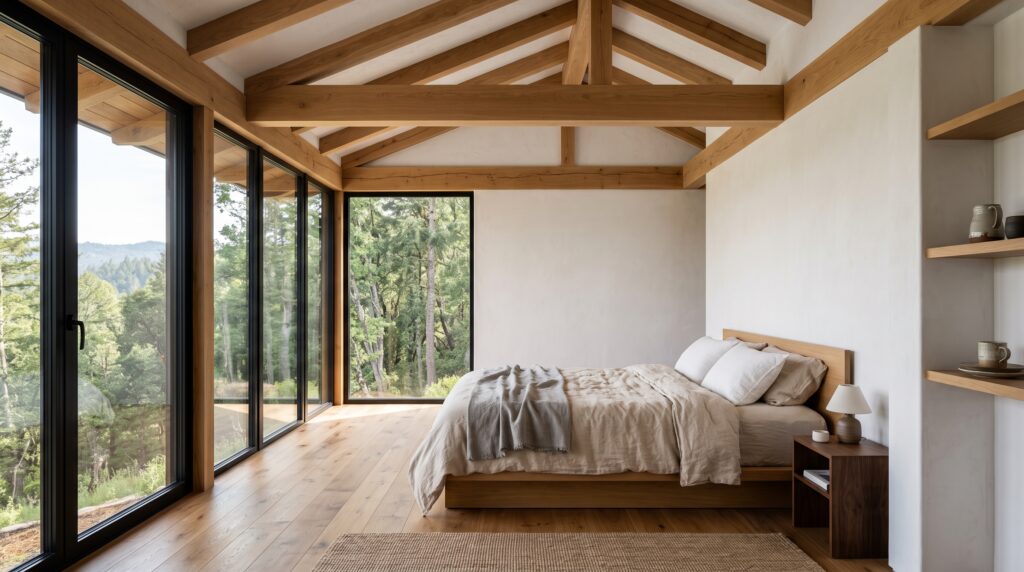
If your room has exposed beams, tall windows, or interesting molding, let those features stand out instead of covering them up. Minimalist design often means decorating less so the bones of the room can shine. Even something as simple as leaving a window uncovered, or painting trim the same color as the wall, can draw more attention to a room’s natural character than any added decor could.
19. Use Mirrors to Expand the Space
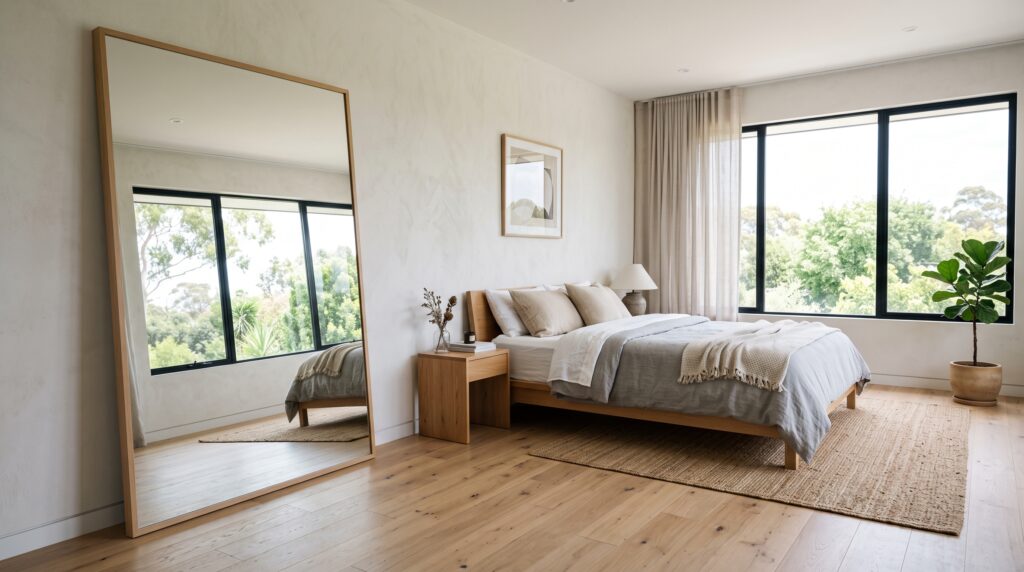
A well-placed mirror bounces natural light around the room and makes it feel larger, all without adding visual weight. A single large mirror leaning against a wall often works better than several small ones, especially when it’s positioned to reflect a window or an otherwise plain stretch of wall.
20. Keep the Flooring Understated
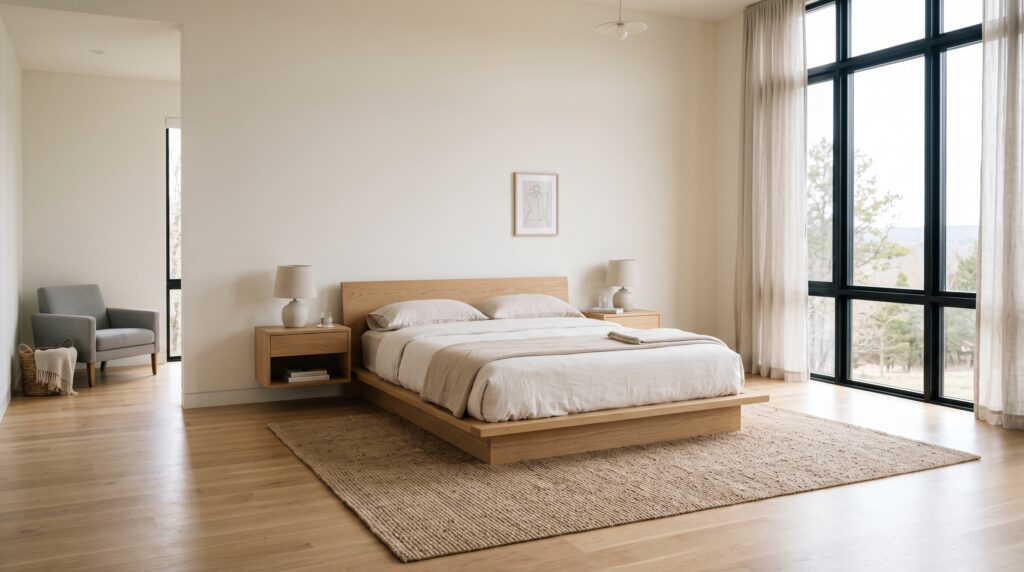
Light wood, matte finishes, or a simple neutral rug create a calm foundation. Busy patterns on the floor pull focus away from the rest of the room’s simplicity. If you want a rug with some visual interest, choose one with subtle texture rather than a bold print, so it adds warmth underfoot without competing with everything above it.
21. Leave Breathing Room in the Layout
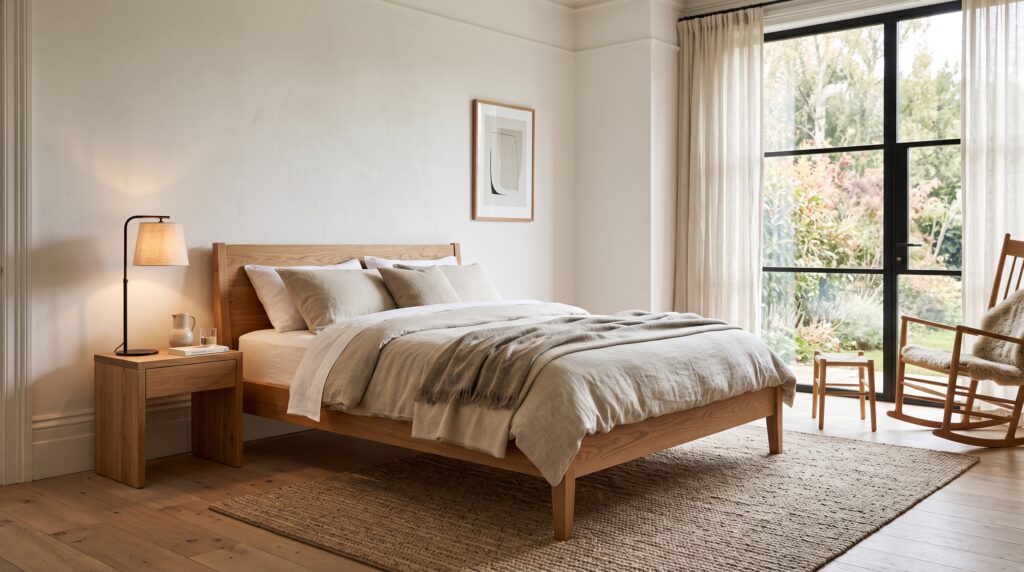
Resist the urge to fill every wall. Empty space is not wasted space in a minimalist bedroom — it’s what makes the room feel restful instead of packed. Give your furniture room to breathe, and avoid pushing every piece flush against a wall out of habit; a little distance between furniture and the walls can actually make a small room feel larger.
22. Buy Fewer, Better Things
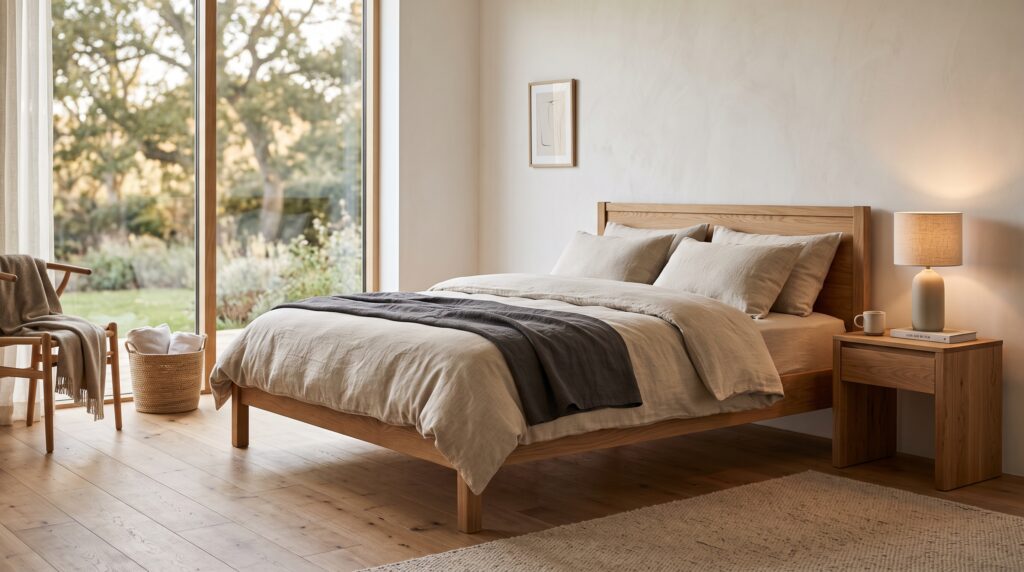
Perhaps the most important principle of all: one well-made chair or a durable, timeless bed frame will serve you — and the room — far better than five inexpensive, disposable pieces. Quality over quantity is the backbone of lasting minimalist design, and it tends to save money in the long run, since well-made furniture rarely needs replacing.
Frequently Asked Questions
Does a minimalist bedroom have to be all white? No. White is a popular starting point because it feels clean and reflects light well, but minimalist bedrooms can just as easily lean warm, with tones like camel, terracotta, or deep sage, as long as the palette stays limited and cohesive rather than scattered across many competing colors.
Is minimalist design expensive to achieve? Not necessarily. Much of minimalist design is about removing and editing rather than buying. A few of the ideas above — decluttering a nightstand, taking down extra wall art, rearranging furniture to open up the layout — cost nothing at all. Where spending is involved, the philosophy actually favors fewer, longer-lasting purchases over frequent, cheaper ones.
How do I start if my bedroom already feels cluttered? Begin with one surface at a time rather than tackling the whole room at once. Clear a nightstand completely, then add back only what you use daily. Once that feels manageable, move on to a shelf, then a closet. Small, consistent edits tend to stick better than one overwhelming overhaul.
Can a minimalist bedroom still feel cozy? Yes — in fact, that’s the goal. Minimalism isn’t about a bare, unwelcoming room; it’s about removing distractions so that the things you do include, like soft lighting, natural textures, and a comfortable bed, have more room to make an impact.
Bringing It All Together
A minimalist bedroom isn’t about deprivation — it’s about intention. Every item you keep should either serve a clear purpose or genuinely bring you joy when you see it. There’s no requirement to adopt all 22 ideas at once, and there’s no single “correct” version of a minimalist bedroom. Some rooms will lean nearly bare; others will keep a handful of personal touches layered over a simple, neutral base. What matters is that each choice is deliberate rather than accidental.
Start small: clear one nightstand, swap in warmer lighting, or edit your wall art down to a single piece. Notice how the room feels afterward, then decide what to change next. Momentum tends to build naturally once you see the difference even one or two changes can make.
Given how much our surroundings shape our ability to unwind — and the growing body of research on how visual clutter can tax the brain — a calmer bedroom isn’t just a passing design trend. It’s a genuinely restorative habit worth building, one simple, considered choice at a time.