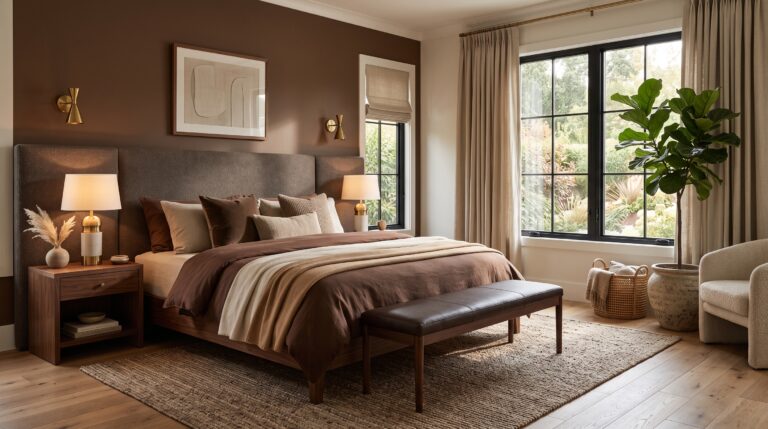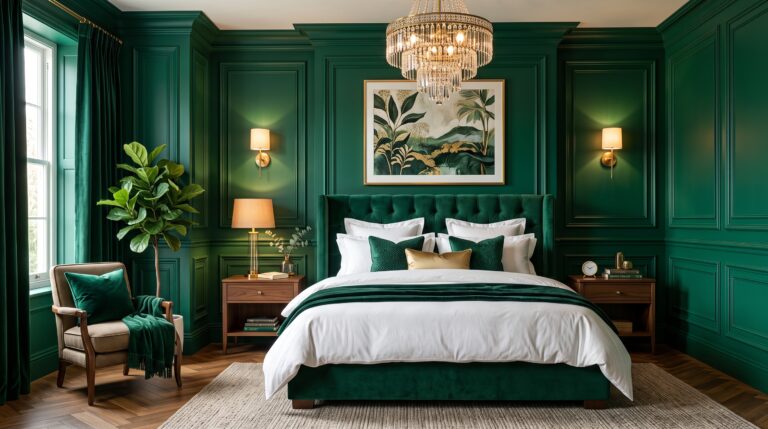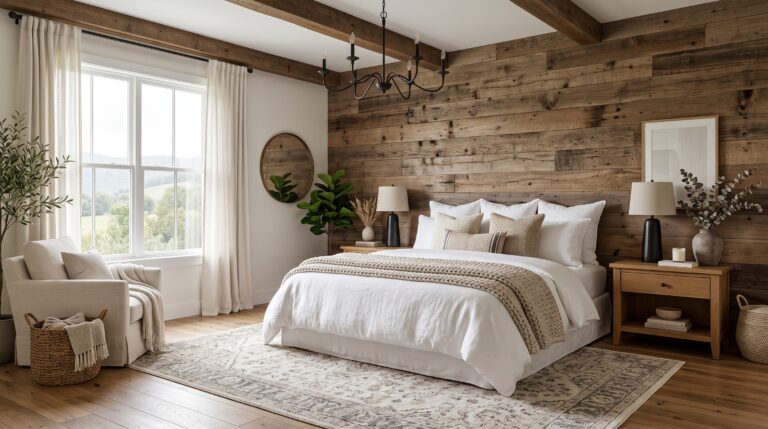
Living with a 22 creative small bedroom ideas for compact spaces bedroom often feels like a daily puzzle — where to put the clothes, how to fit a nightstand, whether a rug will make the room feel bigger or smaller. But a tight footprint doesn’t have to mean a cramped, cluttered, or uninspired room. With the right mix of layout choices, storage tricks, and lighting decisions, even a tiny bedroom can feel calm, open, and genuinely stylish.
The goal isn’t to squeeze more furniture into less space — it’s to make every square foot pull double duty while keeping the room visually light. Below is a complete roundup of ideas that interior designers return to again and again when working with compact rooms, from bed selection to wall treatments to the small finishing touches that tie everything together.
22 Creative Small Bedroom Ideas for Compact Spaces
Here’s the full list of design moves you can mix and match depending on your room’s shape, natural light, and storage needs.
1. Pick a Bed With Built-In Storage
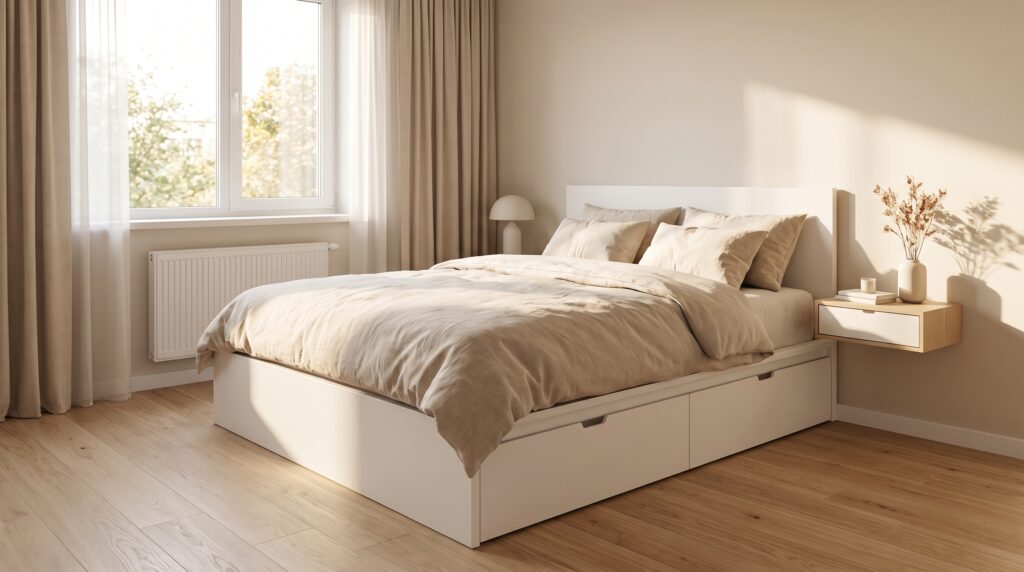
A platform bed with drawers underneath does the work of a dresser without eating up floor space. It’s one of the simplest swaps you can make, and it instantly gives you a home for out-of-season bedding, extra linens, or clothing you don’t need in daily rotation.
2. Swap Nightstands for Floating Shelves
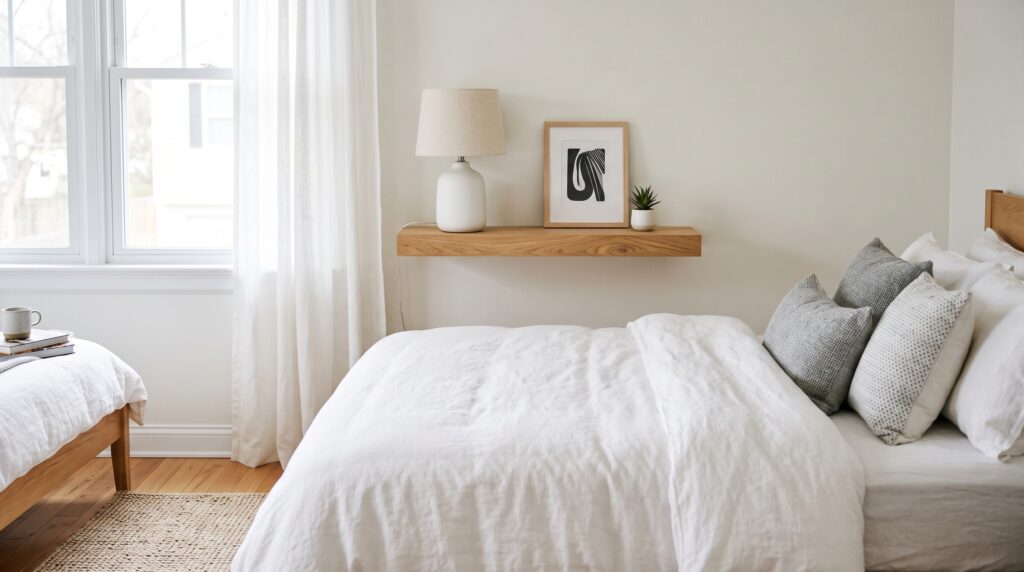
Wall-mounted bedside shelves keep the floor clear and make the whole room read as more open. You still get a spot for a lamp, a glass of water, and your phone charger — just without the bulky legs and drawers taking up visual space.
3. Go Vertical With Wall Storage
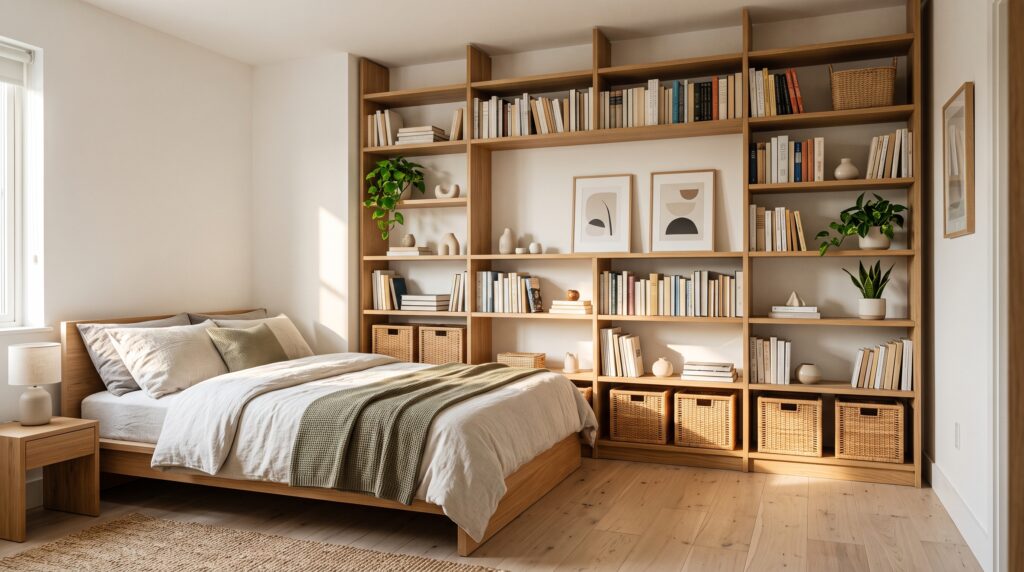
When floor space runs out, the walls are still wide open. Tall, narrow shelving units, pegboards, or slim cabinets that stretch toward the ceiling let you store far more without widening your furniture footprint. This is consistently one of the highest-impact changes for a tight room.
4. Hang Curtains Near the Ceiling
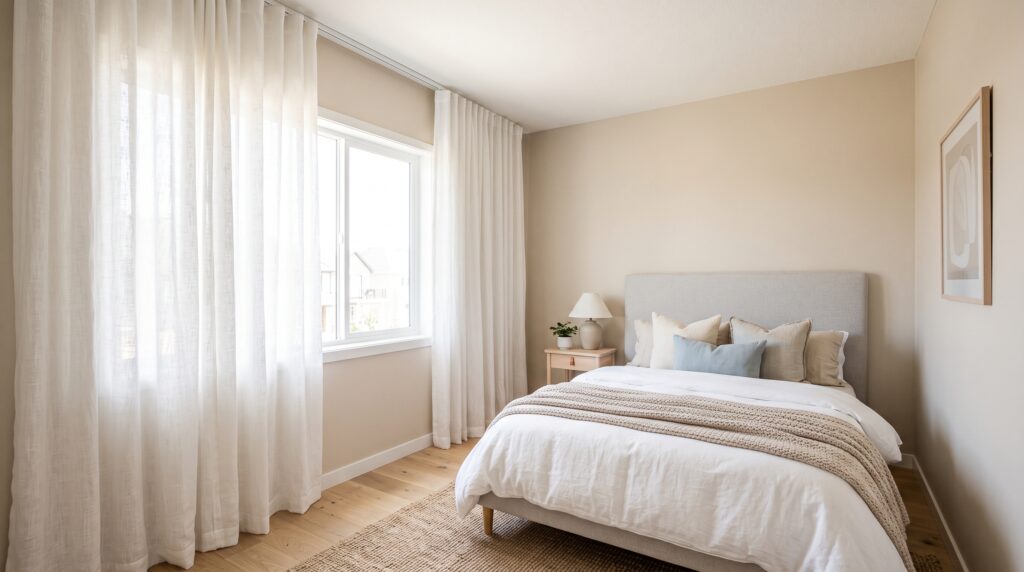
Mounting curtain rods a few inches below the ceiling — rather than directly above the window frame — tricks the eye into reading the walls as taller. It’s a nearly free change that makes a real difference in how spacious the room feels.
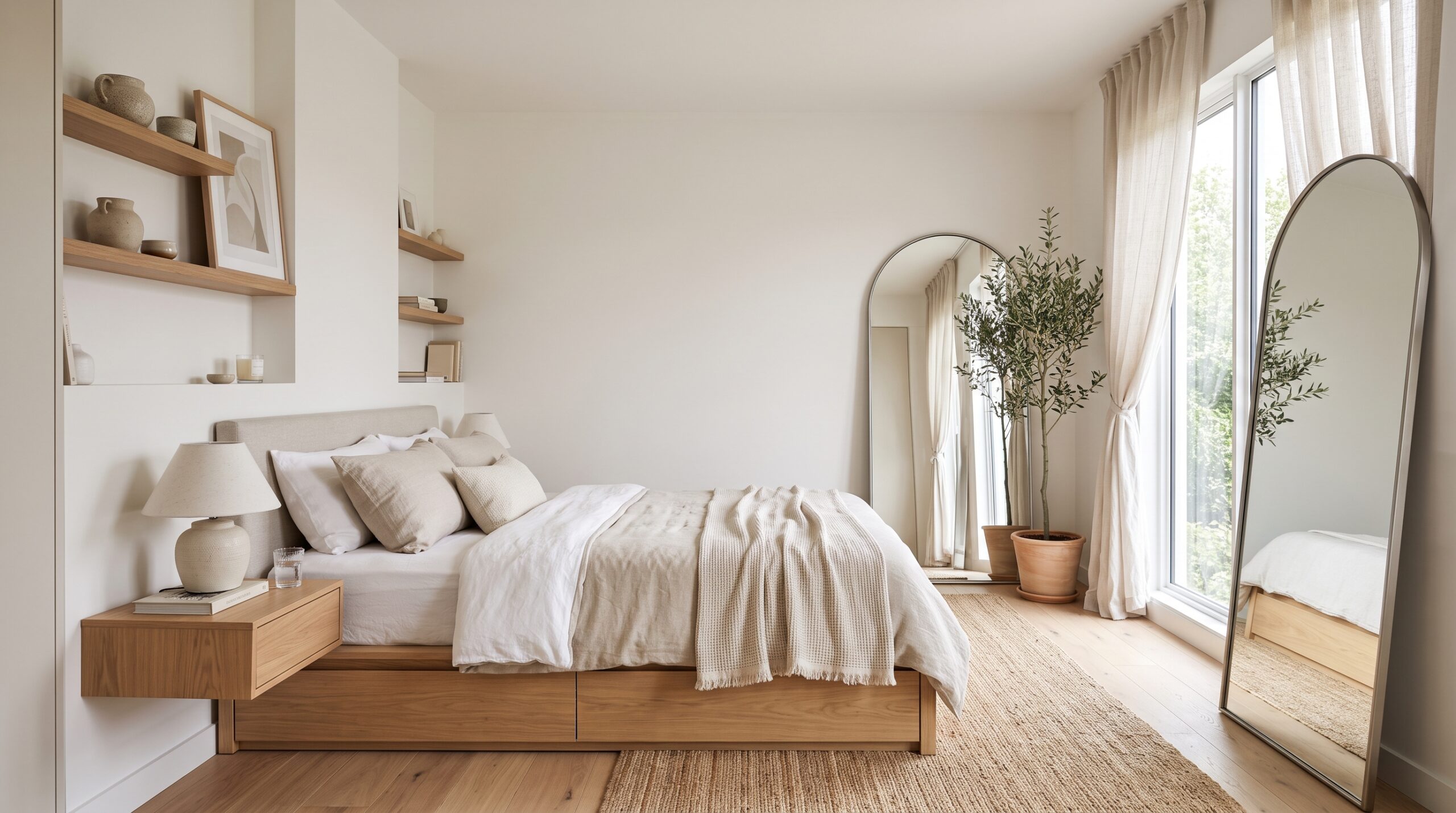
5. Lean an Oversized Mirror Against a Wall
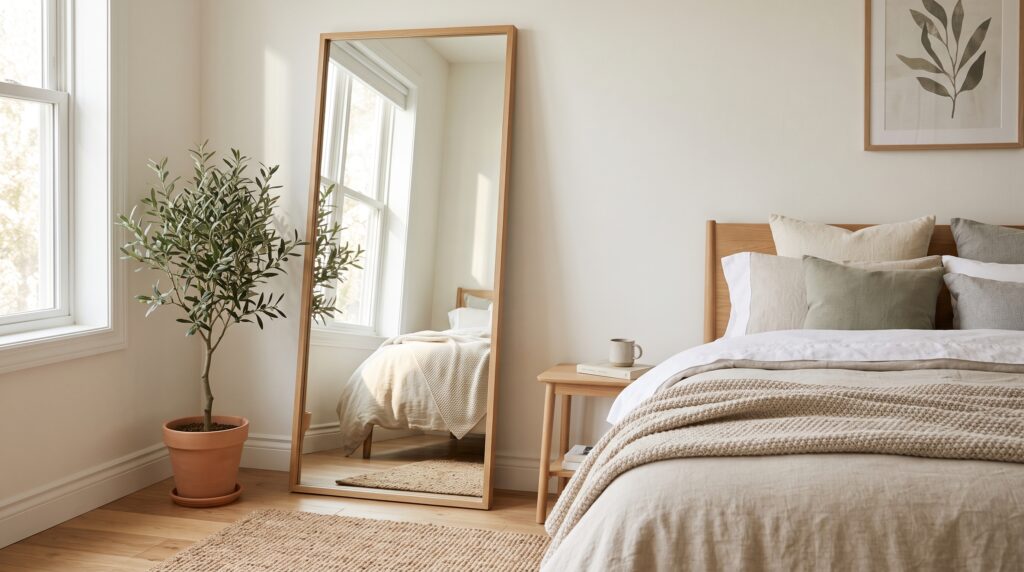
Mirrors bounce both daylight and lamp light around a room, and a large one placed across from a window will do more for the sense of space than almost any other single object. A leaning floor mirror also skips the need for wall-mounting hardware.
6. Stick to a Light, Neutral Palette
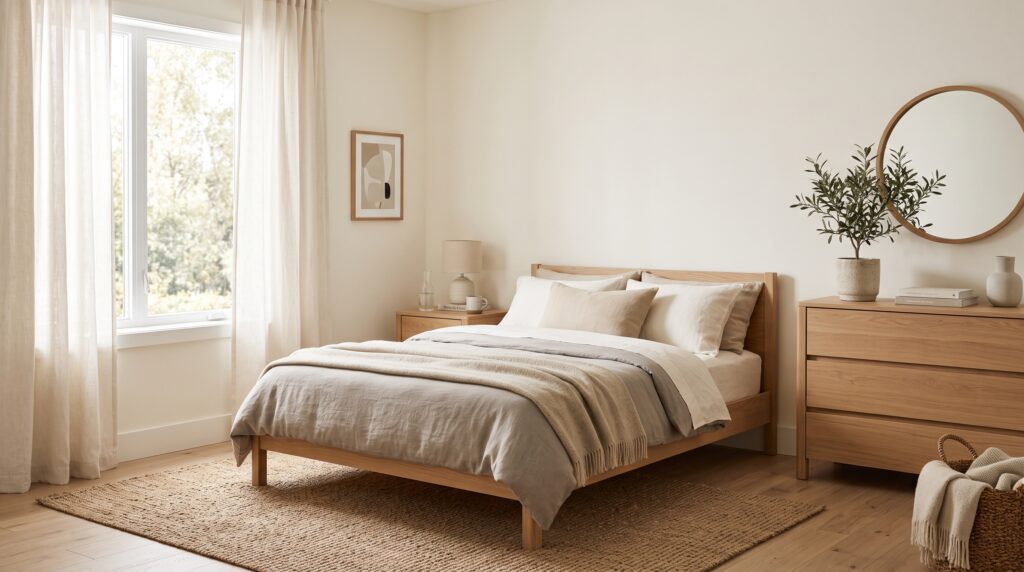
Warm whites, soft greiges, pale sage, and gentle beige tones reflect more light than deep, saturated colors. Keeping walls, bedding, and large furniture pieces in a similar tonal family avoids visual chopping-up of the room, which helps it feel bigger than it measures.
7. Choose Furniture That Does More Than One Job
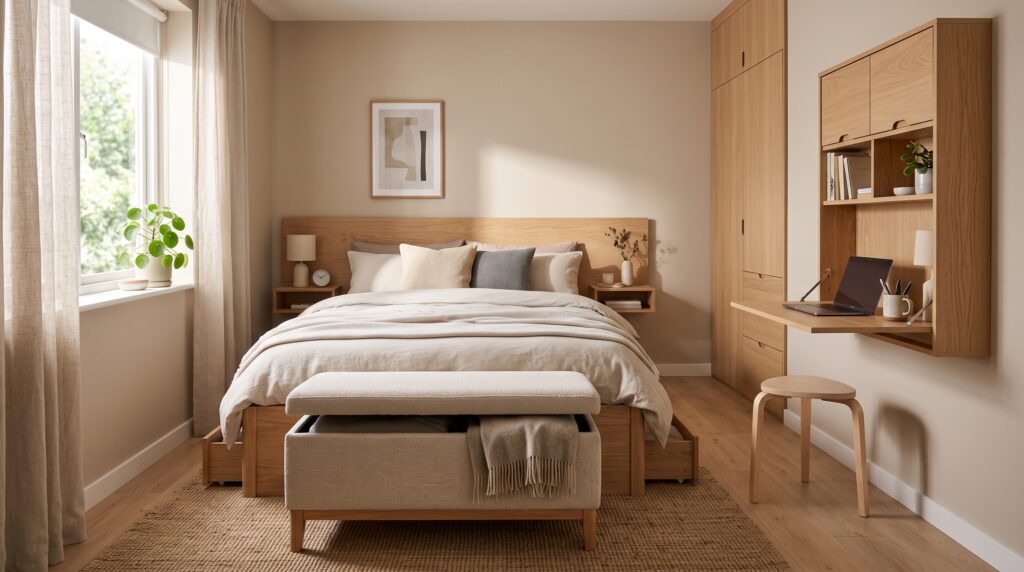
An ottoman that opens for storage, a desk that folds flat against the wall, or a bench at the foot of the bed that doubles as extra seating and storage — these multi-use pieces mean you need fewer items overall, which keeps the room from feeling packed.
8. Mount Sconces Instead of Table Lamps
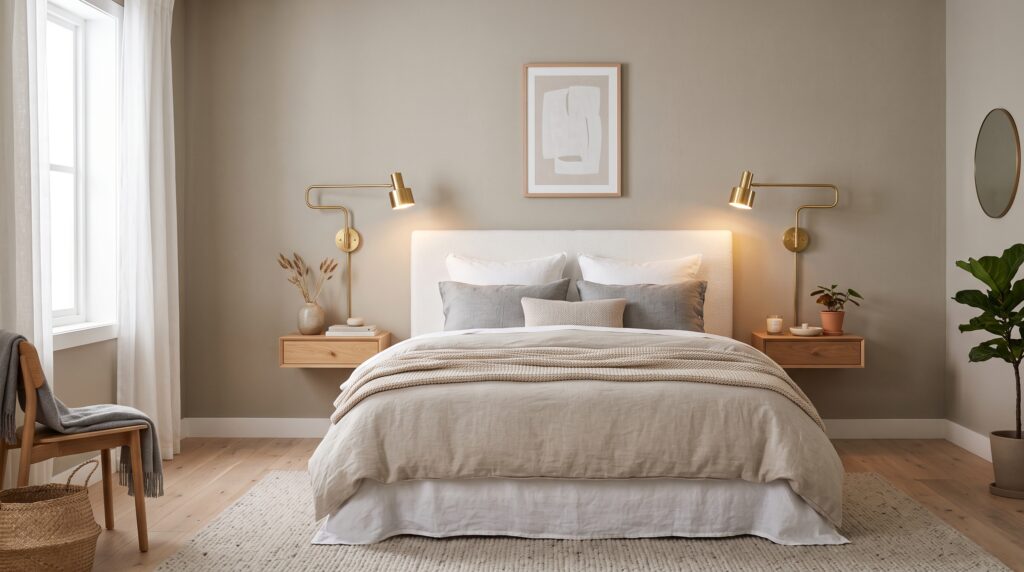
Wall sconces free up nightstand real estate entirely while still giving you good reading light. They also give the room a cleaner, more intentional look compared to cords and lamp bases cluttering a small surface.
9. Build a Window Seat With Hidden Storage
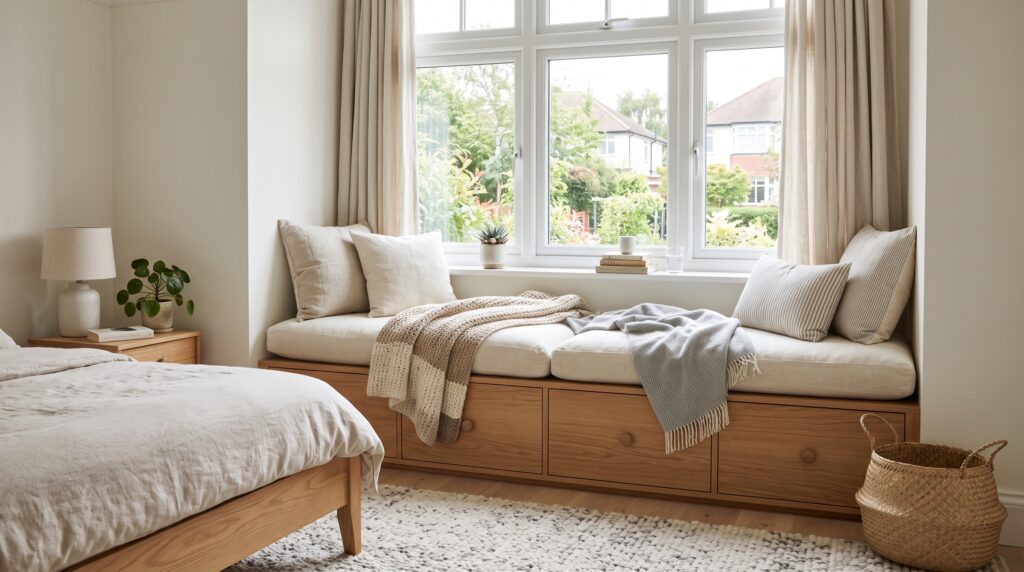
If you have a window with a deep enough sill or an alcove, a built-in bench underneath is a great use of otherwise-wasted space. Add cushions for a reading nook, and use the space beneath the seat for blankets, shoes, or seasonal items.
10. Choose Furniture With a Slim, Raised Profile
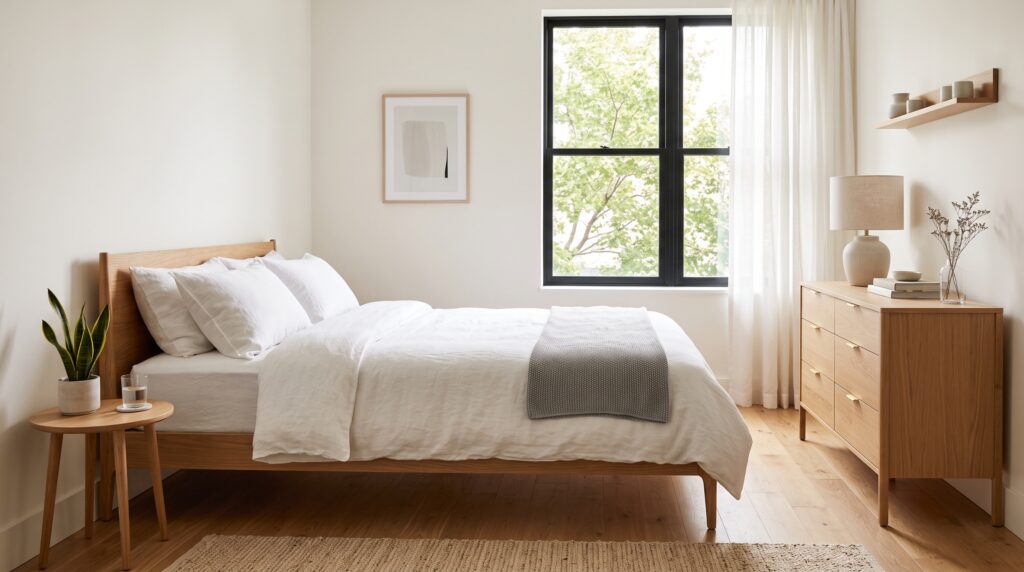
Pieces with narrow frames and exposed legs let you see more of the floor beneath them, which reads as extra square footage even when it isn’t. Look for sleek dressers and minimalist bed frames over heavy, boxy furniture.
11. Add Floating Shelves Above the Headboard
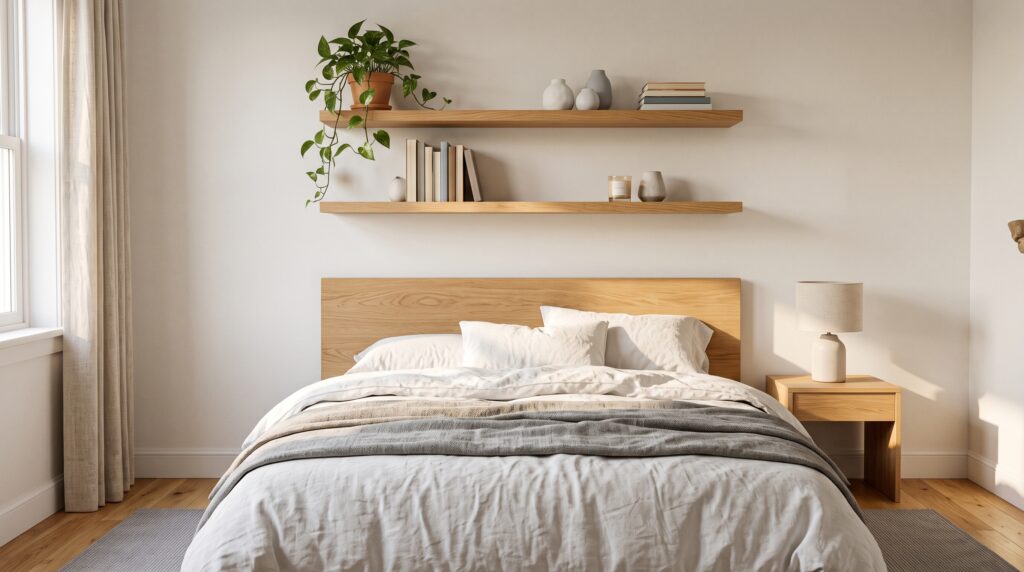
The wall above the bed is often left empty. A couple of floating shelves there gives you display space for books, a small plant, or framed art — all without taking up any floor space at all.
12. Switch to Sliding Closet Doors
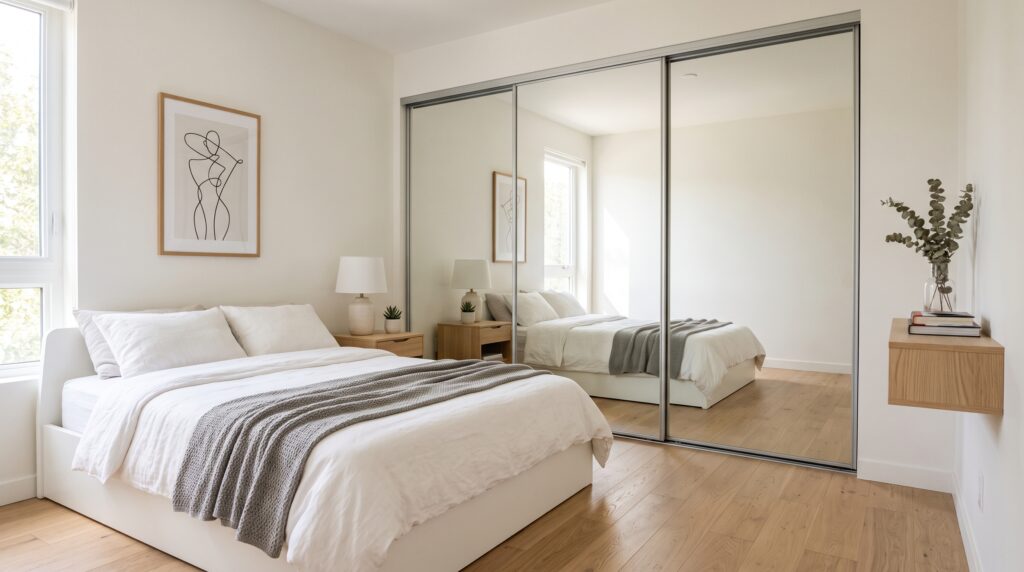
Traditional hinged doors need clearance to swing open, which eats into your usable floor plan. Sliding doors solve that problem, and if you choose mirrored panels, you get the added benefit of more reflected light in the room.
13. Decorate With Intention, Not Volume
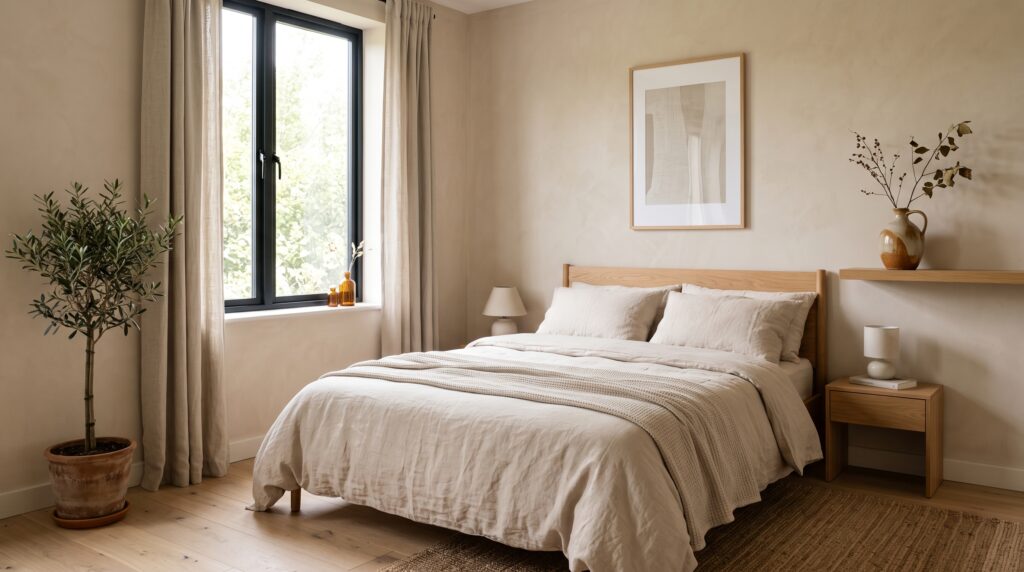
A small bedroom doesn’t need every surface filled. A few pieces that actually mean something to you — one framed print, a ceramic vase, a small plant — will do more for the room’s character than a dozen scattered knickknacks, and the room will stay easier to keep tidy.
14. Use One Large Rug Instead of a Small One
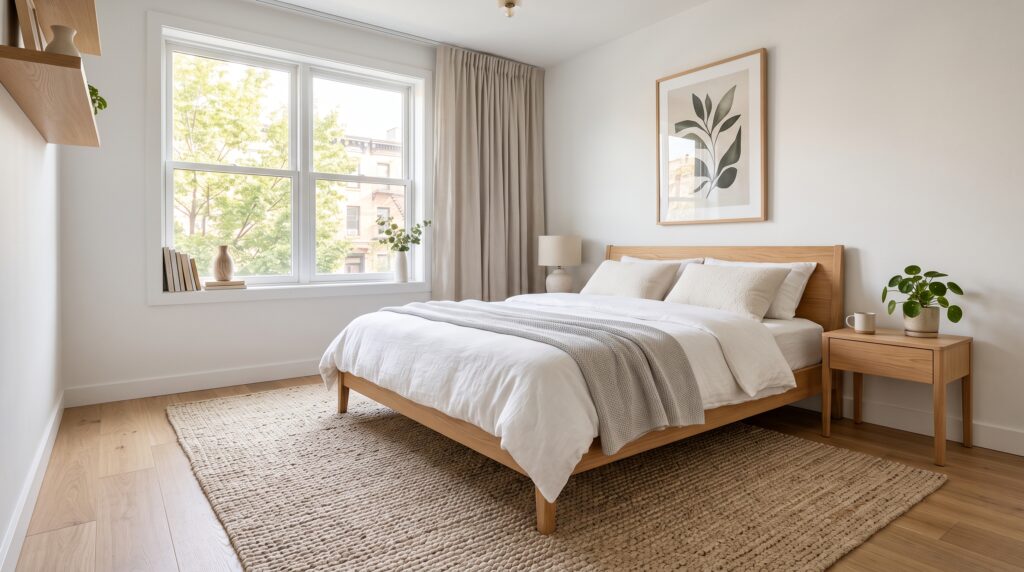
A generously sized rug that extends partially under the bed creates a single unbroken surface, which visually stretches the room. A small rug that floats in the middle of the floor tends to do the opposite, making the space look chopped up.
15. Add Low-Profile Bins Under the Bed
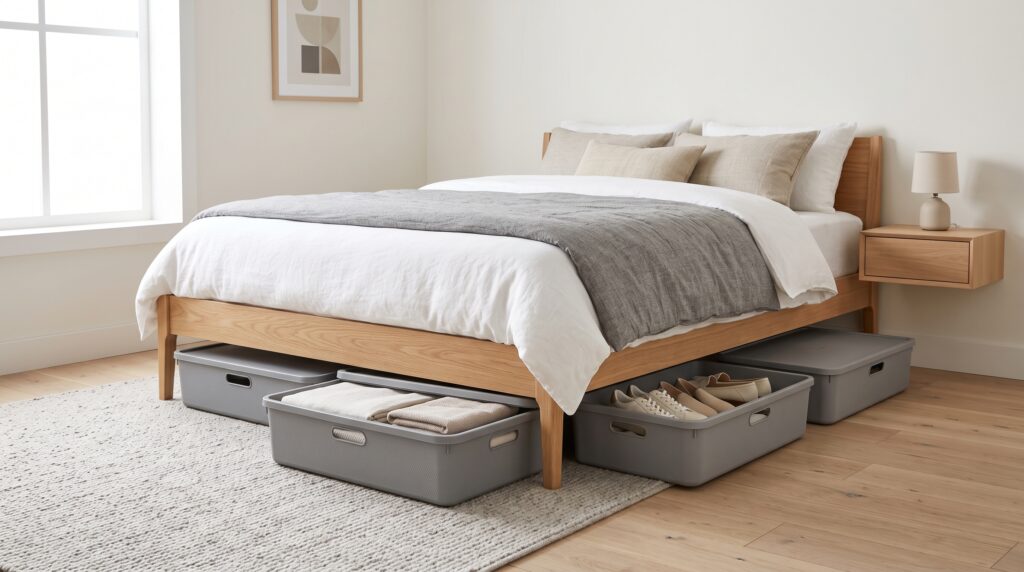
If your bed frame doesn’t already include drawers, slim under-bed storage bins are an easy add-on. They’re ideal for shoes, extra linens, or anything you don’t need to reach every day, and they keep it all out of sight.
16. Use a Full-Length Mirror as a Design Feature
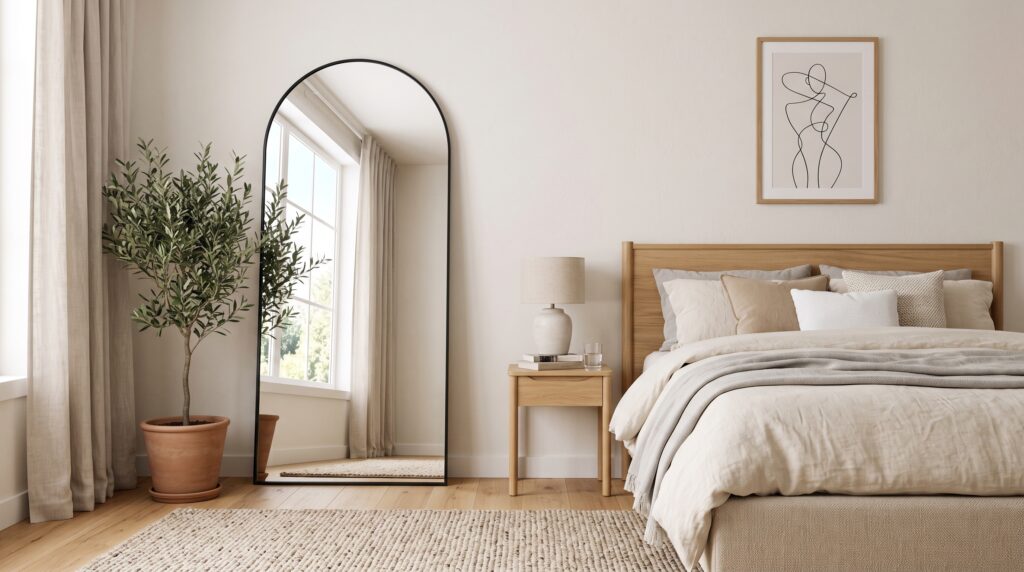
Beyond the practical benefit of checking your outfit, a floor-length mirror leaned casually against the wall adds depth and light without requiring any installation. It’s an easy way to make a small room feel considered rather than cramped.
17. Carve Out a Small Reading Corner
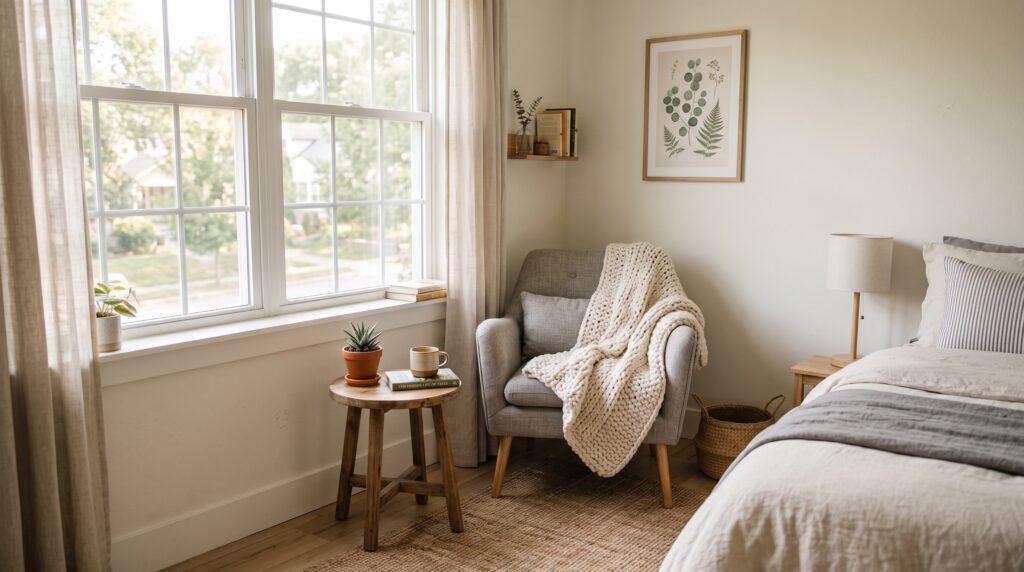
Even in a compact layout, a corner near a window can hold a slim accent chair, a tiny side table, and a throw blanket. It gives the room a second purpose beyond sleeping and makes the space feel more like a retreat.
18. Choose Artwork That Runs Vertically
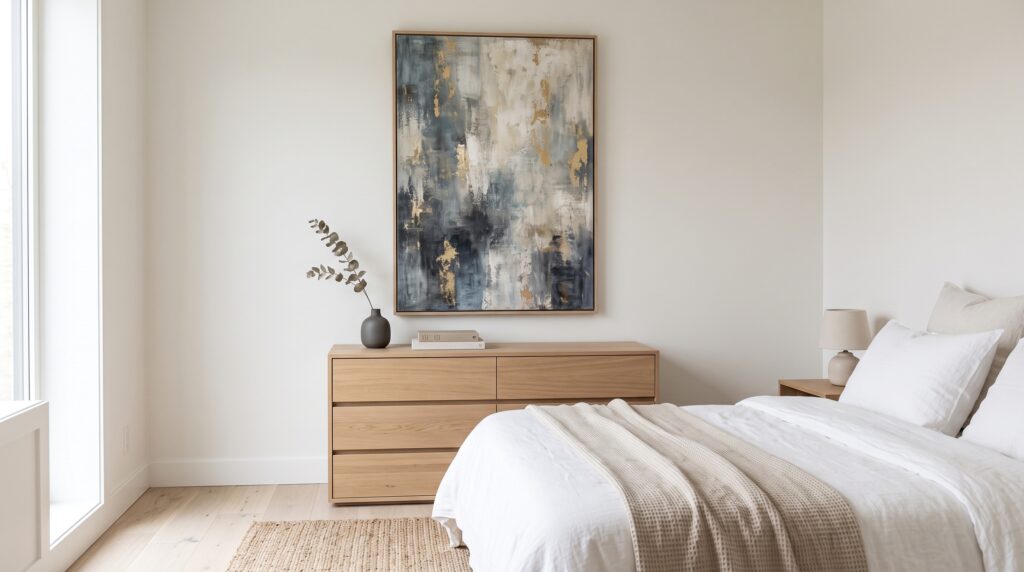
Tall, narrow art pieces pull the eye upward the same way ceiling-height curtains do. One large vertical canvas — or a pair of them — will make the ceiling feel higher than a wide horizontal piece would.
19. Protect Open Floor Space Wherever You Can
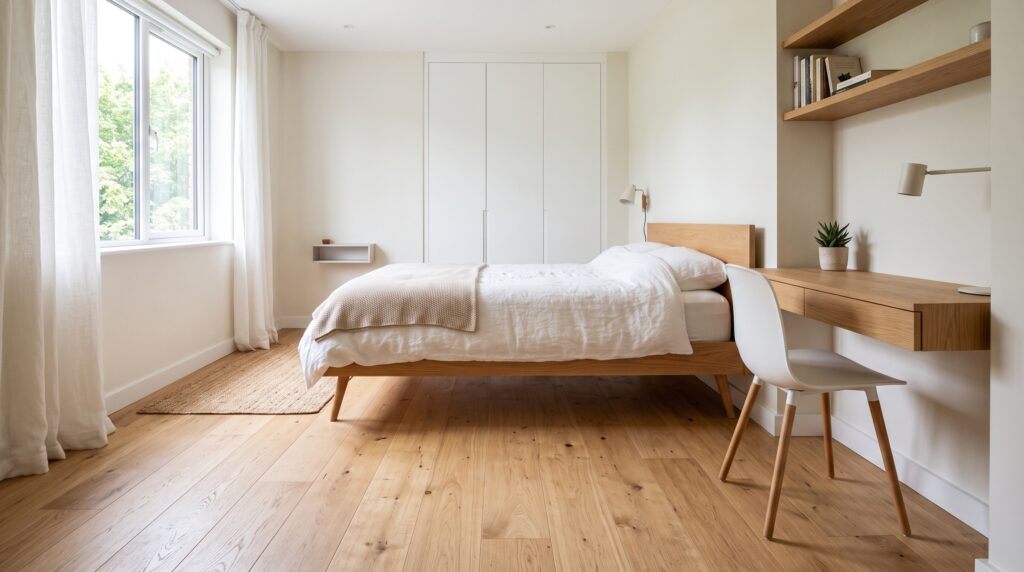
The single biggest lever for making a small room feel bigger is simply keeping the floor visible. Raised furniture legs, wall-mounted storage, and floating shelves all contribute to this, and the effect compounds as you apply more of them together.
20. Layer in Soft, Warm Lighting
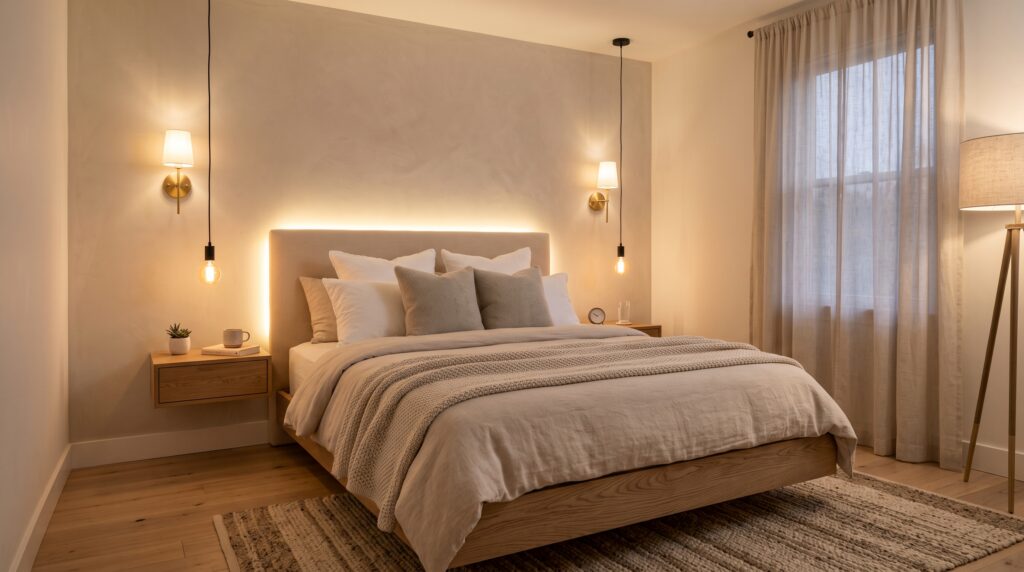
Skip the harsh overhead fixture in favor of a mix of bedside lamps, sconces, or hidden LED strips. Layered lighting sources make a small room feel cozy rather than cave-like, and let you adjust the mood depending on the time of day.
21. Bring in One Statement Plant
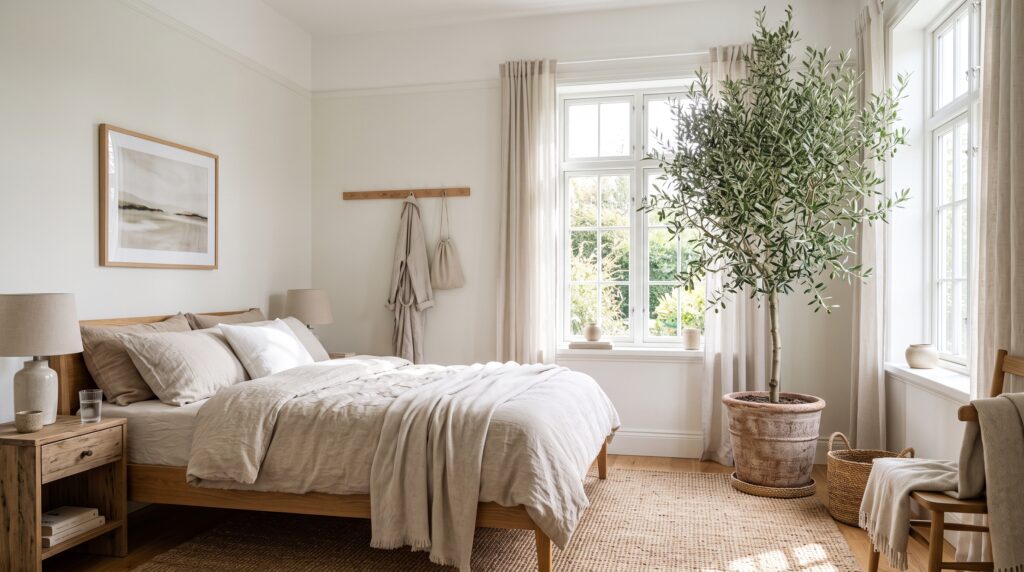
A single larger plant — an olive tree, a snake plant, a trailing pothos — adds life and natural texture without crowding the room the way several small pots scattered around might. According to the University of Vermont Extension’s Master Gardener guidance on plants and wellbeing, indoor greenery can also support a calmer, more restorative living space, which is exactly the mood most small bedrooms are going for.
22. Repeat a Calm Color Story Throughout

Tie bedding, rugs, curtains, and small accessories back to the same soft palette you used on the walls. That consistency is what makes a compact room feel deliberate and peaceful instead of busy, and it’s often the difference between a room that “looks small” and one that simply “is small.”
Bringing It All Together
None of these ideas require a full renovation or a big budget. Most are single swaps — a mirror here, a shelf there, a lighting change — that compound when used together. Start with whichever change addresses your biggest frustration first, whether that’s a lack of storage, poor lighting, or a room that just feels boxed in, and build outward from there.
A small bedroom, done thoughtfully, can feel just as calm and pulled-together as a much larger one. The key is treating every design choice — furniture shape, color, storage, and light — as an opportunity to make the room work harder without making it feel more crowded.