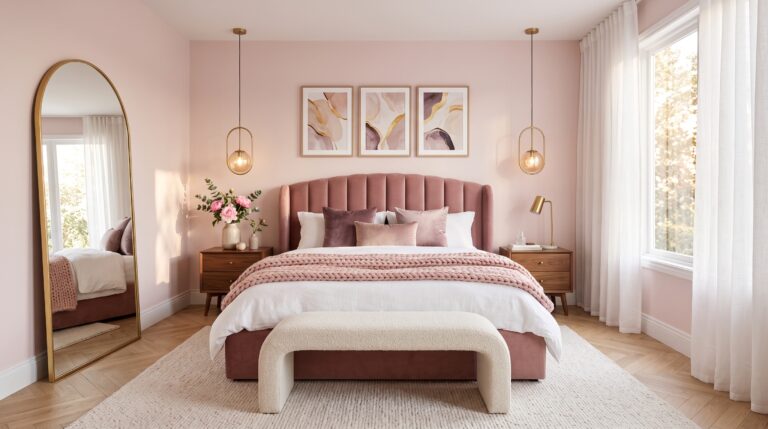
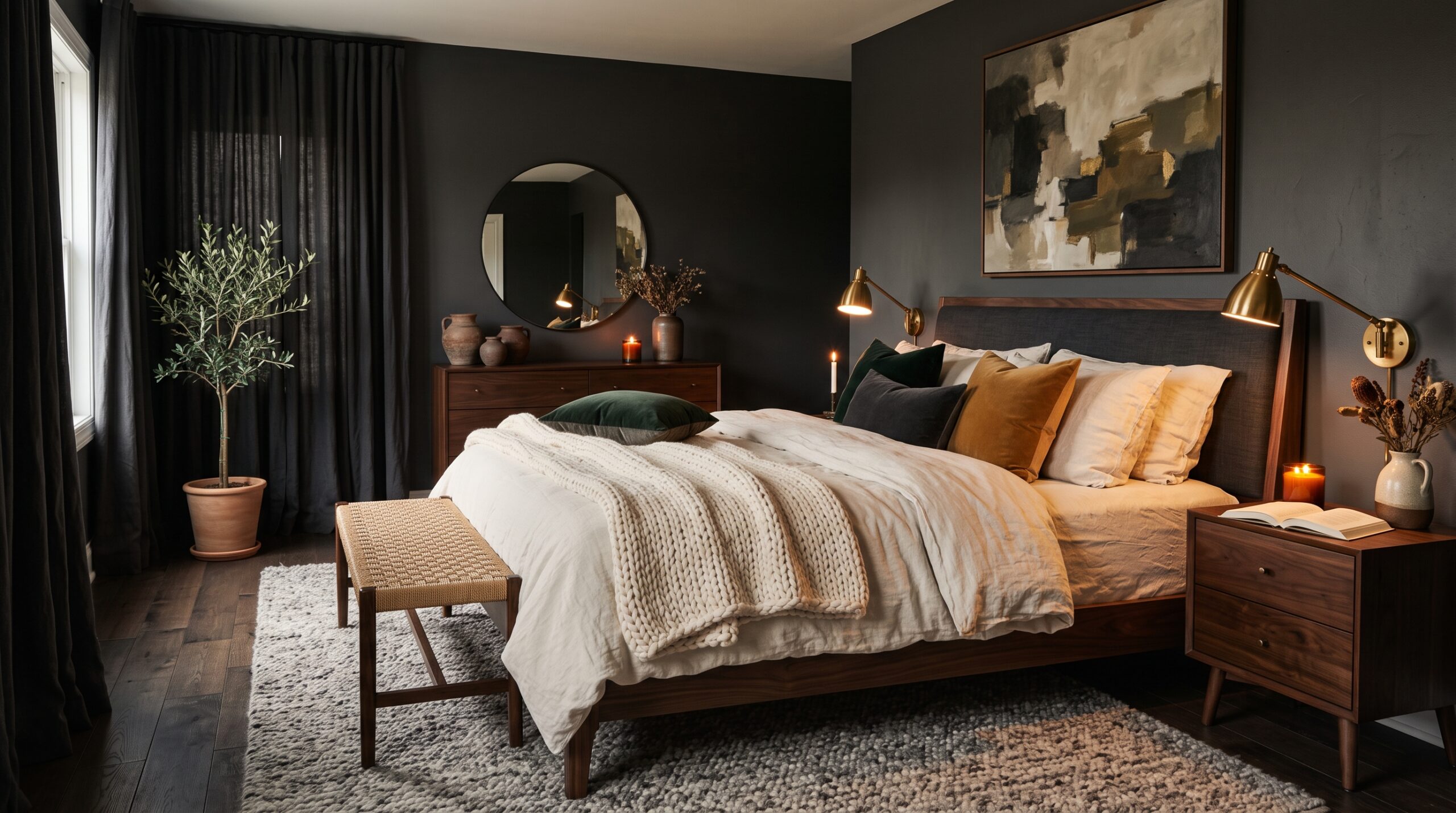
If you’re pulled toward deep colors, warm glowing lamps, and interiors that feel like a hug, a 22 cozy moody bedroom ideas youll want to copy bedroom might be exactly what your home is missing. This design direction leans on saturated wall colors, layered fabrics, natural wood tones, and soft, low lighting to turn an ordinary bedroom into a true retreat. It works whether your taste runs modern, rustic, vintage, or a little more glamorous — the trick is in how you balance darkness with warmth so the room feels enveloping rather than gloomy.
The appeal isn’t just visual. A bedroom painted in a deep, saturated color and lit with warm, low light tends to feel smaller and more enclosed in the best possible way — like a cocoon rather than a cave. That sense of enclosure is part of why so many people are gravitating toward this look after years of bright white walls and stark minimalism. It gives a room personality, and it makes the space feel like it was designed for slowing down rather than passing through.
Moody doesn’t have to mean matching everything to black. Some of the coziest bedrooms in this style use deep green, aged terracotta, muted plum, or a rich chocolate brown as their anchor color, then build outward from there with warm metals, natural fibers, and soft textiles. The goal is contrast with warmth, not just darkness for its own sake.
Below you’ll find a full roundup of ways to bring that rich, cocooning atmosphere into your own space, from paint and lighting to textiles and finishing touches. Pick and choose rather than trying to do all of them in one weekend — a few well-executed changes will do more for the room than twenty half-finished ones.
22 Cozy Moody Bedroom Ideas You’ll Want to Copy
1. Go Deep with Charcoal Walls
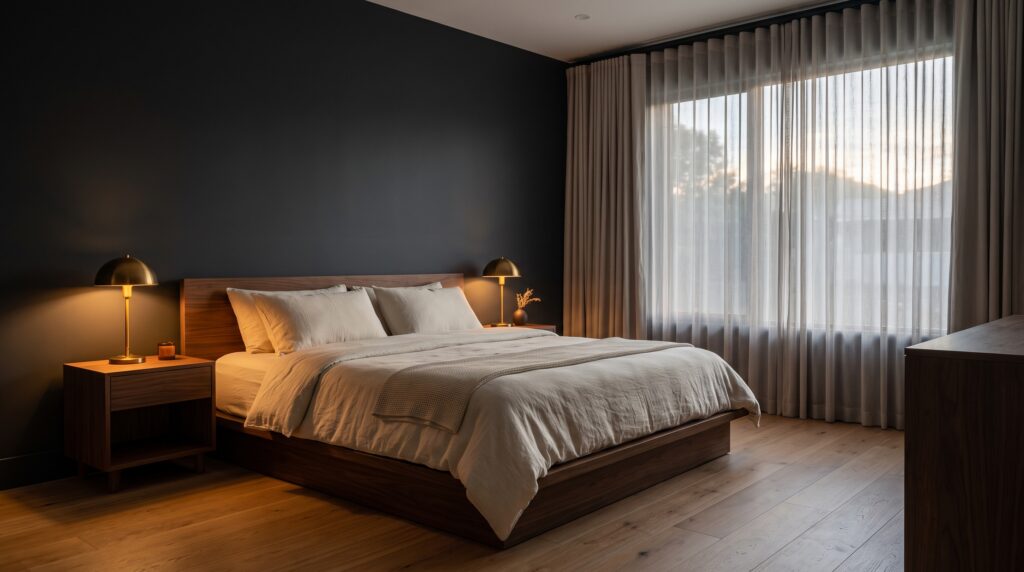
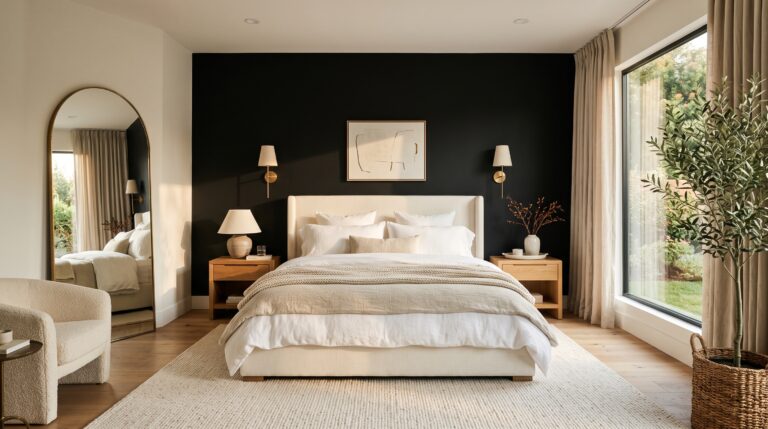
A charcoal or graphite wall color gives a room instant depth without tipping into harshness. Keep it grounded with warm wood furniture, neutral linens, and brass hardware so the space still feels welcoming rather than cave-like. Daylight streaming across a dark wall tends to look especially dramatic, so this works well in rooms with at least one good window. If you’re nervous about committing, start with a single accent wall behind the headboard before painting the whole room — it’s an easy way to test how the color behaves at different times of day.
2. Build Up Layers of Linen Bedding
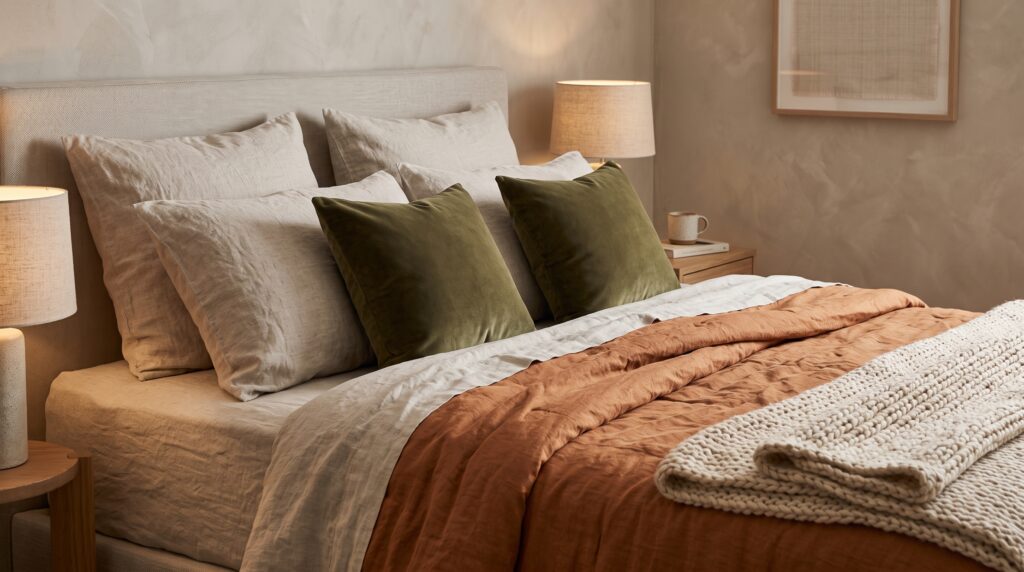
Skip the single flat duvet and instead stack washed linen sheets, a quilted coverlet, a few velvet throw pillows, and a chunky knit blanket at the foot of the bed. Mixing textures this way is one of the easiest ways to make a bed look intentionally styled rather than just made. Stick to two or three tones within the same family — think oatmeal, taupe, and rust — so the layers read as cohesive rather than mismatched.
3. Layer Warm, Low-Level Lighting
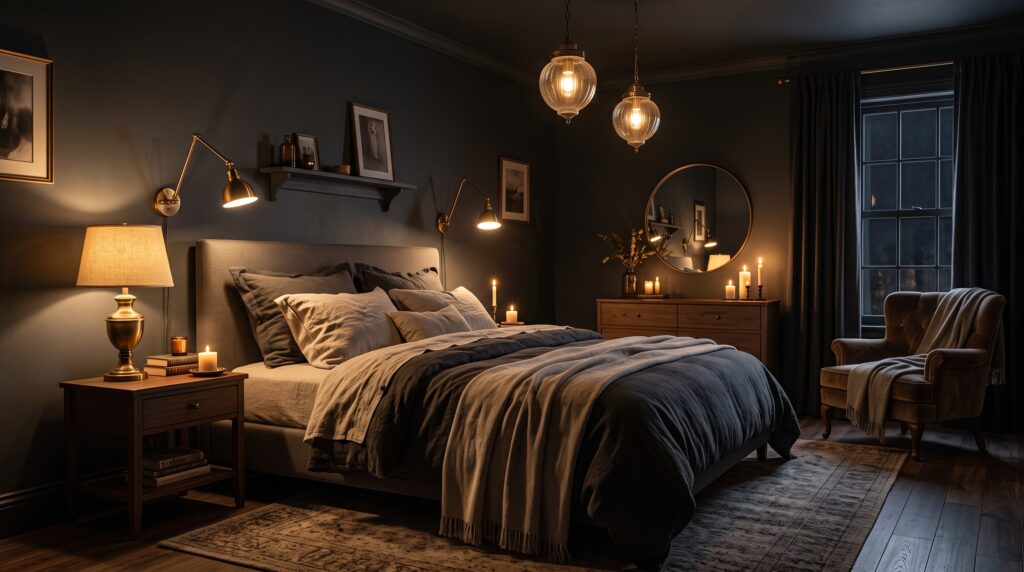
Overhead lighting alone rarely creates a moody feel. Combine table lamps, wall sconces, a pendant fixture, and a candle or two, all using warm-toned bulbs, so the light pools softly around the room instead of flooding it. This kind of layered lighting is what makes a dark bedroom feel calm at night instead of dim and flat. Aim for at least three separate light sources at different heights — one low, one at eye level, one overhead — so the room never relies on a single harsh source.
4. Bring in Dark Wood Furniture
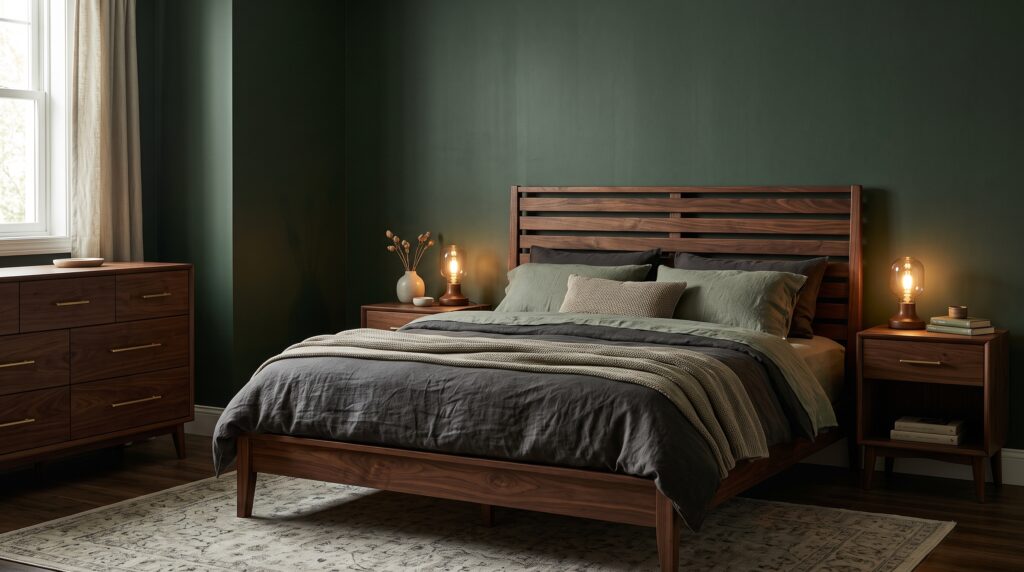
Walnut, smoked oak, or espresso-stained pieces add warmth that pairs naturally with deep wall colors. Stick to simple silhouettes and let the wood grain do the talking — pair it with soft textiles and a bit of matte black hardware for a look that feels timeless rather than heavy. Secondhand and vintage furniture often works especially well here, since older wood pieces tend to have richer, more varied tones than newer mass-produced ones.
5. Add Velvet Wherever You Can
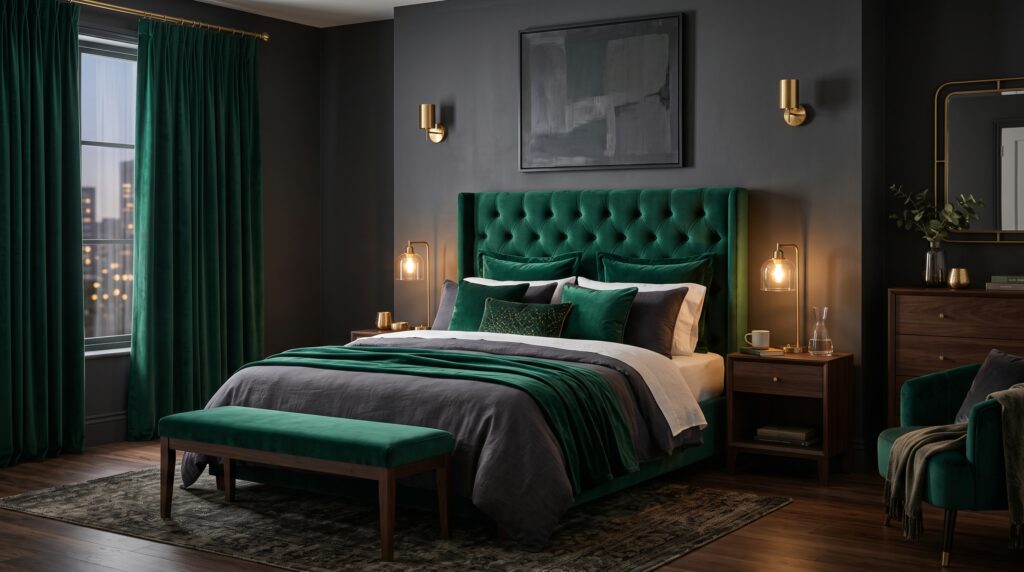
Velvet brings both richness and softness to a moody room. Try it as an upholstered headboard, a pair of curtains, or a scattering of jewel-toned cushions. It photographs beautifully and feels even better in person, especially against linen and wool. Deep emerald, burgundy, and midnight blue velvet all read as “moody” without needing to match your wall color exactly — contrast here is a feature, not a flaw.
6. Choose Matte Black Hardware and Fixtures
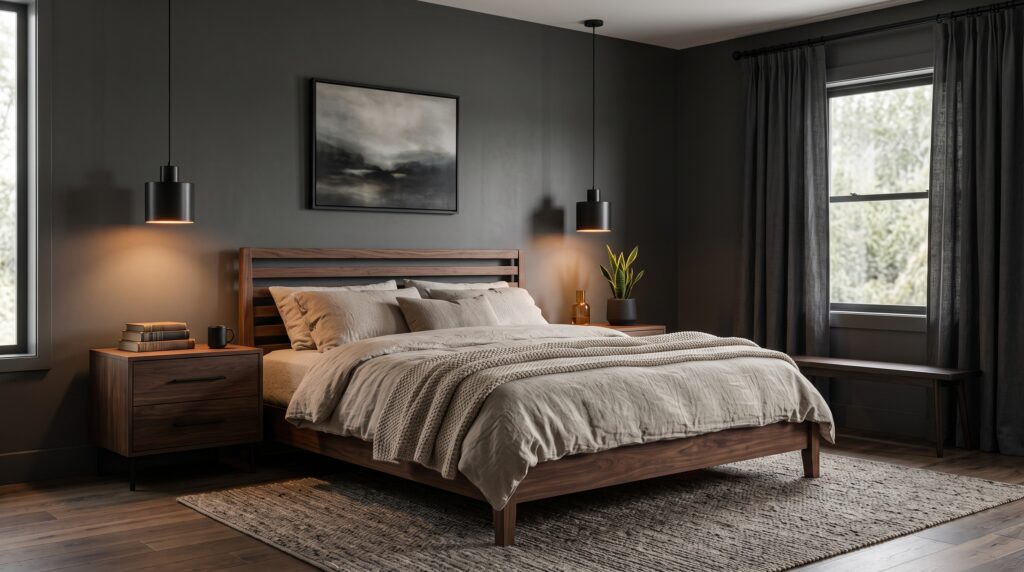
Curtain rods, drawer pulls, picture frames, and pendant lights in matte black add quiet contrast without competing with your wall color. It’s a small detail, but it ties a moody room together and reads as intentional rather than accidental. Swapping hardware is also one of the cheapest updates on this list, so it’s a good place to start if you’re working with a tight budget.
7. Soften the Palette with Greenery
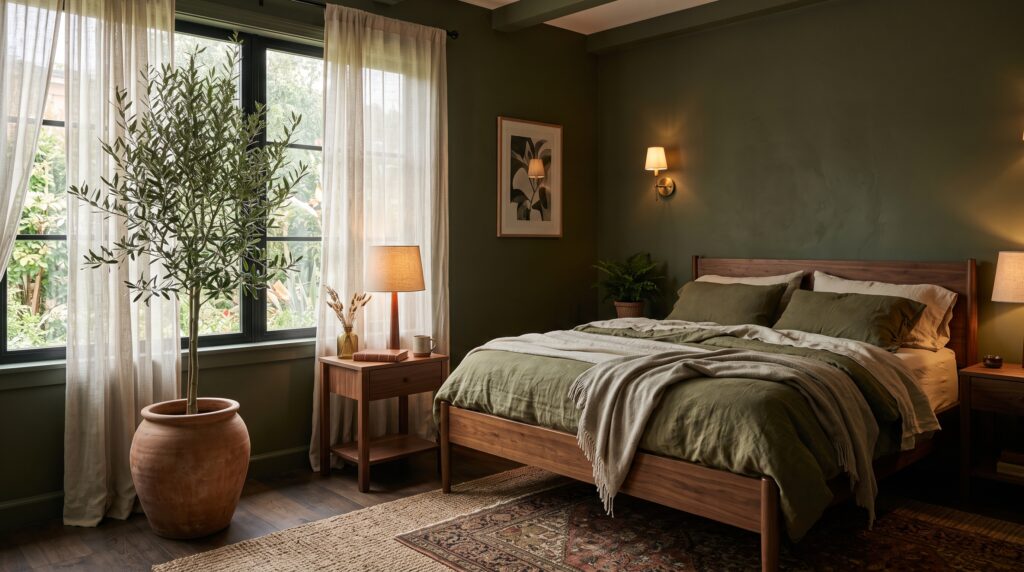
A few well-placed plants keep a dark room from feeling static. An olive tree, a snake plant, or a trailing pothos in a simple ceramic pot adds life and texture while staying in step with the room’s deeper tones. Low-light plants are worth prioritizing here, since a moody bedroom often has softer, more filtered natural light by design.
8. Hang Floor-to-Ceiling Drapery
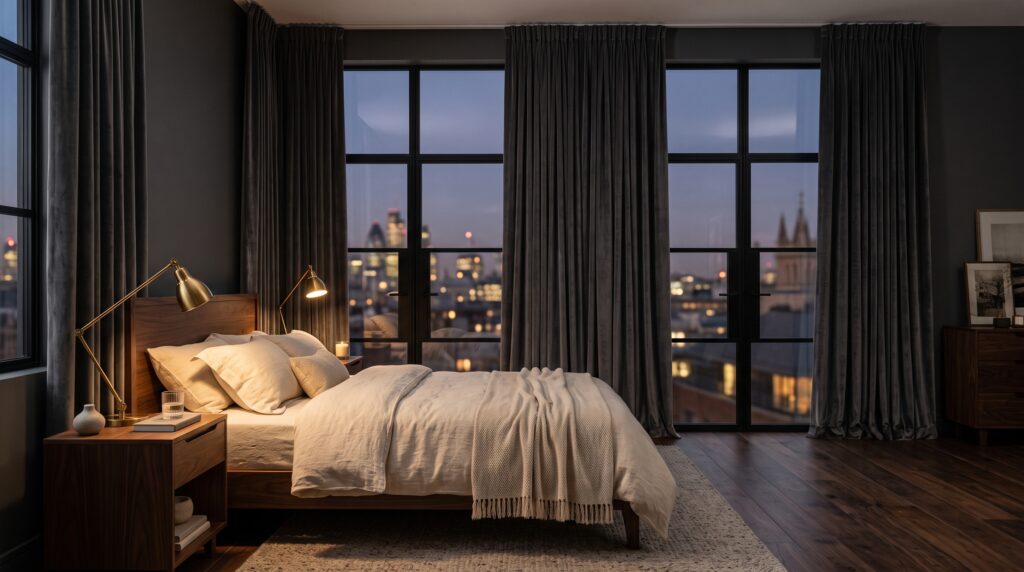
Long curtains make any ceiling feel taller and any room feel more finished. Heavy linen or velvet panels in charcoal, olive, taupe, or espresso brown reinforce the moody look, especially when the rod is mounted close to the ceiling for extra height. Blackout lining is a practical bonus in a bedroom that’s already leaning dark and restful.
9. Design a Statement Headboard Wall
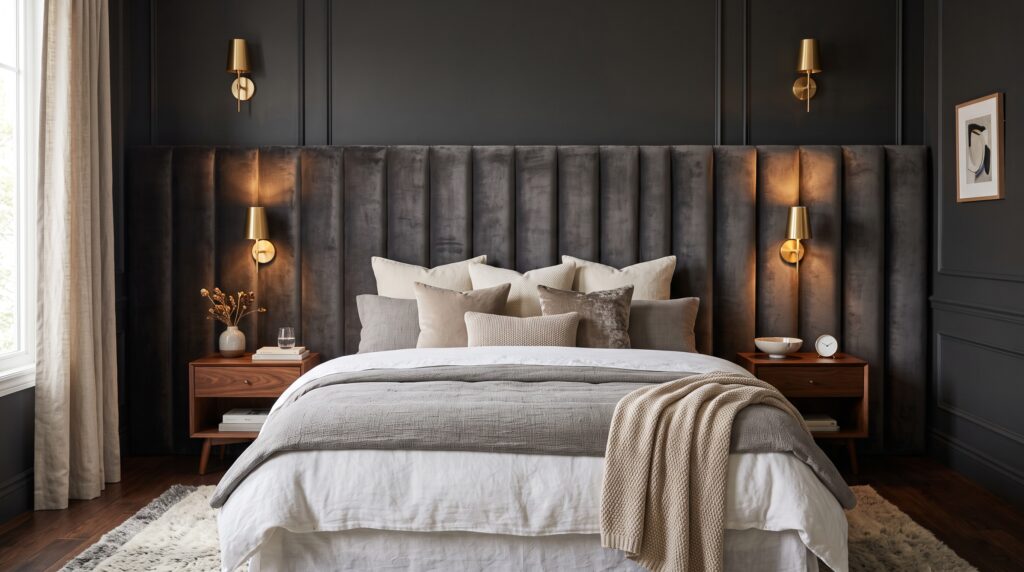
An oversized upholstered or wood-paneled headboard that stretches beyond the width of the bed instantly becomes the room’s focal point. It’s a boutique-hotel trick that adds warmth and texture without requiring much else on the wall. Channel-tufted upholstery or vertical wood slats are two of the most popular ways to execute this look right now.
10. Combine Leather with Dark Wood
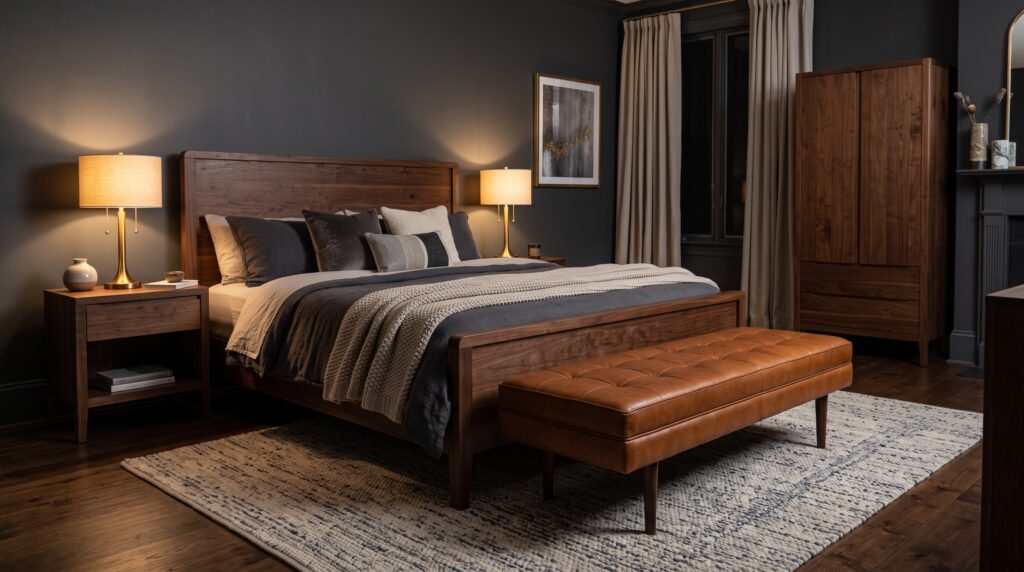
A leather bench, a woven leather accent chair, or a single cognac-toned pillow brings a slightly masculine, worn-in warmth that balances well against darker walls and cooler metals. Look for leather with some natural grain or patina rather than a perfectly smooth finish — it tends to suit the lived-in feel of a moody room better.
11. Hang Vintage-Style Artwork

Landscape paintings, antique botanical prints, or black-and-white photography in dark wood or brass frames give a moody bedroom the feeling of a room that’s been curated over time rather than decorated in a single weekend. Thrifted or estate-sale frames often have more character than anything sold new, and mismatched frame sizes actually help the gallery feel more collected.
12. Add a Bench at the Foot of the Bed
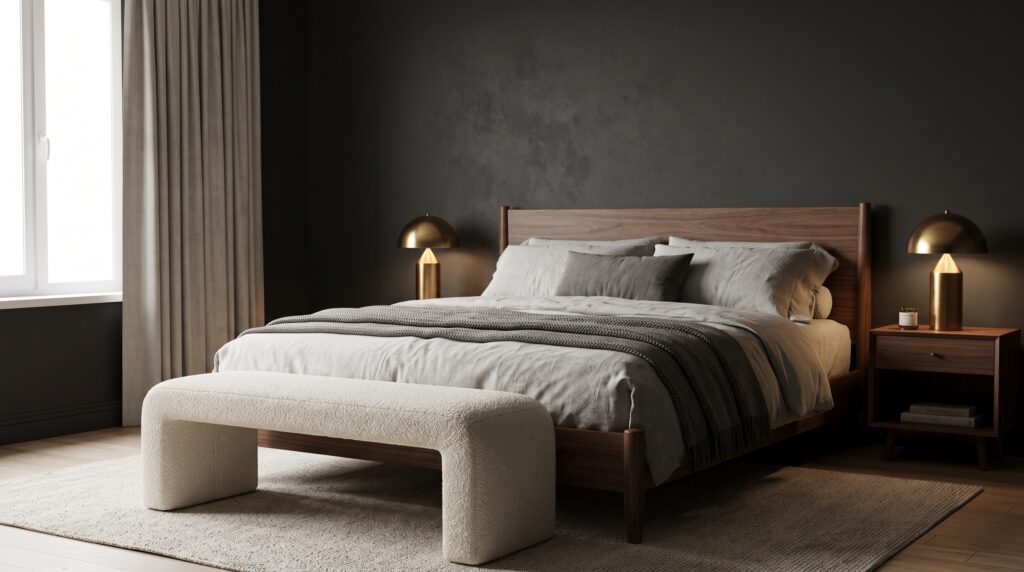
A boucle, velvet, or natural wood bench adds function as well as another surface to layer a folded blanket or a stack of books — small details that make the room feel lived-in. It’s also a practical spot to set out tomorrow’s outfit or a stack of laundry without cluttering the rest of the room.
13. Mix in Stone and Ceramic Accents
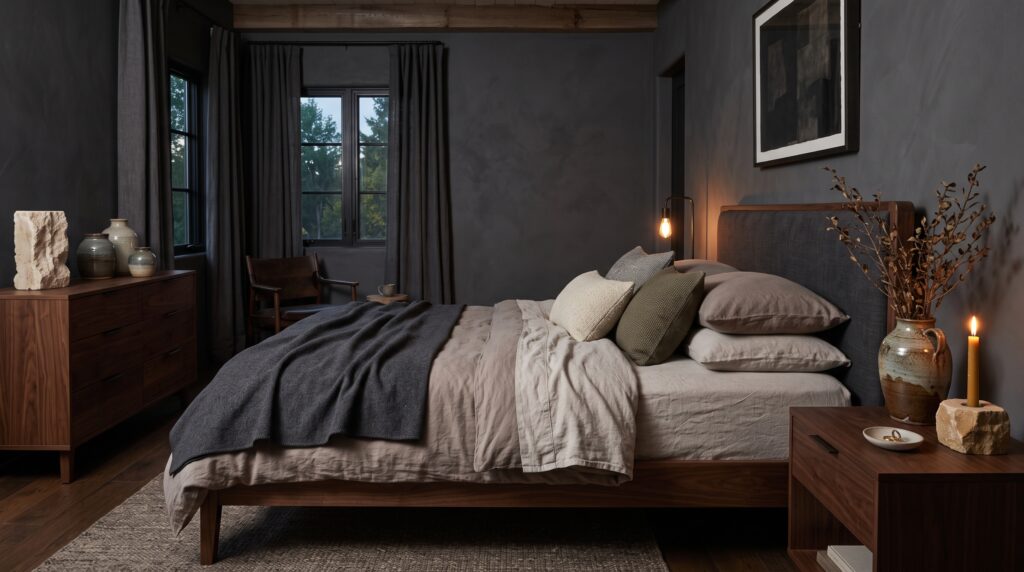
Stone candle holders, handmade ceramic vases, and simple pottery introduce organic texture that softens a dark palette without adding visual clutter. These materials also tend to feel substantial and grounding next to softer textiles like velvet and linen, which keeps the styling from feeling one-note.
14. Layer Two Area Rugs
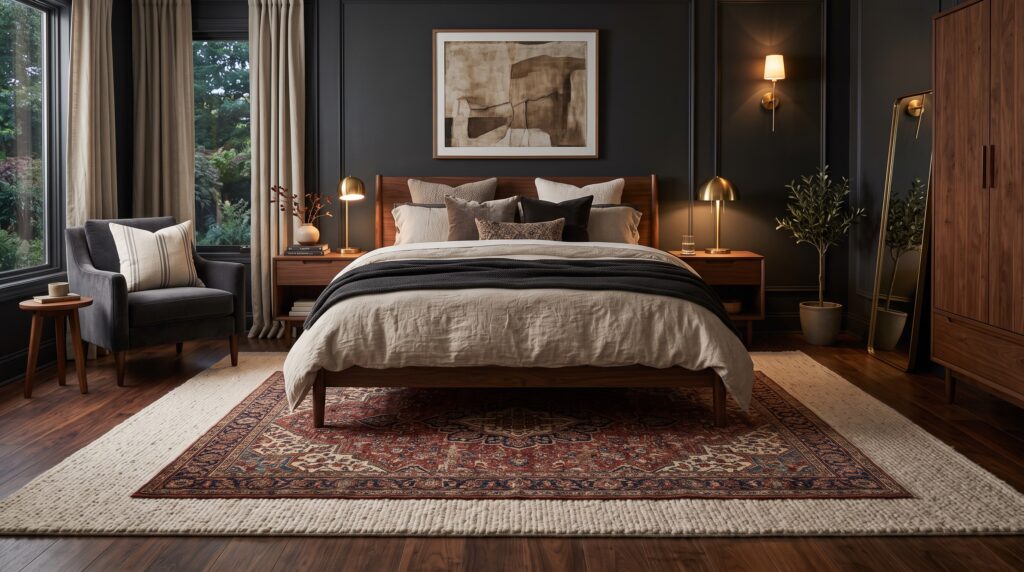
Placing a smaller patterned or vintage-style rug over a larger neutral wool rug adds depth underfoot and gives the floor the same layered feeling as the bedding above it. This is a favorite designer trick for adding pattern to a room without committing to a single busy rug across the whole floor.
15. Lean an Oversized Arched Mirror Against the Wall
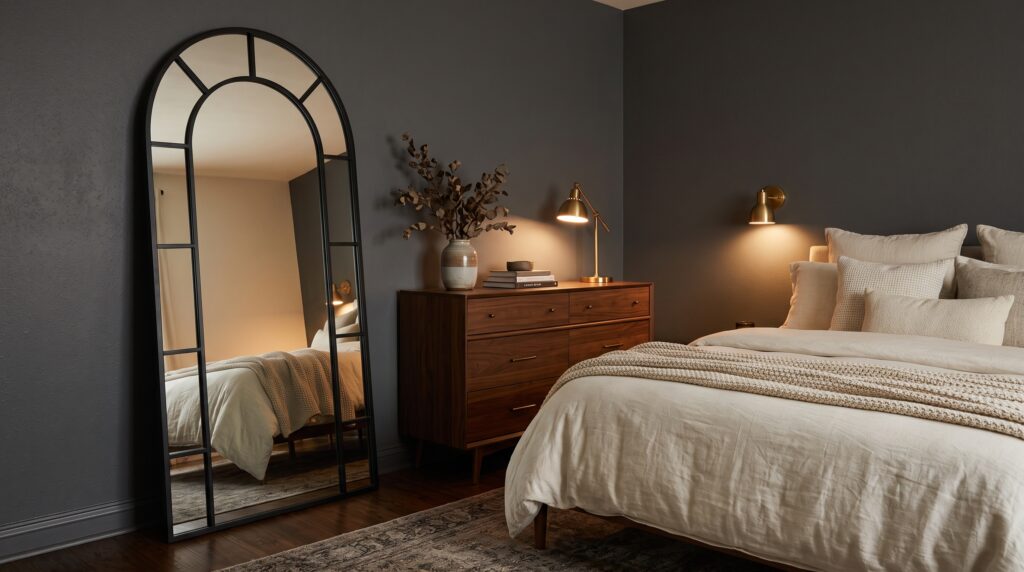
A large arched mirror in a black metal or antique brass frame bounces available light around the room and makes a dark bedroom feel more open, especially when placed near a window or beside a dresser. Leaning it rather than hanging it also gives the room a slightly more relaxed, collected-over-time feel.
16. Style Open Floating Shelves
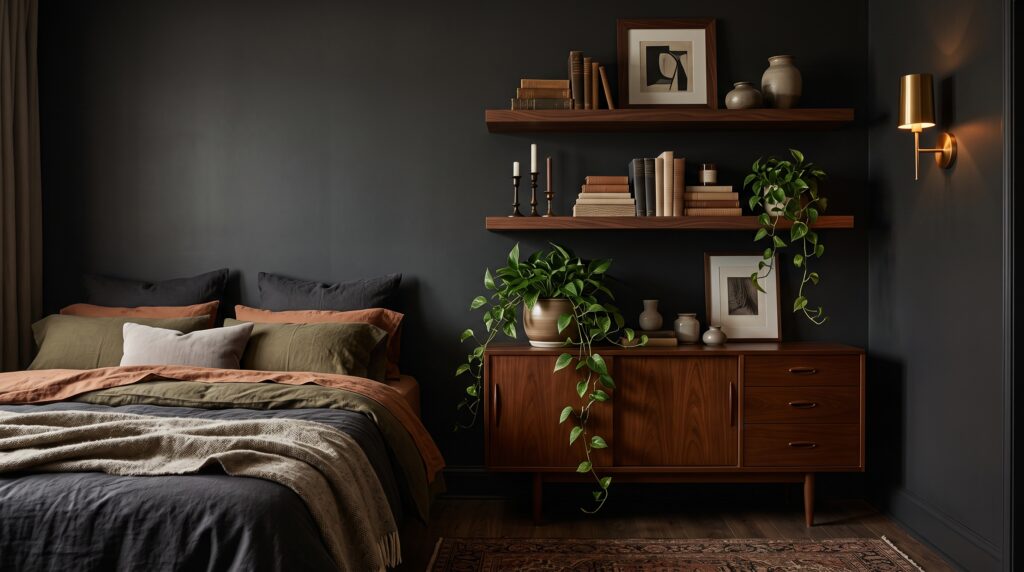
Floating shelves let you display candles, a few books, framed art, and small plants without adding bulky furniture. Leave some breathing room between objects so the styling reads as curated rather than crowded. A good rule of thumb is to group items in odd numbers and vary their height so the shelf has a natural rhythm to it.
17. Create a Fireside Feel Without a Fireplace
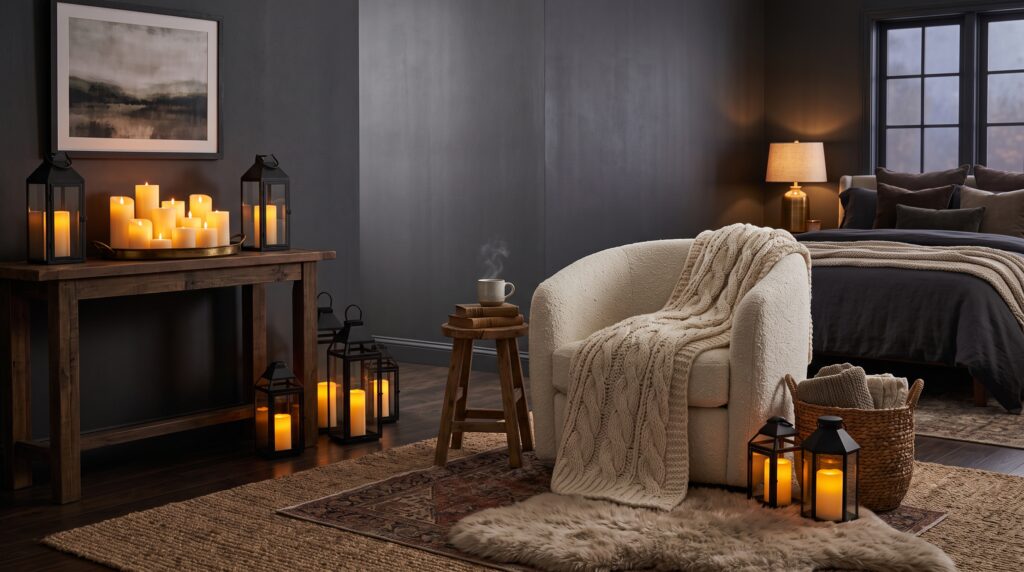
Group candles or lanterns on a low console table, add a plush accent chair and a soft throw, and you’ve got a cozy corner that mimics the ambiance of a fireplace — perfect for a reading nook. If you have the outlet access, a small flame-effect or LED candle set can extend this look safely overnight.
18. Swap Bright Flowers for Moody Florals
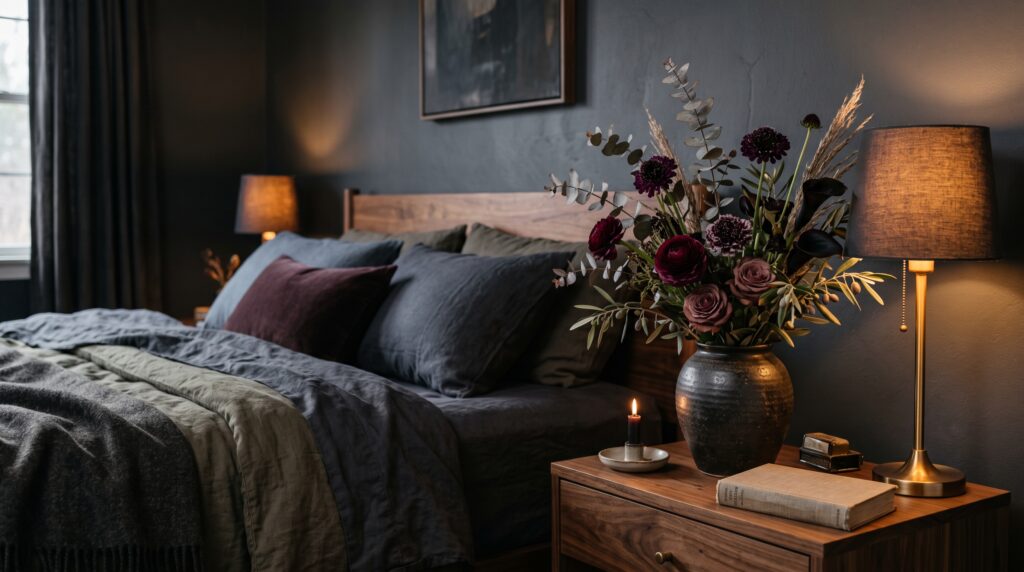
Dried branches, eucalyptus stems, dark burgundy blooms, or a few olive branches in a simple vase add height and texture while staying in tune with a richer color palette. Dried arrangements have the added benefit of lasting for months, which makes them a low-maintenance way to keep the room feeling finished.
19. Paint the Ceiling Too
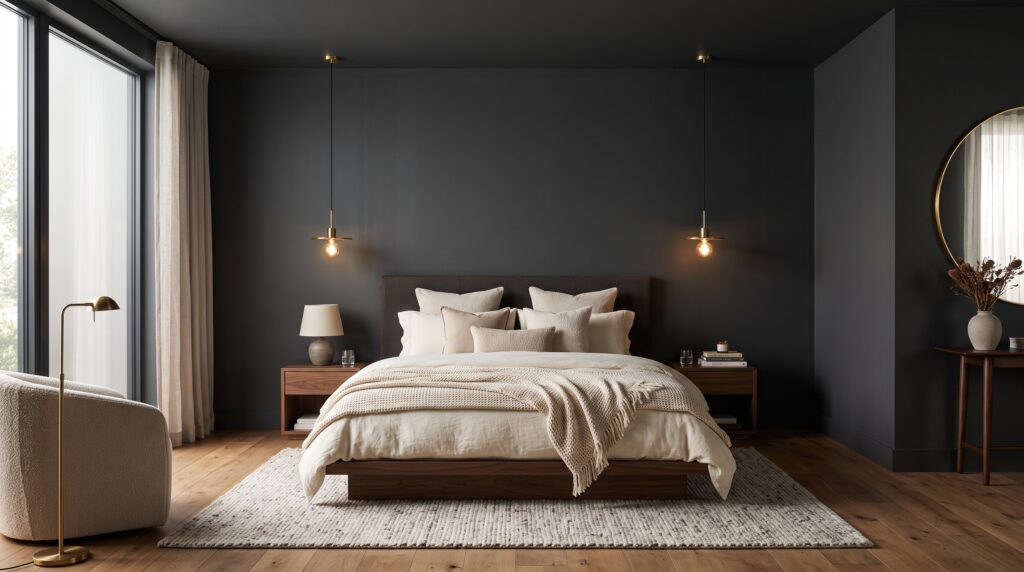
Carrying a deep wall color up onto the ceiling creates a cocooning, enclosed feeling that many designers call “the fifth wall.” Balance it with lighter bedding and warm wood flooring so the room doesn’t feel closed in. This works especially well in rooms with lower ceilings, where the color blur between wall and ceiling actually makes the room feel more intentional rather than more cramped.
20. Hang Oversized Textured Artwork
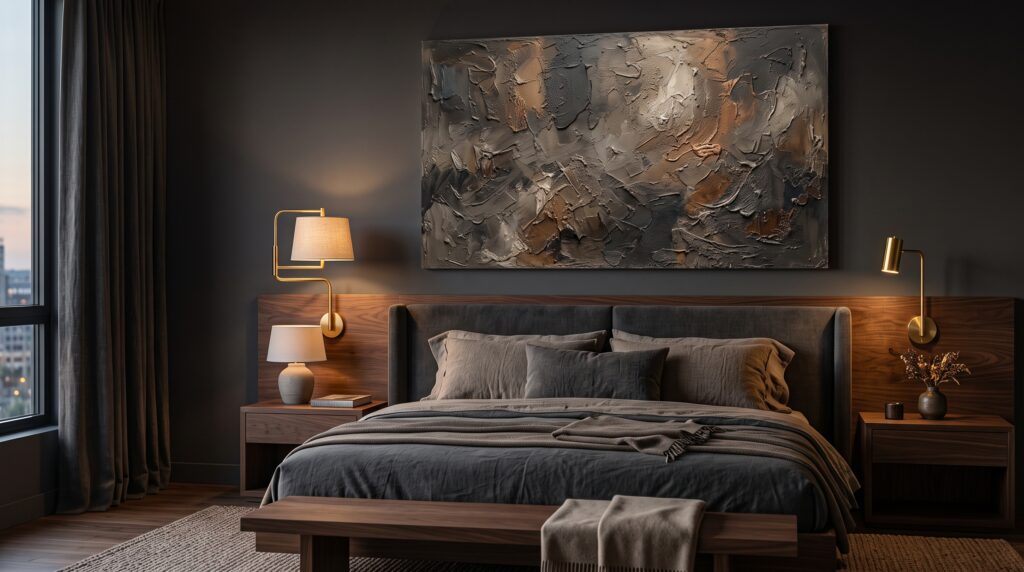
A large abstract canvas or an earthy landscape piece in muted tones makes a strong visual statement while blending naturally into the room’s overall color story. Scale matters here — one large piece almost always looks more polished above a bed than several small ones scattered without a clear arrangement.
21. Add One More Soft Wool Rug
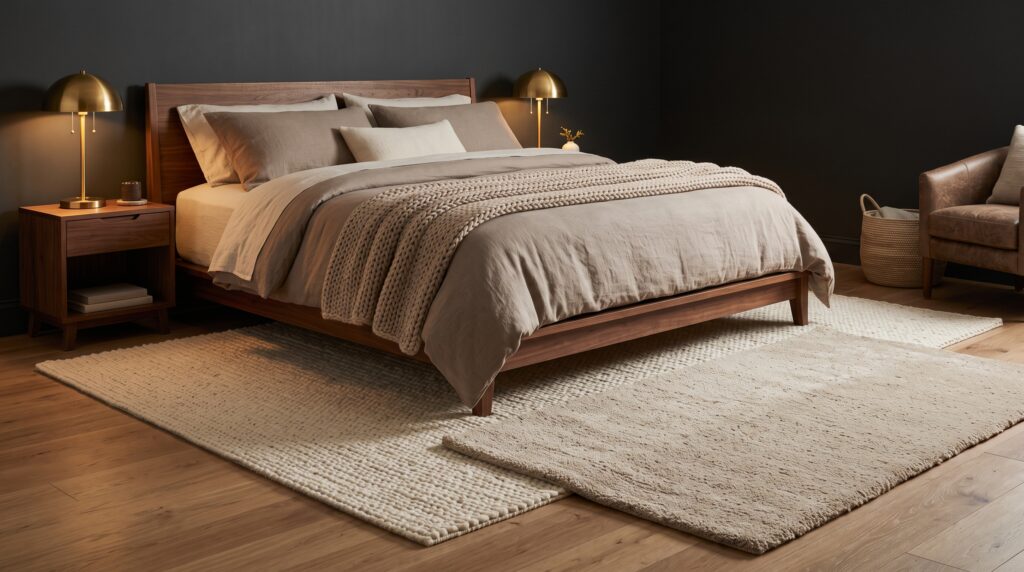
A thick wool rug near the bed softens dark flooring and makes the first steps out of bed feel warm. Stick to subtle patterns or solid neutrals so it supports the room instead of competing with it. If your budget allows for only one textile upgrade in the whole room, a good rug is often the one that makes the biggest difference underfoot.
22. Finish with a Scent Station
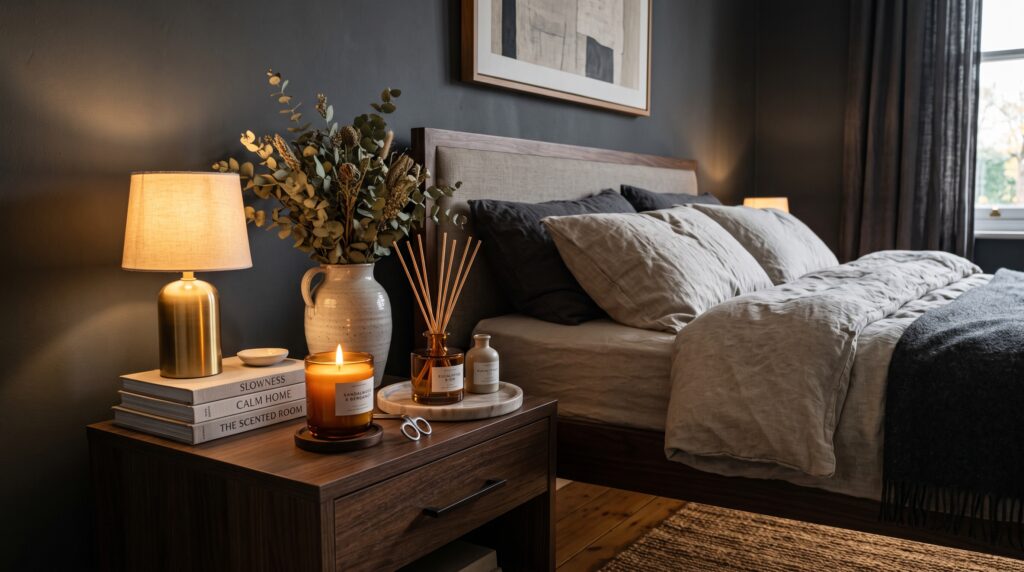
A small tray with a candle, a reed diffuser, and a mini ceramic vase on the dresser or nightstand rounds out the sensory experience. Warm scents like cedarwood, sandalwood, amber, or vanilla reinforce the cozy, enclosed feeling of the whole room, turning it into a space that feels as good as it looks.
Bringing It All Together
A moody bedroom isn’t about making a room dark for the sake of it — it’s about creating contrast and warmth at the same time. The most successful versions of this look combine a rich base color with plenty of texture, natural materials, and soft, layered lighting so the space feels intimate rather than heavy. If you’re deciding on a starting paint color, Sherwin-Williams has a solid breakdown of how to build a dark, layered room using LRV and undertone as your guide, which is worth a look before you commit to a shade: How to Create a Dark, Moody Room — Sherwin-Williams.
Pick a handful of these ideas rather than trying all 22 at once — a deep wall color, layered lighting, and one or two textural touches are often enough to transform the whole feel of a bedroom. If you’re starting from scratch, tackle the big three first: wall color, lighting, and bedding. Everything else on this list — the vintage art, the leaned mirror, the scent station — works best as a second pass once that foundation is in place, since it’s much easier to layer smaller details onto a room that already has its color and light sorted out.
It’s also worth remembering that a moody bedroom doesn’t have to be finished all at once. Many of the richest, most personal versions of this look come together slowly, piece by piece, as you find the right vintage frame or the right shade of green paint. Save this list so you can come back to it whenever you’re ready to plan your next refresh, and use it as a menu rather than a checklist — the goal is a bedroom that feels like yours, not a room that ticks off all 22 boxes at once.