Your bedroom carries more weight than any other room in the house. It’s where you close out the day, recover from stress, and reset for tomorrow — yet it’s often the last room to get any real design attention, usually finished only once every other room in the home has already been styled. Turning it into a genuine retreat doesn’t require a full renovation or a big budget. With the right mix of color, texture, lighting, and a few intentional rituals, an ordinary bedroom can become a space that actively supports rest instead of just hosting it, night after night.
Below are 22 practical, design-backed ways to bring that sense of calm into your own room — organized loosely from the biggest structural changes to the smallest daily habits, so you can start wherever your budget and time allow.
22 Bedroom Sanctuary Ideas for Total Relaxation
1. Anchor the Room in Soft Neutrals
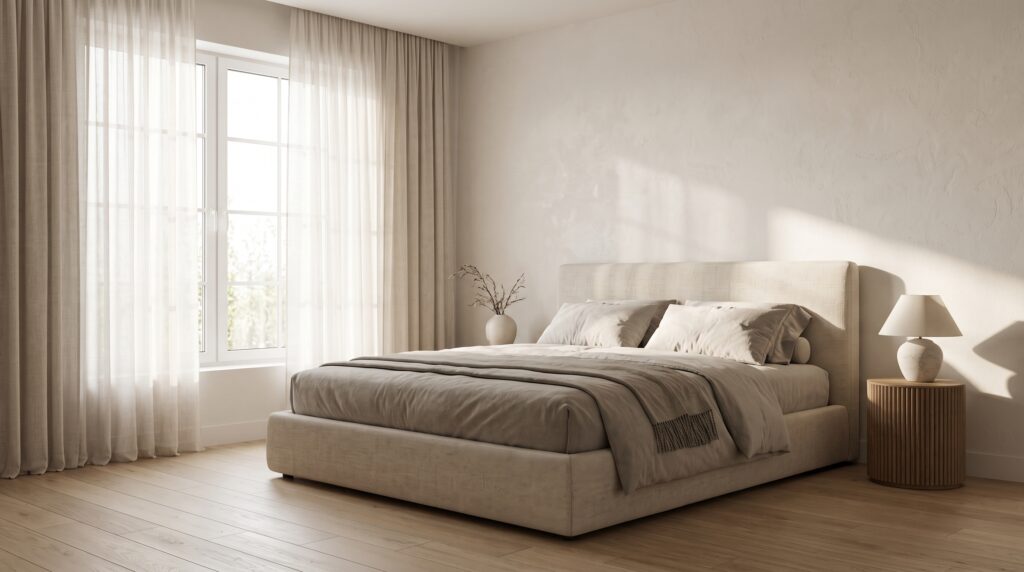
Warm white, oatmeal, greige, sage, and dusty taupe make a far better backdrop for rest than saturated color. These tones bounce daylight around the room instead of absorbing it, so the space reads as open and unhurried. Save contrast for texture — a linen headboard against a plaster-toned wall — rather than reaching for bold paint. If you’re testing paint colors, look at swatches at different times of day, since neutrals can shift dramatically between morning light and lamplight. A color that feels flat at noon might turn out to be exactly the warm, cocooning tone you want once the sun goes down.
2. Upgrade to Hotel-Caliber Bedding
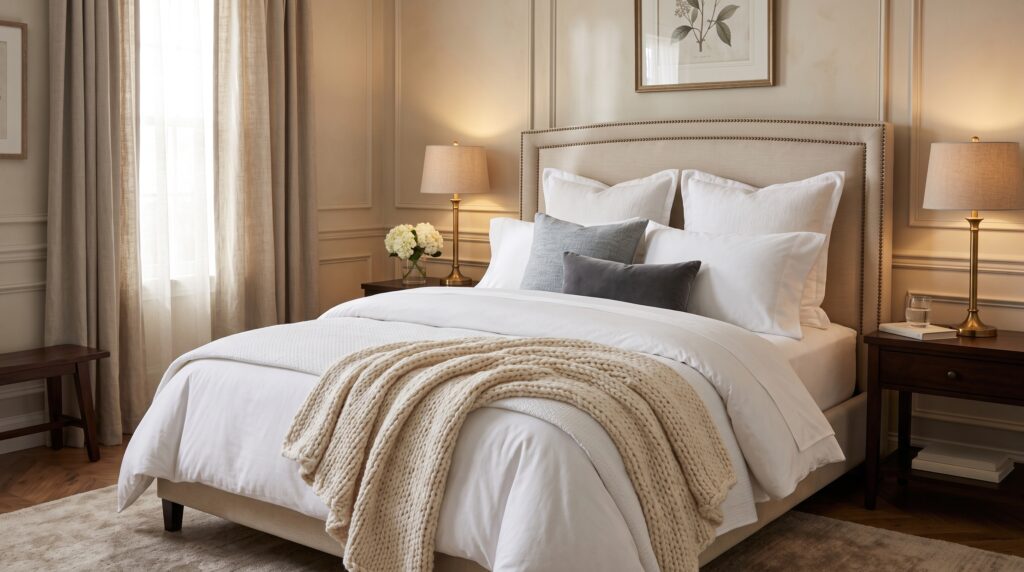
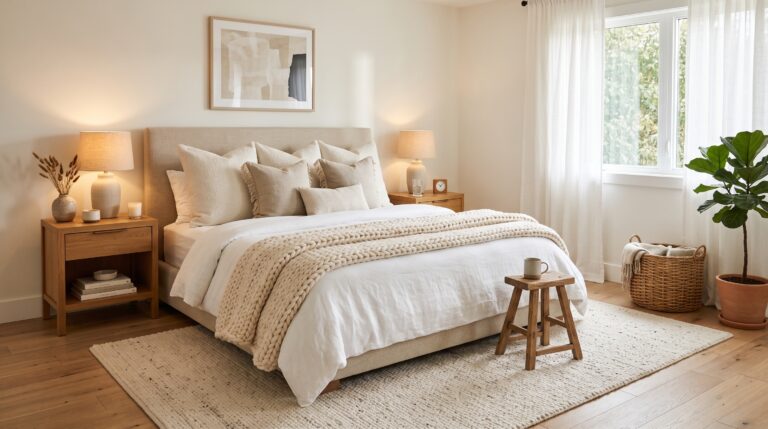
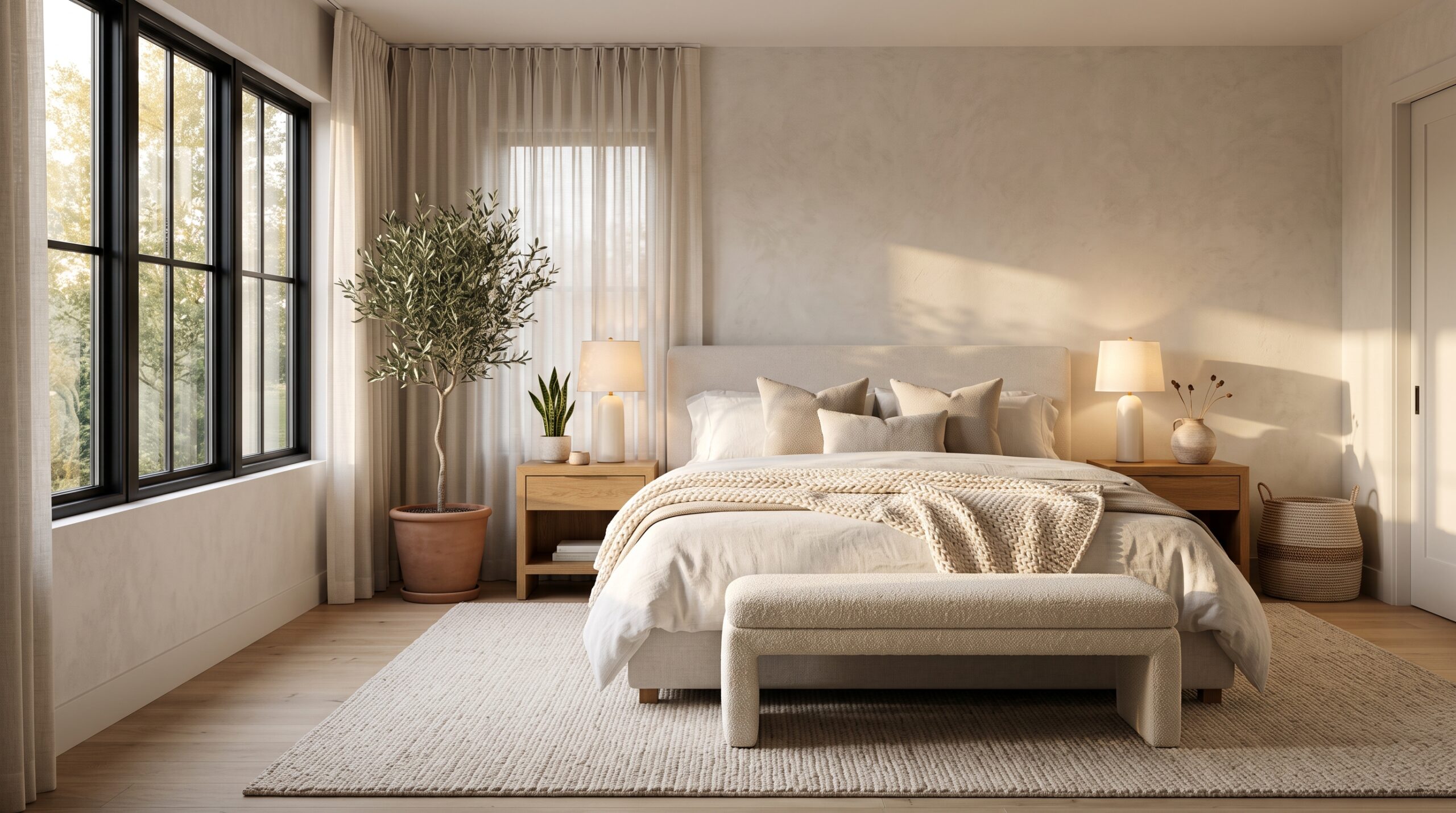
Nothing signals “retreat” faster than a well-dressed bed. Breathable linen or percale sheets, a generously filled duvet, a mix of pillow sizes, and one chunky knit throw folded at the foot of the bed will do more for the room’s mood than almost any other single purchase. Stick to a tight, cohesive color story — two or three tones at most — so the bed reads as curated rather than mismatched. If you can only invest in one upgrade this year, make it this one; a beautifully made bed anchors the entire room even if nothing else changes.
3. Bring the Outdoors In
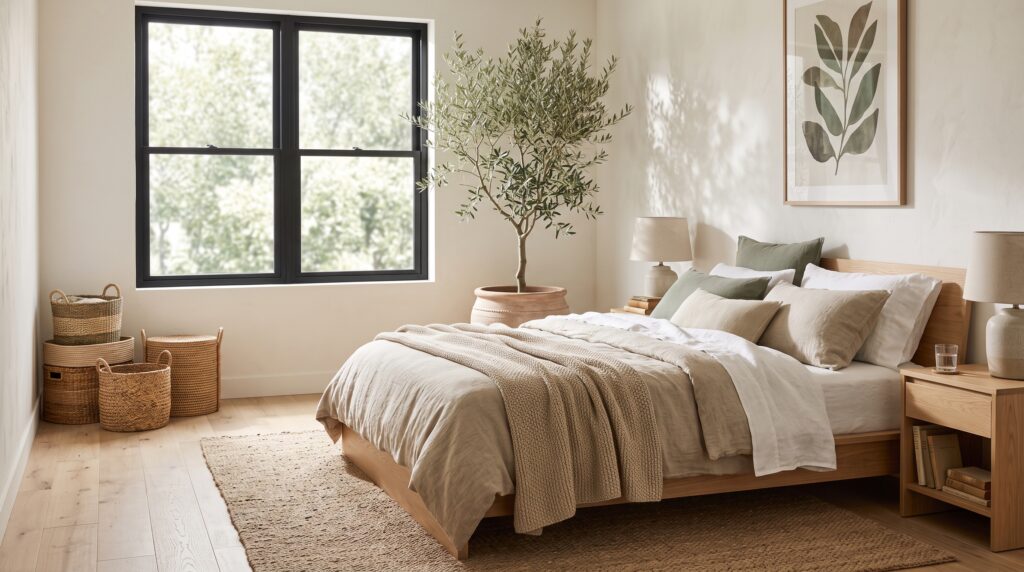
A single olive tree, a trailing pothos, or a cluster of eucalyptus stems in a simple vase softens hard edges and adds life to the room. Pair greenery with natural materials — a woven basket for throws, a stone dish for jewelry — to keep the palette grounded. If natural light is limited, choose low-light-tolerant plants like snake plants or ZZ plants so the greenery stays healthy without demanding a spot right by the window.
4. Swap Overhead Light for Layered, Warm Sources
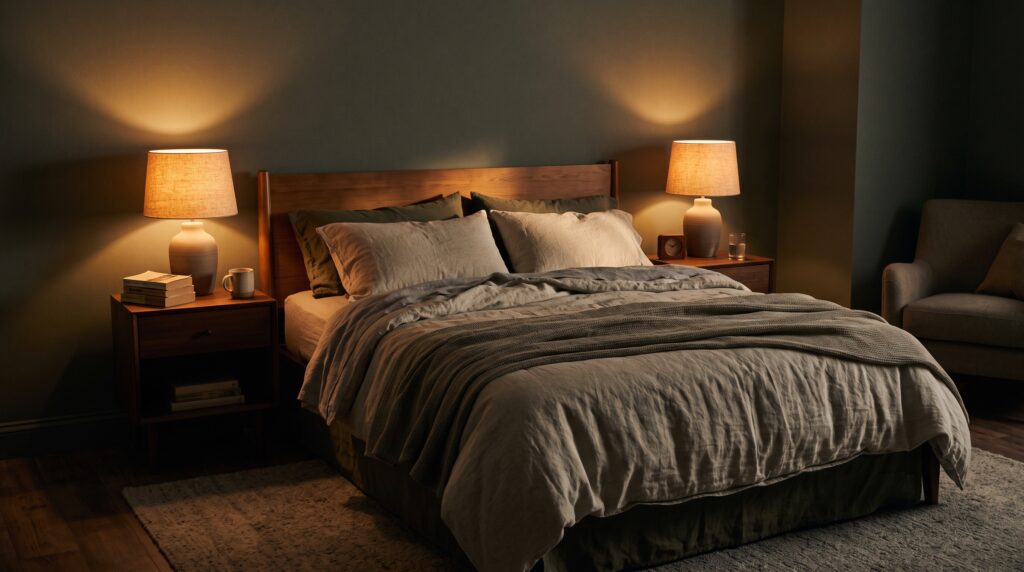
Harsh ceiling light is one of the fastest ways to make a bedroom feel clinical. Bedside lamps, a plug-in sconce, or a dimmable LED strip tucked behind the headboard let you shift the room’s mood as the evening winds down. Reputable sleep researchers point out that low, warm lighting in the hours before bed can make it easier to feel drowsy, so this isn’t just an aesthetic choice — it supports the way your body actually prepares for sleep.
5. Edit Down to What You Actually Need
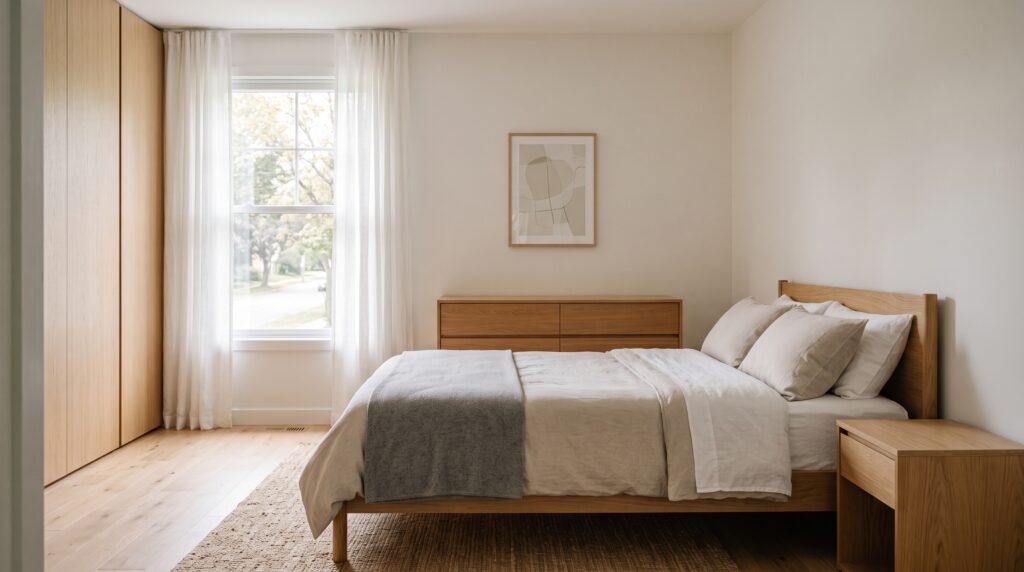
A sanctuary can’t coexist with clutter. Choose a bed frame or nightstand with hidden storage, clear off dressers, and let only a handful of meaningful objects live on display. Fewer visual distractions means your eyes — and your nervous system — have less to process before you can settle. Try a simple rule: for every new item you bring into the room, one existing item has to leave. It keeps the space from slowly refilling once you’ve done the work of decluttering it.
6. Hang Curtains High and Wide
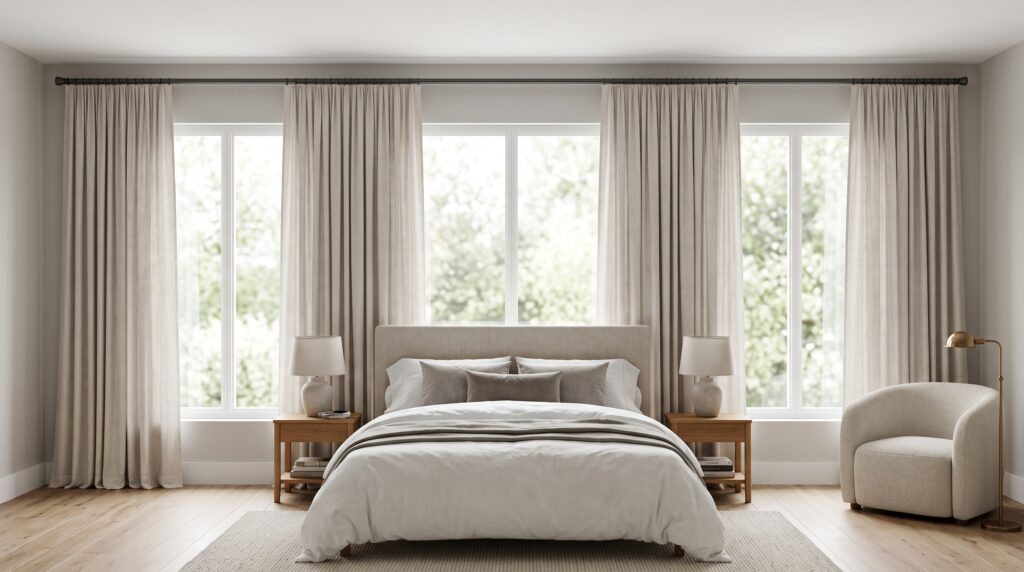
Mounting linen curtain rods close to the ceiling, rather than directly above the window frame, tricks the eye into reading the room as taller. The soft drape of natural linen also filters daylight beautifully, giving the room a gentle, cocooned quality without blocking it out entirely.
7. Carve Out a Reading Nook
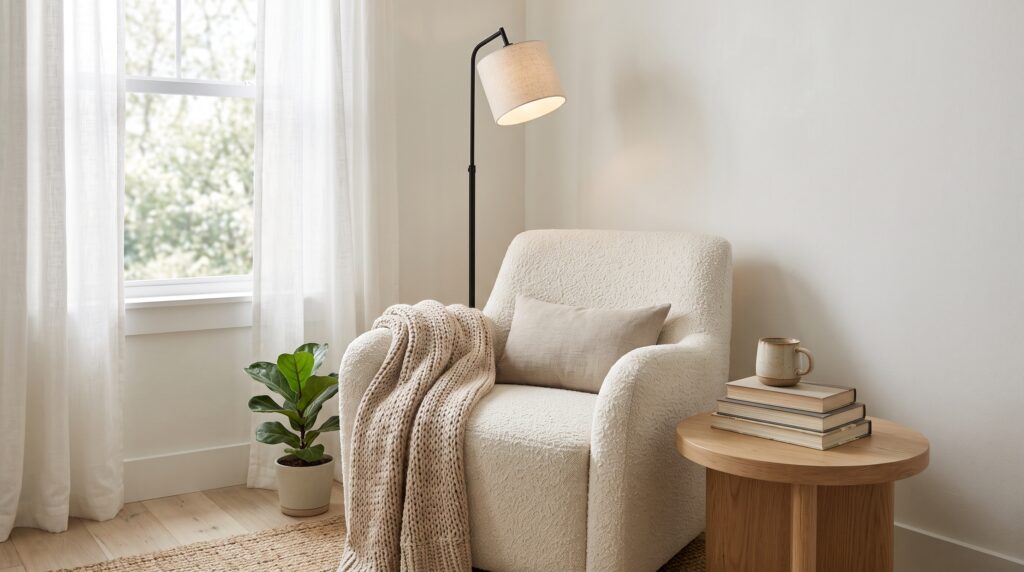
If you have even a spare corner, a bouclé armchair, a small wood side table, and a floor lamp can turn it into a dedicated wind-down spot. Having a place to read that isn’t the bed itself helps separate “relaxing” from “sleeping” in your mind, which can make both easier.
8. Ground the Room With a Textured Rug
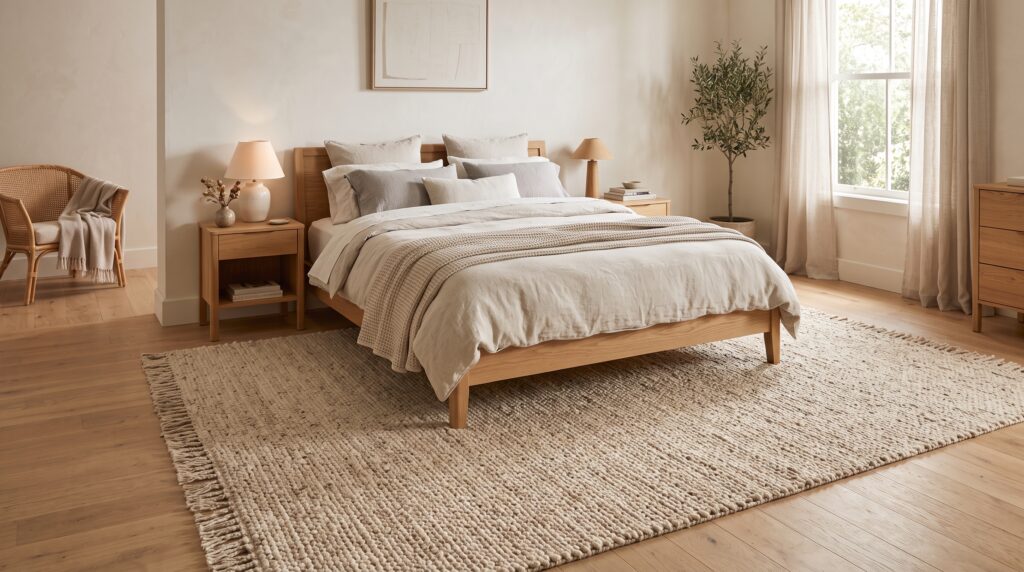
A plush wool, cotton, or hand-loomed rug in a warm neutral instantly makes the floor — and the whole room — feel softer underfoot and visually cozier. It’s one of the fastest texture upgrades available. Size matters more than pattern here: a rug that extends at least a foot or two beyond the edges of the bed will visually anchor the whole layout, while an undersized rug tends to make the room feel unfinished.
9. Choose Furniture in Natural Wood
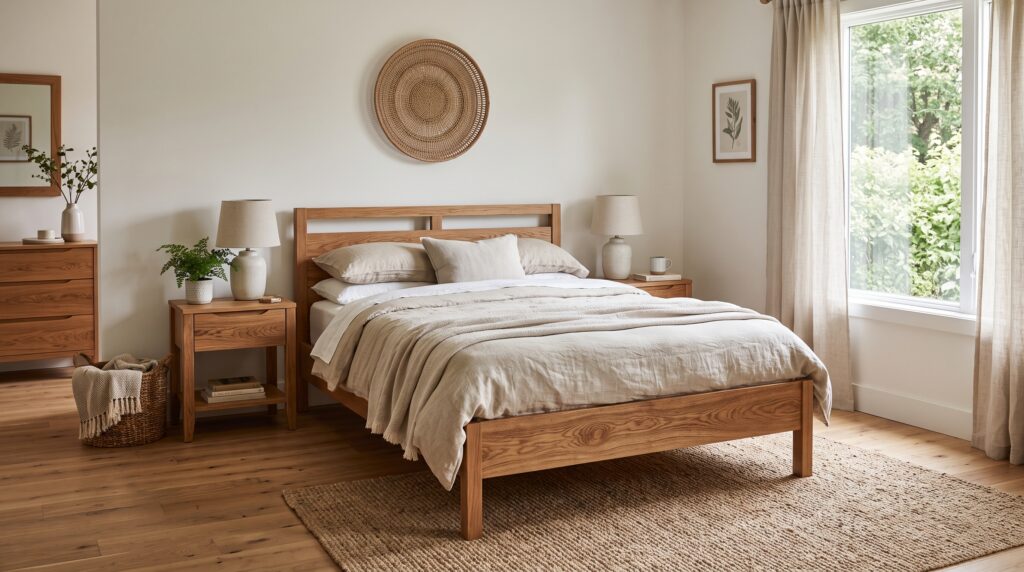
Oak, walnut, and ash pieces with visible grain and simple silhouettes bring warmth without competing for attention. Stick to clean lines so the furniture reads as calm rather than heavy.
10. Add Scent to the Routine
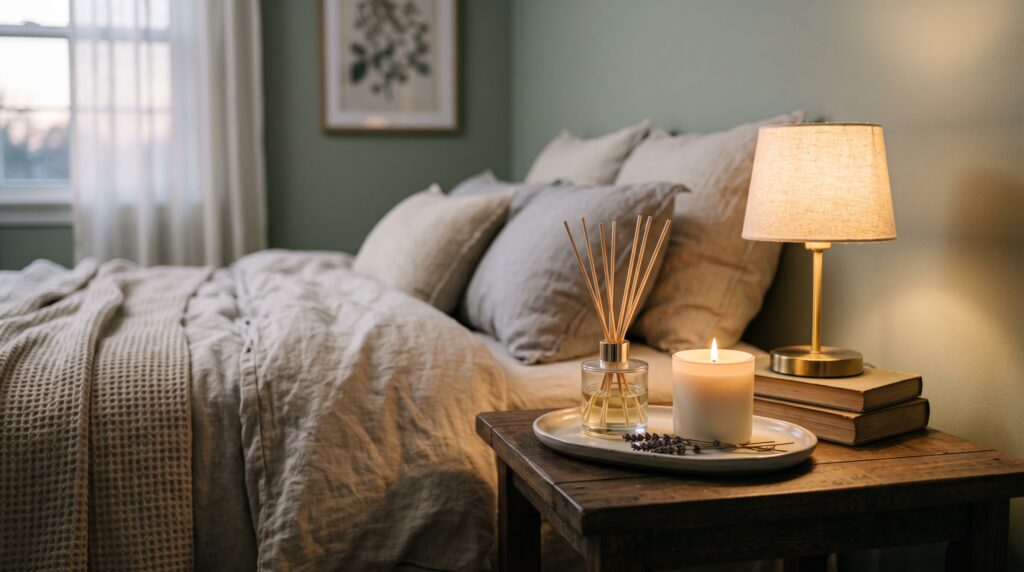
Fragrance is an underrated part of a relaxing bedroom. A reed diffuser or a soy candle in lavender, chamomile, or sandalwood can shift the whole feel of the space in seconds. According to the Sleep Foundation’s guide to designing an ideal bedroom for sleep, aromatherapy using scents such as lavender has been studied for its potential to encourage relaxation, which makes it a genuinely useful addition rather than just a nice-to-have.
11. Display a Few Handmade Ceramics
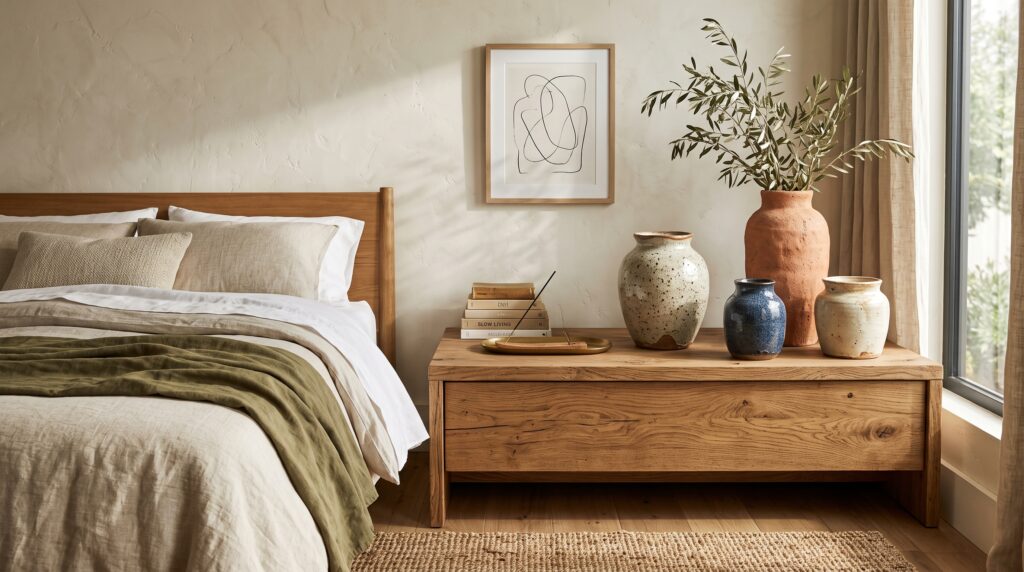
A ceramic vase, a hand-thrown candle holder, or an irregularly glazed bowl adds personality and warmth without crowding the room. Handmade pieces tend to pair especially well with linen and natural wood.
12. Mount Floating Shelves
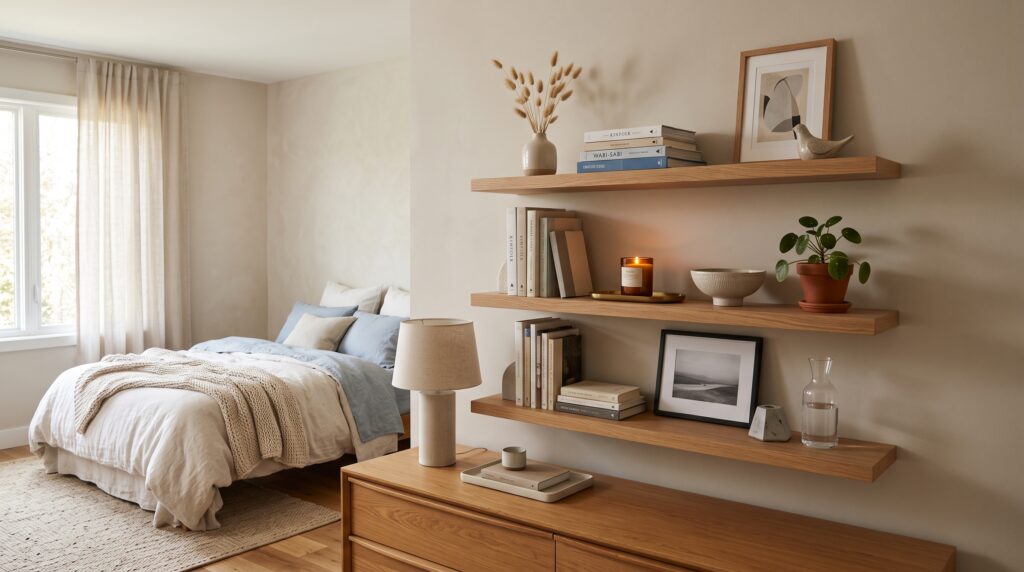
Open shelving keeps books, candles, and small art pieces off the floor and out of the way, which preserves the clean, breathable feeling a sanctuary needs. Resist the urge to fill every inch — a few well-chosen items will always read as more intentional than a packed shelf.
13. Add a Second (or Third) Plant
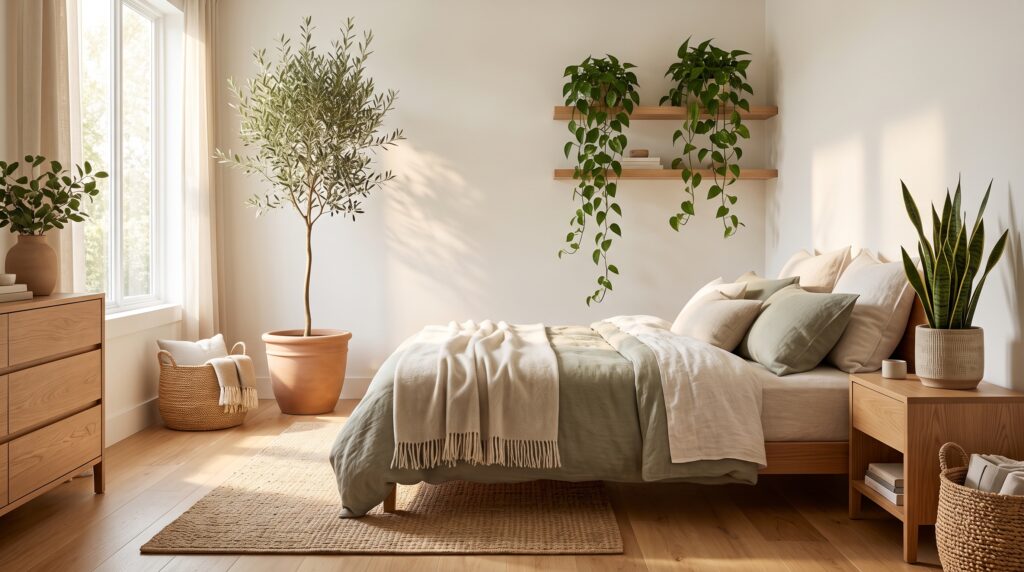
Beyond the statement plant near the window, consider a snake plant on a nightstand or a peace lily in the corner. Multiple plants at different heights bring a layered, slightly wild softness that keeps the room from feeling too styled.
14. Borrow From Boutique Hotel Design
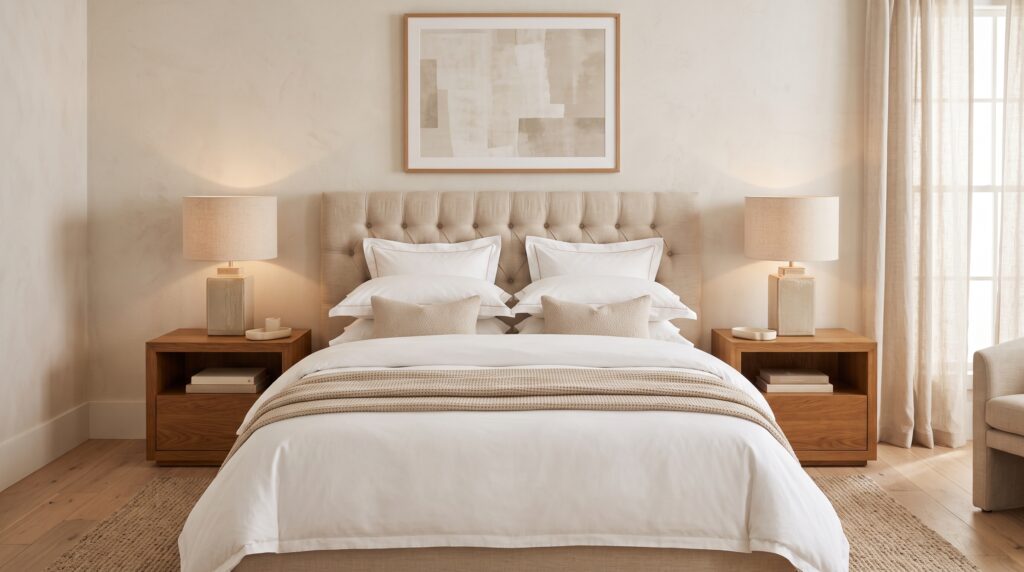
Matching nightstands, coordinated lamps, crisply made bedding, and clear surfaces are the backbone of that “luxury hotel” feeling. The trick isn’t spending more — it’s consistency: matched pairs and restraint go further than a room full of mismatched, well-meaning pieces.
15. Add an Upholstered Bench
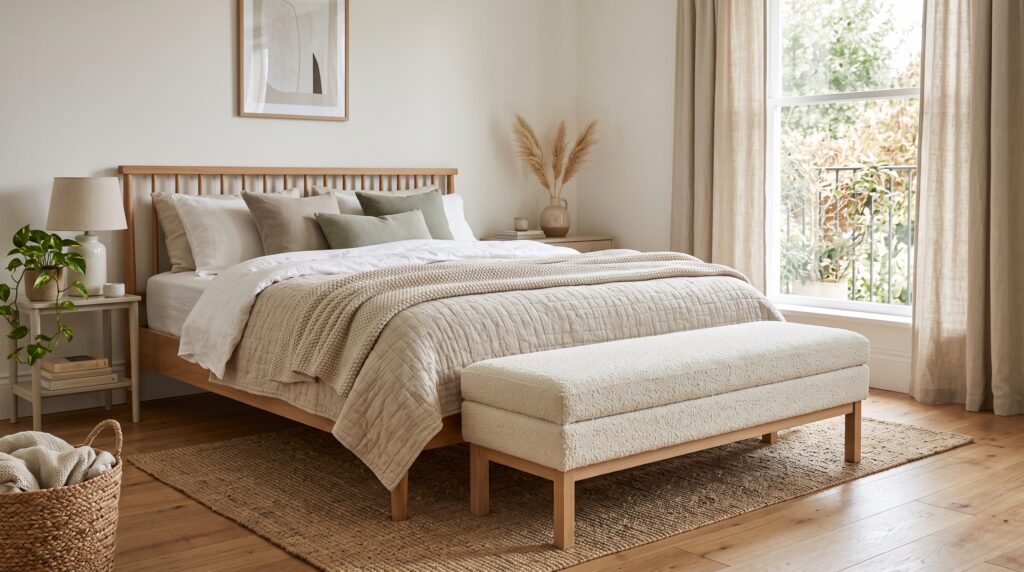
A linen or bouclé bench at the foot of the bed adds a place to sit while getting dressed and finishes the room’s silhouette. It’s a small addition that makes the whole layout feel more considered.
16. Choose Artwork That Slows You Down
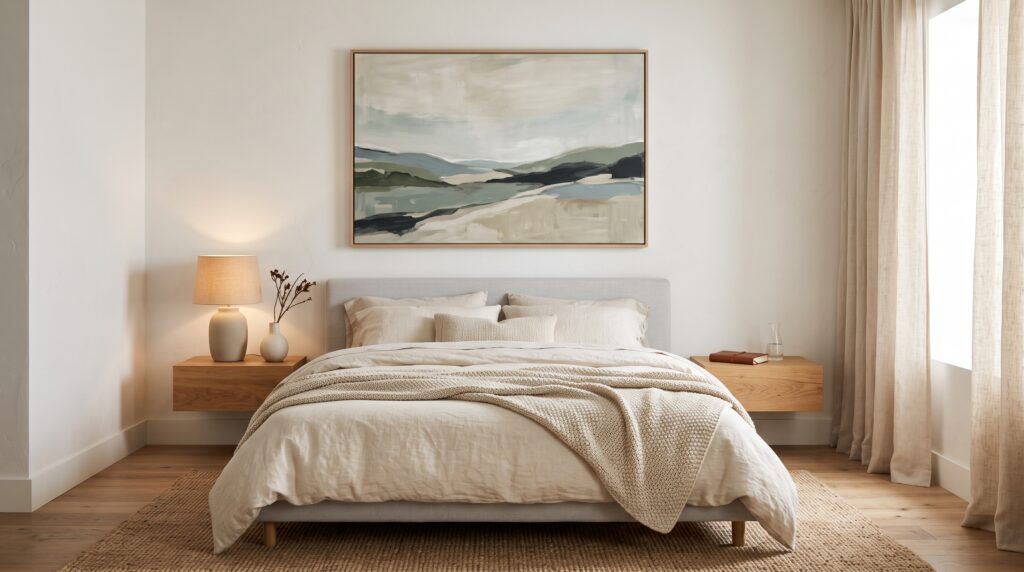
Abstract landscapes, botanical prints, and minimalist line drawings tend to work best in a room meant for rest. One or two larger pieces will have more impact — and keep the walls looking calmer — than a busy gallery wall.
17. Mix Natural Textures Generously
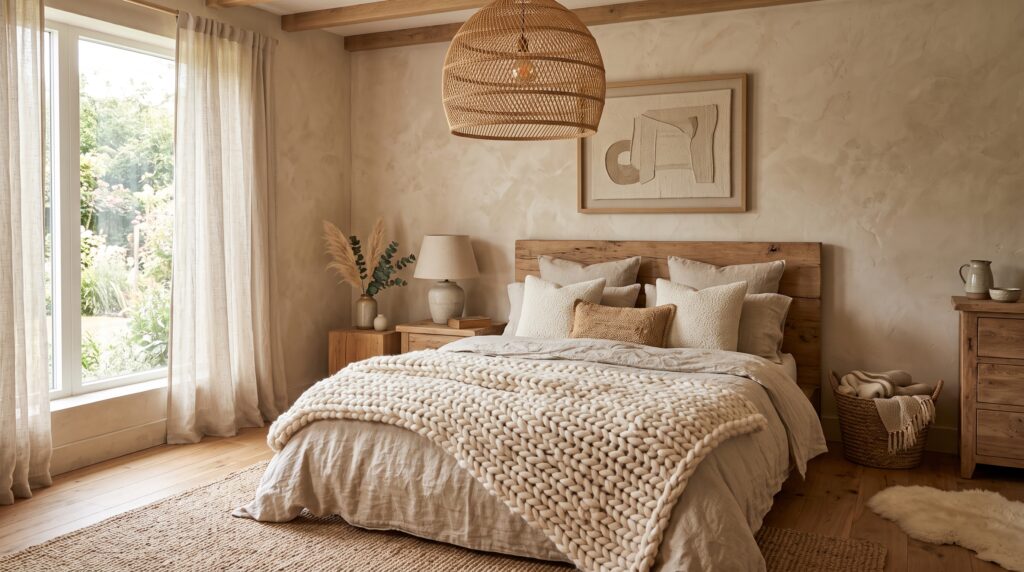
Linen, cotton, wool, bouclé, rattan, and raw wood can all coexist in the same room without clashing, as long as the color palette stays consistent. This kind of tactile layering is what makes a neutral room feel rich instead of flat. Aim for at least three distinct textures within reach of the bed — the sheets, a throw, and a bedside object, for example — so the space feels layered even from a seated position.
18. Keep Devices Out of Sight
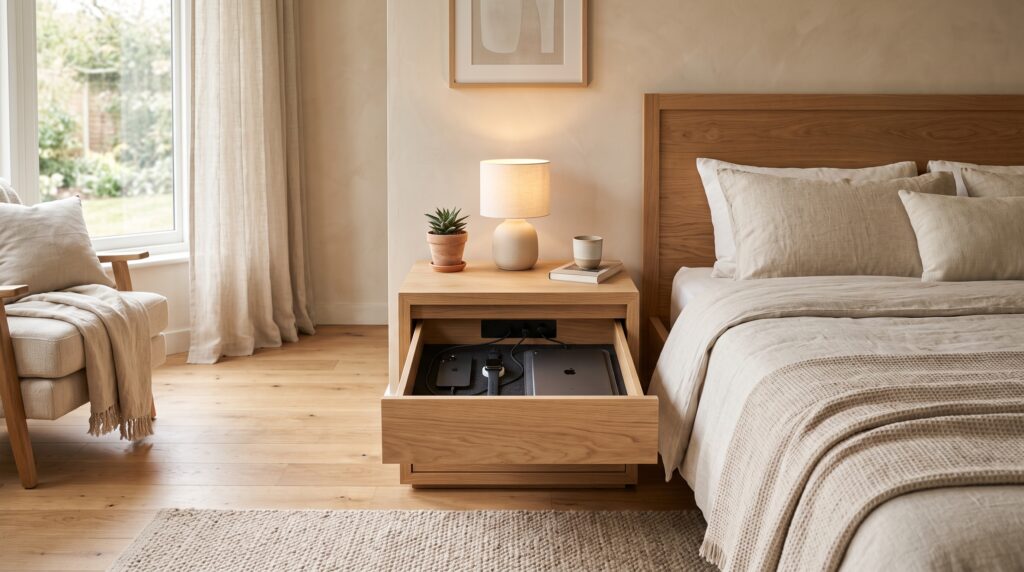
Chargers, cables, and screens are some of the biggest disruptors of a calm bedroom — visually and otherwise. A drawer or basket dedicated to charging devices overnight, away from the bed, helps keep the space focused on rest rather than notifications.
19. Add Quiet Background Sound
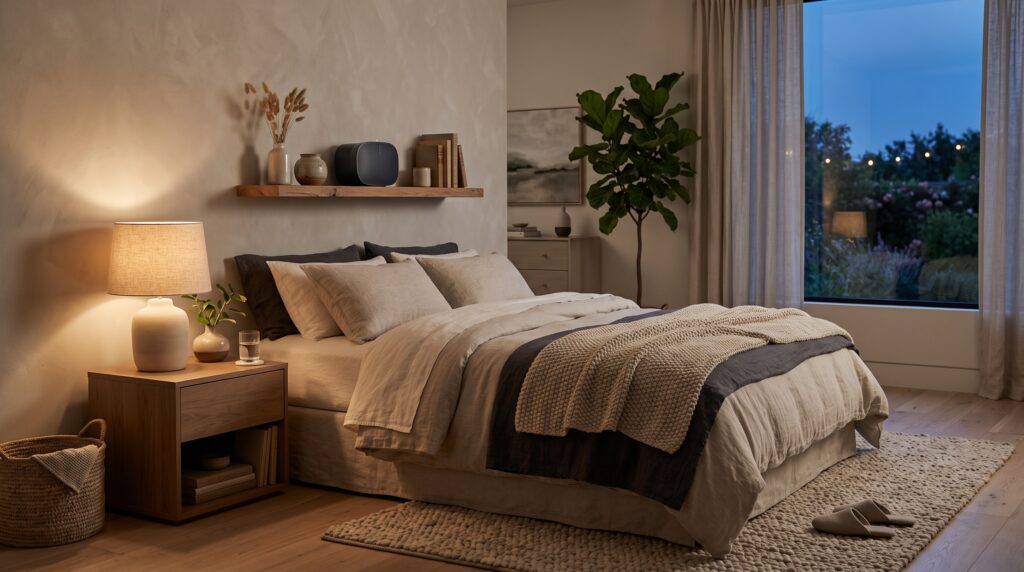
A small wireless speaker tucked on a shelf can play soft instrumental music, rain sounds, or an ambient playlist as part of your wind-down routine. Choose a speaker that blends into the room rather than one that draws attention to itself.
20. Hang an Oversized Floor Mirror
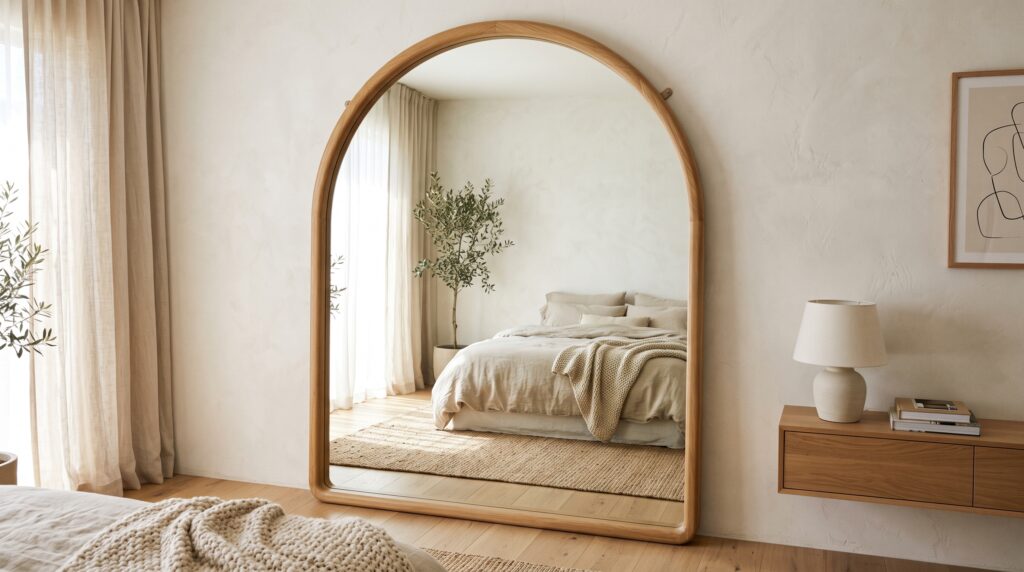
A large mirror — ideally wood-framed or gently curved — bounces natural light around the room and makes it feel more spacious. It also doubles as a practical, everyday piece rather than pure decoration.
21. Keep Decor Personal, Not Excessive
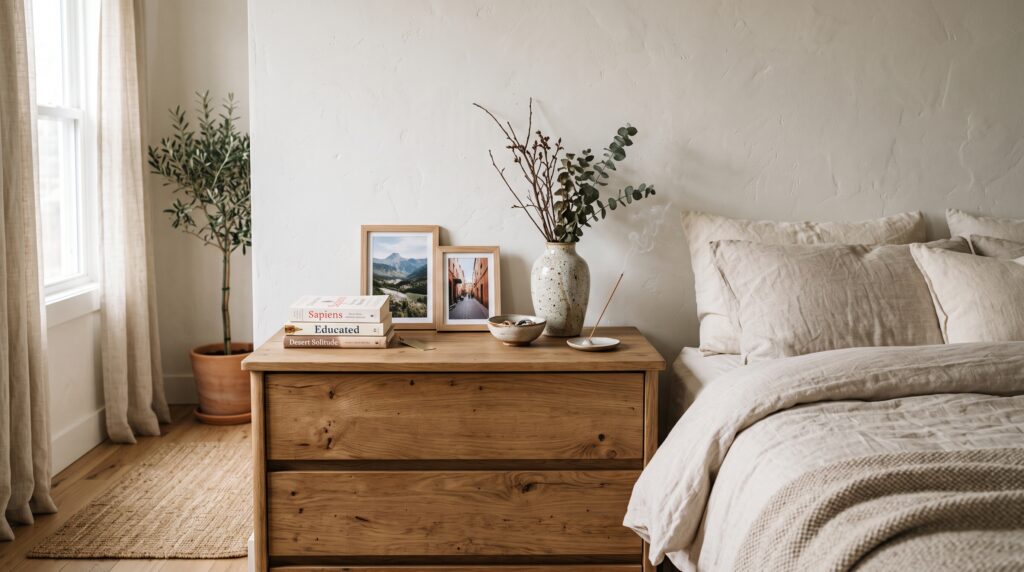
A few favorite books, a framed photo, a travel souvenir, or a piece of handmade pottery gives the room warmth and story. The goal is intentional, not empty — a sanctuary should still feel like yours.
22. Build a Nightly Wind-Down Ritual
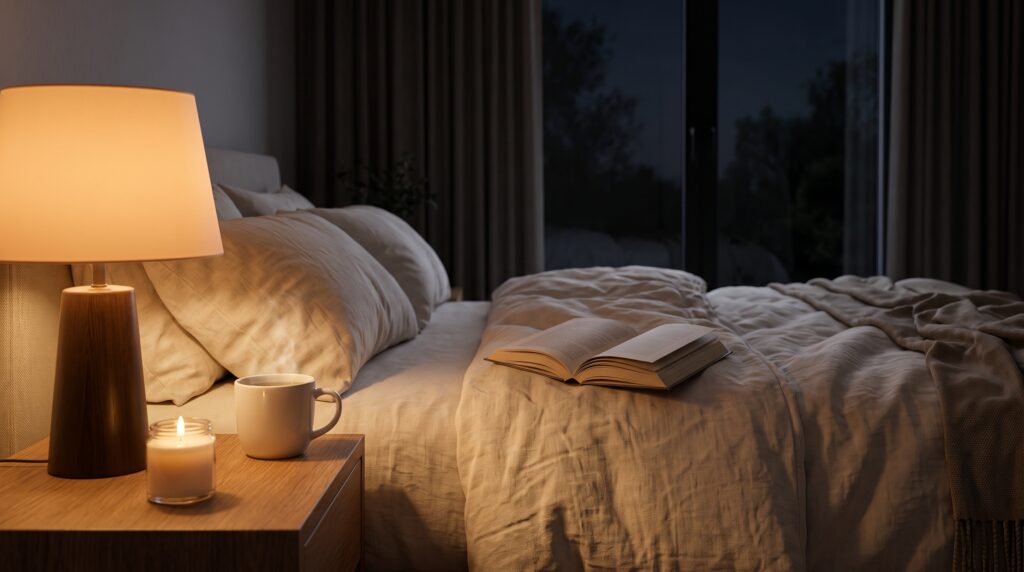
Design only goes so far without a routine to match it. Lighting a candle, diffusing a calming scent, reading a few pages, or spending five minutes in quiet stillness each night trains your body to associate the room — and the ritual — with rest.
Frequently Asked Questions
Where should I start if my budget is limited? Begin with bedding, lighting, and decluttering. All three are relatively low-cost, don’t require any construction or furniture shopping, and have an outsized effect on how the room feels within a single weekend.
What’s the single most common mistake people make when trying to create a bedroom sanctuary? Adding too much at once. A room that gets six new decorative objects, a rug, new curtains, and a fresh paint color all in the same week often ends up feeling busy rather than calm, simply because nothing has had a chance to settle visually. Spacing changes out over a few weeks tends to produce a more cohesive result.
Do I need to stick strictly to neutrals? No — neutrals are a reliable foundation, but a single muted accent color (a dusty blue, a deep forest green) can still feel calming if it’s used sparingly, such as on one accent pillow or a piece of art. The goal is a restful palette, not necessarily an all-white one.
How much does scent really matter for relaxation? More than most people expect. Smell is closely tied to memory and mood, and a consistent, calming scent used only in the bedroom can help train your brain to associate that fragrance — and the room itself — with winding down.
Can a small bedroom still feel like a sanctuary? Absolutely. In fact, smaller rooms often benefit the most from these principles, since decluttering, soft lighting, and a cohesive palette make a compact space feel more intentional rather than cramped. A large floor mirror and lighter wall colors can also help a small room feel more open.
Bringing It All Together
A true bedroom sanctuary isn’t the result of one big purchase — it’s the layering of small, considered choices: a softer palette, better bedding, warmer light, fewer distractions, and a nightly rhythm that signals it’s time to slow down. None of these ideas require a full renovation, and most of them can be tackled over a single weekend or spread across a few paydays, whichever suits your budget better.
Start with two or three ideas from this list rather than trying to do all 22 at once, and let the room evolve gradually from there, the way a well-loved space always does. Notice how each small change affects the way the space feels before adding the next one — that pacing is often what separates a room that looks styled from one that actually feels restful to live in. Over time, those small changes add up to a space that genuinely feels like a retreat — one you look forward to coming home to every single day, and one that quietly does its job of helping you rest, recover, and start tomorrow on better footing. Treat this list less as a checklist to finish and more as a set of ongoing habits, and your bedroom will keep earning its role as the calmest room in the house.