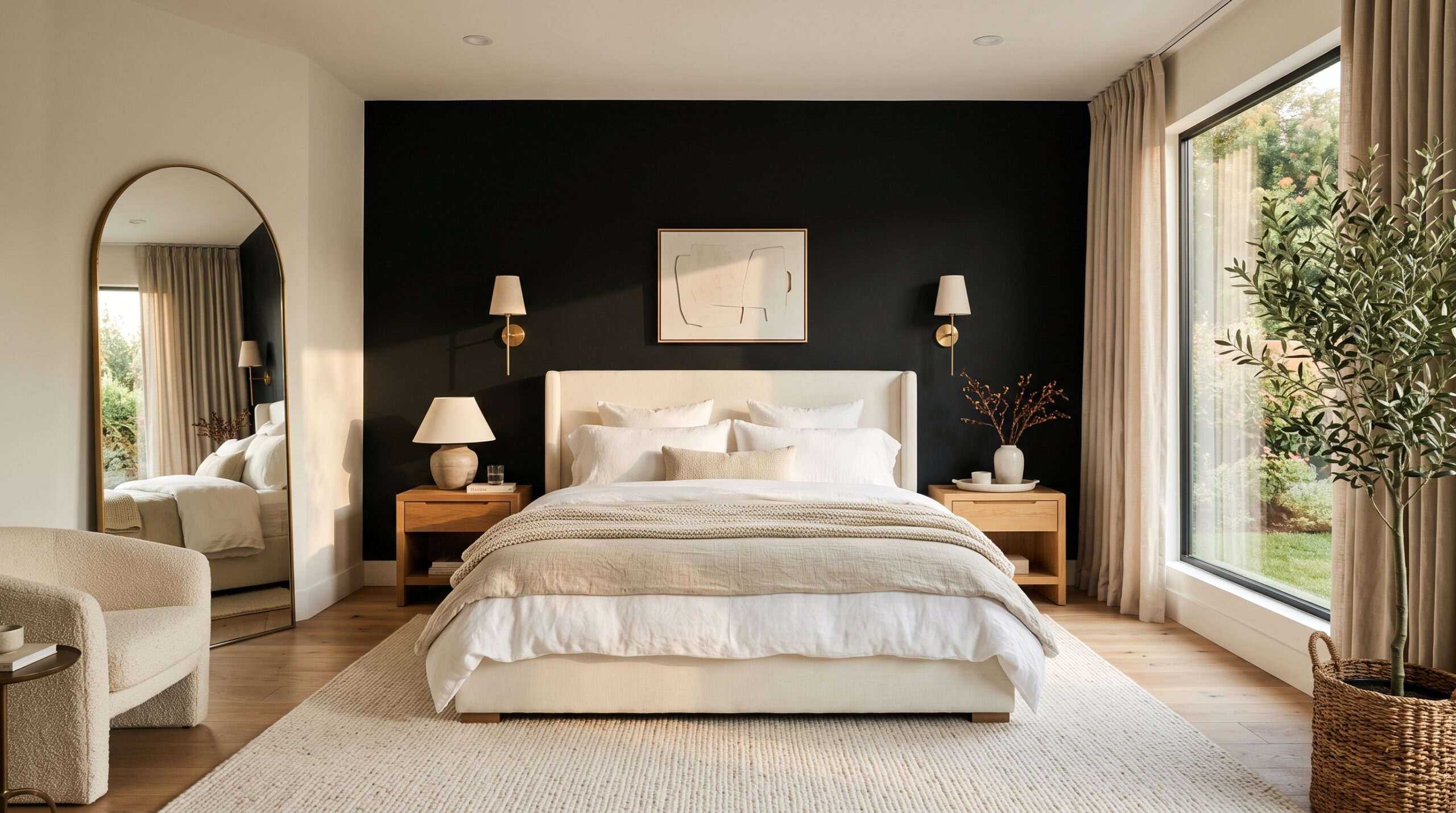
There’s something about a single 22 black accent wall bedroom ideas youll lovel that changes an entire room. It isn’t about making a bedroom feel dark or heavy — done well, a black accent wall does the opposite. It gives the eye somewhere to land, it makes white bedding look crisper, it makes brass hardware glow a little warmer, and it turns an ordinary bedroom into a space that feels considered and lived-in rather than default-beige. Whether you gravitate toward moody maximalism, quiet Scandinavian calm, industrial edge, or soft farmhouse charm, black works as a backdrop for almost every style, because it isn’t really a color so much as a frame.
Below are 22 ways to bring a black accent wall into your bedroom without losing warmth, light, or personality. Mix and match — most of these ideas work beautifully together.
22 Black Accent Wall Bedroom Ideas You’ll Love
1. Choose a Matte Finish and Let Oak Furniture Do the Talking
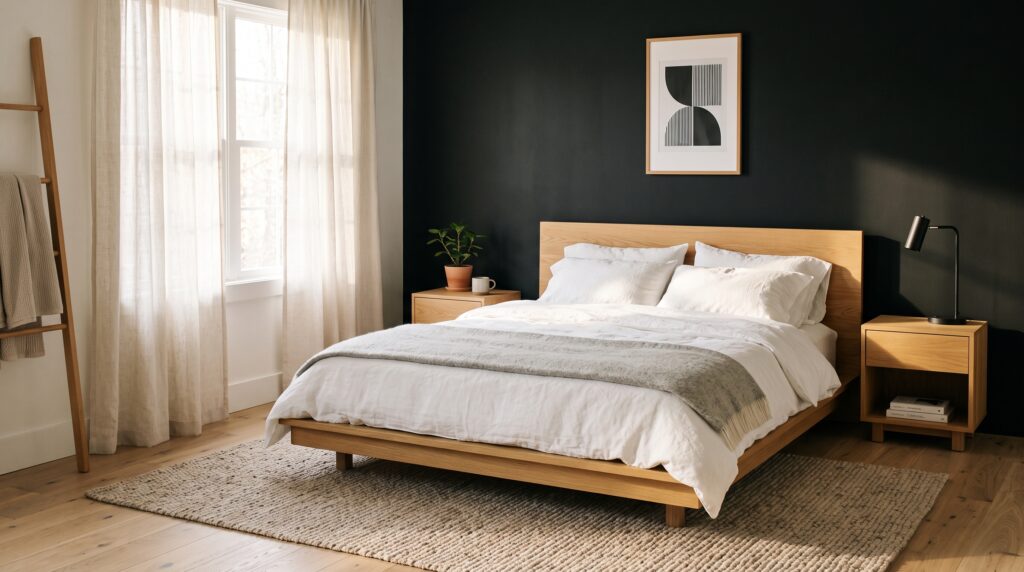
Matte black paint absorbs light instead of bouncing it around, which keeps a wall feeling grounded rather than glossy or cold. Set it against furniture in a lighter wood — think honey oak or bleached ash — and the two tones start doing the work for you. The wood keeps things feeling lived-in and warm, while the matte black stays quietly dramatic in the background.
2. Add Vertical Wood Slats Over the Black Paint
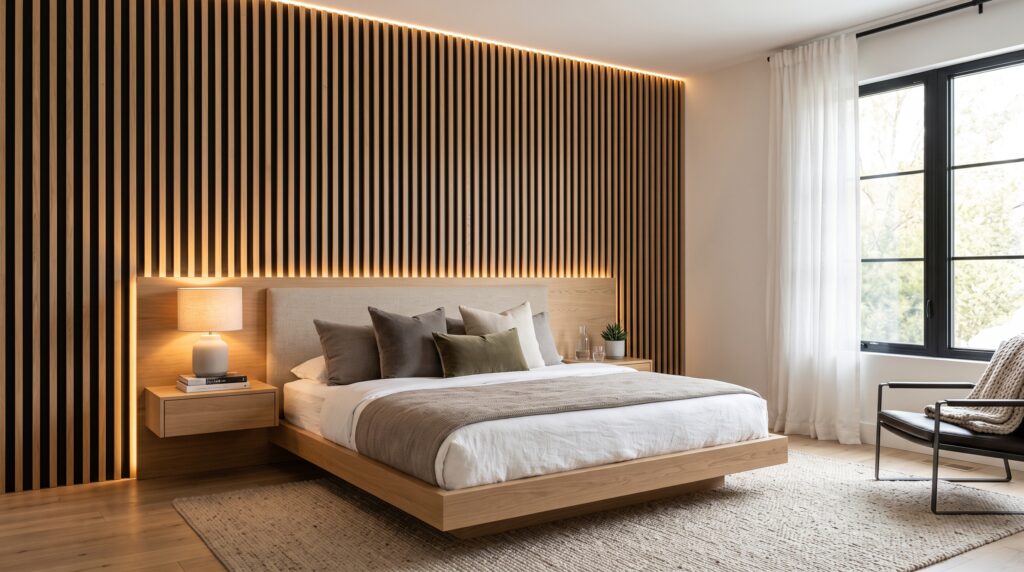
Slat paneling behind the headboard has become a design staple for a reason: it adds texture and dimension to a flat wall without adding clutter. Paint the wall black first, then install vertical oak or walnut slats with even spacing. The result reads like a custom architectural feature, even in a rental-friendly version made from lightweight panels.
3. Let White Bedding Carry the Contrast
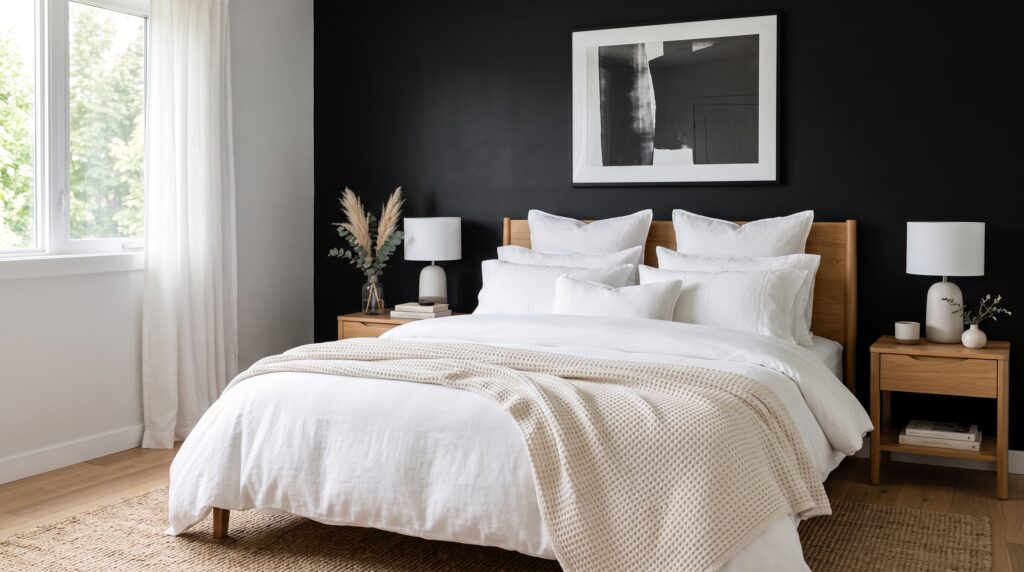
A black wall needs something to play off of, and nothing does that job better than layered white bedding. Stack a crisp white duvet, a waffle-weave blanket, and a handful of linen pillows for texture. The interplay of matte black and soft white is one of the simplest, most reliable combinations in interior design.
4. Bring in Brass or Warm Gold Lighting
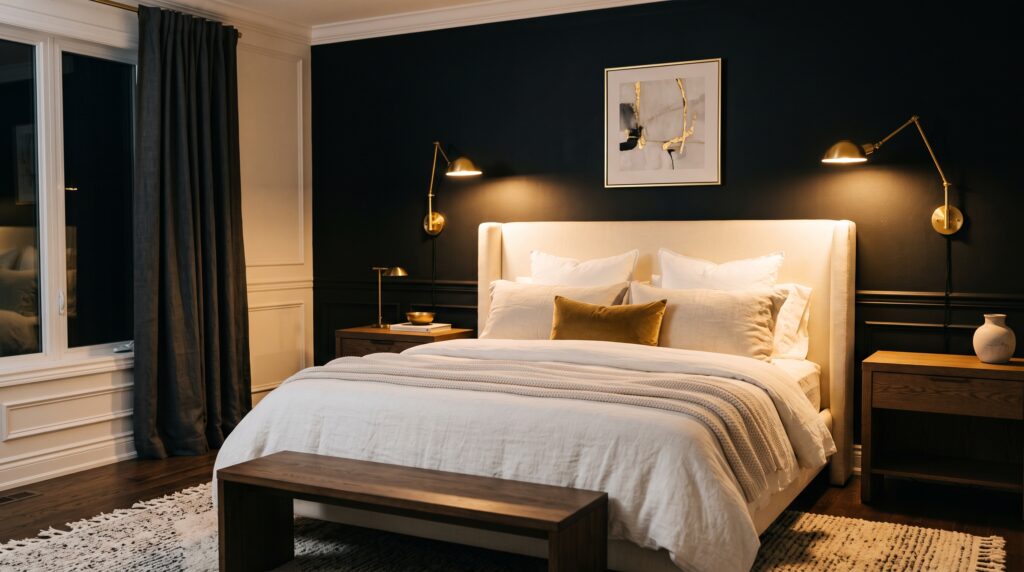
Cool-toned lighting can make a black wall feel flat and a little sterile. Brass sconces, a warm-toned pendant, or a pair of gold table lamps change that instantly — the metal catches light and throws a soft glow across the black surface, adding warmth without diluting the drama.
5. Hang One Oversized Piece of Art Instead of Several Small Ones
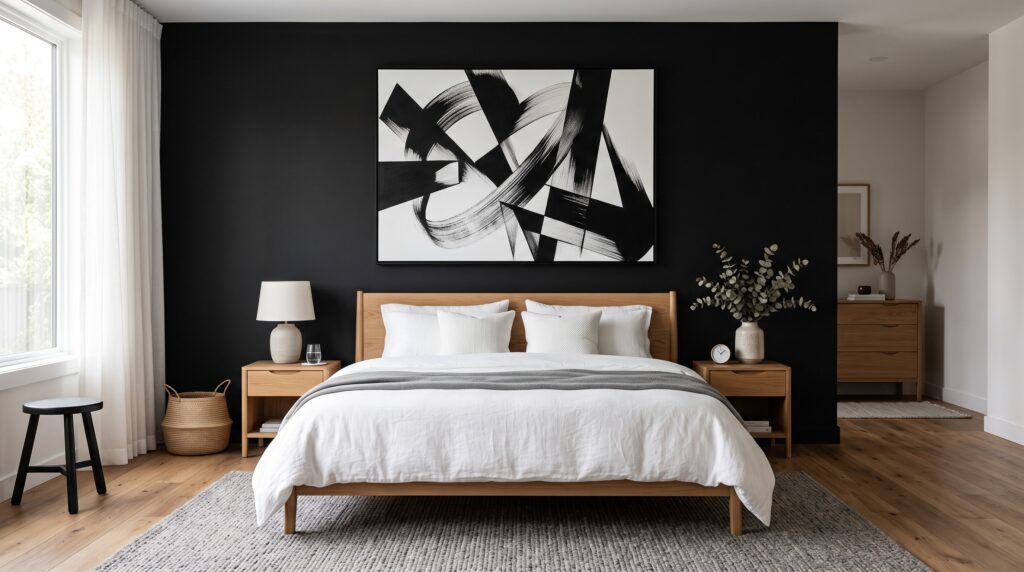
Black walls are forgiving backgrounds for art, but restraint matters. A single large black-and-white photograph or abstract print creates a clean focal point. Skip the gallery wall here — one strong piece, simply framed, does more for the room than a cluster of smaller frames competing for attention.
6. Layer in Natural Texture
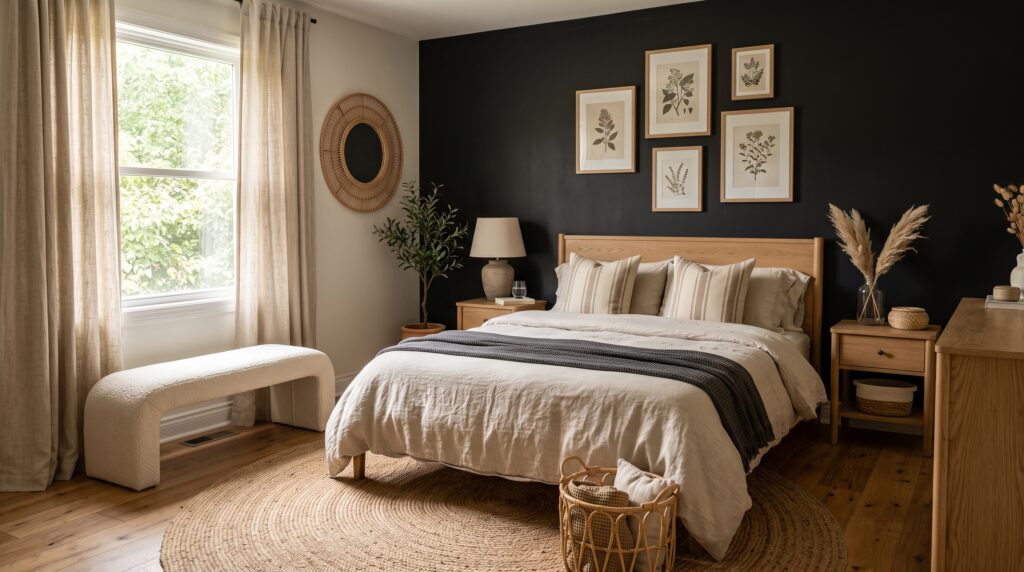
Bouclé, linen, jute, and raw wood all soften a bold wall color because they add tactile variety. A woven bench at the foot of the bed, a jute rug underfoot, or linen curtains at the window keep the room feeling inviting rather than stark, no matter how deep the black.
7. Add a Statement Plant
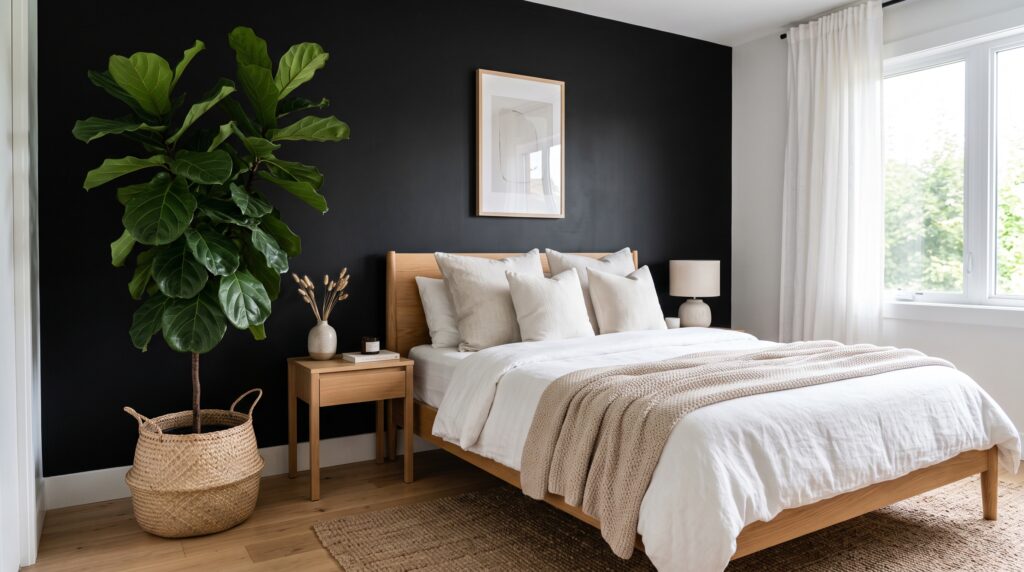
A large plant — a fiddle-leaf fig, an olive tree, or even a trailing pothos on a shelf — introduces living color against a black backdrop. Green against black is one of nature’s most striking pairings, and a plant does more to soften a room than almost any decor object.
8. Try Black Panel Molding Instead of Flat Paint
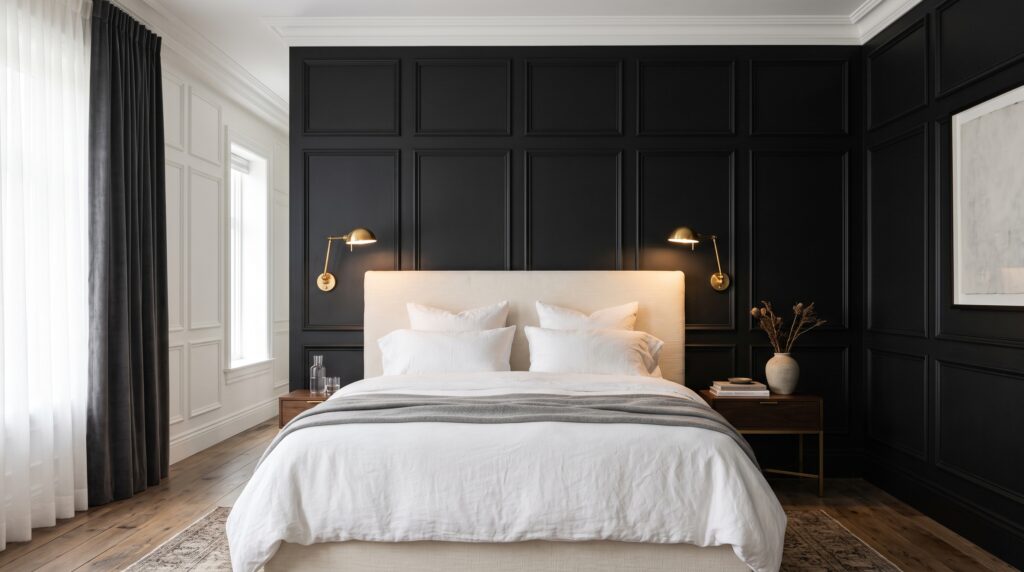
For a more architectural, boutique-hotel feel, skip the flat black wall and install picture-frame or shaker-style molding, then paint the whole thing black. The subtle shadow lines add texture and make the wall look custom-built, even if it’s a DIY weekend project.
9. Hang Floor-to-Ceiling Linen Curtains
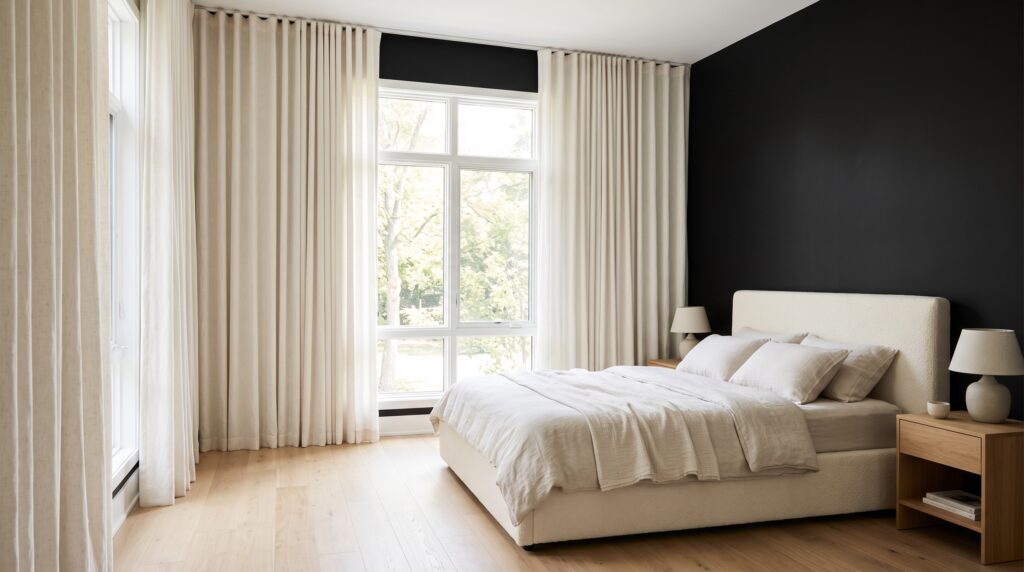
Curtains that run from ceiling to floor in a soft neutral — oatmeal, ivory, or warm beige — make a room feel taller and brighter, which balances out a dark wall beautifully. The fabric’s natural texture also softens the hard edges of a painted surface.
10. Pick an Upholstered Bed in a Light Neutral
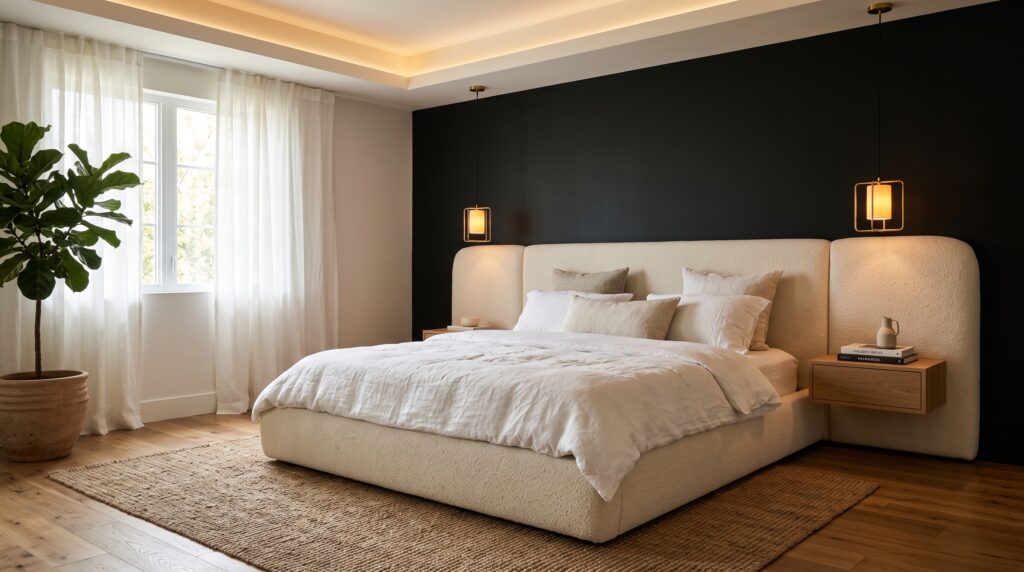
A bed frame is the largest piece of furniture in the room, so its color matters. An upholstered headboard in oatmeal boucle, light gray linen, or soft cream creates a gentle transition between the black wall and lighter bedding, without introducing another loud element.
11. Add a Leather Accent Chair
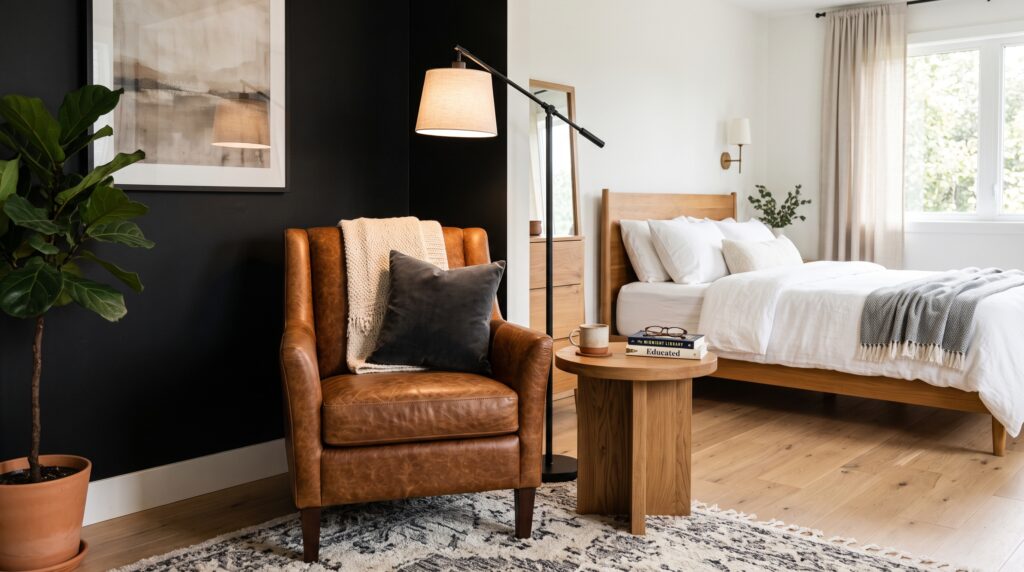
A cognac or camel leather chair brings warmth and a bit of vintage character into a black-walled bedroom. Tuck it into a corner with a small side table and a floor lamp to create a reading nook that feels intentional rather than an afterthought.
12. Use Black Frames for Your Artwork
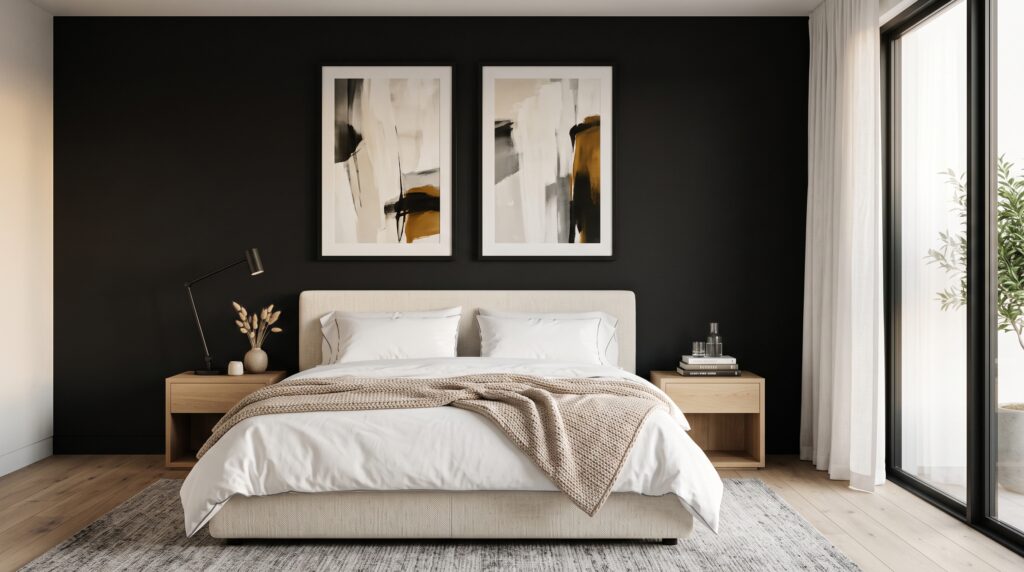
Instead of white or natural wood frames, echo the wall color in your art frames. Black-on-black frames against the black wall practically disappear, letting the printed image itself become the focal point rather than the framing around it.
13. Install Floating Shelves in Walnut or Oak
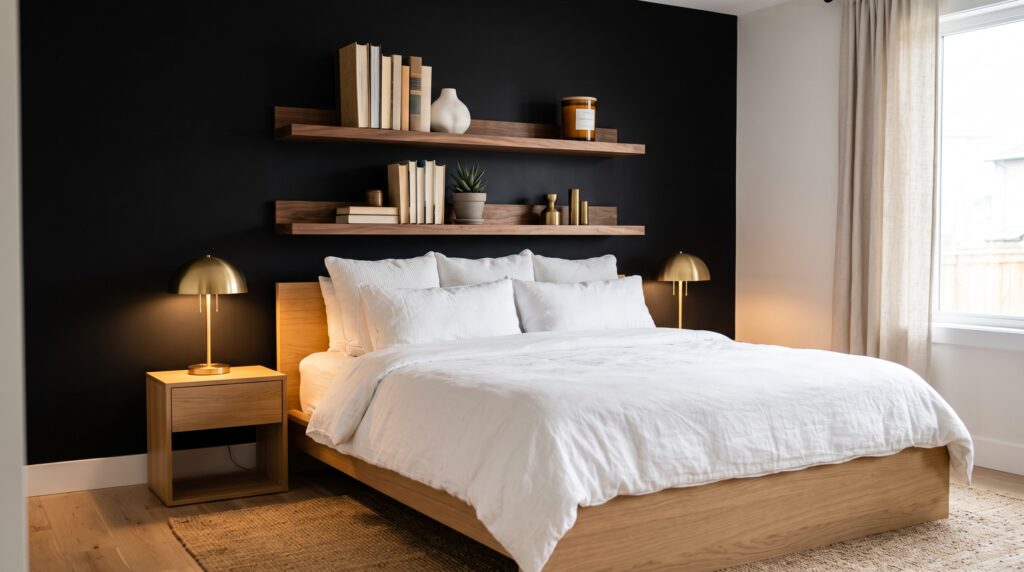
A pair of floating wood shelves gives you a spot to display books, small ceramics, or a candle without needing a full dresser. The warm wood tone breaks up the black wall visually and gives the space a curated, gallery-like feel.
14. Ground the Room with a Textured Neutral Rug
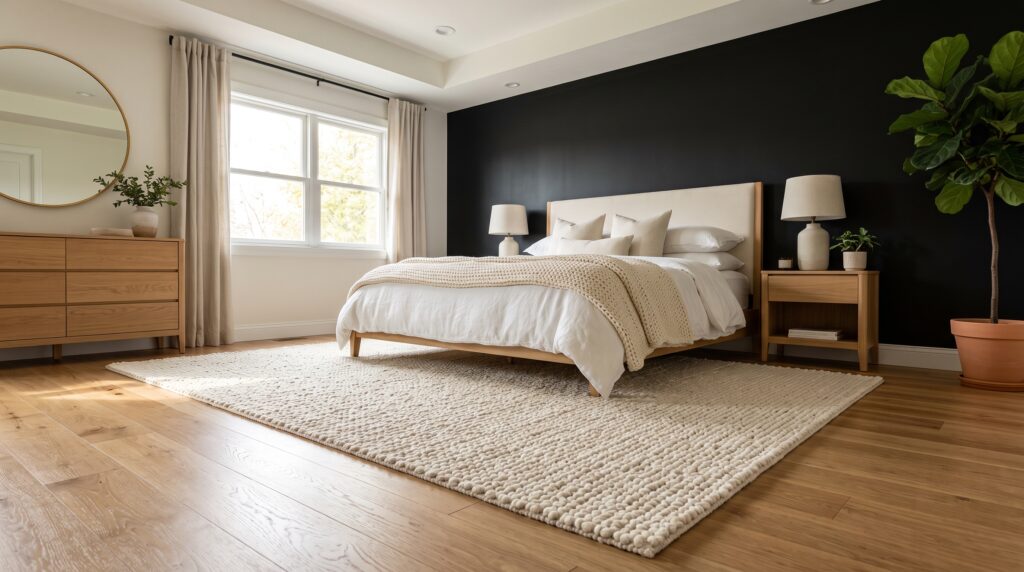
A large rug in ivory, oatmeal, or soft gray does two things: it visually anchors the furniture, and it lightens the overall palette so the black wall doesn’t feel like it’s competing with a dark floor too. Look for texture — a chunky wool weave or a subtle jute pattern — rather than a flat, smooth surface.
15. Add Hidden LED Backlighting
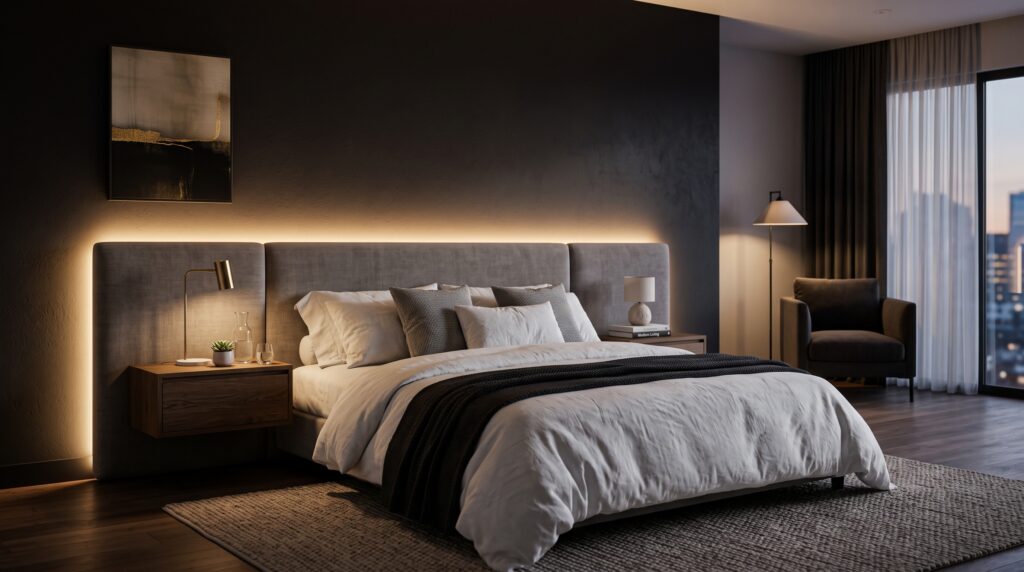
A thin LED strip installed behind the headboard or along a shelf edge creates a soft wash of light that highlights the black wall’s texture instead of flattening it under overhead lighting. Warm white bulbs (rather than cool white) keep the effect cozy instead of clinical.
16. Lean an Oversized Arched Mirror Against the Wall
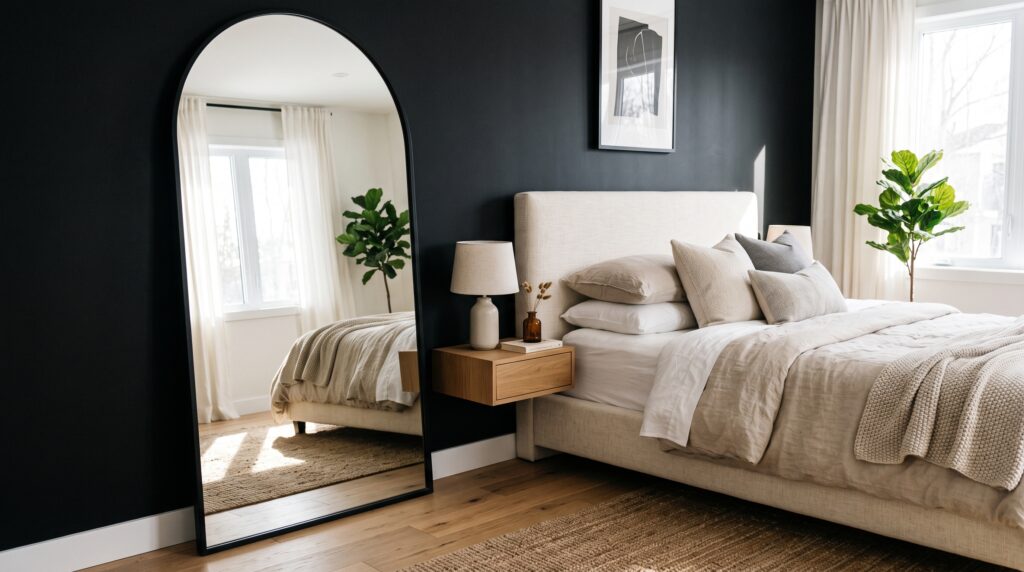
Mirrors do double duty against dark walls — they bounce light back into the room and add a sculptural element without requiring a hole in the wall. An arched mirror leaned casually against a black backdrop instantly looks more editorial than one mounted flush.
17. Mix in Multiple Wood Tones
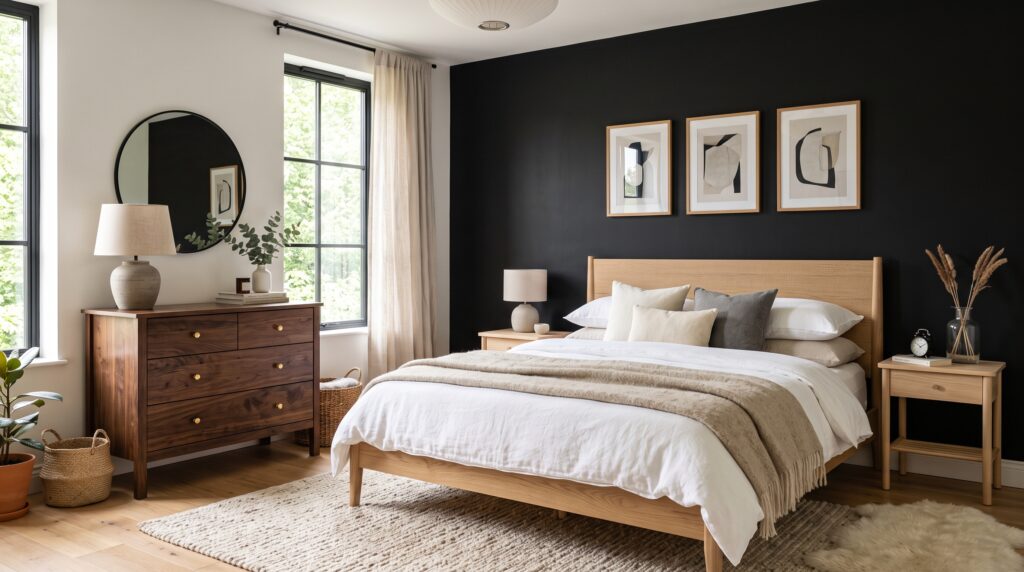
Don’t feel locked into a single wood finish. Pairing a walnut dresser with oak nightstands and a lighter wood headboard against a black wall creates the kind of collected, layered look that feels like it came together over time rather than all at once.
18. Style Sparingly
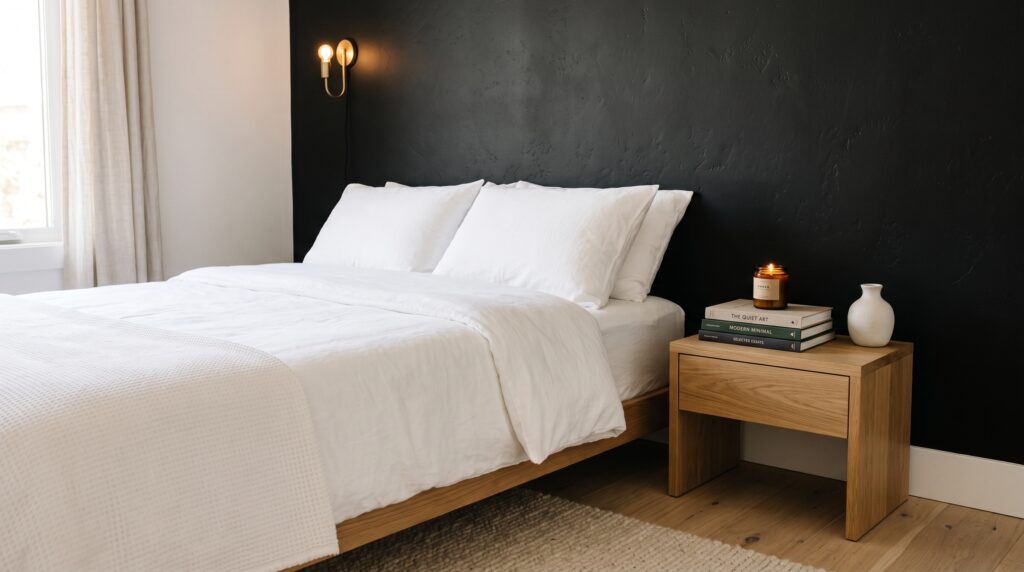
A black wall is already a strong design statement, so it doesn’t need much help. A few ceramic vases, a stack of hardcover books, and a single candle on a nightstand are usually enough. Overloading the space with knickknacks competes with the wall instead of complementing it.
19. Add an Upholstered Bench at the Foot of the Bed
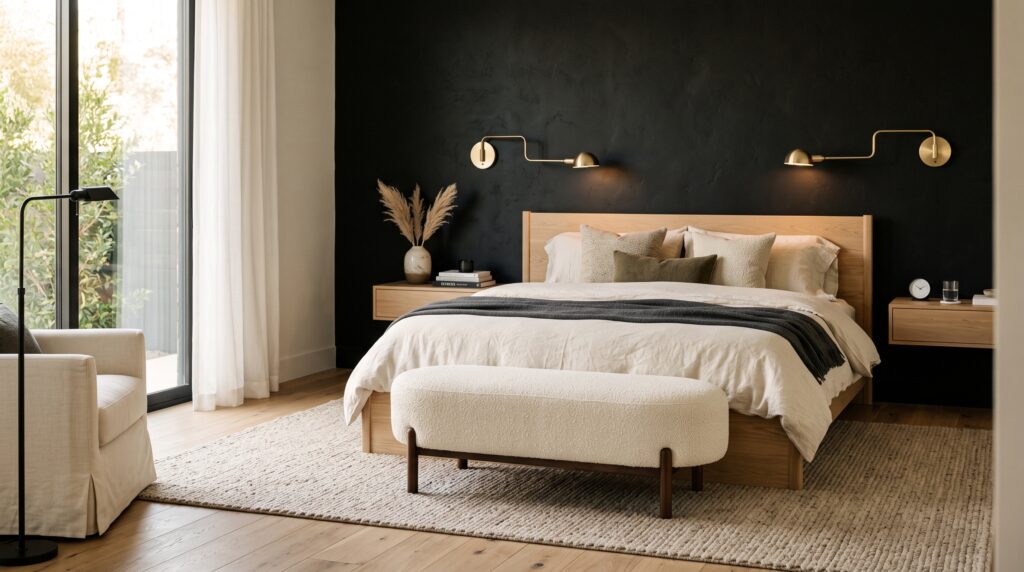
A bench in ivory bouclé or soft gray linen adds practical seating for getting dressed while also softening the transition between the dark wall and the rest of the room. It’s a small addition that makes the whole layout feel more finished.
20. Go Big with an Indoor Tree
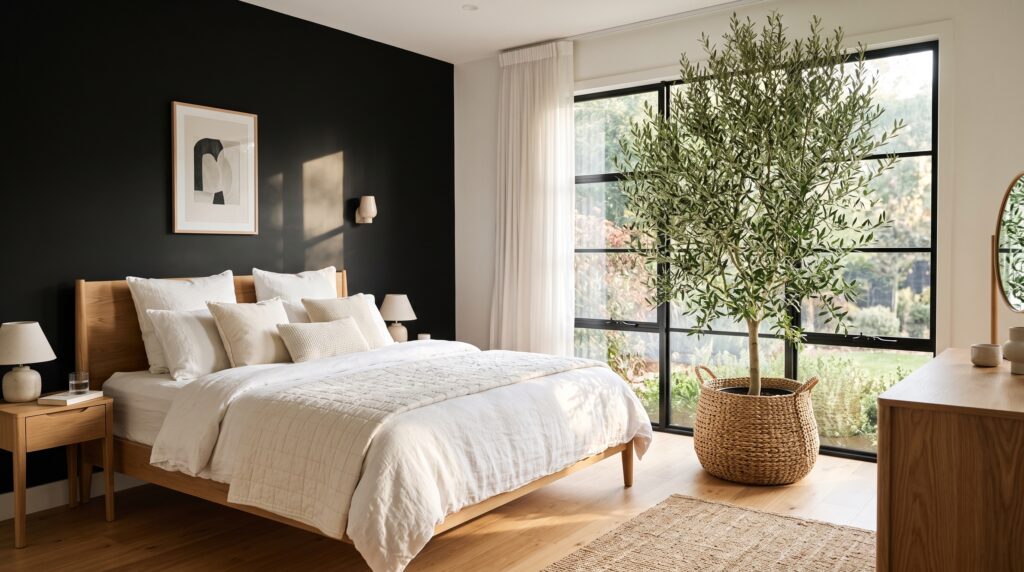
If one small plant isn’t enough drama for you, go larger. A floor-standing olive tree or bird-of-paradise in a woven basket planter creates real presence in a corner and gives the eye somewhere green to rest against all that black.
21. Borrow from Boutique Hotel Design
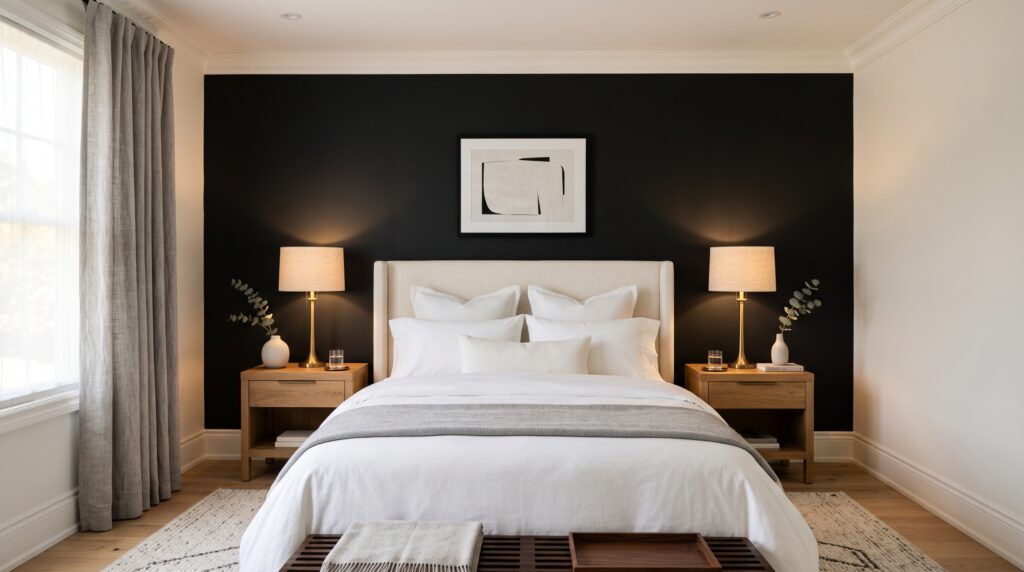
Symmetry does a lot of heavy lifting in hotel-style bedrooms: matching nightstands, matching lamps, evenly spaced art, and a made-up bed with no clutter on the surfaces. Apply that same symmetry to a black-walled bedroom and the wall becomes the clear, calm centerpiece of the whole layout.
22. Finish the Room with a Signature Scent
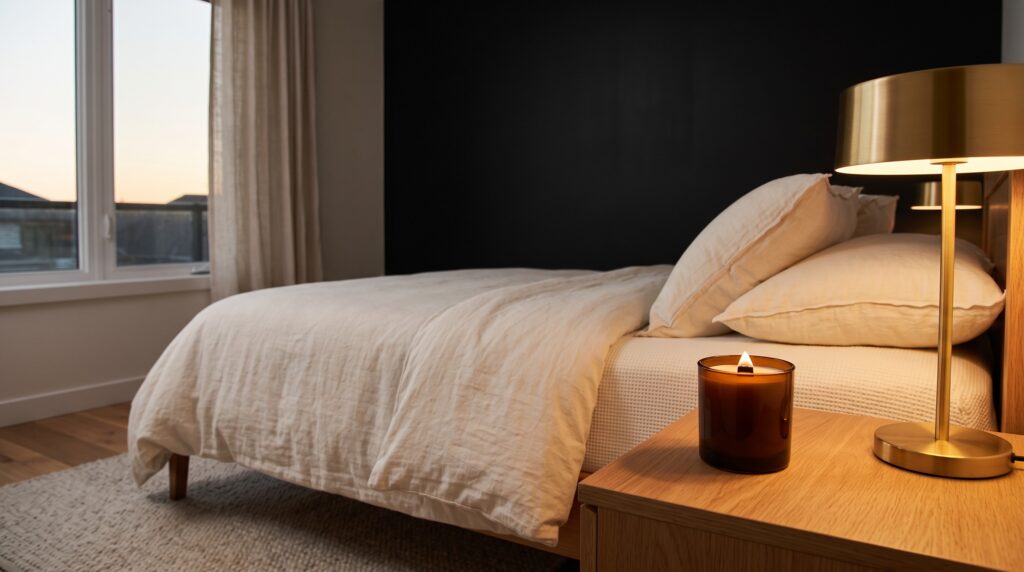
It’s easy to overlook, but scent shapes how a room feels just as much as color does. A candle or reed diffuser in cedarwood, sandalwood, amber, or vanilla-leather ties the moody, grounded feeling of a black wall together with something sensory, making the space feel finished rather than staged.
Choosing the Right Black for Your Wall
Not all blacks behave the same way once they’re on a wall. Some read as true, inky black; others lean warm or cool depending on their undertone, and that undertone becomes obvious once daylight or lamp light hits it. Before committing to a full wall, it’s worth testing a large paint sample and observing it morning, afternoon, and evening, since lighting conditions can shift a black from soft charcoal to near-navy or deep brown over the course of a day. For a helpful overview of black paint options and how finish affects the final look, Benjamin Moore’s own black paint color guide is a solid starting point, since it breaks down how sheen — matte, semi-gloss, or high gloss — changes the mood of the finished wall.
Frequently Asked Questions
Will a black accent wall make my bedroom feel smaller? Not usually, and in many cases it does the opposite. A dark wall recedes visually when it’s placed behind the bed, especially if the ceiling and remaining walls stay light. The contrast actually tricks the eye into reading more depth in the room, similar to how a dark horizon line makes a landscape feel larger. Problems only tend to show up when all four walls go dark in a small room with limited natural light — as a single accent wall, black is generally flattering rather than shrinking.
What’s the best wall to paint black in a bedroom? The wall directly behind the headboard is the most popular choice, since it frames the bed and becomes the natural focal point the moment you walk in. Some homeowners also choose a wall opposite a large window, so the black surface gets consistent natural light throughout the day and never looks flat or muddy.
Do I need a lot of natural light for a black wall to work? It helps, but it isn’t required. Rooms with limited daylight can still pull off a black wall successfully by leaning on warm artificial lighting instead — think brass sconces, a soft-glow pendant, or a dimmable lamp. The goal is simply to avoid harsh, cool-toned overhead lighting, which can make any dark color feel flat and uninviting.
What colors pair best with a black accent wall? Warm neutrals are the most forgiving choice: ivory, oatmeal, soft gray, and warm white all create contrast without fighting the black for attention. From there, small doses of color work well too — sage green, terracotta, or dusty blue can all be layered in through pillows, art, or a rug without overwhelming the room.
Is a black accent wall a temporary trend or a lasting choice? Black walls have shown staying power precisely because they function more like a neutral than a trend color. Unlike a saturated color that can start to feel dated, black pairs with almost any furniture style and color palette, which means a bedroom built around a black accent wall can be easily refreshed over the years just by swapping out bedding, art, and accessories — no repainting required.
Bringing It All Together
A black accent wall works because it does something most paint colors can’t: it makes everything else in the room look more deliberate. White bedding looks crisper. Brass looks warmer. Wood grain looks richer. Plants look greener. It’s a background color that quietly elevates the foreground, which is exactly why it shows up again and again in bedrooms that feel like they belong in a design magazine rather than a big-box showroom.
The key to making it work in your own space isn’t picking the darkest possible shade or the boldest possible styling — it’s balance. Pair the drama of the wall with texture, warmth, and a few carefully chosen pieces, and resist the urge to fill every surface. A black wall is a statement on its own; the rest of the room just needs to support it.
Whether you’re drawn to the quiet contrast of a matte black wall and light oak furniture, the architectural interest of panel molding, or the cozy glow of hidden LED lighting, there’s a version of this trend that fits almost any bedroom style. Start with one or two ideas from this list, live with them for a while, and build outward from there. A bedroom redesign doesn’t need to happen all at once — and a single black wall is proof that sometimes the smallest change makes the biggest difference.