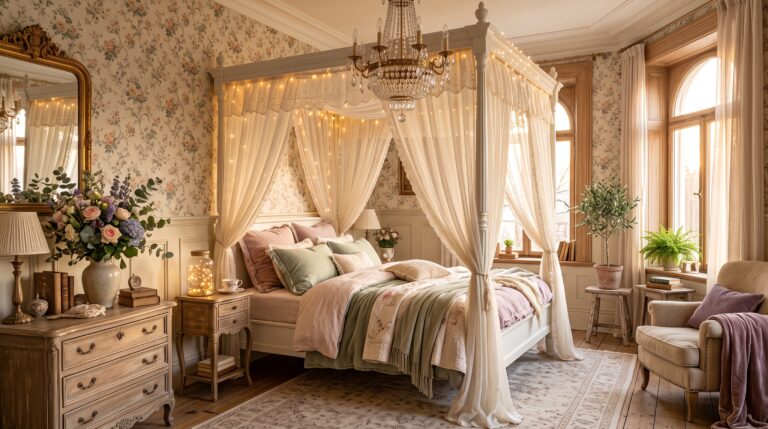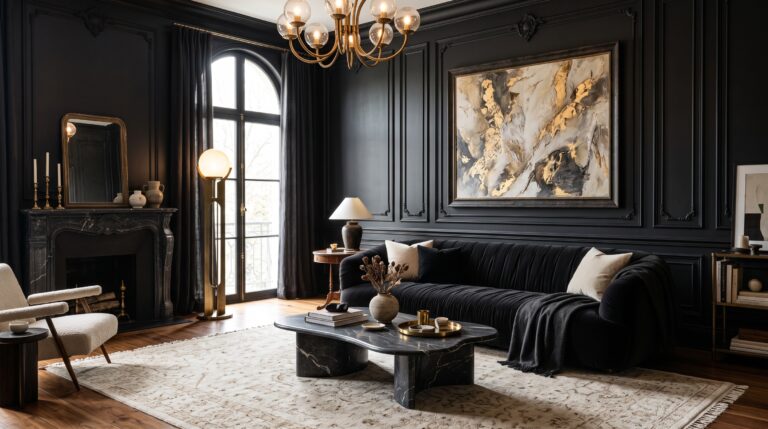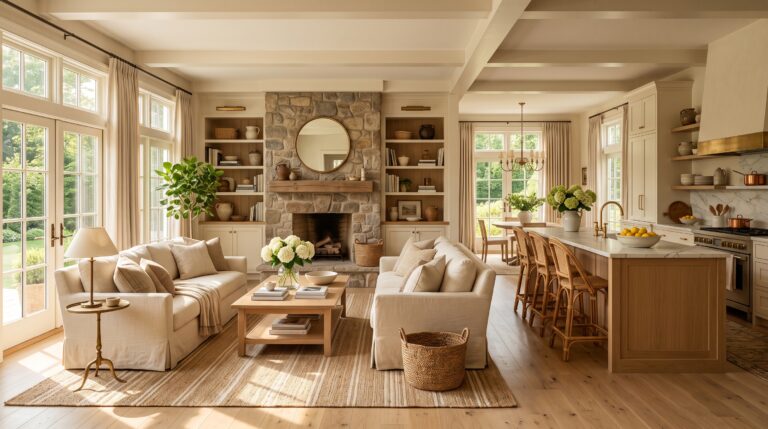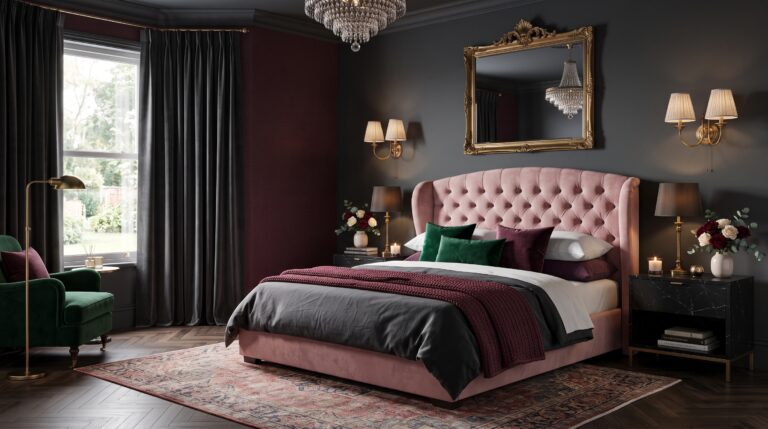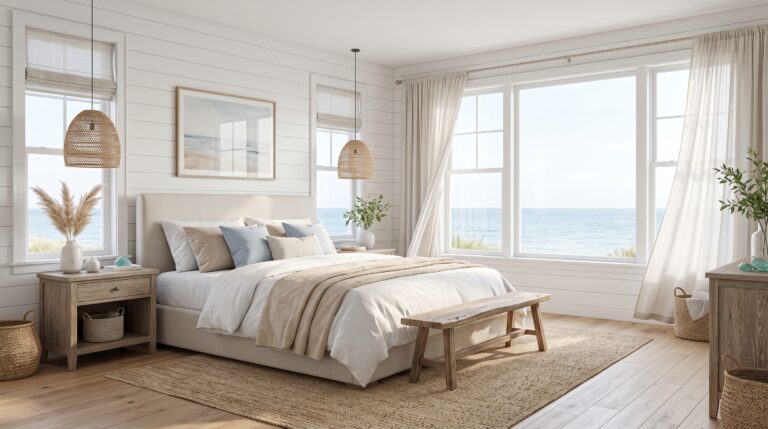
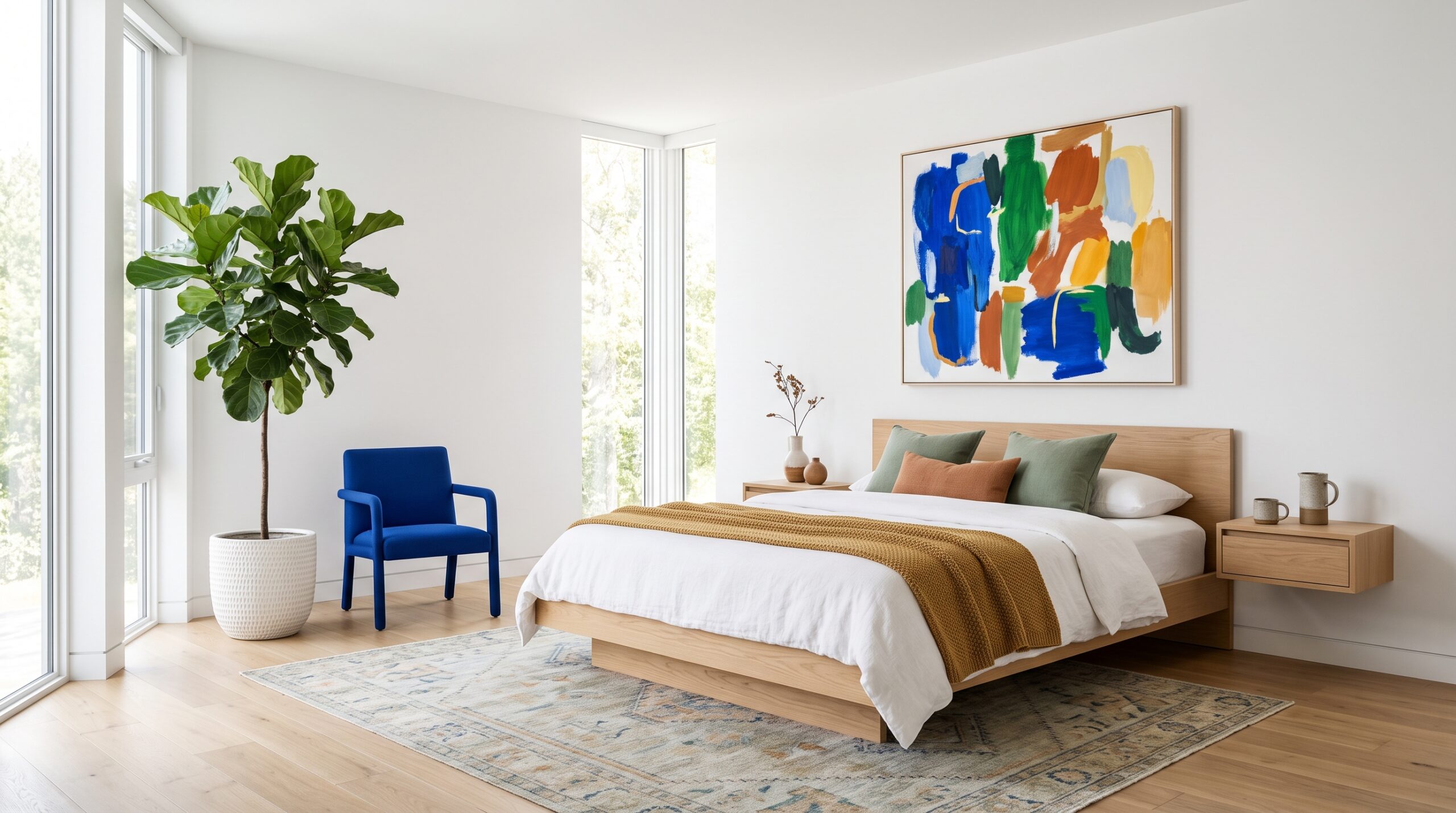
Minimalist doesn’t have to mean monochrome. A colorful 22 colorful minimalist bedroom ideas youll love bedroom takes the calm, uncluttered bones of minimalism and lets a few carefully chosen hues do the talking. Instead of piling on pattern and ornament, you lean on clean lines, open floor space, and functional furniture — then let color step in through bedding, art, or a single statement piece. The result is a room that feels lively without ever feeling loud.
The trick professional designers keep coming back to is restraint: pick a neutral shell for your walls and big furniture, then commit to one or two accent colors you repeat with intention. Below are 22 ways to bring that idea to life, whether you gravitate toward citrus brights, dusty pastels, or a single moody jewel tone.
22 Colorful Minimalist Bedroom Ideas You’ll Love
1. Start With a Bright White Base
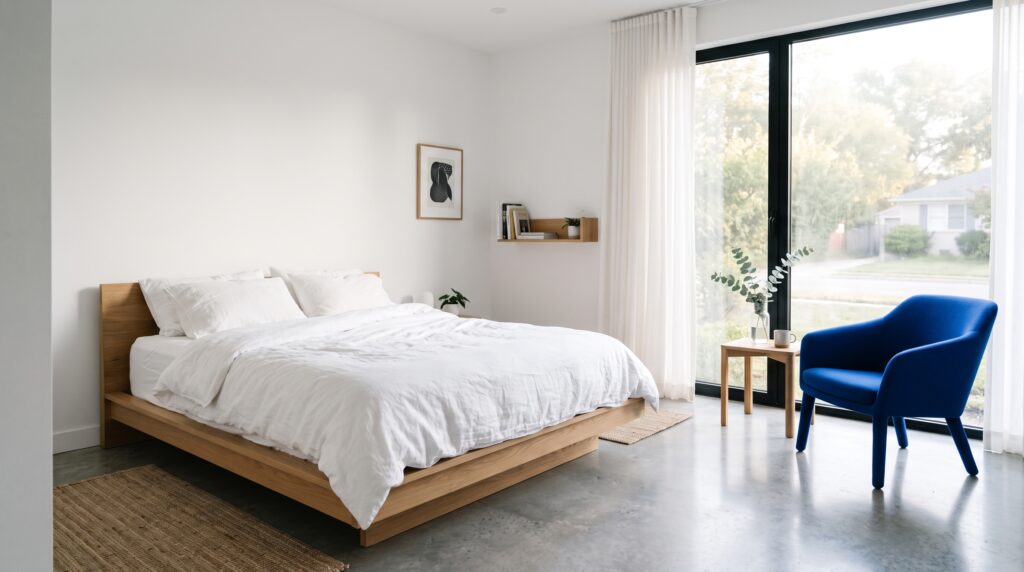
White walls act like a blank canvas, bouncing light around the room and making even small bedrooms feel airy. Save your color for bedding, artwork, or a single accent chair rather than the walls themselves, so every colorful element has room to breathe and stand out.
2. Commit to One Signature Hue
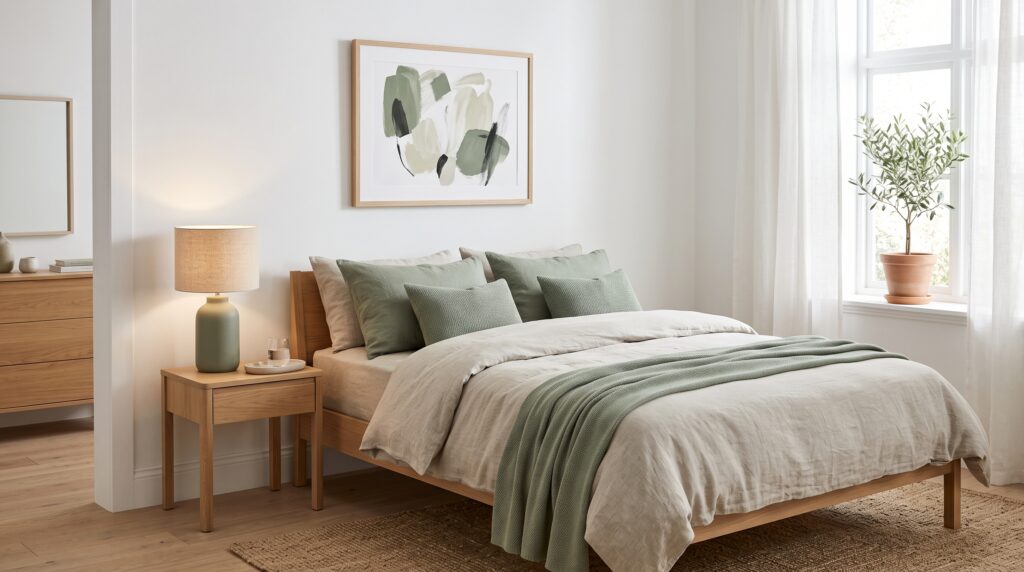
Rather than scattering several colors around, pick a single standout — think mustard, terracotta, sage, cobalt, or coral — and repeat it in two or three spots: a pillow, a lamp, a piece of art. Repetition without overload is what keeps a colorful room reading as minimalist.
3. Let One Big Art Piece Do the Work
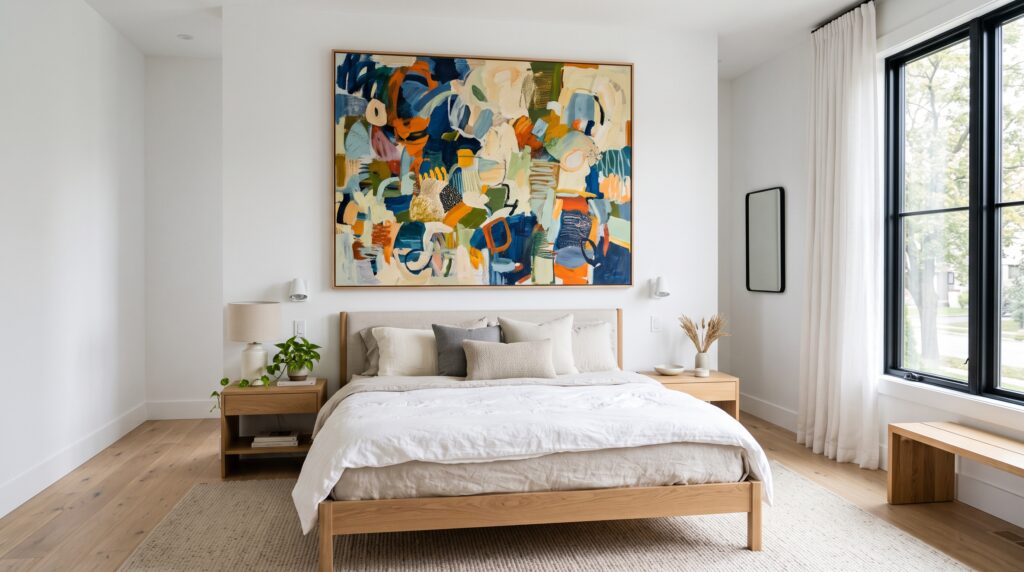
Skip the gallery wall. A single oversized abstract painting or print in a bold shade instantly becomes the room’s focal point, adds personality, and still leaves the surrounding walls open and calm.
4. Pair Warm Wood With Bold Color
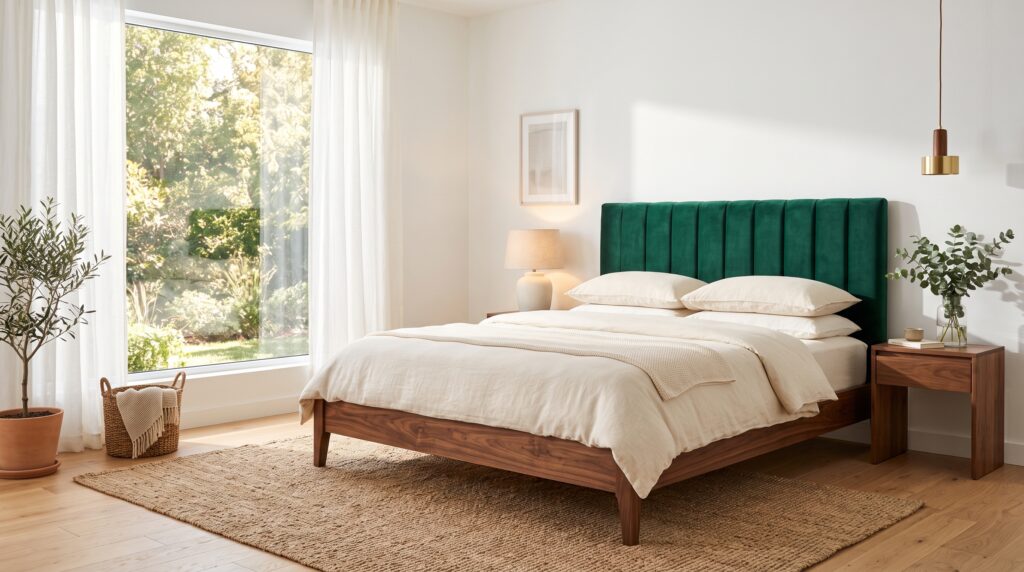
Oak, ash, or walnut furniture has a way of grounding bright colors so they never feel garish. The warmth of natural wood grain balances a bold headboard or colorful nightstand, giving the room a layered, collected-but-simple feel.
5. Keep the Bed Neutral, Then Add a Colorful Throw
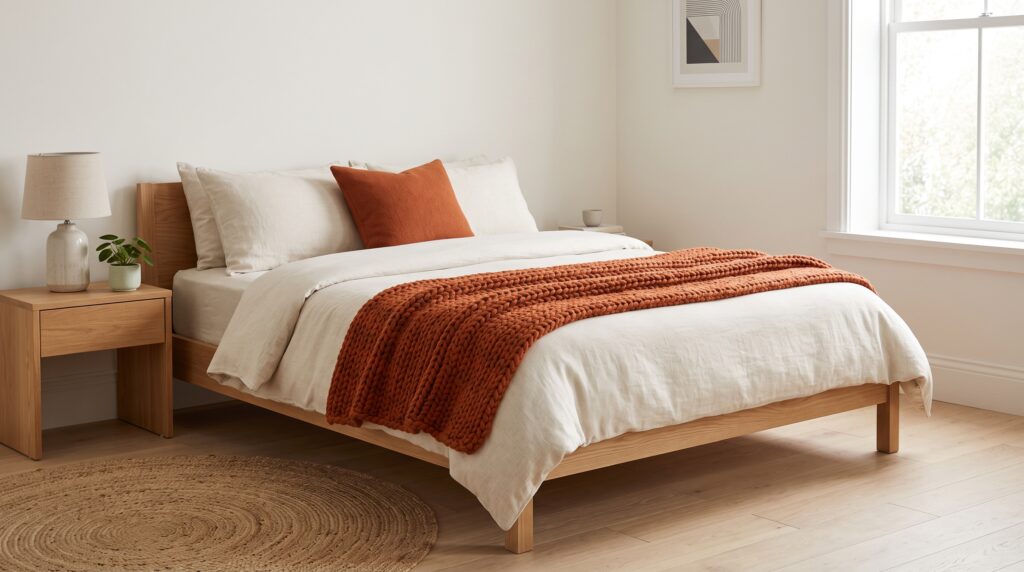
Start with ivory, white, or oatmeal sheets and a plain duvet, then drop in one textured throw blanket and a couple of accent pillows in your chosen color. This is the easiest, lowest-commitment way to test a bold shade before going bigger.
6. Bring in Colorful Ceramics
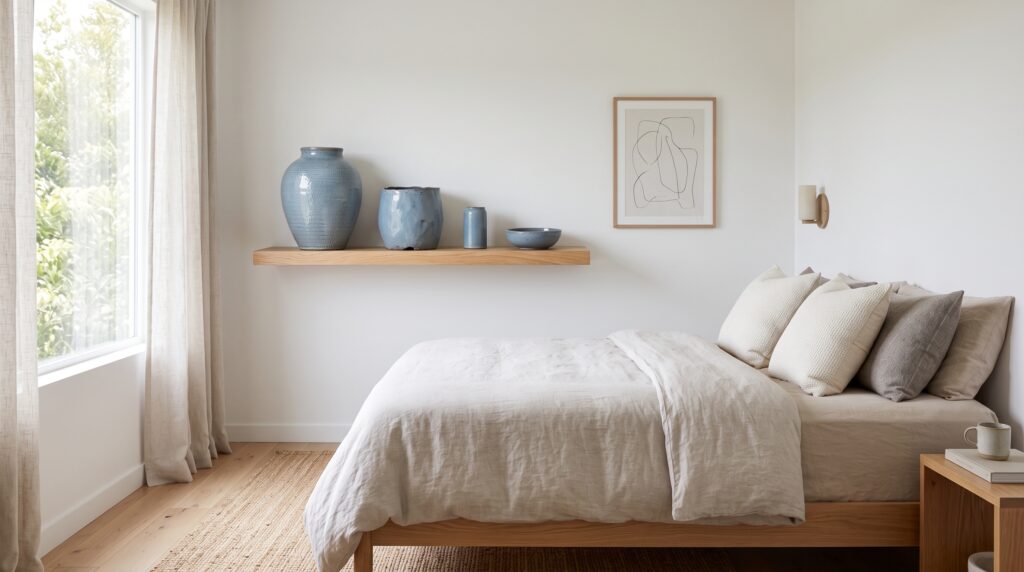
A hand-thrown vase, a sculptural bowl, or a glazed planter in dusty blue, olive, burnt orange, or blush adds warmth and craft to open shelves or a nightstand without cluttering the surface.
7. Add Greenery for Natural Color
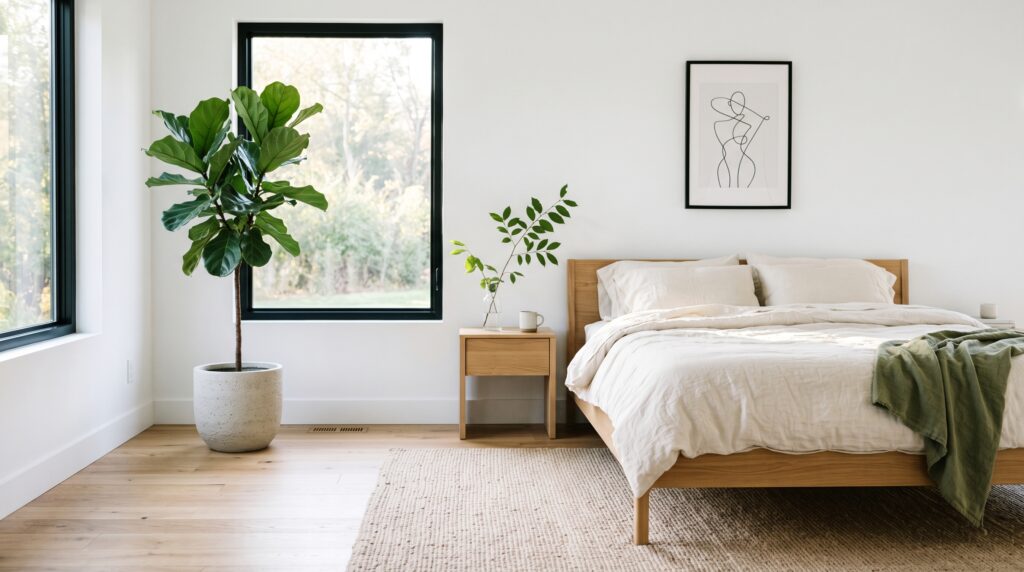
Plants are an effortless way to introduce color that never feels forced. A fiddle-leaf fig, snake plant, or trailing pothos brings in living green tones that pair well with almost any accent palette.
8. Paint Just the Ceiling
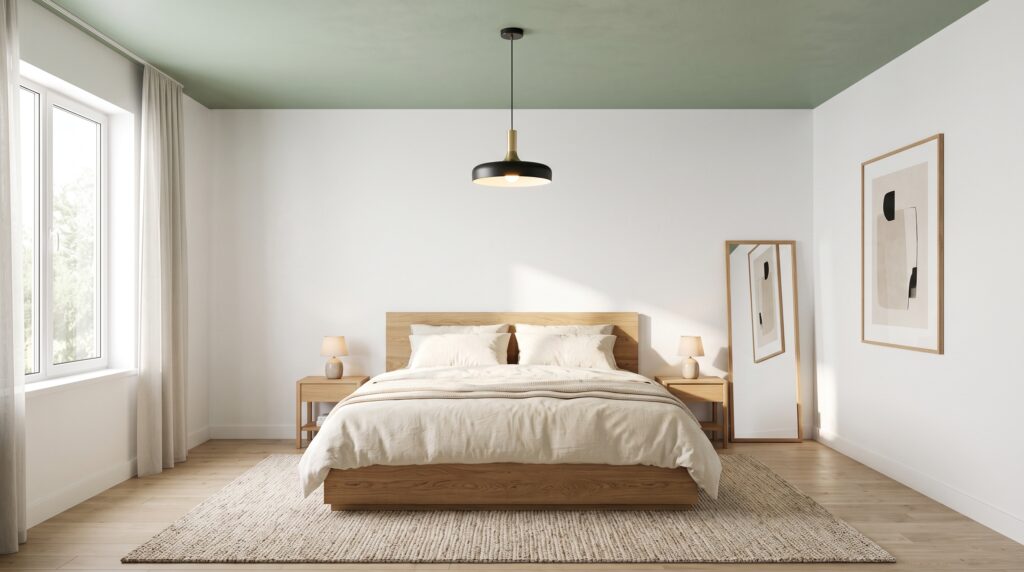
Instead of committing a whole wall to color, try a soft wash on the ceiling. Pale sage, dusty blue, blush, or butter yellow overhead is a quiet surprise that draws the eye up while the walls stay clean and neutral.
9. Add a Colorful Bench at the Foot of the Bed
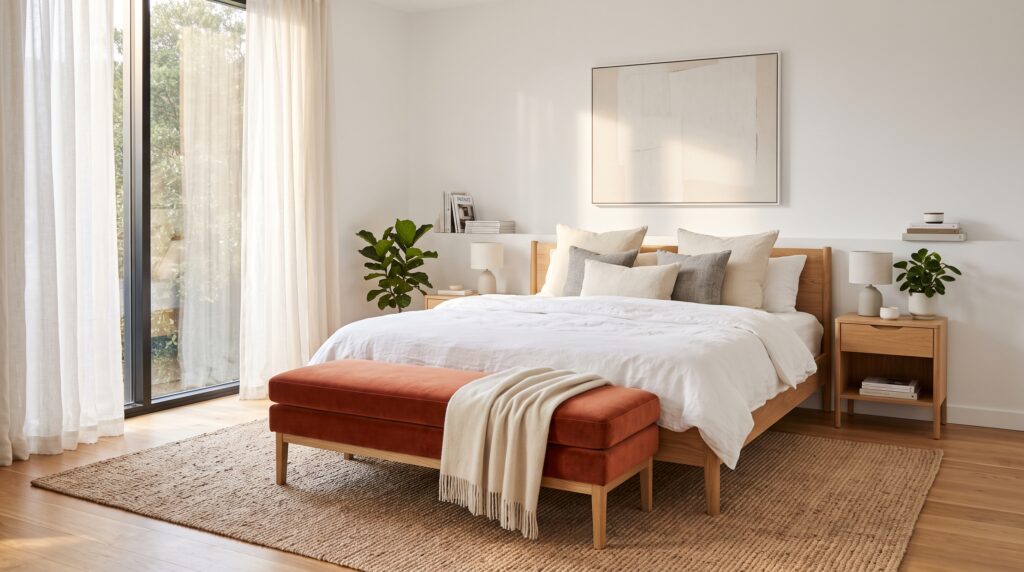
A small upholstered bench in velvet or linen — terracotta, mustard, olive, or dusty blue — gives you a useful landing spot for clothes or shoes and a shot of color low in the room’s sightline.
10. Try Color-Block Artwork
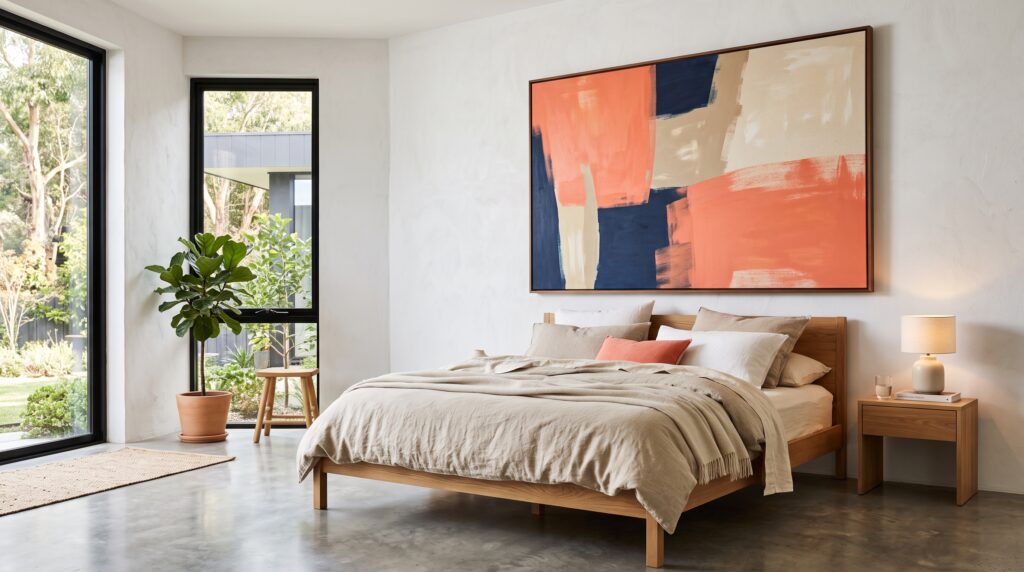
Large-scale color-block prints bring energy without the visual noise of busy patterns. Stick to two or three shades that echo your bedding or accessories so the piece feels intentional rather than random.
11. Layer in Soft Pastels
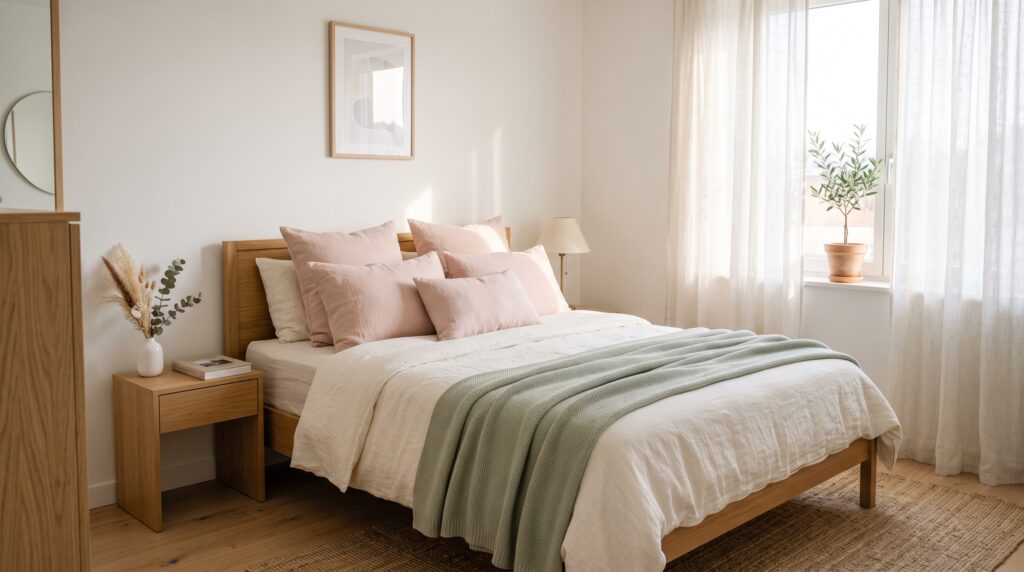
If bold brights feel like too much, pastels are a gentler entry point. Blush, dusty lavender, sage, and pale blue mixed across pillows and throws create a soothing, still-colorful palette.
12. Let a Rug Anchor the Room
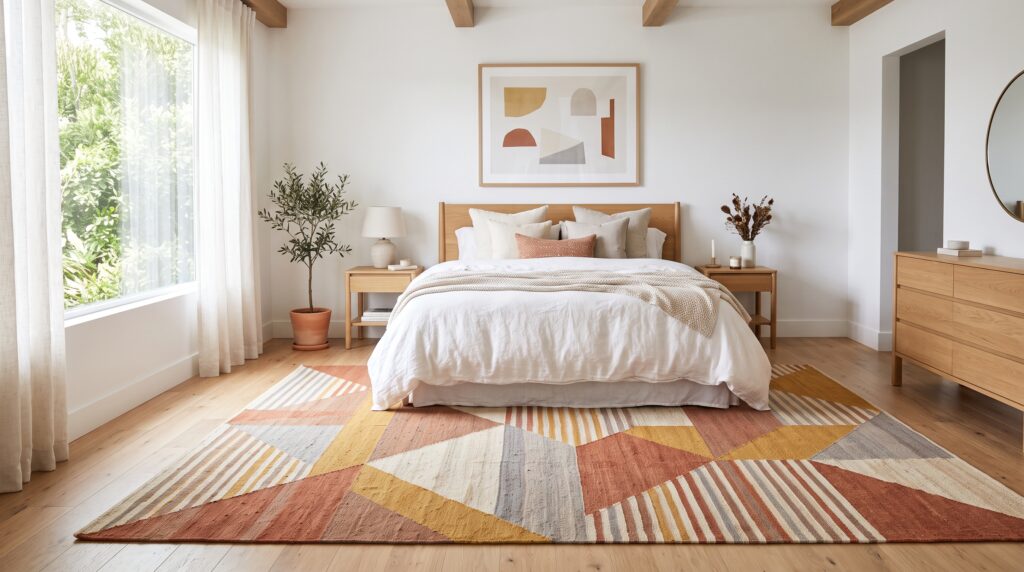
A patterned or solid colorful rug can carry the whole room’s personality on its own. Keep the rest of the furniture simple so the rug reads as the statement, not competition.
13. Style Floating Shelves With Color

Open shelving is a low-stakes place to experiment. A few ceramic pieces, a stack of books with colorful spines, and one framed print — with plenty of negative space left between them — keeps the display curated instead of cluttered.
14. Color Your Window Treatments
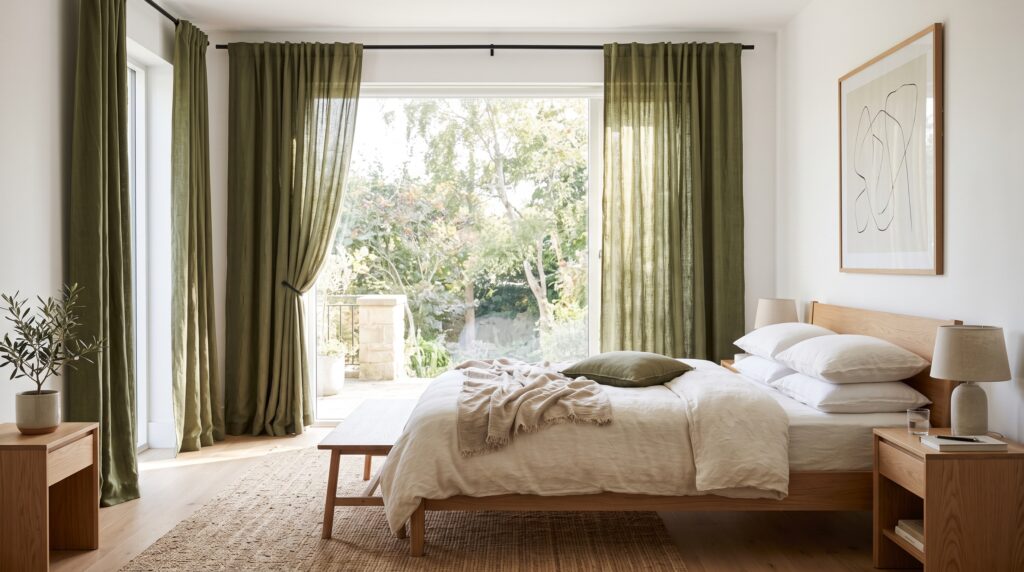
Linen curtains in olive, dusty blue, terracotta, or muted mustard frame the window and quietly extend your accent color across a large surface without ever feeling heavy-handed.
15. Add One Statement Chair
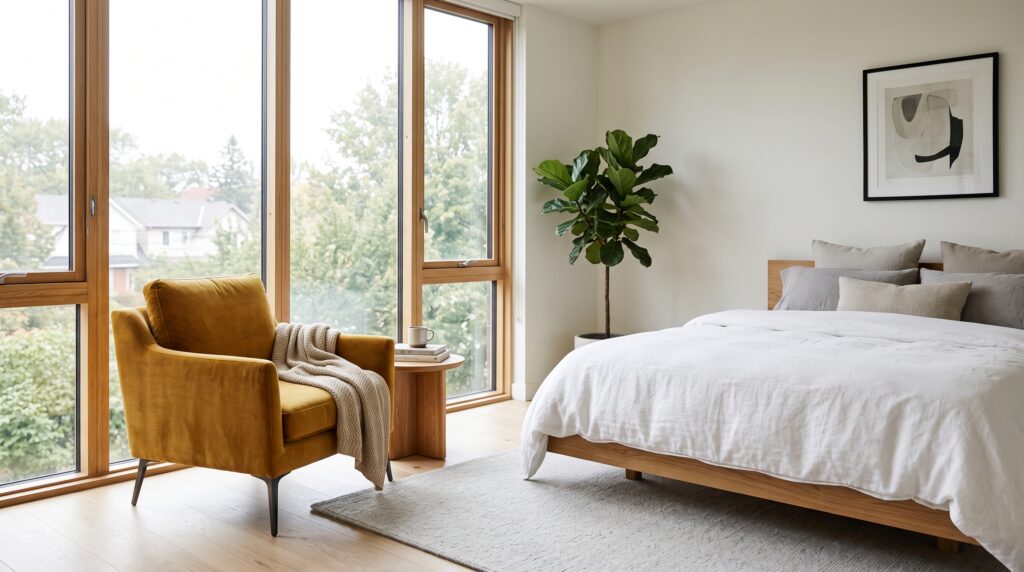
A single accent chair in a saturated color — mustard, olive, rust, cobalt — gives the room a strong focal point. Pair it with a neutral throw so it still feels grounded in the rest of the palette.
16. Curate Colorful Books and Objects

Vibrant book covers and a couple of sculptural decor pieces are an easy, swappable way to bring in color. Keep displays edited — a few well-chosen items always reads better than a crowded shelf.
17. Soften the Room With Curved Furniture
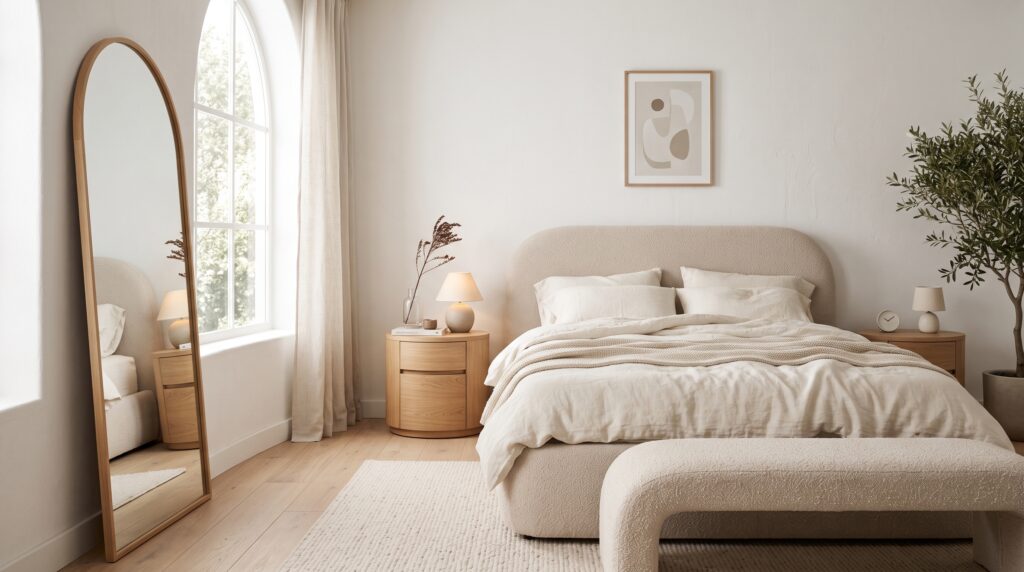
A rounded nightstand, curved dresser, or arched mirror takes the edge off strict minimalist lines and makes a colorful room feel warmer and more inviting rather than sharp or clinical.
18. Use Simple Geometric Patterns
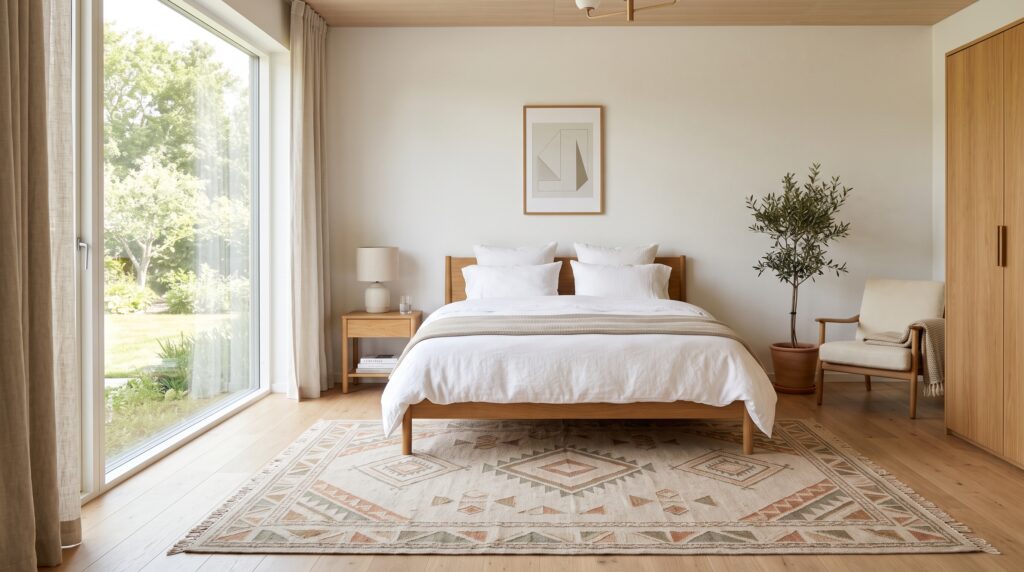
A little pattern goes a long way. Muted geometric prints on a rug, cushion, or piece of art add rhythm and interest while staying visually quiet enough not to compete with your main color.
19. Let Glass and Acrylic Reflect the Light
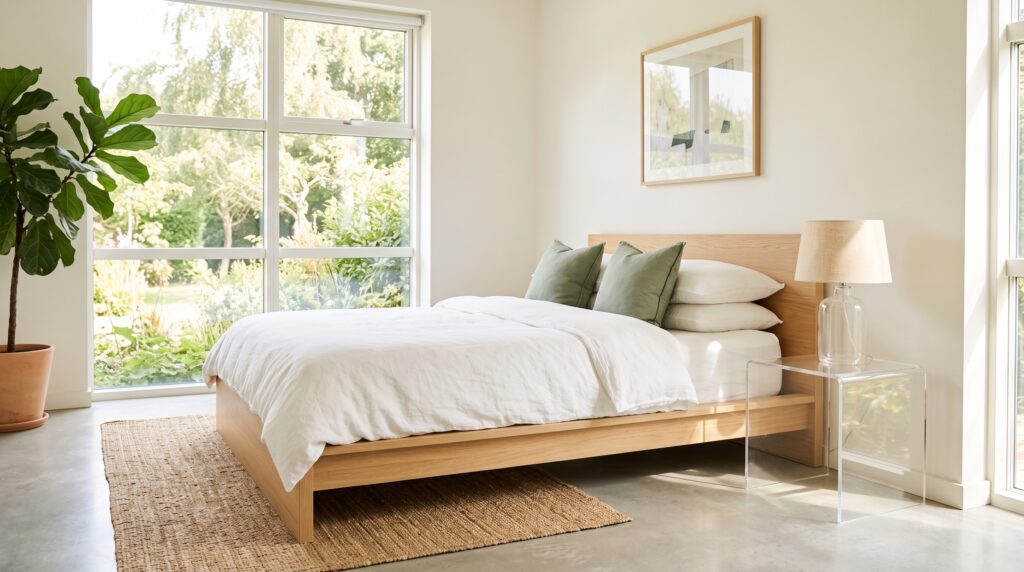
Glass lamps, clear vases, and acrylic side tables bounce light around the room and keep colorful accents from feeling heavy, since the see-through pieces almost disappear visually.
20. Choose One Oversized Plant Over Several Small Ones
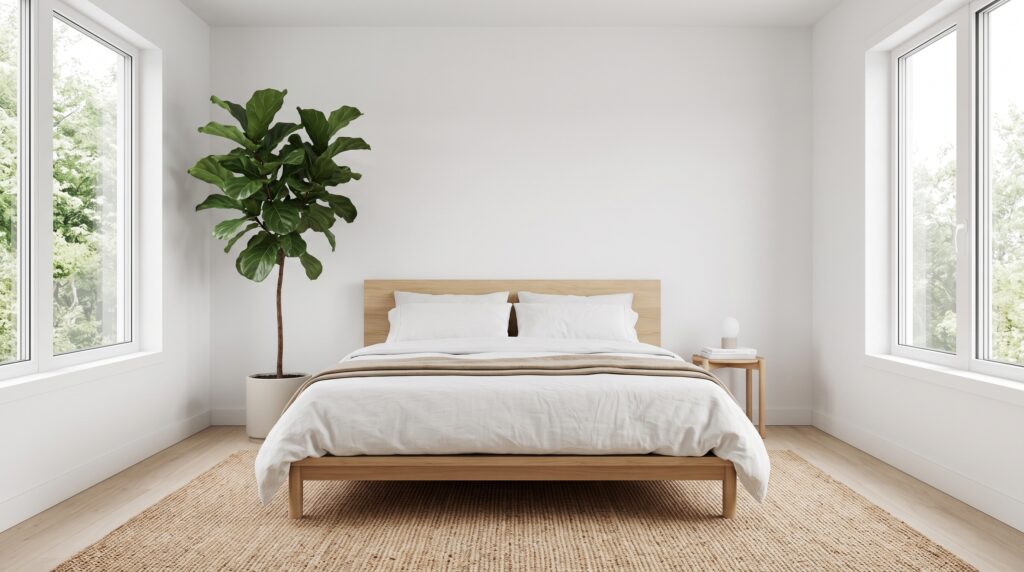
A single large olive tree, bird of paradise, or fiddle-leaf fig makes a bigger visual statement than a handful of small pots scattered around, and it’s easier to keep the room feeling uncluttered.
21. Keep Nightstands Down to the Essentials
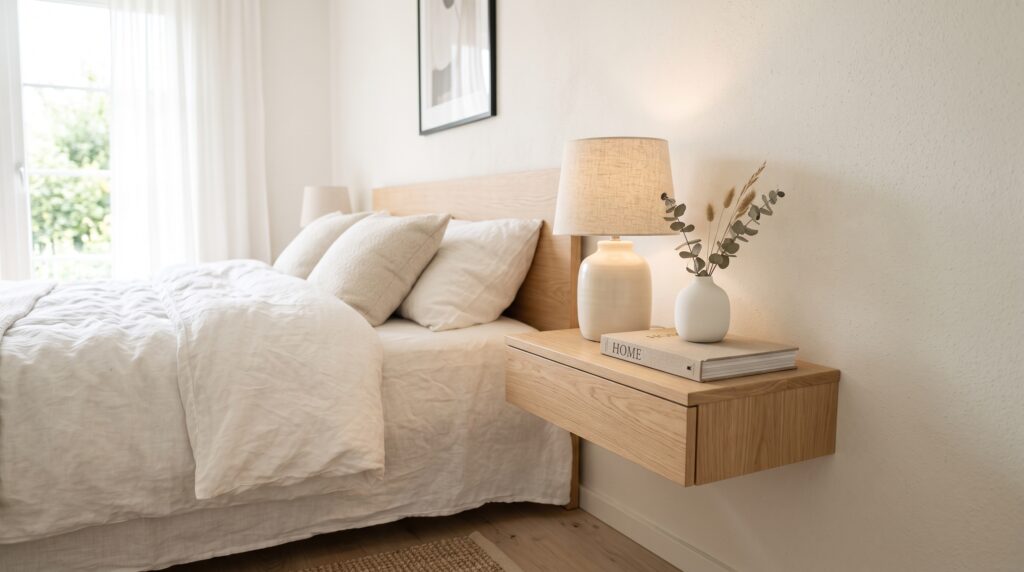
A lamp, one small vase, a book, and maybe one small object — that’s it. Editing your nightstand down keeps the whole room feeling calm even when your color palette is bold.
22. Finish With a Signature Scent
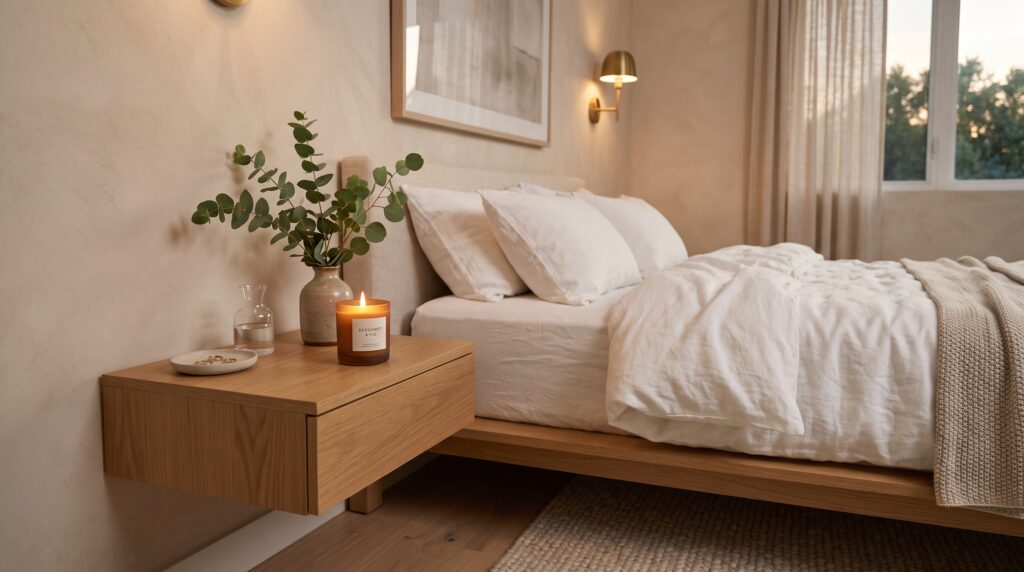
A candle or reed diffuser in citrus, bergamot, green tea, or eucalyptus ties the sensory experience of the room together and reinforces that fresh, uplifting feeling your color palette is going for.
Bringing It All Together
A colorful minimalist bedroom works best when you treat color as a design decision, not an afterthought — pick your shade (or two), decide where it will show up, and let the rest of the room stay quiet enough to support it. Interior designers generally agree that warmth and personality don’t have to be sacrificed for a clean, minimalist look; the key is choosing accents with intention rather than filling a room with them, as House Digest’s guide to minimalist bedrooms also points out. Start small — a throw pillow, a vase, a single chair — and build from there. You’ll end up with a bedroom that feels both restful and unmistakably yours.