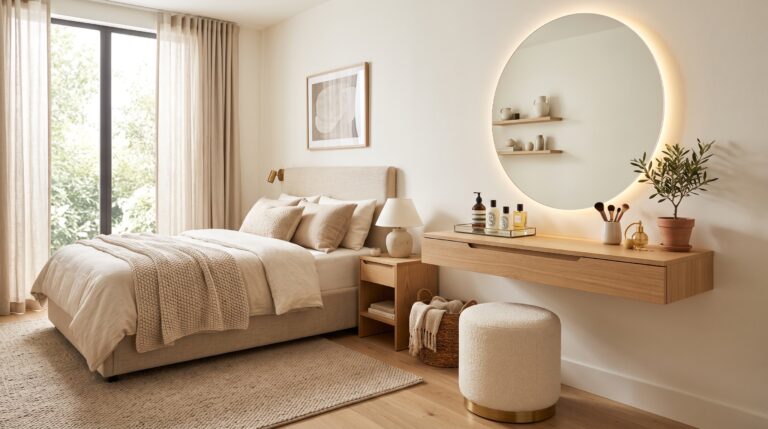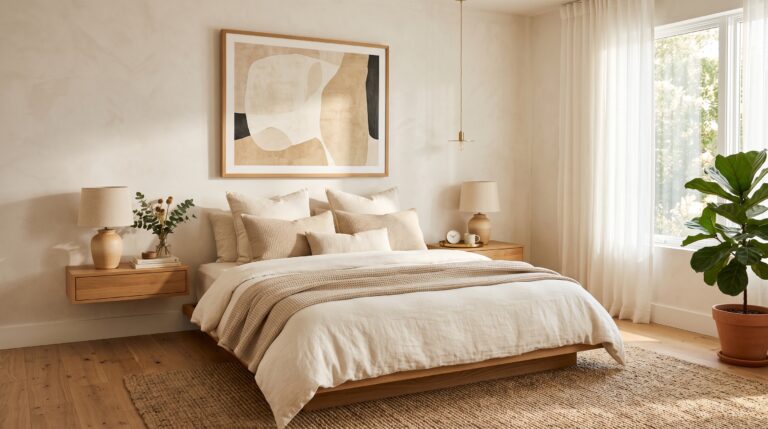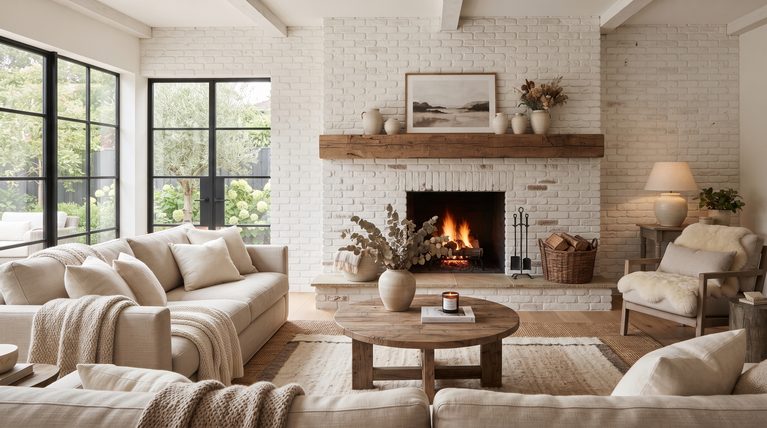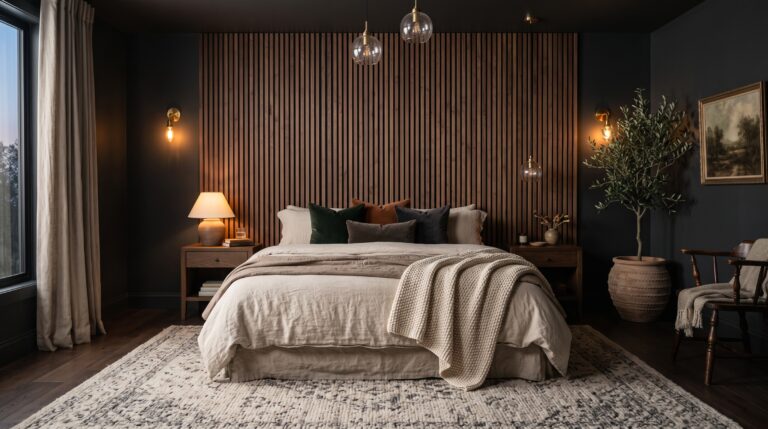
Nothing beats waking up in a room that feels like a permanent vacation. A22 modern coastal bedroom ideas for a relaxed retreat bedroom pulls that off without a single seashell in sight — it leans on light, texture, and a palette borrowed from sand and water rather than beach-themed props. Done well, it reads as calm and current at the same time, which is exactly why the look keeps showing up in real homes far from any shoreline.
The style has come a long way from the rope mirrors and anchor pillows people used to associate with “beach house” decorating. Today’s version is quieter and more grown-up: pale wood, layered linen, a restrained palette, and just enough texture to keep things interesting. It works in a converted loft in a landlocked city just as well as it does in an actual beach cottage, because the appeal was never really about proximity to water — it’s about the feeling of light, space, and slowing down.
Below are 20 ways to bring that feeling into your own space, from big structural moves to small styling touches you can add this weekend. Whether you’re planning a full renovation or just want to refresh a tired room, you don’t need to tackle every idea here. Treat this as a menu, not a checklist — pick the elements that suit your space and budget, and let the room build from there.
Coastal Bedroom Ideas: The Foundations
Before you shop for a single accessory, get the bones of the room right. These are the choices that set the tone for everything else.
1. Start With a Sand-and-Sea Palette
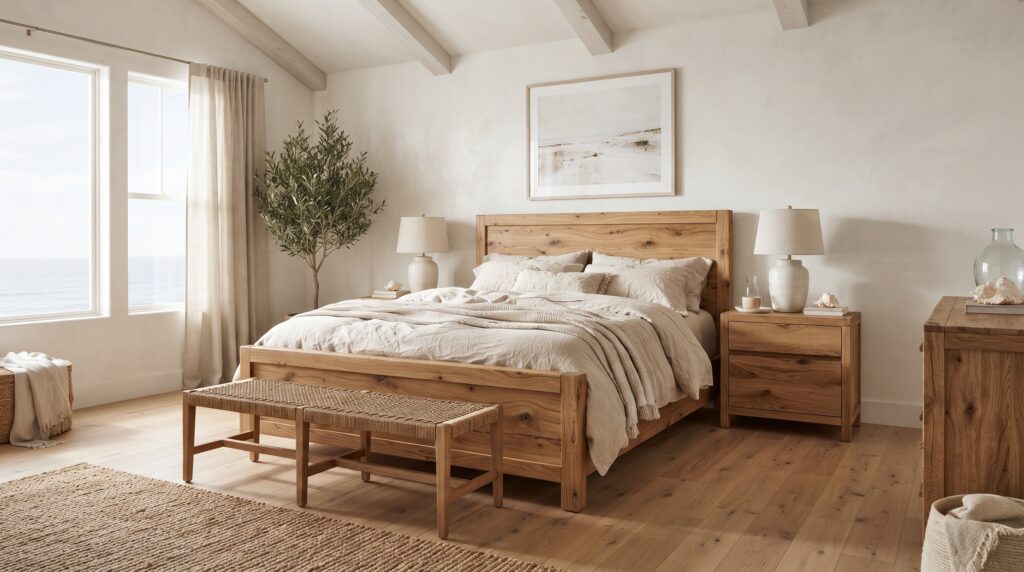
Anchor the room in warm whites, soft sand, and a muted seafoam or denim blue. Keep the ratio lopsided — mostly neutral, with blue as the accent rather than the star — so the space stays bright instead of tipping into a themed nursery. A good rule of thumb is roughly 70% neutral, 20% wood tone, and 10% color, which keeps the blue feeling like a deliberate accent rather than the whole point of the room.
2. Bring in Real Wood Grain
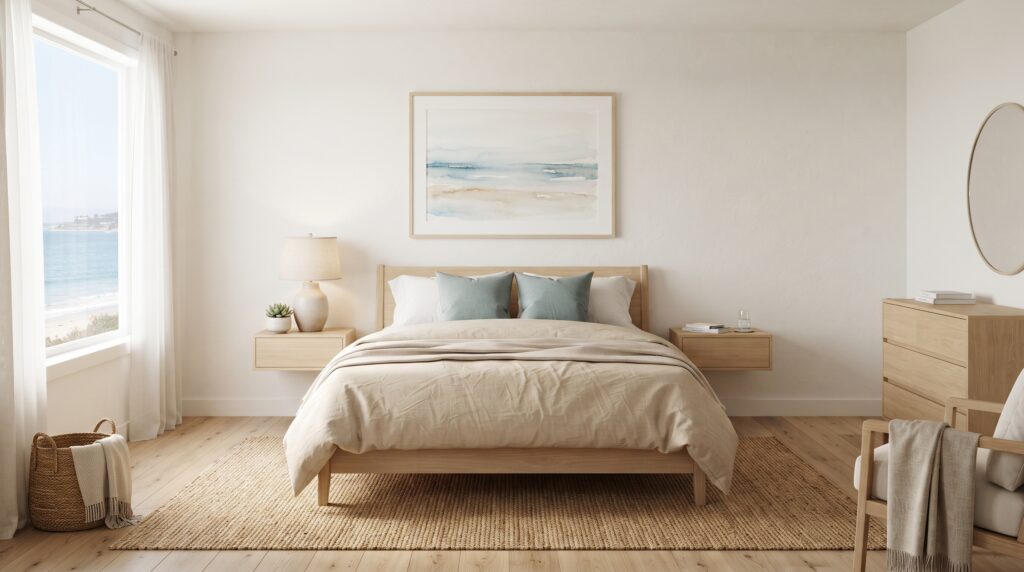
Pale, slightly weathered wood does more for a coastal feel than almost any other single element. A bed frame, a bench, or even just a pair of nightstands in bleached oak or driftwood-toned finishes gives the room warmth without adding visual weight. If you’re starting from scratch, prioritize the bed frame first — it’s the largest piece of furniture in the room, so its finish sets the tone for everything you add afterward.
3. Let the Windows Do the Work
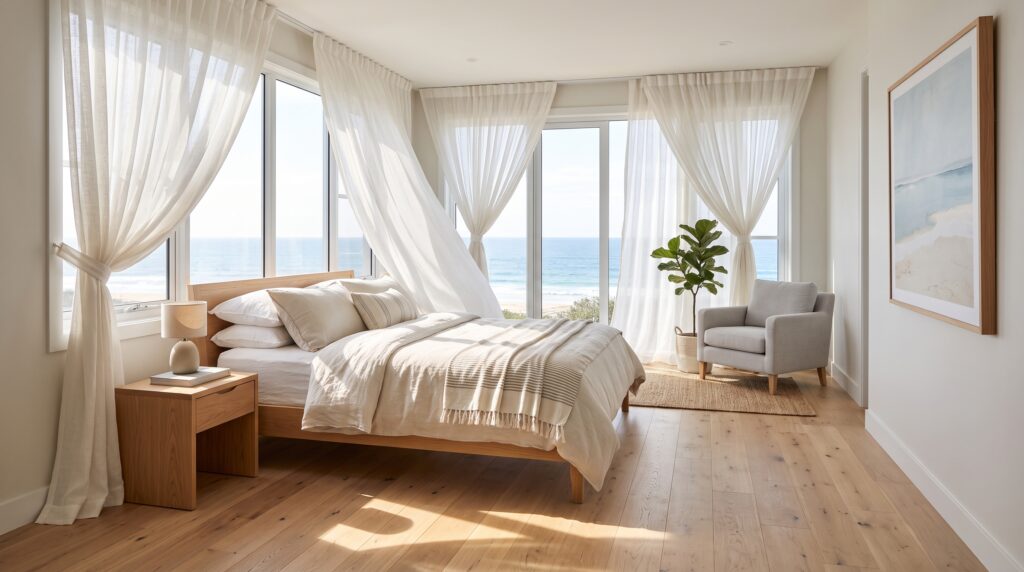
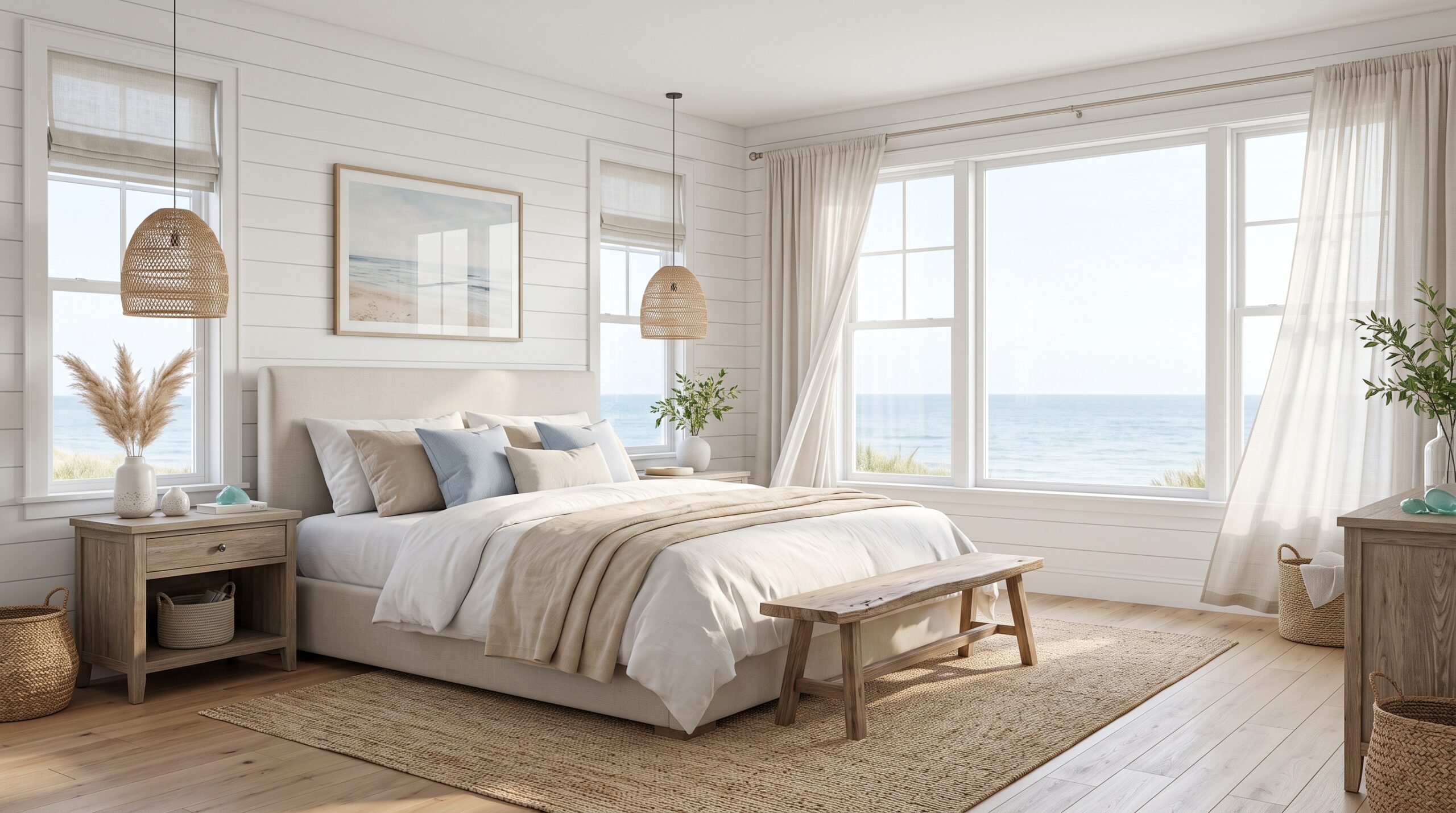
Skip heavy drapery. Lightweight linen or cotton panels filter sunlight instead of blocking it, and they move with the air in a way that instantly makes a room feel less static and more alive. Hang curtain rods a few inches above the window frame and let the panels run close to the floor — the extra height makes ceilings feel taller and the whole window feel more generous than it actually is.
4. Choose Flooring That Reflects Light
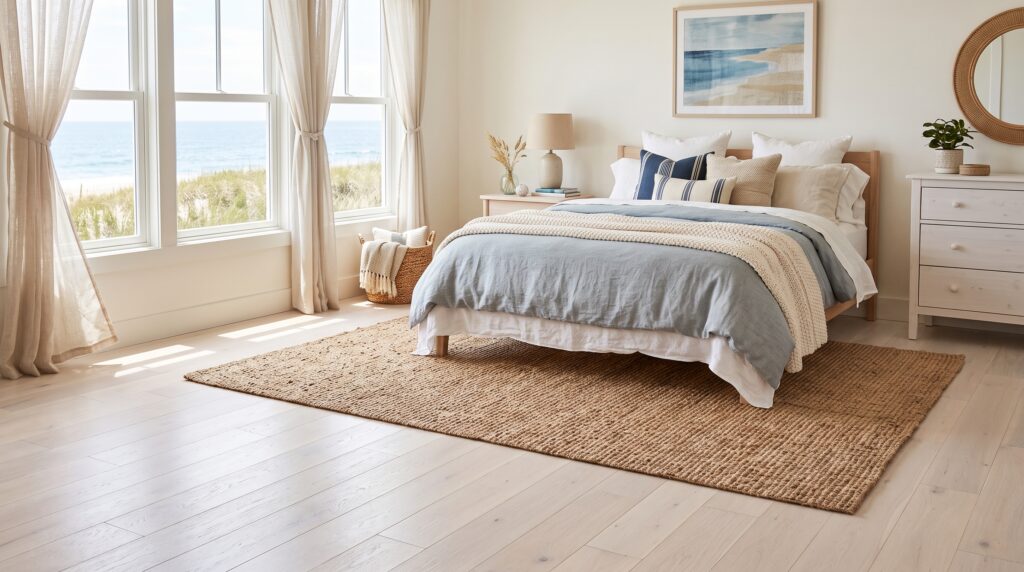
Where you have the option, light oak or bleached wood floors keep the whole room feeling open. If you’re working with existing dark flooring, a pale jute or wool rug can do a lot of the same visual lifting, especially if it’s sized generously enough to sit under the front legs of the bed rather than floating in the middle of the room.
5. Consider One Textured Accent Wall
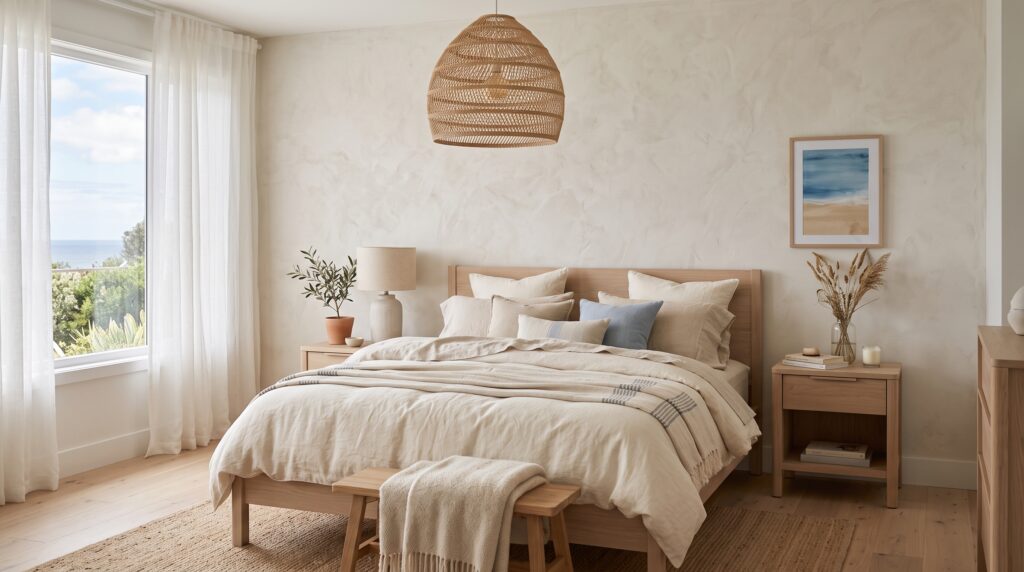
Rather than a flat paint color, look at wide-plank paneling, limewash, or a subtle grasscloth wallpaper in a soft blue-green. Texture reads as more expensive than color alone and gives the wall depth even in low light. Reserve this treatment for the wall behind the headboard — it becomes a backdrop rather than something competing with the rest of the room for attention.
Layering Texture and Comfort
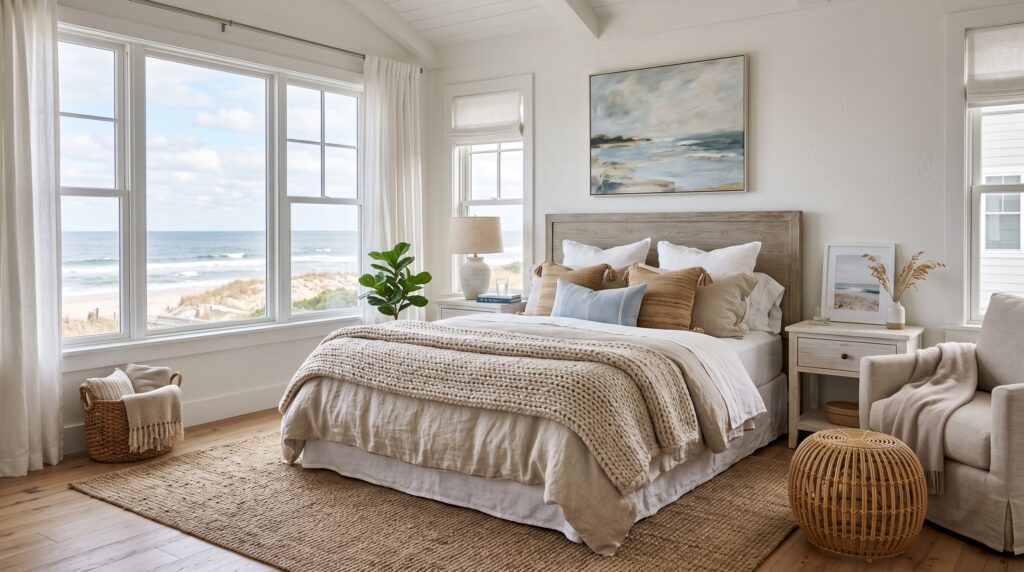
A coastal room should look relaxed to the eye and feel that way under your hands, too. This is where texture earns its keep.
6. Layer Linen Bedding
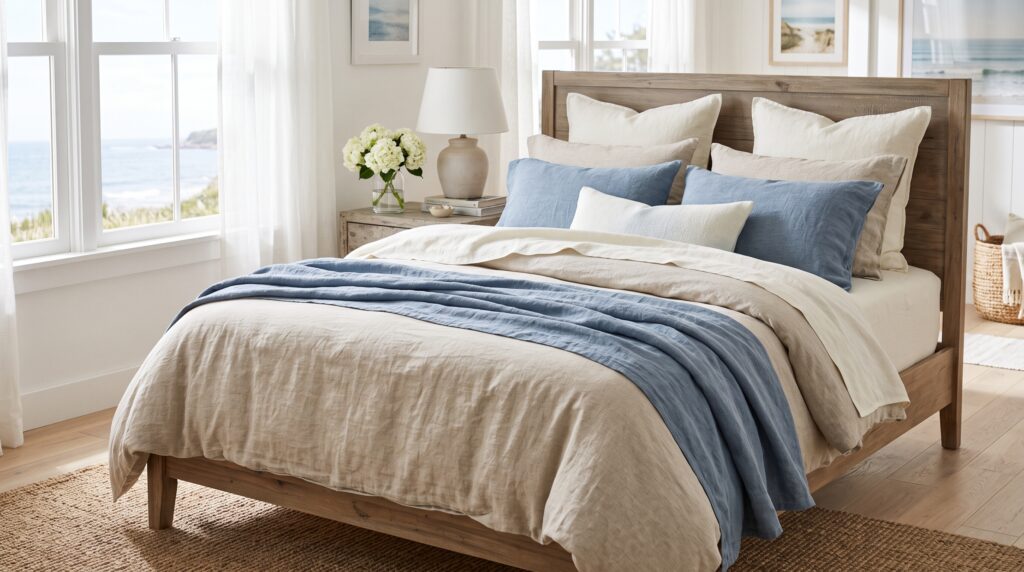
Mix two or three tones of linen — ivory, oatmeal, a faded blue — rather than a single matching set. The slight variation and characteristic wrinkle of linen do more to sell the “lived-in coastal house” look than anything crisp and matched ever could. Wash it often; linen actually softens and looks better with use, unlike crisper cottons that can start to look tired.
7. Add a Woven Headboard
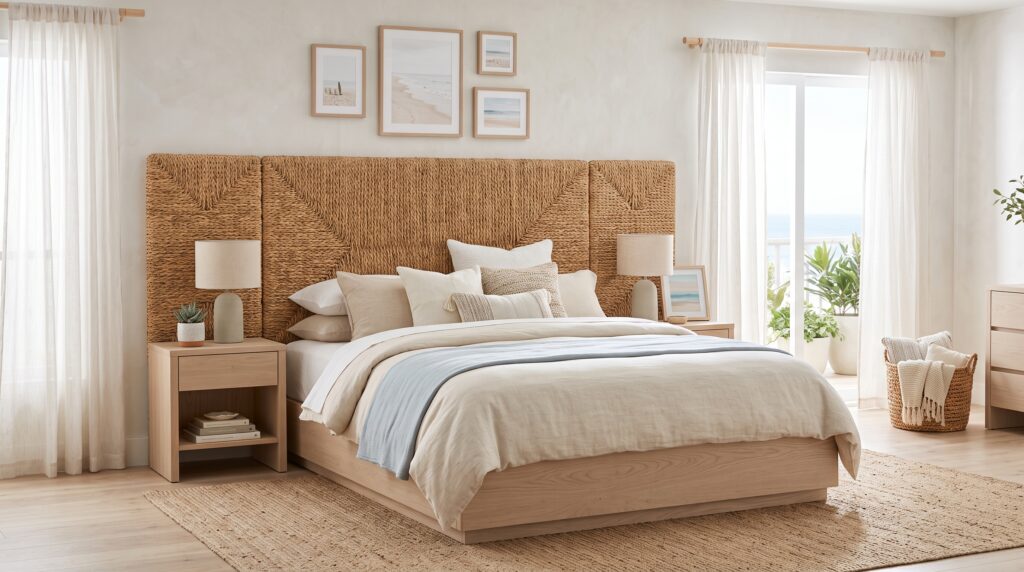
Rattan, cane, or wicker headboards bring in natural texture at eye level, which matters more than you’d think — it’s the first thing you see when you walk in. A woven headboard also tends to feel lighter, visually, than upholstered options, which is especially useful in a smaller room where a tall, heavy headboard can make the whole space feel cramped.
8. Introduce a Jute or Sisal Rug
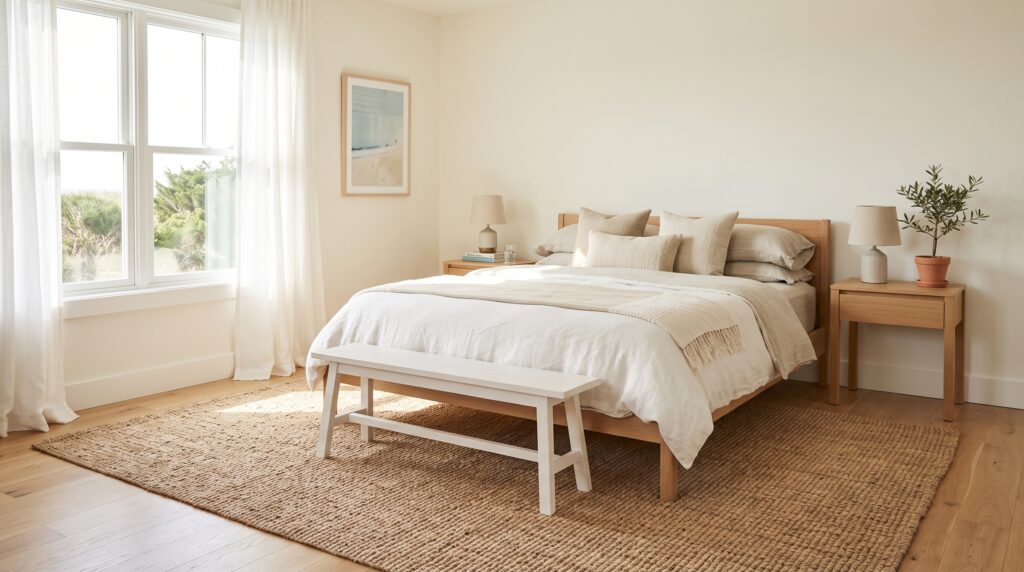
Natural fiber rugs ground the room and add warmth underfoot without competing with lighter wood tones. They’re also forgiving with sand, sun, and everyday wear, which is part of why they show up so often in beach houses to begin with. If bare feet on jute feels too rough for your taste, a wool-jute blend gives you the same texture with a softer hand.
9. Layer in a Chunky Knit or Waffle Throw
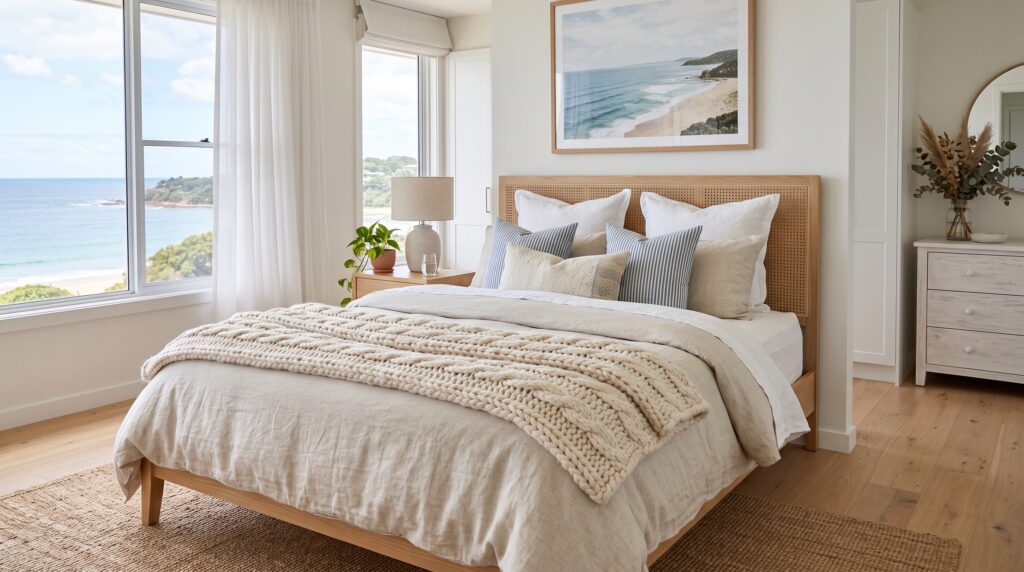
A single textured throw folded at the foot of the bed adds warmth for cooler evenings and keeps the styling from feeling too polished or showroom-perfect. Choose one that contrasts slightly in texture with your bedding — a nubby knit over smooth linen, for instance — so the layering actually reads instead of blending into one flat surface.
10. Mix In Sea-Glass Tones
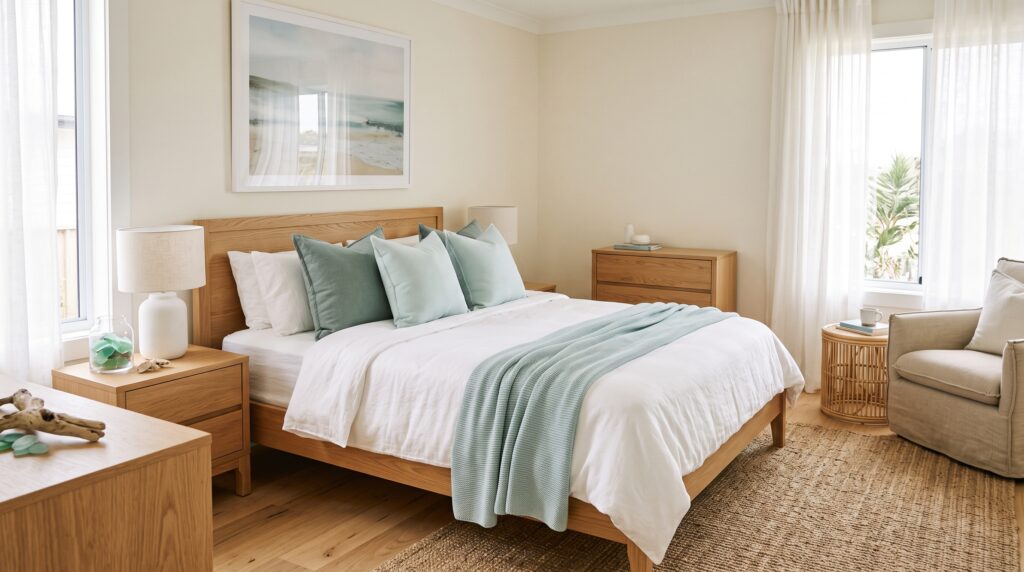
Pull soft aqua, sage, or pale green into pillows and small accessories. These colors read as coastal without being literal, and they pair easily with almost any wood tone. Keep them to smaller, swappable items like cushion covers or a throw blanket so you can update the accent color seasonally without repainting or reupholstering anything.
Lighting That Sets the Mood
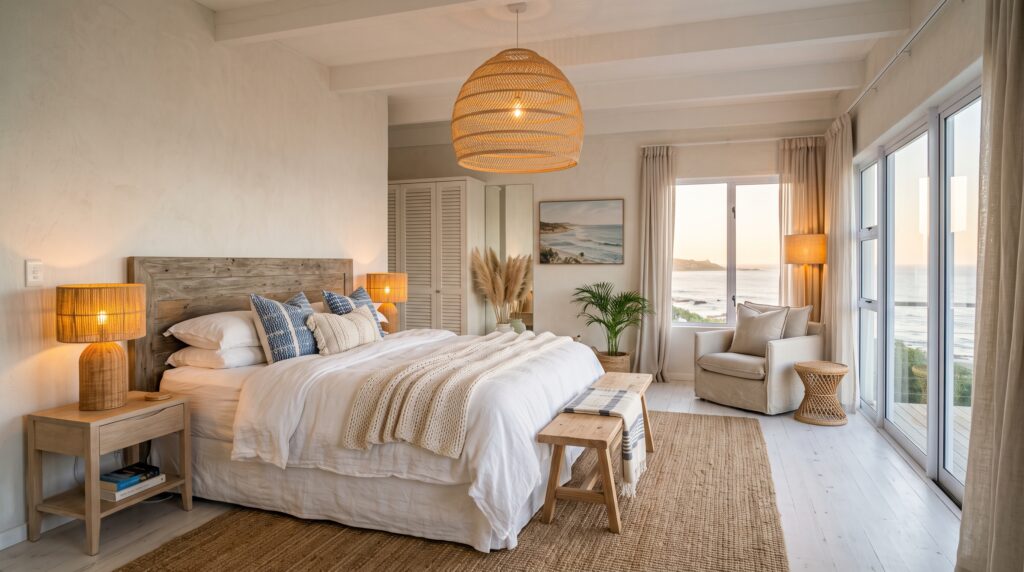
Lighting can make or break the airy quality that defines this style — the wrong fixture can make an otherwise perfect room feel heavy.
11. Hang a Woven Pendant
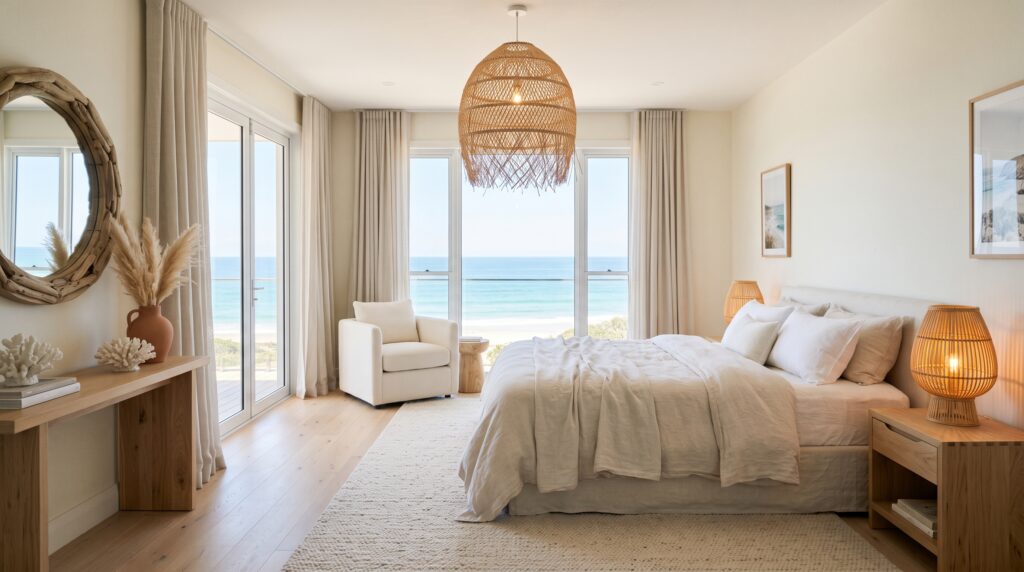
An oversized rattan or paper pendant light adds texture overhead and casts a soft, dappled glow at night — a nice alternative to a standard flush-mount fixture. Hang it low enough over a reading nook or dresser to feel intentional, rather than centered awkwardly in a large, otherwise empty ceiling.
12. Use Sculptural Table Lamps
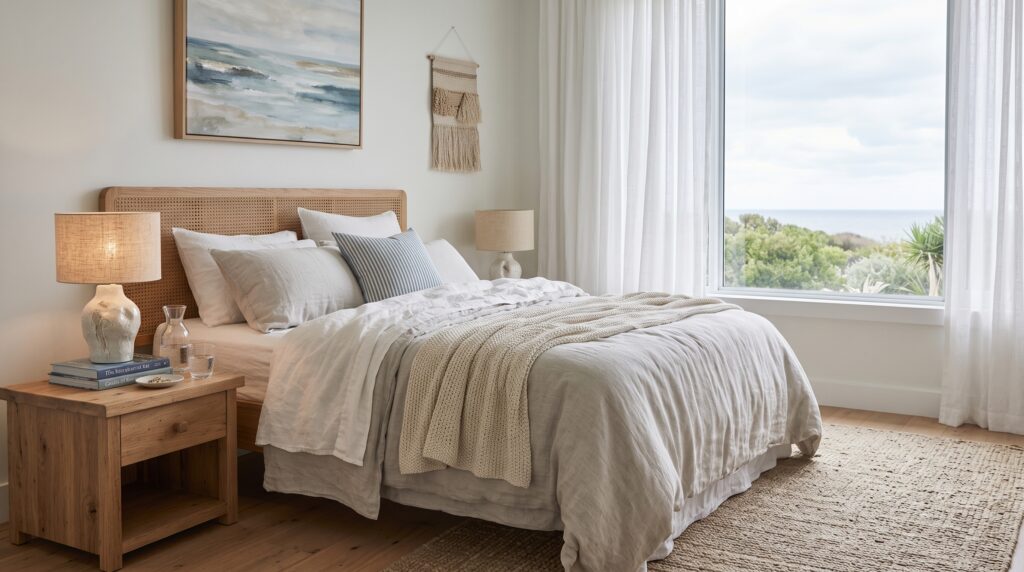
Ceramic lamps in a chalky white or sandy finish, paired with linen shades, keep bedside lighting soft and consistent with the room’s palette. Warm-toned bulbs (around 2700K) matter here too — a cool white bulb can undercut an otherwise warm, natural-materials palette in seconds.
13. Try a Statement Chandelier in Natural Materials
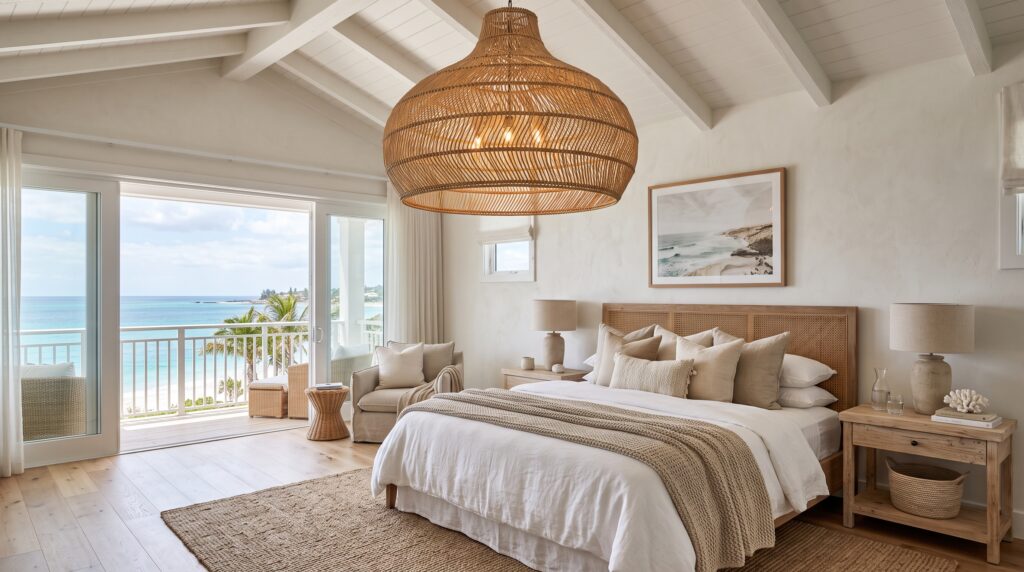
For a bedroom with higher ceilings, a chandelier made from rope, rattan, or driftwood can act as a real focal point — dramatic without reading as formal. It’s a good option if the rest of the room is fairly restrained, since it gives your eye somewhere to land without adding clutter to the surfaces below.
14. Maximize What Natural Light You Have
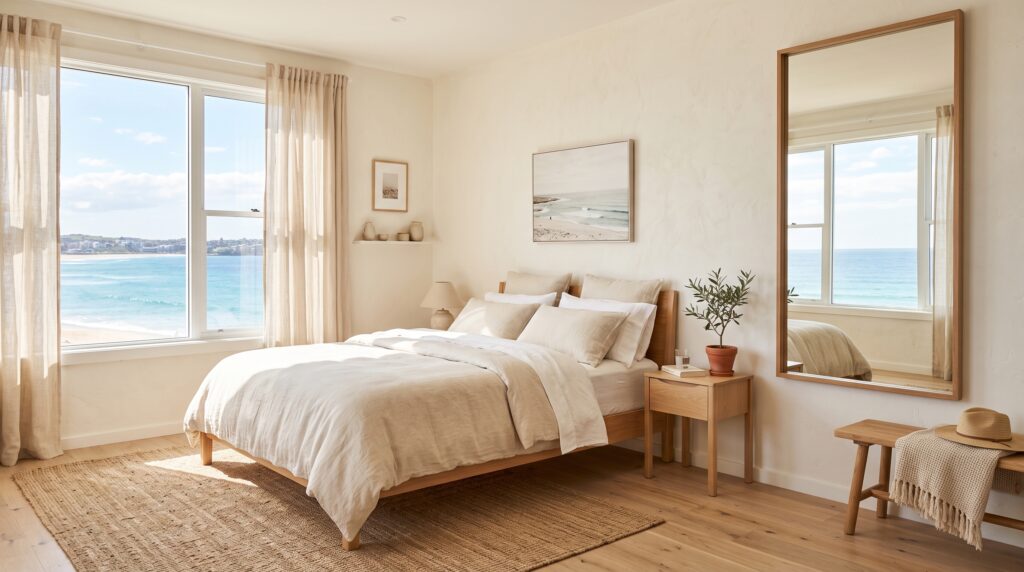
Mirrors placed to bounce daylight around the room, paler wall colors, and sheer window treatments all work together here. In coastal design, natural light is treated almost like a material in its own right — worth planning around as carefully as you’d plan a paint color or a rug.
Furniture and Layout Choices
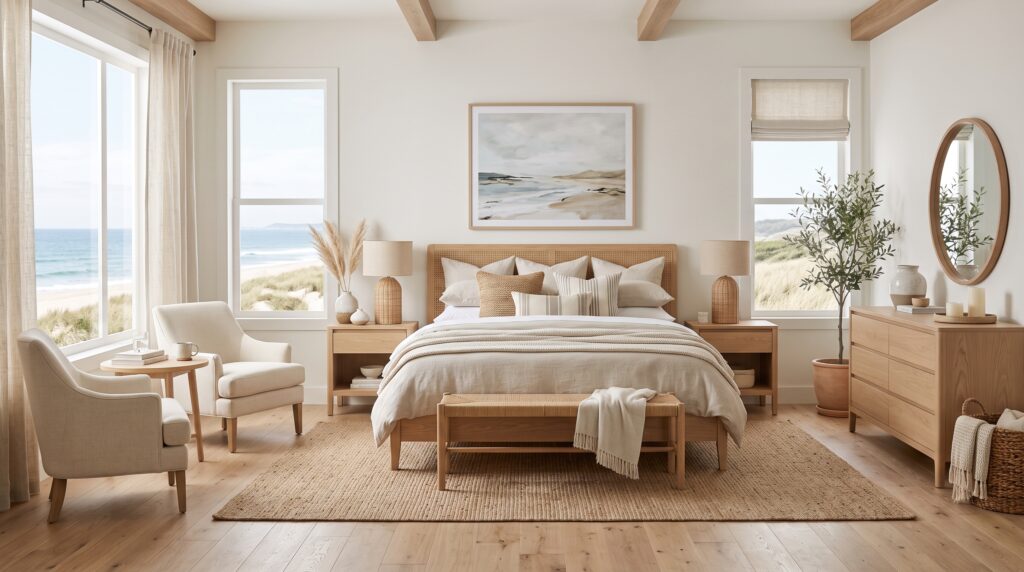
15. Add a Bench at the Foot of the Bed
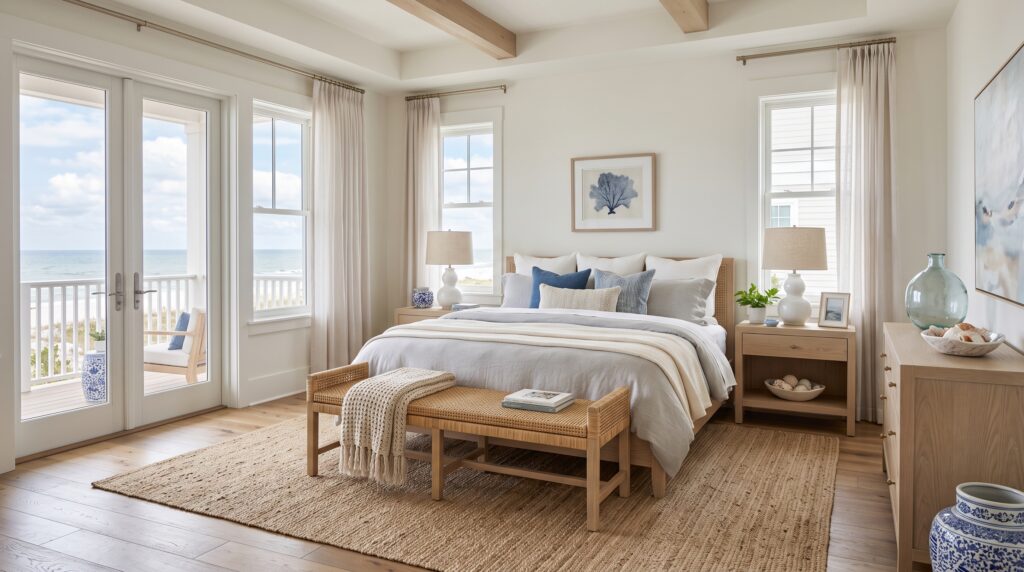
A woven or upholstered bench adds function — somewhere to sit while getting dressed — and softens the hard edge of the bed frame visually. It’s also a practical spot to drop a robe or an extra throw at the end of the day, which keeps clutter off chairs and dressers elsewhere in the room.
16. Build a Small Reading Nook
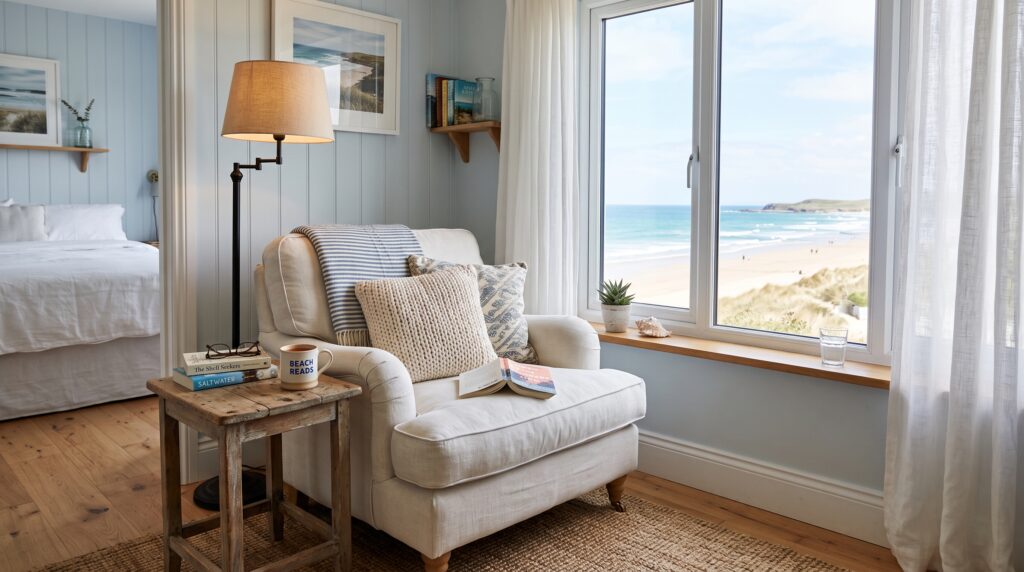
If you have a corner to spare, a comfortable chair, a floor lamp, and a small side table create a secondary retreat within the room itself, which fits the relaxed, unhurried spirit of the style. Angle the chair toward a window if you can — natural light while reading is a small detail that does a lot of work in making the corner feel purposeful rather than an afterthought.
17. Choose Furniture With Visible Wood Legs
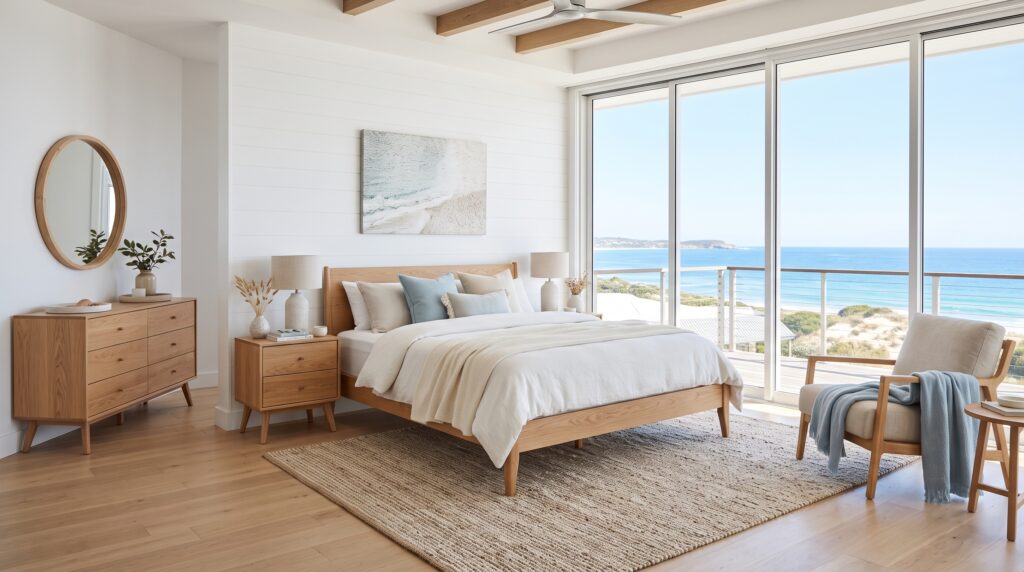
Pieces that are lifted off the floor on slim wood legs feel lighter than furniture with solid bases, which matters in smaller bedrooms where every inch of visual breathing room counts. Being able to see floor beneath a dresser or bench, even a sliver of it, makes the whole room read as more open than the square footage might suggest.
18. Keep Surfaces Mostly Clear
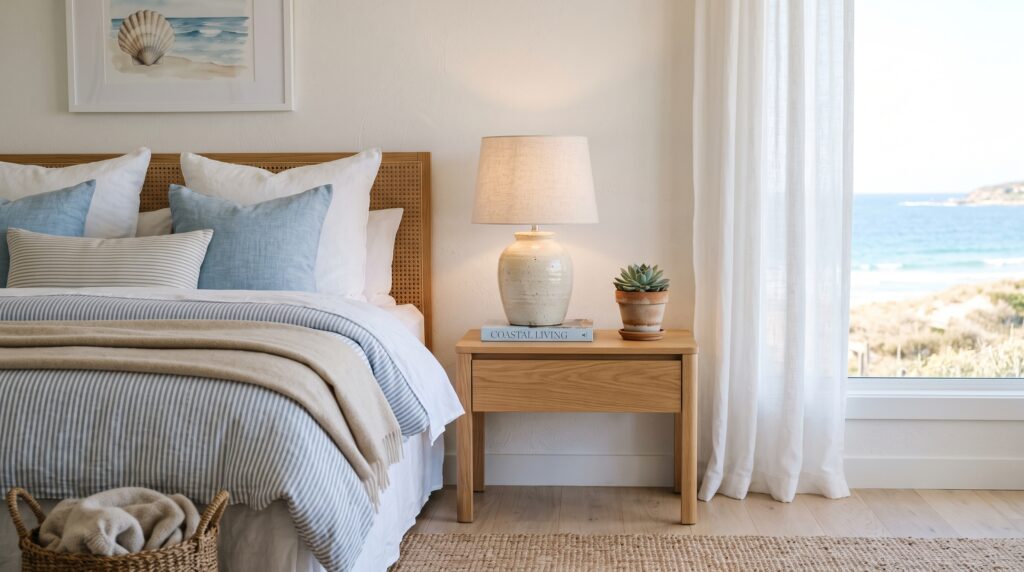
Coastal styling relies on restraint. A nightstand with one lamp, one small stack of books, and maybe a single plant reads as intentional; a cluttered surface undercuts the calm the rest of the room is working toward. If you need extra storage, favor closed options — a woven basket or a drawer — over open shelving that invites visual noise.
Finishing Touches
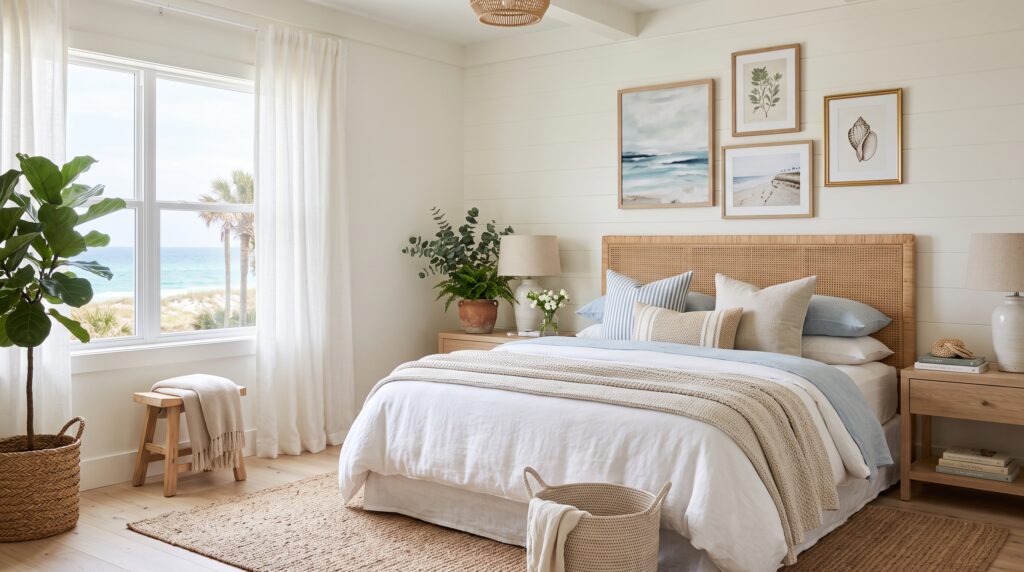
19. Add Living Greenery
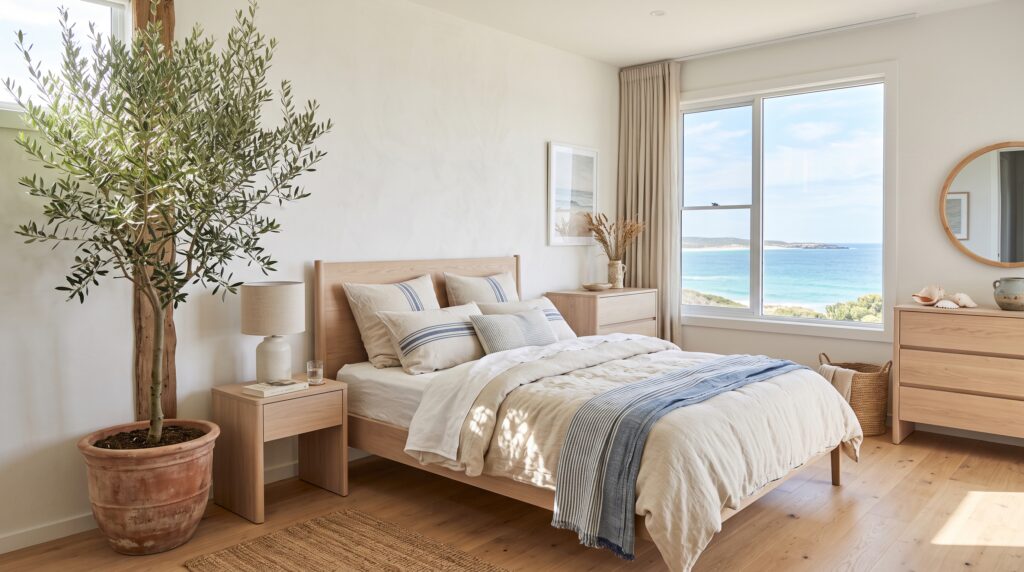
A potted olive tree, a trailing pothos, or a simple palm brings life into the room and reinforces the natural, outdoorsy feeling without leaning on beach clichés. A single larger plant in a floor pot usually reads better in a bedroom than several small ones scattered across surfaces, since it acts as one clean design statement rather than competing focal points.
20. Curate Art Instead of Decorating With It
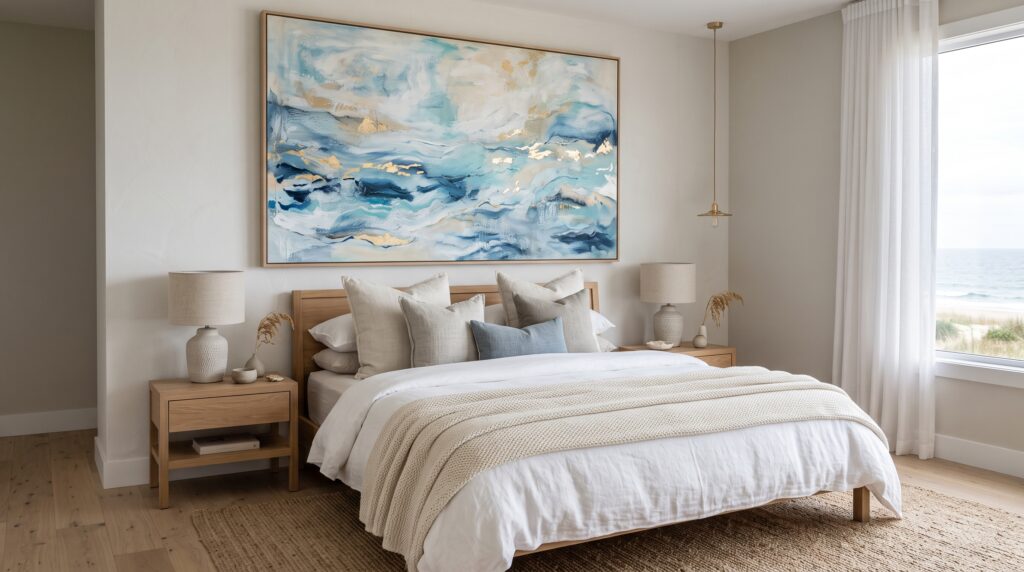
One or two pieces of abstract coastal or landscape art — rather than a wall full of anchors and starfish — keep the look sophisticated. Choose pieces with tones already present in your bedding or rug so the art feels connected to the room instead of dropped in on top of it. If you want ideas for how real coastal-style bedrooms put these elements together, Houzz’s coastal bedroom photo gallery is a genuinely useful place to browse for inspiration before you commit to a direction.
Common Questions About Coastal Bedroom Design
Does a coastal bedroom need to be blue? No. Many of the most convincing coastal rooms lean almost entirely on white, sand, and wood tones, with blue appearing only in a single cushion or piece of art. Overusing blue is actually one of the fastest ways to tip the room into “theme” territory instead of a considered, livable space.
What’s the difference between coastal and nautical style? Nautical decor leans on literal maritime references — stripes, rope, anchors, ship imagery. Coastal design borrows the feeling of being near water — light, texture, breeze — without the literal props. Most modern coastal rooms use nautical elements sparingly, if at all.
Can this style work in a bedroom with no natural light? Yes, though you’ll want to compensate with paint finish and lighting temperature. A soft white with a bit of sheen reflects more of whatever light you do have, and warm-toned bulbs throughout the room will keep the space feeling inviting rather than flat.
What’s the most budget-friendly place to start? Bedding and textiles. Swapping in linen sheets, a textured throw, and a couple of sea-glass-toned pillow covers changes the feel of a room significantly for relatively little cost, and none of it requires committing to furniture or paint before you’re sure of the direction you want to take.
Bringing It All Together
The rooms that pull off this look best don’t try to check every box on this list at once. Pick a palette, choose two or three texture-driven elements you actually love, and build outward from there. A coastal bedroom works because it feels unforced — a few of these ideas, done well, will get you further than all twenty done halfway.
Give the room time, too. The best version of this style rarely comes together in a single weekend — it tends to build gradually, one linen swap or thrifted lamp at a time, until one day the space just feels right. That slow, unhurried approach is fitting for a style built entirely around the idea of taking things a little more slowly in the first place.