Introduction
Some bathrooms are designed to impress. A wabi-sabi bathroom is designed to calm you down. Rooted in a centuries-old Japanese worldview, wabi-sabi is less a decorating trend and more a way of seeing beauty in things that are raw, worn, handmade, and unfinished. Instead of glossy tile and mirror-polish fixtures, this style leans on rough plaster, weathered wood, hand-thrown ceramics, and stone that still looks like it came from the earth.
Bring that philosophy into your bathroom and you get a space that feels less like a showroom and more like a retreat — somewhere the imperfections are the point, not the problem. Below are 22 wabi sabi bathroom ideas you can borrow, mix, and adapt for a home that feels grounded, quiet, and entirely your own.
Wabi Sabi Bathroom Ideas to Transform Your Space
1. Rough-Hewn Stone Walls
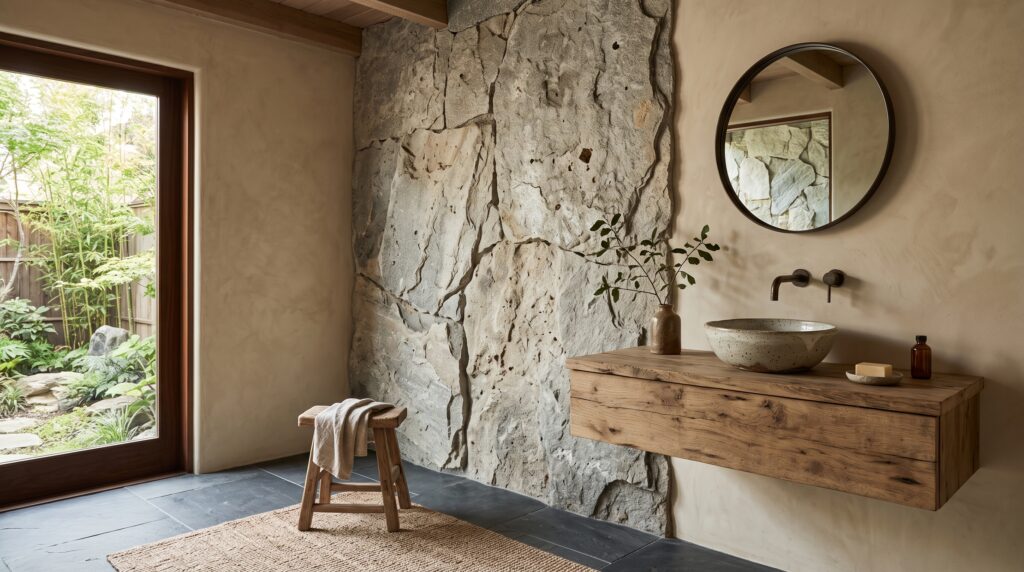
Nothing anchors a wabi-sabi bathroom like natural stone left in its raw state. Slabs with visible veining, uneven edges, or a lightly pitted surface bring texture that manufactured tile simply can’t fake. Let one wall — often the shower surround — carry the stone, and keep everything else quiet so the material can do the talking.
2. A Stripped-Back, Minimalist Layout
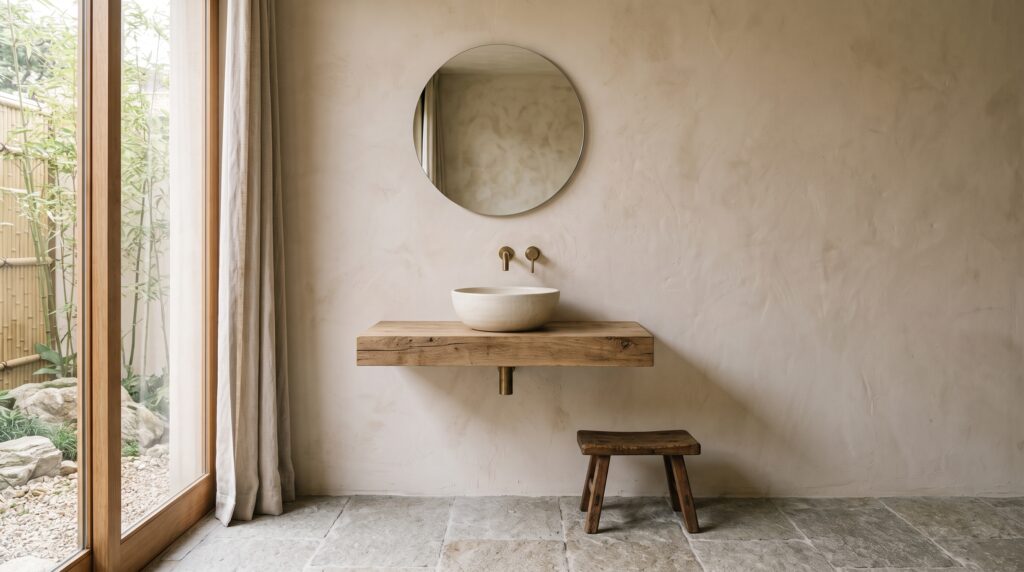
Wabi-sabi and clutter don’t mix. A pared-down bathroom with only the essentials — a simple vanity, a stool, a single plant, maybe a woven basket — lets the architecture and materials breathe. Every object earns its place instead of just filling space.
3. Reclaimed Wood Details
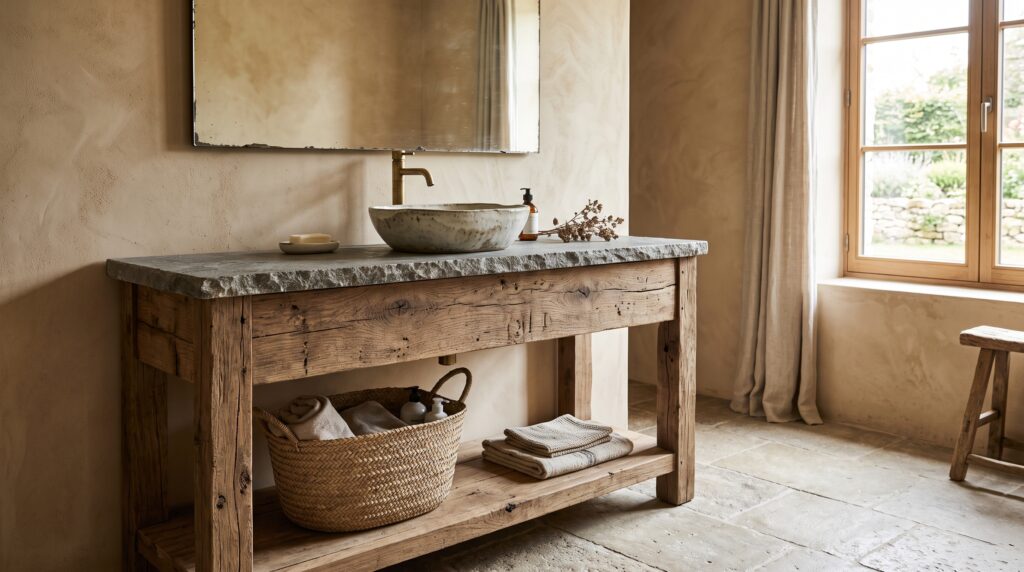
Weathered timber softens all that stone and plaster. A reclaimed wood vanity, a low stool, open shelving, or even a slatted bath mat introduces grain, knots, and the kind of imperfections that only come with age. The wood doesn’t need to be sealed to a high shine — a matte or lightly oiled finish suits the aesthetic far better.
4. An Earthy, Muted Color Palette
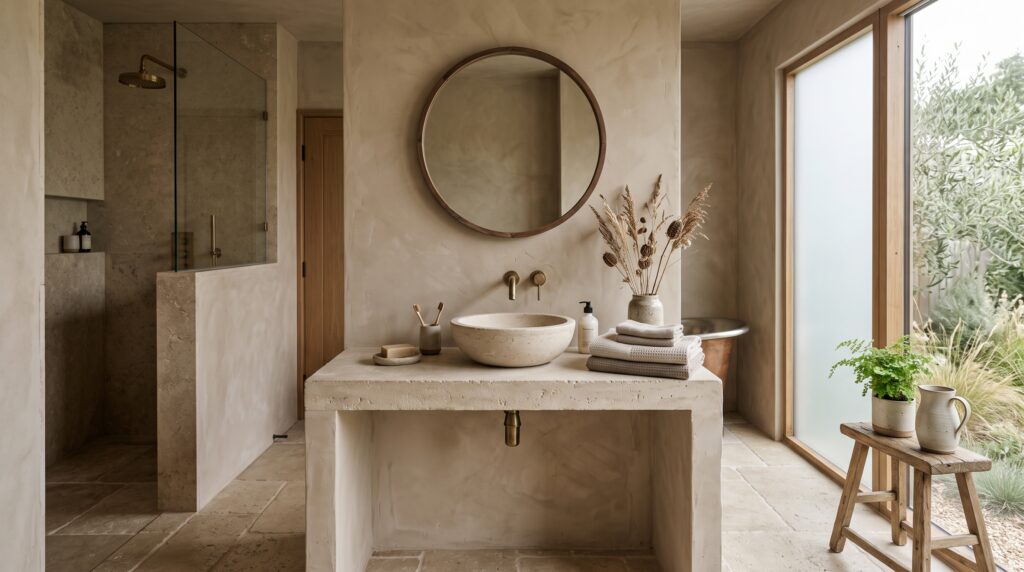
Skip stark white and go for the colors of the ground: sand, clay, taupe, warm greige, soft terracotta. These tones don’t compete with the natural materials around them — they extend them, making stone, wood, and plaster feel like they belong to the same landscape.
5. Limewash or Raw Concrete Surfaces
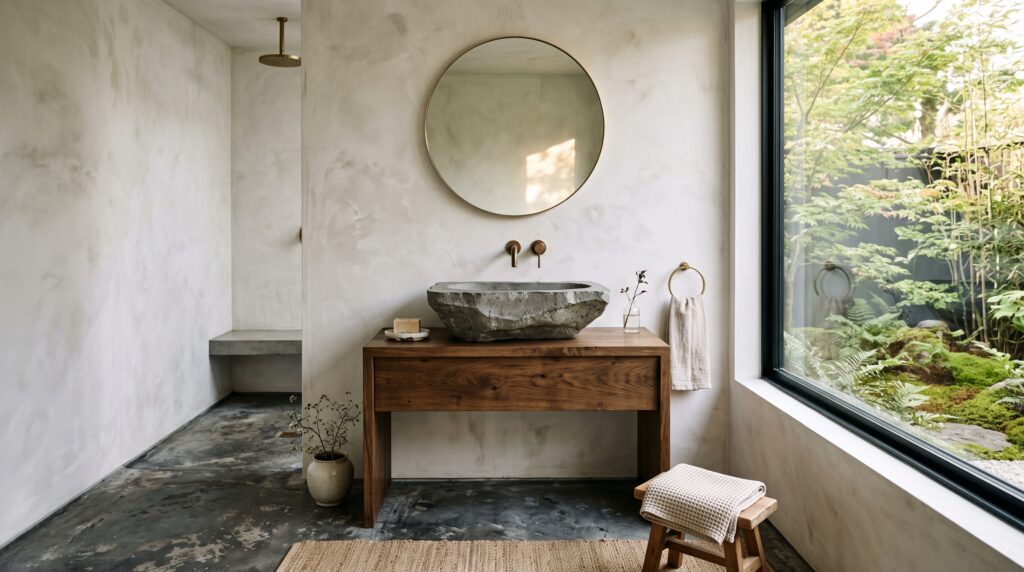
Concrete sinks, floors, or shower pans bring an honest, almost industrial calm to the room, especially when left slightly imperfect rather than polished smooth. Limewash plaster is another favorite — its cloudy, hand-applied texture changes subtly with the light throughout the day.
6. A Japandi-Leaning Bathroom
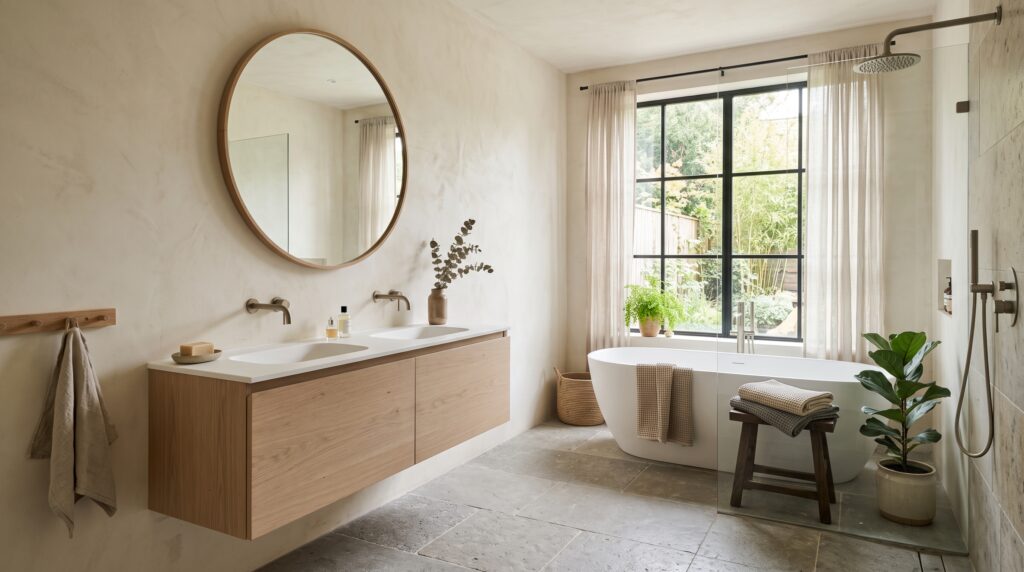
Blend Japanese restraint with Scandinavian warmth for a softer take on wabi-sabi. Light oak, low-profile fixtures, a neutral palette, and just enough negative space create a room that feels serene without tipping into austere.
7. A Freestanding Soaking Tub
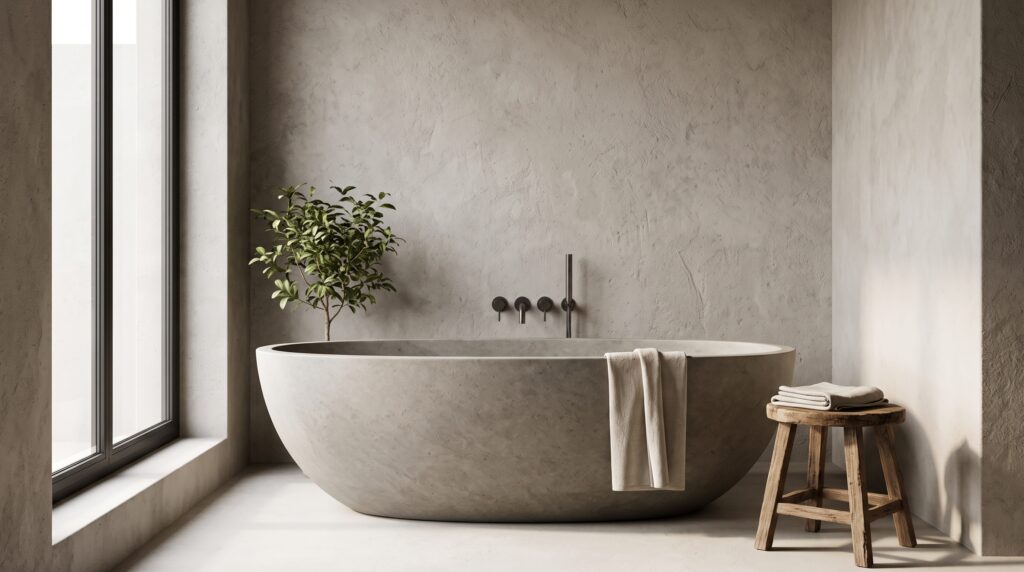
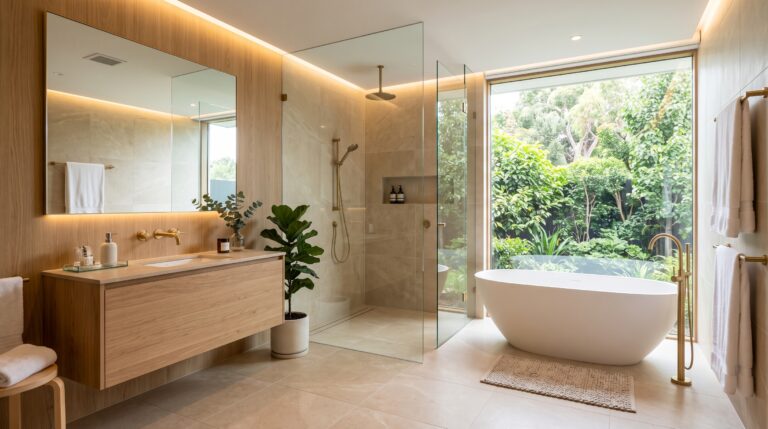
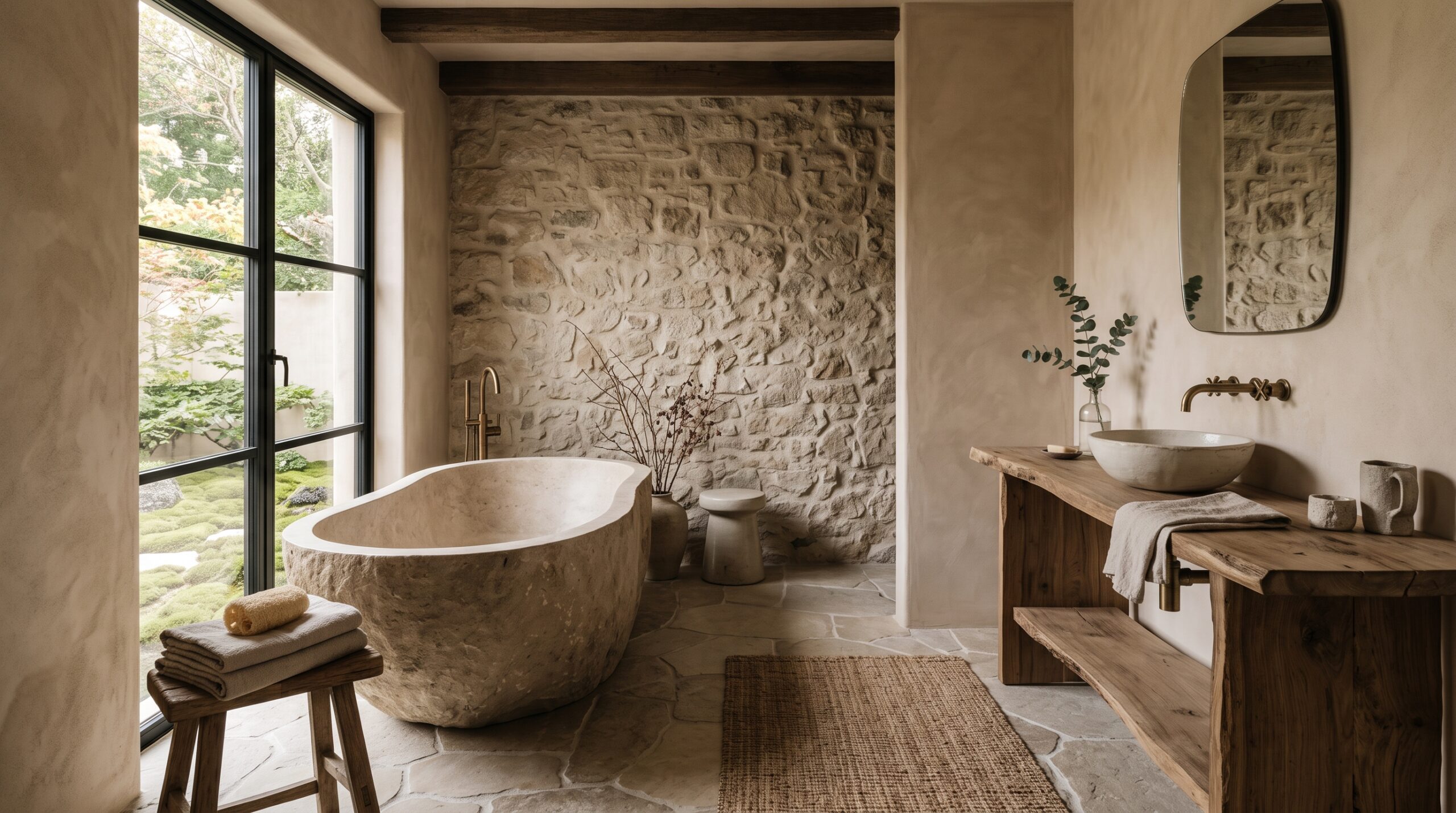
A simple, curved freestanding tub — in stone, matte ceramic, or even hand-finished concrete — becomes the natural centerpiece of a wabi-sabi bathroom. Set it near a window or surround it with wood and plants for a spa-like moment that doesn’t require a spa-sized budget.
8. Handmade, Imperfect Tile
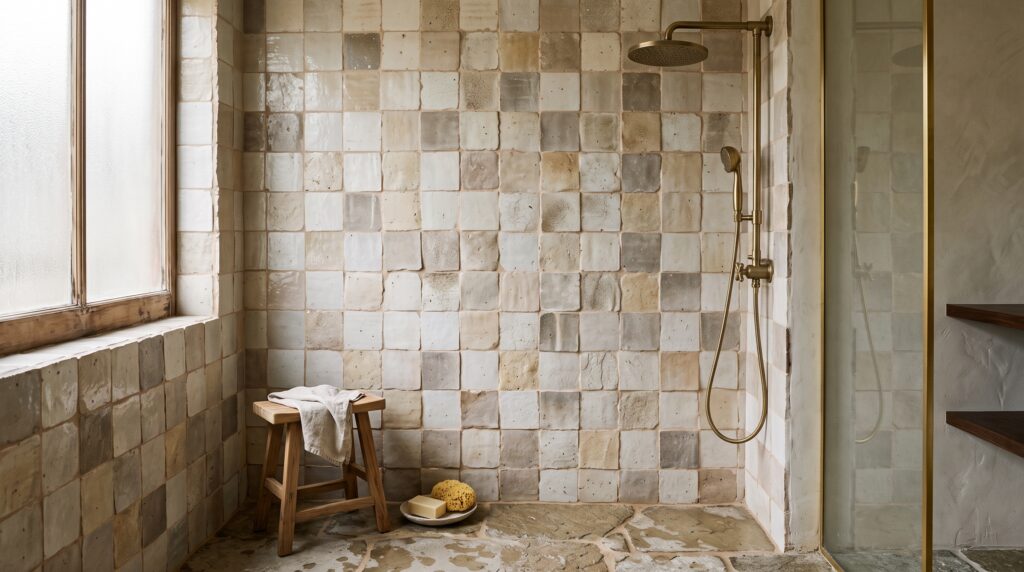
Factory tile is uniform by design; handmade tile isn’t, and that’s exactly the appeal. Slight variations in glaze, edge, and color across a run of artisan tile give a wall real depth and a sense that a person, not a machine, made it.
9. Small-Space Wabi-Sabi Styling
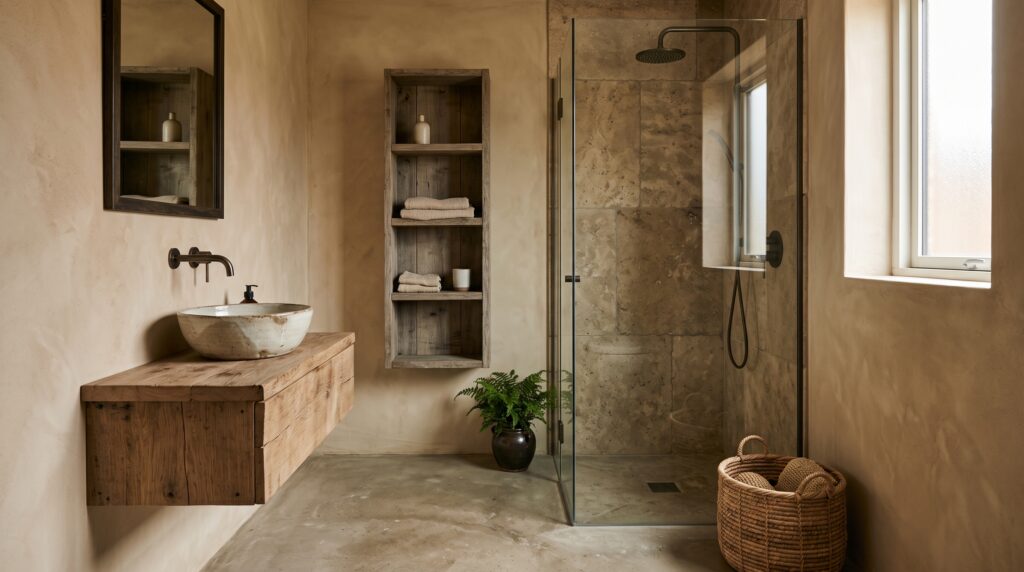
You don’t need square footage to pull this off. In a compact bathroom, lean harder into restraint: floating storage to keep the floor visible, one or two natural materials rather than five, and warm, low lighting to make the space feel cocooned instead of cramped.
10. Generous Natural Light
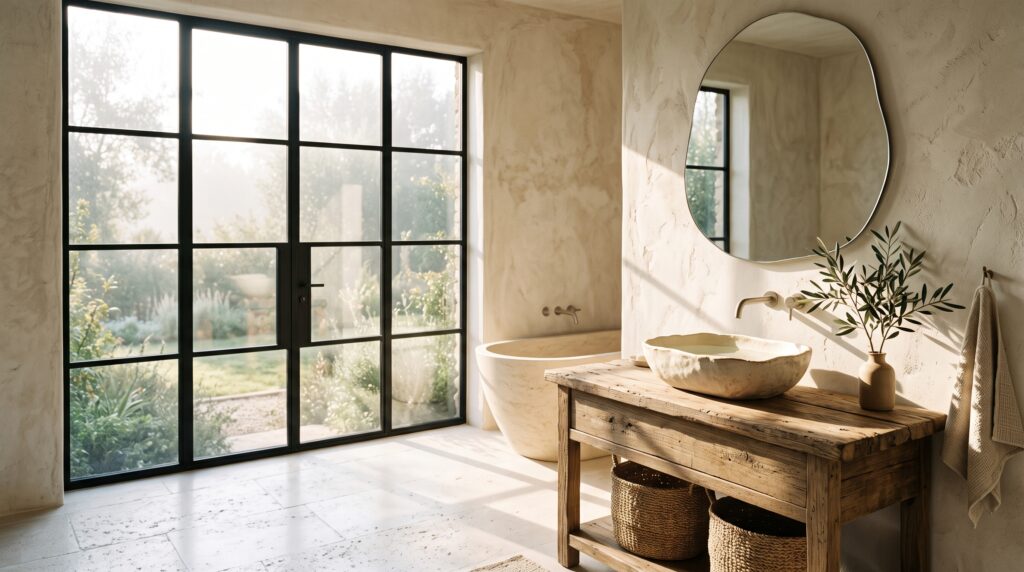
Sunlight reveals texture in a way artificial light can’t. A larger window, a skylight, or a linen curtain that filters rather than blocks the light lets the room shift in mood across the day — bright and crisp in the morning, soft and golden by evening.
11. A Hand-Carved Stone Basin
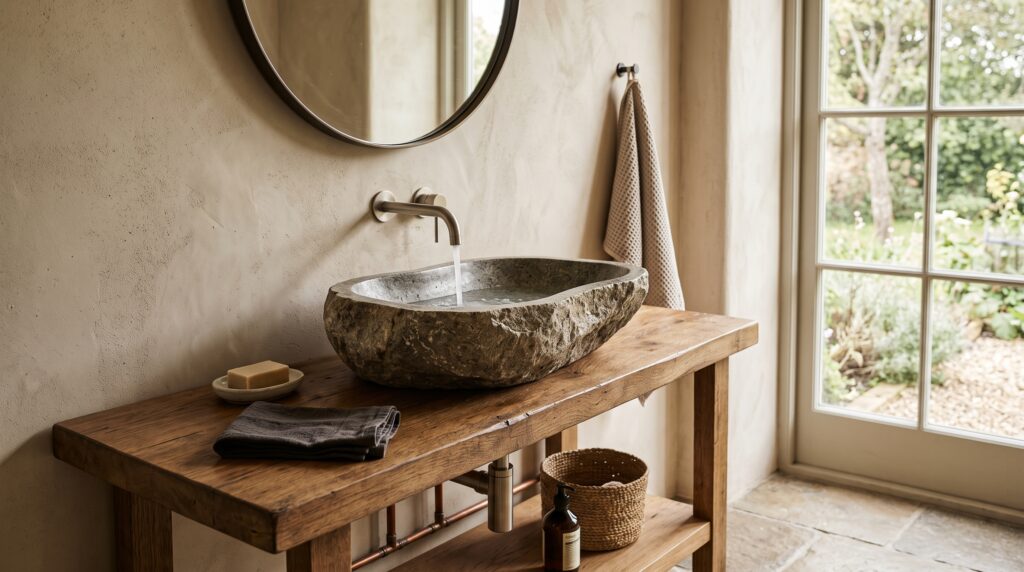
A vessel sink carved from a single block of stone, left with its natural irregularities visible, turns an everyday fixture into something closer to a sculptural object. No two are exactly alike, which is very much the point.
12. Bathroom Greenery
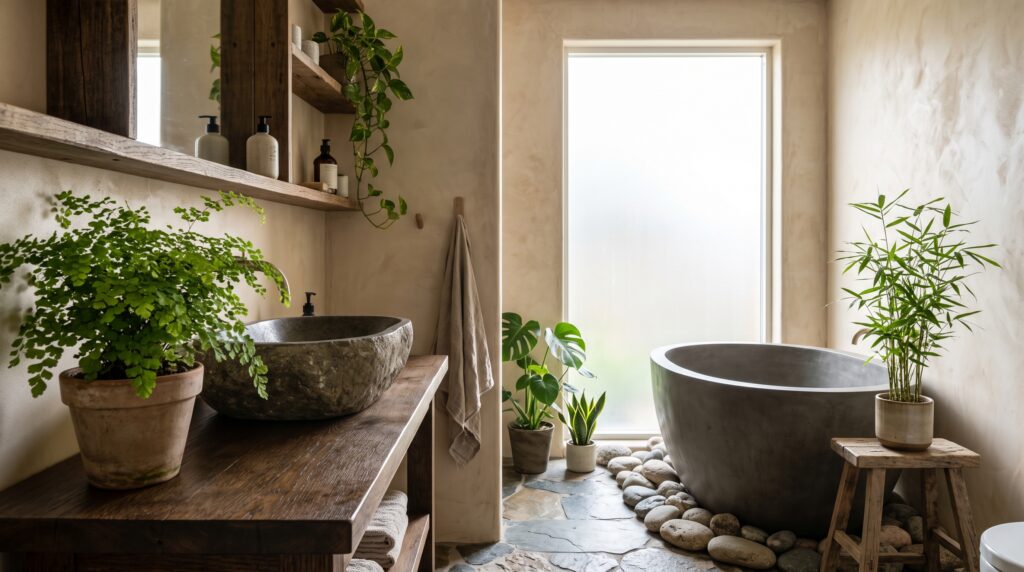
Humidity-loving plants — ferns, bamboo, snake plants, or a simple potted fig — bring life and softness into a room otherwise built from hard, still materials. They also do double duty by tempering the coolness of stone and concrete with something visibly alive.
13. A Warm Neutral Foundation
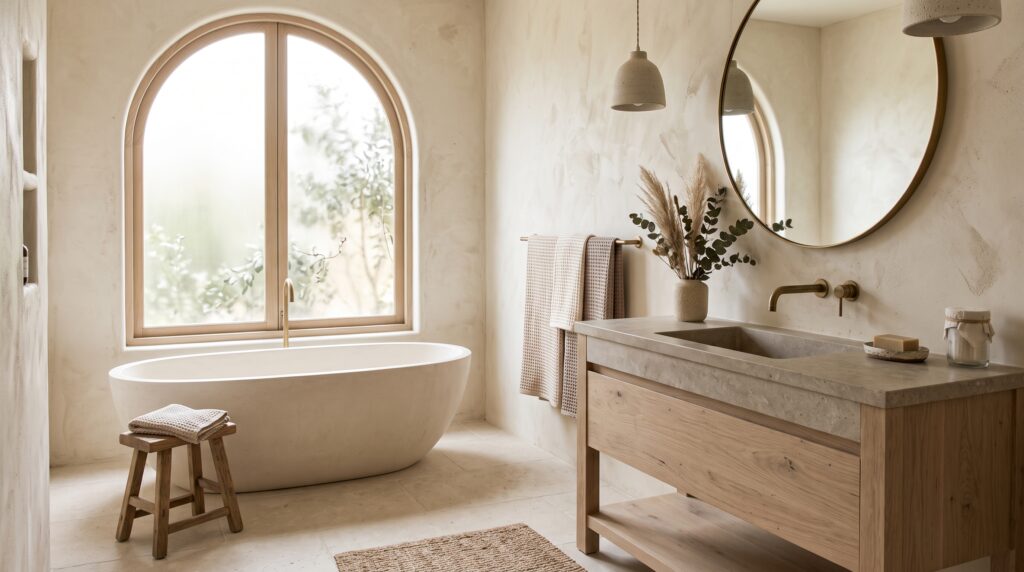
If earth tones feel too bold, warm neutrals are the gentler entry point: cream, oatmeal, soft gray, and pale taupe. Layered together with natural textiles and matte finishes, they create a backdrop that feels calm rather than clinical.
14. Low, Ambient Lighting
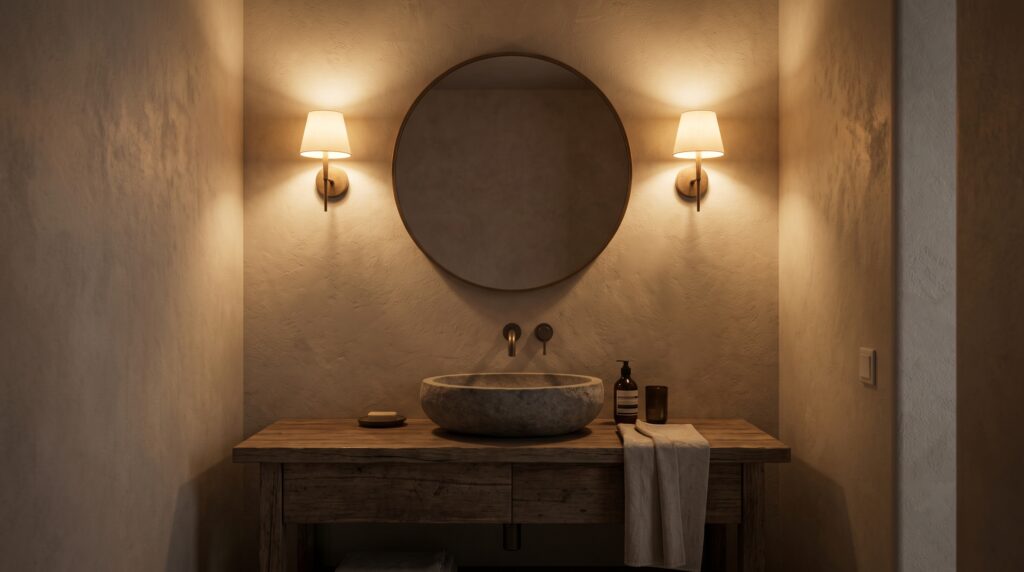
Skip the harsh overhead vanity bar. Wall sconces, hidden LED strips, and even a candle or two create pools of warm light that flatter texture instead of flattening it. The goal is a glow, not a spotlight.
15. An Unfinished Wood Vanity
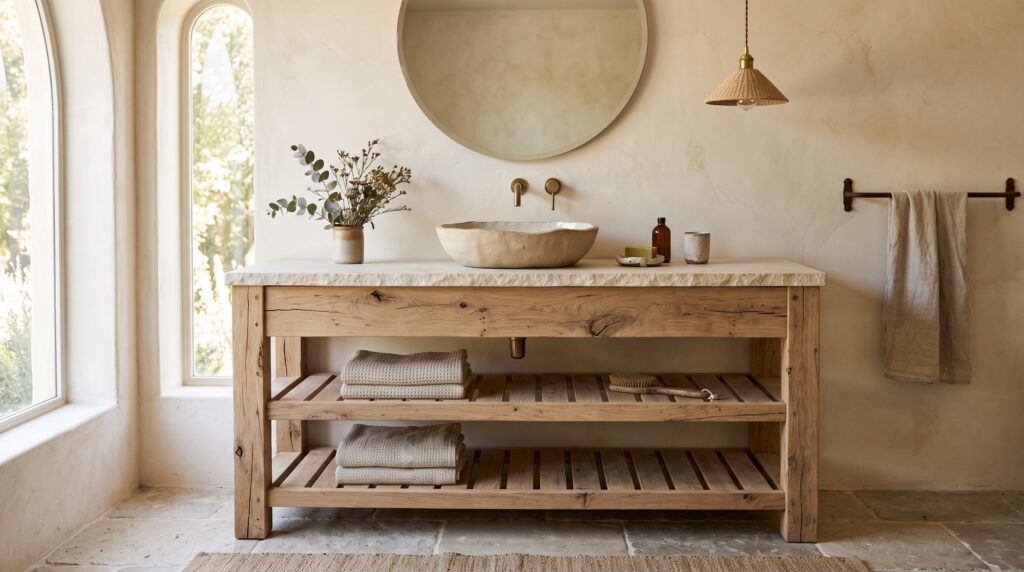
A vanity with visible grain, natural knots, and a light or raw finish (rather than a glossy lacquer) pairs beautifully with a stone or concrete countertop. The contrast between rough wood and smooth stone is a classic wabi-sabi pairing.
16. Quiet Luxury Through Craftsmanship
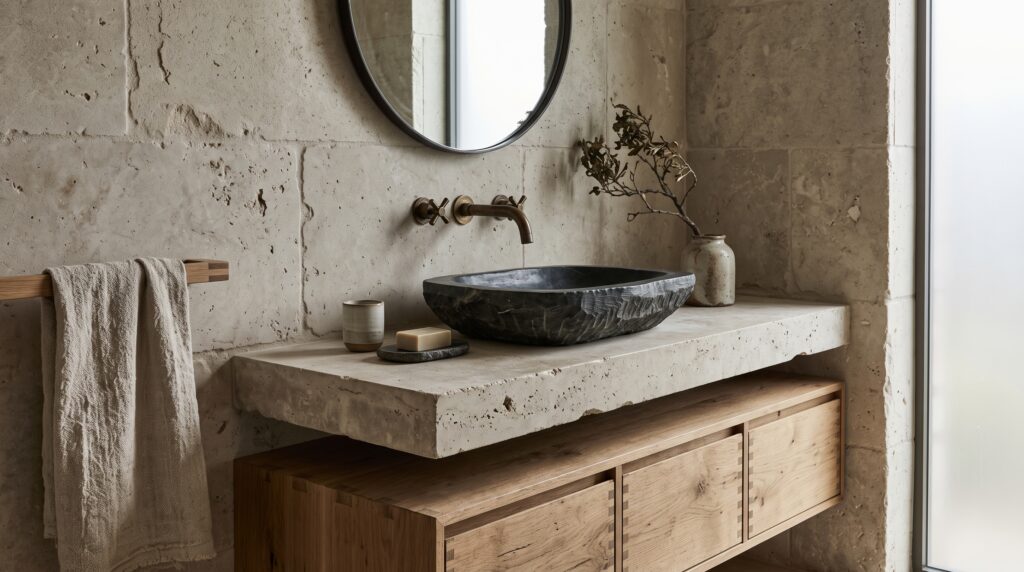
A higher-end wabi-sabi bathroom doesn’t rely on ornamentation — it relies on material quality. Thick-cut stone, hand-forged fixtures, and joinery you can actually see and feel communicate luxury more convincingly than gilding ever could.
17. Terracotta and Clay Accents
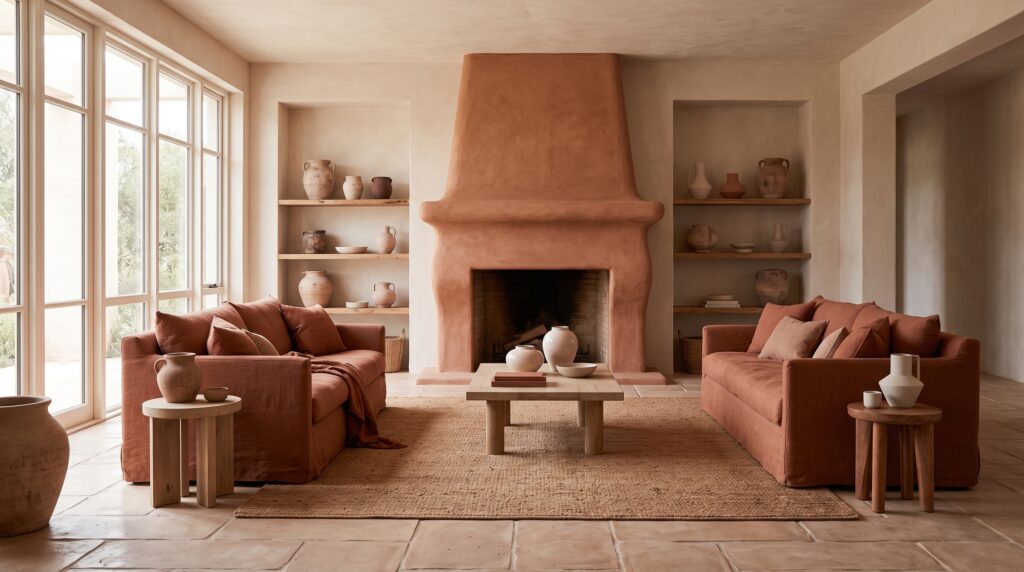
Warm clay tones — think unglazed terracotta pots, clay-colored plaster, or muted burnt orange tile — bring a sun-baked, grounded warmth that pairs especially well with darker wood and pale stone.
18. Open Wooden Shelving
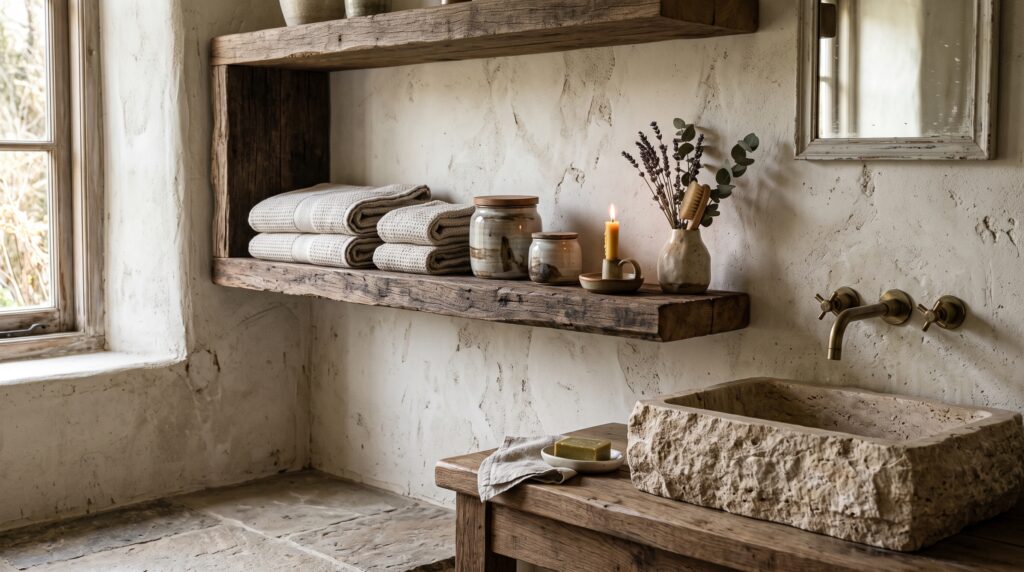
Swap closed cabinetry for open wood shelves holding folded linen towels, ceramic jars, and a candle or two. Because everything is visible, the shelving doubles as quiet, functional decor rather than storage you have to hide.
19. A Modern Take on Wabi-Sabi
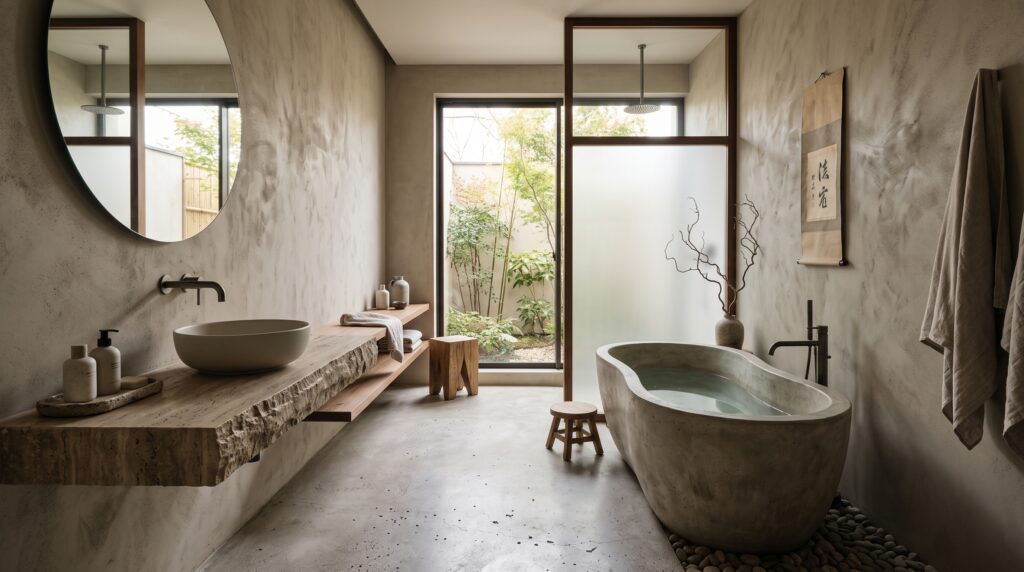
You can keep clean architectural lines and contemporary fixtures while still working in raw plaster, unpolished stone, and organic shapes. The result reads modern at a glance but rewards a closer look with texture and imperfection.
20. Layered Natural Textures
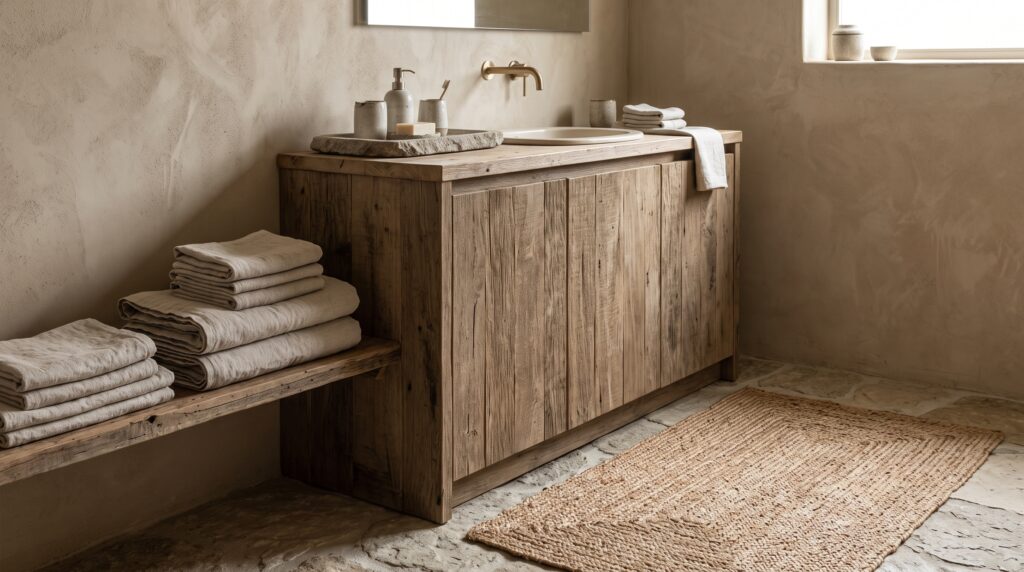
Linen towels, a jute bath mat, a rough stone tray, woven baskets — layering several tactile materials, even in a small dose, keeps the eye moving and prevents the room from feeling flat or over-designed.
21. A Spa-Style Retreat
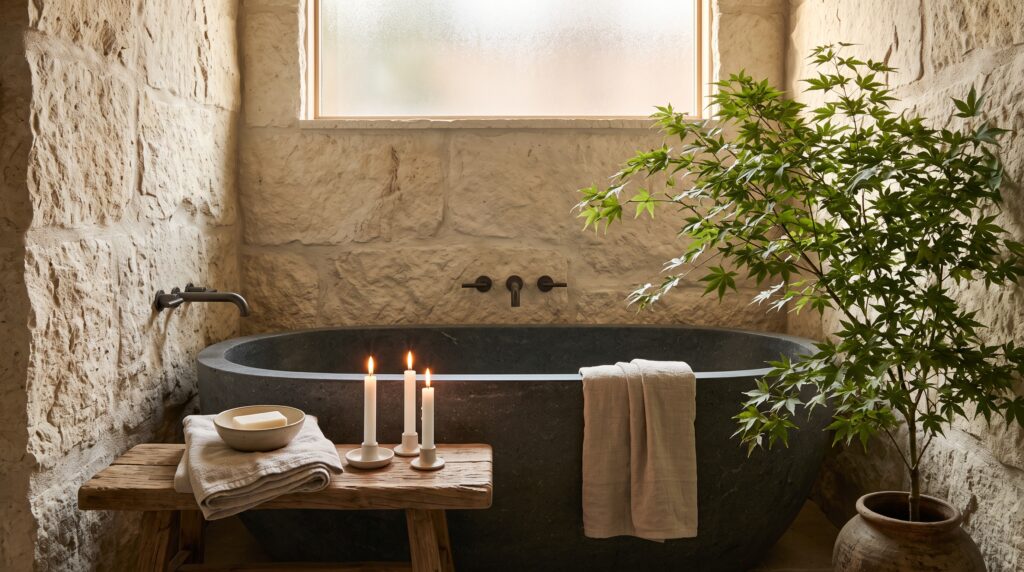
Combine several elements at once — a soaking tub, natural stone, soft towels, candlelight, and a plant or two — to turn an ordinary bathroom into a genuine at-home escape built for slowing down.
22. Timeless Over Trendy
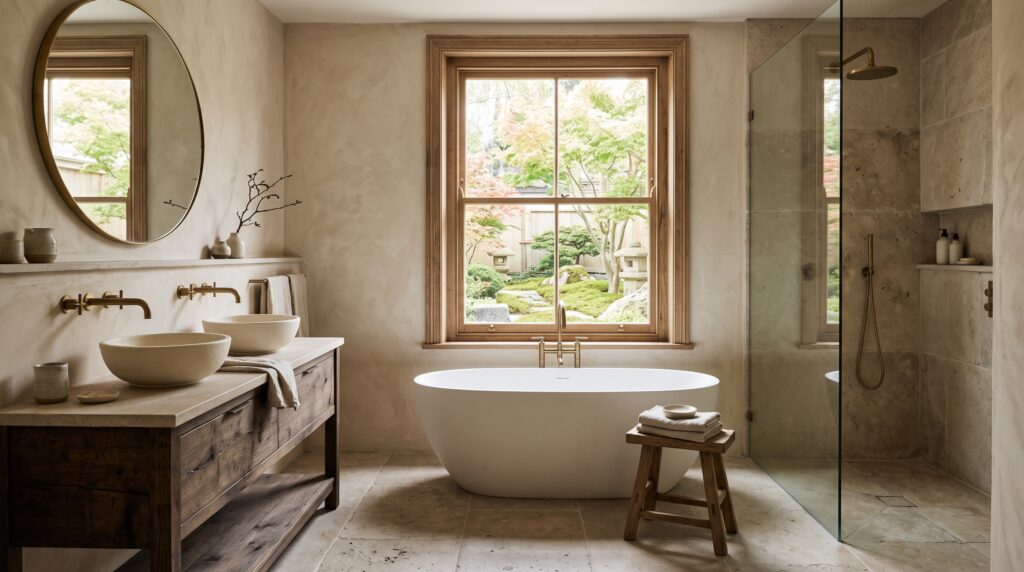
The strongest wabi-sabi bathrooms aren’t chasing a look that will date in five years. Stone, wood, handmade ceramics, and a neutral palette age well by nature, which means the room only grows more characterful over time rather than looking dated.
Conclusion
A wabi-sabi bathroom isn’t about achieving a particular look so much as adopting a different relationship with your space — one where natural wear, handmade texture, and a quieter color story are treated as features, not flaws. Start small if you need to: swap in linen towels, add a reclaimed wood stool, or repaint in a warm clay tone. Layer in more — stone, concrete, open shelving, a freestanding tub — as your renovation allows. Whichever ideas you pull from this list, the goal stays the same: a bathroom that feels less like a finished product and more like a place to breathe.