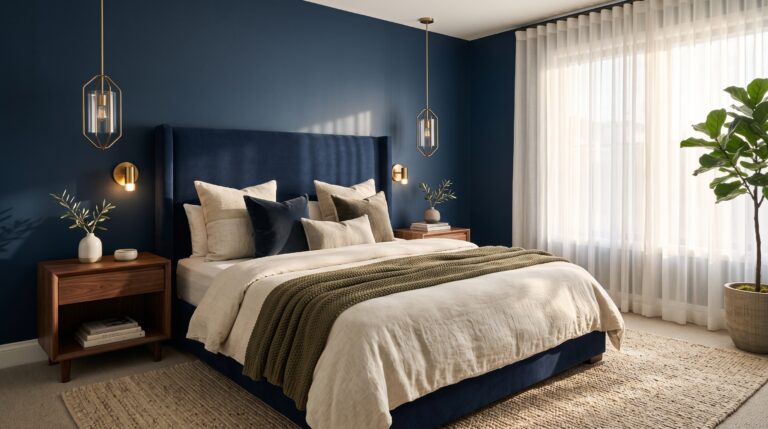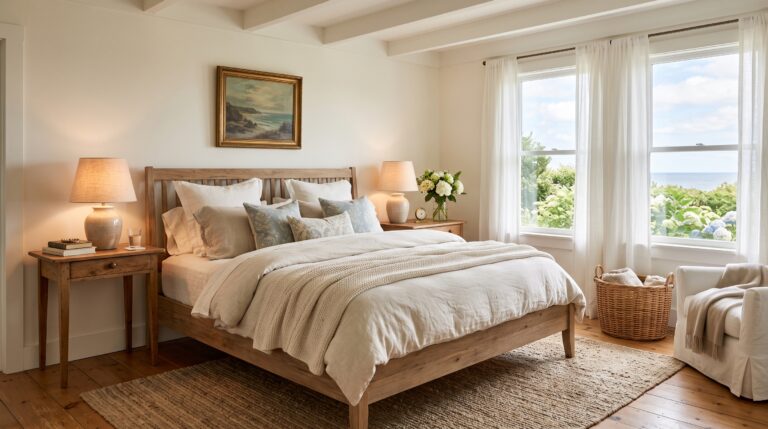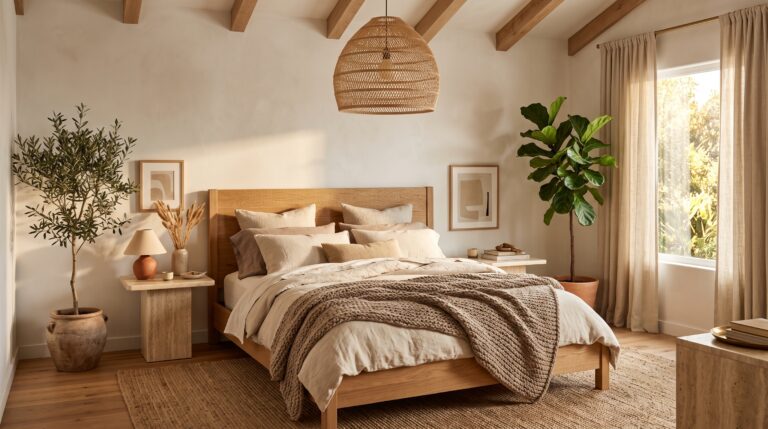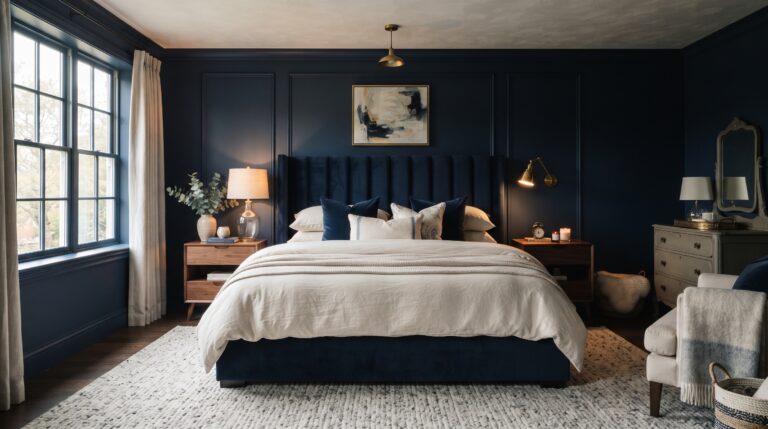
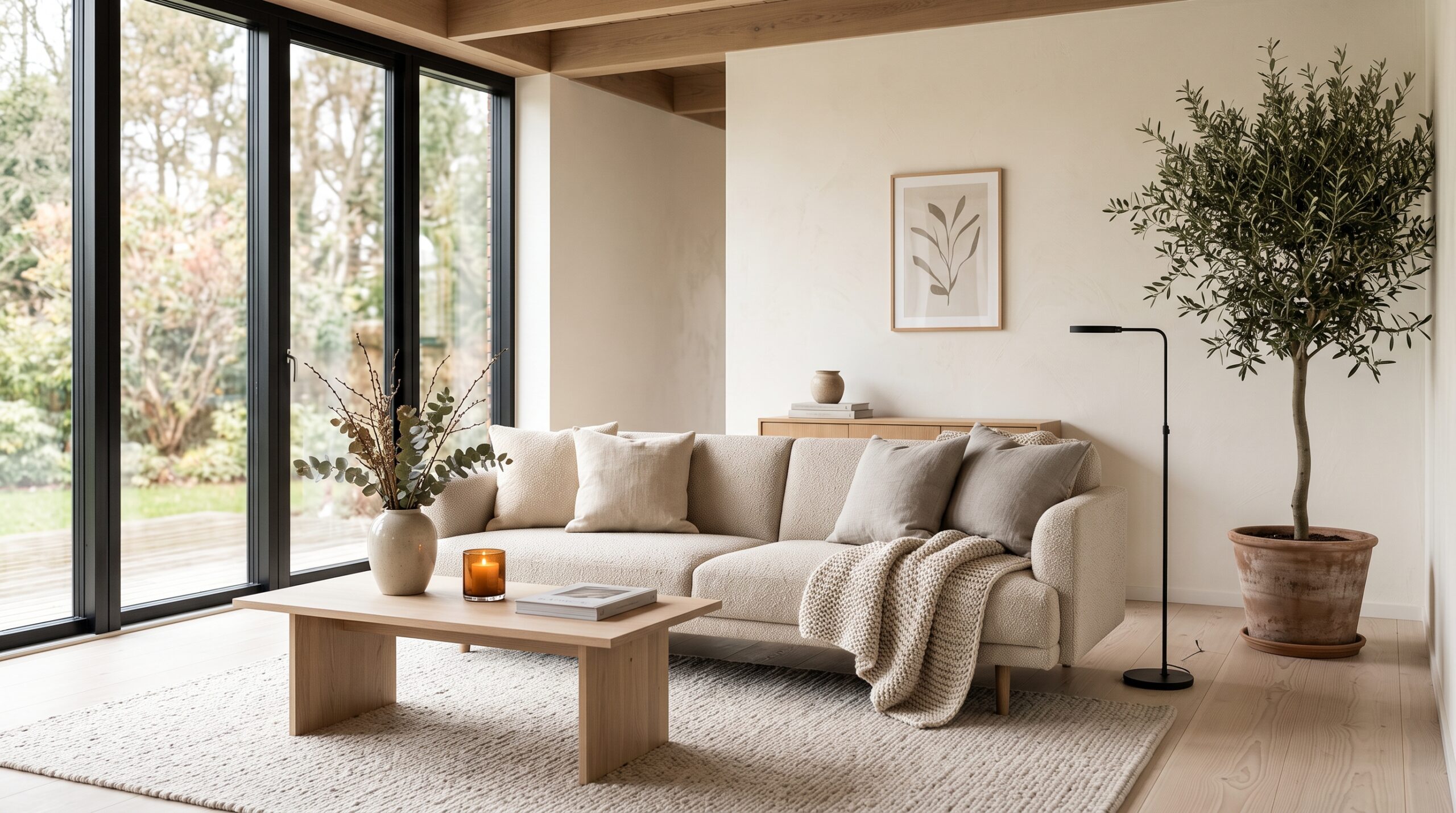
Ready to turn your living room into the kind of space that makes you want to kick off your shoes, grab a blanket, and just exist for a while? That’s the whole magic of Nordic style — it’s not about showing off, it’s about feeling good. Light floors, soft textures, plants tucked into corners, a candle flickering on the coffee table… it all adds up to a room that feels like a deep breath.
If you’ve been scrolling Pinterest for hours trying to figure out how the Danes and Swedes make “simple” look so incredibly inviting, you’re in the right place. It’s not luck, and it’s not an unlimited budget either — it’s a handful of repeatable habits: warm neutrals, natural materials, generous light, and just enough texture to keep things from feeling flat. Below are 22 fresh, practical, and totally doable ways to bring that calm Nordic energy into your own living room — no minimalism degree required, and no need to overhaul the whole room at once.
Scandi Living Room Ideas That Bring Warmth, Light, and Hygge Home
These are the building blocks. Mix and match the ones that fit your space, your budget, and your personality — Scandinavian design was never meant to be a strict rulebook, just a friendly nudge toward simpler, cozier living.
1. Start With a Soft, Warm Neutral Base
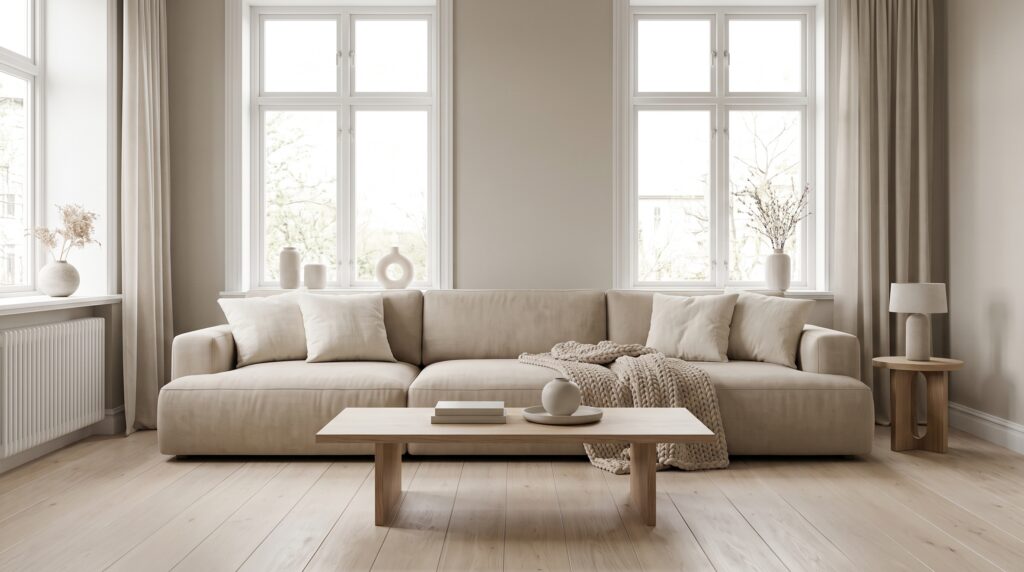
Forget stark, cold whites. The real Nordic trick is layering warm neutrals — think oat, putty, soft greige, and creamy ivory — so the room feels bright without feeling clinical. This palette becomes the quiet backdrop that lets your furniture, textiles, and plants do the talking. Toss in a chunky knit throw or a linen cushion and suddenly “neutral” feels anything but boring.
2. Let Light Wood Do the Heavy Lifting
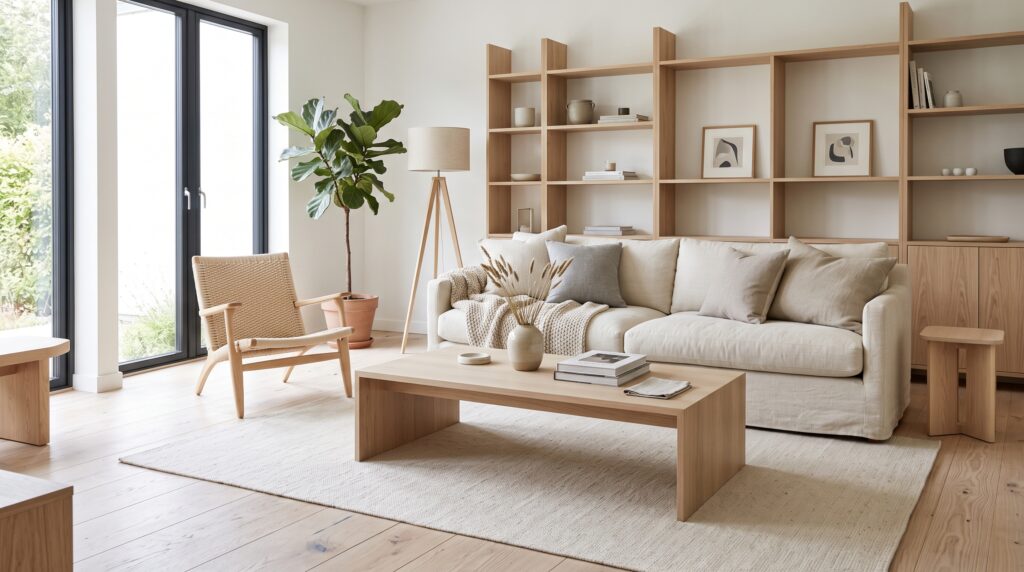
Pale oak, ash, and birch aren’t just trendy — they’re practically the backbone of Scandinavian style. A blonde-wood coffee table, a set of simple dining chairs, or open wooden shelving instantly grounds the room and adds that lived-in, nature-kissed warmth. Keep the finishes matte and the shapes simple; you want the grain to shine, not compete with fussy detailing.
3. Pile On the Textures
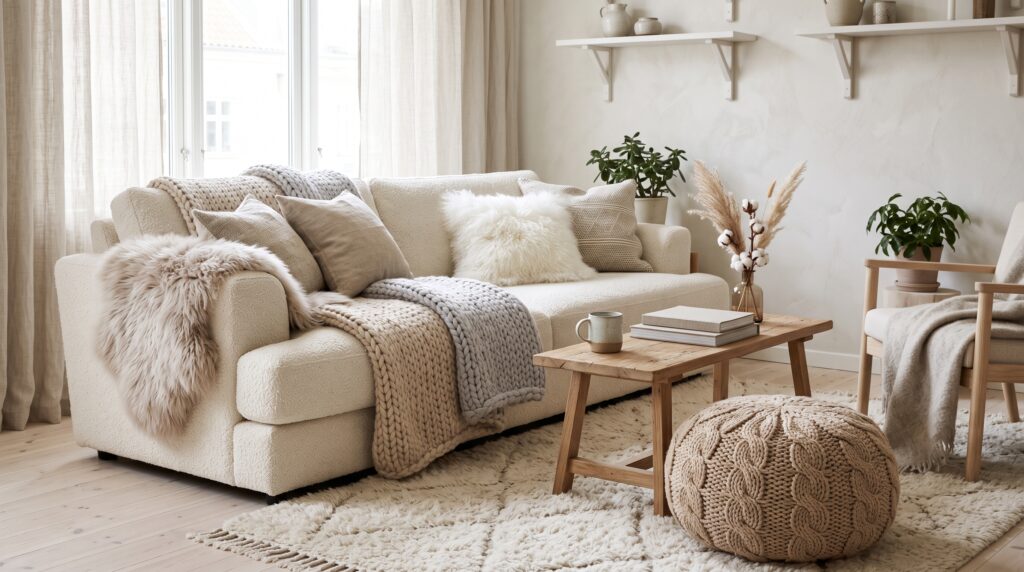
This is where the “cozy” in cozy Nordic home really comes from. Sheepskin throws, chunky wool rugs, waffle-knit blankets, boucle cushions — stack them generously. A room with only smooth, flat surfaces feels sterile; a room with layered textures feels like it’s hugging you back. Don’t be afraid to mix two or three textures on the same sofa.
4. Go for a Sofa That’s Comfortable First, Stylish Second
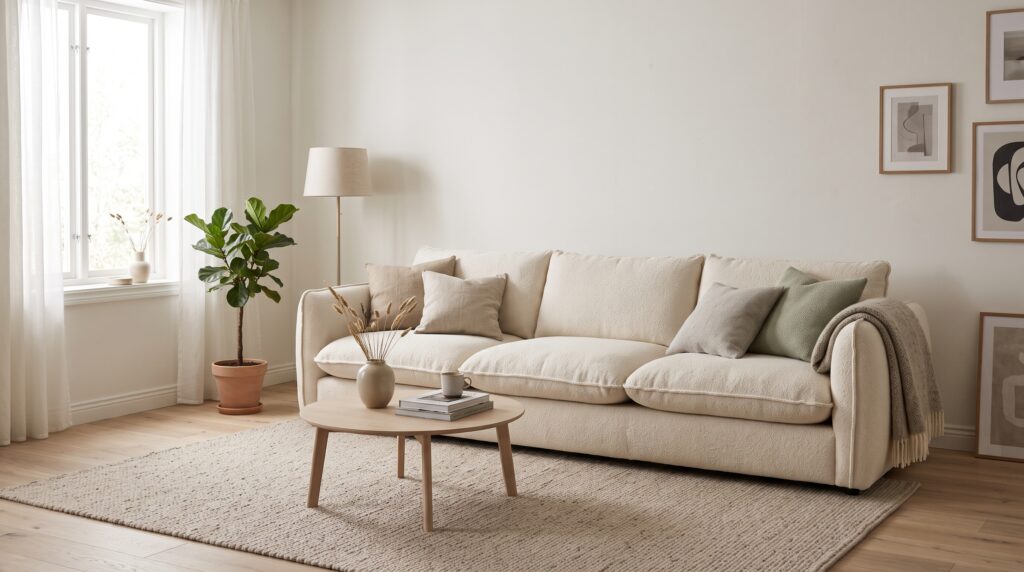
Scandinavian sofas are famous for looking effortless: clean silhouettes, low arms, soft bouclé or linen upholstery in muted tones. Skip anything overly tufted or ornate. A good rule of thumb — if you can’t imagine flopping onto it after a long day, it’s probably not Scandi enough.
5. Bring the Outdoors In
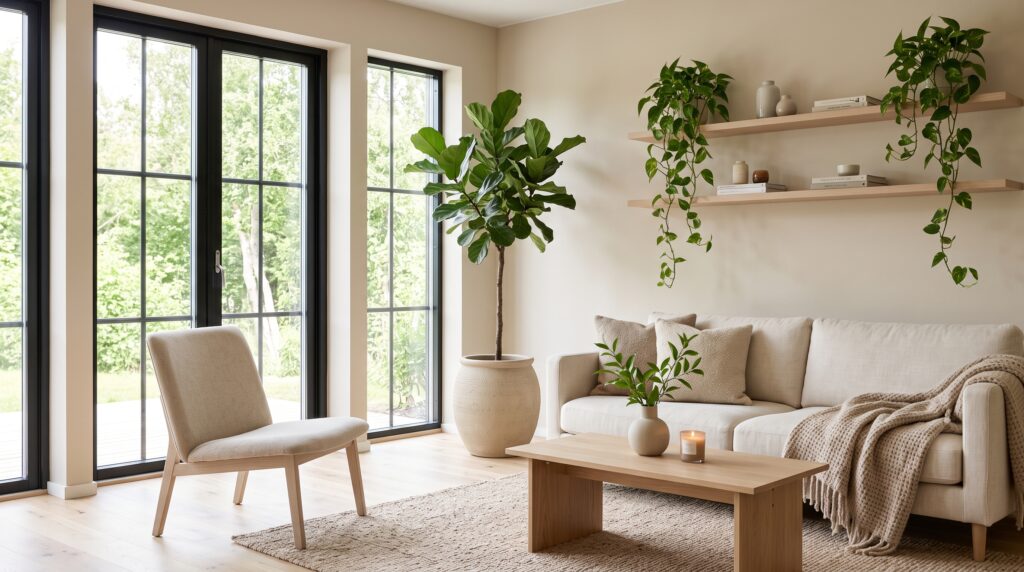
A few well-placed plants do more for a room than almost anything else on this list. Olive trees, snake plants, pothos trailing off a shelf, or a cluster of small potted herbs on a windowsill — all of it softens hard edges and injects a bit of life against your neutral palette. Even a single fiddle leaf fig in the corner can change the whole feel of the room.
6. Maximize Every Drop of Natural Light
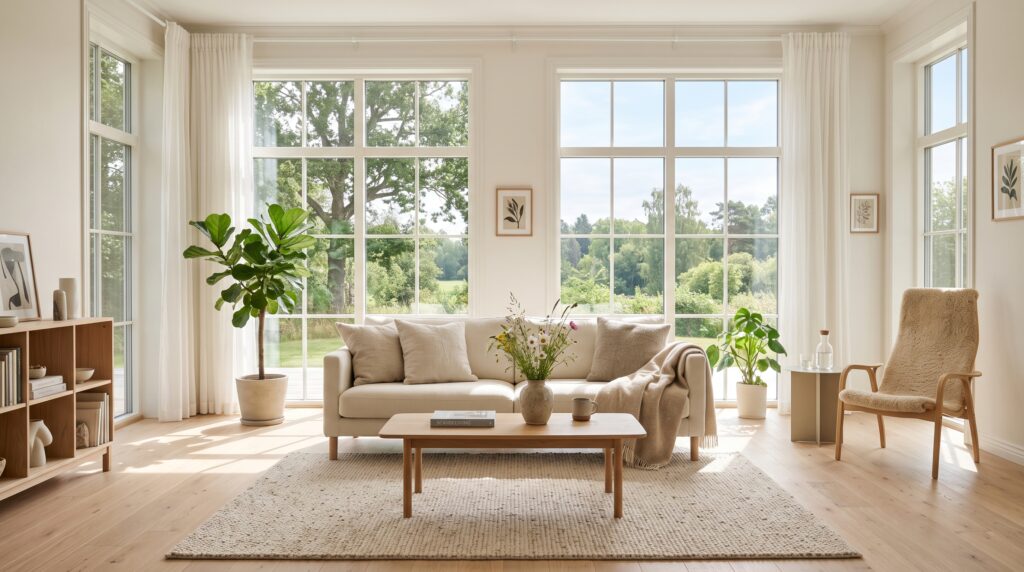
Nordic countries deal with brutally short winter days, so their design culture leans hard into capturing every bit of sunlight available. Keep windows uncovered or dressed only in sheer linen. Skip heavy drapes that swallow the light. The payoff is a room that feels open, airy, and calm no matter the season.
7. Anchor the Room With a Simple Fireplace
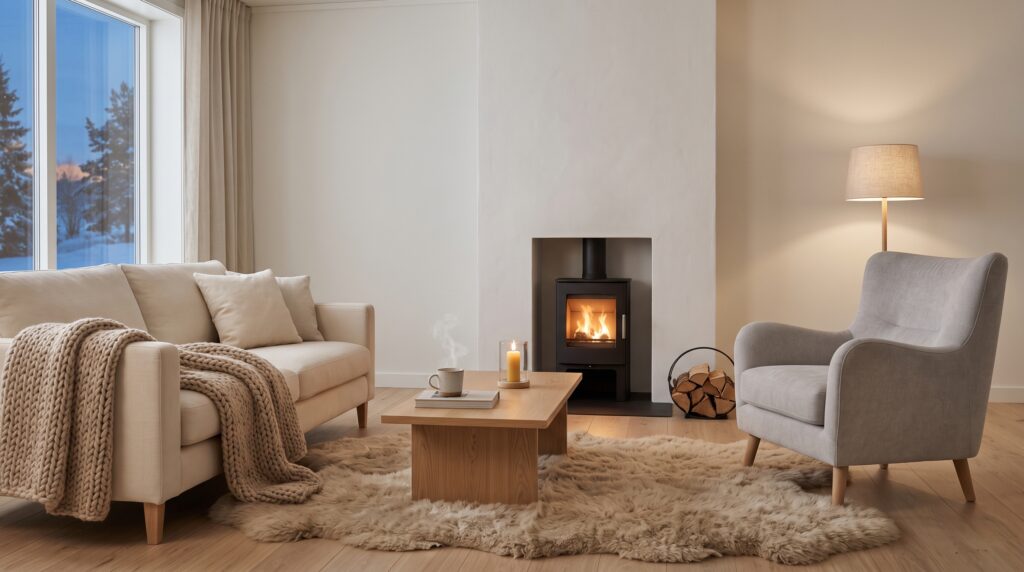
Nothing says hygge quite like a crackling fire. A clean-lined fireplace — whether it’s a classic wood burner or a sleek electric insert — instantly becomes the emotional center of a Scandinavian living room. Pull a favorite armchair close, add a soft throw, and you’ve built the ultimate cold-evening retreat.
8. Keep the Wall Art Quiet and Meaningful
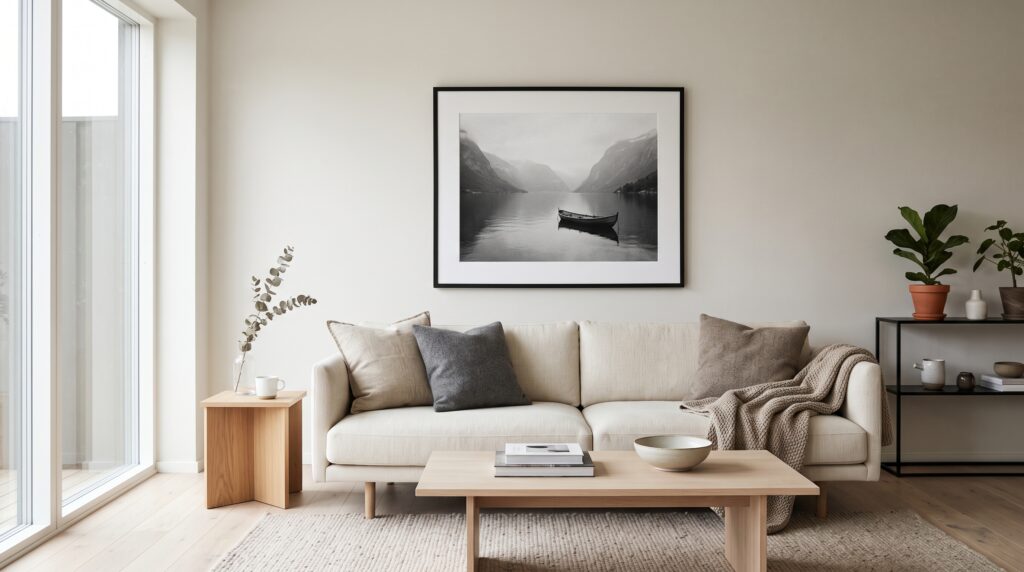
Scandinavian walls aren’t bare because there’s nothing to say — they’re edited. Choose a small handful of pieces: a black-and-white photograph, a loose botanical sketch, an abstract print in muted tones. Let each piece have breathing room instead of crowding the wall gallery-style.
9. Design Storage That Disappears
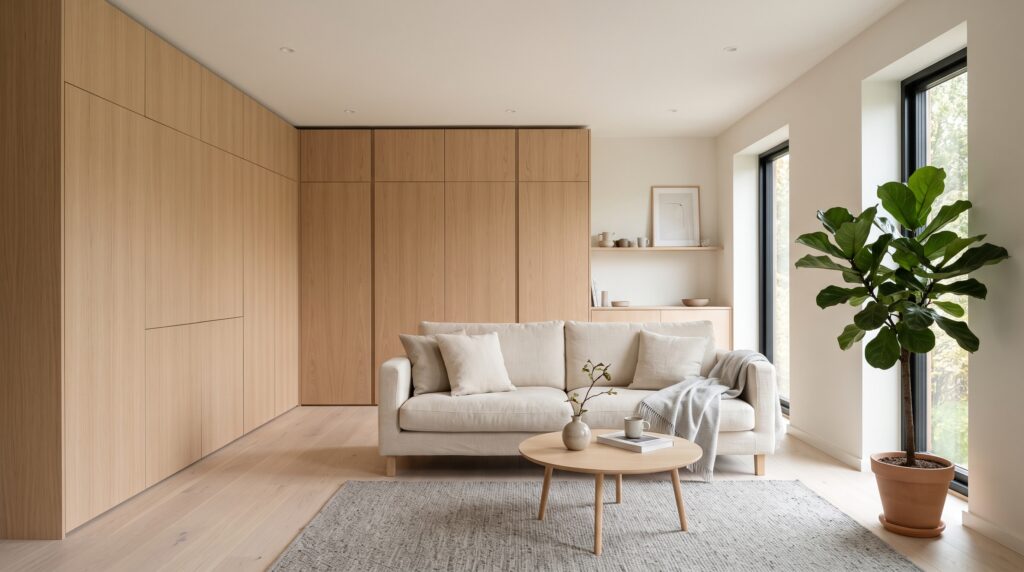
Clutter is the enemy of calm. Closed wooden cabinets, floating shelves, and woven baskets tucked under console tables let you keep everyday mess out of sight while keeping the aesthetic intact. The goal isn’t to have nothing — it’s to make sure everything has a home.
10. Layer Your Lighting Like a Pro
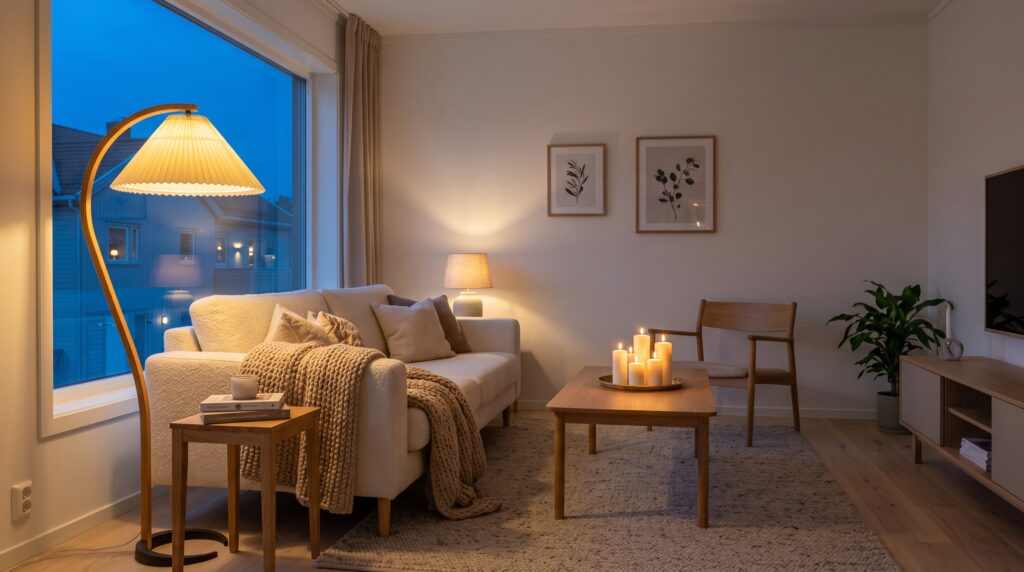
One overhead light will never get you that golden, glowing Nordic evening feel. Combine a floor lamp, a couple of table lamps, and a scattering of candles for a warm, multi-level glow. Stick to natural materials — wood, brass, glass, paper — for the fixtures themselves.
11. Build a Reading Nook You’ll Actually Use
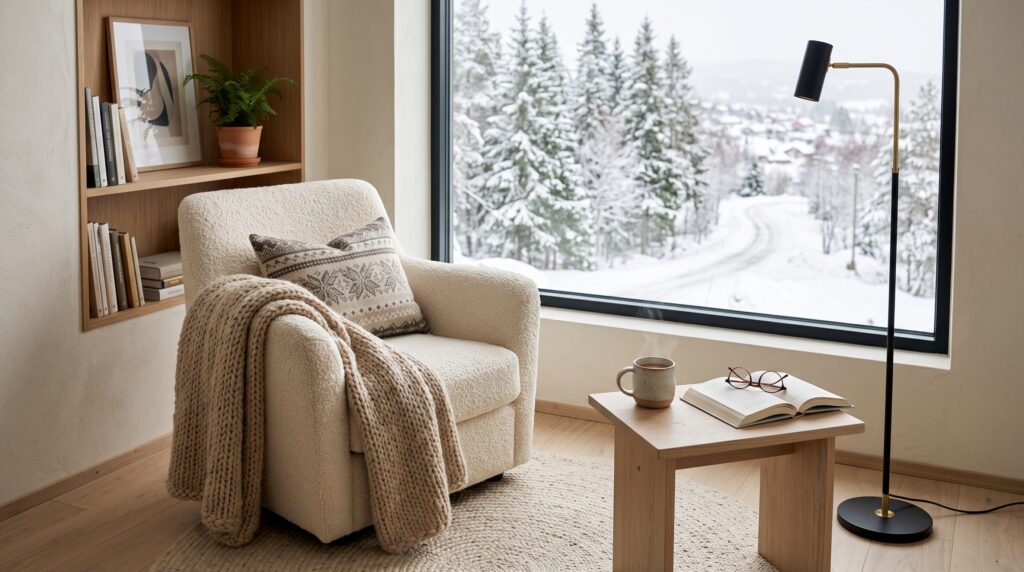
Tuck a single armchair into a quiet corner, ideally near a window. Add a small side table for your tea, a floor lamp angled just right, and a soft throw draped over the arm. It doesn’t need to be big — it just needs to feel like an invitation to slow down.
12. Blend In a Few Vintage Pieces
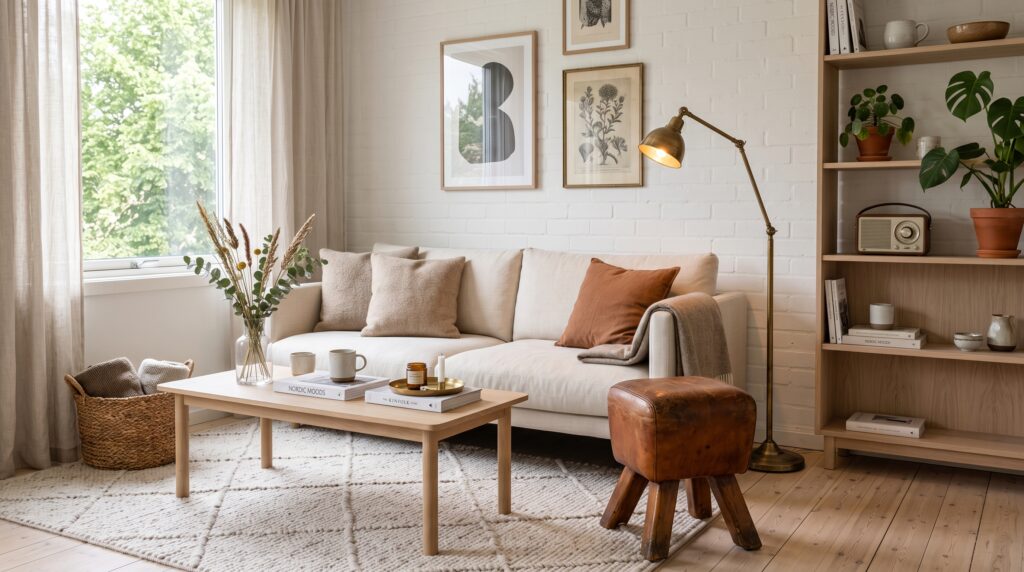
Perfectly matched, brand-new furniture can start to feel a little flat. Toss in one vintage find — a worn leather stool, an old brass lamp, a secondhand rattan chair — and the room instantly gains character. Scandinavian interiors love a story, not just a showroom look.
13. Ground the Room With a Textural Rug
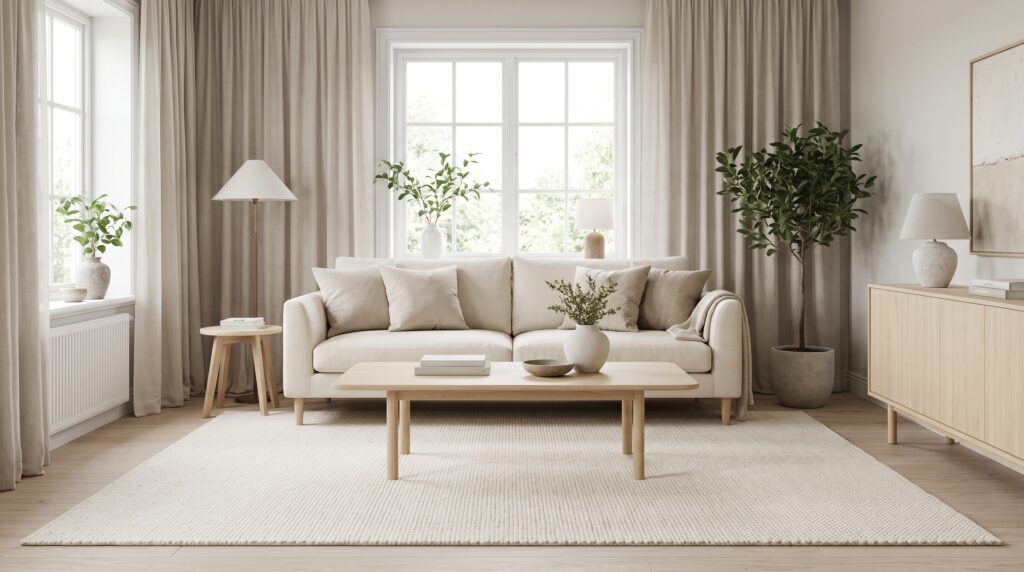
A soft wool or jute rug in a muted tone does double duty: it defines your seating area and adds an extra layer of comfort underfoot. Look for subtle patterns or simple woven textures rather than anything bold or busy — you want it to support the room, not steal the spotlight.
14. Style Open Shelves Like a Curated Little Gallery
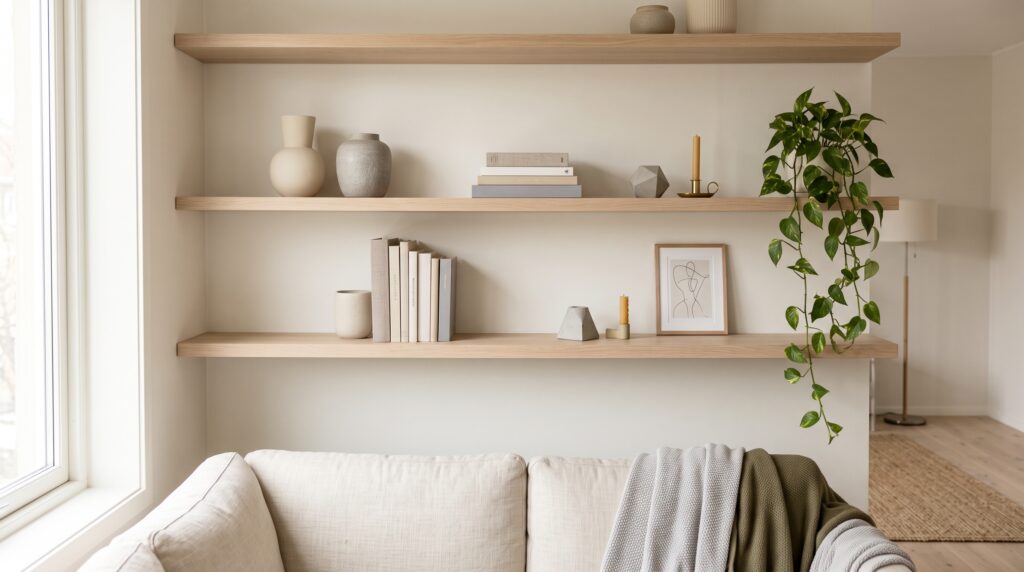
Open shelving lets you show off the things you love — a stack of well-loved books, a favorite ceramic vase, a small collection of candles — without turning the room into a museum. Leave some empty space between objects; negative space is part of the design, not a mistake.
15. Add Punches of Black for Contrast
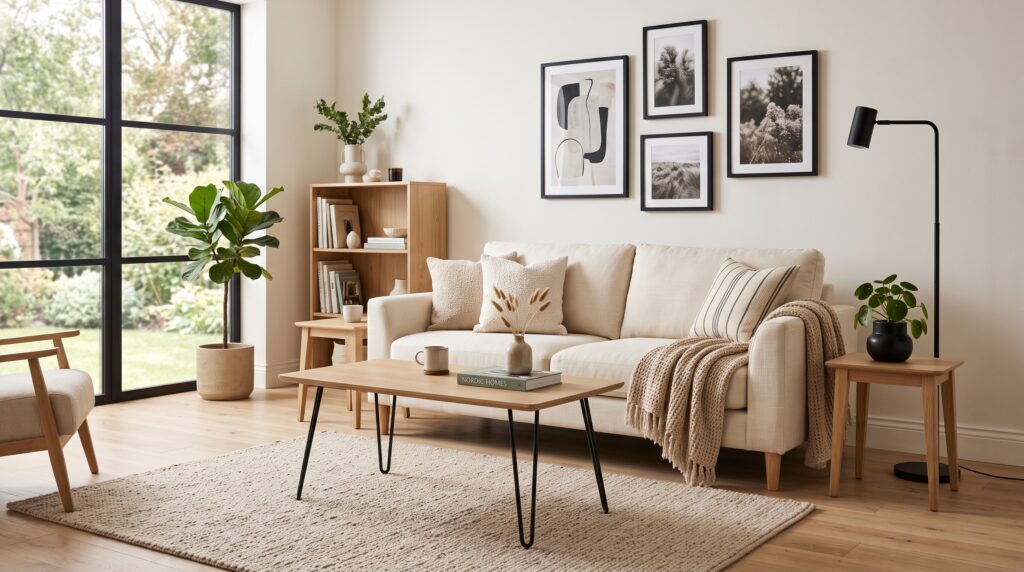
A room that’s all soft neutrals can start to feel a little washed out. A few black accents — a slim floor lamp, picture frames, drawer pulls, or the legs of a side table — sharpen the whole look and give your eye somewhere to land.
16. Choose Natural, Breathable Fabrics
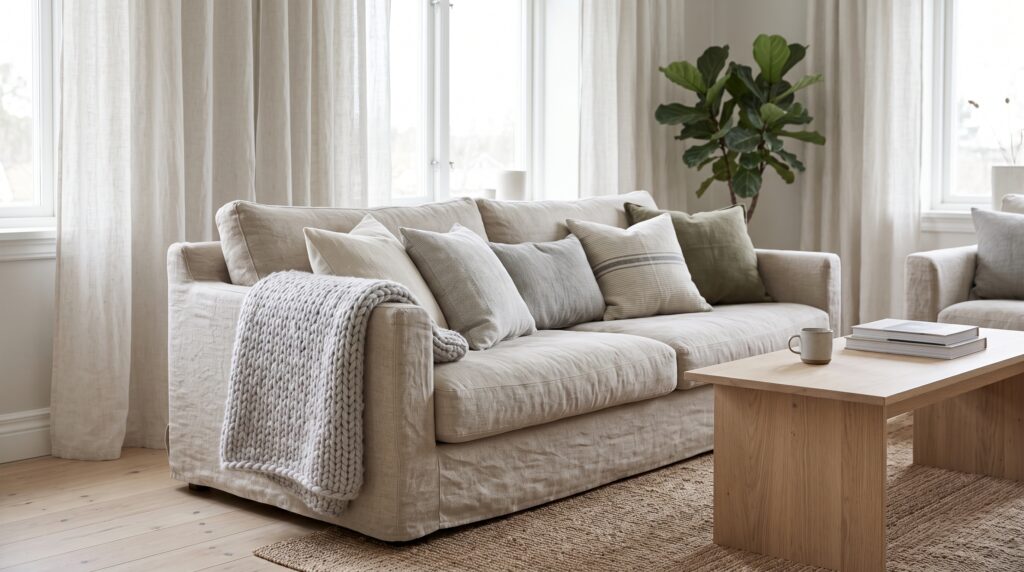
Linen curtains, cotton slipcovers, wool blankets — natural fibers are core to the Scandinavian ethos, both for how they feel and how they age. They soften over time instead of looking worn out, and they carry that relaxed, unfussy quality the whole style is built around.
17. Make a Small Living Room Feel Bigger, Not Cramped
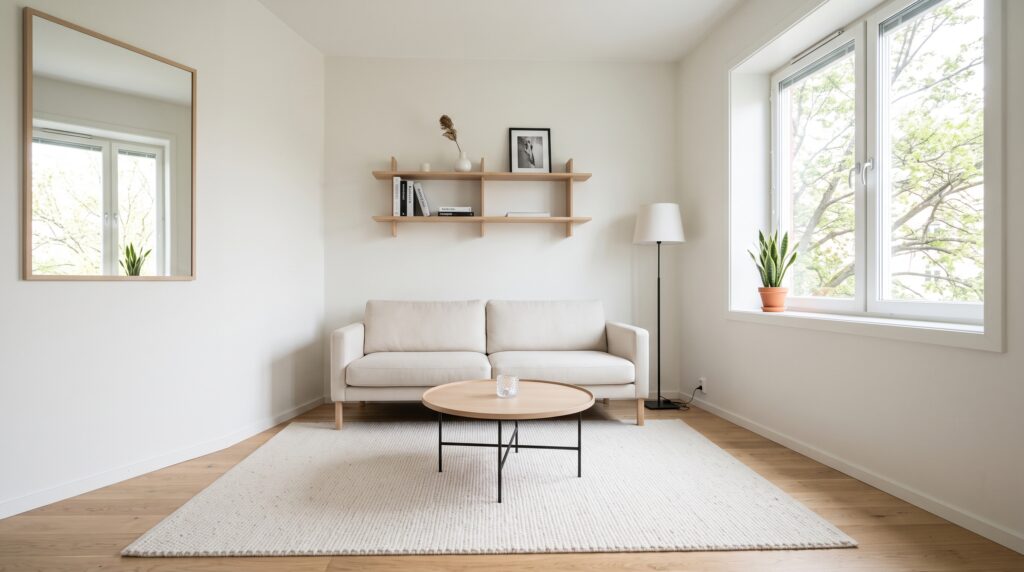
Compact spaces actually thrive under Scandinavian principles. Lean into a smaller-scale sofa, a slim coffee table, and wall-mounted shelving that keeps the floor clear. Light colors and a single strong rug can visually “grow” the room without adding a single square foot.
18. Sprinkle in Handmade Touches
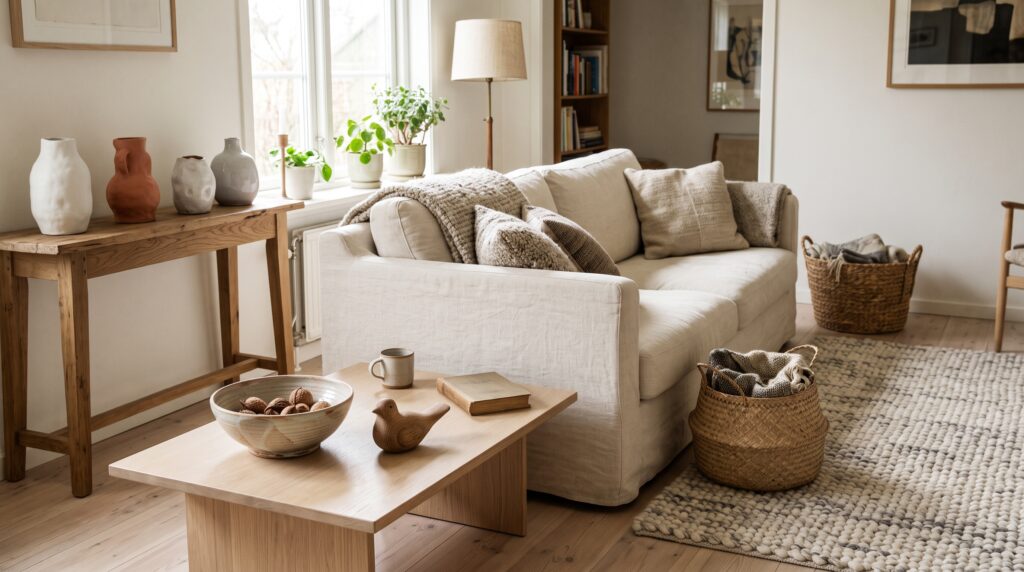
A hand-thrown ceramic bowl, a woven basket, a carved wooden object — small handmade pieces bring warmth and imperfection into an otherwise streamlined room. They’re the details that make a space feel like yours, not a showroom display.
19. Curate a Cohesive Gallery Wall
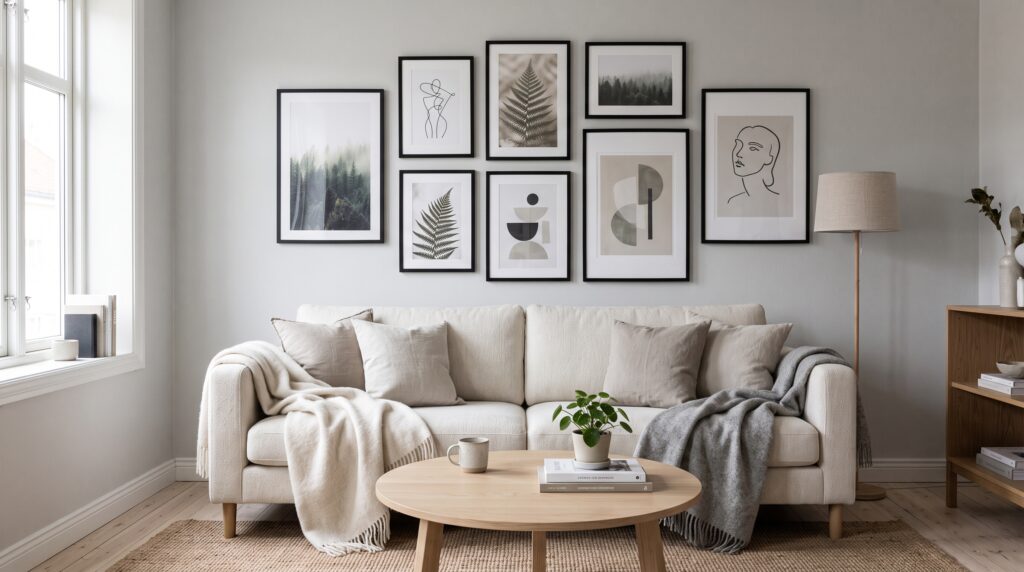
If you want more than a single statement piece, build a small gallery instead — just keep the frames and color palette consistent so it reads as one intentional moment rather than a mismatched jumble. Nature photography, line art, and soft abstract prints all play well together.
20. Choose Furniture That’s Built to Last
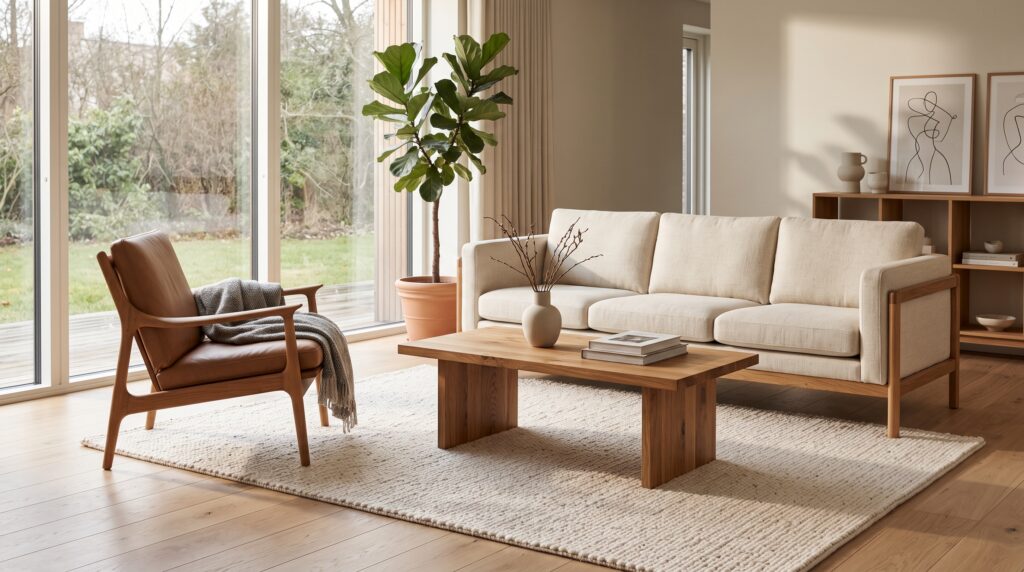
Scandinavian design has always valued longevity over trend-chasing. Investing in a few well-made, timeless pieces — rather than filling the room with disposable furniture — is both a design choice and a genuinely more sustainable way to decorate. This isn’t a new idea, either: the movement itself took shape in the early 20th century and truly flourished across the Nordic countries in the 1950s, built from the start around simplicity and lasting function rather than fleeting trends. You can read more about that history on Wikipedia.
21. Let Candlelight Do the Emotional Work
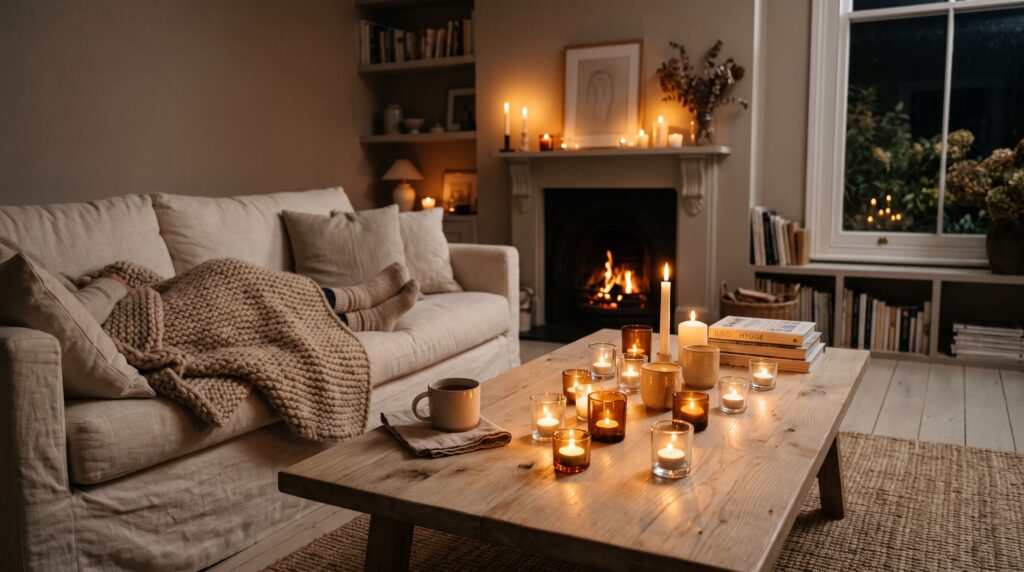
There’s a reason Scandinavians burn through more candles per household than almost anywhere else in the world. A few simple glass or ceramic holders scattered across the coffee table or mantel create that soft, flickering glow that makes any evening feel a little more special.
22. Pull It All Together Into One Hygge-Filled Room
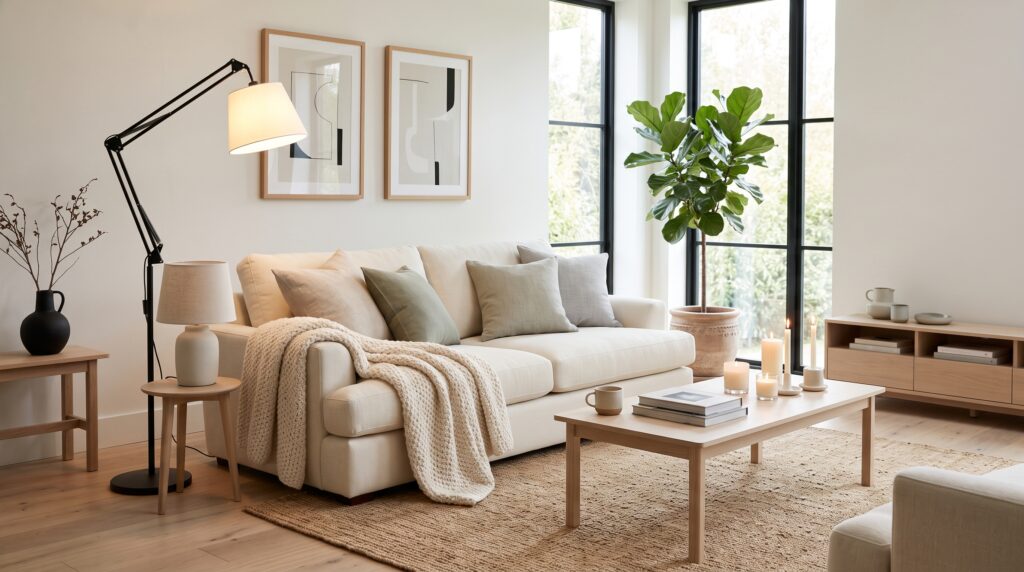
At the end of the day, the best Scandi living rooms aren’t about following every rule perfectly — they’re about comfort. Soft seating, warm light, natural textures, and a few personal touches combine into a space that genuinely feels good to be in. That’s the real heart of hygge: not perfection, just presence.
Final Thoughts
Building a Scandinavian-inspired living room isn’t about buying an entirely new houseful of furniture — it’s about editing, layering, and choosing pieces that feel calm and purposeful. Start small: swap in a linen throw, add a plant, dim the lights with a few candles. Before long, your living room will have that unmistakable Nordic warmth — simple, welcoming, and endlessly cozy.
Pin these ideas for later, and start building your own hygge-filled corner of the world, one small change at a time.
Frequently Asked Questions About Scandi Living Room Ideas
What colors work best in a Scandinavian living room? Stick with warm neutrals as your foundation — think oat, ivory, soft gray, and pale taupe. These shades bounce light around the room and keep things feeling airy. From there, you can layer in muted accent colors like dusty blue, sage green, or blush pink, and use black sparingly for contrast. The goal is a palette that feels calm rather than cold, so avoid anything too stark or clinical.
Do I need to buy all-new furniture to get the Scandi look? Not at all. One of the nicest things about this style is how forgiving it is toward what you already own. Start by decluttering, swap in a few natural-fiber textiles, add a plant or two, and rethink your lighting. If your existing sofa is a busy pattern or a heavy dark color, a simple slipcover can go a long way before you ever need to shop for new furniture.
How do I make a small living room feel more Scandinavian? Small spaces actually respond really well to this style because it’s built around function and restraint. Choose furniture that’s scaled to the room, keep the floor as clear as possible, lean on wall-mounted or floating storage, and let light colors and natural light do the work of visually opening things up. One well-chosen rug and a handful of curated objects will always beat a room packed with too many small decorations.
Is hygge the same thing as Scandinavian design? They’re closely related but not identical. Scandinavian design refers to the broader aesthetic movement — clean lines, natural materials, functional furniture — while hygge is more of a feeling: coziness, comfort, and contentment. A Scandinavian living room provides the visual framework, and hygge is what happens when you add candles, soft textures, and a slower pace of living on top of it.
What’s one small change that makes the biggest difference? If you only do one thing, upgrade your lighting. Swap a single harsh overhead bulb for a mix of warm-toned lamps and a few candles. It’s inexpensive, takes an afternoon, and instantly makes the whole room feel softer, warmer, and more like the Nordic interiors that inspired this list in the first place.