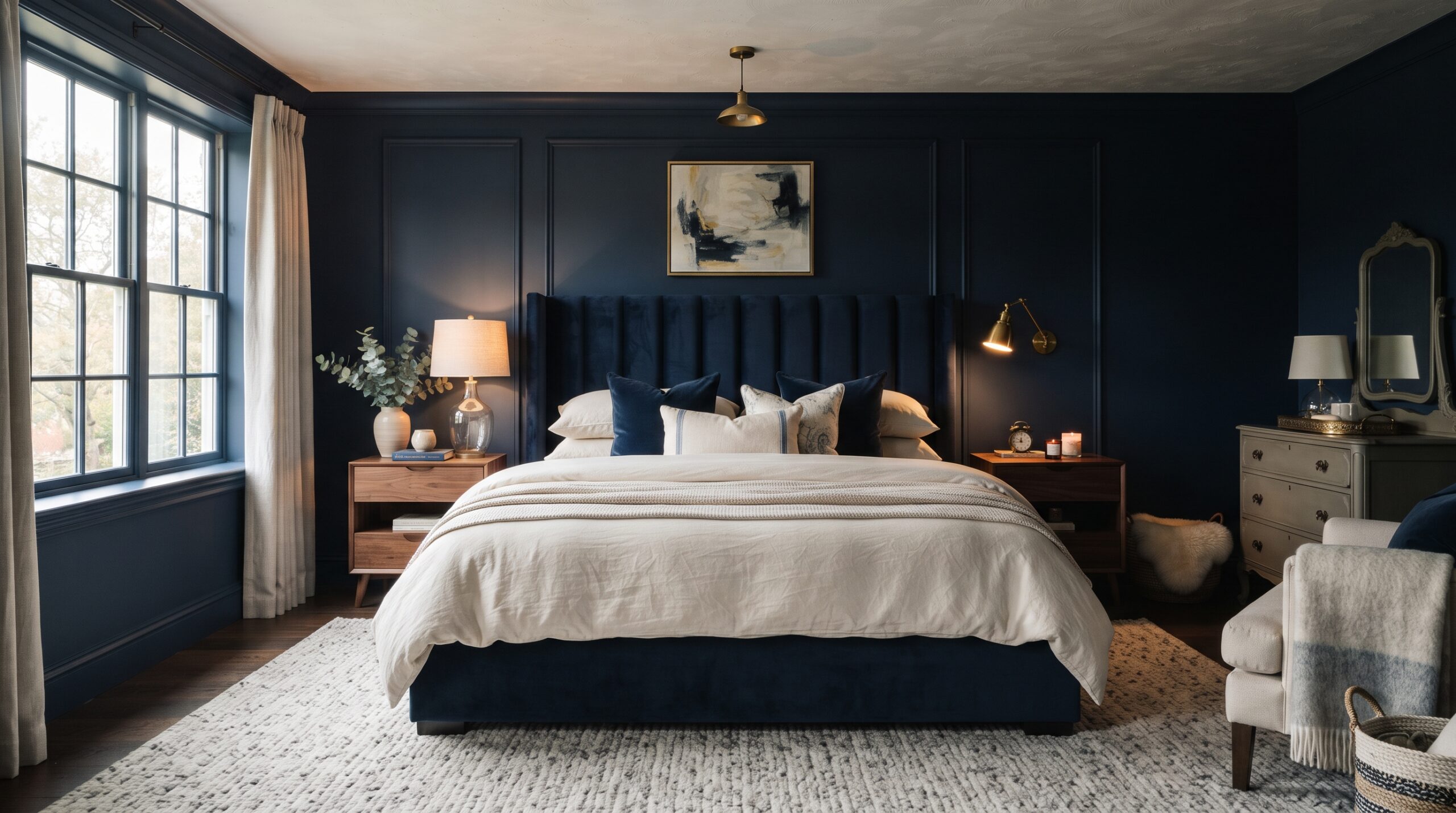
There’s something about a freshly painted navy wall that instantly upgrades a space. What starts as “just a paint color” often ends up being the single decision that gives a room its whole personality — moody, warm, and a little bit luxurious all at once.
If you’ve been drawn to the idea of a dark, dramatic bedroom but worry it might feel cold or cave-like, you’re not alone. The good news is that deep blue is one of the most forgiving colors you can use in a bedroom. Done right, it reads as plush and inviting rather than heavy, and it pairs beautifully with almost any style, from relaxed boho to polished hotel-chic.
Below are more than a dozen ways to bring dark blue bedrooms to life, along with practical styling tips for pulling off each look.
Dark Blue Bedrooms: Ideas for Every Style
Whether you want to commit fully with wall-to-wall navy or just dip a toe in with an accent wall, there’s a version of a dark blue bedroom that fits your taste. Below are the most popular approaches, broken down by style.
1. Layered and Textural
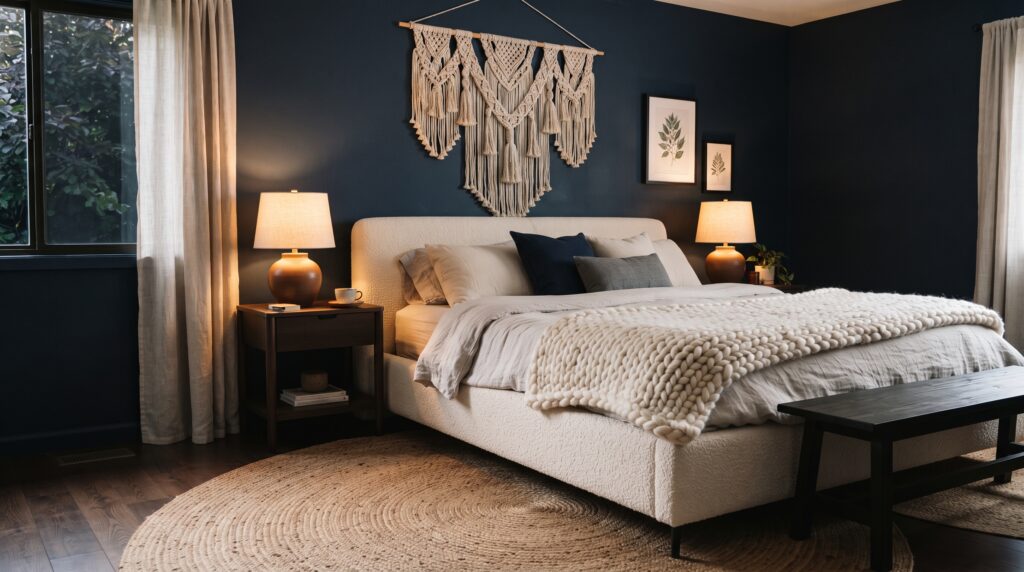
One of the easiest ways to make a dark blue bedroom feel warm instead of stark is to lean heavily into texture. Chunky knit throws, macrame wall hangings, boucle upholstery, and a woven jute or wool rug all add dimension against a deep navy backdrop.
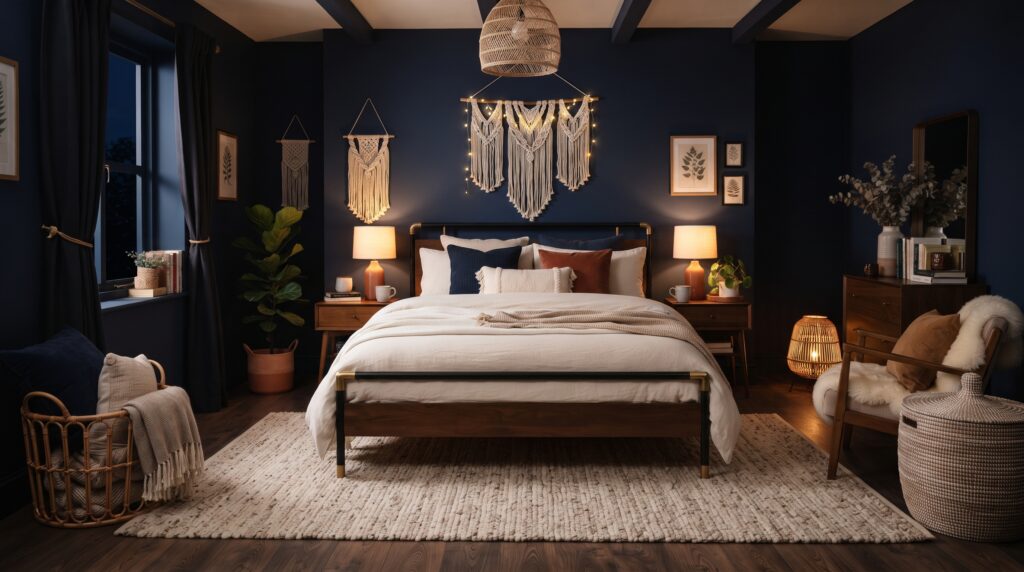
Keep your palette simple — ideally three core tones — and let the materials do the visual work rather than patterns. A mix of a nubby throw, a smooth linen duvet, and a slightly rustic rug creates depth without looking busy. Soft, warm-toned lighting finishes the look and keeps the room feeling like a place you actually want to curl up in at the end of the day.
2. Minimalist and Sculptural
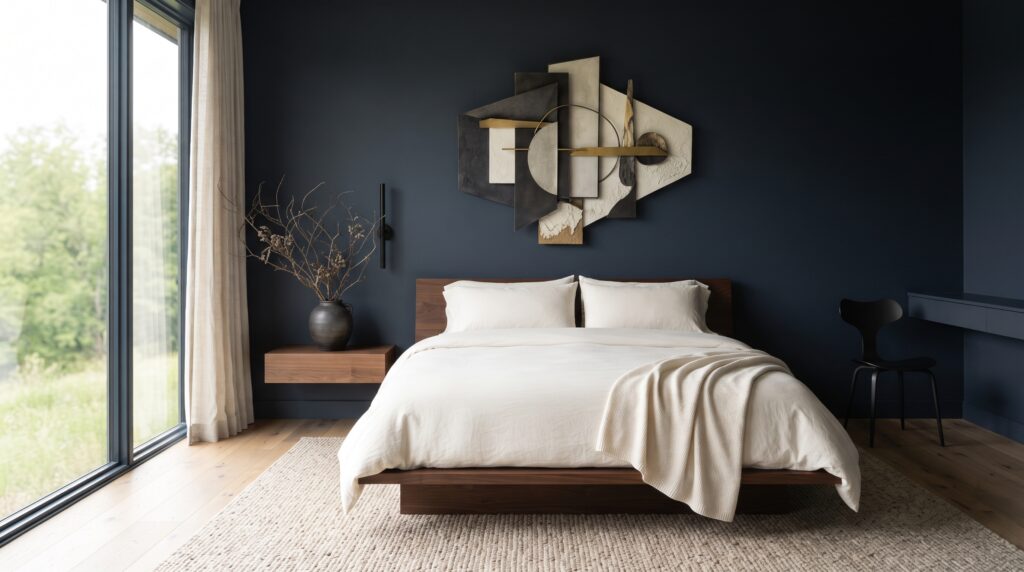
If a heavily layered look isn’t your thing, dark blue bedrooms can also feel calm and gallery-like when kept spare. Crisp white or ivory bedding against navy walls creates strong contrast, and a single sculptural object — an asymmetrical piece of art, a dark ceramic vase with dried branches — becomes a focal point rather than getting lost in clutter.
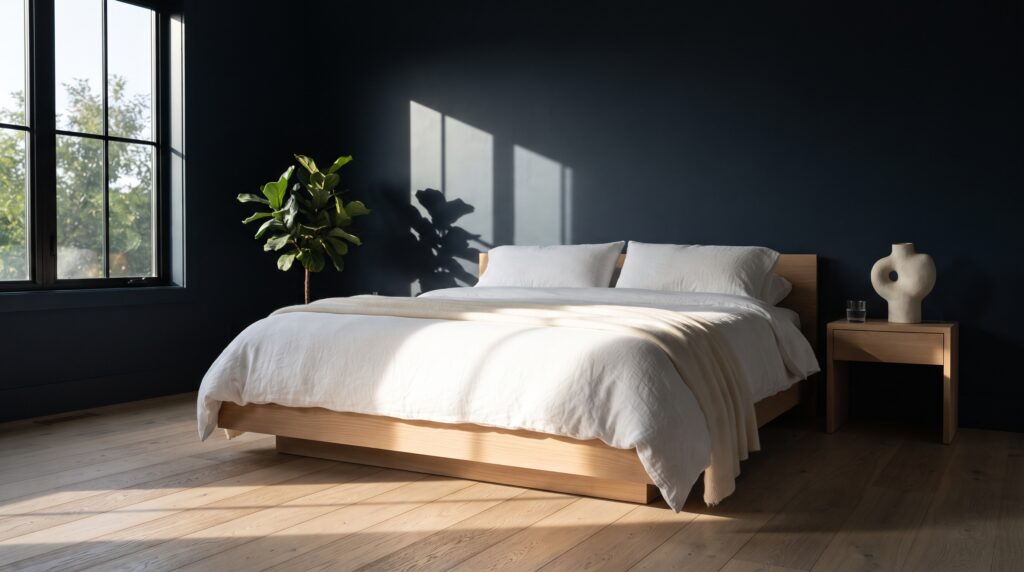
This approach works especially well in bedrooms that get good natural light, since daylight brings out the subtle depth and undertones in a dark blue paint that can otherwise look flat under artificial light alone.
3. Boho and Relaxed
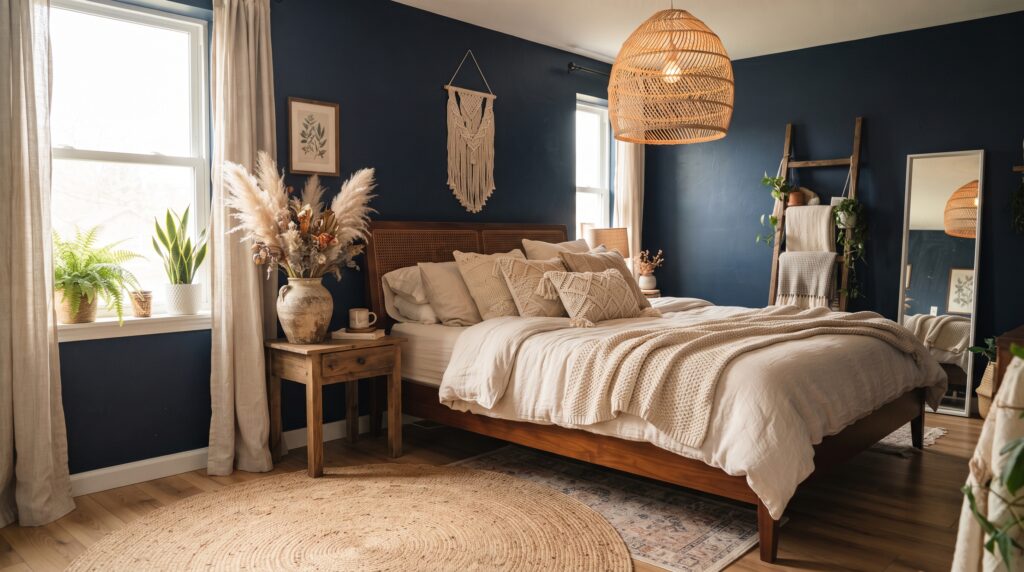
For a softer, more lived-in feel, pair dark blue walls with warm neutral bedding in creams, sandy beiges, and soft whites. Pile on pillows in a mix of textures — cotton, linen, chunky knits — and add a rattan or bamboo pendant light overhead to bring in natural material and warmth.
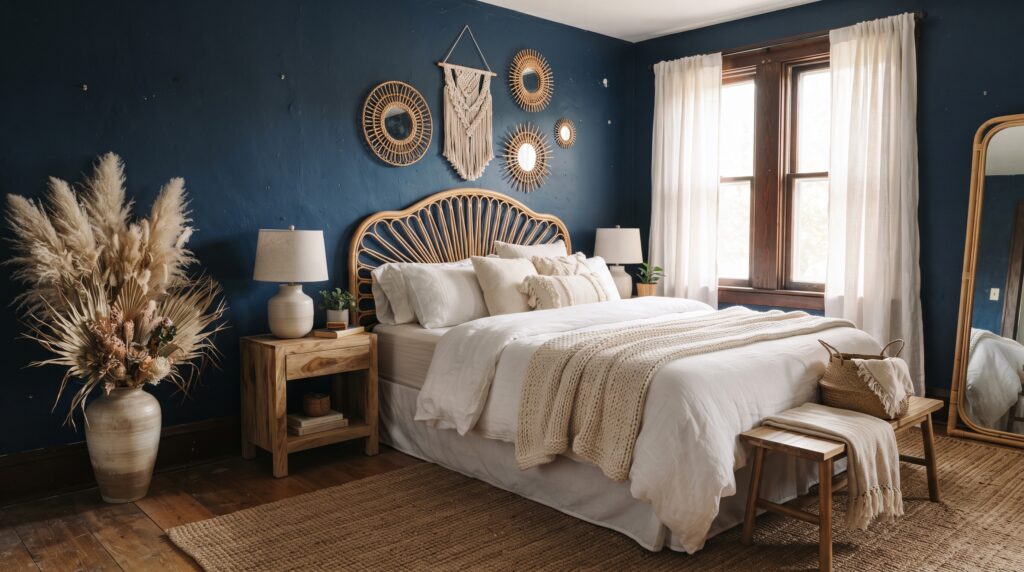
Dried pampas grass or a similar dried arrangement in a vintage-style vase adds an earthy, unfussy touch. A textured jute or kilim rug ties the whole look together. This combination of natural materials against a moody wall color is what gives boho-inspired dark blue bedrooms their signature relaxed-but-intentional feel.
4. Classic Meets Modern
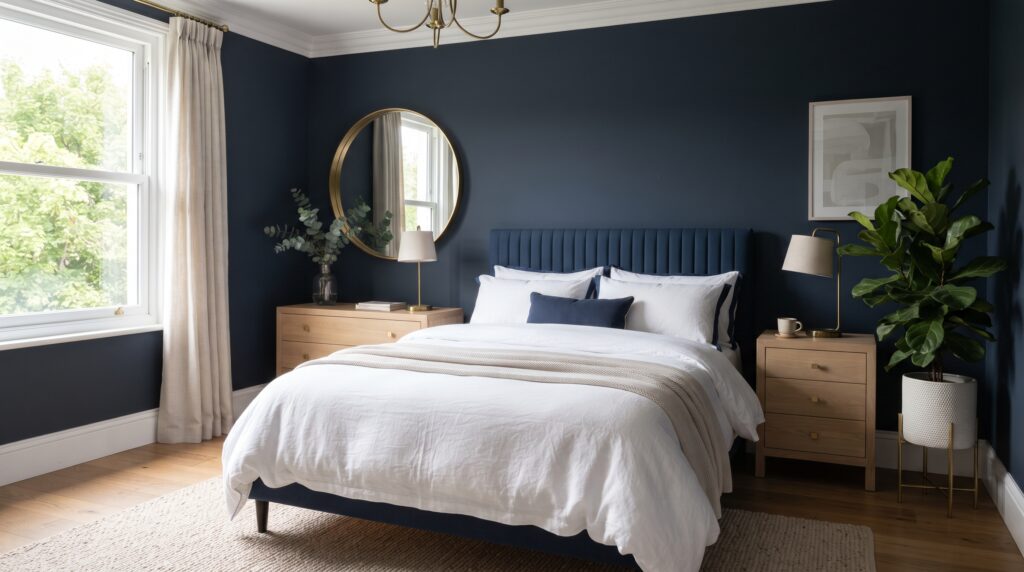
If full commitment to a moody palette feels like too much, try pairing dark blue walls (or trim) with crisp white bedding, pale rugs, and light wood furniture. This combination keeps the room feeling fresh and bright while still getting the drama of a deep blue wall color.
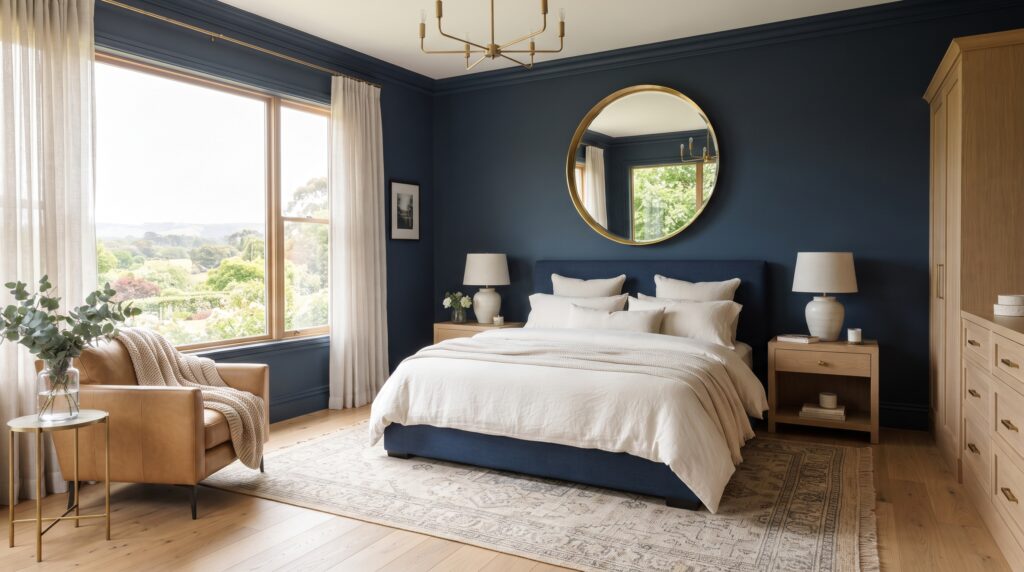
Round brass mirrors, light oak nightstands, and a few leafy plants keep the space from feeling cold. The trick here is balancing cool blue tones with warm neutrals like tan, camel, or light wood — without that balance, the room can start to feel a little sterile.
5. Rich Wood and Moody Tones
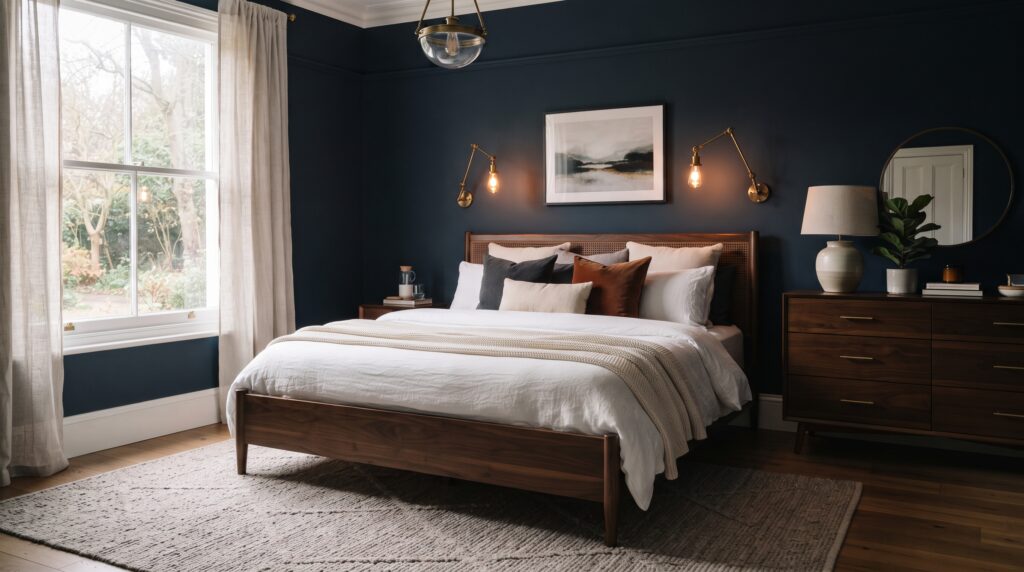
Dark blue walls pair naturally with dark-stained wood furniture — think walnut dressers, oak canopy beds, or mahogany sleigh beds. This combination leans classic and a little formal without feeling stuffy, especially when balanced with lighter linens, curtains, and a neutral or muted rug underfoot.
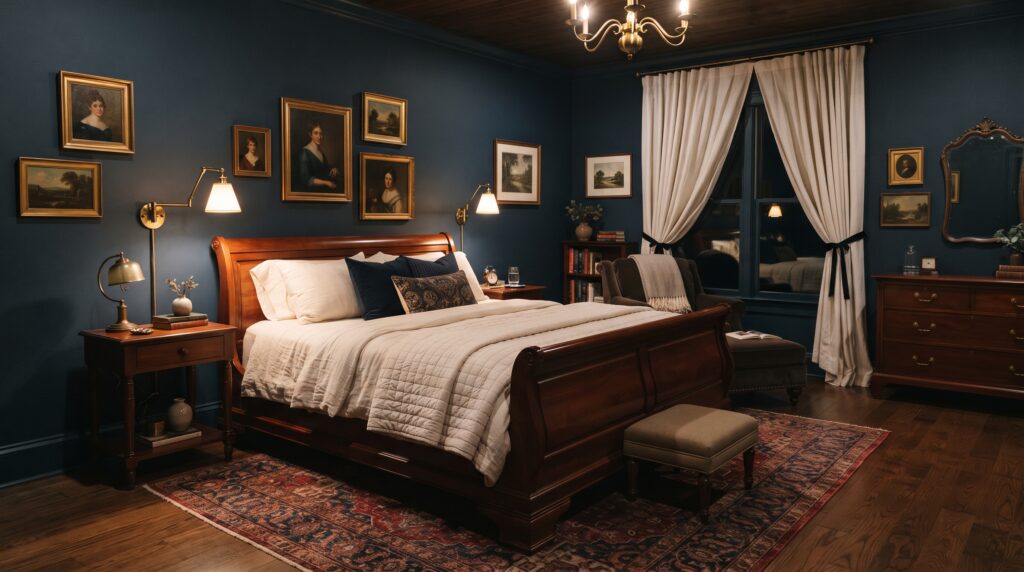
Brass sconces or wall lighting add a warm metallic accent that plays well against both the dark wood and the dark walls. Morning light in particular tends to bring this combination to life, softening the mood without diluting the drama.
6. Architectural Lighting
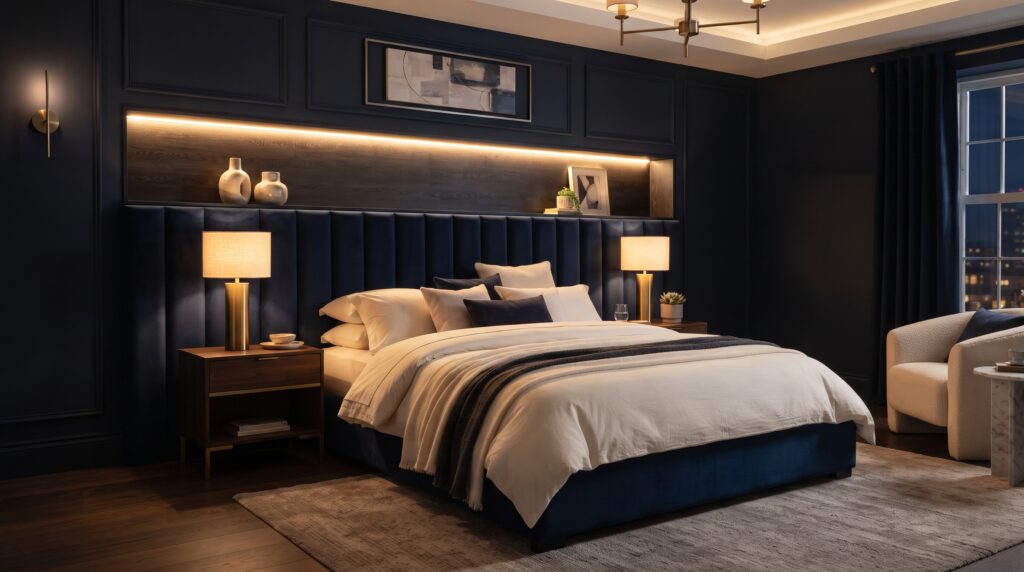
For a more boutique-hotel feel, consider building lighting directly into the architecture of the room. A recessed wall niche behind the headboard, outlined with a warm LED strip, creates a glowing focal point that makes the whole room feel custom-designed.
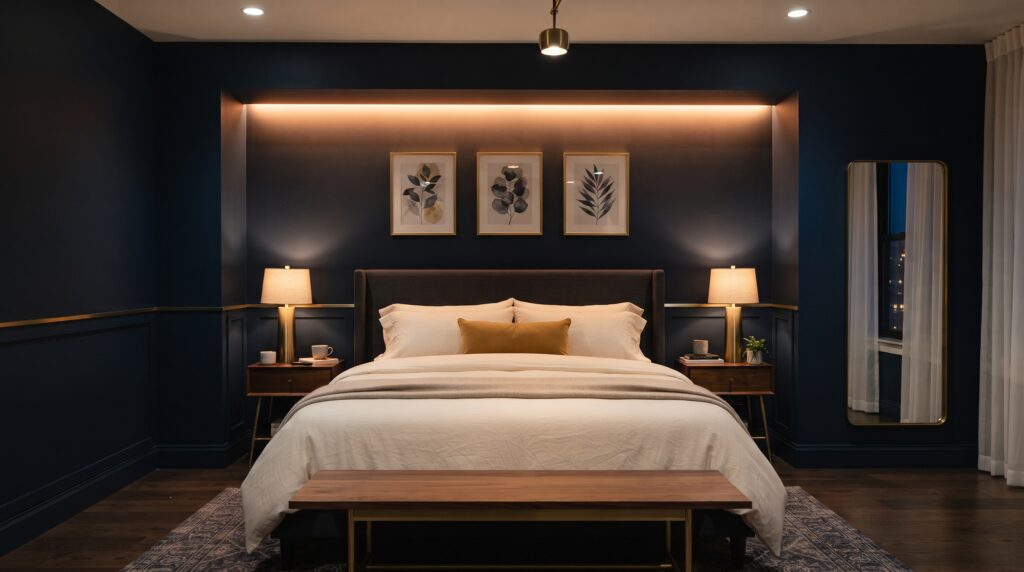
Keep the bedding simple in this case so the lighting remains the star. Metallic accents — a decorative lamp, a mirrored frame — can echo the shape of the light and tie the look together. It’s a subtle detail, but it’s often the one guests notice and ask about first.
7. Bold and Eclectic
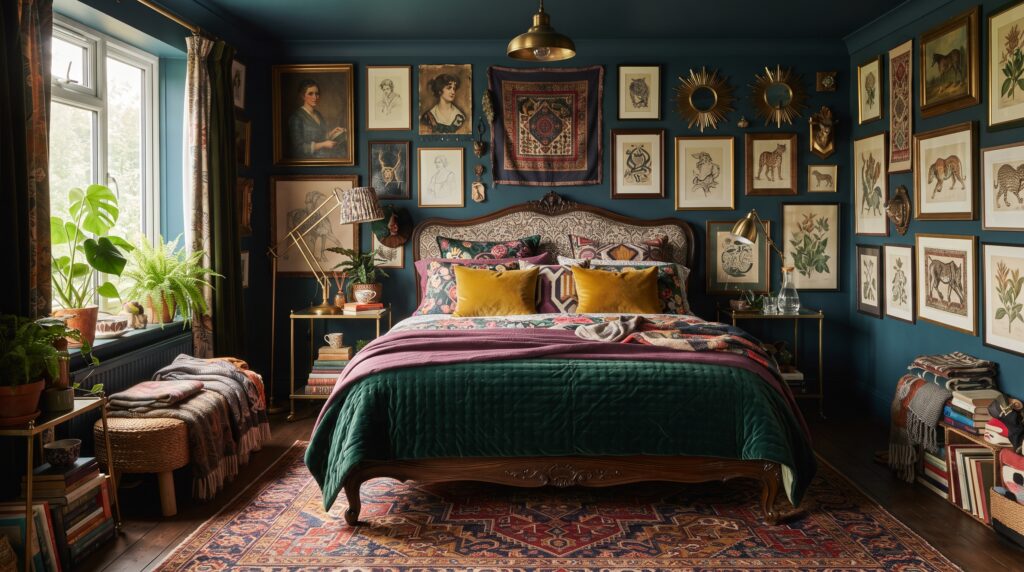
If you gravitate toward maximalism, dark blue bedrooms can absolutely handle jewel tones and pattern. Pair deep teal or navy walls with rich bedding in emerald, plum, or mustard, and don’t be afraid to mix patterns across pillows and throws.
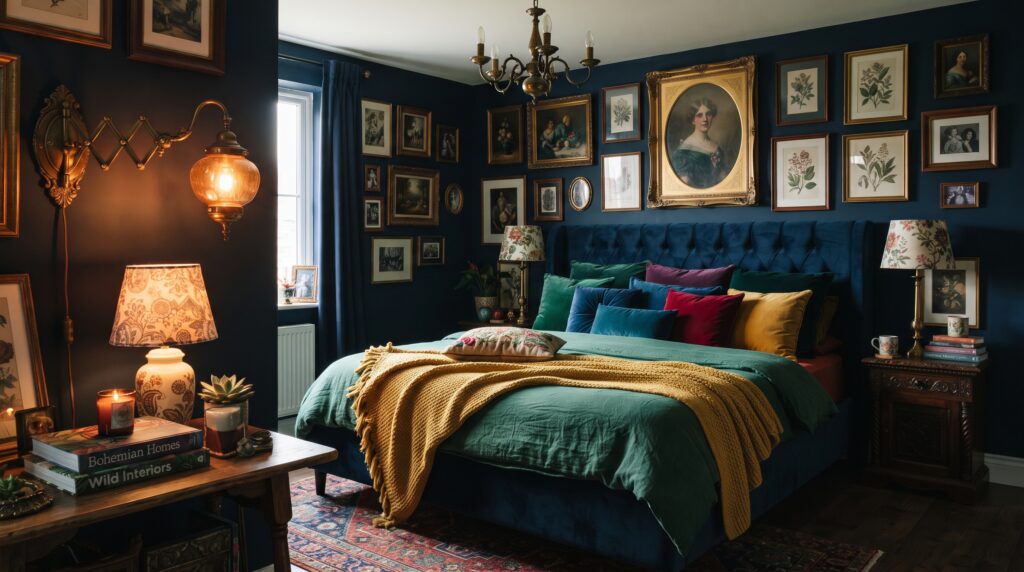
Brass lamps, an oversized patterned rug, and a gallery wall of mismatched frames all lean into this eclectic, collected-over-time feel. This is one of the more dramatic takes on a dark blue bedroom, but it works because the deep wall color acts as a unifying backdrop for all that color and pattern.
8. Whimsical and Personal
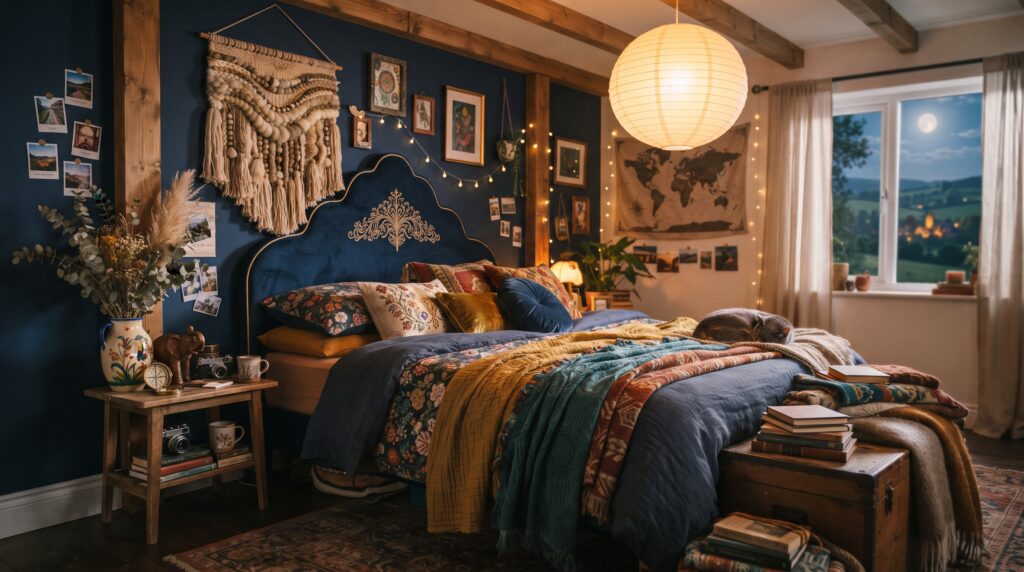
Dark blue walls are an excellent backdrop for quirky, personal touches — a hand-painted vase from a trip, an unusual upholstered headboard shape, or a woven wall hanging you picked up somewhere memorable. Because the wall color is so saturated, smaller decorative pieces tend to stand out more than they would against a plain white wall.
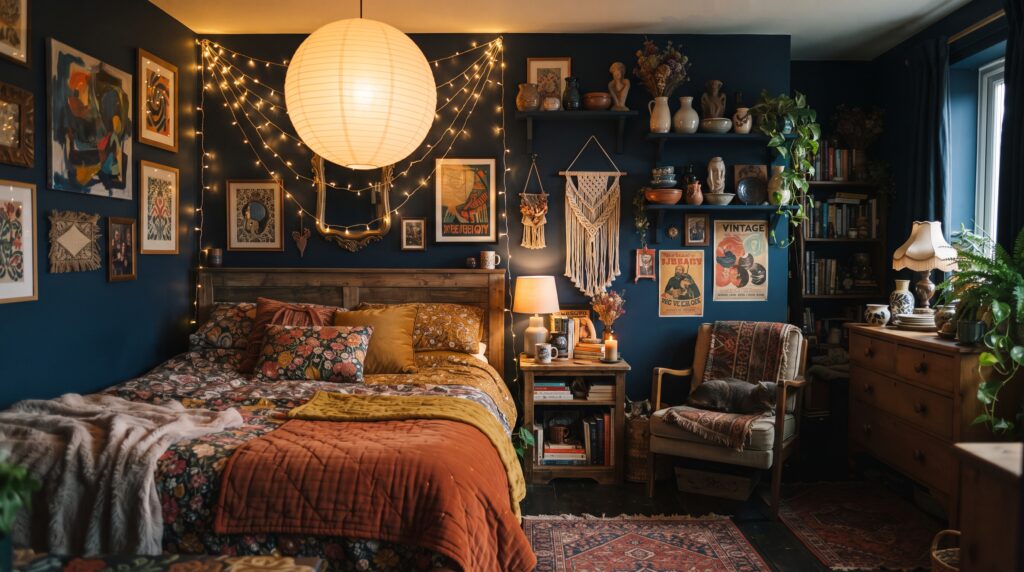
String lights or an oversized paper lantern pendant add a soft, slightly magical glow that suits this more playful, collected style.
9. Plush and Hotel-Inspired
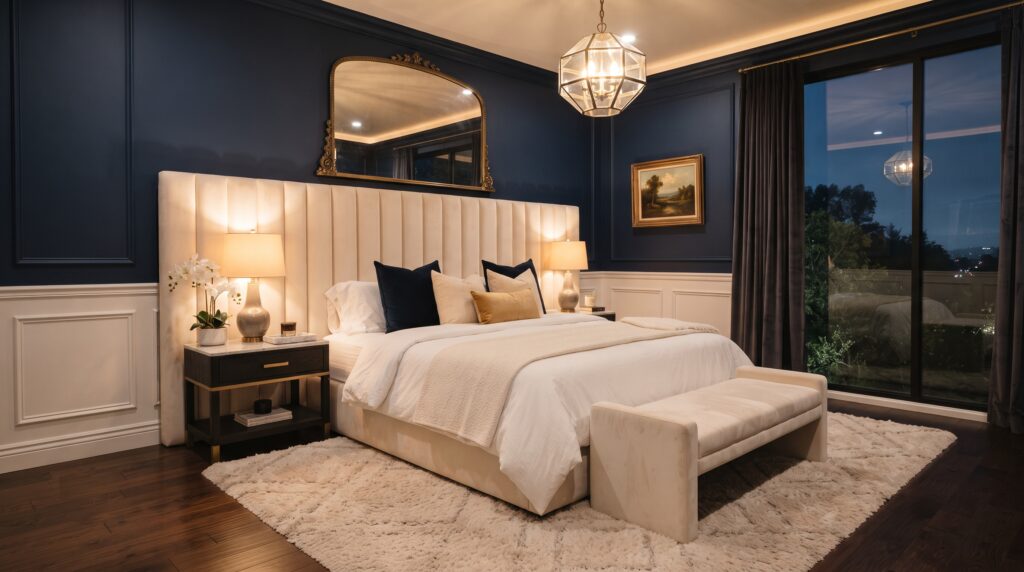
For a bedroom that feels like a proper retreat, pair deep navy walls with a tall upholstered or velvet headboard and a plush area rug. Wood paneling on the lower half of the wall adds texture without competing with the color, and a statement mirror or pendant light finishes the look.
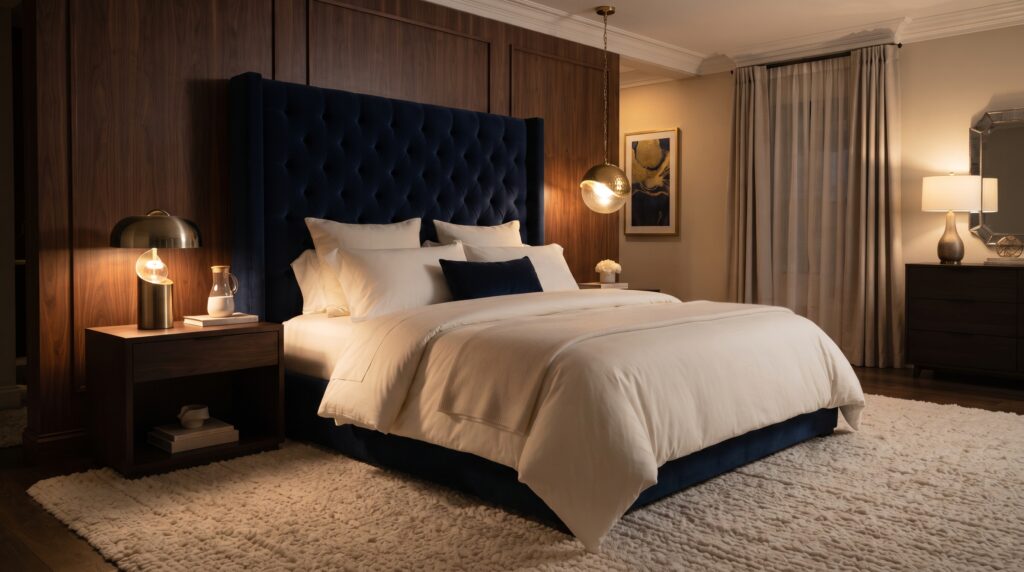
This is one of the more luxurious takes on the dark blue bedroom trend, and it tends to work particularly well in larger rooms where there’s space for a substantial headboard and layered rug.
10. The Accent Wall Approach
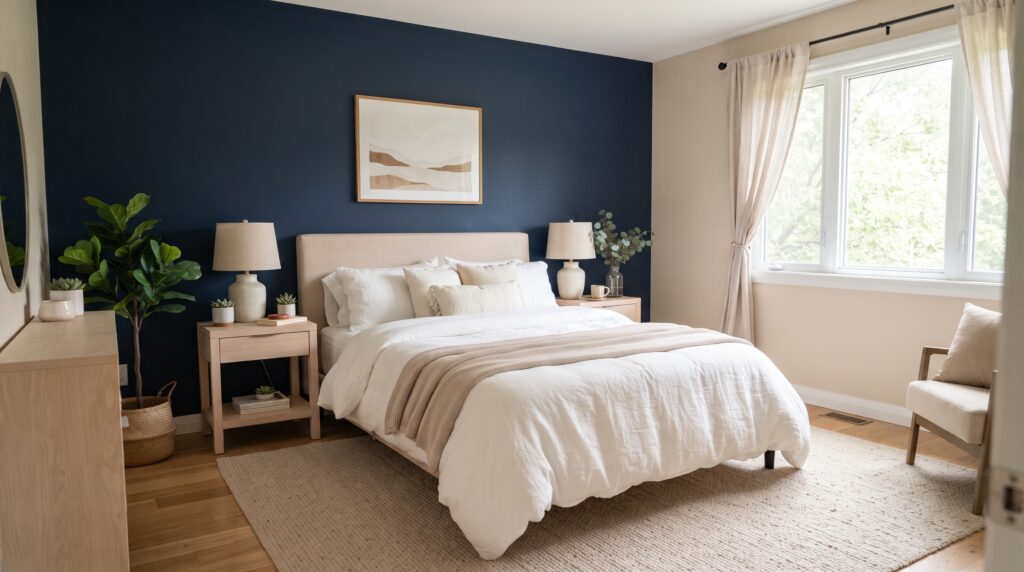
If you’re not ready to commit to painting an entire bedroom in a dark shade, a single accent wall behind the bed is a low-risk way to test the look. The rest of the room stays light and neutral, so the space still feels open, while the accent wall adds personality and a clear focal point.
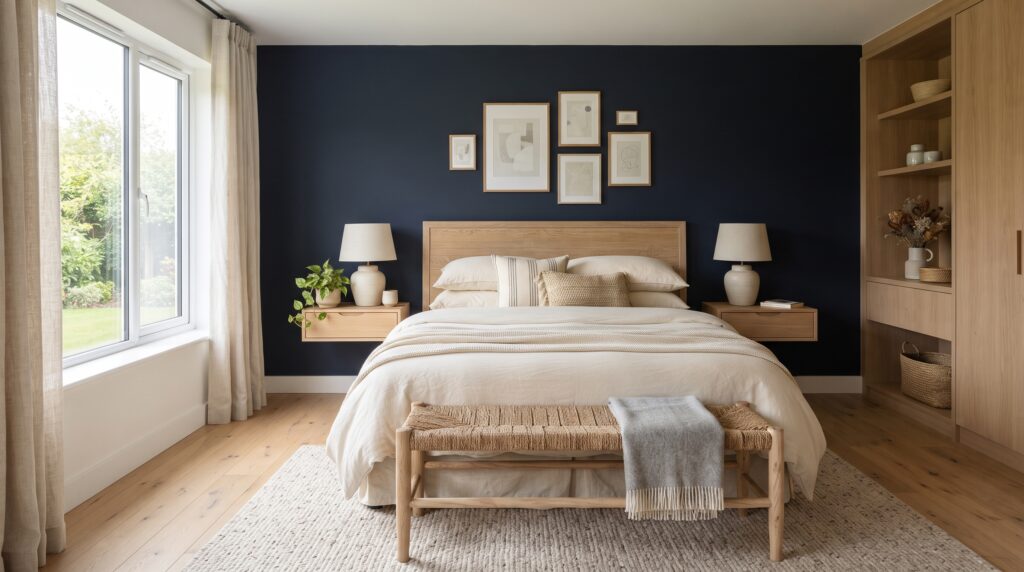
This is also an easy option to change later — if you decide you want to go bolder (or lighter), you’re only repainting one wall instead of an entire room.
11. Paneling and Millwork
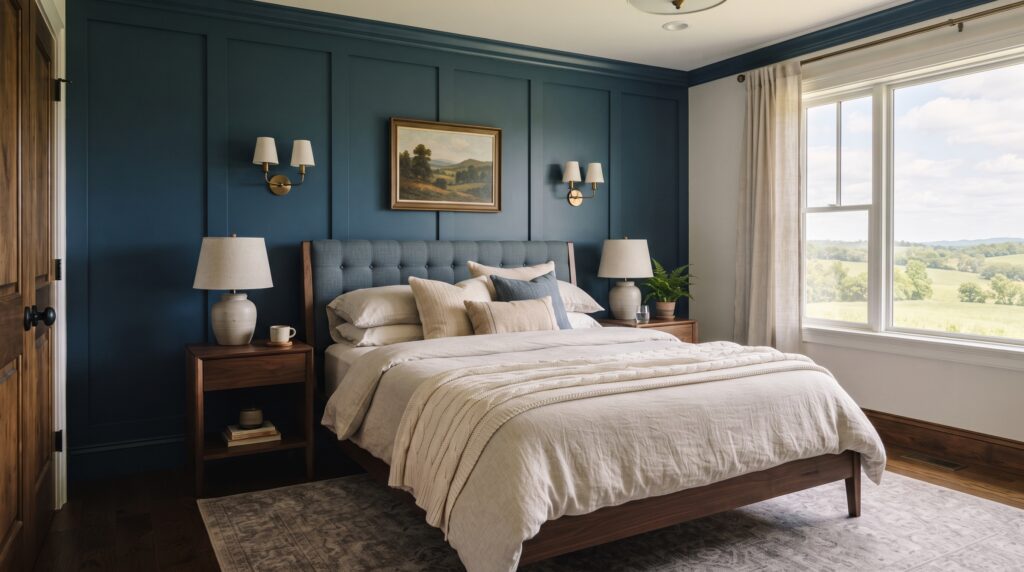
For a more classic, tailored look, consider painted wall paneling or board-and-batten detailing in a deep blue shade. The molding adds texture and visual interest even before you add furniture or decor, and it tends to look higher-end than a flat painted wall.
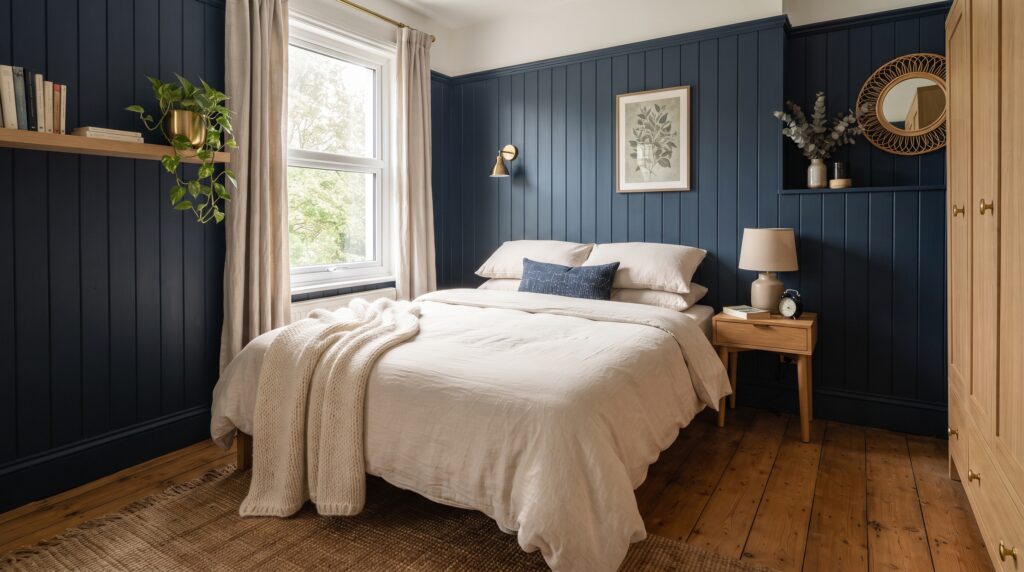
Pair paneled walls with neutral bedding and soft throws to keep the overall look balanced rather than overly bold. Simple vertical grooves work well in smaller rooms, while more decorative molding suits larger, more traditional spaces.
Choosing the Right Shade of Dark Blue
Not all “dark blue” is created equal — navy, indigo, midnight blue, and deep teal all read very differently depending on lighting and undertone. A navy with cooler gray undertones will feel more modern and crisp, while a blue with warmer or slightly purple undertones tends to feel cozier and more traditional.
It’s worth testing a sample directly on your walls and observing it at different times of day before committing, since dark colors in particular can shift dramatically between morning light, afternoon light, and lamp light in the evening.
There’s also a practical upside worth knowing: color experts and interior designers have pointed out that sleep specialists broadly agree that blue tones are associated with calmness and are considered one of the most effective color choices for a restful bedroom, according to Homes & Gardens. That’s a nice bit of validation if you’ve been going back and forth on whether a dark, moody bedroom is the right call — beyond looking good, it may genuinely help the room feel more restful. homesandgardens
Tips for Making a Dark Blue Bedroom Feel Warm, Not Cold
A few small choices make a big difference in how a dark blue bedroom ultimately feels:
- Balance cool with warm. Wood tones, brass or gold hardware, and warm-toned lighting all help offset the coolness of blue.
- Vary your textures. Velvet, linen, wool, and rattan all read differently against a dark wall, and mixing them keeps the room from feeling flat.
- Mind your finish. A matte or eggshell finish tends to feel softer and more sophisticated on a dark wall than a glossy one, which can look stark under bright light.
- Layer your lighting. Rely on lamps and warm-toned bulbs rather than a single overhead light, which can make a dark room feel flat or dim rather than cozy.
- Don’t skip the ceiling. A painted ceiling — even just in a slightly lighter or complementary tone — can make a dark bedroom feel more intentional and finished rather than like an unfinished accent wall.
Final Thoughts
There’s no single “correct” way to design a dark blue bedroom — it’s really a backdrop that adapts to whatever style you already love, whether that’s relaxed boho, refined traditional, or bold maximalist. The color itself does a lot of heavy lifting, giving a room instant depth and personality, but it’s the small choices — texture, lighting, wood tones, and personal touches — that ultimately determine whether the space feels cozy or cold.
If you’re in the early planning stages, it’s worth pulling a few paint samples and testing them in your actual room before making a final decision. A shade that looks perfect on a swatch can shift noticeably once it’s on your walls and living with your furniture and lighting.