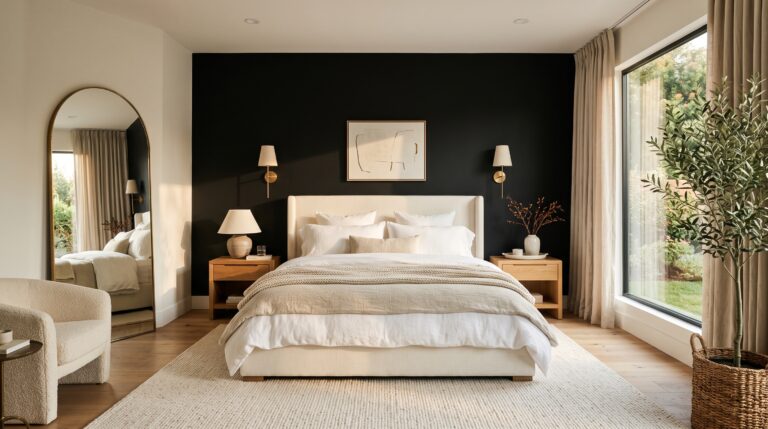
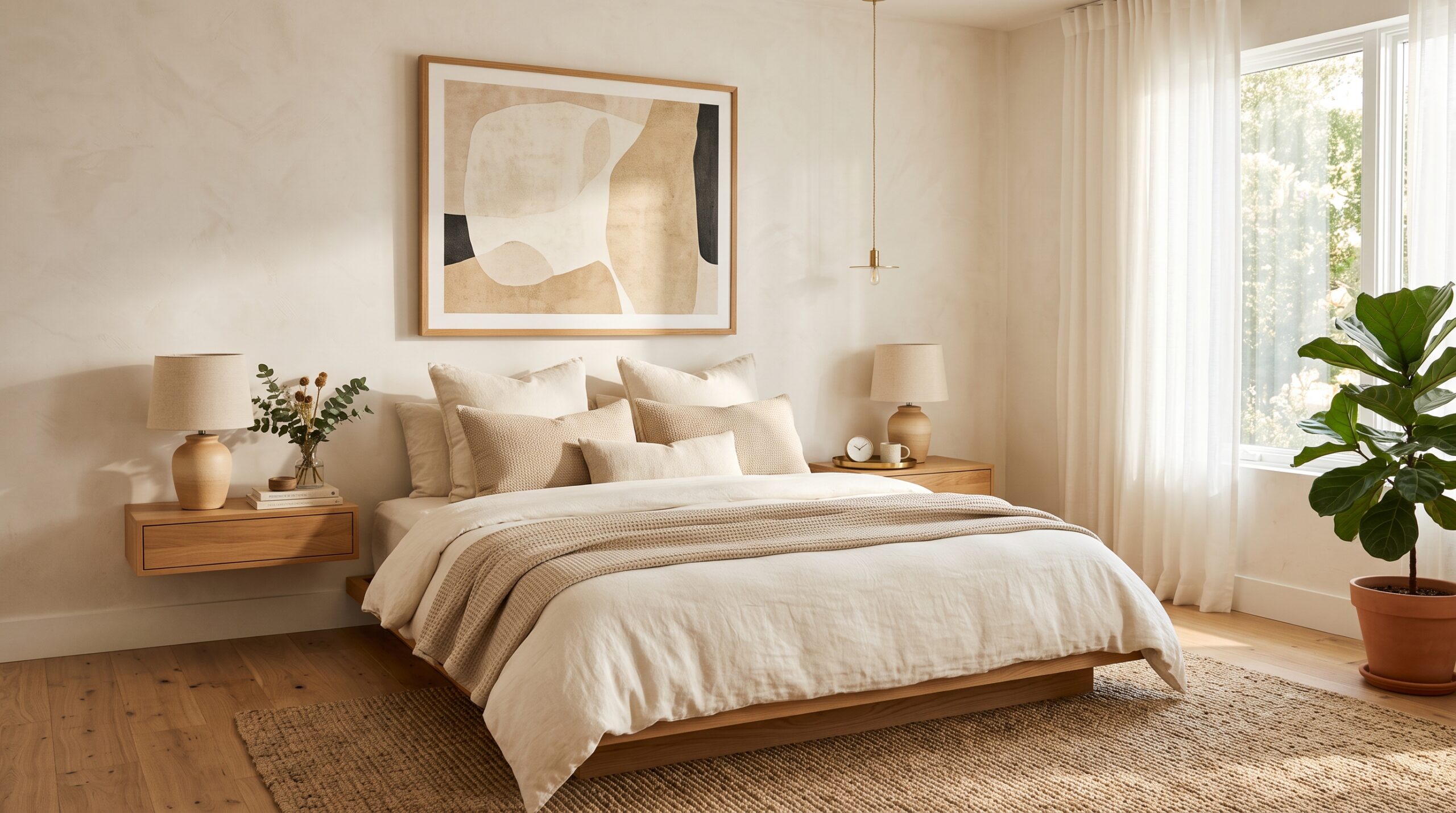
Not every bedroom needs a bulky headboard to feel finished. If you’re renting, working with a tight budget, or simply prefer a cleaner look, a bed without headboard can be just as stylish — sometimes even more so — than a traditional setup. The trick is knowing how to draw the eye toward the space above and behind your bed so it still reads as intentional, not incomplete.
Whether you’re furnishing your first apartment or just want to switch things up, there are dozens of ways to make your bed the focal point of the room without spending money on furniture you don’t have room for. Below, you’ll find a full lineup of ideas that work for nearly every layout, budget, and design style, from moody maximalism to soft minimalism.
There’s also a practical case for skipping the headboard altogether. A bed frame without one is easier to move, lighter to carry up a narrow stairwell, and far more forgiving if you rearrange your room every few months. It also frees up real wall space for the kind of styling that a bulky headboard would normally block — a shelf, a piece of art, a hanging plant. Once you start thinking of that wall as a blank canvas instead of an empty gap, the options open up fast.
Creative Ways to Style a Bed Without Headboard
A headboard-free setup gives you more freedom to experiment with color, texture, and layout than a traditional bed frame ever could. Instead of being locked into one look, you can lean into paint, textiles, art, or shelving — and change your mind again in six months if you want to. Here are the approaches worth trying.
Go Big With a Statement Art Piece
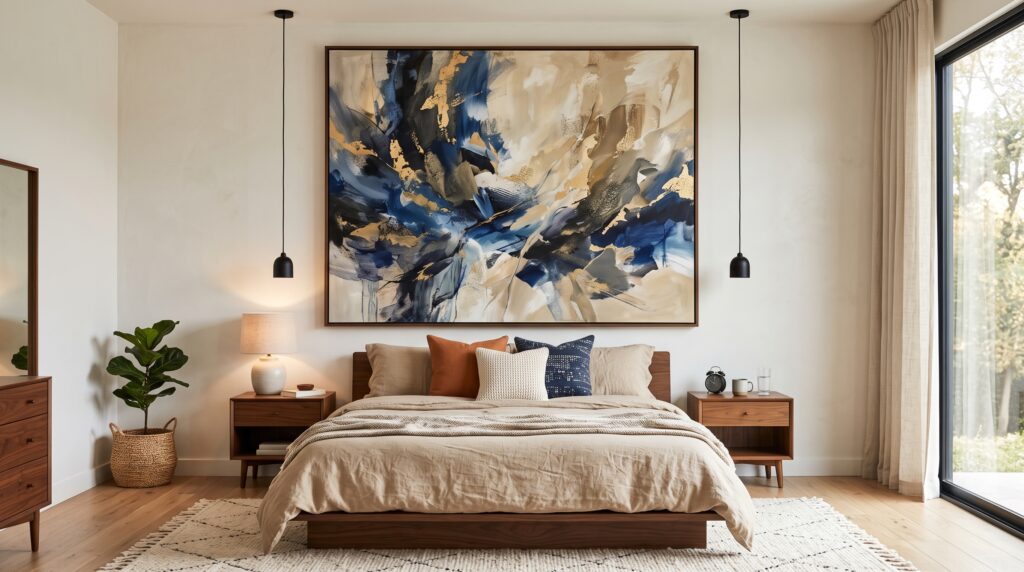
One of the simplest ways to fill the wall behind your bed is to hang a single, oversized piece of artwork. A large abstract painting, a moody landscape, or a graphic print all do the same job a headboard would: anchor the eye and give the room a clear focal point.
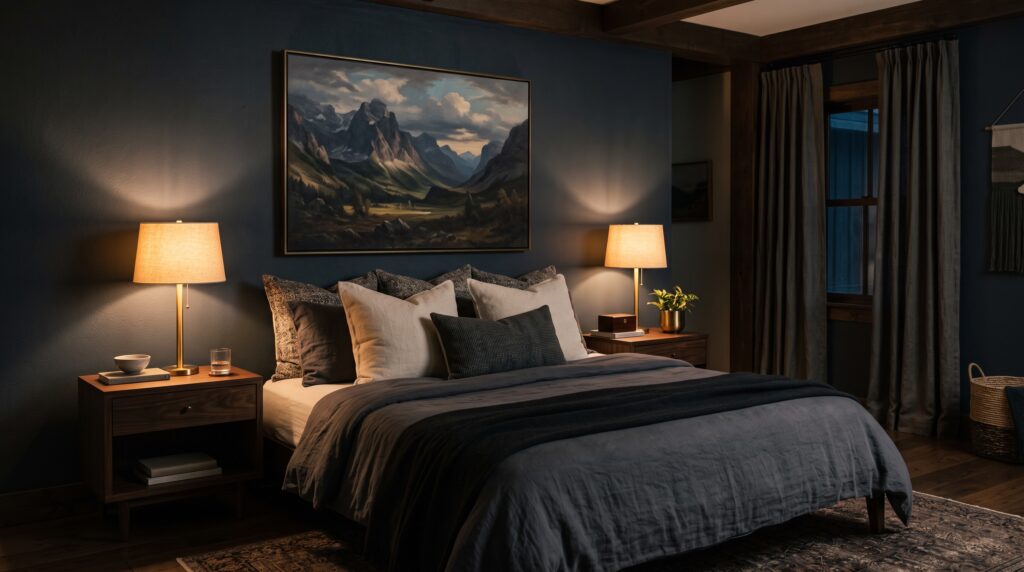
Center the piece directly above the mattress and leave enough breathing room on either side so it doesn’t feel cramped. If a gallery-sized original is out of budget, look for printable digital art online and have it framed locally — matching the frame finish to your nightstands or bedding hardware helps tie the whole look together.
Paint a Faux Headboard Shape
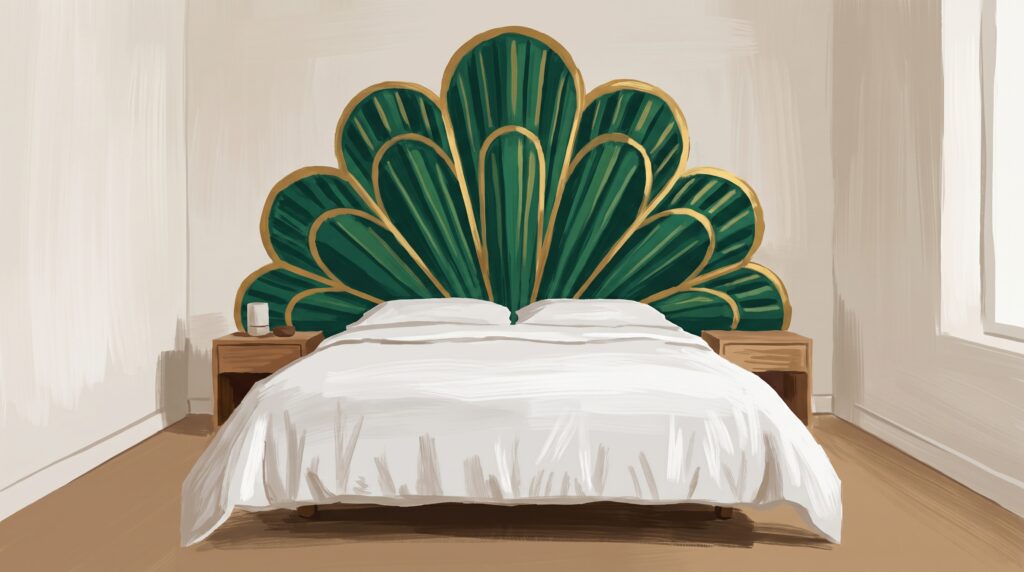
Painter’s tape and a can of paint can do more for a bedroom than most people expect. Mapping out a rectangle directly on the wall behind your bed creates the illusion of a headboard without adding any bulk or cost of furniture.
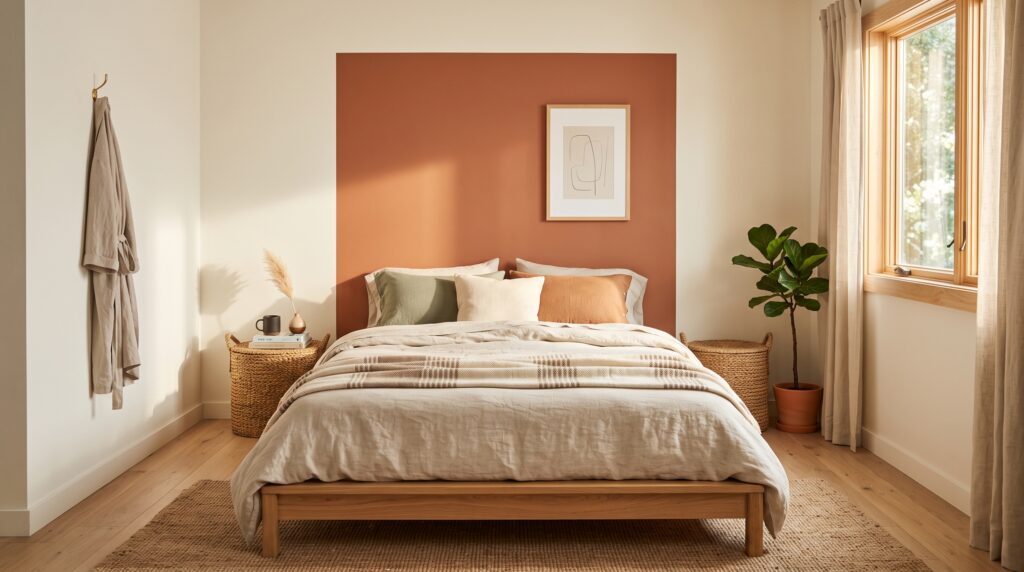
This works especially well in minimalist or modern bedrooms, where clean geometric lines feel purposeful rather than decorative. Pick a shade that complements your bedding for a soft, cohesive look, or go with a contrasting color if you want the shape to stand out. Because it’s just paint, you can always repaint it if your color scheme changes down the line.
Try an Arch or Circle Instead
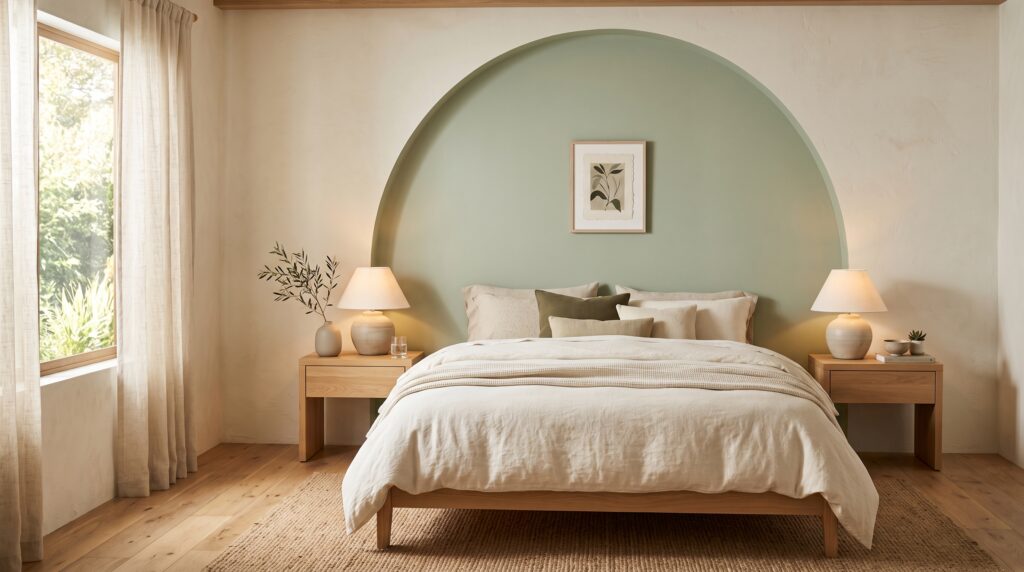
If a hard-edged rectangle feels too stiff for your space, swap it for a soft arch or circle. Curved shapes tend to suit bohemian and mid-century-inspired rooms particularly well, softening the whole wall.
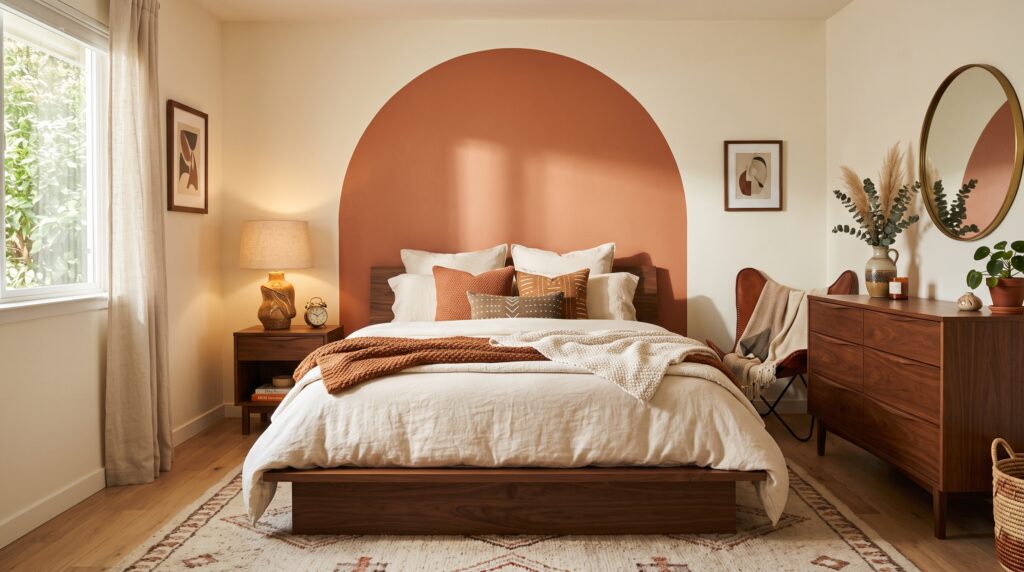
Muted tones — sage green, dusty pink, warm terracotta — tend to read as calming rather than loud, which makes this a good option if you want personality without overwhelming a small room. If you’re nervous about getting a perfect circle freehand, a pencil tied to a length of string and anchored with a thumbtack makes an easy makeshift compass.
Install a Floating Shelf
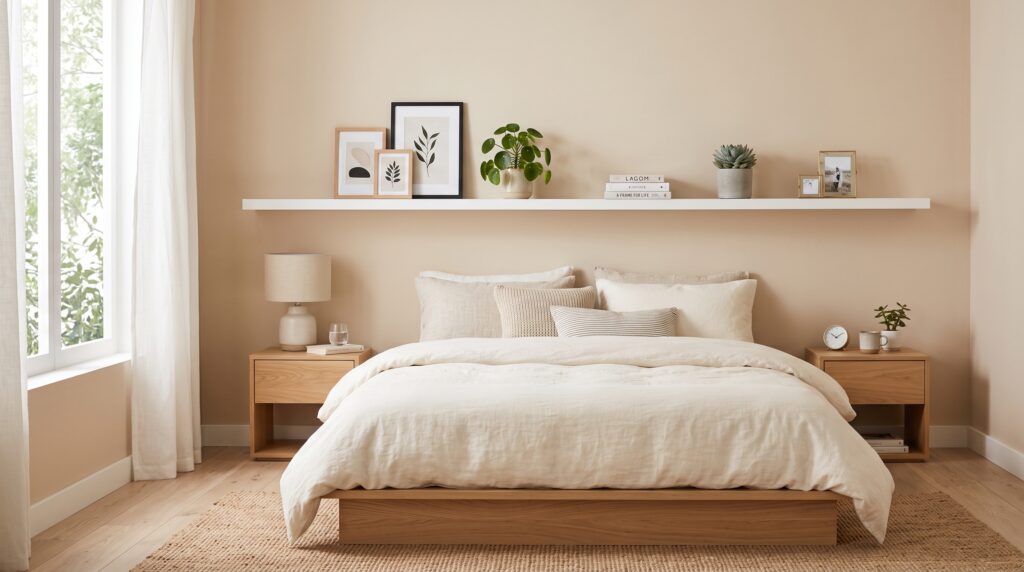
A floating shelf mounted above the bed gives you both a decorative surface and functional storage, which is hard to beat in a small bedroom. Use it to display framed photos, a small plant, or a couple of candles, but resist the urge to overload it — a shelf packed too full starts to look cluttered rather than curated.
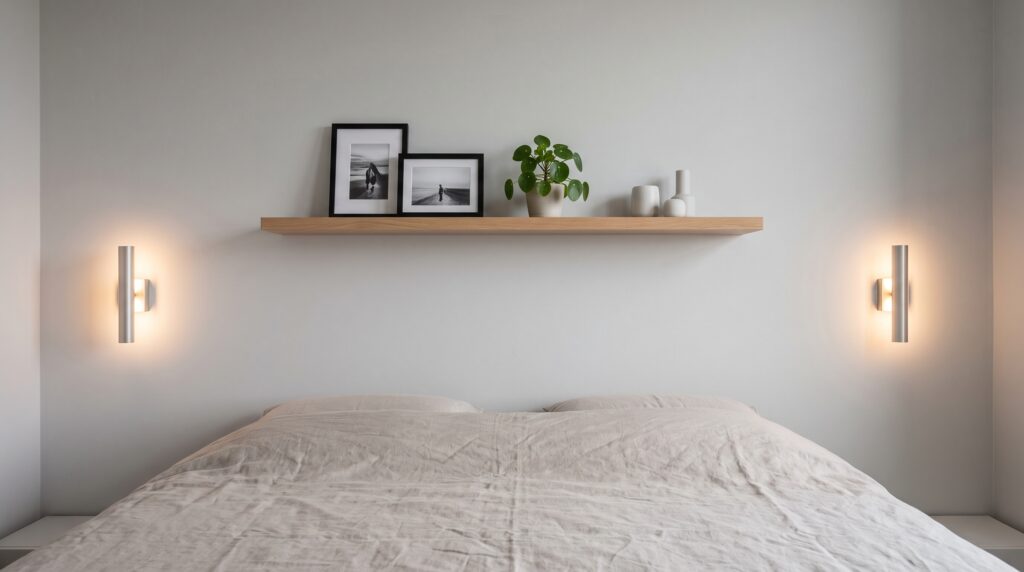
If you live somewhere prone to earthquakes or just have an active household, make sure everything on the shelf is secured so nothing shifts or falls.
Hang Curtains From the Ceiling
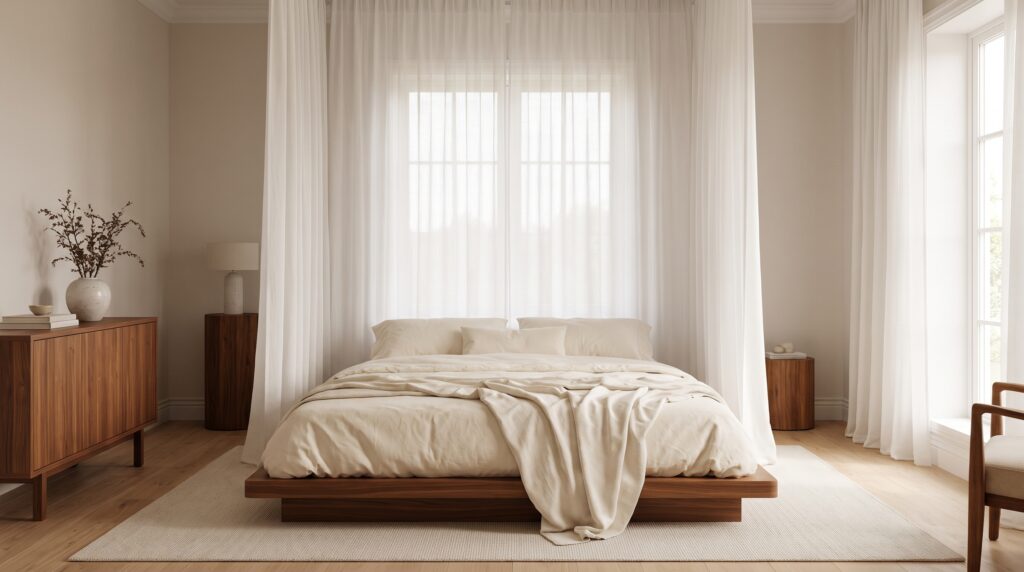
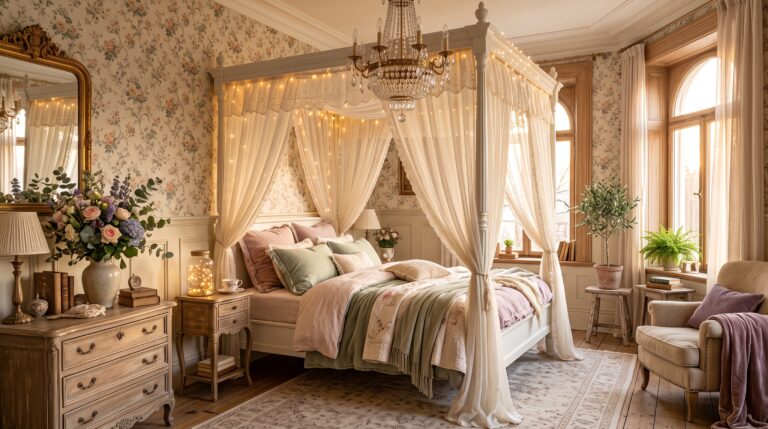
For a softer, more romantic feel, mount a curtain rod to the ceiling and let sheer fabric cascade down behind the bed. Lightweight linen or voile fabrics create an airy, relaxed atmosphere, while heavier materials like velvet lean into a more dramatic, cocoon-like mood.
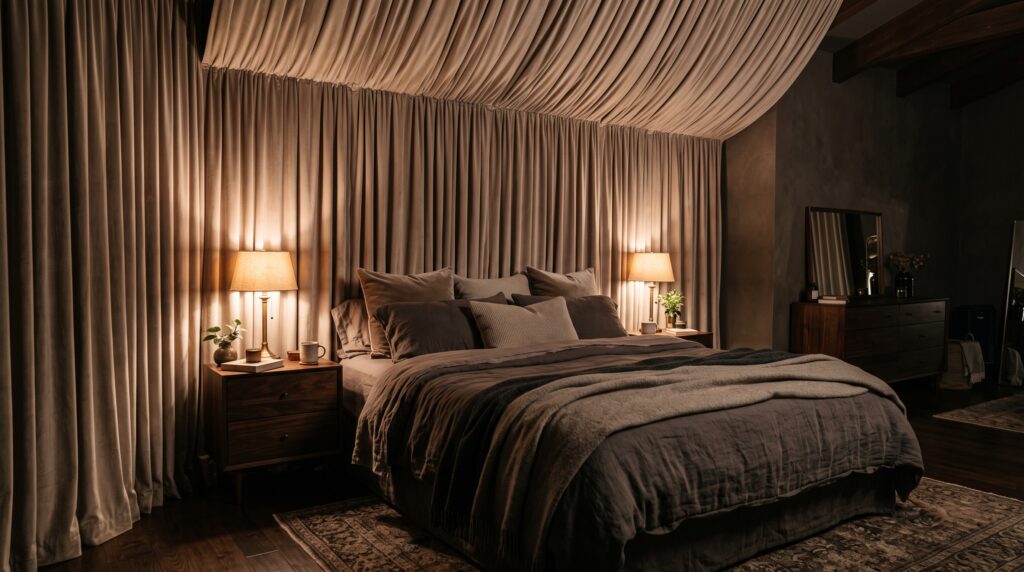
This is a particularly good option for renters, since it typically only requires an adhesive hook or a tension rod rather than drilling into the ceiling itself. It’s a small change that can completely shift how a room feels.
Paint the Whole Wall a Bold Color
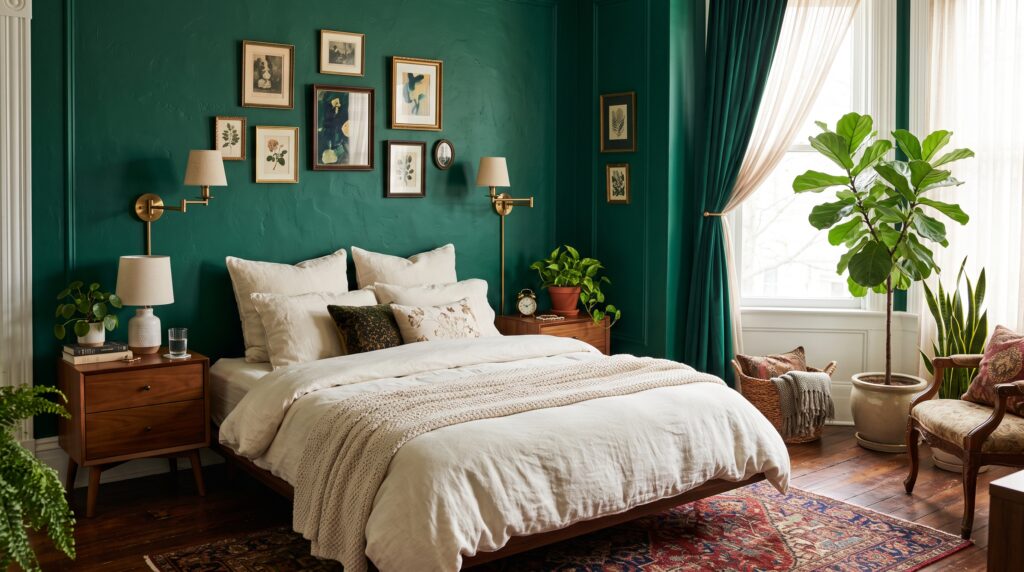
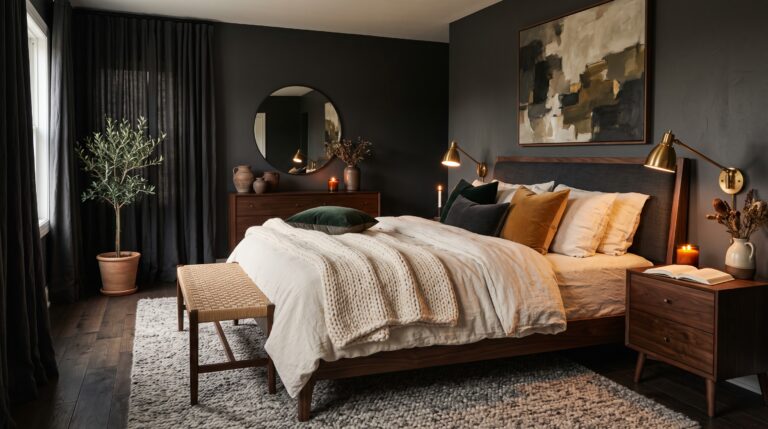
Sometimes the simplest fix is the most effective one. Painting the entire wall behind your bed in a deep, saturated color — think navy, charcoal, emerald, or deep red — gives the space instant character and makes everything else in the room feel more deliberate by comparison.
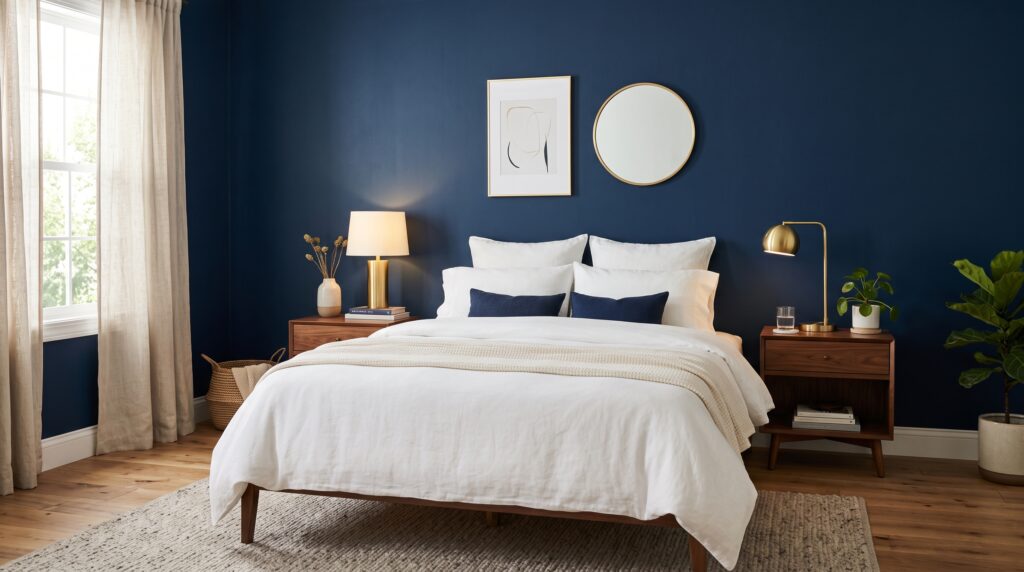
This approach works in almost any style of bedroom and tends to photograph beautifully, since the contrast between the dark wall and lighter bedding creates natural depth.
Add Peel-and-Stick Wallpaper
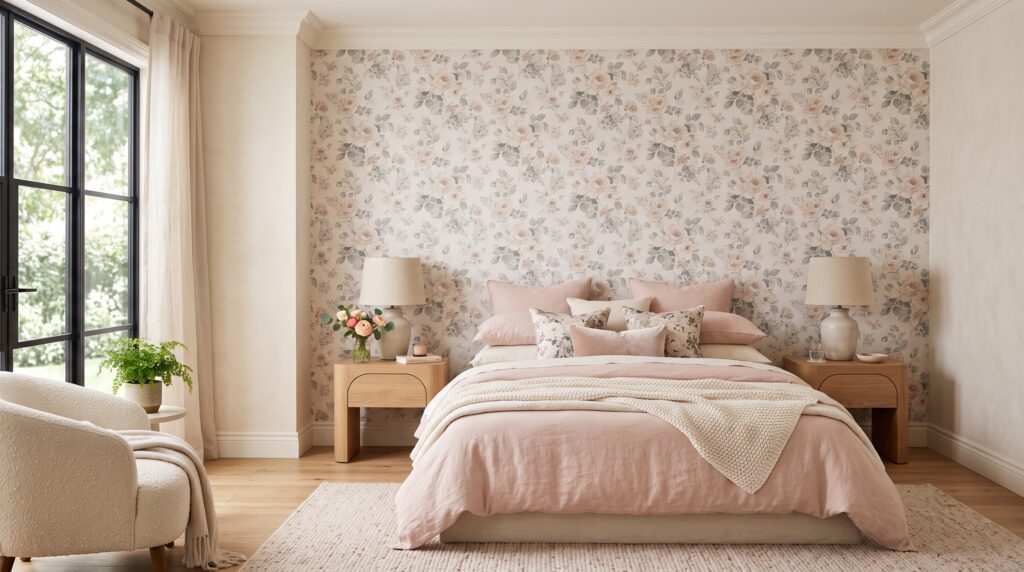
If you’d rather not commit to paint, removable wallpaper is a renter-friendly alternative that can be swapped out whenever you’re ready for a change. Textured patterns like faux wood grain or subtle florals add warmth and depth to a plain wall in a way that flat paint sometimes can’t.
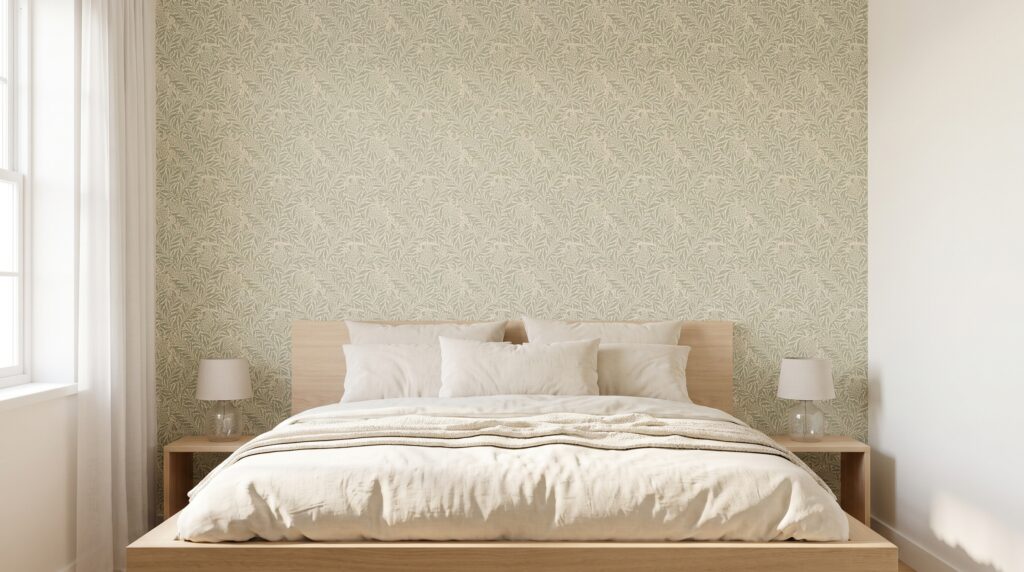
To get a clean, professional-looking application, start from the center of the wall and smooth the paper outward in both directions, using a smoothing tool as you go to avoid trapped air bubbles.
Hang a Macramé Wall Hanging
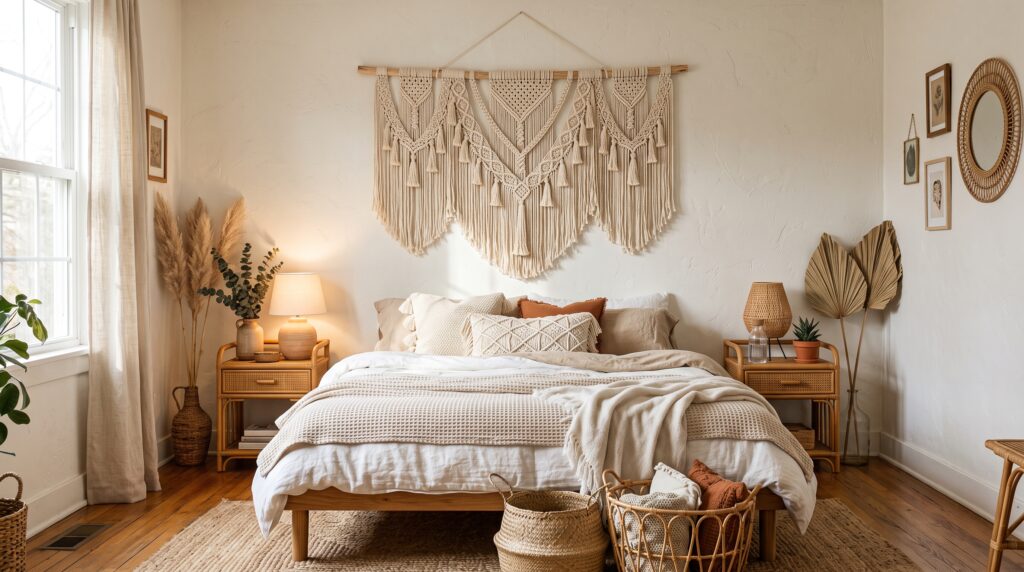
For a bedroom with a boho lean, a large macramé piece brings texture and warmth that a flat headboard simply can’t replicate. The knotted, layered look adds visual interest without requiring any hardware beyond a single hook.
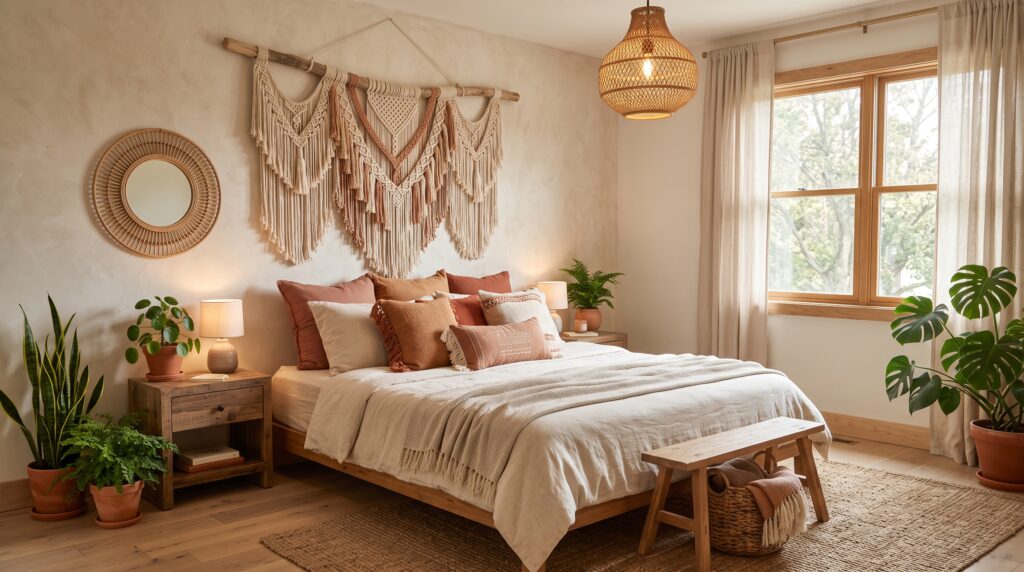
Pair it with neutral, textured bedding so the wall hanging stays the star of the show rather than competing with a busy comforter.
Use a Fabric Tapestry
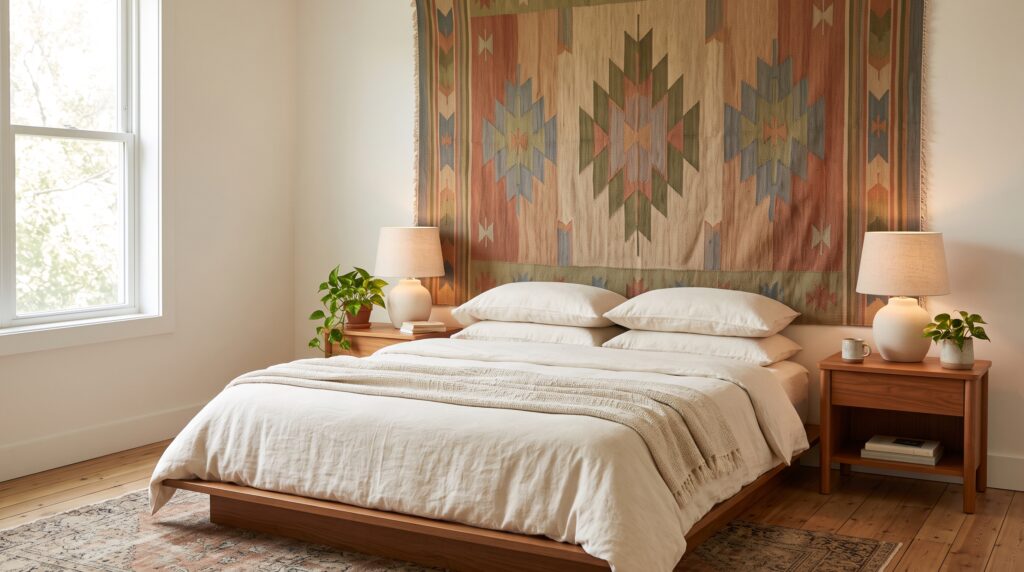
A tapestry is one of the easiest headboard alternatives to swap in and out, which makes it ideal if you like refreshing your space seasonally. Bold prints work as a statement piece on their own, while subtler patterns blend more quietly into an already-layered room.
If you’re not sure where to start, pull colors or motifs from decor you already own so the tapestry feels connected to the rest of the space rather than randomly placed.
Attach a Woven Panel
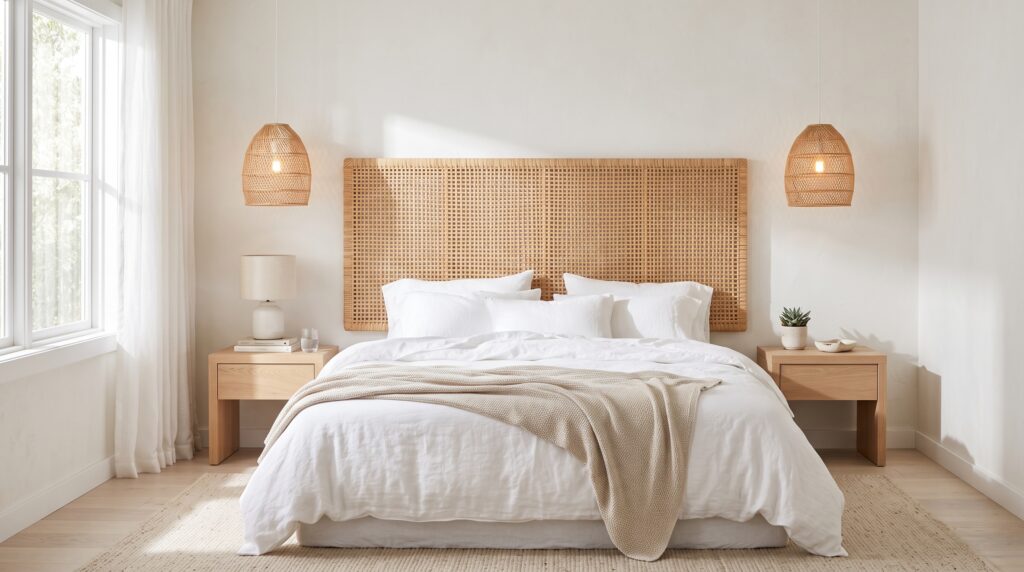
A lightweight rattan or cane panel mounted behind the bed brings a natural, textural element that works especially well in coastal or boho-leaning bedrooms. It reads as more structured than a hanging textile but still feels far softer than a traditional wood or upholstered headboard.
Build a Gallery Wall
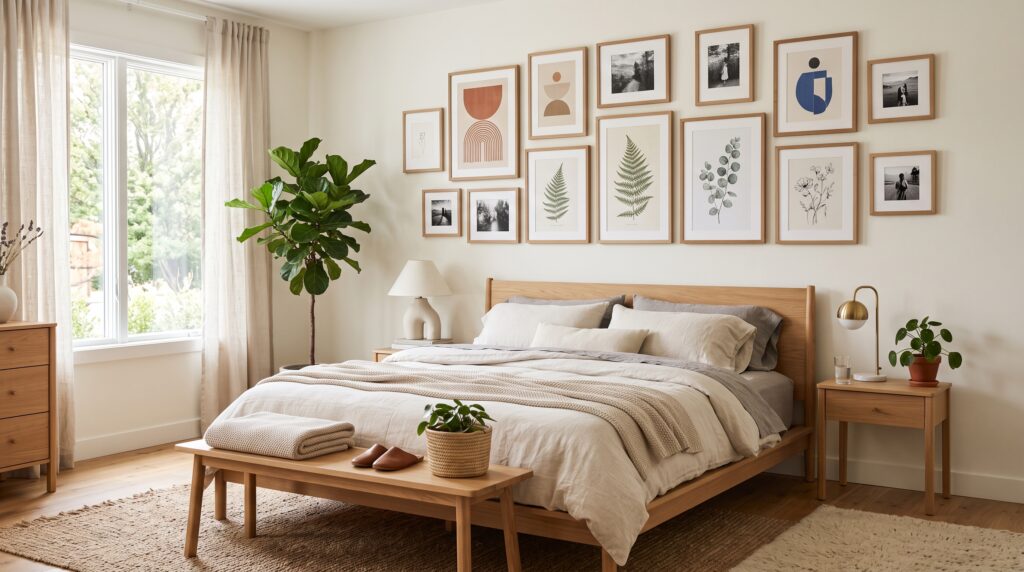
Grouping several framed pieces above the bed can create the kind of visual weight a headboard normally provides, but with far more personality. A tight, symmetrical grid tends to suit smaller walls, while a looser, asymmetrical layout gives larger walls a more relaxed, collected-over-time feel.
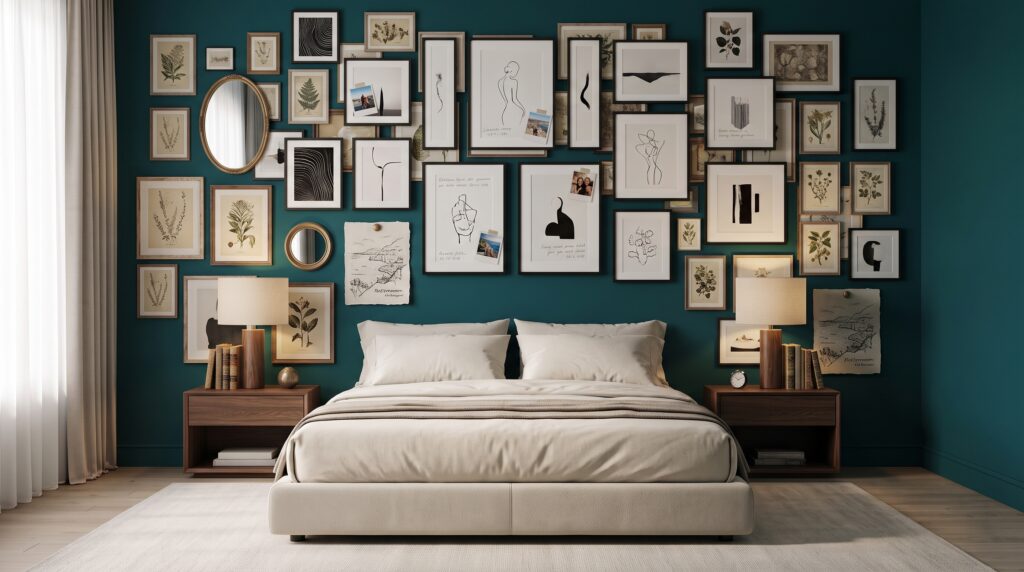
Sticking to a consistent color palette or frame style across the pieces helps the whole arrangement read as one cohesive display rather than a random assortment.
Tuck the Bed Into a Corner
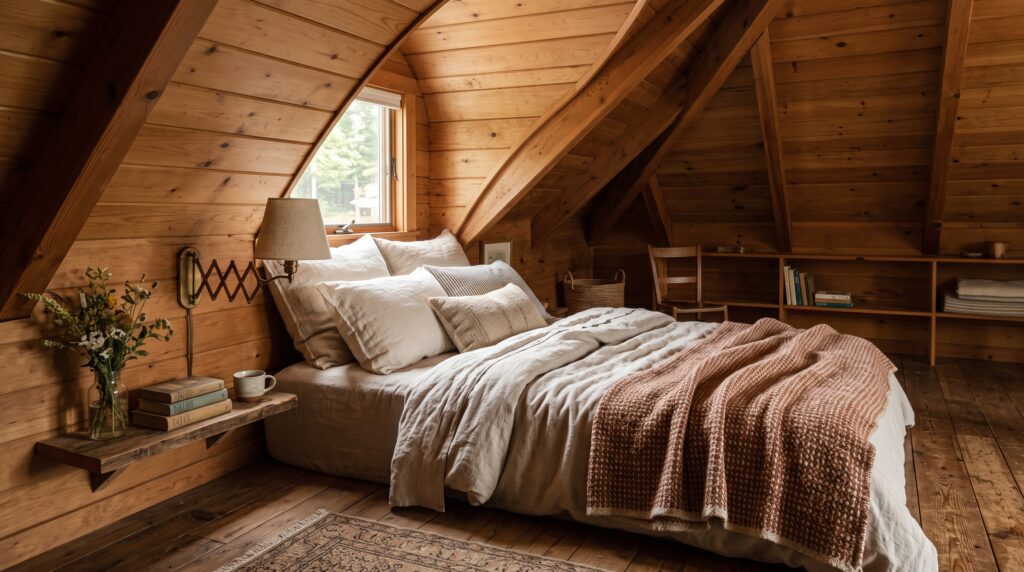
Positioning your bed diagonally or flush into a corner gives it a naturally framed, cozy feel using the two adjoining walls instead of a headboard. Stack a few extra pillows along the exposed side for a daybed-style look, which also happens to be a smart way to maximize a small bedroom or guest room.
Drape Fabric Loosely

If a structured curtain setup feels like too much, try draping lightweight fabric freely from a couple of hooks or a simple rod instead. Linen or unlined cotton adds texture without much effort, and because nothing is fixed in a rigid shape, it has a naturally relaxed, unfussy quality.
Hang a Simple Curtain Panel
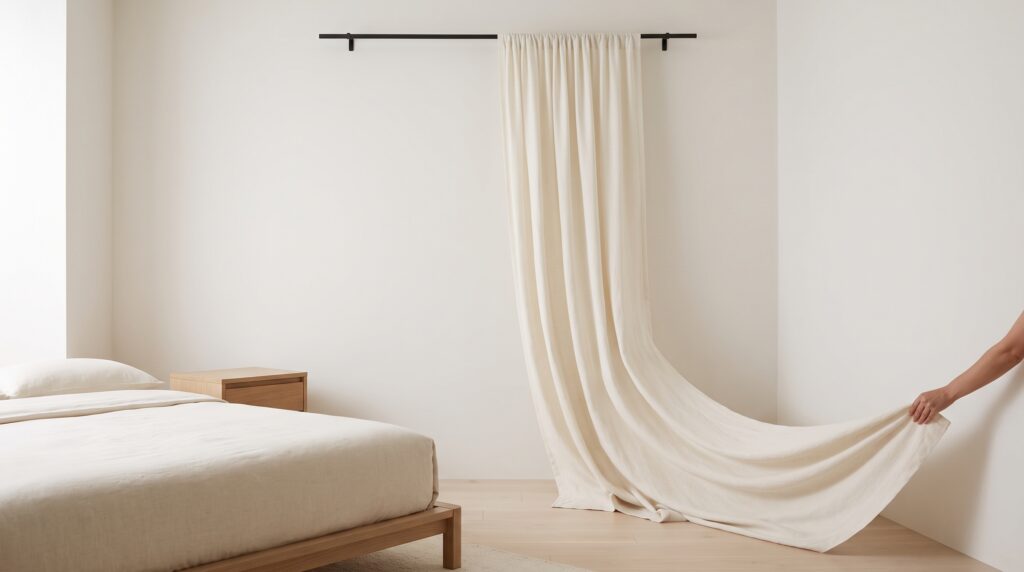
A curtain rod mounted on the wall behind the bed, with a single fabric panel suspended from it, gives you a similar effect to a ceiling-mounted curtain with a lot less installation work. Choose a fabric that matches your bedding for a subtle, tonal look, or go with something contrasting if you want the panel to double as a statement piece.
Layer Pillows Into a Faux Headboard
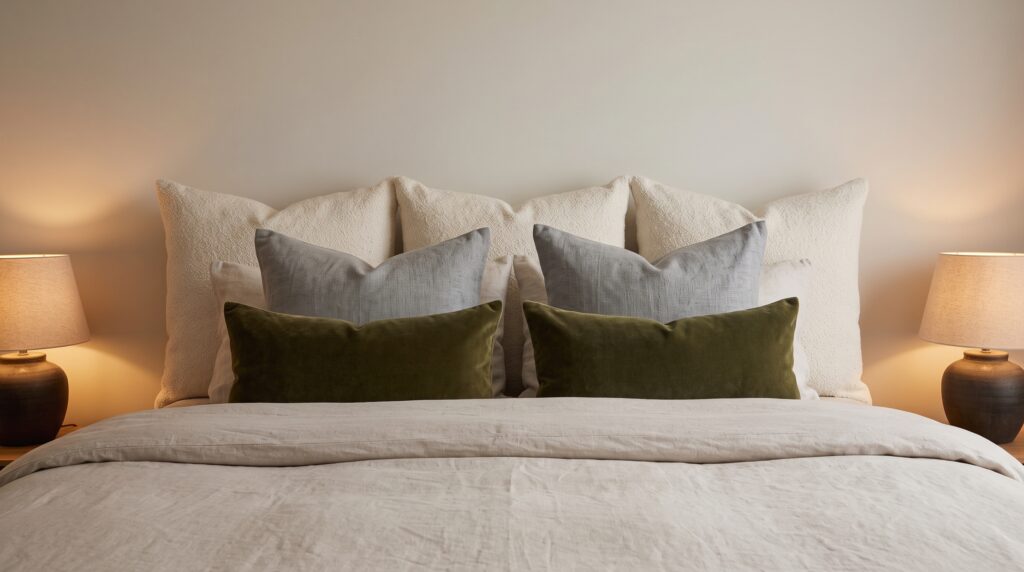
If you’d rather not touch the wall at all, oversized floor pillows or large square shams stacked against the wall behind your mattress can mimic the shape and function of a headboard. This works especially well for floor beds, platform frames, or low-profile setups where the mattress already sits close to the ground.
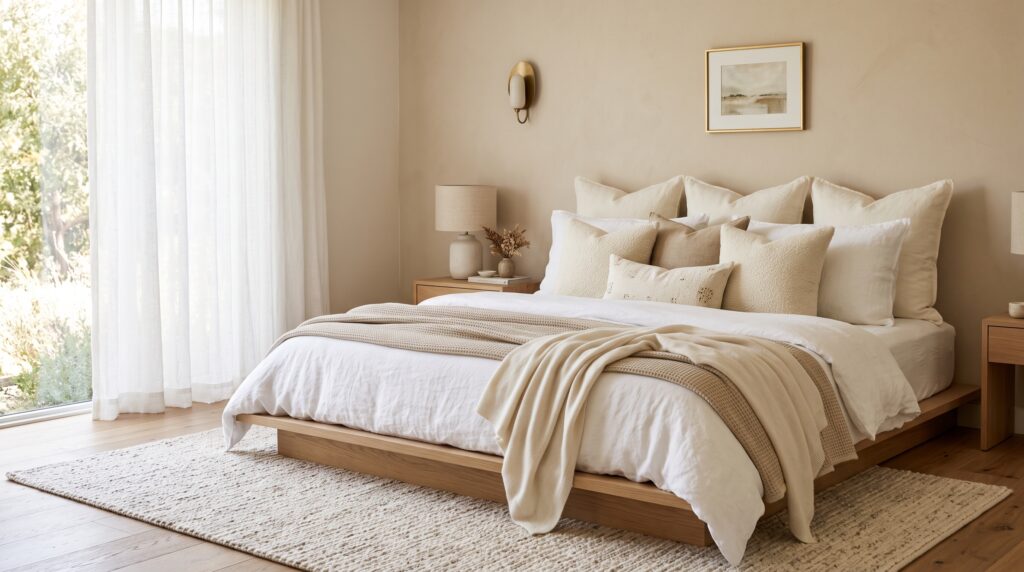
Mix a few different sizes and textures — a bouclé square, a linen lumbar, a couple of Euro shams — so the stack looks intentional rather than like an overflow of bedding. It’s also one of the few options here that adds physical comfort, since you can actually lean back and read against it.
Add a Statement Mirror
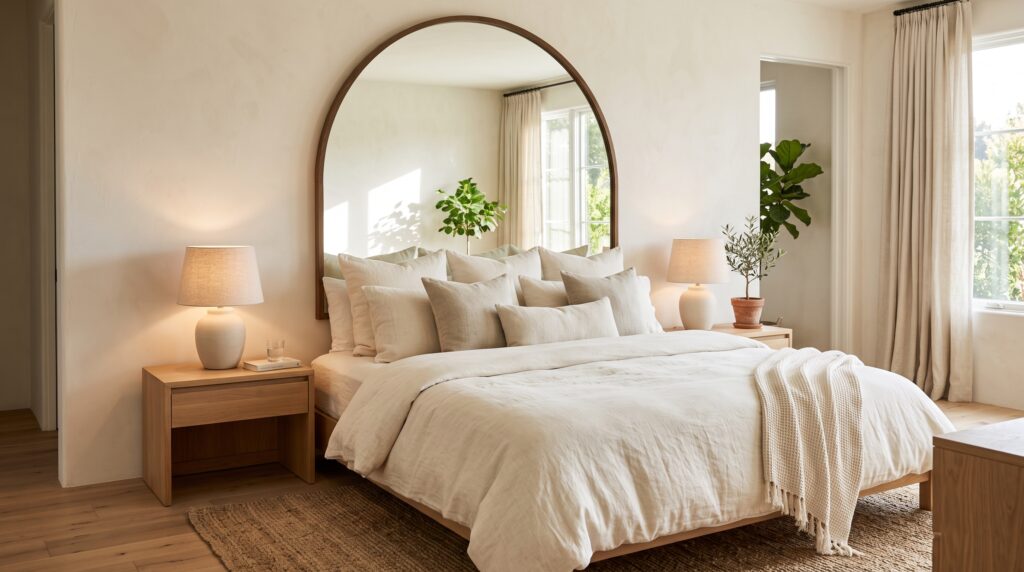
A large mirror does double duty above a bed: it acts as a focal point the same way art would, while also bouncing light around a room that might otherwise feel dim. An arched or oversized round mirror tends to soften the space, while a rectangular one in a bold frame reads more graphic and modern.
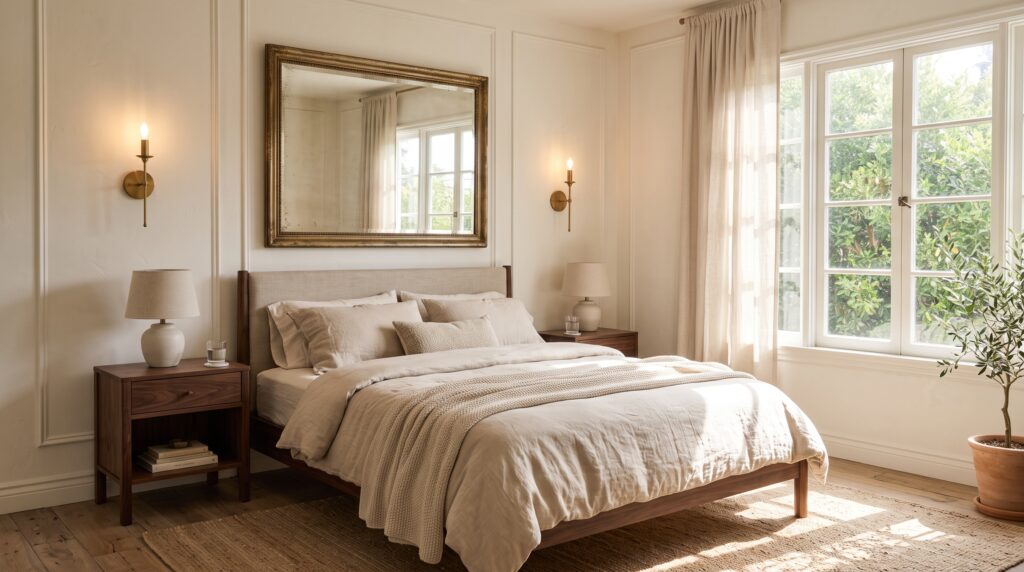
This is a particularly smart move in small bedrooms or rooms with limited natural light, since the reflected light can make the whole space feel larger and brighter without any renovation.
Choosing the Right Look for Your Space
With this many directions to choose from, the best approach is usually to start with how you want the room to feel. Paint and wallpaper tend to suit anyone who wants a bold, graphic backdrop, while textiles like macramé, tapestries, and curtains lean softer and more textural. If storage is a priority, a floating shelf gives you the most function per square foot of wall space.
It’s also worth thinking about your lease or living situation. Renters will generally get the most mileage out of removable wallpaper, tension-rod curtains, and adhesive hooks, since none of these require permanent changes to the walls. If you own your home or have more flexibility, painting a wall or an accent shape opens up more dramatic options.
According to interior designers interviewed for Apartment Therapy’s roundup of headboard alternatives, skipping a headboard can actually give a bedroom more flexibility — it lets you shift the bed around, layer pillows higher, or work in a console or shelf for a more fluid layout. In other words, going headboard-free isn’t a compromise — it’s its own design choice, and one that tends to make a room feel more open and adaptable over time. You can read the full piece here for more designer-backed alternatives.
Final Thoughts
A missing headboard doesn’t have to mean an unfinished bedroom. Whether you reach for a paintbrush, a length of fabric, or a well-placed shelf, there are plenty of ways to give your bed a strong visual anchor without the bulk, cost, or commitment of a traditional headboard. Start with whichever idea matches your style and budget, and don’t be afraid to combine a couple of these approaches — layering texture, art, and color is often what makes a headboard-free bedroom feel the most complete.