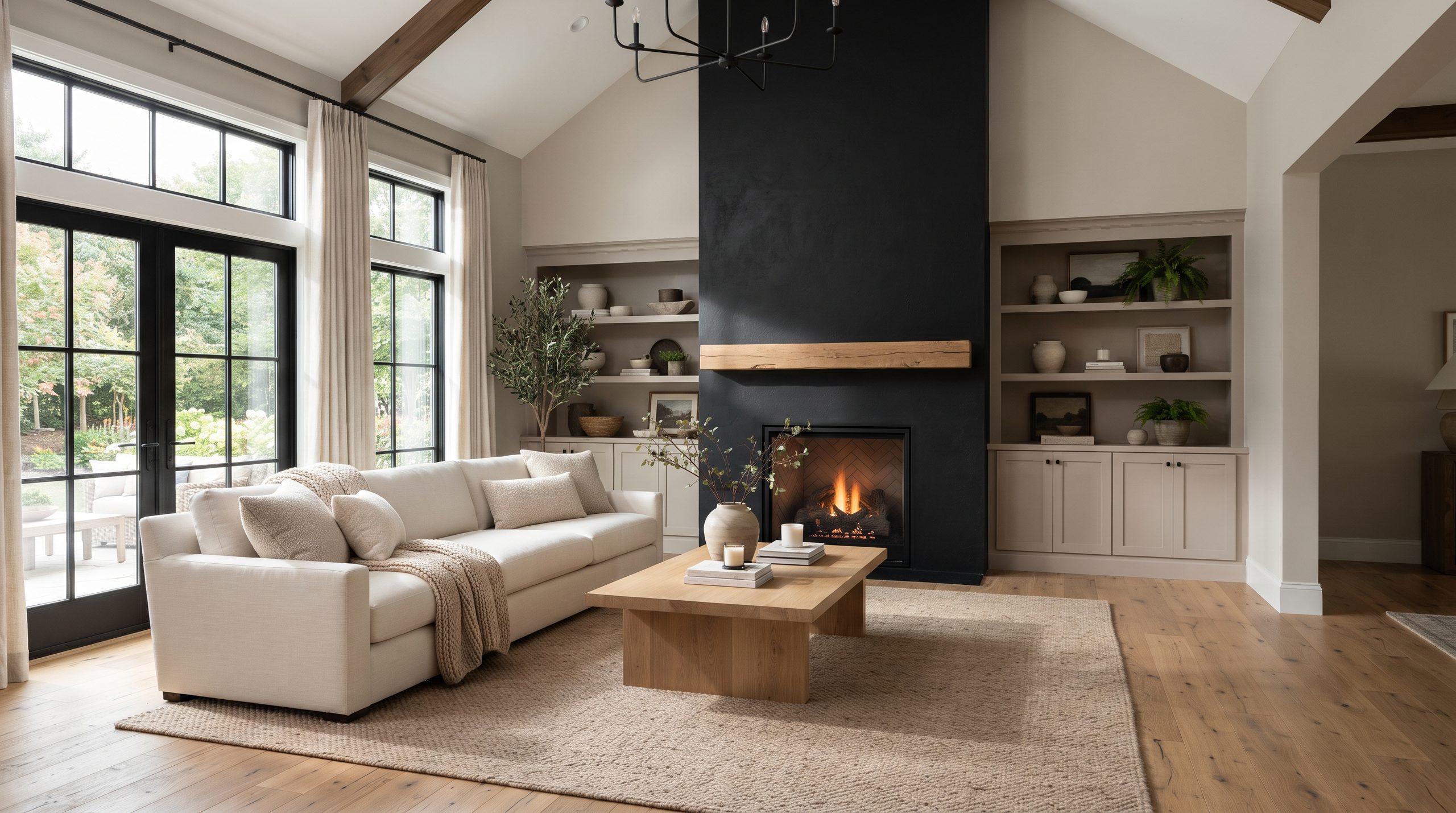
There’s a reason black fireplaces keep showing up on every mood board this year — nothing else in a living room does quite as much work with quite so little fuss. One dark, confident focal point, and suddenly the whole room has a point of view. Whether your taste runs toward pared-back minimalism or a cabin-in-the-woods kind of coziness, a black fireplace flexes to fit, and it never quite looks like everyone else’s.
Below are more than a dozen ways to bring one into your own space, organized by the overall feeling each style creates.
Black Fireplace Styles to Anchor Every Kind of Living Room
1. Matte Black Brick, Floor to Ceiling
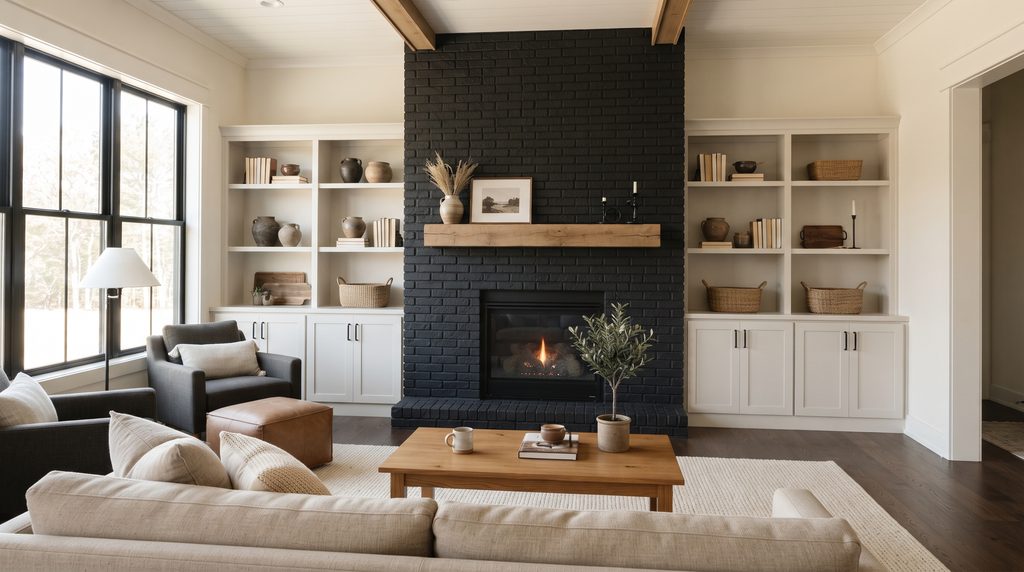
Nothing reads “modern farmhouse” quite like a full wall of matte black brick. Because the finish absorbs light rather than bouncing it back, the fireplace reads as a deliberate architectural statement rather than just “the place where the fire is.” Pair it with a chunky wood mantel and flanking built-ins finished in soft white, and you get a room that feels both edited and lived-in at once
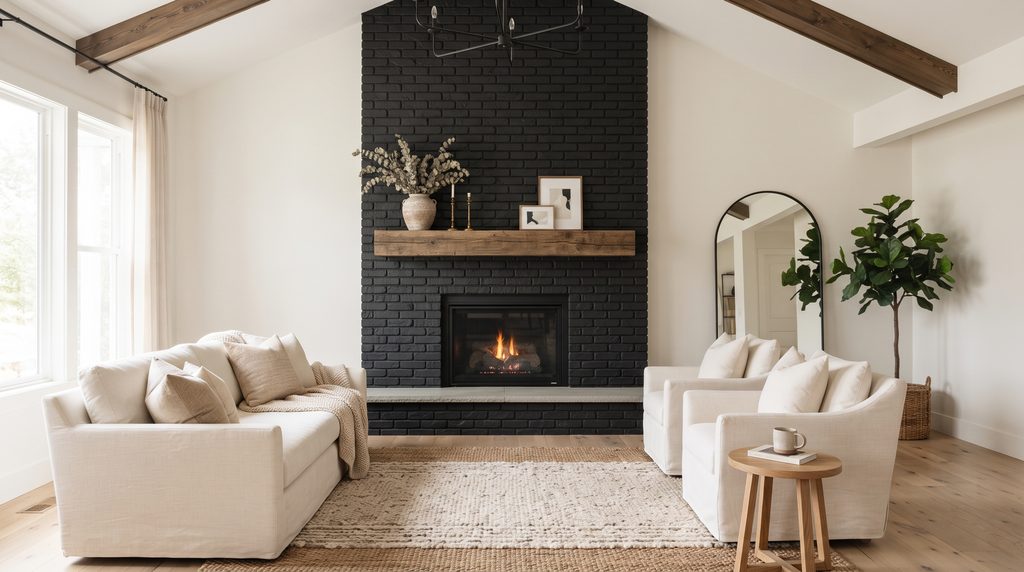
. The trick is restraint elsewhere: let the black brick be the loudest thing in the room, and keep your furniture and rug in quiet neutrals so the wall keeps its punch.
2. Rustic Charcoal Paired With Raw Wood
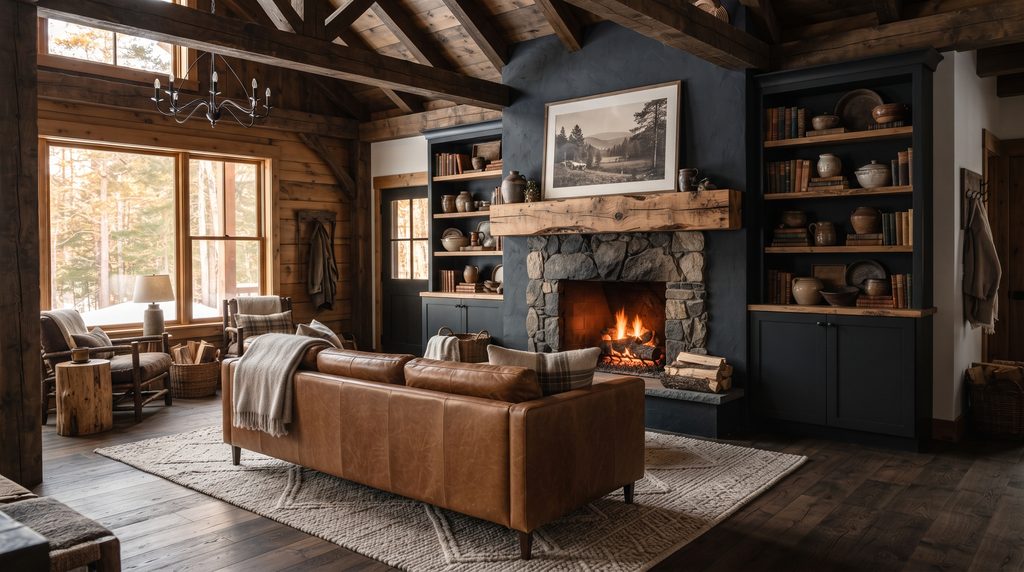
For a cabin-inspired, slightly masculine feel, set a thick, unfinished wood mantel against a charcoal or black wall and let built-in shelving do the personality work — framed photos, favorite books, the odd sculptural object
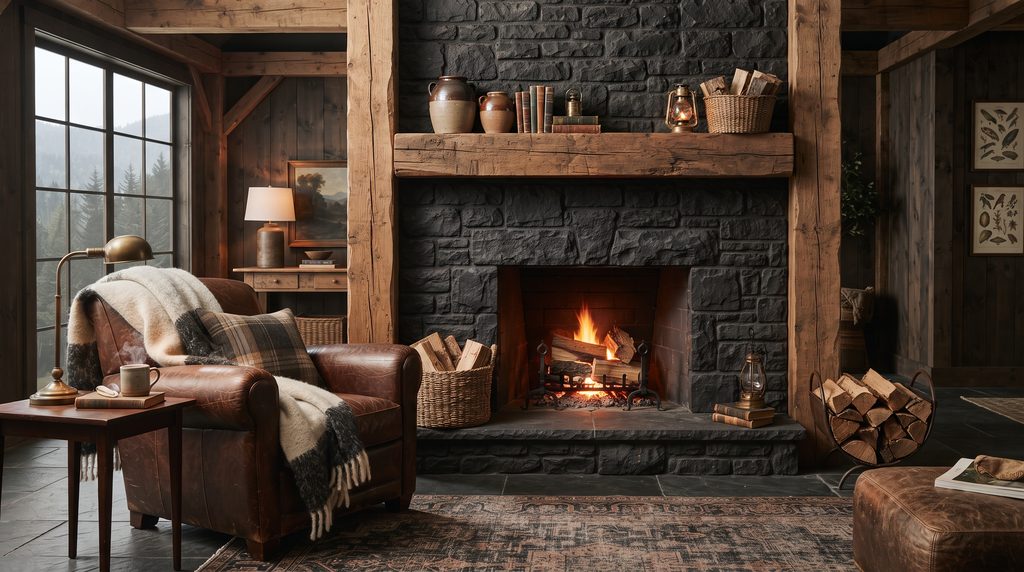
. The combination of dark backdrop and warm timber creates a lodge-like glow that feels lived-in the moment you move in. A leather sofa and a woven wool rug complete the look without pushing it into full hunting-cabin territory.
3. Black Framed by Light Stone
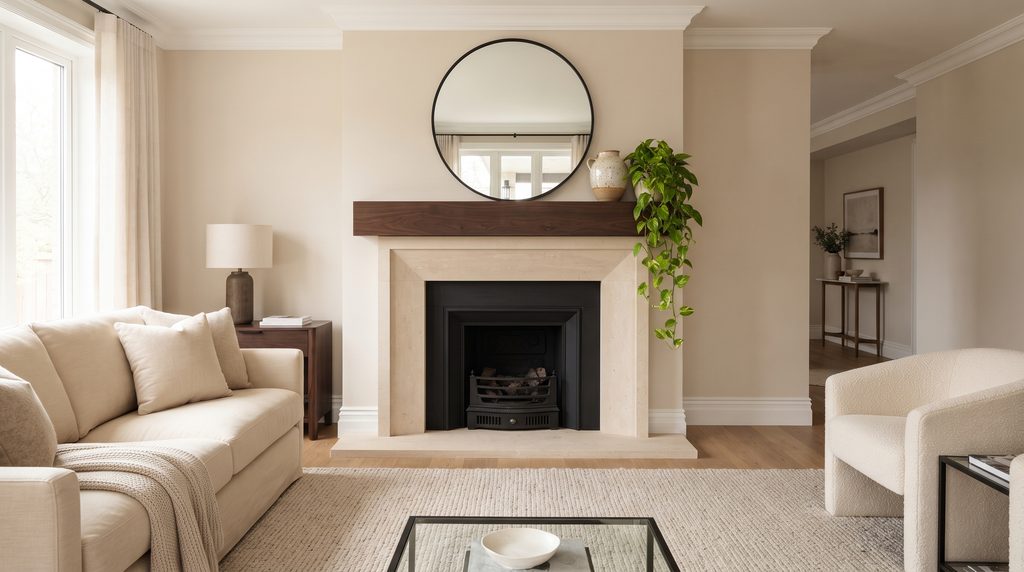
If pure black brick feels like too much commitment, try framing a black firebox insert with pale stone or concrete. The contrast does the heavy lifting: dark center, light edges, and just enough texture from the stone to keep the wall from feeling flat
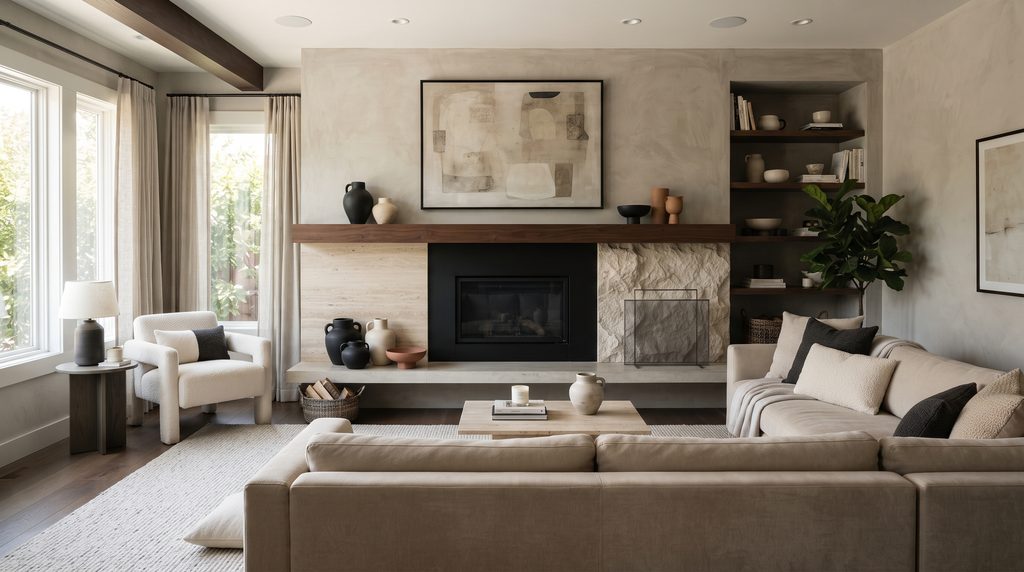
. A dark wood mantel styled simply — a round mirror, a single ceramic vessel, a trailing plant — keeps the whole composition feeling curated rather than staged.
4. Built-In Shelving as the Real Feature
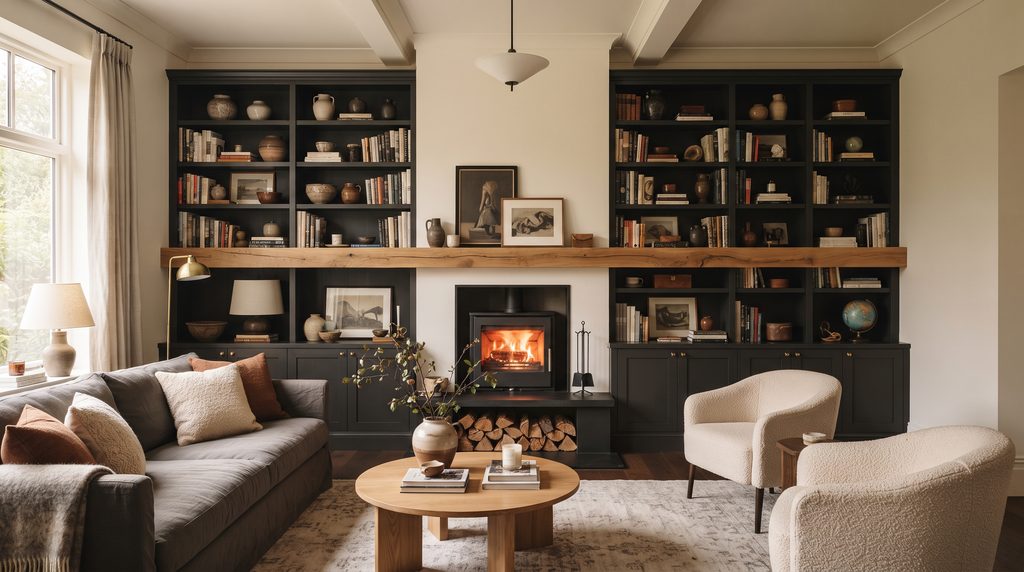
Sometimes the fireplace itself is almost secondary to what’s built around it. Flanking a black insert with floor-to-ceiling shelving in a dark tone
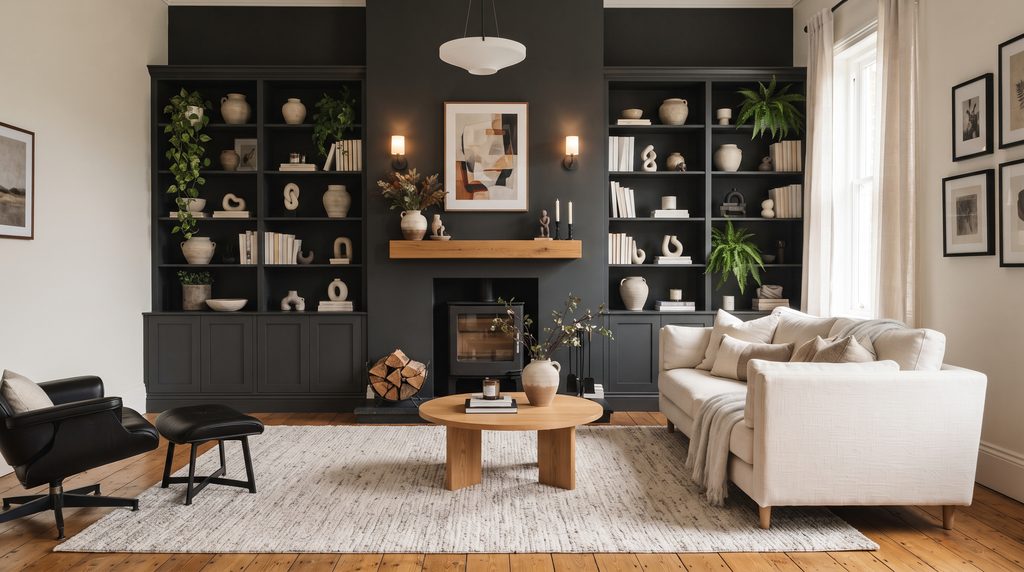
— and bridging the two with one long wood mantel — turns the whole wall into functional, gallery-like storage
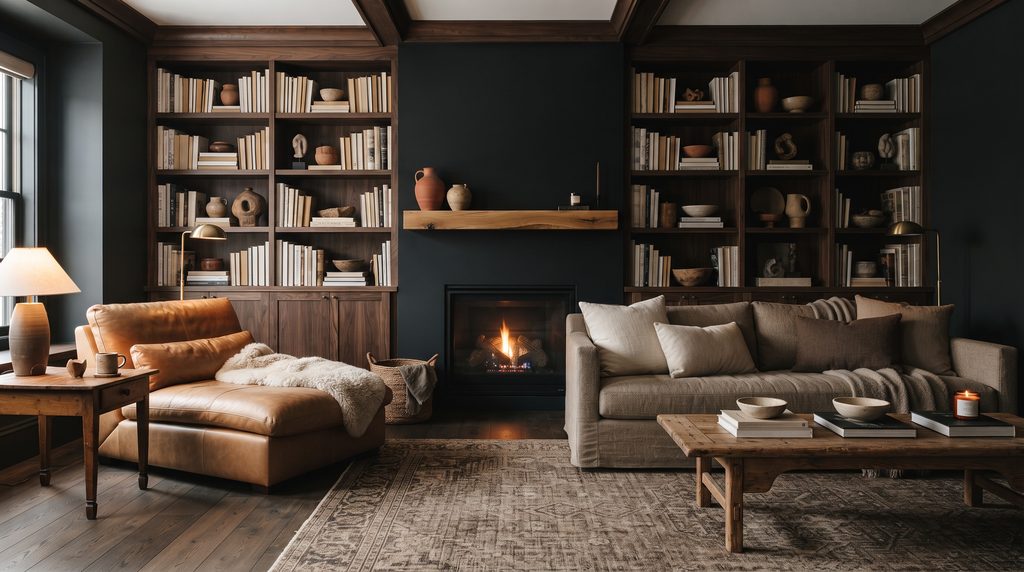
. Keep the styling on those shelves limited to two or three colors max; that’s what keeps a wall this busy from tipping into cluttered.
5. The Sleek, Minimal Feature Wall
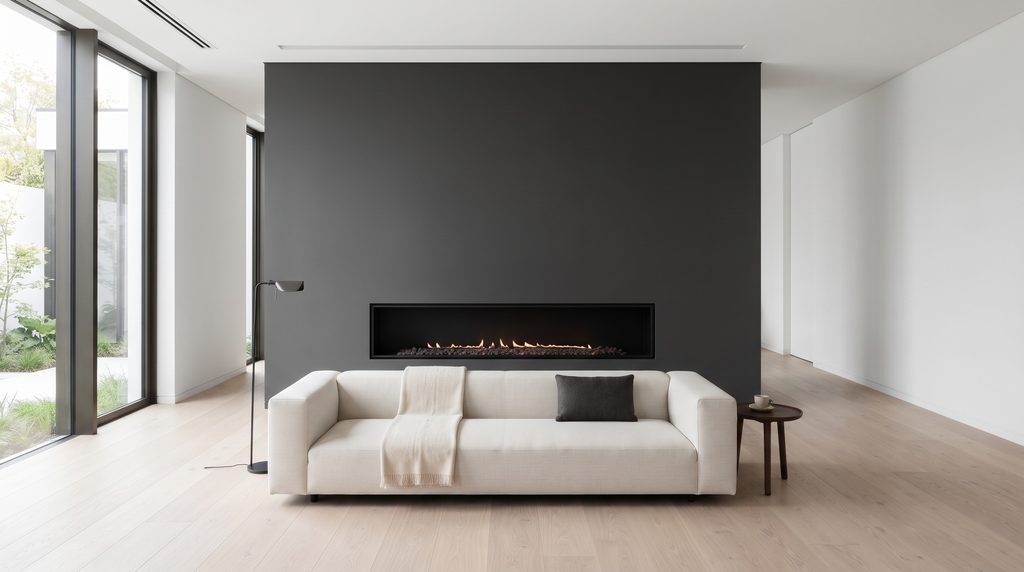
At the opposite end of the spectrum sits the ribbon fireplace: a long, low, black insert set into a smooth dark wall, with almost nothing else going on around it.
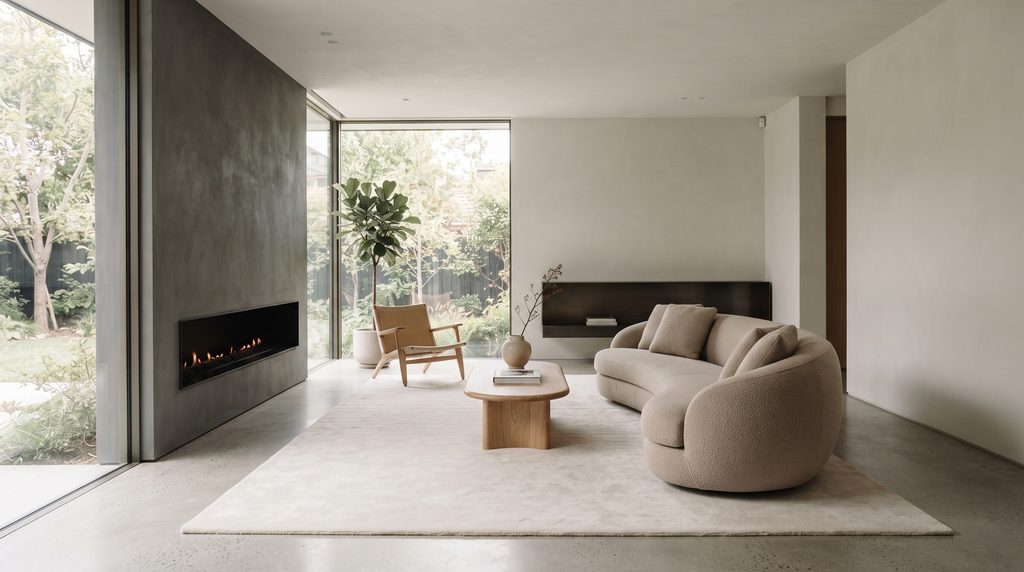
White walls on either side push the fireplace forward as the room’s single focal point.
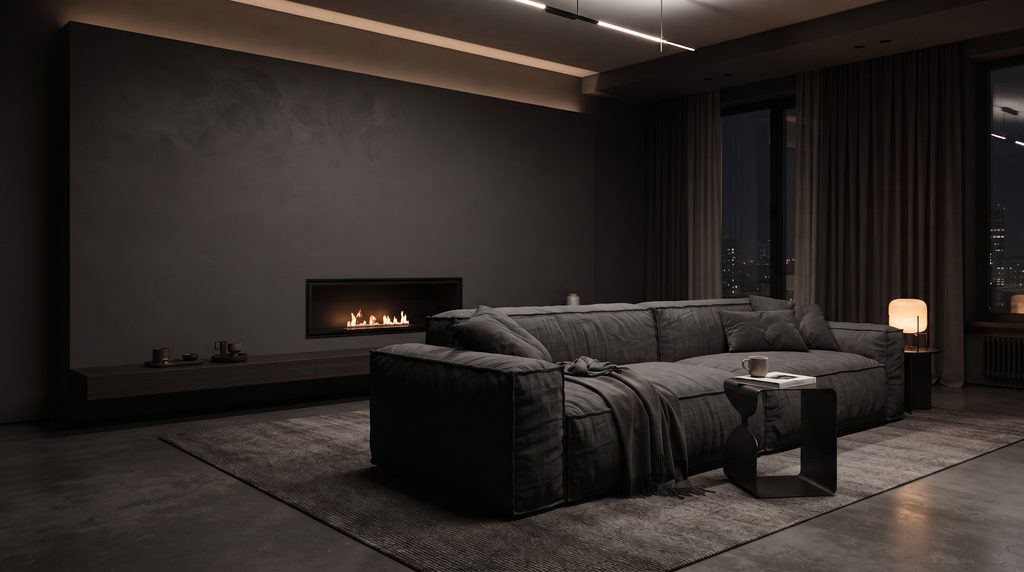
This is the look for anyone who wants “moody” without any texture, pattern, or clutter competing for attention — just clean lines and negative space doing the talking.
6. Herringbone and Chevron Texture
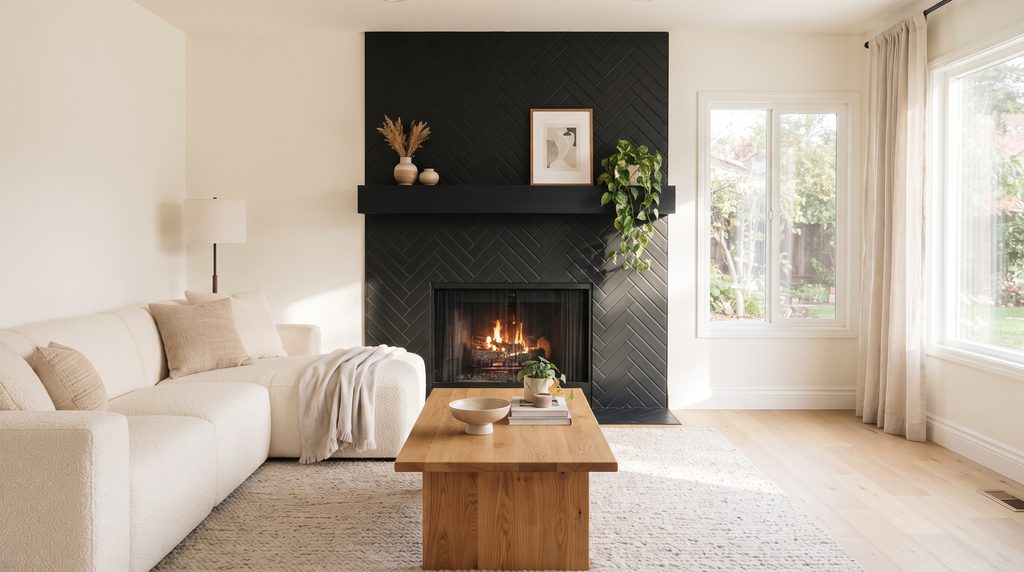
A vertical herringbone or chevron pattern in black tile or wood paneling gives a fireplace wall serious visual texture without adding a single extra object to the room.
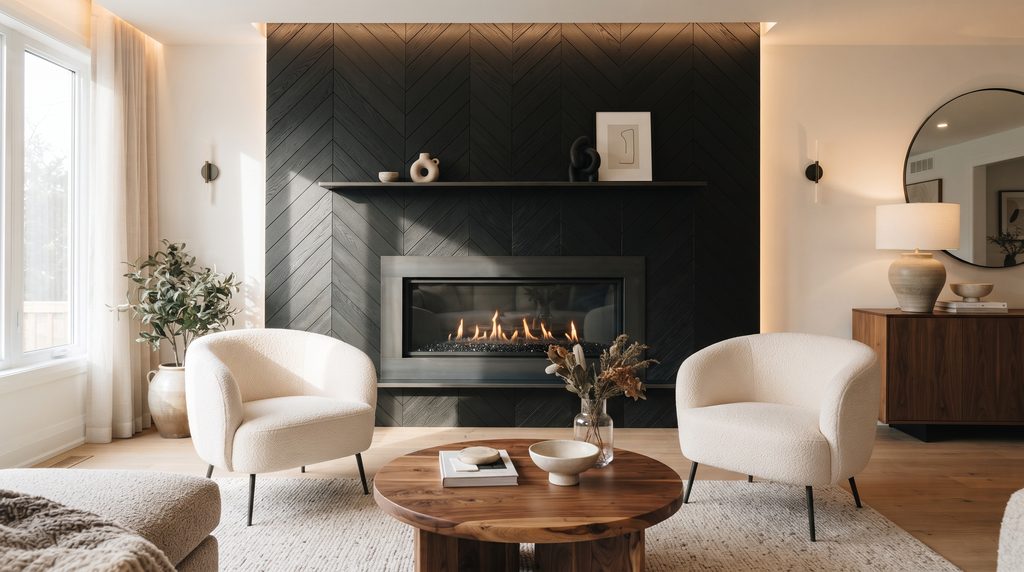
The geometry catches light differently throughout the day, so the wall genuinely looks different at 9 a.m. than it does at dusk. Keep the mantel itself simple — one plant, one sculptural object — so the pattern stays the star.
7. Arched Fireboxes for Farmhouse Warmth
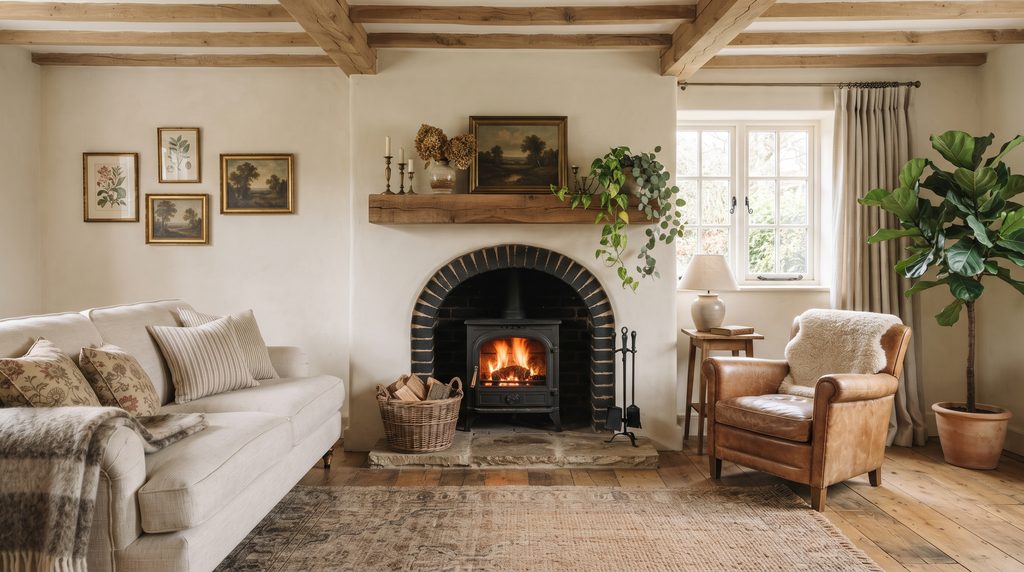
An arched opening softens black brick instantly, nodding to traditional European hearths while still feeling current.
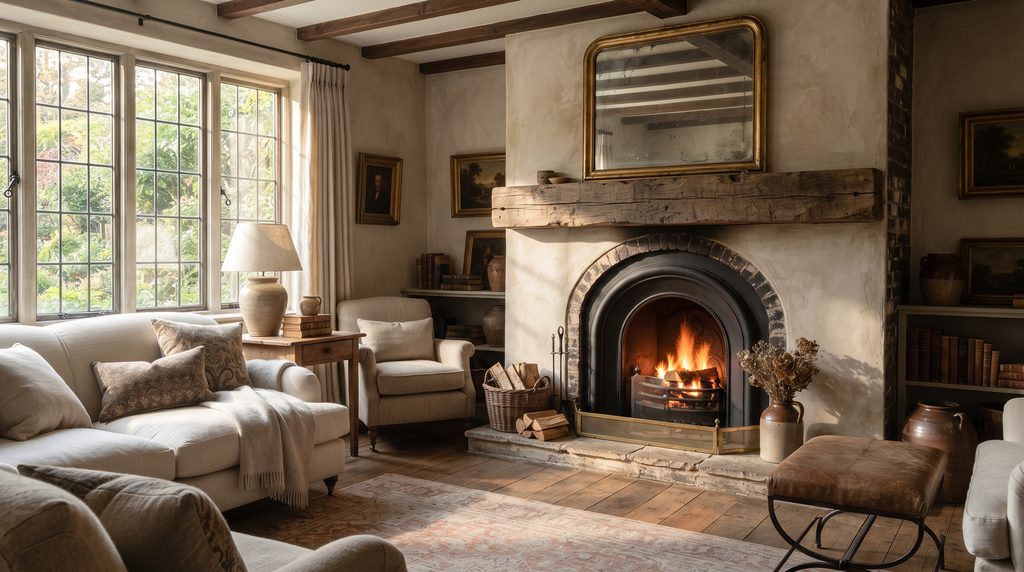
Add a reclaimed wood mantel, a few pieces of art, and some trailing greenery, and the whole wall feels like it’s been there for decades — the good kind of instant character.
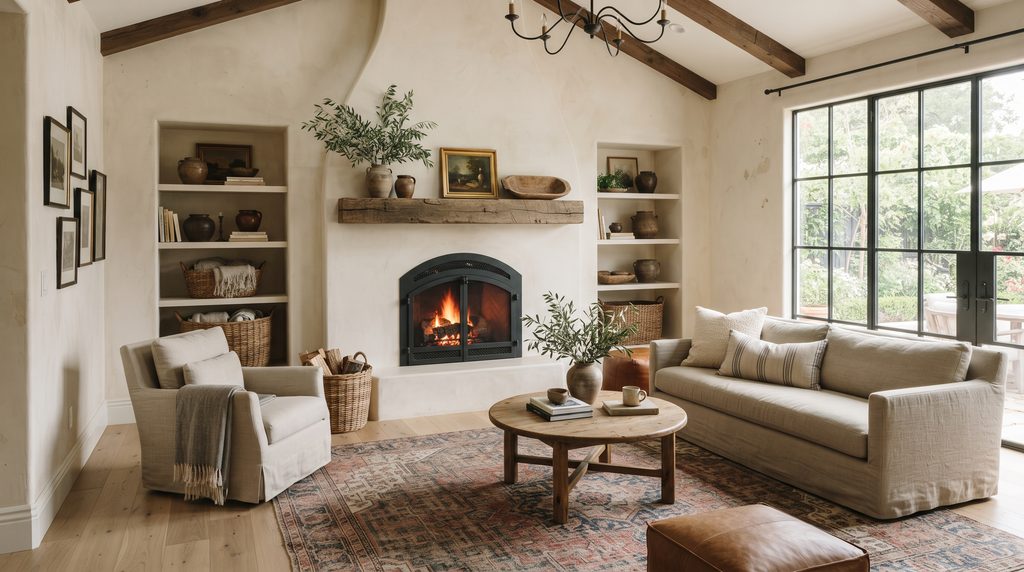
This is an especially good option if the rest of your living room already leans traditional and you don’t want the fireplace to feel like it belongs in a different house.
8. Natural Stone Meets Sleek Black Panel
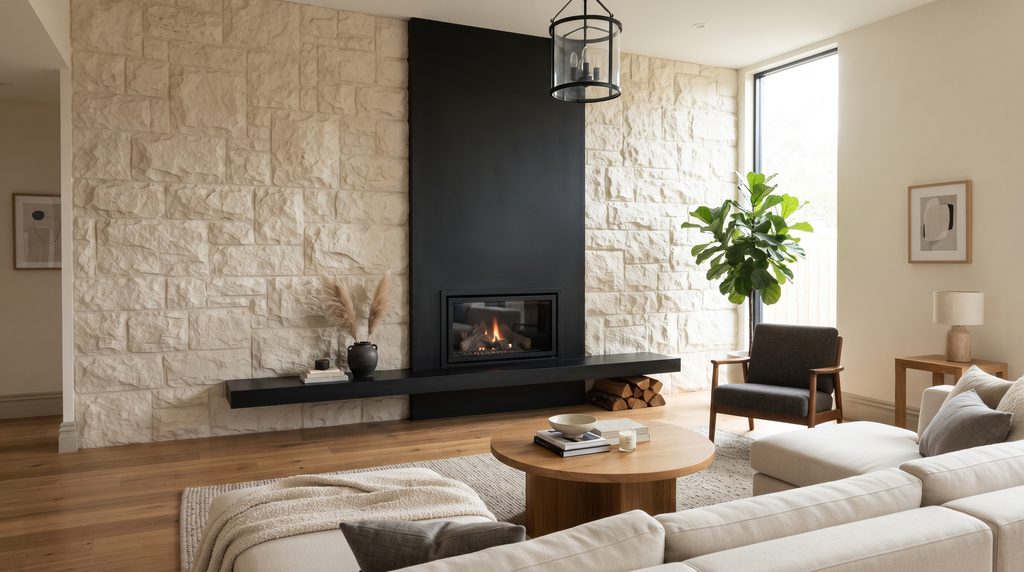
Pairing fluted or textured light stone with a smooth black panel above the firebox creates a hearth that feels both dramatic and restrained. Keeping the fireplace itself low and minimal, with just a floating black hearth shelf, lets the material contrast do all the work — no extra styling required.
9. Black Masonry With Wood Slat Paneling
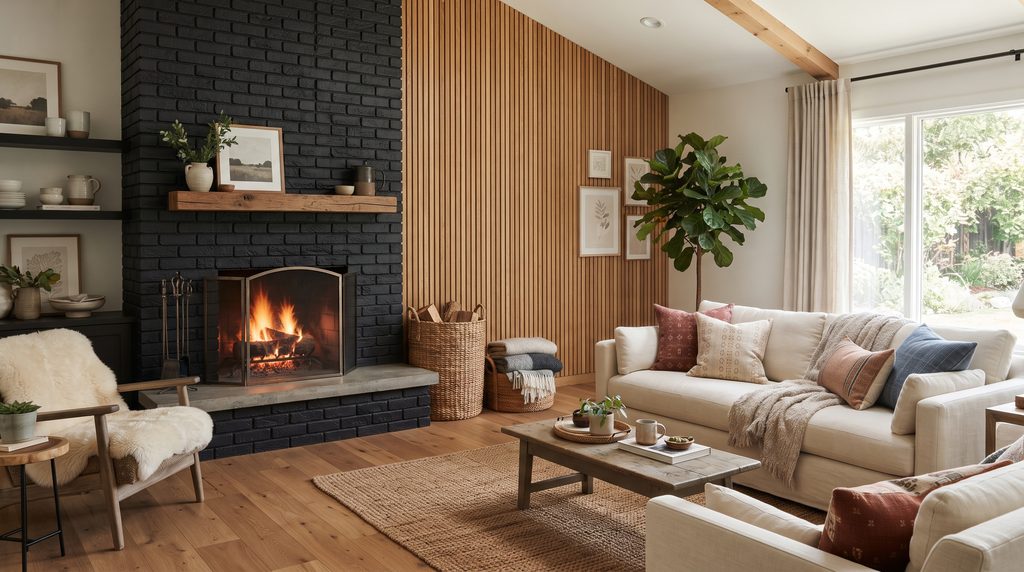
Vertical wood slats running alongside a black stone or masonry fireplace give a contemporary-rustic feel with real depth
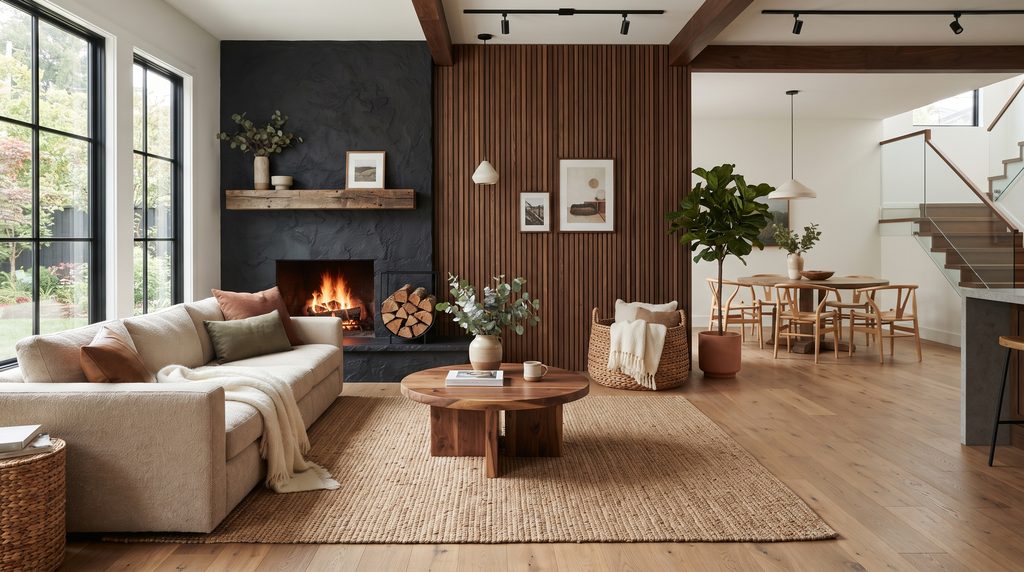
.The wood grounds the black so it doesn’t feel cold, and a scattering of woven baskets or a stack of throws in front of the hearth keeps the whole area feeling like somewhere you’d actually want to sit.
10. High-Contrast Black and White
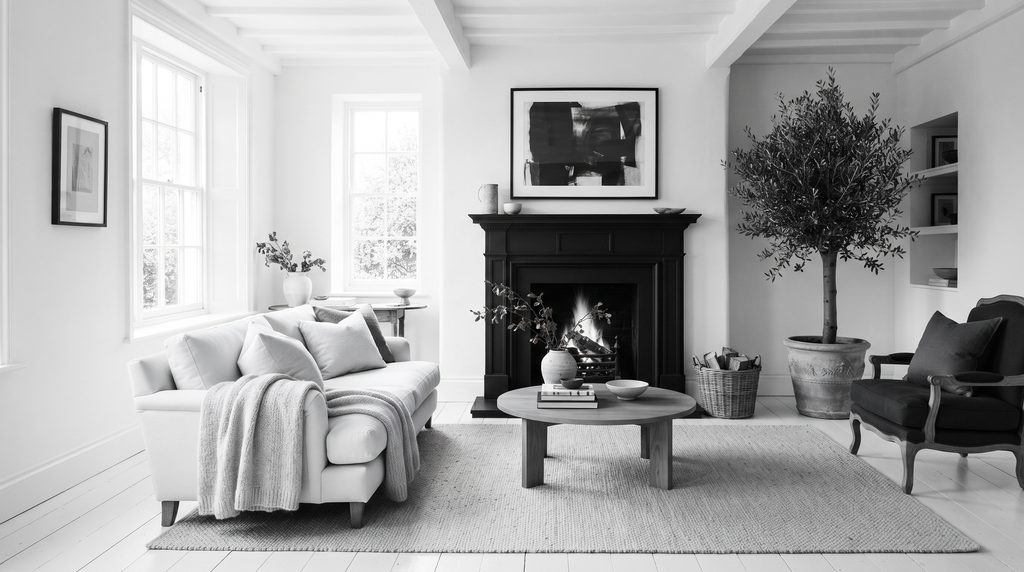
If you want maximum visual punch with minimum design risk, this is it. A black fireplace against crisp white walls is about as classic a combination as interior design offers, and it photographs beautifully in every kind of light
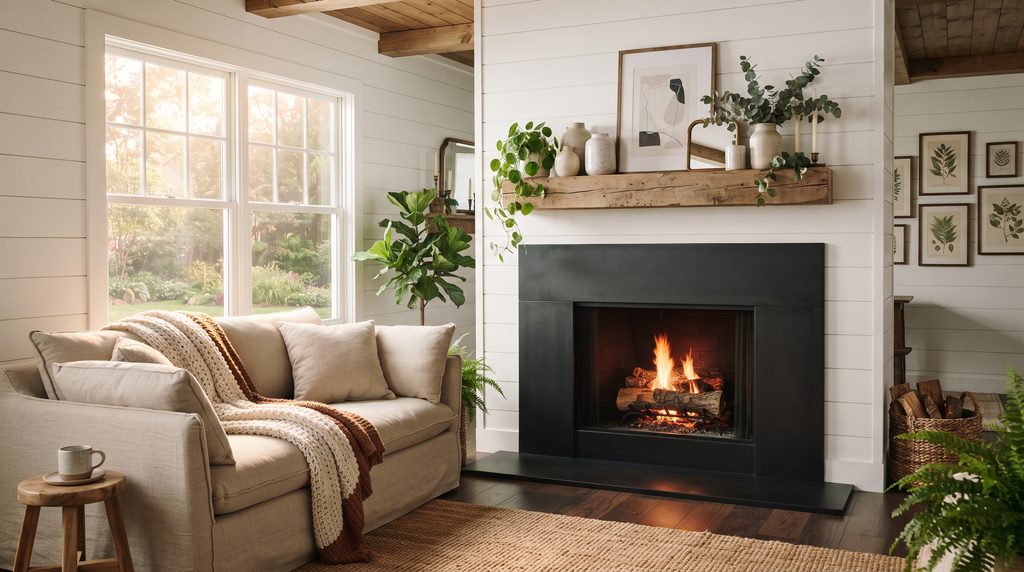
. The one thing to watch for: black and white alone can feel a little clinical, so layer in wood tones, greenery, or a soft throw to keep the space feeling warm rather than stark.
Choosing Your Shade of Black
Not every “black” reads the same once it’s on a wall — some lean warm and brown-based, others cooler and almost blue. If you’re painting rather than installing a black insert or tile, it’s worth testing swatches in your own light before committing to a whole wall. Sherwin-Williams’ Tricorn Black (SW 6258) is one of the most popular true-black shades for exactly this kind of feature wall — it reads as a genuinely neutral black with almost no undertone shift, which makes it a safe, versatile starting point if you’re not sure which direction you want to lean.
Bringing It All Together
The common thread across every version above is contrast — dark against light, rough against smooth, matte against a warm wood grain. A black fireplace works precisely because it refuses to disappear into the background the way a beige or white one might. It asks the rest of the room to respond to it, whether that’s with pale stone, honey-toned wood, or a stark white wall.
If you’re on the fence, start small: a fireplace surround is a contained enough surface that you can go bold without redesigning the whole room around it. Worst case, it’s paint — and paint is one of the more forgiving ways to test a dramatic idea before you commit to it for good.