Introduction
There’s something about a Nordic-style kitchen that just makes you want to slow down, pour a cup of coffee, and stay a while. Hi hoo — that’s the magic of Scandinavian design for you. It’s not fussy, it’s not overdone, and it never tries too hard. Instead, it leans on light, natural texture, and honest materials to build a room that feels calm on a Tuesday morning and cozy on a snowy evening. This design language grew out of long, dark Nordic winters, where light, warmth, and simplicity weren’t just aesthetic choices — they were survival strategies that eventually turned into a whole philosophy of living well with less. If you’ve been scrolling through moodboards wondering how to bring that easy Nordic warmth into your own home, you’re in the right place. Below are 22 scandinavian kitchen ideas to get those creative gears turning, from whisper-quiet minimalism to farmhouse charm with a Nordic twist, along with a few practical tips for actually pulling the look off in your own space.
Scandinavian Kitchen Ideas That Set the Tone for Every Style
Before diving into specifics, it helps to think of Scandinavian design as an umbrella — one philosophy that stretches over dozens of looks. Whether your taste runs moody and monochrome or soft and sun-washed, these scandinavian kitchen ideas all share the same backbone: uncluttered surfaces, natural materials, gentle color palettes, and a layout that actually works for daily life. According to IKEA’s official style guide, the look thrives on organic materials, handmade touches, and a clutter-free approach to storage — proof that this isn’t just a passing trend, it’s a whole way of living. Keep that umbrella in mind as you read through the styles below, because every single one traces back to it, even when the finishes and colors look completely different from one idea to the next.
1. Bright White Kitchens Warmed Up With Wood
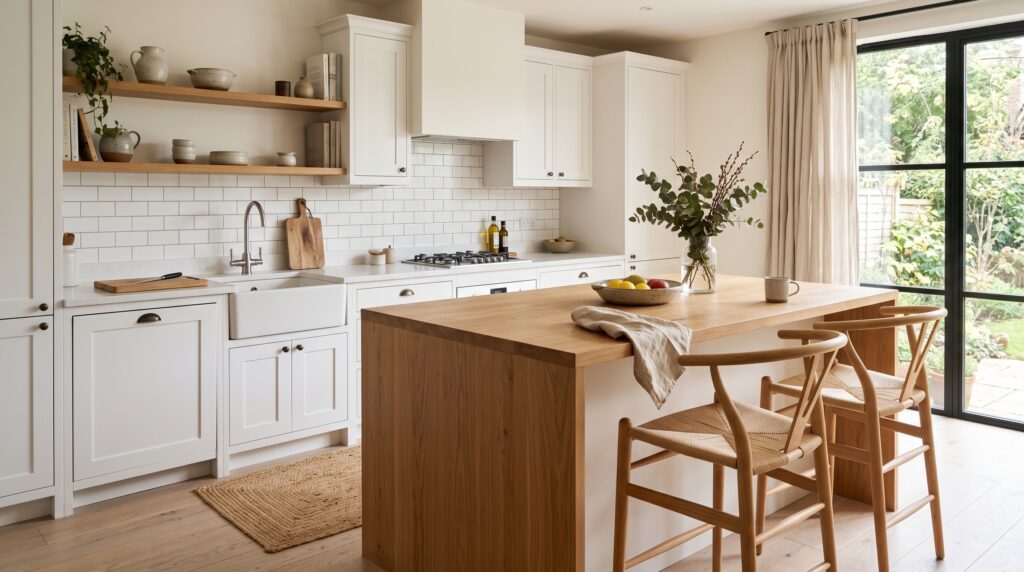
The classic starting point, and for good reason. Crisp white cabinetry paired with warm wooden countertops or flooring keeps the room airy without letting it feel sterile. The wood grain does all the emotional heavy lifting here, softening the white so the space still feels lived-in rather than clinical. Try mixing in a butcher-block section on an island or a run of oak open shelving to keep the warmth balanced throughout the room, not just in one corner.
2. Stripped-Back Minimalist Layouts
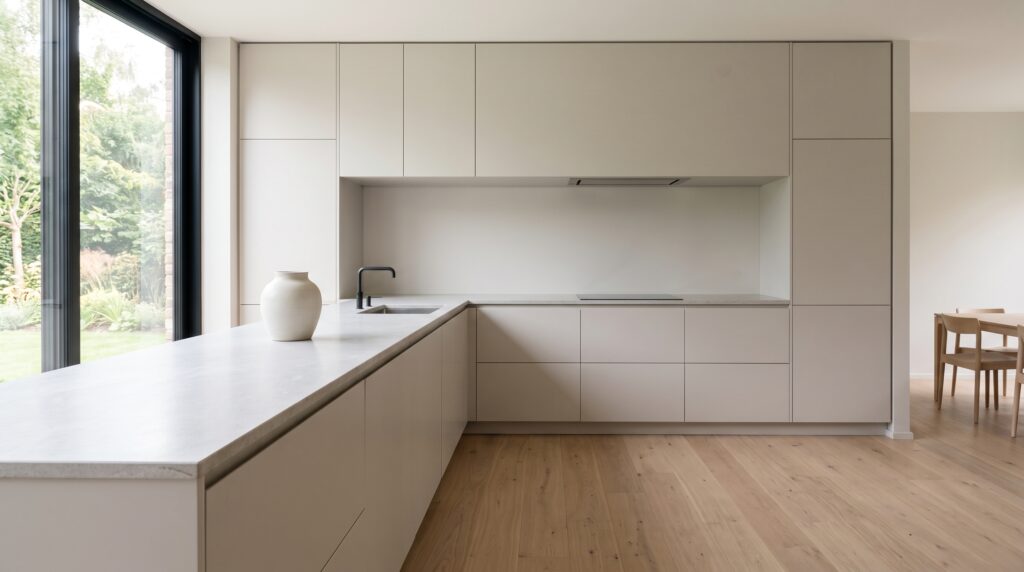
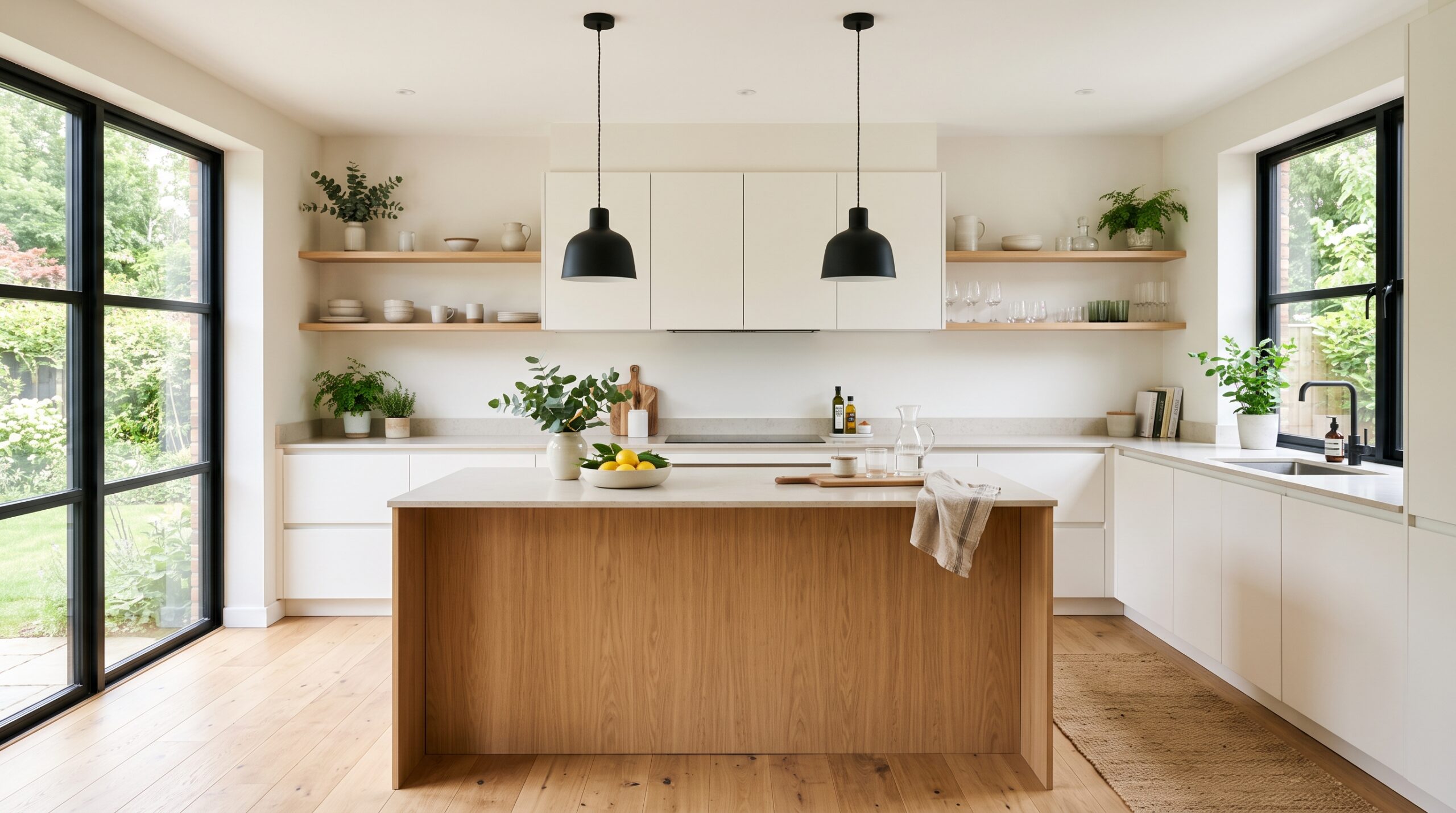
For anyone who craves calm, this is the move. Flat-panel cabinets, hidden handles, and almost nothing sitting out on the counters define this look. It sounds austere on paper, but in person it just feels peaceful — like the kitchen has nothing to hide and nothing to apologize for. Deep drawers, built-in appliance garages, and a single designated “junk drawer” are what make this look actually livable instead of just photogenic.
3. Open Shelving as Everyday Decor
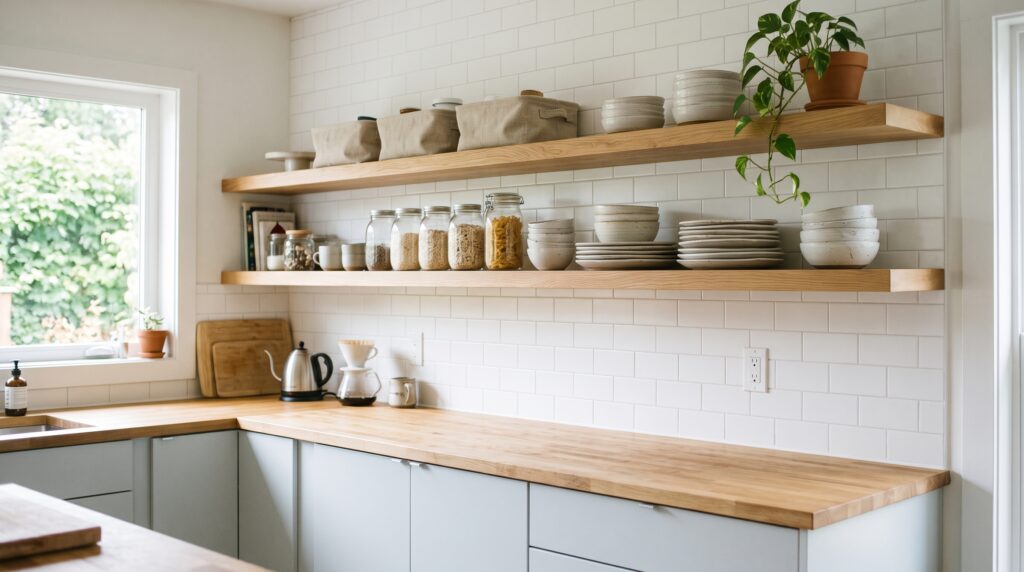
Swap a few upper cabinets for simple floating shelves and let your everyday dishware do double duty as decoration. Stack ceramic bowls, line up glass jars, tuck in a small plant, and rotate a few pieces seasonally so the shelves never feel static. It’s storage and styling rolled into one, and it keeps the room feeling open rather than boxed in, especially in kitchens with lower ceilings.
4. Compact Kitchens That Punch Above Their Weight
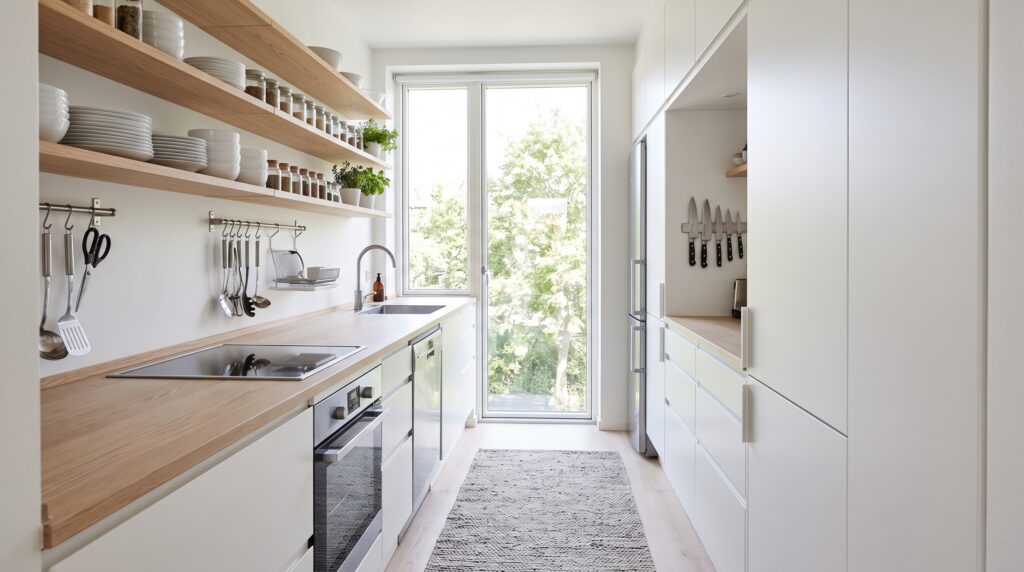
Scandinavian design was basically built for small spaces. Light finishes, slim-profile cabinetry, and smart vertical storage make a tiny galley kitchen feel far roomier than its square footage suggests. Skip anything bulky and let every inch earn its keep — think slide-out pantry units, a fold-down table, or a rolling cart that can tuck away when it’s not needed.
5. Soft, Muted Color Palettes
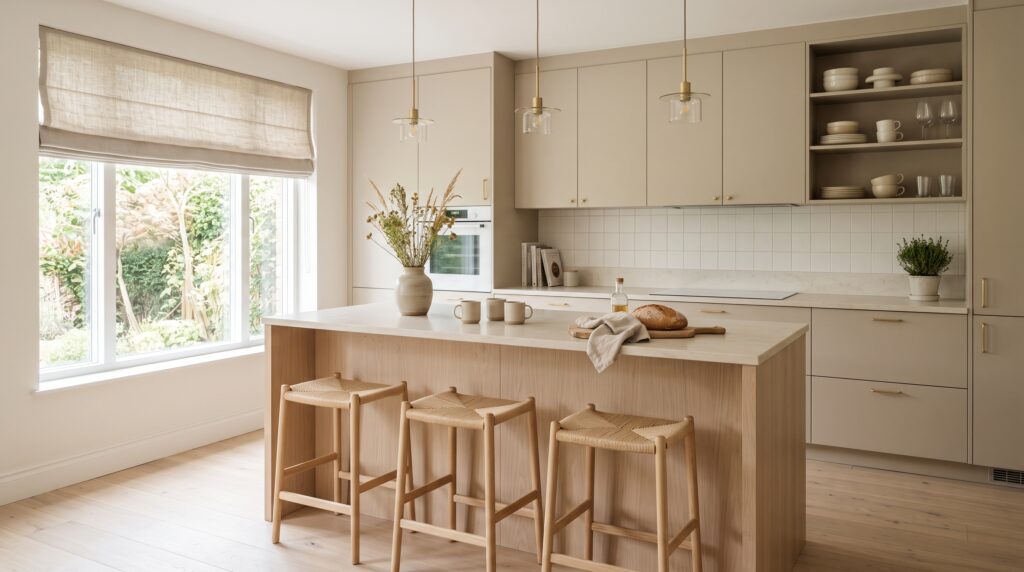
Think oatmeal, putty, soft gray, warm white — colors that never shout. These neutral backdrops are endlessly flexible, and they let natural materials like timber and stone take center stage instead of competing with a loud paint choice. Layering two or three neutrals with slightly different undertones adds depth without breaking the calm, cohesive feel.
6. A Touch of Marble for Quiet Luxury
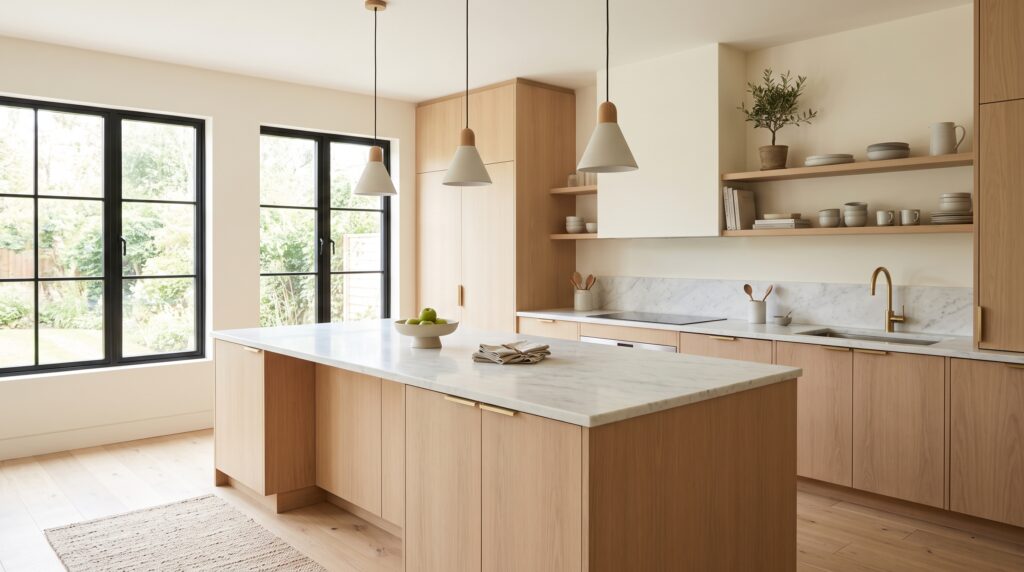
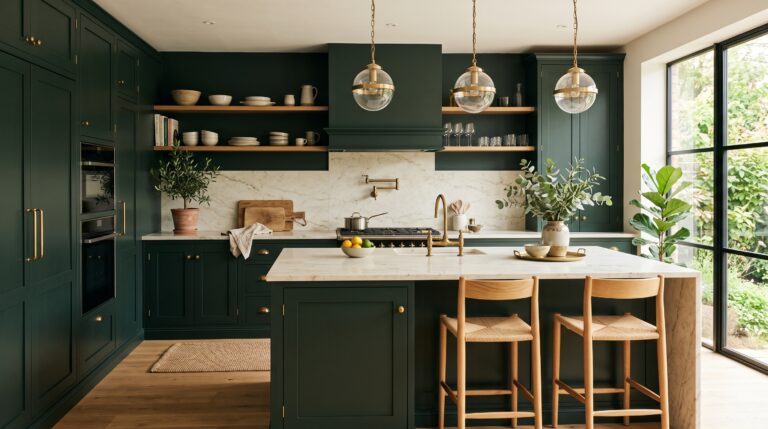
Even the most pared-back kitchen can handle a little indulgence. A marble-topped island or a marble backsplash brings in soft veining and a bit of sheen, while still playing nicely with pale wood and a neutral color story. Keep the rest of the room simple so the marble reads as a considered accent rather than an over-the-top statement.
7. Greenery Tucked Into Every Corner
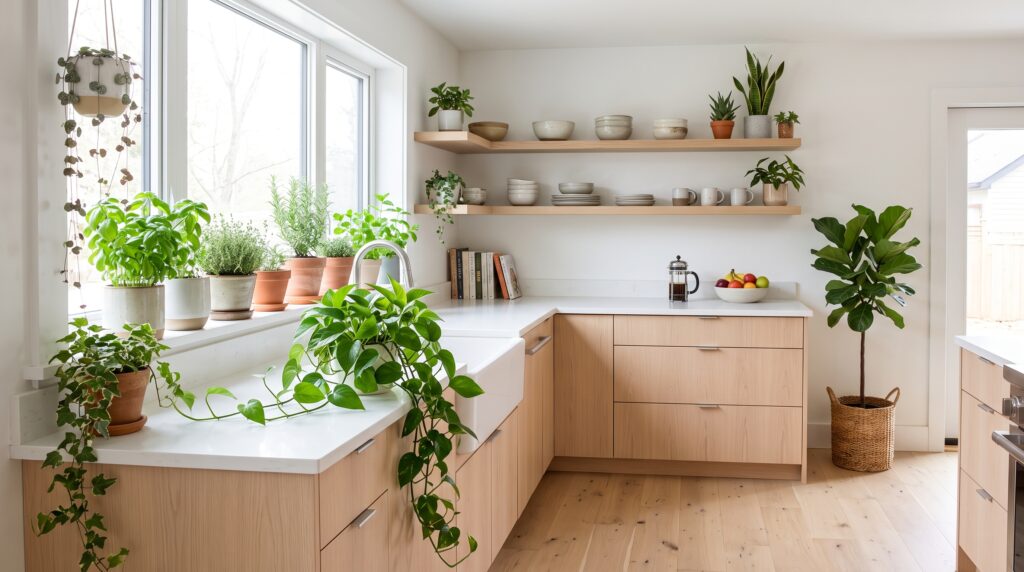
A row of potted herbs on the windowsill, a trailing plant near the sink, a single fiddle leaf fig by the table — plants are an easy, low-cost way to soften hard lines and bring life into a Nordic-style room. They also happen to be practical: fresh basil or thyme within arm’s reach makes weeknight cooking that much easier.
8. Farmhouse Details With a Nordic Accent
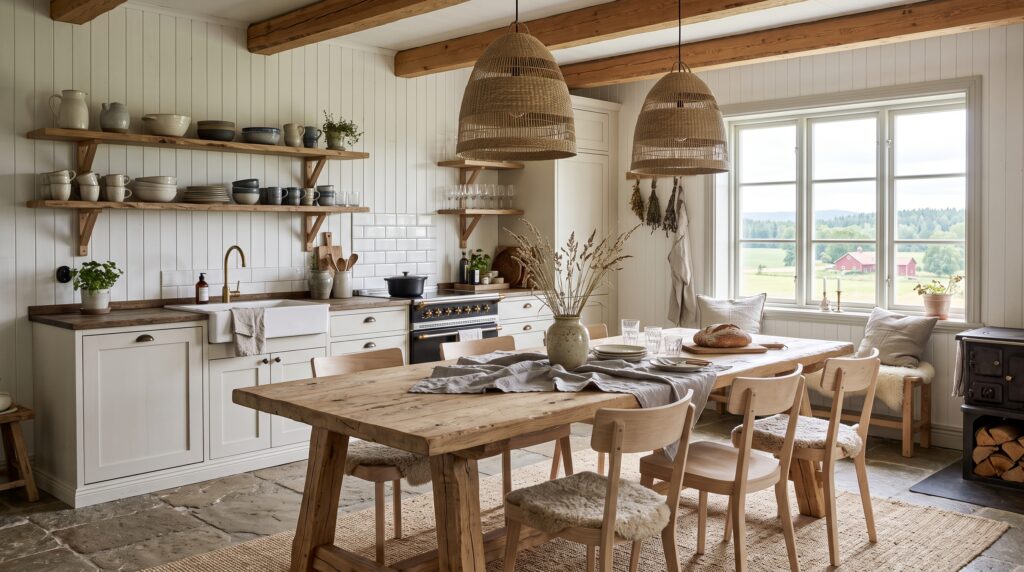
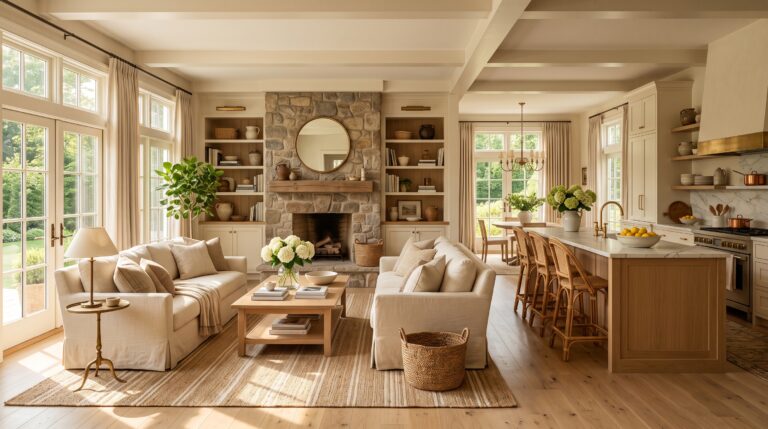
Picture a big wooden table, open shelves stacked with ceramics, and a color palette that leans soft and neutral rather than rustic-red. It’s the coziness of a farmhouse kitchen filtered through Scandinavian restraint — exposed beams and a generous dining table without the heavier, more ornate details you’d see in a traditional farmhouse look.
9. Cabinets in Light, Honest Wood Tones
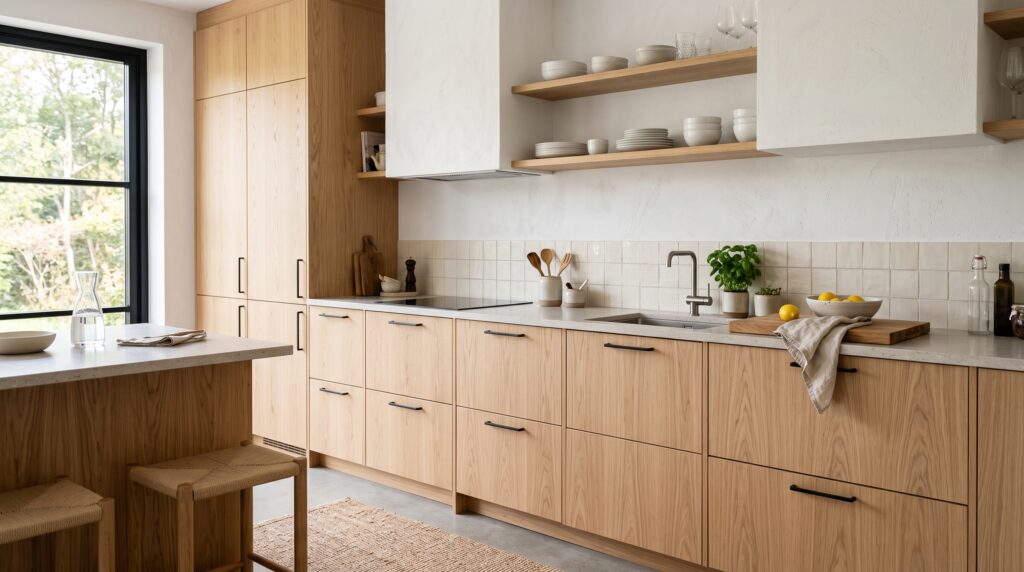
Oak, birch, ash — these pale woods are practically the signature of the style. Paired with white walls and simple hardware, they give the room warmth without ever feeling heavy or dated. Choosing a matte or lightly oiled finish, rather than a high-gloss lacquer, keeps the grain looking natural and true to the material.
10. Bold Black-and-White Contrast
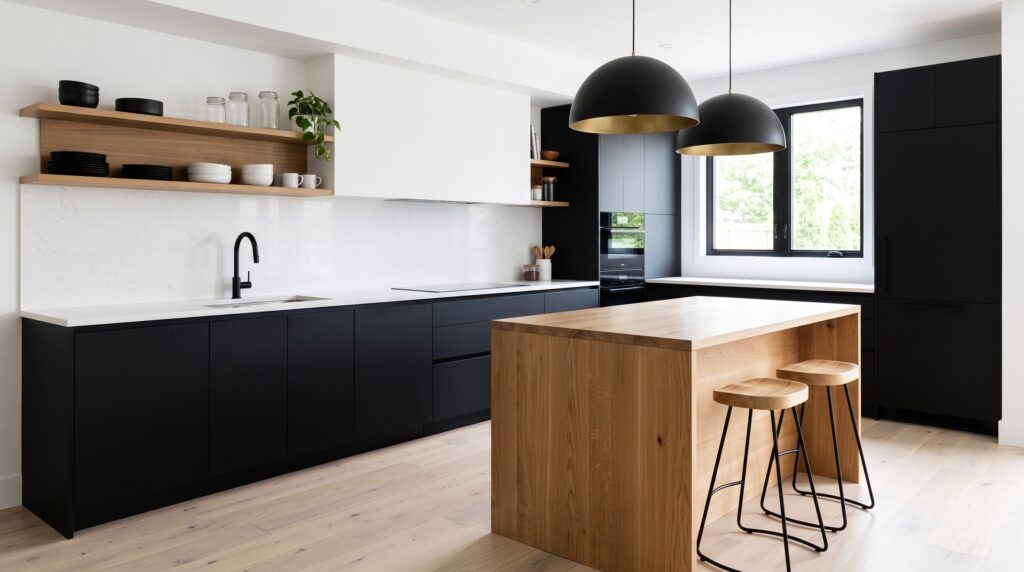
Not every Scandinavian kitchen has to whisper. Black cabinetry against white countertops creates real drama, and a few wood accents keep that contrast from feeling too stark or cold. Black window frames or a black pendant light are an easy way to echo the contrast without redoing the whole cabinet run.
11. Lighting That Does the Heavy Lifting in Winter
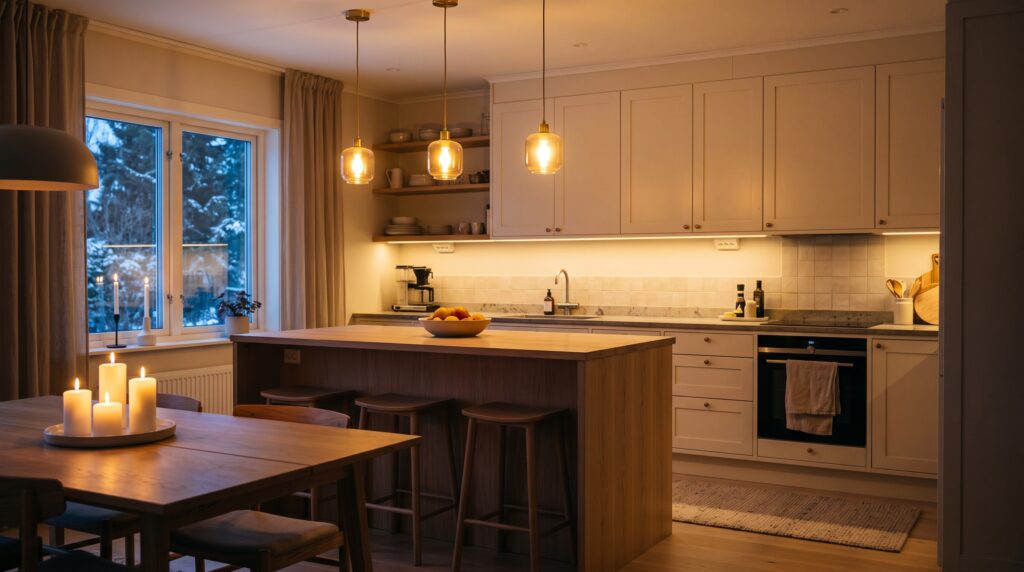
Nordic countries know long, dark winters better than anyone, so lighting is never an afterthought here. Layer in pendant lights over an island, warm under-cabinet strips, and a few candles for good measure — it changes the whole mood of the room after sunset. Aim for warm-toned bulbs rather than cool white light, since warmth is really the whole point of hygge-style lighting.
12. Wooden Countertops for Instant Warmth
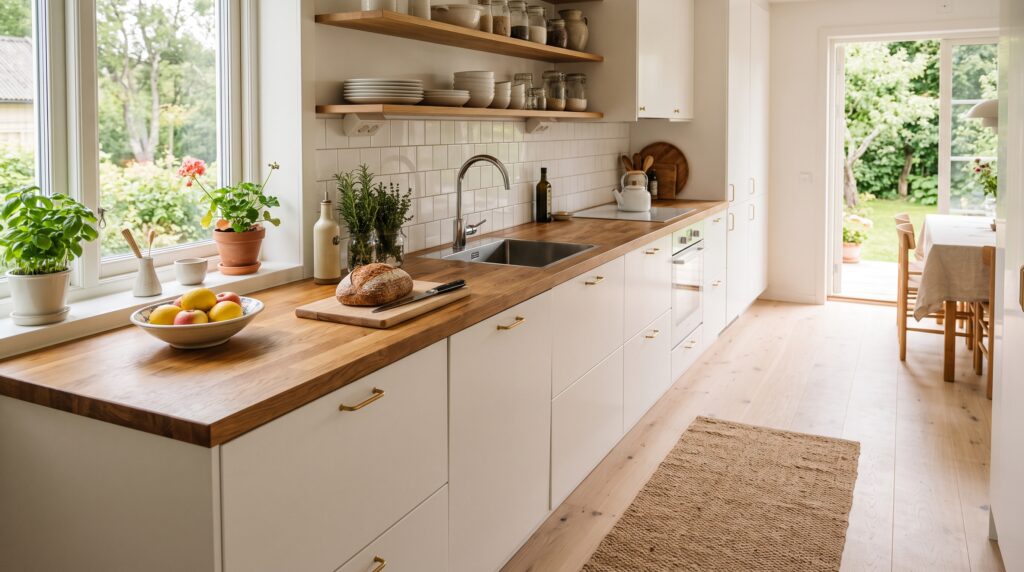
Swap stone for butcher-block or a solid wood countertop and watch the whole kitchen soften. It’s a simple switch that adds texture and an organic feel, especially against crisp white cabinetry. Just plan to oil the wood regularly if it’s near a sink, since untreated wood can warp or stain over time.
13. An Island That Anchors the Room
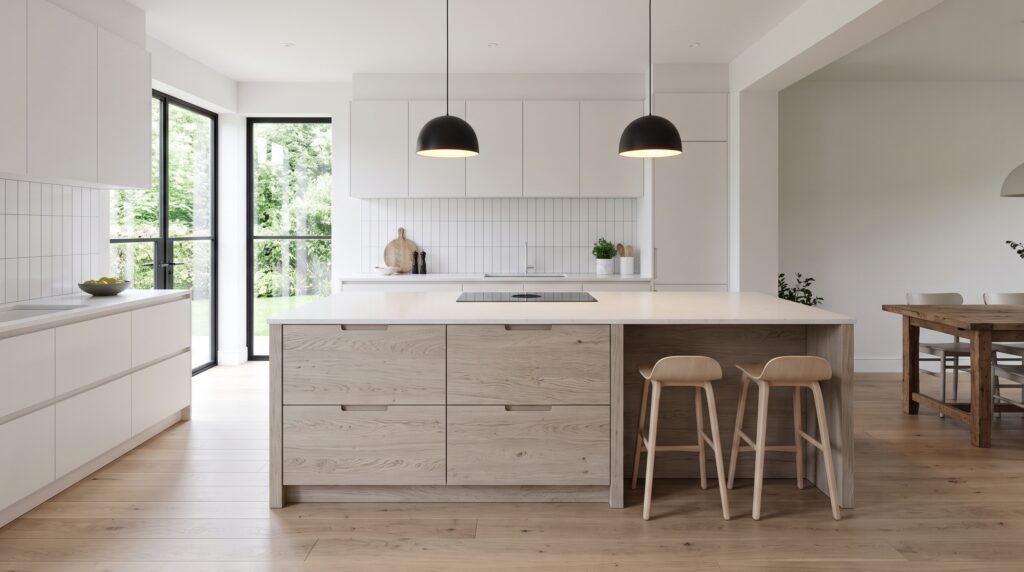
A simple island with clean lines and a little extra storage becomes the natural gathering spot — somewhere to prep dinner, sip coffee, or have the kids do homework while you cook. Keep the design understated so it doesn’t compete with the rest of the room, and consider a contrasting wood tone on the island base to give it a subtle furniture-like feel.
14. Gray Cabinetry for a Softer Edge
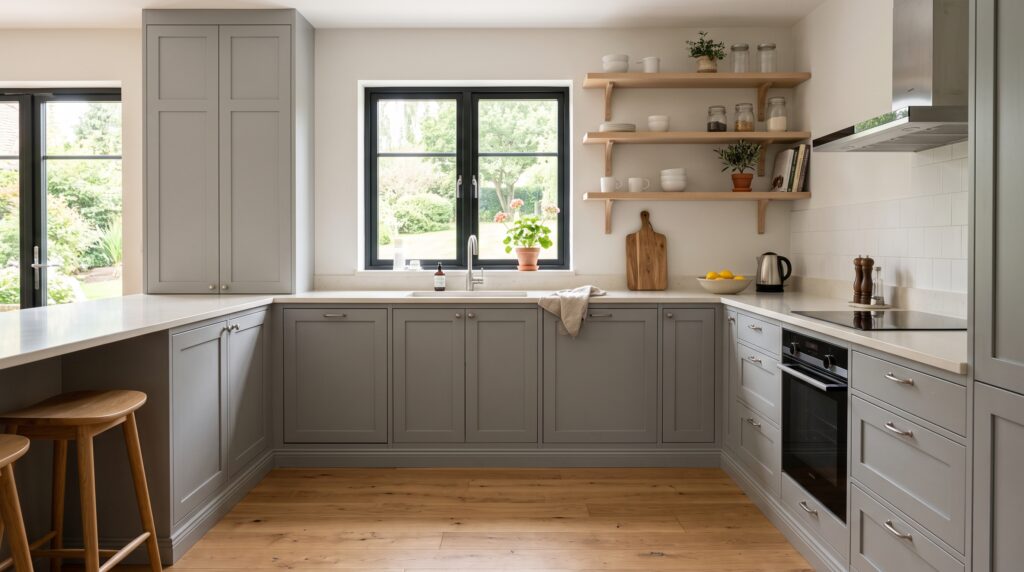
Gray sits right between black-and-white drama and pure minimalist white — sophisticated but never cold, especially when it’s paired with warm wood tones and plenty of natural light. A soft dove or greige tone tends to age better than a cooler, blue-based gray, which can start to feel dated faster.
15. Leaning Into Natural, Tactile Materials
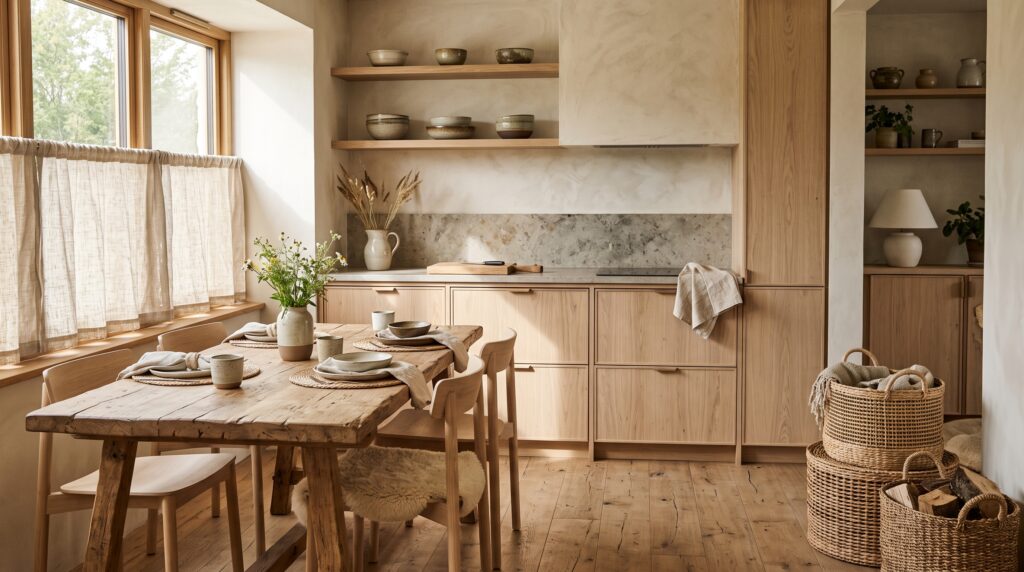
Wood, stone, linen, ceramic — these materials are the heartbeat of Nordic design. Let them show up in countertops, textiles, and even the little things like tea towels and pottery, and the room automatically feels more grounded. The goal is texture you can actually feel, not just see, which is part of why this style photographs so well and lives so comfortably.
16. Appliances That Disappear Into the Design
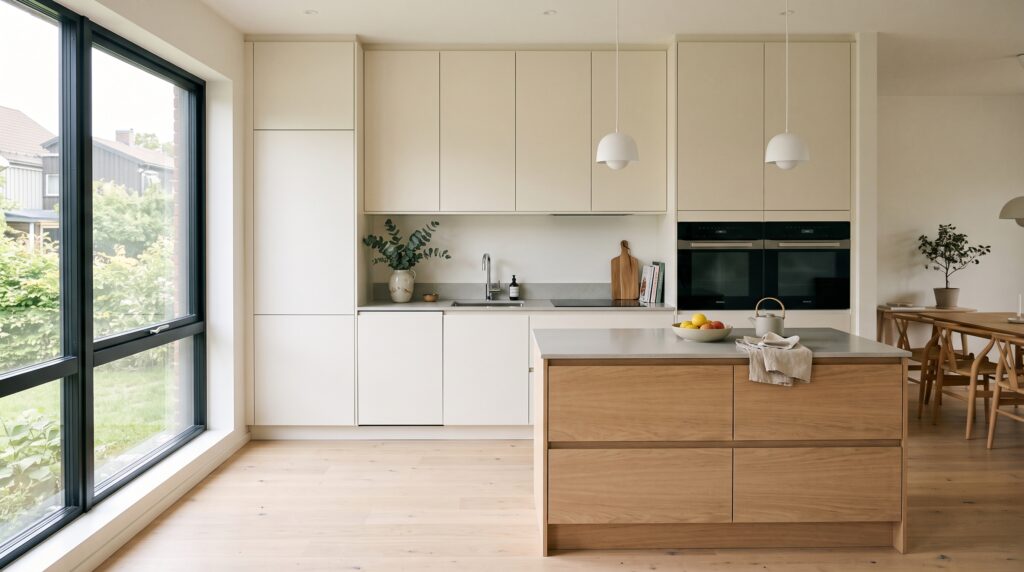
Integrated fridges, sleek panel-ready ovens, and appliances chosen for their simplicity keep the visual noise down. The goal isn’t to hide technology — it’s to make sure it doesn’t distract from the calm of the room. Matte black or stainless finishes on any exposed appliances tend to blend in more easily than a busy digital display panel.
17. A Cozy Corner for Everyday Meals
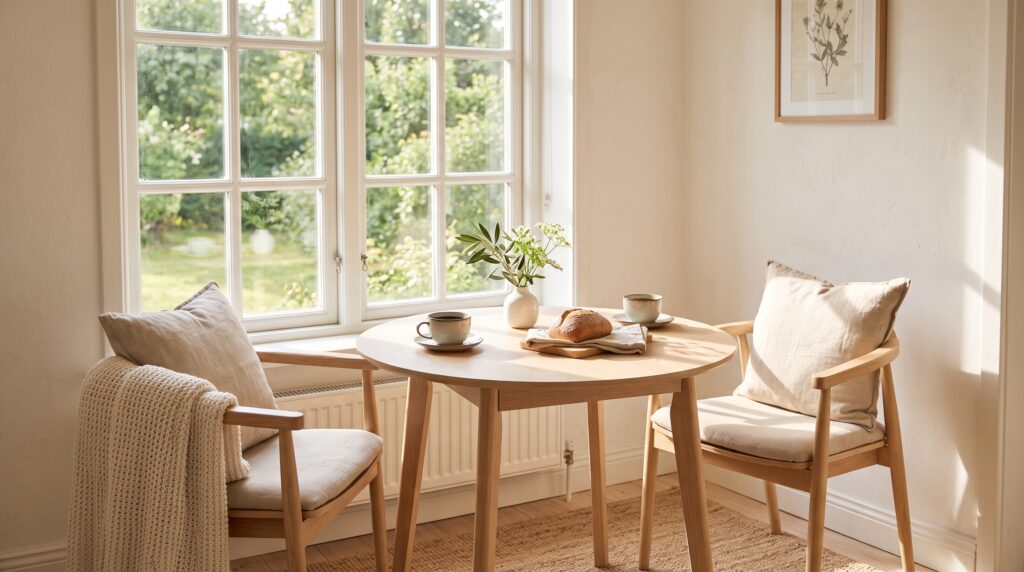
A small wooden table, a couple of comfortable chairs, maybe a linen cushion or two near a sunny window — this is where hygge really shows up in the kitchen. It’s less about square footage and more about making a spot people actually want to sit in, whether that’s for a quick breakfast or a slow Sunday morning with the paper.
18. Matte Surfaces for a Grown-Up Finish
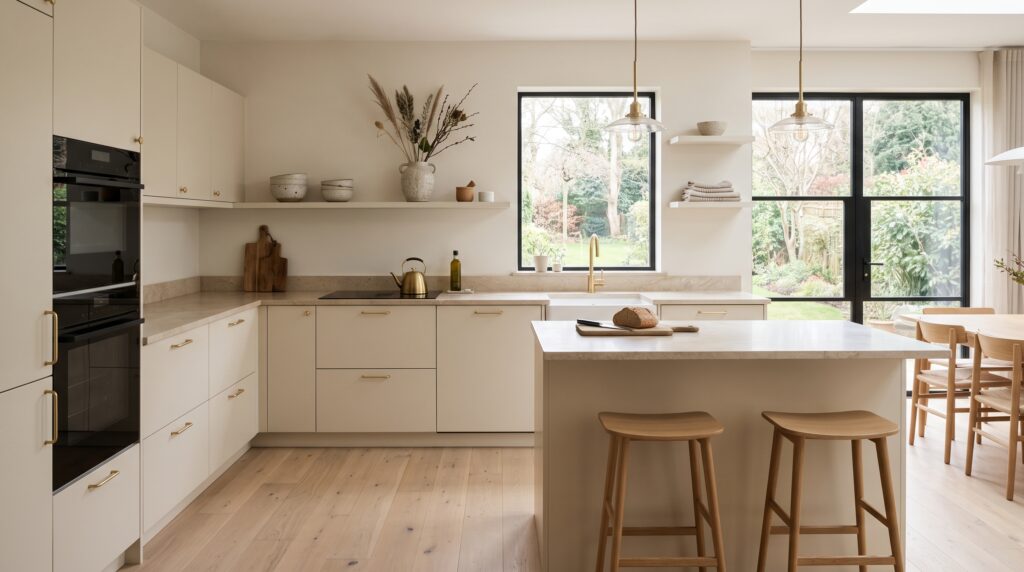
Swap glossy cabinet fronts for matte ones and the whole room instantly feels more refined. Matte finishes hide fingerprints better too, which is a quiet win for anyone with kids or a busy household, and they pair especially well with brushed brass or matte black hardware.
19. A Coastal Spin on Nordic Simplicity
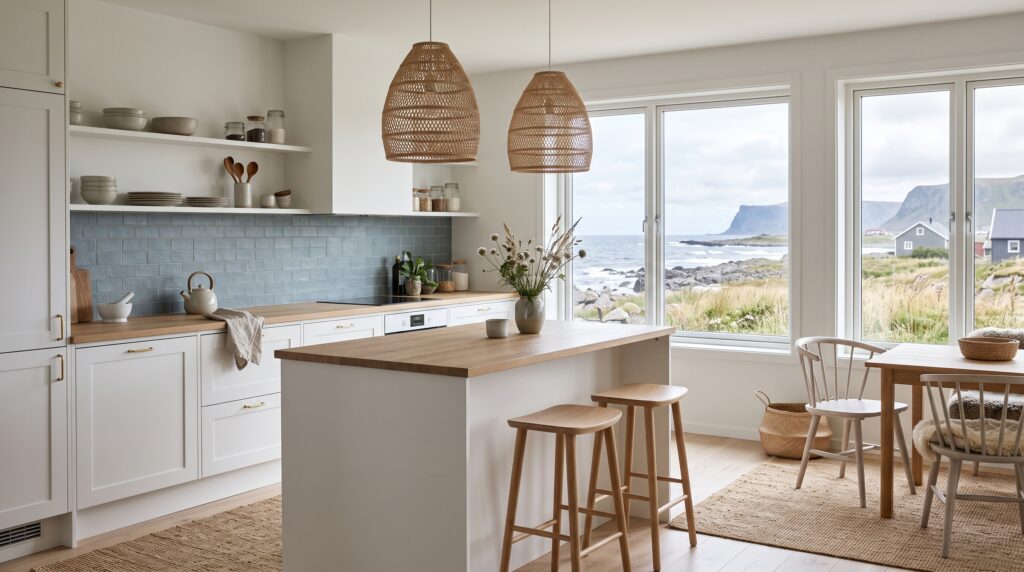
Add in soft blue accents, woven baskets, and plenty of white and the Scandinavian look drifts toward something breezier and beach-inspired — ideal if your home already leans coastal or you just love that fresh, airy feeling. Rattan bar stools or a jute rug underfoot round out the look without ever feeling themed or costumey.
20. Small Black Accents for Definition
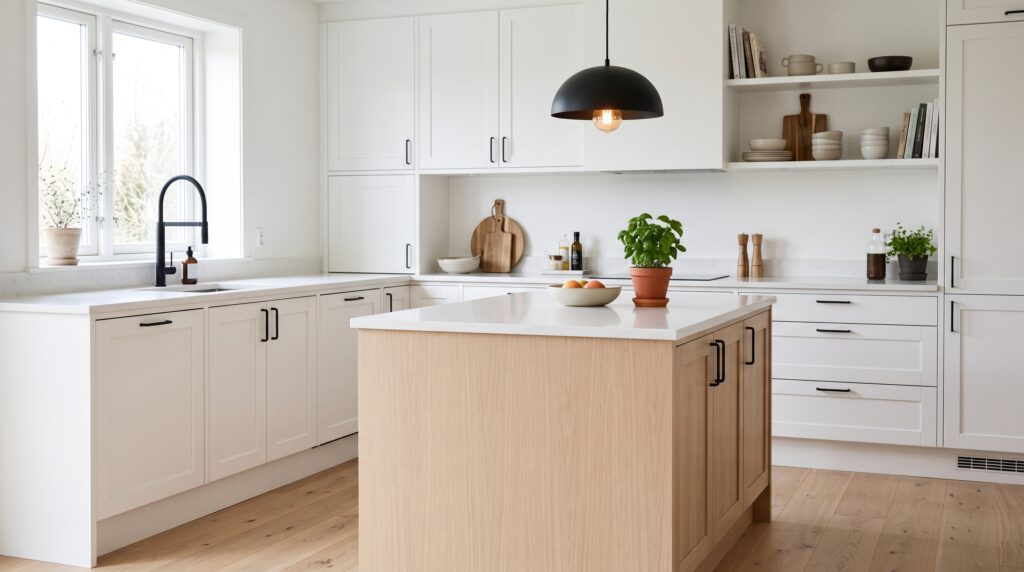
Black tapware, cabinet pulls, or a couple of bar stools go a long way in a mostly light kitchen. They add definition and a bit of edge without disrupting the overall softness of the room, giving your eye somewhere to land in an otherwise pale, quiet space.
21. Elevated, High-End Nordic Style
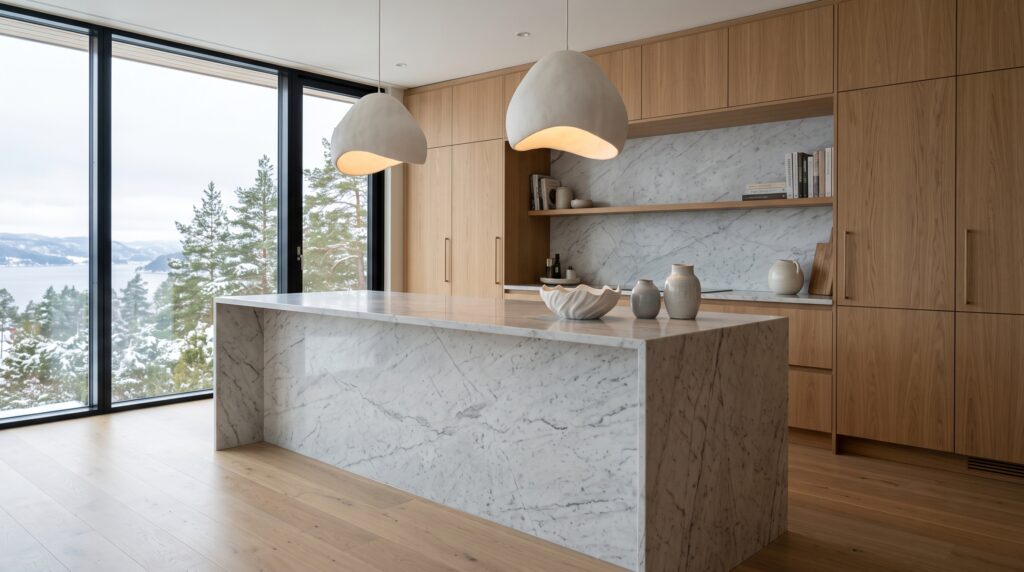
Stone countertops, premium timber, considered lighting, and a handful of well-chosen accessories — this is Scandinavian design with a bigger budget, but the same core rule still applies: nothing extra, everything intentional. Splurge on one or two standout pieces, like a statement pendant or a book-matched stone slab, rather than upgrading everything at once.
22. Warm Beige and Cream Tones
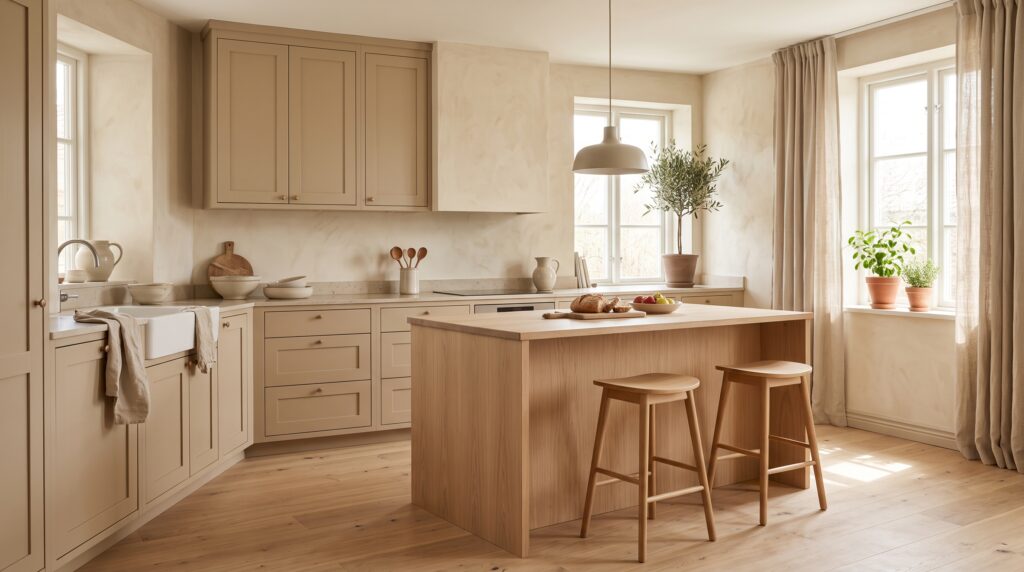
For a gentler, cozier take, swap crisp white for beige cabinetry and cream walls, then layer in wood and soft textiles. It keeps that minimalist Nordic feeling but turns the warmth up a notch — perfect for anyone who wants calm without feeling clinical, especially in a kitchen that gets a lot of natural daylight.
A Few Practical Tips Before You Start
Pulling off any of these scandinavian kitchen ideas doesn’t require a full gut renovation. Start with the things that are easiest to change: swap out hardware for something simpler, add a coat of soft neutral paint, or bring in a few natural textiles like linen tea towels or a jute rug. Lighting is another low-cost, high-impact fix — even switching to warmer bulbs can shift the whole mood of the room. If you’re working with a bigger budget, prioritize the countertop and cabinet fronts first, since those two elements set the tone for everything else in the space.
Quick Questions, Quick Answers
Do I need white walls for a Scandinavian kitchen? Not necessarily. White is common because it reflects light well, but soft gray, beige, or even a muted sage can work just as nicely as long as the overall palette stays calm and uncluttered.
Is Scandinavian style too cold for a family kitchen? Not when it’s done right. The wood tones, layered lighting, and hygge-inspired textiles are exactly what keep the look from feeling sterile, so a well-balanced Nordic kitchen can feel just as warm and welcoming as any farmhouse space.
What’s the easiest way to start? Declutter your counters first. Nordic design leans so heavily on clean, open surfaces that simply clearing away extra appliances and knick-knacks will instantly move your kitchen closer to that Scandinavian look, even before you change a single finish.
Bringing It All Together
What ties all of these scandinavian kitchen ideas together isn’t a single color or material — it’s restraint paired with warmth. Whether you go all-in on stark minimalism or lean toward a cozier farmhouse-meets-Nordic hybrid, the goal is always the same: a kitchen that feels calm, functional, and genuinely nice to spend time in. Start small if a full renovation isn’t in the cards — swap in open shelving, add a wooden countertop, or bring in a few plants — and let the rest of the space follow that same easy, uncluttered spirit. Hi hoo, happy decorating.