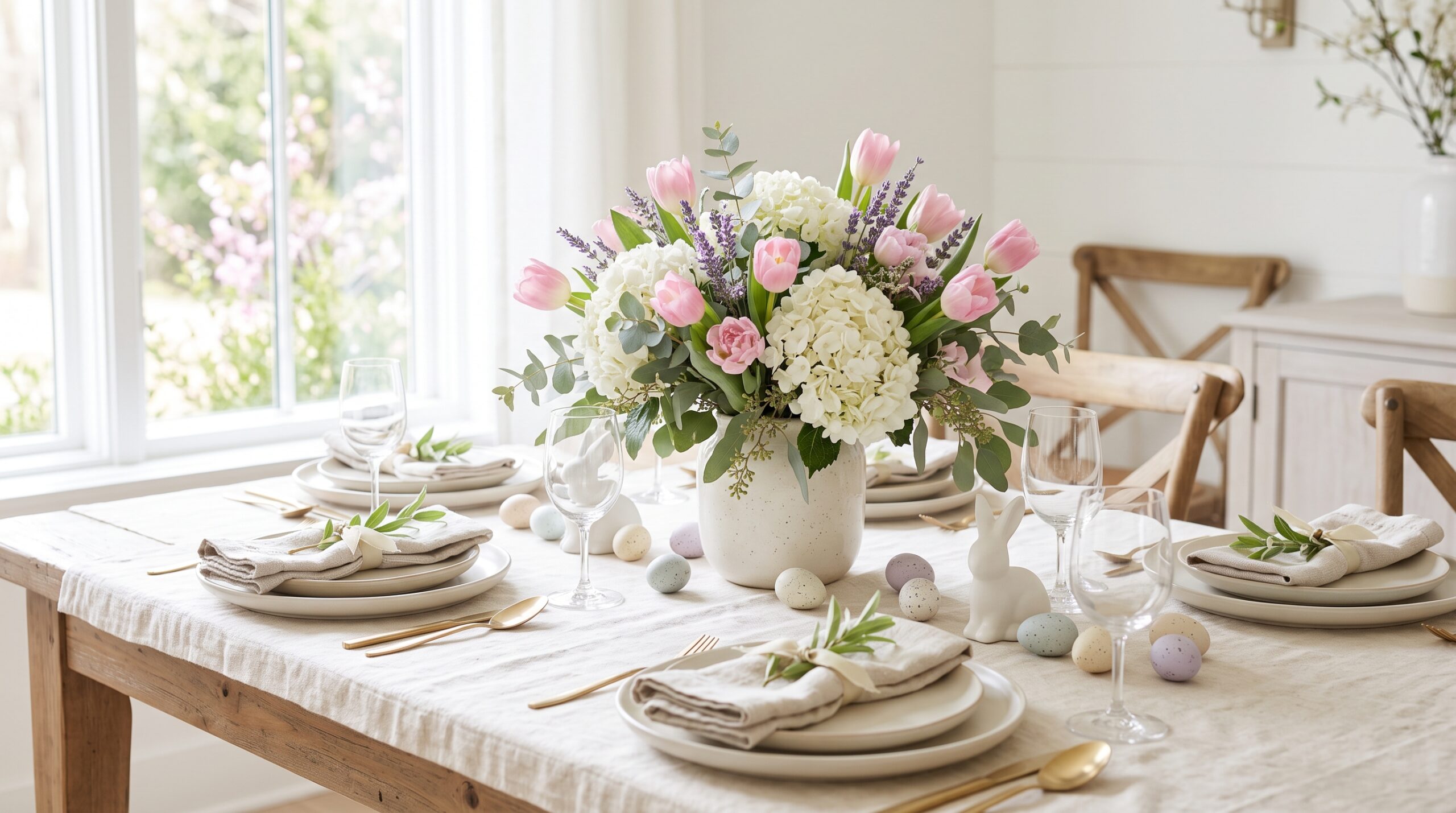
Okay, real talk — the second Easter shows up on the calendar, I turn into a full-blown flower person. After a long gray winter, there is something so satisfying about walking into a room full of tulips, hyacinths, and little ceramic bunnies peeking out between the petals. It just feels like spring finally showed up and meant it.
If you’re anything like me, you don’t want to overthink your Easter decor. You want a table that looks like you tried (because you did), without spending your whole Saturday hot-gluing eggs to things. So I pulled together a big, breezy list of ideas — from classic tulip bunches to slightly unhinged carrot centerpieces — so you can pick whatever fits your vibe and run with it.
Let’s get into it.
Easter Flower Arrangements for Every Style and Skill Level
Whether you’re a “grab a bunch from the grocery store and wing it” type or someone who actually owns floral foam, there’s an Easter flower arrangement idea below for you. I’ve grouped these by mood, so scroll until something makes you go “ooh, that one.”
1. Bunny-and-Bloom Combos
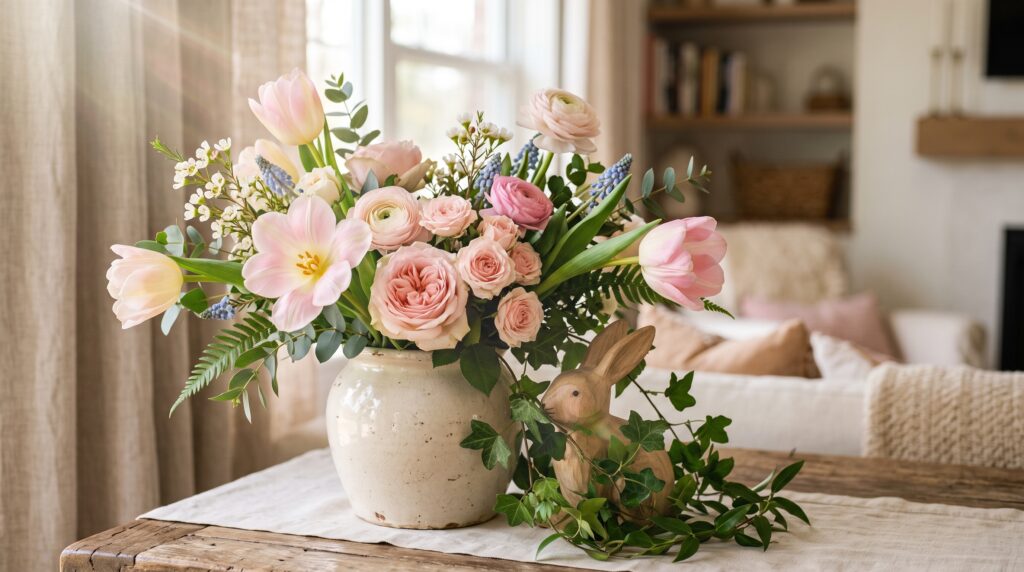
This is the easiest way to make any bouquet feel instantly Easter-appropriate: tuck a small ceramic or wooden bunny figurine right into the arrangement. Pastel tulips, pink roses, or hyacinths all work beautifully here, and the bunny gives the whole thing a playful focal point without looking too “craft store.”
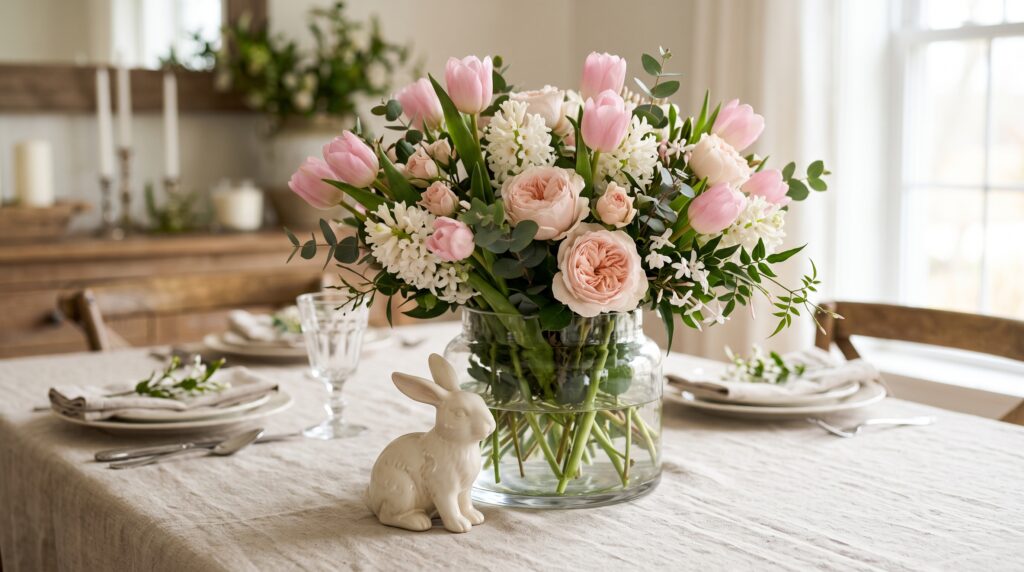
My honest tip: keep the bunny near the front edge of the vase, not buried in the middle. You want it peeking out, not hiding — otherwise you paid for cute and got clutter.
2. Speckled Egg Accents
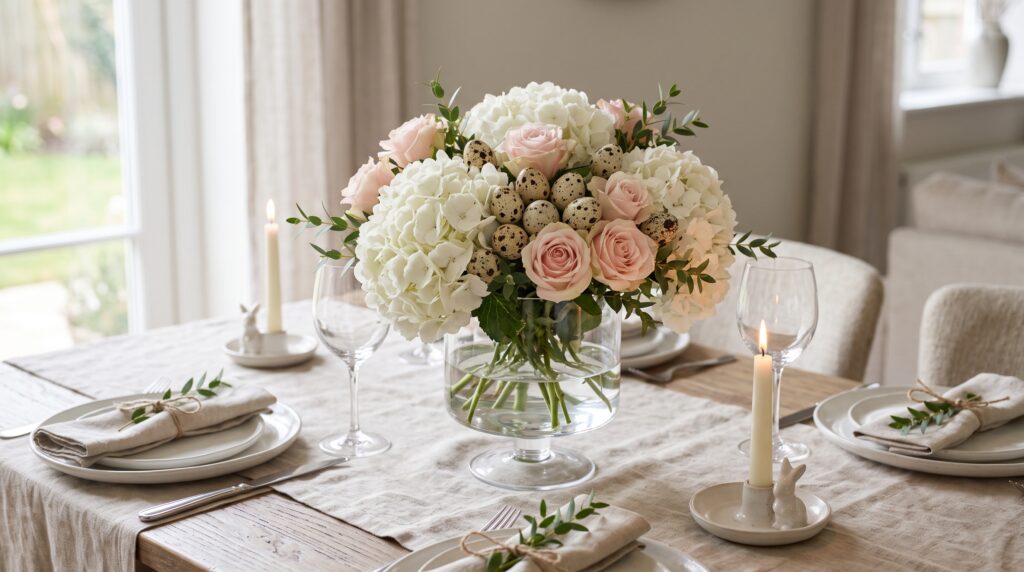
Nothing says Easter quite like tucking a few speckled eggs (real, dyed, or the reusable faux kind) between soft white hydrangeas and blush roses. It’s a small detail, but it instantly reads as “holiday table” instead of just “flowers on a table.”
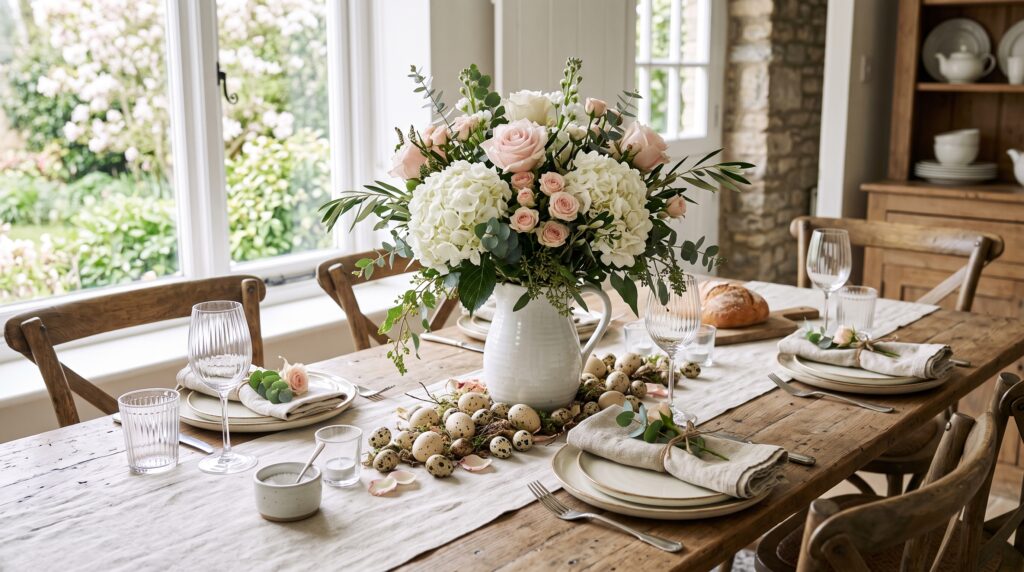
Faux eggs from the craft store are genuinely the move here — they’re cheap, they store flat, and you’ll get years of use out of the same set.
3. Branch-and-Bloom Statement Pieces
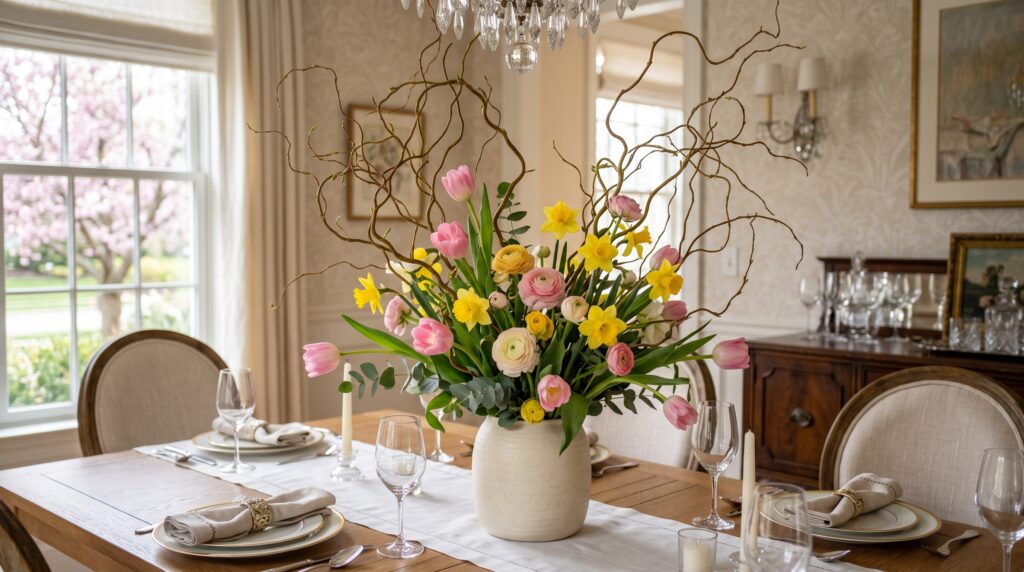
If you want something a little more dramatic, mix tulips, daffodils, or ranunculus with natural branches like pussy willow or curly willow. The branches add height and movement, which makes the whole arrangement feel intentional rather than just “flowers stuffed in a vase.” This one’s a favorite for entryway tables or as a centerpiece that doesn’t block conversation across the table.
4. The Classic Tulip Bunch
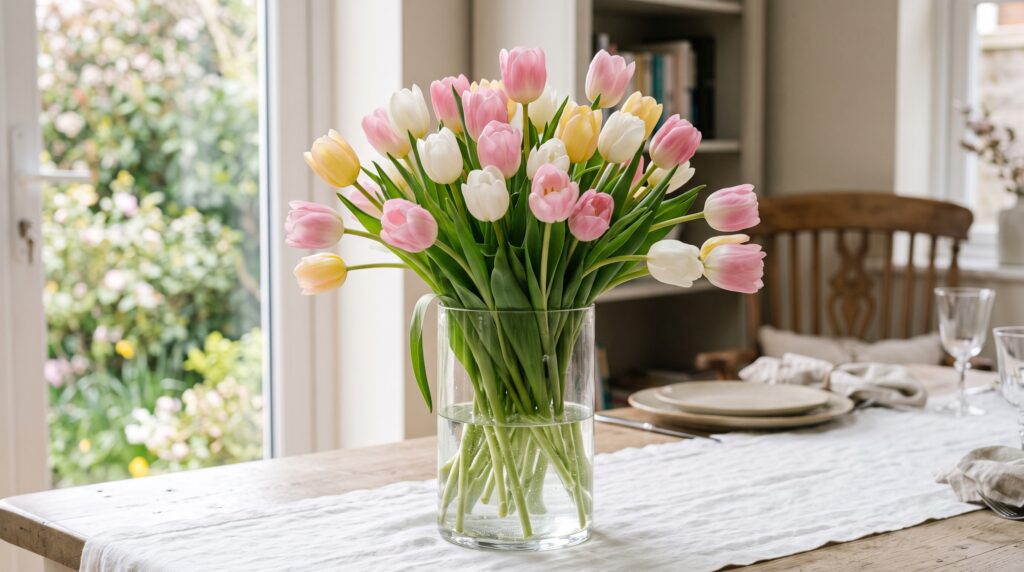
Sometimes simple really is best. A generous bunch of tulips — pink, yellow, white, or all three mixed together — in a clear glass vase is timeless for a reason. Group by color for a clean, modern look, or mix shades for something that feels more like a spring garden.
Since tulips keep growing even after they’re cut, a taller vase that supports about half the stem length will help keep them from flopping over by day two.
5. Whimsical Woven Baskets
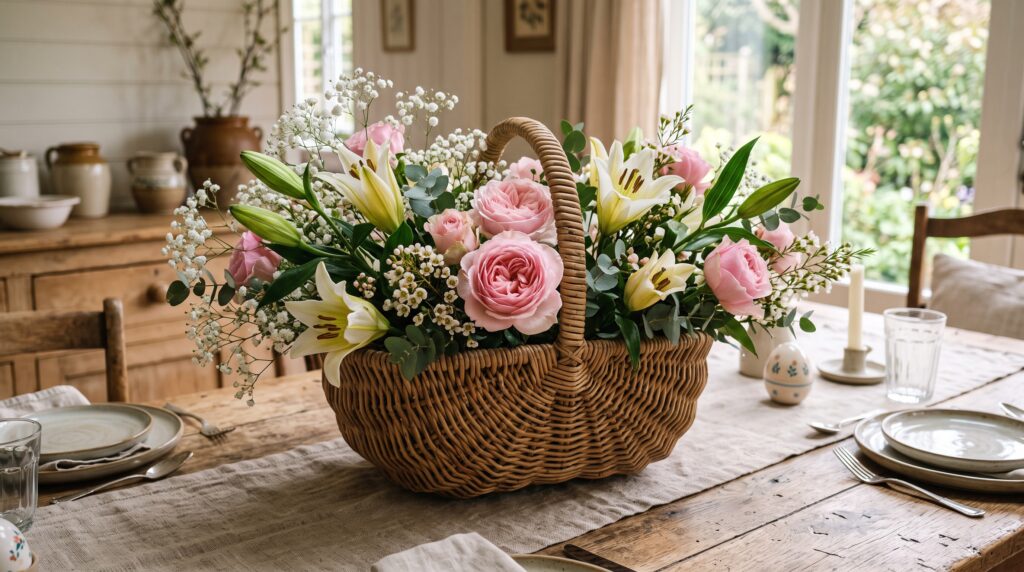
A wicker basket filled with roses, lilies, and a little baby’s breath brings a cozy, handmade feel to your table — almost like a mini version of an Easter wreath, but horizontal.
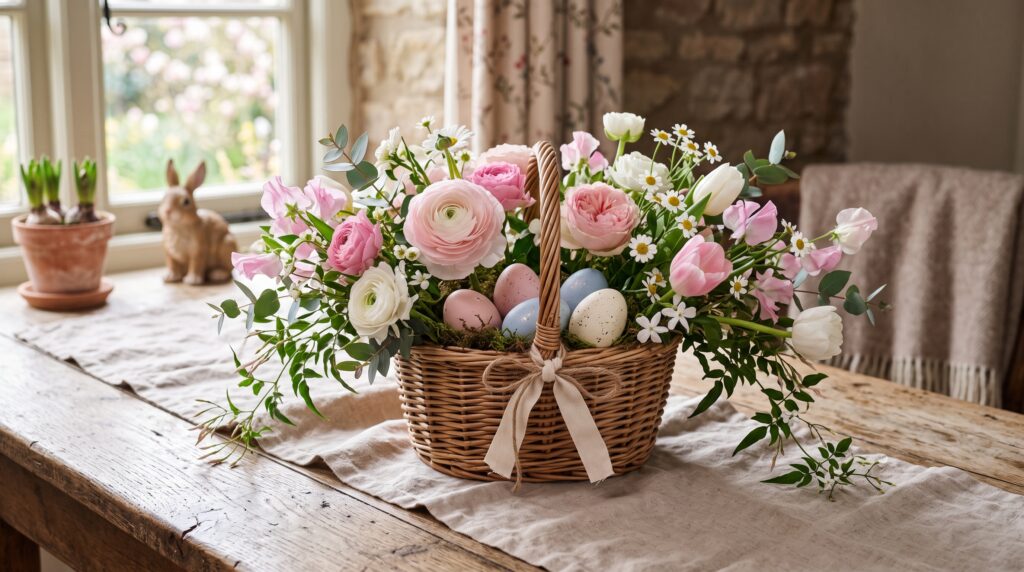
The natural texture of the basket softens the whole look and pairs nicely if you’ve already gone rustic with the rest of your table setting.
6. Sunny Yellow and White Arrangements
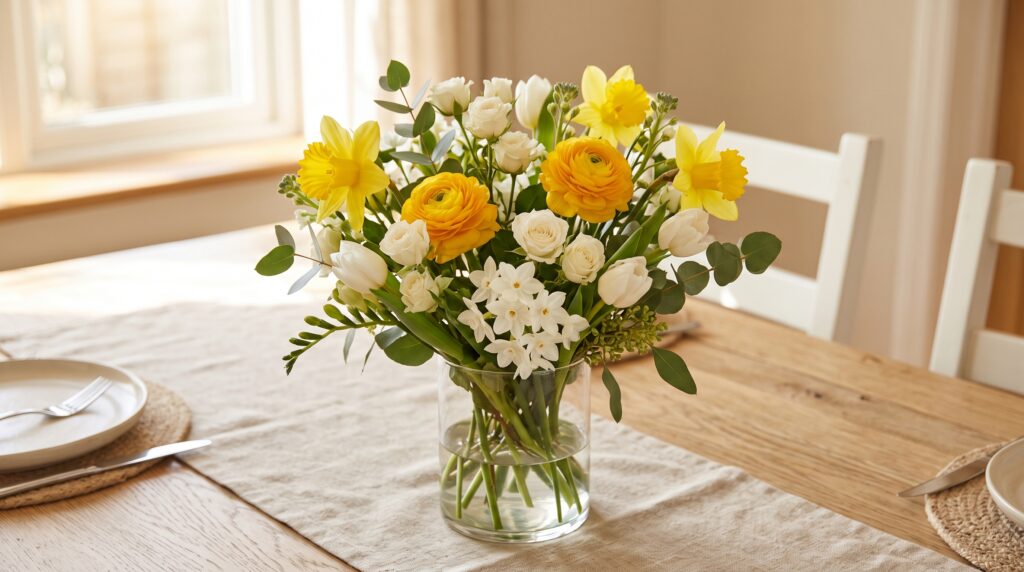
Daffodils, golden ranunculus, and a few white blooms mixed in create an arrangement that basically radiates warmth. This combo is perfect if your table linens or dishware lean neutral — the yellow does all the heavy lifting.
7. Silk Flower Arrangements (Yes, Really)
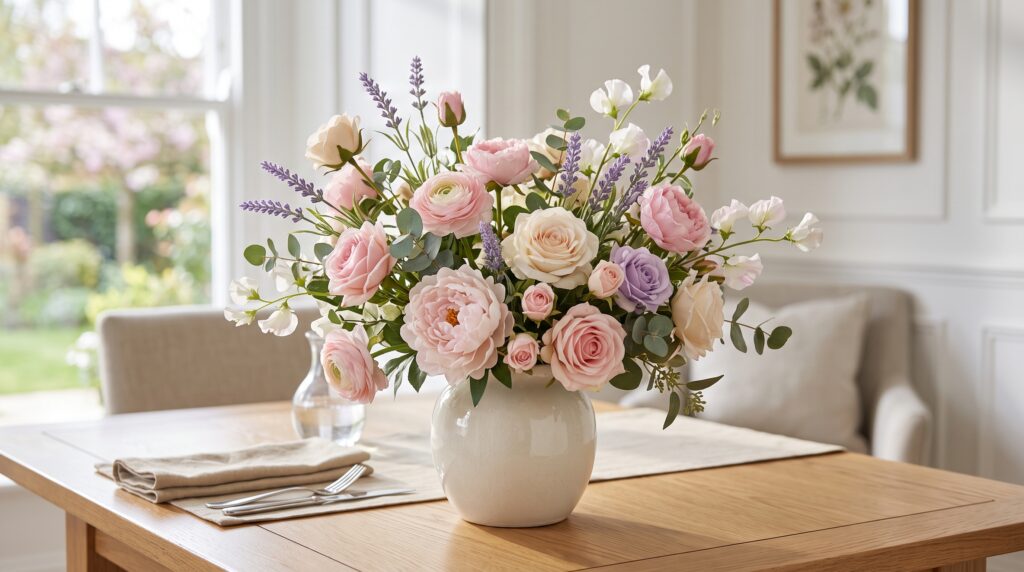
If you want something that survives past brunch, high-quality silk flowers in soft pastels have come a long way. Look for ones with natural-looking color variation and slightly irregular petals — the more “imperfect,” the more realistic they’ll look from across the tabl
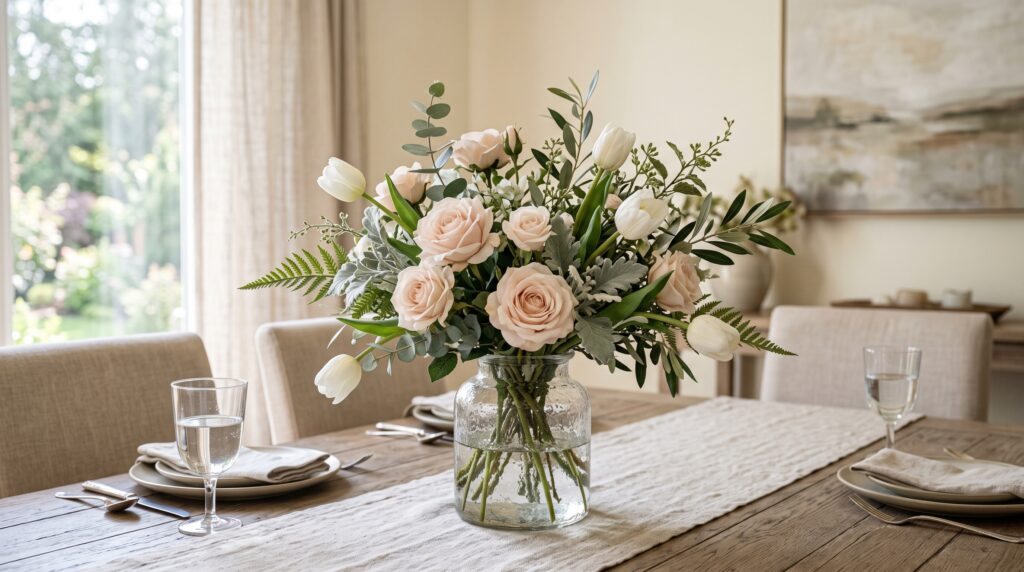
.This is a genuinely smart option if Easter falls during a busy week and fresh flowers just aren’t happening.
8. Cool-Toned Blue Arrangements
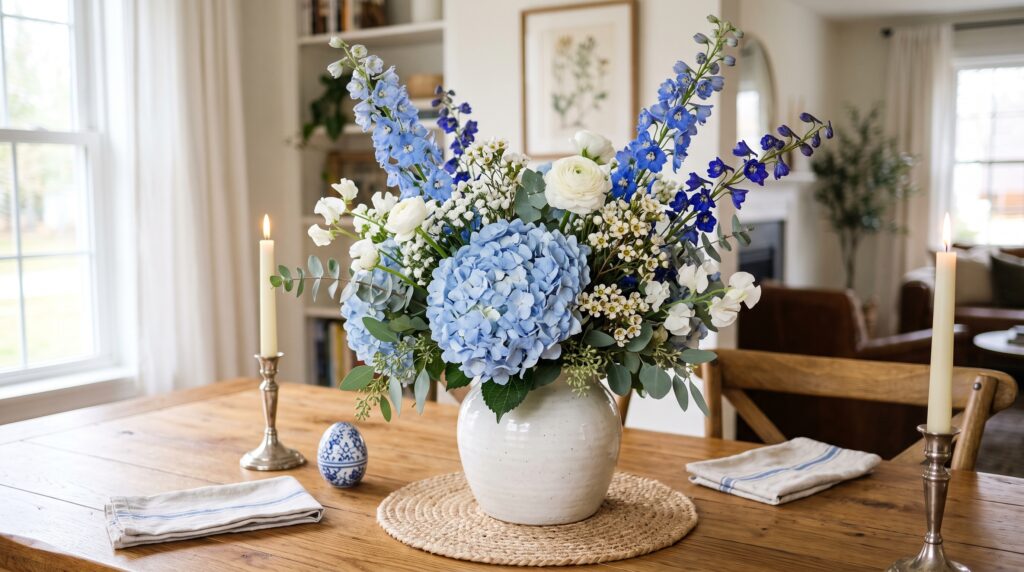
Not every Easter table has to be pink and pastel. Blue hydrangeas, delphiniums, and soft greenery make a calming, slightly more grown-up centerpiece that still feels seasonal
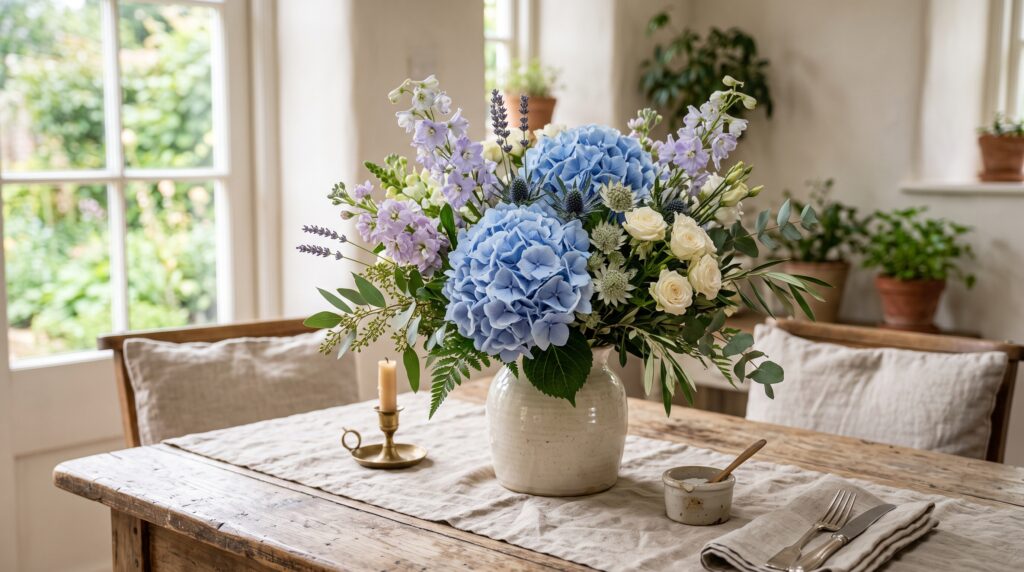
. It’s a nice option if your dining room already has warm wood tones and you want the flowers to cool things down a bit.
9. Peeps-and-Petals Display
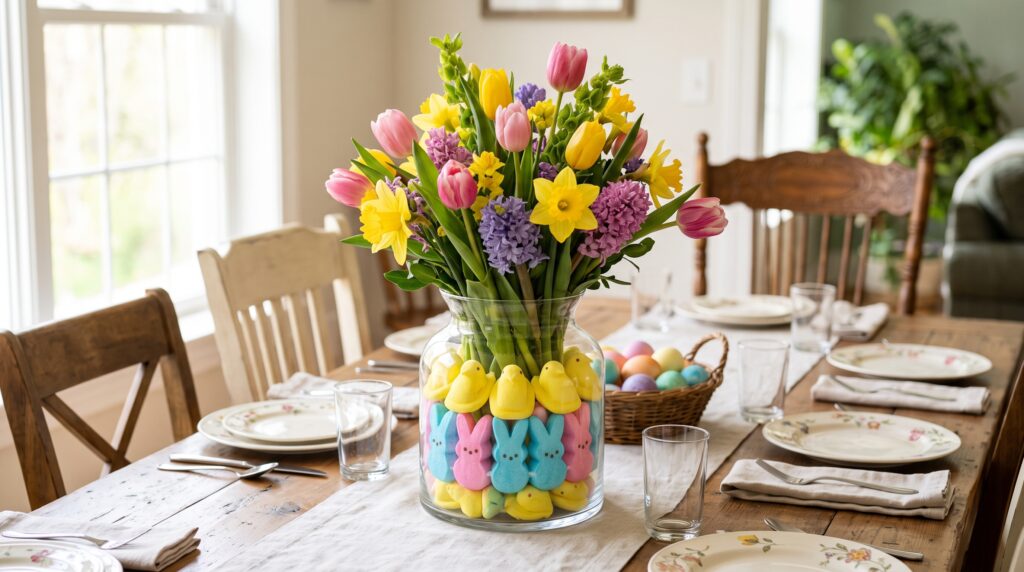
This one’s just for fun: drop a few Peeps into a clear glass vase along with fresh spring flowers. It’s silly, it’s colorful, and my kids genuinely request it every single year. Not every centerpiece has to be sophisticated — some of them just have to make people smile.
10. Rich Purple and Lavender Arrangements
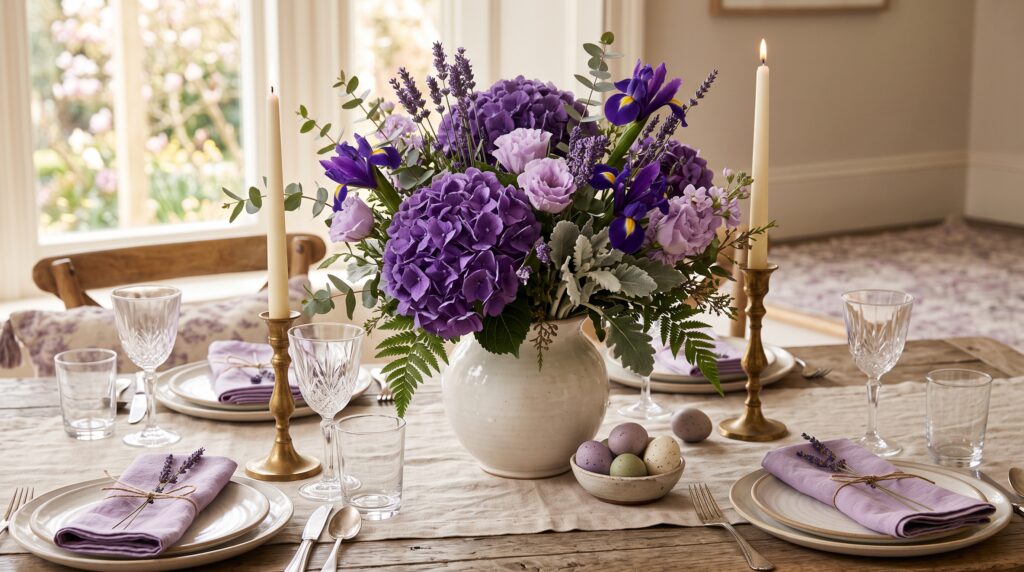
Purple hydrangeas, irises, and lavender sprigs make for a bold, slightly regal centerpiece. This palette photographs beautifully and pairs well with gold or brass accents if you’re going for a dressier tablescape.
11. Wooden Box Centerpieces
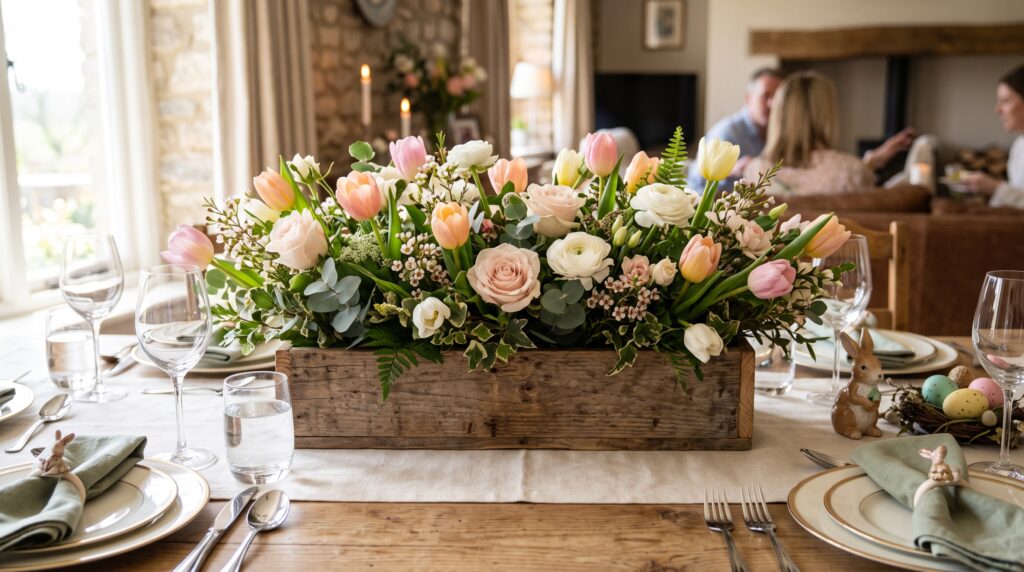
Swap the vase for a shallow wooden box lined with plastic and floral foam, then fill it with pastel blooms. The structured, low profile makes it easy for guests to see each other across the table — a nice practical win alongside the rustic look.
12. Layered Eggs-in-a-Vase
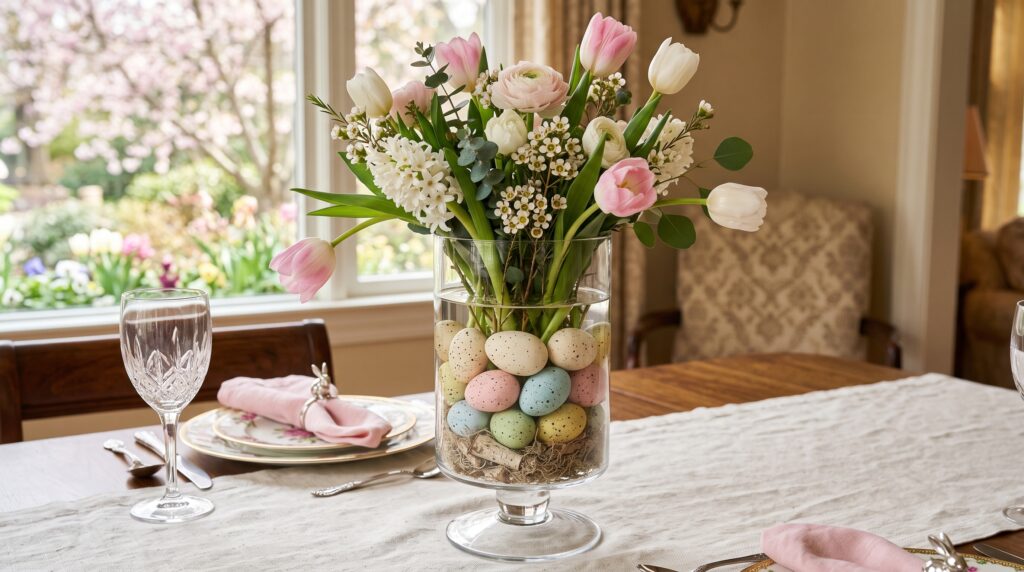
Here’s an idea that looks far more complicated than it actually is: fill the bottom of a clear glass vase with lightweight faux eggs, then add your flowers on top (or in a smaller water-holding vessel tucked inside).
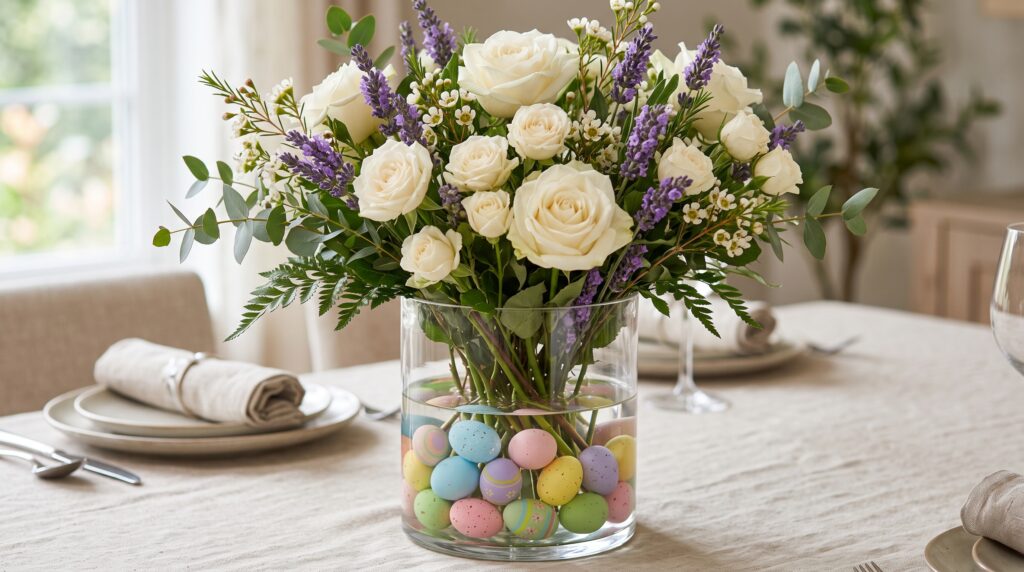
The eggs create a decorative “base” that shows through the glass, and the mix of smooth eggs against delicate petals is genuinely one of my favorite textures on an Easter table.
13. Potted Spring Plants
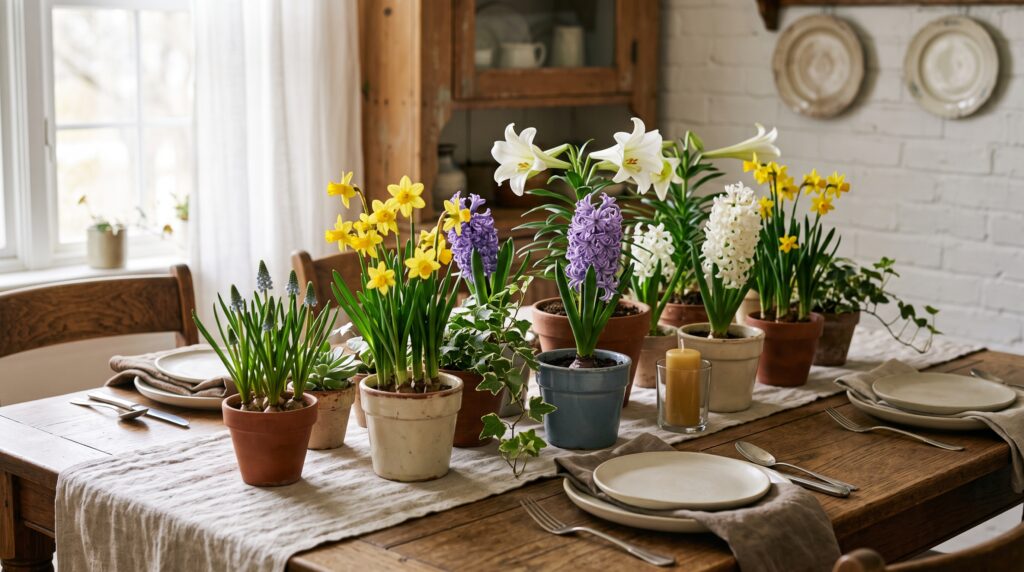
If you’d rather your Easter flowers keep going after the holiday, potted mini daffodils, Easter lilies, or hyacinths are the way to go. Group a few different varieties together for a mini indoor garden effect, and you’ll get weeks of blooms instead of days.
14. Soft, Dreamy Pastel Mixes
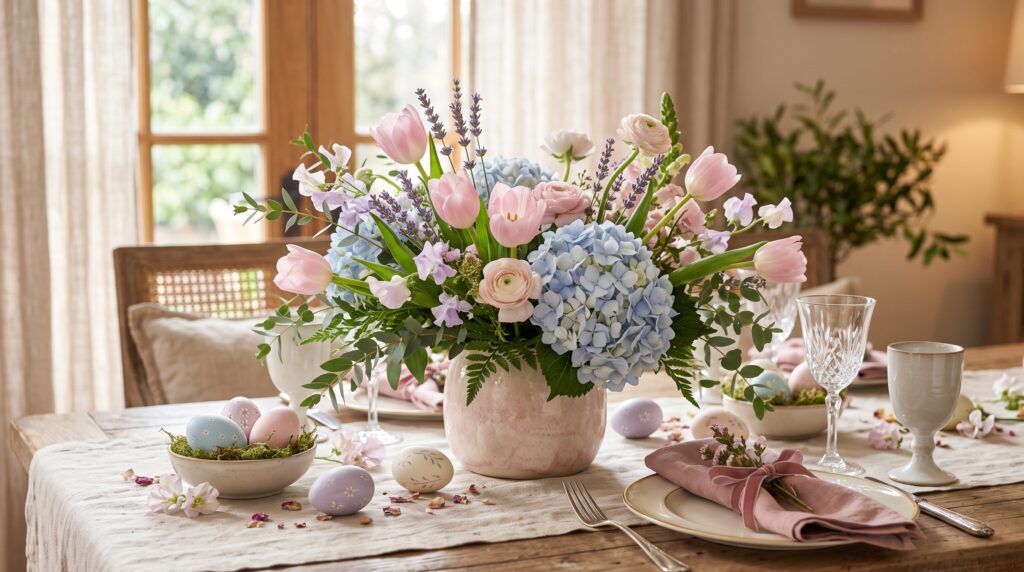
Pale pink, lavender, and baby blue blooms mixed together create a romantic, soft-focus centerpiece that suits pretty much any Easter table style. This is the “can’t go wrong” option if you’re decorating for a mixed crowd or just can’t decide on one color story.
15. Preserved and Dried Arrangements
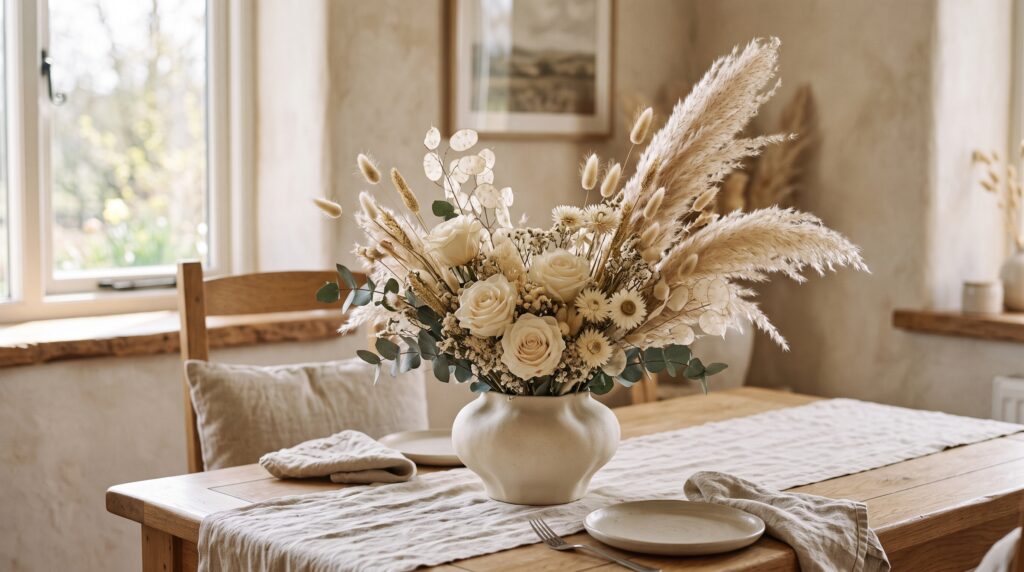
For something a little more understated, preserved flowers and dried grasses in muted beige and cream tones offer a sophisticated, long-lasting alternative to fresh blooms. It’s a great fit if your Easter decor leans more neutral or farmhouse than bright pastel.
16. Carrots-and-Blooms Centerpiece
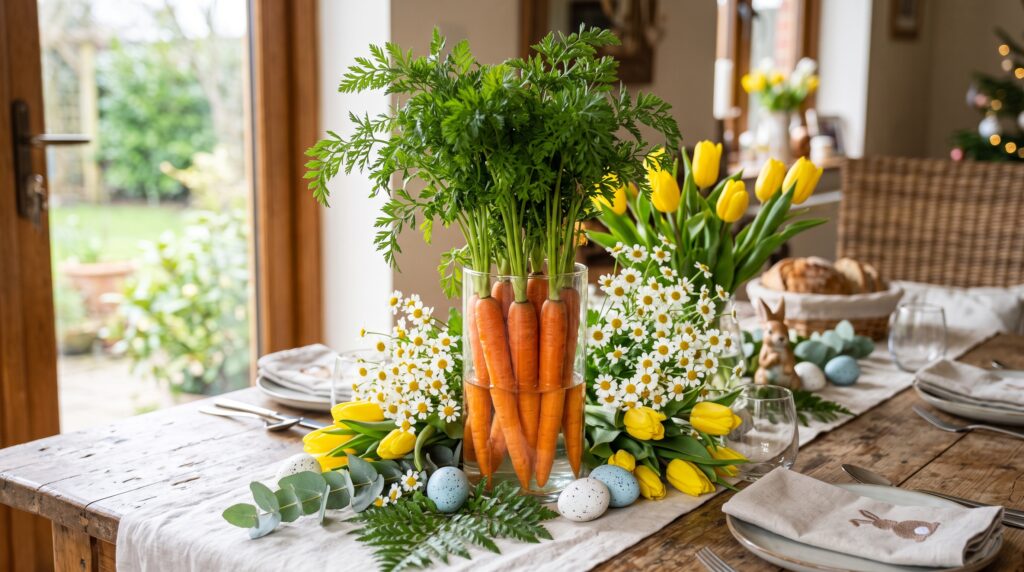
This one always gets a laugh, in the best way: stand a few fresh carrots upright in a clear vase, then top it off with white daisies and bright tulips. The green carrot tops add unexpected height, and the orange-and-white color combo is genuinely cheerful.
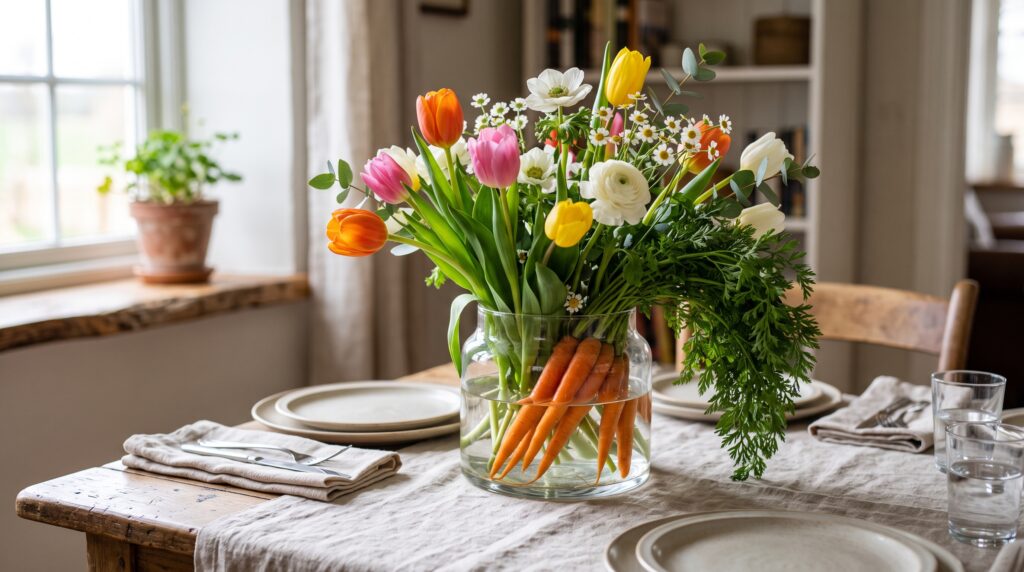
Pick carrots that are roughly the same size so they stand evenly, and wrap the stem ends in a damp paper towel beforehand to keep everything looking fresh through the day.
17. Vegetable-Inspired Vases and Vessels
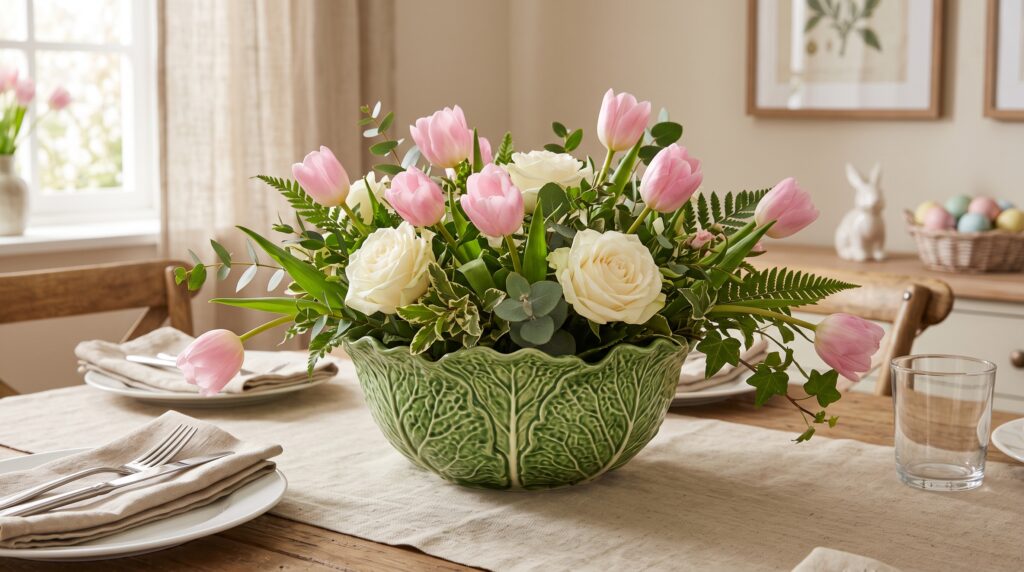
Here’s a trend I didn’t expect to love as much as I do: veggie-shaped ceramics as your actual container. Think a cabbage-leaf bowl holding a loose mix of pink tulips and white roses, or an artichoke-shaped vase anchoring a smaller bunch of spring greenery. It sounds a little quirky on paper, but it works because it echoes the whole “fresh from the garden” feeling that Easter and spring decorating already lean into.
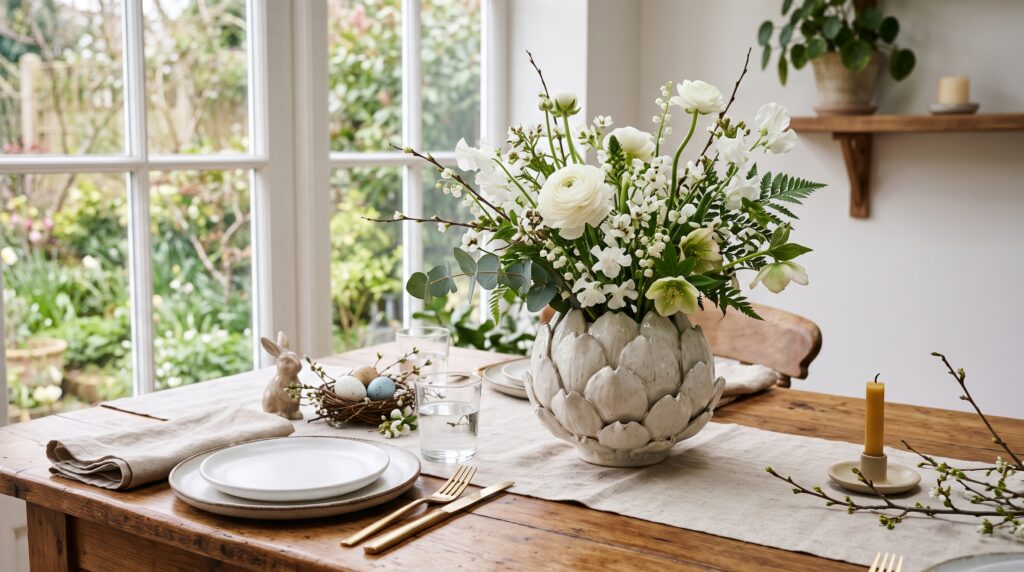
The trick to pulling this off without it looking like a novelty item is to keep everything else around it simple — plain glassware, neutral linens, nothing else competing for attention. Let the container be the fun, unexpected piece, and let the flowers do the rest.
18. Single-Stem Bud Vases in a Cluster
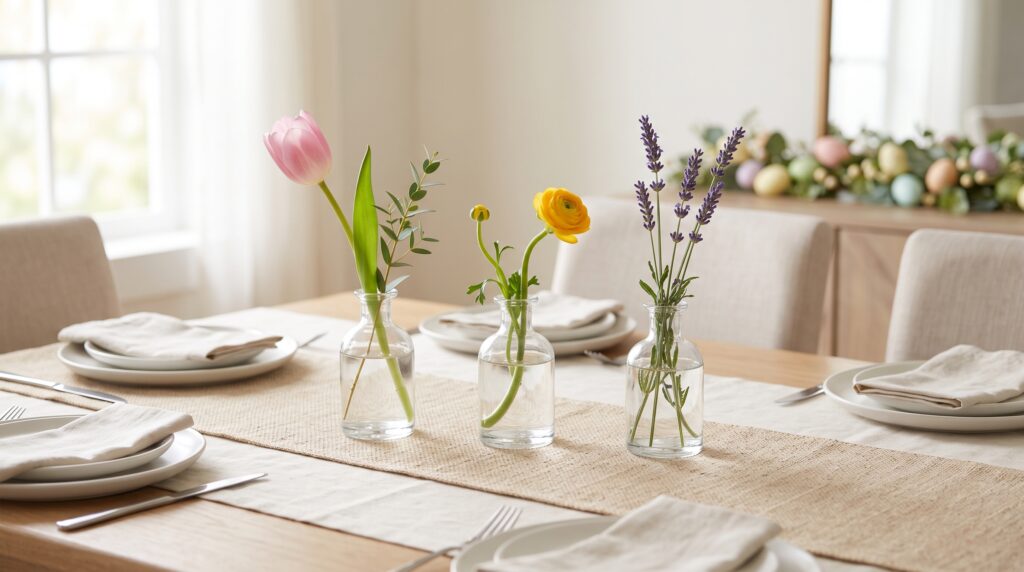
If a big, full arrangement isn’t really your thing (or you’re short on time), try clustering three or four small bud vases down the center of the table, each with just one or two stems — a single tulip here, a ranunculus there, maybe a sprig of hyacinth
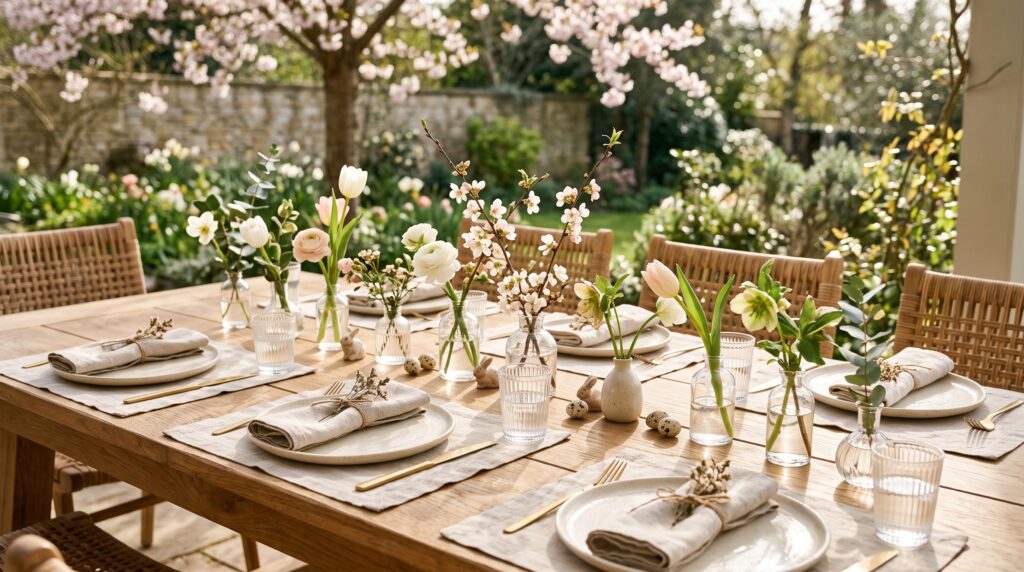
. It’s a minimalist take that still feels festive, and it’s genuinely one of the fastest Easter centerpieces to put together. Bonus: guests can move them around individually without disrupting a whole arrangement.
19. Moss-Base Nests with Eggs and Blooms
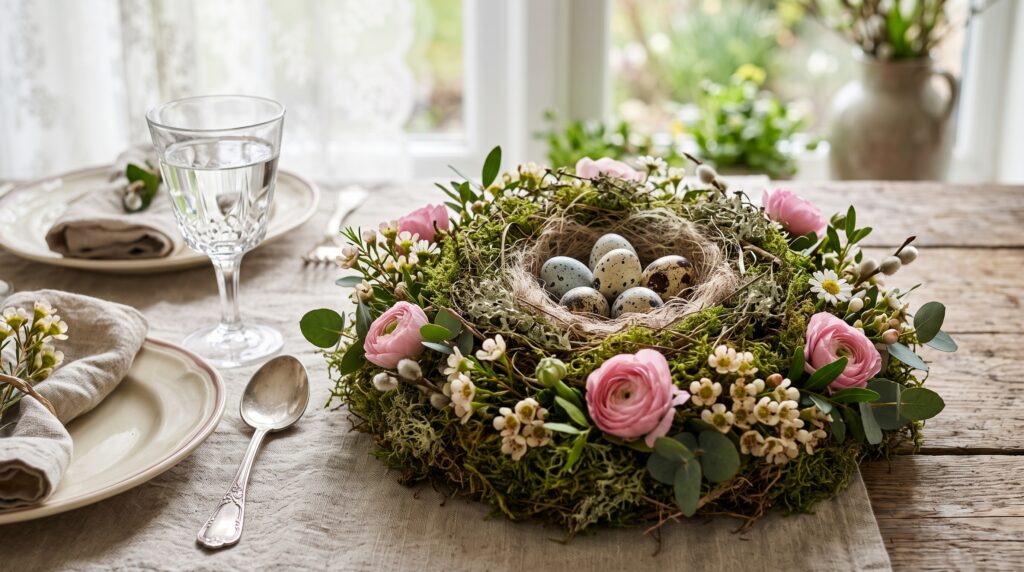
Build a small “nest” out of dried moss or excelsior, tuck in a few speckled eggs, and surround the edges with short-stemmed flowers like ranunculus or miniature roses. This works especially well as a smaller accent piece — think place settings, a mantel, or scattered along the center of a long table instead of one big centerpiece. It’s rustic, a little whimsical, and photographs really well if you’re the type who takes a picture of the table before anyone sits down.
20. Two-Tone Hydrangea Arrangements
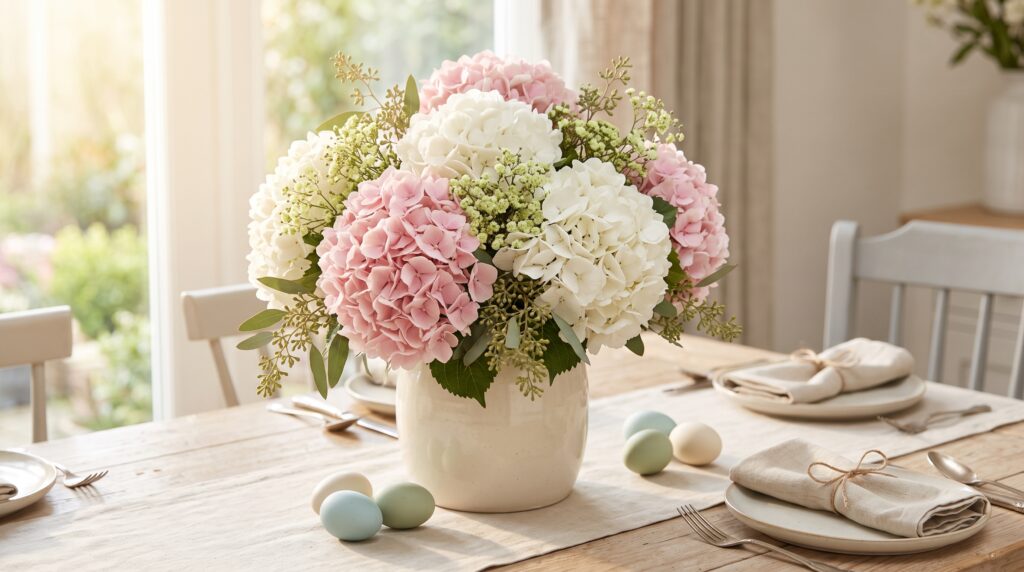
Mixing just two hydrangea colors — say, blush pink and soft white, or pale blue and lavender — in one arrangement gives you a lot of visual impact without much fuss. Hydrangeas are naturally full and lush, so a relatively small number of stems can fill out a vase beautifully. This is a great option if you want something that looks expensive and put-together but only requires one trip to the flower section.
A Few Ground Rules for Any Easter Arrangement
You really don’t need a formula here, but a couple of things make almost any combination look more pulled-together:
- Pick a lead color and stick to two or three supporting shades. Even a wild mix of flowers looks intentional when the palette is limited.
- Vary your textures, not just your colors. Smooth eggs, fluffy blooms, and a bit of greenery or a branch keep things visually interesting.
- Don’t skip the greenery. Even a few sprigs of eucalyptus or leftover leaves from your tulips soften an arrangement and keep it from looking stiff.
- Give your flowers a fighting chance. Fresh cool water, a clean vase, and a trim of the stems before arranging will keep everything looking good longer — FLOWERBX’s tulip care guide has solid, simple steps if you want your Easter tulips to actually make it through the whole holiday weekend.
Final Thoughts
Easter flower arrangements don’t need to be complicated to feel special. Whether you go full whimsy with Peeps in a vase or keep it classic with a simple tulip bunch, the goal is really just to bring a little spring energy into your home and onto your table. Start with flowers you genuinely like, add one or two seasonal touches, and let the rest come together naturally — that’s usually when it looks best anyway.
Happy decorating, and happy Easter!