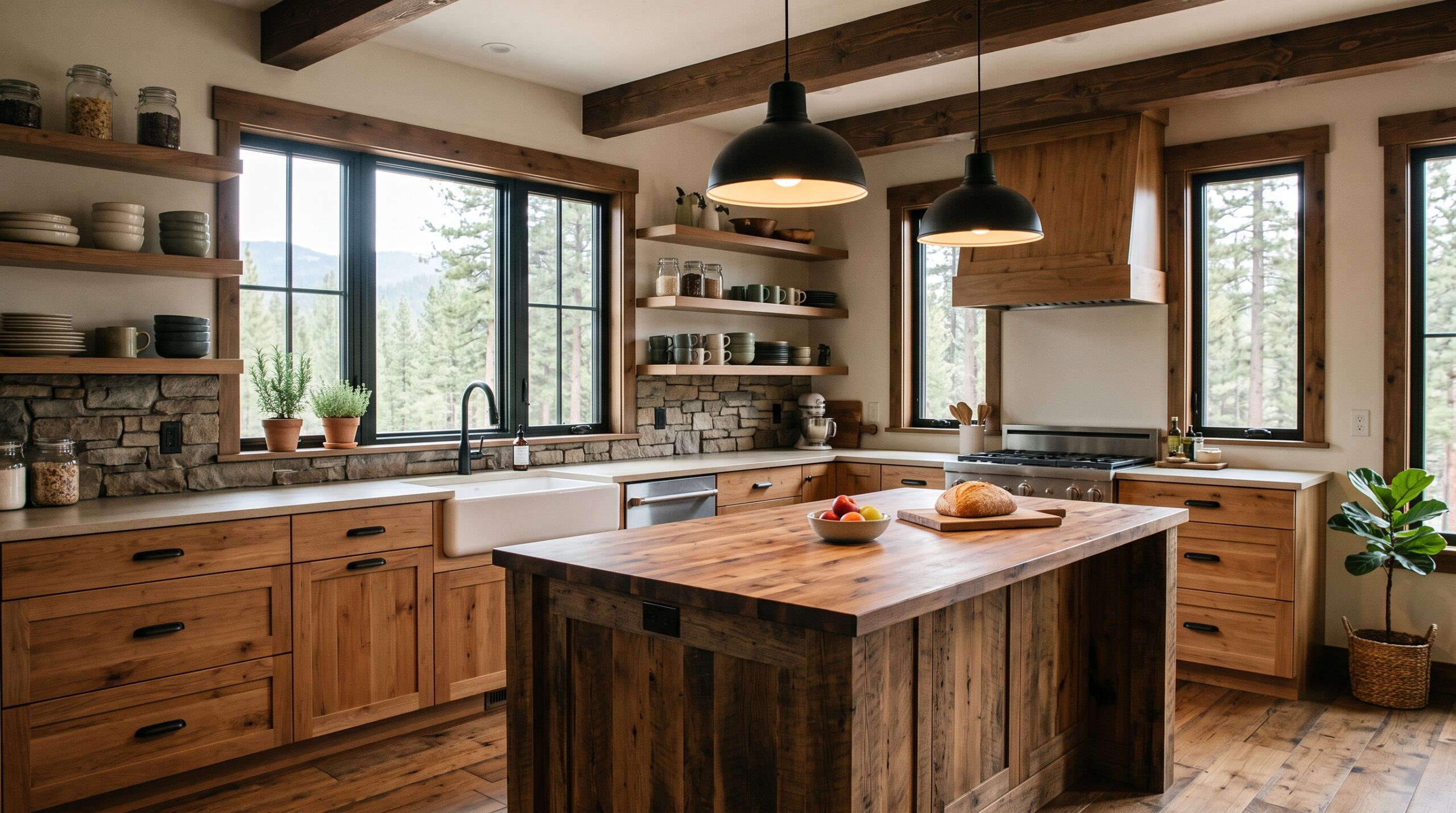
There’s a reason cabin-style kitchens never go out of fashion. They tap into something universal — the desire for a warm, unhurried space where the outside world feels a little farther away. A well-designed cabin kitchen slows you down. It invites you to linger over morning coffee, cook with the windows open, and gather people around a worn wooden table instead of a laptop screen.
If you’re planning a renovation, building a mountain getaway, or simply want your everyday kitchen to feel more grounded, this guide walks through practical, design-forward ways to bring that rustic-retreat feeling home. Whether you lean toward a classic log-cabin aesthetic or a lighter, modern-rustic hybrid, there’s a version of this style that will suit your space.
Cabin Kitchen Ideas for Every Style of Retreat
Not every cabin kitchen has to look like a hunting lodge. The category actually spans a wide range — from dark, timber-heavy interiors to airy, Scandinavian-influenced spaces with whitewashed wood and minimal clutter. The common thread is texture, natural material, and a sense of craftsmanship. Below are the design moves that consistently make a kitchen feel like a cozy cabin, no matter which direction you take it.
1. Start With the Wood Tone, Not the Paint Color
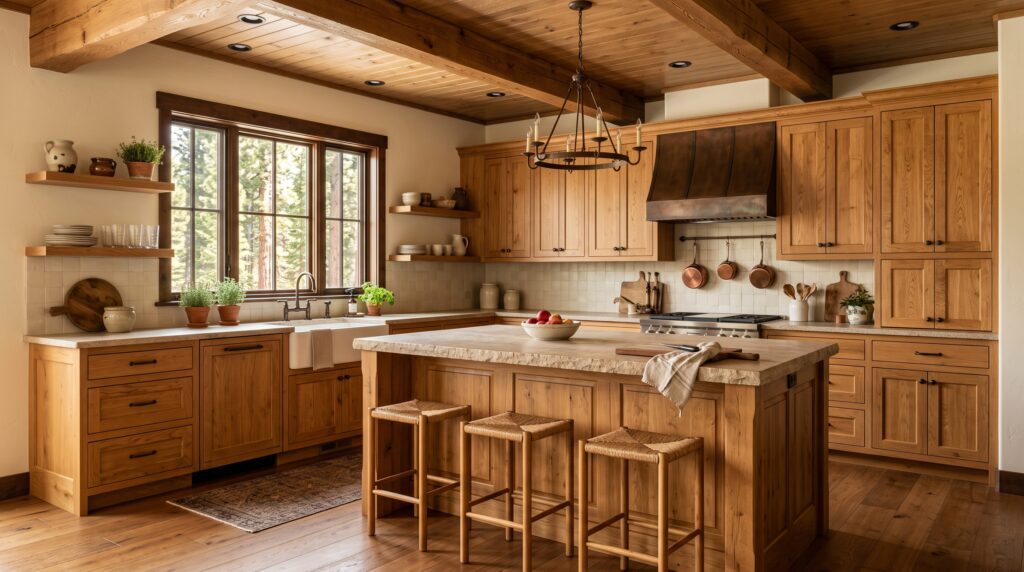
Most kitchen renovations start with a paint swatch. Cabin kitchens work the other way around — the wood comes first. Decide whether you want a warm, honey-toned wood like pine or oak, a deeper walnut or hickory, or a weathered, gray-washed finish, and let that choice guide everything else: hardware, countertops, flooring, and wall color. Getting the wood tone right early prevents the mismatched, “trying too hard” look that undermines a lot of rustic renovations.
2. Bring in Real Stone Where You Can
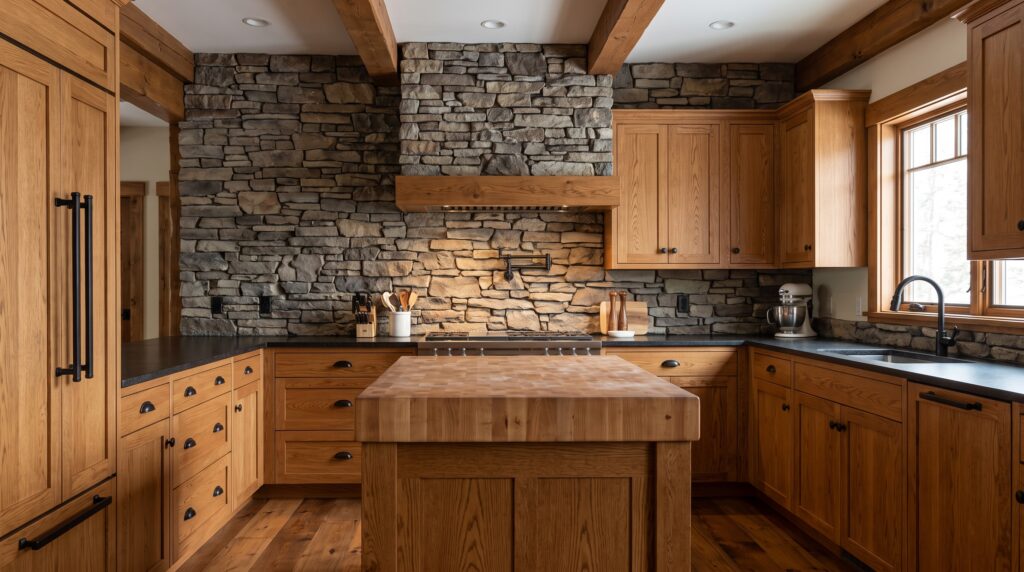
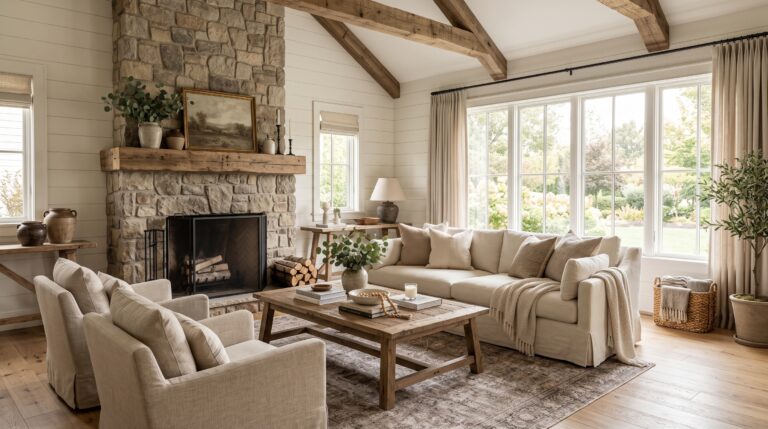
Stone is what separates a genuinely cozy cabin kitchen from one that’s just using wood cabinets. A stacked-stone backsplash behind the range, a stone hood surround, or even a stone half-wall near a breakfast nook adds the handcrafted, mountain-lodge quality that wood alone can’t fully deliver. If a full stone wall isn’t in the budget, a stone-look tile or a soapstone countertop can achieve a similar effect at a lower cost.
3. Design an Island That Earns Its Keep
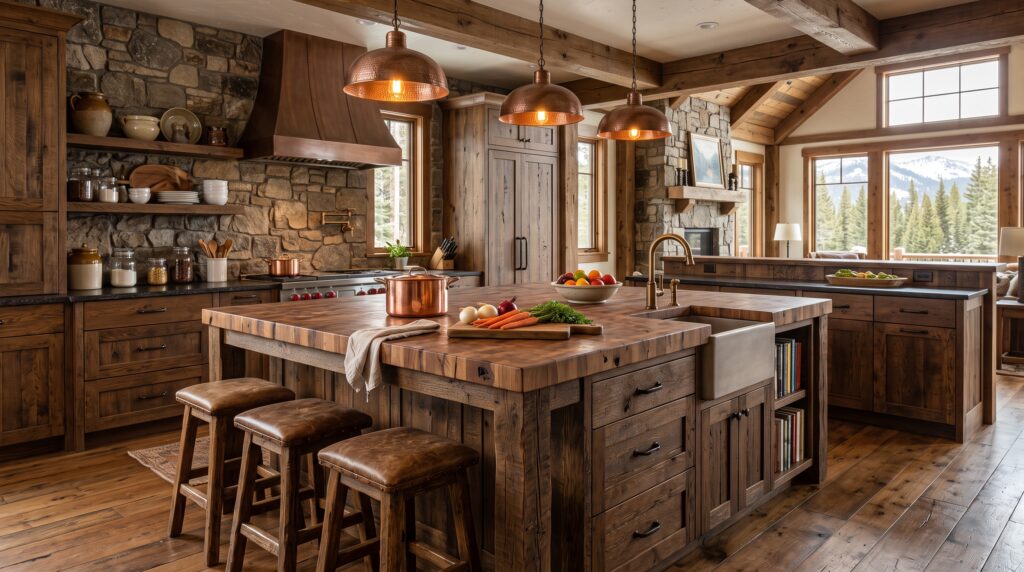
The island is usually the emotional center of a cabin kitchen — it’s where people actually gather. Butcher block, live-edge slabs, and reclaimed wood tops all read as authentically rustic, while a contrasting stone or quartz top on the same island keeps it practical for everyday cooking. Size it generously if your layout allows; a cramped island undercuts the relaxed, welcoming feeling the whole style is built around.
4. Swap Some Upper Cabinets for Open Shelving
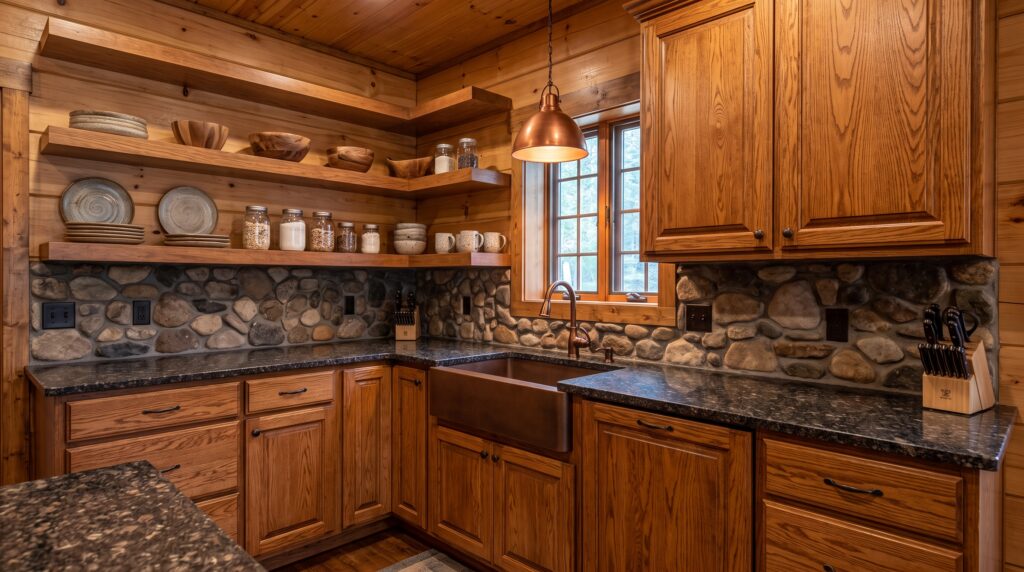
Solid cabinetry all the way to the ceiling can feel heavy in a rustic kitchen. Removing a section or two in favor of open wood shelving lightens the room visually and gives you a place to display the kind of everyday objects — stoneware, wooden bowls, glass canisters — that reinforce the lived-in, gathered-over-time feeling cabin kitchens rely on.
5. Keep the Palette Earthy and Muted
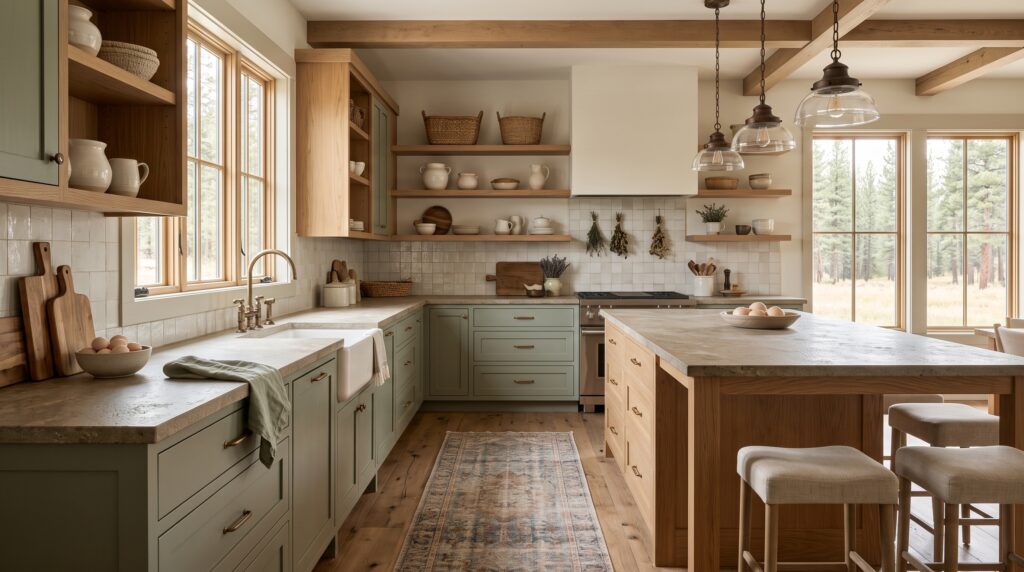
Cabin kitchens rarely use bright or high-contrast color schemes. Warm whites, soft greiges, olive and sage greens, and deep charcoal all pair well with wood and stone without competing with them. If you want a bolder accent, use it sparingly — on an island base, a range hood, or cabinet hardware — rather than across the whole room.
6. Choose Lighting That Feels Handmade
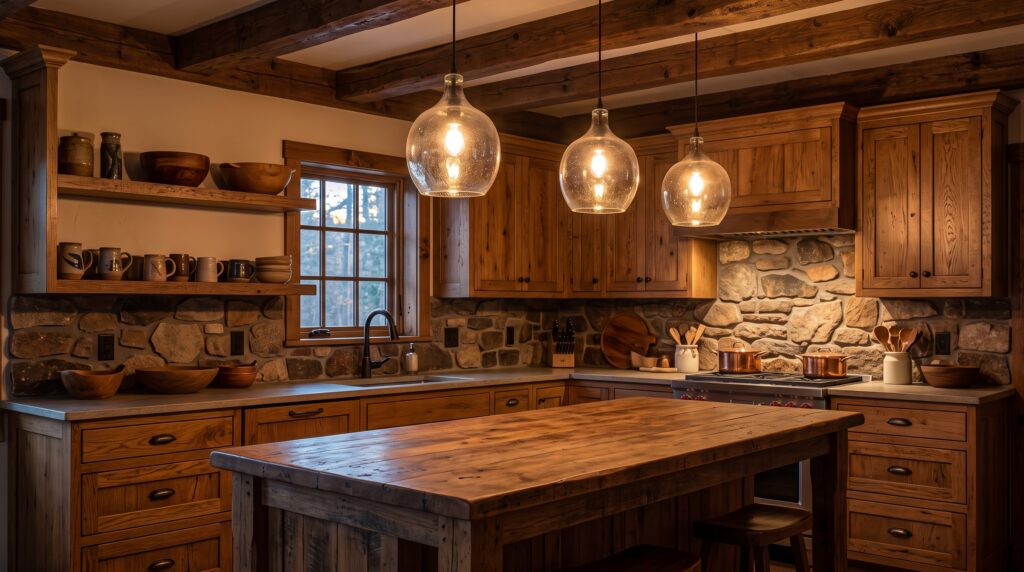
Builder-grade recessed lighting will fight against everything else you’re doing. Look instead for fixtures with visible material and craft: blown glass, wrought iron, woven rattan shades, or antler and branch-inspired designs if you want to lean more traditional. A cluster of pendants over the island, paired with warm-temperature bulbs, does more to set the mood than almost any other single choice in the room.
7. Add a Farmhouse or Apron-Front Sink
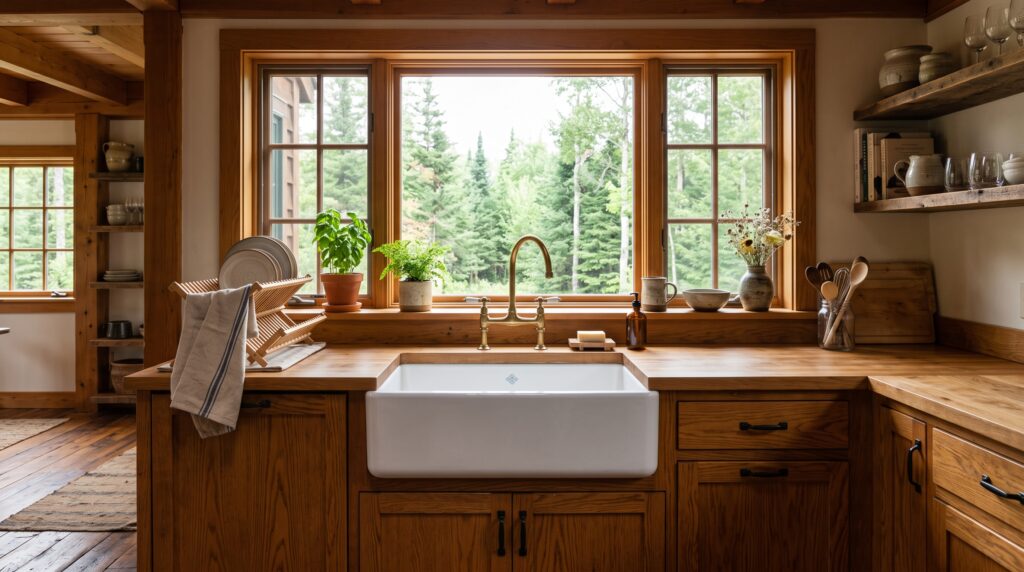
The deep, exposed basin of a farmhouse sink is one of the most recognizable details in rustic kitchen design, and it pairs naturally with wood counters, stone surrounds, and a simple bridge or gooseneck faucet. It’s also genuinely useful for anyone who cooks often — deep basins make washing large pots and produce far easier.
8. Expose What You Can — Beams, Brick, or Original Structure
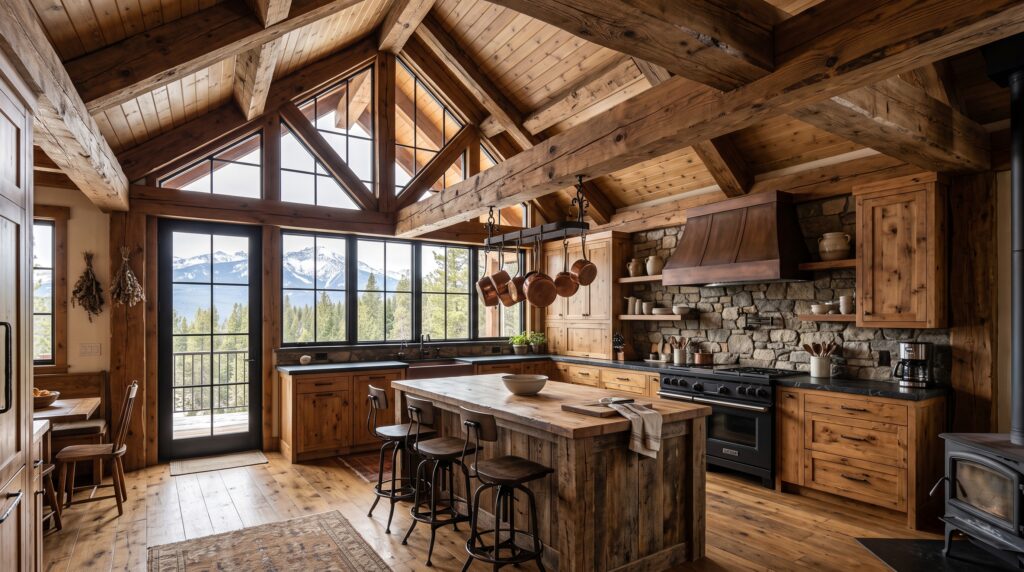
If your home has existing ceiling beams, exposed brick, or old structural timber, don’t cover it up. These details are difficult and expensive to fake convincingly, so if you already have them, they should be the starting point of your design rather than an afterthought. Even adding faux box beams to a flat ceiling can give a room architectural weight it was missing.
9. Let a Wood-Burning Element Anchor the Room
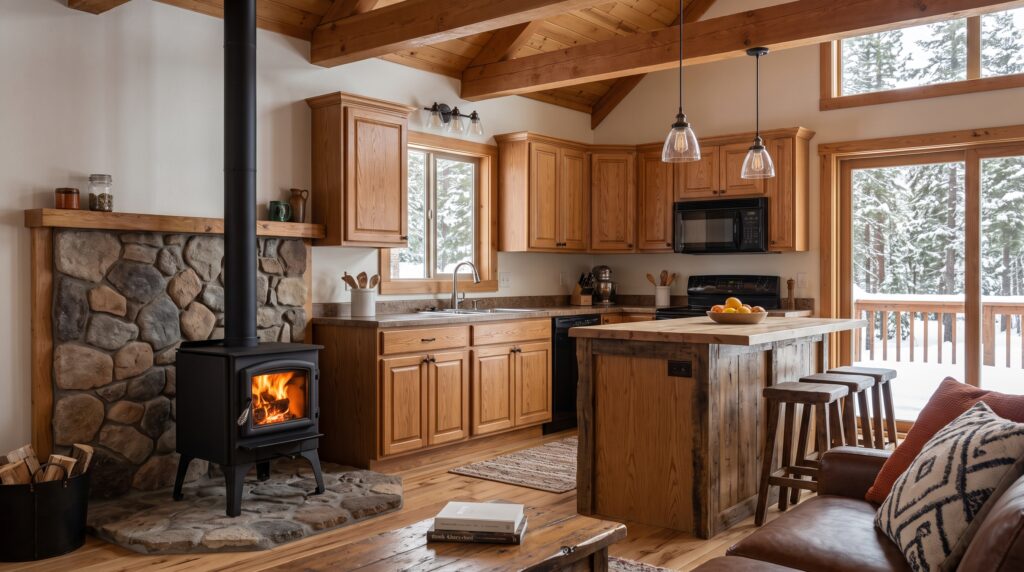
A wood stove, fireplace, or even a large masonry hearth near the kitchen does more than heat the space — it becomes the reason people want to be in that room. If a full fireplace isn’t feasible, a stone or brick surround around the range hood can echo the same idea on a smaller scale.
10. Mix in Modern Appliances Without Apology
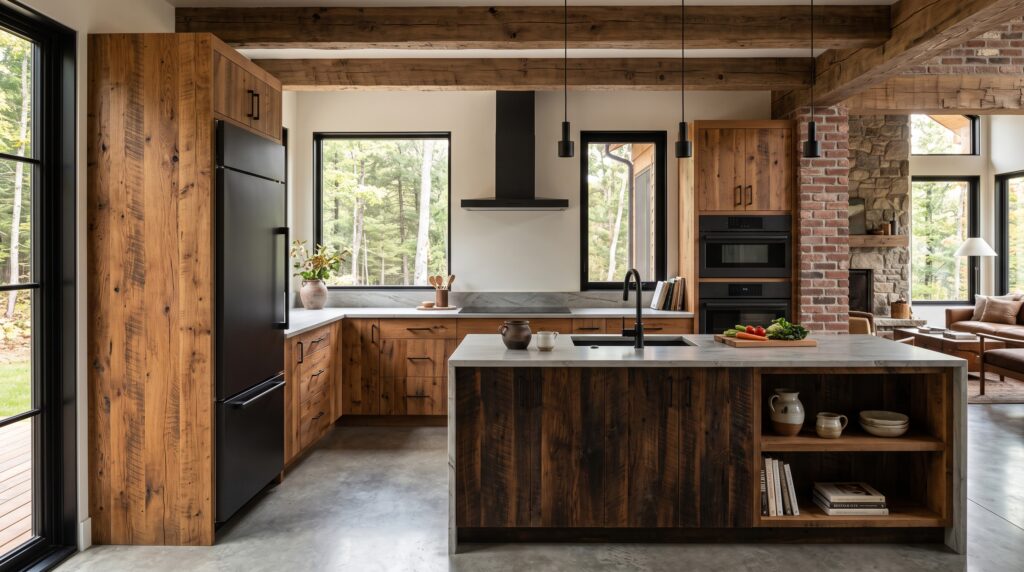
The most livable cabin kitchens aren’t museum pieces — they’re fully functional. Matte black, brushed brass, or dark stainless appliances tend to blend into a rustic scheme far better than bright chrome. Don’t be afraid to run modern induction cooktops, integrated fridges, or panel-ready dishwashers behind a rustic facade; the contrast of old material and new technology is part of what makes contemporary cabin kitchens feel current instead of costume-like.
11. Use Reclaimed or Salvaged Wood With Intention
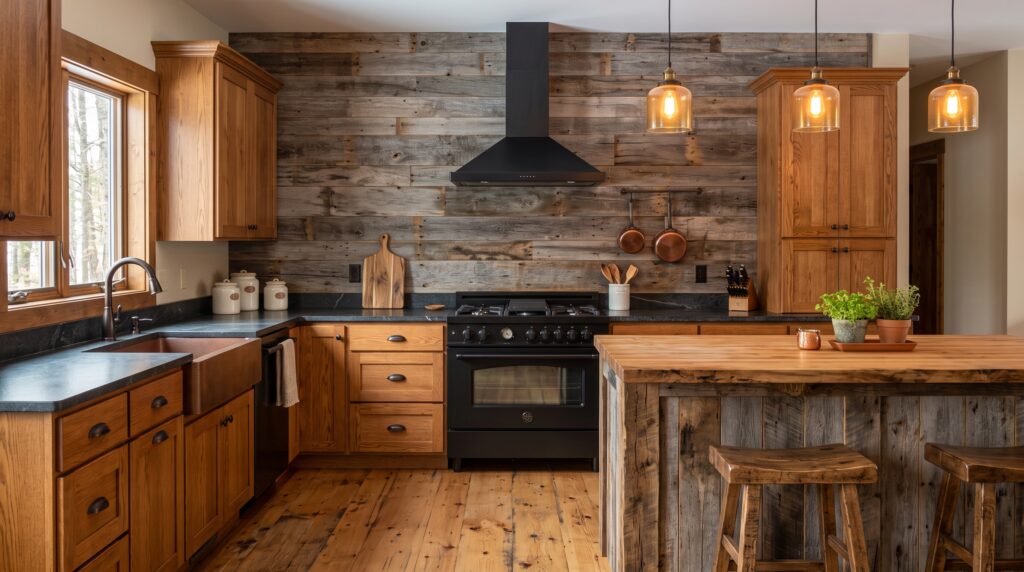
Reclaimed barn wood, salvaged flooring, or repurposed beams bring a level of texture and history that new lumber can’t replicate. Use it selectively — on a single accent wall, a range hood cover, or the island base — so it reads as a deliberate feature rather than overwhelming the room.
12. Create a Window Seat or Breakfast Nook
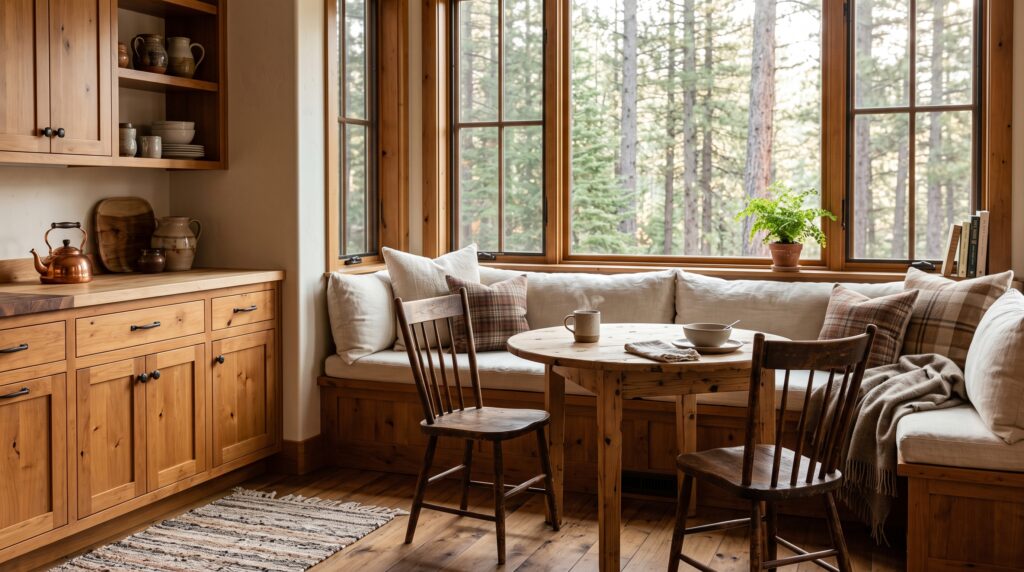
If your layout allows for it, a built-in bench with cushions near a window turns an ordinary corner into the most-used seat in the house. Pair it with a small round or farmhouse table, and you’ve created a spot for coffee, homework, or slow weekend mornings that a standard dining table often can’t replicate.
13. Let the Windows Do Some of the Design Work
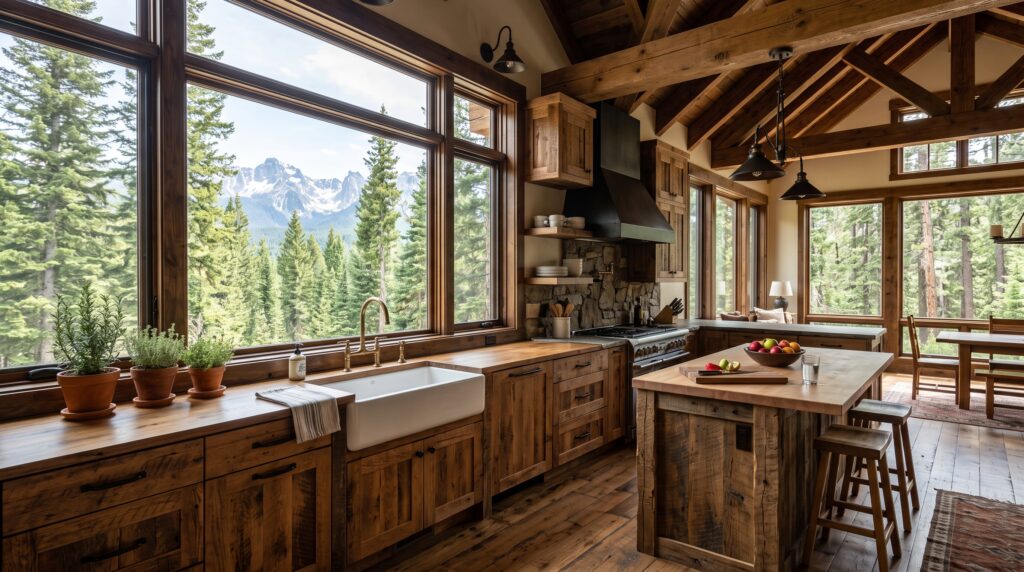
Cabin kitchens lean heavily on their connection to the outdoors, so oversized or strategically placed windows matter almost as much as the cabinetry. If you’re renovating and have the option, prioritize glass over the sink or prep area — natural light does more to make wood tones look rich and inviting than any fixture can.
14. Add Personality Through Vintage and Handmade Objects
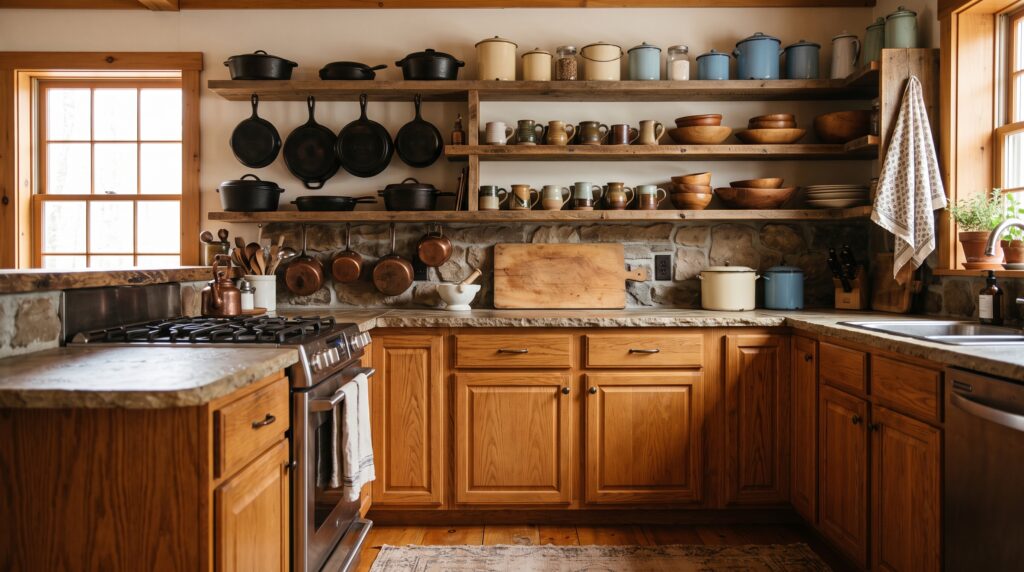
Open shelves, hooks, and countertops are a chance to bring in objects with real character — an old cast-iron pan, hand-thrown pottery, a vintage enamel canister set. These small, collected-over-time details are often what make a cabin kitchen feel authentic rather than showroom-staged.
15. Bring Life In With Plants and Herbs
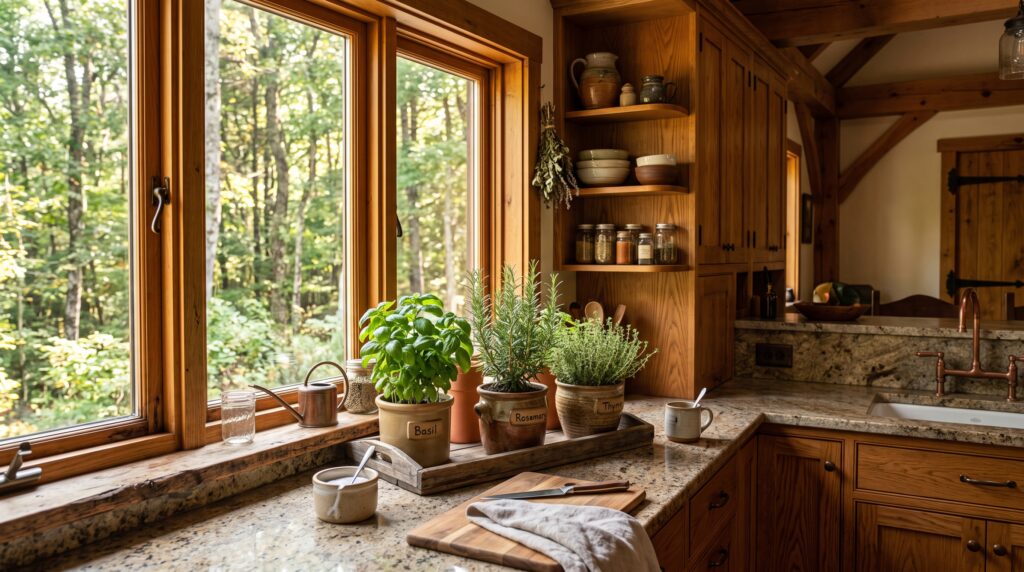
A small countertop herb garden, a hanging plant near a window, or a simple bundle of dried flowers on the island softens all the hard surfaces in the room and reinforces the connection to nature that defines this style. It’s a low-cost, high-impact finishing touch.
16. Use Black or Dark Metal as a Grounding Accent
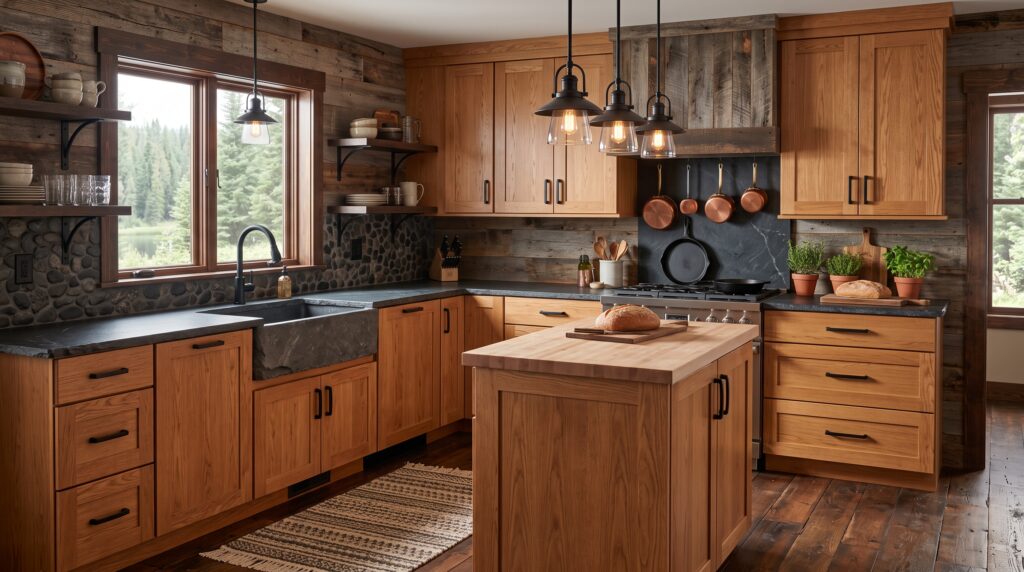
Matte black faucets, cabinet pulls, and light fixtures give a rustic kitchen a slightly more current, less “log cabin costume” feel. Used against warm wood tones, dark metal reads as intentional and modern without abandoning the coziness of the overall design.
17. Build In a Coffee or Beverage Corner
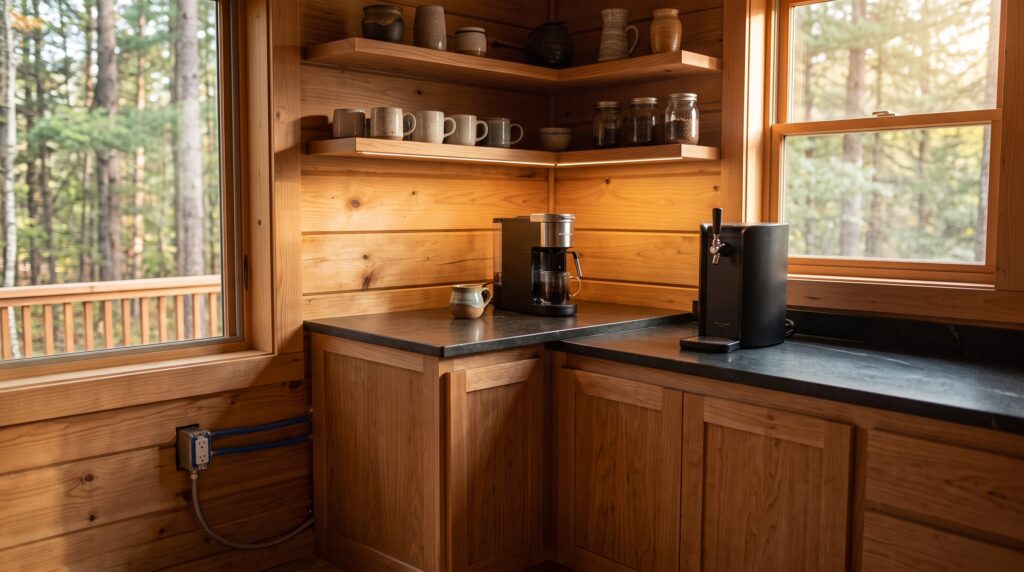
A dedicated nook with open shelving for mugs, a small stash of coffee and tea, and a simple machine turns a mundane daily habit into a small ritual — and it’s one of the easiest additions to work into almost any layout, even a compact one.
18. Layer Your Lighting Instead of Relying on One Source
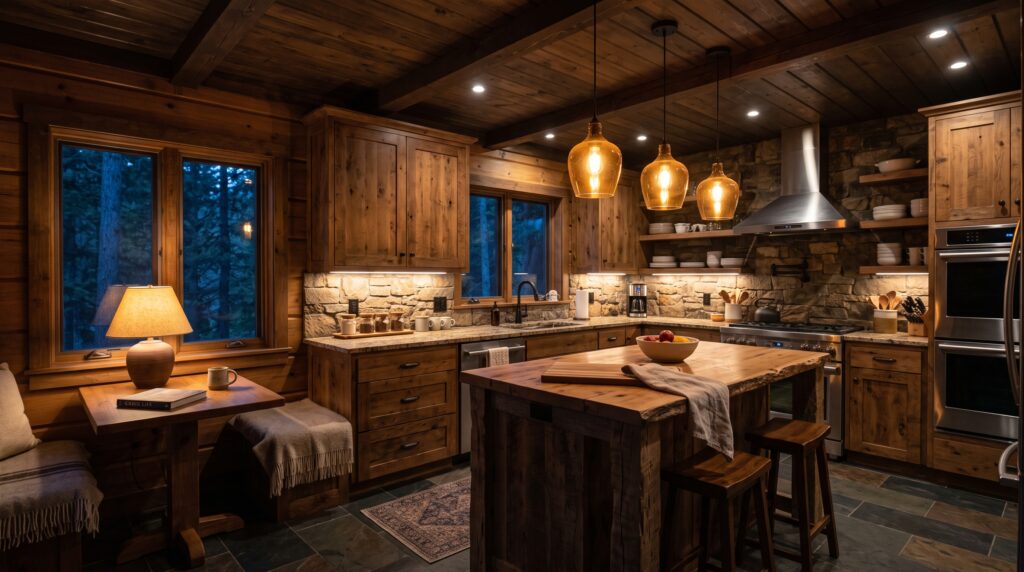
A single overhead fixture will always feel flat. Combine ambient ceiling lighting, task lighting under cabinets, and a warm accent lamp or two, and the room will feel comfortable at any hour, not just when the overheads are blazing.
19. Don’t Ignore Small Kitchens
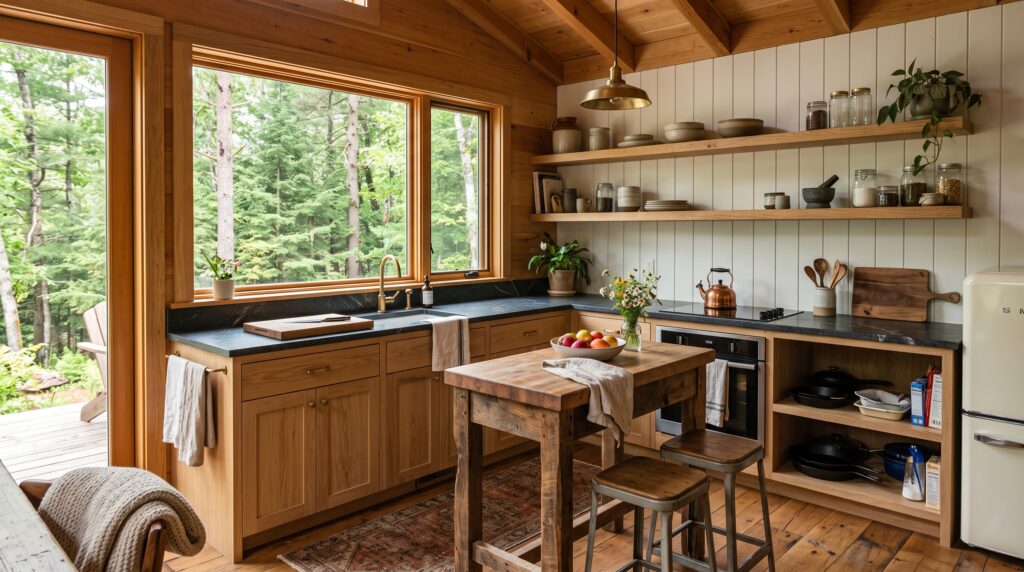
Cabin style scales down well. In a compact kitchen, lean on a lighter wood tone, keep upper cabinets minimal or open, and let one or two strong material choices — a stone backsplash, a reclaimed wood shelf — carry the look instead of trying to fit in every idea on this list.
20. Balance Rustic and Refined So It Doesn’t Feel Themed
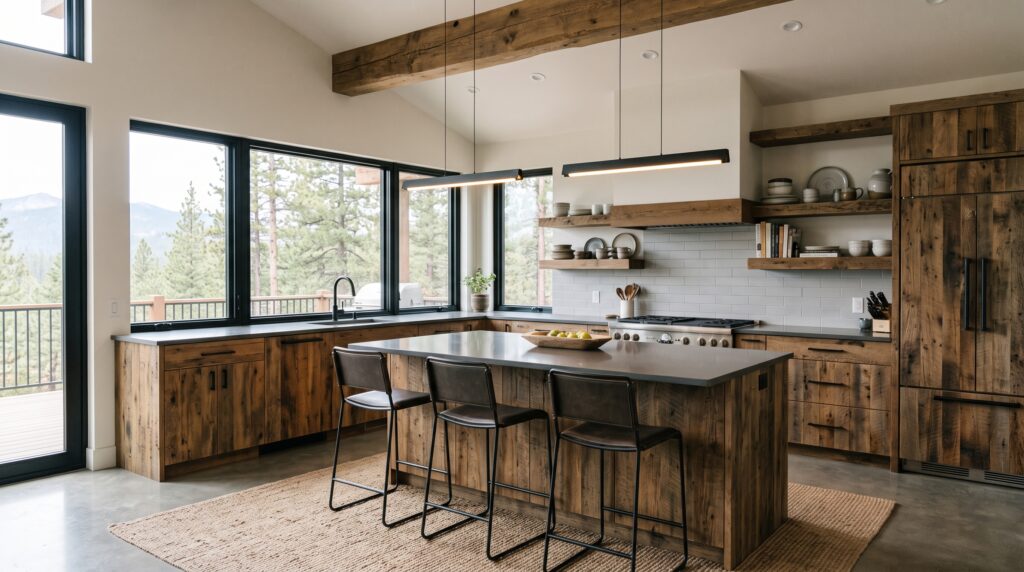
The best modern cabin kitchens avoid looking like a theme park version of a mountain lodge. Mixing in cleaner-lined stools, simple hardware, or a streamlined range hood alongside the wood and stone keeps the space feeling like a real, livable home rather than a stage set.
Bringing It All Together
You don’t need every idea on this list to create a convincing, comfortable cabin kitchen — in most successful renovations, three or four well-chosen elements do the heavy lifting. Pick your wood tone first, commit to one or two textural features like stone or reclaimed timber, get the lighting warm and layered, and let smaller details like open shelving, greenery, and vintage objects fill in the personality.
Done well, a cabin kitchen isn’t really about a specific look at all — it’s about creating a room that feels unhurried, tactile, and worth spending time in. That’s a quality that works whether your home sits deep in the mountains or in the middle of a city block.
For more real-world cabin kitchen renovations and material guidance, Real Cedar’s cabin kitchen design guide is a solid resource, featuring interviews with architects and designers who work in wood-forward, nature-connected homes.