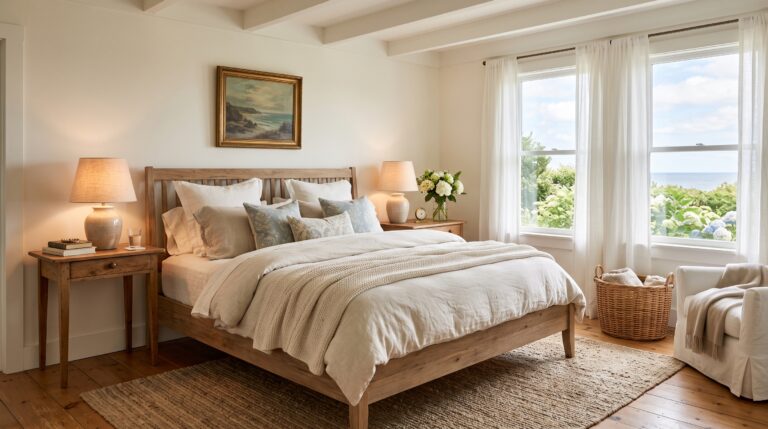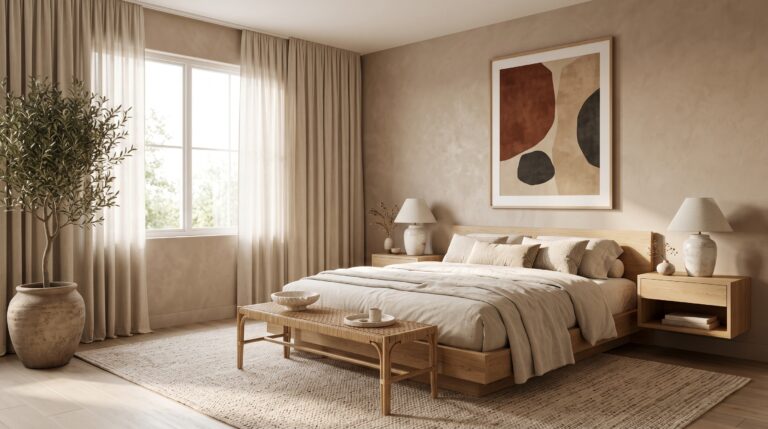
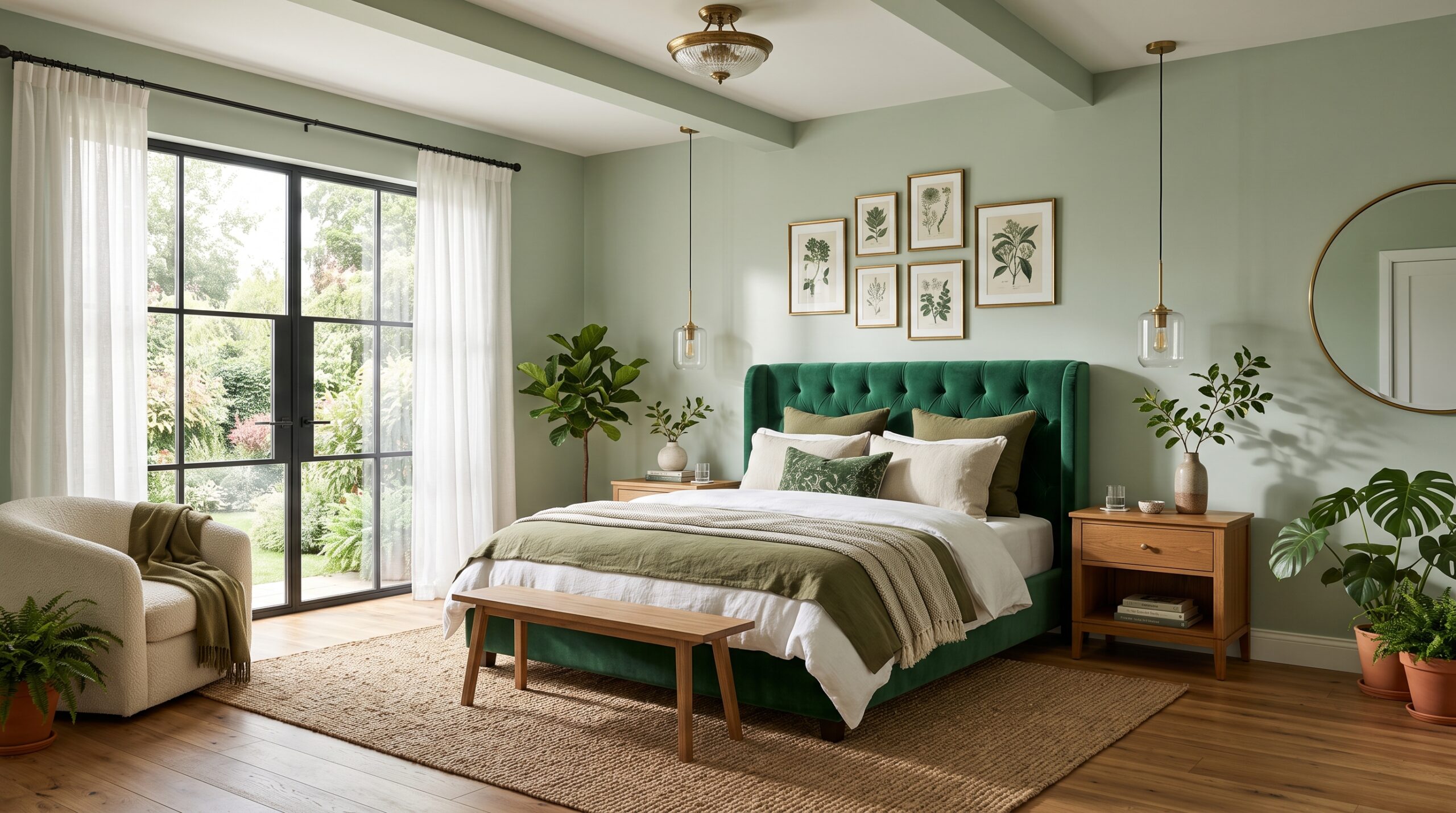
There’s a reason green keeps popping up on every mood board this year. It’s the one color that manages to feel grounded and alive at the same time —16 green bedroom ideas for a fresh cozy retreat enough for a bedroom, but full of enough personality to keep the room from feeling flat. If you’ve been scrolling for hours trying to picture what a green bedroom actually looks like once the pins turn into a real room, this guide is for you.
Below you’ll find sixteen approachable ways to bring green into your bedroom, from a single accent pillow to a full wraparound color story. Some ideas are weekend projects, others are bigger commitments, but all of them are built around the same goal: a space that feels like an actual retreat, not just a photo.
Part of what makes green so easy to work with is its range. A pale, dusty sage behaves almost like a neutral, while a saturated forest or emerald tone can carry the same visual weight as a piece of furniture. That flexibility means you can dial the color up or down depending on how bold you want the room to feel, without ever losing the grounded, nature-inspired quality that makes green such a popular choice for bedrooms in the first place. Use this list as a starting point, then mix and match the ideas that fit your space, your furniture, and your budget.
16 Green Bedroom Ideas for a Fresh Cozy Retreat
1. Start With a Soft Sage Wall
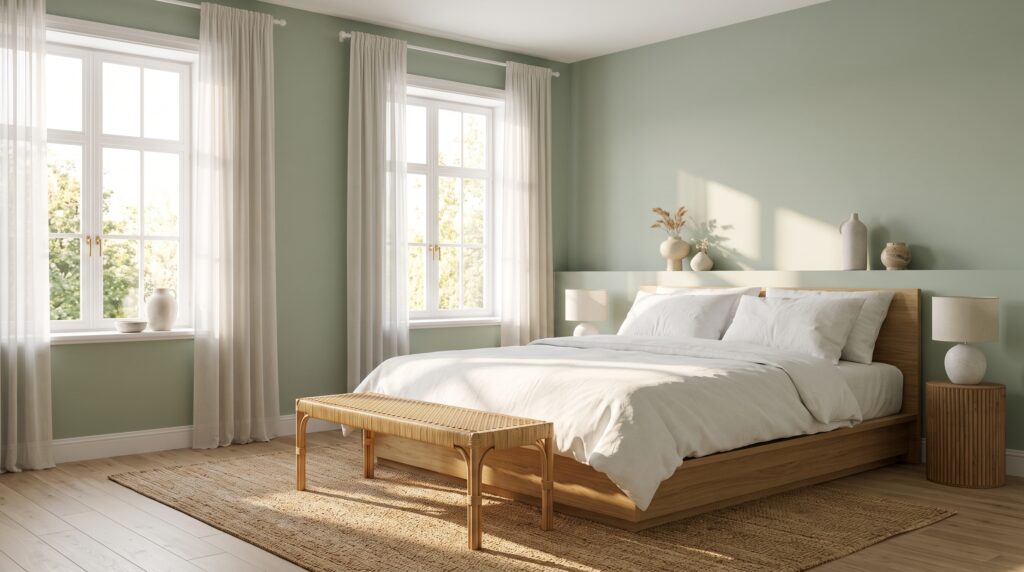
Sage is the easiest green to live with because it reads more like a neutral than a bold statement color. Painted on all four walls, it softens the light in a room and keeps the space feeling open rather than closed in. It plays especially well with white linens, unfinished or lightly stained wood, and woven baskets or rattan accents. If you’re nervous about committing to a full room of color, sage is the shade least likely to feel like a mistake a year from now.
It’s also one of the more forgiving colors to live with over time, since it doesn’t clash with the wood tones, metals, or fabric colors you’re likely to already own. A room painted in sage can go from summer to winter with almost no other changes — just swap a lighter throw for something heavier and the space adjusts right along with the season.
2. Go Bold With an Emerald Accent Wall
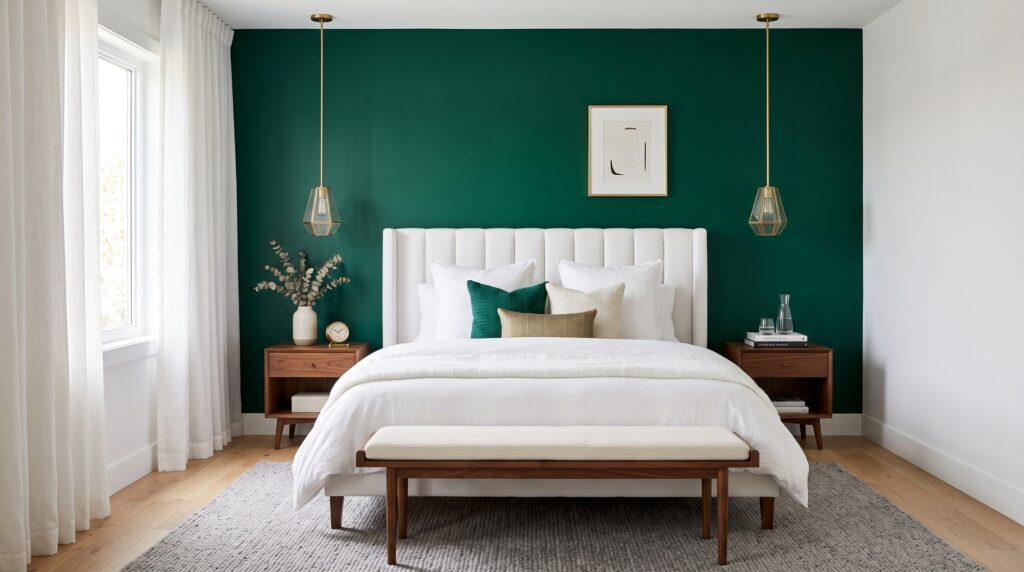
If sage is the safe choice, emerald is the confident one. Reserved for a single wall behind the headboard, a deep emerald tone instantly gives the room a sense of drama without tipping into “too much.” Keep the rest of the palette quiet — white bedding, brass or warm metal fixtures, and a couple of wood pieces — so the wall stays the star of the show instead of competing with a busy room.
This approach also works well for renters or anyone hesitant to paint an entire room, since a single wall is a much smaller project to reverse later. If you want the same effect without paint at all, a large framed piece of art or a fabric panel in a similar emerald tone can create a nearly identical focal point behind the bed.
3. Build Depth With Layered Green Pillows
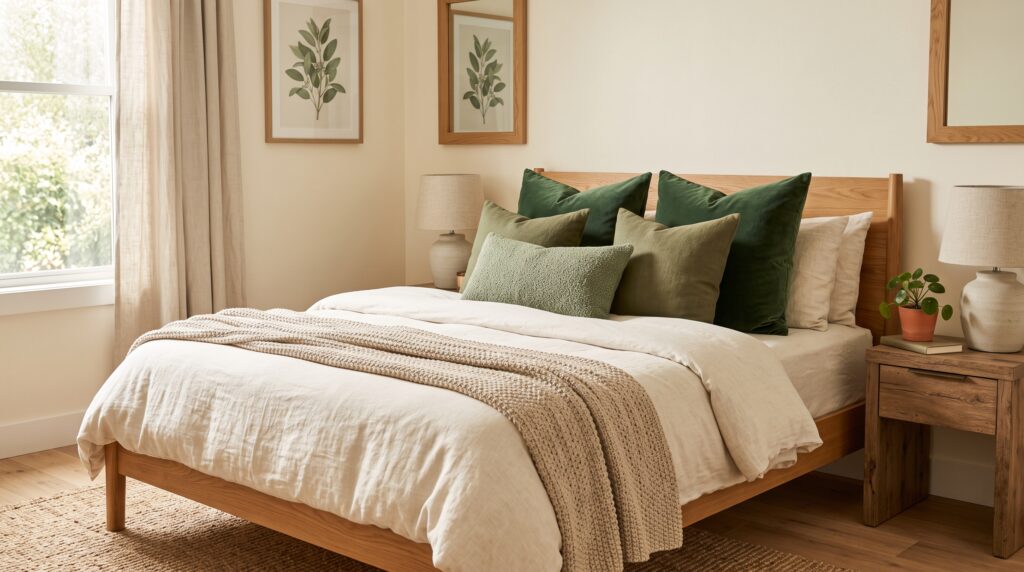
Not ready to paint anything? Pillows are the lowest-commitment way to test the color. Mixing a few different greens — think olive, forest, and a lighter sage — across different fabrics like velvet, linen, and bouclé adds real texture to an otherwise plain bed. Because pillows are cheap to swap out, this is also the easiest idea to change with the seasons if your taste shifts.
4. Try a Botanical Wallpaper Feature Wall
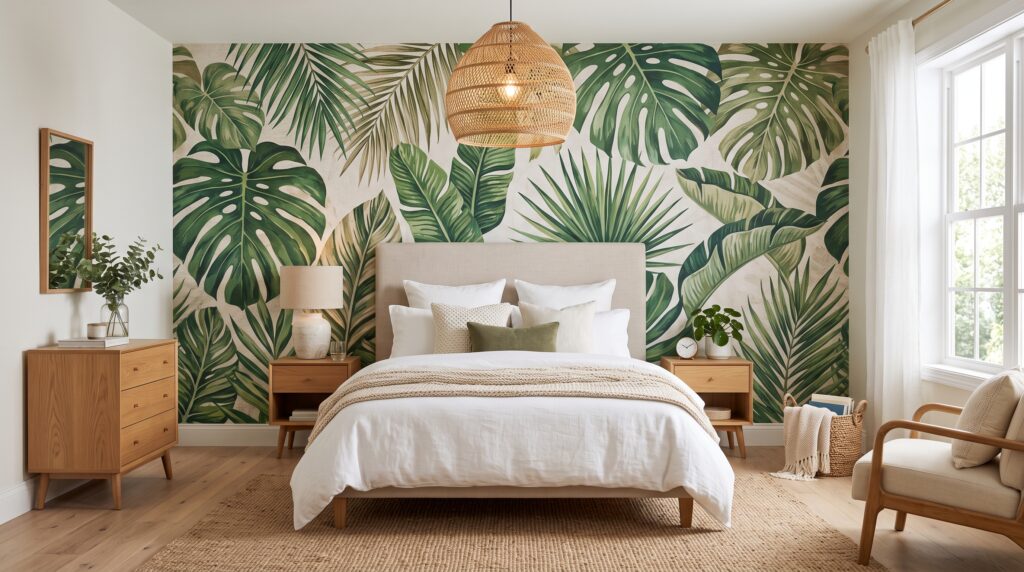
For a room that feels like it belongs in a plant-filled greenhouse, a leafy botanical wallpaper on one wall does a lot of heavy lifting. Because the pattern itself carries so much visual interest, keep the furniture simple and let the wall be the focal point. This works particularly well behind the headboard, where the pattern peeks out from behind the pillows. Peel-and-stick versions have gotten good enough in recent years that this is no longer a purely permanent decision either, which makes it a low-risk way to try a bolder look before committing to traditional wallpaper.
5. Choose Olive Green Bedding as Your Base
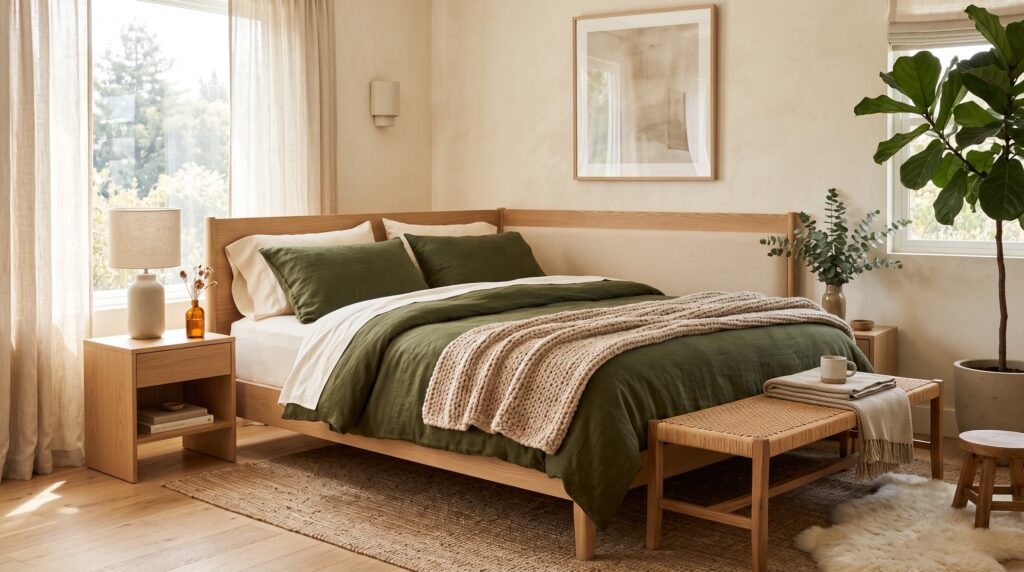
Instead of painting a wall, some people prefer to start with the bed itself. An olive green comforter or duvet has a slightly warmer, earthier feel than brighter greens, which makes it easy to pair with cream sheets, chunky knit throws, and linen shams. It’s a comforting, hotel-suite kind of look that doesn’t require touching a paintbrush at all.
6. Pair Green With Natural Wood Tones
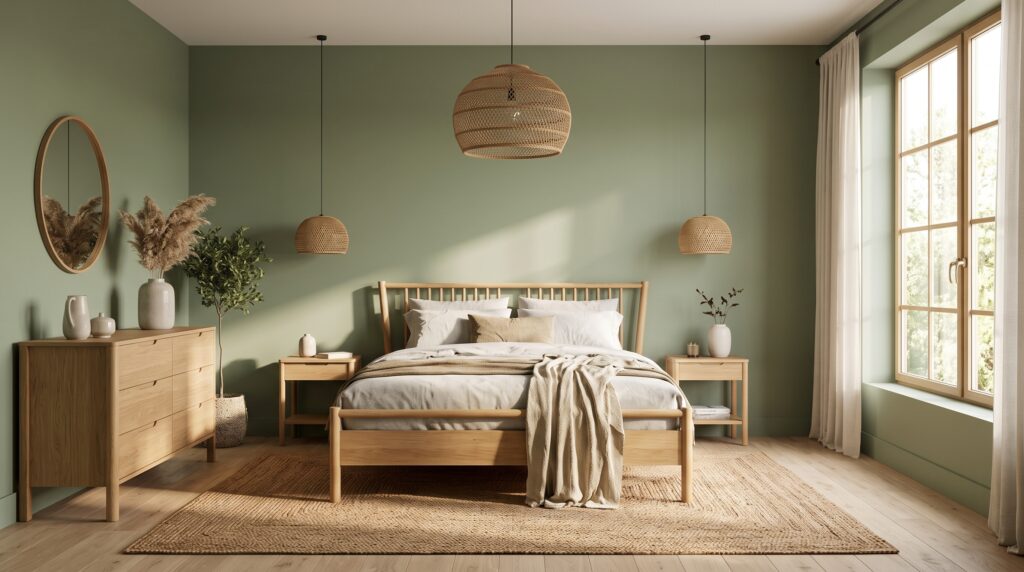
Green and wood are basically a package deal in nature, so it makes sense they work so well together indoors too. Oak dressers, walnut nightstands, or a reclaimed wood headboard all bring warmth that balances out the coolness of most green shades. This combination tends to land somewhere between modern and rustic, which makes it flexible enough for almost any home. If most of your existing furniture already leans wood-heavy, adding green is often the fastest way to update the room without replacing a single piece — a new coat of paint, a couple of pillows, or a rug can shift the whole feel of the space.
7. Bring in Real, Living Plants
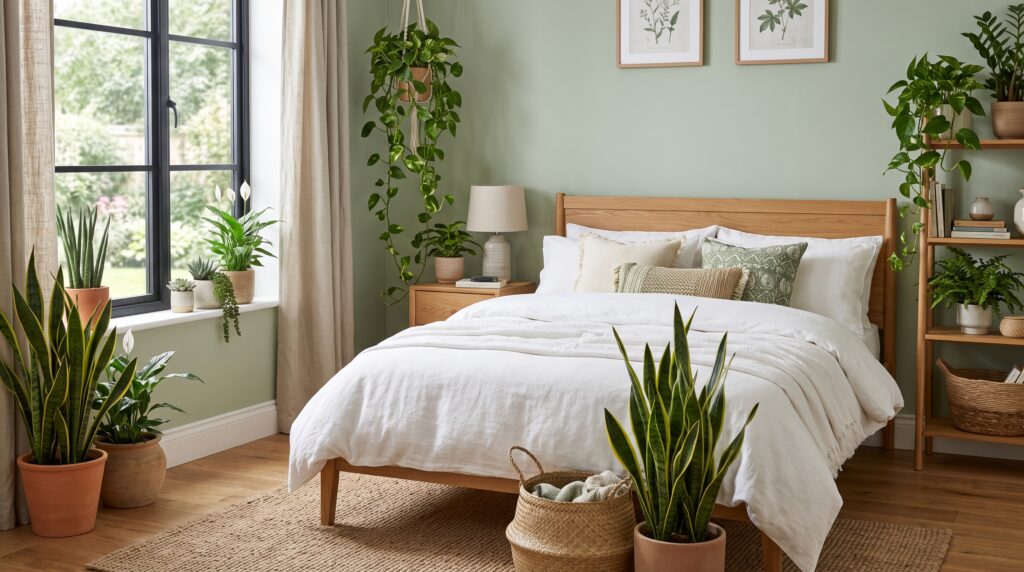
No green bedroom idea list would be complete without actual plants. Snake plants, pothos, and peace lilies are all low-maintenance choices that thrive in average bedroom light. Beyond how they look, houseplants have long been associated with a calmer indoor environment — NASA’s early research into plants and enclosed air quality helped kick off decades of interest in bringing greenery indoors, and you can read more about that original research on NASA’s official Spinoff site. Group a few different pot styles and heights together for a look that feels intentional rather than scattered.
8. Keep It Bright With Green and White
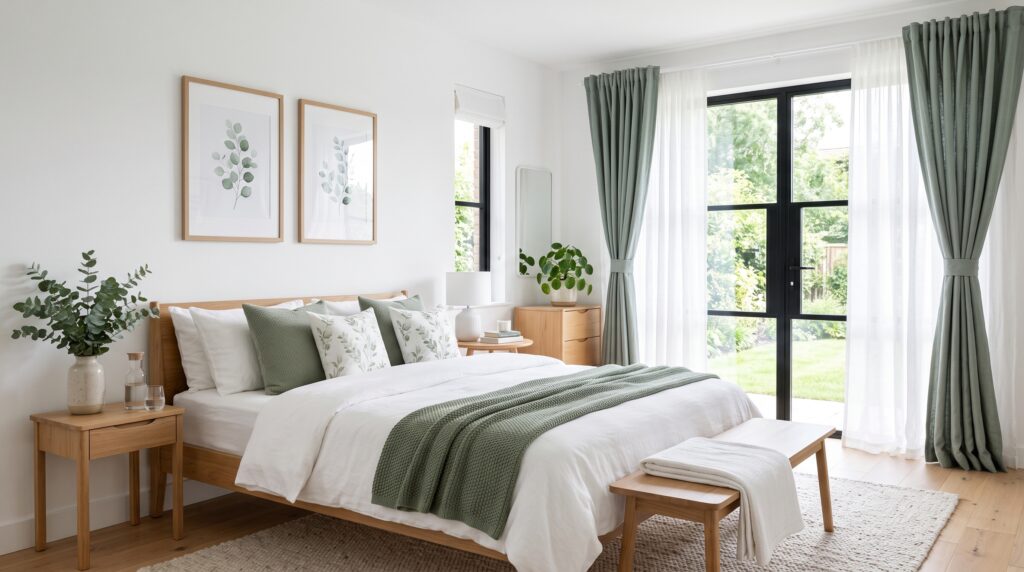
If deep, moody greens aren’t your thing, pairing green with white keeps things light and airy instead. Use white as the dominant wall and bedding color, then let green come through in smaller doses — artwork, curtains, a throw blanket, or a few accessories on the nightstand. It’s a combination that photographs beautifully but also just feels genuinely restful to wake up in.
9. Carve Out a Cozy Green Reading Nook
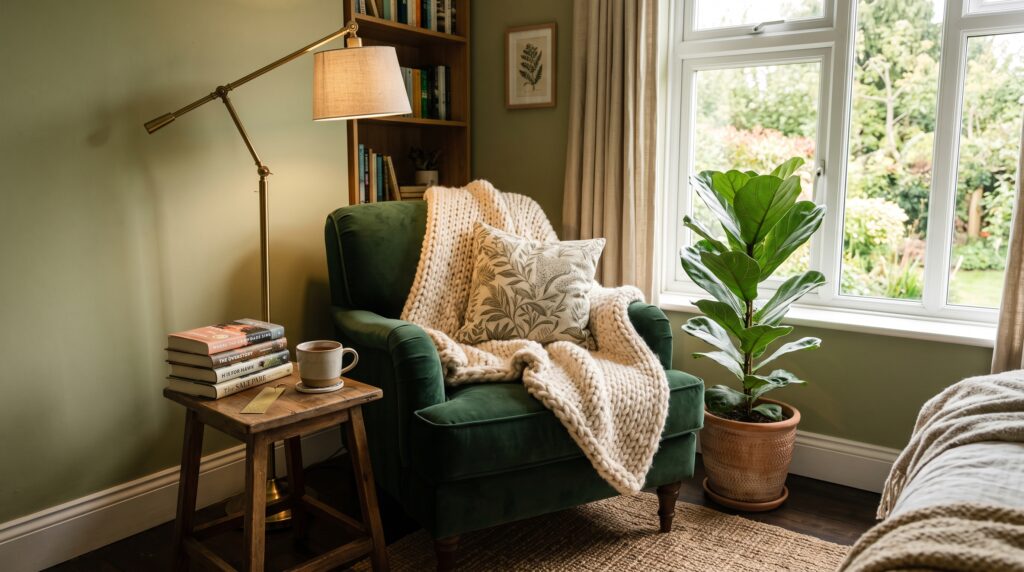
An unused corner of the bedroom is the perfect spot for a small reading chair in a rich green fabric. Add a knit throw, a patterned cushion, and a little side table for your current book and a cup of tea. A floor lamp and one leafy plant finish the look. It doesn’t take much square footage to create a spot that feels like its own private retreat within the room. Even an awkward corner that’s normally hard to furnish — next to a window or beside a closet — can work well here, since a reading nook only really needs a chair, some soft lighting, and a small surface within arm’s reach.
10. Hang Forest Green Velvet Curtains
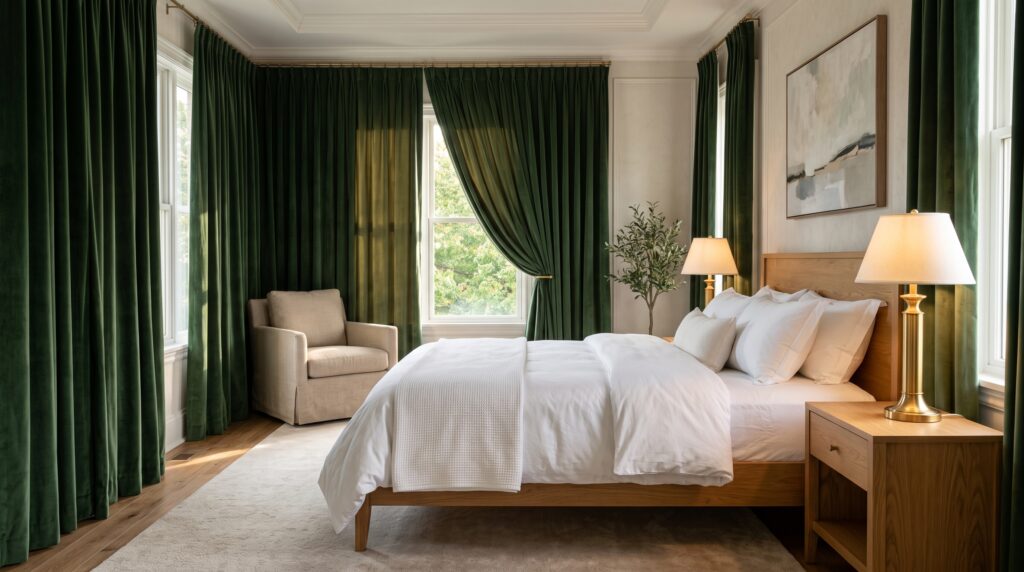
Floor-to-ceiling curtains in a deep forest green velvet do double duty: they frame the windows beautifully and add a layer of soft, sound-absorbing texture to the room. Paired with lighter walls and wood furniture, they keep the space from feeling too heavy while still adding that sense of richness velvet is known for.
11. Add Nature-Inspired Wall Art
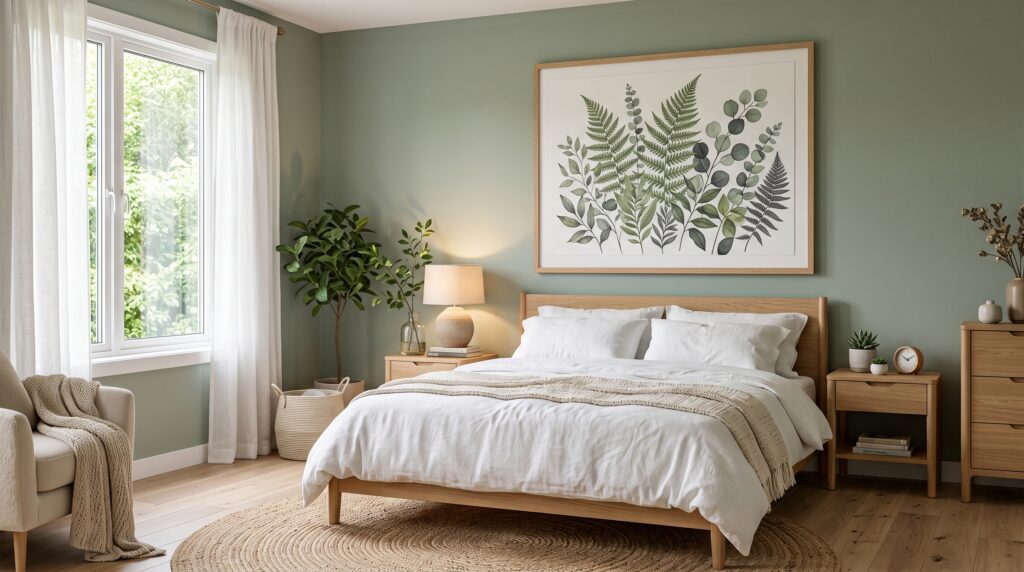
Botanical prints, forest landscapes, or even pressed-leaf art in simple frames reinforce the natural theme without adding another big color commitment. A single oversized piece above the bed makes a strong statement, while a small curated gallery wall feels more personal and collected over time.
12. Balance Green With Warm Beige
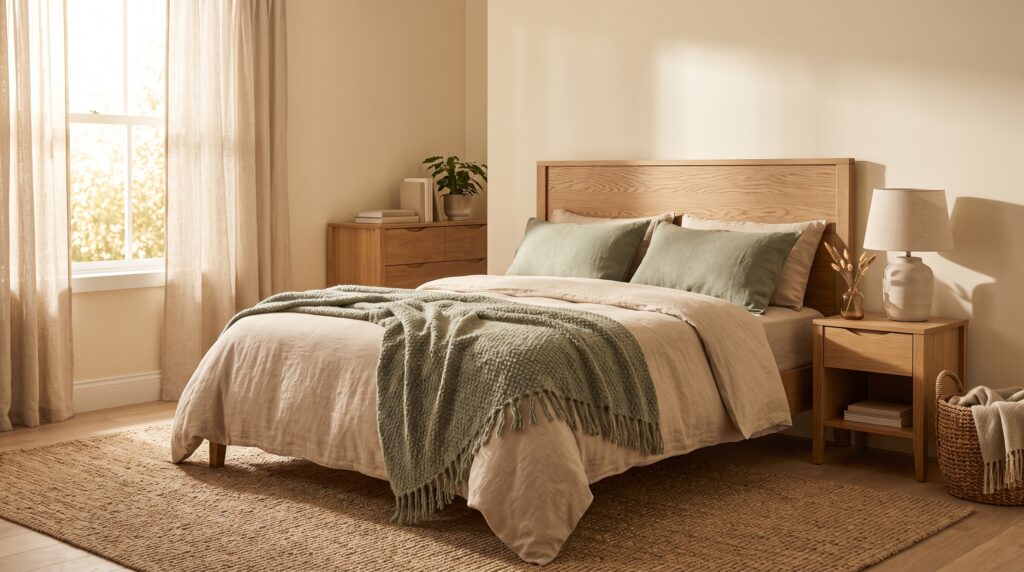
Green and beige is a quieter pairing than green and white, with a softer, more grounded feel overall. Beige walls, rugs, or upholstered furniture take the edge off bolder greens and keep the room feeling warm rather than stark. Woven baskets and linen textiles round out the earthy, lived-in look.
13. Install a Green Upholstered Headboard
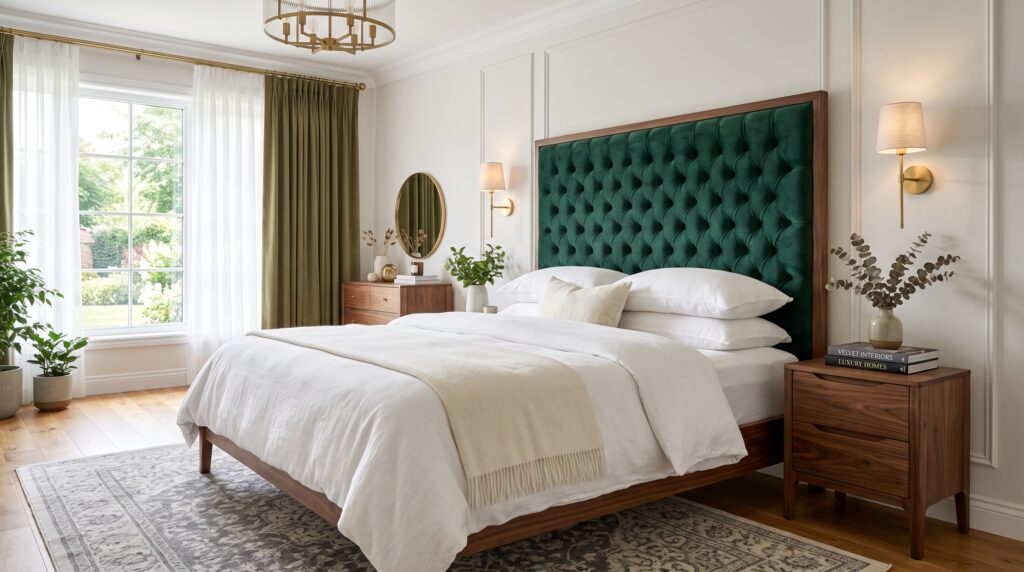
A headboard is one of the few furniture pieces that can act like a piece of art in itself. In a rich green velvet, it becomes an obvious focal point the moment you walk in the room. Linen is a good option if you want something a little more relaxed and casual instead of formal. Either way, keep the bedding neutral so the headboard gets to do the talking.
14. Use a Green Patterned Wallpaper
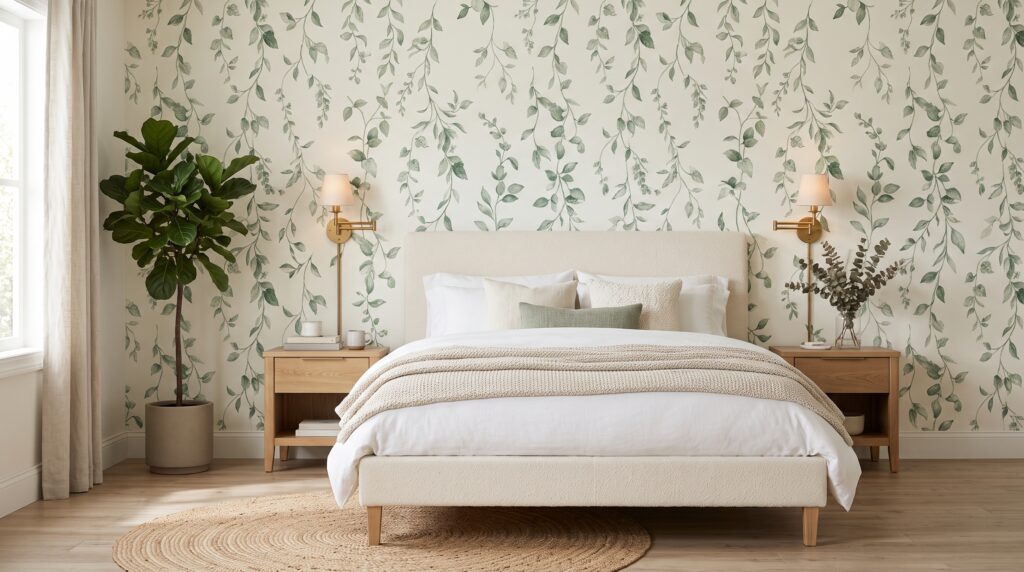
Rather than a solid botanical print, a smaller-scale patterned wallpaper — think delicate vines, ferns, or floral motifs — adds texture without overwhelming the room the way a bold mural might. Applied to just the wall behind the bed, it gives the space personality while leaving the rest of the decor free to stay simple.
15. Anchor the Room With a Green Area Rug
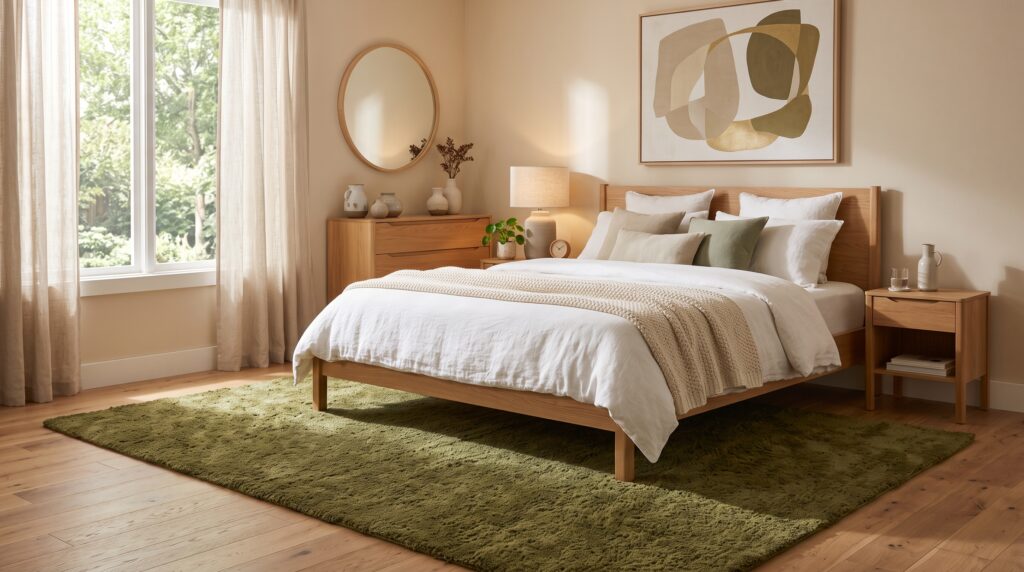
A plush green rug underfoot ties a room together in a way that’s easy to underestimate until you see it in person. Whether you go for a vintage-style pattern or a clean modern geometric print, a rug helps define the space around the bed and gives the whole green color story a base to build from.
16. Style Floating Shelves With Green Accents
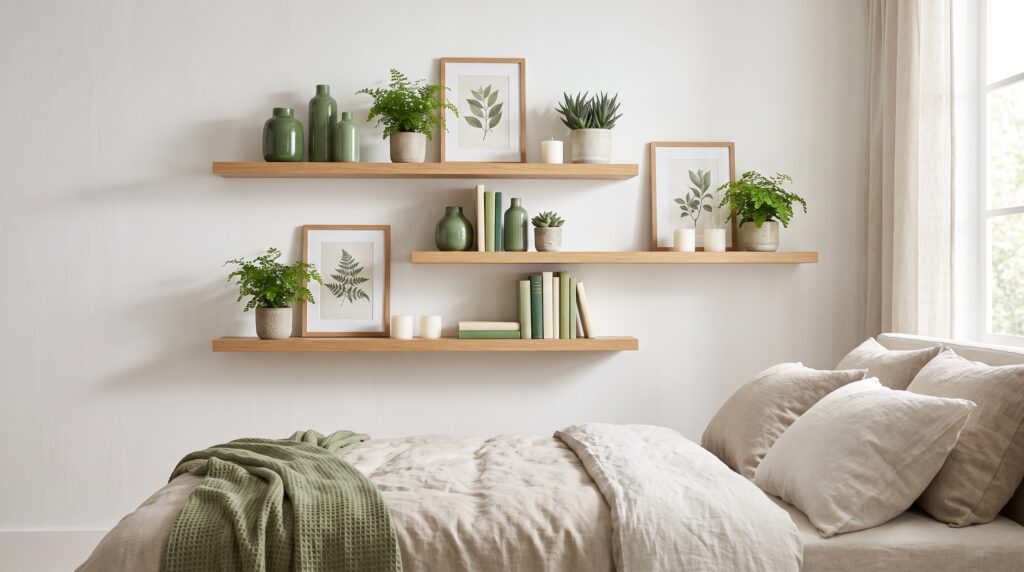
Open shelving is an easy, low-cost way to layer in more green without a major renovation. Mix ceramic vases, small potted plants, a candle or two, and a couple of framed pieces at varying heights. The trick is restraint — a few well-chosen objects will always look more polished than a shelf packed edge to edge.
Frequently Asked Questions
Does green make a bedroom feel darker or smaller? Not necessarily — it depends heavily on the shade and how much natural light the room gets. Lighter greens like sage or mint tend to open a space up, while deep tones like emerald or forest green work best as accents rather than covering every wall, especially in rooms with limited light.
What colors pair best with green in a bedroom? White, warm beige, and natural wood tones are the most reliable pairings, since they let green stand out without competing with it. Brass and warm gold metal accents also tend to complement most green shades nicely.
Is green a good color for a small bedroom? Yes, particularly the lighter, softer shades. A pale sage or mint on the walls can actually make a small room feel a bit larger and airier, especially when paired with lighter furniture and plenty of natural light.
How much green is too much in one room? There’s no strict rule, but a helpful guideline is to choose one dominant application — a wall, the bedding, or a large rug — and let everything else stay more neutral. Layering in two or three greens of different shades usually reads as intentional, while five or six competing tones can start to feel busy.
Bringing It All Together
You don’t need every idea on this list to create a green bedroom that feels calm and put-together — in fact, most well-designed rooms lean on just two or three of these ideas at a time. Maybe that’s a sage wall and a couple of plants, or an emerald headboard with warm wood furniture and a soft rug underfoot. Start with whichever idea feels the most like you, build outward from there, and let the room evolve as your taste does. Green is forgiving that way: it’s warm enough to feel cozy and versatile enough to grow with you, whether you’re aiming for something soft and quiet or a little more dramatic.
Whatever direction you take, the goal is the same one behind every idea here — a bedroom that feels less like a showroom and more like the place you actually look forward to coming home to. Take your time with it, live with one or two changes before adding more, and let the room settle into a look that feels less like a trend and more like home.