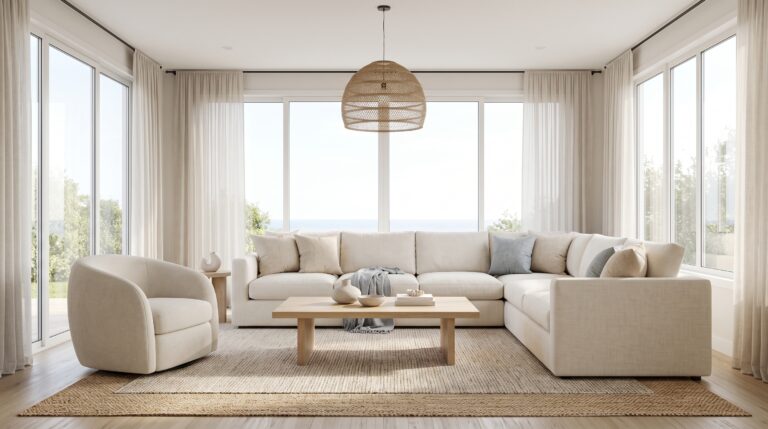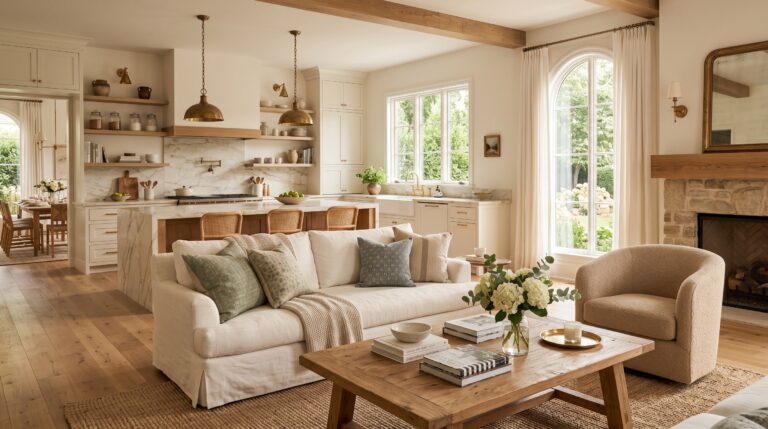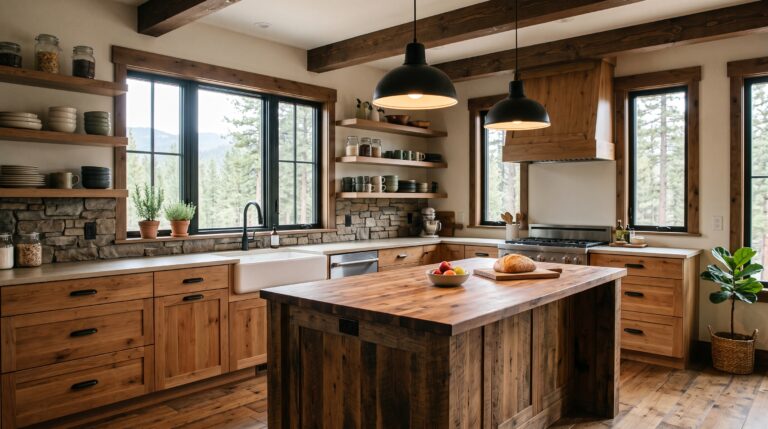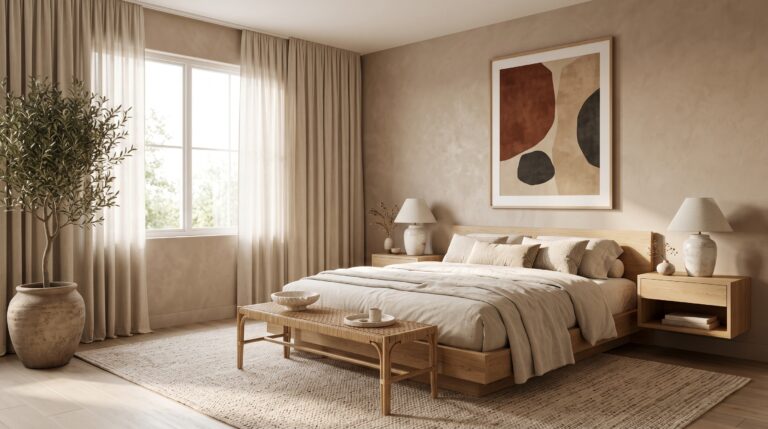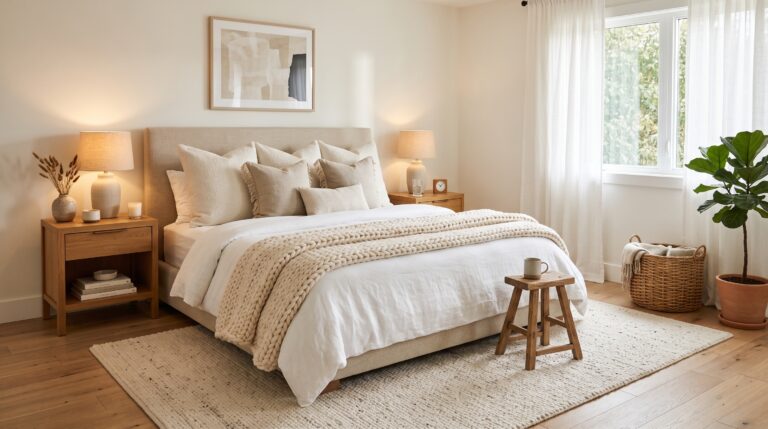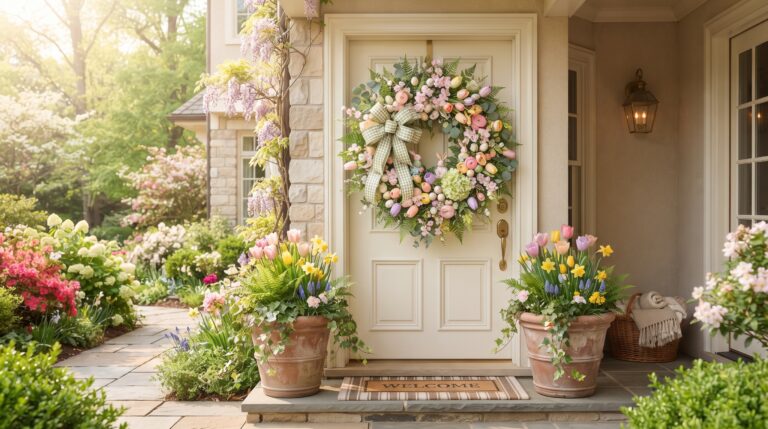
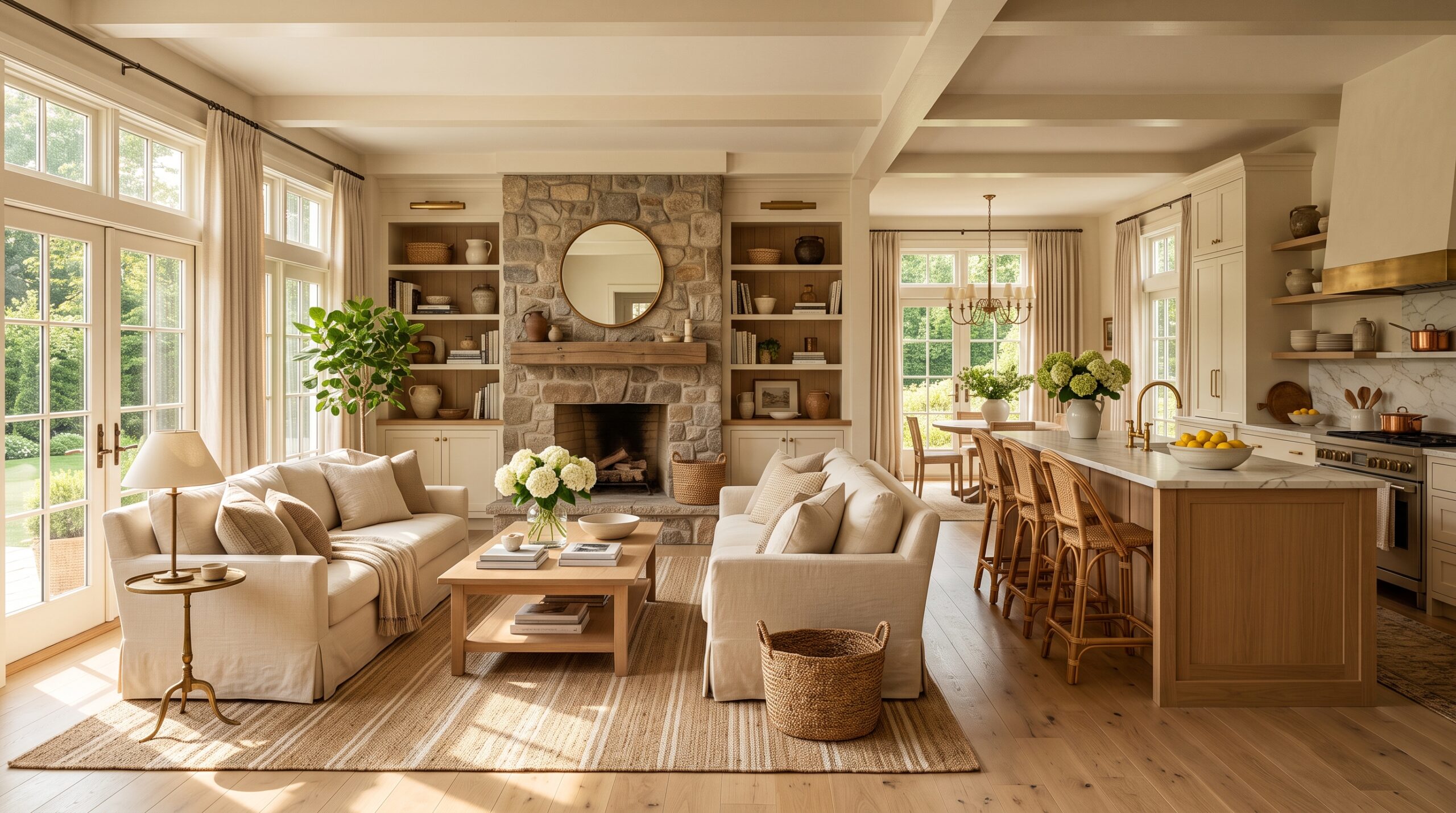
There’s a reason people can’t stop talking about a 22 nancy meyers home decor ideas youll love Meyers home. Every set she’s ever built feels sunlit, unhurried, and quietly luxurious — the kind of space where a linen slipcover and a bowl of lemons somehow look more expensive than anything you could buy new. It’s not about spending the most money or filling every surface with decor; it’s about warmth, restraint, and a handful of well-chosen materials that get repeated, room after room, until the whole house feels like it belongs to one calm, confident story.
If you’ve been chasing that same warm, collected-over-time feeling for your own house, you’re in the right place. Below is a full roundup of ideas pulled from her most iconic interiors — from the Hamptons beach house to the cozy English cottage — broken down into details you can actually recreate, one room at a time. None of these require a full renovation. Most of them start with a single swap: a new lampshade, a stack of books, a bowl of lemons on the counter.
22 Nancy Meyers Home Decor Ideas You’ll Love
These are the building blocks of that unmistakable, lived-in elegance — the palette, the materials, the small styling habits — that show up again and again across her films.
1. Anchor Every Room in Warm Neutrals
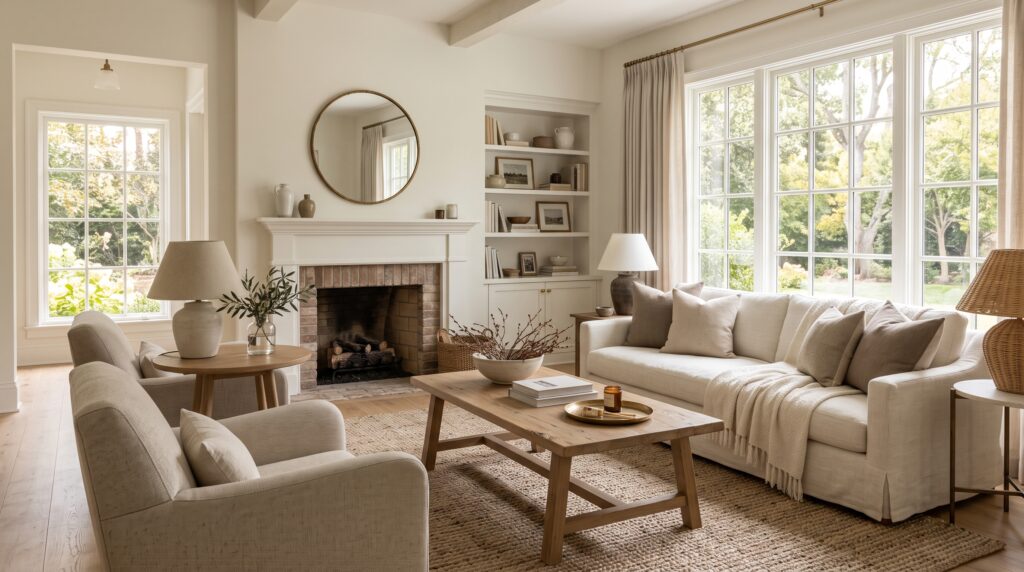
Nothing says Nancy Meyers quite like a wall of soft, creamy neutrals. Think warm white, oatmeal, greige, and pale taupe instead of stark white or gray. These tones bounce natural light around a room beautifully and give every space a settled, elegant hush rather than a cold, showroom feel. Repeat similar shades from room to room so the whole house reads as one continuous, calming palette rather than a series of disconnected spaces. If you’re unsure where to start, paint the trim, walls, and ceiling within a few shades of each other — that tonal blur is what makes these rooms feel so soft and enveloping in film lighting, and it works just as well under ordinary daylight at home.
2. Keep Fresh Flowers on Hand — Always
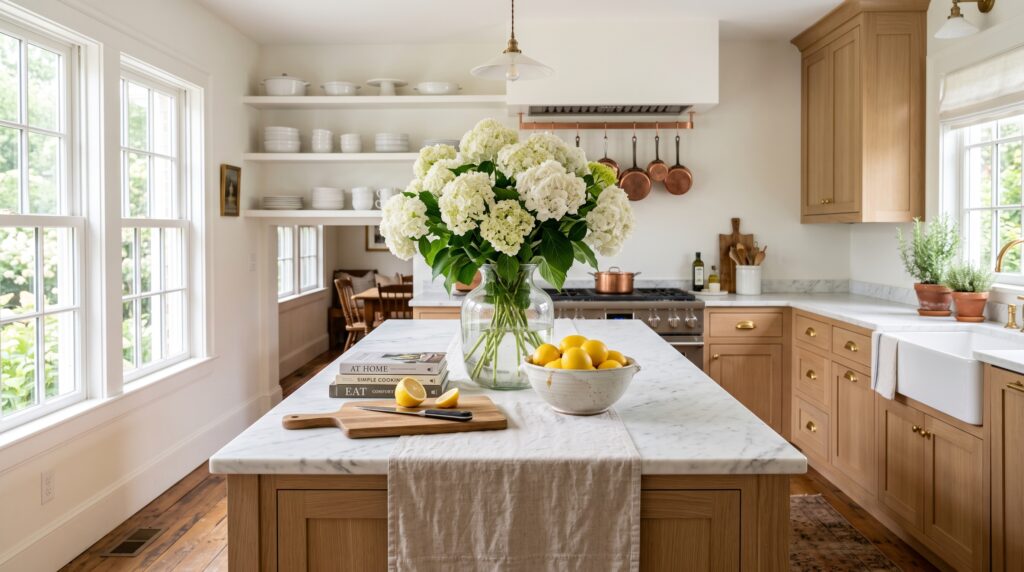
Big, loose arrangements of hydrangeas, garden roses, or peonies in a simple pitcher or glass vase are practically a signature move. Set them on the kitchen island, the dining table, or a console by the front door. They don’t need to look “arranged” — a slightly imperfect, garden-cut look is actually more in keeping with the aesthetic than a stiff florist bouquet.
3. Let Linen Do the Heavy Lifting
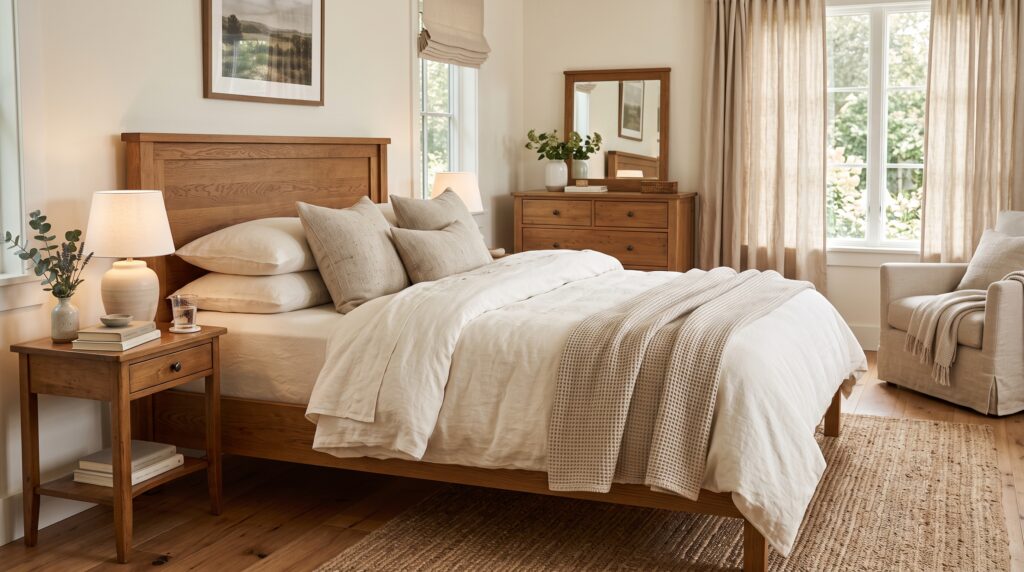
Linen shows up on everything in this style: curtains, slipcovers, throw pillows, table runners, bedding. Stay in the ivory-to-oatmeal family and let the natural wrinkles and texture of the fabric do the work. It’s the easiest single swap for making a room feel relaxed instead of stiff — a crisp, unwrinkled fabric almost always reads as more formal, while linen’s natural drape and texture is what gives these rooms their easy, unfussy character. Don’t iron out every wrinkle; a slightly rumpled curtain panel is part of the appeal, not a flaw to fix.
4. Pair White Oak with Marble
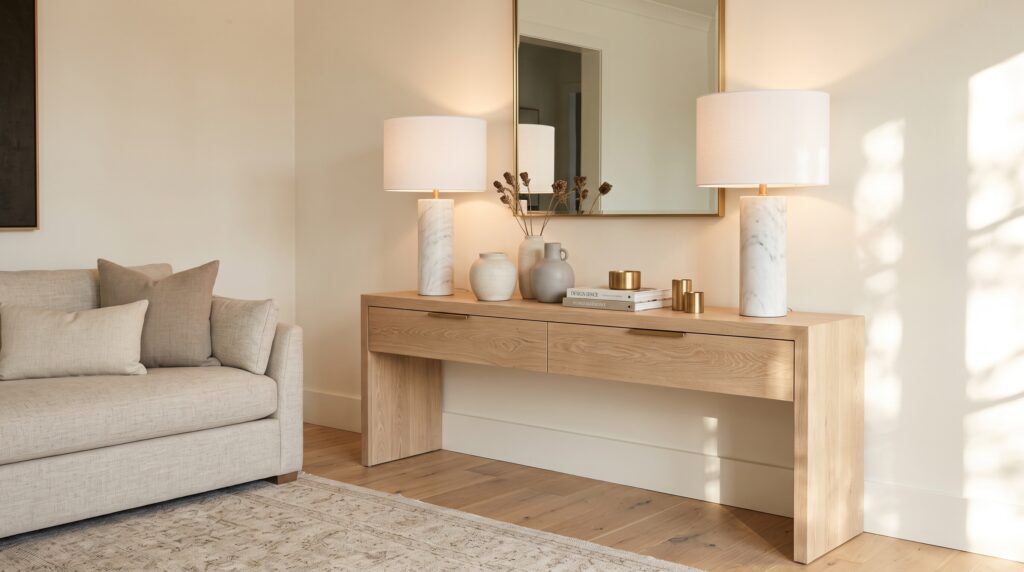
A honey-toned white oak table or console next to a cool marble lamp base or countertop is a favorite contrast in these interiors. The warmth of the wood keeps the marble from feeling austere, while the marble keeps the wood from feeling too rustic — together they read as quietly expensive.
5. Carve Out a Reading Nook
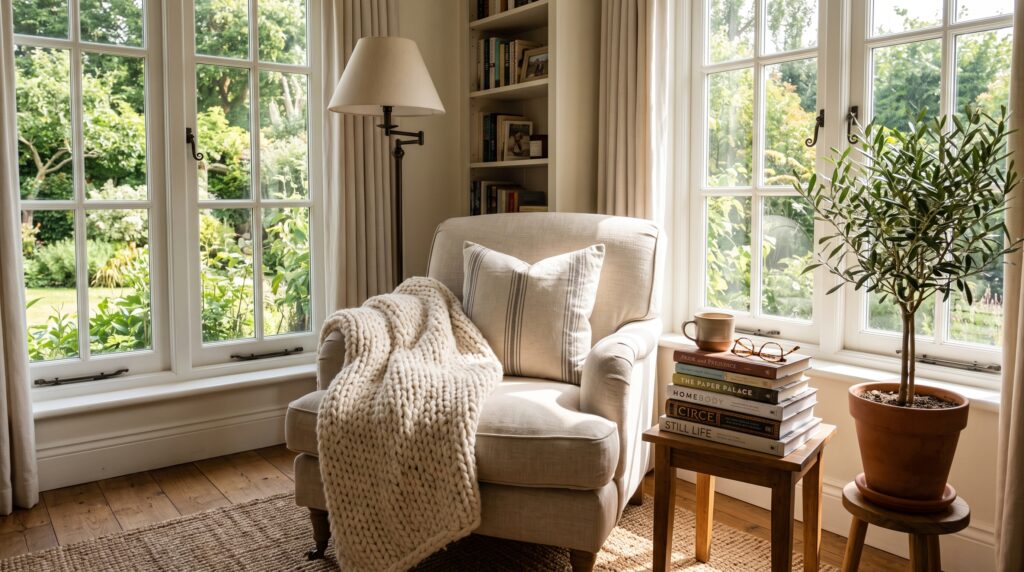
Pick an underused corner and give it one comfortable upholstered chair, a folded throw, a small side table, and a stack of hardcover books. Add a floor lamp for evening light and a small plant nearby. It doesn’t take square footage to make a house feel like a home — just one spot that invites you to sit down. A window nearby is a bonus, since natural light during the day and a warm lamp glow at night are what make these little corners feel like they belong in a movie rather than a furniture catalog.
6. Style Your Coffee Table with Restraint
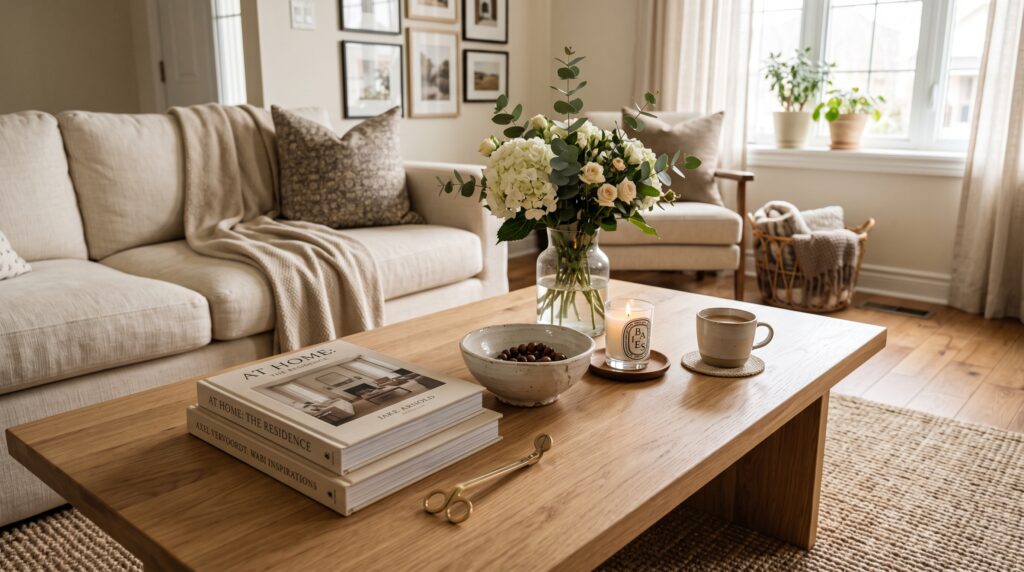
Resist the urge to fill every inch. A stack of two or three coffee-table books, a low ceramic bowl, a candle, and a small vase of flowers is plenty. Leaving open space on the table is part of the look — it signals a home that’s lived in, not staged.
7. Bring in Woven, Natural Textures
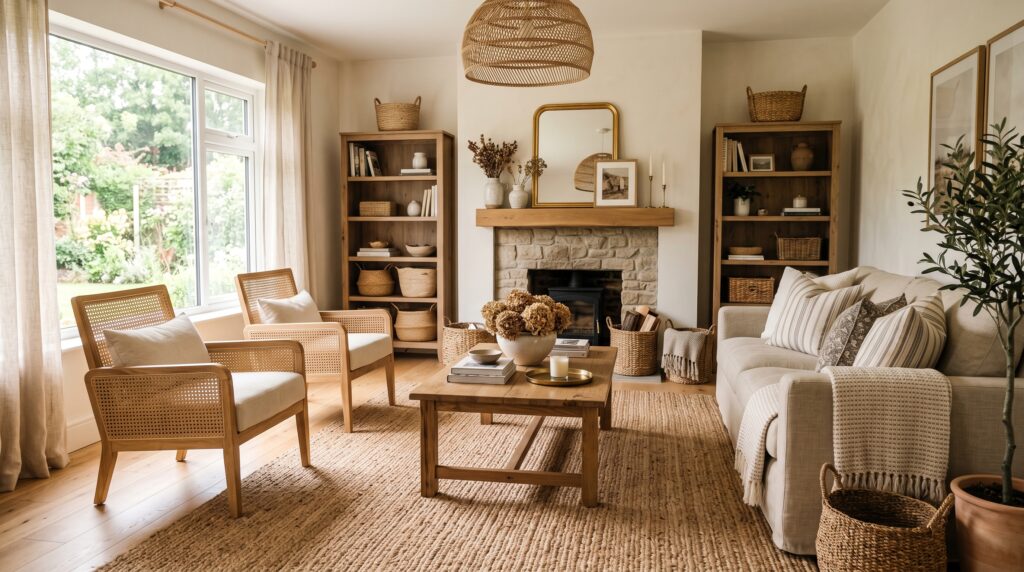
Rattan trays, seagrass baskets, cane chairs, and jute rugs soften a neutral room and keep it from feeling too polished. These woven textures pair naturally with linen and wood and add just enough visual interest without introducing color or clutter.
8. Make a Fireplace the Room’s Anchor
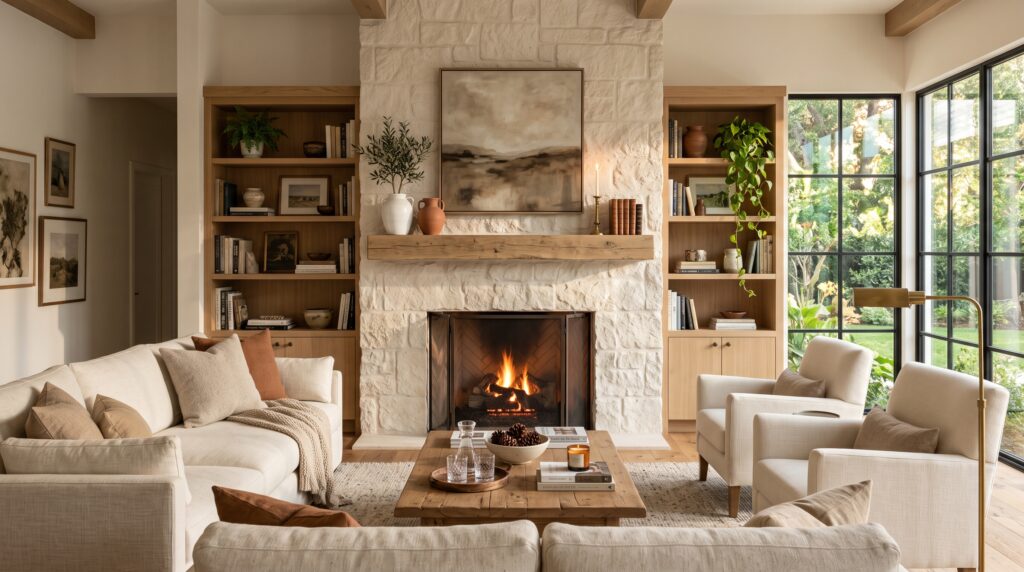
A pale stone or painted-brick fireplace, flanked by simple built-in shelving, instantly becomes the focal point of a living room. Keep the mantel styling light — a few ceramic pieces, some greenery, maybe one piece of art — so the fireplace itself stays the star. Even in warmer months when it’s not lit, a clean, uncluttered mantel keeps the room feeling finished rather than seasonal.
9. Style Bookshelves Like You Collected Everything Over Years
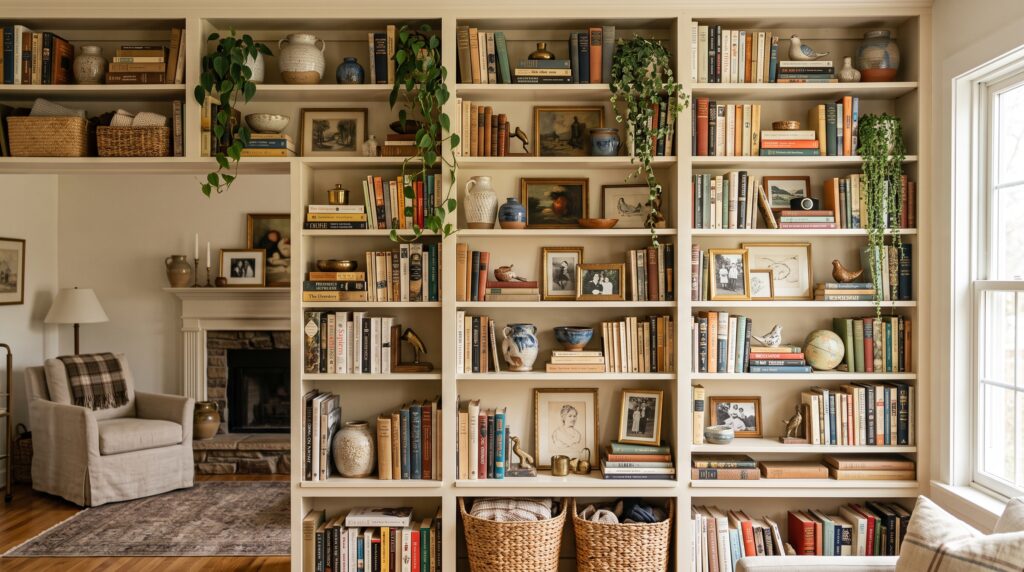
The best built-ins mix hardcover books (stacked and upright), a few pieces of pottery, a framed print, a small basket, and the occasional plant. Vary the heights, leave gaps, and resist symmetry on every single shelf. It should look gathered, not decorated in a single afternoon. One trick worth borrowing: turn a handful of book spines inward so only the pale page edges show. It’s a small detail, but it quiets down a busy shelf and keeps the neutral palette intact even on the one piece of furniture that’s hardest to keep monochromatic.
10. Choose a Slipcovered Linen Sofa
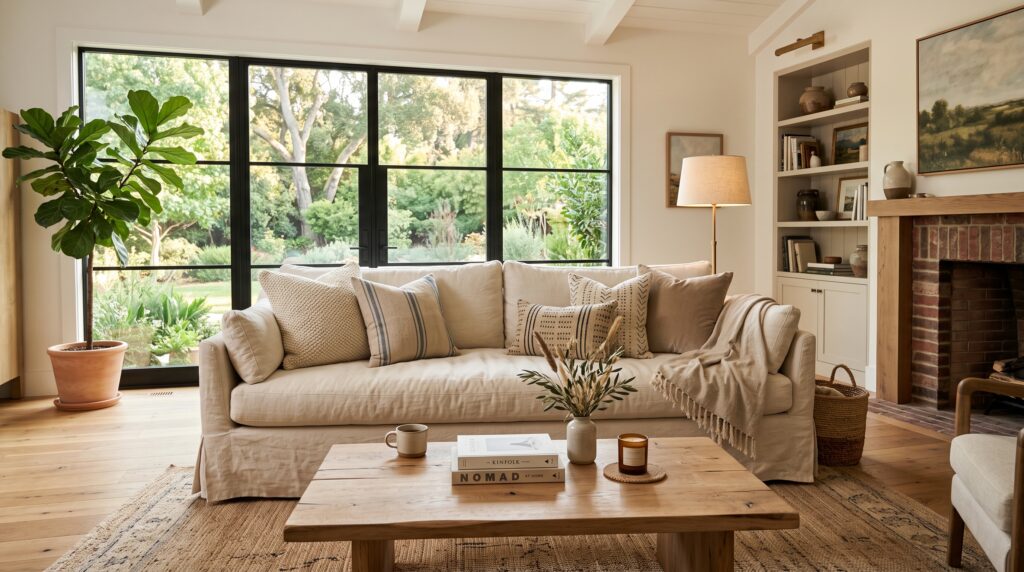
The relaxed, slightly rumpled shape of a slipcovered sofa is one of the most recognizable pieces of furniture in this style. Go with a washable linen in cream or ivory, then pile on a few textured pillows and one lightweight throw. It should look comfortable enough to nap on.
11. Add Handmade Ceramics Throughout
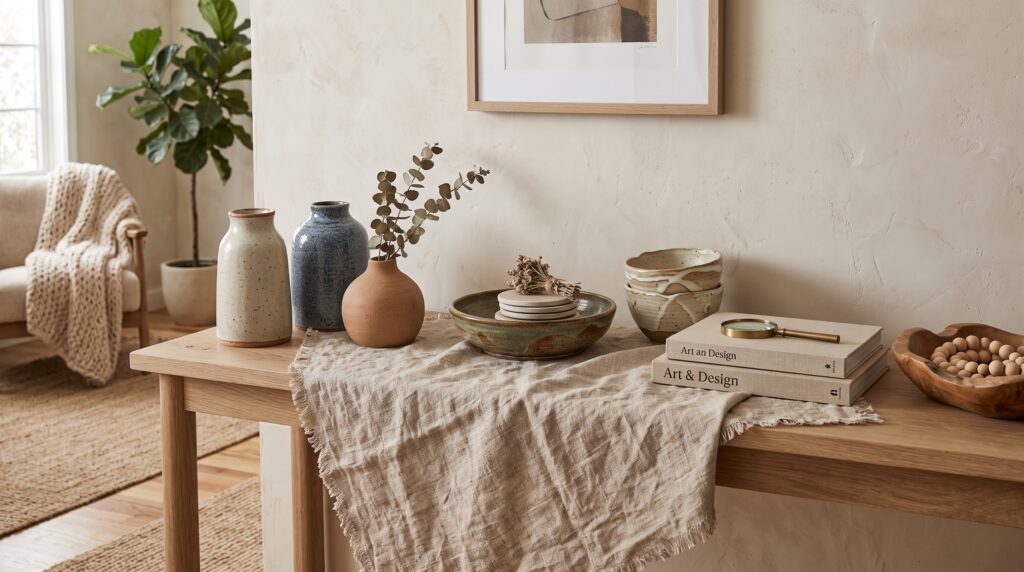
Look for pottery with visible texture or a slightly imperfect glaze — oversized vases, wide bowls, matte pitchers. These pieces bring warmth and a sense of craftsmanship that mass-produced decor can’t match, and they work equally well on a shelf, a console, or a kitchen counter.
12. Install Brass Sconces for Soft Light
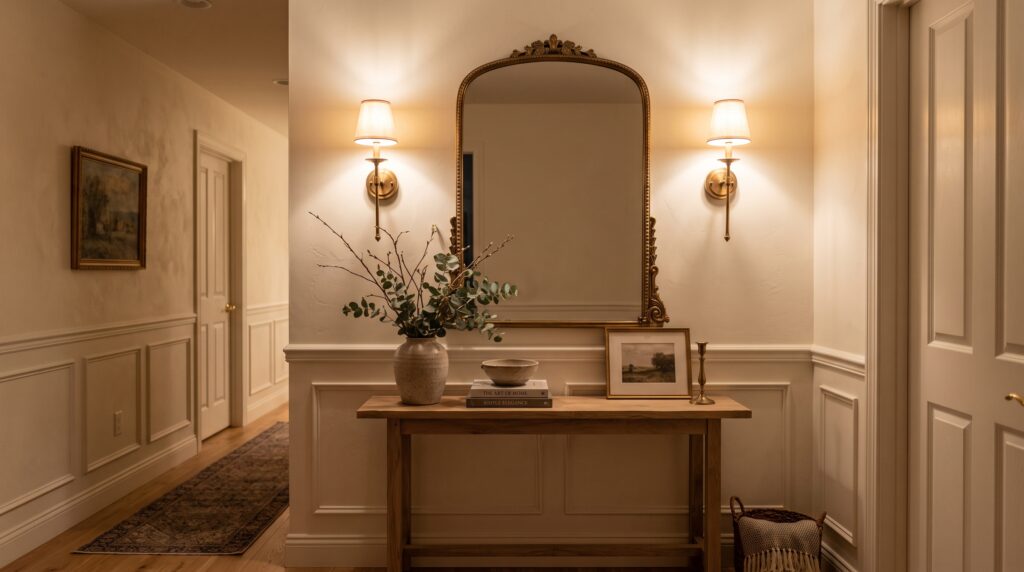
Wall-mounted brass sconces on either side of a mirror, fireplace, or piece of art add both light and architectural detail. Their warm glow in the evening is part of what makes these interiors feel so cozy after dark, and the finish pairs easily with wood, marble, and neutral walls.
13. Hang an Oversized Mirror
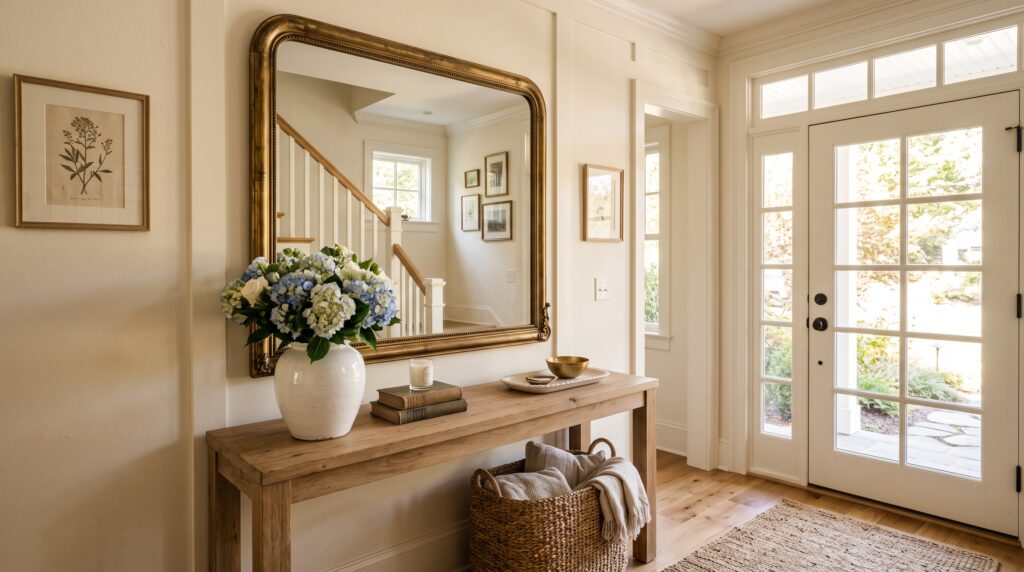
A large mirror in an antique brass or natural wood frame, placed across from a window, bounces light through the whole room and makes the space feel noticeably bigger. It’s a simple trick that costs one piece of furniture and pays off in every room it’s used.
14. Leave Room to Breathe
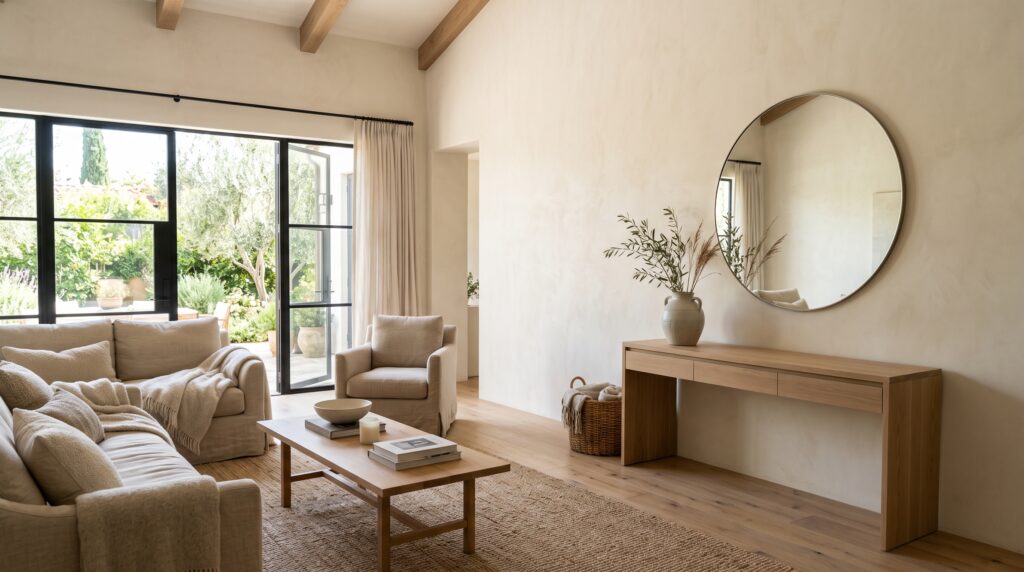
Negative space is doing a lot of quiet work in these interiors. Instead of covering every surface, let a handful of well-chosen objects have some space around them. A shelf with three things on it, spaced generously, reads far more sophisticated than one crammed with ten.
15. Make the Entryway Count
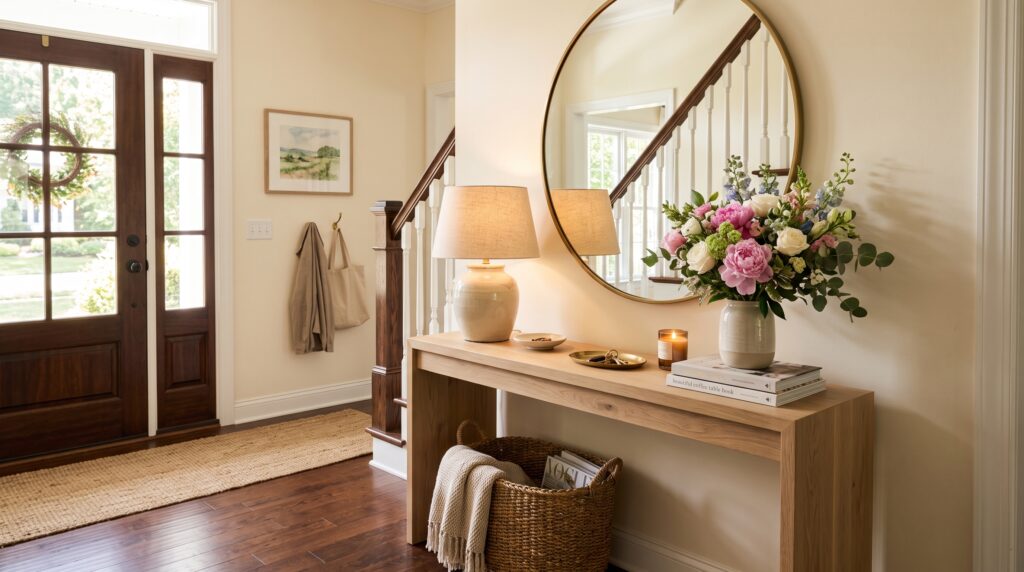
A console table in white oak or an antique wood finish, a mirror above it, a ceramic lamp, and a loose vase of flowers is the classic formula for a welcoming entry. Tuck a woven basket underneath for shoes or mail, and keep the top of the table from getting cluttered. This is the first thing you and your guests see coming through the door, so it’s worth treating as its own small vignette rather than a catch-all surface for keys and mail.
16. Layer Rugs for Texture
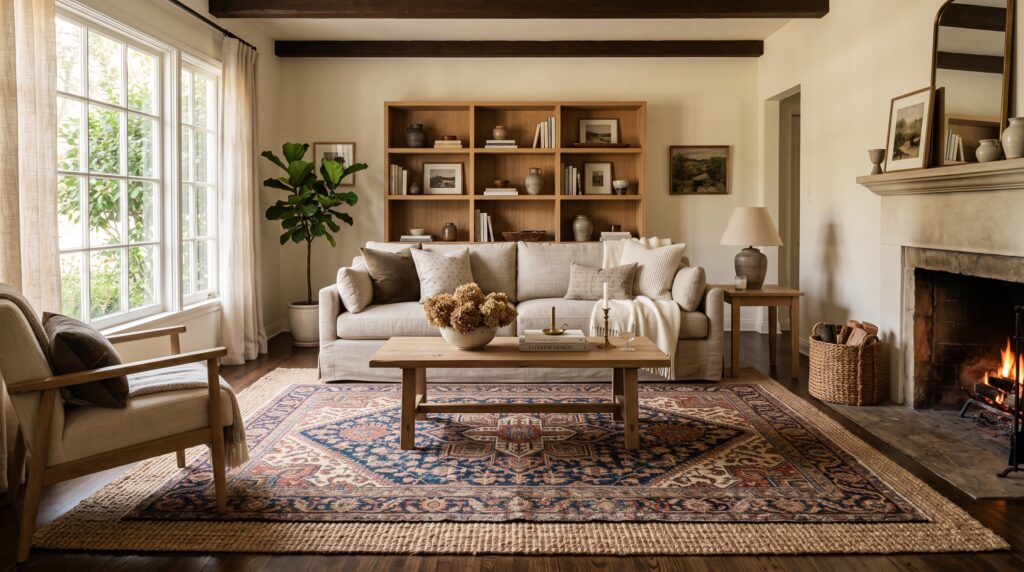
Start with a natural jute or sisal rug as the base layer, then add a smaller vintage-style wool rug on top, slightly off-center. Layering rugs this way adds warmth and definition to a seating area without needing extra furniture, and it gives a large open-plan room a sense of separate, cozier zones without a single wall going up.
17. Fill Rooms with Greenery
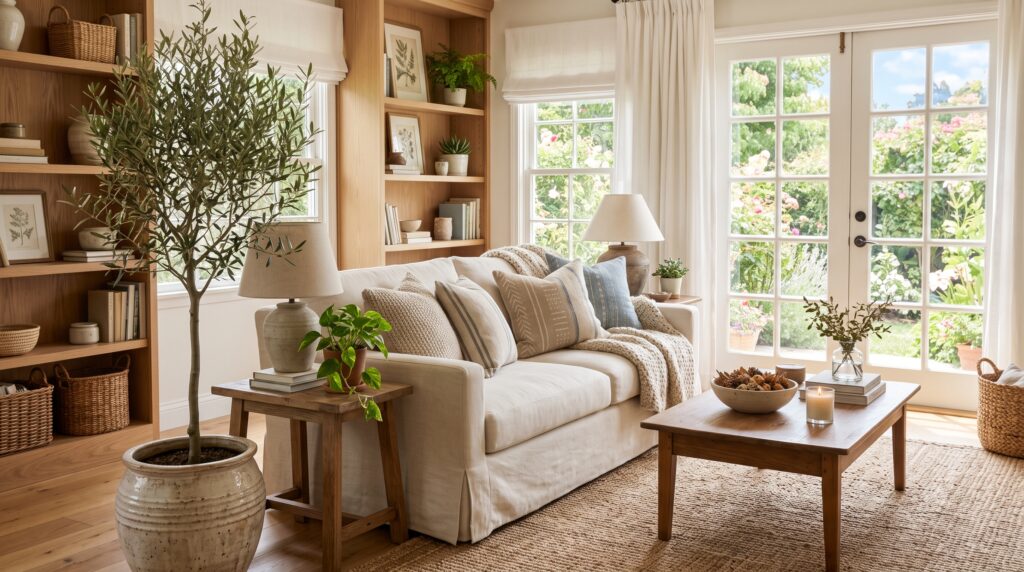
Olive trees, eucalyptus stems, a fiddle-leaf fig, or a few seasonal cuttings soften a neutral palette and bring life into a room without adding color or clutter. Pot them in ceramic or woven planters that match the rest of your materials.
18. Hang Art That Complements, Not Competes
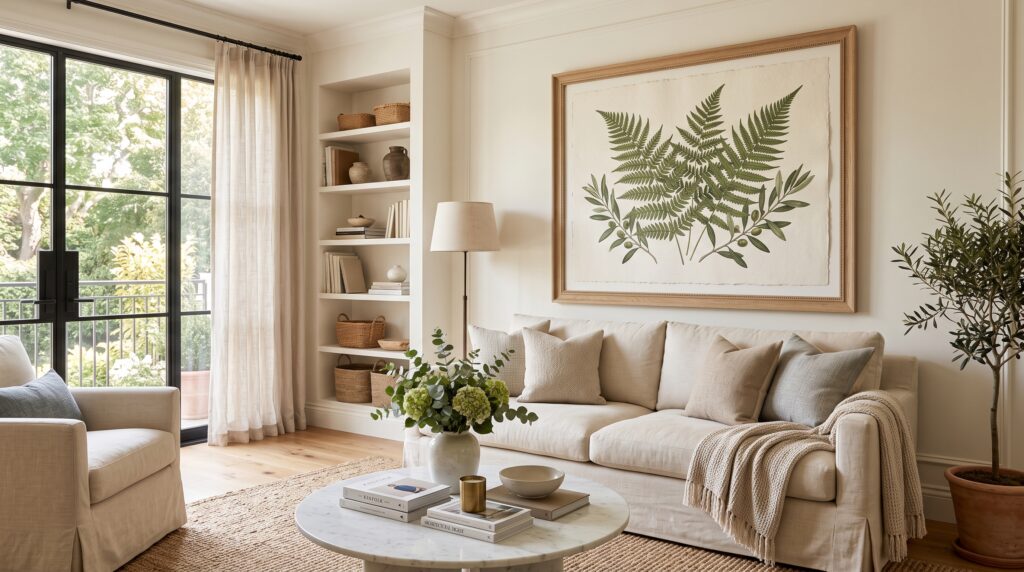
Landscapes, botanical prints, and soft abstract pieces framed in white oak, aged gold, or black work best. The goal is artwork that adds warmth and personality without pulling focus from the room’s overall calm.
19. Keep Dining Table Centerpieces Simple
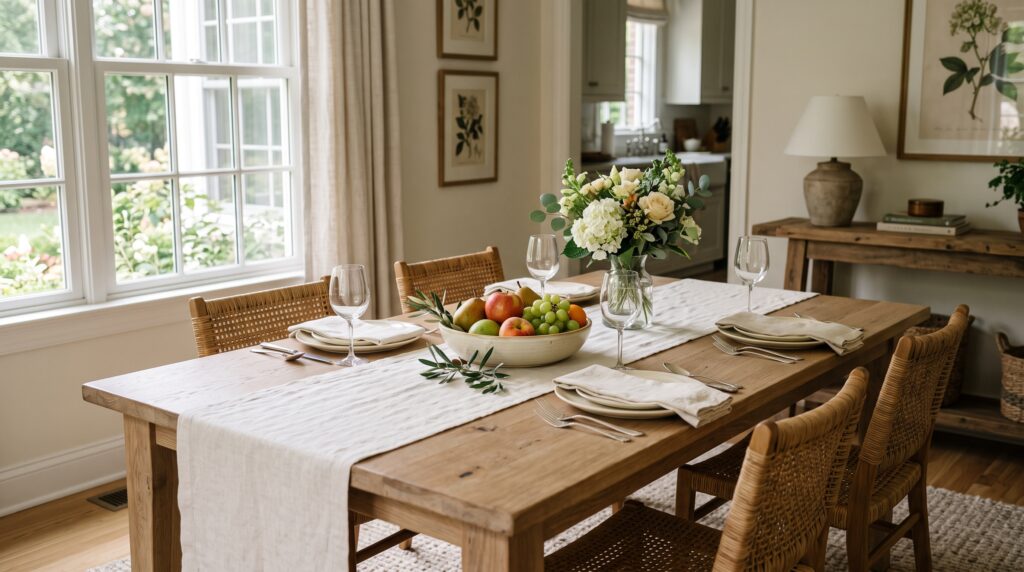
A shallow ceramic bowl of seasonal fruit, a loose gathering of flowers, and a linen runner is all a dining table needs. Overly formal centerpieces work against the relaxed, everyday-elegant feeling this style is known for.
20. Layer Your Lighting
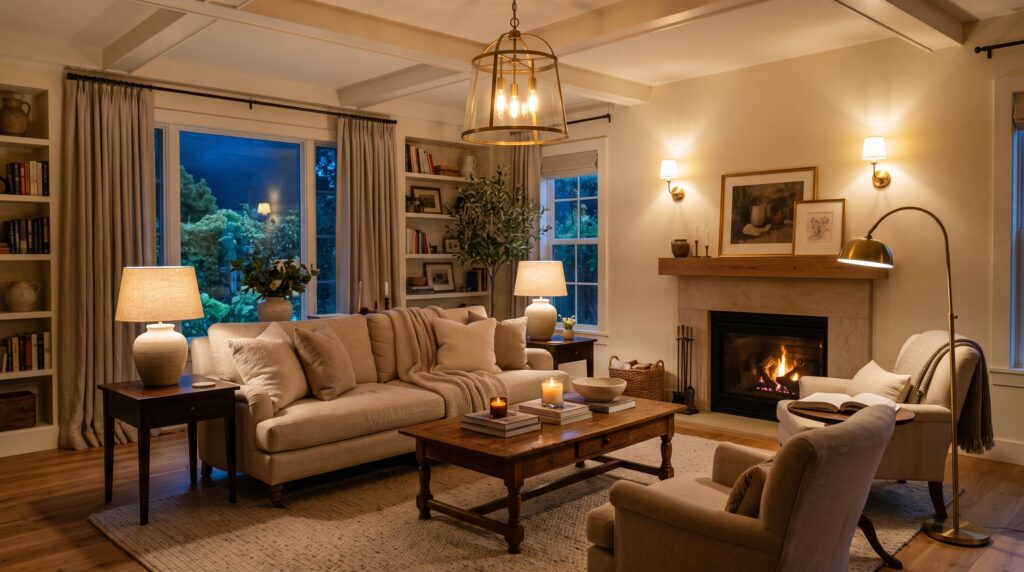
Rely on a mix of table lamps, floor lamps, sconces, and the occasional pendant rather than one overhead fixture. Layered, warm-toned lighting is what gives these rooms their glow in the evening and makes textures like linen and wood look their best.
21. Use Symmetry to Create Calm
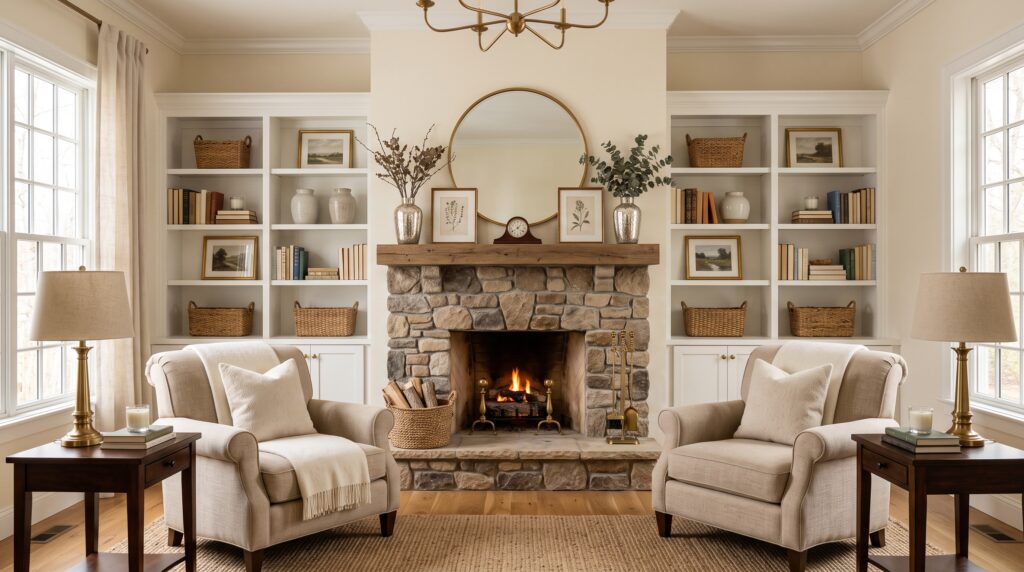
Matching lamps on either side of a console, identical chairs flanking a fireplace, or paired side tables framing a sofa all create a sense of order and intention. It’s a subtle trick, but it’s a big part of why these rooms feel so put-together without feeling formal.
22. Refresh Seasonally, Not Completely
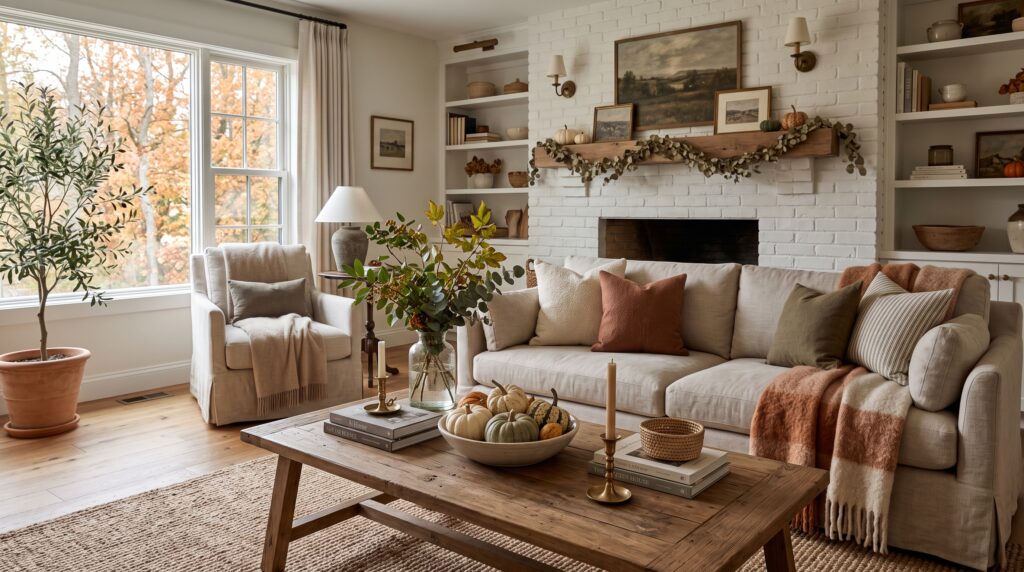
Swap out flowers, candles, throws, and small decorative bowls as the seasons change, but keep your neutral furniture and color palette the same year-round. This is how these interiors manage to feel current without ever feeling trendy or dated.
Bringing It All Together
What ties all twenty-two of these ideas together is restraint. Nothing here is loud, trendy, or overly styled — it’s warm materials, soft light, a few well-chosen objects, and enough negative space to let all of it breathe. As several interior designers have pointed out, part of what makes this look so enduring is that it isn’t really about copying a movie set at all — it’s about building a home around comfort, craftsmanship, and a handful of pieces that actually mean something to you, layered in over time rather than bought all at once, as one recent look at the enduring appeal of this aesthetic explains.
Start small. Pick two or three ideas from this list — maybe a linen slipcover, a stack of books, and a bowl of fruit on the counter — and build from there. The beauty of this style is that it never demands a full renovation, just a slow collection of the right textures, tones, and details until the whole house feels like somewhere you’d want to spend a rainy Sunday.
If you try nothing else from this list, start with light, texture, and a little bit of restraint. Swap one harsh overhead bulb for a warm table lamp. Trade a synthetic throw pillow for a linen one. Let one shelf sit a little emptier than you’re used to. These are small, inexpensive changes, but they’re exactly the kind of details that separate a house that looks decorated from one that simply feels good to be in — which, at the end of the day, is the entire point of a Nancy Meyers interior. Save this list so you can come back to it room by room, and don’t feel pressure to check off all twenty-two ideas at once. The whole aesthetic is built on patience, not speed — a home that looks like it came together over years, even if you’re starting today.