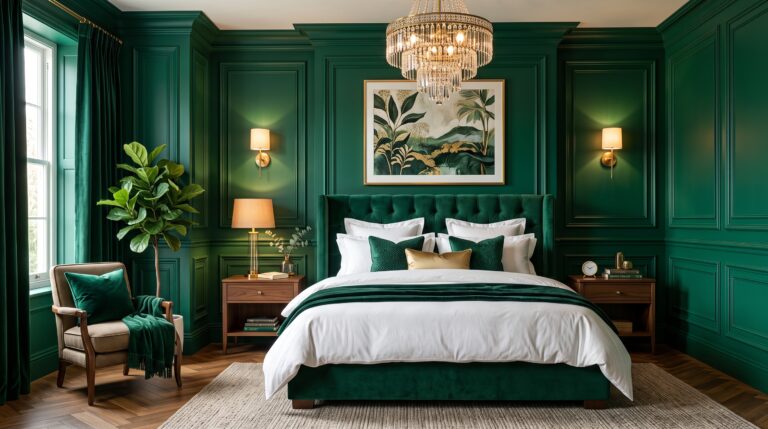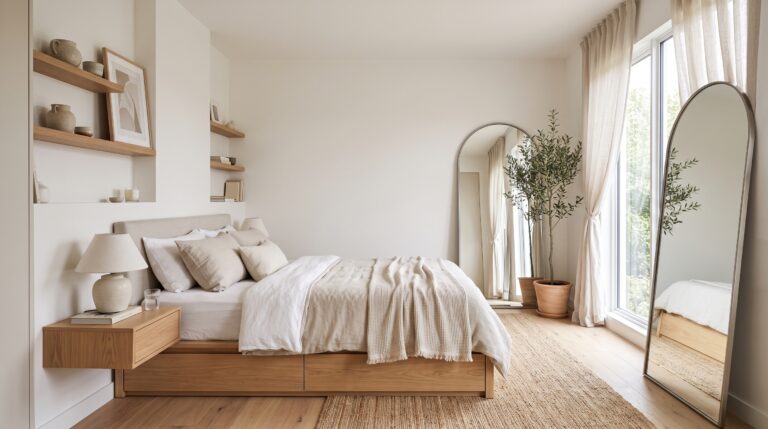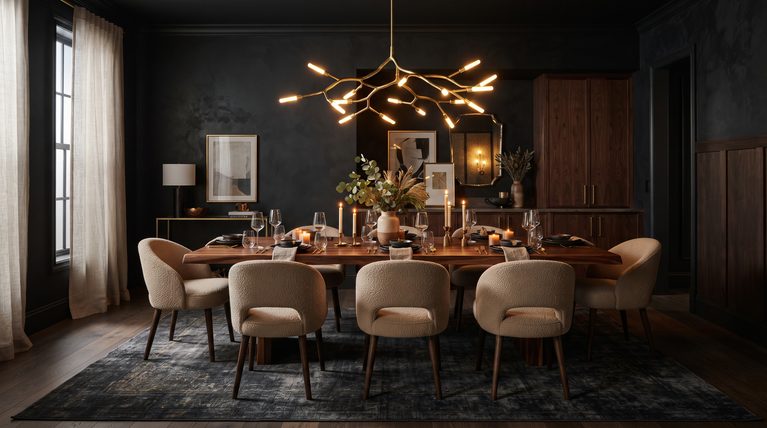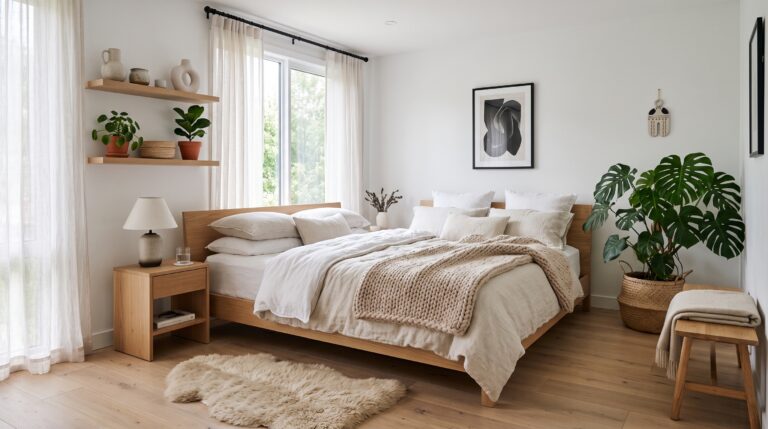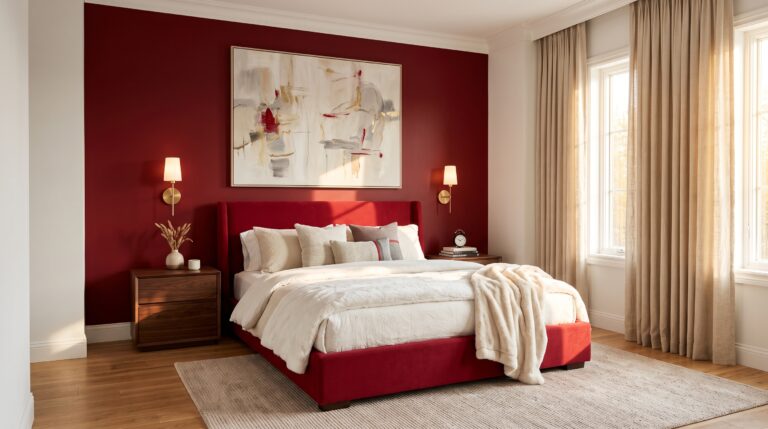
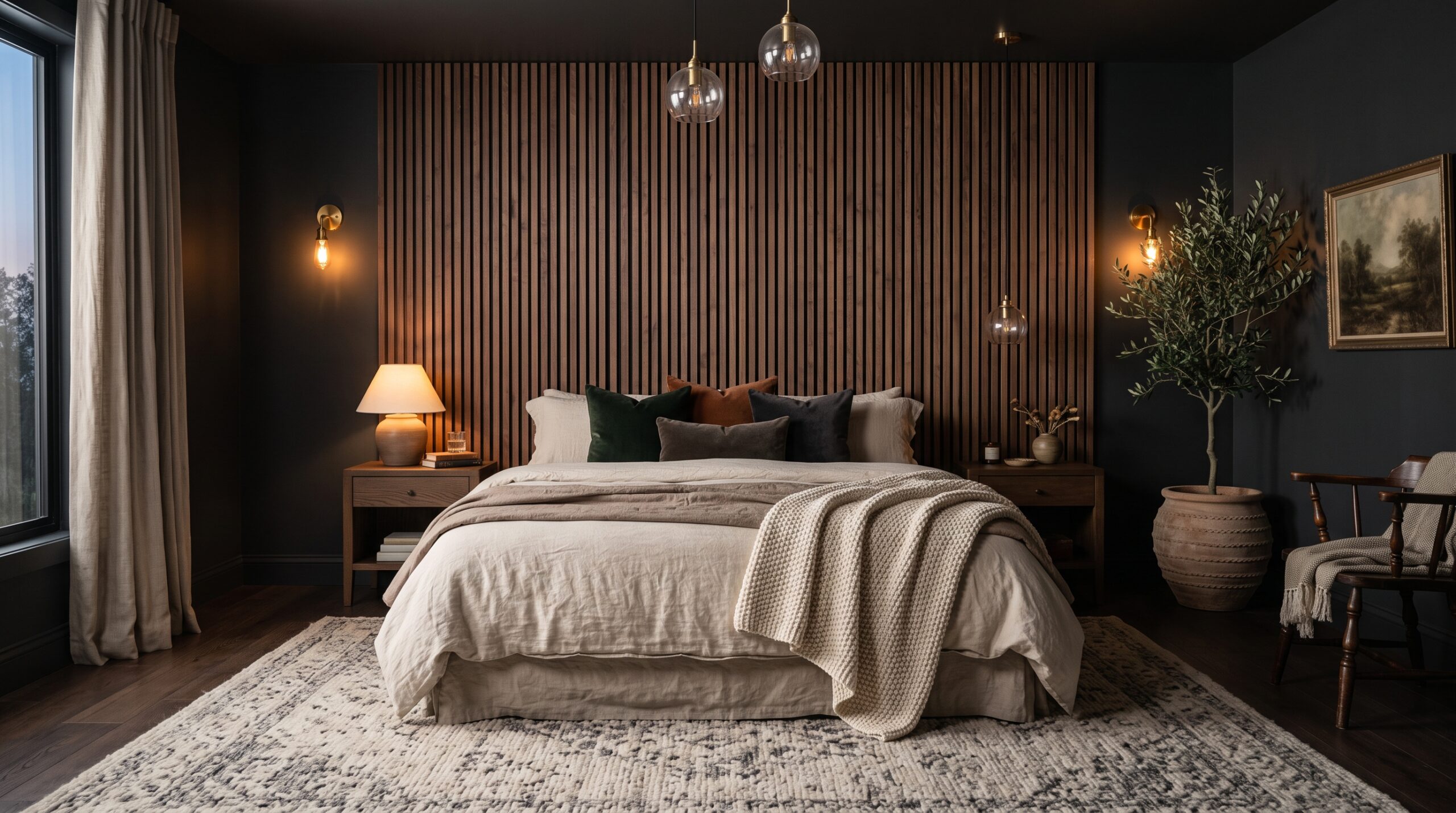
Dark, layered, and deeply relaxing — 22 cozy moody bedroom ideas youll want to copy have become one of the most requested looks in interior design. Instead of bright, airy palettes, this style leans into deep wall colors, warm lighting, natural textures, and touchable fabrics to build a room that feels like a proper retreat. Done well, a moody bedroom doesn’t feel dark or heavy; it feels intentional, calm, and quietly luxurious.
If you’ve been scrolling Pinterest for hours trying to figure out how to pull off the look without it feeling like a cave, this roundup breaks it down into simple, repeatable ideas. The key to a successful moody bedroom is contrast and balance — dark tones need warmth to offset them, whether that comes from natural wood, soft textiles, brass hardware, or layered lighting. Skip any one of those elements and the room risks feeling flat or gloomy instead of rich and inviting.
The good news is that you don’t need a full renovation to get there. Many of the ideas below can be introduced gradually, one piece at a time, so you can build the look at your own pace and budget. Below are 22 ways to bring that rich, cocooning atmosphere into your own bedroom, whatever your starting point.
22 Cozy Moody Bedroom Ideas You’ll Want to Copy
1. Go Deep With a Charcoal Wall Color
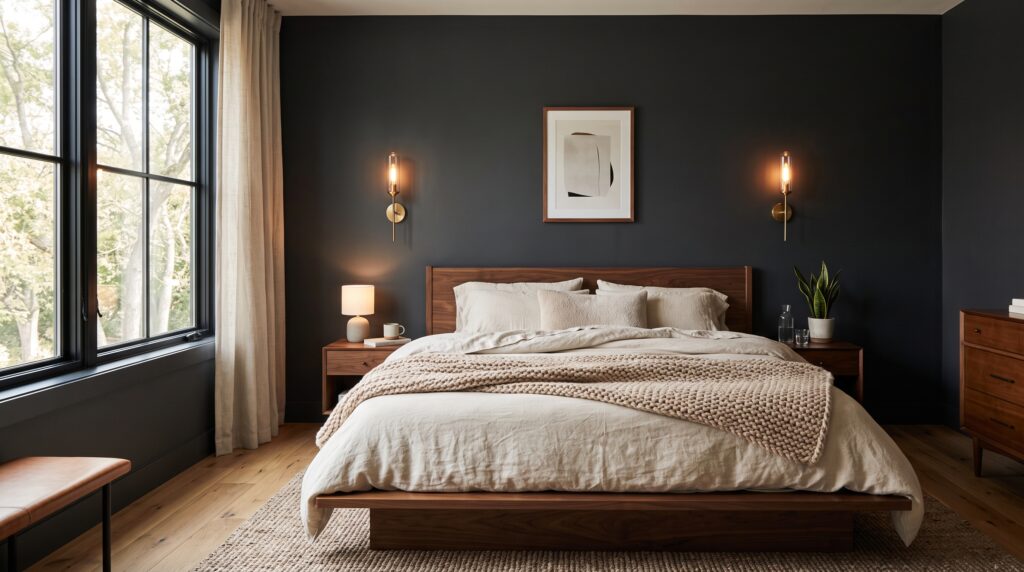
A charcoal or near-black wall is the fastest way to shift a bedroom from ordinary to atmospheric. The trick is balance: pair the dark backdrop with warm-toned wood, soft neutral linens, and a few brass or gold accents so the space still feels welcoming rather than closed in. If you’re nervous about committing to a full room, start with a single accent wall behind the headboard, then live with it for a few weeks before deciding whether to extend the color further. Rooms with plenty of natural daylight can usually handle a darker charcoal than a north-facing room with limited light.
2. Build Depth With Layered Linen Bedding
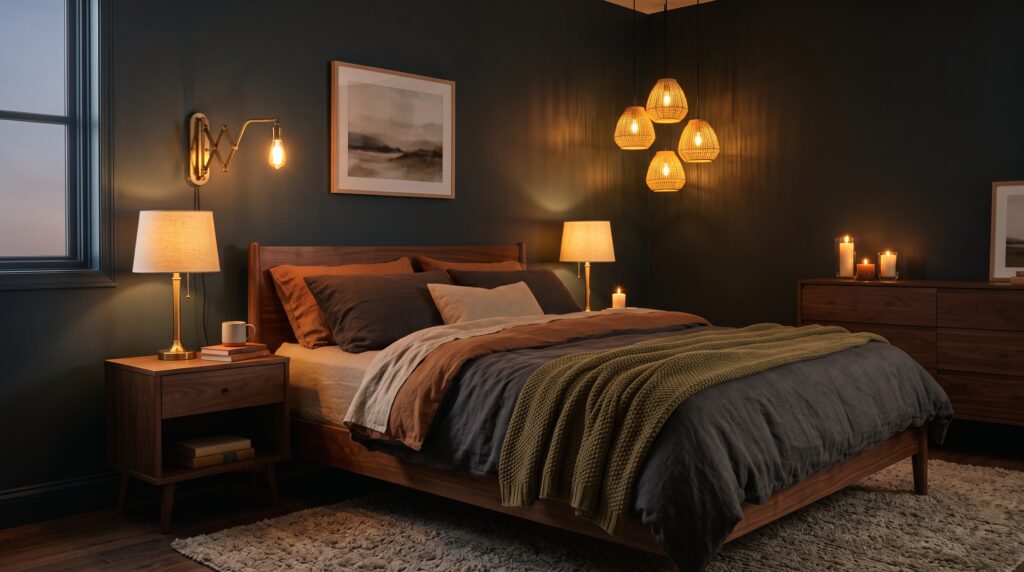
A moody bed rarely relies on one flat duvet. Instead, stack washed linen sheets, a quilted coverlet, velvet lumbar pillows, and a chunky knit throw at the foot of the bed. The mix of textures does a lot of the visual work, giving the room a designer-styled look without needing much else.
3. Layer Multiple Sources of Warm Lighting
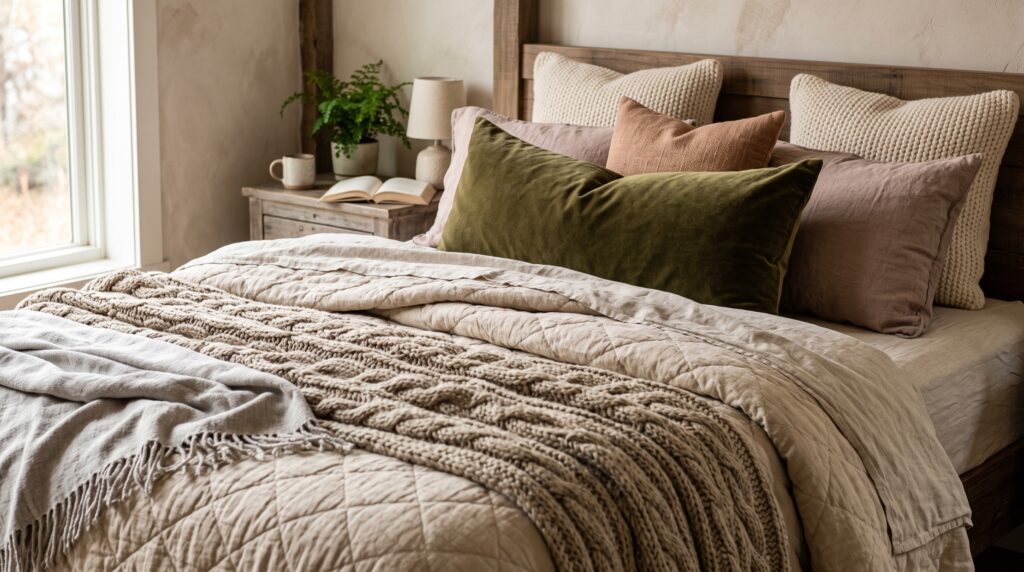
Skip the single overhead fixture. A well-lit moody bedroom usually combines a bedside lamp, a wall sconce, maybe a small pendant, and a candle or two, all using warm-white bulbs rather than cool daylight ones. Layered lighting creates soft, uneven pools of light around the room, which reads as far cozier than one bright, centralized source. A dimmer switch on the main overhead light is also worth the small investment, since it lets you adjust the mood without swapping bulbs.
4. Bring in Dark Wood Furniture
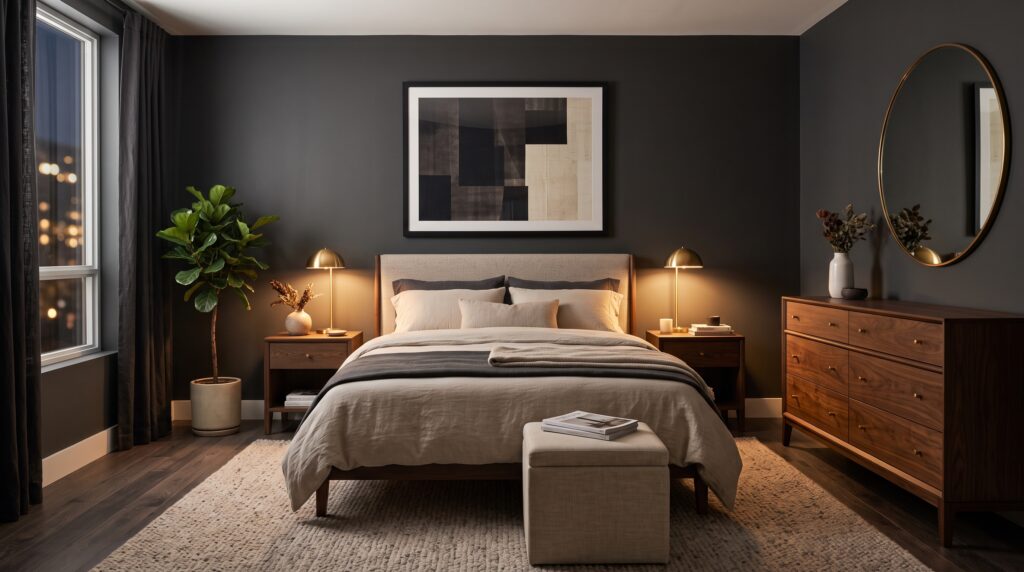
Walnut, smoked oak, and espresso finishes add richness without competing with a dark wall color. Keep the furniture silhouettes simple and let the wood grain do the talking — a plain nightstand or dresser in a deep wood tone will feel far more elevated than something ornate. If your current furniture is a lighter wood tone, a gel stain or dark wax can update it without the cost of buying new pieces.
5. Add Velvet Wherever You Can
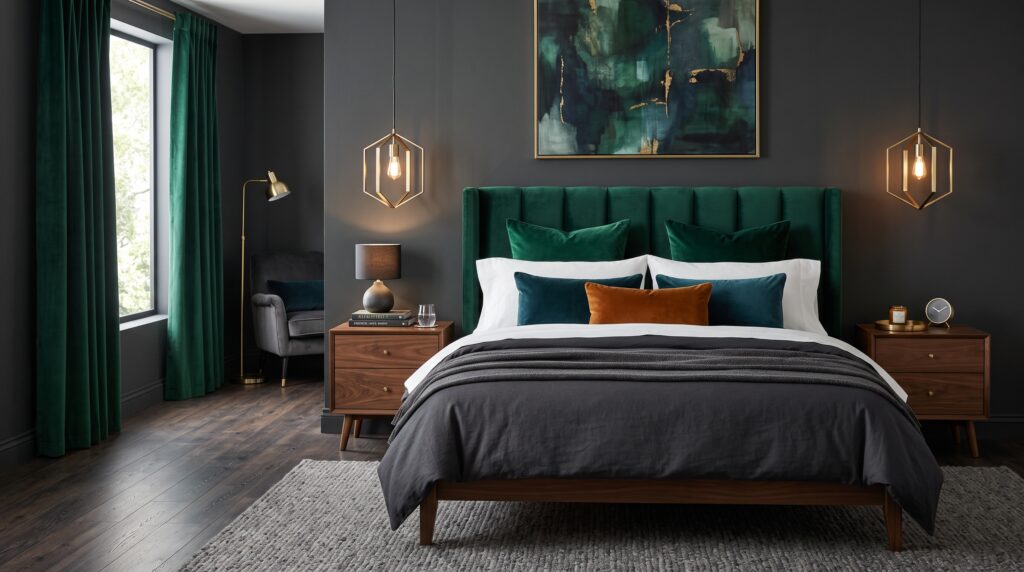
Velvet is one of the easiest ways to inject softness and a bit of glamour into a moody room. Try it on throw pillows, a bench cushion, curtain panels, or an upholstered headboard. Jewel tones like emerald, burgundy, or deep navy work especially well against charcoal or espresso walls.
6. Use Matte Black Hardware and Fixtures
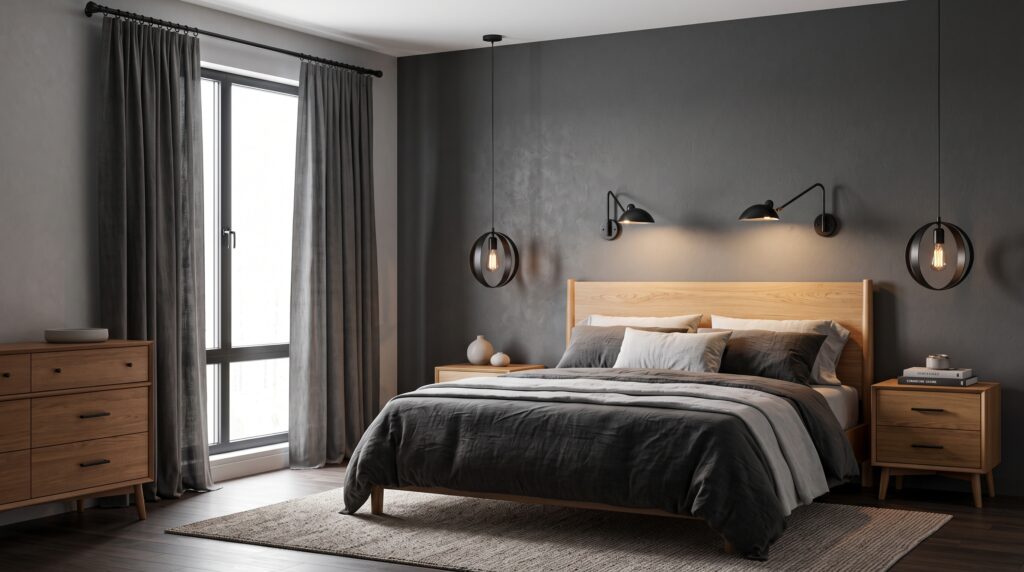
Small details — door handles, curtain rods, drawer pulls, picture frames, a pendant light — all done in matte black add quiet contrast throughout the room. It’s a subtle touch, but it ties the space together and reinforces the moodier color story without needing a big renovation.
7. Soften the Palette With Greenery
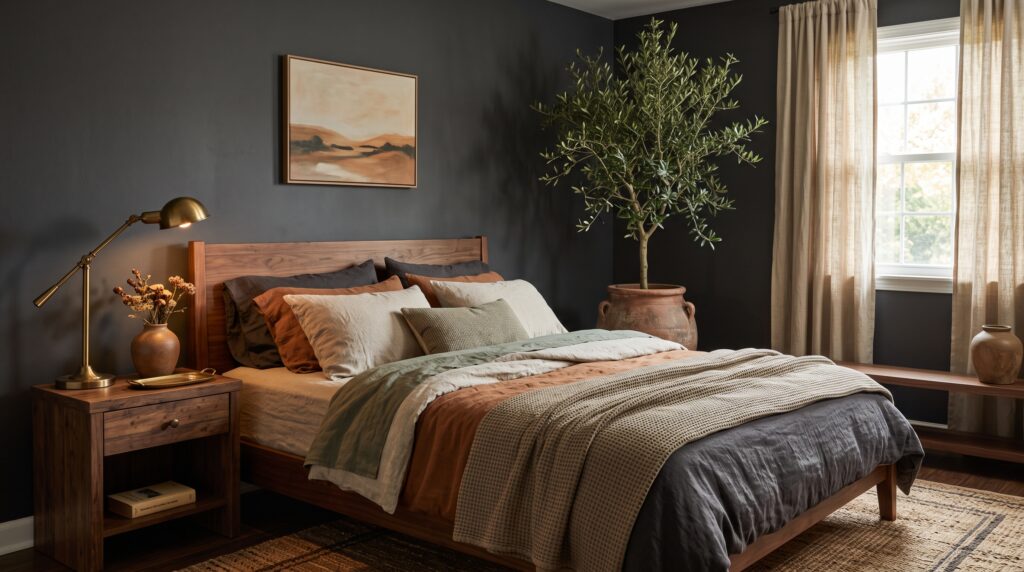
A dark room can start to feel flat without something alive in it. A snake plant, an olive tree, or a trailing pothos in a simple ceramic pot introduces texture and a bit of contrast against dark walls, while keeping maintenance low.
8. Hang Floor-to-Ceiling Drapes
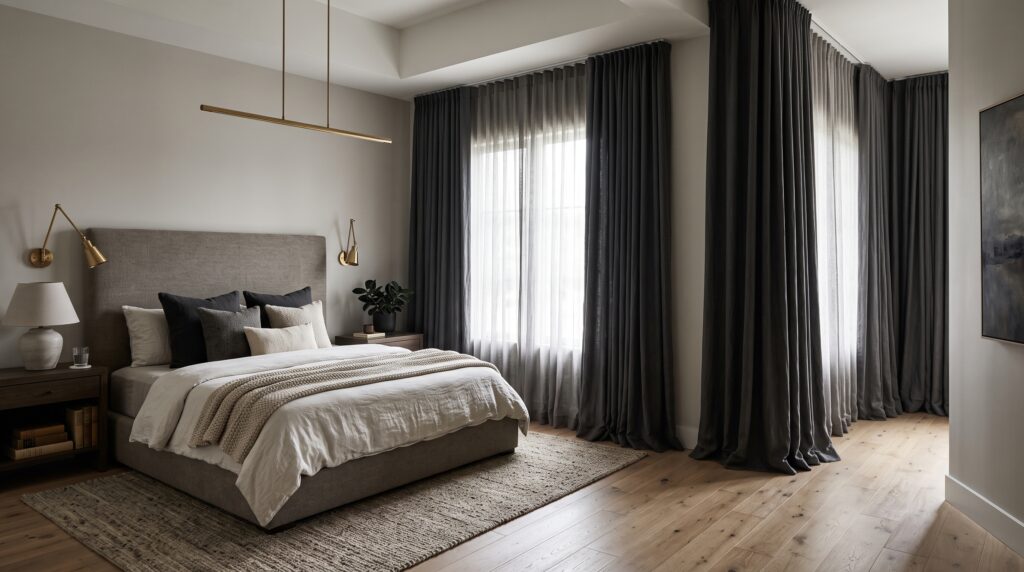
Long curtains hung close to the ceiling make a room feel taller and more finished. Heavy linen or velvet panels in deep brown, olive, or charcoal reinforce the moody feel while adding softness to hard architectural lines like windows. Aim for panels that at least brush the floor, or better yet pool slightly, since curtains that stop short of the floor tend to undercut the elegant, layered look you’re going for.
9. Design a Statement Headboard Wall
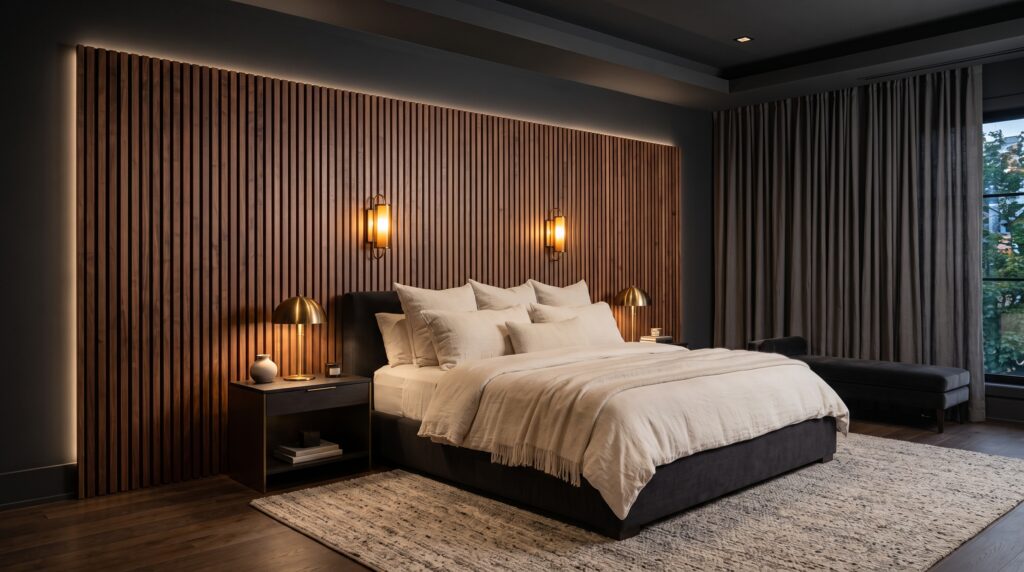
An oversized upholstered or wood-paneled headboard that extends beyond the width of the bed instantly becomes the room’s focal point. It reads as a custom, built-in feature even if it’s a simple DIY, and gives the whole wall a warm, hotel-suite feel. Wood slat paneling in particular has become a popular budget-friendly option, since pre-made panel kits can be installed in an afternoon and painted or stained to match the rest of the room.
10. Combine Leather With Wood
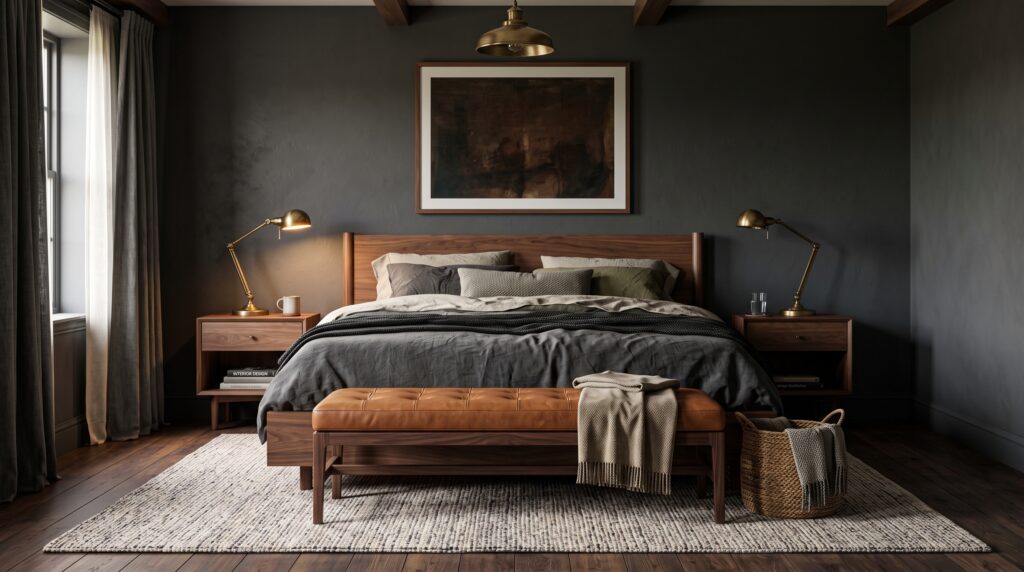
Leather brings a slightly masculine, worn-in warmth that pairs naturally with dark wood tones. A leather bench at the foot of the bed, a woven leather accent chair, or a single cognac-toned pillow can round out the material palette without adding visual clutter.
11. Hang Vintage-Style Artwork
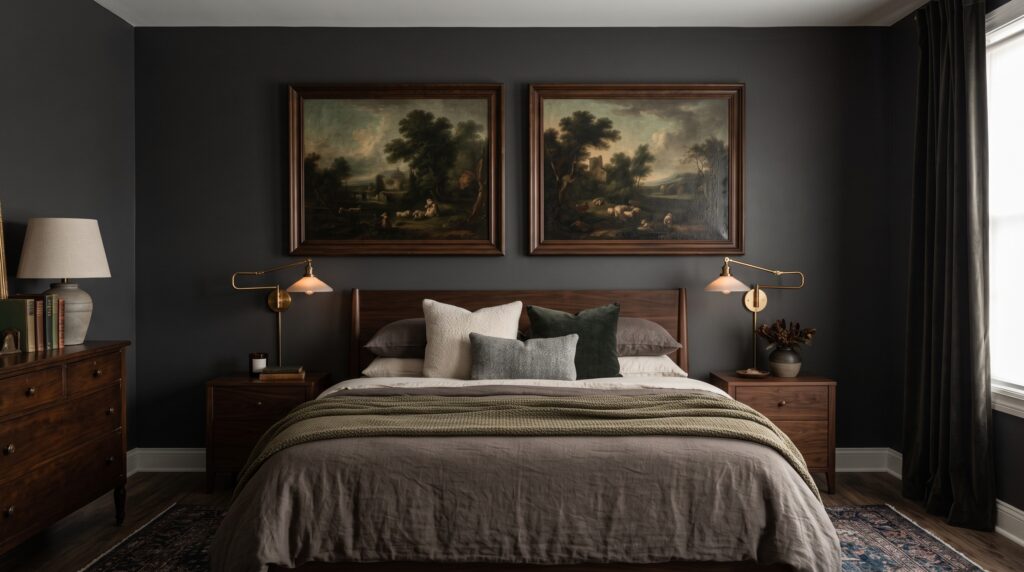
Landscape paintings, old botanical prints, or black-and-white photography in dark wood or brass frames add history and personality to the walls. Look for pieces with muted, earthy color tones so they blend into the room rather than fighting the palette.
12. Add a Bench at the Foot of the Bed
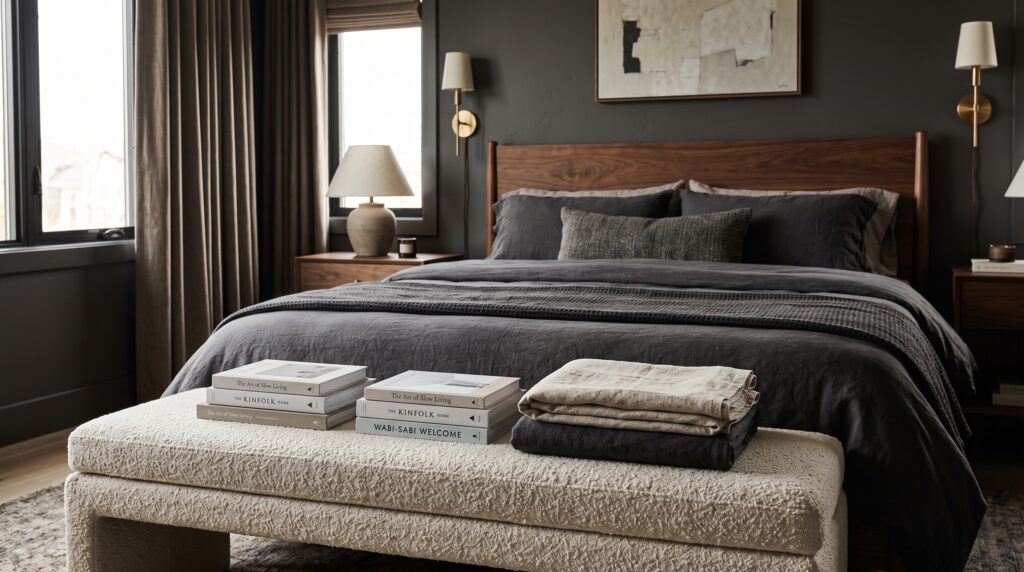
A bench is both functional and a great styling opportunity. Boucle, velvet, or plain wood all work — use it to hold folded throws, a stack of books, or simply as a spot to sit while getting dressed.
13. Bring in Natural Stone and Ceramic Pieces
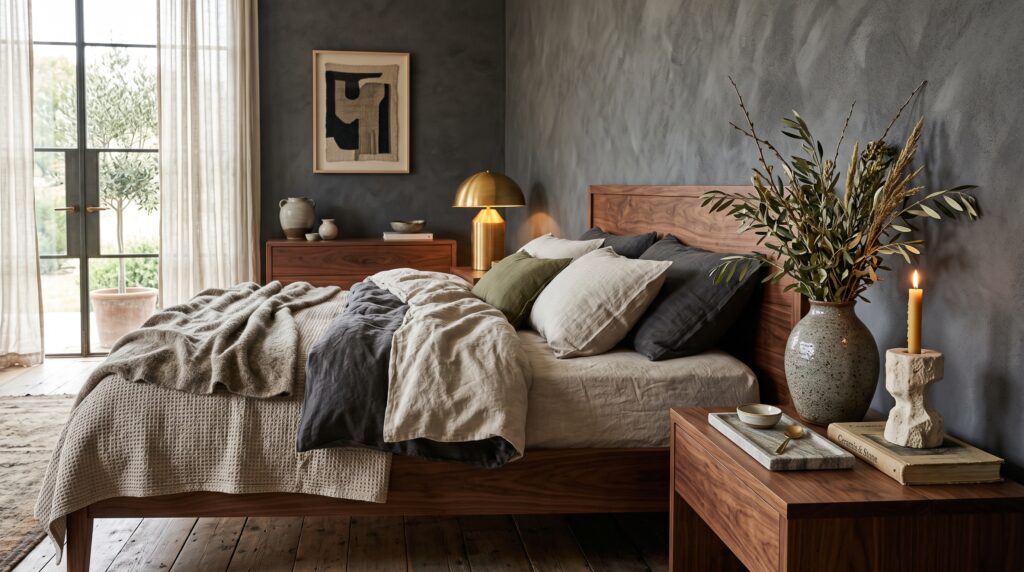
Stone candle holders, handmade ceramic vases, and simple pottery add an organic, tactile quality that keeps a dark room from feeling too polished or cold. These small details are inexpensive but make a noticeable difference in how “collected” the room feels.
14. Layer Two Area Rugs
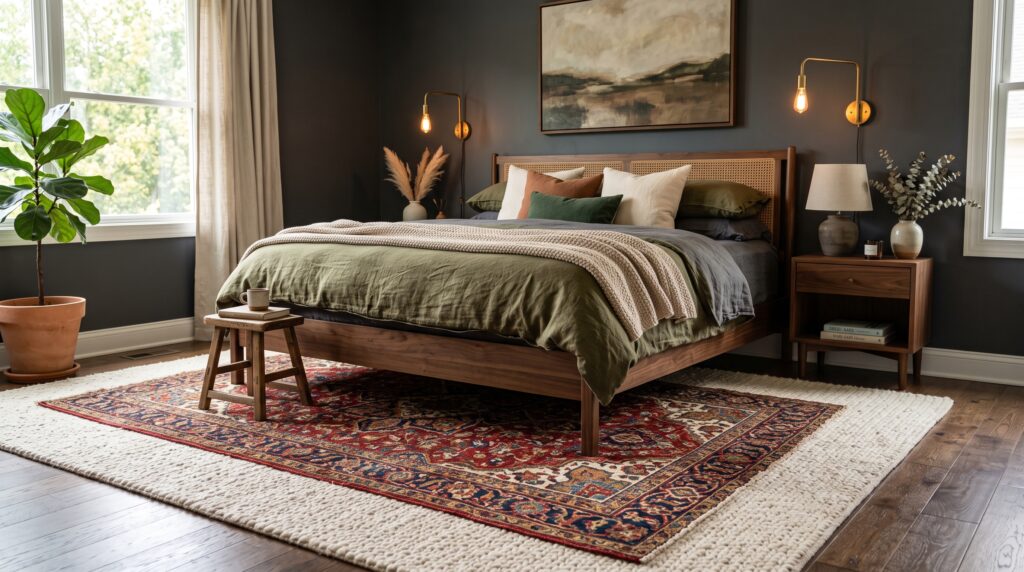
Placing a smaller patterned or vintage-style rug on top of a larger neutral wool rug adds warmth underfoot and visual depth. It’s a trick borrowed from professional stylists that instantly makes a room feel more considered, especially in a room with hard flooring like wood or tile where sound and warmth both need a bit of softening.
15. Lean an Oversized Arched Mirror Against the Wall
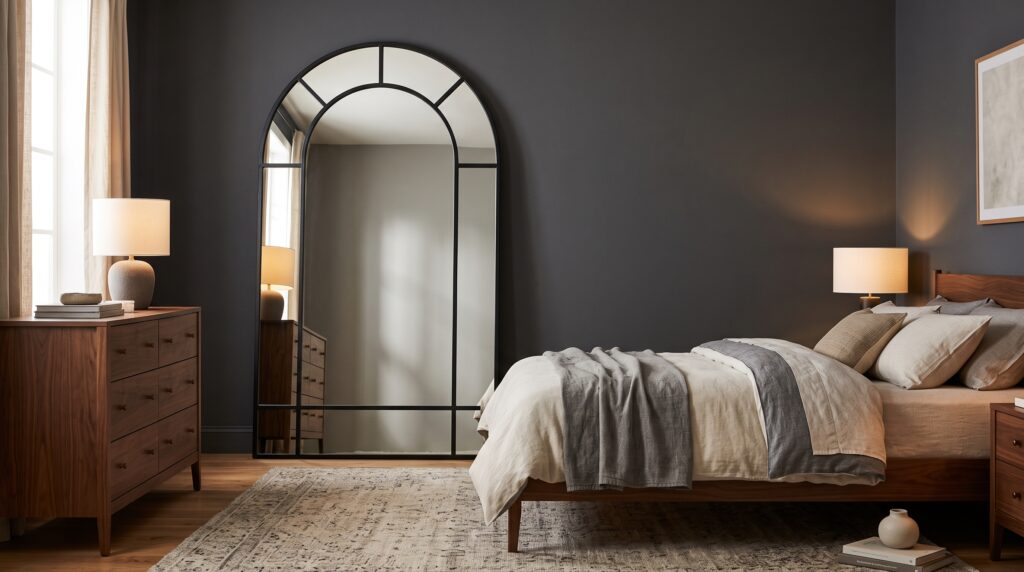
A large arched mirror bounces light around the room and helps a dark bedroom feel more open rather than closed in. Leaning it against a wall, rather than hanging it, gives a more relaxed, editorial look. Black metal or antique brass frames tend to suit the moody aesthetic best.
16. Style Open Floating Shelves
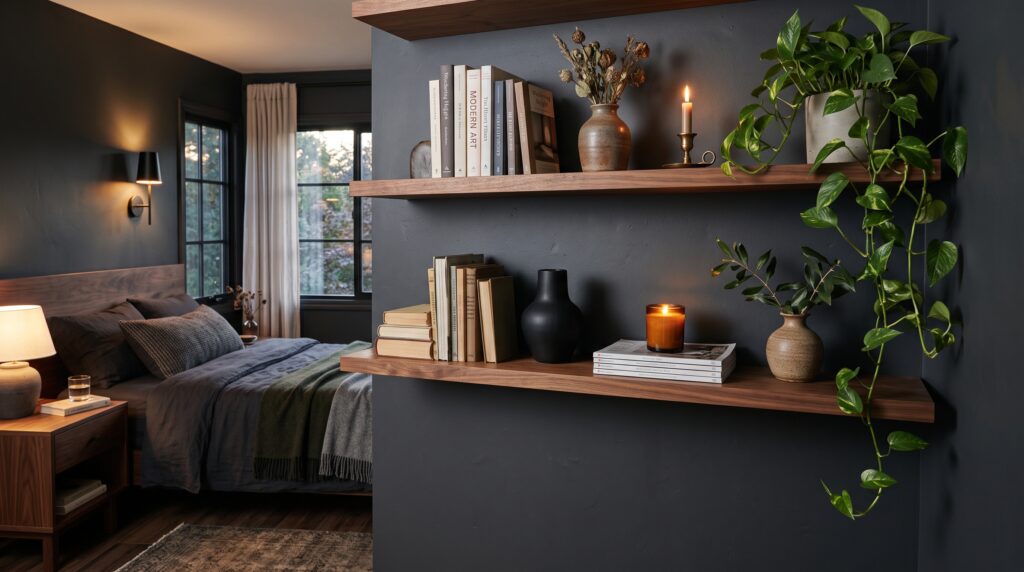
Floating shelves let you display books, candles, small art, and a bit of greenery without adding bulky furniture to the room. The key is restraint — leave some negative space between objects so the shelf doesn’t look cluttered.
17. Create a Cozy Reading Corner
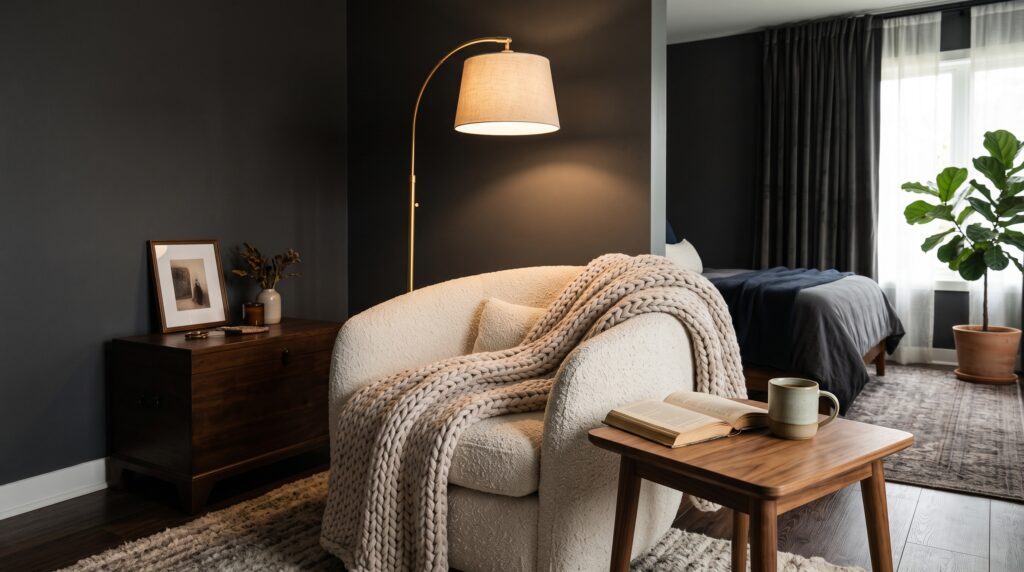
You don’t need a real fireplace to fake that warm, gathered-around-the-fire feeling. A low console styled with candles or lanterns, paired with a comfortable accent chair and a soft throw, creates a natural reading nook in an otherwise unused corner. Add a small side table for a mug of tea or a stack of books, and the corner instantly becomes one of the most-used spots in the room rather than dead space.
18. Swap Bright Flowers for Moody Florals
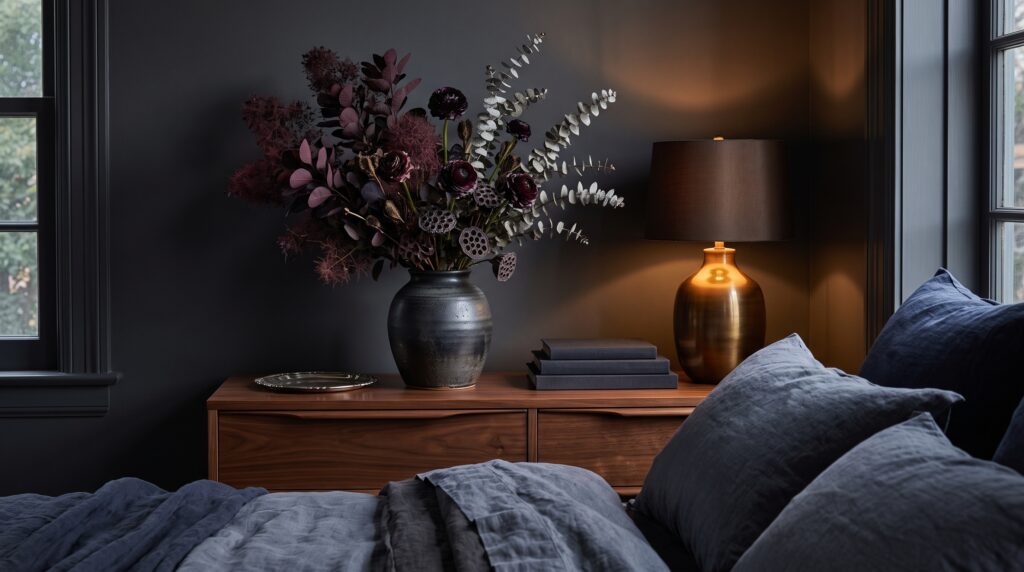
Dried branches, eucalyptus stems, or deep burgundy blooms fit the palette far better than bright, cheerful flowers. They also last much longer, which makes them a practical choice as well as a stylish one.
19. Paint the Ceiling to Match (or Nearly Match) the Walls
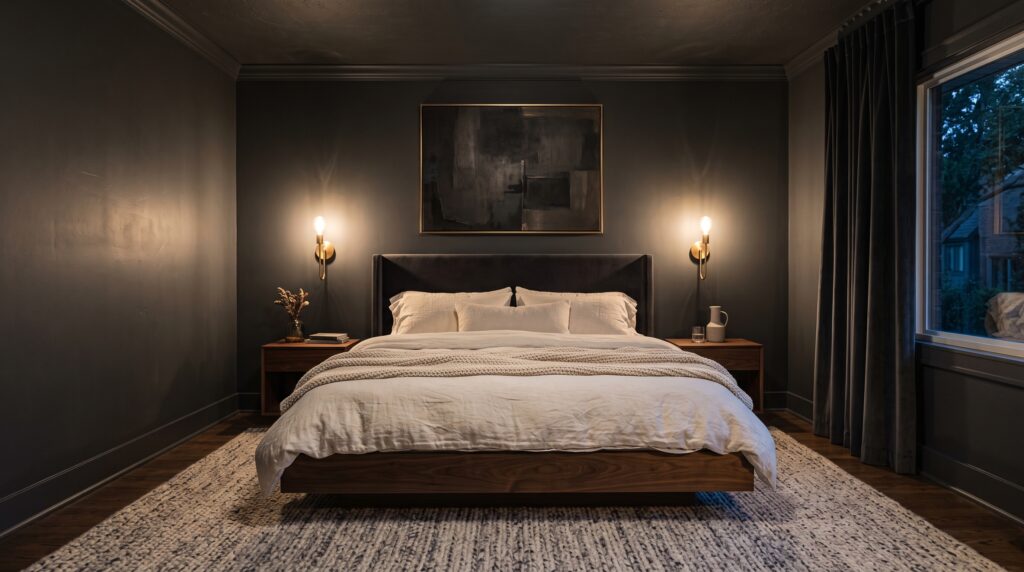
Carrying a dark color up onto the ceiling creates a cocooning, enveloping effect that a single dark wall can’t achieve on its own. According to Sherwin-Williams’ guidance on designing dark, moody rooms, choosing a color with a low Light Reflectance Value and extending it to the ceiling is one of the most effective ways to build that enclosed, intimate atmosphere. (Sherwin-Williams)
20. Choose Oversized, Textured Artwork
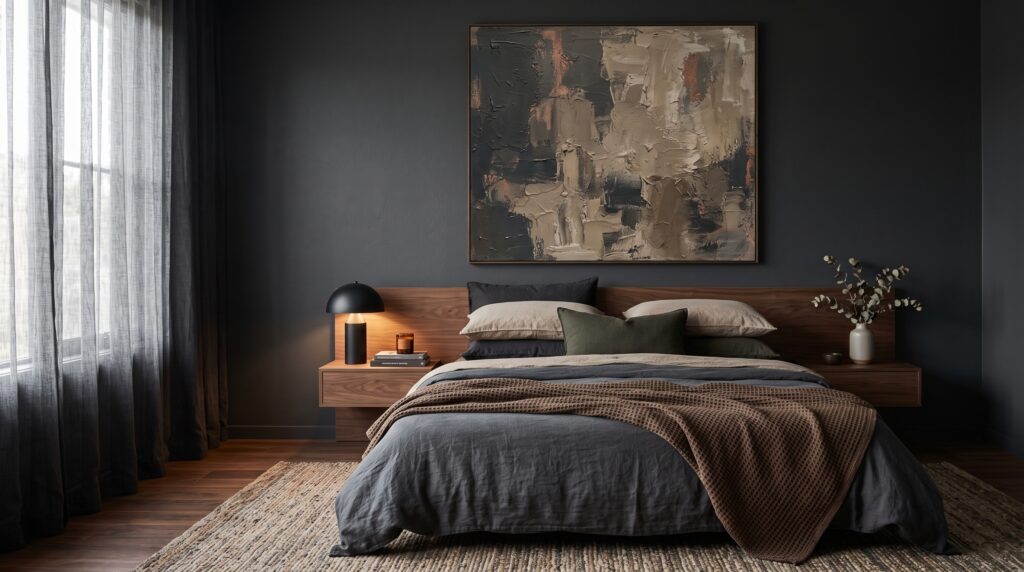
A large piece of abstract or landscape artwork in muted, earthy tones can anchor an entire wall on its own. Bigger is usually better here — one substantial piece tends to look more intentional than several small ones scattered around.
21. Add a Thick Wool Rug
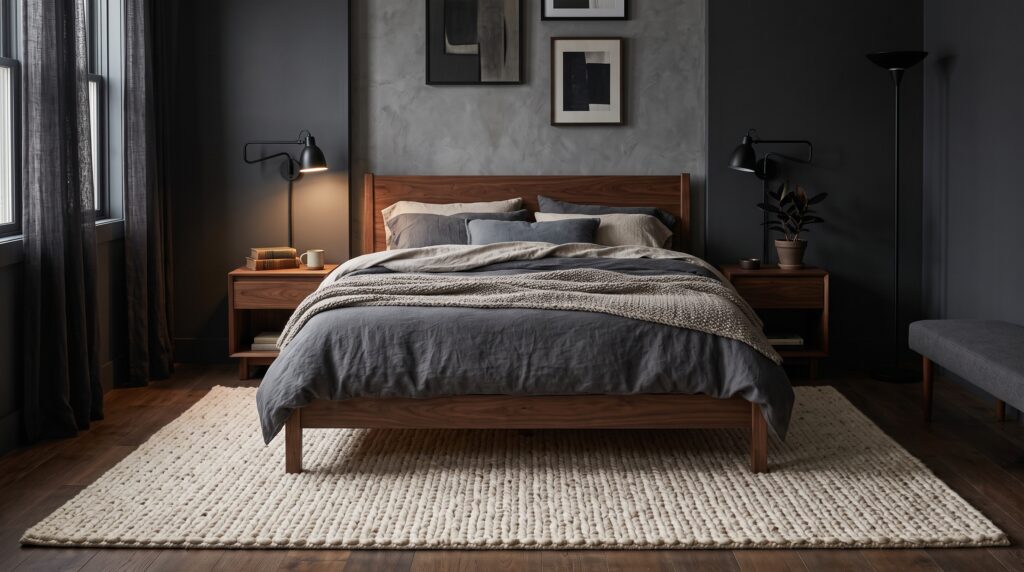
Beyond layering, a single thick wool rug in a neutral or subtly patterned tone softens dark flooring and makes the room feel warmer underfoot, especially in colder months.
22. Set Up a Scent Station
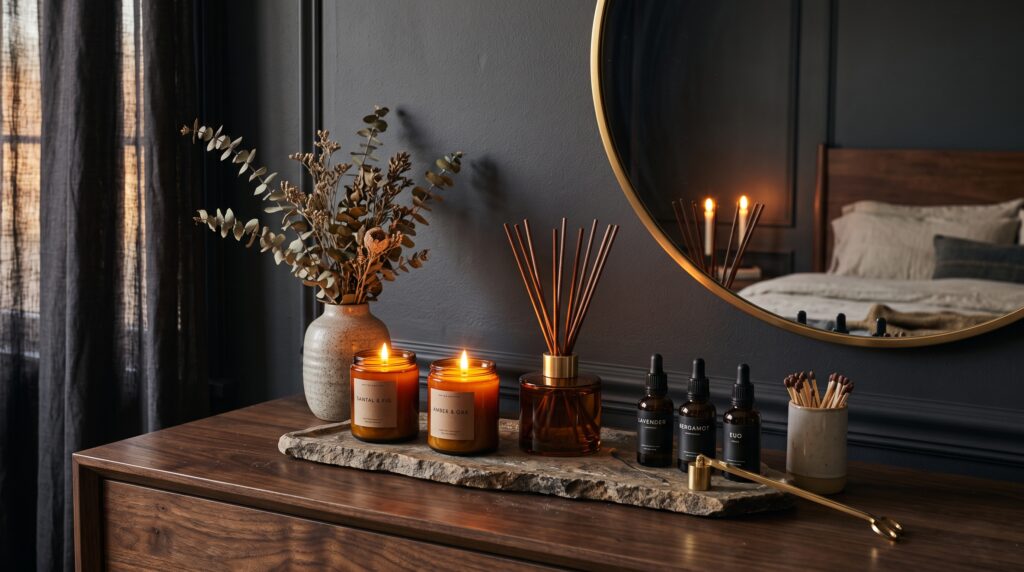
A small tray with a candle, a reed diffuser, and a couple of essential oil bottles finishes the room off with another sense entirely. Warm scents like cedarwood, sandalwood, amber, or vanilla reinforce the cozy, enveloping mood the rest of the room is already creating, and a scent station doubles as an easy styling moment on a nightstand or dresser top.
Frequently Asked Questions
Will a dark bedroom make a small room feel smaller? Not necessarily. Small rooms can actually benefit from dark, enveloping colors because there’s less contrast between the walls and ceiling, which removes visual “edges” the eye would otherwise catch on. The room feels cocooning rather than cramped, especially when paired with layered lighting and a few reflective surfaces like a mirror or metallic accents that keep light moving around the space.
Do I need to paint the whole room to get the moody look? No. A single accent wall, a set of dark curtains, or even just swapping in warmer lighting and richer textiles can shift the mood of a room significantly. Many people build toward a fully dark room gradually, starting with soft furnishings before committing to paint.
What colors work best for a moody bedroom besides black or charcoal? Deep forest green, navy, aubergine, and warm chocolate brown are all popular alternatives that create the same enveloping effect without going fully black. Each pairs well with brass, warm wood, and cream-toned linens.
Is a moody bedroom harder to keep looking clean and fresh? Dark walls actually tend to hide scuffs and marks better than pale ones, though dust and pet hair can show up more visibly on dark furniture and rugs. Regular light dusting and a lint roller for textiles will keep the room looking as polished as it does in photos.
Bringing It All Together
A great moody bedroom isn’t about making a room dark for the sake of it — it’s about layering warm materials, considered lighting, and rich color so the space feels like an actual retreat. Start small if you need to: a new lamp, a linen throw, or one accent wall can move a room a long way toward this look before you commit to anything bigger.
There’s no single “correct” way to do a moody bedroom, either. Some of the most successful versions of this look lean rustic, with reclaimed wood and heavy linen; others go more polished and hotel-like, with velvet, brass, and layered lighting doing most of the work. The common thread is simply restraint paired with warmth — a handful of well-chosen materials, repeated thoughtfully throughout the room, rather than a dozen competing ideas at once.
Mix and match the ideas above based on your own space and budget, and the moody bedroom trend will end up looking like it was designed specifically for you, rather than copied from a feed.