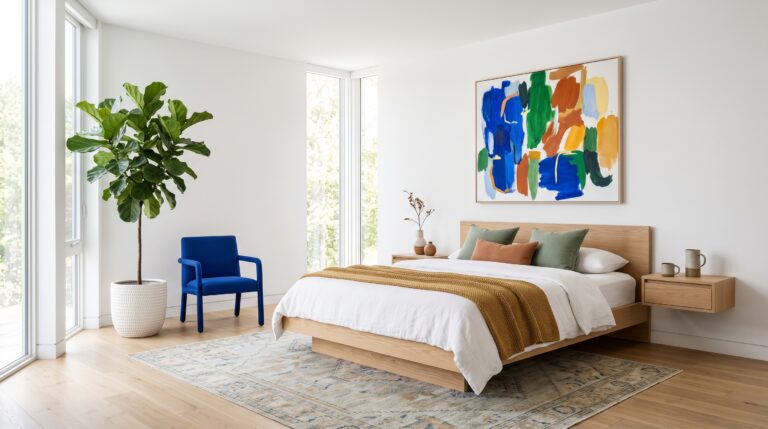
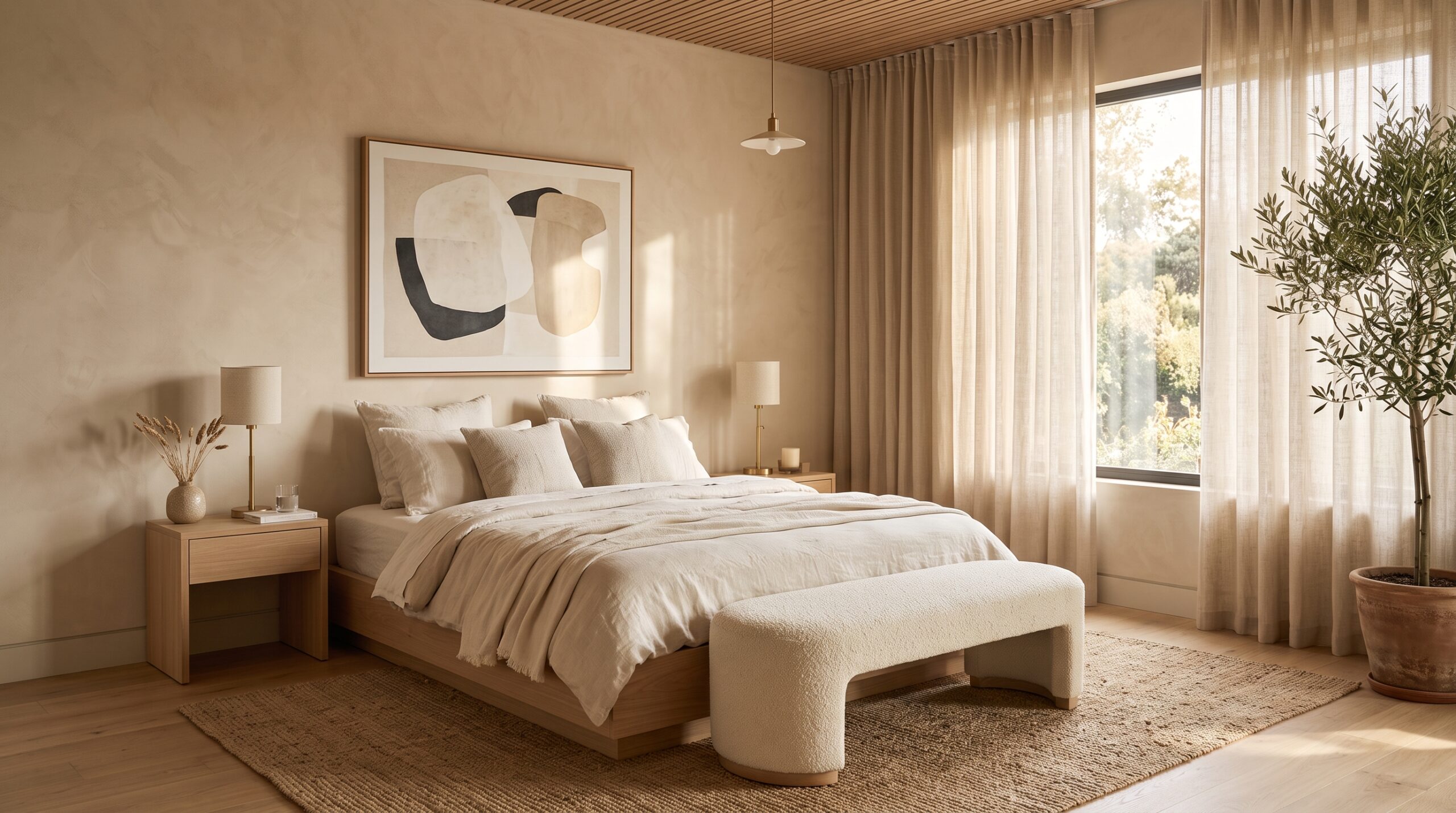
Skipping the 22 bed without headboard ideas that look beautiful headboard ideas that look beautiful doesn’t mean skipping style. More homeowners are leaving the wall behind the bed intentionally open, treating it as a blank canvas for color, texture, and light instead of covering it with a bulky panel. The result is a bedroom that feels airy, modern, and easy to refresh whenever your taste changes.
Going headboard-free also solves a handful of practical problems. It works well in tight bedrooms where every inch of floor space matters, it suits rental apartments where drilling into walls isn’t an option, and it gives you the freedom to swap out artwork, lighting, or textiles the moment you’re ready for a new look. A traditional headboard locks a room into one fixed style; without it, the same wall can go from moody and dramatic to soft and minimal with a single afternoon of redecorating.
Below are 22 ways to style a bed without a headboard so the space still feels finished, cozy, and full of personality — no matter your budget or square footage.
22 Bed Without Headboard Ideas That Look Beautiful
1. Paint a Bold Accent Wall
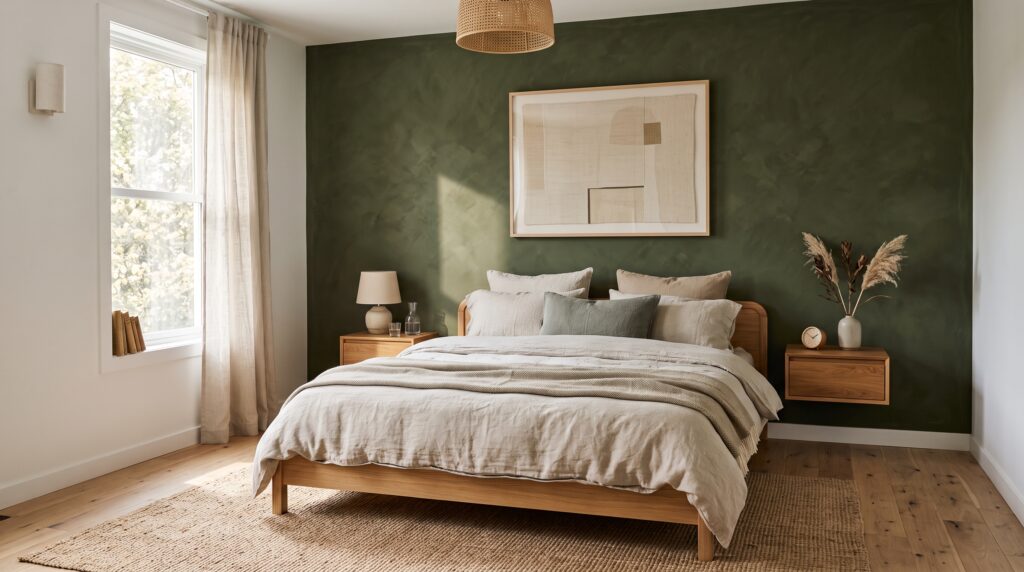
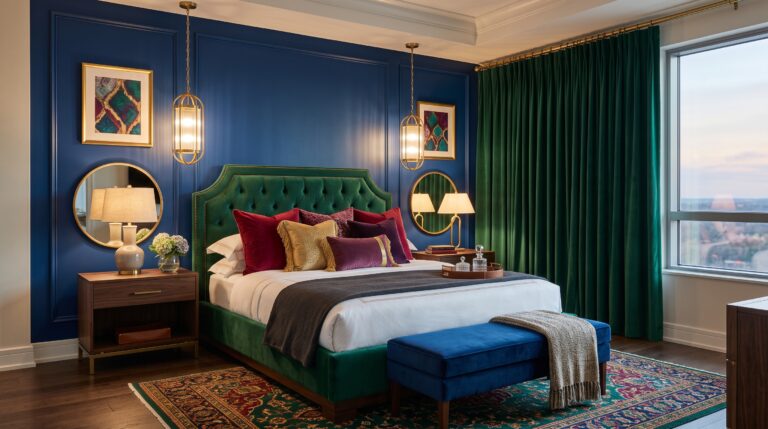
A saturated color or textured plaster finish behind the bed does the visual heavy lifting a headboard normally would. Limewash, clay paint, or a deep moody hue all add richness without a single extra piece of furniture. Because paint is one of the cheapest ways to transform a room, this is often the first place to start if you’re working with a tight budget. Keep the rest of the walls and trim a quiet neutral so the accent wall stays the clear focal point rather than competing with other finishes.
2. Hang One Oversized Piece of Art
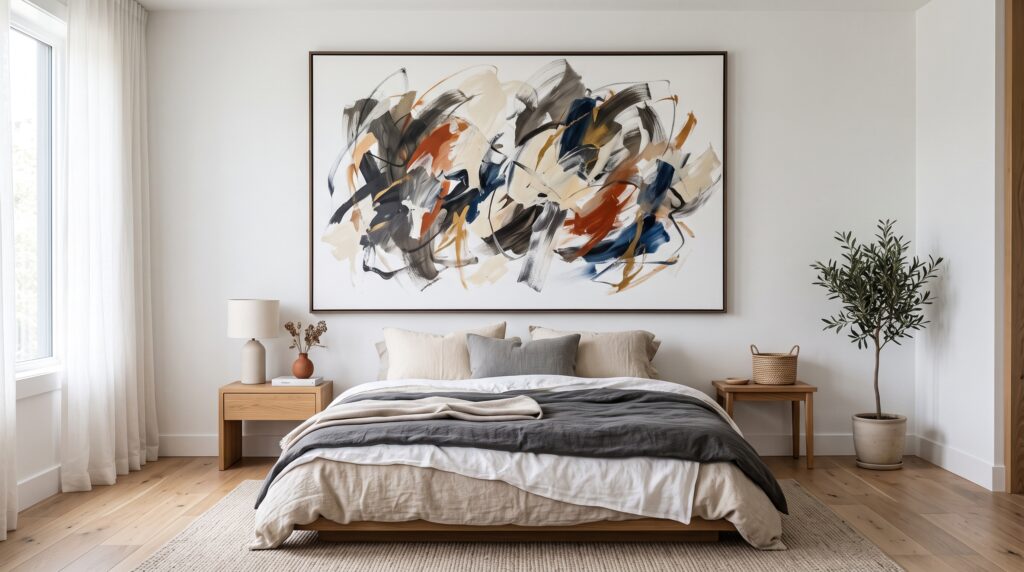
A single large painting or print centered above the pillows creates an instant focal point. Go for something with real scale — think 60 inches wide or more — so it reads as intentional rather than an afterthought propped against the wall. Abstract shapes, soft landscapes, or a large-format photograph all work well here. If you can’t find a piece big enough, consider a diptych or triptych of two or three canvases hung close together to mimic the same effect.
3. Add Vertical Wood Slats
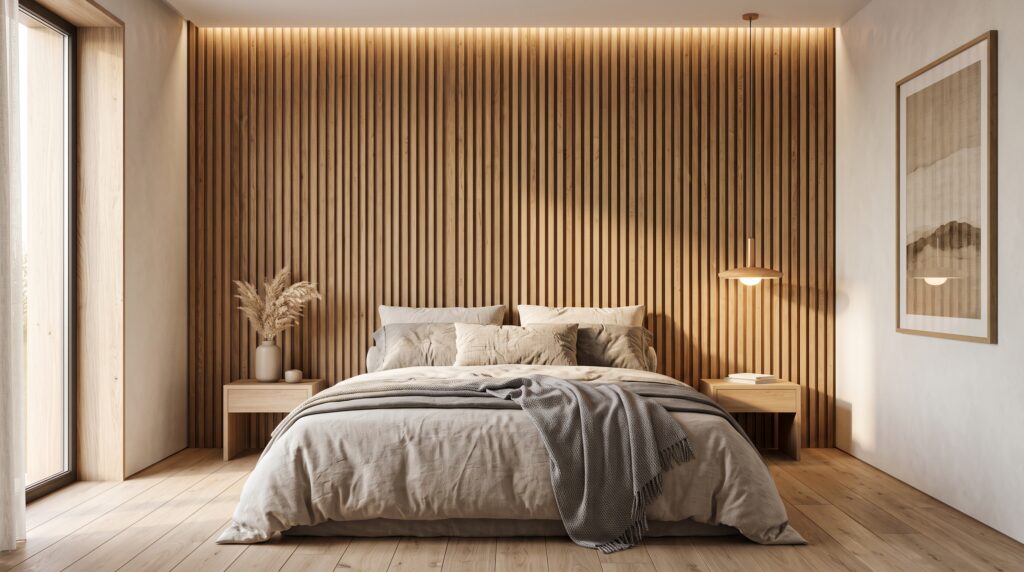
Slatted wood paneling brings warmth and a sense of craftsmanship to the wall. Running the slats from floor to ceiling makes the room feel taller, and the shadow lines they cast add subtle texture even in a neutral color scheme. Many slat panels are now sold as lightweight, peel-and-stick or click-together kits, which makes this one of the more renter-friendly upgrades on this list despite its custom-built appearance.
4. Build a Pillow Landscape
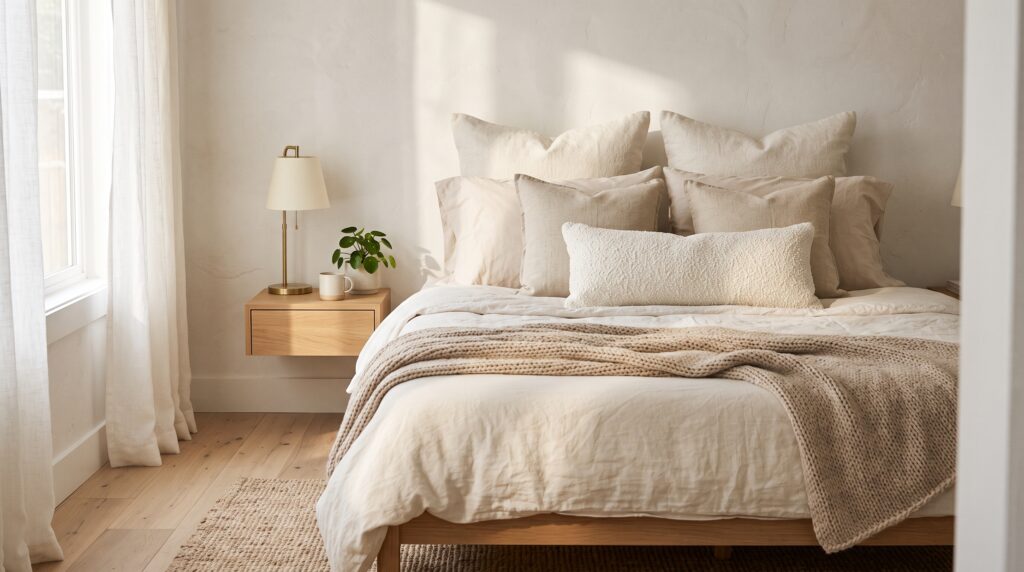
Without a headboard to lean against, pillows have to work harder both visually and functionally. Layer in Euro shams at the back, standard pillows in front, and a few smaller lumbar or accent cushions in mixed textures — linen, bouclé, velvet — so the bed still feels plush and inviting. A tightly edited color palette across the pillows keeps the look cohesive instead of busy.
5. Mount Wall Sconces on Either Side
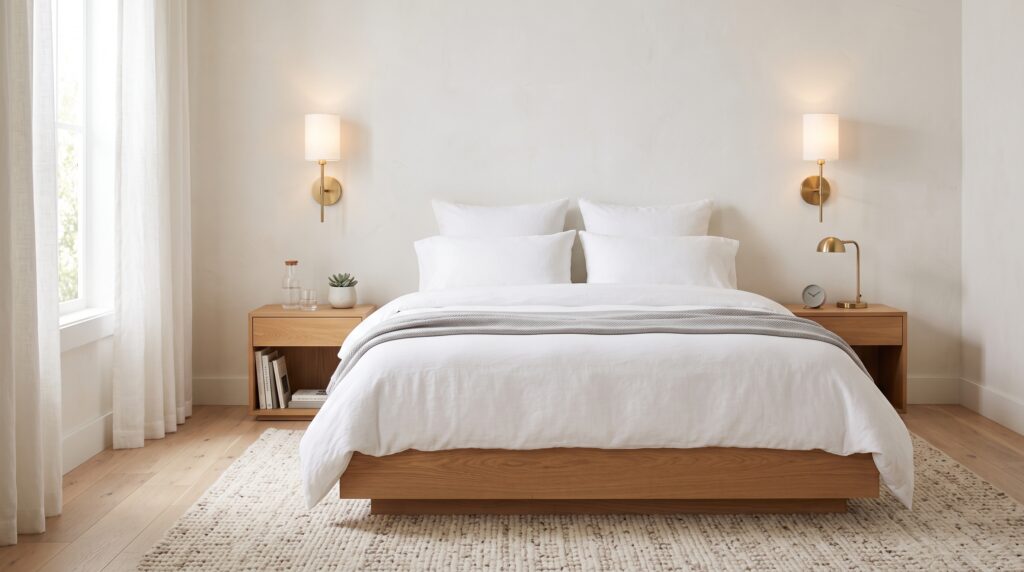
Sconces free up nightstand space while framing the bed with soft, symmetrical light. Choose a finish like brushed brass, matte black, or soft ceramic, and mount them at a height that flatters the wall rather than competing with your pillow stack. Swing-arm sconces are especially practical if you like to read in bed, since you can angle the light exactly where you need it.
6. Slide the Bed Under a Window
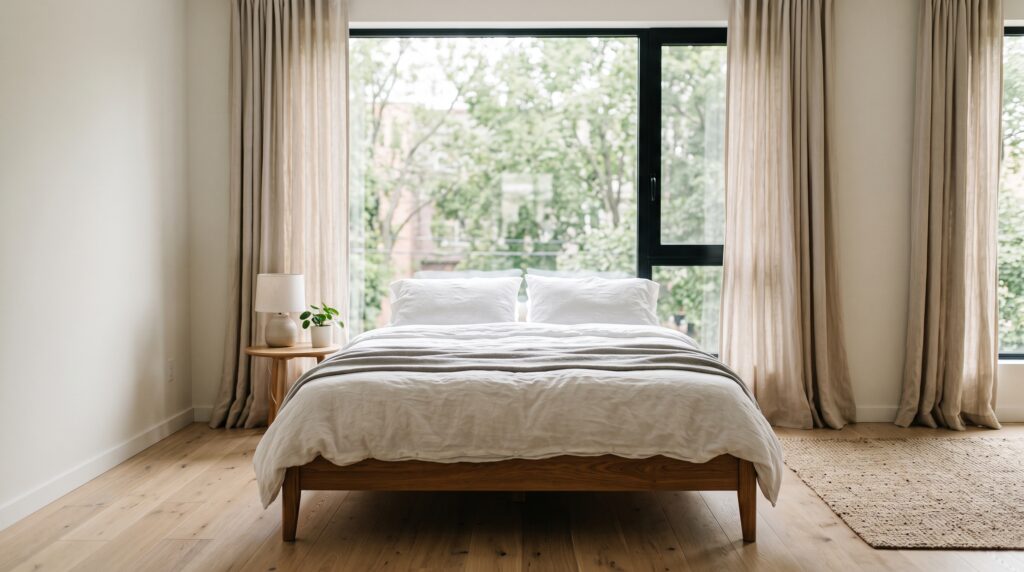
A large window positioned behind the bed brings in natural light and doubles as the room’s focal point. Dress it with floor-length curtains and keep the surrounding walls quiet so the light itself becomes the decoration. Just be sure you can still reach the curtains or blinds easily for privacy and to block early morning sun.
7. Lean a Tall Mirror Against the Wall
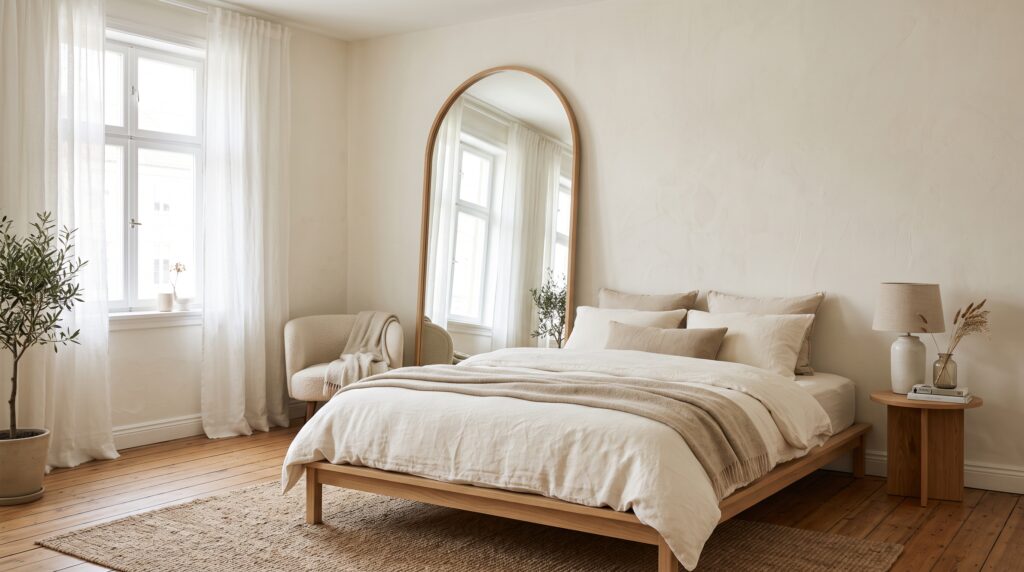
An arched or oversized mirror propped behind or beside the bed adds height and bounces natural light around the room. It’s one of the most renter-friendly tricks on this list, since nothing needs to be hung or drilled — you simply lean it against the wall and adjust the angle until the reflection feels right.
8. Frame the Bed in Floor-to-Ceiling Drapery
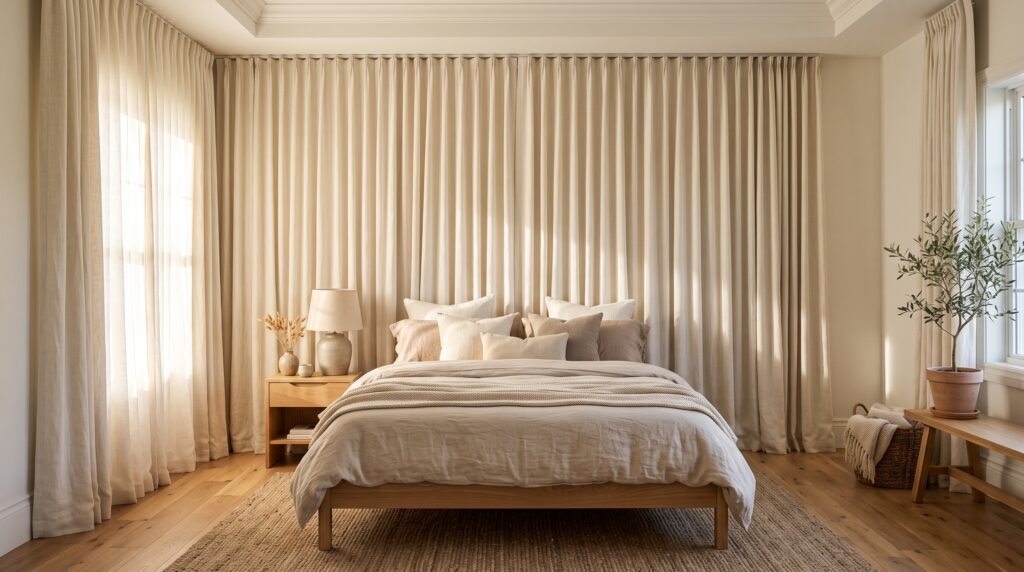
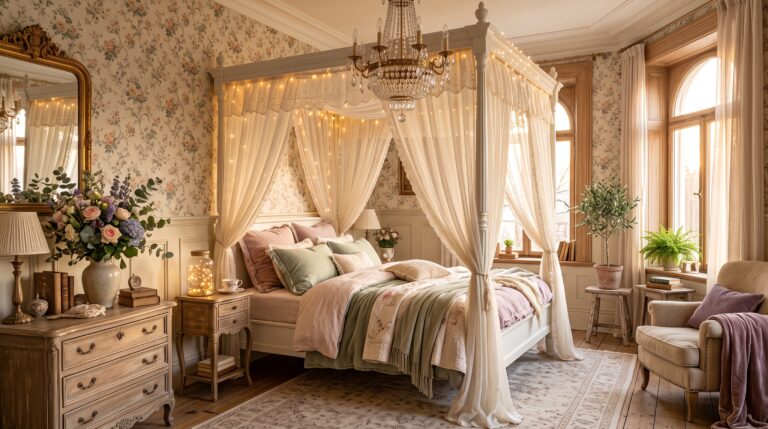
Curtains that run from ceiling to floor behind the bed pull the eye upward and soften the whole wall, almost like a canopy without the structure. Linen or cotton in a warm neutral tone gives the setup a relaxed, tented feel, and the fabric also helps dampen sound in a bedroom with hard flooring.
9. Paint a Faux Arch
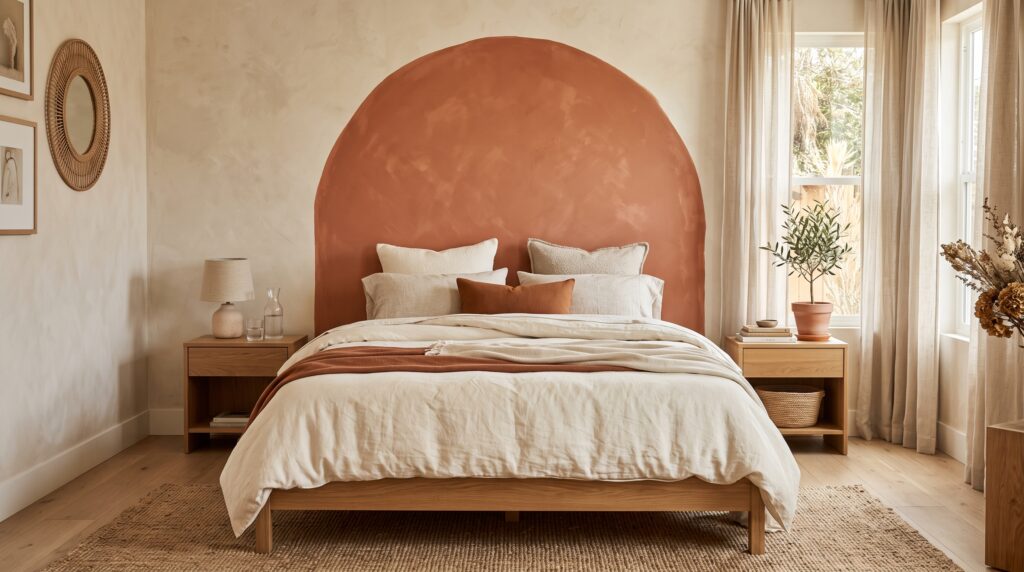
An arch shape painted directly on the wall mimics the outline of a traditional headboard for a fraction of the cost. Earthy tones like terracotta, sage, or warm taupe keep it looking intentional rather than like a stencil project — use painter’s tape and a steady hand, or trace a large round object like a hula hoop to get a clean curve.
10. Install Floating Shelves
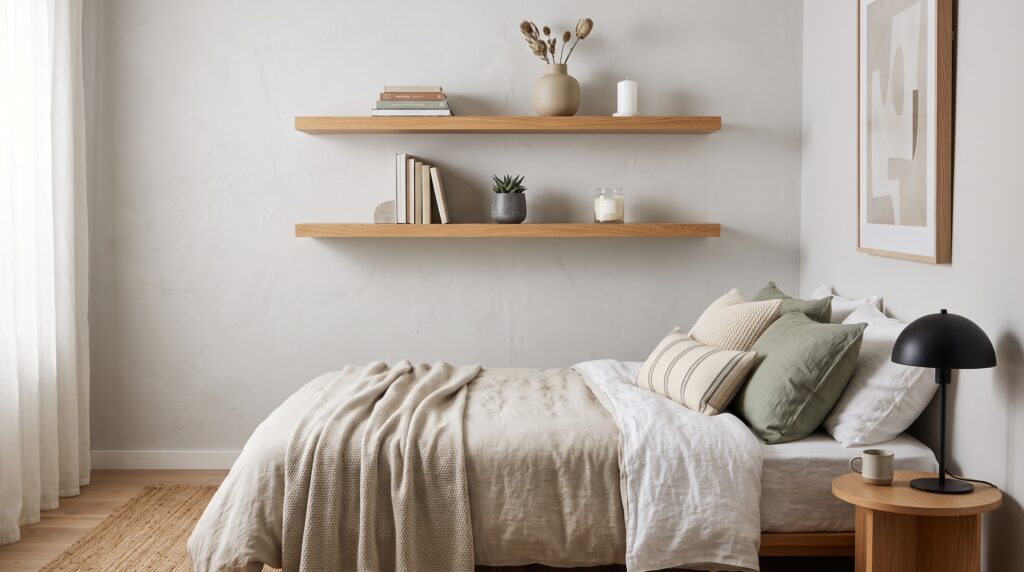
A pair of shallow shelves above the bed adds storage and display space at once. Style them loosely with a few books, a candle, and a small vase, leaving enough open space between objects so the arrangement feels calm rather than cluttered. Floating shelves are also a practical spot for a reading lamp if you don’t have room for a full nightstand.
11. Add Textured Wall Panels
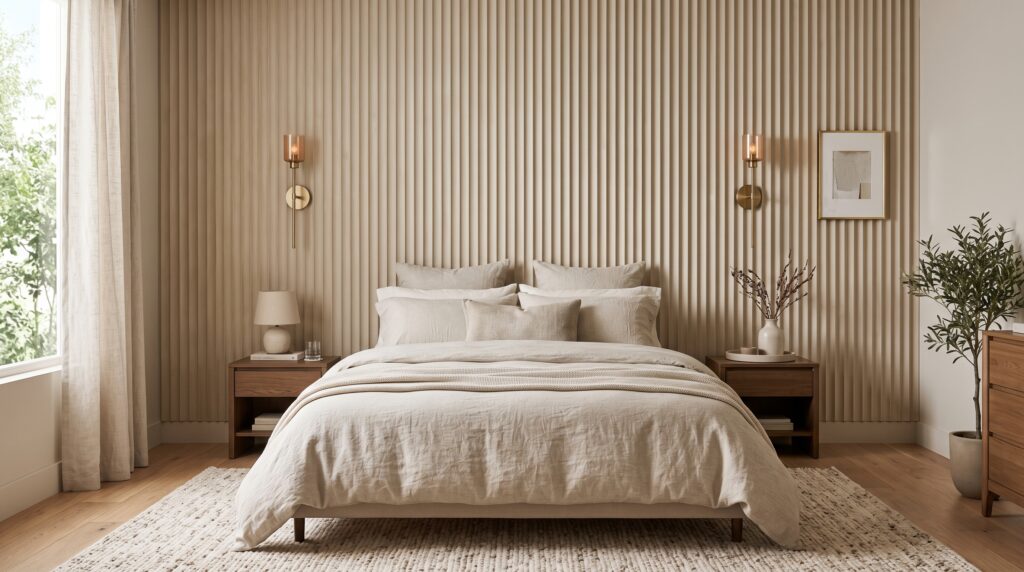
Decorative panels — fluted, ribbed, or upholstered — give the wall depth and architectural interest without any bulky furniture. Painted in a tone close to the wall color, they read as built-in architecture rather than applied decor, which is part of why this look shows up so often in higher-end interior design.
12. Balance the Room with Matching Nightstands
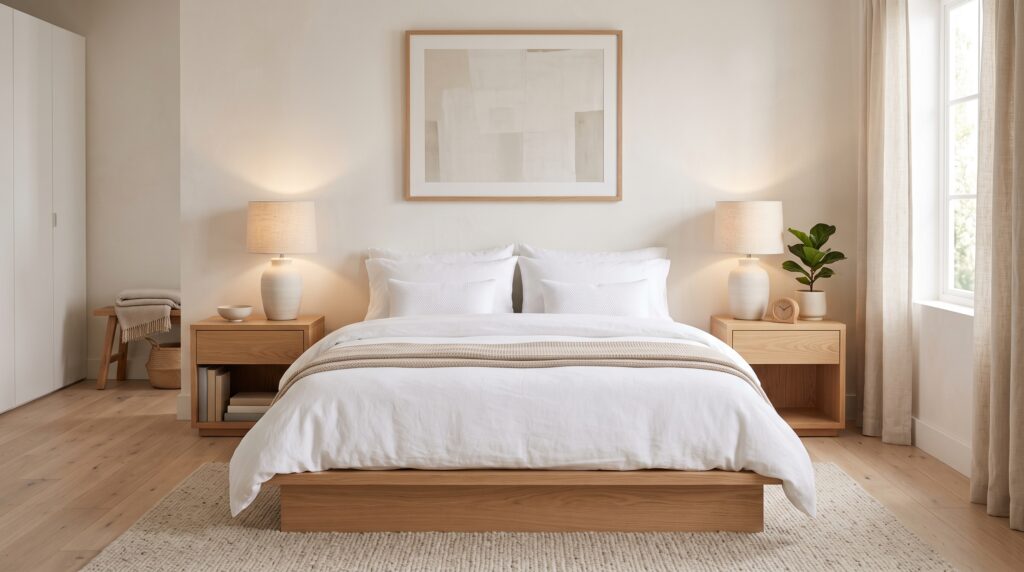
Two identical nightstands with matching lamps create symmetry that pulls the eye toward the bed even without a headboard to anchor it. Add a candle, a small plant, or a stack of books to each side for a polished, finished look that feels considered rather than sparse.
13. Layer in Warm, Ambient Light
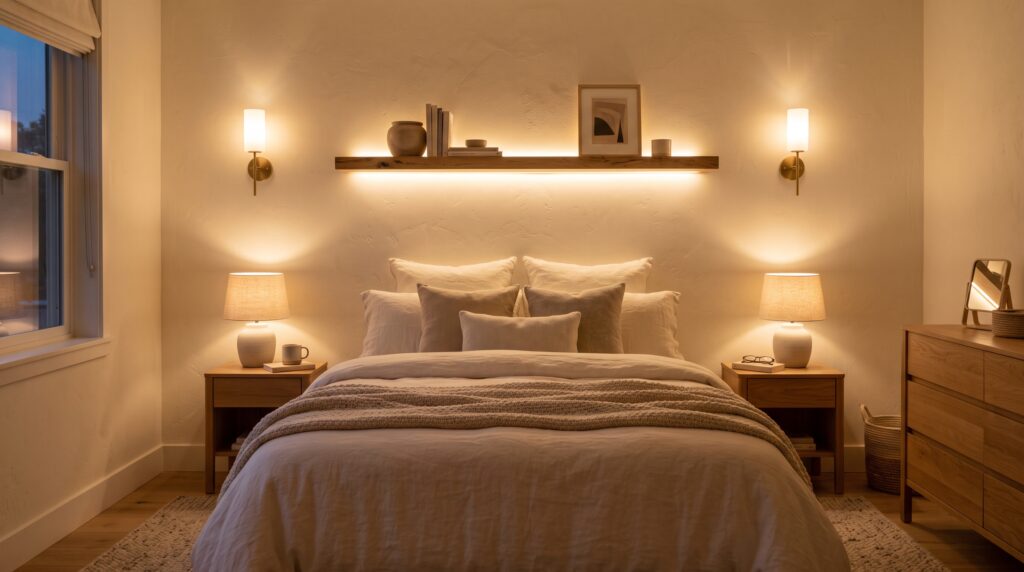
A mix of light sources — sconces, table lamps, and maybe a hidden LED strip along a shelf — replaces the coziness a headboard alcove would normally provide. Warm bulbs in the 2700K range keep the glow soft rather than clinical, and having multiple light sources at different heights makes the room feel layered instead of flat.
14. Add a Bench at the Foot of the Bed
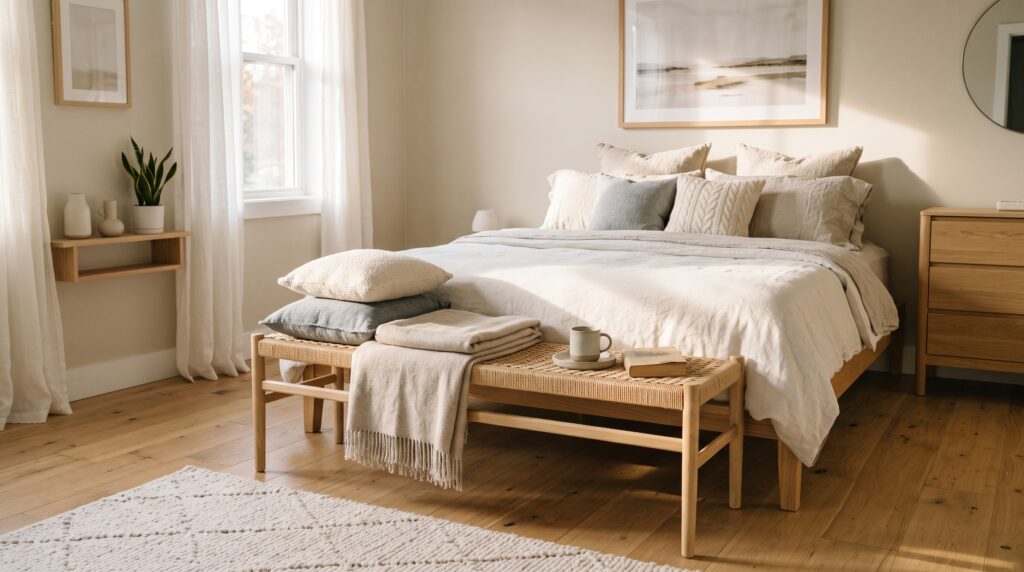
A woven or upholstered bench grounds the room and gives the eye somewhere else to land besides the empty wall. A folded throw or a couple of cushions on top keeps it from feeling like an afterthought, and it doubles as a practical spot to set out clothes or luggage.
15. Hang a Woven Textile
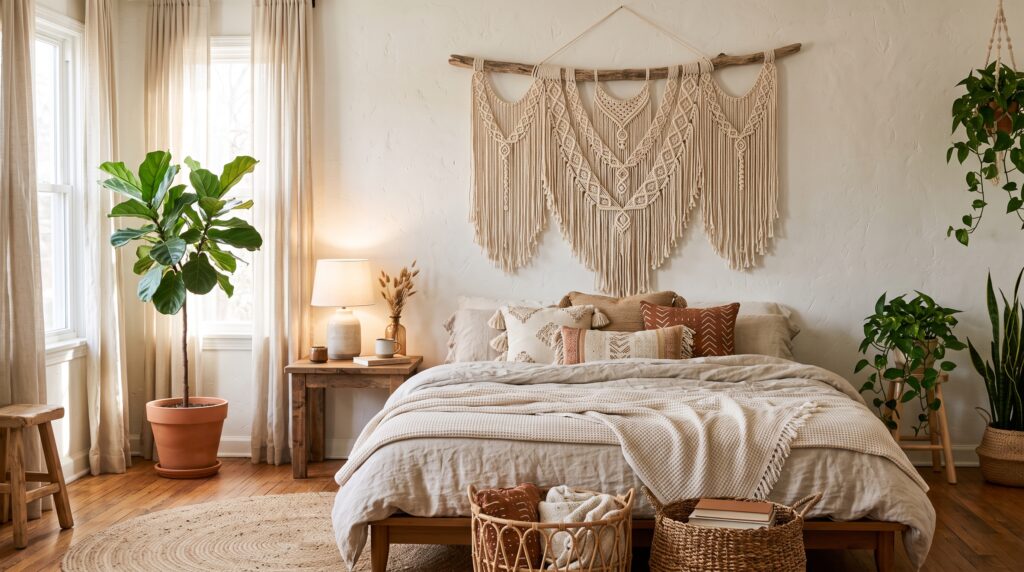
A large woven wall hanging or macramé piece softens the wall with texture and warmth in place of a headboard. It suits boho and Scandinavian-leaning bedrooms especially well, since the natural fibers feel organic rather than staged, and most versions are lightweight enough to hang from a single hook or curtain rod.
16. Build a Gallery Wall
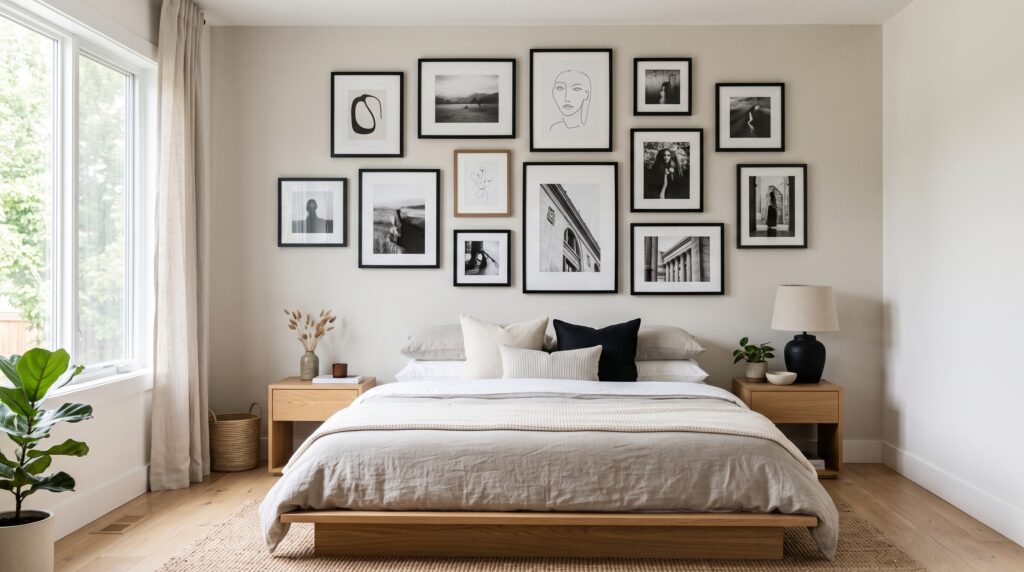
A thoughtfully arranged gallery wall gives the bed a defined backdrop while showcasing your personality far more than a single headboard ever could. Mix abstract art, black-and-white photography, and minimalist frames, and leave consistent spacing between each piece so the whole thing reads as one curated composition rather than a scattered collection.
17. Ground the Bed with an Oversized Rug
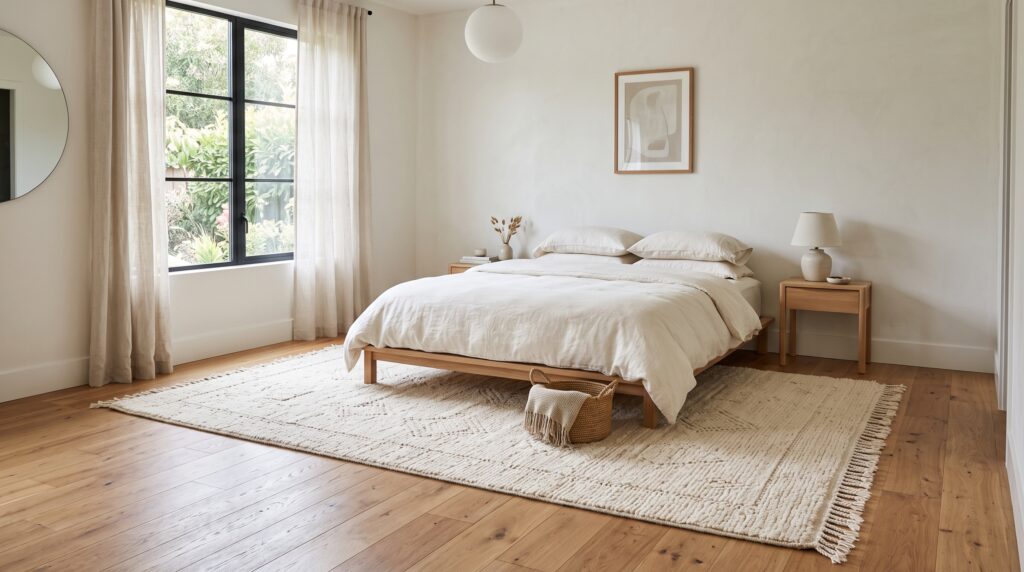
A rug that extends well beyond the edges of the mattress on every side defines the sleeping area and adds warmth underfoot. A hand-woven wool or jute rug in a neutral tone keeps the focus on texture rather than pattern, and it also helps visually “anchor” the bed even when the wall behind it is left bare.
18. Swap Table Lamps for Pendants
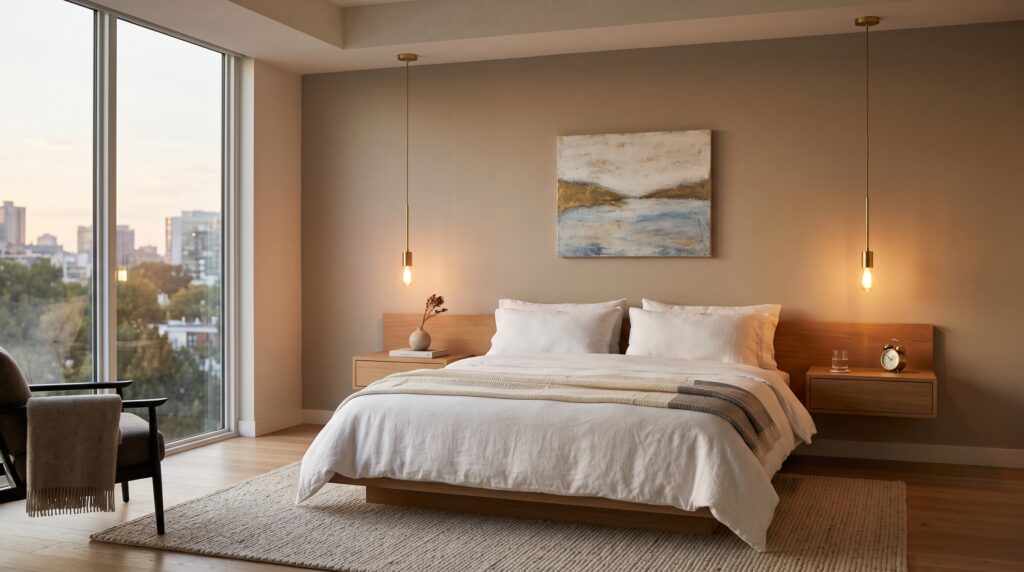
Hanging pendant lights on either side of the bed clears the nightstands entirely and gives the room a refined, boutique-hotel feel. Choose fixtures with a warm brass, matte black, or ceramic finish so they complement rather than compete with the wall behind them, and hang them low enough to actually light your book without glaring into your eyes.
19. Keep the Styling Minimal
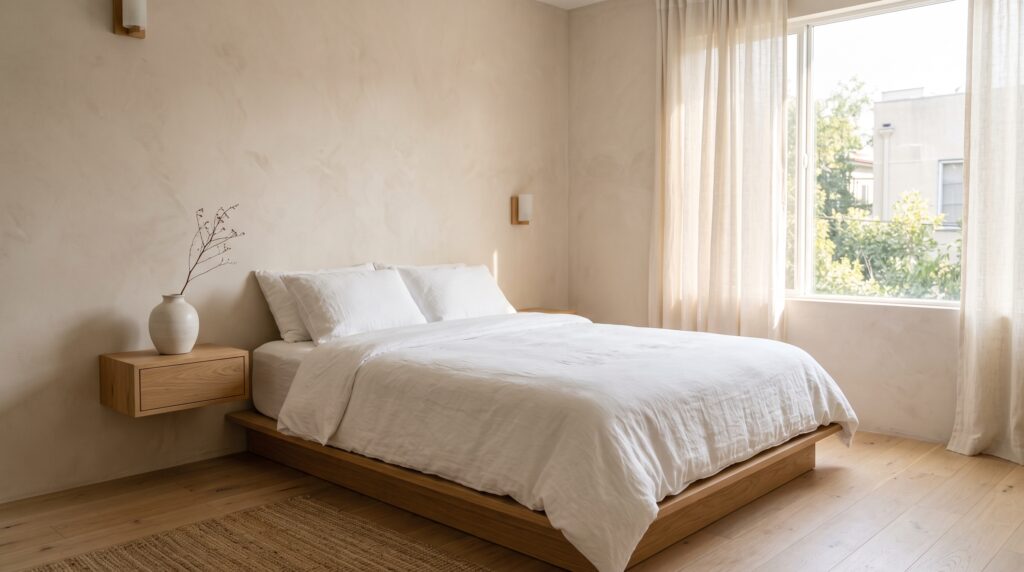
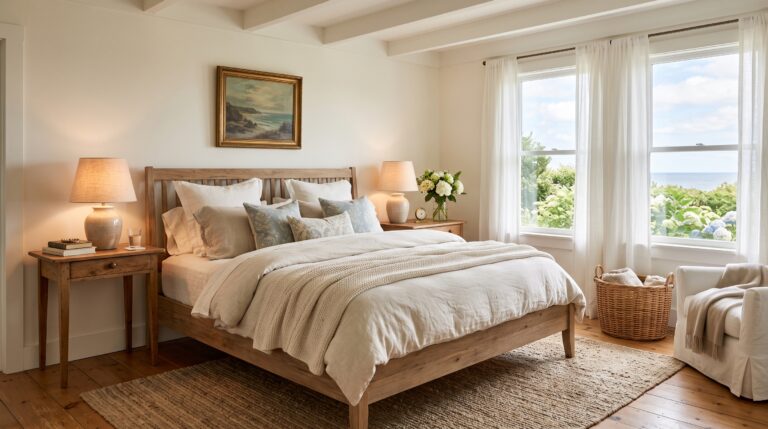
Sometimes the best move is restraint. A bed without a headboard naturally suits a pared-back approach — select only a few meaningful pieces, such as a candle, a small stack of books, or one piece of art, and leave plenty of open space so the room feels peaceful rather than empty.
20. Add an Upholstered Bench in Bouclé or Linen
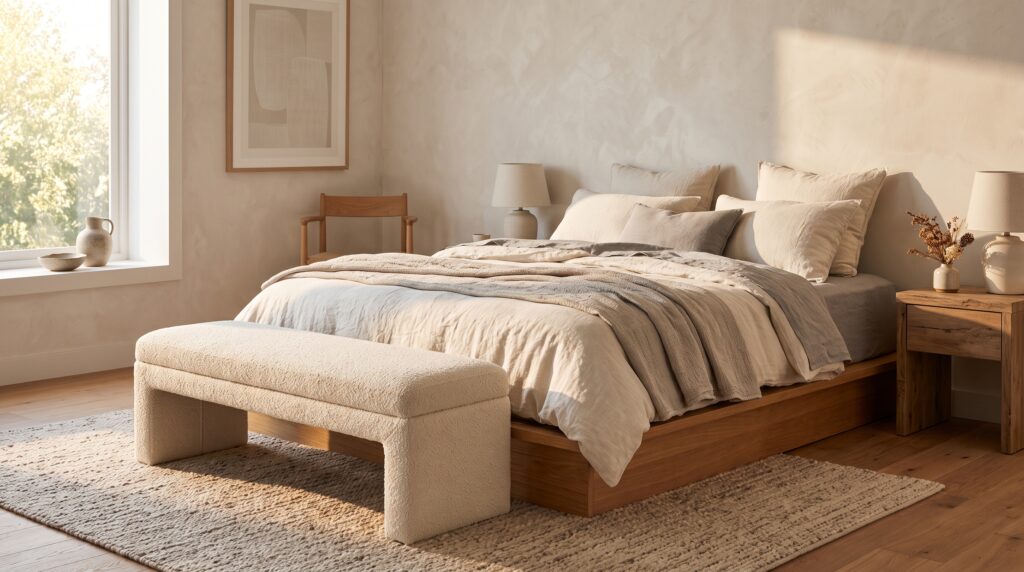
A soft, upholstered bench at the foot of the bed introduces texture and comfort while visually balancing the room. Stick to a neutral fabric so it blends with the rest of the space rather than pulling focus away from the wall behind the bed, and choose a low profile so it doesn’t crowd the walkway.
21. Bring in a Statement Plant
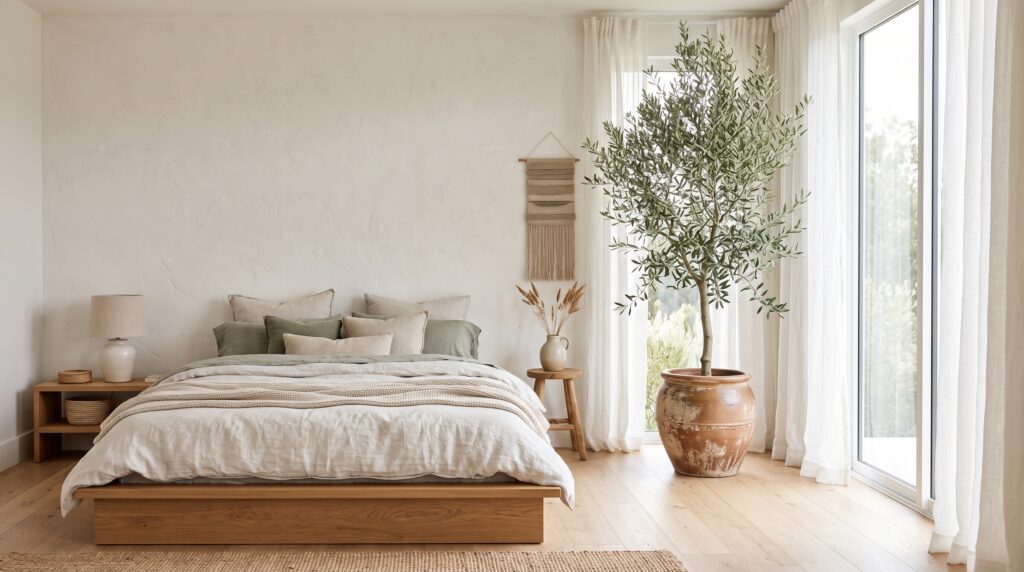
A tall plant near the head of the bed — an olive tree, a fiddle-leaf fig, or a trailing pothos set on a shelf — softens hard lines and adds a bit of life to an otherwise quiet corner. Greenery also has the practical benefit of improving air quality and making the room feel more lived-in and calm.
22. Finish with a Signature Scent
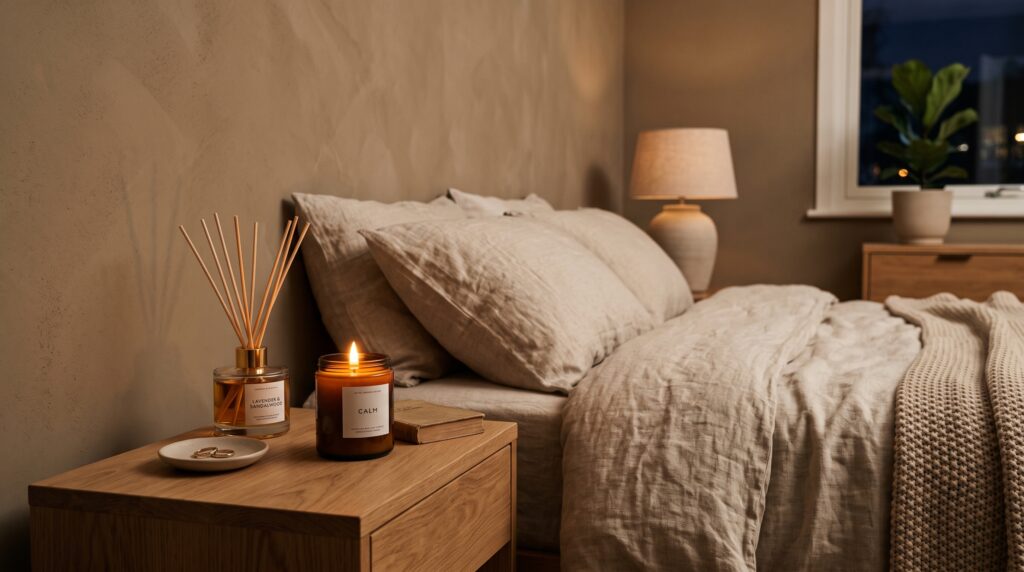
A reed diffuser, soy candle, or essential oil diffuser rounds out the sensory experience of the room and completes the overall mood you’ve built with color, texture, and light. Warm, woody notes like cedar, sandalwood, or bergamot pair especially well with the calm, pared-back look of a headboard-free bed, turning the whole space into a genuine retreat.
Final Thoughts
A bed without a headboard isn’t a compromise — it’s an opportunity. Whether you lean into bold color, natural texture, layered lighting, or quiet minimalism, the wall behind your bed can do just as much visual work as any traditional headboard, often for less money and with far more flexibility to change your mind later. The absence of a headboard simply shifts the design challenge from choosing one piece of furniture to composing an entire wall, and that shift tends to produce more personal, more interesting bedrooms in the end.
For more expert-backed inspiration on styling a bed without one, Apartment Therapy’s roundup of headboard alternatives features real interior designers weighing in on why skipping the headboard can actually give a bedroom more flexibility and flow.
Pick one or two ideas from this list that match your space, style, and budget, and build outward from there. You don’t need every element at once to make the room feel complete — start with the wall treatment or lighting that speaks to you most, then layer in textiles, greenery, and small styling details over time until the space feels fully yours.
Frequently Asked Questions
Is it okay to have a bed without a headboard? Yes. A headboard is a styling choice, not a structural requirement. Plenty of well-designed bedrooms skip it entirely, replacing its visual role with paint, art, lighting, or textiles instead.
What can I use instead of a headboard? Popular substitutes include an accent wall, oversized artwork, wood paneling, a woven textile, floating shelves, or a simple arrangement of pillows and lighting. The right choice usually comes down to your budget and how permanent you want the change to be.
Does skipping a headboard make a small bedroom feel bigger? Often, yes. A headboard adds visual bulk and height at the head of the bed, so removing it can make a compact room feel more open, especially when paired with lighter wall colors and minimal styling.
Will a bed without a headboard damage the wall? It can, over time, from pillows and bedding shifting against the surface. A washable paint finish, a woven hanging, or a slim shelf mounted just above the pillow line helps protect the wall while still keeping the headboard-free look.
Is a headboard-free bed a good option for renters? It’s one of the best options for renters, since most of the ideas above, including mirrors, art, rugs, pendant lamps, and plants, require little to no drilling and can move with you to your next apartment.