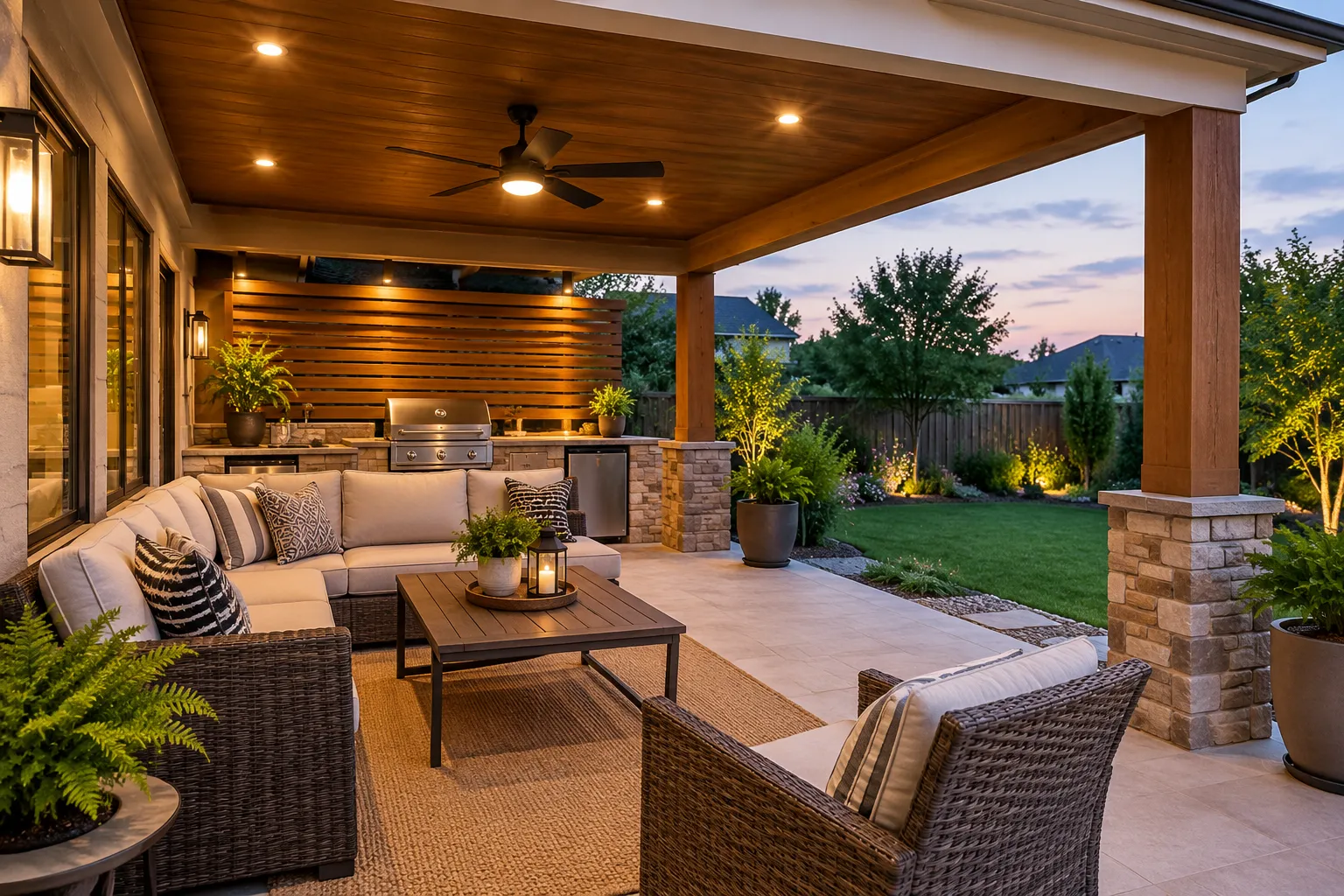
A thoughtful covered patio design does one simple thing very well: it makes your outdoor space usable. With a roof overhead, your morning coffee survives a drizzle, your Friday dinner survives a surprise shower, and your Sunday nap survives the afternoon glare. The patio stops being a spot you visit only on perfect days and becomes an extra room of the house.
Getting there takes more than a roof, though. The most inviting patios layer texture, comfortable seating, gentle lighting, and a few personal touches until the whole area feels collected rather than assembled. Whether you are planning a brand-new build, refreshing a tired porch, or simply restyling what you already own, choosing a clear direction makes every later decision easier.
Below you will find eleven distinct looks, from lodge-style warmth to crisp modern lines, each with practical ideas you can borrow right away. Skim for the one that suits your home, or blend two or three into something that feels entirely yours.
Covered Patio Design Styles to Suit Every Home
Every home, budget, and climate calls for a slightly different approach, so think of the styles below as starting points rather than strict rules. Pick the mood you want to live in, then adapt the details to your own space.
1. Rustic Luxury With a Fireplace
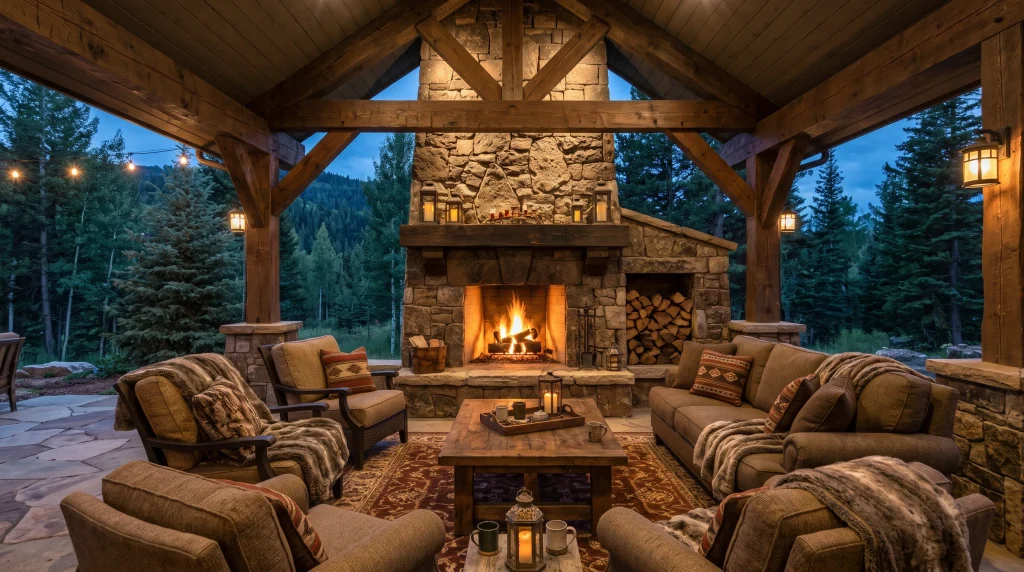
If you love the feeling of a mountain lodge, this look delivers it without the drive. Start with a stone fireplace as the centerpiece, then frame the space with heavy timber beams overhead. The combination of rough stone and warm wood instantly makes an evening outdoors feel grounded and cozy.
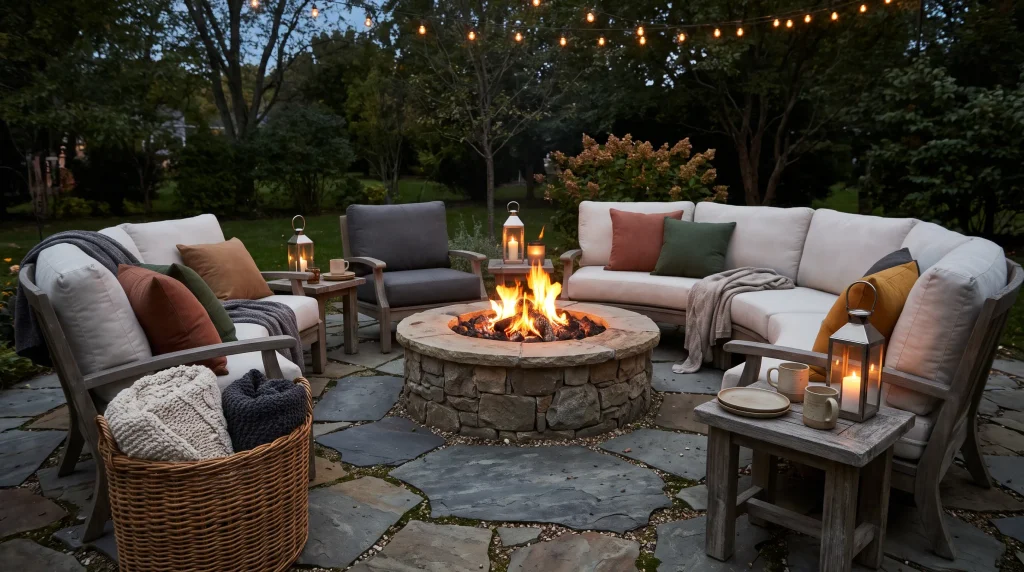
Arrange deep, cushioned seating in a loose circle so conversation flows naturally toward the fire. Add a few lanterns on side tables for a flickering glow, and keep a basket of chunky knit blankets within reach. Slate or flagstone underfoot completes the picture and stands up well to weather. The result is a patio that invites you to stay out long after the sun goes down.
2. Modern Lines and Clean Surfaces
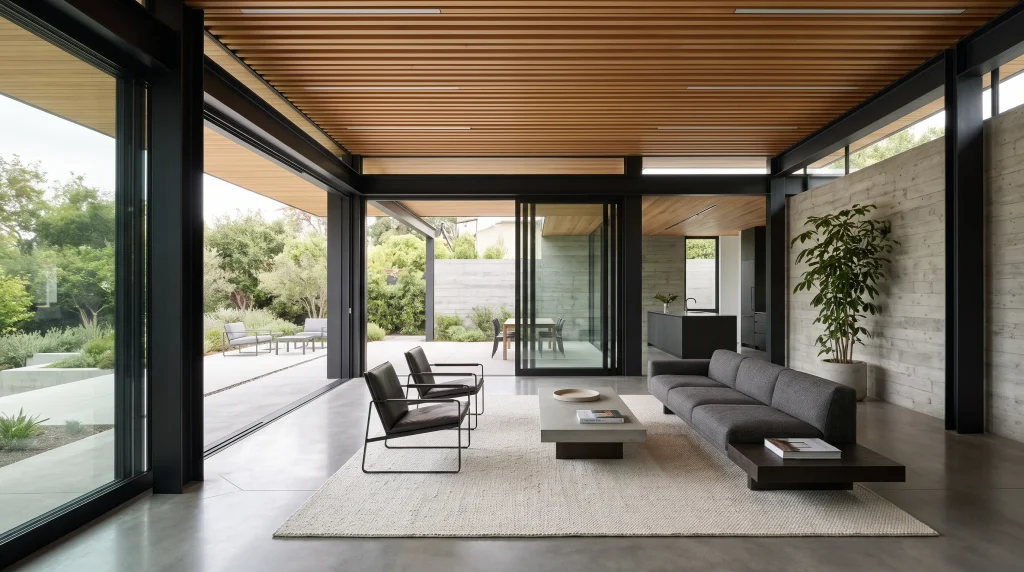
Modern design is all about restraint. Begin with a ceiling of horizontal slats and a smooth concrete floor, then let the structure itself do most of the decorating. Black metal frames, large glass doors, and low-profile furniture keep everything crisp and open.
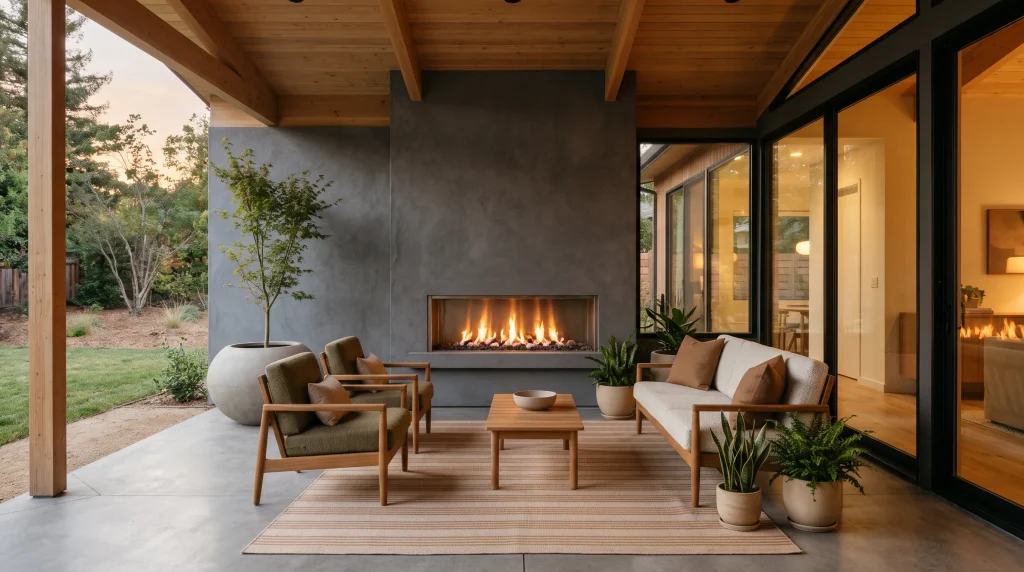
Clean does not have to mean cold. A few potted plants, or a single small tree in a sculptural planter, soften the geometry with living texture. A subtle striped rug adds warmth underfoot, and a linear fireplace gives the space a focal point without clutter. Every item should earn its place, which is exactly why this style feels so calm and intentional, a bit like mid-century interiors that have wandered outside.
3. Airy Farmhouse Charm
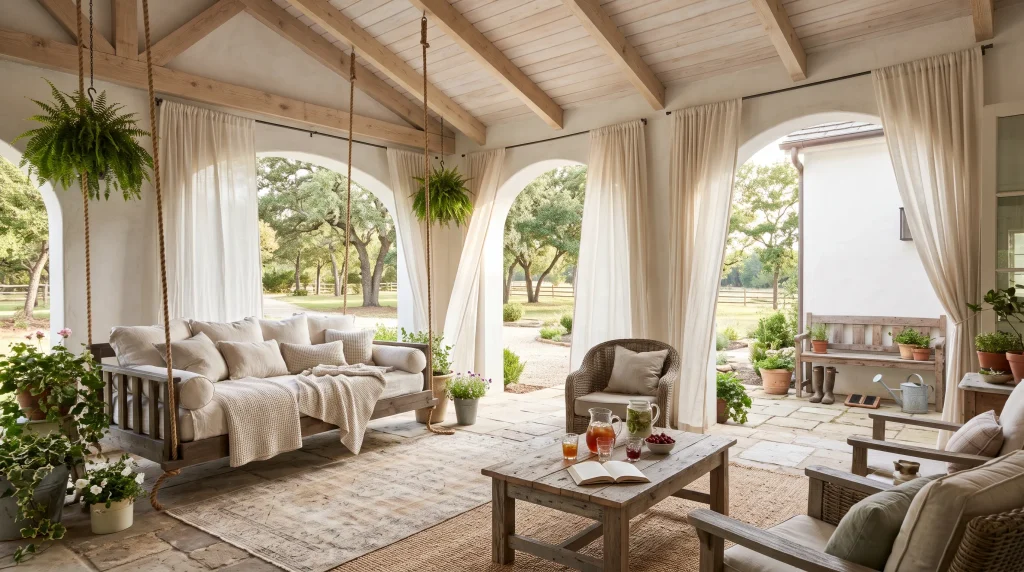
Farmhouse style leans on softness and light. Pale wood ceilings, arched openings, and flowing curtains create a patio that feels cheerful rather than formal. It is a relaxed look that welcomes muddy boots, afternoon guests, and the occasional lazy nap.
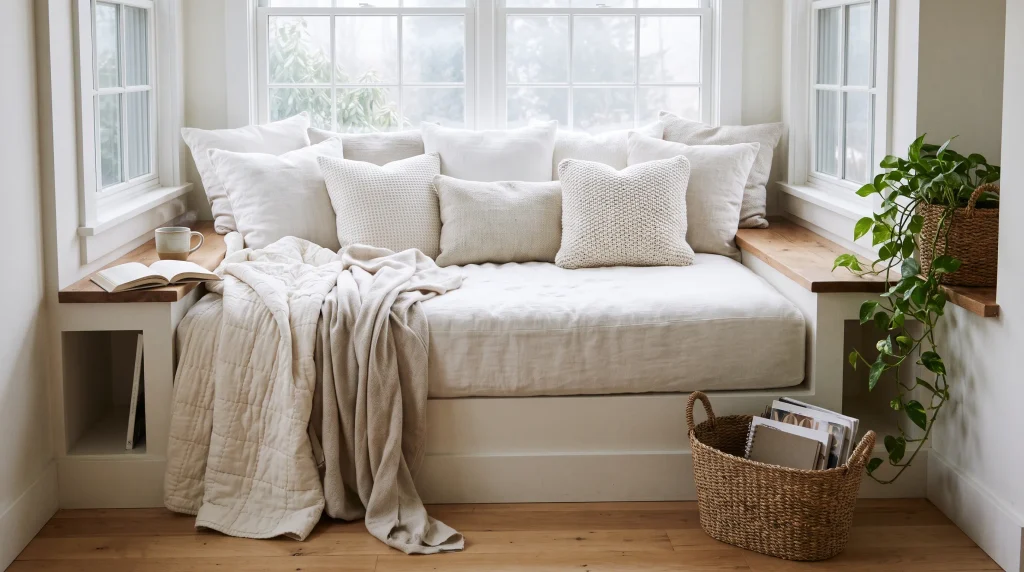
A built-in daybed or sofa is the star here, because it gives you a comfortable spot to stretch out without extra furniture crowding the floor. Pile on soft pillows, drape a quilt or two across the arm, and keep the palette mostly white and cream. A couple of baskets holding magazines or trailing plants add character without busyness. On a chilly morning, this corner becomes the perfect place for a warm mug of tea.
4. Canopies, Awnings, and Retractable Covers
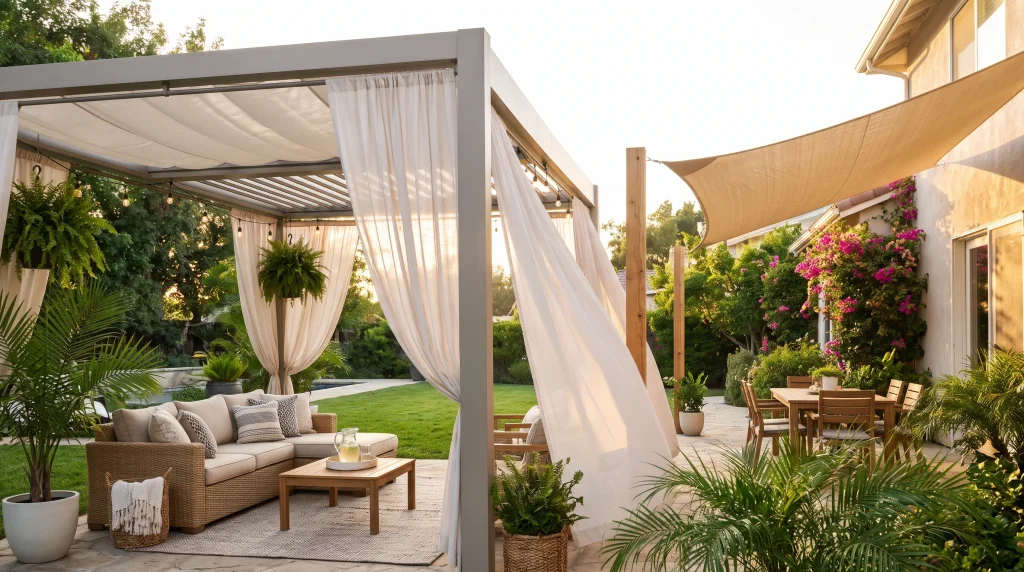
Not every patio comes with a solid roof, and that is perfectly fine. A sail canopy, retractable awning, or louvered pergola gives you shade and a degree of weather protection while keeping the overall feel light and breezy. Soft, flowing fabrics also lend a touch of holiday atmosphere to an everyday backyard.
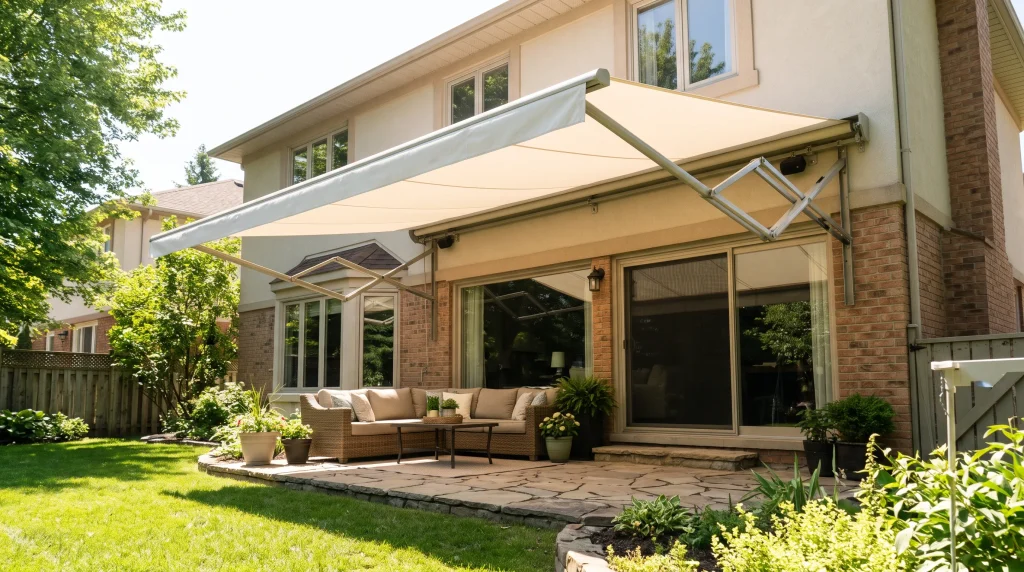
Shade is more than a comfort, too. According to Consumer Reports, citing the Department of Energy, awnings can cut summer solar heat gain by up to 65 percent on south-facing windows and 77 percent on west-facing ones, and light-colored fabrics reflect more sunlight. If your patio sits against a sunny wall, a canopy can keep the rooms behind it noticeably cooler. Retractable models are especially handy because you can roll them back in winter and let the low sun warm the house.
5. Boho Comfort
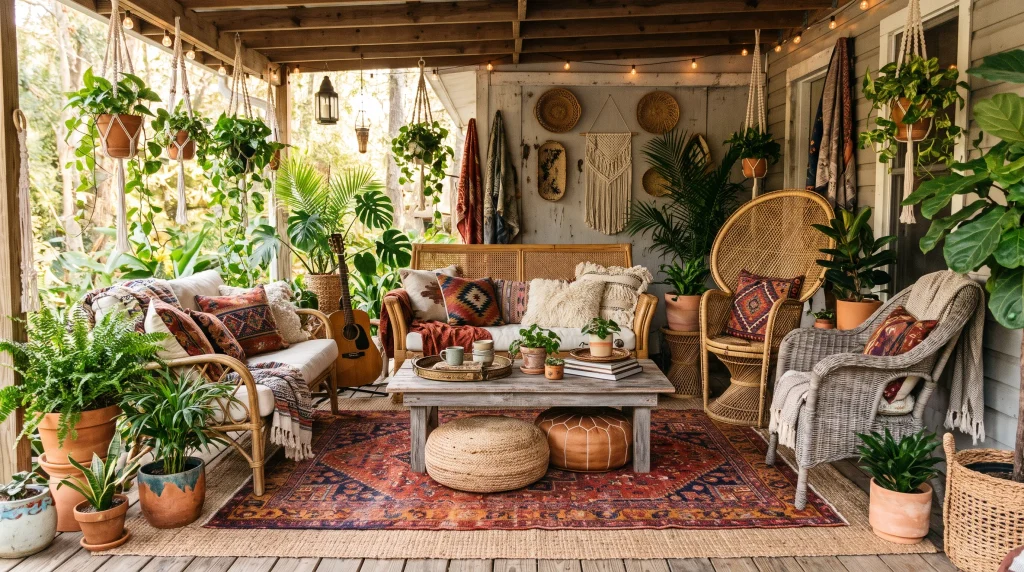
Bohemian style is the laid-back cousin of every other look here. Start with woven chairs or a cane loveseat, pile on pillows in mixed patterns, and anchor everything with a bold rug in rich color. The goal is a space that feels collected over time, not ordered from one catalog page.
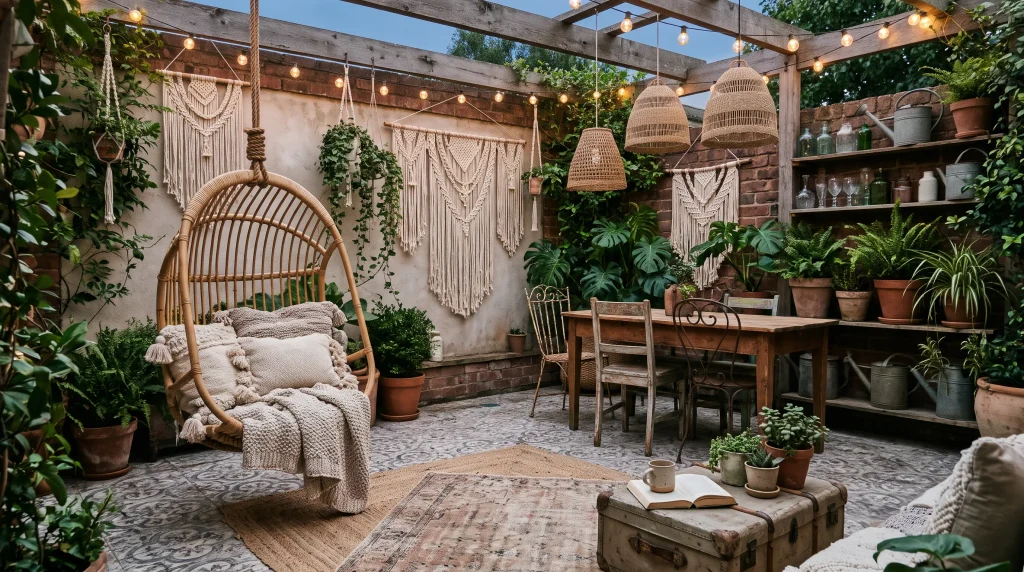
Texture does most of the work. Macramé hangings, rattan pendant lights, and a hanging egg chair all add that relaxed, barefoot energy, while string lights or globe bulbs bring a soft glow after dark. Terracotta pavers or patterned cement tiles ground the space nicely. Do not hesitate to mix old with new, either. Flea market finds and vintage pieces give your patio personality that nobody else will have.
6. Cheerful Summer Style
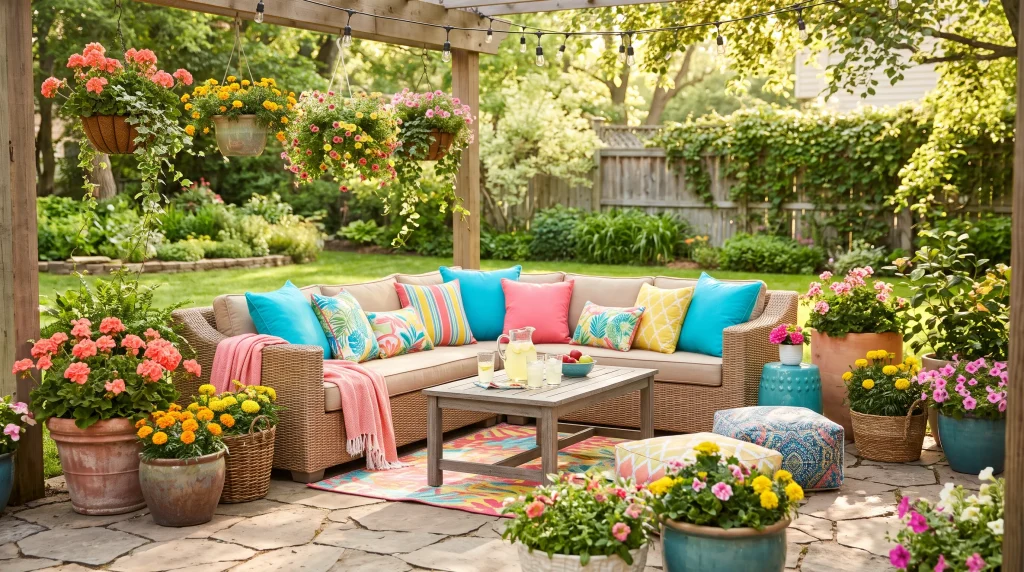
When the weather warms up, a few simple swaps can transform your patio in an afternoon. Trade heavy textiles for lighter ones in colors that make you smile, such as bright turquoise, coral pink, and sunny yellow. Add extra planters overflowing with flowers, and the whole space feels alive.
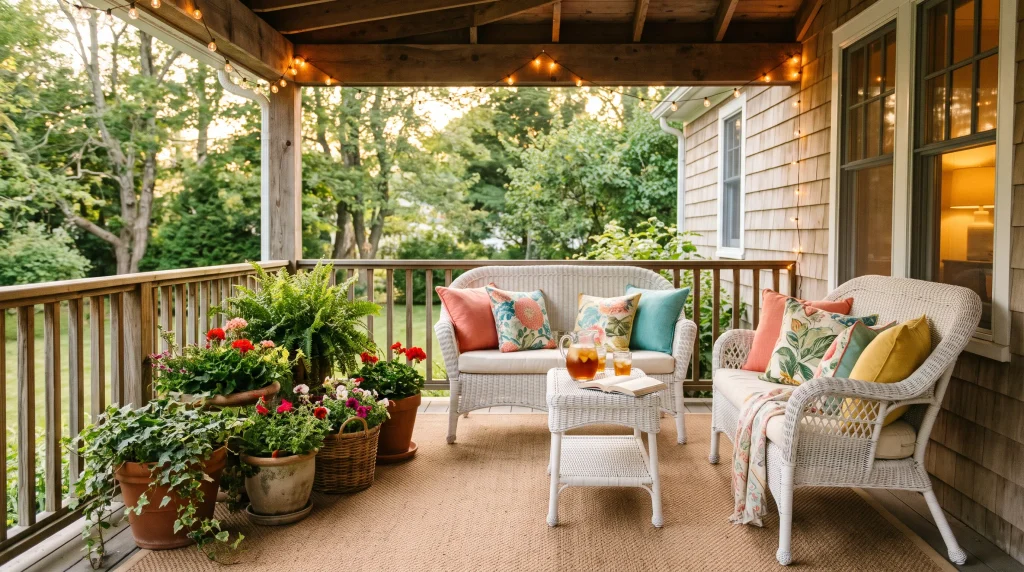
White wicker chairs, a sisal rug, and a scattering of colorful pillows make a classic summer combination that works equally well on a covered patio or a front porch. Grouping planters in clusters of different heights looks fuller and more natural than lining them up in a row. A strand of small string lights along the overhead beams keeps the party going after sunset. Best of all, this style is easy to dial back for fall, since you only need to swap the accents.
7. Peaceful Minimalism
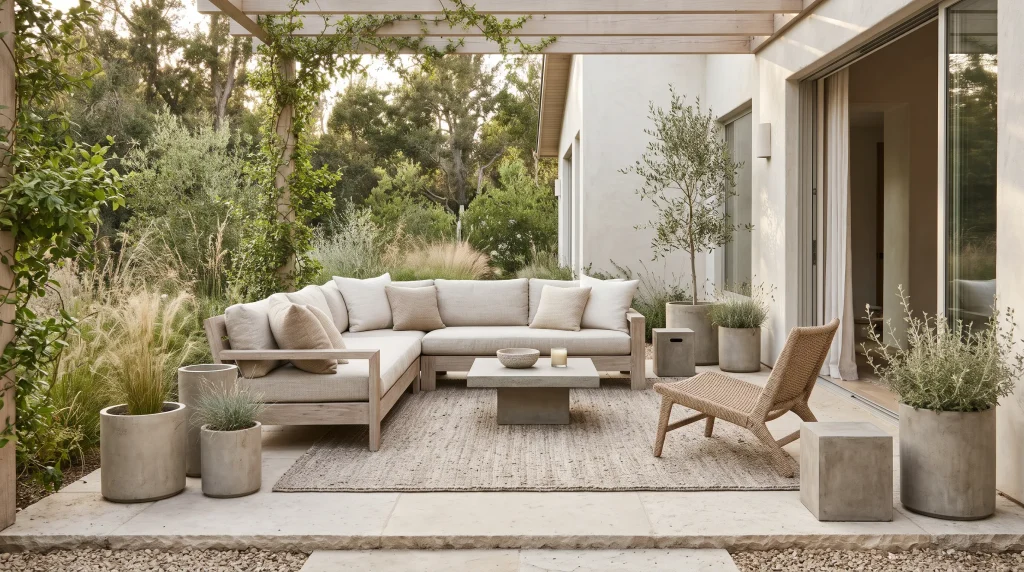
If your ideal patio is a quiet place to exhale, minimalism may be your match. Choose a handful of pieces you genuinely love, then let the textures speak for themselves. Soft neutral cushions, simple concrete planters, and a stone or pale decking floor keep the palette calm and cohesive.
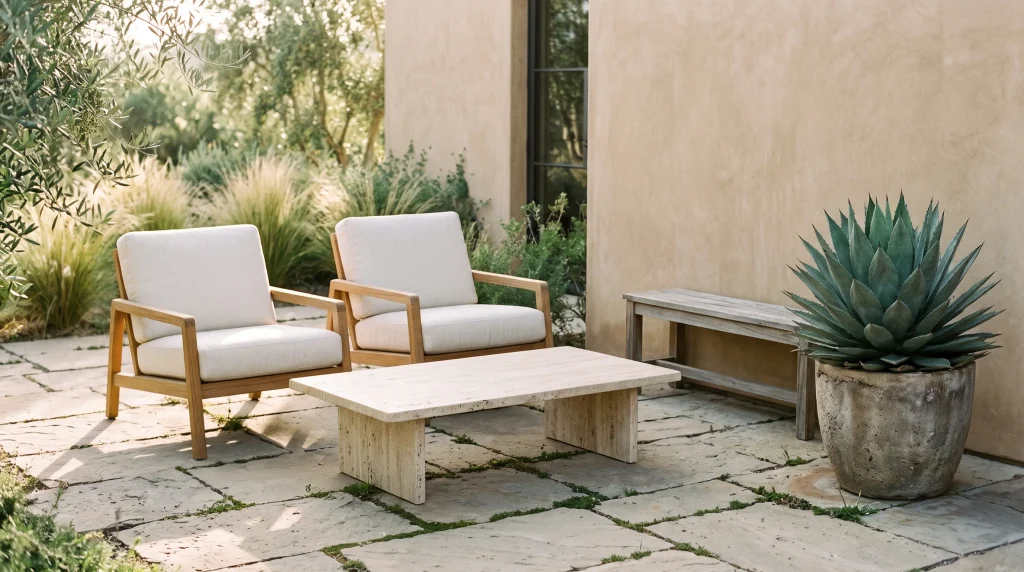
Fewer items often make a bigger impression. Two comfortable lounge chairs and a clean coffee table can feel far more welcoming than a crowded arrangement of mismatched seating. A teak bench, a travertine table, or an architectural plant such as a sculptural agave provides just enough interest without competing for attention. Keeping the surfaces clear also makes cleaning easier, which is a real bonus for any outdoor space.
8. A Reading Nook Outside
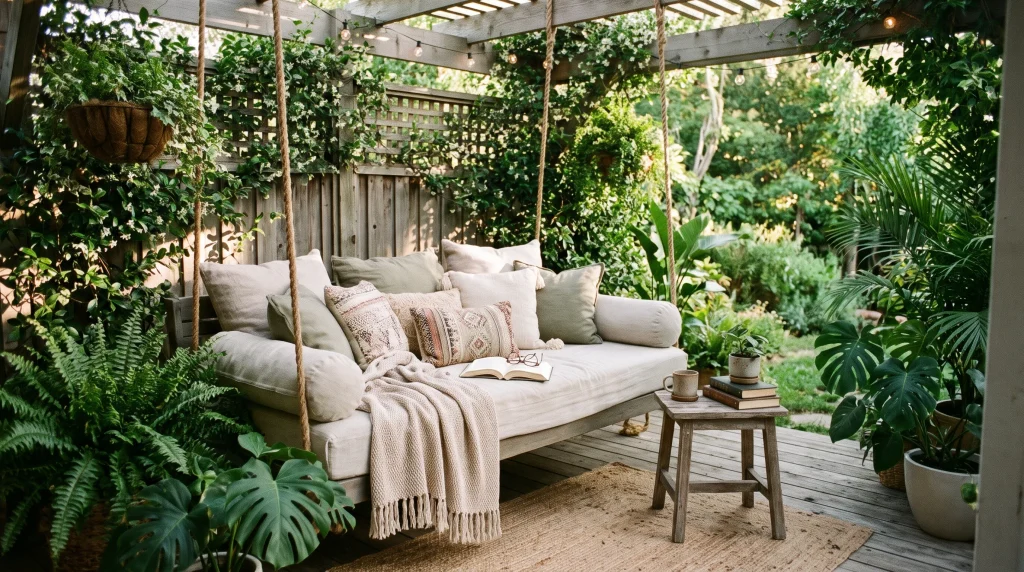
Few things beat curling up with a good book in fresh air. A daybed or hanging chair instantly turns a corner of your patio into a private escape, especially when it is layered with plenty of pillows and a soft throw.
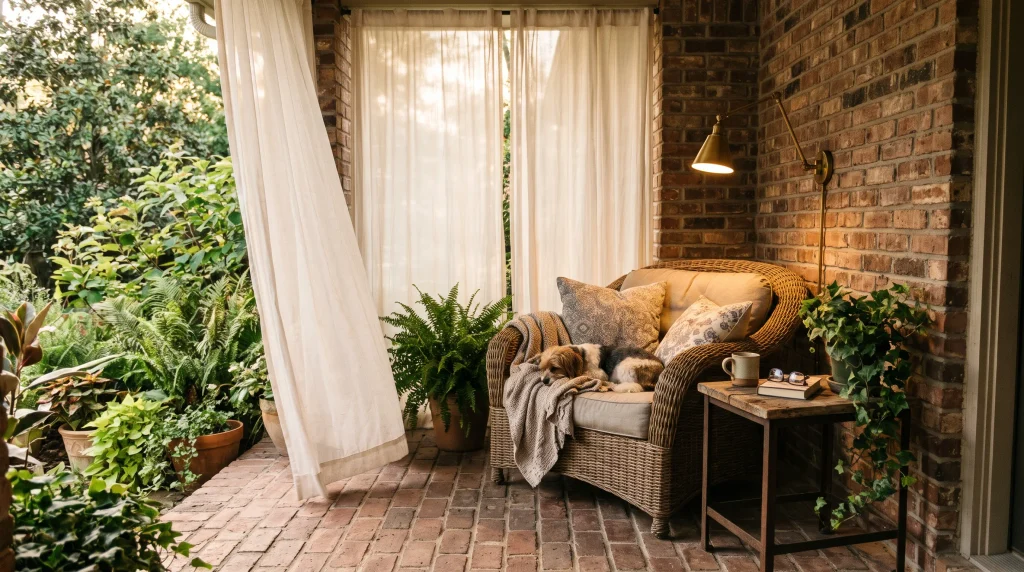
Place a small side table within arm’s reach for your drink, and add an adjustable sconce or a lantern so you can keep reading as the light fades. Sheer curtains on one side offer a little privacy and filter the sun, while brick or slate floors give the nook a cozy, grounded feel. Even ten spare minutes here feels like a mini vacation, and you may find that family members, pets included, start claiming the best seat whenever the sun comes out.
9. Outdoor Curtains for Softness and Privacy
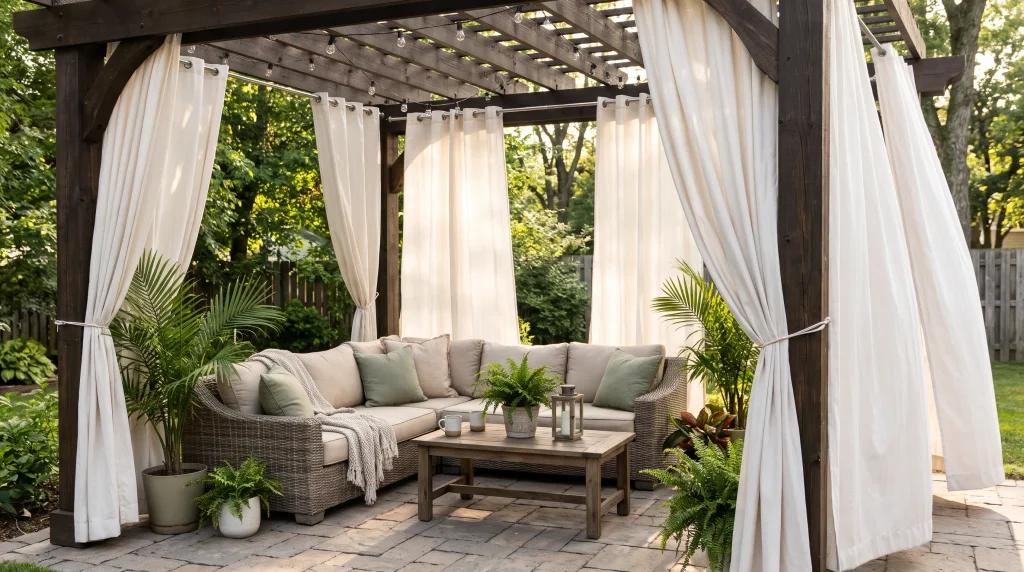
If you want a quick way to soften a hard-edged patio, outdoor curtains work like magic. They create privacy from neighbors, cut harsh sunlight on bright days, and add movement and color to an otherwise static space. Choose fabrics that can be tossed in the wash so upkeep stays easy.

Keep the color scheme simple so everything looks deliberate. Pulling the curtain shade from one of your cushions or accent pieces is a small detail that quietly ties the whole patio together. Tie-backs let you change the mood: loop them back for an open, welcoming feel, or let the panels hang loose for something a little more dramatic. Black curtain tracks look sleek on modern patios, while simple rods suit relaxed styles.
10. An Alfresco Dining Spot
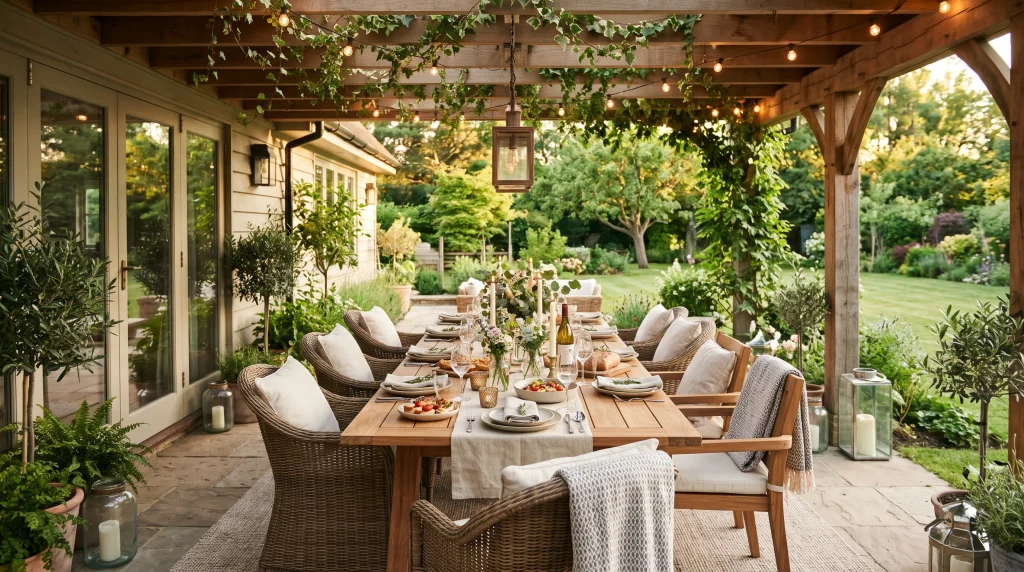
If you dream of summer dinners outside, all you really need is a sturdy table and comfortable chairs under your patio cover. A round pedestal table suits smaller spaces and encourages conversation, while a long teak table is perfect for bigger gatherings.
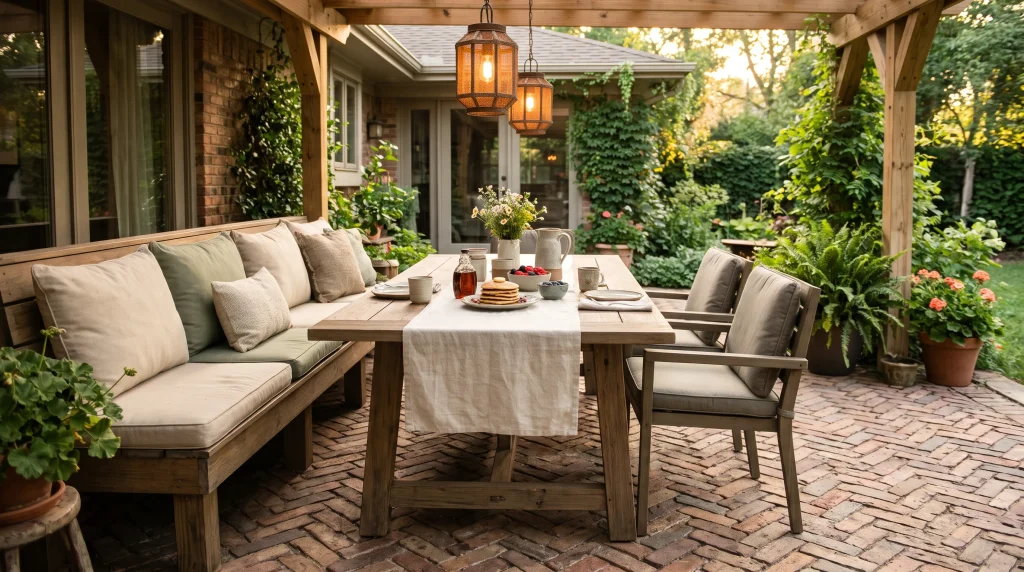
Layer in outdoor-safe cushions and a simple table runner for a little extra polish, then hang a warm pendant lantern or a pair of outdoor-rated lights overhead. A herringbone brick or stone tile floor adds texture and hides the occasional spill. Once the setup is in place, it tends to become the household favorite, whether you are enjoying pancakes on a slow weekend morning or takeout on a busy Friday night.
11. Lanterns and Lighting for Magical Evenings
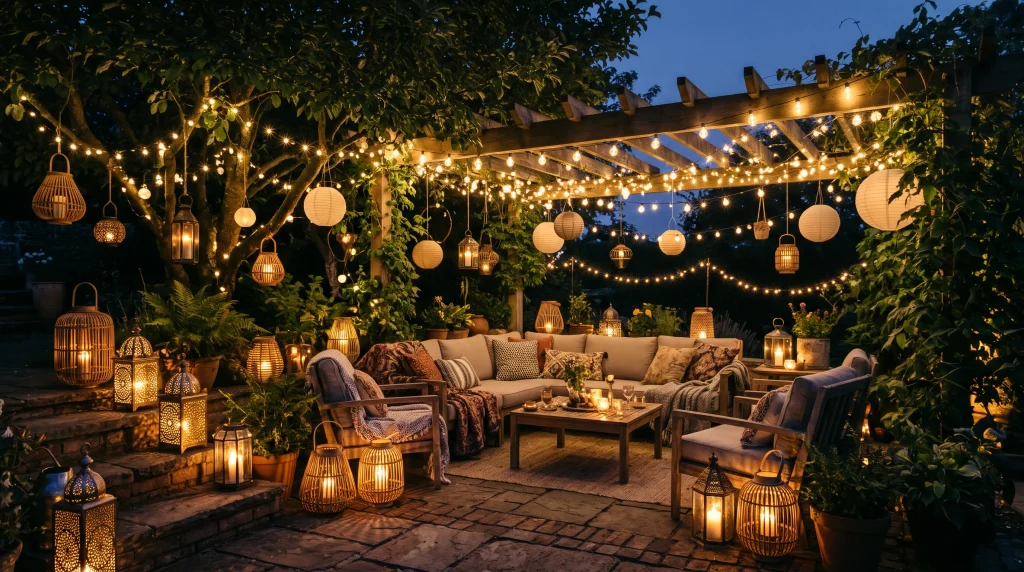
Lighting is the secret ingredient that turns a pleasant patio into a magical one. After dark, lanterns and twinkle lights transform even the plainest space into a glowing escape.
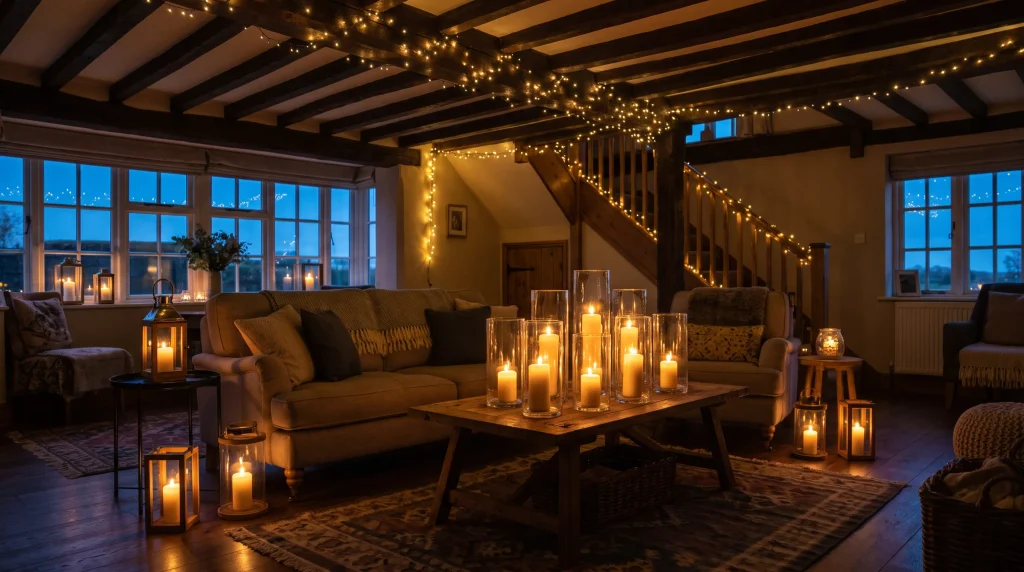
Dot a few candle lanterns across tables and floors for a gentle, flickering glow. Run battery-powered string lights along ceiling beams or railings for extra sparkle, and cluster hurricane lanterns on a low table for a dramatic focal point. Layering different light sources at different heights, rather than relying on a single bright fixture, makes the space feel warmer and more flattering. It is a simple upgrade, and it works with every style on this list.
Practical Tips Before You Start
Before you buy a single cushion, spend a little time on the practical side of your plan. A beautiful setup falls flat if it fights the weather or the way your household actually moves through the space.
First, notice where the sun and wind arrive. Watch your patio at midday and again in the late afternoon, because a spot that feels perfect at breakfast can turn punishing by five o’clock. That observation will tell you whether you need slatted shade, solid cover, or a retractable option that adapts through the day.
Second, choose weather-ready materials. Teak, powder-coated aluminum, solution-dyed outdoor fabrics, and sealed stone all handle sun and moisture far better than indoor-grade pieces, and they save you from replacing things every season.
Third, leave room to move. Allow comfortable walking paths around furniture, and keep seating a sensible distance from any fireplace or heater.
Finally, think in layers. Start with structure, then flooring, then seating, then textiles, then lighting, and finish with plants and accessories. Working in that order keeps the budget under control and stops you from buying small decorative items that clash later.
Final Thoughts: Make It Your Own
The best covered patio design is the one that fits how you actually live. Think about who will use the space, what time of day you will enjoy it most, and how much upkeep you are happy to take on. A quiet reader needs a very different patio from a family that loves hosting.
Do not feel locked into a single style, either. Many of the loveliest patios borrow from several looks at once, perhaps a modern structure softened with boho textiles, or a rustic fireplace paired with minimalist furniture. Start with the big pieces, add lighting and softness next, and finish with personal details that make the space feel like home. With a little planning, your patio can become the place you reach for first, in every season.
It also helps to treat the space as a work in progress. Live with your layout for a few weeks, notice which chair everyone fights over and which corner stays empty, then adjust. Swap a rug, move a lamp, add a planter, or trade a cushion cover for the new season. Small, steady changes cost far less than a full redesign, and they keep your outdoor room feeling fresh, personal, and genuinely enjoyable to come home to. Above all, choose what genuinely makes you smile.