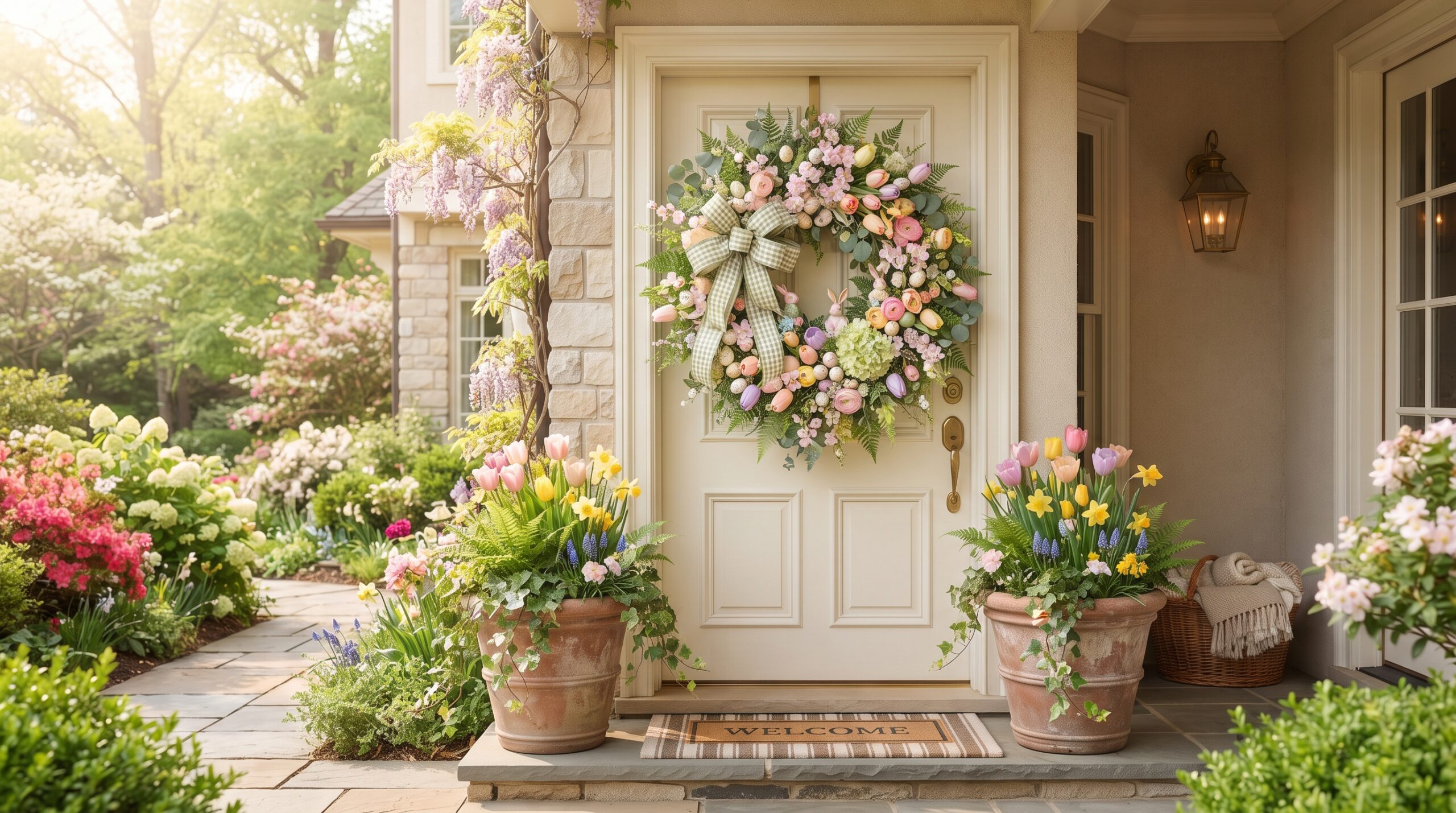
Nothing announces the arrival of spring quite like a fresh wreath on the front door. It’s often the first thing guests notice as they walk up the path, and it sets the tone for everything else you’ve done with your seasonal decorating. Whether you’re a longtime wreath maker or hanging your very first one this year, there’s a style here that will fit your home, your budget, and your personal taste.
Easter decor doesn’t have to mean the same pastel eggs and plastic bunnies every year. From elegant lily arrangements to playful pom-pom designs, wreaths have become one of the easiest ways to give your entryway a seasonal refresh without committing to a full decor overhaul. Below, you’ll find a wide range of styles broken down by look and feel, along with a few practical tips for putting them together yourself.
Easter Wreath Ideas Front Door Inspiration for Every Style
Whatever look you’re going for this year, these ideas will help you find (or build) the perfect statement piece for your entryway.
Bunny-Themed Wreath
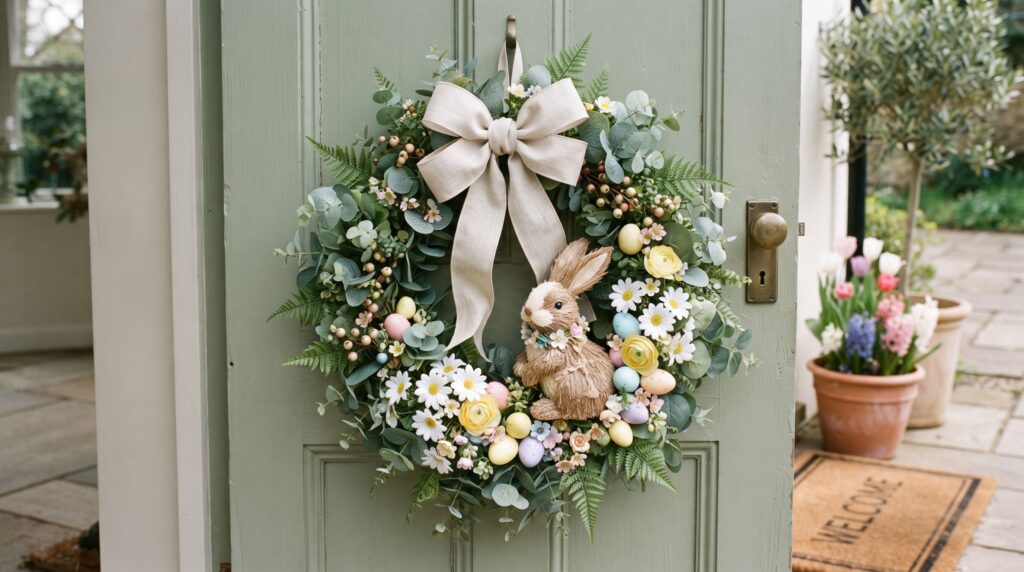
A bunny figurine tucked into greenery and spring blooms is one of the most recognizable Easter wreath looks, and for good reason. It’s instantly cheerful without trying too hard.
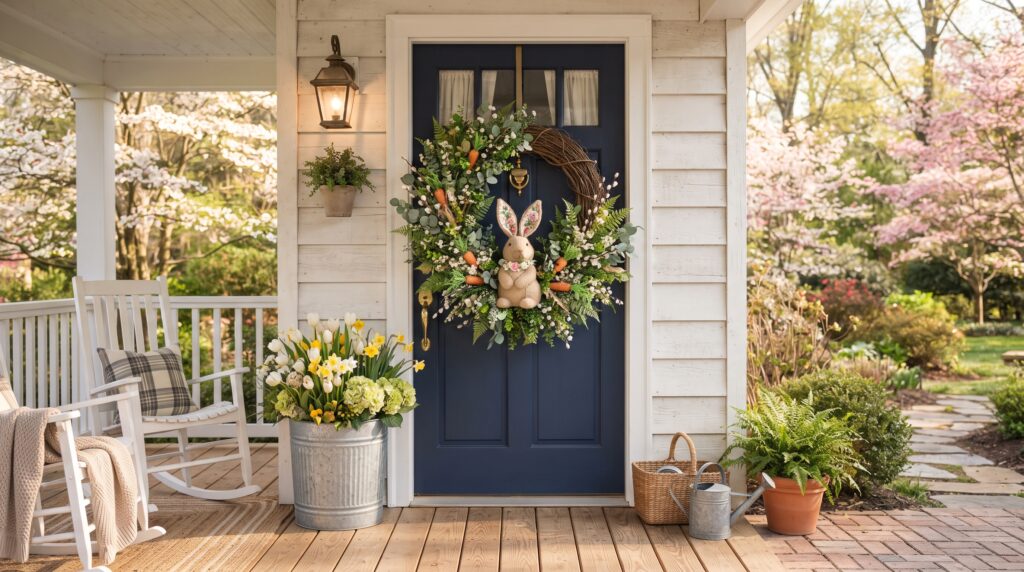
Pair the bunny with a few faux carrots or a soft ribbon bow, and you’ve got a design that works for almost any front door color. If you’re already planning an Easter table centerpiece, echoing the bunny motif on your door helps tie the whole look together from the street to the dining room.
Speckled Egg Nest Wreath
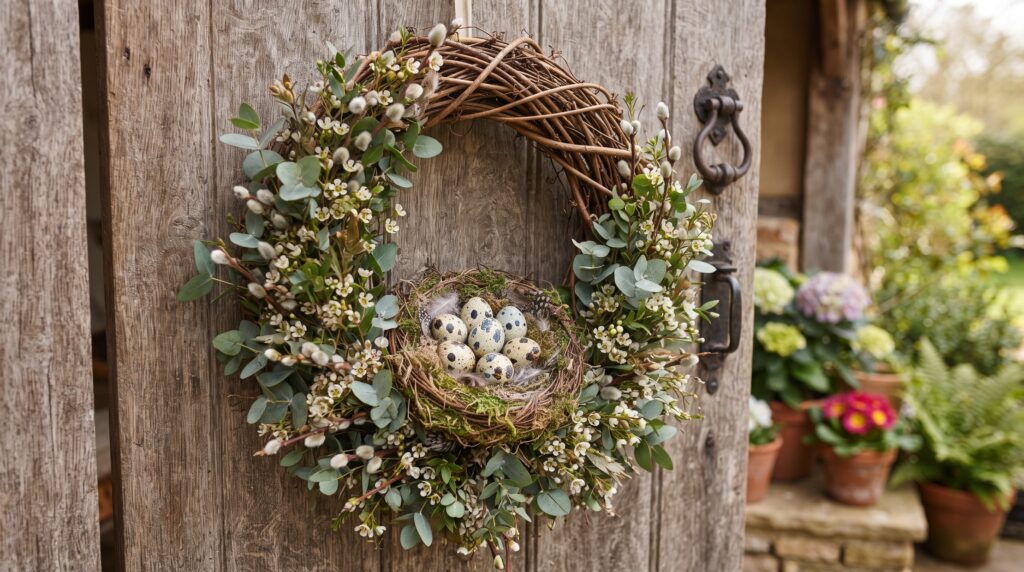
For a more understated, nature-inspired look, build your wreath around a nest made of moss and twigs, then nestle a handful of speckled eggs inside.
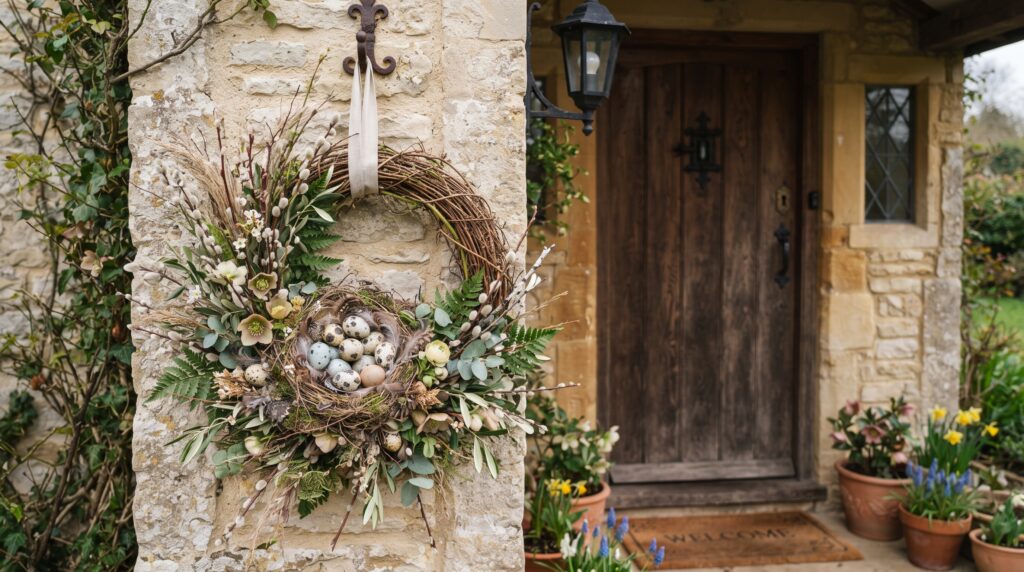
It reads as effortless and organic rather than overtly “holiday,” which makes it a nice option if you want something that can stay up for most of spring rather than just Easter week.
Carrot Patch Wreath
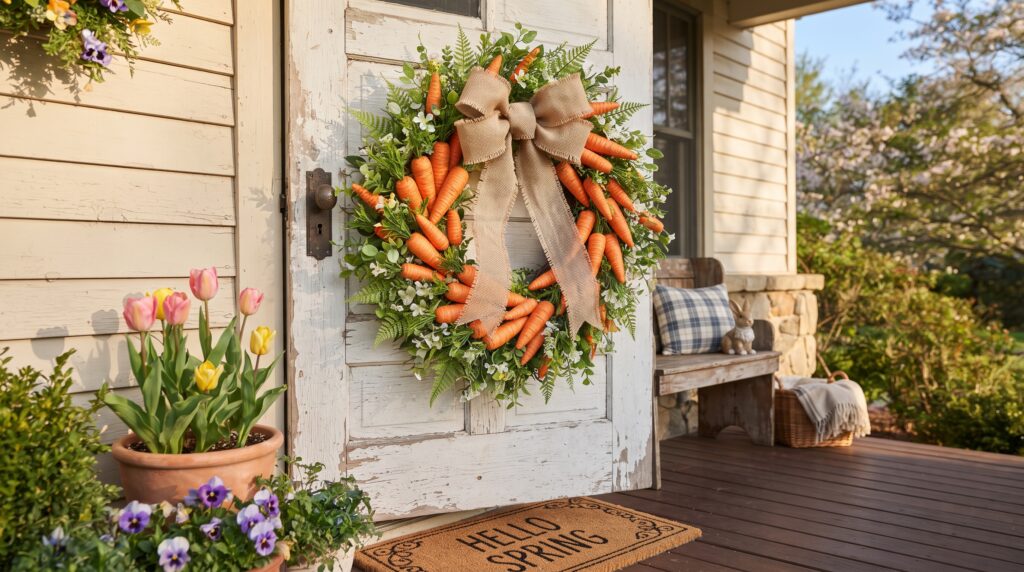
Bright orange faux carrots, tucked among natural greenery and finished with a burlap bow, bring a playful farmhouse energy to the door.
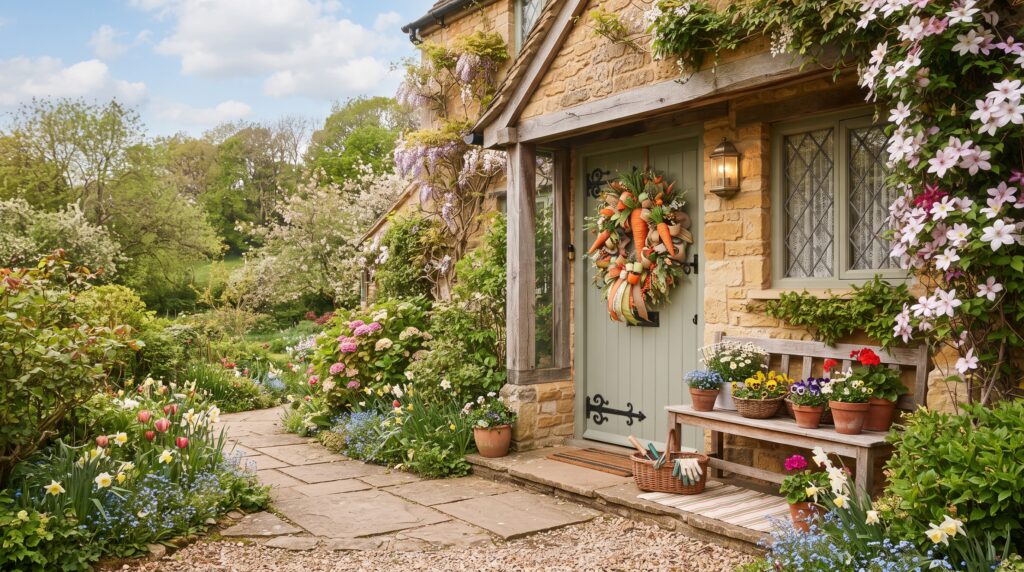
It’s a fun twist for anyone who wants something a little different from the usual egg-and-bunny combo, and the pop of orange makes it easy to spot from the curb.
Pastel-Colored Wreath
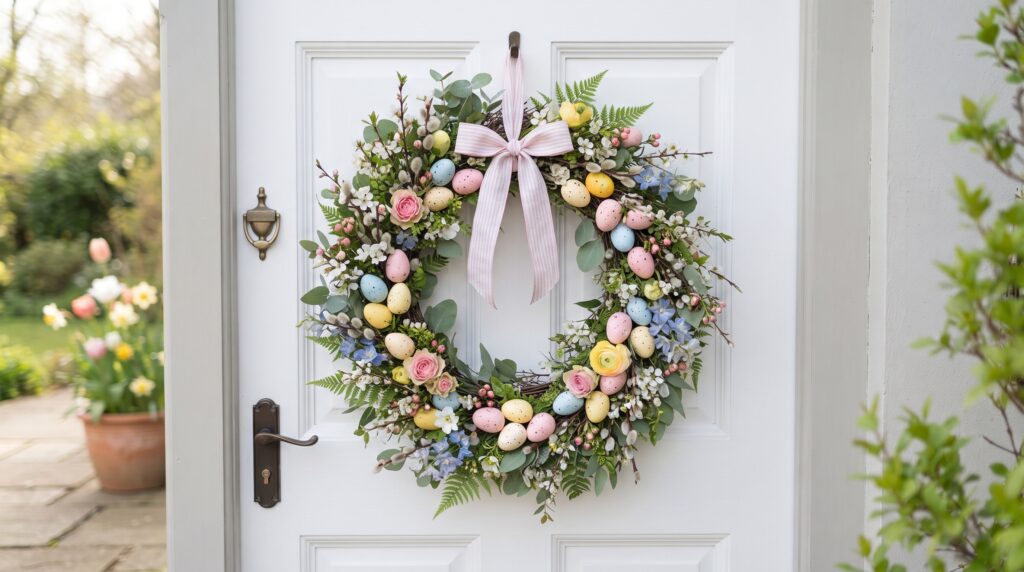
Layering ribbons or eggs in soft pinks, blues, and yellows is one of the simplest ways to build a wreath that feels light and springlike.
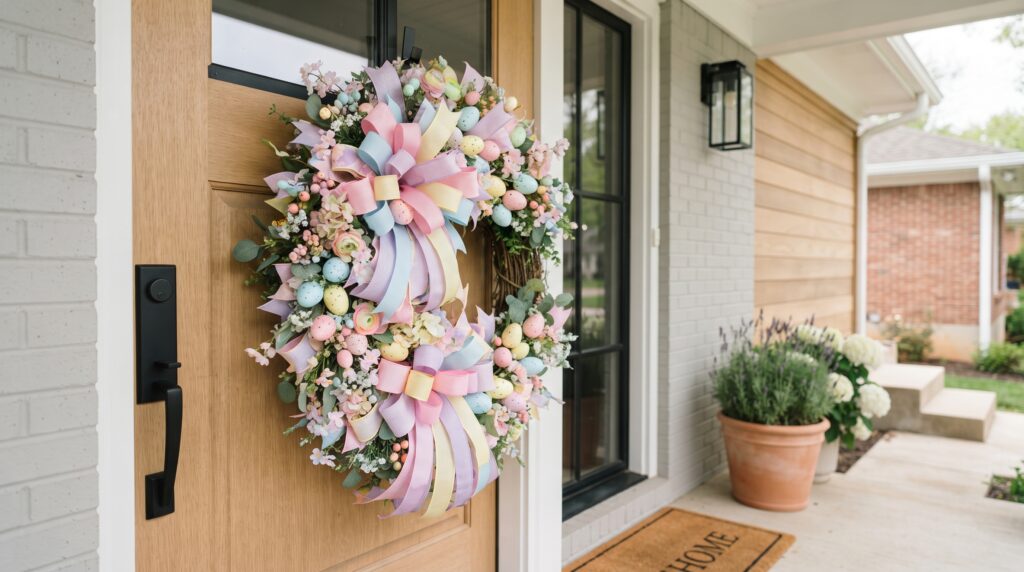
Because the palette is so flexible, this style is easy to customize to match your door color or your existing porch decor.
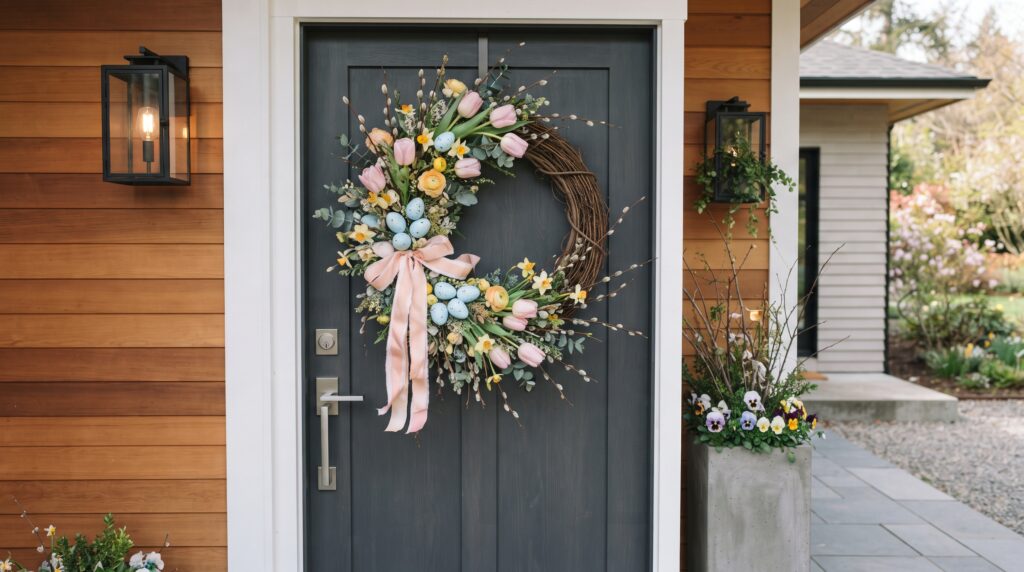
Wired ribbon tends to hold its shape better than unwired options, which makes shaping loops and bows much easier.
Succulent Easter Wreath
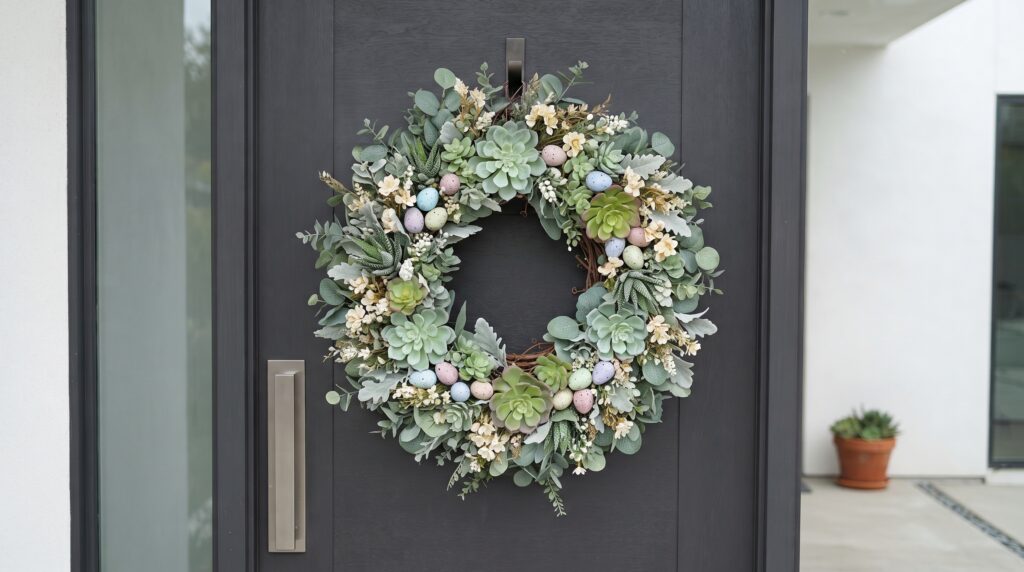
Swapping traditional florals for faux succulents gives the wreath a more modern, clean look. Mixed with a few pastel eggs and some greenery, it still reads as Easter-appropriate while feeling fresher and less “crafty” than some of the more traditional styles. It’s a good pick if the rest of your exterior leans toward contemporary or minimalist design.
Easter Basket Wreath
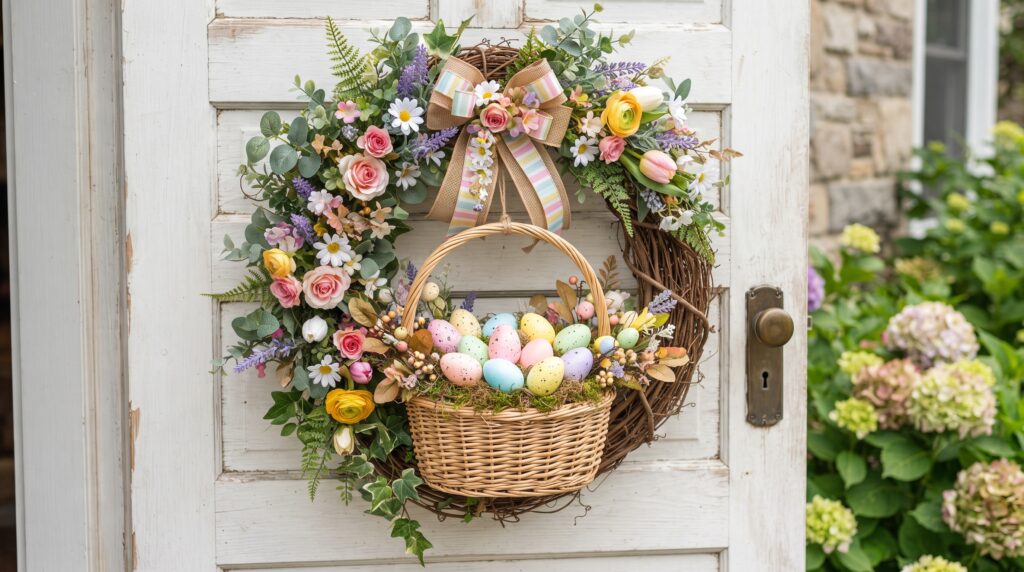
Weaving a small basket into the wreath frame and filling it with eggs, flowers, or a tiny plush bunny adds dimension that a flat wreath can’t achieve. A little moss tucked around the basket’s edges helps it blend naturally into the rest of the greenery instead of looking like an afterthought.
Rainbow Easter Wreath
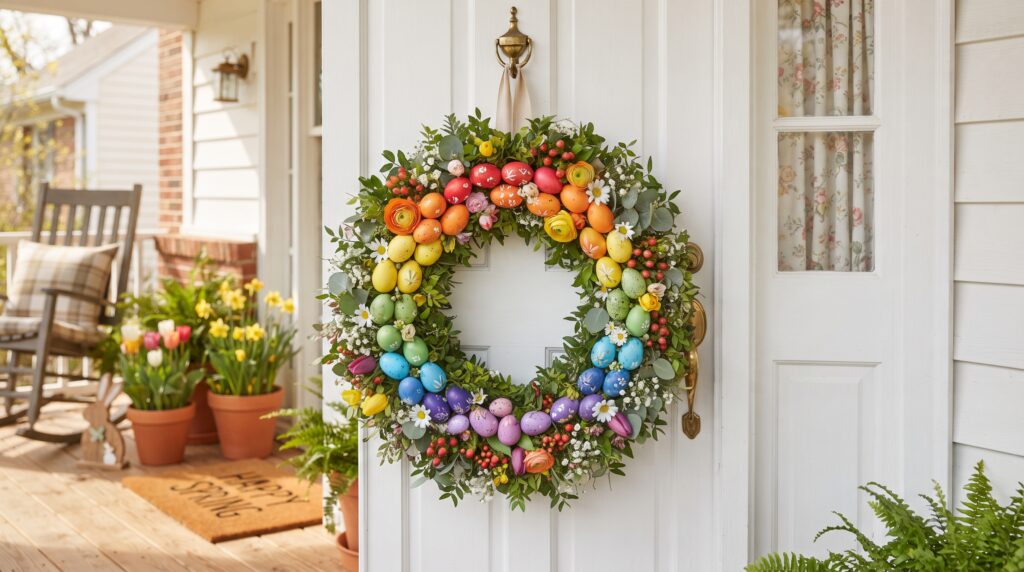
Arranging eggs or flowers in rainbow order is an easy way to add a genuine pop of color, and it tends to be a hit with kids. It’s also one of the more forgiving designs if you’re new to wreath-making, since the rainbow pattern gives you a built-in layout to follow.
Grapevine Egg Wreath
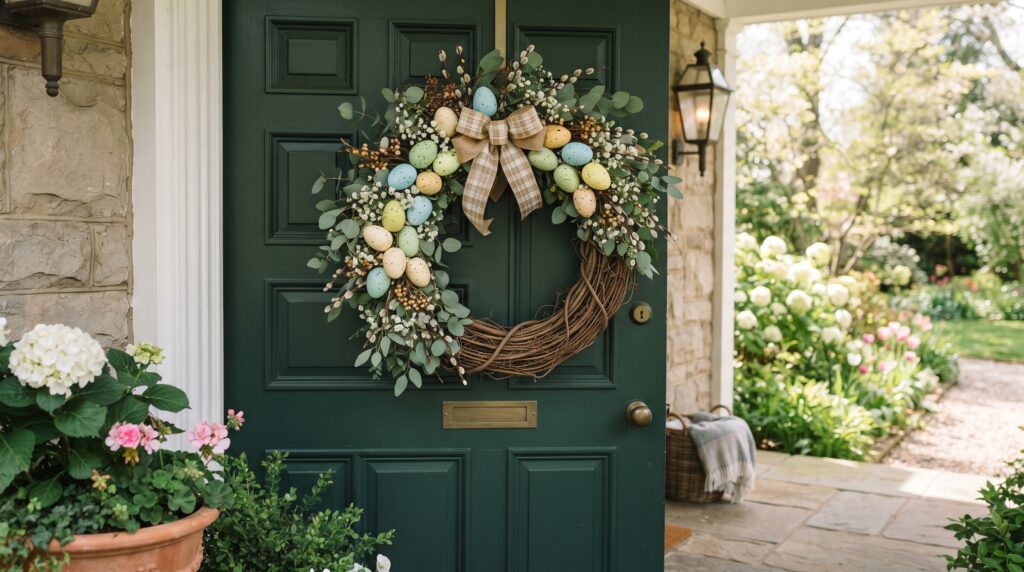
A grapevine base is one of the most versatile starting points for any Easter wreath. Decorated with colorful eggs, small blooms, and a few sprigs of eucalyptus, it has an earthy
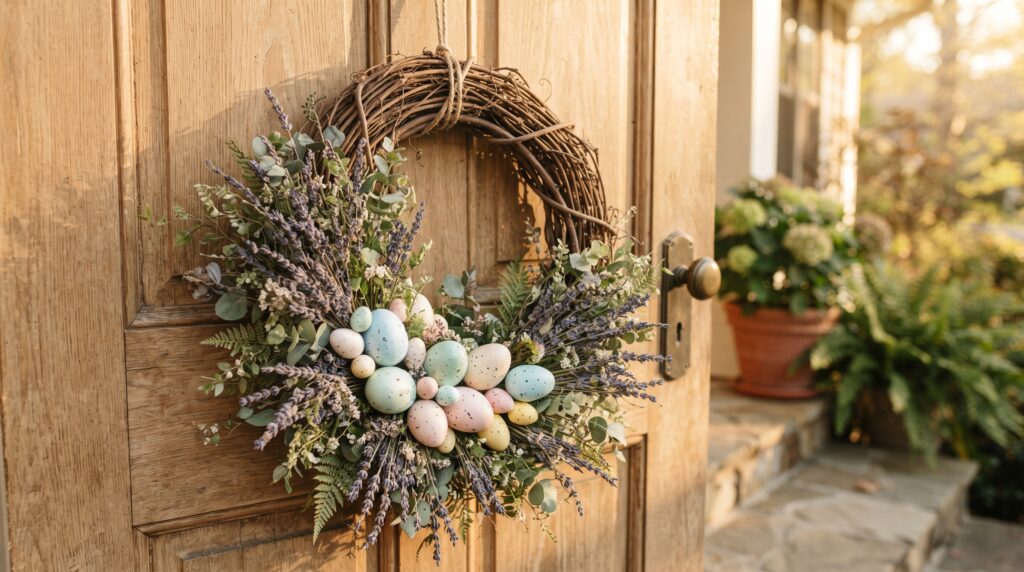
, textured quality that pairs well with almost any front door color, especially deep greens, navy, and warm neutrals.
Monogram Easter Wreath
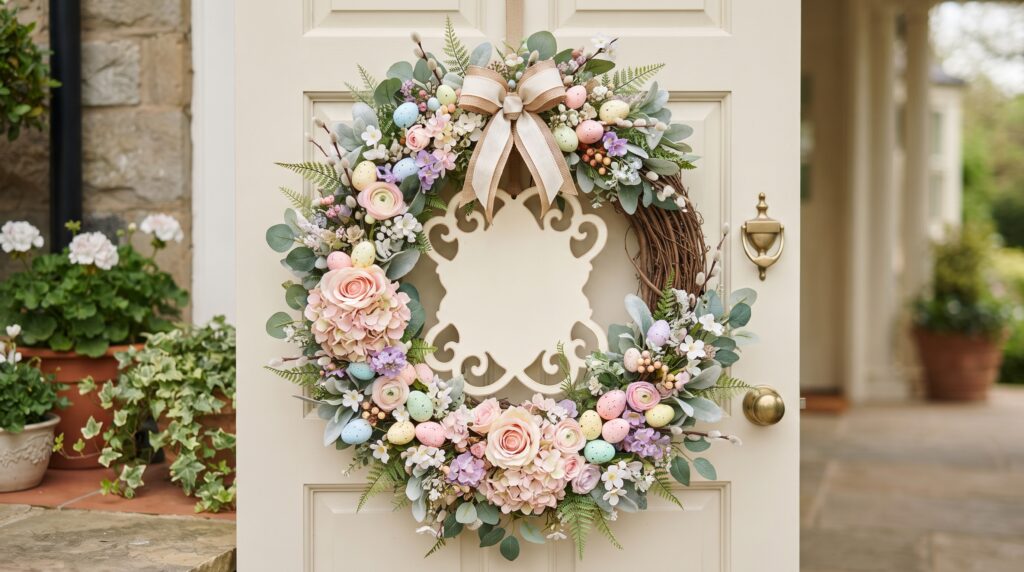
Adding a painted monogram letter to a floral or grapevine base makes the wreath feel more personal, almost like a small welcome sign.
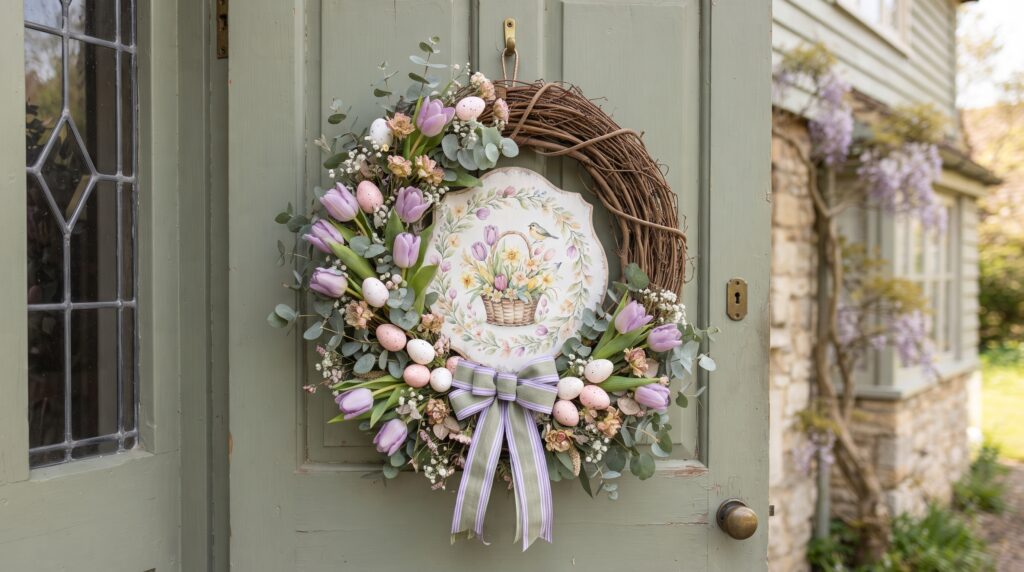
Pastel paint on the letter keeps it in line with the rest of the seasonal color palette rather than looking out of place.
Pom-Pom Easter Wreath
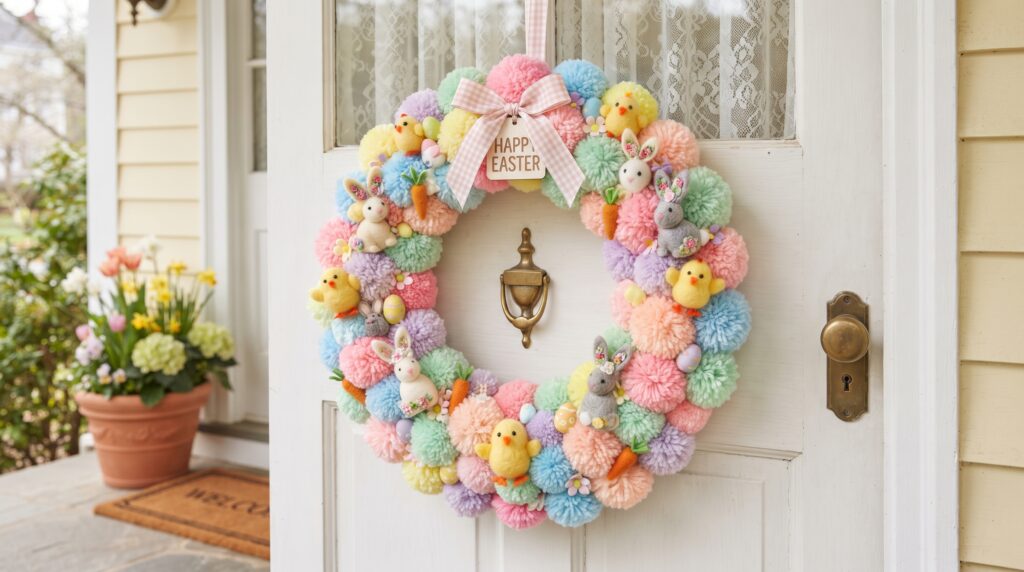
Covering a wreath form in colorful pom-poms, then adding small felt bunny or chick accents, creates a soft, textural piece that stands out from the more traditional floral styles.
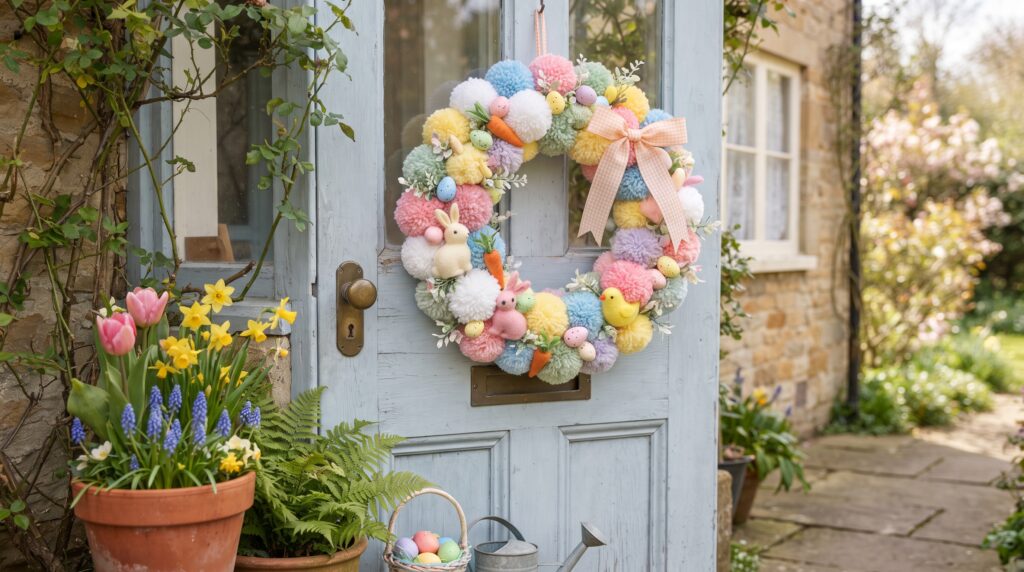
It’s an especially good project if you enjoy working with fabric and yarn rather than florals and greenery.
Floral Bunny Wreath
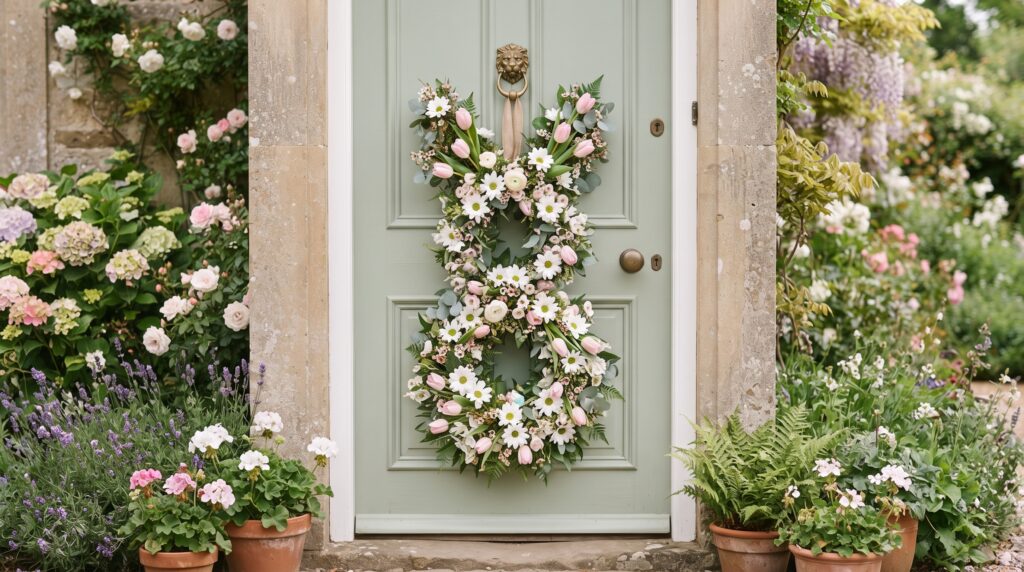
Shaping faux daisies or tulips into the silhouette of a bunny is a fun way to combine two popular themes into one design. It’s playful and colorful, and it tends to photograph beautifully if you’re documenting your seasonal decor for social media.
Farmhouse Easter Wreath
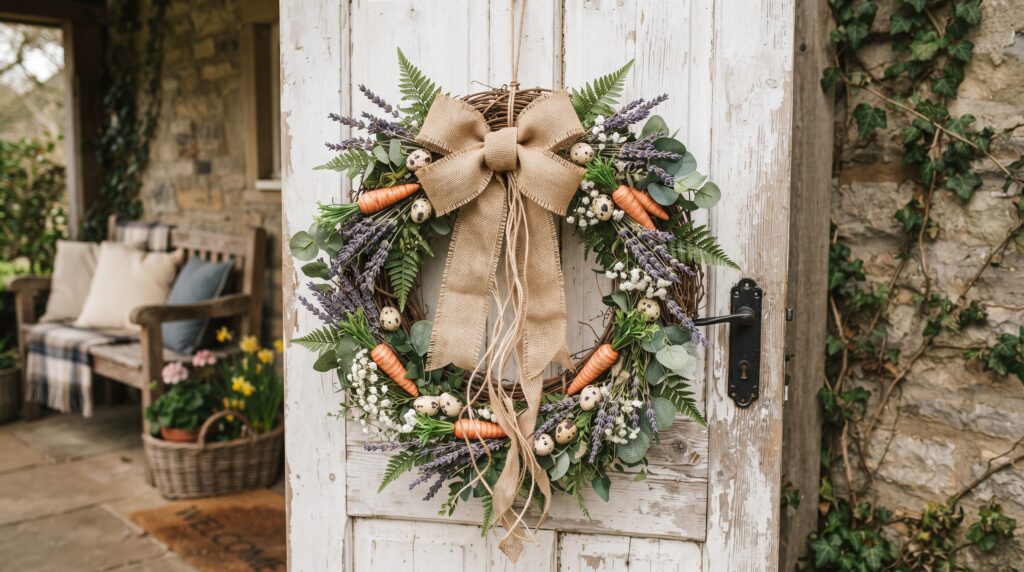
Combine a grapevine base with faux carrots, rustic greenery, and a burlap bow for a look that fits right in with farmhouse-style porches
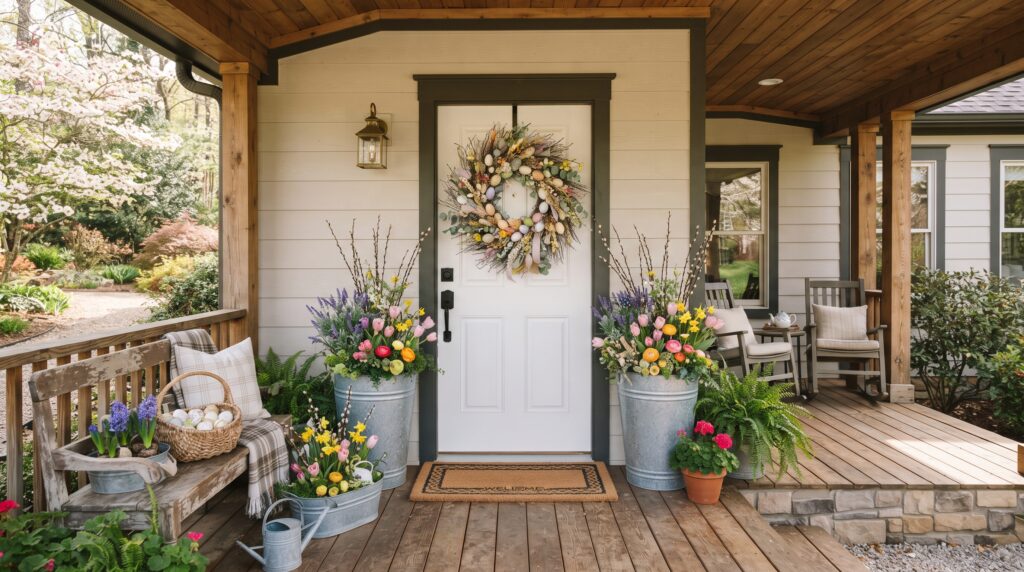
. A few sprigs of lavender tucked in around the edges add a nice finishing touch and a subtle fragrance note if you’re using dried lavender.
Black-and-White Easter Wreath
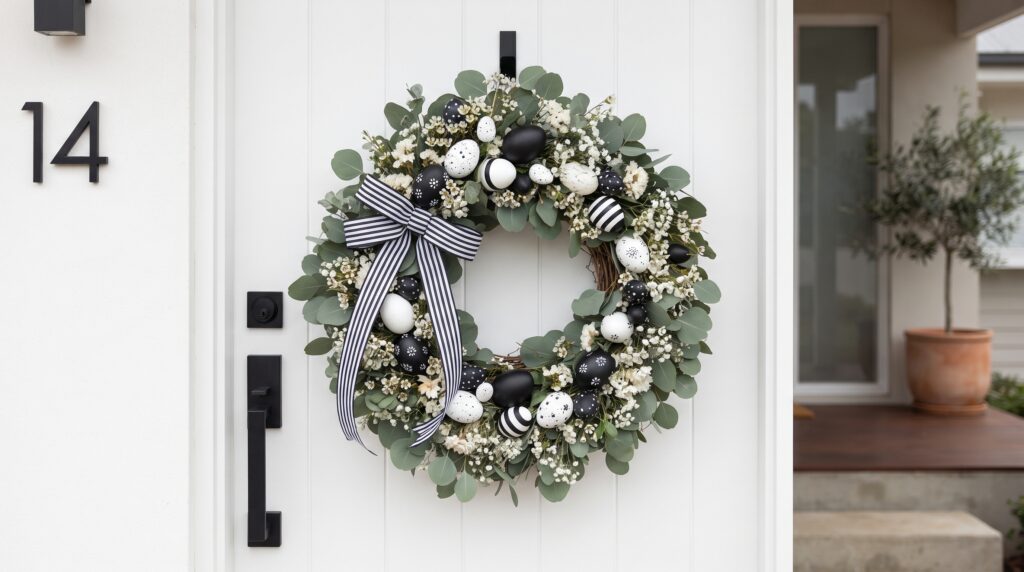
If you want something a little more graphic and modern, a black-and-white palette with striped ribbon and monochrome eggs can be a striking choice
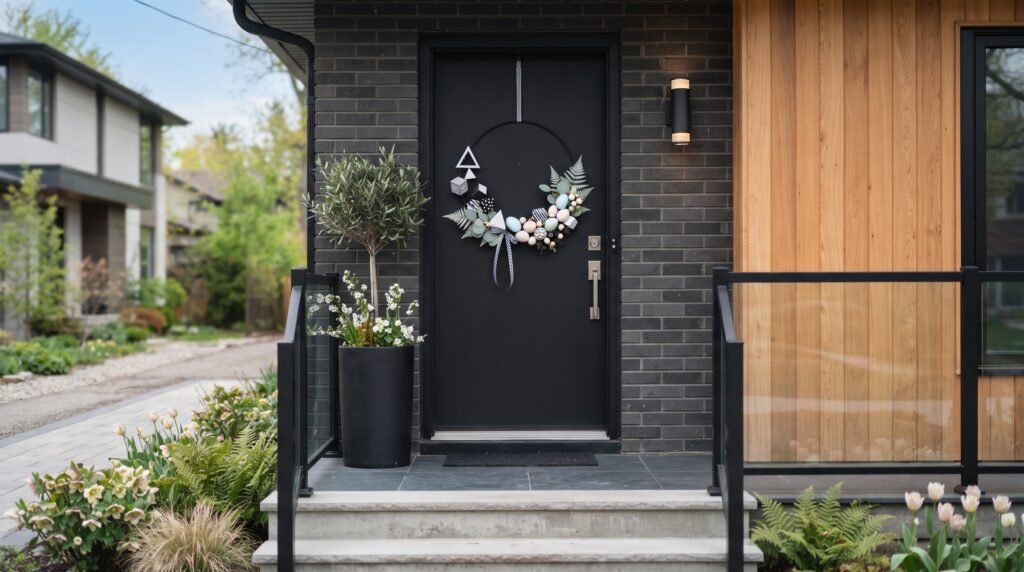
. Soft greenery or a few muted pastel accents help keep the contrast from feeling too stark against a busy front porch.
Rustic Easter Wreath
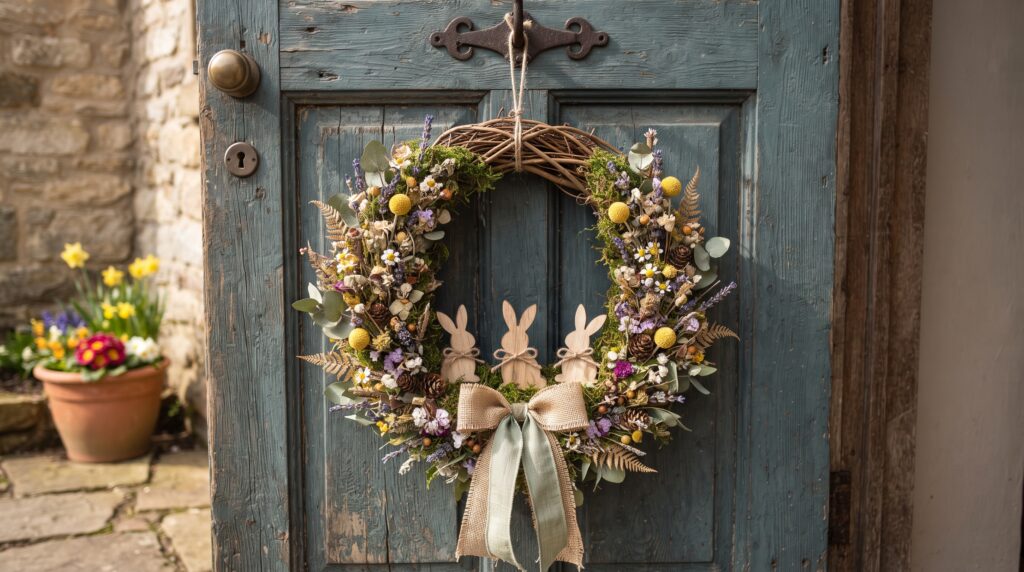
Natural materials like grapevine, dried flowers, moss, and small wooden accents come together for a warm, earthy look. Adding pinecones or tiny wooden bunny cutouts gives it a handmade, slightly imperfect charm that works well year after year.
Easter Lily Wreath
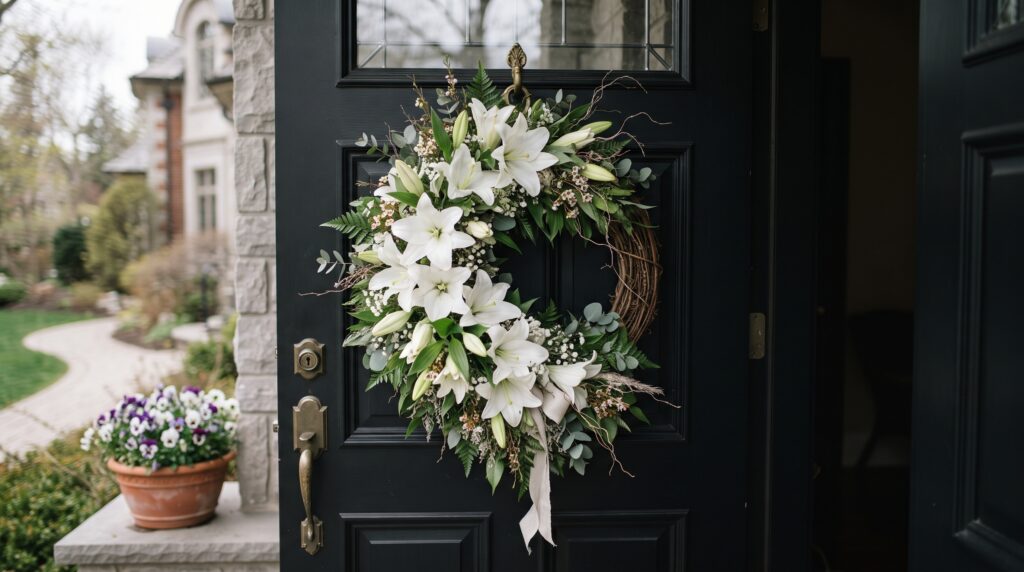
For a more elegant, timeless option, faux Easter lilies arranged on their own or with a bit of greenery bring a classic touch to the front door.
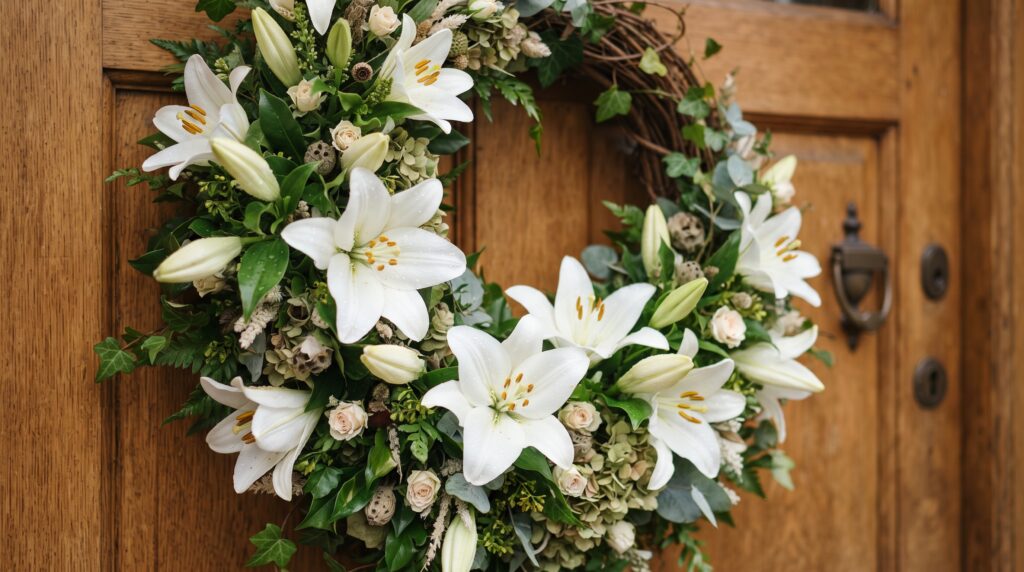
Arranging the lilies asymmetrically, rather than in a perfectly even ring, tends to look more natural and dynamic.
Knitted Easter Wreath
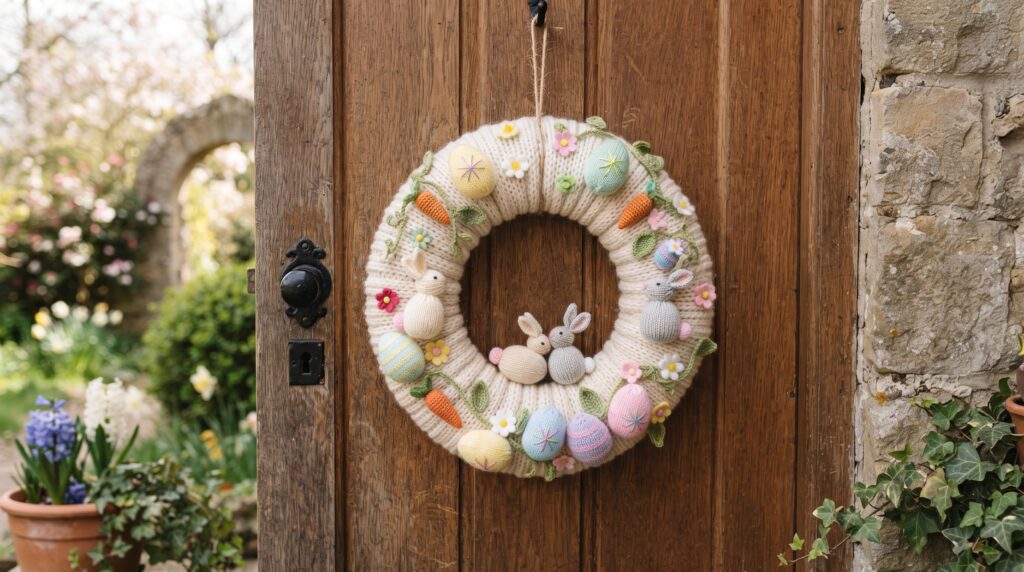
Wrapping a foam base in knitted fabric, or adding handmade knitted eggs and bunnies, results in a cozy, textural wreath that stands apart from the typical floral styles.
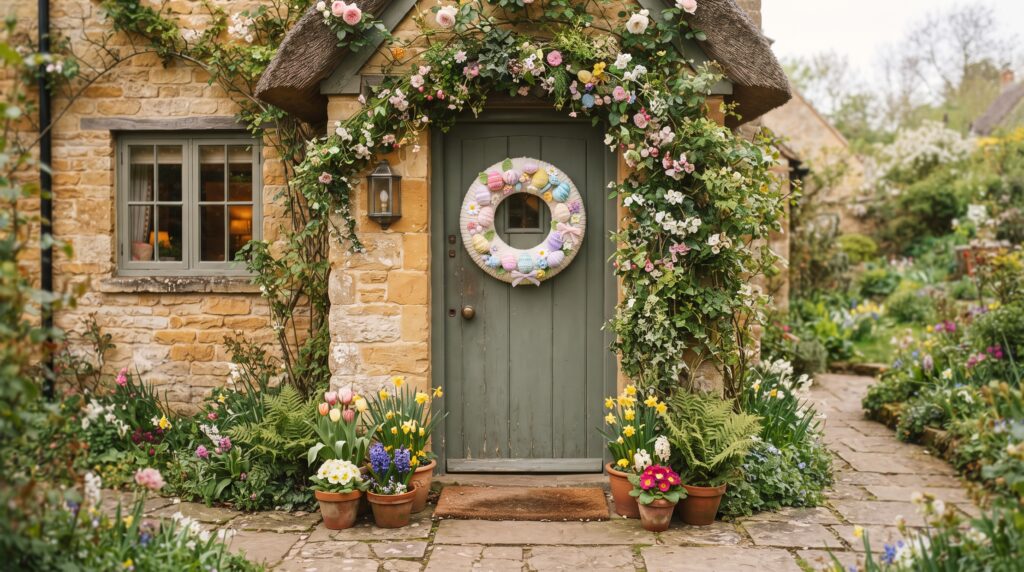
It’s a great option for anyone who already knits or crochets and wants to put those skills toward a seasonal project.
Avant-Garde Easter Wreath
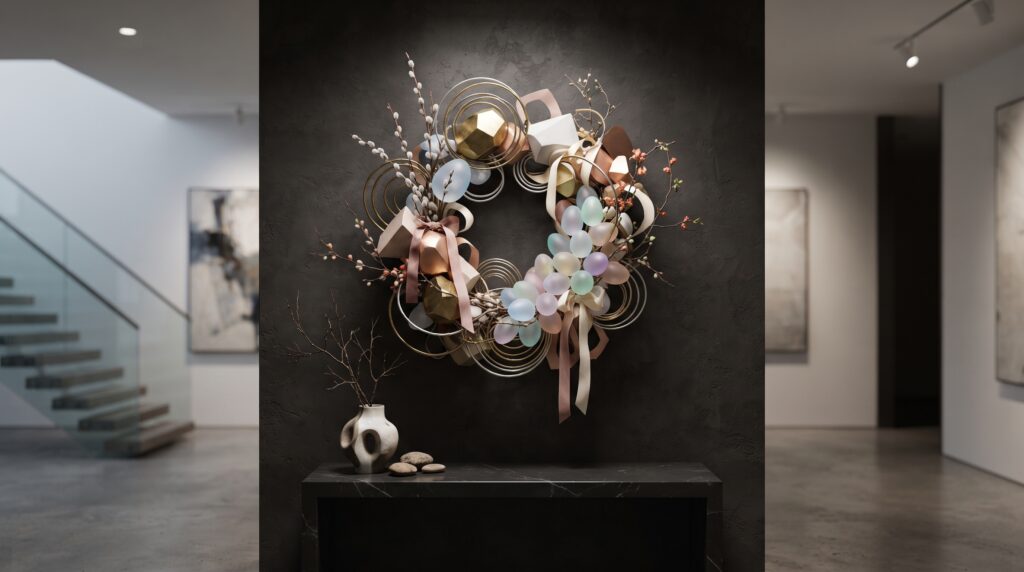
If you’d rather skip the traditional look altogether, experimenting with unconventional materials like wire,
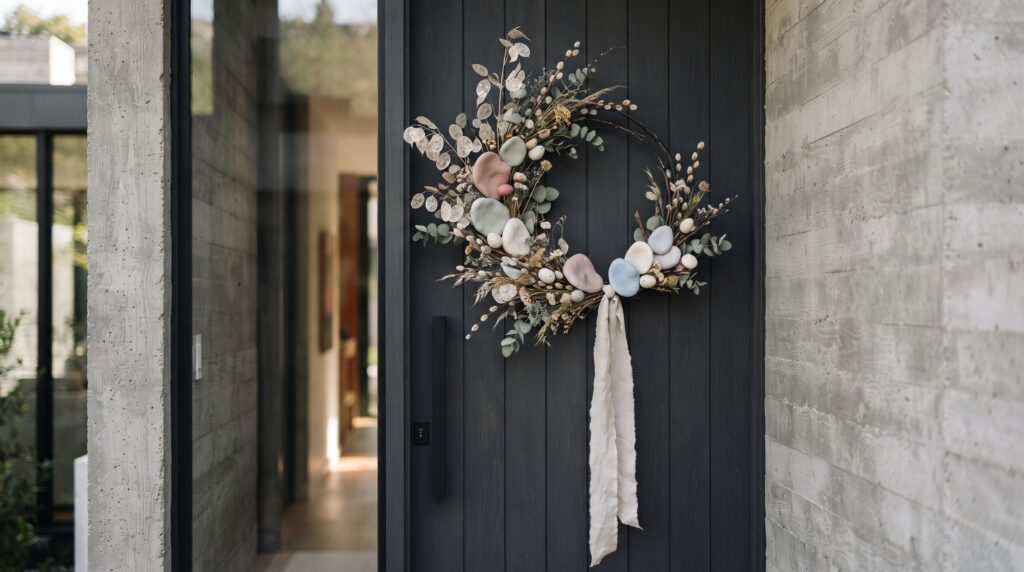
acrylic, or abstract shapes can turn your wreath into more of an art piece. Balancing the bold materials with a few softer elements,
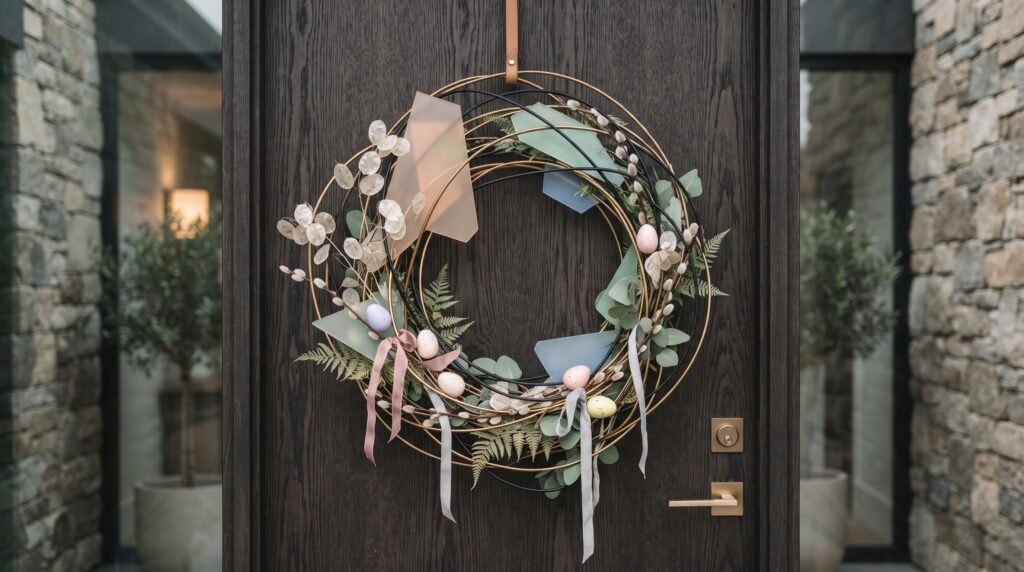
like ribbon or greenery, keeps the design from feeling disconnected from the season.
Spanish Colonial Easter Wreath
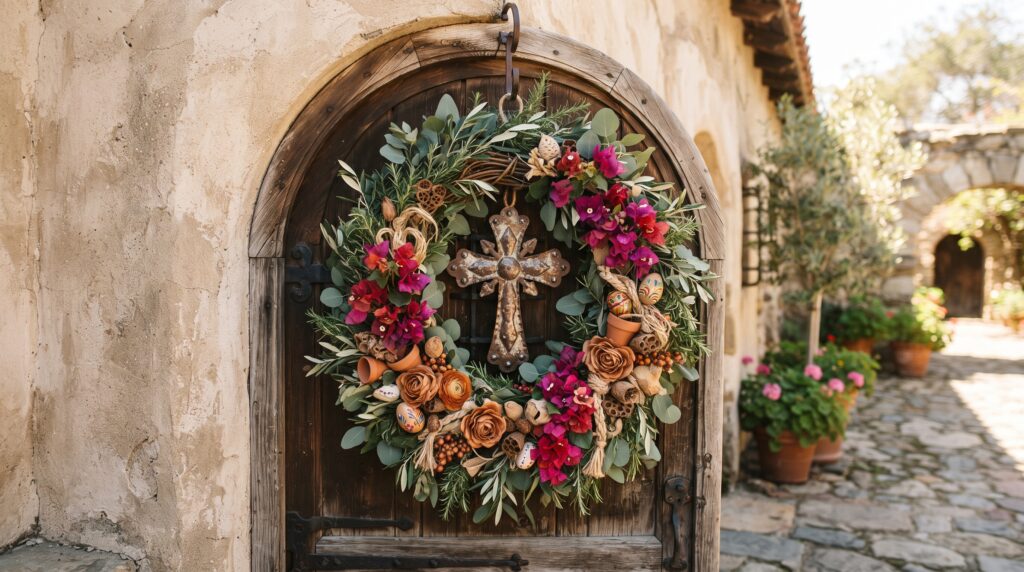
Terracotta tones, an ornate cross, and faux bougainvillea bring a warm, Mediterranean feel to this style. It’s a striking option if your home’s exterior already leans toward Spanish or Southwestern architecture.
Coastal Easter Wreath
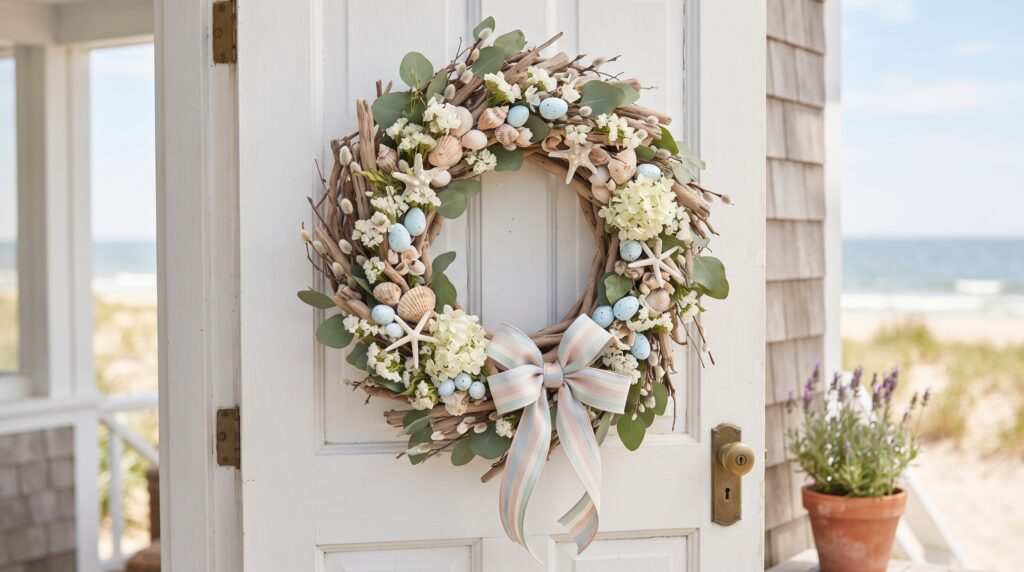
Seashells, starfish, and pastel ribbon on a natural base give the wreath a beachy feel that still fits the Easter season. A bit of driftwood woven in adds texture and works especially well for homes near the coast or anyone drawn to a relaxed, breezy aesthetic.
Easter Palm Wreath
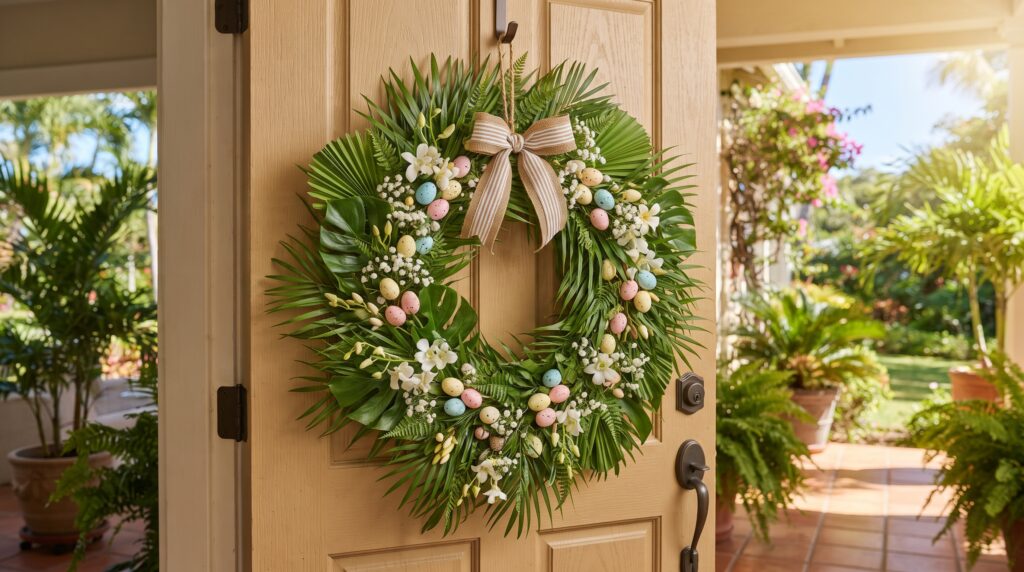
Palm leaves as the main element, with a few small eggs or flowers tucked in, create a tropical take on the traditional Easter wreath. It’s especially fitting for warmer climates, and faux orchids can push the tropical feel even further.
Easter Wreath with Cross
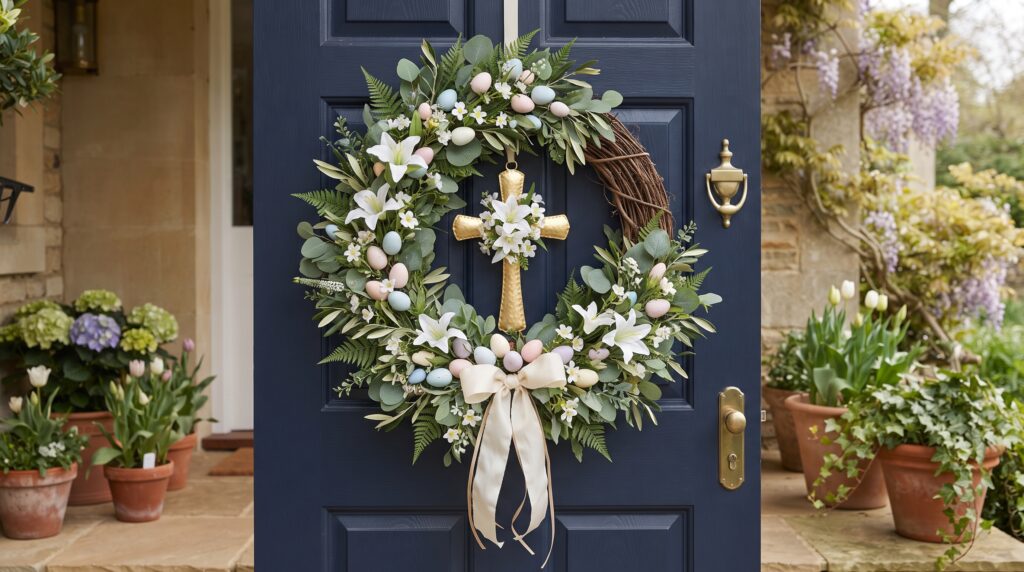
Centering a decorative cross among flowers, greenery, or pastel accents gives the wreath a more meaningful, reflective quality. A touch of gold on the cross itself adds a subtle, elegant detail without overwhelming the rest of the design.
Vintage Easter Wreath
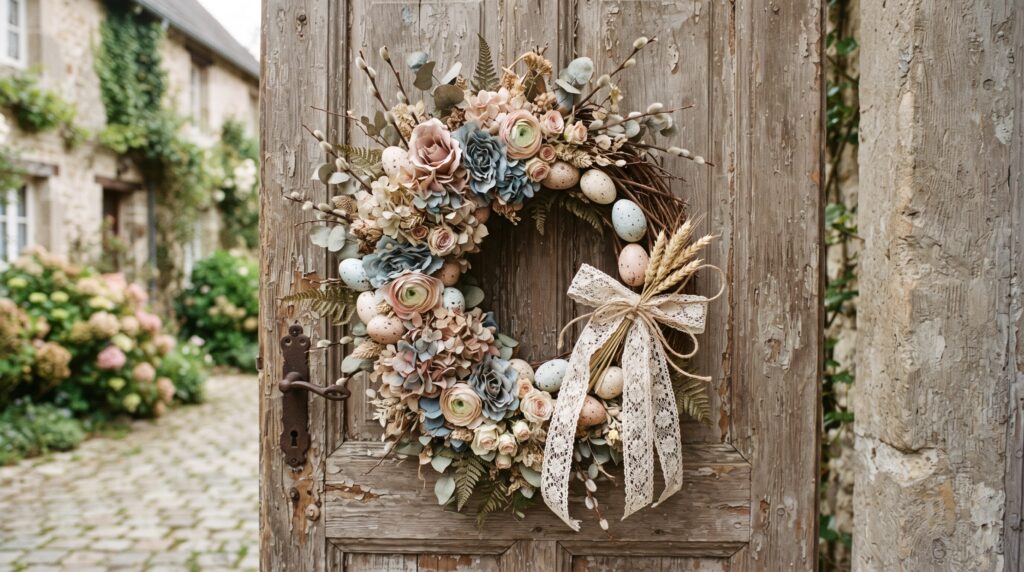
Muted tones, retro floral patterns, lace ribbon, and antique-style accents combine for a nostalgic look. Tea-dyed lace or burlap adds an authentic worn-in quality that’s hard to fake with anything too new or crisp.
Easter Wreath with Ribbon
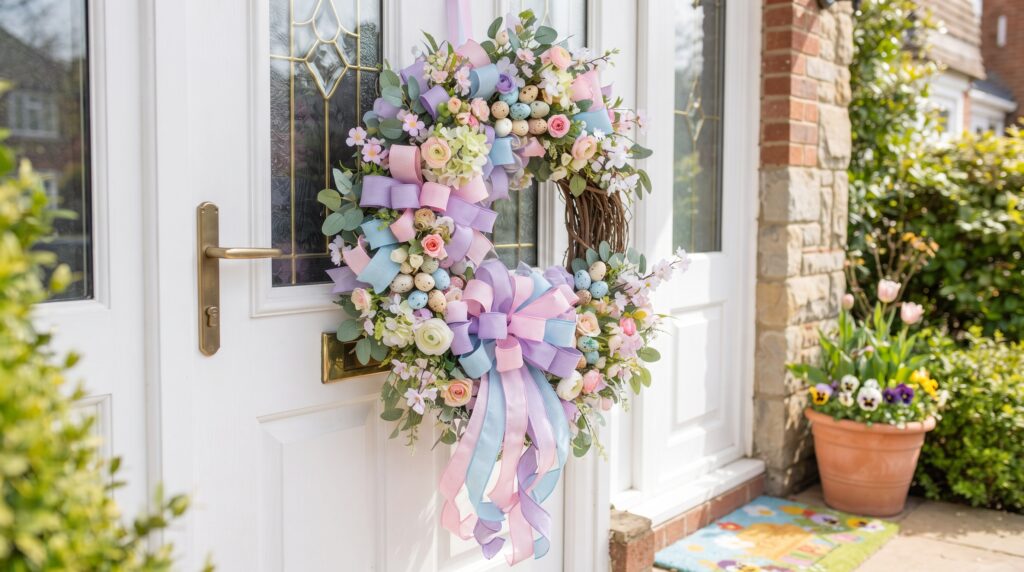
Layering ribbon in Easter colors or patterns, then adding a few eggs or flowers, is one of the simplest wreath styles to put together and easy to update from year to year. Mixing different ribbon widths adds visual interest without needing a lot of extra materials.
Industrial Easter Wreath
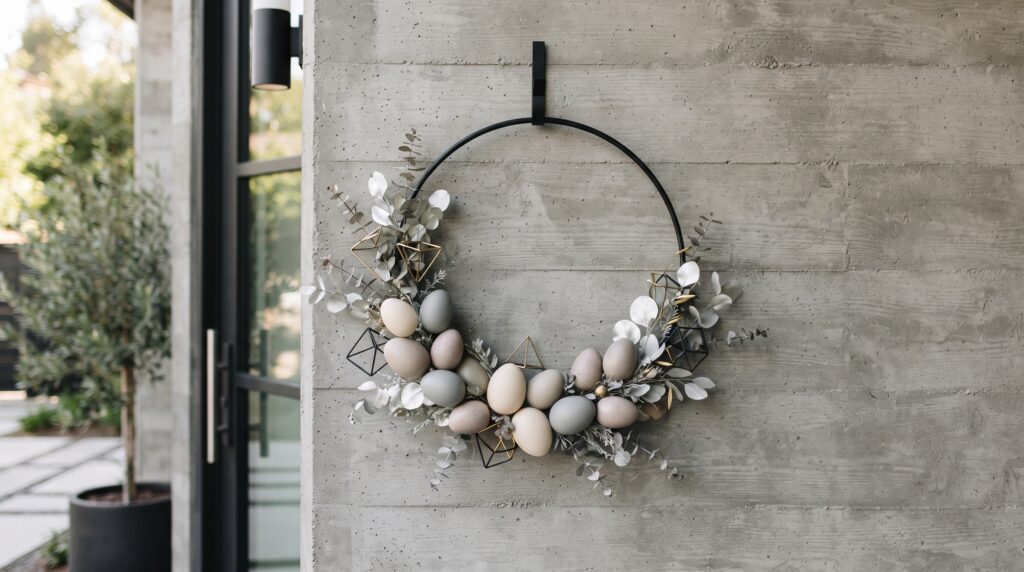
A metal hoop base paired with minimal, muted-toned eggs and simple geometric accents creates a sleek, modern wreath. A touch of metallic paint adds subtle shine while keeping the overall look clean and understated.
Tips for Putting Your Wreath Together
Whichever style catches your eye, a few basics apply across almost every wreath project:
- Secure heavier elements first. Figurines, baskets, and monogram letters should be wired or glued to the base before you add lighter accents like ribbon or small eggs.
- Work in layers. Building up your greenery or filler material in small bundles, rather than attaching pieces one at a time, tends to create a fuller, more polished result.
- Choose your base carefully. Grapevine, foam, and metal hoop bases all behave differently, so pick one that matches the weight and style of the materials you’re planning to use.
If you want to go deeper into the actual construction process, Iowa State University’s Yard and Garden extension has a genuinely useful step-by-step guide on building a wreath from the frame up, covering everything from bundling technique to how to attach a secure hanger.
Final Thoughts
There’s a wreath style here for almost every taste, from playful and colorful to elegant and understated. Part of the fun of Easter decorating is that you’re not locked into one look forever. You can lean rustic one year and go bold and graphic the next, swapping accents as your taste (or your kids’ favorite characters) changes.
Whatever direction you choose, the goal is the same: a front door that feels warm, welcoming, and unmistakably ready for spring.