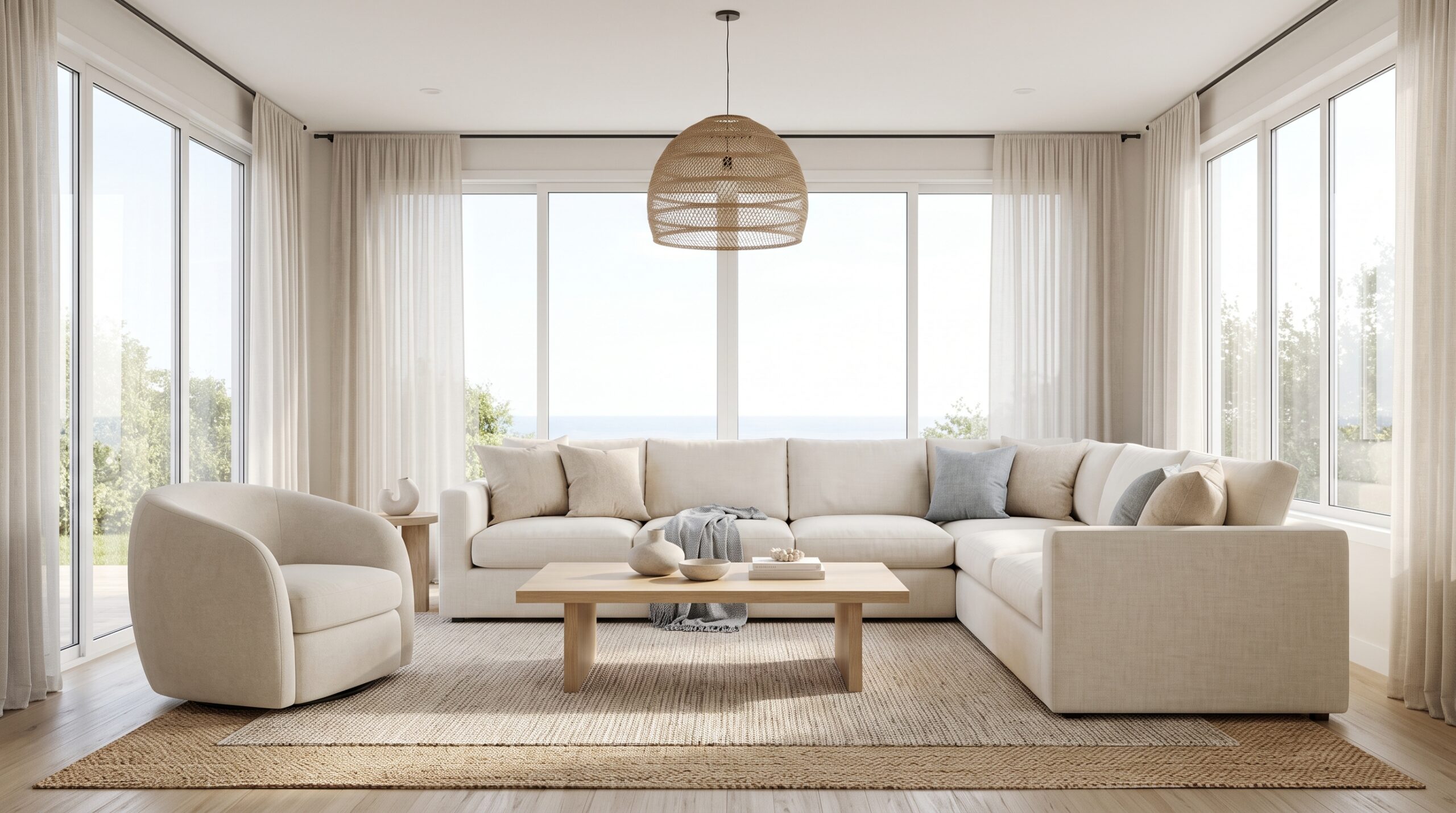
If you love the idea of a beach-inspired living room but can’t stand the thought of another rope mirror or anchor throw pillow, you’re in the right place. Coastal design has grown up — and today’s most beautiful spaces trade souvenir-shop clichés for something calmer, more grounded, and far more livable.
A contemporary coastal living room borrows its mood from the ocean — crisp whites, sun-bleached woods, sandy neutrals, and the occasional unexpected pop of color — without leaning on literal beach props to get the message across. It’s less “vacation rental” and more “the kind of room you never want to leave.”
Part of what makes this style so appealing right now is how forgiving it is. You don’t need to live near an ocean, and you don’t need a full renovation budget to pull it off. A contemporary coastal living room is really about mood: light, natural, unfussy, and just a little worn-in, the way a favorite linen shirt gets softer with every wash. Swap in a few new textiles, rethink your lighting, and lean into materials that age well — wood, stone, woven fiber — and the transformation can happen gradually, piece by piece, without ever feeling like a full-blown theme.
Below, you’ll find more than thirty ways to bring this look into your own home, organized by the different moods and palettes that make contemporary coastal design so versatile. Whether your starting point is a blank white box of a room or a space that already has good bones — moldings, beams, big windows — there’s a version of this style that will fit.
Contemporary Coastal Living Room Ideas for Every Style and Palette
Whether you gravitate toward stark minimalism, warm earth tones, or a boho-leaning mix of textures, there’s a version of contemporary coastal style that will feel like home. Here’s how designers are interpreting the look right now.
1. Lean Into Natural Texture Over Color
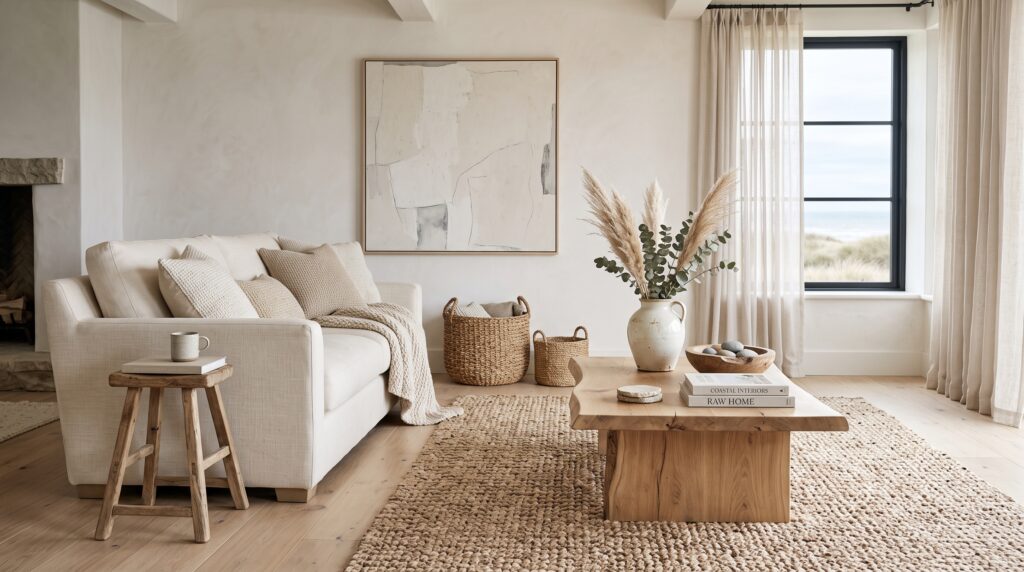
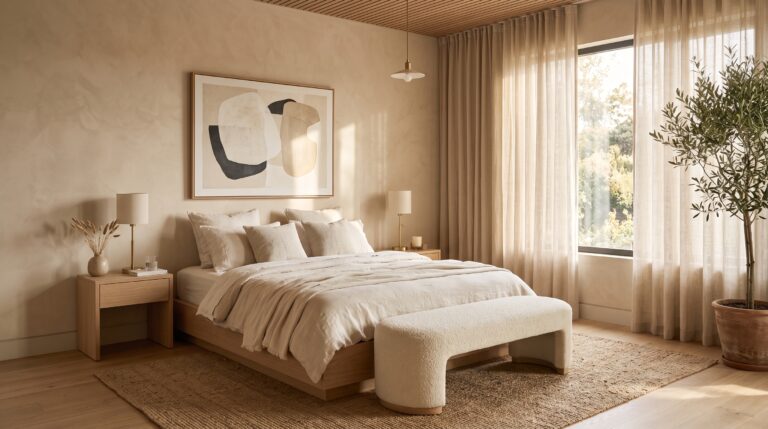
The easiest way to bring coastal calm into a neutral room isn’t paint — it’s texture. Think jute rugs, woven pendant lighting, raw-edge wood tables, and stone-toned upholstery layered together. When color stays quiet, texture does the heavy lifting, and the room reads as effortless rather than themed.
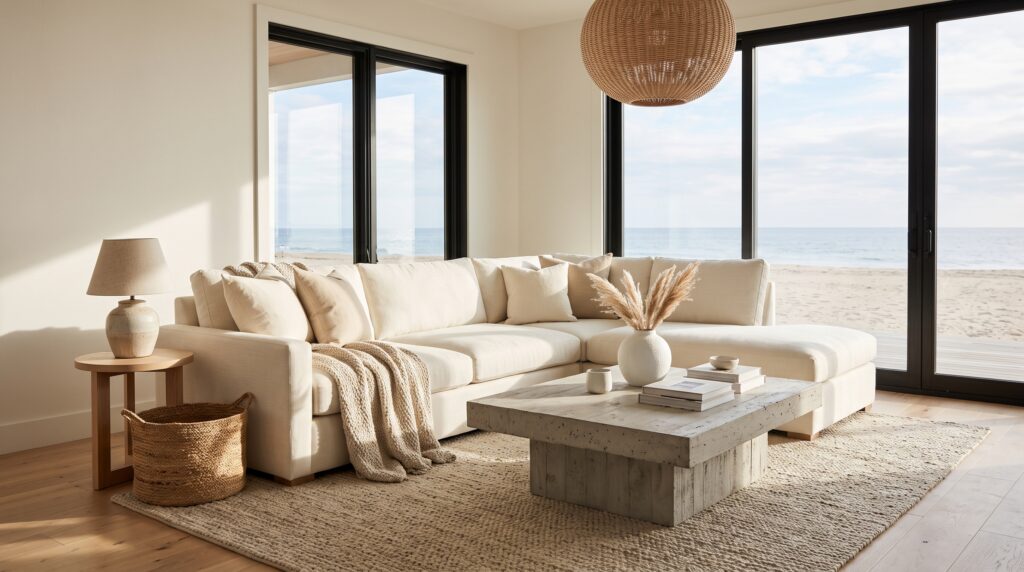
The trick is contrast: pair a soft, tailored sofa with something rougher, like a concrete coffee table or a chunky ceramic vase. Building in layers of material instead of layers of color keeps a neutral coastal room from tipping into boring. If your living room already leans neutral, adding two or three organic finishes — a seagrass basket here, a linen throw there — can shift the whole space into coastal territory without a single starfish in sight.
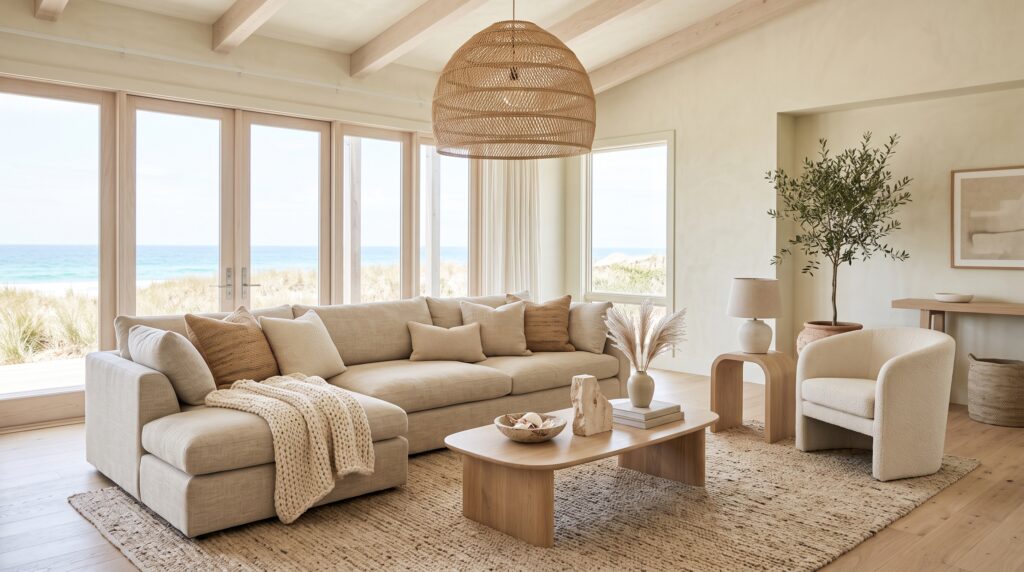
Quick tip: When decorating with neutrals, prioritize texture over hue. Combine seagrass, linen, raw clay, and wood grain to build depth that a flat, monochrome room can’t achieve on its own.
2. Try a Sophisticated Gray-and-White Palette
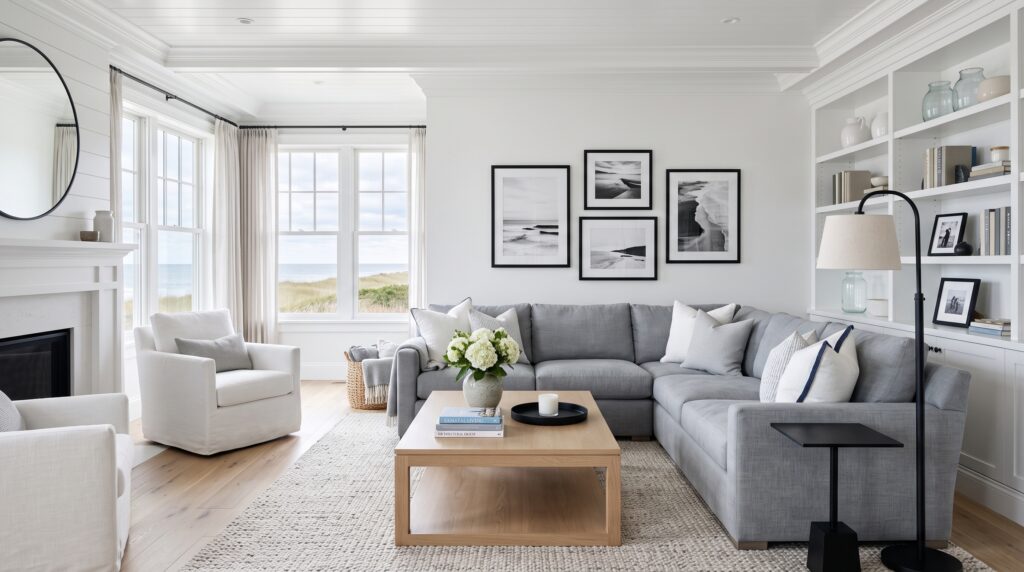
Cool grays paired with crisp white create a refined, almost architectural take on coastal style.
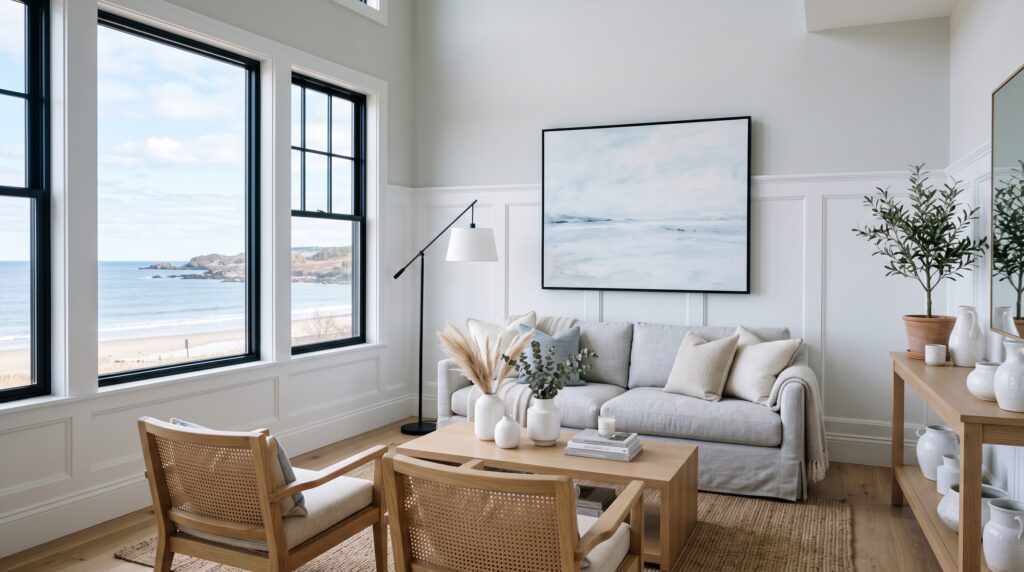
This combination tends to shine in rooms that already have strong bones — crown molding, built-in shelving, wainscoting — because the restrained palette lets those details stand out instead of competing with busy patterns or color.
Design trick: Add a few black accents — picture frames, a lamp base, window mullions — to instantly modernize a gray-and-white coastal room and keep it from feeling too soft.
3. Go Boho-Coastal With Natural Fibers
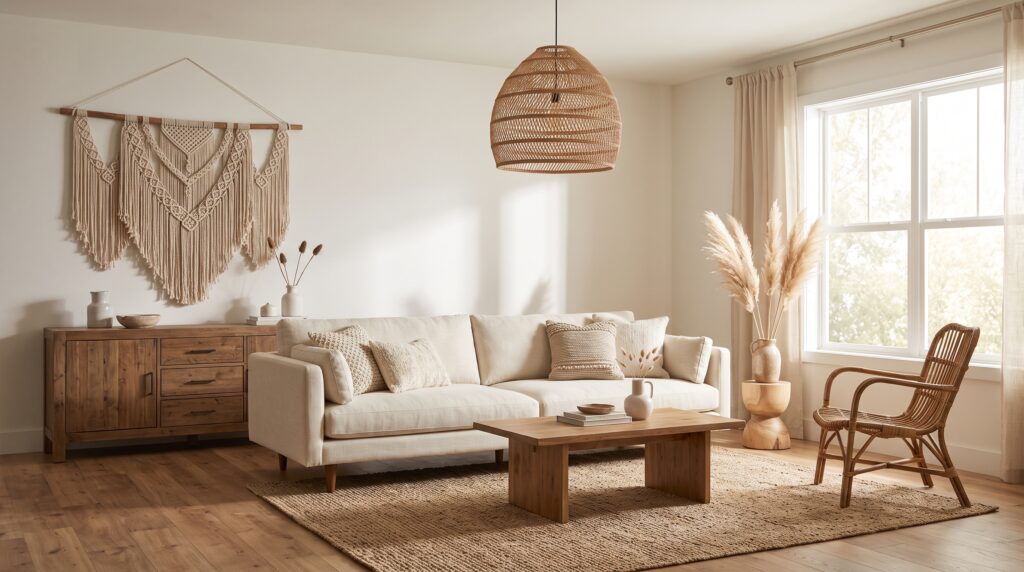
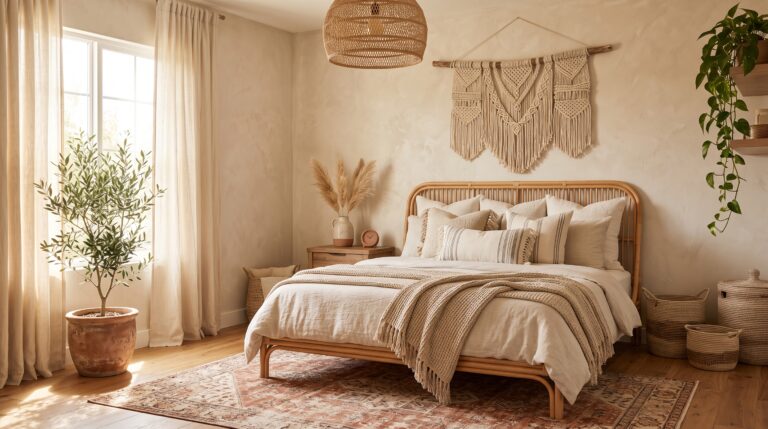
For a more relaxed, lived-in feel, blend coastal neutrals with boho textures: macramé wall hangings, low-slung linen sofas, pampas grass, and woven pendant lighting.
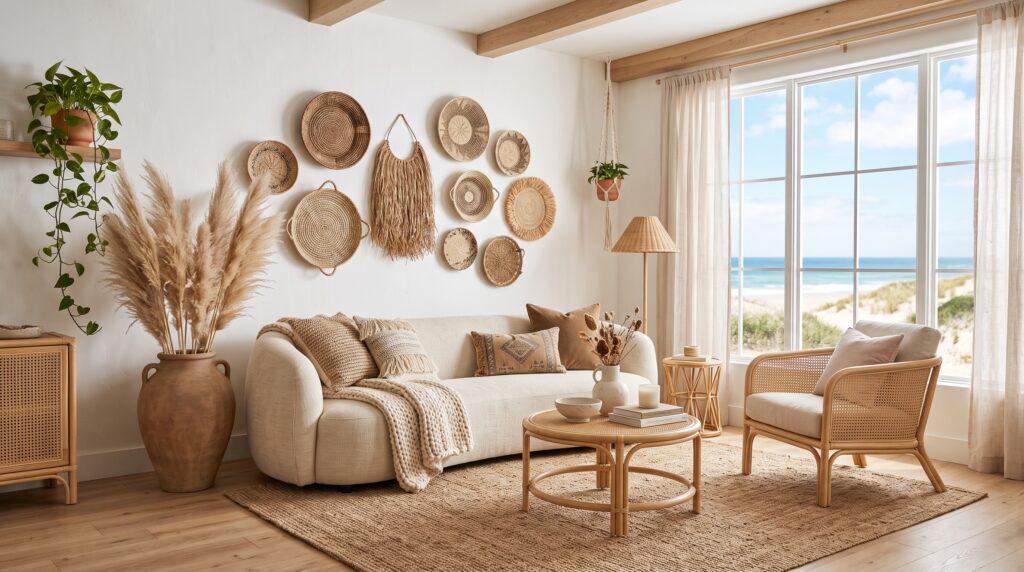
This pairing works because both styles already share a love of natural materials — the boho layer just adds a little more warmth and informality to an otherwise clean coastal base.
4. Explore Sunset-Inspired Coastal Color
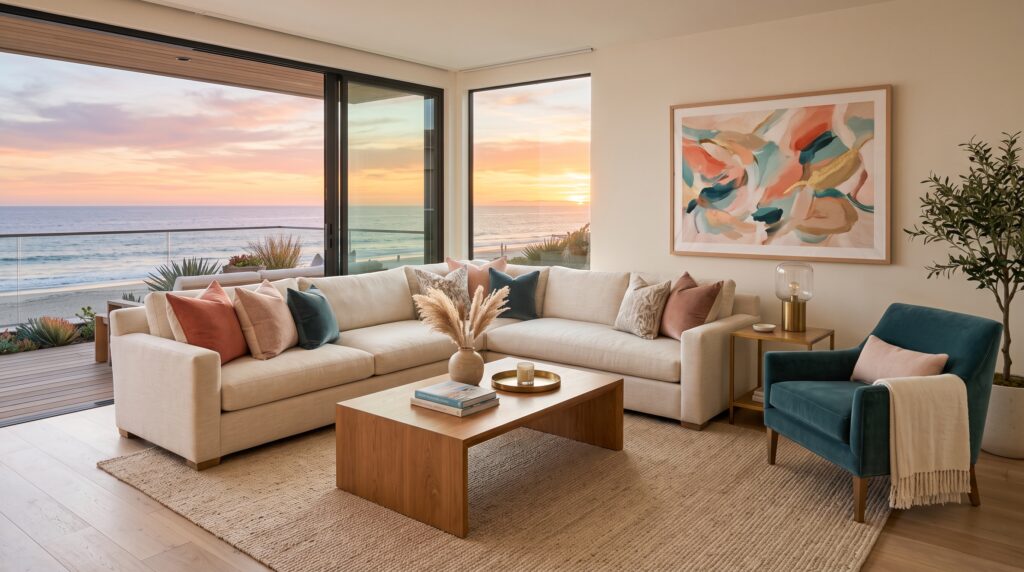
Coastal doesn’t have to mean blue and white. Soft coral pinks, deep ocean teals, and warm sandy neutrals — the colors of an ocean sunset — make for a livelier, more unexpected coastal palette. These rooms prove that nature offers plenty of color combinations beyond the classic navy stripe.
5. Bring in Sun-Soaked, Florida-Style Brightness
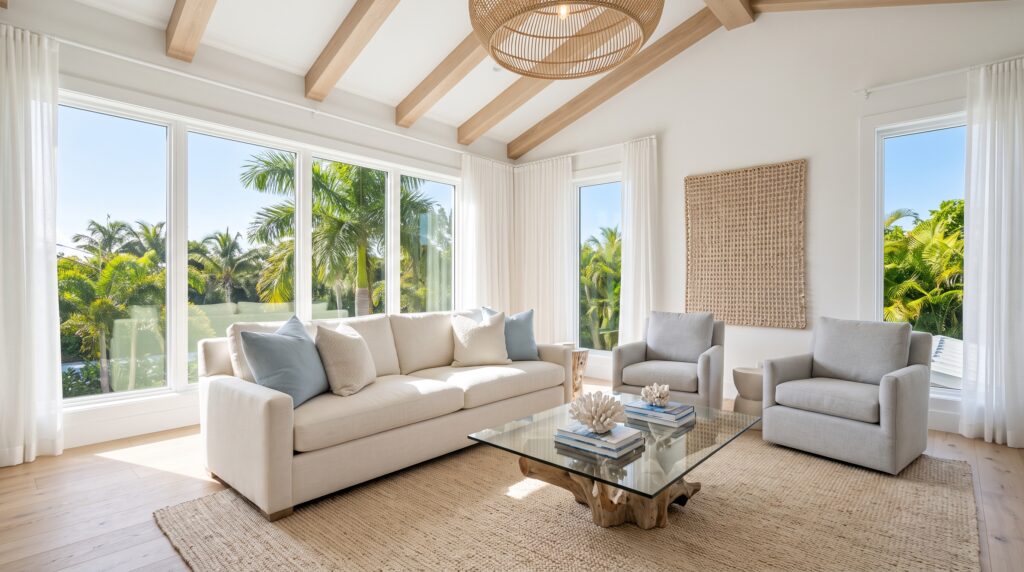
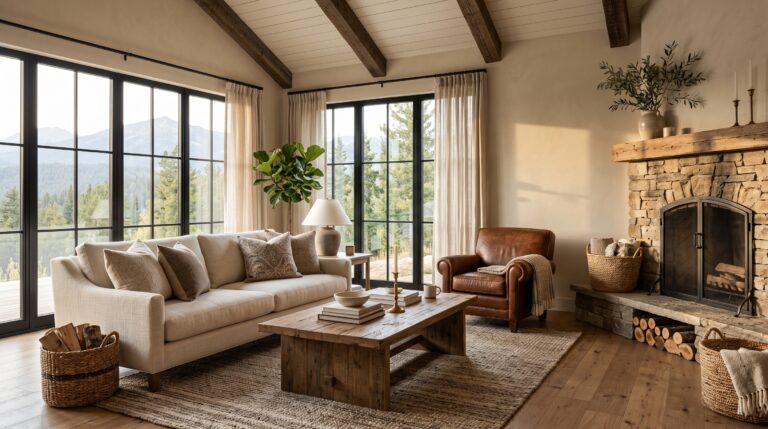
Rooms with vaulted ceilings, exposed beams, and oversized windows lend themselves naturally to a breezy, sun-drenched coastal look. Cool blues and sandy neutrals paired with streamlined contemporary furniture keep the space feeling current rather than overly casual — beachy in mood, without a single seashell in sight.
6. Warm It Up With an Earth-Toned Coastal Retreat
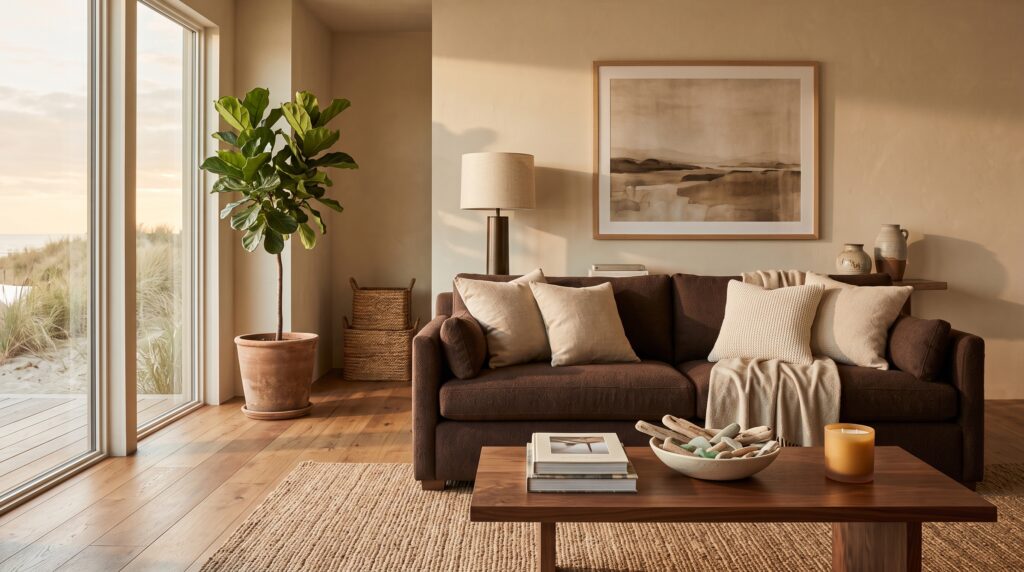
Rich browns — on furniture, walls, and flooring — create a grounded, sophisticated coastal atmosphere that moves away from the traditional blue-and-white formula entirely
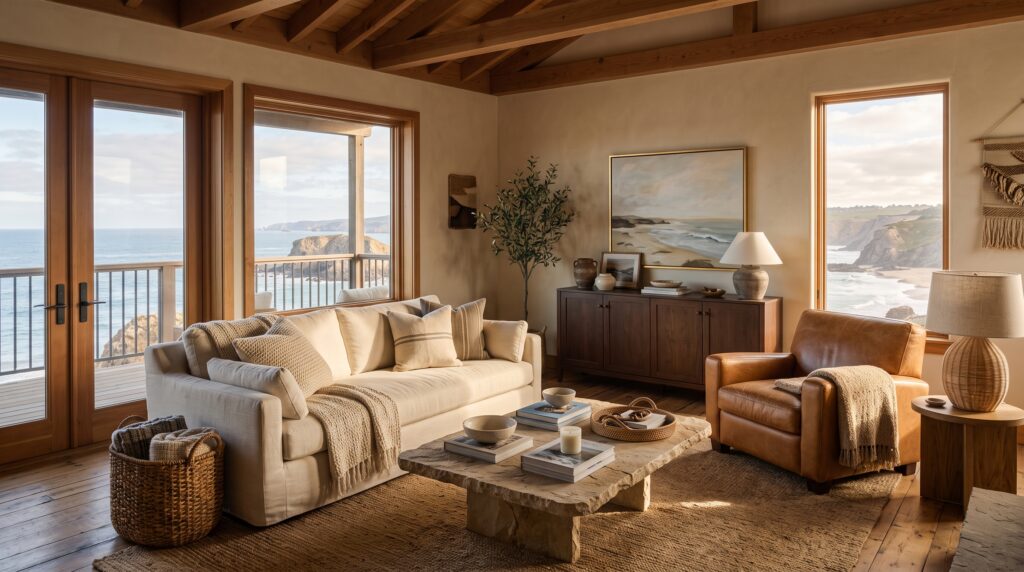
It’s proof that coastal design can feel warm and enveloping rather than cool and airy.
Quick tip: Contemporary coastal rooms need contrast to avoid feeling flat. Try working with at least three different wood tones in one space to build depth while keeping that natural, beach-house warmth.
7. Keep Things Minimal and Serene
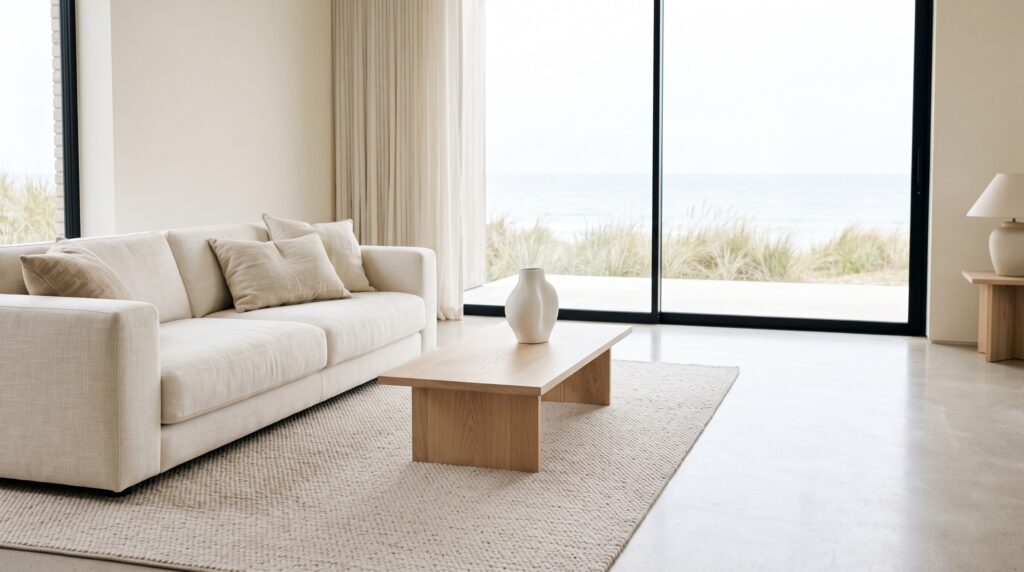
A minimalist coastal living room strips the look down to its essentials: clean-lined furniture, a tightly edited color palette, and just enough negative space to let the room breathe.
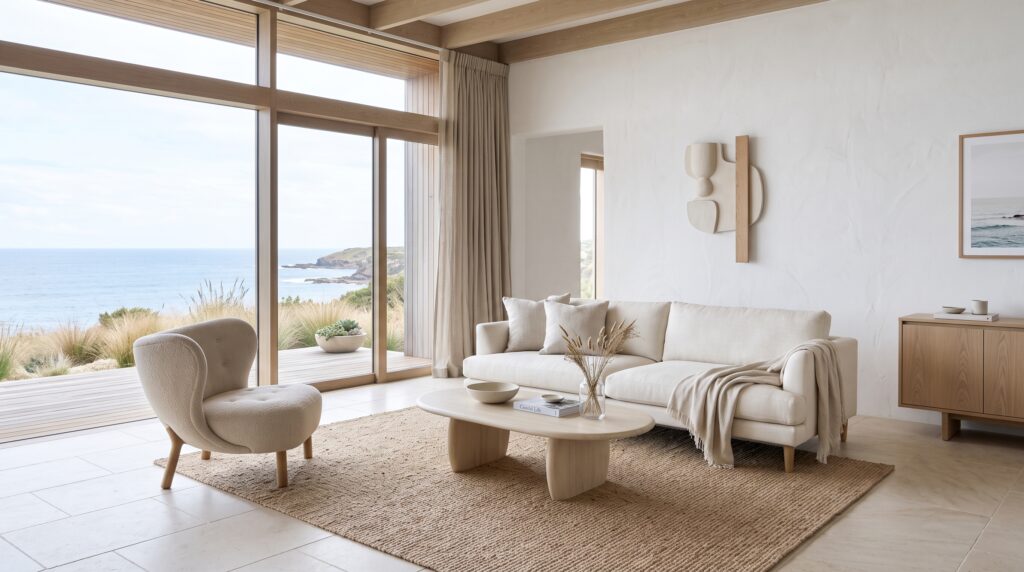
The secret is choosing pieces with strong, simple silhouettes but soft, tactile materials — like linen upholstery on a streamlined sofa — so the room still feels inviting rather than austere.
8. Let Texture Replace Obvious Beach Motifs
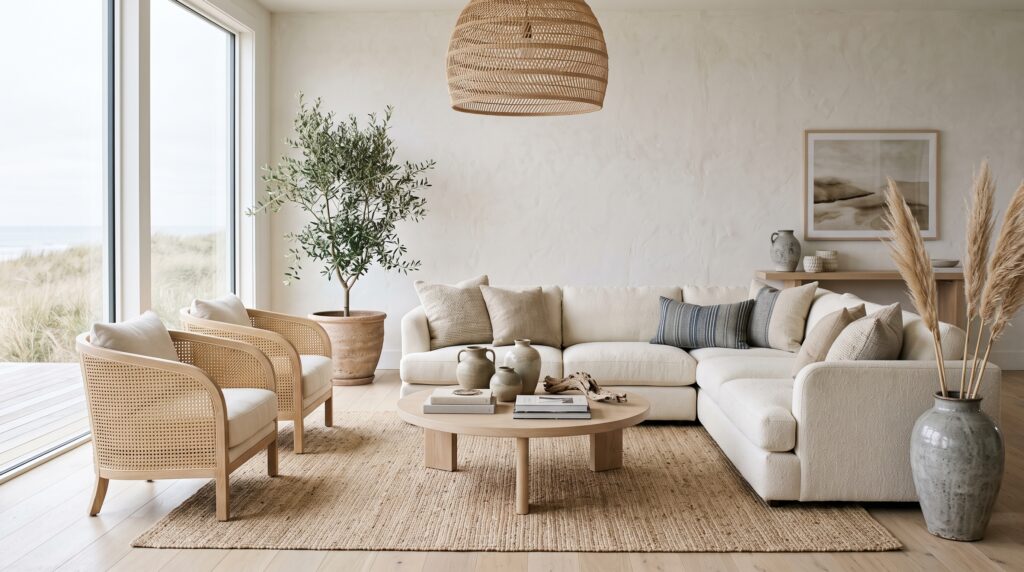
Some of the most sophisticated coastal rooms skip beach imagery altogether, relying instead on soft neutrals, natural materials, and gentle curves to suggest the seaside
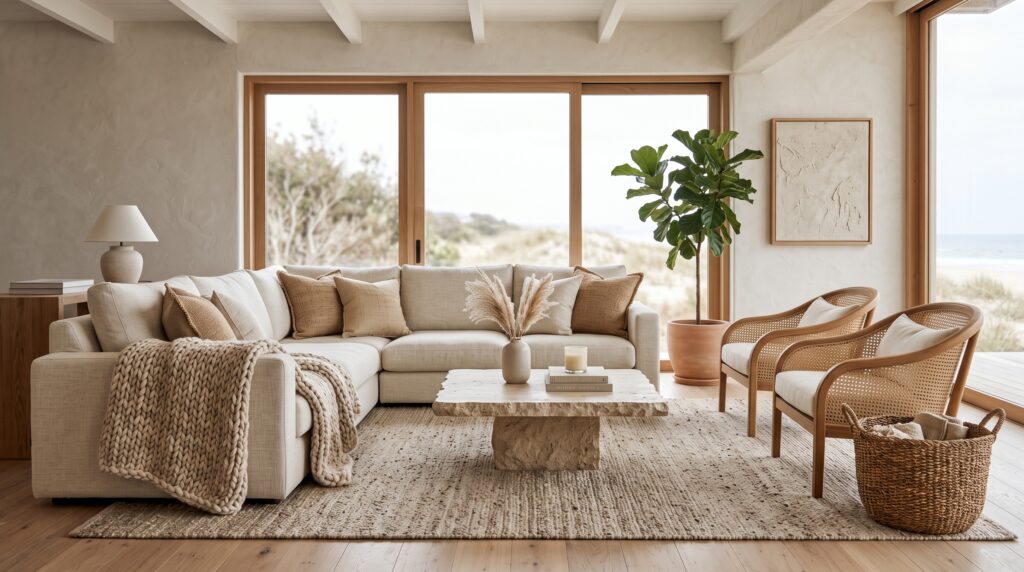
It’s a subtler approach, but arguably a more contemporary one.
Design trick: Limit yourself to one or two literal beach references — a single piece of coral-toned art, one woven basket — and let the rest of the room’s coastal feel come through in color and texture alone.
9. Mix in Tropical, Florida-Inspired Elements
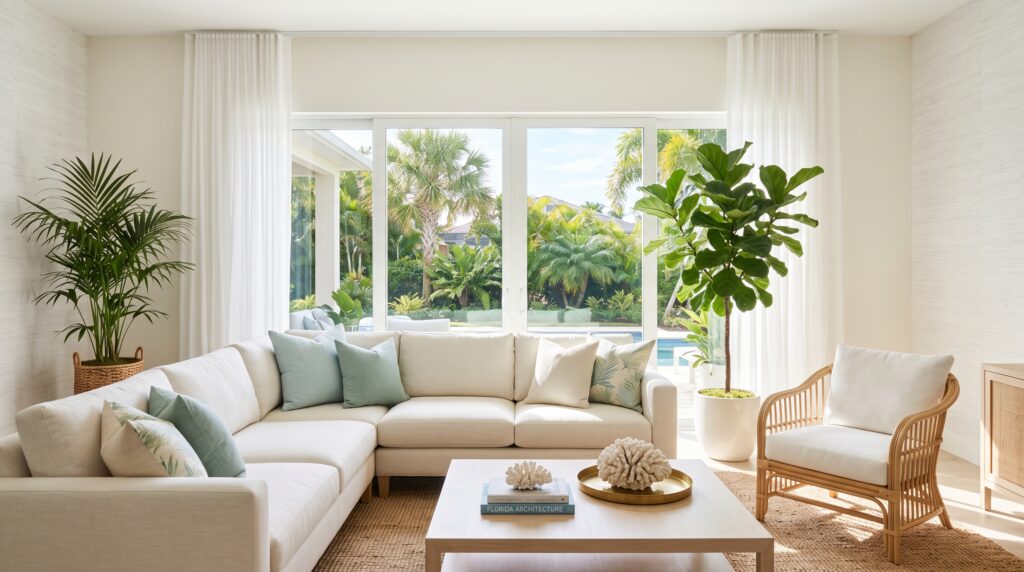
For a livelier take, blend modern furniture shapes with a few tropical touches: rattan seating, lush greenery, and soft blue-and-white textiles. The contemporary furniture keeps things from tipping into “tiki bar” territory, while the greenery and natural textures add warmth and a sense of life to the room.
10. Try an Upscale Silvery-Gray Palette
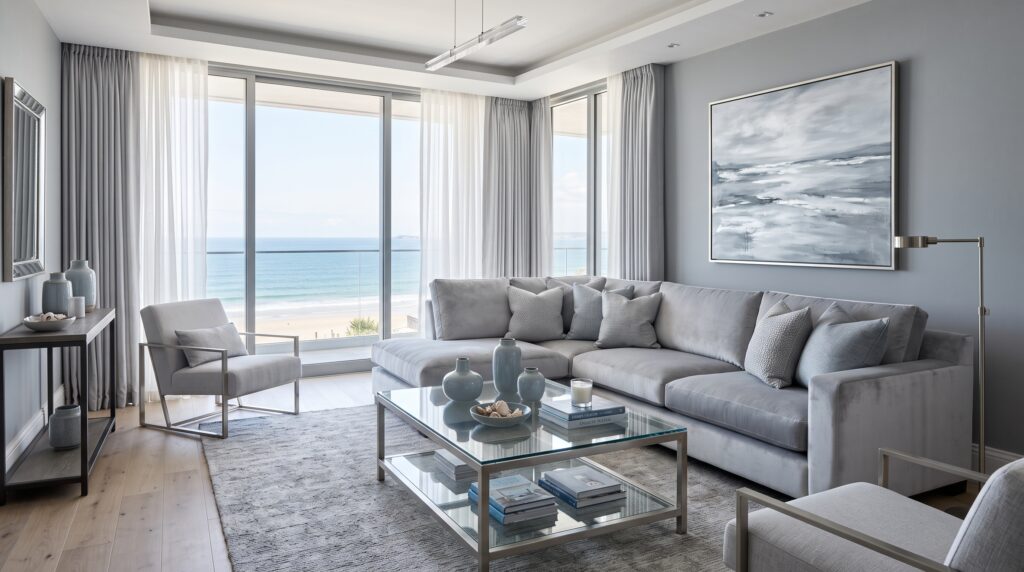
Sleek, silvery grays paired with clean-lined furniture create an elevated, almost hotel-lobby take on coastal design — ideal for anyone who wants just a subtle nod to the seaside rather than a full beach-house theme.
11. Maximize Natural Light in an Airy Layout
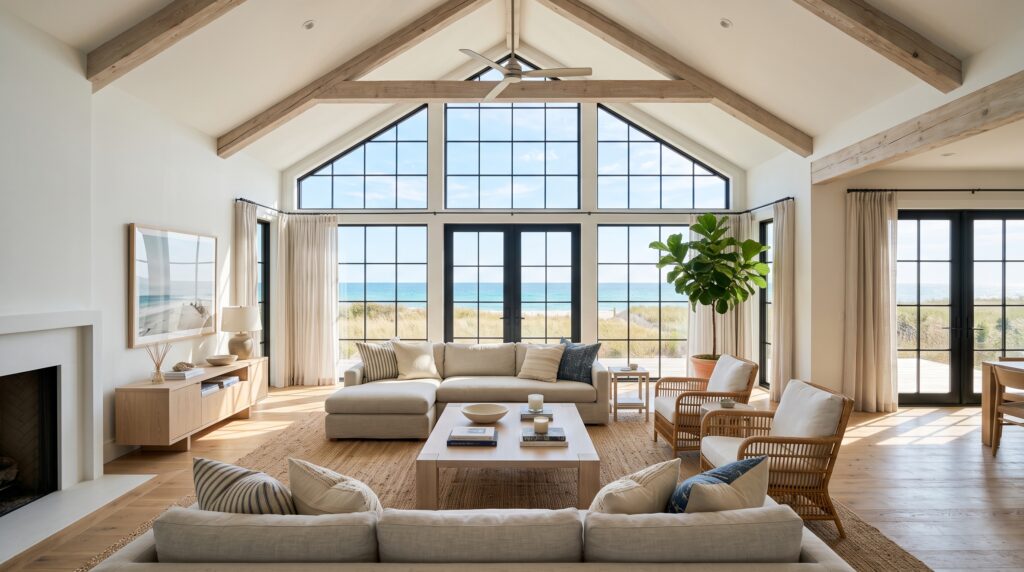
Vaulted ceilings, exposed beams, and grid-style windows are a coastal living room’s best friend. Pairing that architecture with soft neutral furniture and minimal window treatments lets sunlight do most of the decorating for you.
12. Open Up the Floor Plan
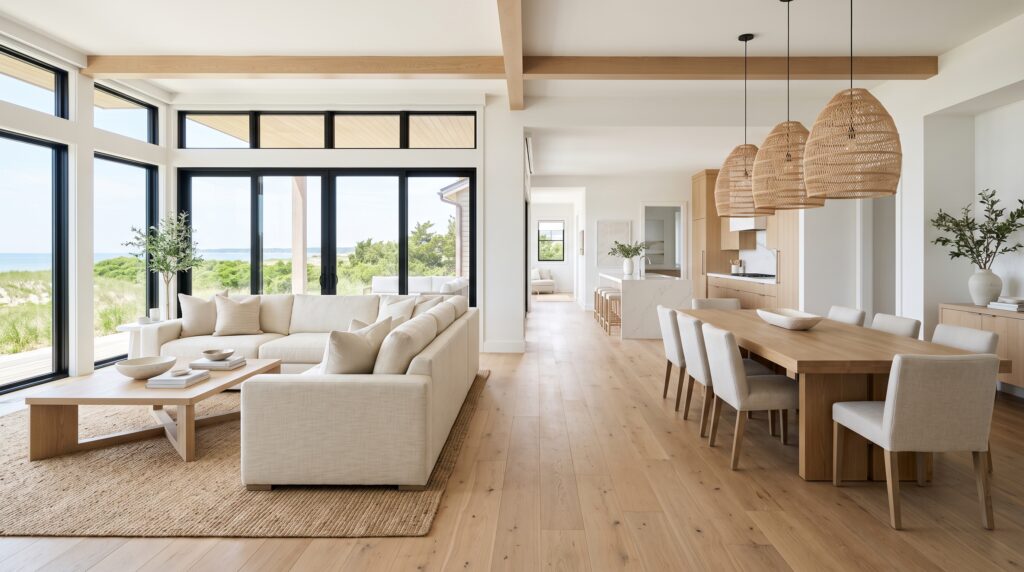
In open-concept coastal homes, floor-to-ceiling windows bring the outdoors in, while a cohesive, light color palette carries through both the living and dining zones. Thoughtful furniture placement creates natural walking paths, and soft upholstery keeps the open layout feeling cozy rather than cavernous.
13. Borrow Warmth From West Coast Desert Style
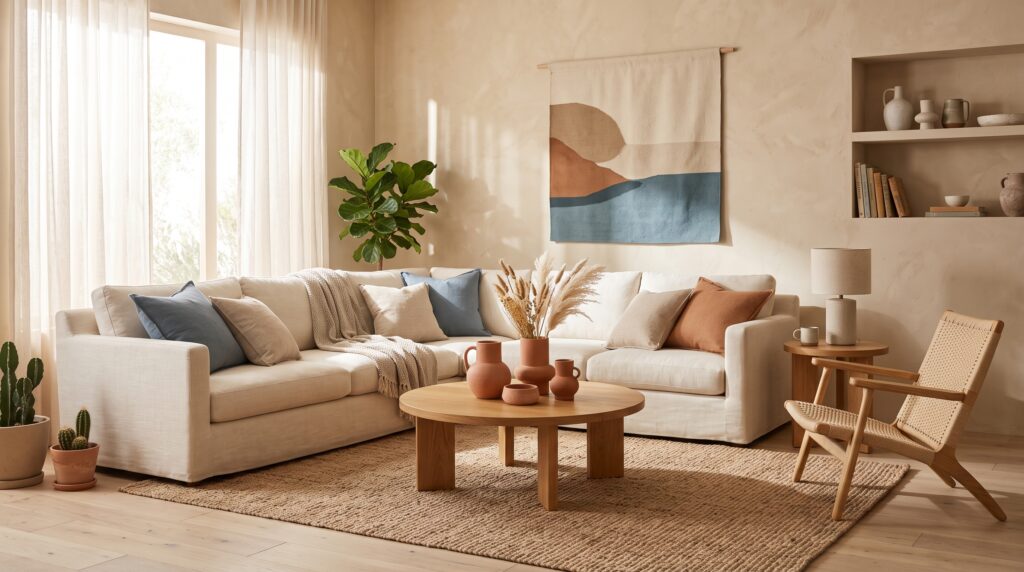
Sandy neutrals, natural wood tones, and soft textures create a west-coast-meets-coastal atmosphere that works year-round — cozy enough for winter, fresh enough for summer.
Quick tip: Contemporary coastal rooms should feel intentional, not themed. Pick one focal point — a statement art piece, a textured accent wall — and keep everything else understated.
14. Add Sophistication With Navy Accents
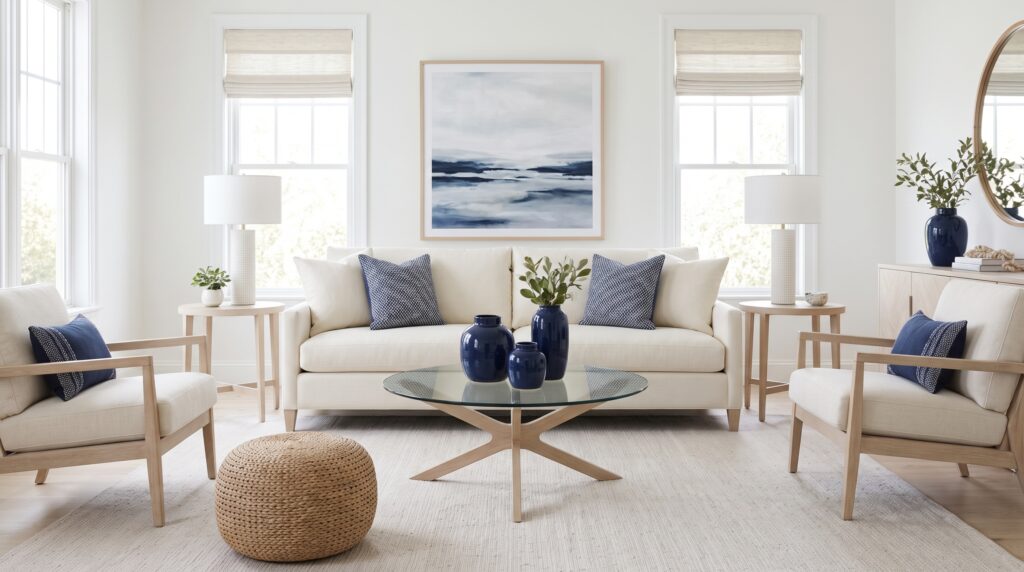
A well-placed dose of navy blue can take a coastal living room from breezy to genuinely elegant. The key is restraint: a few ceramic vases in varying shades of blue add depth without overwhelming the space, while a round glass coffee table and a woven pouf keep the overall look light and textural rather than heavy.
15. Choose Furniture With Relaxed, Rounded Lines
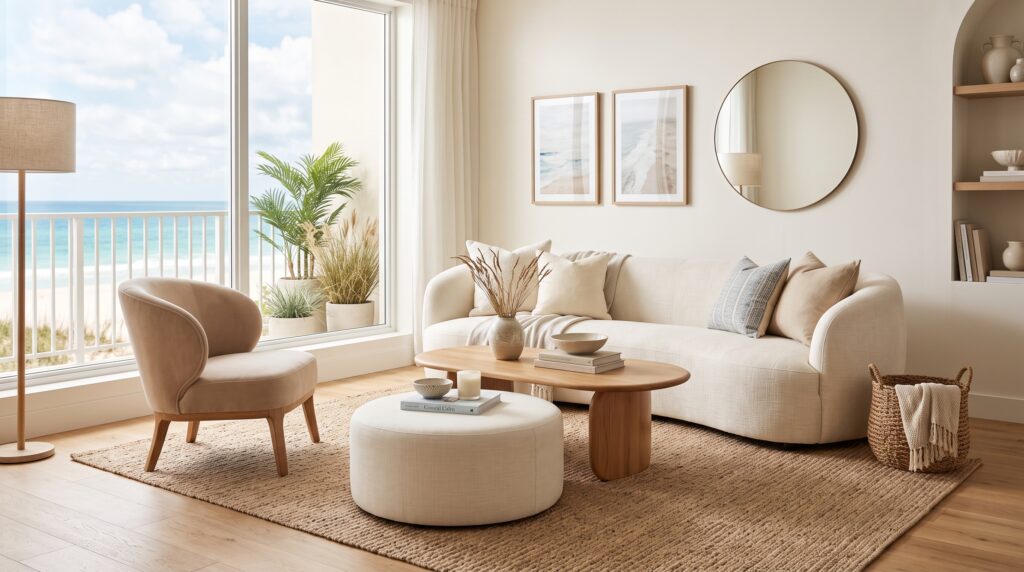
Contemporary coastal seating tends to favor gentle curves over sharp angles — a rolled-arm sofa, a rounded ottoman, a curved-back accent chair. Softer silhouettes echo the natural forms you’d find outdoors (driftwood, dunes, waves) and keep an otherwise modern room from feeling cold or overly formal.
16. Layer Rugs for Depth Underfoot
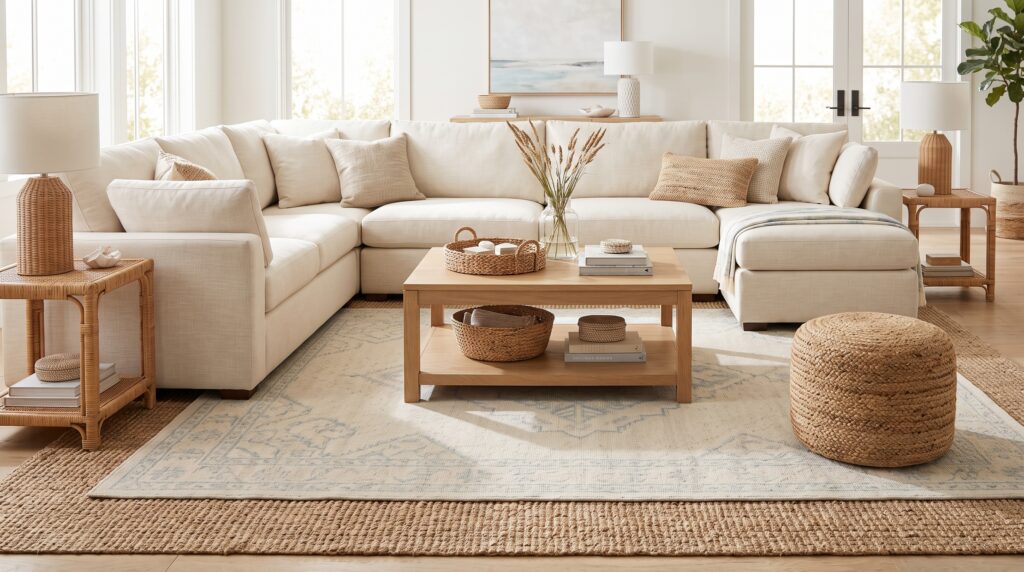
A single flat-woven jute rug can look a little sparse in a large room. Try layering a smaller printed or textured rug on top for visual interest and a softer feel underfoot. This trick works especially well over hardwood or light tile, where a lone rug can otherwise disappear into the floor.
17. Use Woven Lighting as a Statement Piece
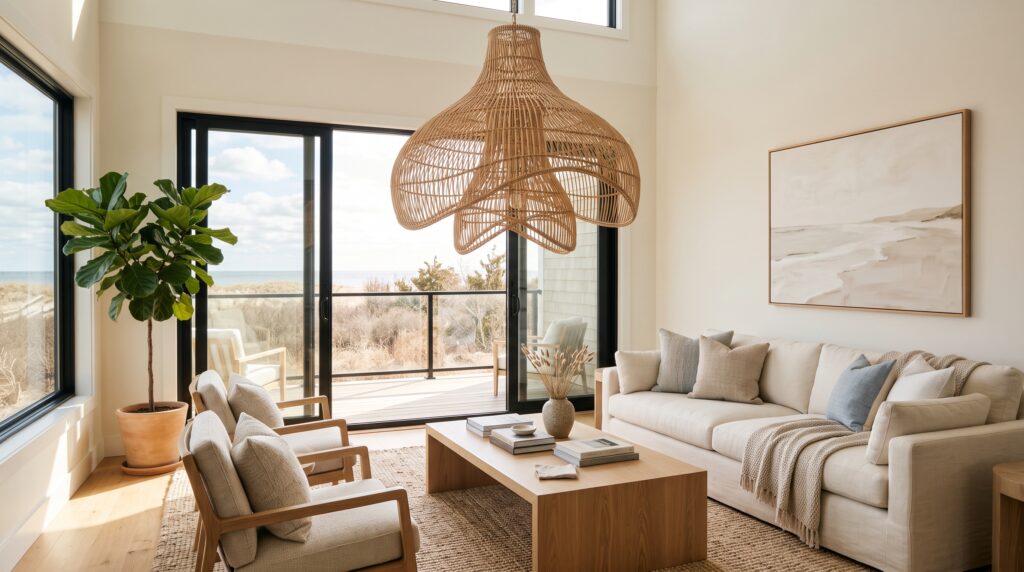
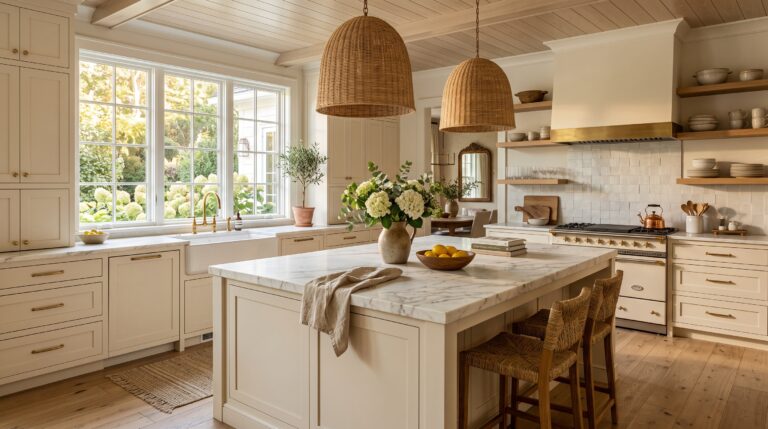
Rattan, seagrass, and paper-cord pendant lights are one of the fastest ways to add coastal texture to a ceiling that would otherwise go unnoticed. Because they cast warm, dappled light, they also do double duty as both a design statement and a mood-setter for evening hours.
18. Bring in Live or Faux Greenery
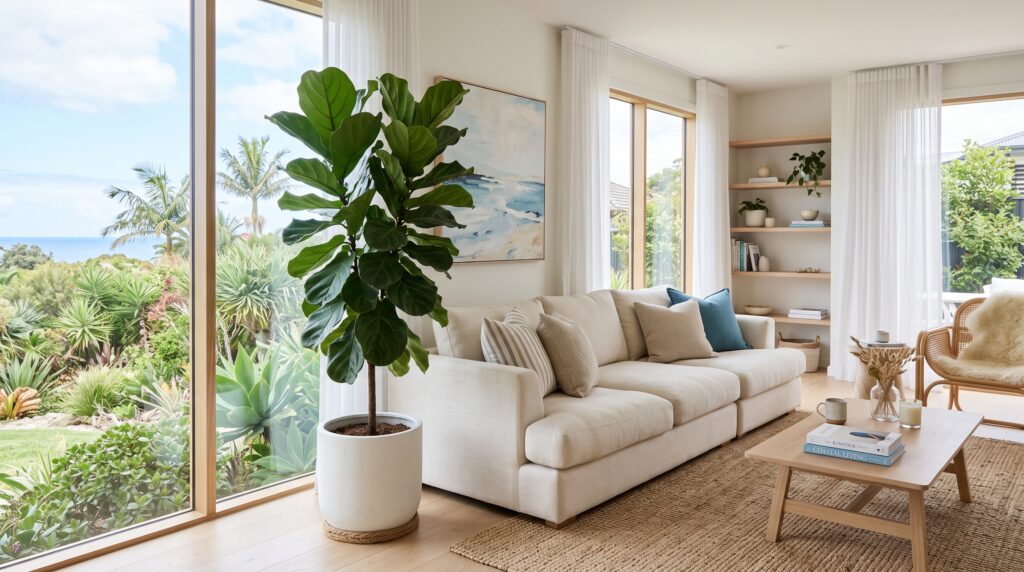
A few well-placed plants — a fiddle-leaf fig in the corner, a trailing pothos on a bookshelf, a bundle of dried pampas grass in a floor vase — soften hard lines and reinforce the sense that this is a room connected to the outdoors, even miles from any coastline.
19. Let One Piece of Art Set the Palette
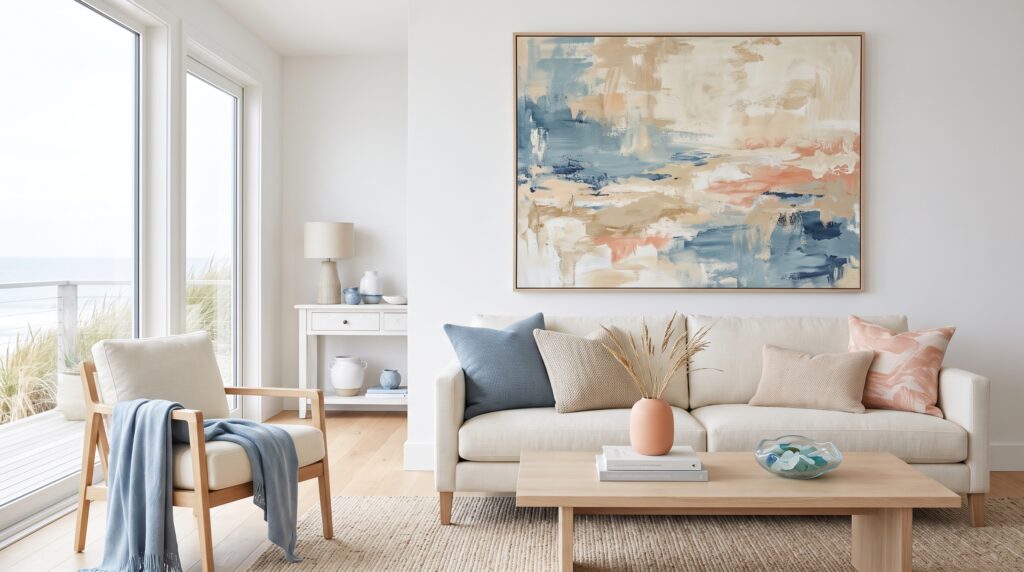
Instead of scattering ocean-themed decor throughout the room, choose a single abstract art piece in blues, sandy neutrals, or coral tones and let it anchor your entire color scheme. It’s an easy way to keep the room cohesive without buying a dozen matching accessories.
20. Mix Metal Finishes Thoughtfully
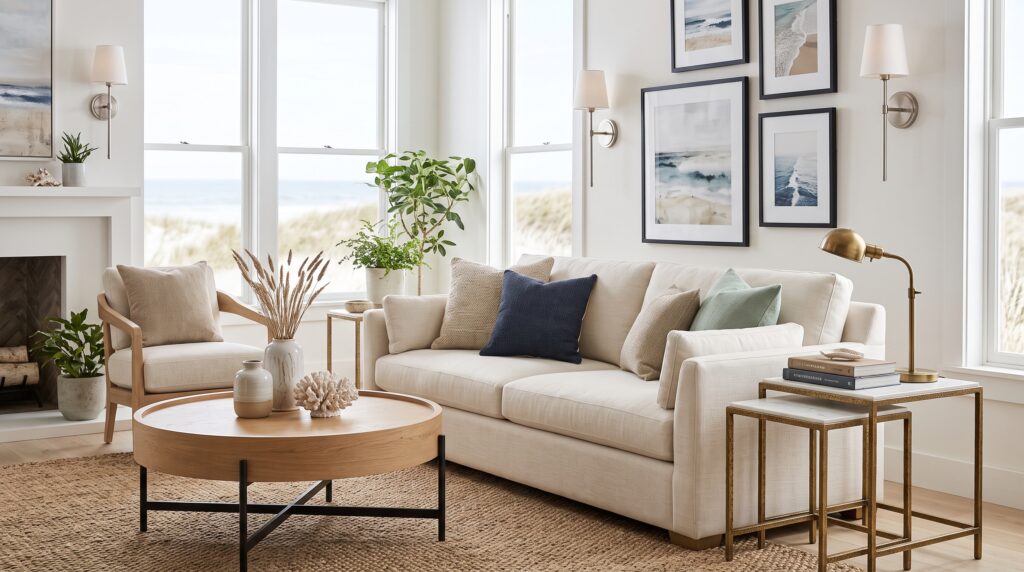
Brushed nickel, aged brass, and matte black can all coexist in a coastal room as long as you’re intentional about where each one shows up — lighting, hardware, and frames are good places to mix metals without the room feeling disorganized.
21. Keep Window Treatments Simple
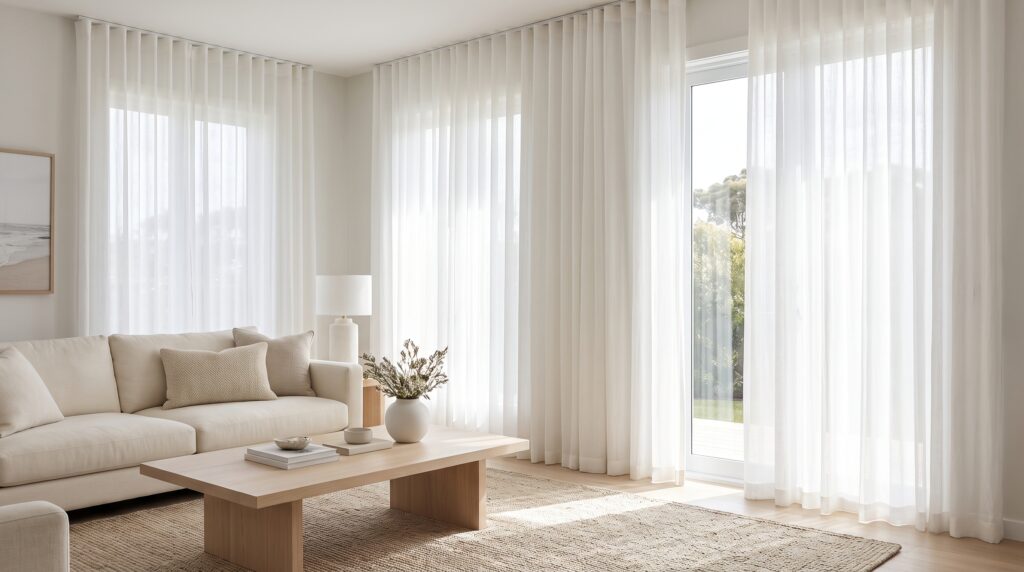
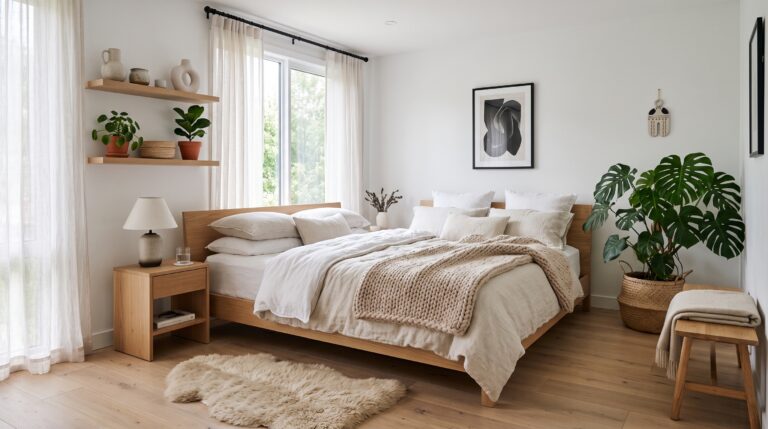
Sheer linen curtains that move with the breeze do more for a coastal room than heavy drapery ever could. If privacy is a concern, layer a simple woven shade underneath rather than reaching for anything too structured or formal.
Where to Start With Your Own Coastal Color Palette
If you’re not sure where to begin, paint is often the easiest entry point. Sherwin-Williams’ Escape Gray, a soft gray with a subtle green undertone, is a popular starting point for coastal rooms because it pairs well with light countertops and natural wood finishes. You can browse current coastal-friendly collections directly on the Sherwin-Williams website to find a shade that matches the mood you’re after, whether that’s a watery blue-green or a warm sandy neutral.
Common Questions About Contemporary Coastal Living Rooms
Does a coastal living room have to be blue and white? Not anymore. While blue and white remain classic choices, many of today’s most current coastal spaces lean on sandy neutrals, warm wood tones, dusty greens, or even coral and terracotta accents instead.
How do I make a coastal room feel “contemporary” instead of “beachy”? Focus on texture and silhouette rather than literal beach imagery. Clean-lined furniture, natural materials, and a restrained color palette will read as coastal without a single seashell or anchor in sight.
What’s the easiest way to start if I’m on a budget? Textiles are the cheapest entry point — a few new linen or cotton pillow covers, a woven throw blanket, and a jute or seagrass rug can shift the mood of a room for a fraction of the cost of new furniture.
Do I need a lot of natural light for this style to work? Natural light helps, since it’s central to the airy feel most coastal rooms are going for, but you can compensate with warm, layered lighting — floor lamps, table lamps, and a statement woven pendant — in rooms that don’t get much sun.
Final Thoughts
Contemporary coastal style has moved well past seashells, anchors, and rope-wrapped mirrors. The rooms that feel freshest today lean on natural materials, layered texture, and a confident, editing eye rather than an obvious theme. Whether you’re drawn to breezy California minimalism or warmer, earth-toned coastal spaces, the formula is largely the same: start with a neutral base, build in texture through natural materials, and keep any literal beach references to a minimum.
The best coastal living rooms don’t try too hard. They feel calm, collected, and a little sun-warmed — the kind of space that looks just as good in December as it does in July.