Introduction
Laundry rooms rarely get the design attention they deserve, yet they’re one of the most frequently used spaces in any home. Between wash cycles, folding sessions, and quick stops to grab a stain stick or an extra hanger, most of us spend more time in this room than we’d guess — which makes it worth treating as a real part of the house rather than an afterthought tucked behind a closet door. When you approach this room with the same intention you’d bring to a kitchen or bathroom, it stops feeling like a forgotten utility closet and starts feeling like an extension of your home’s overall style.
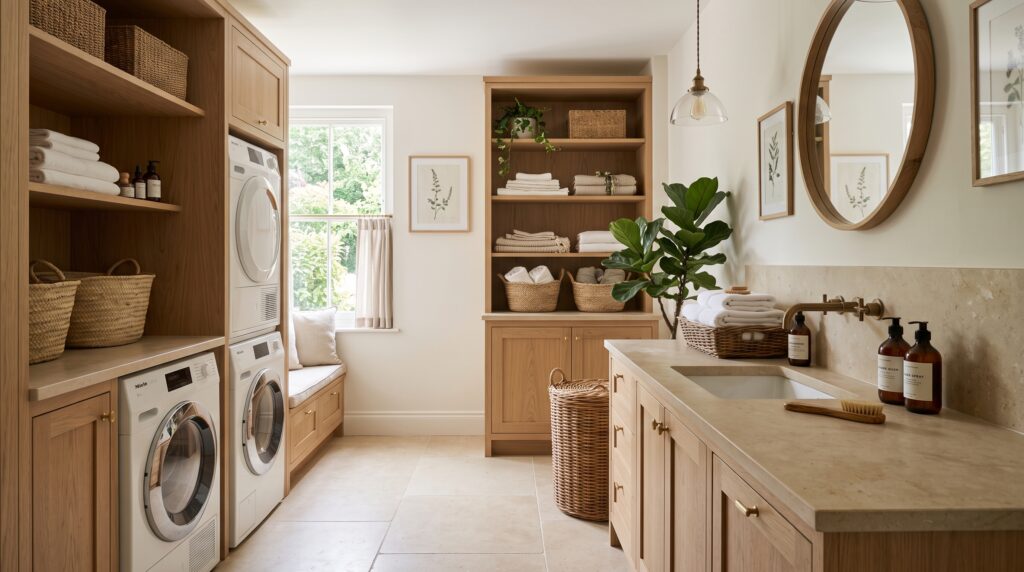
A well-planned elegant laundry room isn’t about luxury for its own sake — it’s about pairing smart storage with beautiful finishes so that washing, drying, and folding clothes becomes a genuinely pleasant part of your day rather than a chore you rush through. The good news is that elegance here doesn’t require a gut renovation or an unlimited budget. Often it’s a handful of thoughtful decisions — the right cabinet color, a better light fixture, coordinated storage — that shift a room from purely functional to genuinely inviting.
Below you’ll find twenty-two ways to bring that elegance into your own space, covering everything from cabinetry and lighting to color palettes, materials, and the small decorative touches that make a real difference. Whether you’re planning a full remodel or just looking for a weekend refresh, there’s something here you can put to use.
Elegant Laundry Room Ideas for Every Style
Whatever look you’re drawn to — modern, farmhouse, Scandinavian, or something entirely your own — these ideas work as a flexible toolkit. Mix and match the ones that suit your space and budget to build a room that feels curated rather than accidental.
1. Invest in Custom Built-In Cabinetry
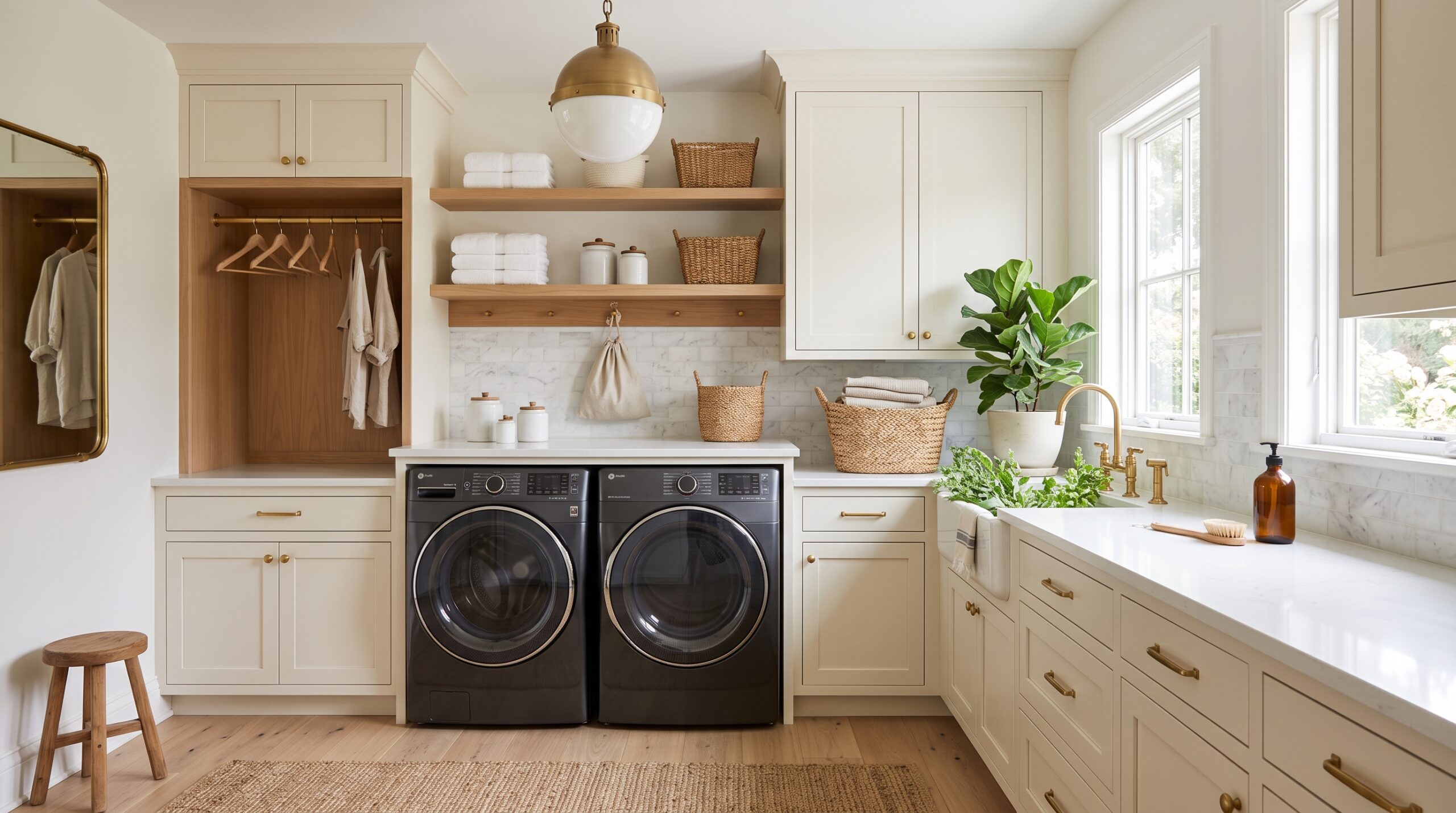
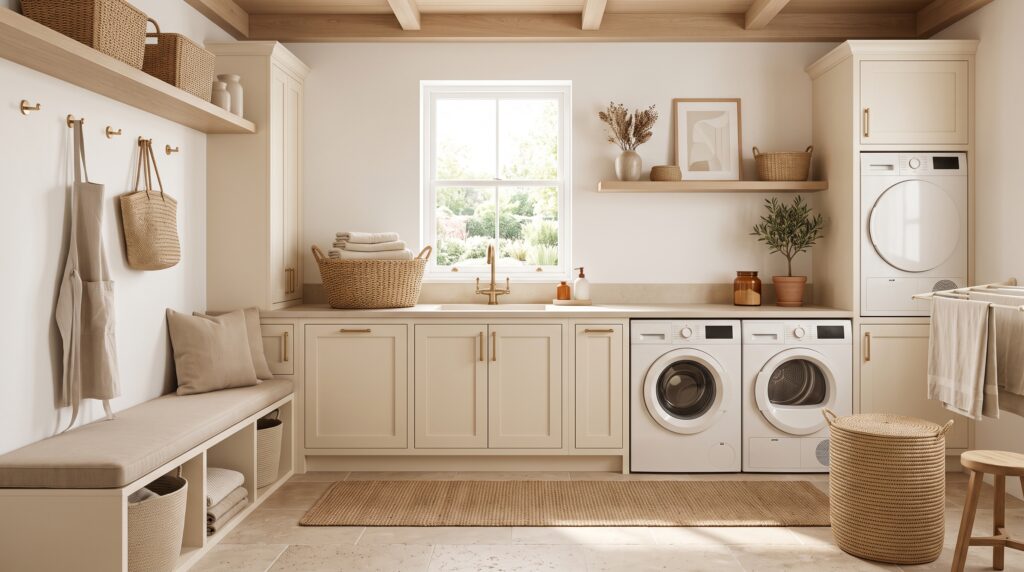
Nothing elevates a laundry room faster than custom cabinetry. Stick to timeless tones — white, soft greige, warm beige, or natural wood — for a look that won’t feel dated in a few years. Closed storage tucks away detergents and cleaning supplies, while small upgrades like brushed hardware, glass inserts, or subtle trim work can make builder-grade cabinets feel bespoke. If a full custom build isn’t in the budget, semi-custom cabinet lines or even a well-planned IKEA hack can get you most of the way there for a fraction of the cost.
2. Build a Dedicated Folding Station
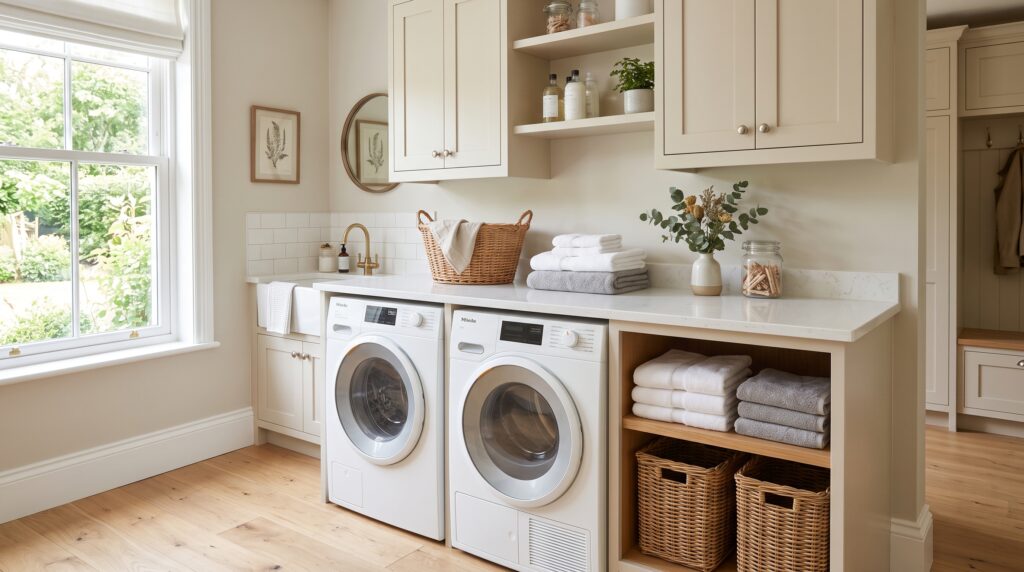
A generous, flat surface changes everything about how a laundry room functions. Positioning a countertop above the washer and dryer, or along an open wall, gives you somewhere to sort and fold without balancing a basket on your knee. Quartz, butcher block, and marble all hold up well to daily use, and a few baskets tucked underneath keep the surface itself clear and calm. If space allows, extending the counter into an L-shape gives you room to separate “to fold” piles from “to hang” piles, which speeds up the whole process.
3. Lean Into Soft, Neutral Color Palettes
Warm whites, taupe, oatmeal, and light gray make a laundry room feel airy even when the footprint is small. These tones act as a quiet backdrop that lets textured tile, natural wood, or a statement light fixture do the visual work, and they photograph beautifully if you ever plan to sell your home. Neutral walls also make it easy to swap in seasonal decor or a new set of storage baskets down the line without clashing with what’s already there.
4. Upgrade the Lighting Fixture
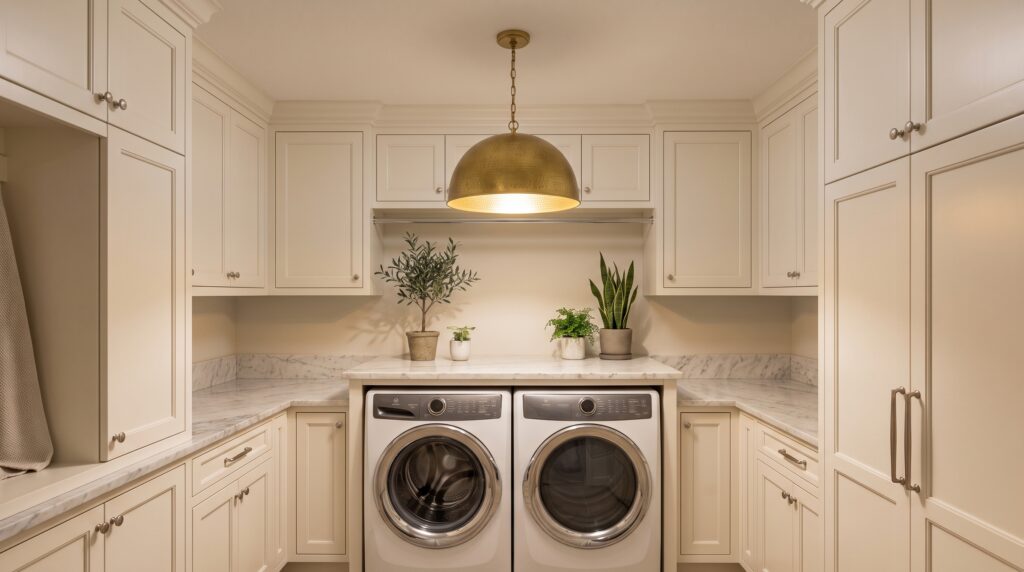
Most laundry rooms are stuck with a single flush-mount fixture that does nothing for the room’s atmosphere. Swapping it for a pendant light, a small chandelier, or even a pair of sconces above the folding counter instantly signals that this space was designed, not just wired for function.
5. Add a Farmhouse-Style Utility Sink
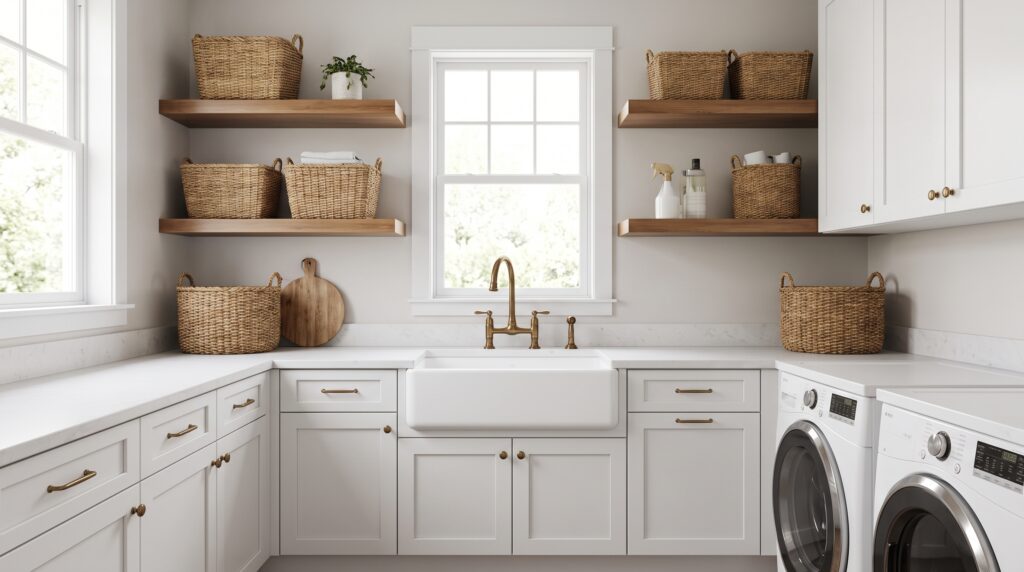
A deep apron-front sink is genuinely useful for hand-washing delicates, rinsing muddy shoes, or soaking stains before a full cycle. Paired with a brass or matte black gooseneck faucet and open wood shelving above, it becomes a focal point rather than an afterthought.
6. Use Open Shelving to Display, Not Just Store
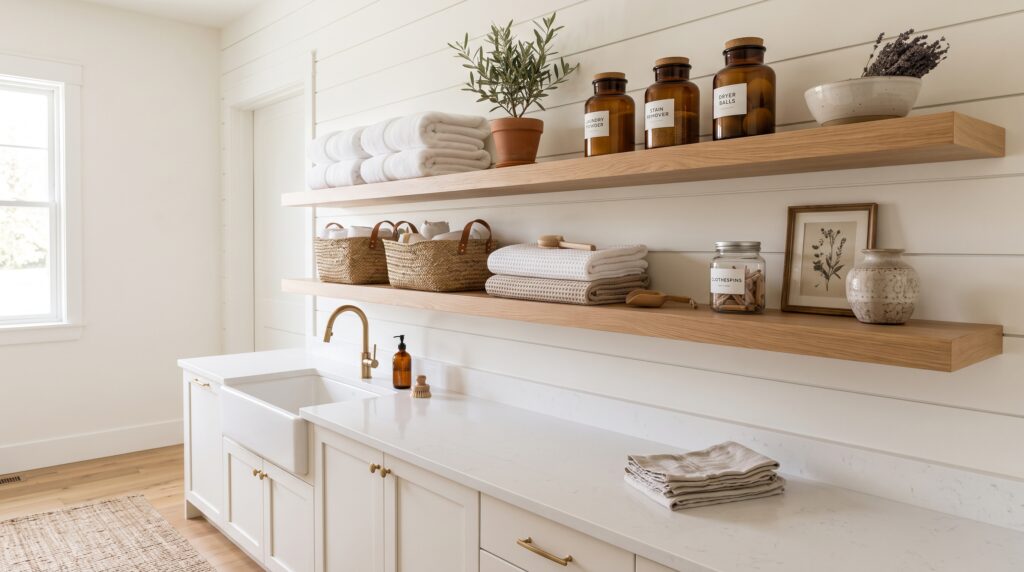
Open shelves work best when what’s on them is worth seeing: woven baskets, folded linens, glass apothecary jars, or a small stack of hand towels. Floating wood shelves suit farmhouse and Scandinavian interiors particularly well, and the trick is editing what goes on display so the shelf never tips into clutter.
7. Choose a Statement Tile
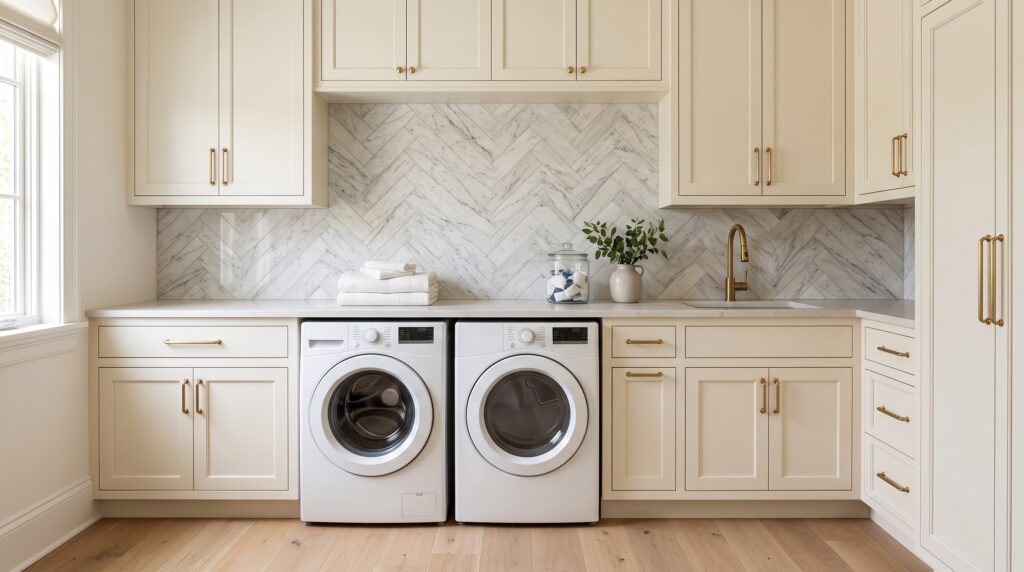
A patterned or textured tile — think herringbone marble, classic subway, or a bold geometric print — can carry the whole design of the room. Installed as a backsplash behind the sink or appliances, it protects the wall from splashes while giving the space a designer finish without a full renovation. If you’re wary of committing to something bold on every wall, a tiled backsplash is a low-risk way to test a pattern in a smaller, contained area.
8. Prioritize Hidden Storage
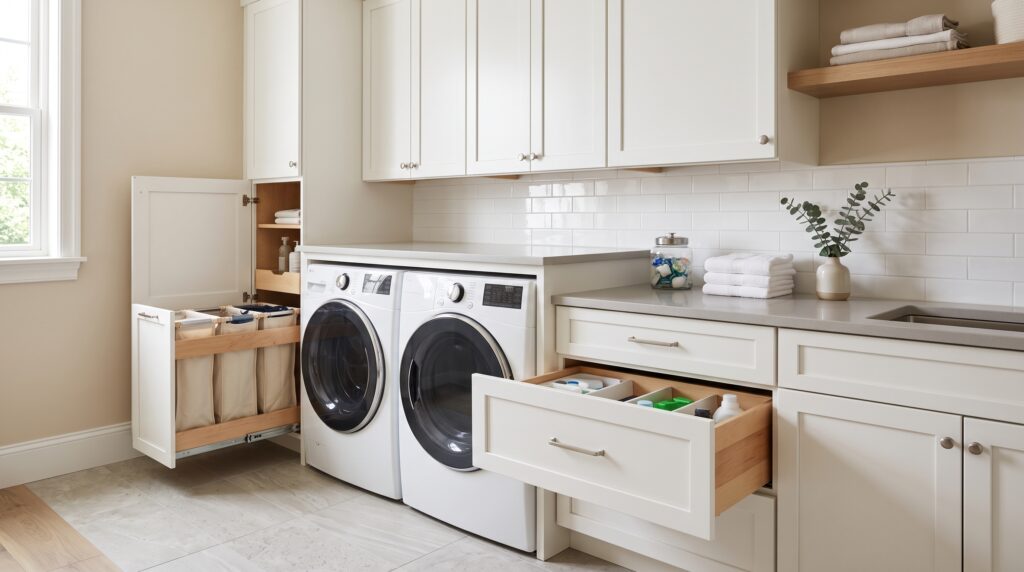
Pull-out drawers, concealed hampers, and built-in organizers keep supplies out of sight and the room looking calm. Labeling bins and grouping items by category (stain treatment, dryer sheets, extra hangers) means everything has a home, which does more for the “elegant” feel than any single decorative object. A dedicated slot for a hamper on wheels also makes it easier to sort lights and darks before they ever hit the washer, which is a small habit that saves real time.
9. Bring in Natural Wood Tones
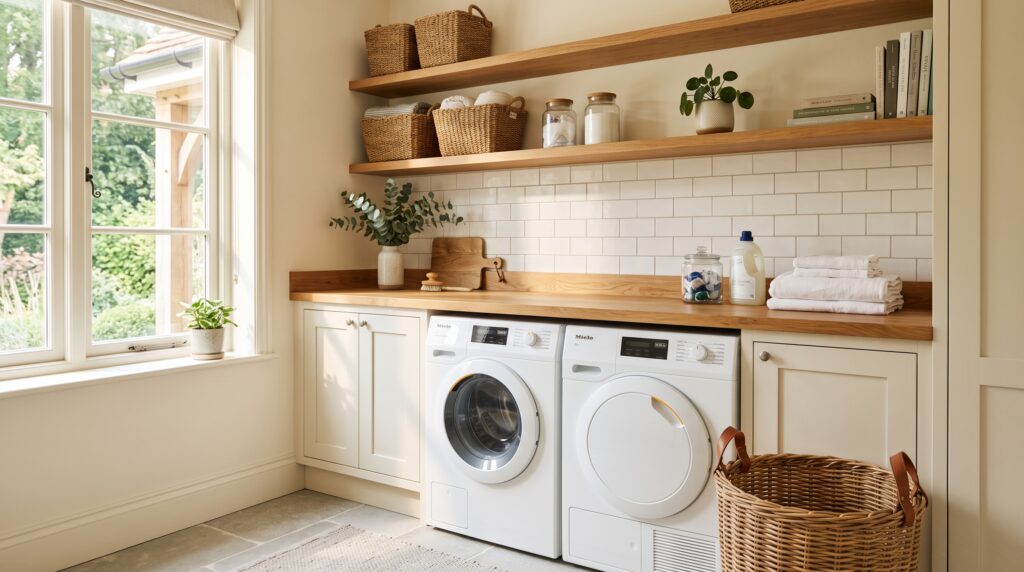
Wood countertops, cabinet fronts, or woven storage baskets add warmth that balances out the hard surfaces typical of a utility space. Paired with white walls and simple hardware, wood keeps the room from feeling clinical while still reading as put-together.
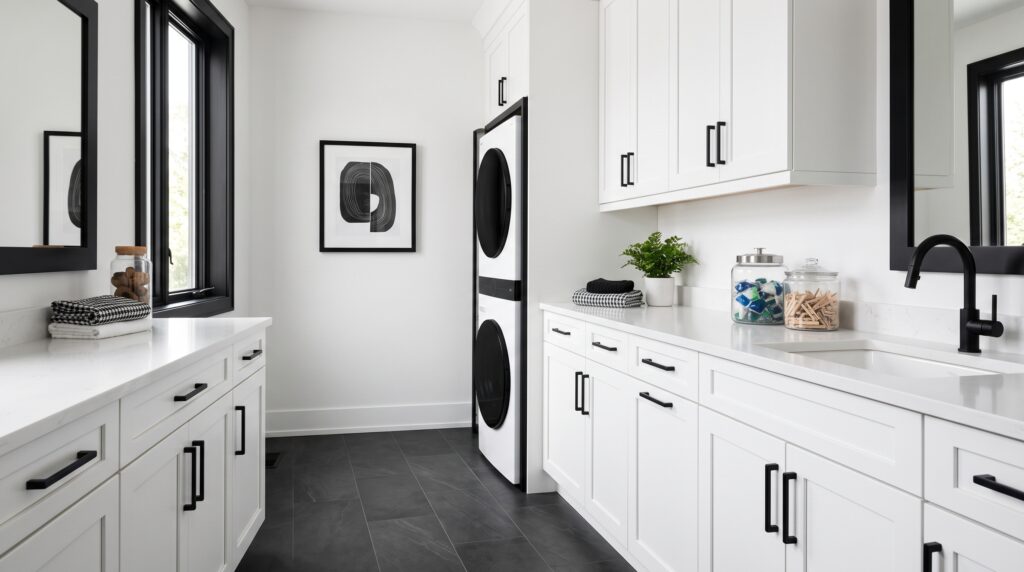
10. Try a Modern Black-and-White Palette
White cabinetry with black hardware, or dark flooring against pale walls, creates a graphic, high-contrast look that reads as intentional and current. It’s a forgiving palette, too — small appliances and stray supplies tend to disappear into it rather than standing out.
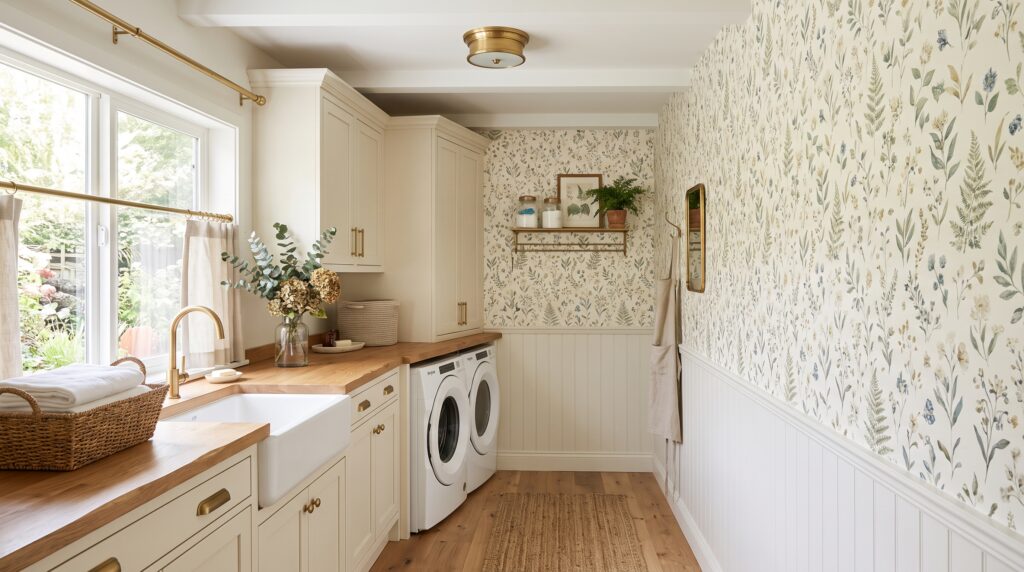
11. Add Moisture-Resistant Wallpaper
A patterned or botanical wallpaper on a single wall can turn a purely functional room into one with real personality. Look for vinyl or moisture-resistant options designed for bathrooms and laundry spaces so the paper holds up to humidity over time.
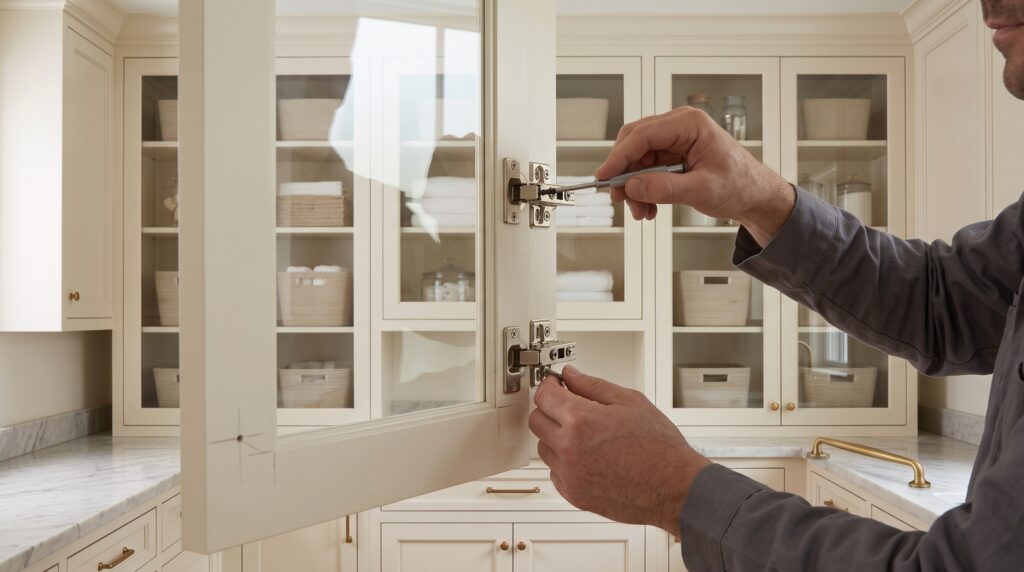
12. Install Glass-Front Cabinet Doors
Frosted or clear glass doors give upper cabinets a lighter, more refined look, similar to what you’d see in a high-end kitchen. They also encourage a bit of discipline about what’s stored where, since the contents are partially on display.
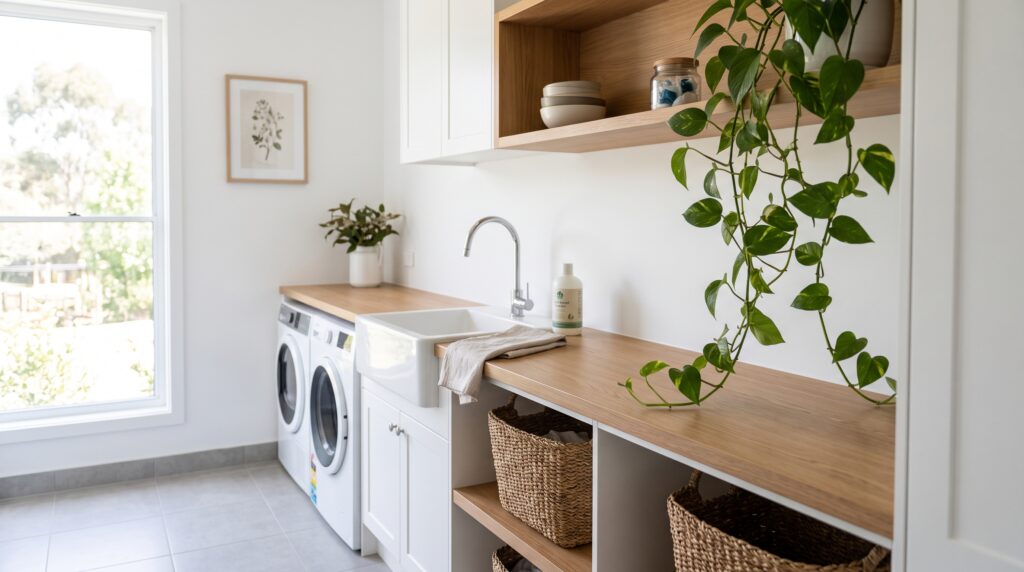
13. Introduce Low-Maintenance Plants
A small trailing plant or a potted fern on an open shelf softens all the hard edges of a laundry room and adds a bit of life to a space that’s easy to neglect. Stick to varieties that tolerate low light and occasional humidity swings.
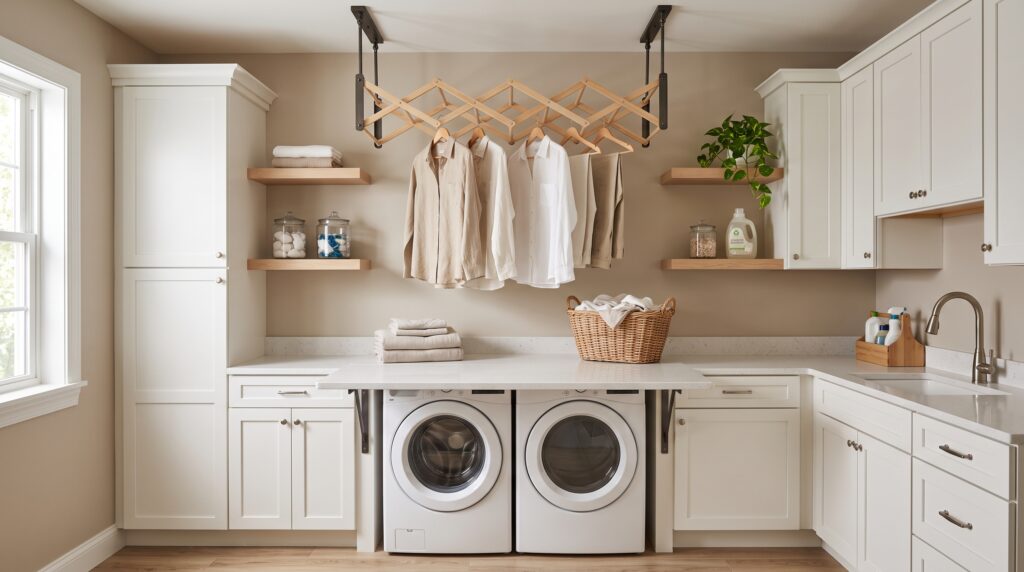
14. Add a Built-In Drying Rack
Wall-mounted or ceiling-mounted drying racks solve the problem of air-drying delicates without sacrificing floor space. Wood and matte metal versions both integrate well into a finished design rather than looking like an add-on.
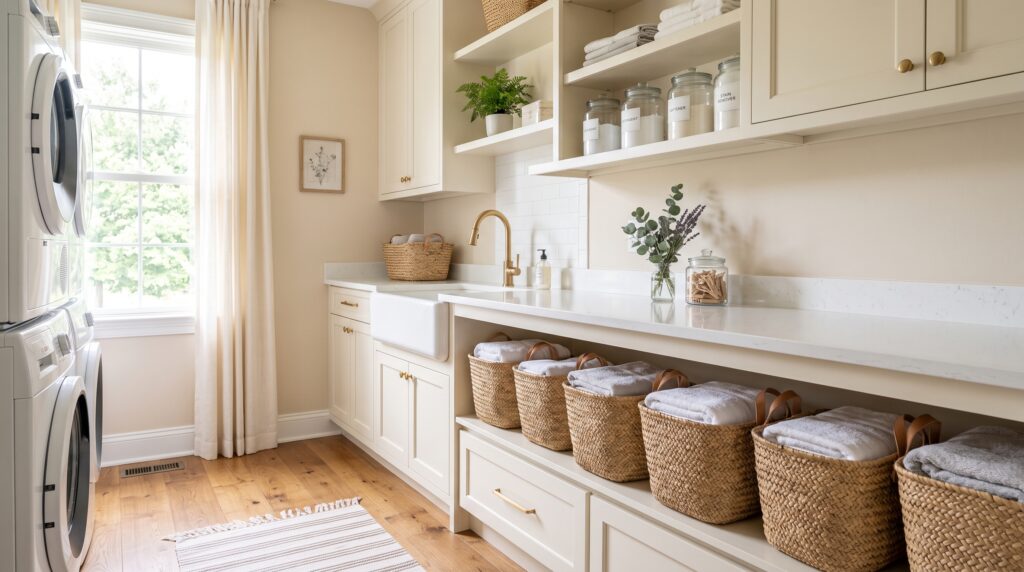
15. Coordinate Your Storage Baskets
Mismatched bins are one of the fastest ways to make a laundry room feel disorganized. Choosing a consistent material and color for your baskets — even if they hold completely different items — creates a boutique-style cohesion that reads as elegant at a glance.
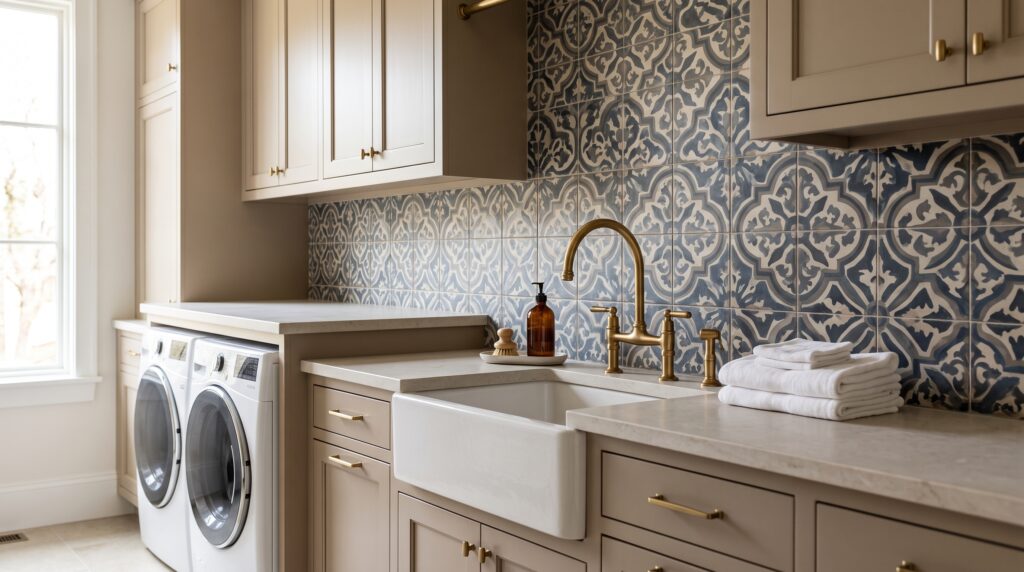
16. Make the Backsplash a Feature
Beyond simple subway tile, consider a patterned cement tile, a stone slab, or a bold color as a backsplash behind your appliances or sink. It’s a small footprint with an outsized visual impact.
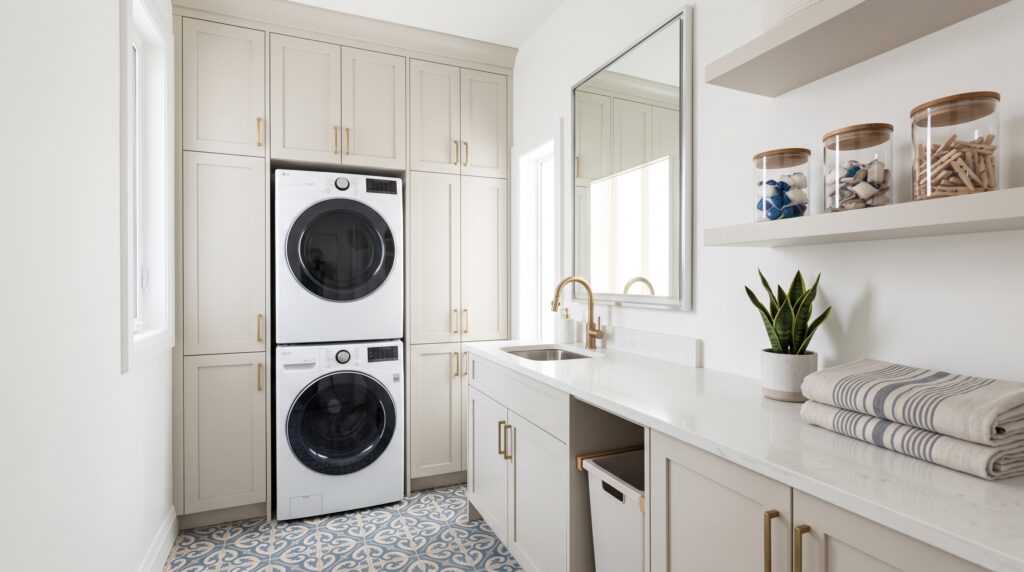
17. Maximize a Small Footprint With Smart Details
Compact laundry rooms benefit from vertical storage, mirrors to bounce light around, and glass or light-toned cabinet fronts that keep the room from feeling boxed in. Elegance in a small space is mostly about restraint — fewer, better-chosen elements rather than more of everything.
18. Add Brass or Warm Metal Hardware
Cabinet pulls, faucets, and light fixtures in brass or aged brass tones add a subtle warmth that reads as upscale, especially against marble or dark cabinetry. It’s one of the least expensive upgrades with one of the biggest visual returns.
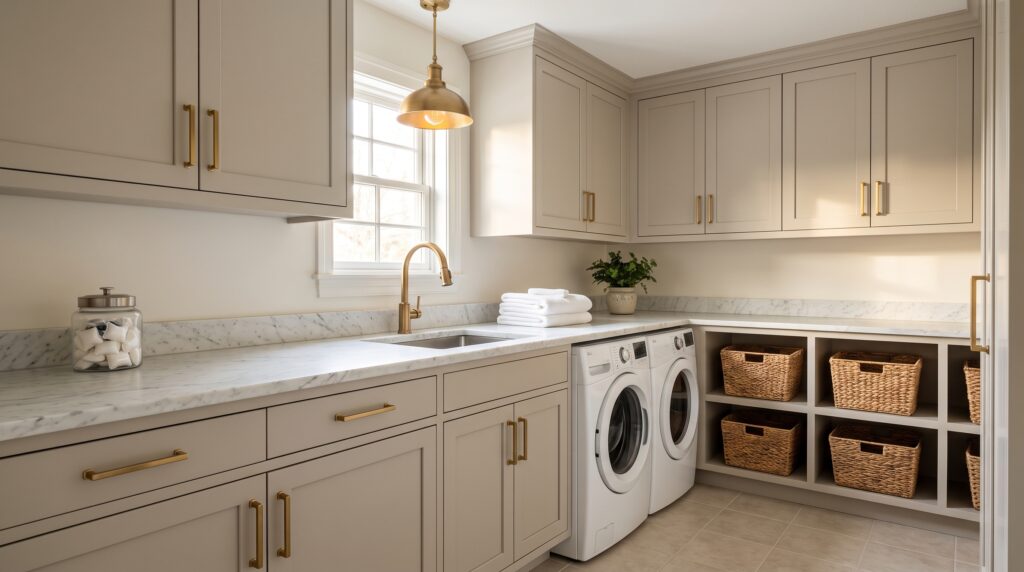
19. Design With a Scandinavian Sensibility
White cabinetry, light wood accents, minimal decor, and efficient storage define this approach. It’s an easy style to maintain because it naturally discourages clutter, which keeps the “elegant” feeling intact day to day rather than only right after a deep clean.
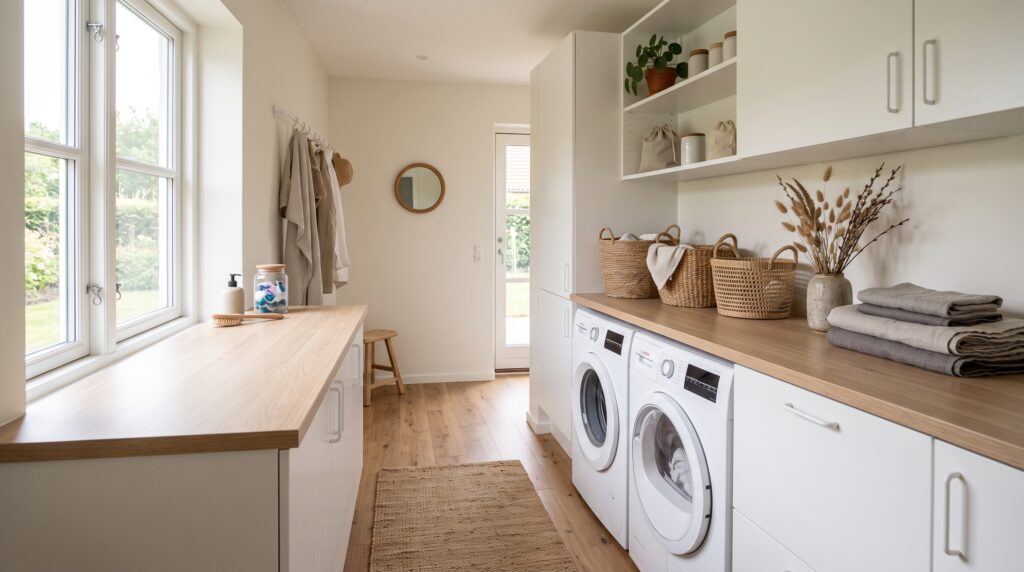
20. Carve Out a Small Seating Spot
If space allows, a narrow bench near the folding counter gives you somewhere to sit while sorting socks or tying shoes before heading out the door. Add a cushion and a basket underneath and it doubles as extra storage.
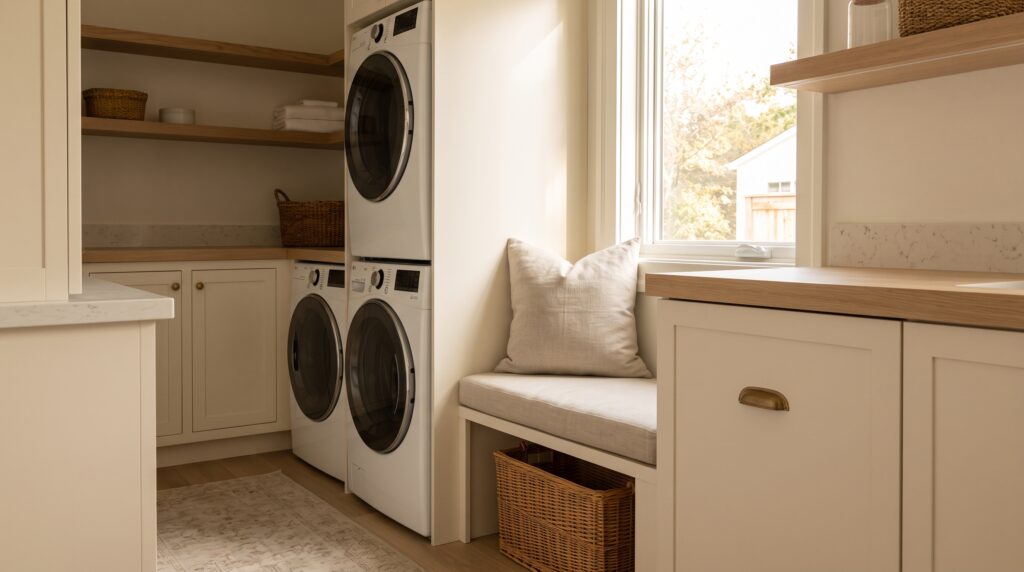
21. Use Floor-to-Ceiling Storage
Tall cabinetry that runs to the ceiling makes use of vertical space that’s often wasted, giving you room for bulk supplies, linens, or seasonal items without crowding the counters. It also gives the room a more finished, built-in appearance rather than looking like separate pieces of furniture.
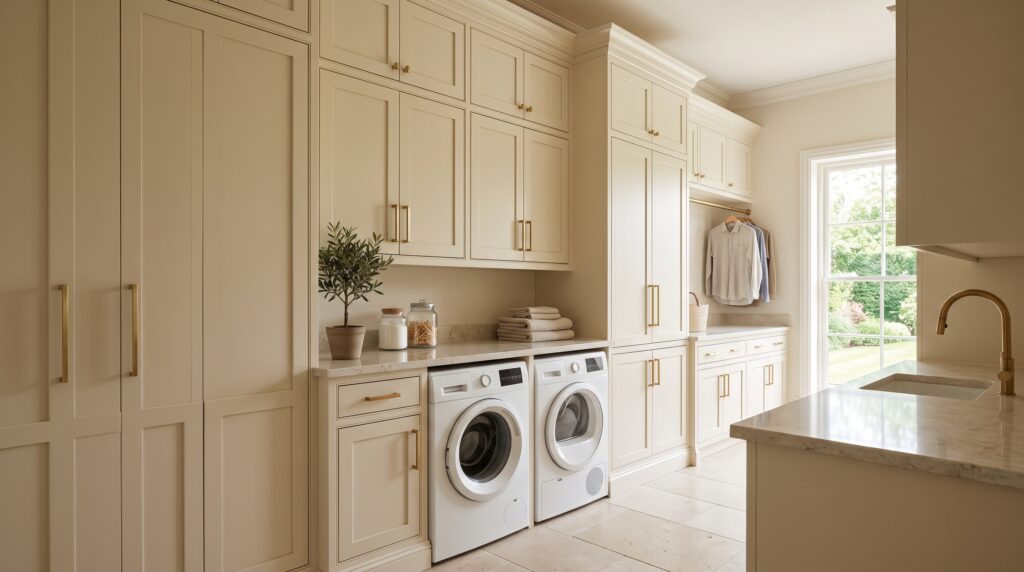
22. Go for a Spa-Inspired Atmosphere
Soft lighting, natural textures, a diffused scent, and calm colors can turn even a small utility room into a space that feels restorative rather than purely functional. Stone surfaces, wood accents, and a few plants go a long way toward this effect. Even something as simple as a small diffuser on a shelf or a scented drawer liner can carry that spa feeling through to how the room smells, not just how it looks.
Frequently Asked Questions
What makes a laundry room feel “elegant” rather than just functional? It usually comes down to consistency and restraint: a coordinated color palette, matching storage, and a couple of intentional design details — like a light fixture or a tile backsplash — rather than a room that’s purely built around appliances. Function and style aren’t opposites here; the most elegant laundry rooms are also the most efficient to use.
Do I need a large room to create an elegant laundry room? No. Some of the most striking laundry room designs are in small closets or narrow hallway nooks. Vertical storage, glass-front cabinets, mirrors, and a tightly edited color palette can make even a compact space feel considered and complete.
What’s the most cost-effective upgrade for an outdated laundry room? A fresh coat of paint, new cabinet hardware, and a set of matching storage baskets deliver a disproportionate amount of visual impact for a relatively small investment. Lighting is a close second — swapping a builder-grade fixture for something more intentional changes the entire mood of the room.
Should I match my laundry room design to the rest of my home? It helps to at least loosely coordinate — pulling in a color, material, or hardware finish used elsewhere in the house keeps the laundry room from feeling disconnected. That said, laundry rooms are also a low-stakes place to experiment with a bolder wallpaper or tile than you might choose for a more public-facing room.
Final Thoughts
An elegant laundry room comes down to two things working together: genuinely useful organization and design choices that feel considered rather than incidental. You don’t need a full renovation to get there — a new light fixture, coordinated baskets, and a fresh coat of paint can shift the whole feel of the room. For more inspiration on blending style with everyday function in this part of the home, Homes & Gardens has an excellent roundup of laundry room designs worth browsing.
Save the ideas that fit your space, start with one or two upgrades, and build from there — an elegant laundry room is very much a project you can tackle in stages. Whether it’s swapping out a light fixture this weekend or planning a full cabinet overhaul for later in the year, every small change moves the room closer to feeling like an intentional part of your home rather than an afterthought behind a closed door.