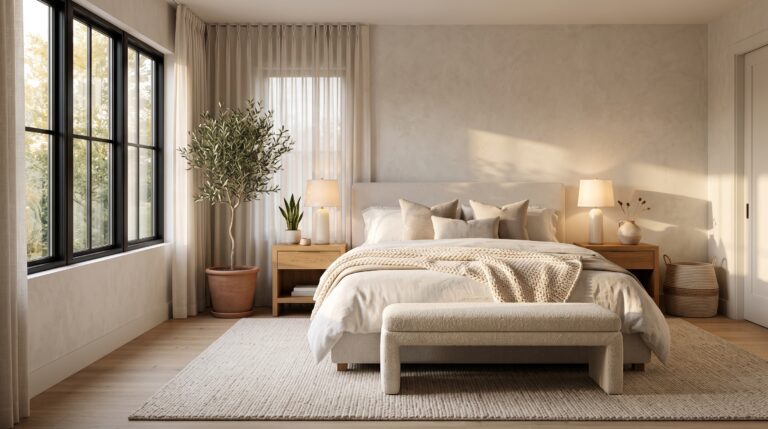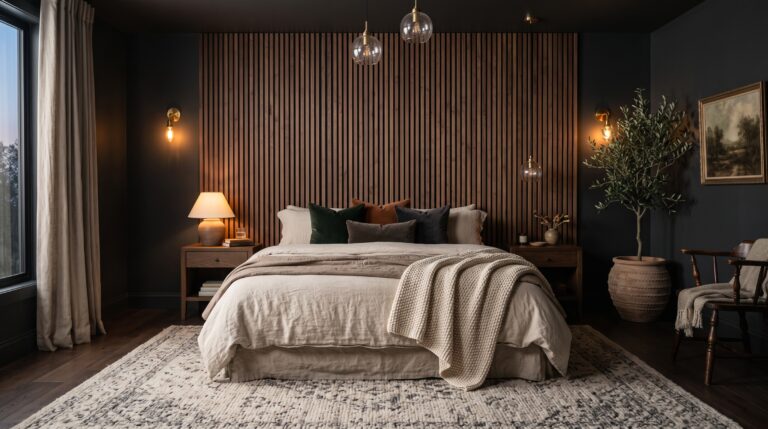
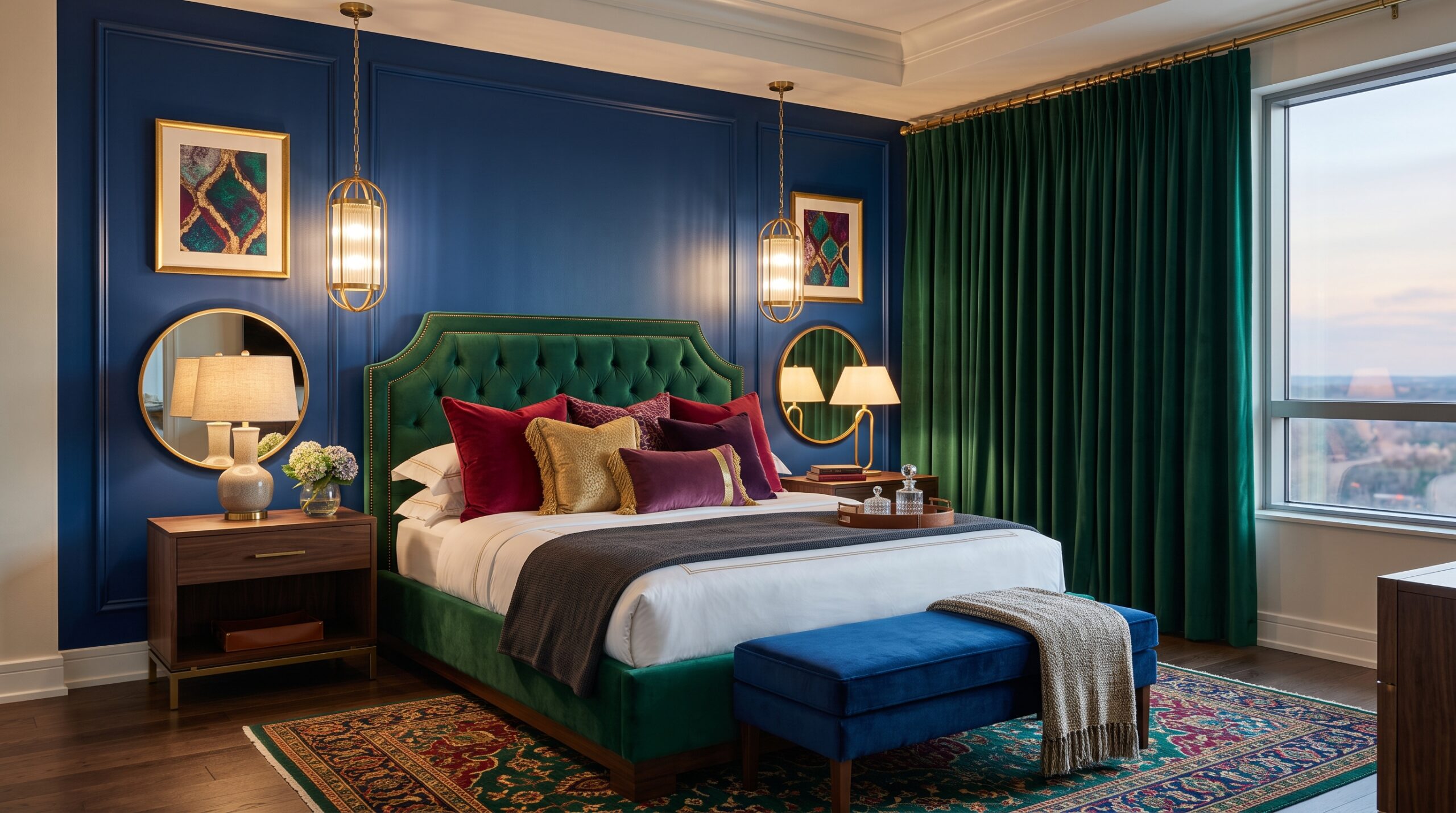
There’s a reason 22 jewel tone bedroom ideas for a dramatic glow keep showing up in the bedrooms that stop you mid-scroll. Emerald, sapphire, plum, ruby, and amber all share a quality that pastels and neutrals simply can’t fake: depth. These are colors with weight and shine to them, the kind you’d expect to find set into a ring rather than painted on drywall, and that’s exactly what makes a jewel tone bedroom feel intentional instead of accidental.
Below you’ll find 22 ways to bring this palette into a bedroom, starting with how to actually plan your colors before anything gets committed to a wall.
What Counts as a Jewel Tone Bedroom?
A jewel tone bedroom leans on deep, saturated shades named after actual gemstones, think emerald green, sapphire blue, amethyst purple, ruby red, and topaz gold. What separates these from a standard bold-color room is saturation and pairing. Jewel tones are almost always styled alongside warm metals like brass or gold, plush textures like velvet or mohair, and just enough contrast to keep the room from feeling flat. Done well, the effect reads as collected and personal rather than themed.
1. Build a Moodboard Before You Buy Anything
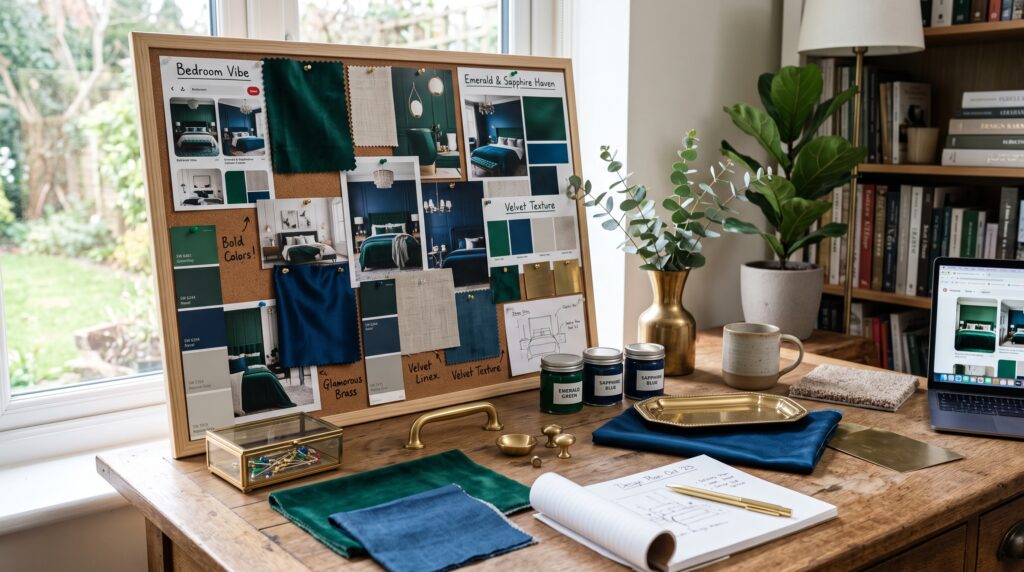
Before a single paint chip or duvet cover gets ordered, pull your shortlist of jewel tones, fabric samples, and metal finishes into one place, a corkboard, a Pinterest board, whatever you’ll actually look at twice. Because these colors carry so much intensity, seeing them side by side early on catches clashes that are much harder to spot once they’re already on your walls. Toss in a small object with real texture, a stone coaster, a brass dish, so you’re not just judging flat color swatches.
2. Narrow Down to One Dominant Color

The single most common misstep with this style is trying to use four saturated colors at full volume in one room. Pick one jewel tone to anchor the space, usually through the walls or the bedding, then bring in one or two supporting tones through pillows, art, or a rug. Cooler pairs like sapphire and emerald tend to sit together naturally, and so do warmer pairs like ruby and amber. Mixing across temperature can work, but it’s safer in small doses than as an even split.
3. Emerald With Natural Textures for an Earthy Feel
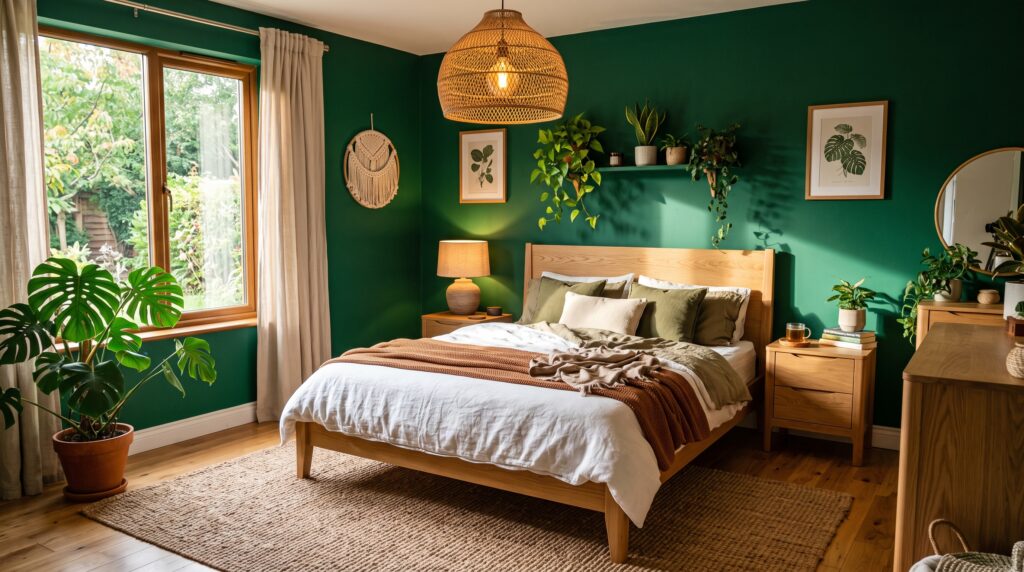
Emerald walls next to mossy green bedding, rattan furniture, and untreated wood create a room that leans calm rather than theatrical. A few trailing plants and a chunky knit throw push the look toward boho without losing the richness of the color underneath. This is a good entry point if you like the idea of jewel tones but want the room to still feel like a place to unwind.
4. Sapphire Blue for a Cooler, More Composed Mood
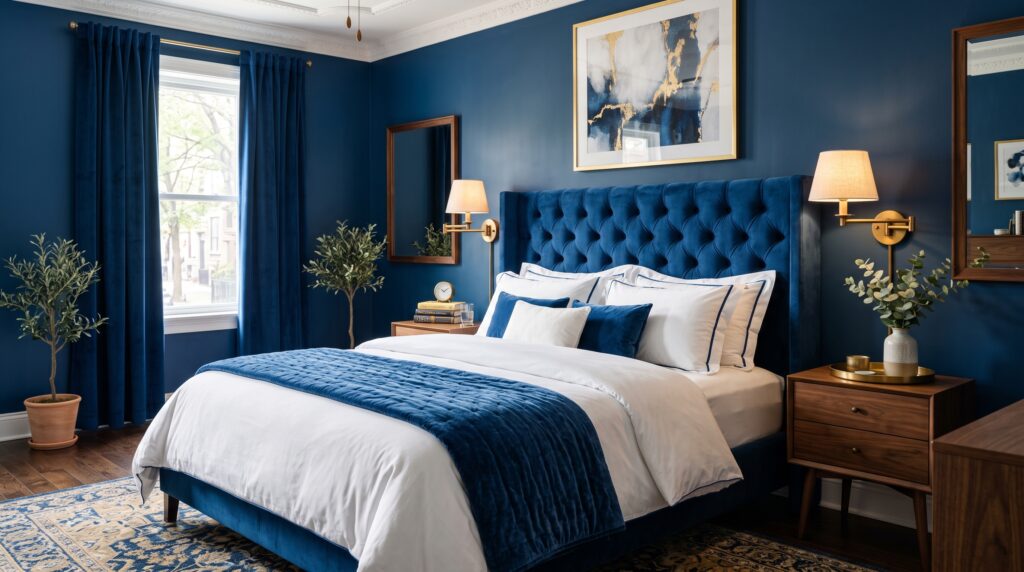
Sapphire has a steadier energy than emerald or ruby, which makes it one of the more livable choices for a primary bedroom. Use it as your main wall color or your bedding color, then bring in warm wood furniture and brass lighting so the room doesn’t tip into feeling cold. Sapphire also happens to hold its color well under both daylight and lamp light, which is more than you can say for a lot of deep blues.
5. Plum and Royal Blue Layered Together
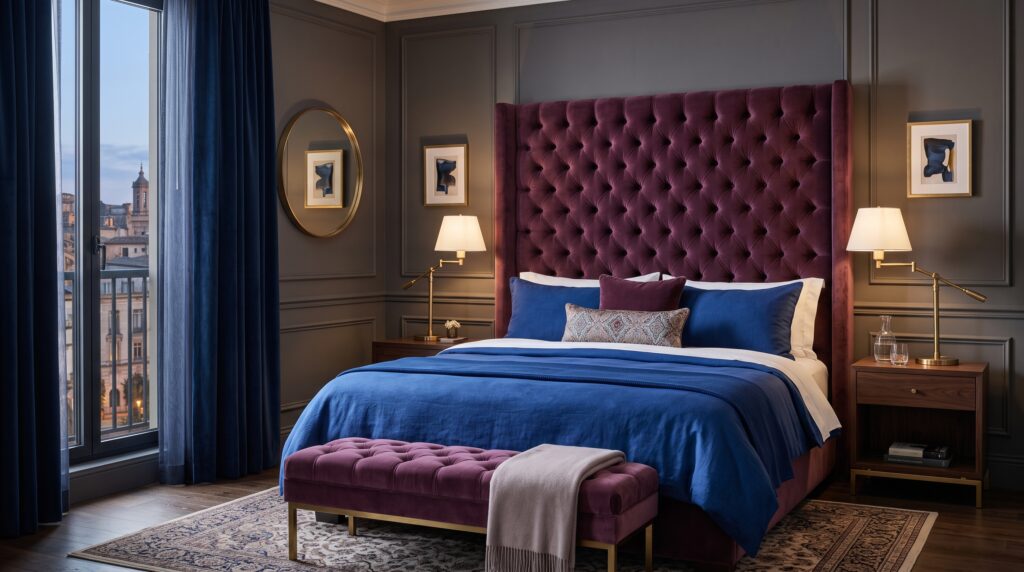
A tall, tufted headboard in plum paired with royal blue bedding and a couple of metallic accents delivers a hotel-suite feeling without much effort. Keep evening lighting warm and low so the richness in both colors actually comes through. A velvet bench at the foot of the bed or a stack of plush pillows finishes the layered look.
6. Ruby Red, Used Sparingly
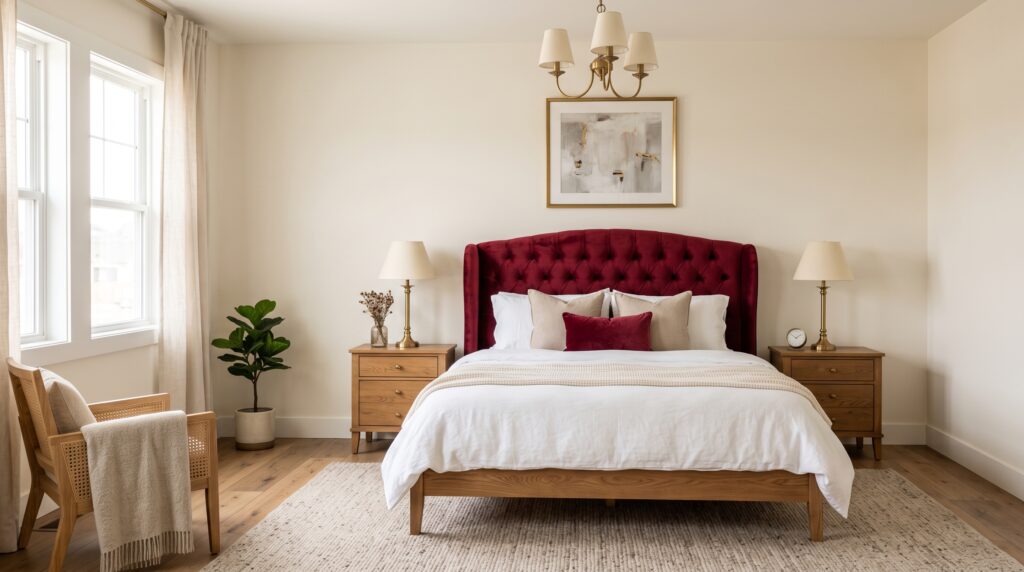
Ruby reads closer to a deep wine than anything close to fire-engine red, and it’s the warmest, most romantic tone on this list. It works best in moderation, through a velvet headboard or a pair of floor-length curtains rather than across every wall. Pair it with brass hardware and warm wood, and the room feels rich instead of overwhelming.
7. Teal Walls With a Vintage Brass Bed

Teal against a classic brass bed frame has a timeless quality that’s hard to overdo. Add chenille throws, a sheepskin rug, and some black-and-white or botanical artwork for an old-world feel that doesn’t require any single bold statement piece. A hanging plant or two keeps the deeper wall color from feeling heavy.
8. Burgundy and Rust for Cozy Warmth
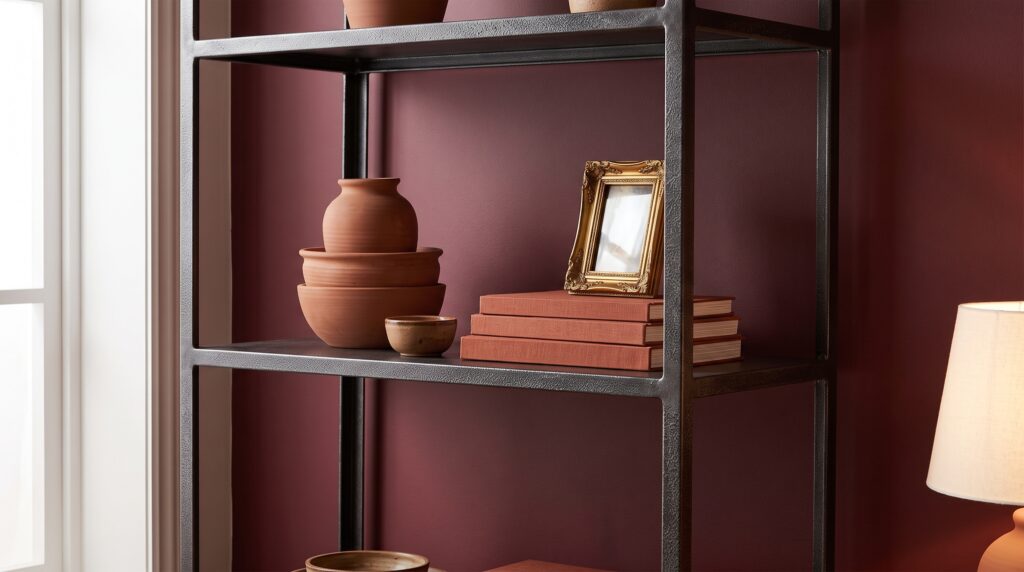
Burgundy walls with rust or terracotta bedding create a room that feels like sinking into a well-worn sweater. A gold-framed arched mirror adds shine without competing with the warm palette, and this is a combination that genuinely depends on warm lighting; cool white bulbs will fight it every time.
9. Amber and Topaz for a Golden Glow
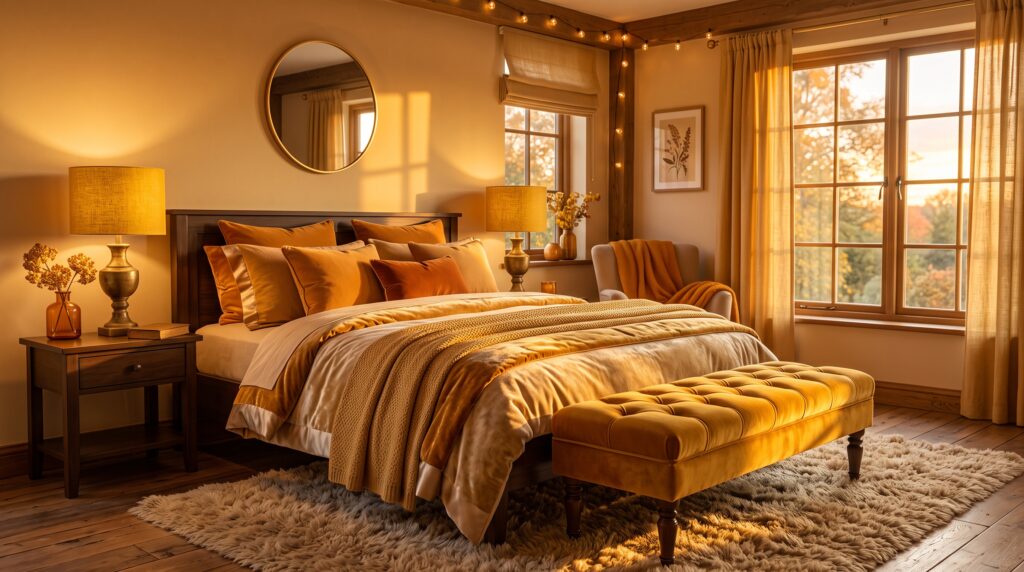
Amber and topaz are underused compared to the deeper blues and greens, but they bring a honeyed warmth that pairs naturally with wood and brass. Bring them in through bedding, a velvet bench, or a statement lampshade. Rooms that catch golden-hour light are especially suited to this pairing, since the tones seem to glow right along with the sunset.
10. Full Glamour With Emerald and Gold
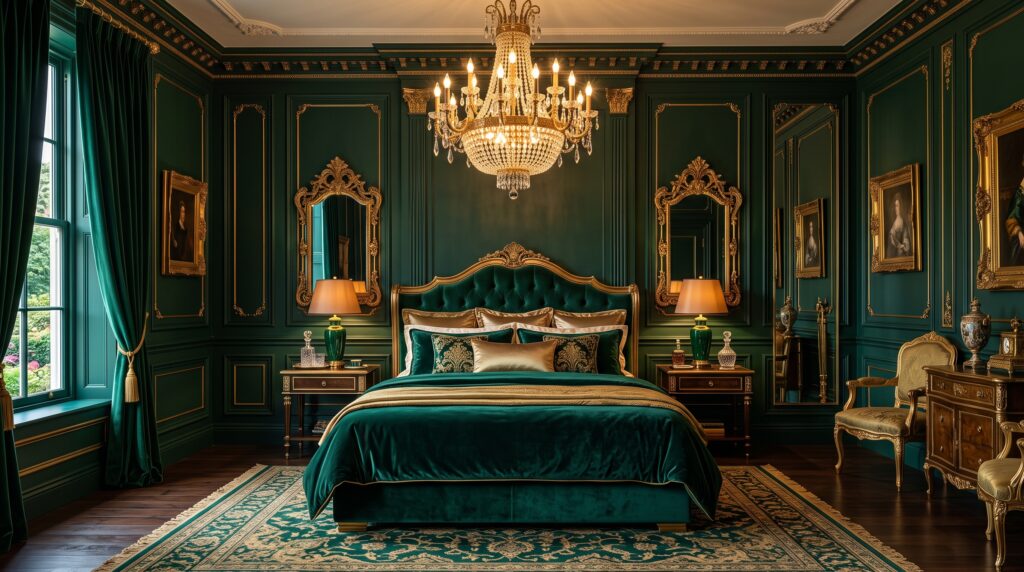
For maximum drama, pair emerald paneled walls with a tall velvet bed frame and generous gold accents across mirrors, trays, and lamp bases. A statement chandelier pushes the look further, and this is one of the few directions on this list where holding back on the metallics actually works against you. Go all in or skip it.
11. An Eclectic, Art-Filled Jewel Box
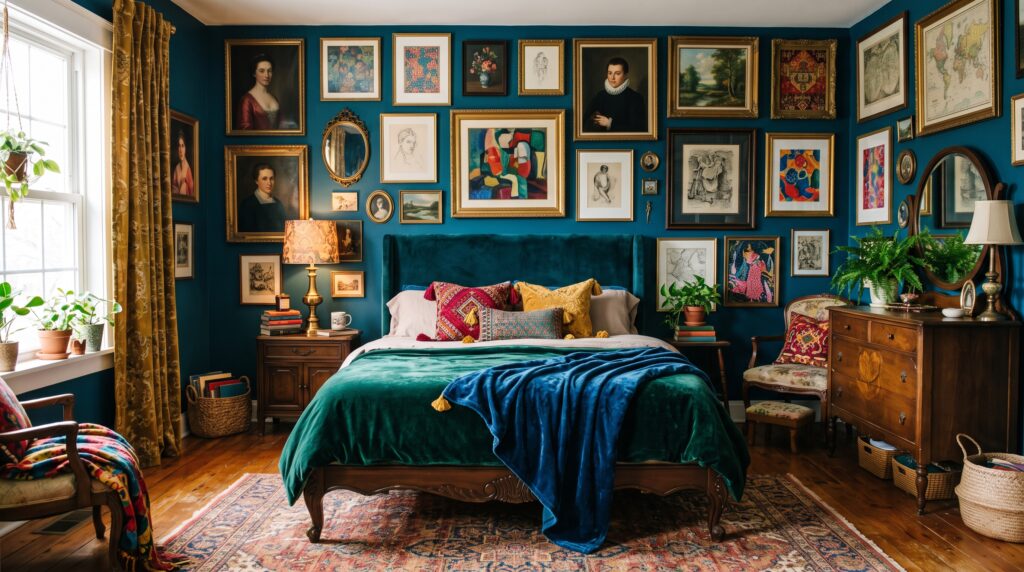
Mixing several jewel tones through quirky textiles, a packed gallery wall, and mismatched upholstered seating creates a room that looks gathered over years rather than bought in one weekend. This suits anyone who genuinely loves color and pattern and doesn’t want to settle on a single dominant tone.
12. Purple and Magenta for a Playful Edge
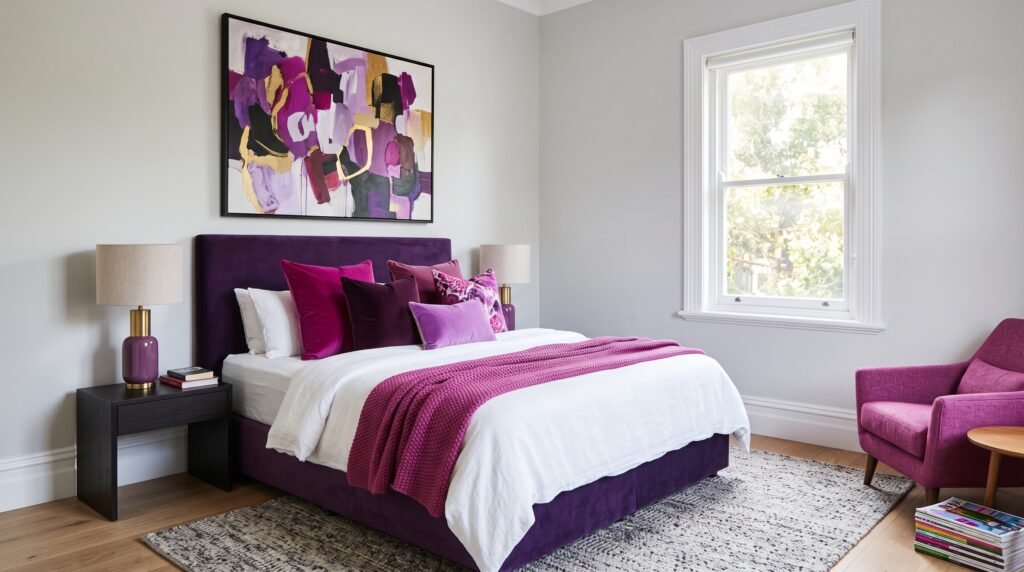
This is one of the bolder pairings on the list, and it holds together best with graphic art, plenty of natural light, and crisp white trim to give the eye somewhere to rest. Stick to one or two main tones and repeat them across art, bedding, and small accents so the room reads as intentional rather than scattered.
13. Dark Floral Wallpaper for Romantic Depth
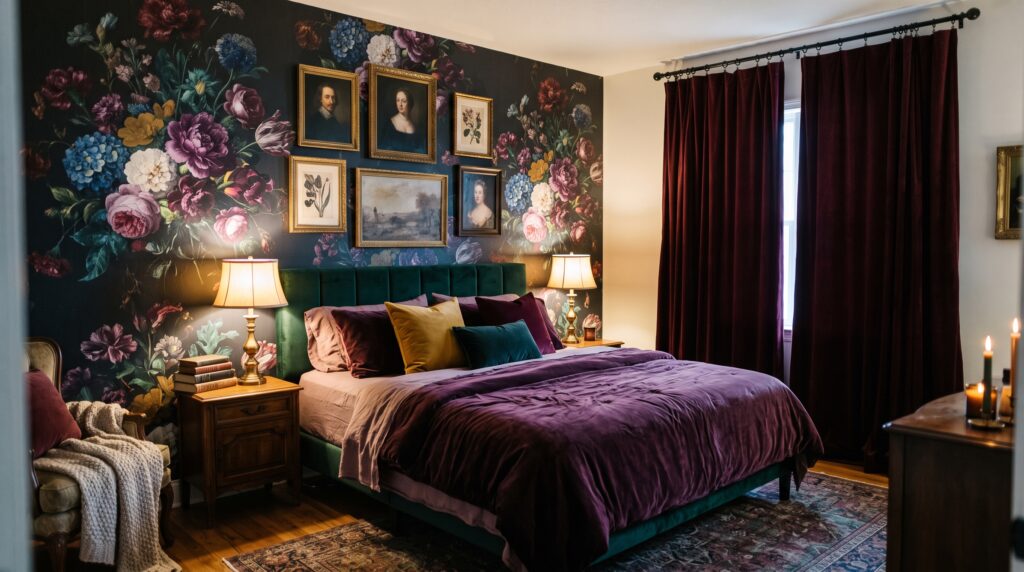
A dark floral wallpaper in jewel tones brings a moody, botanical feel indoors. Pair it with vintage-style art and warm, low lighting so the pattern has a chance to shine in the evening. Heavy curtains or a velvet bench at the foot of the bed round out the cocooning effect this style depends on.
14. Keep the Walls White, Let the Accents Carry the Color
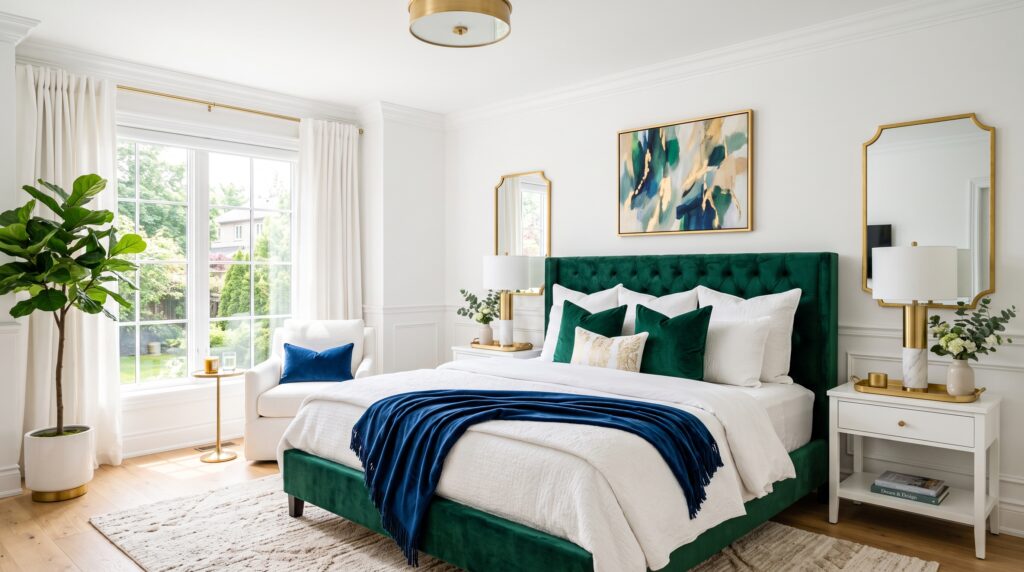
If you’re not ready to repaint, white walls with jewel-toned bedding, art, and furniture is the lowest-commitment version of this look. An emerald bed frame or a sapphire throw becomes the standout moment in the room, and white walls keep the space feeling bright at any hour. It also makes future changes easy, since only the accents need to shift.
15. Mix Your Metals Instead of Matching Them
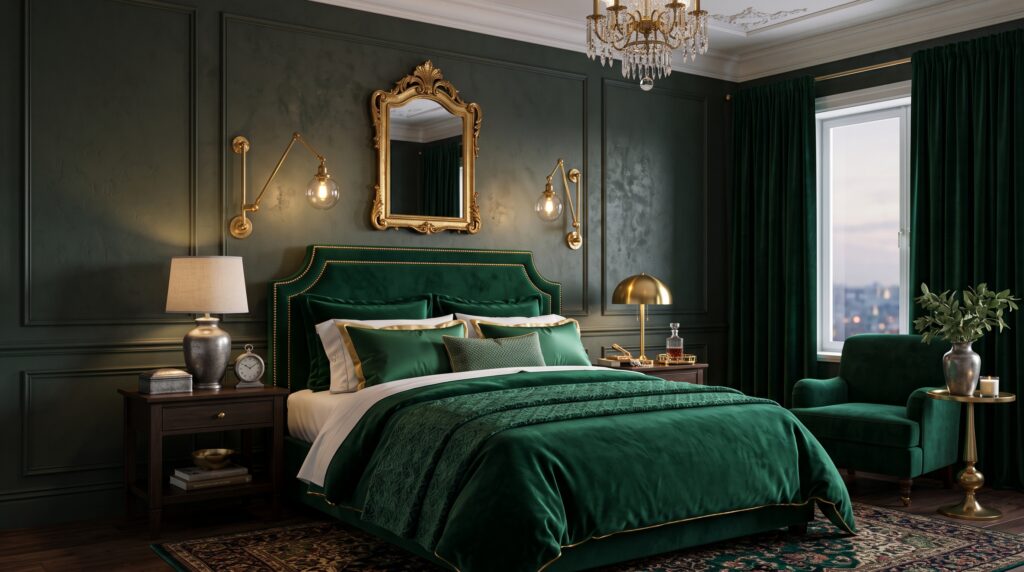
Don’t limit yourself to a single metal finish. Brass, gold, and even a touch of pewter or aged silver across lighting, hardware, and frames adds a layering effect that one metal alone can’t achieve. Jewel tones are rich enough to support this kind of mixing, as long as warm and cool metals stay in separate zones of the room rather than sitting side by side.
16. Paint the Ceiling, Not Just the Walls
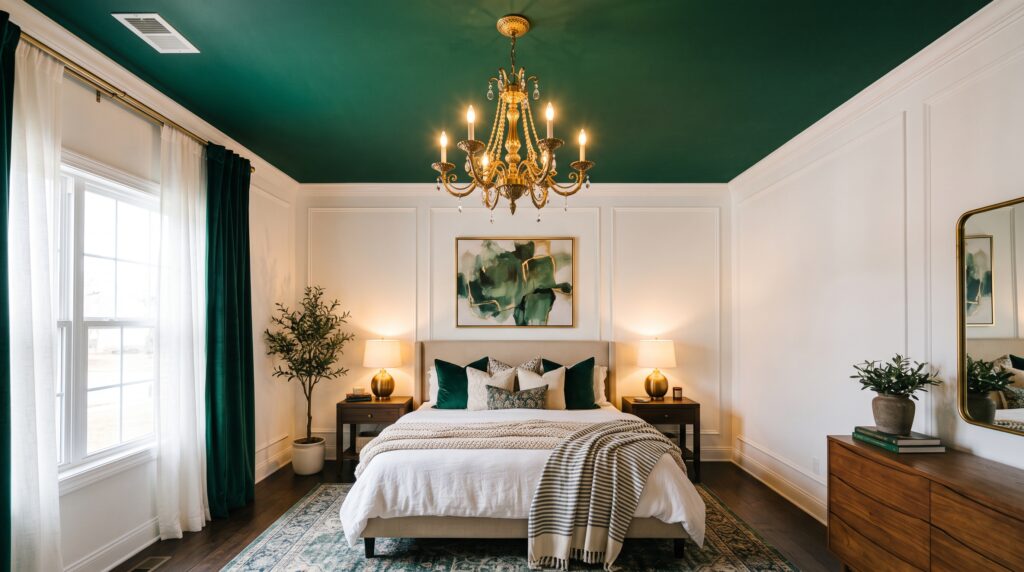
A sapphire, plum, or emerald ceiling creates an enveloping effect that wall color alone can’t match. This works especially well in rooms with crown molding or other architectural detail, and it pairs naturally with warm, layered lighting so the color glows rather than presses down on the room.
17. Floor-to-Ceiling Velvet Curtains as the Focal Point
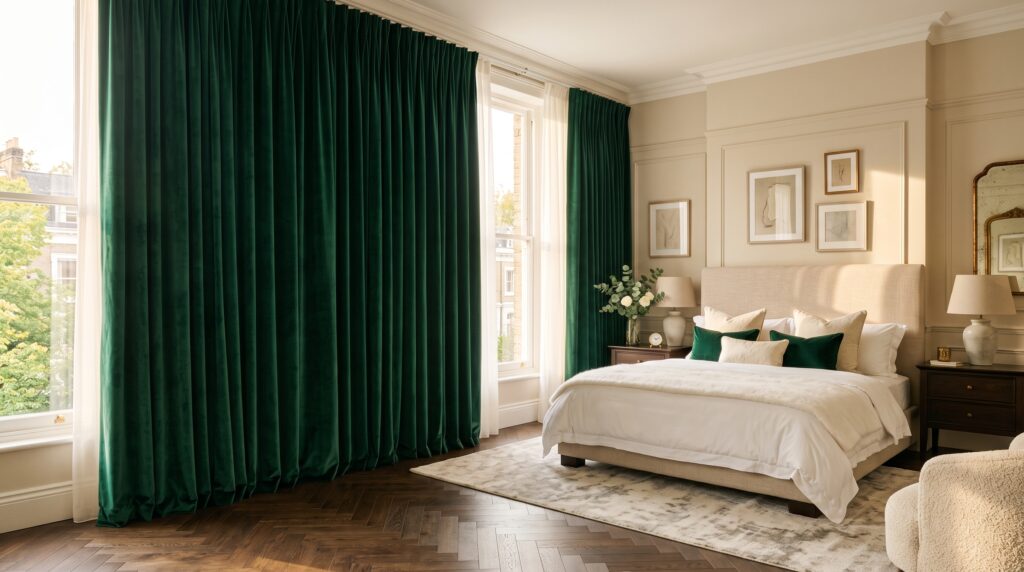
Velvet curtains in a single jewel tone, hung close to the ceiling, frame a window dramatically while also softening the room’s acoustics. This is also one of the easiest jewel-tone elements to undo later, which makes it a good starting point if you’re renting or just testing the waters.
18. Let a Rug Do the Heavy Lifting
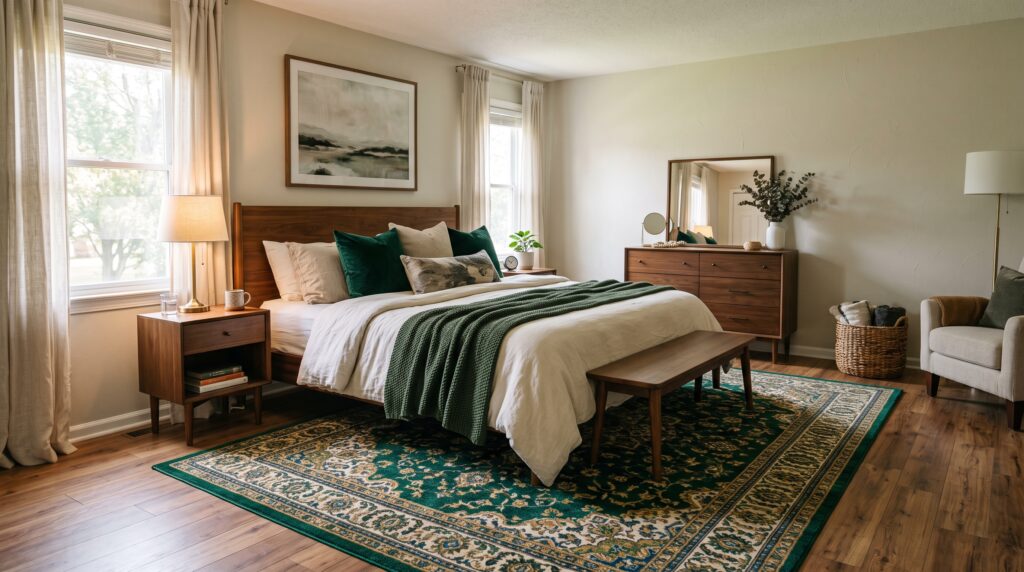
A rug is one of the lowest-risk ways to bring in a jewel tone, since it sits below eye level and works with nearly any wall color. Look for a pattern that blends your main tone with one or two supporting colors so it can tie the rest of the room together from the floor up.
19. One Statement Chair
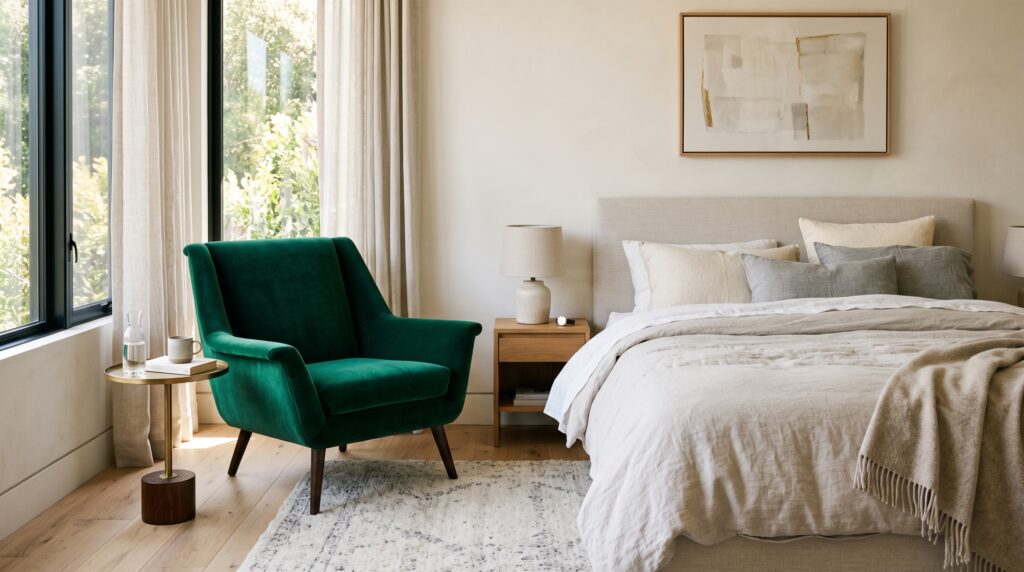
A single chair in emerald velvet, sapphire boucle, or ruby linen can carry an entire jewel-tone story in an otherwise neutral room. It’s also the easiest commitment to reverse later, since furniture is far simpler to relocate or reupholster than a wall.
20. Jewel Tones Against Black for Sharp Contrast
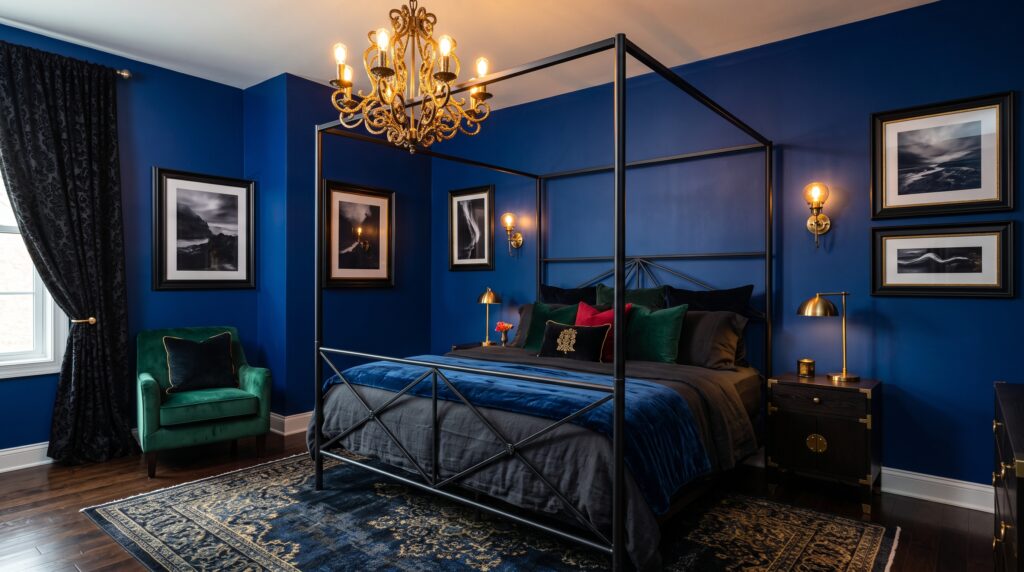
Pairing any jewel tone with black furniture or trim sharpens the color considerably. A black metal bed frame against sapphire walls, or black-framed art against ruby bedding, both read as polished rather than harsh. Just keep at least one warm light source in the room so the contrast doesn’t tip cold.
21. A Renter-Friendly Version of the Look
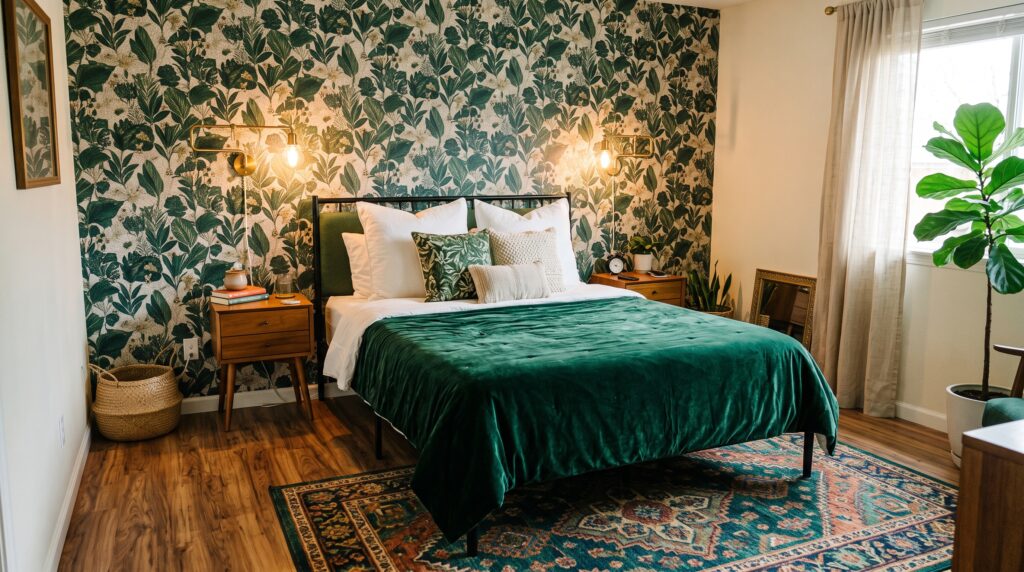
No paint required. A jewel-toned velvet bedspread, a peel-and-stick wallpaper panel, and plug-in brass sconces deliver the same richness without touching the walls at all. Add a patterned rug and a few ceramic accents, and everything can move with you when the lease is up.
22. Scaling the Look Down for a Small Room
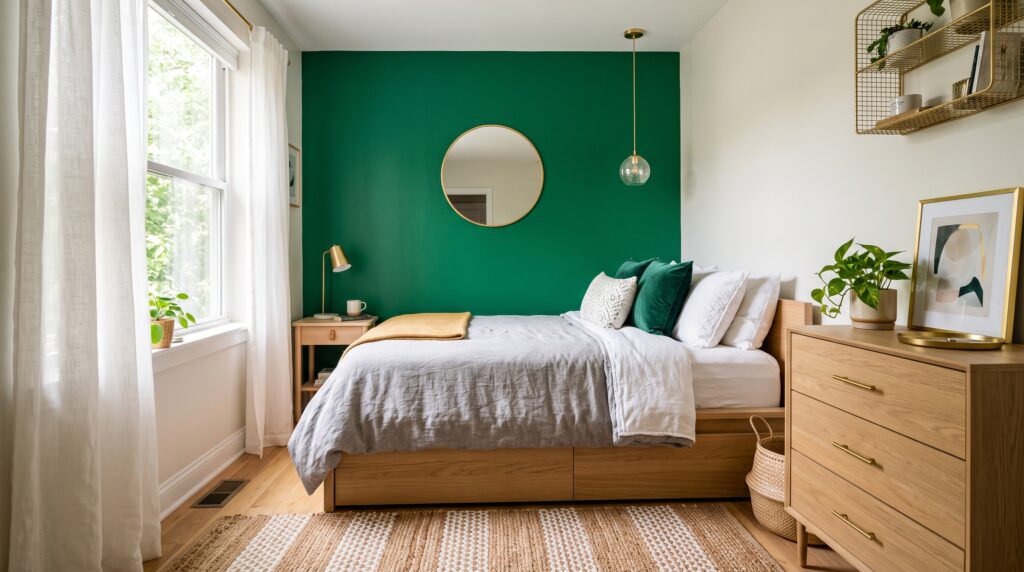
Limited square footage doesn’t rule this style out. Pick one dominant jewel tone for the bedding or a single accent wall, keep the rest of the furniture simple and light-colored, and let gold accents bounce light around the space. A jewel-toned ceiling or one statement curtain panel can deliver the same drama as a full repaint, just scaled down to fit.
Choosing Colors That Will Actually Hold Up Over Time
One thing worth thinking about before you commit to a jewel tone bedroom: how these deep, saturated colors read under your specific lighting. A sapphire that looks moody and rich in a north-facing room with warm bulbs can shift noticeably under cooler LED lighting or strong afternoon sun. It’s worth testing a swatch on the actual wall at different times of day, morning, midday, and evening, before ordering a full can of paint. Color authorities like Sherwin-Williams publish digital tools that let you preview how a shade shifts across different lighting conditions, which is a useful gut check before you buy.
Quick Answers Before You Start
Will a jewel tone bedroom feel too dark to sleep in? Not if you balance the saturated color with a lighter ceiling, ample warm lighting, and at least one reflective surface like a mirror or brass fixture to bounce light back into the room.
Do jewel tones work in small bedrooms? Yes, especially when the color is concentrated in one wall, the bedding, or a single piece of furniture rather than spread across every surface. A small room in a single confident color often reads as more deliberate than a small room in five timid ones.
What’s the easiest way to test a jewel tone before committing? Start with something removable, a throw pillow, a curtain panel, or a peel-and-stick wallpaper sample, and live with it for a couple of weeks before deciding whether to go bigger.
Final Thoughts
A jewel tone bedroom rewards a bit of planning far more than it rewards trying to do everything at once. Pick one or two colors that genuinely excite you, put together a moodboard first, and let the rest of the room support that choice instead of competing with it. Whether you go all in with emerald paneled walls or start small with a single ruby throw pillow, the goal is the same: a bedroom that feels rich, personal, and a little like stepping into a jewel box.