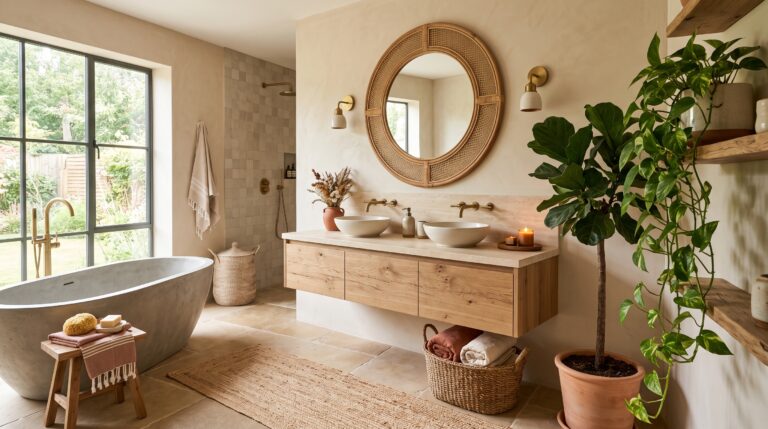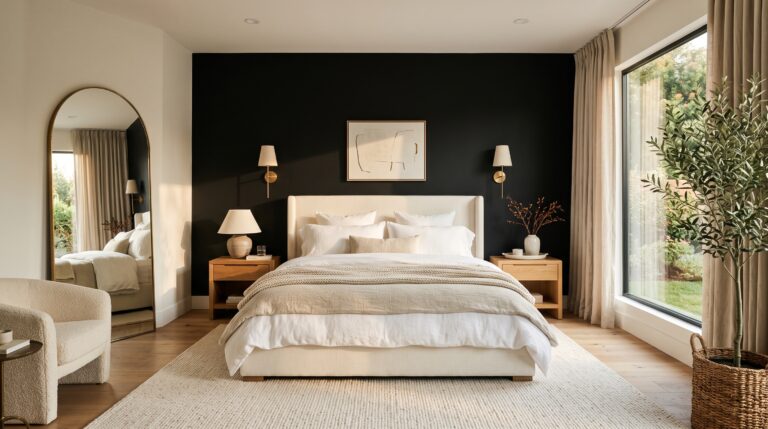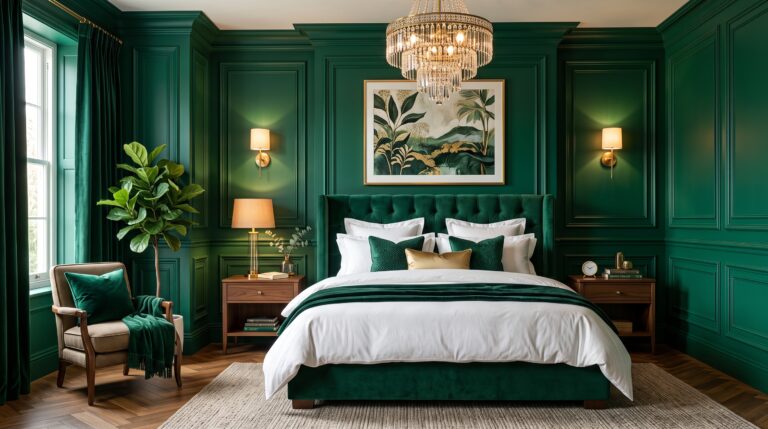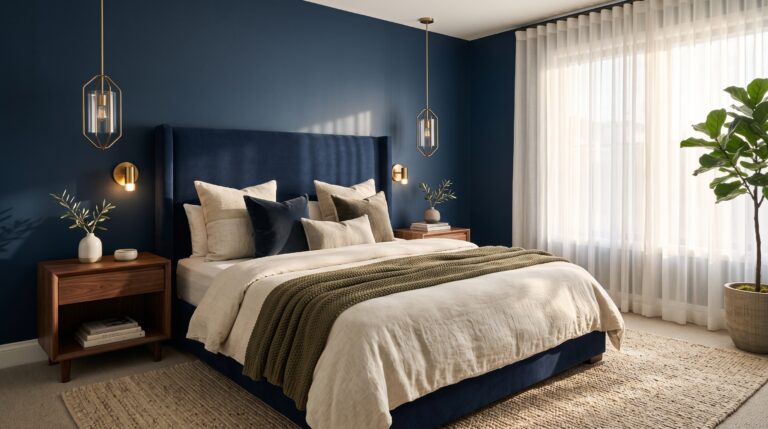
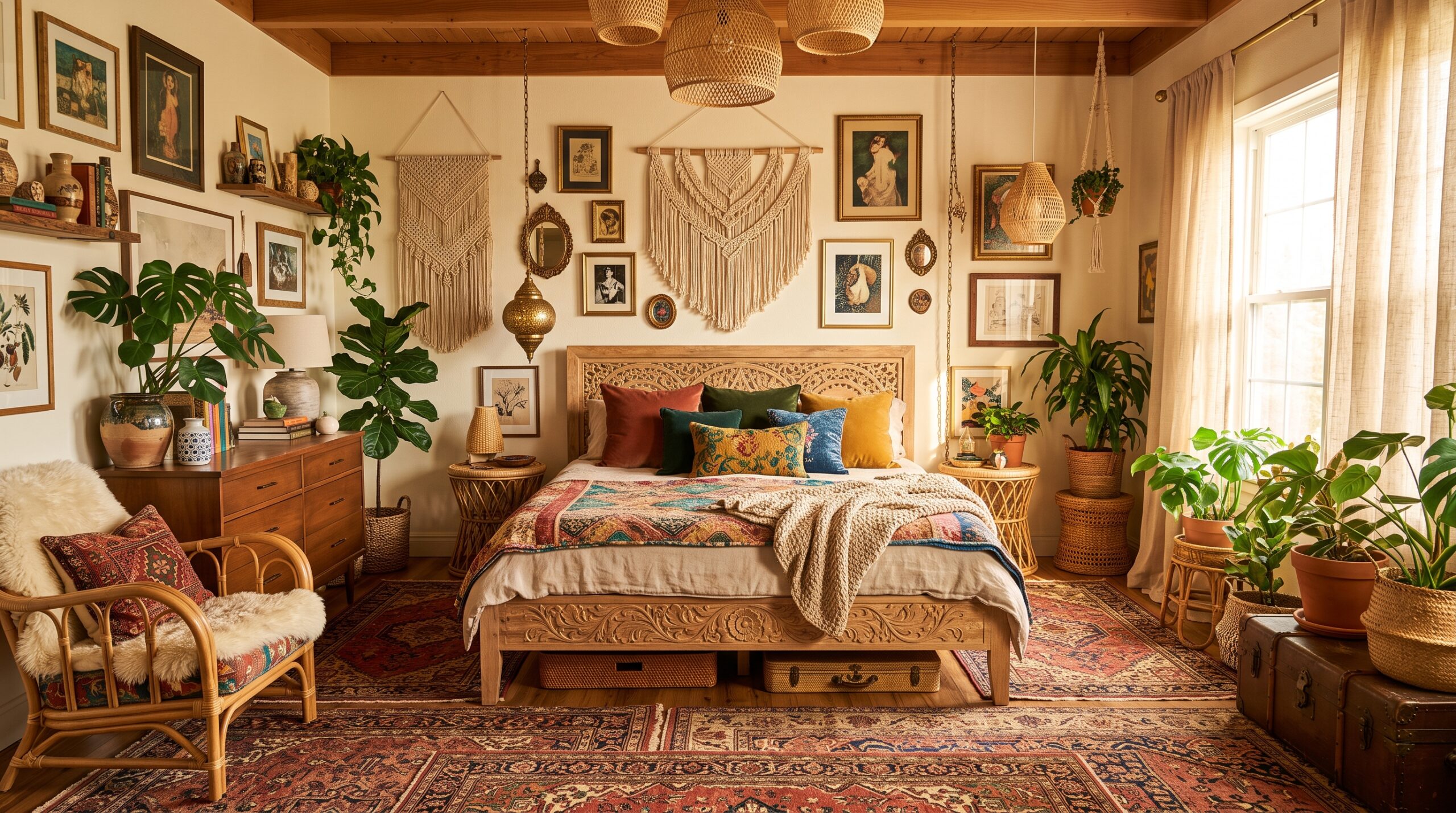
Some bedrooms whisper. This style shouts — happily. Boho maximalism is for anyone who can’t pick just one rug, one print, or one shade of green, and who thinks a room should look like it grew over years rather than arrived in a single delivery truck. Below you’ll find two dozen ways to bring that layered, lived-in warmth into your own space, whether you’re working with a sprawling primary suite or a 300-square-foot rental.
24 Boho Maximalist Bedroom Ideas Full of Charm
Before diving into the list, it helps to understand what actually separates this look from plain clutter. Bohemian style leans on natural materials, handmade textures, and a relaxed, well-traveled feel — a design tradition with roots stretching back to 19th-century artist communities, as Britannica explains in its overview of bohemianism. Maximalism, meanwhile, is about confident abundance: more color, more pattern, more personality, but always arranged with a point of view. Put the two together and you get rooms that feel curated rather than crowded. Here’s how to build one, piece by piece.
1. Stack Rugs Instead of Choosing One
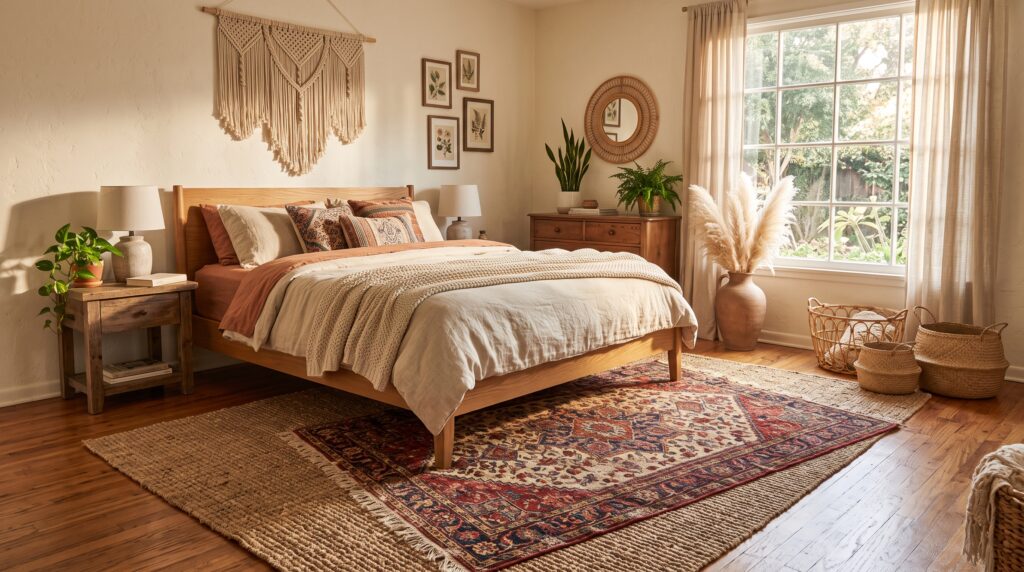
A single rug can only do so much. Lay down a wide, neutral jute or flatweave first, then set a smaller, more colorful vintage-look rug on top at a slight angle. The offset placement, rather than a perfectly centered stack, is what makes it read as collected rather than staged. Mixing a rough natural fiber with a softer wool piece adds depth your feet can actually feel.
2. Learn the Pattern-Scale Trick
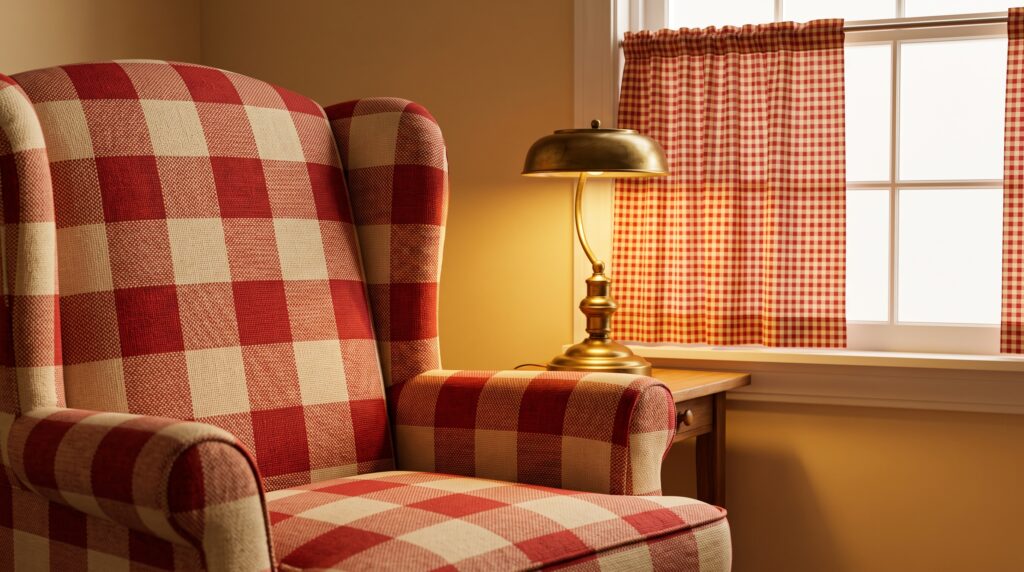
Mixing prints gets easy once you stop guessing and start scaling. Choose one large-scale pattern for your biggest surface (a duvet, say), a medium-scale geometric for a pillow or two, and a small, busy print for a throw or accent. Anchor all three in one shared color so your eye connects them instantly, even though none of them technically “match.”
3. Carve Out a Green Corner
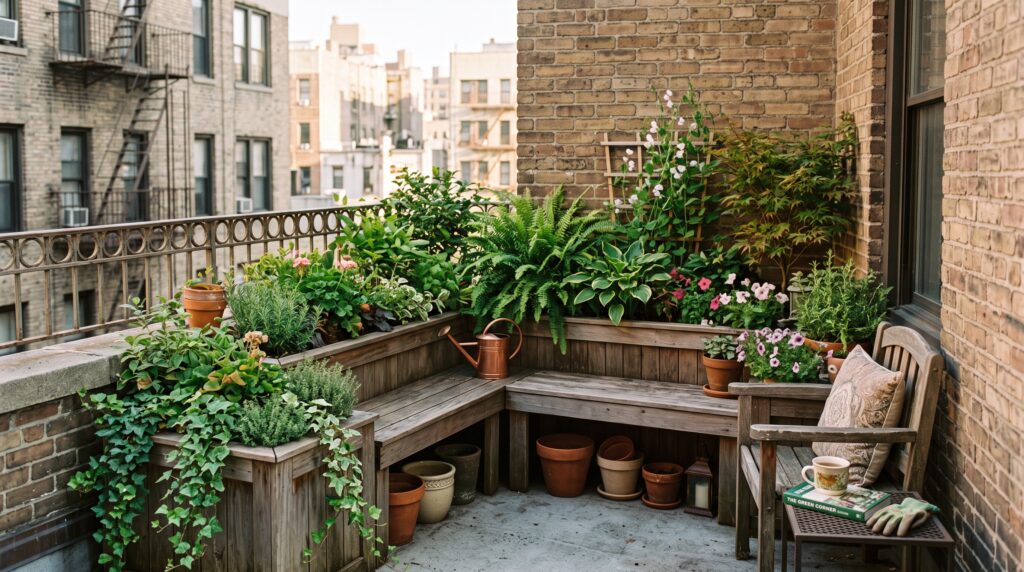
Instead of spreading plants thin across the whole room, commit one corner to a mini jungle. A tall floor plant, a trailing vine on a shelf, and a low, wide plant near the floor create natural height variation. Set a woven chair or a floor cushion underneath so the corner becomes somewhere you’d actually sit, not just a display.
4. Let One Glam Piece Shine

Boho doesn’t mean rustic-only. A single velvet accent chair or an aged-brass mirror gives the rougher textures around it something to play off. Brass picture lights over a favorite print add a soft glow without tipping the room into formal territory. The trick is restraint — one or two polished pieces read as intentional; five start competing with each other.
5. Chase a Permanent-Vacation Feel
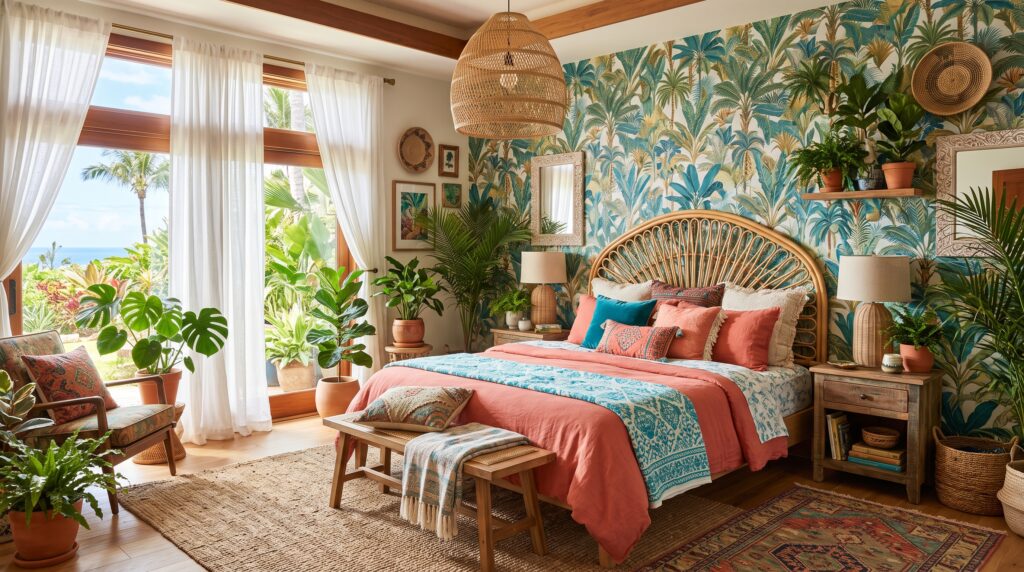
Leafy prints and saturated color can make a bedroom feel like it’s always mid-getaway. A botanical wallpaper, a woven or cane headboard, and bright accent shades like coral or turquoise all work toward the same mood. Swap heavy drapes for light cotton curtains so air and sunlight move through the way they would somewhere tropical.
6. Build an Unmatched Gallery Wall
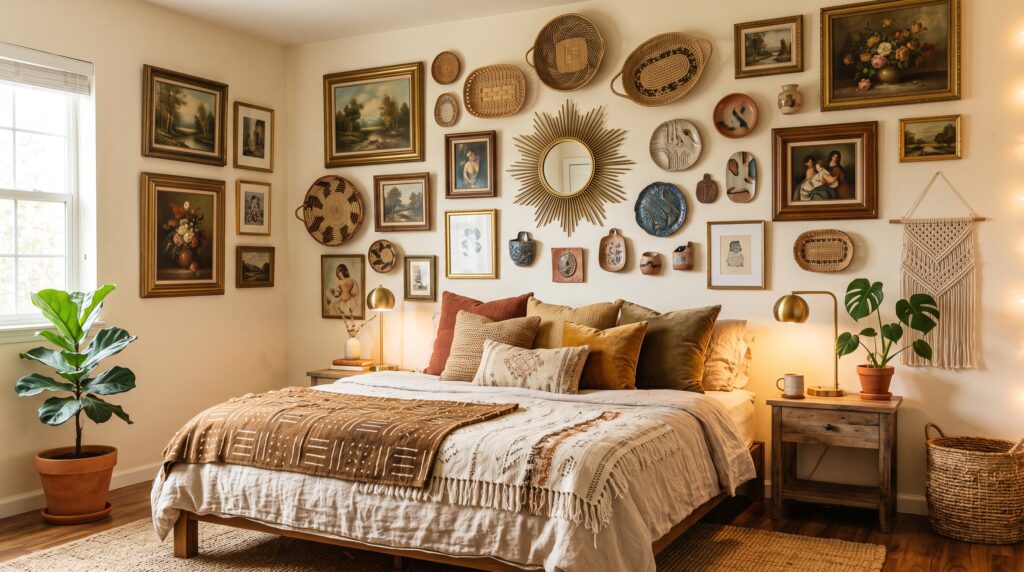
Forget uniform frames. Combine a flea-market painting, a sunburst mirror, a woven wall hanging, and one offbeat ceramic piece into a single cluster. Varying finishes — gold beside dark wood beside bare canvas — is what makes it feel gathered over time. Lay everything out on the floor first so you can shuffle the arrangement before committing to a single nail hole.
7. Frame the Bed With a Canopy
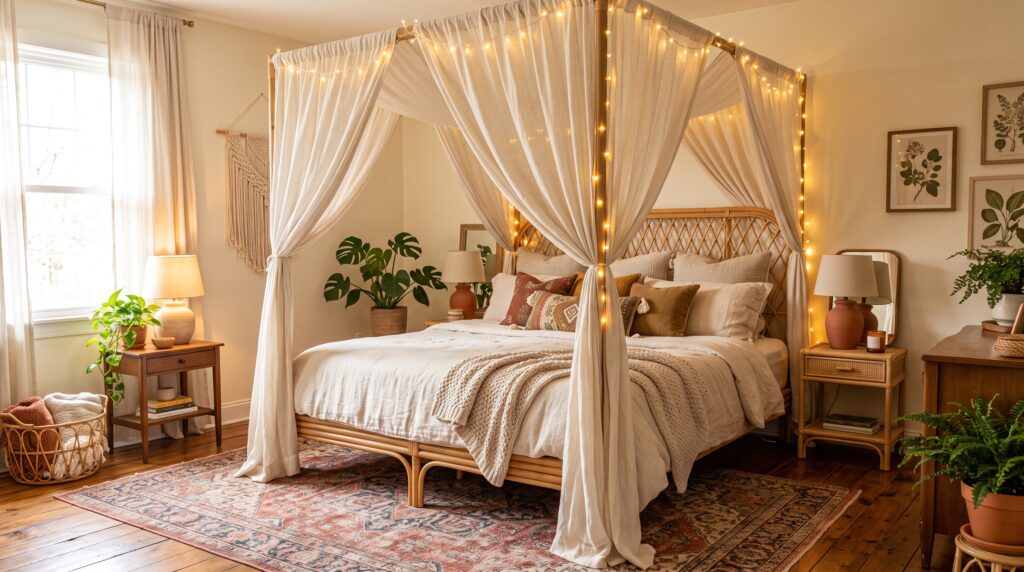
A rattan or wrought-iron canopy adds instant romance. Drape the fabric loosely instead of pulling it taut for a softer, more relaxed silhouette, and tuck a strand of warm string lights along the top rail. No frame? Ceiling hooks and a curtain rod can fake the same effect for a fraction of the price.
8. Try Dusty Rose Instead of Bright Pink
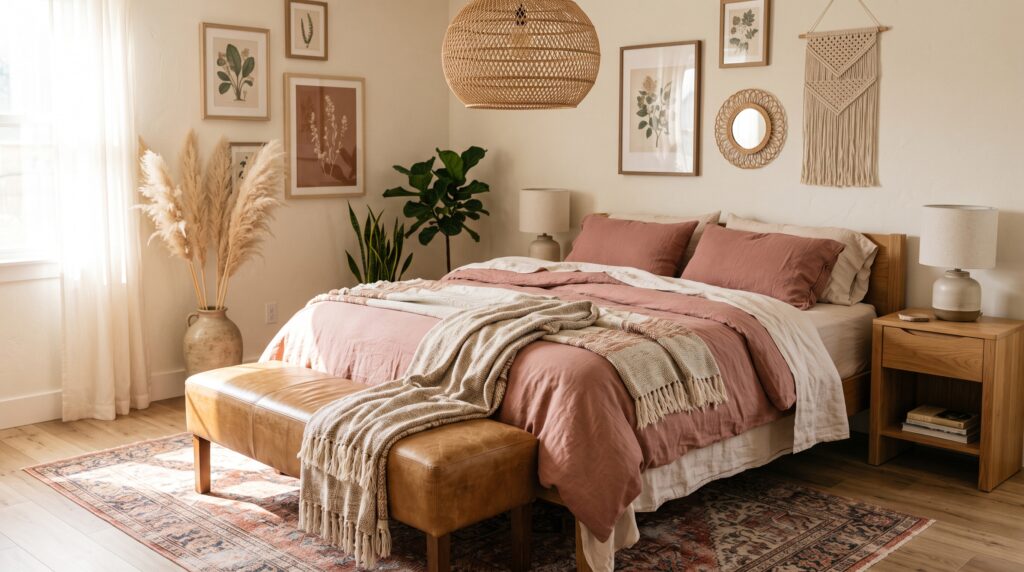
Muted clay and dusty rose bring warmth without feeling precious, especially next to tan leather and natural wood. A fringed throw or curtain edge adds texture. This softer palette also works well as a base layer, since it keeps bolder jewel tones from feeling overwhelming when you add them later.
9. Go Dark and Cocoon-Like
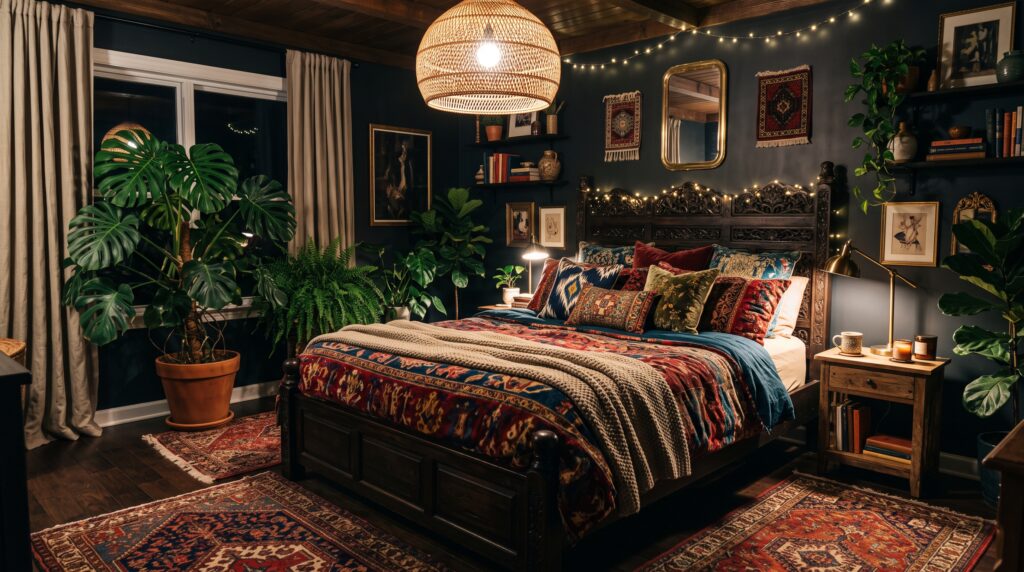
Deep charcoal or navy walls turn a bedroom into a warm hideaway rather than a cold box, as long as the lighting keeps up. Layer in table lamps, a woven lantern, and string lights so no corner goes flat or dim. Bright pillows and a bold headboard print keep the mood from tipping too somber, and sheer daytime curtains let natural light do some of the balancing.
10. Decorate the Ceiling
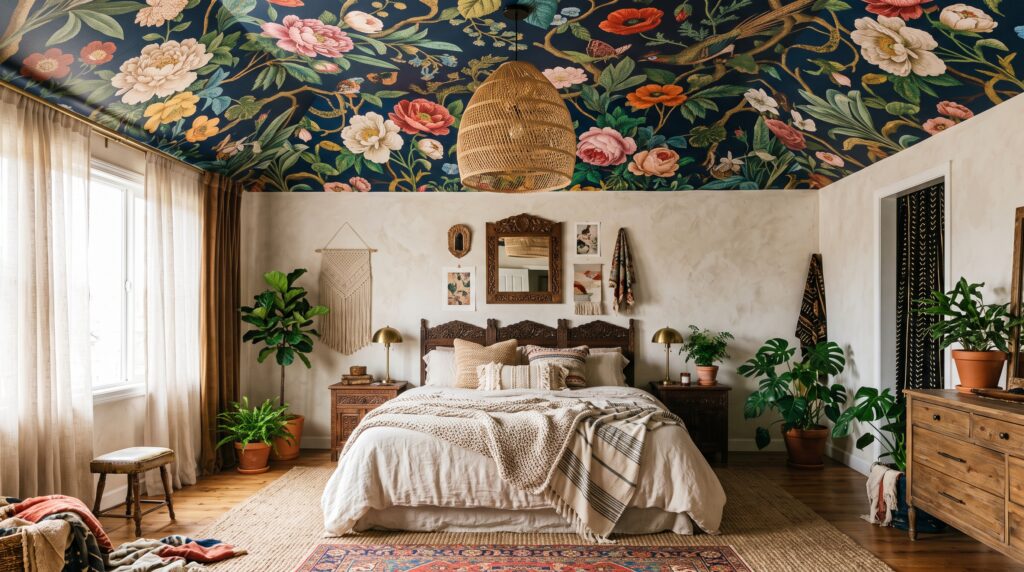
The fifth wall is the most overlooked surface in most bedrooms. A bold floral wallpaper overhead, or a hand-painted geometric shape pulling one color from your bedding, turns a blank ceiling into another layer of the design. This works best in rooms that already have strong texture elsewhere, so the ceiling feels like part of the story rather than an odd surprise.
11. Warm Everything With Terracotta
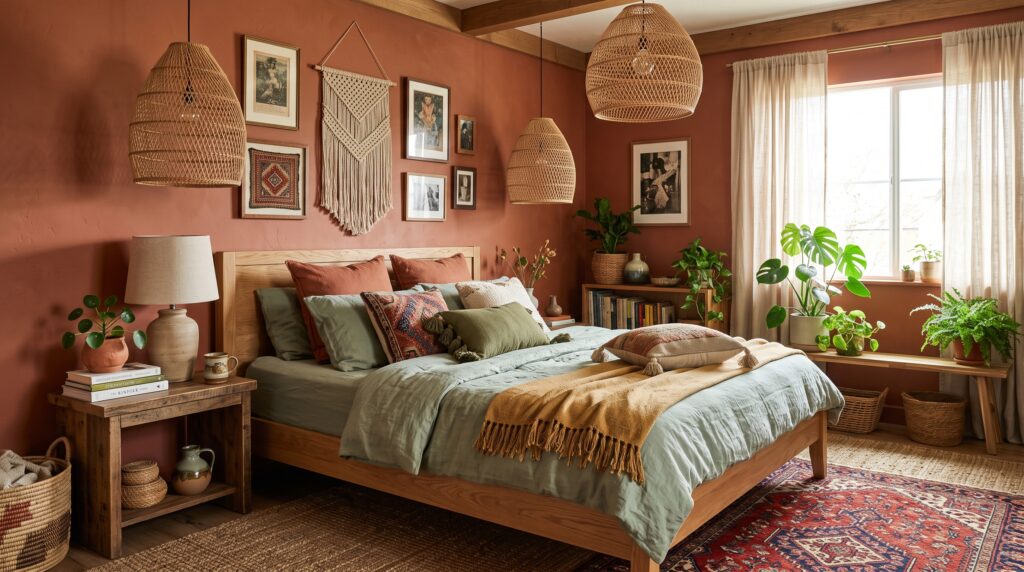
Terracotta grounds a busy palette without dulling it. Use it on the walls, through a patterned rug, or simply in ceramics if you’re not ready to paint. Paired with sage green, warm cream, or dusty blue, it stays rich instead of chaotic, and natural wood furniture ties the combination together.
12. Make the Headboard Wall the Star
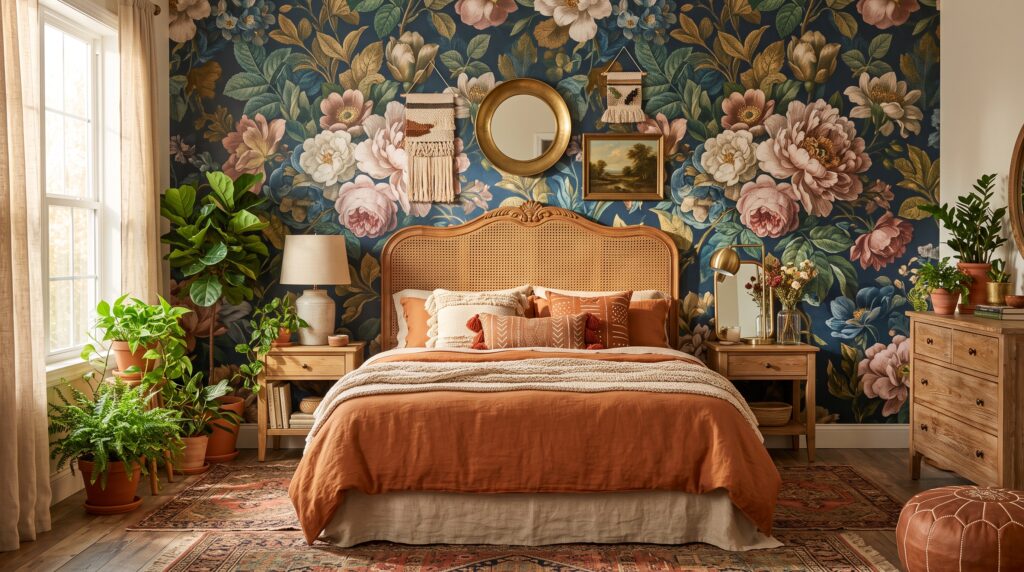
An oversized floral or abstract wallpaper behind the bed instantly becomes the room’s focal point, especially in a deep background color that lets the print’s colors pop. Keep the rest of the furniture in earthy, textured neutrals — cane, wood, woven baskets — so the wallpaper doesn’t have to compete for attention.
13. Layer in Jewel Tones Sparingly
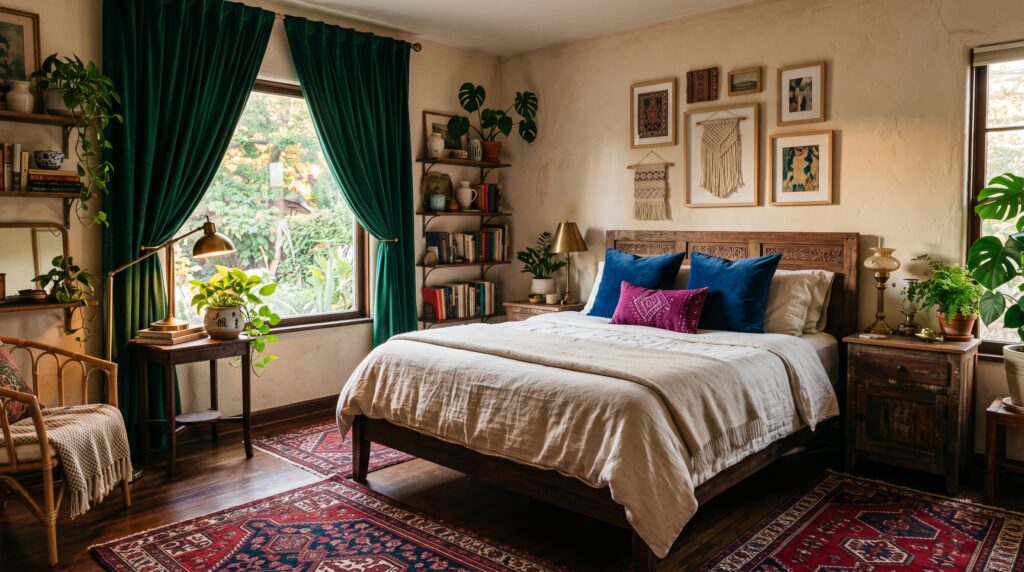
Emerald, sapphire, and deep magenta bring richness fast, but they work best spread across a few key pieces — curtains, bedding, one statement rug — rather than everywhere at once. A striped throw or patterned cushion adds texture, and a bit of velvet or fringe keeps the jewel tones from reading flat.
14. Hang a Tapestry Behind the Bed
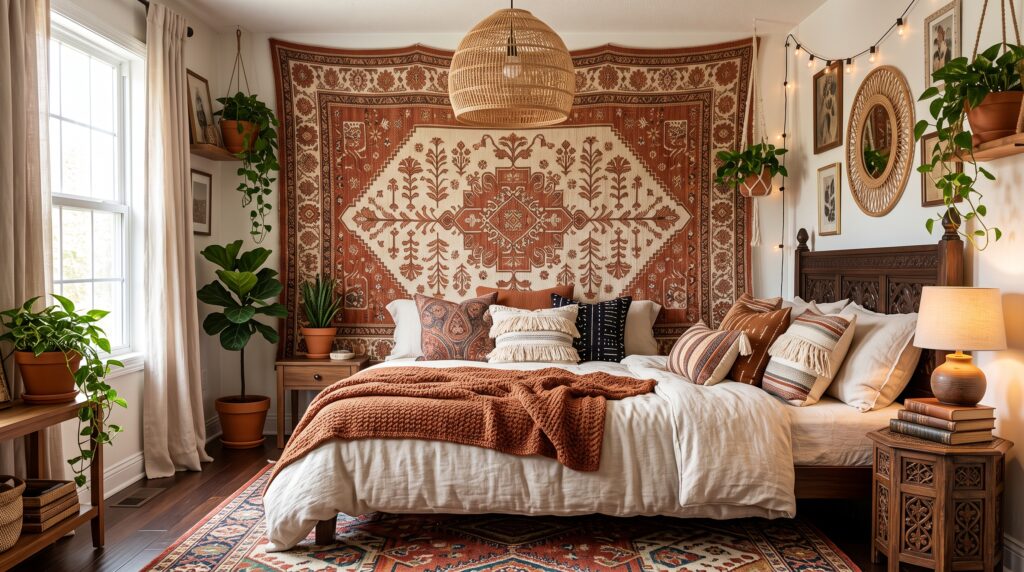
A large tapestry in a bold global print does the job of a headboard without the cost of buying one. Pick a rust, cream, or indigo base to anchor your palette. If the fabric feels thin or floppy, mount it over a canvas frame or blackout fabric first so it hangs flat rather than sagging.
15. Pair Orange With Green
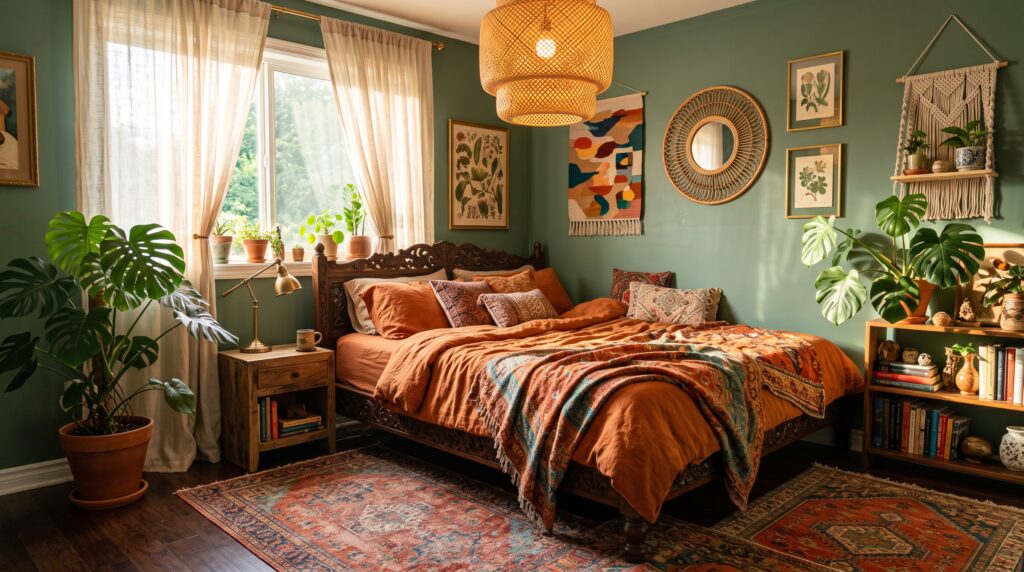
It sounds like an odd combination until you see it in person — warm orange energizes, green grounds it. Start small with a green accent wall and orange bedding, or simply add orange pillows against a leafy corner. Potted plants reinforce the green side and keep the whole pairing feeling alive rather than purely decorative.
16. Mix Furniture From Different Eras
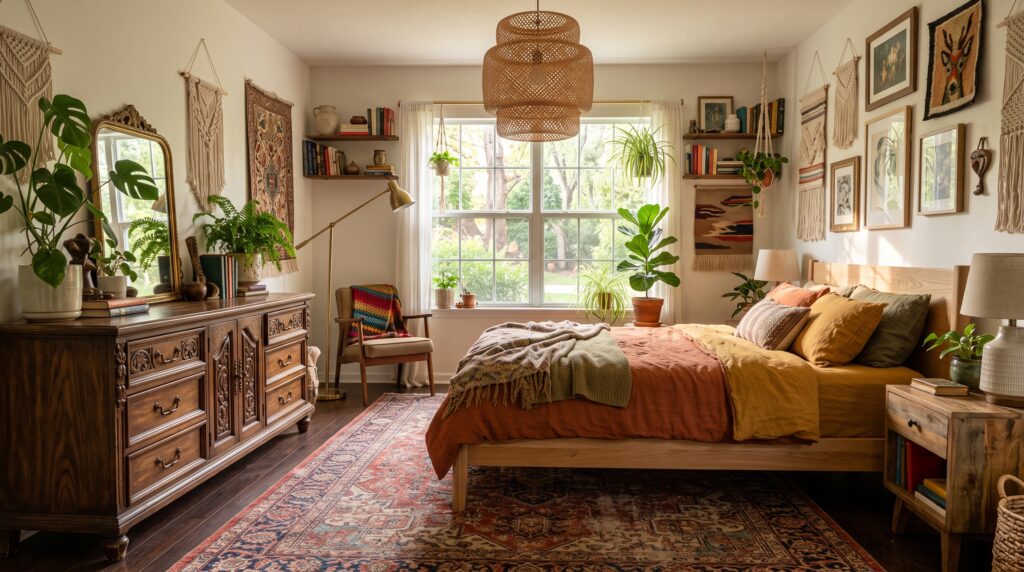
The most convincing collected-over-time rooms never come from one store. Pair a thrifted dresser with a modern nightstand, or a contemporary platform bed with an antique trunk at the foot. That contrast between old and new is exactly what makes a room feel like it evolved rather than got purchased in one trip.
17. Build a Moroccan-Style Nook
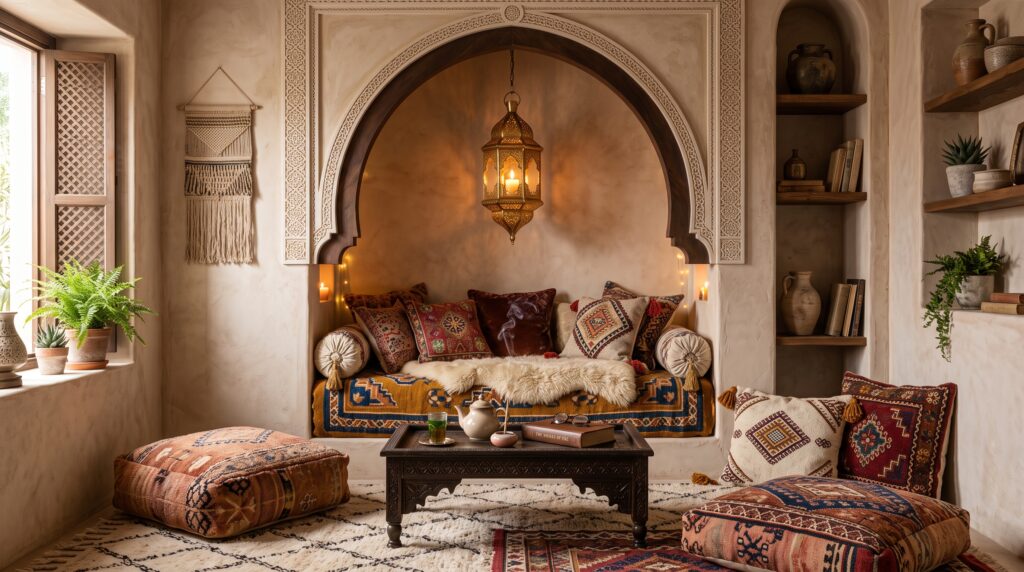
Arched details, a brass lantern, and a low cushion seating area bring warmth to an unused corner. Layer a patterned floor pillow, a small round tray table, and a beaded pendant overhead. Placed near a window, this kind of nook changes character throughout the day as light filters through a woven shade.
18. Style Open Shelving With Intention
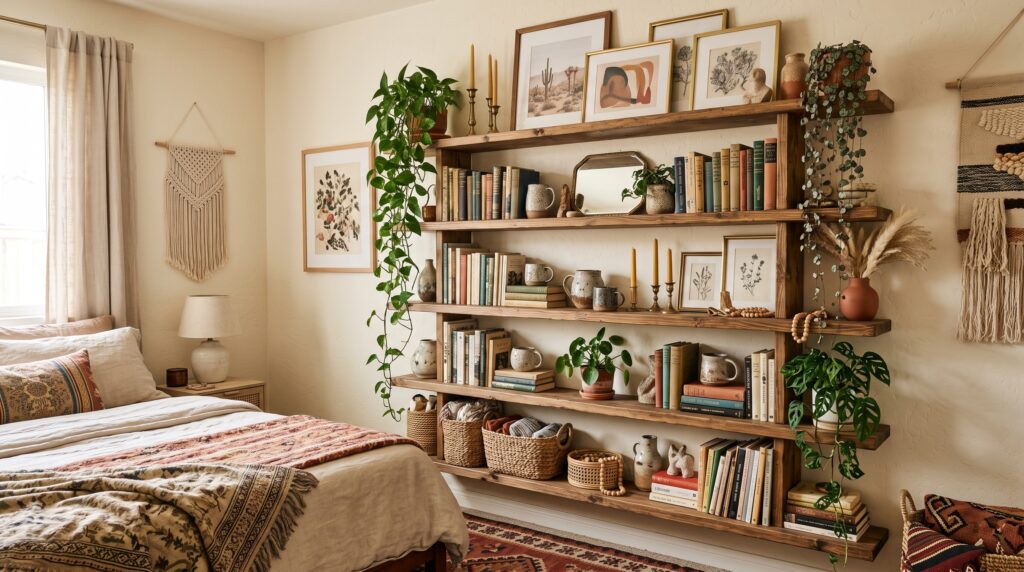
Open shelves let you mix books, ceramics, small plants, and woven baskets in a way that feels personal instead of staged. Group items in threes, vary their heights, and leave some empty space so the eye has somewhere to rest. A narrow ladder shelf is especially useful in smaller rooms, adding storage without eating up floor space.
19. Hang a Fringe or Beaded Doorway Curtain
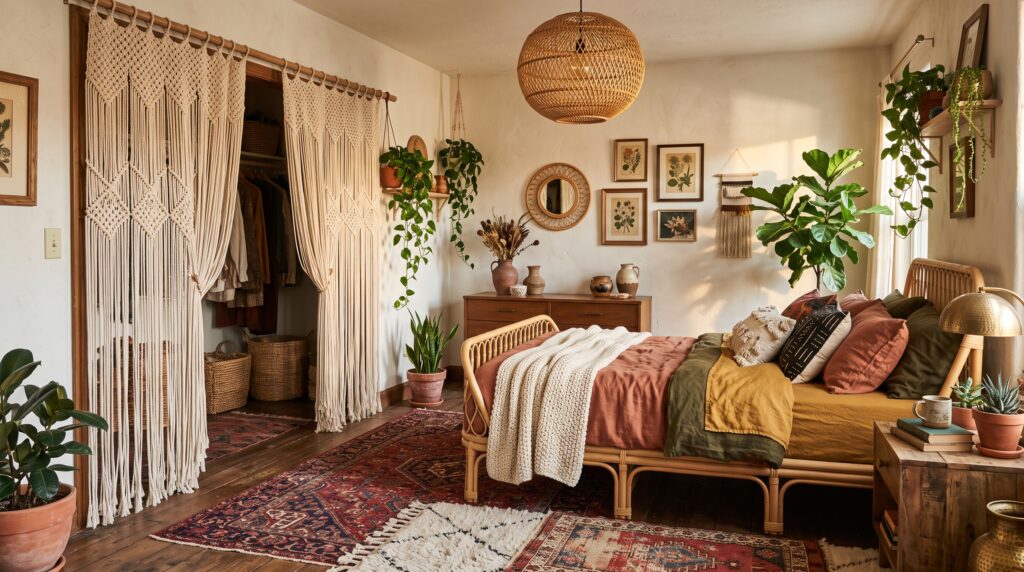
A beaded curtain or macrame fringe panel across a closet or doorway adds texture and movement without touching a single wall — ideal for renters. Wood or glass beads in a warm tone tie into brass lighting elsewhere, while a chunky macrame fringe leans softer and more textural.
20. Display Travel Finds Together
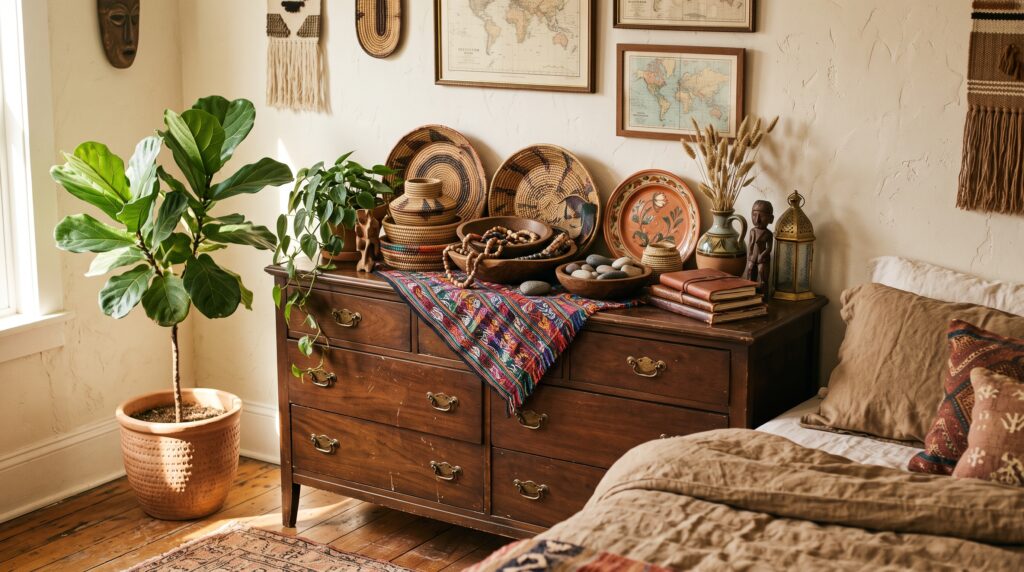
This style works best when it tells a story. Group souvenirs — a basket from one trip, a small textile from another, a carved bowl from a third — on a dresser top or shelf instead of scattering them through the room. Grouped this way, sentimental odds and ends become a styled vignette worth a second look.
21. Layer at Least Three Light Sources
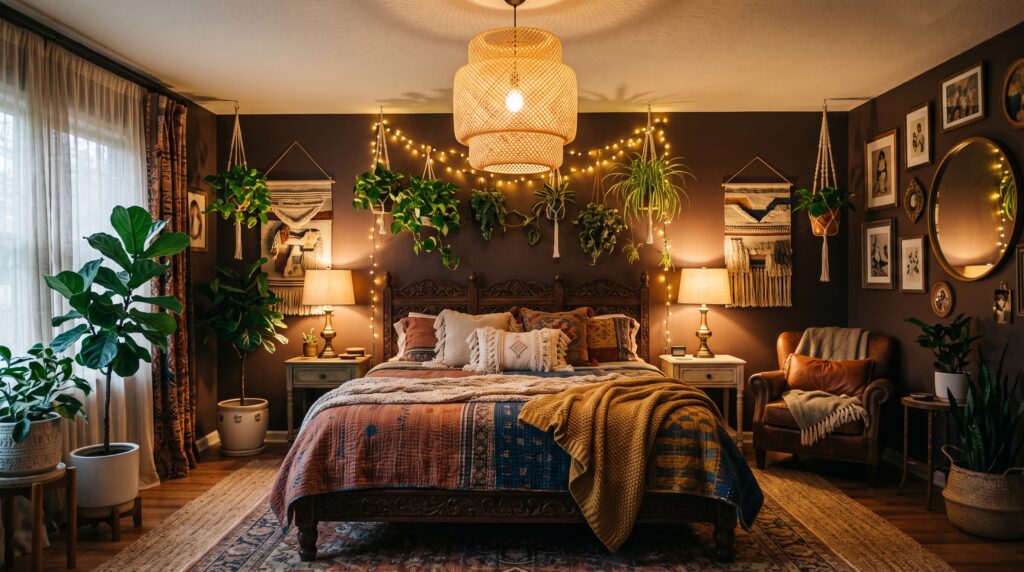
Skip the single overhead fixture. Combine a woven pendant or beaded chandelier, a brass table lamp, and a soft ambient source like string lights or a lantern. Warm bulbs, in the 2700K range, keep jewel tones and terracotta walls looking rich after dark instead of washed out. Layered lighting does more for mood than any single statement piece ever could.
22. Deliberately Mismatch the Nightstands
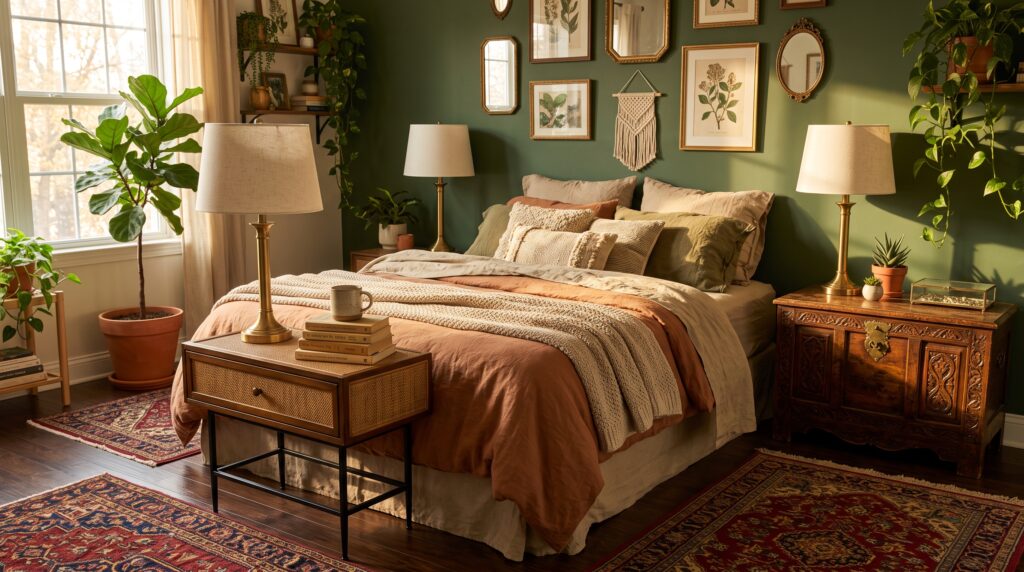
Matching nightstands can make a room feel like a showroom display. Pair a rattan-front piece on one side with a small vintage wood chest on the other, and keep a shared lamp style or accent color between them so the mismatch reads as a choice, not an accident.
23. Lean an Oversized Mirror Against the Wall
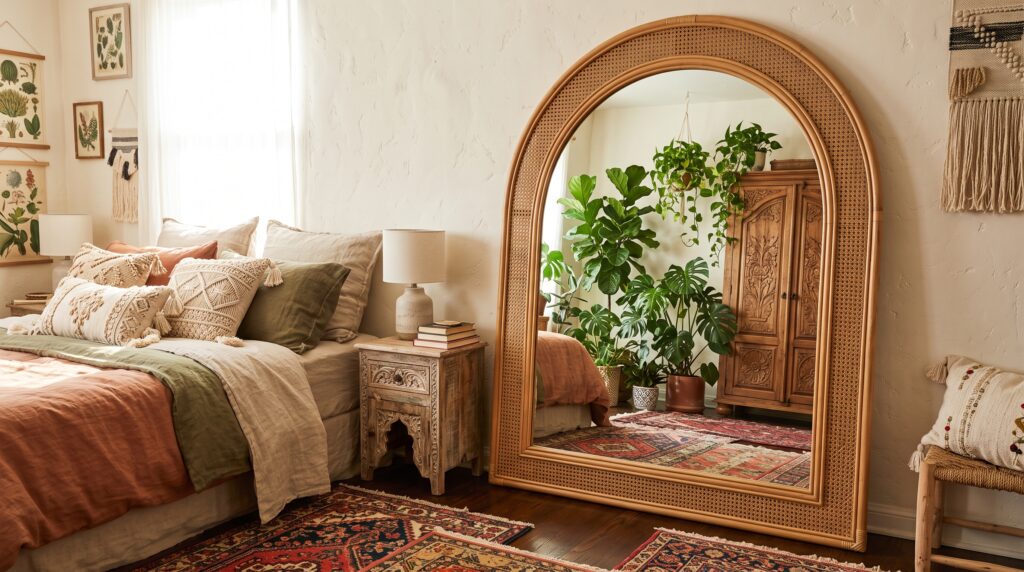
A large mirror in a carved wood, rattan, or brass arched frame bounces light around a pattern-heavy room and keeps it from feeling visually dense. Leaning it against the wall instead of mounting it gives a more casual feel. Position it to reflect your plant corner or gallery wall for extra visual payoff.
24. Scale the Look for a Small Apartment
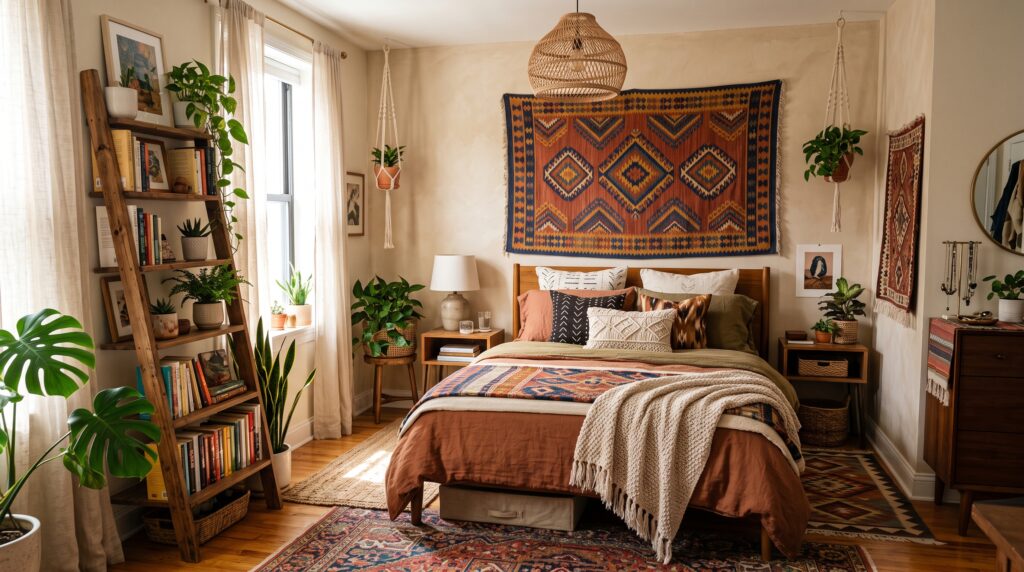
Limited square footage doesn’t mean limited personality. Swap wallpaper for a bold tapestry, layer two small rugs instead of three large ones, and choose a ladder shelf over a full bookcase. One statement light fixture and a single gallery wall cluster deliver the same maximalist punch in a fraction of the space.
How to Start Without Overwhelming the Room
Reading through two dozen ideas at once can feel like a lot, so it helps to think in phases rather than trying to install the whole look over a single weekend. Start with the three biggest, most expensive-to-change elements first: the wall color, the flooring layer (your rug stack), and the bed itself, since the canopy, headboard wallpaper, or tapestry choice will shape everything you add later. Once those anchors are set, move on to lighting, because a room can have every pattern and texture on this list and still feel flat under one harsh overhead bulb. Only after the bones are in place should you start layering in the smaller, more personal touches — the gallery wall, the travel finds, the mismatched nightstands — since those are the pieces that will keep evolving anyway.
It’s also worth resisting the urge to buy everything new. Part of what makes boho maximalist bedrooms feel authentic rather than showroom-perfect is the presence of at least a few worn, secondhand, or handmade pieces. A vintage dresser with a little wear, a rug with visible age, or a ceramic bowl picked up somewhere memorable will do more for the room’s character than a dozen brand-new accessories bought to match a theme. If you’re building the room from scratch, give yourself permission to leave a wall or a shelf empty for a while rather than filling every gap immediately. The most convincing versions of this style tend to look like they’re still being finished, because in a sense, they always are.
Common Questions About Boho Maximalist Bedrooms
Is this style hard to keep from looking messy? The line between “curated abundance” and clutter usually comes down to repetition and restraint in a few key places. Repeating two or three colors throughout the room, even across very different patterns, gives the eye something consistent to follow. Leaving some negative space — an empty stretch of wall, a plain corner, a shelf that isn’t completely full — also keeps busy areas from tipping into visual noise.
Does it work in a rented apartment? Yes, and arguably it’s one of the easier maximalist styles to pull off as a renter. Rugs, tapestries, string lights, plants, and beaded curtains all add major visual impact without requiring paint, wallpaper, or anything permanent. Command hooks can hold a canopy frame or gallery wall just as well as nails in most cases, which makes it simple to take the whole look with you when you move.
What’s the fastest way to test if I’ll like this style? Start with the rug layering and one bold textile, like a tapestry or a patterned duvet, before committing to wallpaper or paint. Those two changes alone will tell you a lot about how much color and pattern you actually want to live with day to day, and they’re both easy to undo if you change your mind.
How many colors is too many? There’s no strict cap, but most successful rooms in this style repeat a core palette of three to four colors across the majority of pieces, then use one or two accent colors sparingly for contrast. Jewel tones, terracotta, and warm neutrals tend to blend well together precisely because they all share some underlying warmth, even when the individual hues are quite different.
Bringing It All Together
You don’t need all 24 ideas in one room — in fact, trying to use every trick at once usually backfires. Pick a base (a rug combination or a wall color), choose one or two focal points (a canopy bed, a tapestry, a gallery wall), and let texture and lighting fill in the rest. The rooms that feel most convincing are the ones built slowly, with pieces added as you find them rather than ordered all at once. That patience is really the whole point of boho maximalist bedroom ideas: charm that accumulates, instead of charm you buy in a single afternoon.