

A bathroom is the first room you see in the morning and the last one you use at night, so it deserves to feel peaceful. That is exactly what a thoughtful Japandi bathroom design delivers: a quiet, uncluttered space where warm wood, soft stone and gentle light do the heavy lifting. Nothing shouts, nothing is wasted, and every object earns its place.
Japandi is a fusion of two traditions. According to Dunn-Edwards, Japandi blends Japanese Zen-minimalism with Scandinavian functionality, pairing the Danish idea of hygge, which celebrates comfort and coziness, with the Japanese idea of wabi-sabi, which finds beauty in imperfection. The result feels relaxed yet refined, which is why it translates so well to rooms we use daily.
Think of it as the middle ground between two extremes. Pure Japanese interiors can feel austere, while pure Scandinavian rooms can feel pale and cool. Japandi borrows the richer, earthier tones of the first and the cozy practicality of the second, giving you a bathroom that looks calm but still works hard on busy mornings.
Below, you will find every major style direction and the key design details that bring it to life, so you can borrow what suits your space and skip what does not. Treat the list as a menu rather than a rulebook. Most beautiful bathrooms combine just a few ideas, such as a floating vanity, a stone basin and warm layered lighting, and then stop. Restraint is the whole point, and choosing less usually produces a result that feels calmer and more personal.
Japandi Bathroom Design Styles and Ideas to Try
Whether your room is a compact guest bath or a spacious main suite, the following approaches show how flexible this look can be. Start with the overall mood you want, then layer in the details that follow.
Modern Japandi Bathroom Design
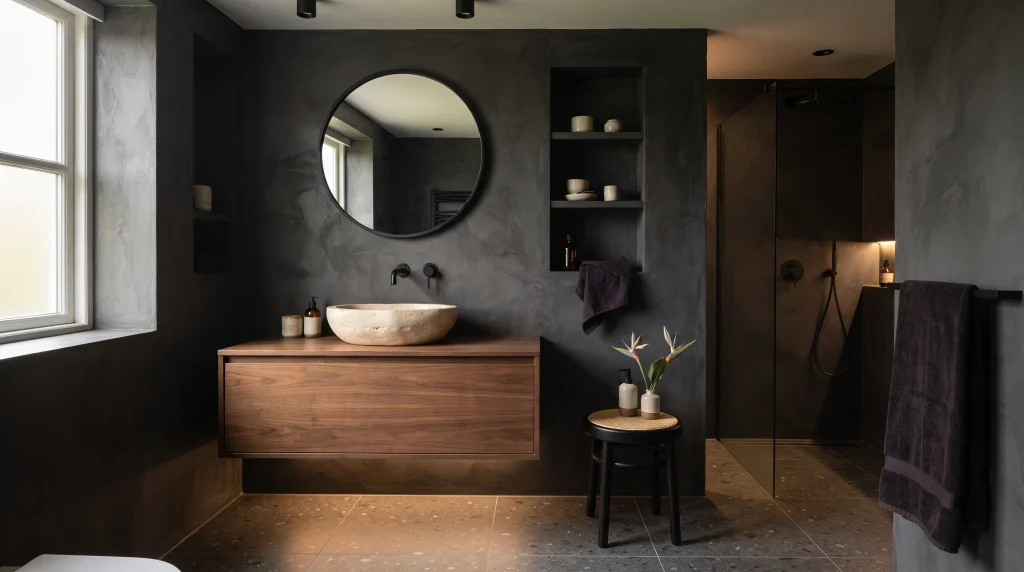
A modern take relies on crisp lines, pale timber and matte surfaces. Picture a handle-free vanity, a softly rounded mirror and a slim, understated faucet. The idea is not to own less for the sake of it, but to keep only what matters. Because nothing competes for attention, the whole room feels ordered and restful.
Luxury Japandi Bathroom Design
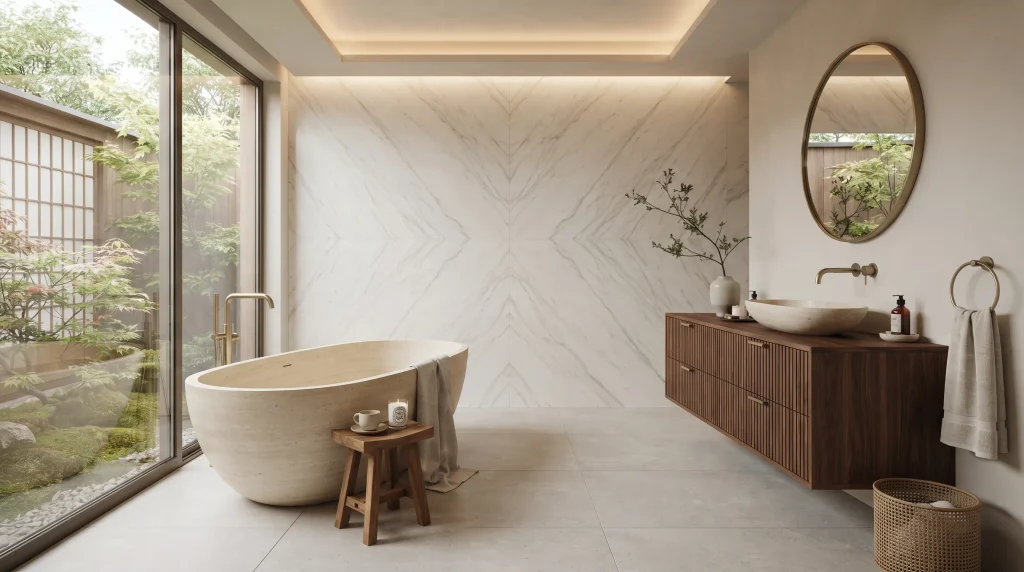
Luxury here is quiet. It appears in materials and craftsmanship rather than flashy finishes. Consider marble with delicate veining, a handmade wooden stool, or a soaking tub with a soft eggshell glaze. Add light fixtures in muted metal or stone, and the room feels indulgent without ever becoming loud or showy.
Small Japandi Bathroom Design
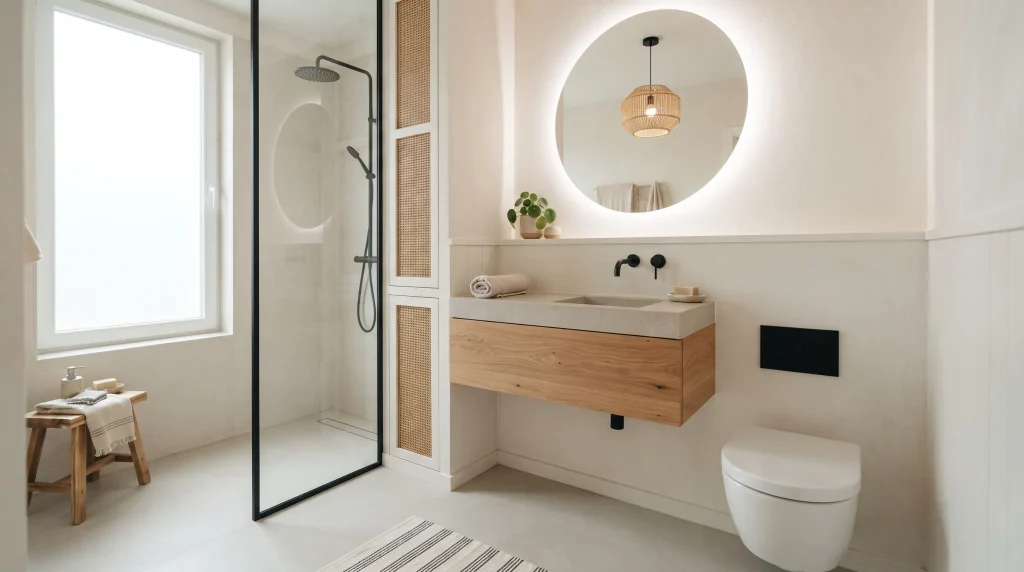
Compact rooms and Japandi are natural partners. The style already favors smart storage, light tones and simple forms, all of which make a small bathroom feel bigger. Mount shelves on the wall, choose a floating vanity, and paint the walls in soft beige, taupe or warm white. A well-placed mirror will bounce light around and add depth where windows are limited.
Zen Japandi Bathroom Design
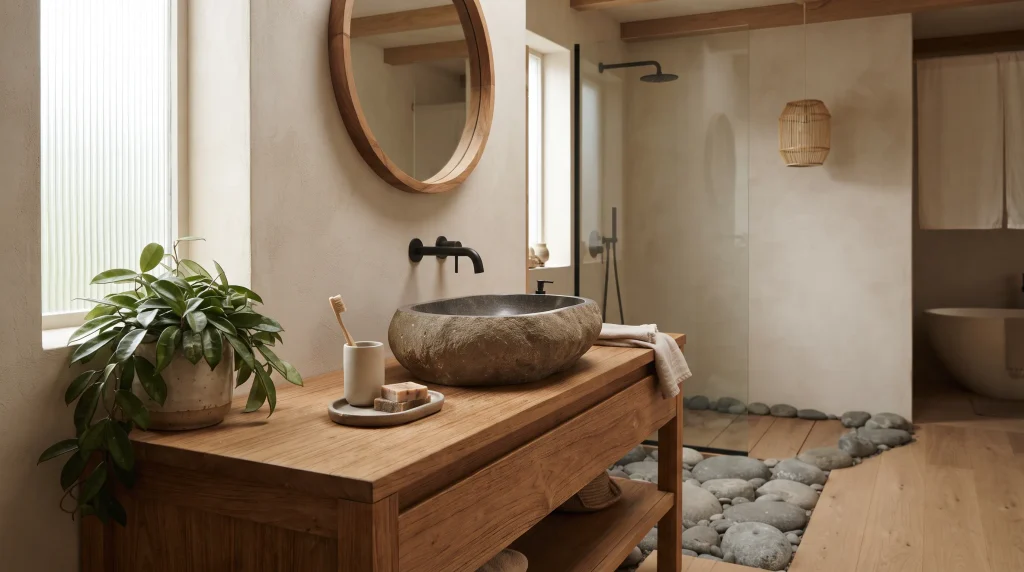
If your goal is a spa-like retreat, lean fully into tranquility. A stone basin, low and diffused lighting, and a few carefully chosen plants are enough to set the tone. Keep surfaces nearly empty, let natural textures speak, and aim for a room that slows your pace the moment you walk in.
Black Japandi Bathroom Design
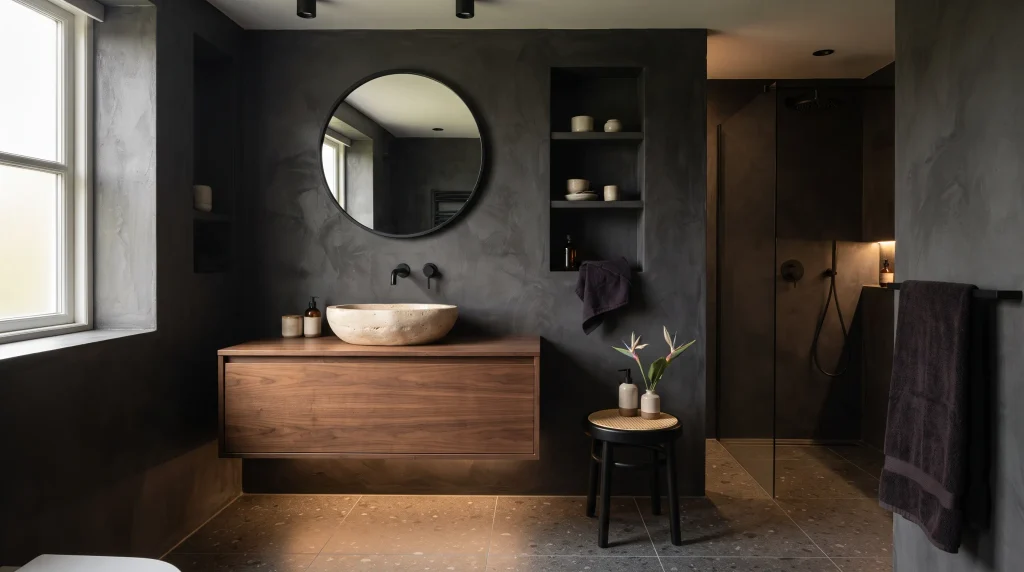
Dark palettes bring drama while staying grounded. Charcoal tiles, black fixtures and warm wood accents create strong contrast and a modern edge. To stop the room from feeling heavy, balance the darkness with daylight, reflective surfaces or warm lighting. The same cozy depth can also come from deep blue tones paired with timber.
Green Japandi Bathroom Design
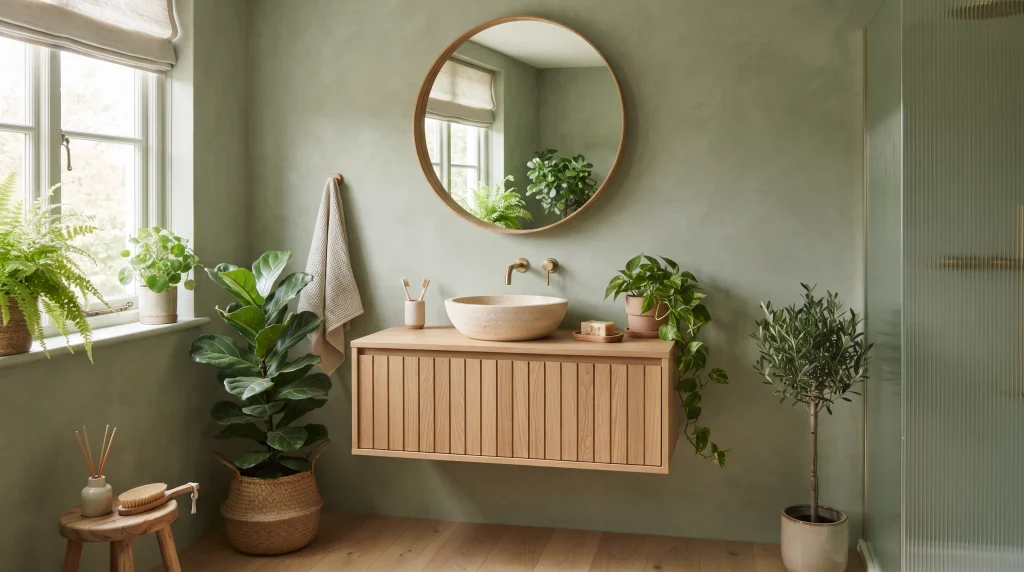
Sage and olive suit this style beautifully because they echo the natural world. Use them on walls, in a tile accent or through leafy plants. These shades sit comfortably beside wooden furniture and soft daylight, producing a fresh, organic mood that still feels restrained.
Pink Japandi Bathroom Design
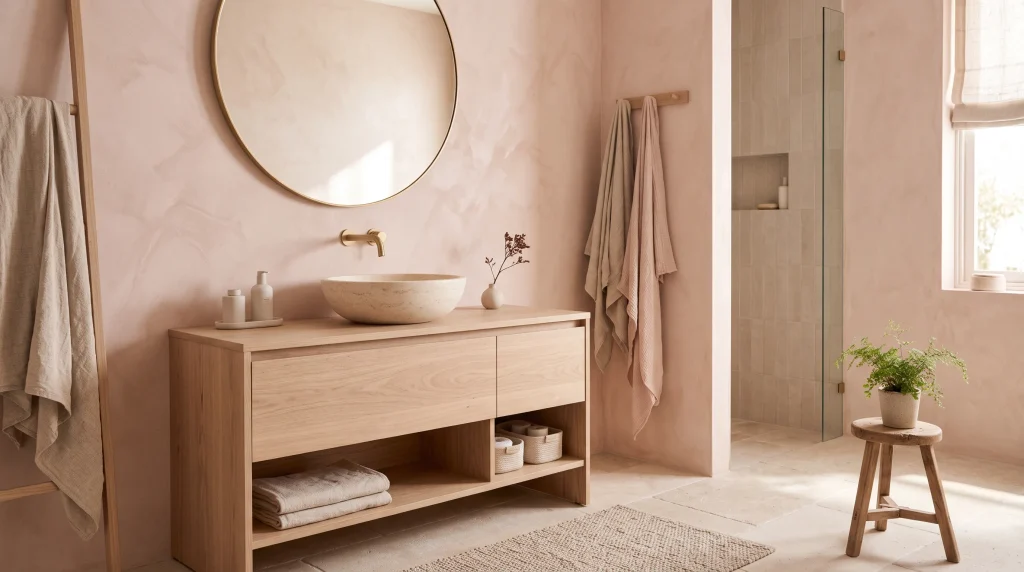
Blush tones add gentle warmth without sweetness overload. Keep them to textiles, ceramics or a softly tinted wall, and let wood and stone provide balance. A pale pink hand towel or a rosy ceramic dish can quietly shift the entire atmosphere.
Yellow Japandi Bathroom Design
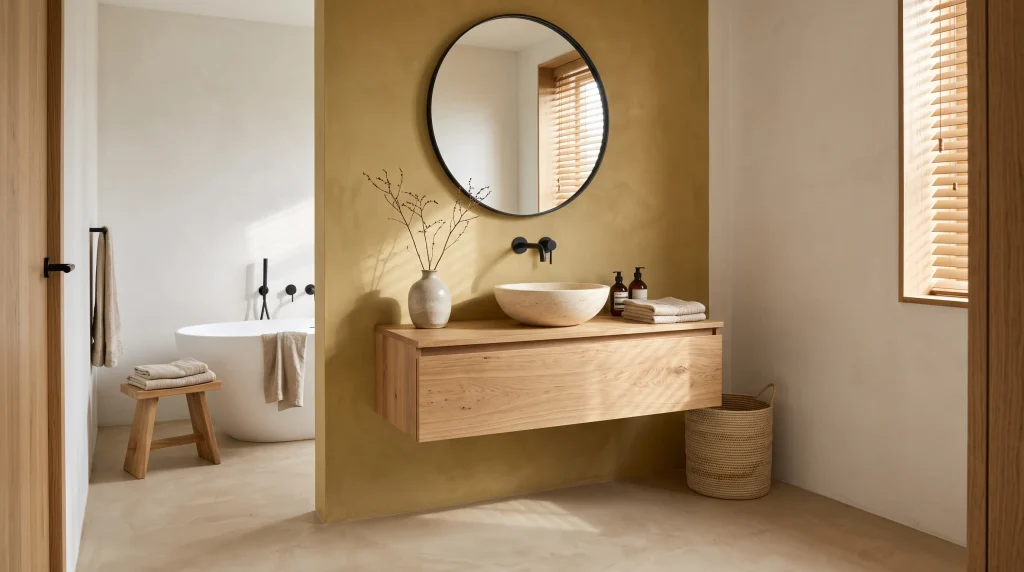
Muted mustard, clay and golden shades introduce energy without overwhelming the senses. They pair well with natural wood and simple lines. Bring them in through towels, a vase or a single painted wall, and keep everything else neutral so the color feels intentional rather than busy.
Sliding Doors for a Seamless Look
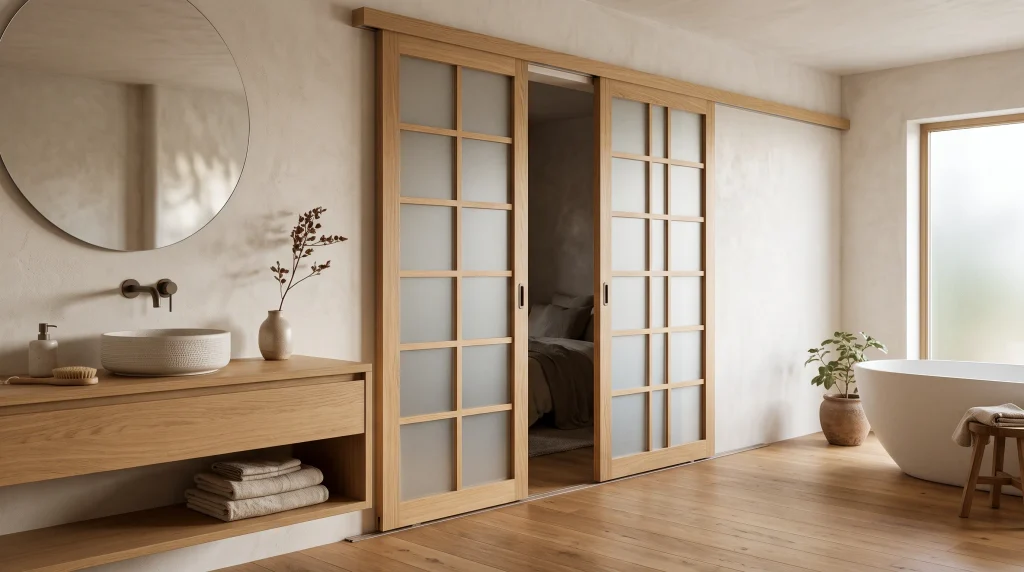
Sliding panels inspired by Japanese shoji screens save space and add a light, airy quality. Because they glide rather than swing, they free up valuable floor area in tight layouts. Choose a neutral finish so the doors melt into the surrounding palette instead of drawing the eye.
Stone Vessel Sink for a Natural Touch
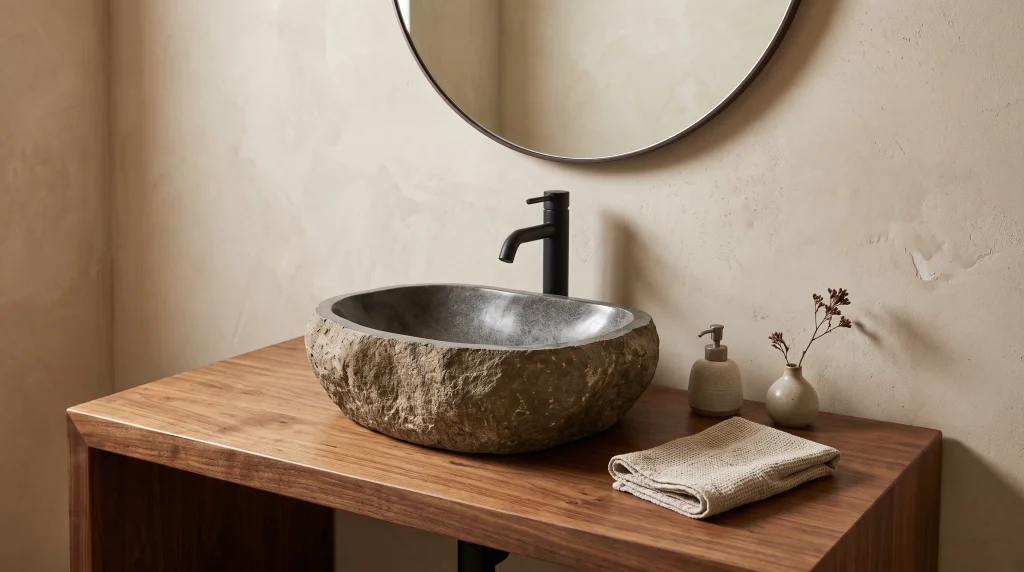
A stone basin brings weight, texture and a strong link to the outdoors. Set it on a wooden counter and the two materials soften one another, creating a balanced focal point. It is a simple change that adds real character while keeping the vanity area calm and uncluttered.
Textured Wall Panels for Quiet Depth
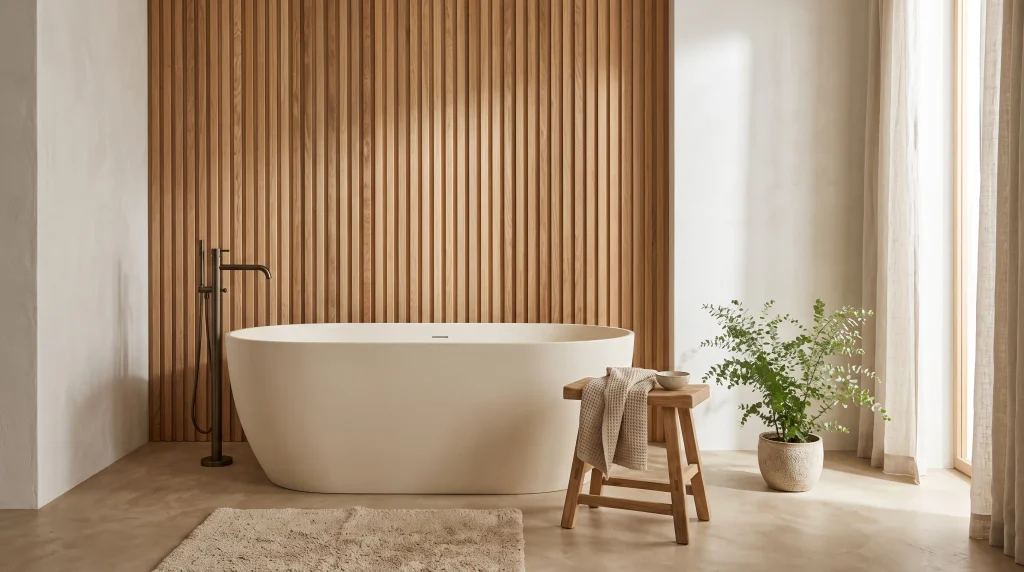
Ribbed timber, slate or soft stone finishes add dimension without noise. Use them behind a bathtub, along the vanity wall or in a narrow entryway to define the space. Keep the material natural and the color neutral so the texture adds warmth rather than distraction. These tactile surfaces also pair nicely with earthy, boho-leaning accents.
Tiles with Subtle Texture
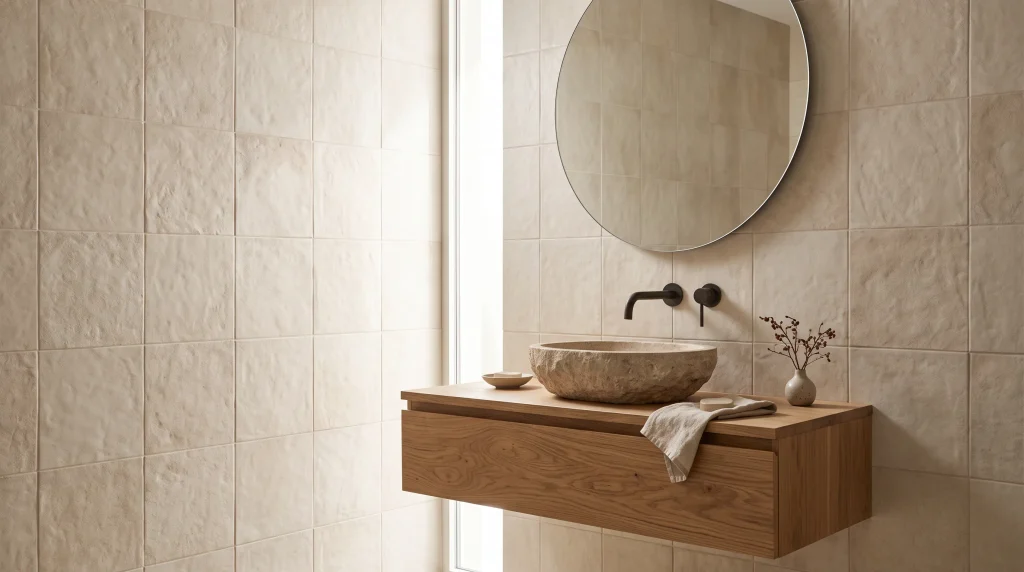
Matte ceramic, natural stone and lightly grooved tiles stop a bathroom from feeling flat. Neutral shades such as gray, beige and soft black keep the look clean while still giving the surface a layered feel. Choose finishes that are gentle underfoot and easy to maintain, since practicality matters as much as beauty here.
A Functional Japandi Vanity
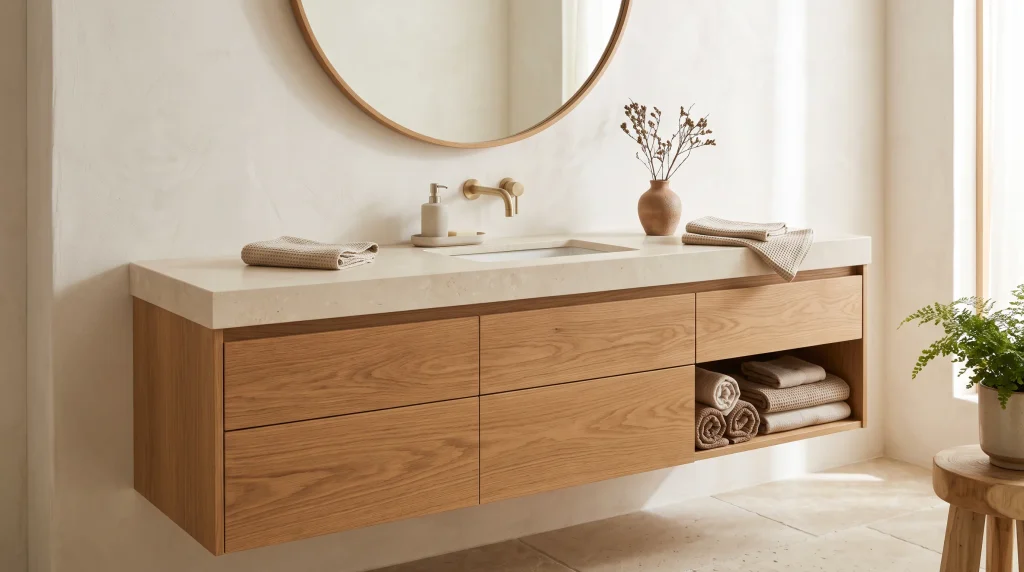
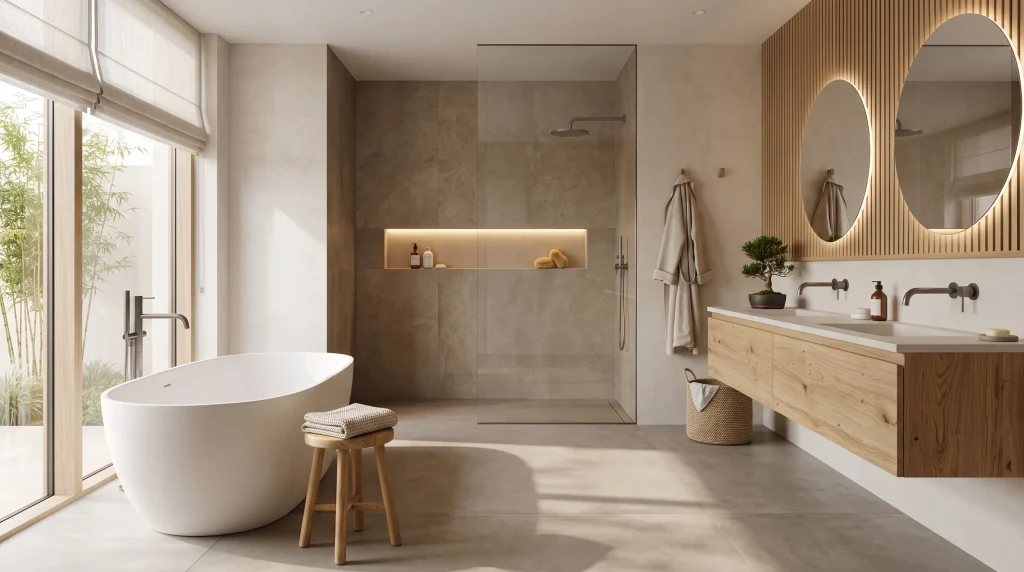
The best vanity hides its usefulness. Look for concealed drawers, slim compartments and clean fronts that tuck everyday items out of sight. A floating design is a smart choice if you want more visible floor, which makes the room feel lighter and simpler to clean. The aim is a space that feels clear, not crowded.
A Relaxing Japandi Bathtub
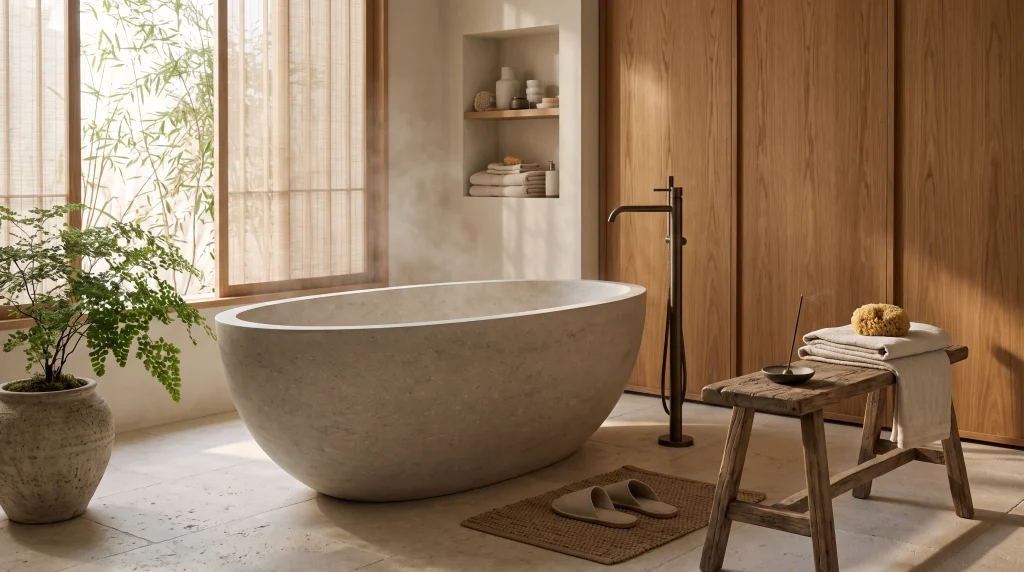
A freestanding tub with soft curves and a smooth finish makes an elegant centerpiece. Stone and ceramic suit the style especially well. Surround the tub with earthy textures and a touch of greenery, and it becomes a quiet invitation to unwind at the end of the day.
A Simple, Soft Mirror
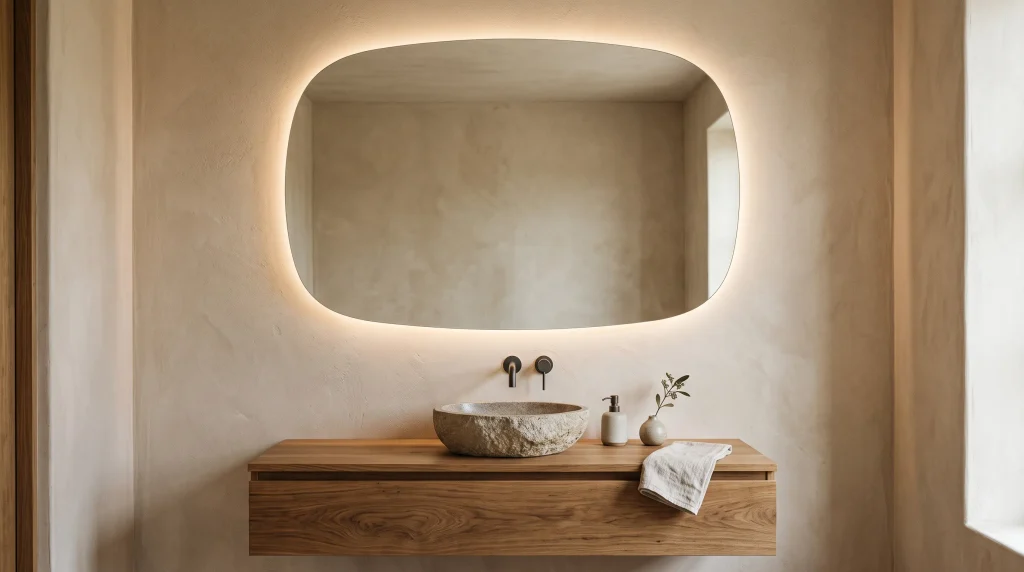
Minimal frames in black or pale wood blend easily into the scheme. Round mirrors are a lovely counterpoint to straight lines, softening the room and reflecting light. If you can, choose one with integrated lighting, which gives a subtle glow that is as practical as it is pretty.
Warm, Layered Lighting
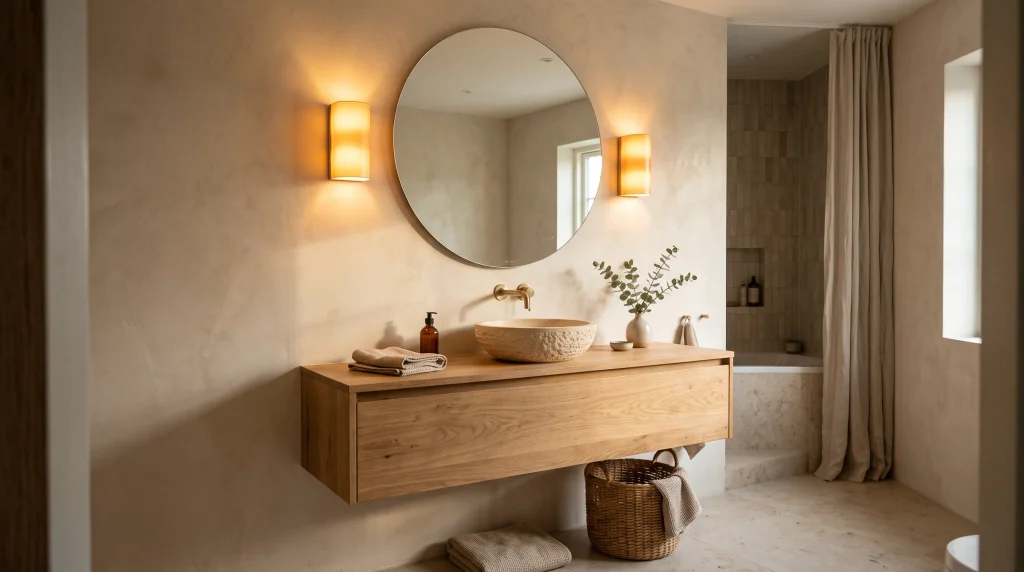
Harsh overhead bulbs are the enemy of a tranquil bathroom. Instead, use wall sconces, lantern-style fixtures or a pendant that casts a diffused, welcoming glow. Combine them with natural daylight wherever possible. Layering sources like this keeps the room comfortable from early morning to late evening.
Integrated Shelving
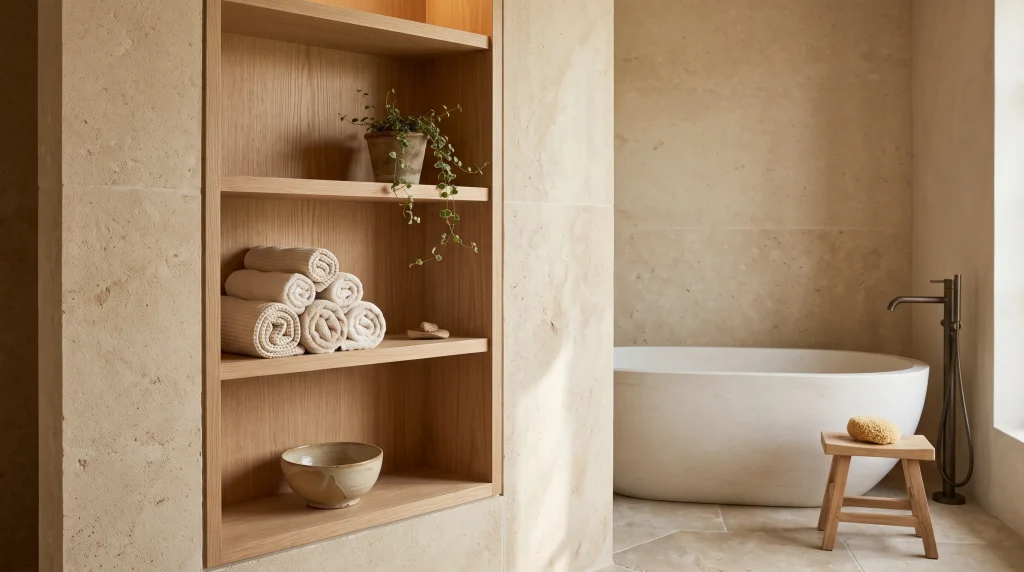
Built-in shelves beside the tub or above the sink keep essentials close while keeping the view calm. Style them with restraint: a few rolled towels, a small plant or one handmade dish is plenty. When styled sparingly, a shelf can even act as a gentle focal point.
A Natural-Fiber Rug
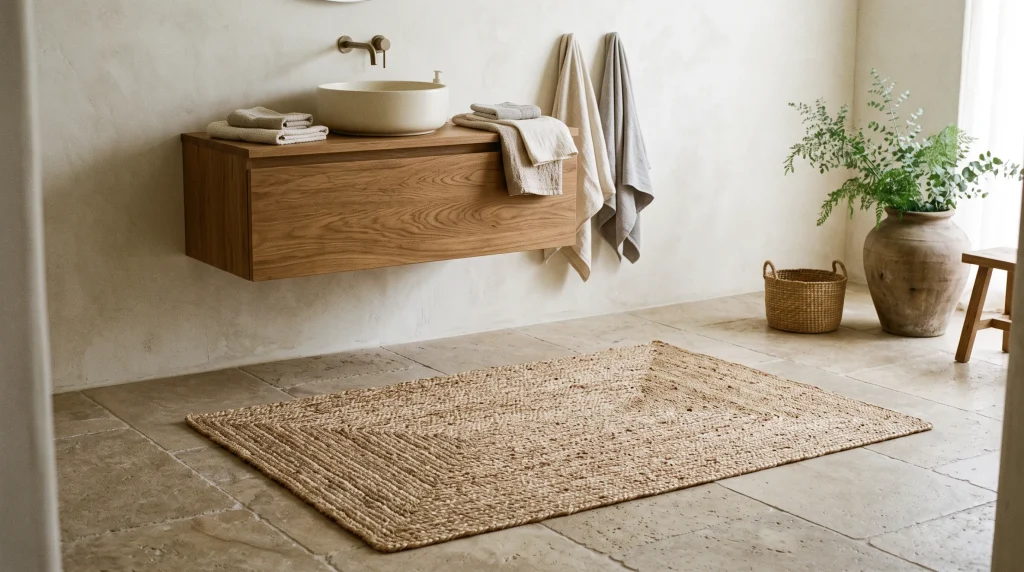
A rug adds comfort underfoot and warmth to hard floors. Jute and cotton are ideal because they feel organic and age gracefully. Select a simple design in neutral tones, and make sure it dries quickly and is easy to wash so it stays fresh.
Wallpaper with Quiet Personality
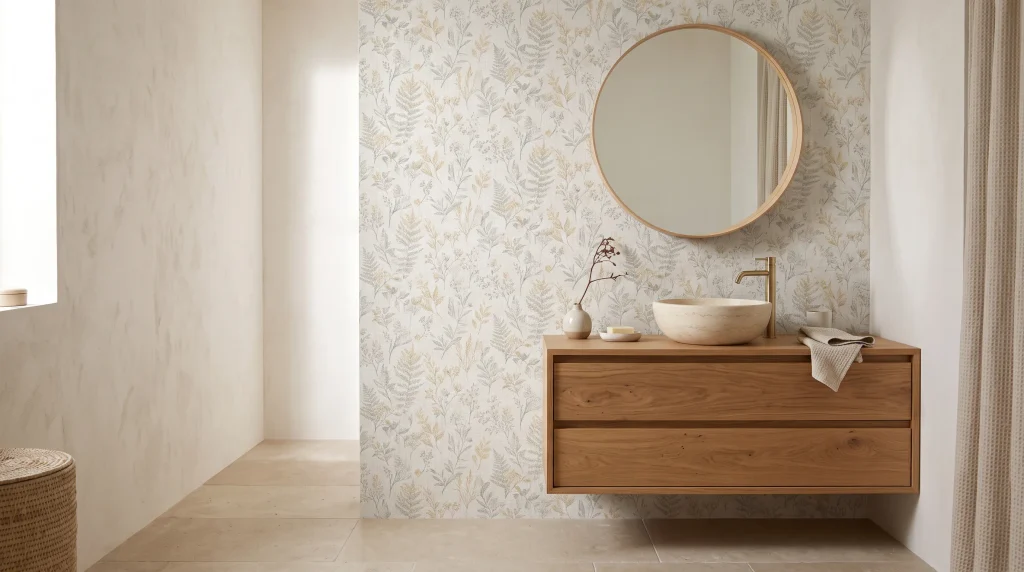
Nature-inspired prints and soft geometric patterns can add character without breaking the minimalist mood. Use them sparingly, since one accent wall is usually enough. Stay with muted colors and organic motifs, and choose a moisture-resistant product designed for bathrooms.
Plants for Freshness
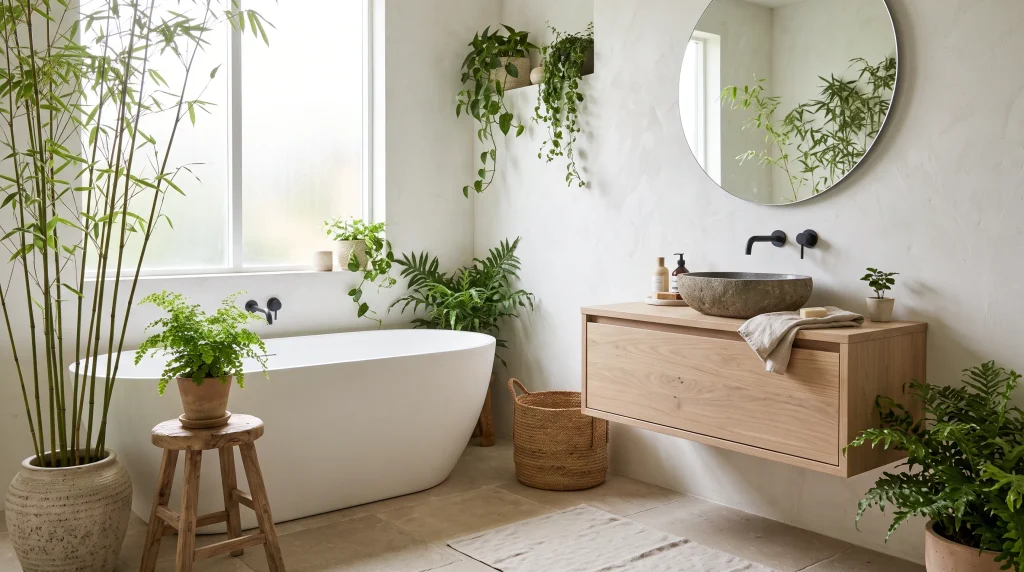
Bamboo, ferns and other leafy greens bring life to a neutral palette. Place them on a windowsill, a shelf or beside the basin. Grouping plants of different heights creates a natural, curated look, and the greenery contrasts lovely with pale wood and stone.
Washi Paper Details
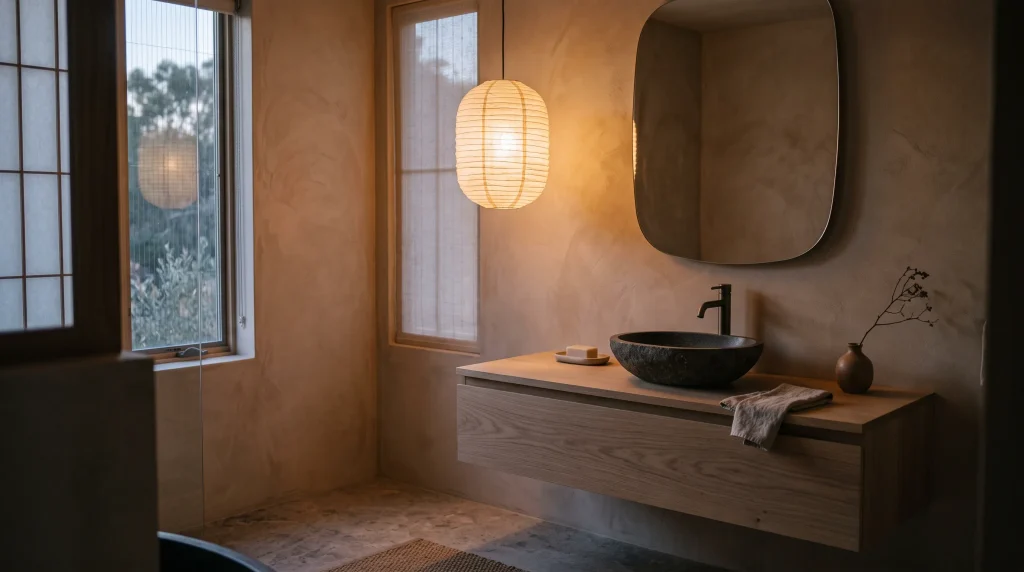
Washi screens, lanterns and lampshades add traditional Japanese softness with very little visual weight. They work especially well in rooms with plenty of daylight and look wonderful beside warm wood tones, highlighting the balance of texture and simplicity at the heart of this style.
Bamboo Storage and Smart Organization
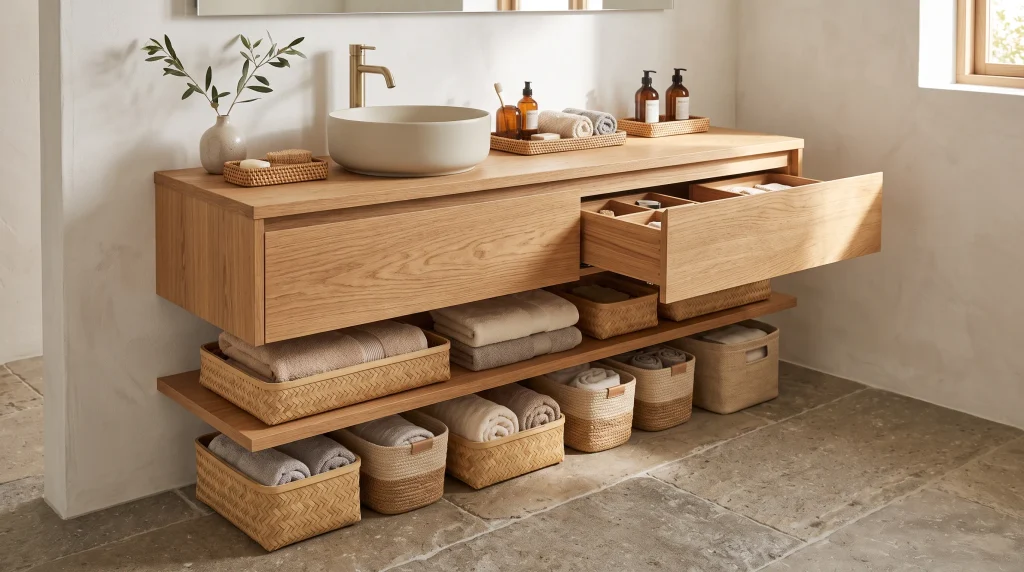
Bamboo baskets and trays are lightweight, practical and easy on the eye. Their warm tone softens hard surfaces and echoes the timber elsewhere in the room. Pair them with floating shelves, wall niches and hidden compartments, and clutter simply disappears from view.
Choosing a Calm Color Palette
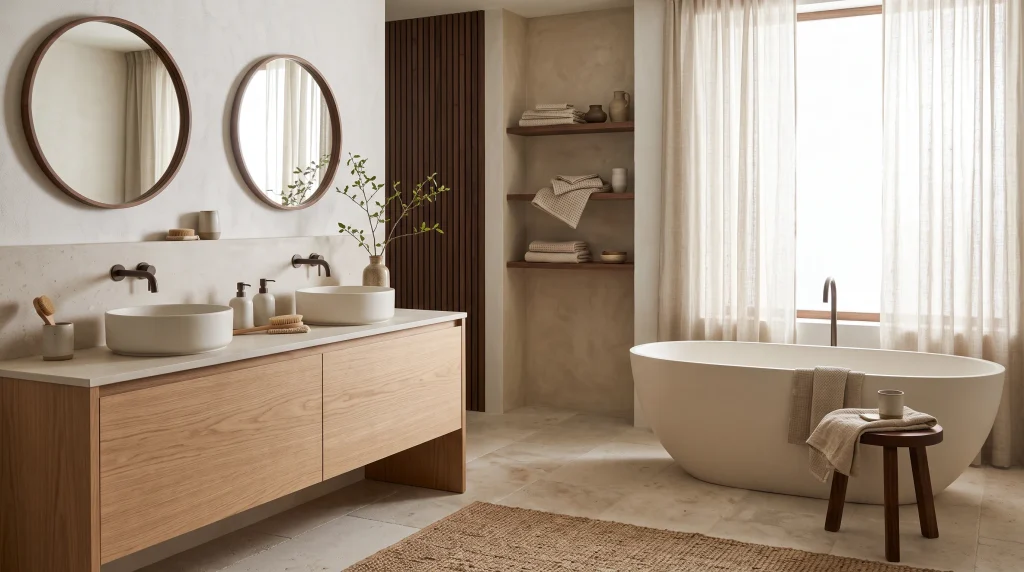
Color sets the emotional temperature of the room, so decide on it early. Most successful schemes start with a soft neutral base such as oatmeal, stone, warm white or pale clay, then add one or two deeper notes, for example charcoal, walnut brown or muted indigo. Keep the number of tones small, and repeat them across towels, tiles and accessories so the eye moves smoothly around the room. If you love a brighter shade, use it deliberately in a single spot rather than everywhere. Test paint and tile samples beside your vanity and under your actual lighting, because bathrooms often look quite different at noon than they do at night.
Natural Materials Worth Choosing
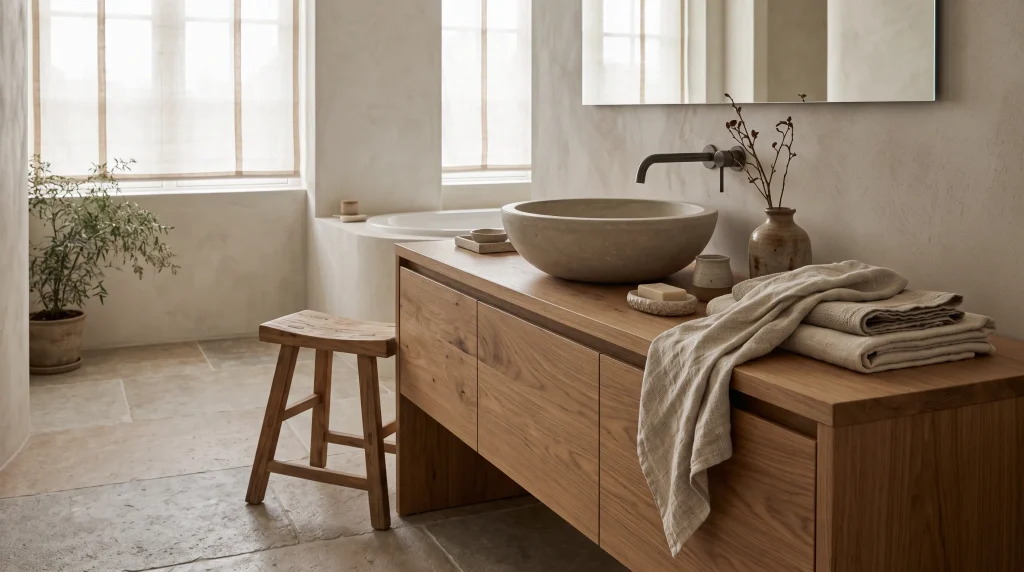
Materials do most of the work in this style, so spend your budget where hands and eyes land most often. Oak, ash and walnut give vanities and stools a warm, honest grain, while stone, ceramic and honed marble supply cool contrast. In a wet room, choose timber that has been properly sealed or is naturally water-resistant, such as teak, and wipe it dry after heavy steam.
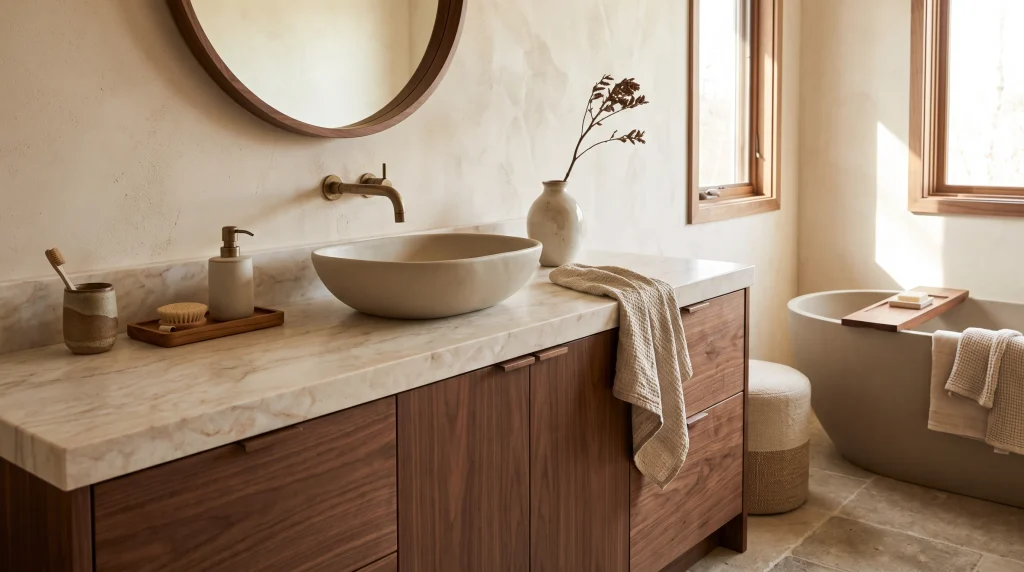
Linen and cotton towels in undyed shades, along with a handmade ceramic soap dish, keep the textures tactile. Mixing a few natural finishes is more interesting than relying on a single one, and slight irregularities add the quiet charm that wabi-sabi celebrates.
Easy Upkeep for a Peaceful Look
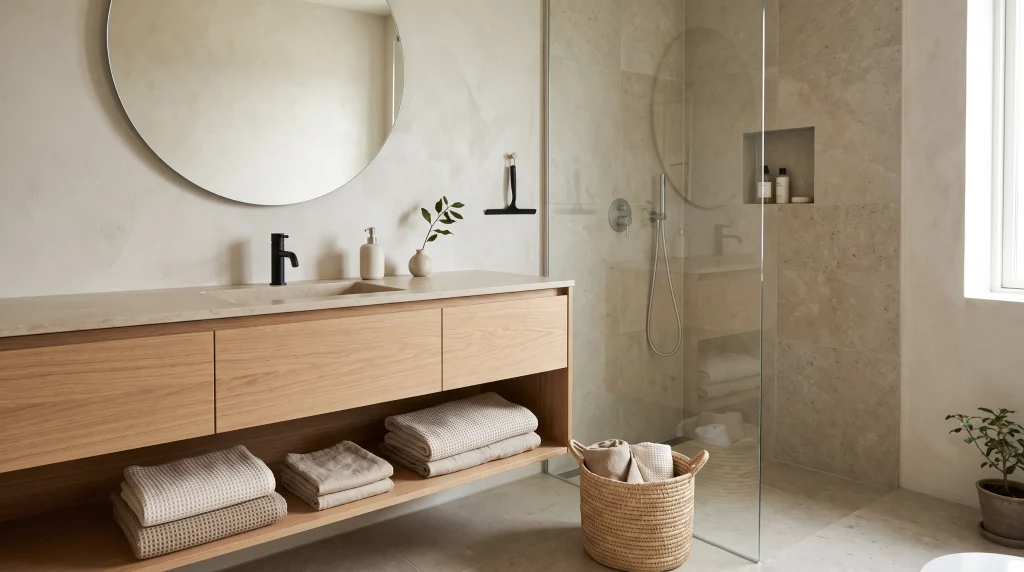
A calm room only stays calm if it is easy to maintain. Choose fewer, better items, and give each one a clear home so surfaces can be cleared in seconds. Ventilate well after showers to protect wood and prevent damp, and keep a small squeegee within reach for glass.
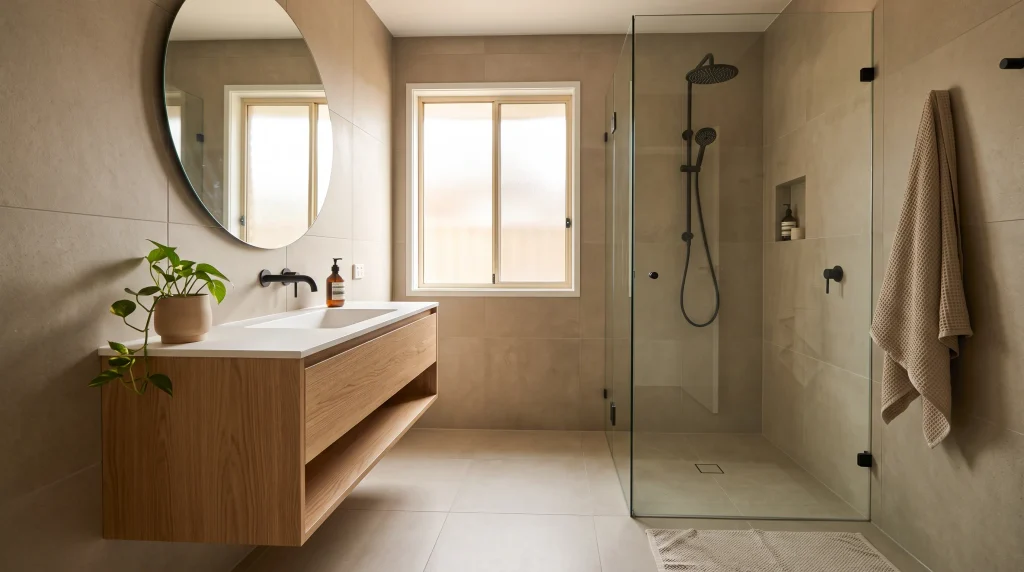
Wash rugs and towels regularly, and swap in a seasonal plant or a few stems if you like a fresh note. Because the palette is restrained, a quick tidy is often all it takes to reset the room, which makes this approach ideal for busy households and shared bathrooms alike.
A Simple Planning Checklist
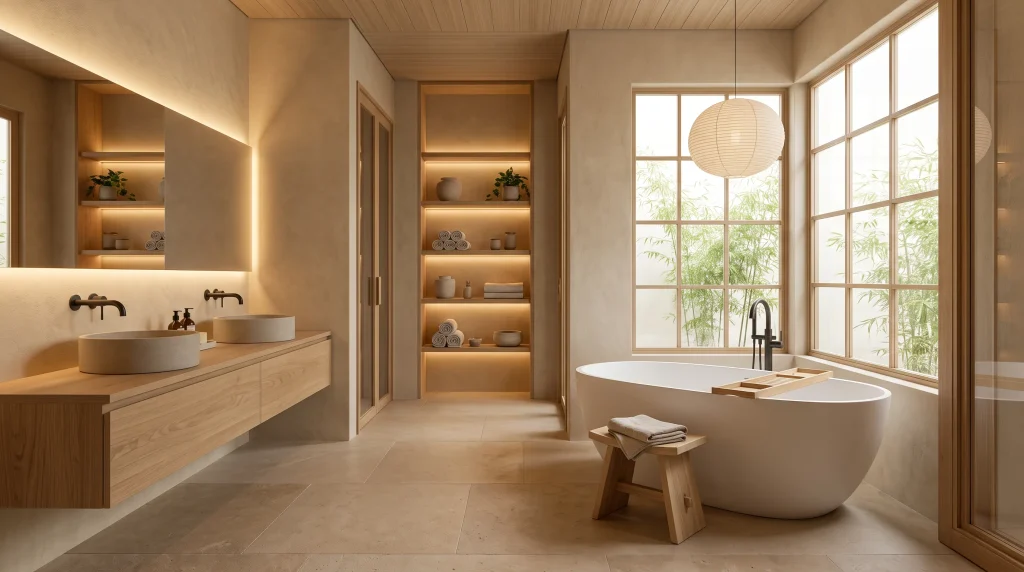
Before you buy anything, walk through a few questions. What mood do you want when you step inside? Which single feature, such as a stone basin or freestanding tub, will anchor the room?
Where will everyday items live so they never pile up on the counter? Is there enough layered lighting for both morning and evening? Finally, which natural materials can you repeat for harmony? Answering these in order keeps spending focused and prevents the impulse purchases that clutter a minimalist room. Start with the biggest decisions, then finish with the small accessories.
Final Thoughts
A well-planned Japandi bathroom proves that beauty and function can live together comfortably. By focusing on natural materials, soft light, thoughtful storage and a restrained palette, you create a room that supports your routine instead of competing with it. Start small if you like: swap a mirror, add a bamboo tray, or soften the lighting. Each change moves the space closer to the calm, balanced retreat you are after, and over time those small decisions add up to a bathroom that feels genuinely restful every single day. Remember that the best bathroom suits your household, so trust your instincts and edit gently as you go along.