
There’s a reason the fireplace is still the emotional center of so many homes, even in an era of smart thermostats and radiant floor heating. A well-designed hearth does something a heat vent never will: it gives a room a focal point, a reason for the furniture to face a certain direction, a place for people to naturally gather. And right now, fireplace design is going through one of its most interesting stretches in years, moving away from the heavy brick surrounds of decades past and toward something cleaner, more sculptural, and far more adaptable to different tastes.
If you’re planning a renovation, building from scratch, or simply refreshing an existing hearth, it helps to see the full range of what’s possible before you commit to tile samples or a mantel style. Below is a tour through the directions homeowners and designers are taking the modern fireplace in 2026, along with practical notes on what makes each style work in real, lived-in spaces.
Modern Fireplace Ideas for Every Style of Home
Whether your taste leans warm and organic or crisp and architectural, there’s a version of the modern fireplace that fits. Here are twelve approaches worth considering.
1. Waterfall Concrete Surrounds
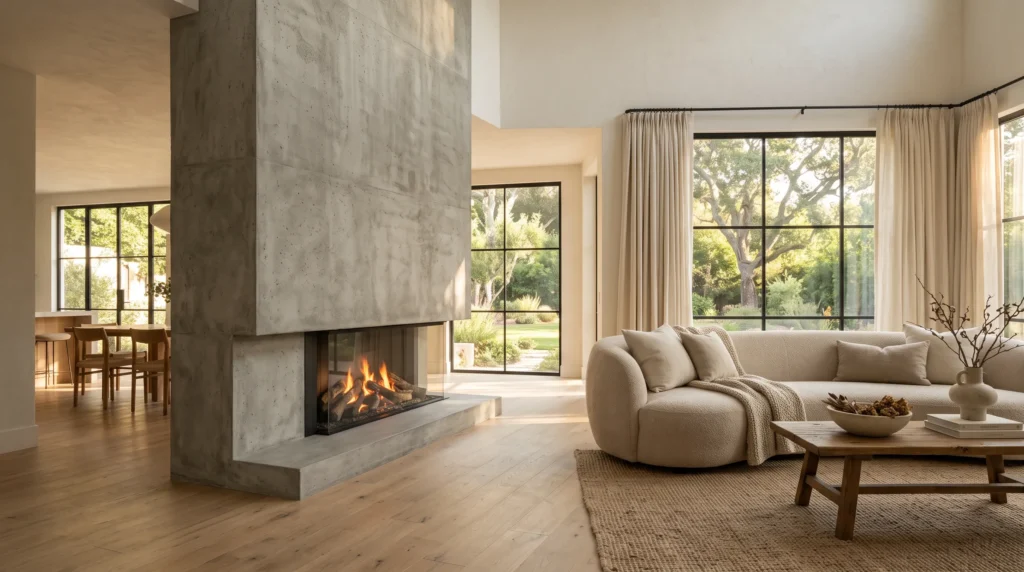
Poured concrete has become a favorite for anyone chasing an industrial-meets-minimalist look. Unlike brick or stone, concrete can be cast into a single continuous surface that wraps from the floor up and over the top edge in one unbroken plane, which designers sometimes call a “waterfall” detail. The result reads as sculpture more than construction. Because the surface is so plain, it pairs well with almost anything layered around it: a chunky knit throw, a single oversized vase, or nothing at all. The main trade-off is weight and installation complexity, so this style is best planned early with a structural engineer rather than retrofitted into an existing wall.
2. Slim Black Steel Fireboxes
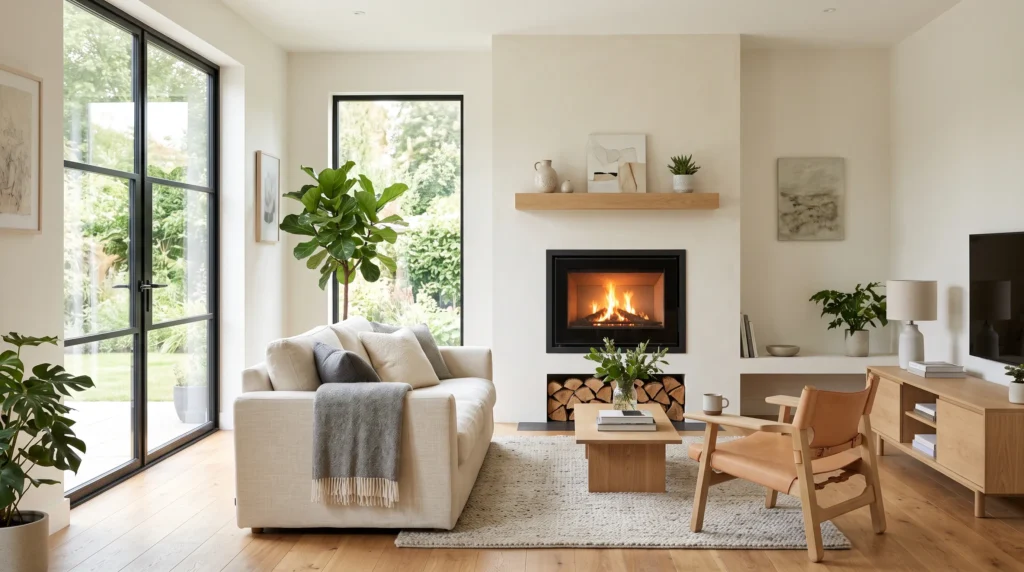
A thin black steel frame around the firebox opening has largely replaced the thick masonry surrounds of the 2000s. The appeal is proportion: a narrow steel edge lets the flame itself become the visual event rather than competing with a bulky mantel. This look tends to suit rooms with a lot of natural light and pale flooring, since the contrast keeps the fireplace from feeling like a dark hole in the wall. It also plays nicely with a floating wood shelf mounted well above the opening, giving you a spot for books or ceramics without crowding the firebox.
3. Bookmatched Marble Panels
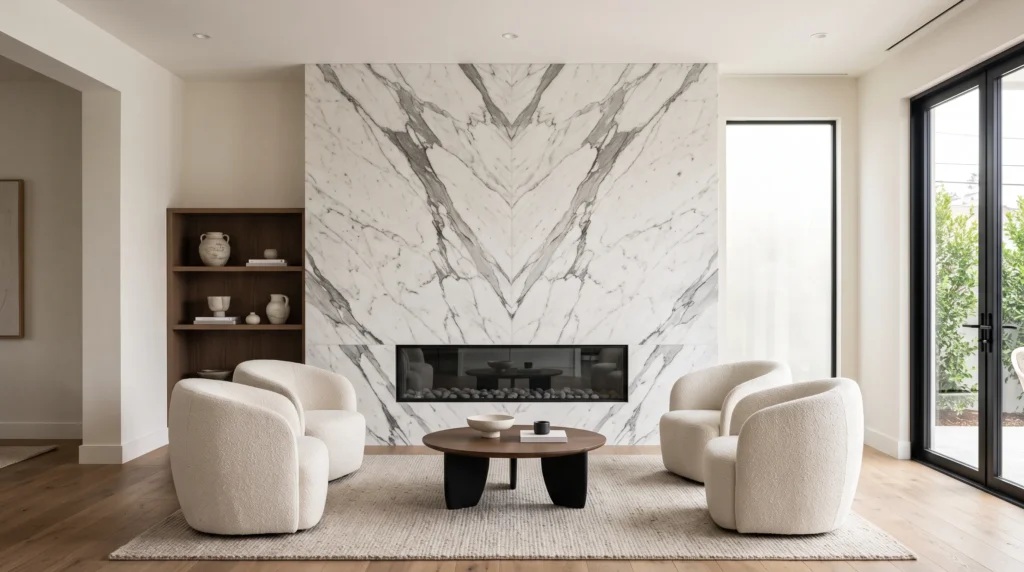
Marble hasn’t gone anywhere, but the way it’s being used has changed. Instead of ornate carved mantels, current designs favor large, bookmatched slabs, two mirror-image cuts of the same stone joined down the center so the veining forms a symmetrical pattern. It’s a quieter, more architectural use of the material, often paired with a low, wide firebox and almost no additional trim. Because the stone itself does the talking, keep everything else in the room restrained: a couple of low chairs, simple drapery, and not much else competing for attention.
4. Vertical Wood Slat Walls
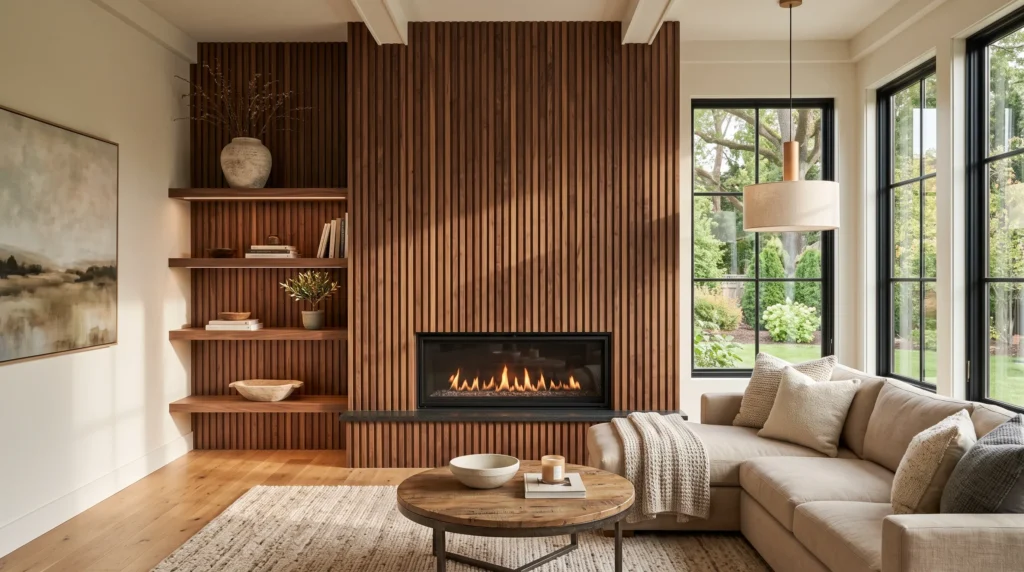
Wood slats have become one of the most requested fireplace treatments of the last few years, and it’s easy to see why. The vertical lines add texture and warmth without relying on color, which makes the technique flexible across a huge range of palettes. Slats are typically installed floor to ceiling around a linear firebox, sometimes wrapping a built-in media unit as well. The rhythm of the slats also does a nice job of visually stretching a low ceiling, which is a bonus in newer builds where ceiling height is often tighter than in older homes.
5. Full-Height Stone Cladding
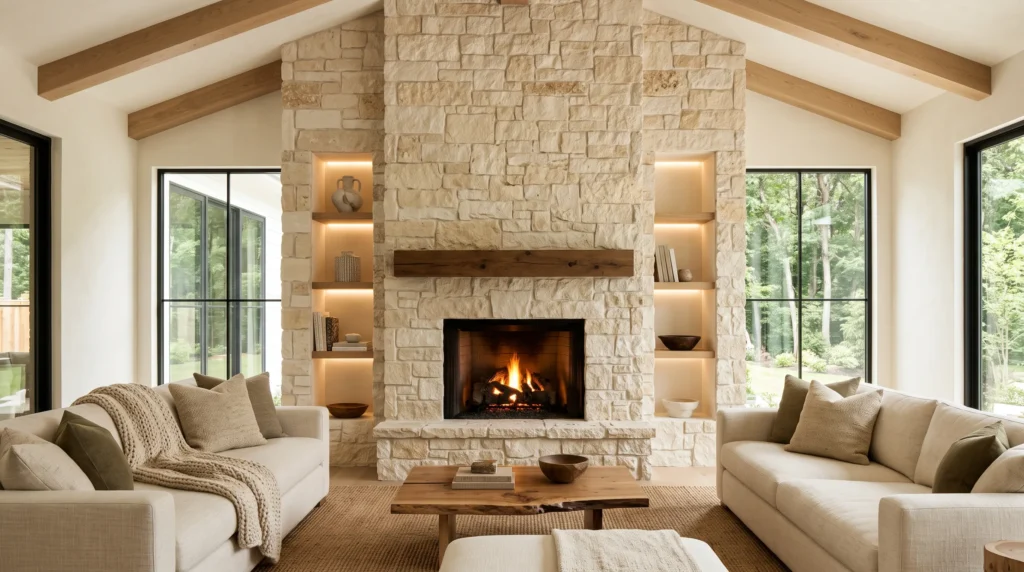
For a look that leans more organic than the sleek steel-and-glass approach, full-height natural stone cladding brings texture and a sense of permanence. Limestone, travertine, and split-face stacked stone are all popular choices right now, especially when carried all the way to the ceiling rather than stopping at a standard mantel height. Built-in niches carved into the stone give you a place for lighting or display pieces without needing separate shelving, and the added mass helps the fireplace feel like it was always part of the architecture rather than added on later.
6. Media Wall Integration
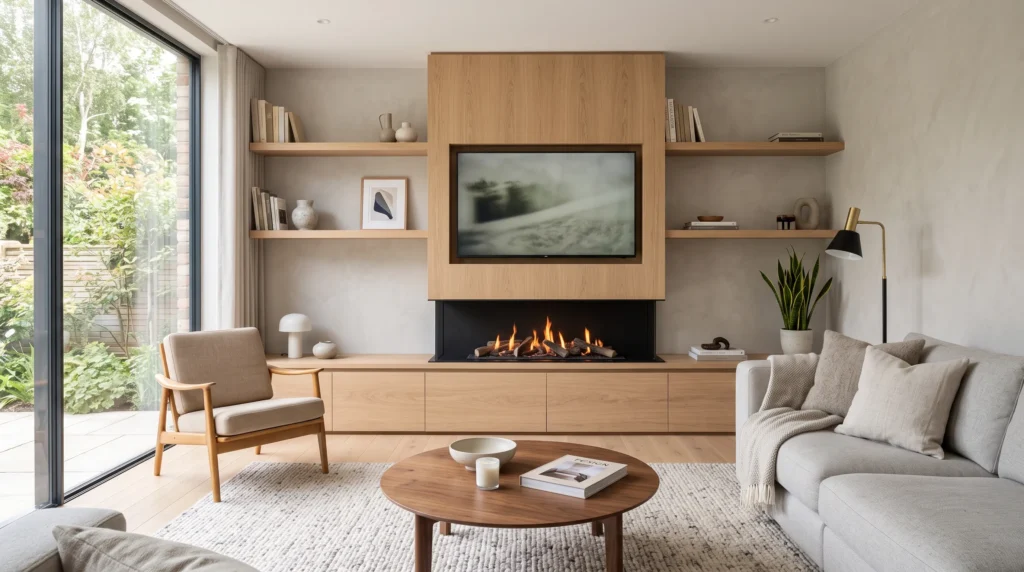
Mounting a television above the fireplace remains one of the most requested layouts, and modern design has gotten much better at making that combination feel intentional rather than like a compromise. The trick is usually a wood or stone surround that frames both the firebox and the screen as a single unit, often with a shadow gap or recessed shelf separating the two so the TV doesn’t read as an afterthought bolted to the wall. This layout works especially well in family rooms where the space needs to handle both movie nights and quiet evenings by the fire.
7. Moody Charcoal and Black Surrounds
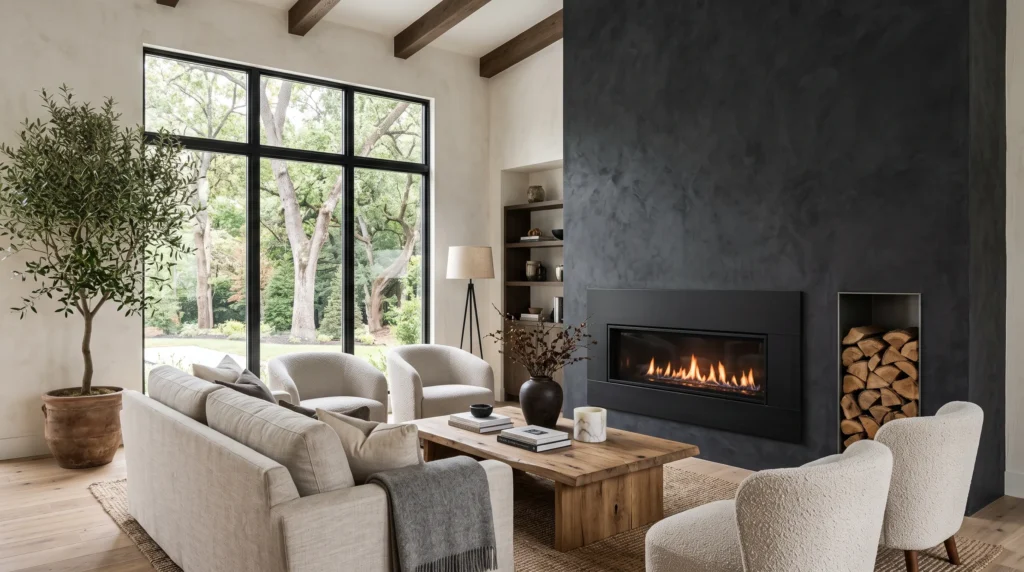
A dark, almost monochrome fireplace wall has become a popular way to add drama without introducing a lot of pattern or color. Charcoal plaster, soapstone, or matte black tile all achieve a similar effect: they ground the room and give the eye a place to rest. Because dark surfaces can feel heavy in the wrong context, this style tends to work best in rooms with generous natural light or paired with lighter furniture and greenery to keep things from tipping into gloomy.
8. Whitewashed and Painted Brick
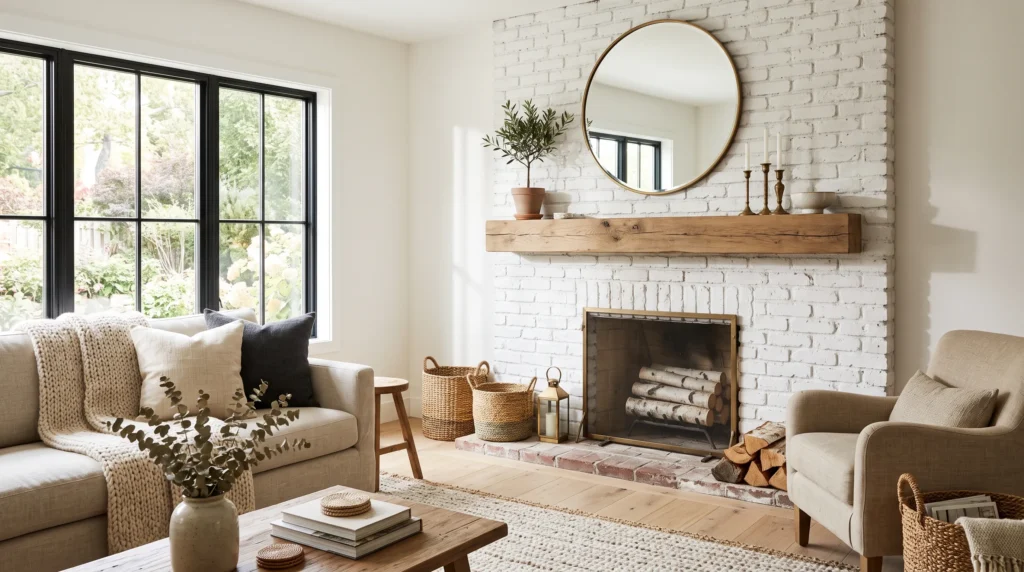
Not every homeowner wants to rip out an existing brick fireplace, and honestly, they don’t have to. Painting or limewashing brick in a soft white or off-white tone is one of the most cost-effective ways to modernize a dated hearth. The texture of the brick still shows through, which keeps some character, while the pale color lightens the whole wall and makes it far easier to style with a simple wood mantel or a round mirror above.
9. Linear Gas Fireplaces with Minimal Trim
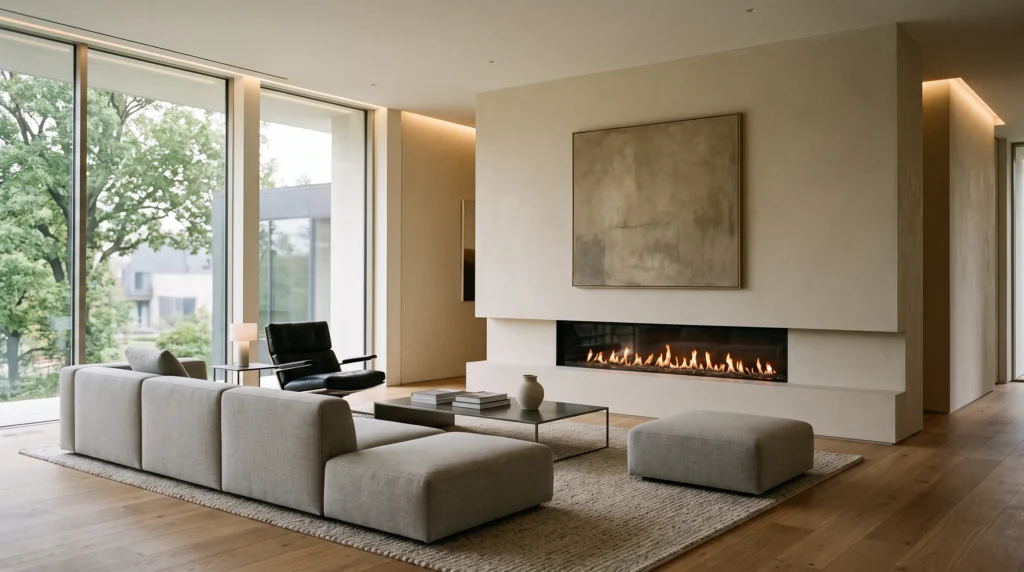
Linear fireboxes, long and low rather than square, have become something of a default in contemporary builds, and for good reason. The wide, shallow flame reads as more of a design element than a traditional fire, and the format suits almost any surround material, from tile to plaster to stone. Because the opening itself is so simple, this style leans heavily on whatever material surrounds it to set the tone, which makes it one of the more flexible starting points if you’re not sure which direction to take the rest of the room.
10. Indoor-Outdoor Fireplaces
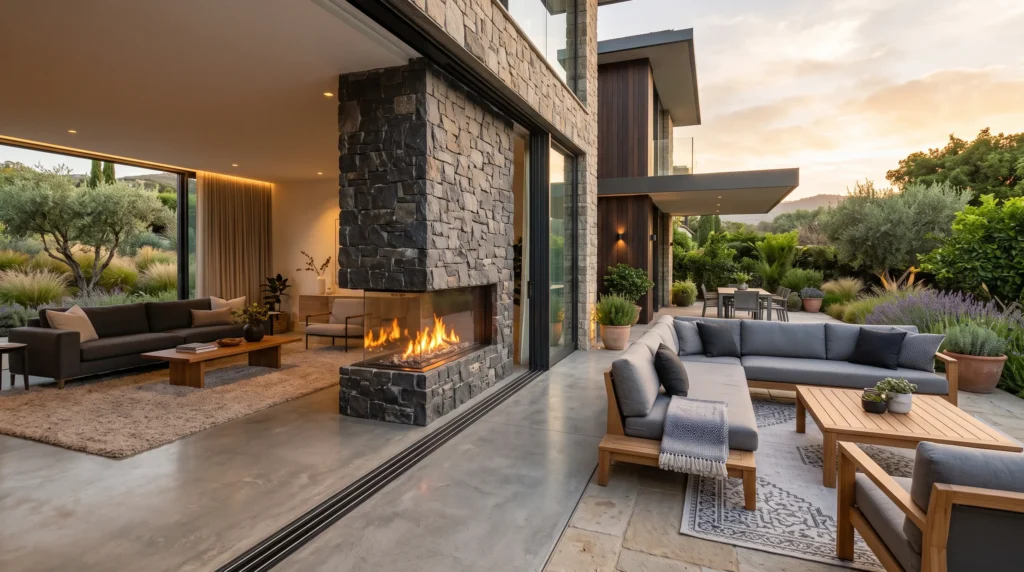
For homes with a strong connection between the living room and a patio or courtyard, a see-through or double-sided fireplace that spans an exterior wall has become a genuine showpiece. These installations require more planning around ventilation and weatherproofing, but the payoff is a fireplace that anchors both spaces at once, useful for entertaining and for stretching outdoor living into cooler months.
11. Handmade Tile Surrounds
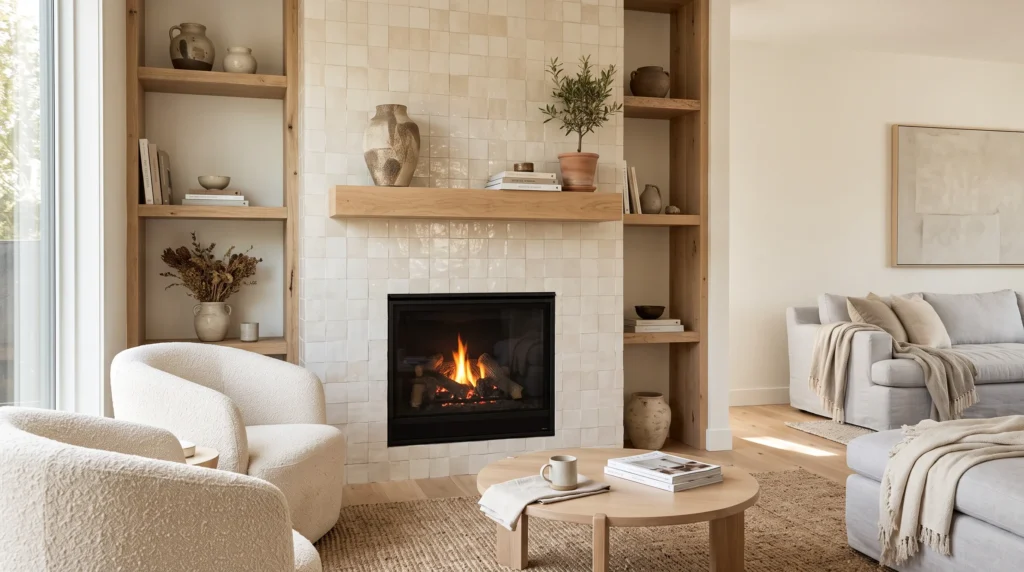
Zellige and other handmade tiles bring a subtle unevenness and light-catching glaze that mass-produced tile can’t replicate. Used around a fireplace, they add texture and a bit of warmth even in an otherwise pared-back room. Because handmade tile has natural variation, it tends to look best installed with a bit of trial and error, laying out several boxes before committing so the color range feels intentional rather than patchy.
12. Freestanding and Sculptural Fireplaces
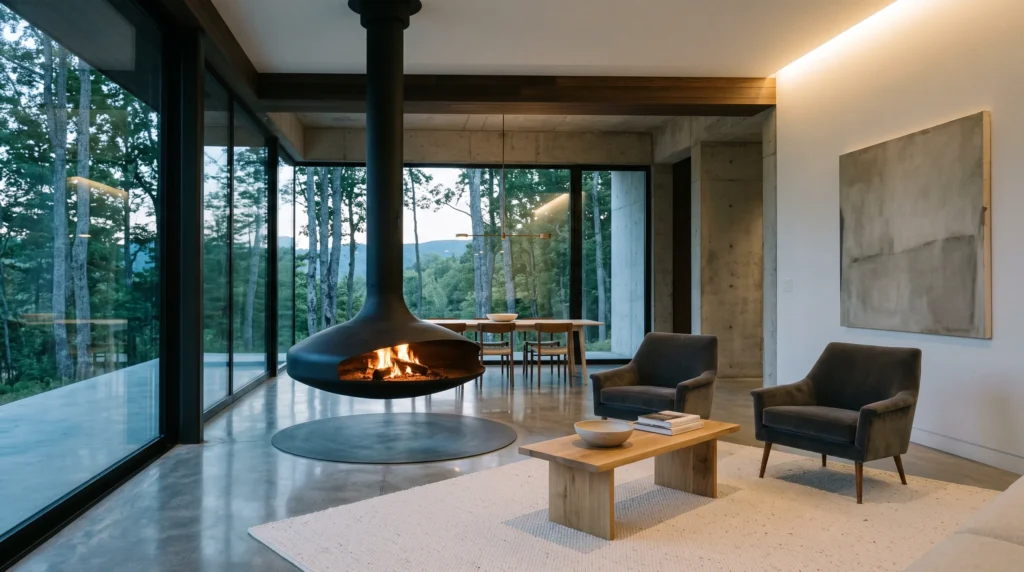
For a genuinely modern statement, freestanding fireplaces, often a metal cone or cylinder suspended from the ceiling or mounted on a slim base, function almost like a piece of furniture rather than a built-in feature. They work particularly well in open-plan spaces where a fireplace needs to divide a room without a full wall, and they’re often the easiest option to install without major structural work, since they don’t require tying into an existing chimney or masonry.
Choosing the Right Style for Your Space
With so many directions to choose from, it helps to narrow things down by asking a few practical questions before you fall in love with a material. How much natural light does the room get? Dark surrounds and moody palettes tend to need it. Is the fireplace going to share wall space with a television? If so, media wall integration or a linear firebox with minimal trim usually gives the cleanest result. And how much of the work involves structural changes versus a surface refresh? Painting existing brick or adding a floating shelf can transform a room in a weekend, while waterfall concrete or full-height stone cladding are bigger undertakings best planned alongside a contractor from the start.
It’s also worth thinking about how the fireplace will actually be used day to day, not just how it will photograph. A family room that hosts movie nights and homework sessions needs different storage and durability than a formal sitting room. Built-in shelving on either side of the firebox can quietly solve a lot of that, giving you a spot for books, baskets, and the inevitable pile of remote controls without cluttering the mantel itself.
Efficiency and Safety Still Matter
It’s easy to get swept up in surrounds and finishes, but a modern fireplace should still perform well as a heat source, especially if it’s doing double duty as your main source of ambiance and warmth on cold nights. Gas fireplaces vary quite a bit in efficiency depending on whether they’re vented or ventless, and how well the unit is sealed affects both heating performance and safety. The U.S. Department of Energy has a solid overview of how different fireplace types compare on efficiency and what to look for when choosing or upgrading a unit, which is worth a look before you finalize your firebox: energy.gov/energysaver/fireplaces.
Regardless of which style you land on, it’s worth having any gas line or venting work done by a licensed professional, and having wood-burning units inspected annually. None of that has to interfere with the design, good ventilation and clean lines aren’t mutually exclusive, but it’s the kind of detail that’s easy to overlook when you’re deep in tile samples and mantel mockups.
Bringing It All Together
The through-line across nearly every version of the modern fireplace right now is restraint: fewer decorative flourishes, more emphasis on material and proportion, and a firebox that’s allowed to be the quiet centerpiece rather than something buried under ornamentation. Whether that means a slim steel frame, a slab of bookmatched marble, or a floor-to-ceiling wall of wood slats, the best results tend to come from picking one strong material gesture and letting the rest of the room support it rather than compete with it.
A fireplace renovation, even a modest one, is also one of the higher-impact updates you can make to a living room. Because it’s usually the visual anchor of the space, changing its finish or proportions tends to shift how the whole room reads, often more dramatically than swapping furniture or paint alone. If you’re on the fence about where to start, a floating shelf, a coat of limewash, or a slimmer black surround around an existing opening are all low-risk ways to test the direction before committing to a full rebuild.
However you approach it, the goal is the same one that’s kept people gathering around fireplaces for centuries: a warm, inviting spot that pulls a room together and gives everyone a reason to linger a little longer.
Frequently Asked Questions About Modern Fireplace Design
Is a linear fireplace more expensive than a traditional one? It depends more on the surround material and installation complexity than on the shape of the firebox itself. A linear gas insert with a simple painted drywall surround can actually cost less than a traditional masonry fireplace with a carved wood mantel. Where costs climb is in large-format stone, poured concrete, or any design that requires structural changes to accommodate the size or weight of the finished surround.
Can I convert a wood-burning fireplace to gas without major renovation? In many cases, yes. Gas inserts are designed to fit into existing masonry openings, which makes them one of the more approachable upgrades if you already have a working chimney. That said, the surround and mantel can usually be refreshed at the same time for a more current look, since matching a brand-new insert to a dated brick surround tends to look mismatched.
What’s the most budget-friendly way to modernize an outdated fireplace? Paint or limewash is hard to beat. Whitewashing existing brick, swapping a heavy wood mantel for a slim floating shelf, and adding simple, uncluttered styling can transform the look of a fireplace in a weekend without touching the firebox itself. It’s a good first step if you’re not ready to commit to a full rebuild.
Do dark or black fireplace surrounds make a room feel smaller? Not necessarily, but they do need the right context. A dark surround tends to work best in a room with good natural light and at least a few lighter surfaces nearby, whether that’s pale flooring, light furniture, or bright walls. Without that contrast, a large dark surround can start to feel heavy rather than dramatic.
How do I choose between a wood mantel and a mantel-less design? This usually comes down to how you plan to style the space. A mantel gives you a dedicated spot for seasonal decor, framed art, or a mirror, which many people find easier to work with. A mantel-less design, often paired with a slim metal frame or a flush stone surround, leans more architectural and works well if you’d rather let the material and the flame speak for themselves without added decor.