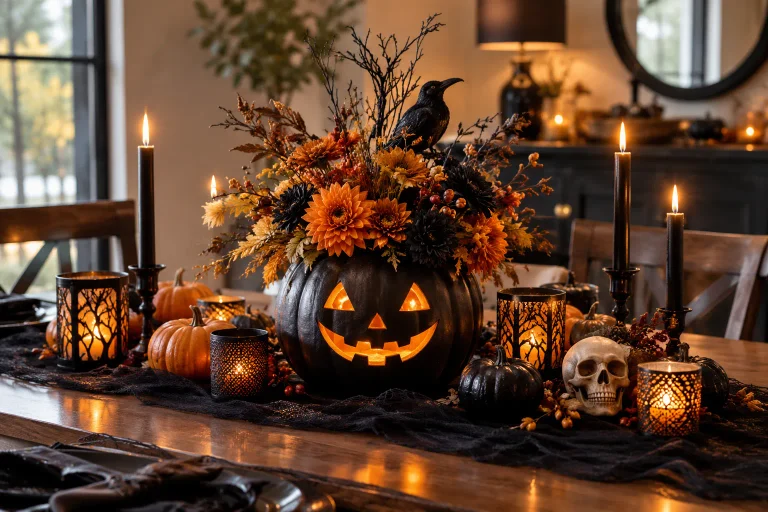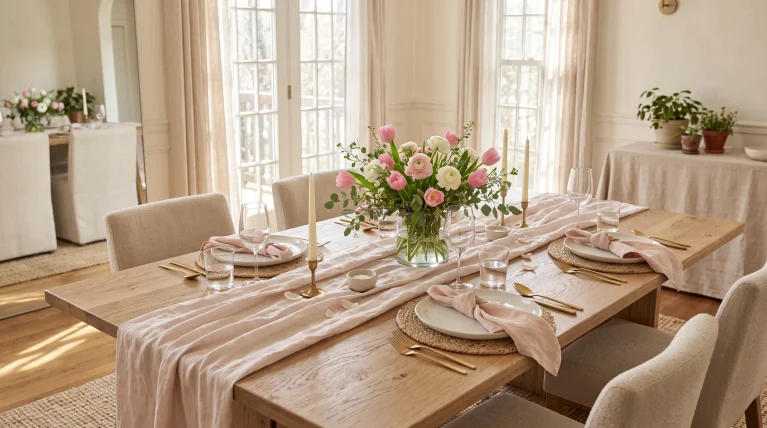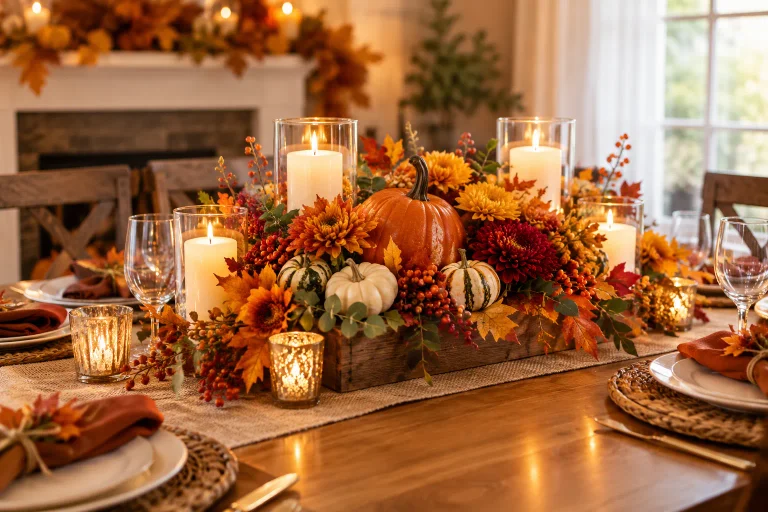
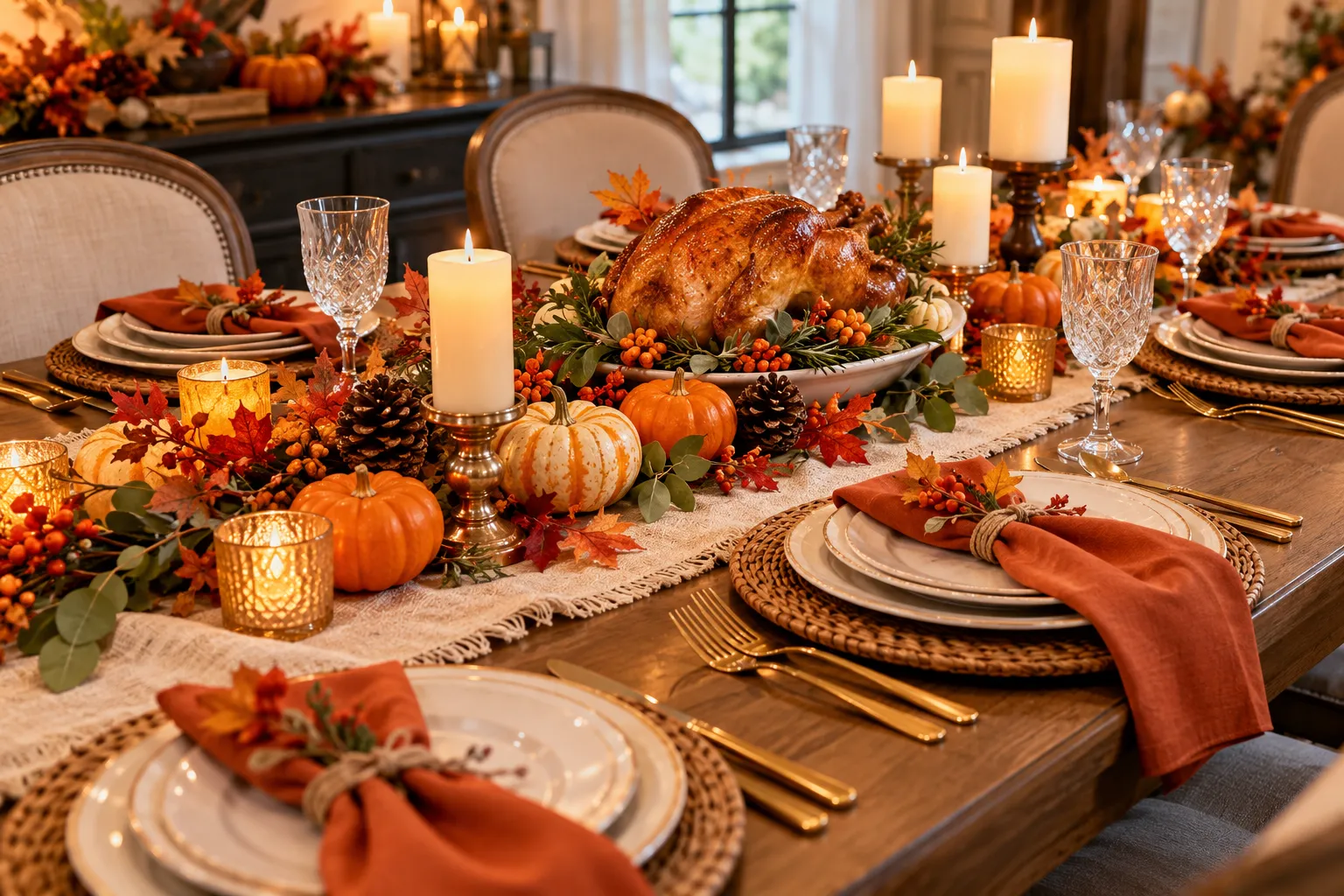
A great Thanksgiving dinner table setting does a quiet but powerful job. Before anyone tastes the turkey, the table tells your guests they were expected, they matter, and the evening is worth slowing down for. The good news is that you do not need a showroom budget or a cabinet full of heirloom china to pull it off. You need a clear plan, a handful of thoughtful details, and a color story you actually love.
This guide walks you through the basics of placing plates and cutlery, then moves into palettes and styles you can borrow, mix, or simplify. Whether your gathering is a relaxed table for six or a long holiday spread for fifteen, you will find an approach that fits your home, your schedule, and your personality.
Thanksgiving Dinner Table Setting Ideas for Every Style
Every table starts with structure. Once the layout is right, the style you choose becomes the fun part. Below you will find the essential placement rules first, followed by a collection of looks, from crisp blue and white to moody burgundy, so you can pick one and run with it.
Start with the Right Layout: Casual vs. Formal Place Settings
Before choosing colors, decide how formal the meal will be. That single decision tells you which plates, utensils, and glasses belong at each seat.
A casual place setting keeps things lean. You need a dinner plate in the center, a fork on the left, a knife and spoon on the right with the blade facing the plate, a napkin, and a water glass above the knife. That is plenty for a family-style feast where everyone is eager to dig in, and pie arrives later with its own forks.
A formal place setting adds layers. A charger sits beneath the dinner plate, a bread plate sits above the forks, and extra utensils appear for each course in the order they will be used, working from the outside in. Wine glasses join the water glass on the right. A dessert fork or spoon can rest above the plate or arrive with the final course.
The Emily Post Institute, a trusted authority on etiquette, offers a helpful Thanksgiving table setting guide that shows formal six-course, formal four-course, informal three-course, and casual single-course layouts. One useful takeaway is to set out only what your menu truly needs. If you are not serving a fish course, skip the fish fork. If you do not own bread plates, guests can rest rolls on the edge of their dinner plates.
Blue and White for a Crisp, Unexpected Twist
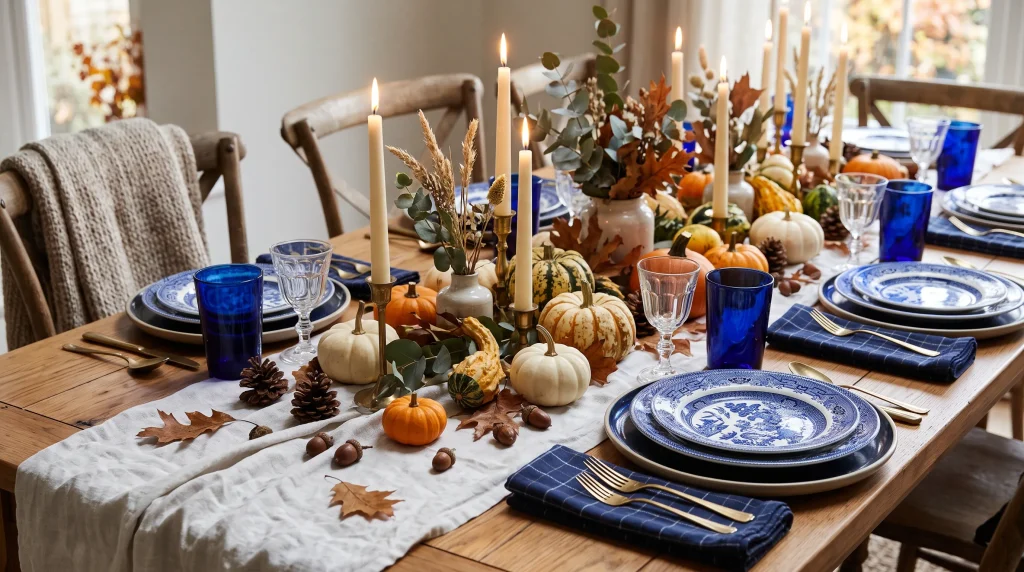
Orange and brown dominate most autumn tables, which is exactly why blue and white feels so fresh. Think patterned porcelain, cobalt drinking glasses, or navy napkins with a subtle check. These shades look striking against a pale linen runner or a warm wood surface.
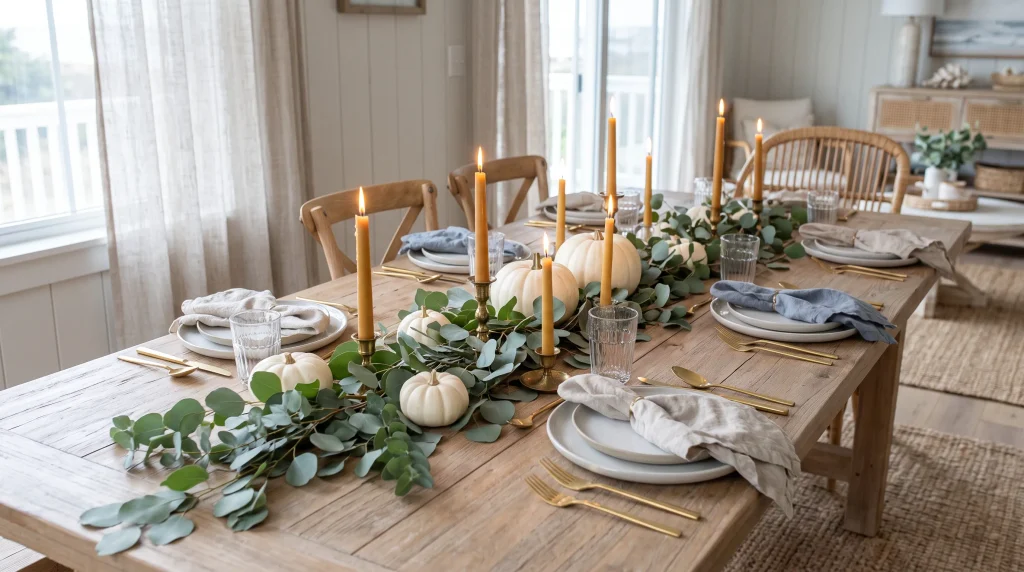
To keep the look cozy rather than cold, bring in gold flatware or honey-colored candles. A few white pumpkins and a loose line of eucalyptus down the center finish the picture. This palette is especially flattering in dining rooms with cooler light or a coastal, breezy feel.
Harvest Abundance with Fruit and Candlelight
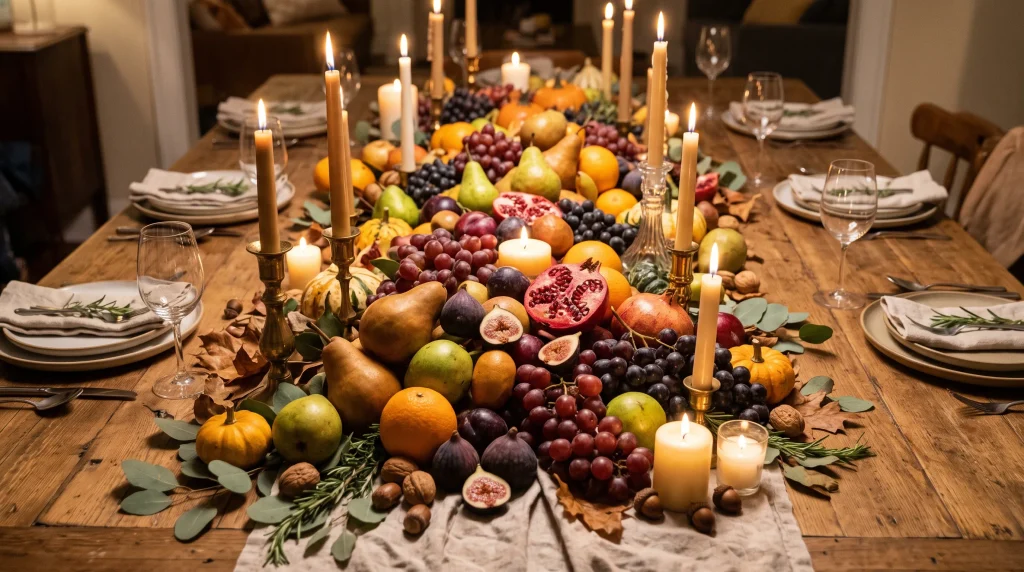
Few ideas say Thanksgiving as clearly as a table that overflows with the season’s produce. Pears, oranges, figs, and pomegranates look gorgeous when they are grouped between candles, and they cost far less than an elaborate floral arrangement.
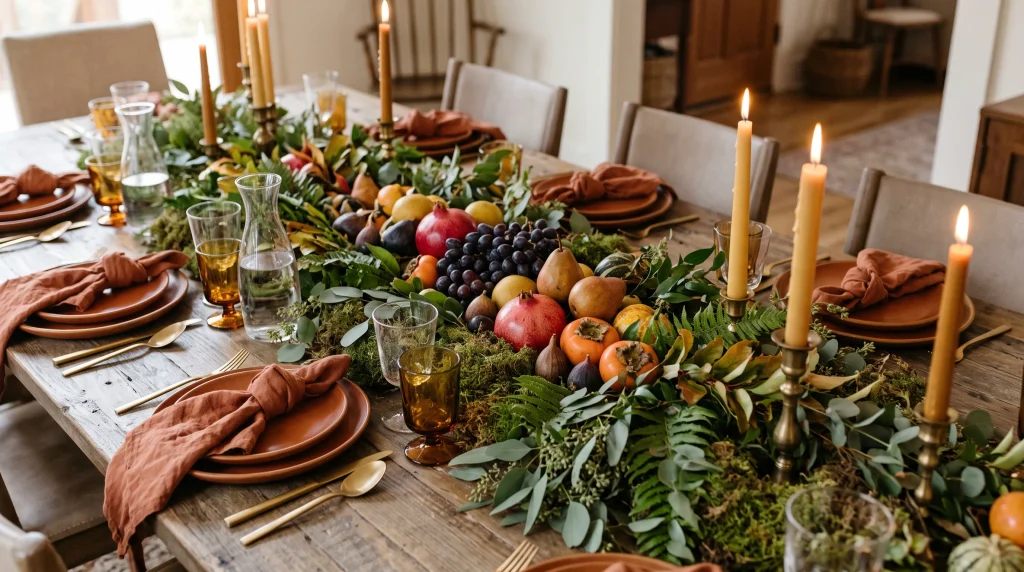
Lay a bed of moss or leafy greenery along the center first. The foliage gives the fruit something to rest against and adds depth. Terracotta napkins and rust-colored dishes echo the warm tones in the fruit. The effect is generous and celebratory, and it quietly reminds everyone that this holiday began as a harvest festival.
Rustic Textures That Feel Relaxed and Lived-In
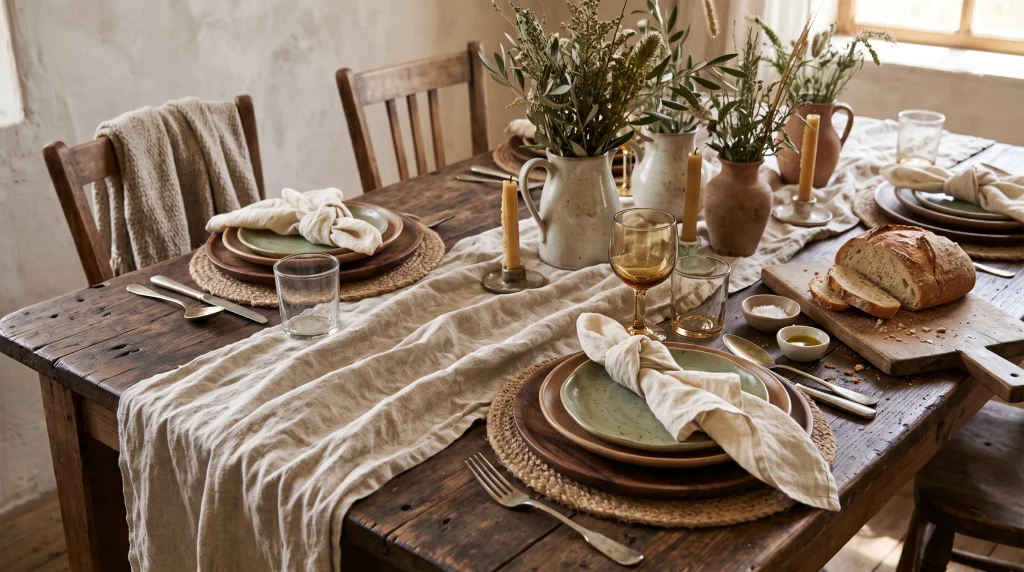
If you prefer a table that looks comfortable rather than perfect, rustic is your friend. Start with a wooden table or a simple cloth in oatmeal or cream. Add wood chargers, linen napkins, jute placemats, and plain ceramic plates in earthy shades like sage, clay, or sand.
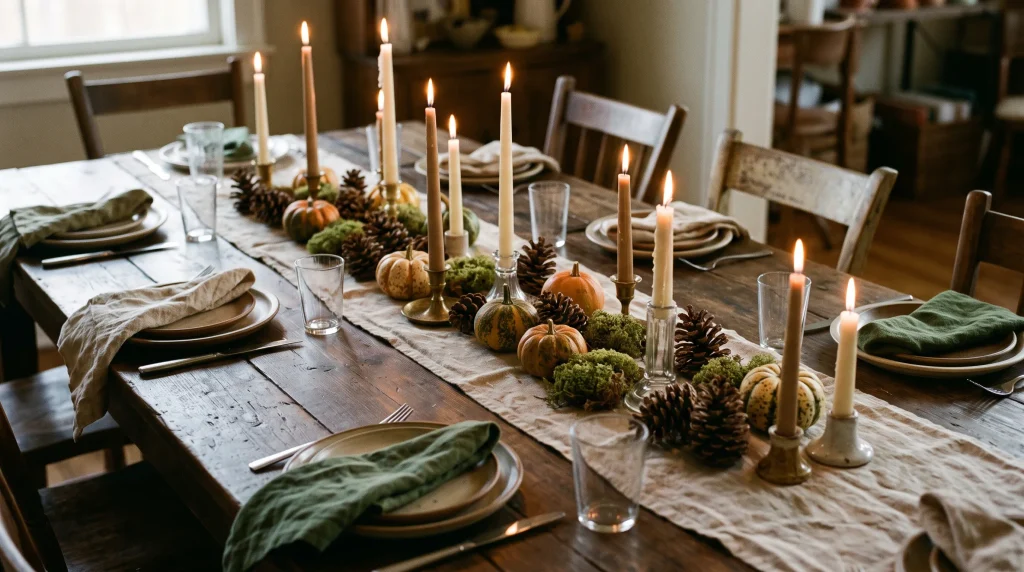
Down the center, scatter pinecones, mini gourds, and small clusters of moss. Taper candles in plain holders add a soft glow without feeling fussy. The charm of this style is that nothing has to match exactly. A slightly crooked napkin or an uneven candle height only adds to the warmth.
Black and White for Drama

Black and white may sound like a kitchen trend, but it translates beautifully to a holiday table. Black plates or chargers paired with crisp white napkins create a bold contrast that feels modern and confident.
Matte black candleholders, silver or gold flatware, and a few white pumpkins keep the palette tight. To stop the look from becoming severe, run a length of eucalyptus or olive branches through the center and dim the overhead lights. The greenery and candle flames soften the contrast and make the whole scene feel intentional rather than stark.
Let Greenery Take Center Stage
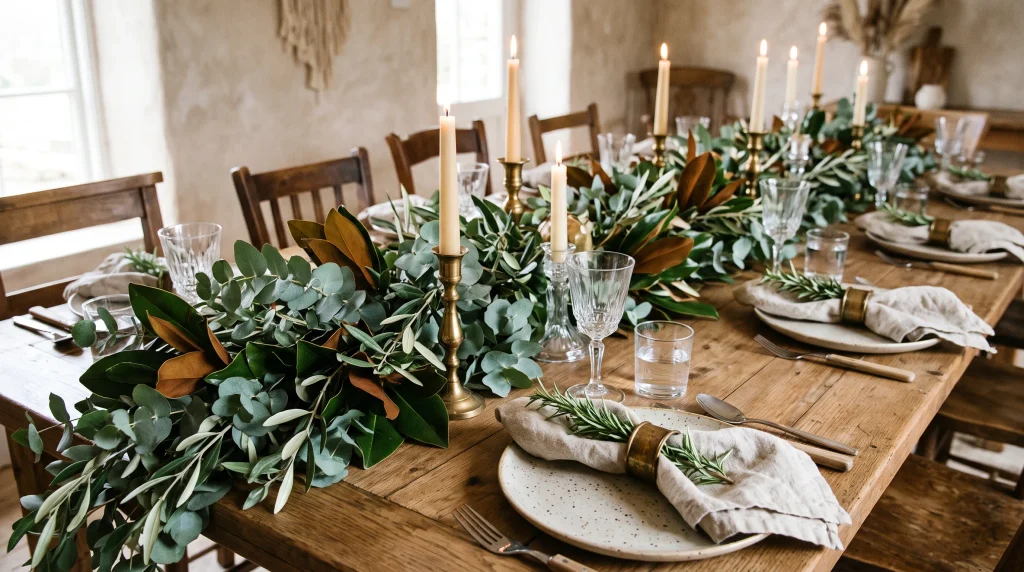
When you want maximum impact for minimum effort, greenery is the answer. A long garland of eucalyptus, magnolia leaves, or olive branches turns any table into a runner of living texture. Tuck a sprig of rosemary beneath each napkin ring and your guests get a lovely scent as they sit down.
Vary the shades from silvery sage to deep forest so the arrangement does not look flat. Place candles among the leaves for a flickering effect. Green works equally well in rustic farmhouse spaces and in clean, contemporary rooms, which makes it one of the most flexible choices on this list.
A practical shortcut: high-quality faux garland saves time, and you can fluff it generously and weave in a few fresh clippings for realism and fragrance.
A Bold, Multicolor Mix
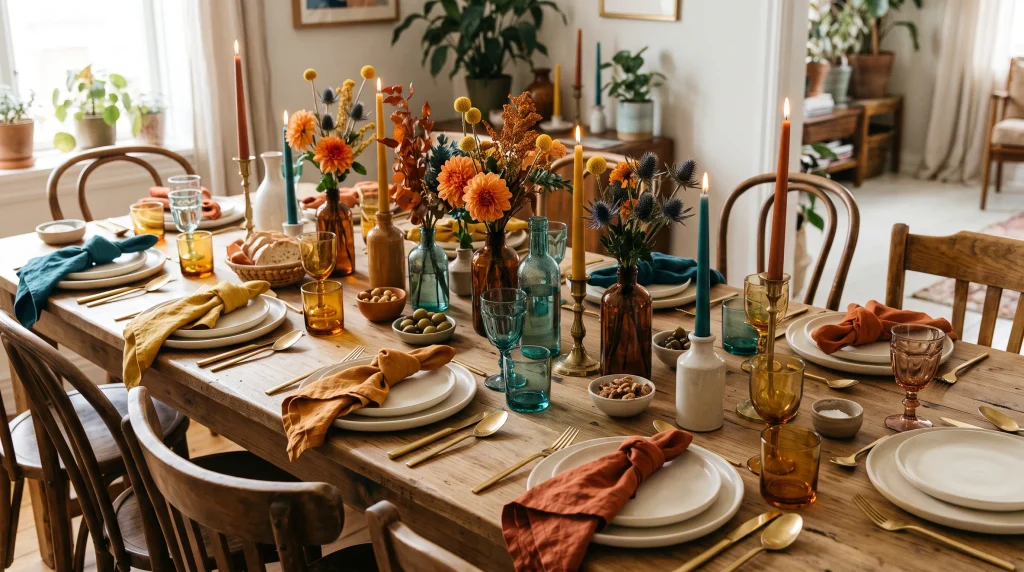
You do not have to commit to a single palette. Orange, teal, mustard, and rust can share a table if you give them a unifying thread. Choose one element, perhaps white plates or brass cutlery, and keep it consistent at every seat. Everything else can be playful.
Mismatched colored glassware, patterned napkins, and a vase of sunflowers or dahlias bring a joyful energy. This approach is ideal for casual gatherings with children and relatives of all ages, and it lets you build the whole look around pieces you already own.
Calm and Cozy Neutrals
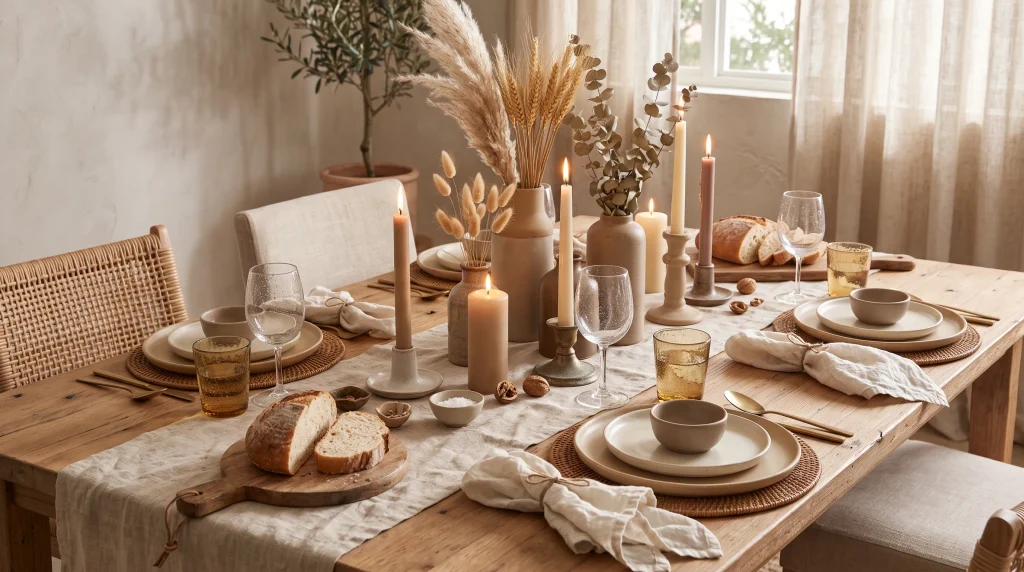
Some hosts want the table to feel like a deep breath. Neutrals deliver that calm. Layer beige, cream, taupe, and soft brown, then add natural textures like linen, rattan, and stoneware so the scheme does not read as flat.
Small white pumpkins, dried grasses in ceramic vases, and ivory taper candles create a peaceful, minimalist look. A neutral tablecloth makes an excellent backdrop for wooden bowls and handmade pottery. If you already decorate with earthy autumn tones around the house, carry a few of those pieces to the table so the whole space feels connected.
Gold Accents for a Little Glamour
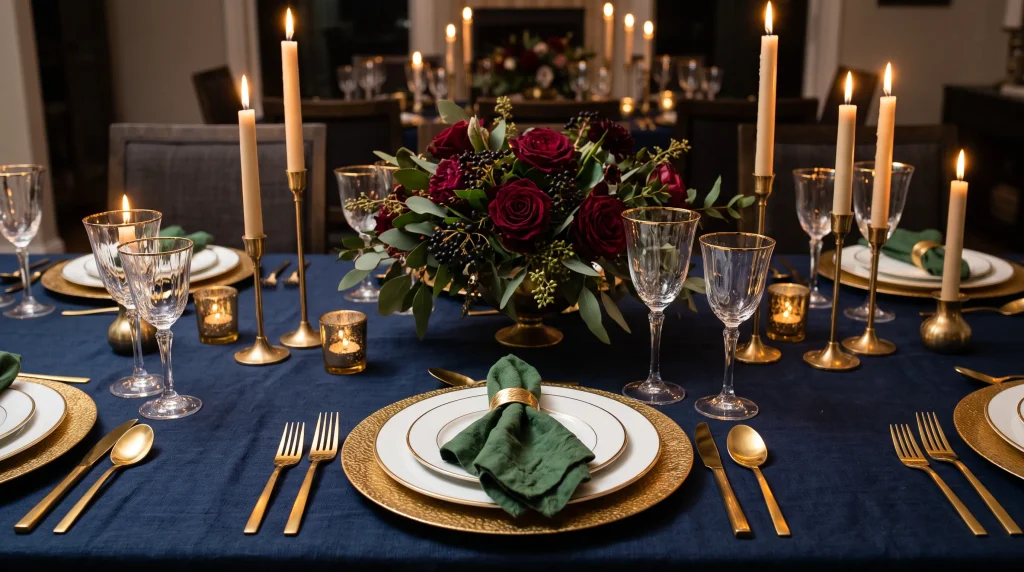
A touch of gold makes a meal feel like a celebration. Gold flatware, candleholders, or charger plates look especially rich against deep navy, forest green, or burgundy linens.
You can go all in or keep it subtle. Even one or two metallic elements lift the entire table. A scattering of small gold tea lights down the center is an affordable detail that photographs well and glows beautifully once the sun goes down. Do not worry if your gold pieces are not an exact match; a mix of finishes reads as collected and personal.
Minimal and Intentional
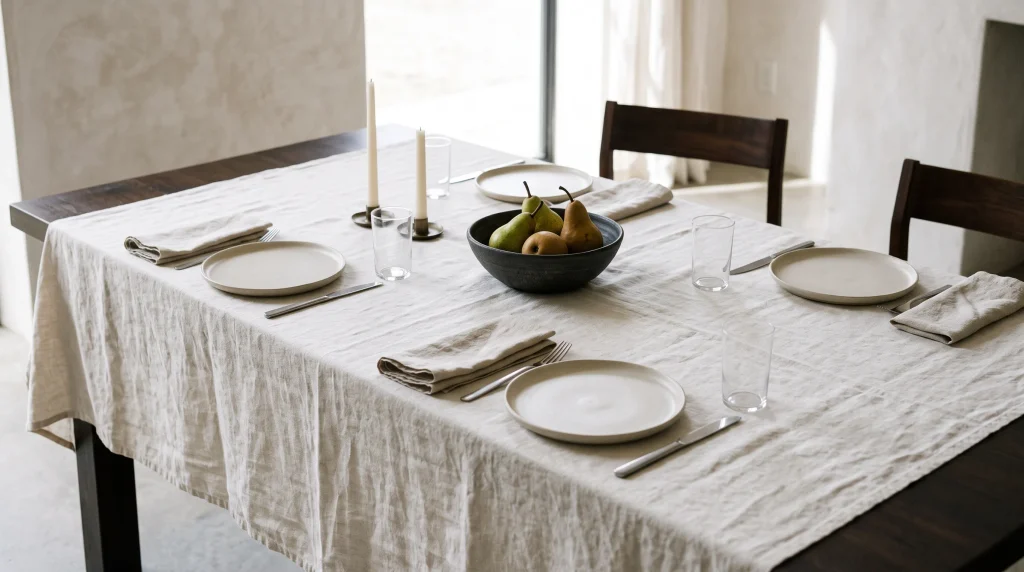
Sometimes the most elegant move is restraint. A minimal table might feature a white or black cloth, plain plates, and a single focal point such as a bowl of pears or one long line of candles.
Limit yourself to two or three colors and let one simple natural element, like greenery, supply the life. Minimal does not have to mean cold. Add linen napkins, a soft wool throw over a nearby chair, and plenty of candlelight to keep the mood inviting. This approach is a lifesaver when guests arrive with little notice or when you want the food to be the star.
A Playful Pink Palette
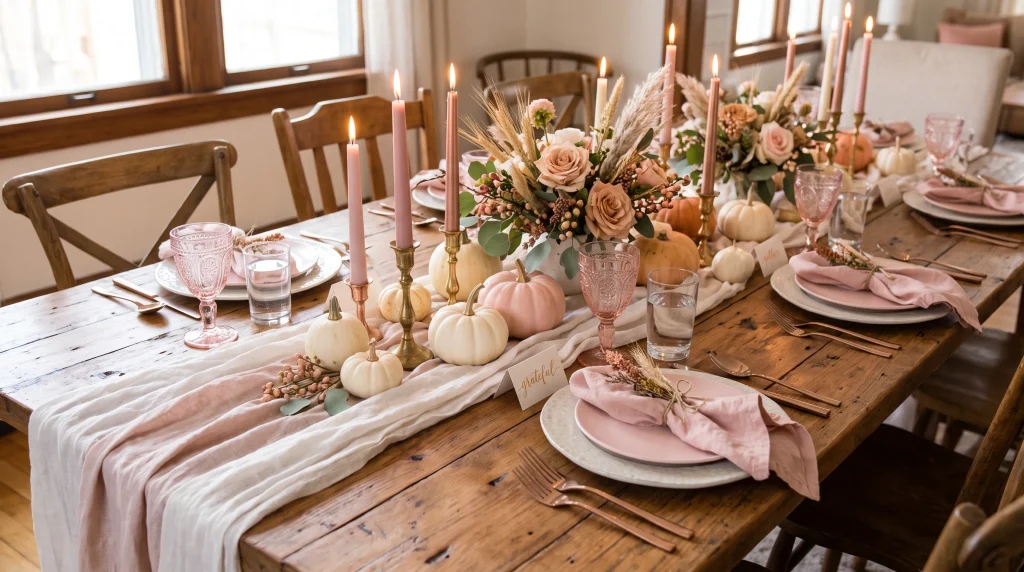
Pink is not the first color people associate with Thanksgiving, but it can feel surprisingly festive when handled with care. Blush napkins, rose-gold flatware, and pale pink glasses add cheerful contrast to a natural wood table.
Balance the sweetness with cream, white, or woven textures, and bring in seasonal blooms like mums and dahlias in coral and pink shades. The result is youthful, unexpected, and still cozy. It is a particularly good fit if your family likes to do things a little differently.
Rich Burgundy for Moody Evenings

Burgundy is practically made for late-autumn dinners. A velvet runner, wine-colored napkins, or deep red tapers bring instant richness. The shade looks stunning next to gold flatware and dark wood.
If you want to add variety, blush, peach, or soft green accents pair nicely without making the table feel busy. Burgundy also performs best in low light, so consider candles, string lights, or lower-wattage bulbs for an evening meal. The glow turns a good table into a memorable one.
Relaxed Boho Layers
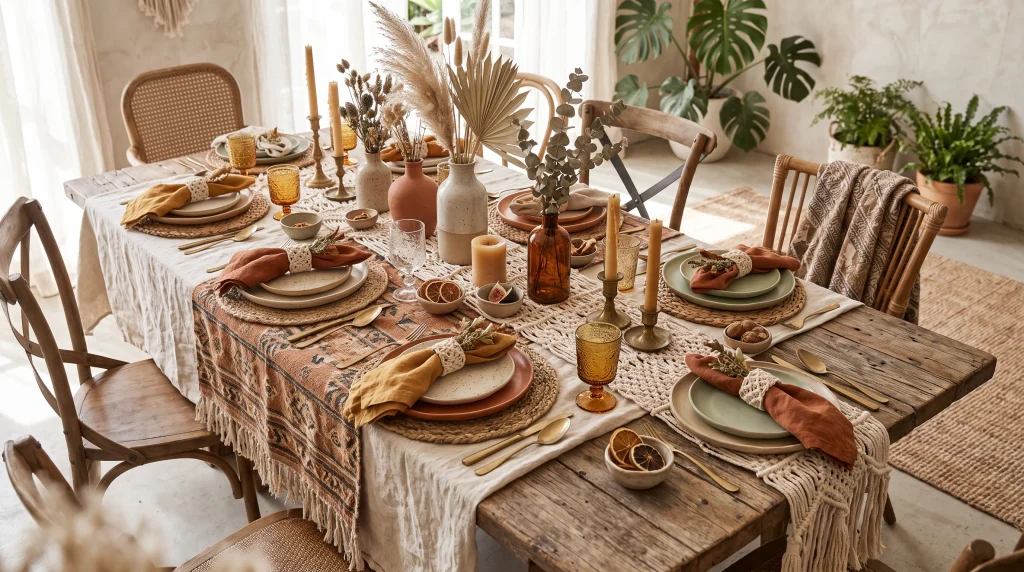
Bohemian style is about gathering textures and patterns that feel collected over time. Start with a plain cloth or a patterned runner, then layer woven placemats, macramé accents, and handmade ceramics.
Mismatched glassware, especially in amber tones, gives the setting a lived-in charm. Soften everything with olive branches or eucalyptus and tie napkins with twine or yarn for a handmade finishing touch. A large arrangement of dried flowers in the center is both beautiful and practical because it never wilts.
Warm Orange and Pumpkin Tones

Orange remains a classic because it is cheerful and unmistakably autumn. Bring it in through burnt-orange napkins, mini pumpkins, marigolds, or a cluster of mums. A neutral tablecloth lets the color pop without overwhelming the room.
Brass or amber candleholders amplify the warm glow, and small gourds, acorns, or dried florals add variety on a smaller scale. Mixing real pumpkins with silk flowers is a smart compromise that keeps things pretty and manageable, since you only need to refresh the fresh elements.
Finishing Touches That Make Any Table Feel Special
Whichever style you choose, a few small details can take a table from nice to memorable.
Place cards. Handwritten names make each guest feel considered, and they help you seat chatty relatives and shy newcomers in sensible spots.
Gratitude notes. Leave a small card at each setting with a line about why you are thankful for that person. They tend to be saved long after the holiday ends.
Layered lighting. Candles at different heights add depth, and a few battery tea lights are a safe option when children are around. Keep centerpieces low enough that guests can see across the table and talk easily.
Room to serve. Leave space for platters or plan to serve from a sideboard. A beautiful table loses its charm if there is nowhere to put the gravy.
Plan Ahead So You Can Enjoy the Day
The easiest way to keep Thanksgiving stress-free is to set the table early. Two days before, iron linens, polish flatware, and count glasses. The night before, lay out cloths, runners, and plates. On the morning of the holiday, add fresh greenery, light candles just before guests arrive, and take a minute to stand back and admire the result.
Choose the Look That Feels Like Home
The best Thanksgiving dinner table setting is not the one that follows every trend. It is the one that reflects the people sitting around it. Pick a palette that makes you smile, set the layout that suits your menu, and add one or two details that mean something to your family. Candlelight, good company, and a table made with care will do the rest.
Save this guide for later reference, share it with a friend who is hosting this year, and start planning your own table today.