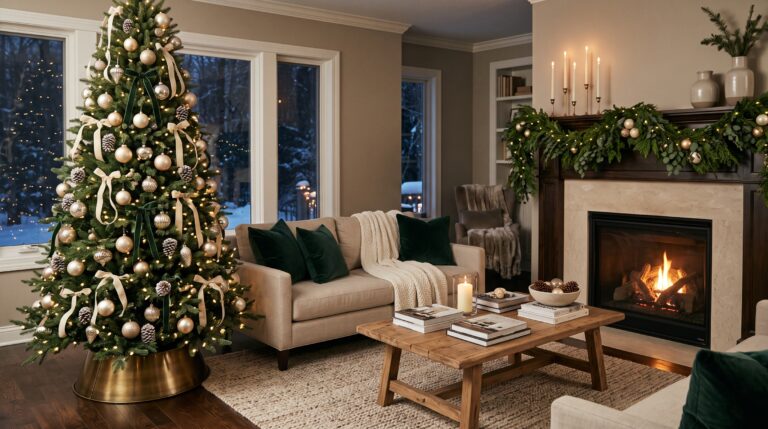
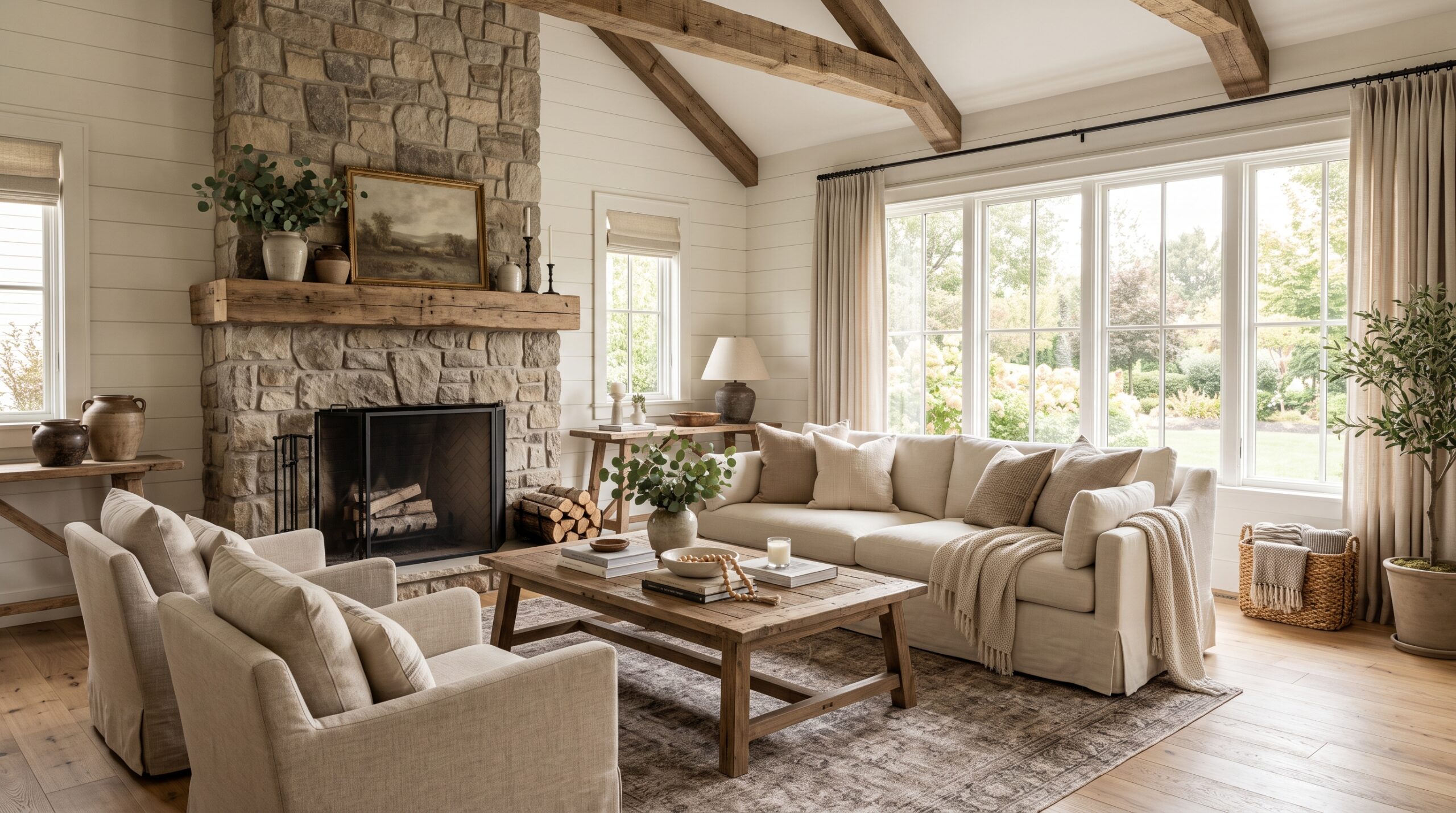
There’s a reason farmhouse style refuses to go out of fashion. It takes everything we love about an old countryside home — worn wood, soft linen, a fire crackling somewhere nearby — and blends it with the comfort of modern living. The result is a room that feels lived-in the moment you walk into it, not staged.
If you’re planning a refresh, this guide breaks down every element that makes a farmhouse living room work: color, texture, furniture, lighting, and the small finishing touches that pull it all together. Whether you’re drawn to a classic country look or a cleaner, more contemporary take on the style, there’s an idea here you can start with today.
Farmhouse Living Room Ideas for Every Corner of Your Space
Think of this section as your master checklist. Each idea below tackles a different part of the room — walls, seating, storage, lighting — so you can mix and match based on what your space actually needs rather than trying to do everything at once.
1. Start With a Warm Neutral Palette
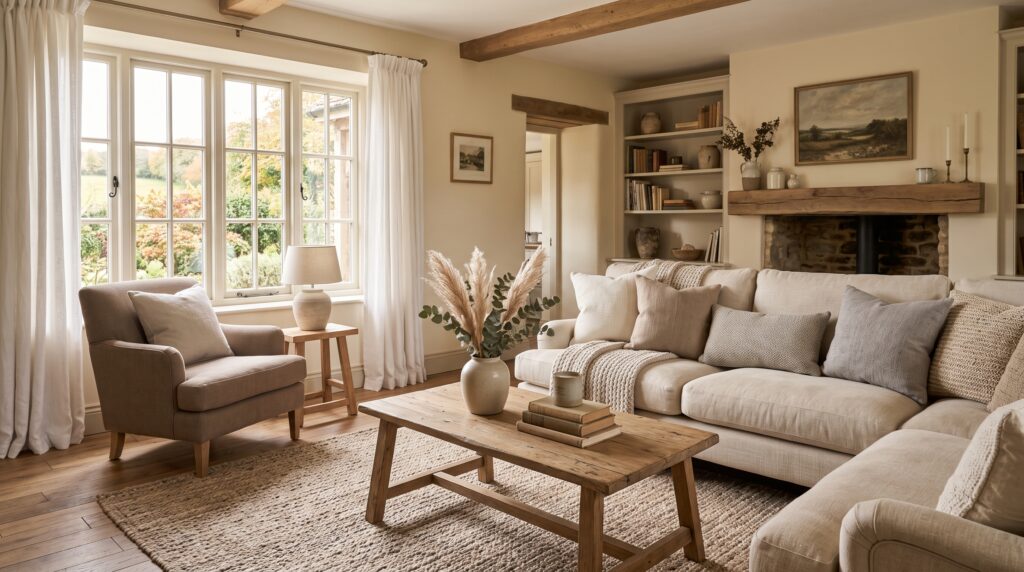
Every strong farmhouse room begins with color, and that color is almost never bright. Cream, oatmeal, soft white, dove gray, and warm taupe form the backbone of the style because they let texture do the talking. Paint walls in a warm off-white rather than a stark, cool white — it reads softer under lamplight and pairs better with natural wood tones. Once the base is set, you can layer in darker accents through furniture and textiles without the room ever feeling heavy.
2. Choose an Oversized, Slouchy Sofa
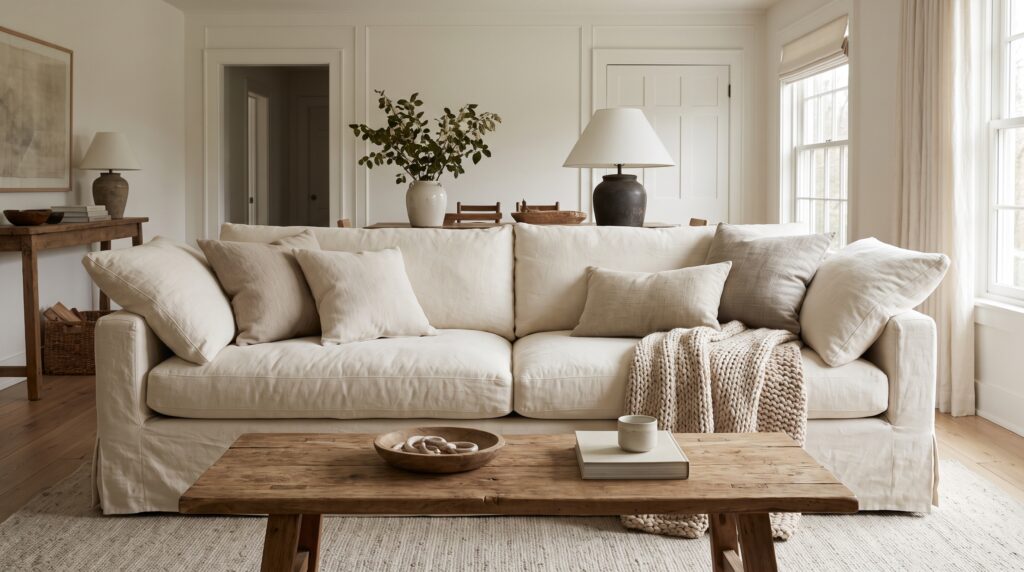
Farmhouse seating should look like it’s begging you to sink into it. Look for slipcovered or linen-blend sofas with deep seats and relaxed, rolled arms rather than sharp, tailored lines. A sofa that looks slightly imperfect — a bit slouchy, a bit worn — actually reads as more authentic to the style than a stiff, boxy one. Pile on mismatched cushions and a chunky knit throw to finish the look.
3. Bring in a Reclaimed Wood Coffee Table
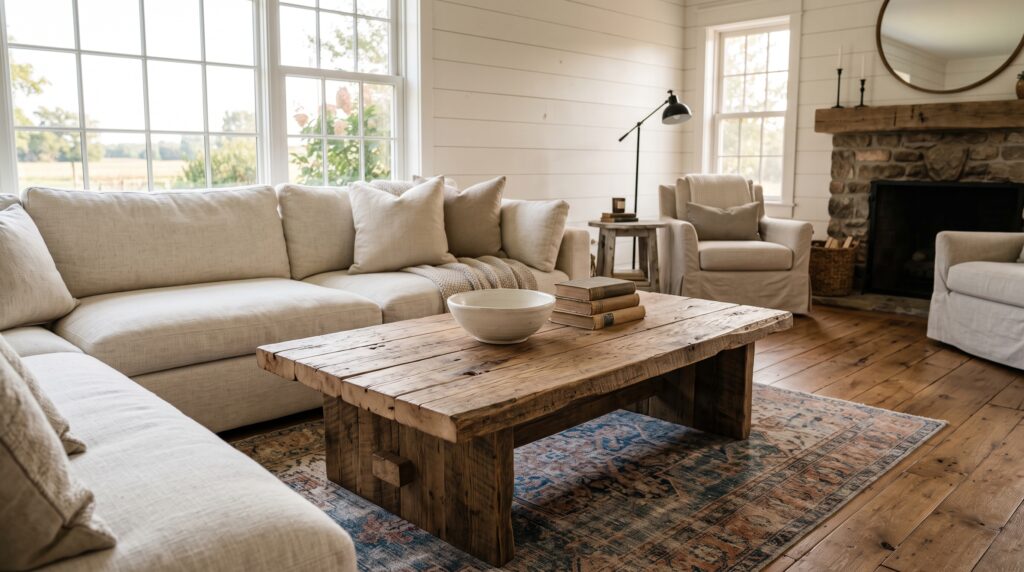
A coffee table is one of the fastest ways to inject rustic character into a room. Reclaimed or distressed wood, visible grain, and slightly uneven edges all work in your favor here. Trestle-style or X-base tables are especially common in farmhouse interiors because their exposed joinery feels handmade. Style the top simply — a stack of books, a ceramic bowl, maybe a single candle — so the wood itself stays the focal point.
4. Make the Fireplace the Heart of the Room
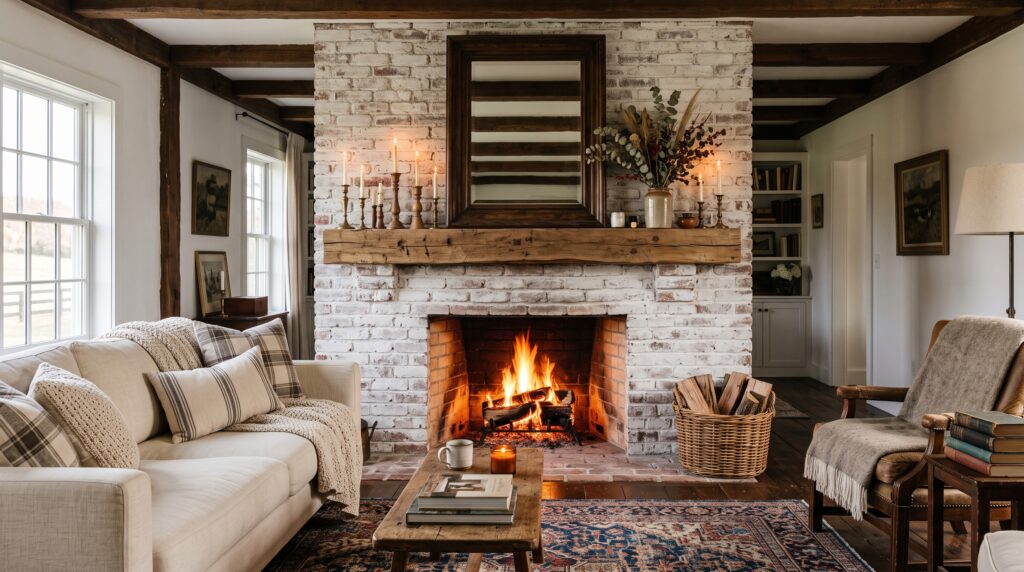
If your living room has a fireplace, let it lead the design. Stone, whitewashed brick, or a simple shiplap surround all suit the farmhouse aesthetic. Keep the mantel styling loose and asymmetrical: a wood-framed mirror leaned rather than hung, a few candlesticks of different heights, a sprig of dried greenery. The goal is a mantel that looks gathered over time, not purchased as a set.
5. Expose (or Add) Wooden Beams
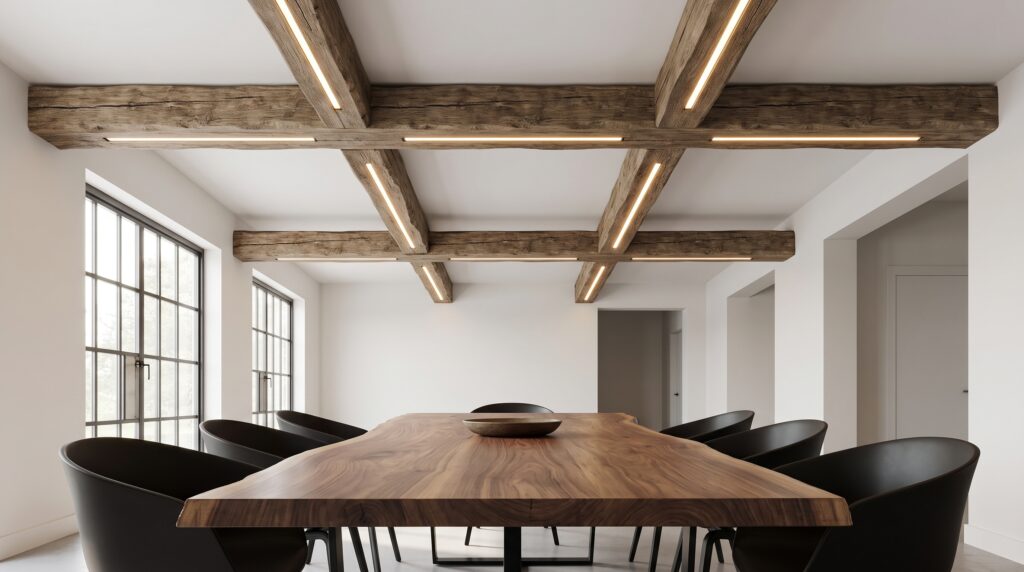
Ceiling beams instantly signal “farmhouse” the moment you walk in. If your home already has them, keep the finish natural or lightly whitewashed rather than staining them dark, which can make a room feel smaller. If you don’t have real structural beams, faux beam kits are widely available and can be installed as a weekend project to add the same visual weight overhead.
6. Add Shiplap to a Feature Wall
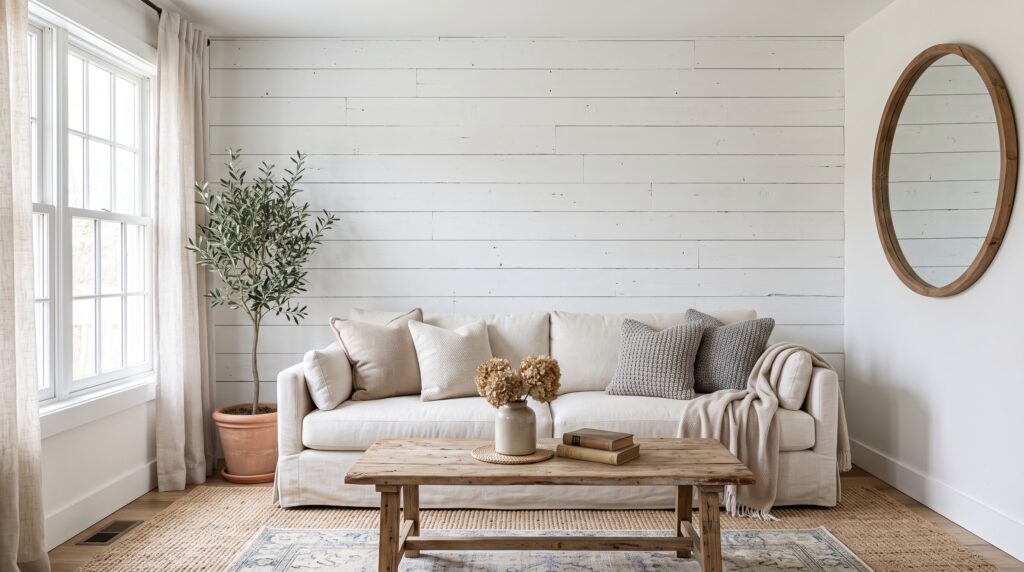
Shiplap remains one of the most recognizable farmhouse details, and for good reason — it adds instant texture to an otherwise flat wall. You don’t need to cover the whole room; one accent wall behind the sofa or around the fireplace is usually enough. Painted white it feels airy and coastal-adjacent; left in a natural wood tone it leans more rustic cabin.
7. Layer in Vintage Finds
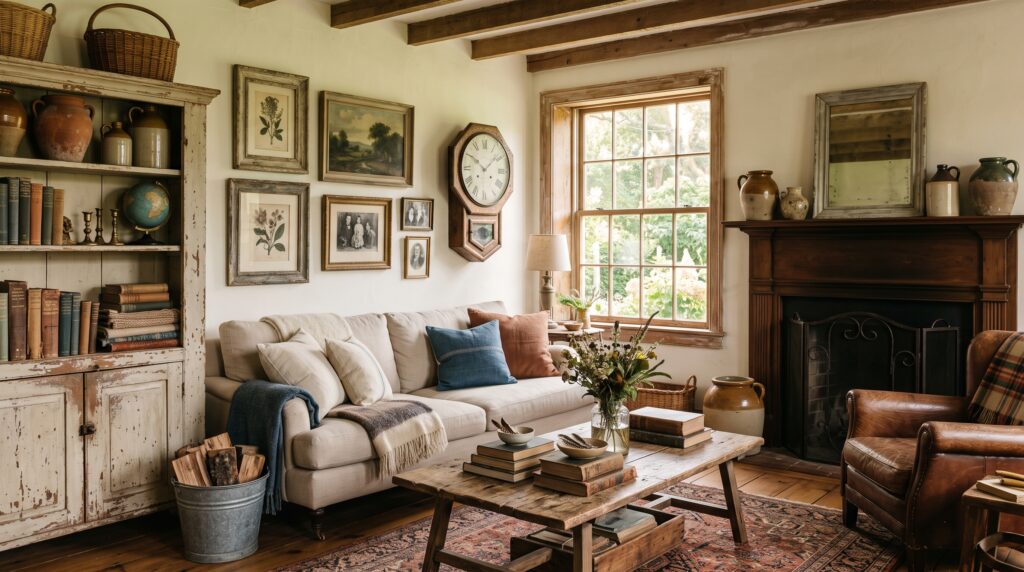
A truly convincing farmhouse room rarely looks brand new. Vintage clocks, old hardcover books, weathered picture frames, and salvaged signage all add a sense of history, even if the rest of your furniture is new. Thrift stores, estate sales, and flea markets are the best (and cheapest) sources for these pieces — hunt for anything with a bit of patina rather than a polished finish.
8. Layer Natural Textures Everywhere
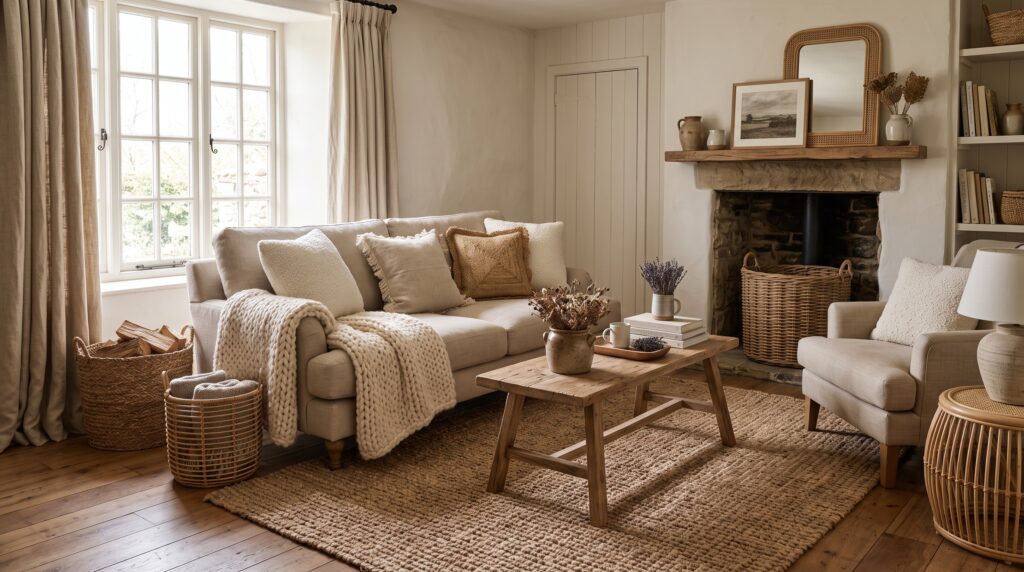
Because the color palette stays so neutral, texture is what keeps a farmhouse living room from feeling flat. Combine a chunky jute rug, linen curtain panels, woven baskets for storage, and a knitted throw draped over the sofa arm. The interior design resource Better Homes & Gardens notes that mixing natural materials like wood, wicker, and cotton is one of the defining habits of the farmhouse look, and it’s this layering of texture — more than any single object — that makes the style feel warm rather than sparse.
9. Choose Rustic, Not Sleek, Lighting
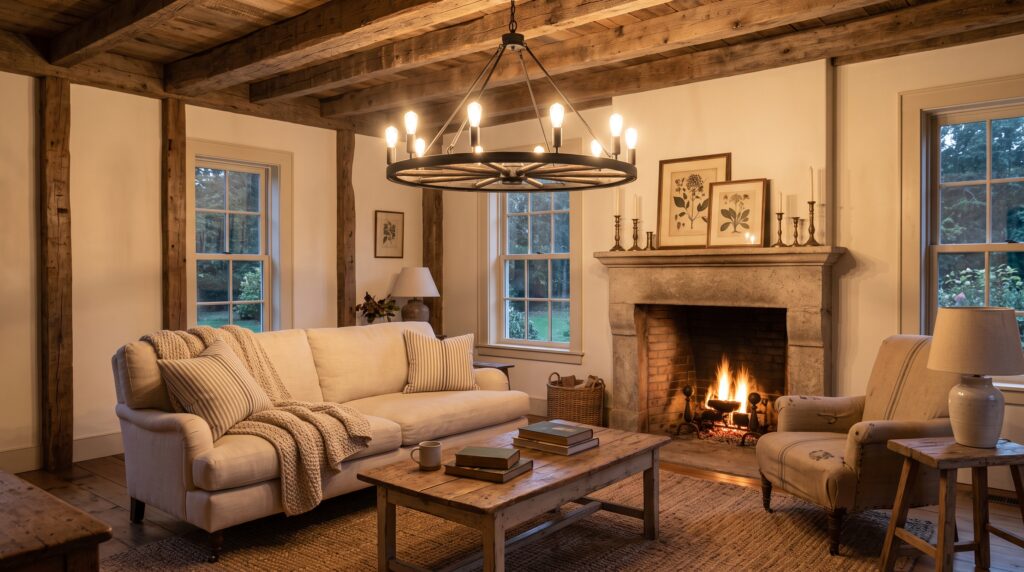
Skip anything glossy or chrome. Farmhouse lighting tends to favor aged metal, matte black iron, wood, and frosted or seeded glass. A wagon-wheel chandelier, a cluster of pendant lights over a reading nook, or a single oversized lantern-style floor lamp can all anchor a room without pulling focus from the furniture.
10. Blend in Modern Farmhouse Touches
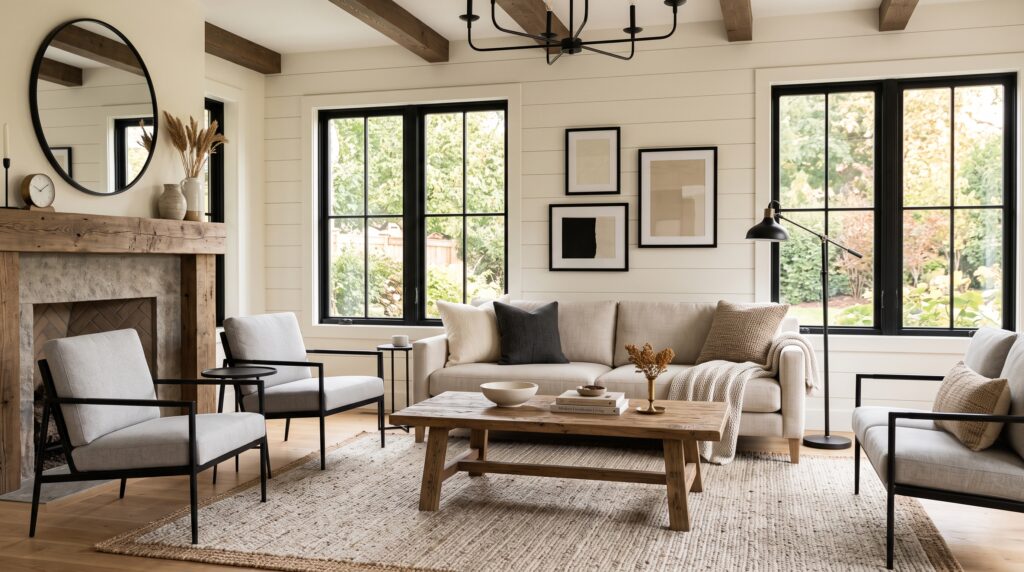
Pure “old farmhouse” can start to feel like a theme park if you’re not careful. Modern farmhouse design keeps the warmth — the wood, the neutral palette — but pairs it with cleaner-lined furniture, simpler hardware, and less clutter overall. It’s the version of the style most people actually live in day to day, and it tends to age better than a heavily themed room.
11. Layer Rugs for Extra Warmth
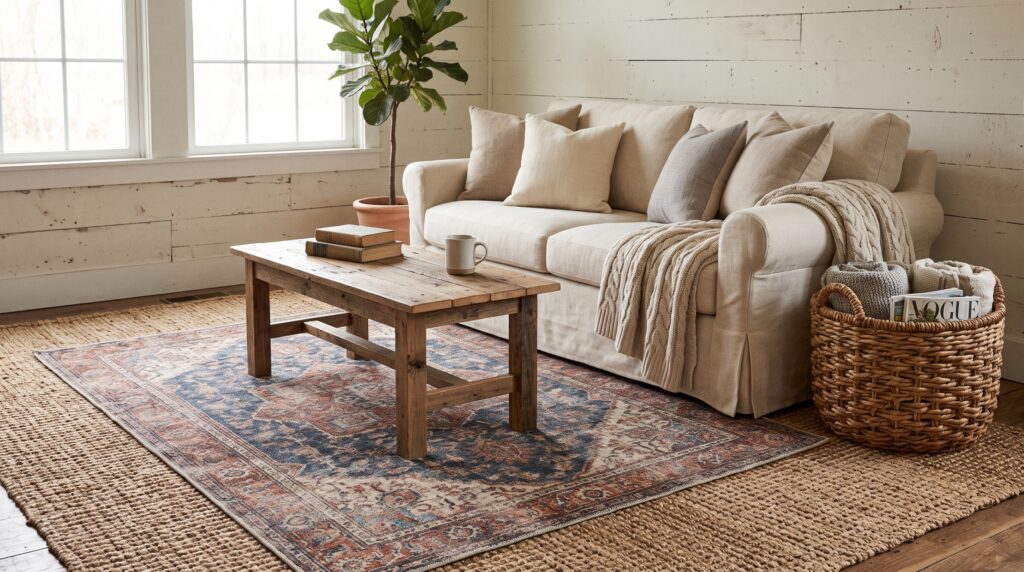
A single flat rug can look a little sparse in a farmhouse room. Try layering a jute or sisal rug as a base, then adding a smaller vintage-style or Persian-inspired rug on top, slightly off-center. This layered approach adds visual depth and makes hard flooring feel considerably softer underfoot.
12. Add Real (or Realistic) Greenery
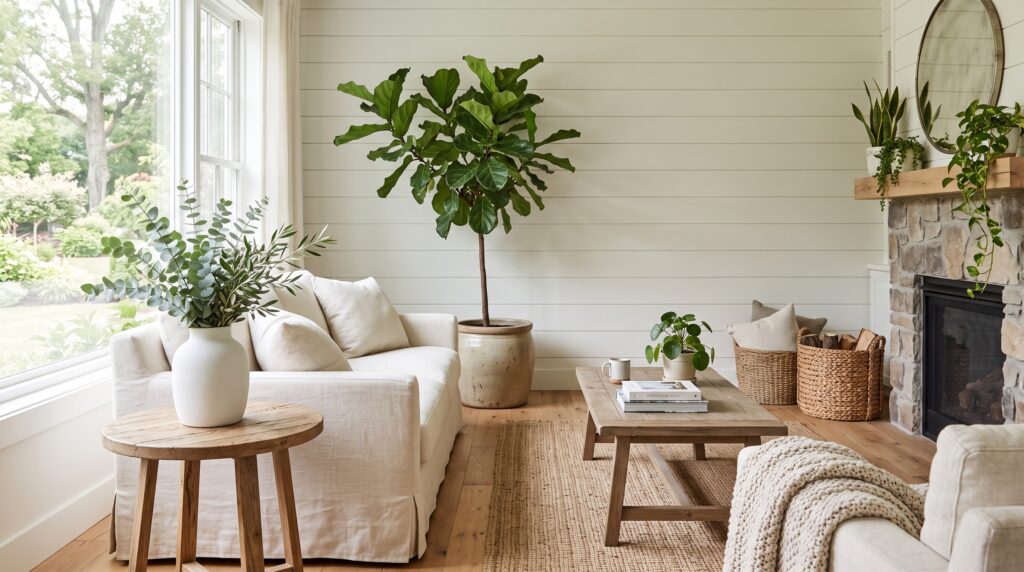
Plants soften every hard edge in a room. Fiddle leaf figs, eucalyptus stems, and simple potted herbs all suit the farmhouse look, especially displayed in stoneware or galvanized metal containers rather than sleek modern planters. If you don’t have a green thumb, quality faux stems in the same containers give nearly the same effect.
13. Build in (or Fake) Bookshelves
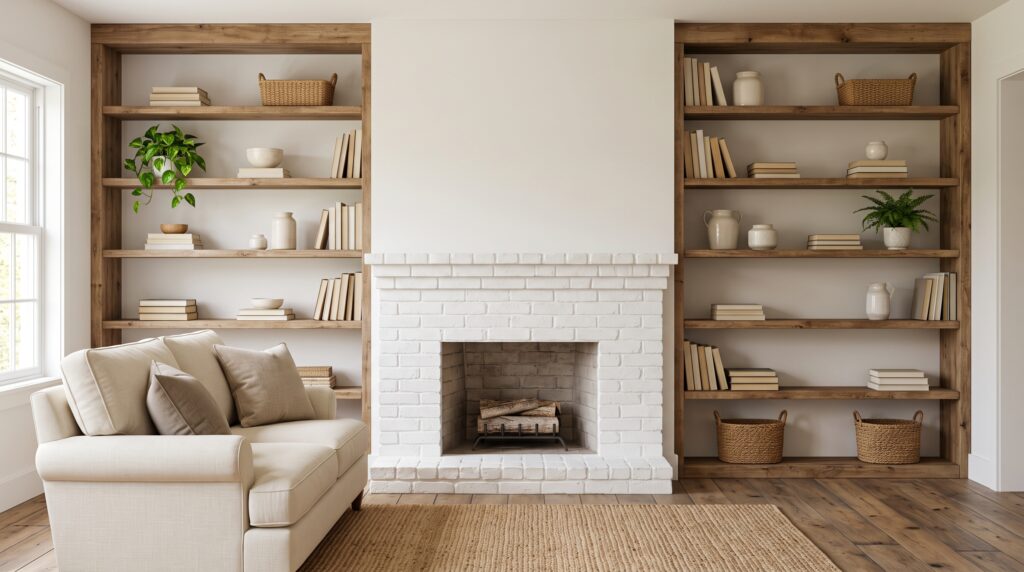
Built-in shelving either side of a fireplace is a classic farmhouse feature, but you can get a similar effect with freestanding wood shelving units. Style them loosely with books stacked both horizontally and vertically, a few ceramic pieces, and small woven baskets to hide the inevitable clutter. Leave some negative space — an overstuffed shelf reads as cluttered rather than curated.
14. Carve Out a Cozy Reading Corner
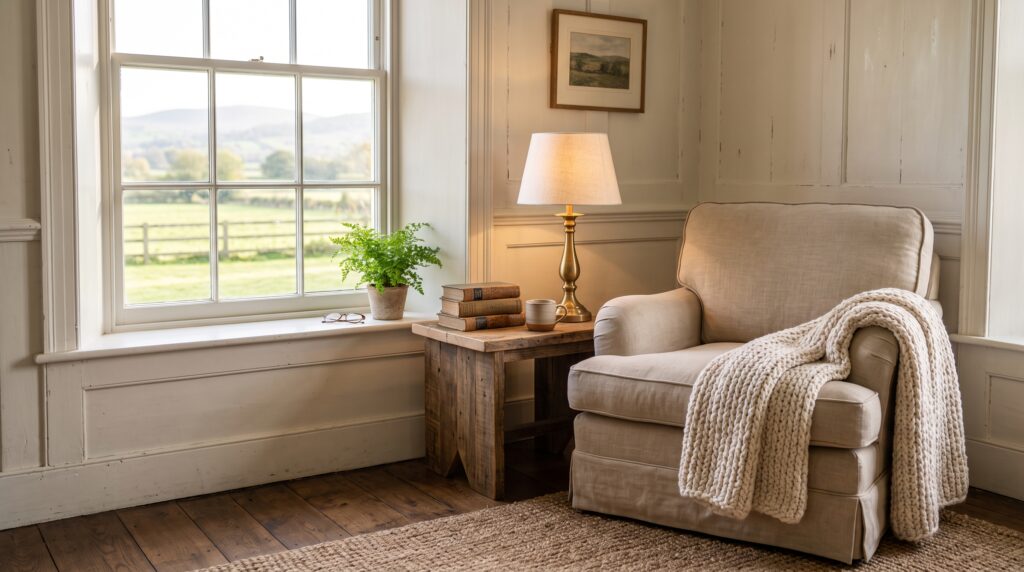
Every farmhouse living room benefits from one dedicated quiet spot. A single armchair, a small side table, a warm-toned lamp, and a throw blanket are all it takes. Position it near a window if you can — natural light does a lot of the styling work for you.
15. Lean Into White-and-Wood Pairings
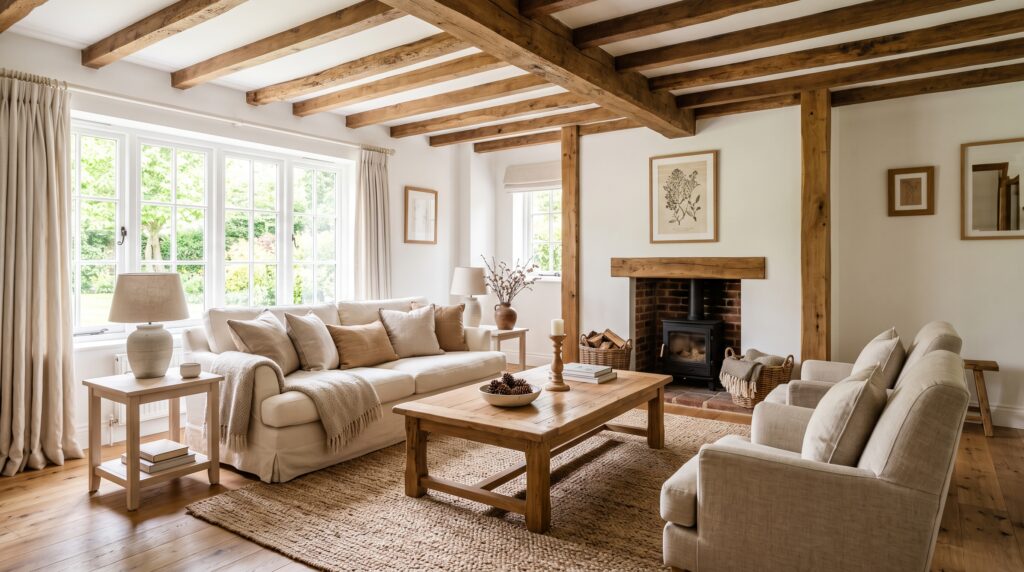
If you take away every other idea on this list, this pairing alone will get you most of the way to a convincing farmhouse look. White walls or trim next to natural or lightly stained wood furniture creates instant contrast and warmth. It’s a simple formula, but it’s the one nearly every farmhouse room comes back to.
16. Use a Barn Door as a Statement Piece
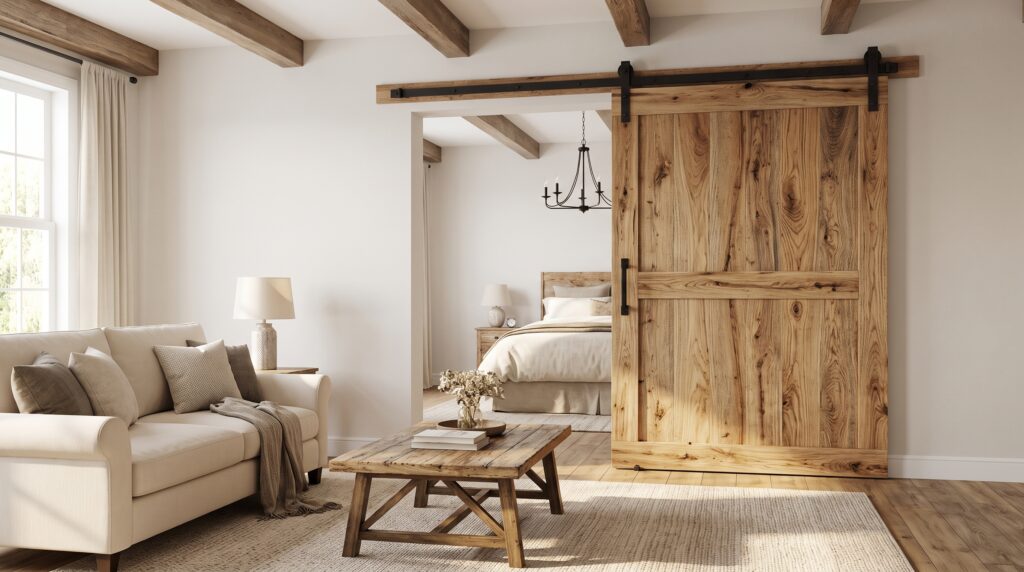
A sliding barn door — whether used as an actual room divider or purely decorative in front of a closet or media unit — is one of the boldest farmhouse signatures you can add. Choose a door with visible wood grain and simple black hardware for the most authentic effect.
17. Build a Window Seating Nook
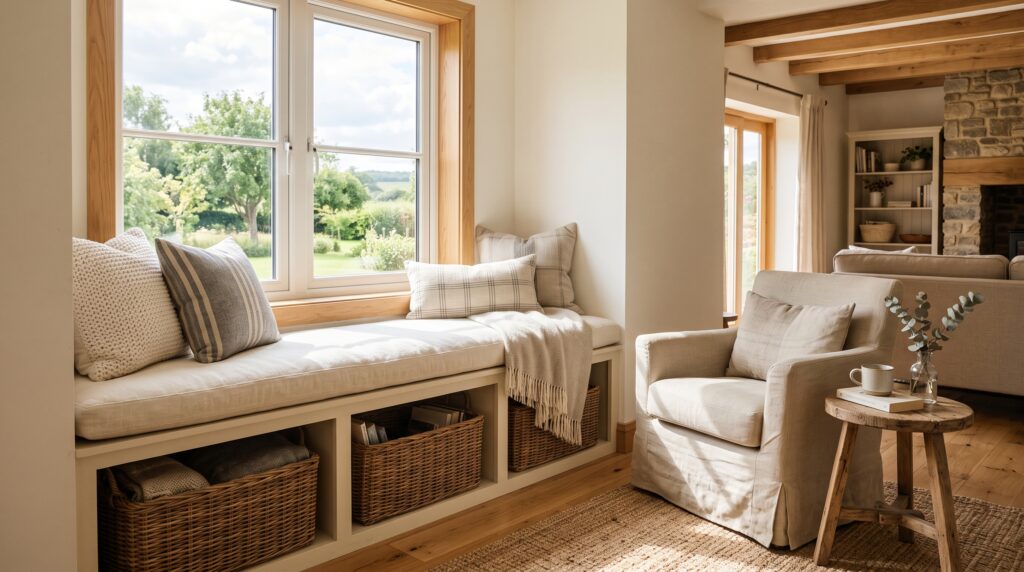
If you have a deep windowsill or an unused corner near a window, a built-in bench with cushions and pillows turns dead space into one of the coziest spots in the house. It’s especially effective in older homes with deeper wall cavities, but a simple upholstered bench under any window can achieve the same feeling.
18. Fill Empty Walls With Rustic Art
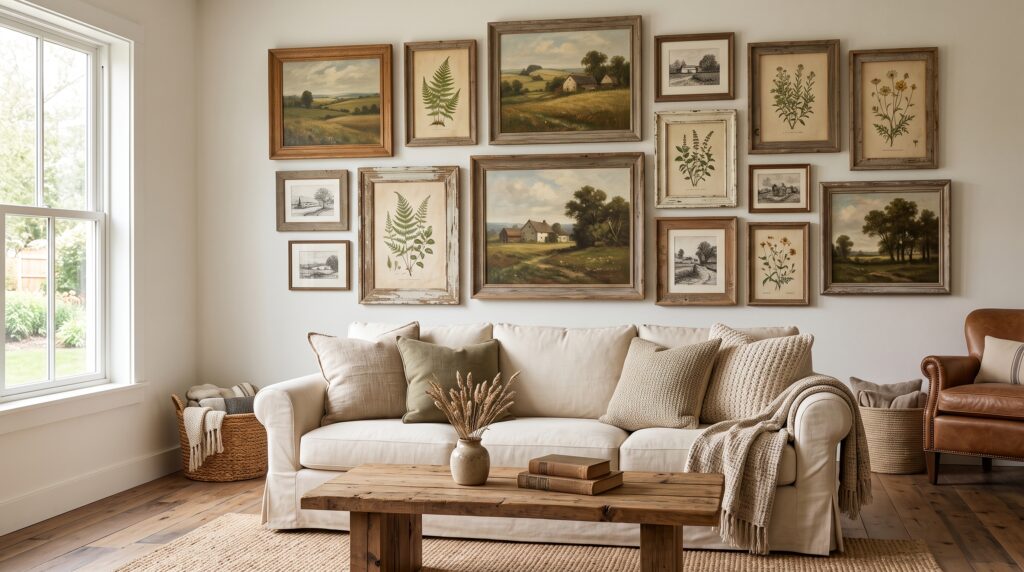
Large, empty walls can make even a well-furnished farmhouse room feel unfinished. Look for landscape paintings, botanical prints, or hand-lettered wood signs. Grouping several smaller pieces in a loose gallery arrangement often looks more farmhouse-appropriate than one large, formal piece of art.
19. Swap in Open Wooden Shelving
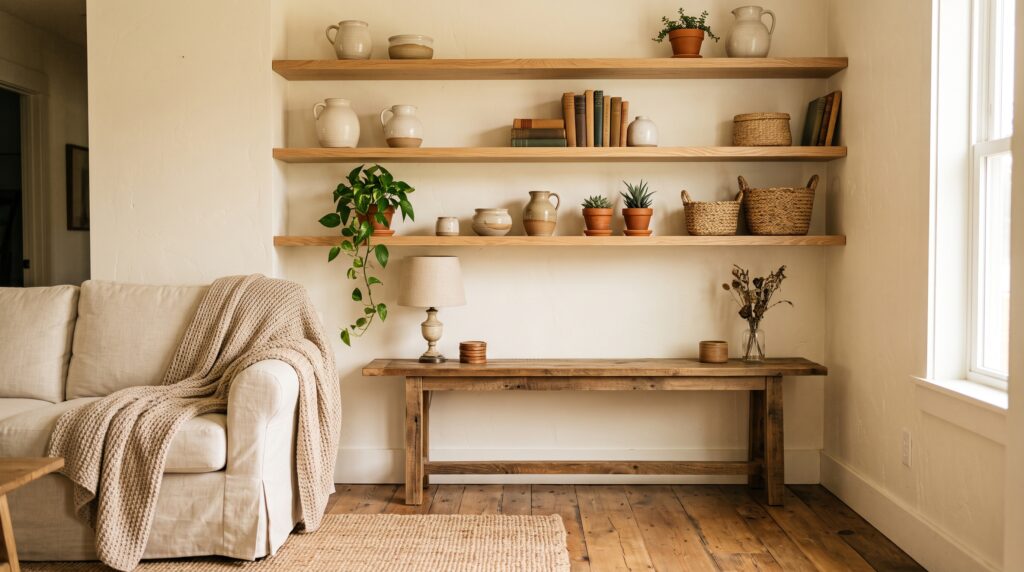
Open shelving works especially well in smaller living rooms where closed cabinetry can feel bulky. Use it to display a curated mix of ceramics, books, and plants above a console or fireplace. Because everything is visible, keep the styling deliberately simple — three or four objects per shelf is usually the sweet spot.
20. Add a Statement Accent Chair
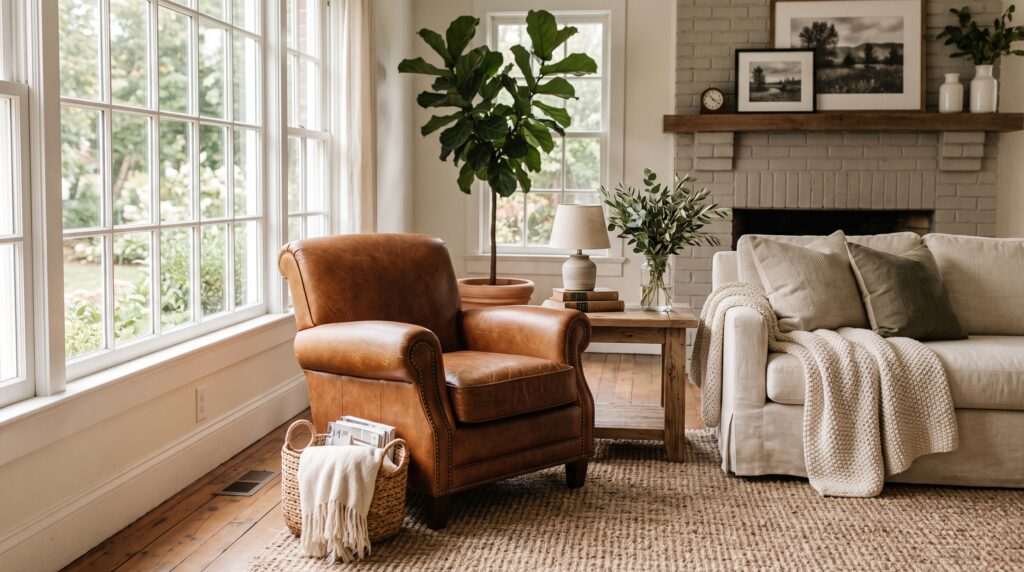
A single well-chosen accent chair — leather, woven rattan, or linen-upholstered with a wood frame — gives you flexible extra seating and a chance to introduce a slightly different texture into the room without disrupting the palette.
21. Rotate Your Decor by Season
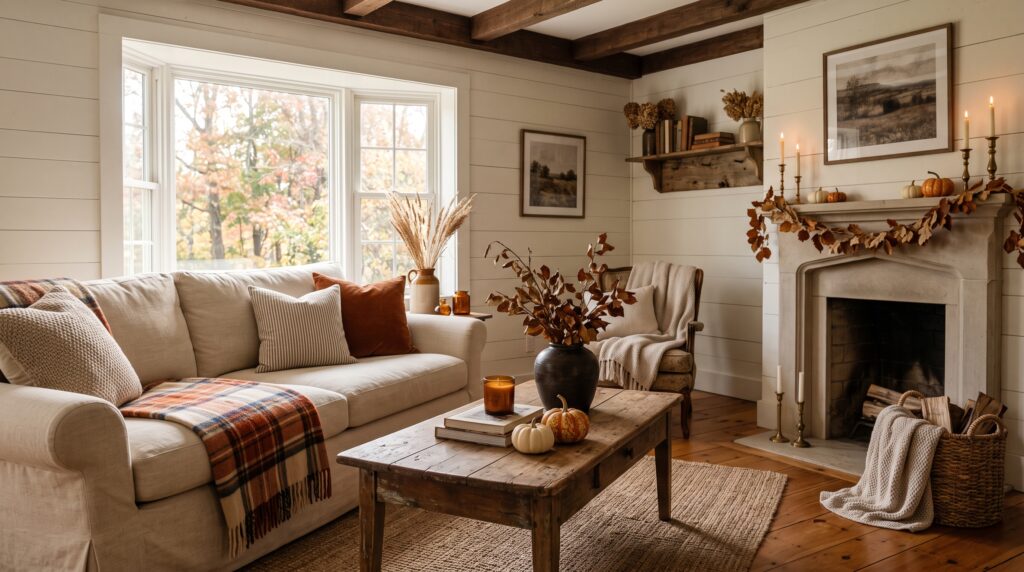
One of the easiest ways to keep a farmhouse living room feeling fresh is to swap small decor items with the seasons: pumpkins and warm plaid in autumn, fresh greenery in spring, heavier knit throws in winter. The furniture and palette stay the same year-round; only the accessories change.
22. Mix Rustic Pieces With Contemporary Ones
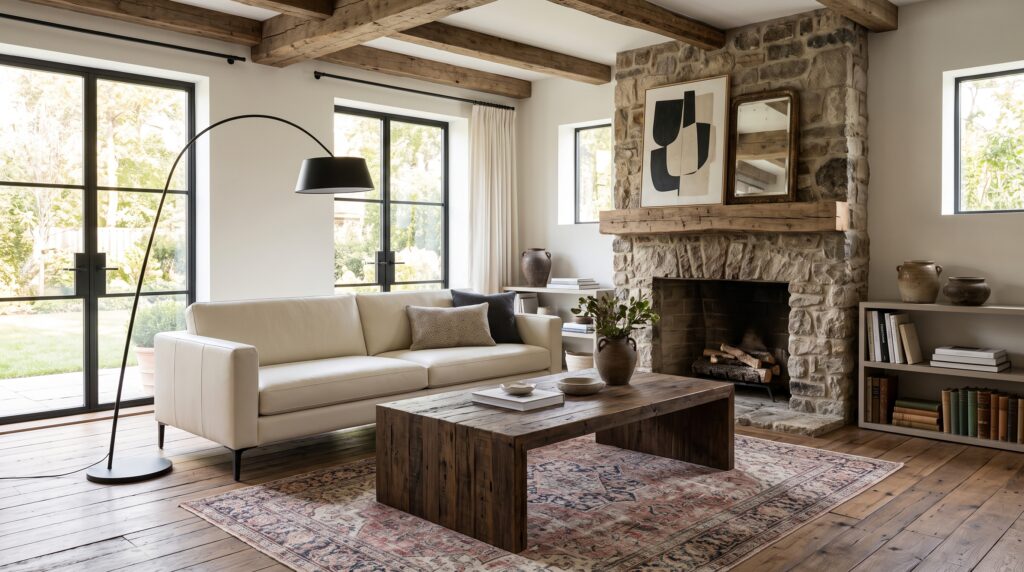
The most livable farmhouse rooms rarely commit 100% to the rustic bit. Pairing a reclaimed wood table with a clean-lined modern sofa, or a vintage rug with contemporary lighting, keeps the space feeling current rather than like a period recreation. This blend is what separates a farmhouse living room that feels timeless from one that feels dated in five years.
Quick Answers: Farmhouse Living Room FAQs
How much does it cost to redo a living room in farmhouse style? You can start small — a coffee table, a few pillows, a rug, and some vintage decor can shift the mood of a room for a few hundred dollars. A full furniture overhaul with a new sofa, shiplap, and beams costs considerably more, so it’s worth prioritizing the changes that affect the room most: seating, the coffee table, and lighting tend to have the biggest visual impact per dollar spent.
What’s the difference between farmhouse and modern farmhouse? Traditional farmhouse leans further into rustic, vintage, and country details — antique signage, heavily distressed wood, and ornate accents. Modern farmhouse keeps the warm palette and natural materials but pairs them with simpler furniture lines, less clutter, and a more restrained approach to decor. Most living rooms today land somewhere between the two.
Can a small living room still work in farmhouse style? Yes. Keep the palette light, choose furniture with visible legs rather than skirted pieces so the floor stays visible, and lean on smaller-scale details like shelving and accent pillows rather than oversized furniture. Mirrors and lighter wood tones also help a compact farmhouse room feel more open.
What colors pair best with farmhouse living room furniture? Stick close to the neutral family — white, cream, soft gray, and warm beige — for large surfaces like walls and sofas. Introduce color sparingly through accent pillows, art, or a single painted piece of furniture, using muted tones like sage green, dusty blue, or terracotta rather than anything too saturated.
Bringing It All Together
A great farmhouse living room isn’t about checking off every trend at once — it’s about layering a few well-chosen elements until the room feels warm, textured, and genuinely comfortable to spend time in. Start with your palette and your seating, then build outward with texture, lighting, and the small vintage or natural touches that give the space personality. Whether you go fully rustic or lean toward a cleaner modern farmhouse look, these ideas give you a flexible framework to design a living room you’ll actually want to curl up in.