Introduction
There’s a reason the bedrooms in Nancy Meyers films linger in our minds long after the credits roll. From Diane Keaton’s sun-drenched Hamptons cottage in Something’s Gotta Give to the layered, lived-in rooms of It’s Complicated, her movie sets have become a design language of their own — one built on soft neutrals, worn-in wood, and rooms that feel collected rather than decorated. If you’ve ever paused a scene just to study the throw pillows, you already understand the appeal.
Below are 20 practical, achievable Nancy Meyers bedroom ideas you can borrow for your own space, whether you’re drawn to breezy coastal calm, farmhouse warmth, or quiet, hotel-like polish. None of these require a full renovation — most come down to color choices, a handful of secondhand finds, and a willingness to let the room look a little imperfect and lived-in rather than perfectly matched.
Nancy Meyers Bedroom Ideas: 20 Ways to Bring the Look Home
1. Start With a Soft, Neutral Base
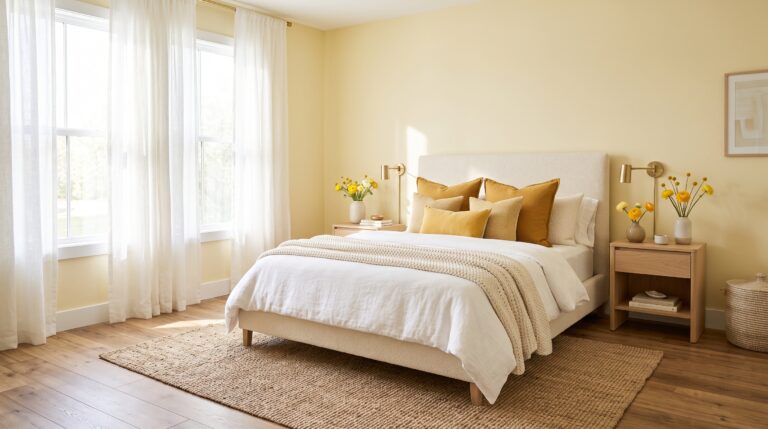
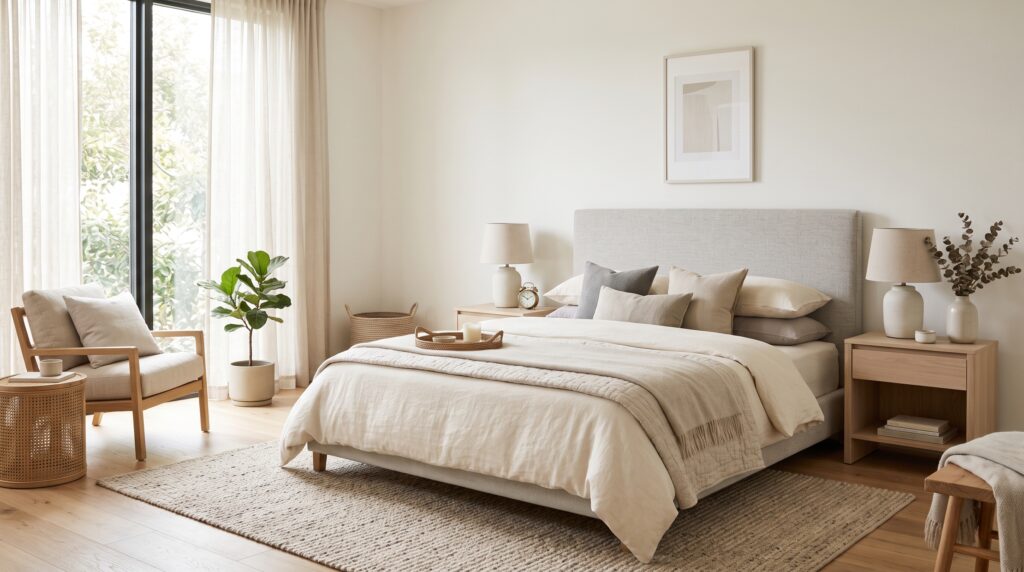
Nearly every Nancy Meyers interior begins with a quiet color foundation — think cream, oatmeal, warm white, and soft gray. Painting walls, bedding, and larger furniture pieces in these tones gives the room a calm backdrop that lets texture and small details take center stage, rather than competing with bold color choices. If you’re nervous about committing to an all-neutral scheme, start with the largest surfaces first — walls and bedding — and add depth later through wood tones and textiles rather than paint color.
2. Lean on Real Wood Furniture
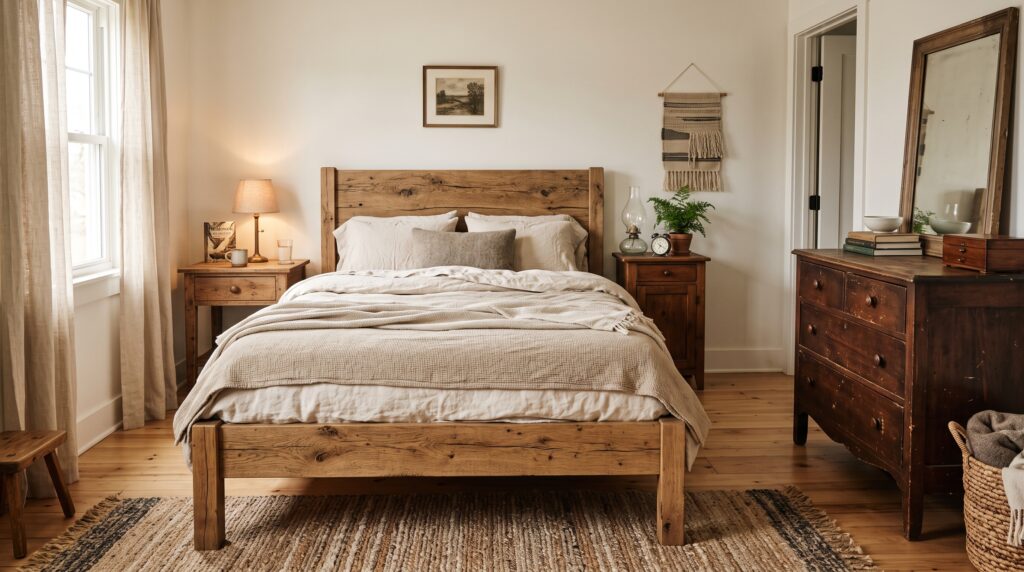
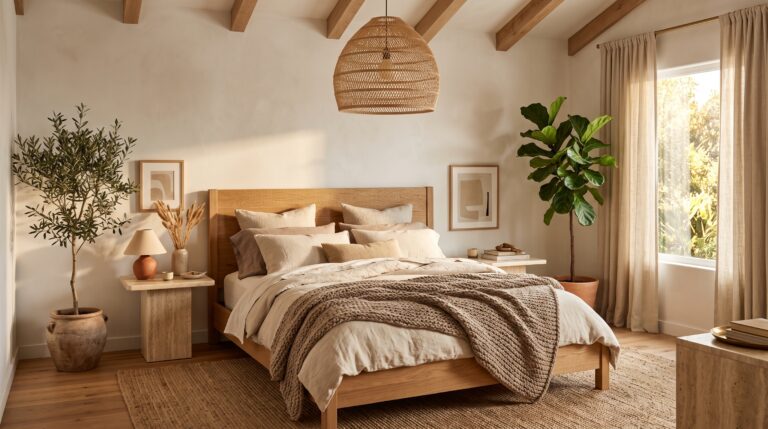
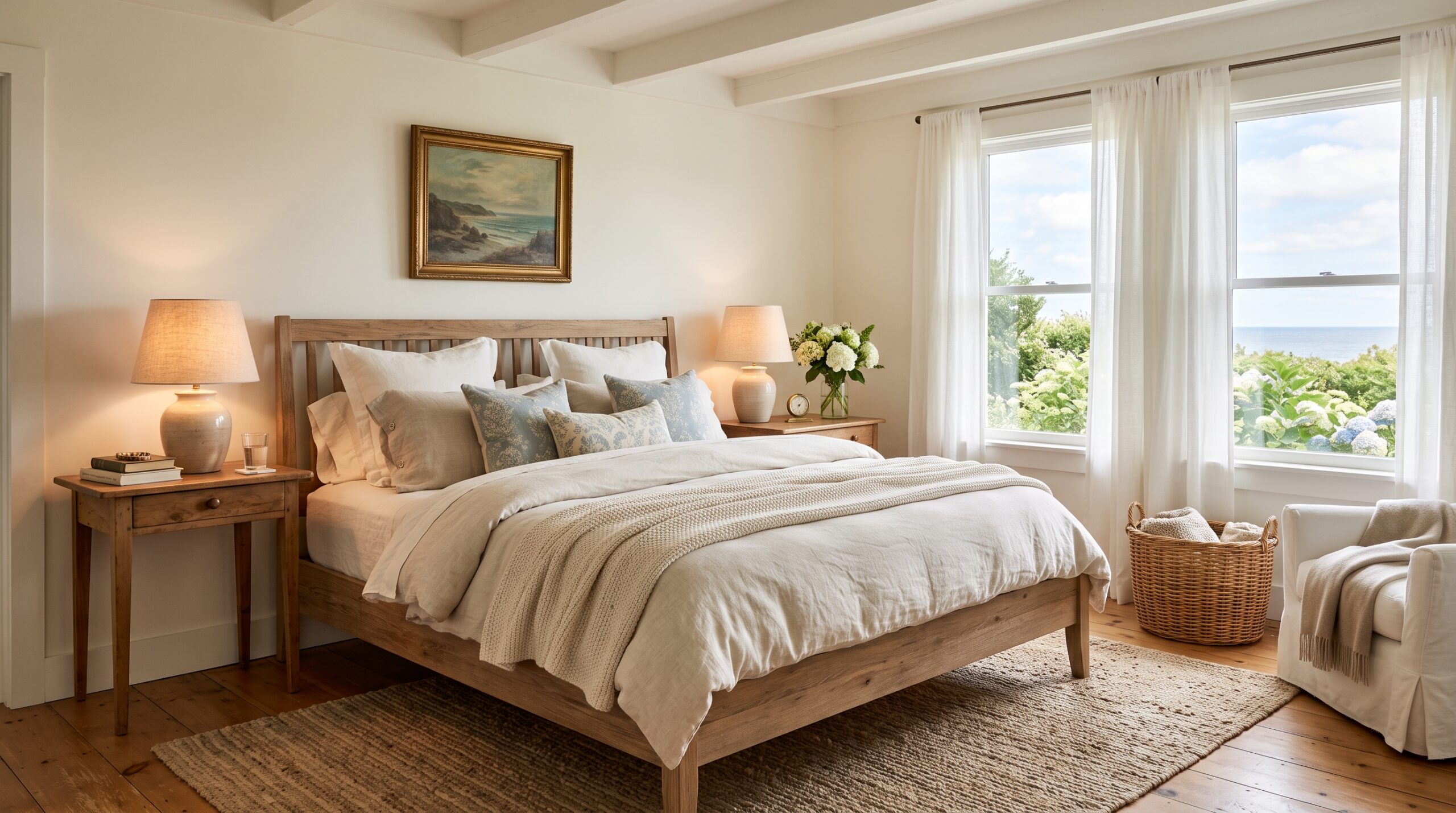
Skip anything glossy or overly modern. A wooden bed frame, a weathered dresser, or simple nightstands in a natural finish immediately add the sense that the furniture has history. The goal isn’t matching pieces bought as a set — it’s furniture that looks like it was gathered over time. Secondhand shops, estate sales, and online marketplaces are often the best sources for these pieces, since a bit of wear and a few nicks only add to the character.
3. Layer the Bed Like You Mean It
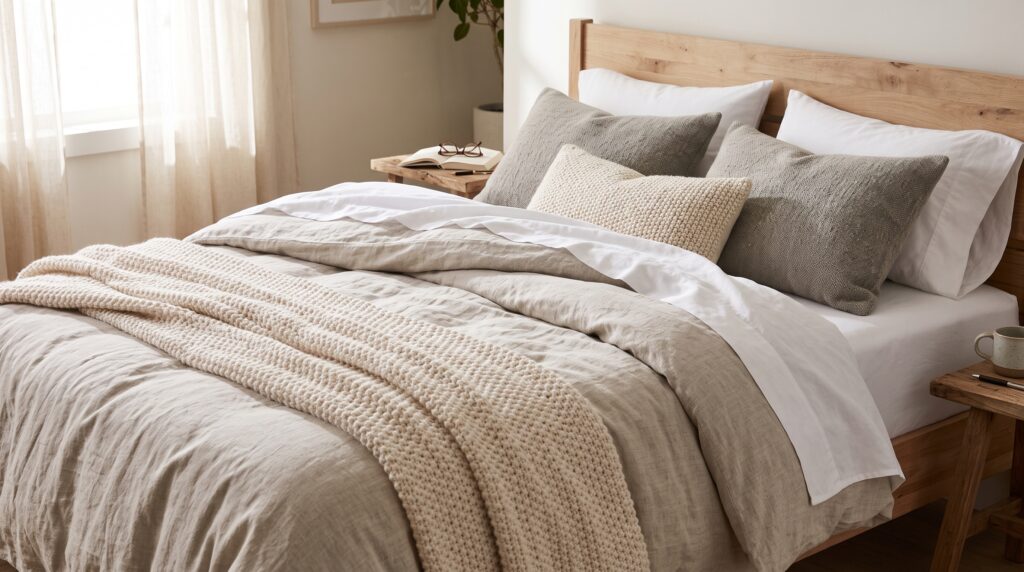
The bed is the emotional center of the room, and it should look inviting rather than staged. Mix a crisp cotton sheet with a linen duvet, a woven throw, and a mix of pillow sizes and textures. A slightly rumpled, well-loved bed reads as far more authentic than one styled to hotel-catalog perfection. Stick to two or three coordinating tones instead of a single matching set, and don’t be afraid to fold the top layer back so the different fabrics are visible.
4. Build in a Reading Nook
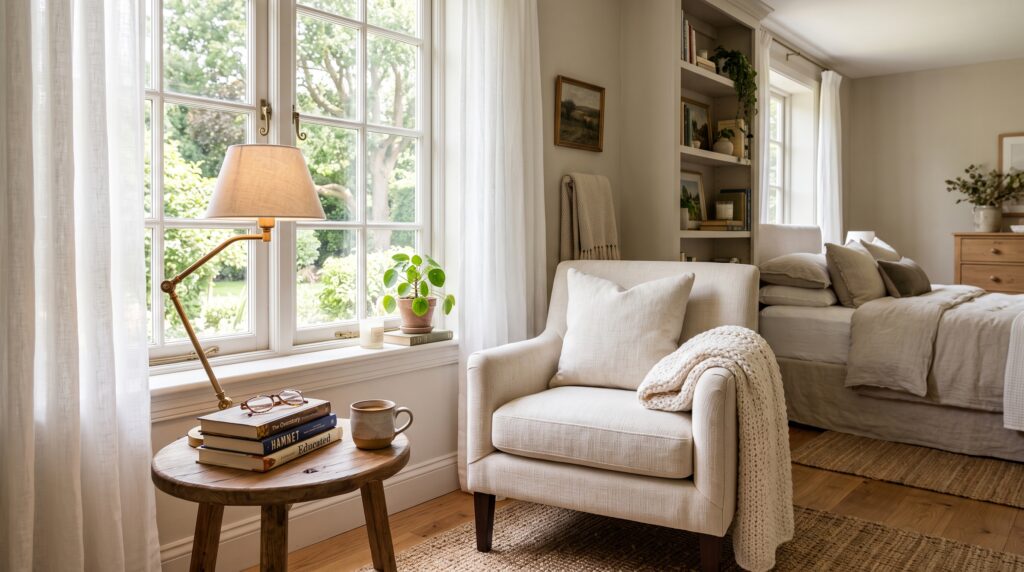
Tuck an armchair near a window with good natural light, add a small side table, a warm-toned lamp, and a short stack of books within reach. This kind of corner does a lot of work — it makes the room feel personal, gives it a second purpose beyond sleeping, and softens the overall layout. Even a small unused corner can work for this — the key ingredients are simply good light, a comfortable seat, and something to rest a cup of tea on.
5. Bring In Coastal Blue and White
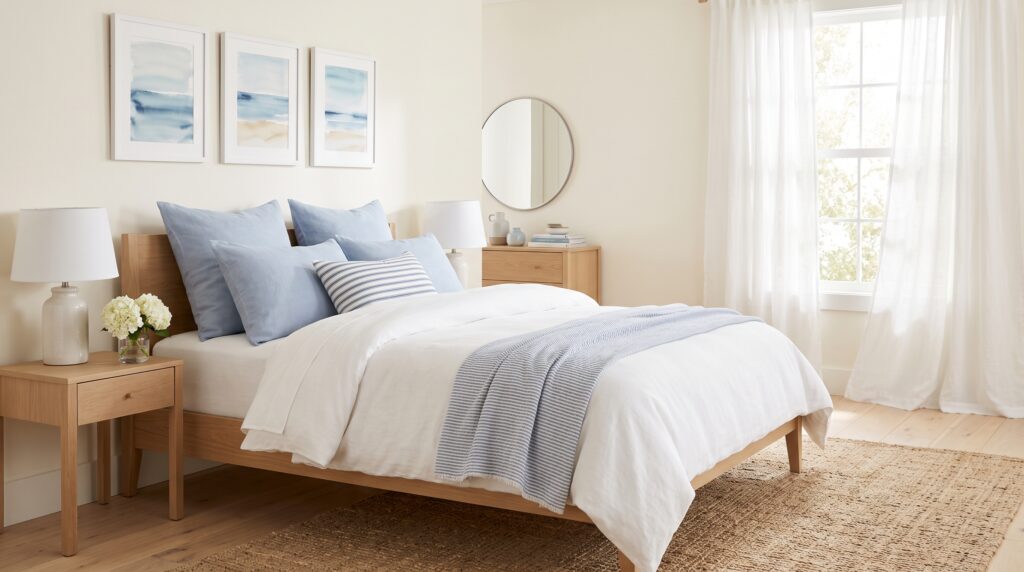
For a fresher, breezier take, add touches of soft blue through pillows, a throw, curtains, or a single piece of artwork, while keeping walls and large furniture neutral. This restrained approach to color gives the room a relaxed, seaside feeling without tipping into full nautical theme territory. A striped or gingham fabric in a muted blue is an easy way to introduce the color without it reading as overly themed or seasonal.
6. Keep Fresh Flowers or Greenery on Hand
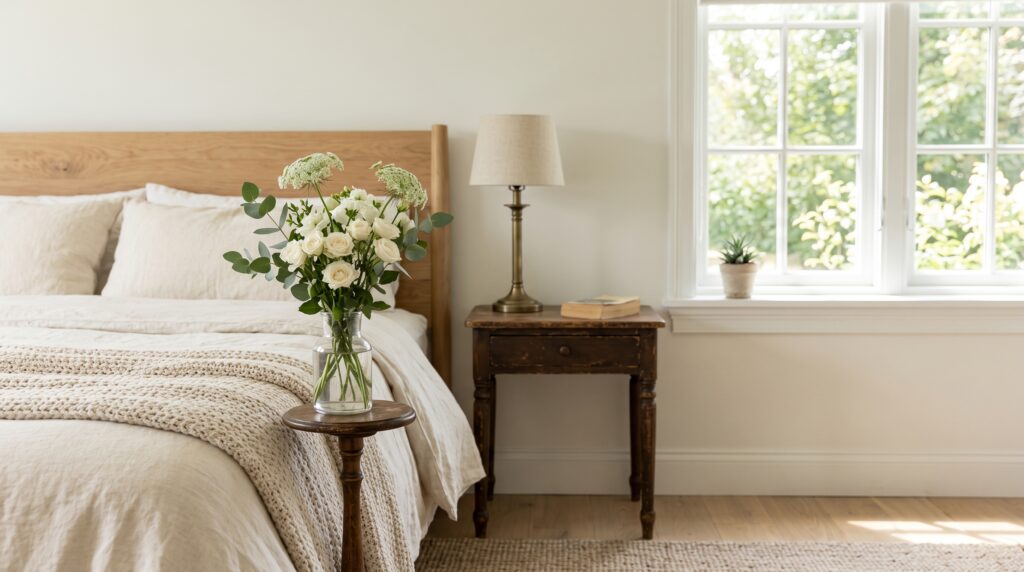
A simple vase of seasonal flowers on a dresser or nightstand does more for a room’s atmosphere than most decor purchases. If fresh flowers aren’t practical week to week, a well-shaped houseplant, a woven basket, or a bundle of dried stems can carry the same natural, unfussy energy. Grocery-store bouquets broken into smaller bunches across a few vases often look more natural than one large, formal arrangement.
7. Choose Lamps Over Overhead Light
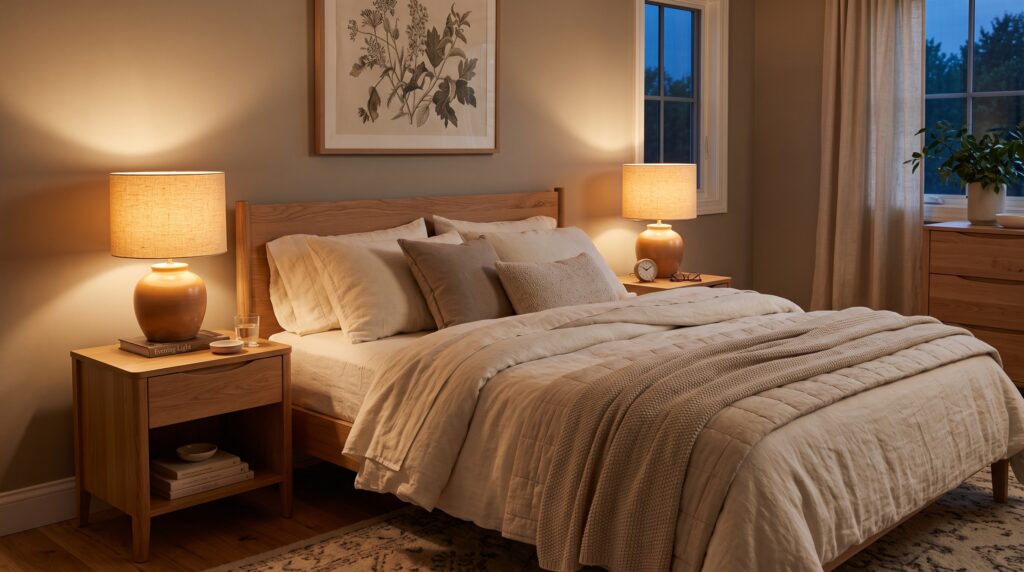
Traditional table lamps — fabric shades, ceramic or brass bases, a slightly vintage silhouette — do more to shape mood than any ceiling fixture. Placing one on each nightstand creates warm pools of light in the evening and softens the whole room after dark. Look for warm-toned bulbs rather than bright white ones, since the color temperature of the light matters just as much as the lamp itself.
8. Mix Old Pieces With New Ones
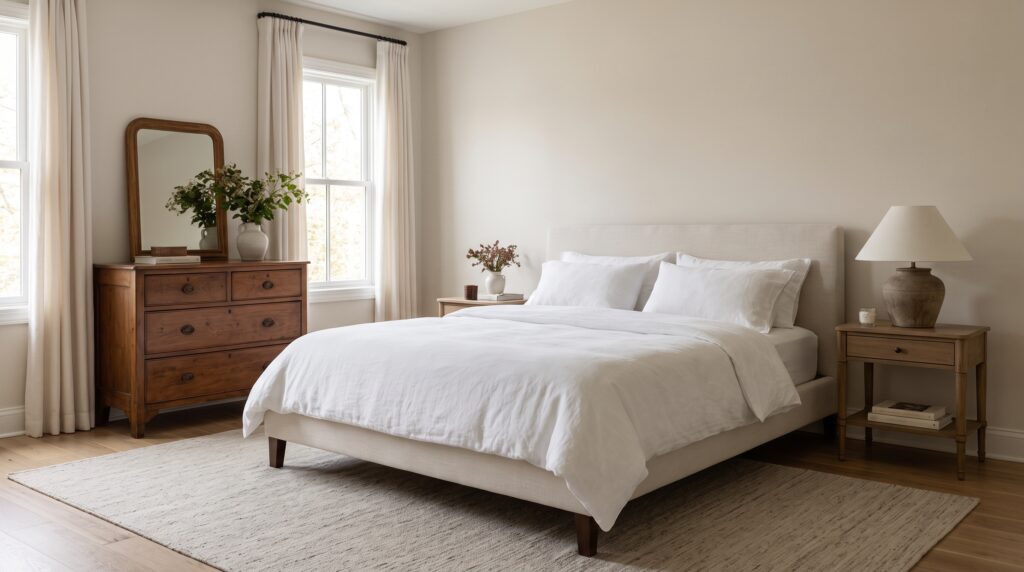
One of the more recognizable traits of this style is the pairing of antique or vintage furniture with simple, current bedding and accessories. An inherited dresser next to fresh, plain linens feels far more considered than an entire room bought from one store. This kind of pairing also tends to be more budget-friendly, since you’re not replacing every piece in the room at once — just adding thoughtfully over time.
9. Dress the Windows in Soft, Natural Fabric
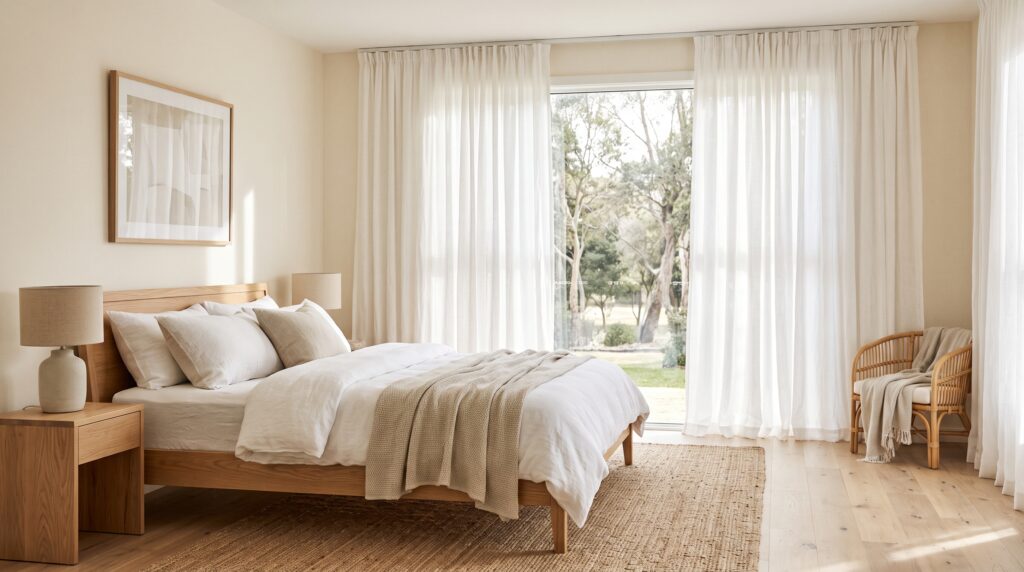
Linen or lightweight cotton curtains that let daylight filter through do more for the room than heavy, formal drapery. They add privacy and texture while keeping the space feeling airy rather than closed off — a detail that shows up again and again in these movie interiors. Hanging curtain rods slightly higher and wider than the window frame itself is a simple trick that makes the whole wall feel taller.
10. Hang Artwork That Actually Means Something
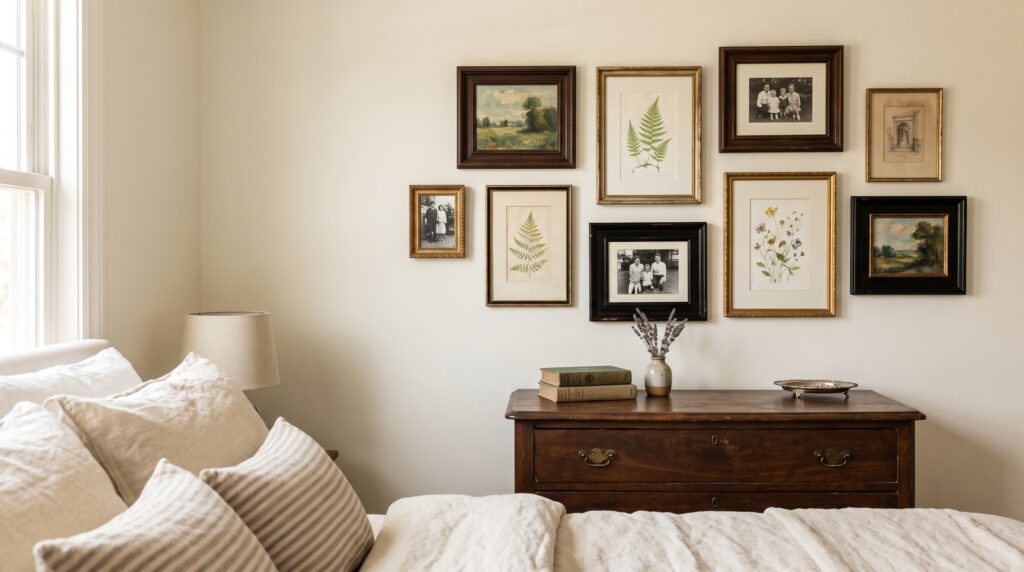
Rather than filling wall space with generic prints, choose landscape paintings, botanical studies, or pieces tied to family or travel. The goal is a room that feels collected and personal, not one that was decorated in a single afternoon. Grouping a few smaller pieces in mismatched frames often feels warmer than one large, perfectly centered print.
11. Add Texture Through Throws and Blankets
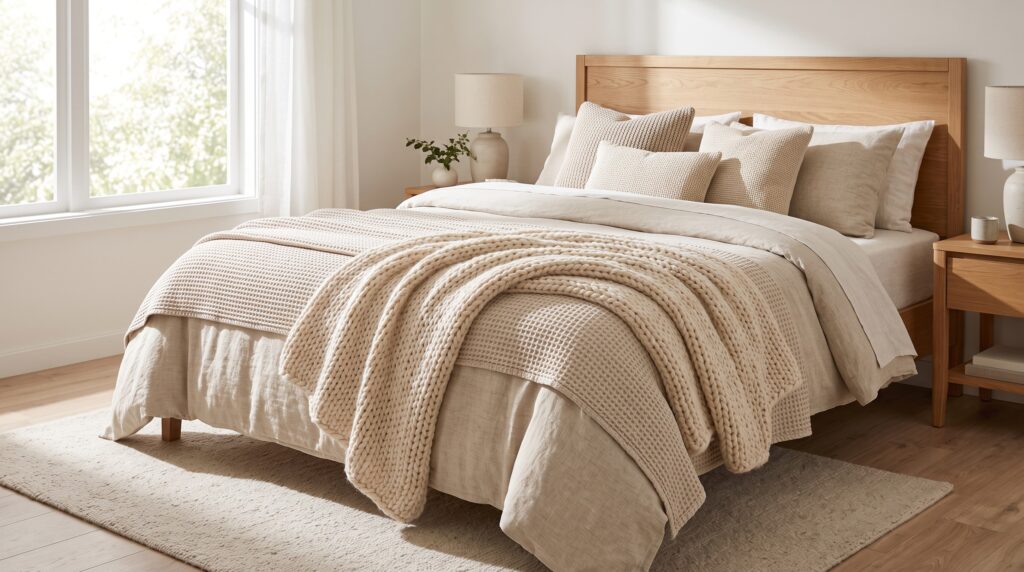
A knitted throw at the foot of the bed, a woven blanket over the reading chair, or a quilted coverlet folded at the end of the mattress — these small layers are what make a neutral room feel warm instead of sparse. Rotating these seasonally — heavier wool in winter, lighter cotton in summer — keeps the room feeling current without changing anything structural.
12. Style a Vintage Dresser as a Focal Point
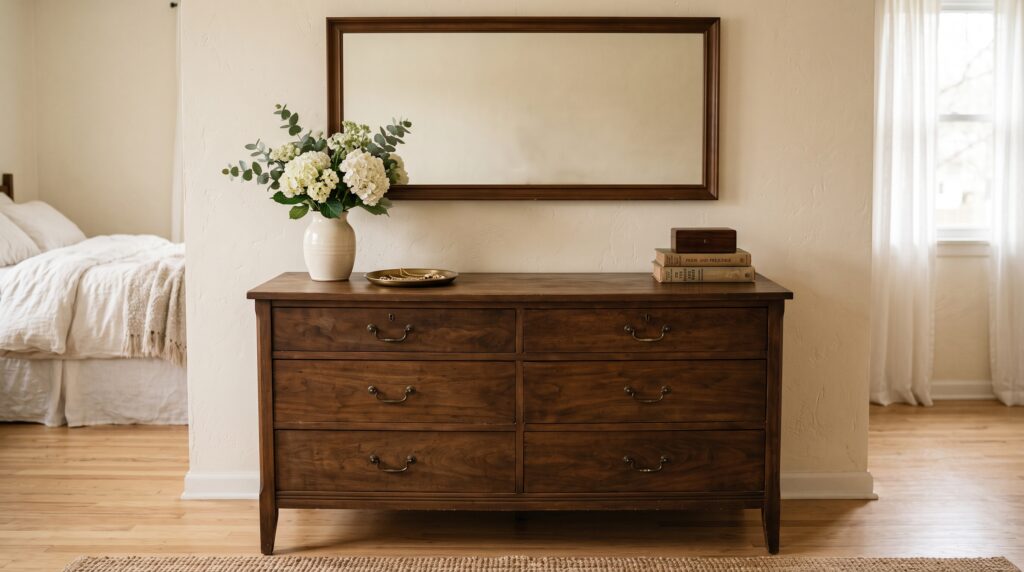
An older dresser, especially with some patina, can anchor the room. Style the top with a mirror, a small tray for jewelry, a stack of books, or a single vase of flowers rather than crowding it with too many objects. Leave a little negative space on top rather than filling every inch, so each object you do display actually gets noticed.
13. Embrace a Cottage-Adjacent Feel
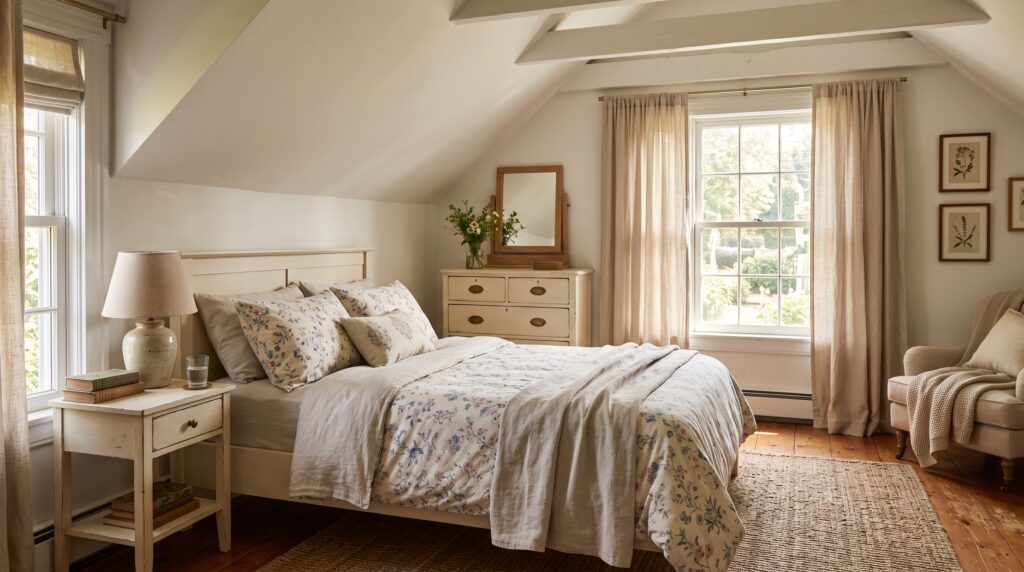
For a softer, more casual version of the look, bring in painted furniture, a subtle floral fabric on one or two pieces, and natural wood tones. This version leans more relaxed and lived-in than the polished Hamptons look, but it’s every bit as much a part of the aesthetic. This is a good direction for smaller or older homes, since it works with existing quirks like sloped ceilings or original trim instead of fighting them.
14. Hang a Well-Placed Mirror
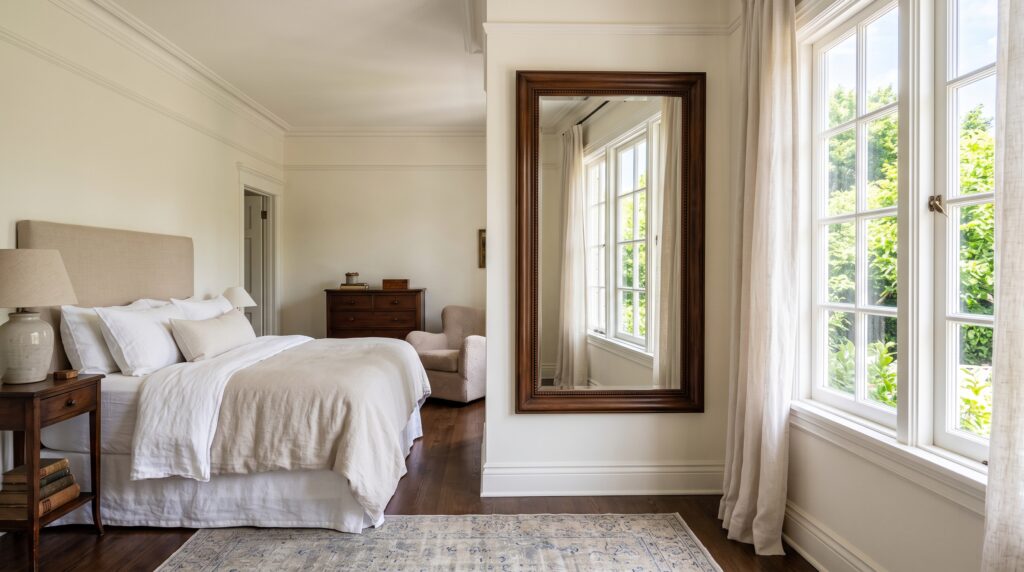
A traditional framed mirror near a window bounces natural light around the room and adds a bit of quiet elegance. It’s a small addition, but it makes a bedroom feel brighter and slightly larger without any structural changes. Position it to reflect a window or a lamp rather than a blank wall, so it’s actually doing the job of bouncing light around.
15. Add One Upholstered Piece
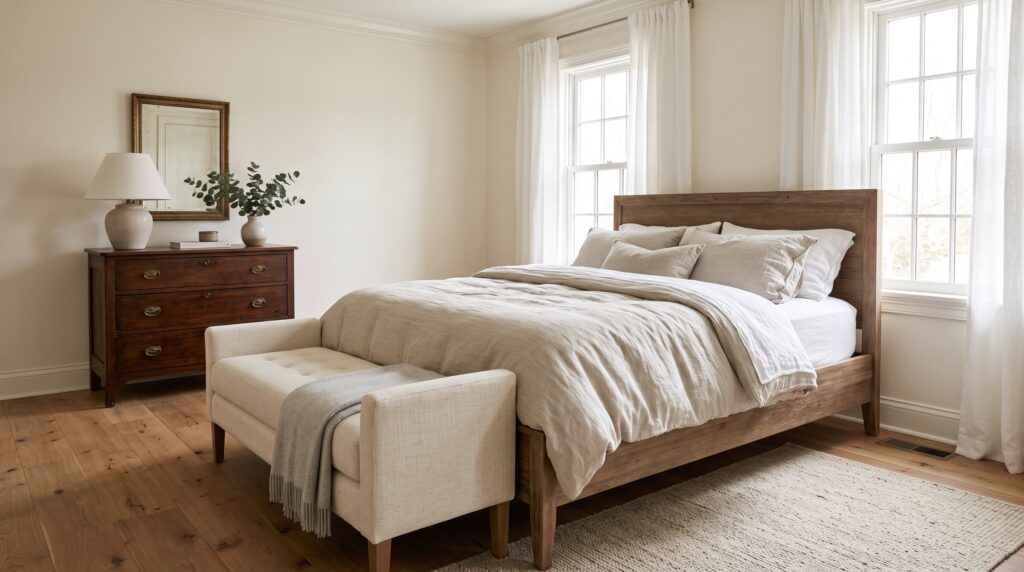
A fabric bench at the foot of the bed, a slipcovered chair in the corner, or an upholstered headboard introduces softness that wood and linen alone can’t provide. Choose muted, washable fabrics that can hold up to daily use. One piece is usually enough — too much upholstery in a small room can start to feel heavy rather than cozy.
16. Resist the Urge to Over-Decorate
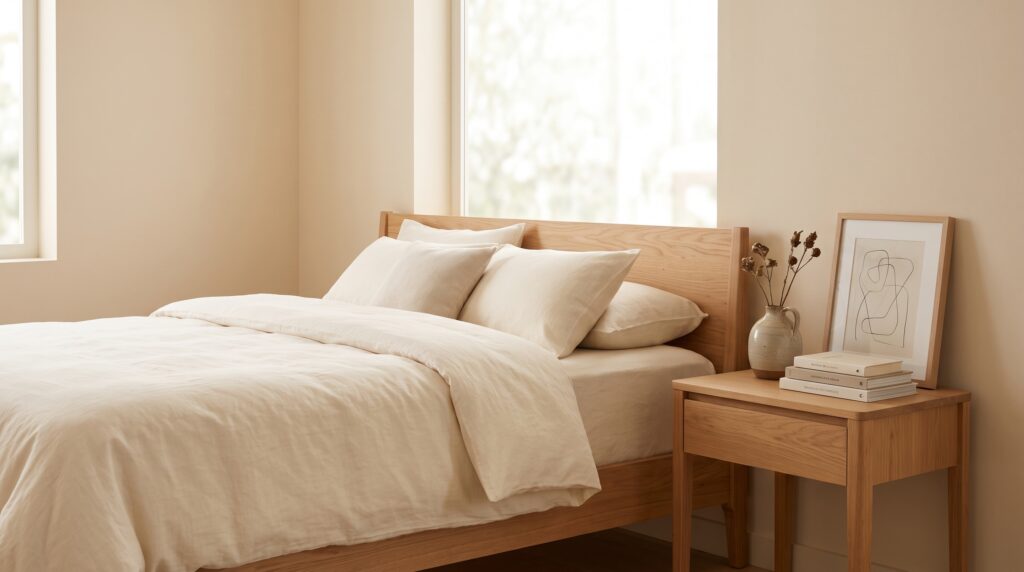
This style is defined as much by restraint as by warmth. A handful of well-chosen objects — flowers, a stack of books, one piece of art — will always read better than a nightstand crowded with knickknacks. Edit before you add. A useful test is to remove one object from every surface before you consider the room finished; it almost always looks better with less.
17. Highlight Architectural Character
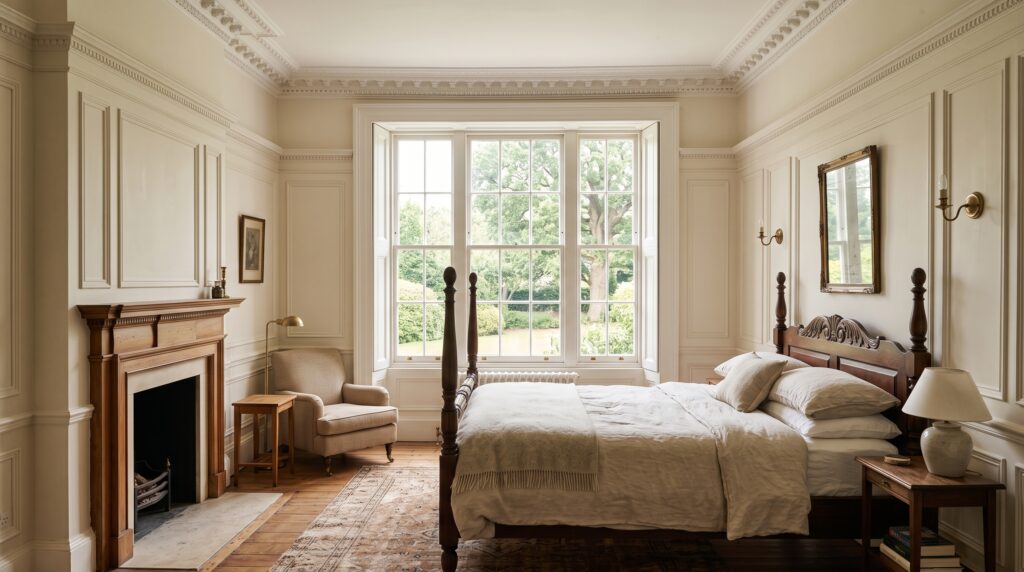
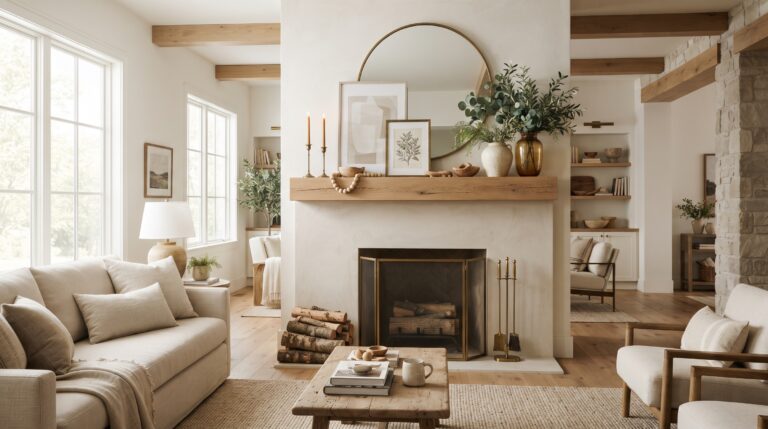
If your room has crown molding, paneling, a window seat, or built-in shelving, let those features show rather than covering them up. These details are part of what gives Nancy Meyers interiors their sense of an established, well-loved home. If your room lacks these features, even simple picture-frame molding added to one wall can suggest the same sense of history.
18. Stick to Natural Materials
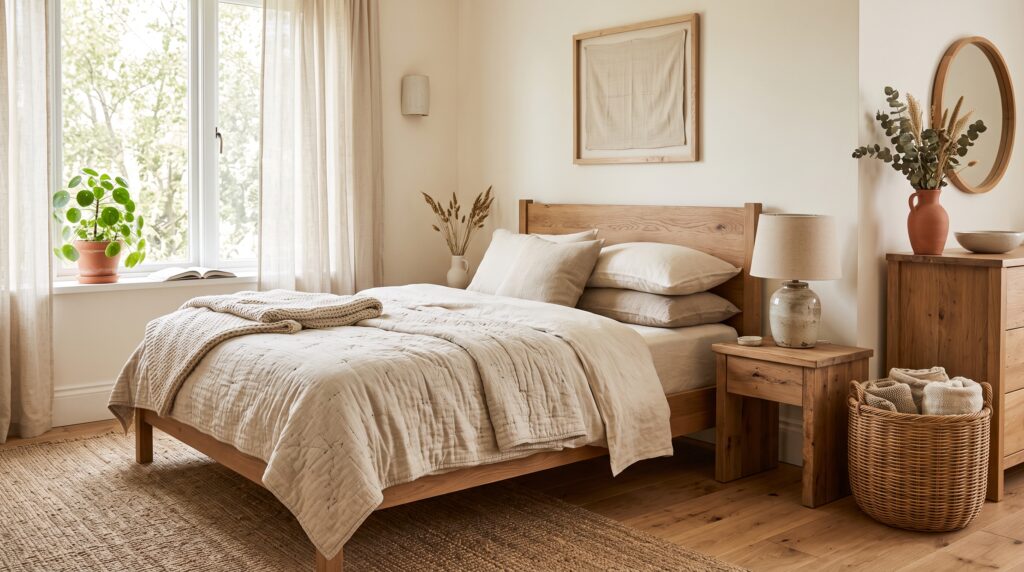
Wood, linen, cotton, rattan, and ceramic show up constantly in this style because they age well and photograph honestly — nothing here is meant to look brand-new. Swapping synthetic materials for natural ones is one of the fastest ways to shift a room toward this aesthetic. These materials also tend to soften with use rather than looking worn out, which is part of why the style photographs so well years later.
19. Borrow a Bit of Hotel Comfort
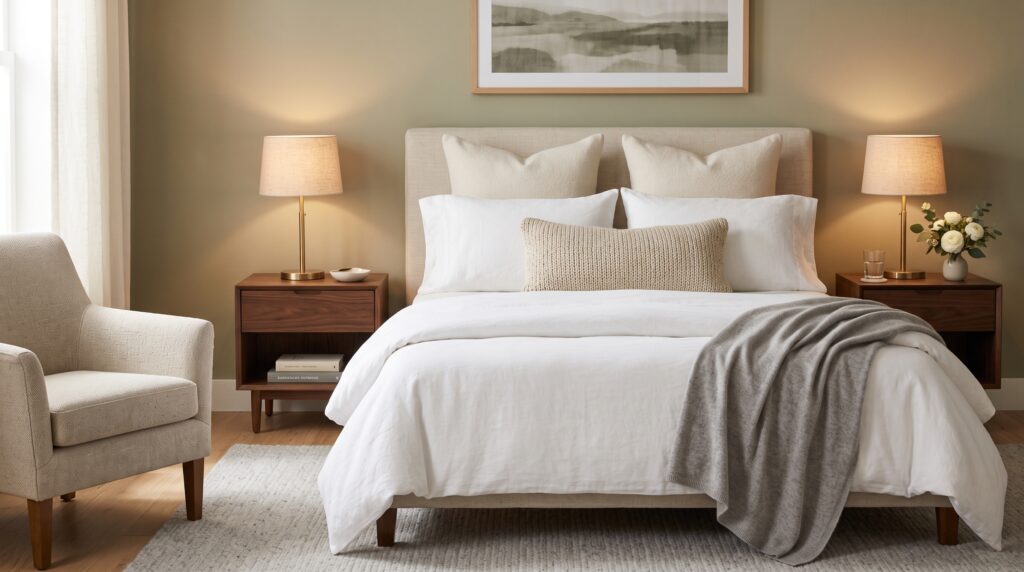
Good bedding, a couple of oversized pillows, soft lighting, and a tidy but not sparse nightstand can bring a boutique-hotel calm into an everyday bedroom. It’s less about luxury spending and more about consistency and care in the small details. Keeping surfaces clear and bedding freshly made does more for this feeling than any single purchase could.
20. Leave Room for Personal Objects
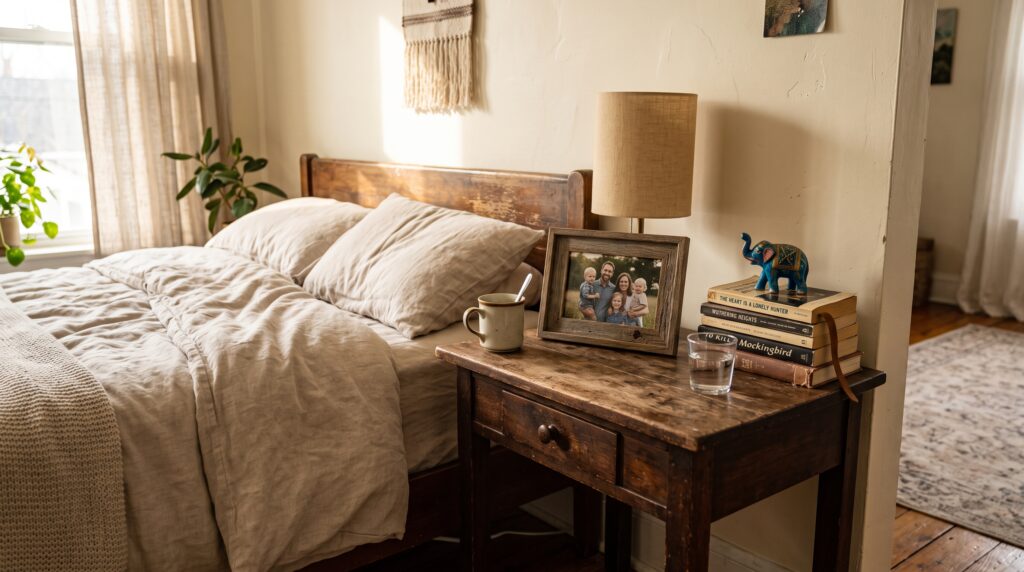
The most memorable rooms in these films always include something specific to the person who lives there — a photo, a stack of well-worn books, a travel souvenir. Don’t decorate so cleanly that the room could belong to anyone; let it look like yours. A single meaningful object often has more impact than several generic ones, so choose carefully rather than filling every shelf.
Frequently Asked Questions
What colors define a Nancy Meyers bedroom? The palette leans heavily on cream, ivory, oatmeal, soft gray, and warm white, sometimes paired with a touch of coastal blue. The point isn’t to avoid color altogether — it’s to keep large surfaces neutral so smaller details, like a vintage lamp or a stack of books, have room to stand out.
Do I need expensive furniture to get this look? Not really. Much of the appeal comes from mixing secondhand or inherited pieces with a few simple, well-made basics. A worn wooden dresser from a thrift store often does more for the aesthetic than a brand-new matching bedroom set.
Can this style work in a small bedroom? Yes — in fact, smaller rooms often suit this style well, since the emphasis is on a few well-chosen pieces rather than filling every surface. A single armchair, a well-dressed bed, and warm lighting can go a long way even in a compact space.
How do I avoid making the room feel too plain? Texture is the answer. Layer a knitted throw, a linen duvet, and a couple of different pillow fabrics so the neutral palette still feels rich rather than flat. Fresh flowers, meaningful artwork, and personal objects also keep the room from feeling generic.
Conclusion
What makes this style so enduring isn’t a strict formula — it’s restraint paired with warmth. A neutral palette, real materials, a few personal objects, and soft, layered lighting will get you most of the way there. Interior writers who’ve studied these sets closely note the same throughline: Meyers-inspired rooms lean on a light, mostly neutral base, natural materials, and a mix of vintage and casual pieces rather than anything that looks newly purchased. Start with two or three ideas from this list rather than trying to overhaul the whole room at once, and let the space fill in with things you actually love over time. Progress, not perfection, is really the point — even the most photographed movie bedrooms were built one small, intentional choice at a time.