Introduction
Turning one room into both a 22 guest bedroom home office ideas that maximize space bedroom and a home office sounds like a challenge, but with the right furniture and layout choices, it can become one of the smartest upgrades in your entire home. A dual-purpose room lets you host overnight visitors without giving up a dedicated place to work, and it does so without wasting a single square foot of a spare bedroom you might otherwise rarely use. Whether you’re working with a compact spare room in an apartment or a roomier flex space in a house, the ideas below will help you build a room that looks polished, functions well for daily work, and still feels warm and comfortable whenever guests stay over.
The key to pulling this off is planning, not luck. Rooms that try to do two jobs at once tend to fail when the furniture is too rigid, the storage is an afterthought, or the “office” side visually overwhelms the “guest room” side. Get the layout right from the start, though, and the two functions can actually complement each other: a great desk chair is also a comfortable spot to read, a stylish storage bench hides both office supplies and spare linens, and calming decor supports focus during the day and rest at night. Below are 22 ideas, organized loosely from furniture-first solutions to the smaller styling details that pull the whole room together.
22 Guest Bedroom Home Office Ideas That Maximize Space
Below are 22 practical, design-forward ways to make a single room earn its keep as both a productive workspace and a welcoming place for guests to sleep, without the two functions ever feeling like they’re competing for the same square footage.
1. Bring in a Murphy Bed
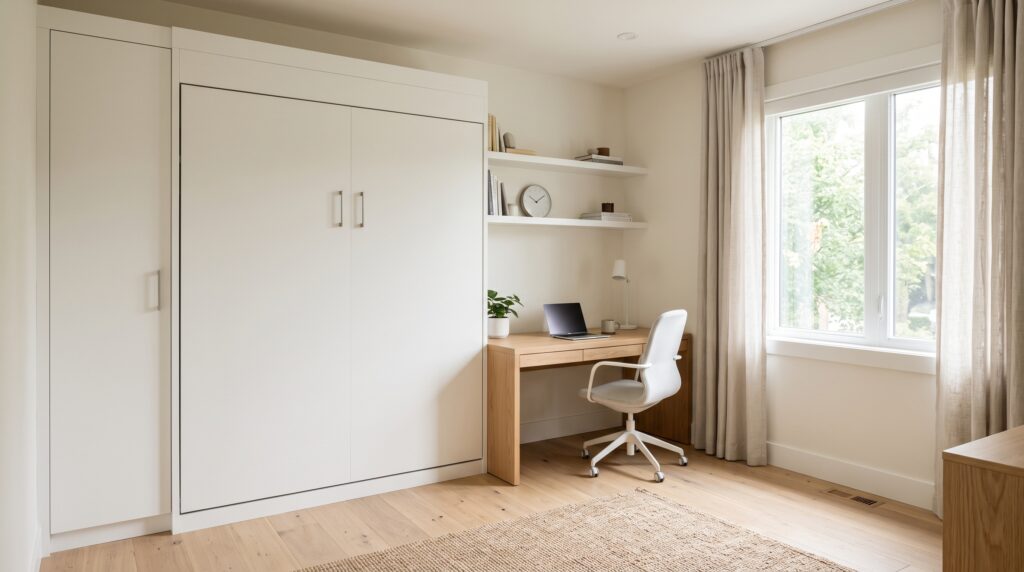
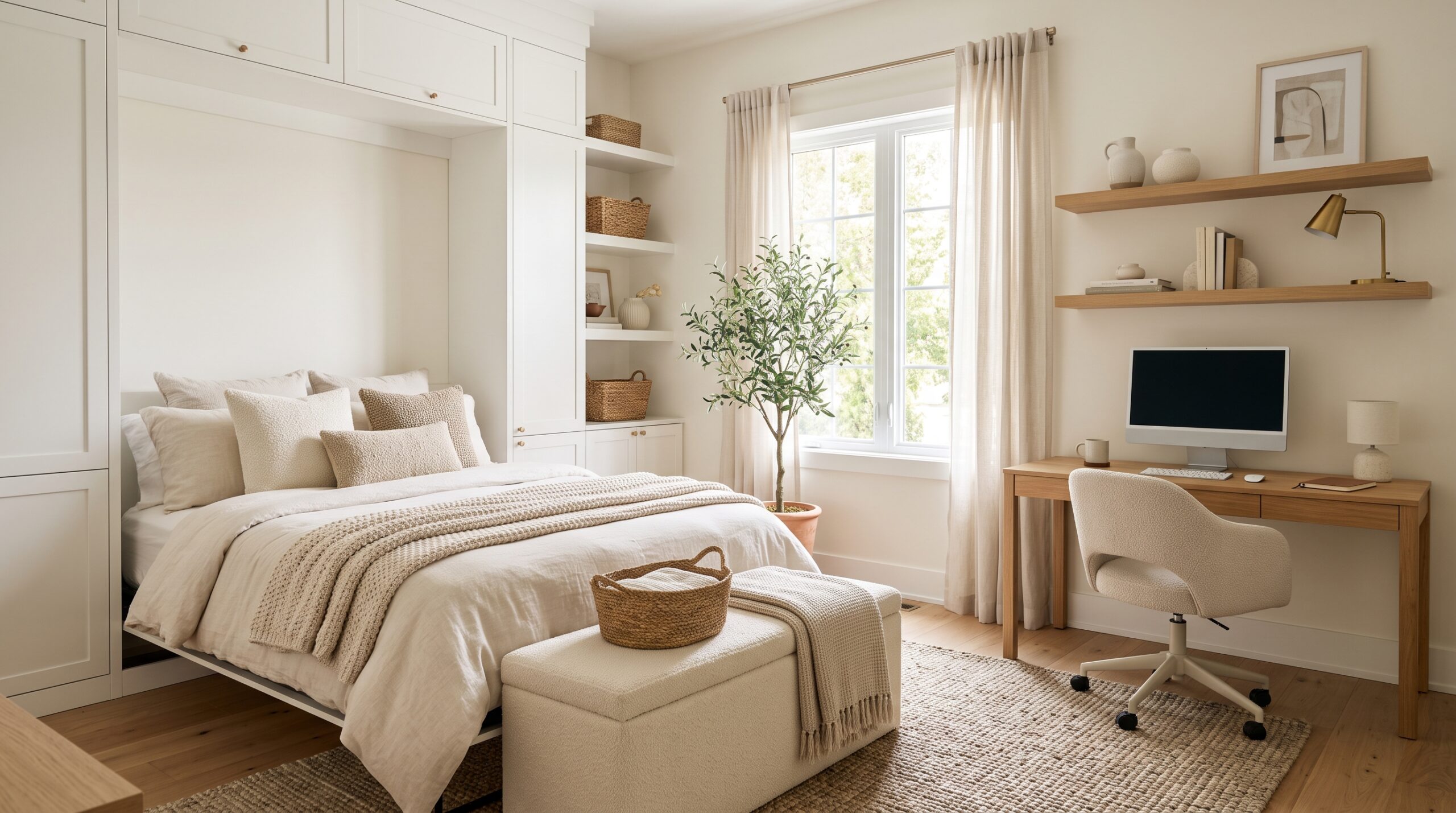
A wall-mounted Murphy bed is one of the single best upgrades you can make to a combined guest room and office. Fold it up during the day and you get a completely open floor for working, complete with room to stretch, stand, or take a video call without a bed frame in the background. Pull it down at night and the room instantly becomes a proper bedroom again. Because a Murphy bed eliminates the need for a permanent bed frame taking up floor space around the clock, it’s arguably the single most effective way to reclaim square footage in a small room, and it lets you fit a full desk setup in a room that otherwise couldn’t handle both.
2. Choose a Quality Sofa Bed
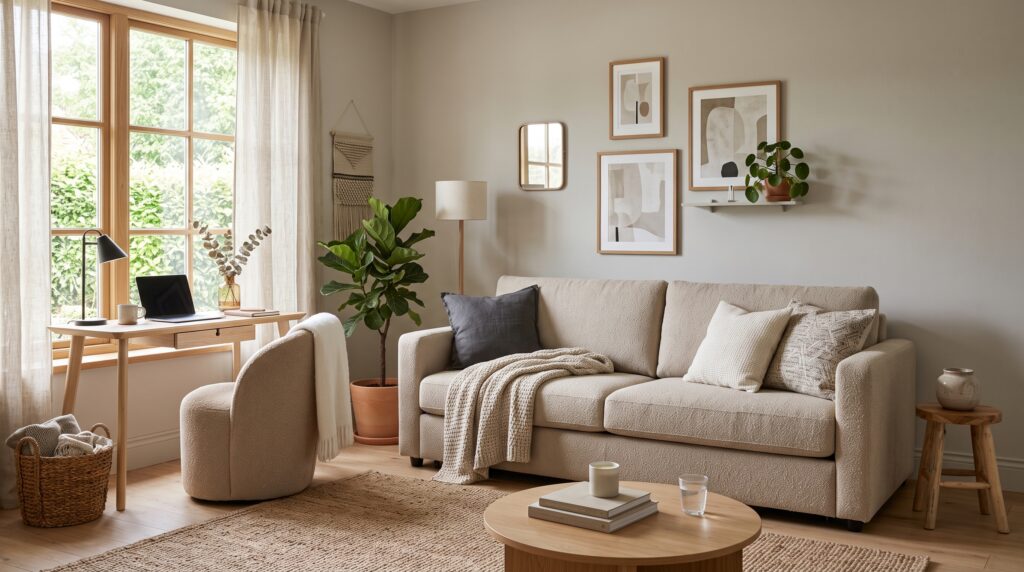
A well-made sofa bed does double duty as comfortable daytime seating — useful for phone calls, reading, or a change of scenery from the desk — and then converts into a genuinely comfortable place for guests to sleep at night. Look for a model with a supportive mattress rather than a purely decorative pull-out, since guests will notice the difference. Keep spare bedding, pillows, and a throw folded in a nearby cabinet or ottoman so the switch from office to guest room takes just a few minutes rather than becoming a whole production.
3. Put the Desk by the Window
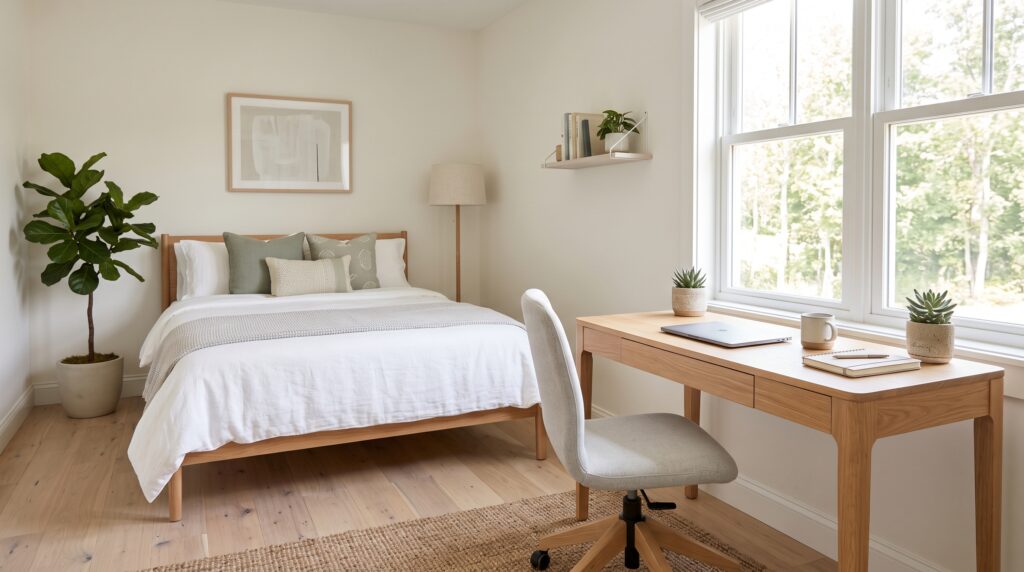
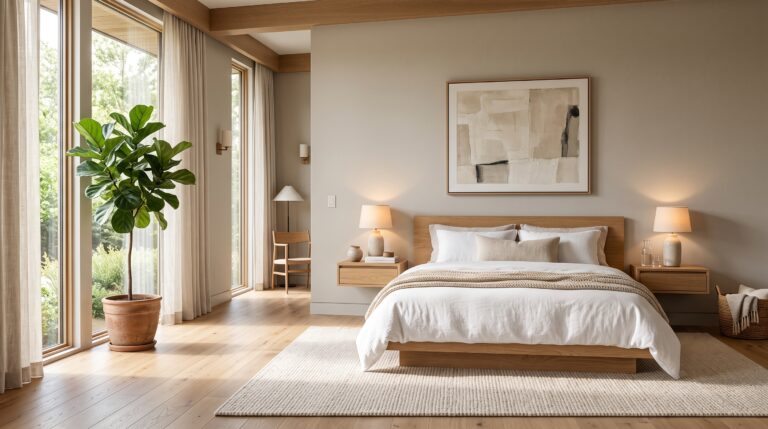
Positioning your desk near natural light does more than boost your mood during the workday — it also naturally keeps the workspace visually separate from the sleeping area, which is usually anchored against an interior wall. Daylight makes the whole room feel bigger, brighter, and more energizing, which matters even more in a smaller footprint where every design decision has to work harder. If privacy is a concern, a sheer curtain lets light in during work hours and can be layered with a blackout panel for guests who want to sleep in.
4. Add Built-In Storage Cabinets
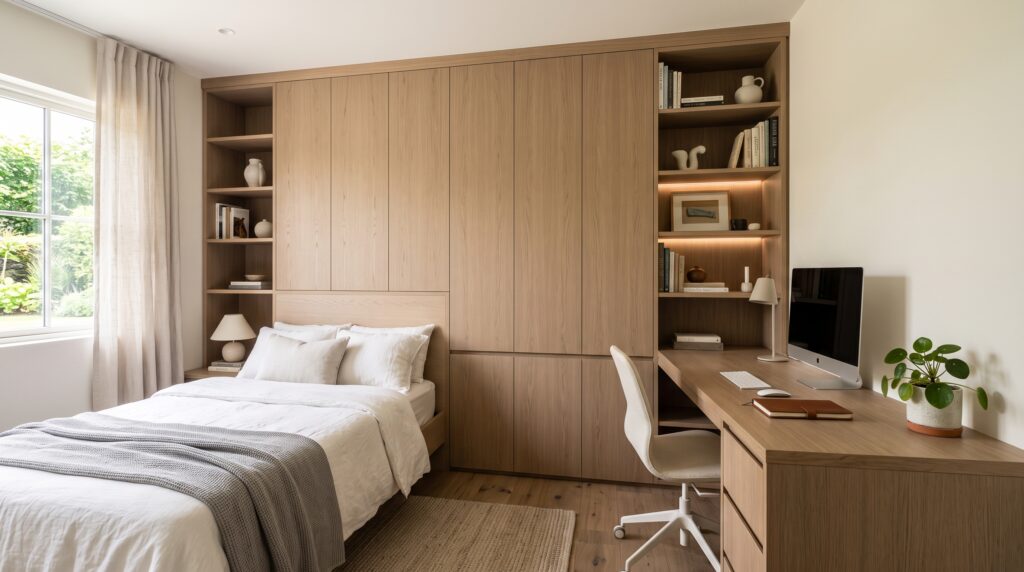
Floor-to-ceiling cabinetry gives you a place to tuck away office files, guest linens, and seasonal items behind closed doors, rather than letting them pile up in visible corners. Concealed storage keeps the room looking tidy no matter which “mode” it’s currently in, and it’s one of the most efficient uses of vertical space in a small room, since it takes advantage of height most furniture never touches. Built-ins can also be customized with a mix of shelves, drawers, and hanging space to suit exactly what the room needs to hold.
5. Stick With a Neutral Palette
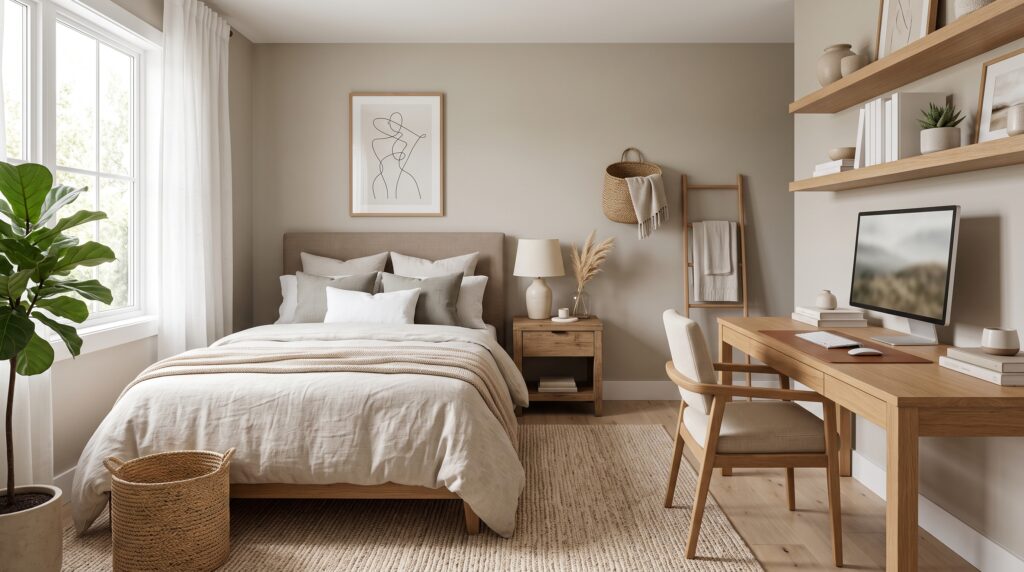
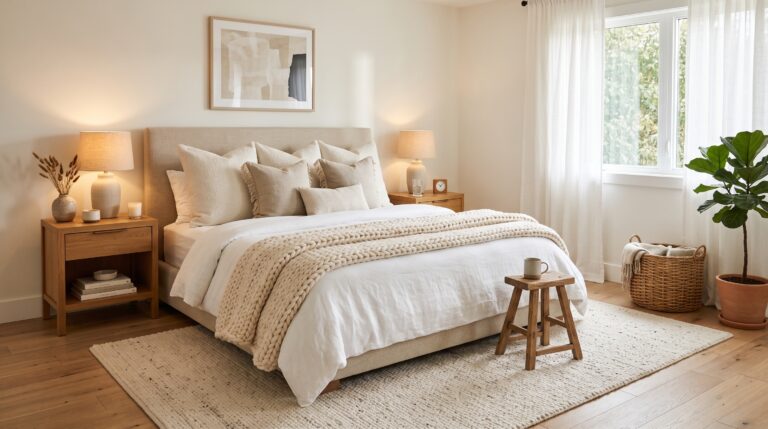
Soft tones like warm white, greige, taupe, and light beige create a calm, adaptable backdrop that works equally well for focused work during the day and restful sleep at night. Neutral walls also make a small room read larger and brighter, and they let furniture textures, wood tones, and greenery become the visual interest instead of competing with a bold wall color. If you want personality, add it through textiles and art rather than paint, since those are far easier to swap out later.
6. Mount Floating Shelves Above the Desk
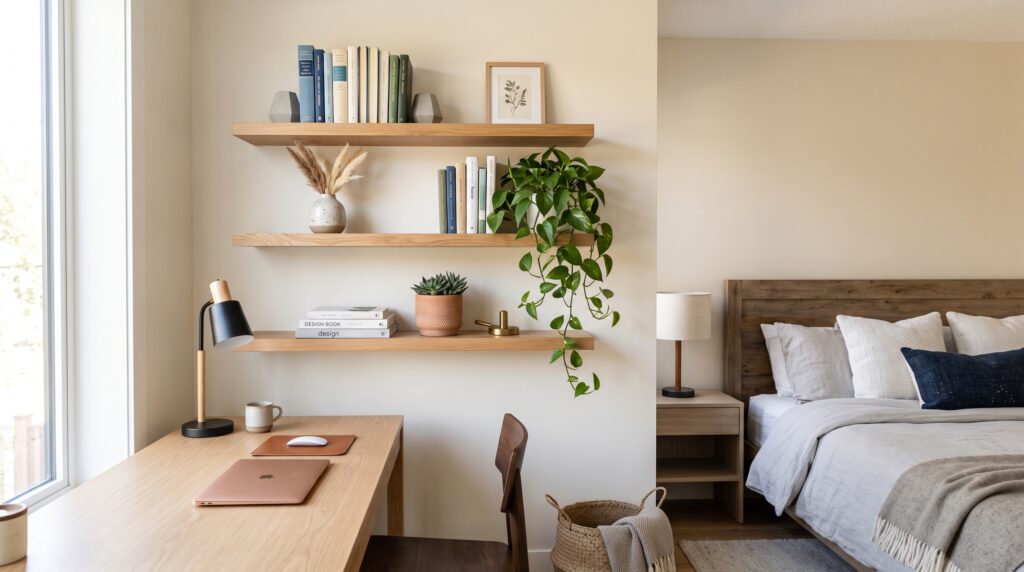
Open shelving above a desk adds valuable storage without eating into the floor plan the way a bookcase would. Style the shelves with a few favorite books, a small plant, and simple decor objects so the space still feels like a guest room rather than a cluttered supply closet. Floating shelves are also an easy way to add color or personality to an otherwise neutral room without committing to anything permanent.
7. Separate the Zones Clearly
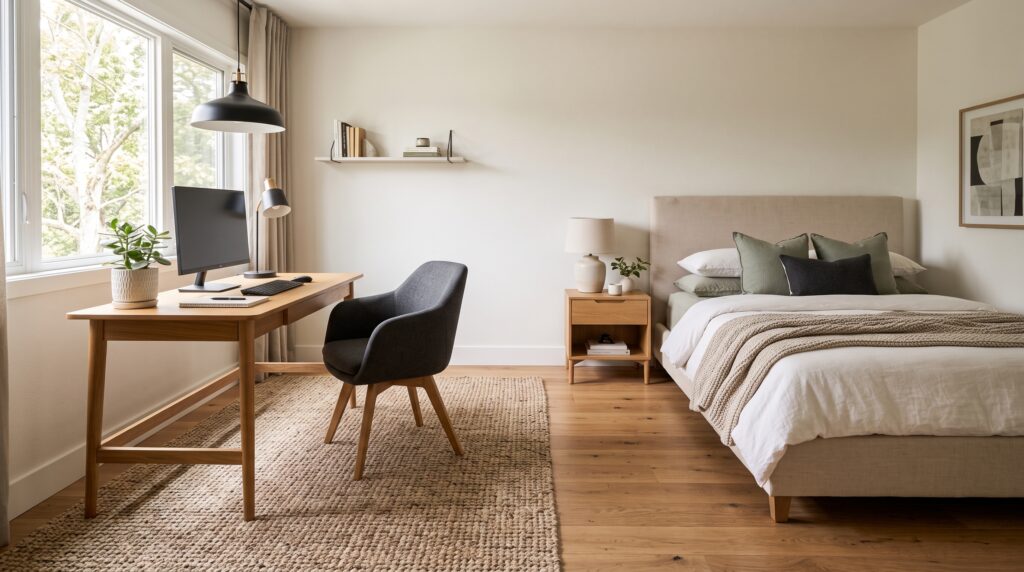
Use an area rug, a change in lighting, or a shift in furniture angle to visually divide the sleeping area from the work area, even without a physical wall or divider. Clear zoning helps the room feel intentional and organized rather than like a bedroom with a desk crammed into a corner as an afterthought. It also makes each function easier to use, since your brain instinctively knows which “mode” of the room it’s in based on where you’re standing.
8. Go With a Slim Writing Desk
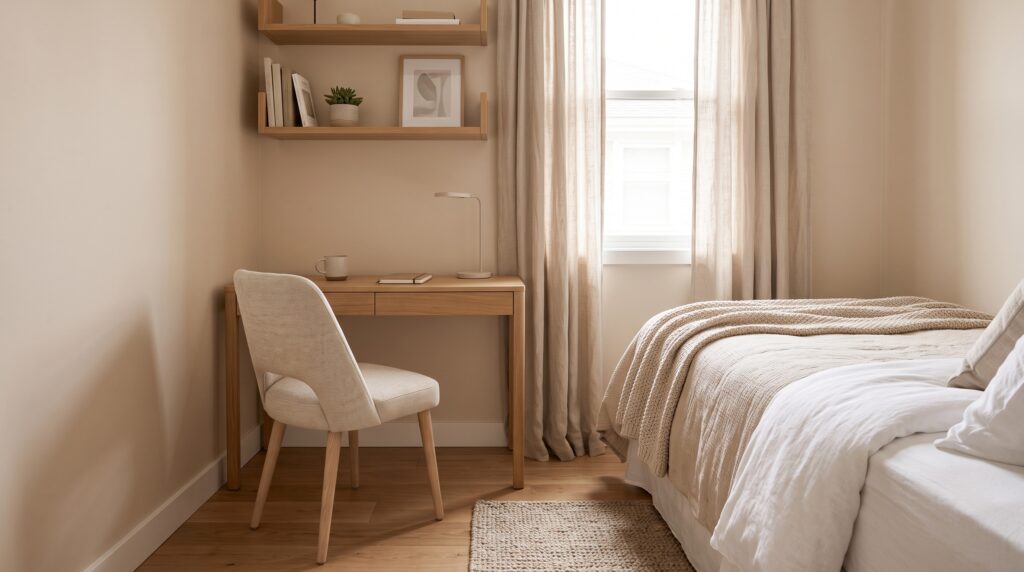
A narrow desk with one or two built-in drawers gives you enough surface for a laptop, notebook, and lamp while keeping sightlines open across the room. Clean, simple lines help a small desk visually disappear into the overall design rather than dominating the room the way a bulky executive desk would. This is especially important in a guest room, where the furniture needs to read as “bedroom” first and “office” second.
9. Choose Multi-Functional Nightstands
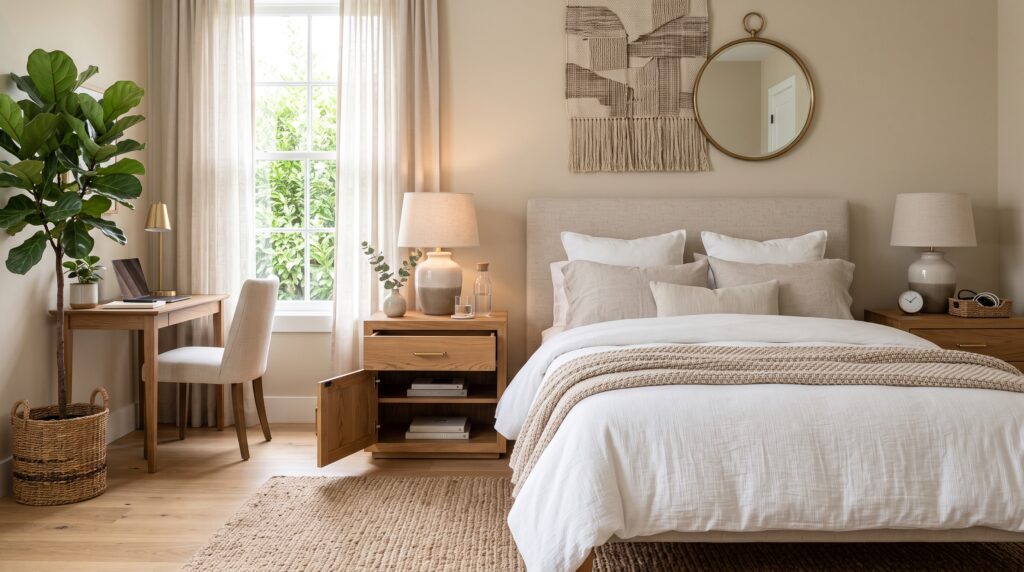
Nightstands with a drawer or small cabinet can hold guest essentials — like a spare phone charger, tissues, or reading material — one week, and office supplies like notebooks or chargers the next. Furniture that can shift roles depending on who’s using the room is one of the easiest and cheapest ways to stretch a small space further, since you’re not buying separate pieces for separate functions.
10. Anchor the Desk With an Area Rug
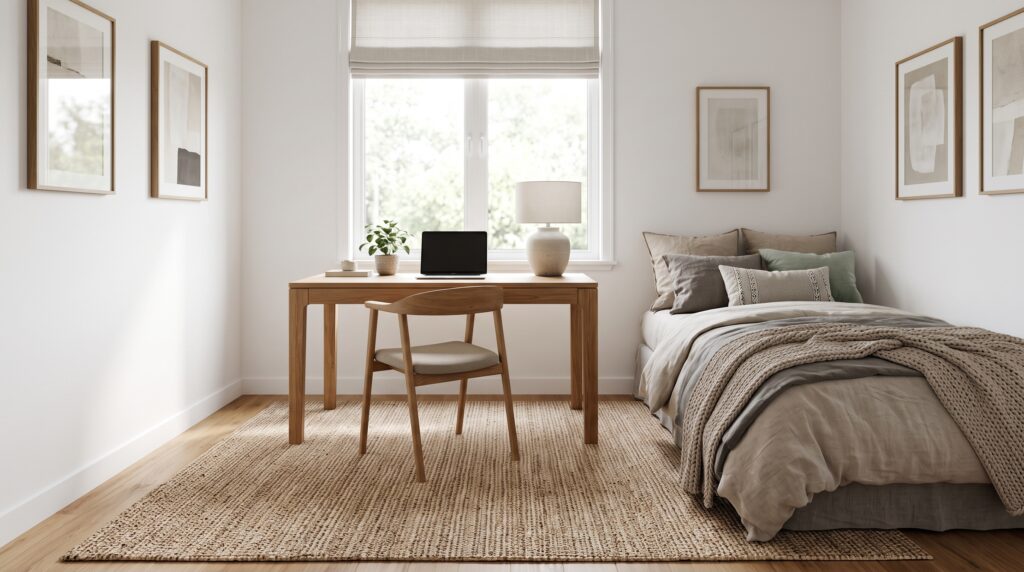
A textured rug placed under the desk defines the office zone without requiring a permanent wall, curtain, or room divider. Pick a rug color and pattern that echoes the bedding or curtains so the whole room still reads as one cohesive design rather than two mismatched spaces stitched together. A rug also softens the acoustics of the room, which is a nice bonus during video calls.
11. Install Wall-Mounted Lighting
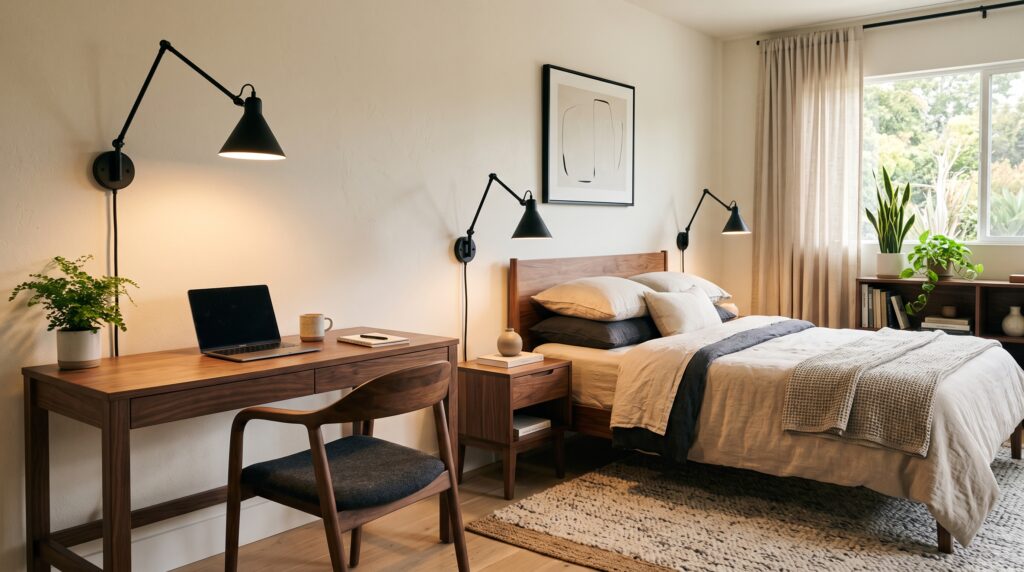
Sconces or swing-arm lamps mounted on the wall free up valuable desk and nightstand surface area while still providing focused, adjustable light for work during the day or reading in bed at night. Wall-mounted fixtures also keep the room feeling streamlined and less cluttered than a room full of table lamps, and they’re a small detail that instantly reads as more thoughtfully designed.
12. Bring in Low-Maintenance Plants
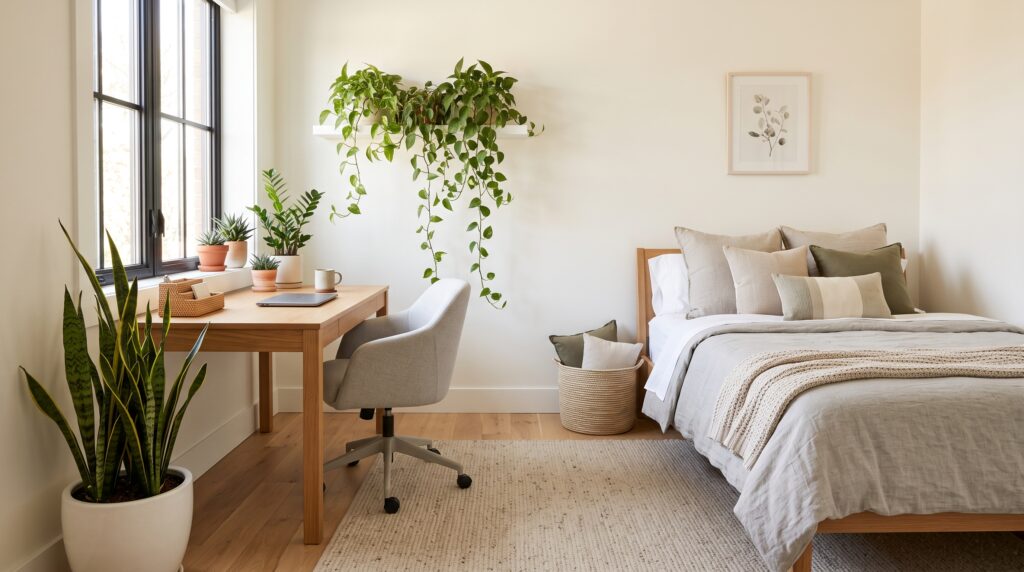
A snake plant, pothos, or small olive tree adds life and texture to the room and softens the more clinical “office” elements of the space, like a monitor stand or filing cabinet. Greenery is an easy, inexpensive way to make the workspace feel more like a comfortable bedroom that guests will actually enjoy staying in, rather than a converted storage room with a bed pushed into it.
13. Keep Office Supplies Out of Sight
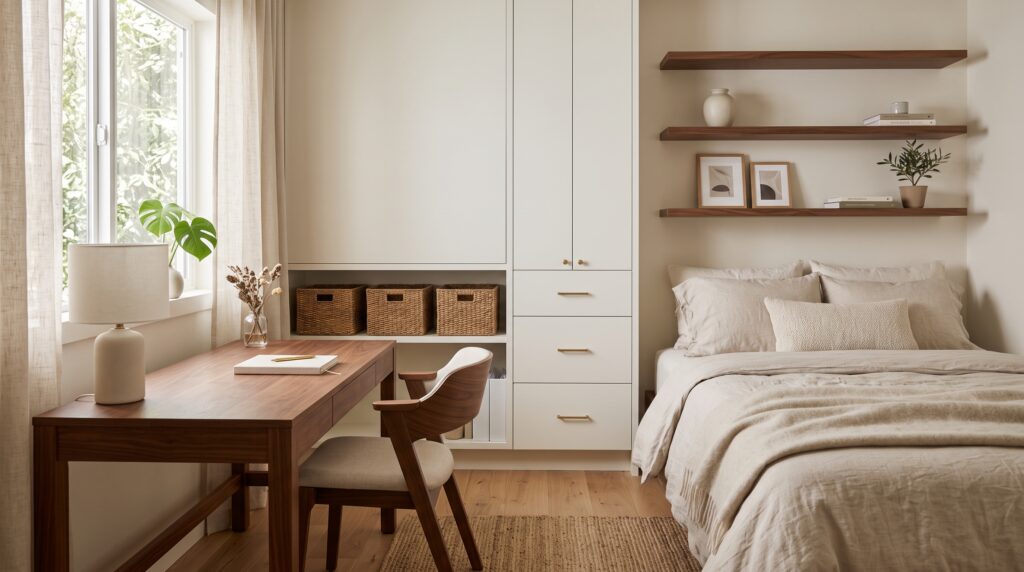
Store paperwork, cables, and desk accessories in woven baskets, a filing drawer, or a closed cabinet rather than leaving them out on open shelves. When supplies are hidden, the room can shift from a working weekday space to guest-ready in a matter of minutes instead of requiring a full cleanup session before anyone arrives. This single habit does more for the room’s overall polish than almost any furniture purchase.
14. Add Boutique Hotel Touches for Guests
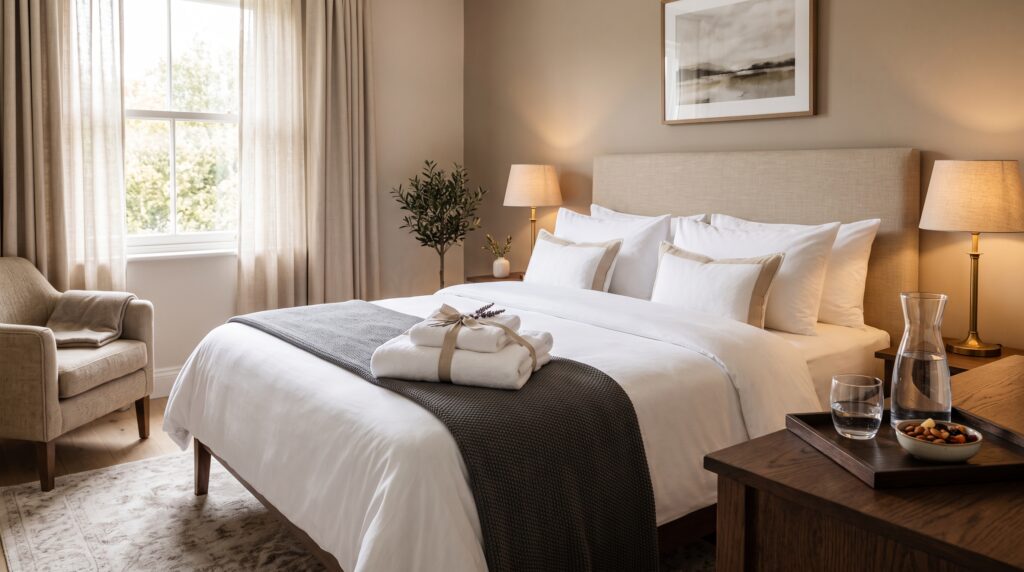
Crisp white bedding, a soft throw blanket, a working bedside lamp, and a small welcome tray with water and a snack go a long way toward making visitors feel genuinely taken care of. These small, low-cost details transform a functional home office back into a guest room that feels intentional and cared for, rather than like guests are sleeping in the “extra” room where the printer lives.
15. Install a Fold-Down Wall Desk
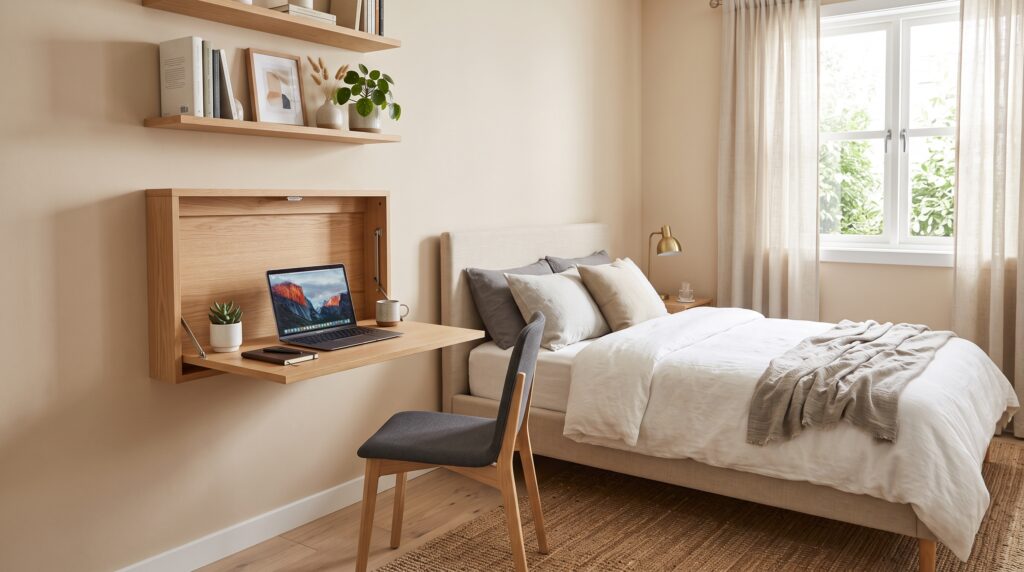
A wall-mounted fold-down desk gives you a full workspace, including drawers or a small shelf underneath, when you need it, and folds flat against the wall to disappear completely when you don’t. It’s especially useful in smaller rooms that can’t accommodate both a Murphy bed and a standing desk, since it takes up essentially no permanent floor space at all.
16. Add a Storage Bench at the Foot of the Bed
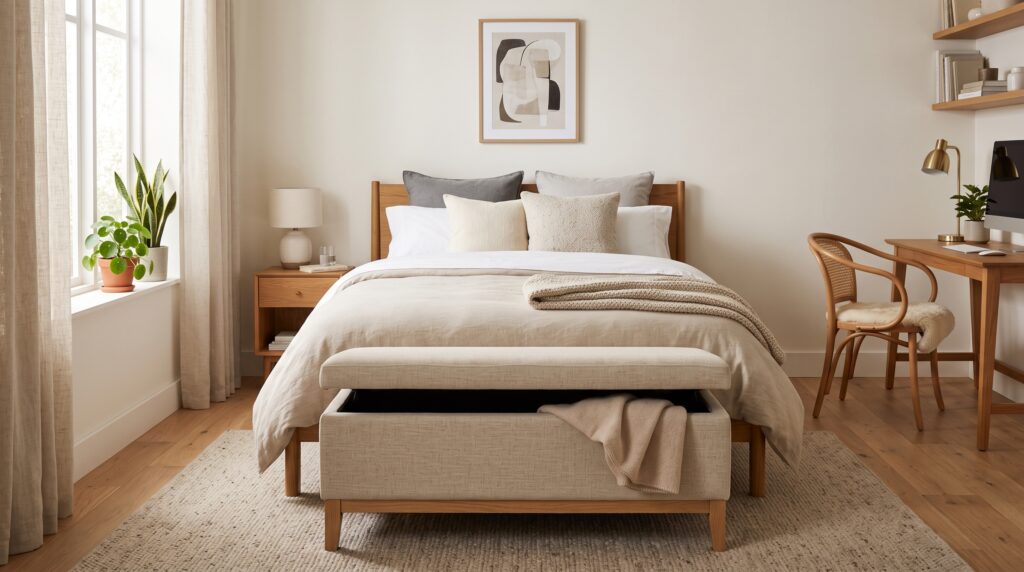
A bench placed at the end of the bed provides extra seating for putting on shoes or taking a work call, while hiding blankets, spare pillows, or overflow office supplies inside a lift-top compartment. Choose an upholstered bench in a linen or bouclé fabric that complements the room’s neutral palette, since this piece often ends up as one of the room’s main style anchors.
17. Hang Oversized, Neutral Artwork
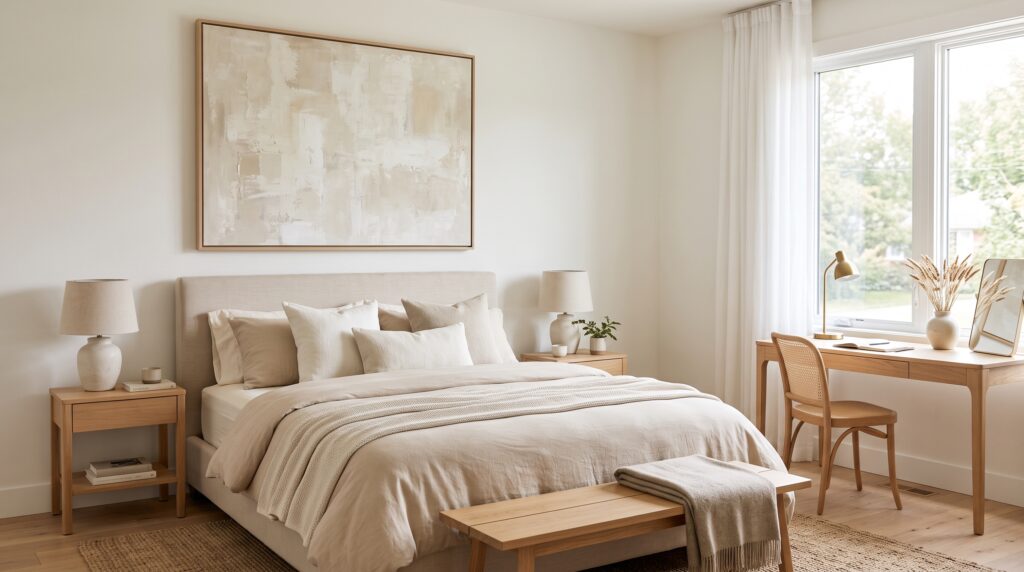
A single large piece of art hung above the bed creates a strong focal point without visually crowding a small room the way several smaller frames might. Calming landscapes, abstract prints, or simple botanical pieces tend to work best because they suit both a productive workday and a relaxing overnight stay, without leaning too far into either “office” or “bedroom” territory.
18. Manage Cables and Cords
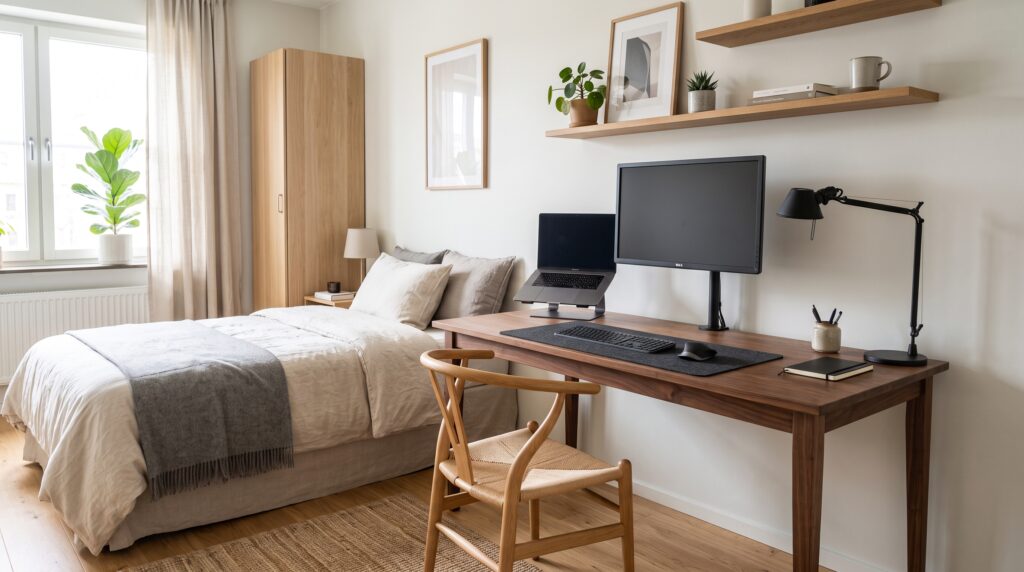
Visible cords trailing across the floor or desk are one of the fastest ways to make an otherwise well-designed dual-purpose room look messy and unfinished. Cable trays, adhesive clips, and wireless accessories like a mouse or keyboard keep chargers and cords neatly tucked away, so the space always looks put together, whether it’s currently a workday or a guest is staying the night.
19. Add Real Task Lighting
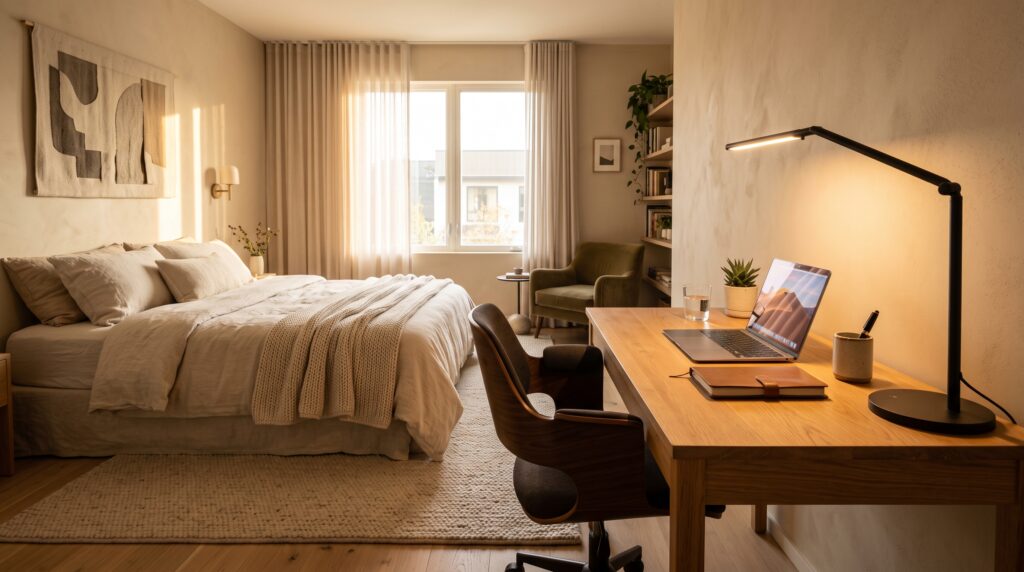
A genuinely good desk lamp does more for daily productivity than almost any other single item in the room, and a well-chosen one doubles as an attractive piece of decor even when the desk isn’t in use. Look for an adjustable design in a finish like matte black, brushed brass, or matte white that complements the bedroom’s overall palette, rather than a purely utilitarian lamp that looks like it belongs in a cubicle.
20. Include a Full-Length Mirror
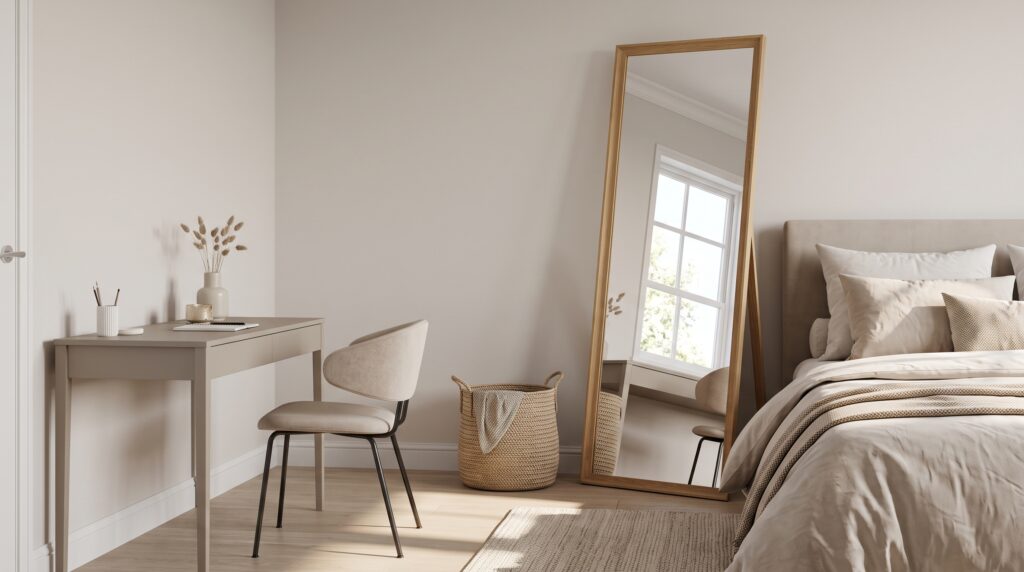
A leaning, wood-framed mirror gives overnight guests a convenient place to check their outfit before heading out, and it makes the entire room feel brighter and more open by reflecting available light. It’s a simple, relatively inexpensive addition that pulls double duty for both function and design, and it works in nearly any style of room.
21. Personalize With Thoughtful Decor
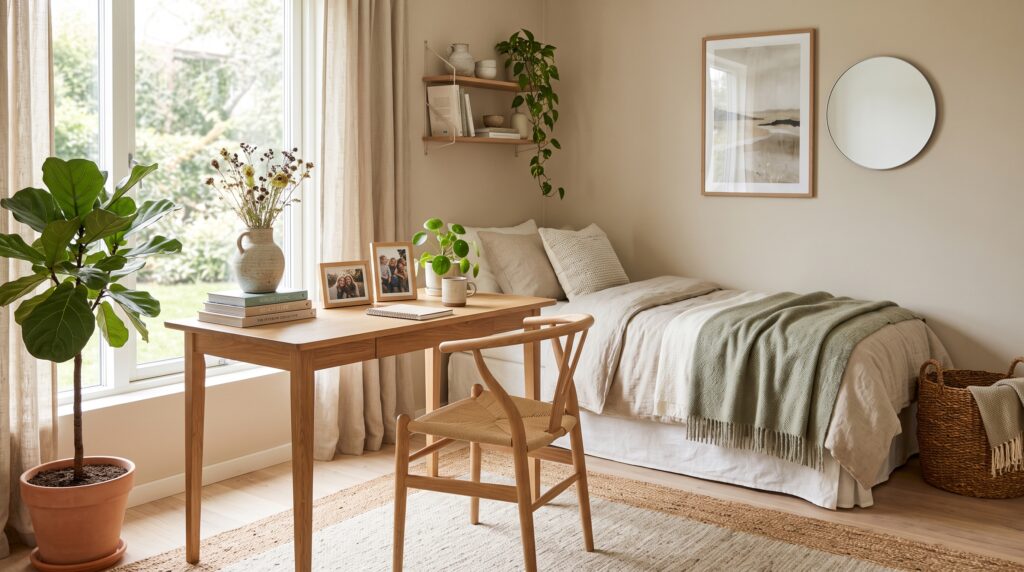
A few framed photos, handmade ceramics, a small stack of favorite books, and a touch of greenery keep the room from feeling like a generic hotel room or an anonymous home office. Intentional, personal touches like these help the space feel genuinely welcoming to guests, while still supporting a calm, focused atmosphere for everyday work.
22. Finish With Hotel-Inspired Extras
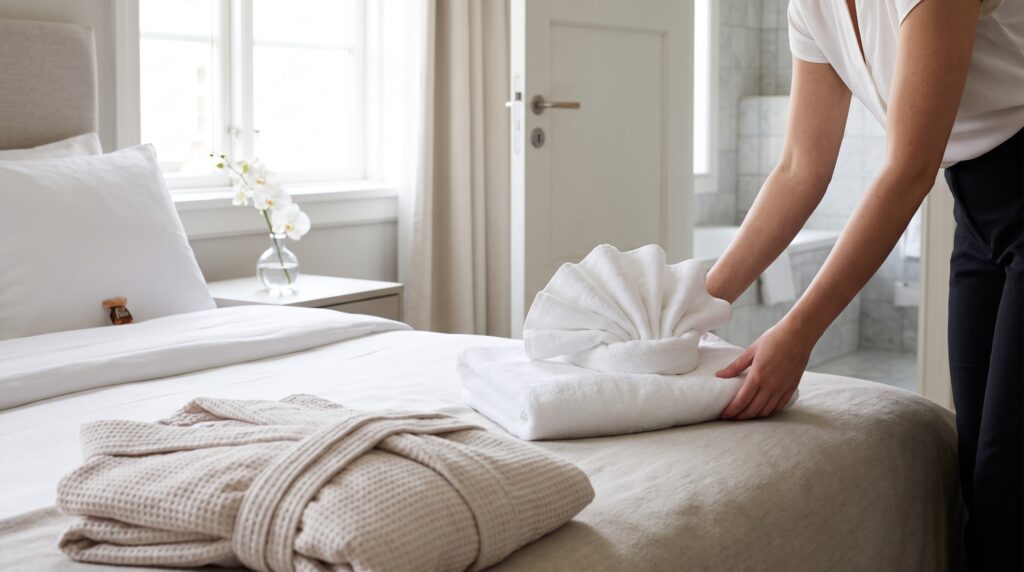
Soft towels set out ahead of a guest’s arrival, a cozy throw blanket draped over the bed, a small water carafe on the nightstand, and a candle or two make guests feel genuinely welcomed without undercutting the room’s everyday office function. These finishing touches are inexpensive, take only a few minutes to set up, and make a noticeable difference in how the room feels to actually stay in.
Conclusion
A guest bedroom that doubles as a home office works best when the furniture is flexible, the storage is generous, and the layout keeps the two functions from competing with each other for the same visual space. Space-saving pieces like a Murphy bed or a fold-down wall desk, paired with a calm neutral palette, clearly defined zones, and a few hotel-inspired touches for guests, let you get real work done during the week and host overnight visitors comfortably on the weekend — all in the same room. For more background on how convertible furniture has solved exactly this kind of space problem for well over a century, the Wikipedia entry on the Murphy bed is a useful starting point. Save this guide and revisit it whenever you’re ready to turn your spare room into a space that finally works as hard as you do.