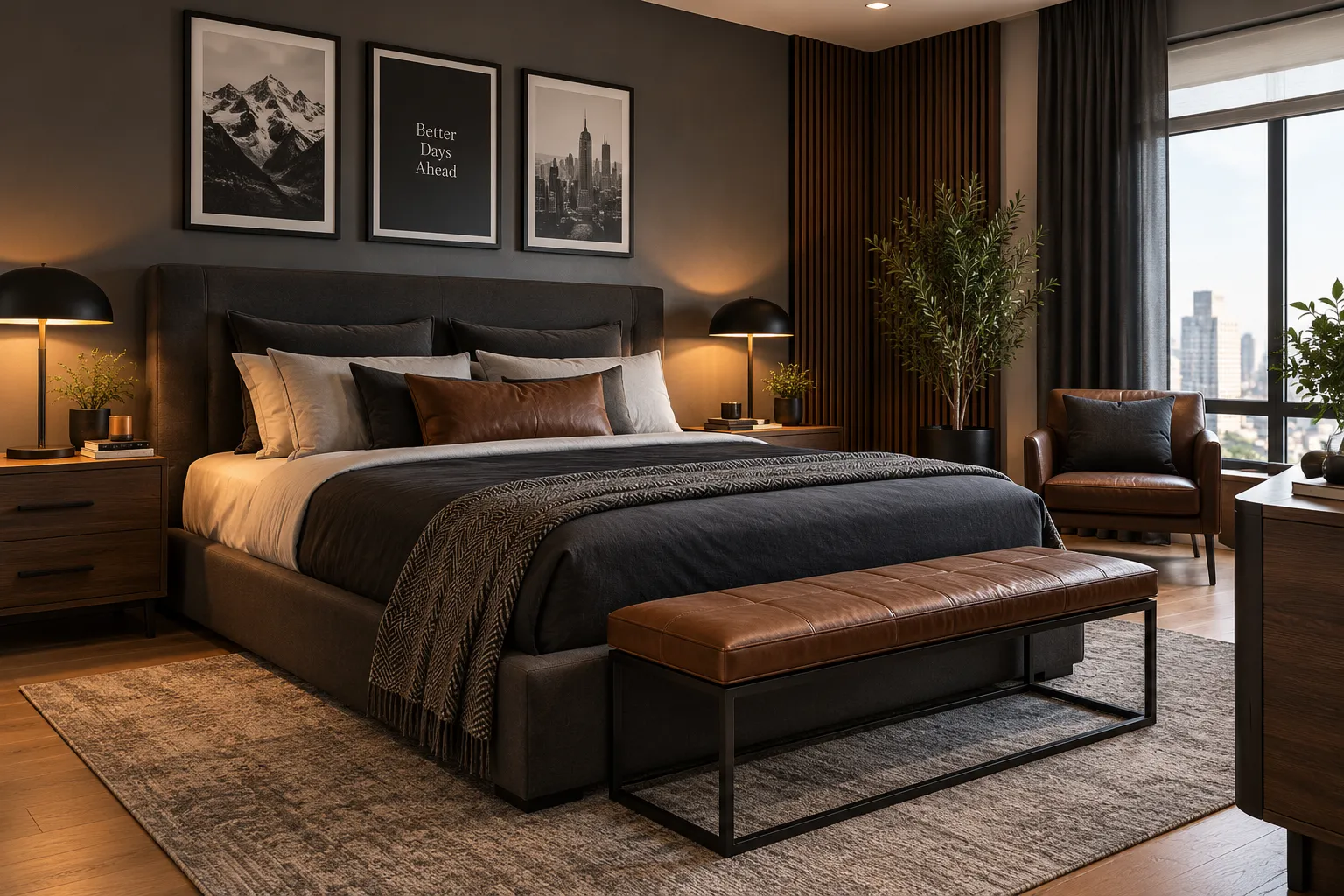
Let’s be honest: most “masculine bedroom” guides read like they were written by a mattress ad. Gray walls, a candle, a plant, done. But a bedroom that actually feels like you — sharp, calm, a little moody, comfortable enough to actually sleep in — takes a bit more thought than that.
If you’re staring at a beige box wondering how to turn it into a space you’re proud to show off (or just proud to wake up in), you’re in the right place. Below are 22 modern mens bedroom ideas for a sophisticated space that skip the clichés and focus on what actually makes a room feel put-together: contrast, texture, restraint, and a couple of small splurges that punch way above their price tag.
The good news is that none of this requires a full renovation or a designer on retainer. Most of these changes come down to a handful of smart swaps — a different bed frame, better lighting layers, one bold color decision — repeated consistently instead of scattered randomly. A sophisticated bedroom rarely comes from buying more; it comes from buying with intention and knowing when to stop. So before you open another tab of matching furniture sets, work through the list below and pick a few starting points that actually fit how you live, not just how a showroom is staged.
22 Modern Mens Bedroom Ideas for a Sophisticated Space
1. Anchor the Room in One Bold Wall Color
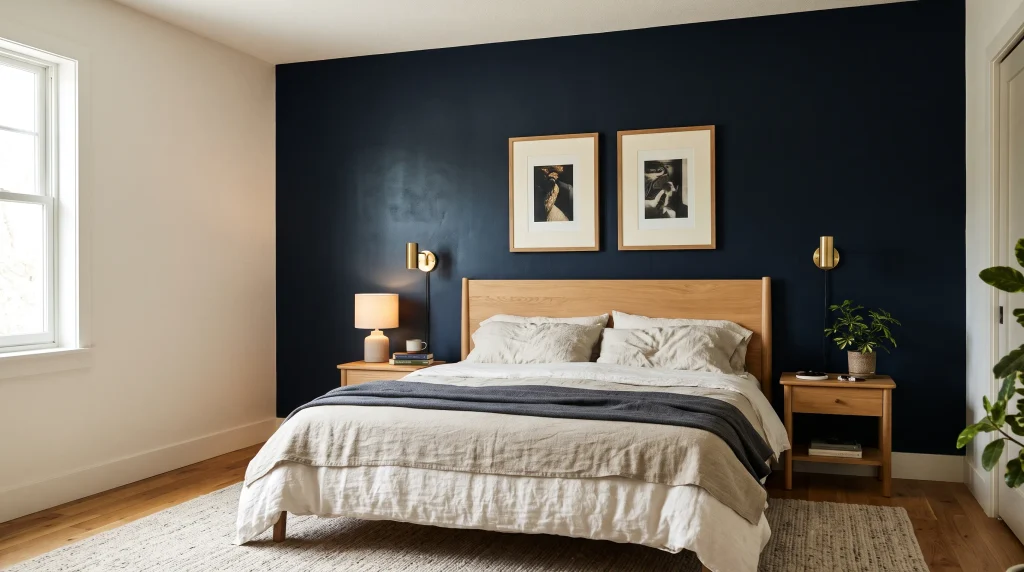
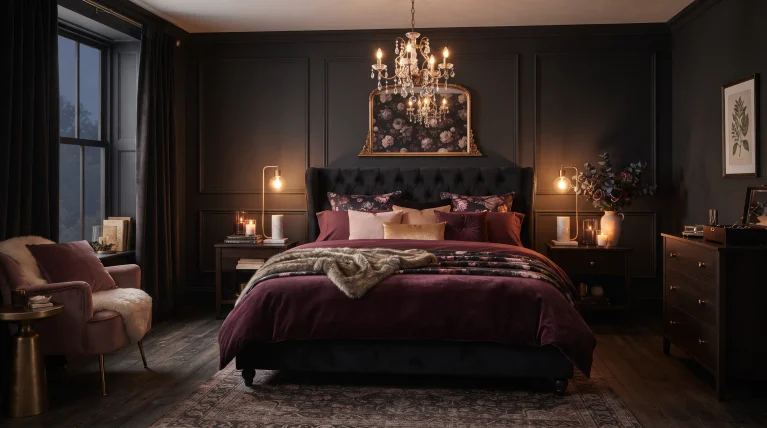
You don’t need to paint all four walls navy or charcoal to get the mood right — just pick one, usually the headboard wall, and commit. A single deep-toned wall does more heavy lifting than an entire room of “safe” gray, and it gives you an easy reset button if you ever want to change direction later. Deep charcoal, bottle green, and near-black navy are all reliable choices because they read as sophisticated in daylight and cozy under lamp light, which is exactly the split-personality a bedroom needs. If committing to paint feels risky, test it first with a large sample board propped against the wall for a few days before you roll on the real thing.
2. Go Low and Long With the Bed Frame
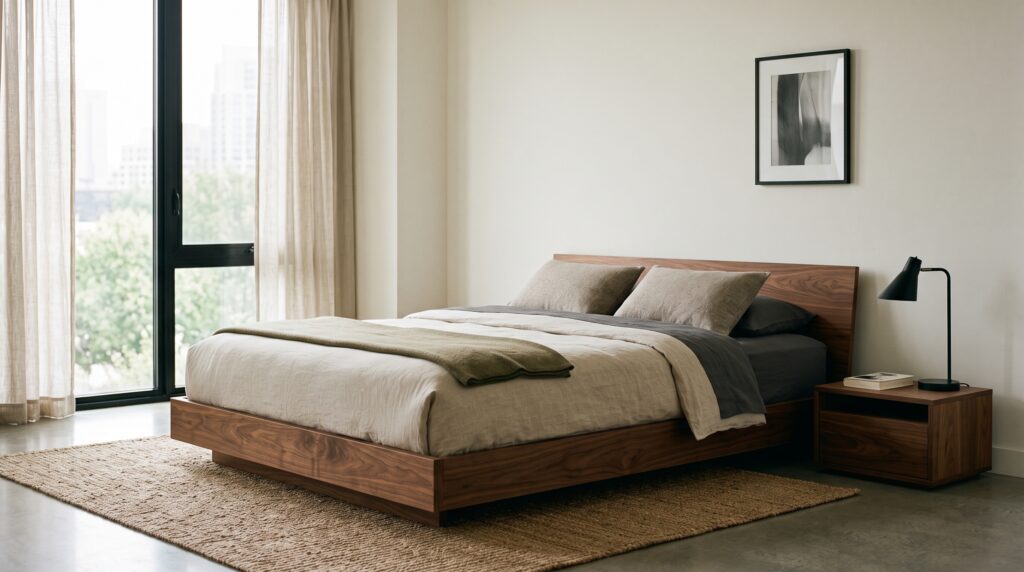
Platform beds with a low profile instantly read as modern. The trick is proportion: a wide, grounded frame paired with a slim headboard makes the whole room feel more architectural, even if the ceilings are standard height. Avoid anything with a tall, ornate headboard or bulky footboard — those visual “walls” tend to chop up the room and make it feel smaller than it is. If storage is tight, look for a platform frame with built-in drawers underneath so you get the low, wide silhouette without losing closet space.
3. Mix Two Wood Tones, Not Zero
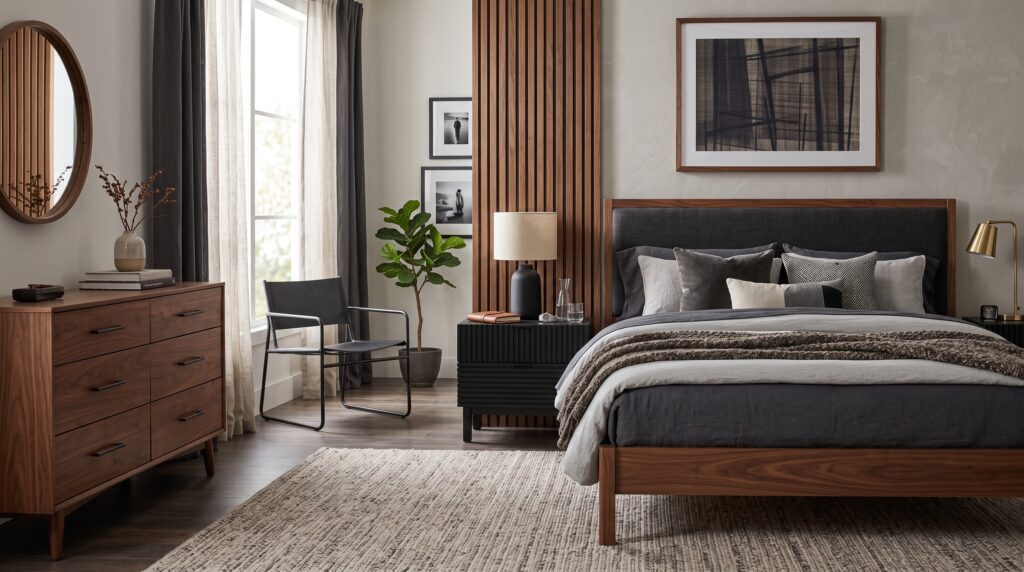
A lot of “minimalist” bedrooms end up looking sterile because everything matches too perfectly. Pair a warm wood (walnut, oak) with one cooler or darker piece — a black-stained nightstand, for instance — so the room has depth instead of feeling like a furniture catalog page. A good rule of thumb: let one wood tone dominate roughly 70% of the wood surfaces in the room, and use the second tone sparingly, almost like an accent color, so it reads as intentional contrast rather than a mismatched furniture set.
4. Invest in Bedding That Actually Feels Expensive
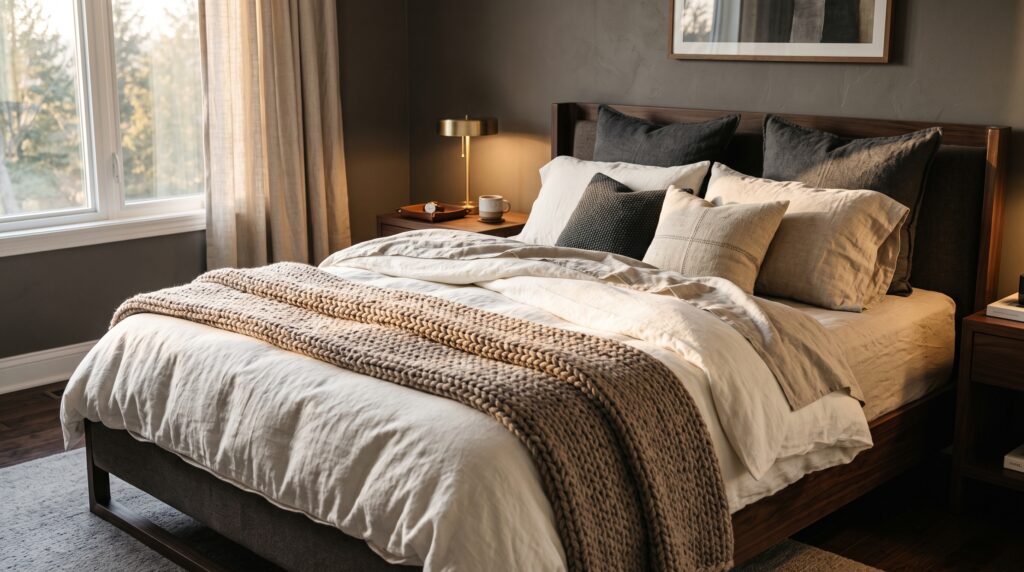
Skip the shiny “hotel luxury” polyester sets. Heavyweight cotton percale or a linen duvet in an off-white or stone color will look better after five washes than most flashy sets look on day one. Texture beats sheen every time. Layering matters too — a flat sheet, a substantial duvet, and one heavier throw folded at the foot of the bed create the kind of visual weight that makes a bed look inviting instead of flat, even before anyone climbs in.
5. Swap the Overhead Light for Layered Lighting
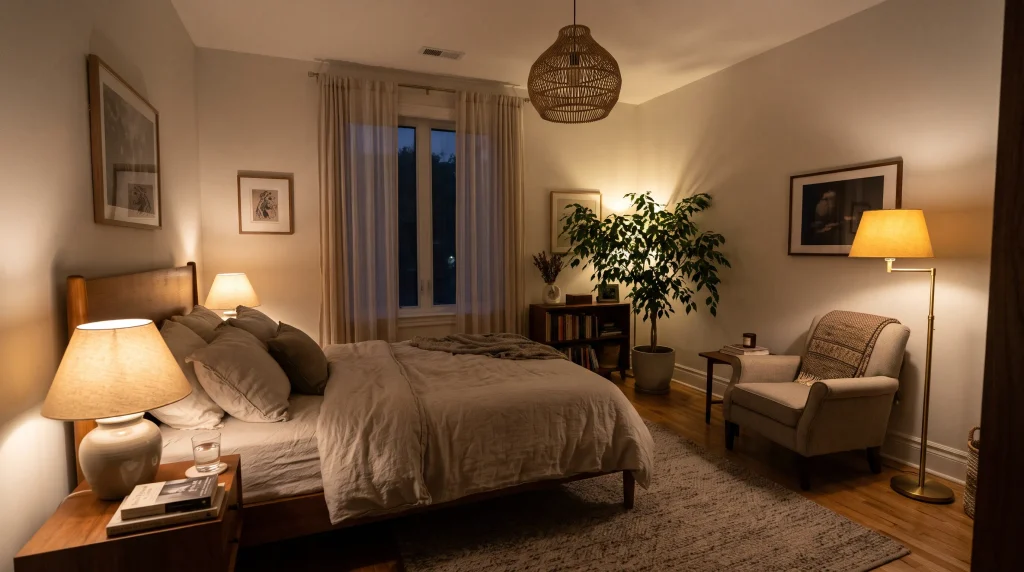
A single ceiling fixture makes any room feel like a waiting room. Add a floor lamp, a reading light by the bed, and maybe one accent light behind a piece of furniture. Three light sources on dimmers will transform the mood of a bedroom more than any decor purchase. Aim for warm-toned bulbs throughout — anything labeled “soft white” or “warm white” rather than “daylight” — since cooler bulbs tend to make a bedroom feel closer to an office than a place to unwind.
6. Carve Out a Six-Square-Foot Workstation
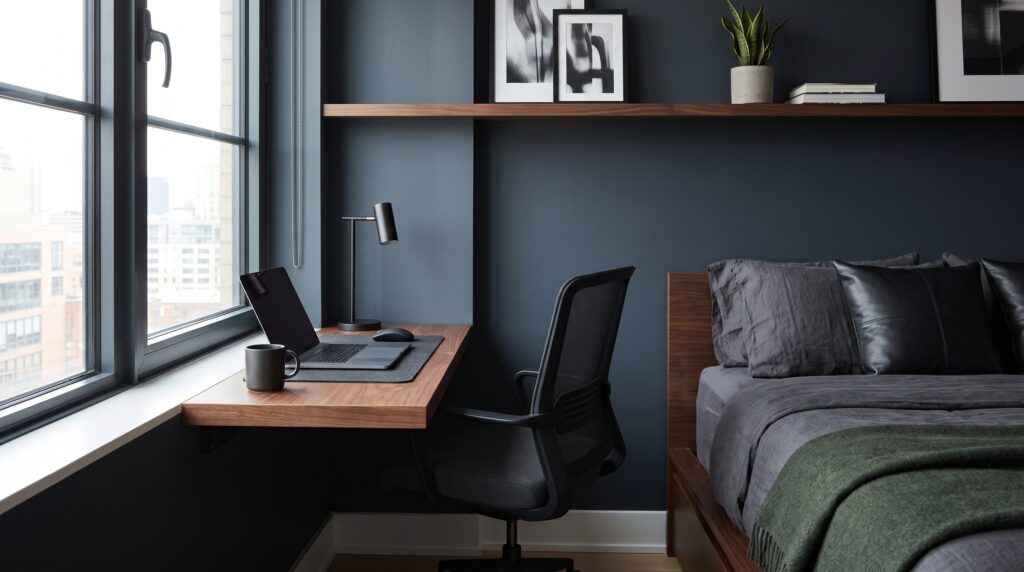
You don’t need a home office — just a narrow desk, a decent chair, and a lamp tucked into a corner. Keep the surface almost empty. A workspace that looks unused is more sophisticated than a cluttered one that’s “functional.” If you can, position the desk near natural light rather than against a windowless wall — it makes the corner feel like a deliberate feature of the room instead of an afterthought squeezed in wherever there was space.
7. Hang One Large Piece of Art, Not Five Small Ones
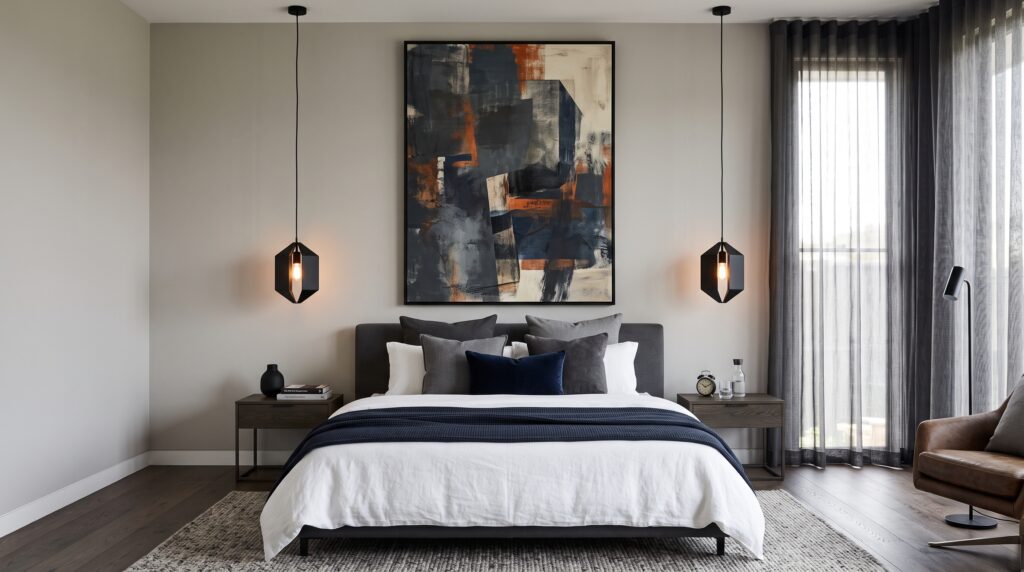
Gallery walls are hard to get right in a bedroom. One oversized print — abstract, architectural, or black-and-white photography — does more for the room’s identity than a scattered collection ever will. As a sizing rule, aim for artwork that spans roughly two-thirds the width of the bed or dresser it’s hung above; anything smaller tends to look like it’s floating, lost in the empty wall around it.
8. Let Function Drive the Lighting Plan
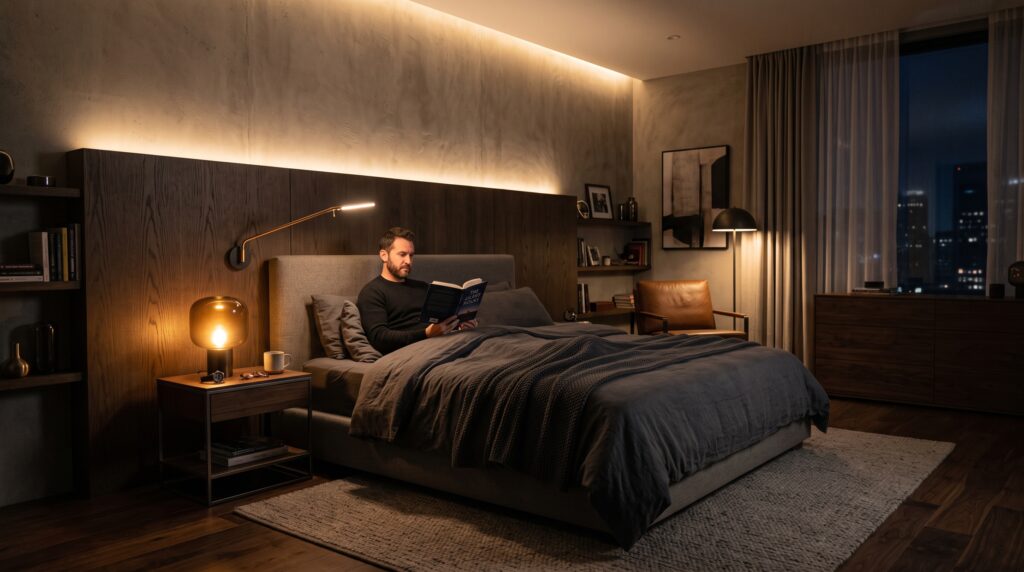
Think about what actually happens in the room: reading, dressing, sleeping. A dimmable warm-white bulb near 2700K feels calmer at night than a bright, cool-toned bulb, which is closer to daylight and can make it harder to wind down. It’s worth spending a little more on smart bulbs or a plug-in dimmer here — the ability to drop the lighting to almost nothing right before bed does more for a sophisticated, calm atmosphere than any single piece of furniture.
9. Add a Chair That Isn’t a Dumping Ground
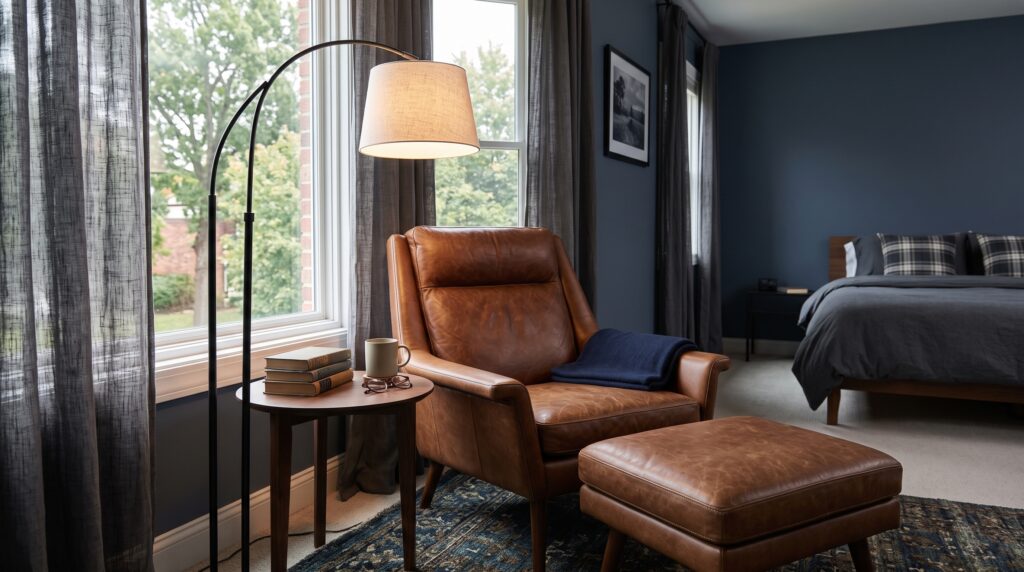
A leather or boucle lounge chair by the window instantly upgrades a bedroom — but only if you actually sit in it. Keep it empty of laundry and it becomes a design statement instead of a hazard. Pull a small side table and a floor lamp up next to it, and you’ve built a genuine reading nook instead of just parking a chair in a corner for looks.
10. Go Floor-to-Ceiling With the Curtains
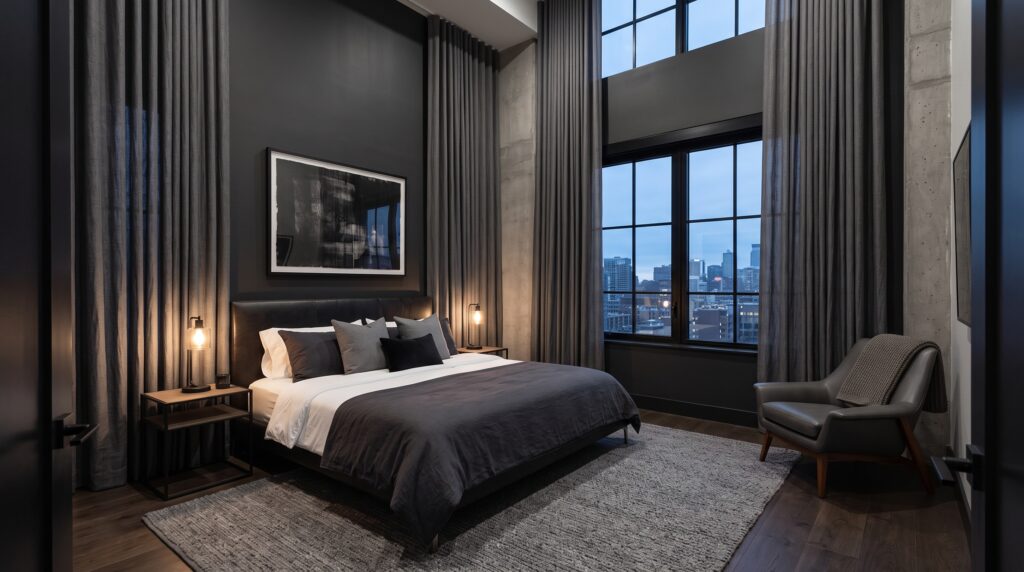
Hang curtain rods a few inches from the ceiling, not just above the window frame. It’s a two-minute fix that makes the whole room feel taller. Choose a heavier fabric in a muted tone for a more grounded, less “dorm room” look, and extend the rod several inches past the window frame on each side so the curtains can fully open without blocking any natural light during the day.
11. Bring in One Raw, Natural Material
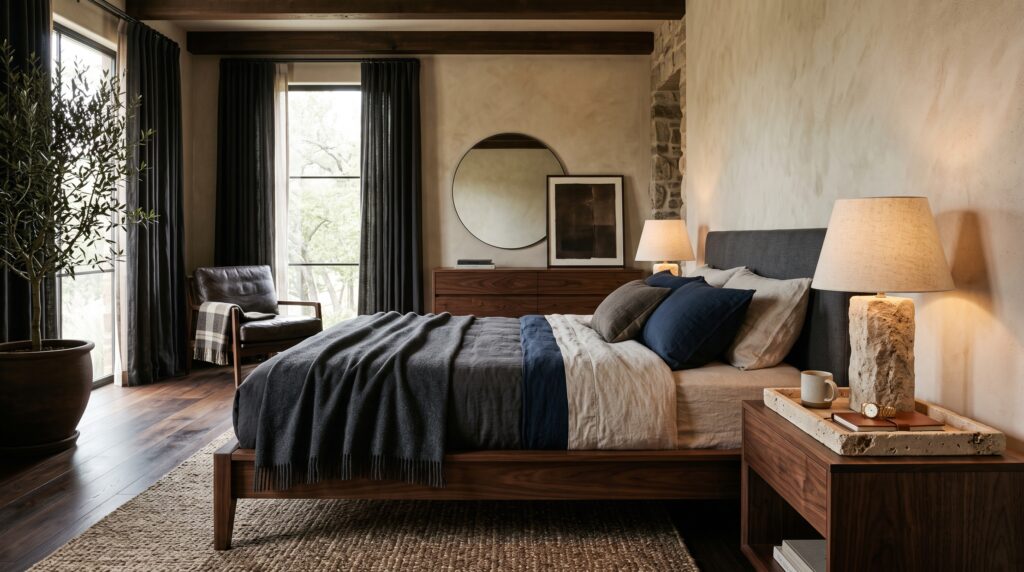
A stone lamp base, a concrete planter, or a travertine tray adds texture without adding clutter. One material like this is often enough — more than that and the room starts to feel like a showroom display. The goal is a single unexpected texture that catches the eye when someone walks in, not a full theme built around it.
12. Borrow the Hotel Trick: Symmetry
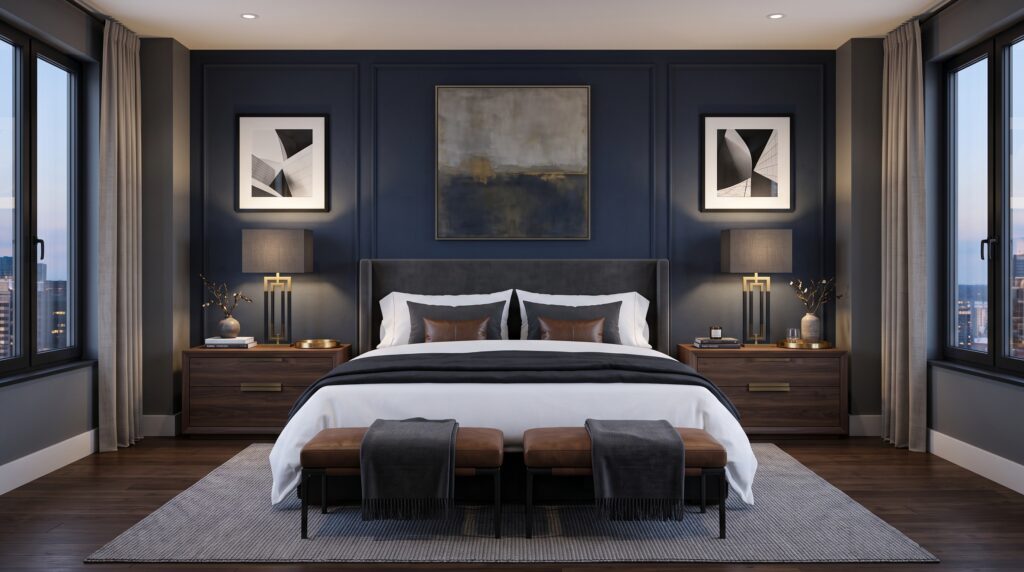
Matching nightstands, matching lamps, evenly spaced art. Symmetry is the fastest way to make a room feel intentional rather than assembled piece by piece over the years (even if that’s exactly what happened). It doesn’t have to be perfect symmetry, either — even roughly balanced proportions on either side of the bed will read as calm and considered rather than lopsided.
13. Add Greenery That Can Survive Neglect
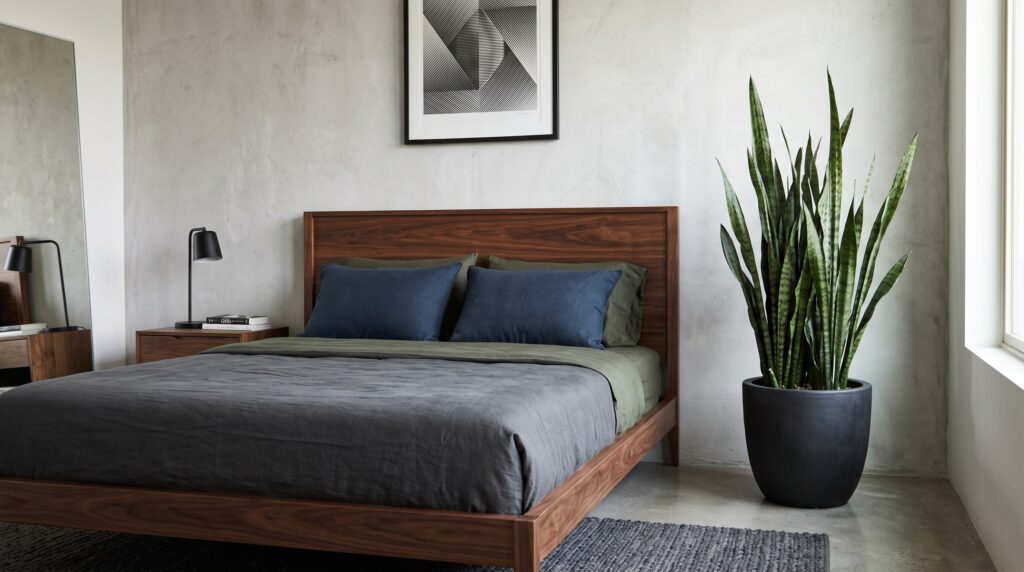
A snake plant or ZZ plant will forgive you for forgetting to water it and still look sharp against dark furniture. Skip anything delicate — a dead plant undercuts a sophisticated room faster than almost anything else. Even a single well-placed plant in the right pot (skip the plastic nursery container) can soften an otherwise hard-edged room without adding any real maintenance to your week.
14. Ground the Furniture With a Real Rug
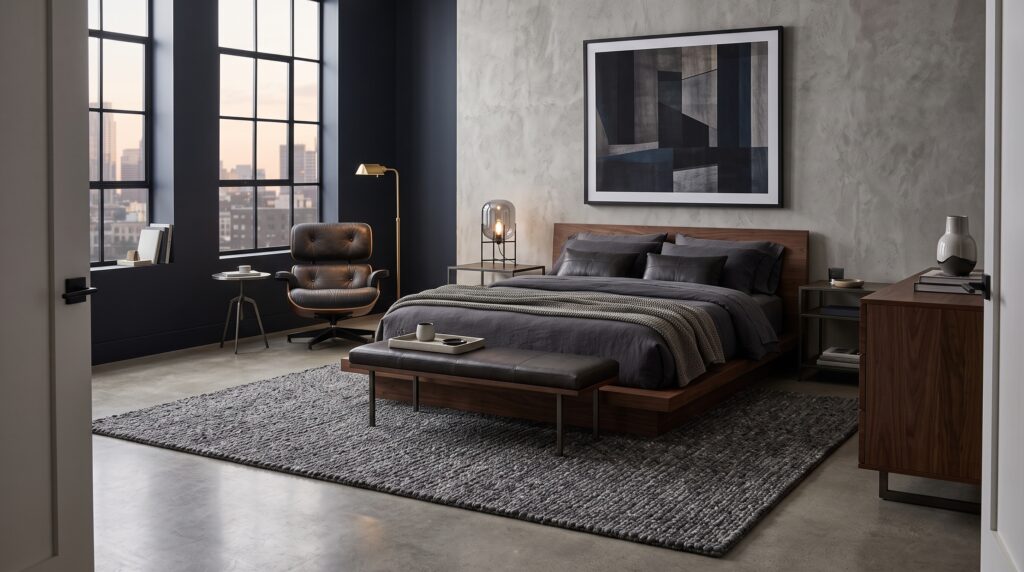
A too-small rug is one of the most common bedroom mistakes. Aim for one that extends at least a foot or two past the sides of the bed. Wool or a wool blend in a neutral tone will feel warmer underfoot and more durable than synthetic options. If budget is tight, a slightly smaller rug placed correctly (front two-thirds of the bed on top of it, not just a small mat by the nightstands) will still look far more intentional than an undersized one centered under the whole frame.
15. Swap Hardware for an Instant Refresh
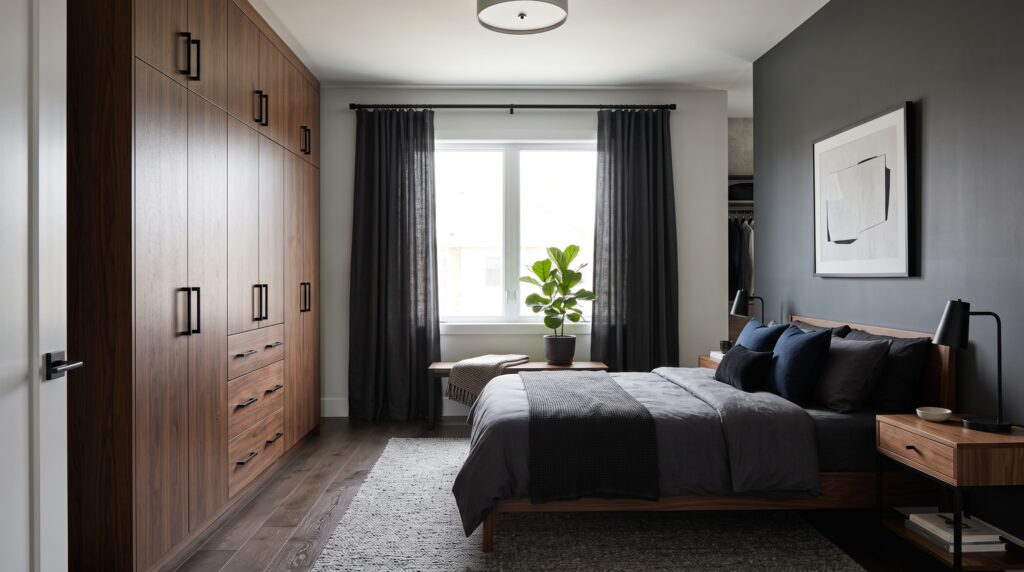
New drawer pulls, curtain rods, and light switch plates in matte black or brushed brass are a weekend project, not a renovation — but they tie a room together in a way paint alone can’t. Pick one finish and repeat it consistently across the room; hardware in three different metals is one of the fastest ways to make an otherwise well-designed space look unplanned.
16. Style Open Shelving Like You Mean It
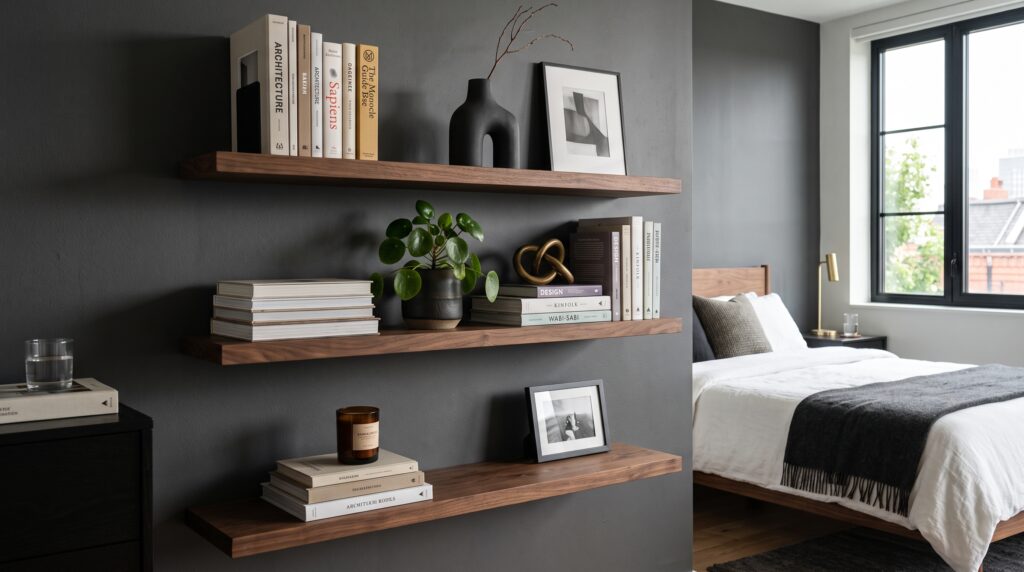
Skip the perfectly matched decor set. Mix a stack of books, one ceramic object, and a small plant, and leave real negative space between them. Shelves that are too full read as clutter, no matter how nice the individual pieces are. A useful trick is the “rule of three”: group objects in threes of varying height, and resist the urge to fill every remaining inch of shelf space.
17. Add a Bench for Function, Not Just Looks
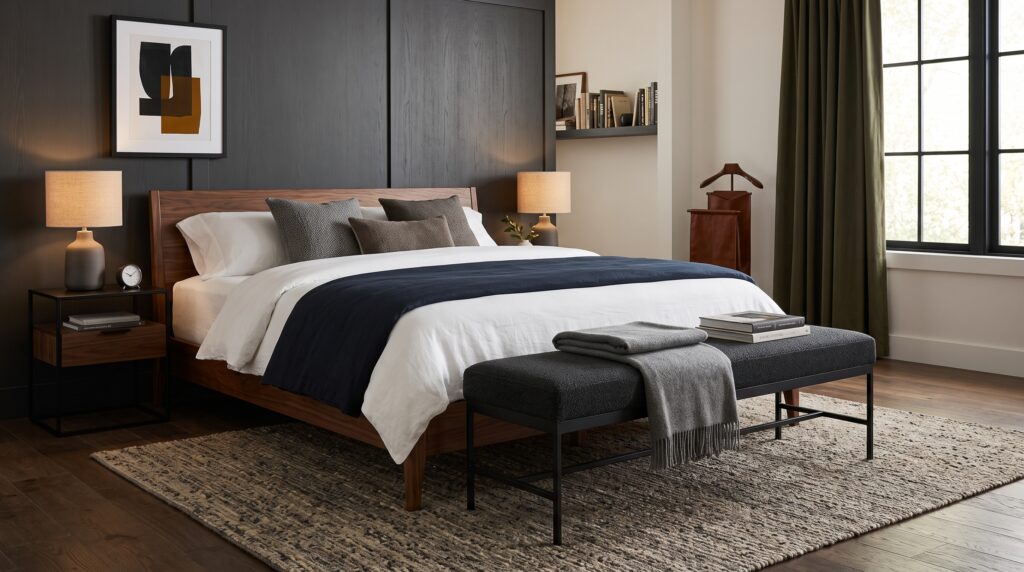
A bench at the foot of the bed gives you somewhere to sit while putting on shoes and somewhere to toss a folded blanket — genuinely useful, not just decorative filler. Choose one with legs rather than a solid upholstered base, since visible legs keep the piece from feeling heavy in a room that’s already anchored by a large bed frame.
18. Build (or Fake) a Streamlined Closet Wall
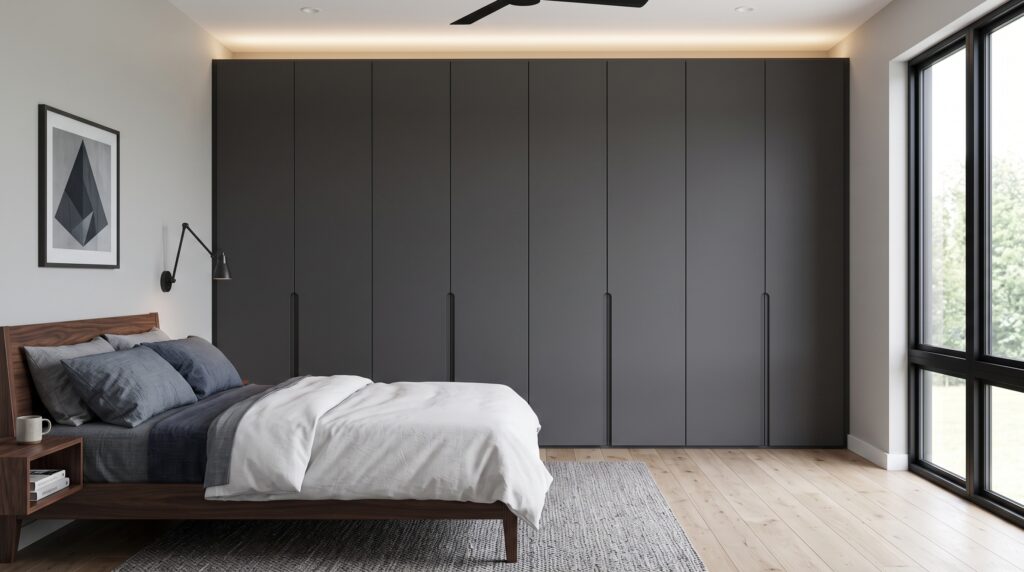
If a full built-in wardrobe isn’t in the budget, flat-panel closet doors with hidden hardware get you 80% of the look for a fraction of the cost. The goal is no visible clutter, not necessarily custom carpentry. Even swapping mismatched hangers for one uniform style inside an open closet can make the whole wall feel considerably more put-together every time the doors are left open.
19. Keep Accessories to a Tight Color Story
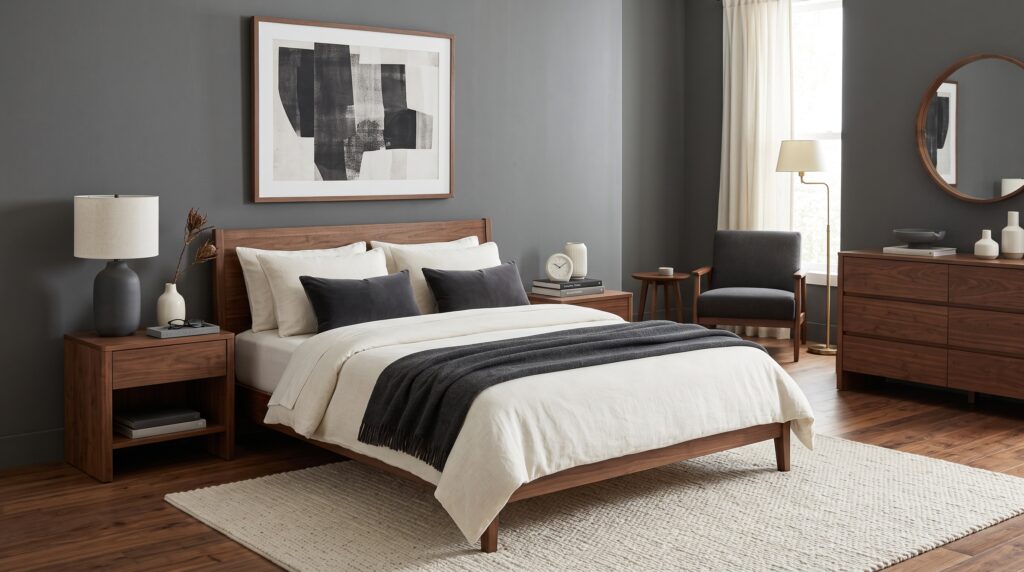
Pick two or three colors — say, charcoal, warm white, and one accent — and make every small object follow that palette. It’s the difference between a room that looks curated and one that looks like it collected souvenirs over a decade. When you’re unsure whether a new object fits, hold it up against the existing palette before buying — if it needs its own explanation, it probably doesn’t belong.
20. Add a Full-Length Mirror With a Thin Frame
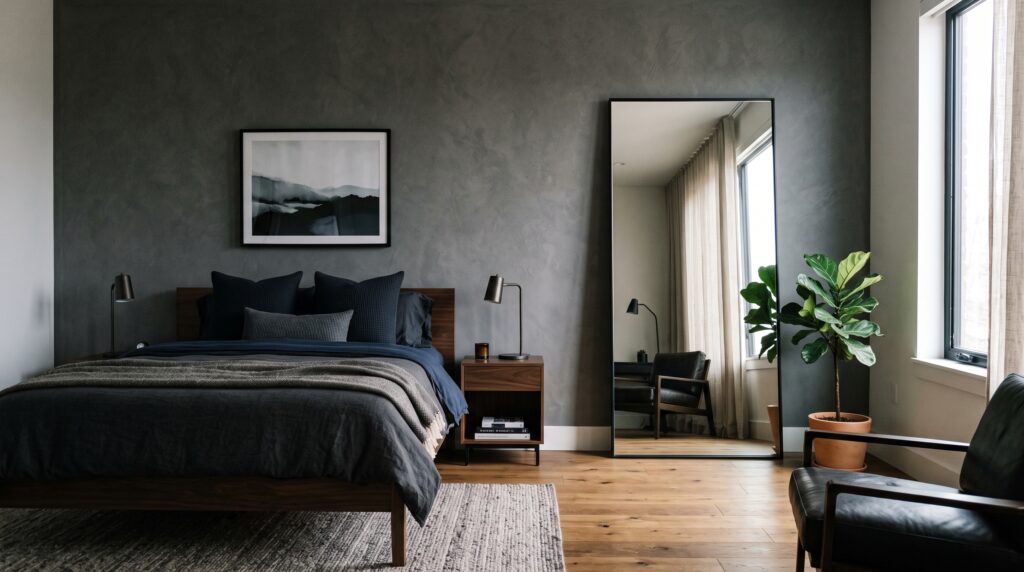
Beyond the obvious usefulness, a slim-framed mirror bounces light around a room and makes it feel less boxed in — especially helpful in a bedroom with only one window. Lean it against a wall rather than mounting it flush for a slightly more relaxed, less builder-grade look, and angle it so it reflects a window or a piece of art rather than a blank wall.
21. Blend in One Industrial Detail, Not Five
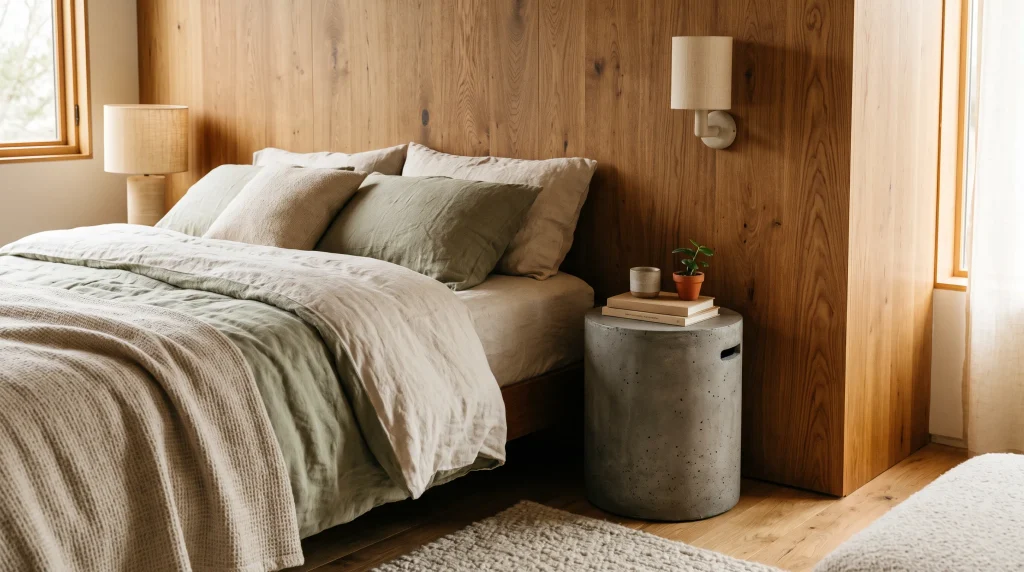
A single exposed steel light fixture or a concrete-look side table can add edge to an otherwise soft, wood-heavy room. Overdo it, though, and the bedroom stops feeling restful and starts feeling like a loft showroom. Think of industrial elements as seasoning rather than the main dish — a little goes a long way in a room meant for winding down.
22. Pick a Signature Scent and Stick With It
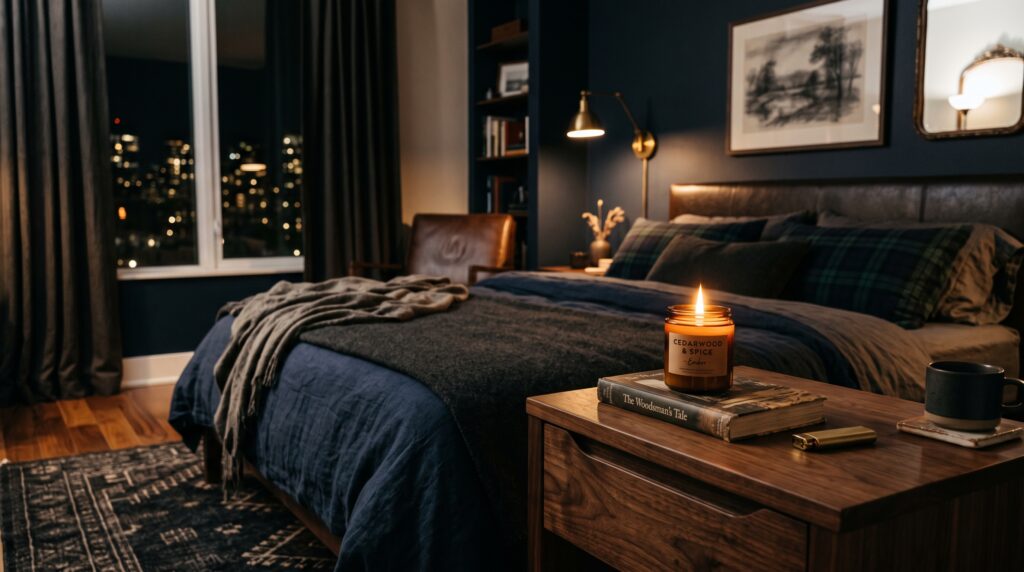
A consistent scent — cedar, sandalwood, or something smoky — does more for how a room feels than most people give it credit for. Reed diffusers are low-maintenance; a candle you actually light before bed works even better. Over time, that specific scent becomes tied to the room itself, so walking in after a long day starts to feel like an immediate signal to relax.
A Few Common Questions
Do I need to redo the whole room at once? No — and you probably shouldn’t. Start with the structural pieces (wall color, bed frame, lighting), live with them for a few weeks, and then add the smaller layers once you know what the room actually needs.
What’s the fastest, cheapest way to make a bedroom look more sophisticated? Swap the lighting temperature to warm white, add one dimmer, and fix the curtain height. All three take under an hour combined and change the entire mood of the room more than most furniture purchases would.
Is dark paint a mistake in a small bedroom? Not necessarily. A single dark wall — rather than all four — can actually make a small room feel more intentional and cozy rather than cramped, especially when paired with brighter bedding and good lighting to balance it out.
Putting It All Together
None of these ideas need to happen at once, and honestly, they shouldn’t — the best-looking bedrooms tend to evolve over a few months, not a single weekend Amazon order. Start with the big, structural stuff (the wall color, the bed, the lighting layers), then layer in the smaller details as you find pieces you actually like rather than pieces that just fit a checklist.
If you want a shopping starting point for pulling a room like this together, If you’re still deciding between charcoal, navy, or deep green, browsing the latest paint collections from Sherwin-Williams can help you compare shades in different lighting before making a final choice. is a solid, no-nonsense place to browse lighting, furniture, and accent pieces without wading through a hundred tabs.
A sophisticated men’s bedroom isn’t about spending the most or matching everything perfectly — it’s about a handful of good decisions, repeated consistently, in a room you actually use. Pick three or four ideas from this list, start there, and let the rest come together over time.