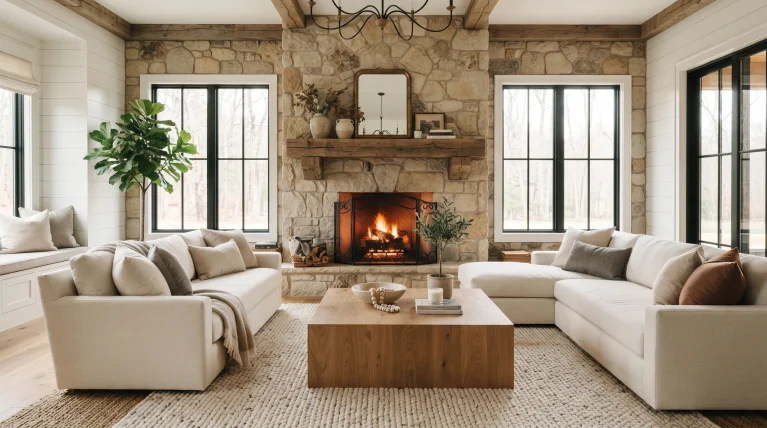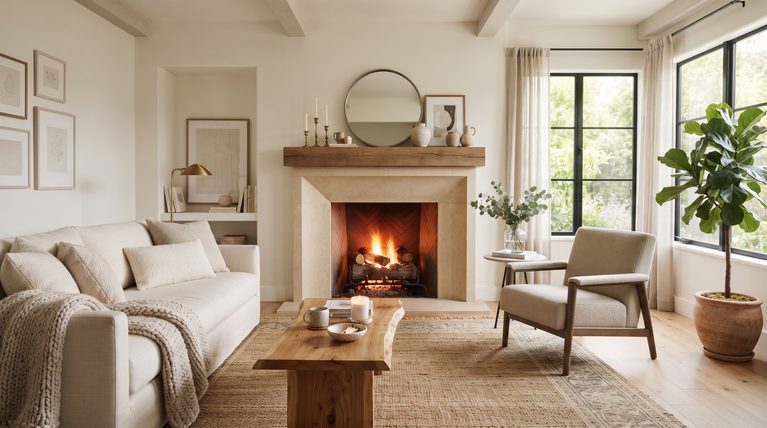
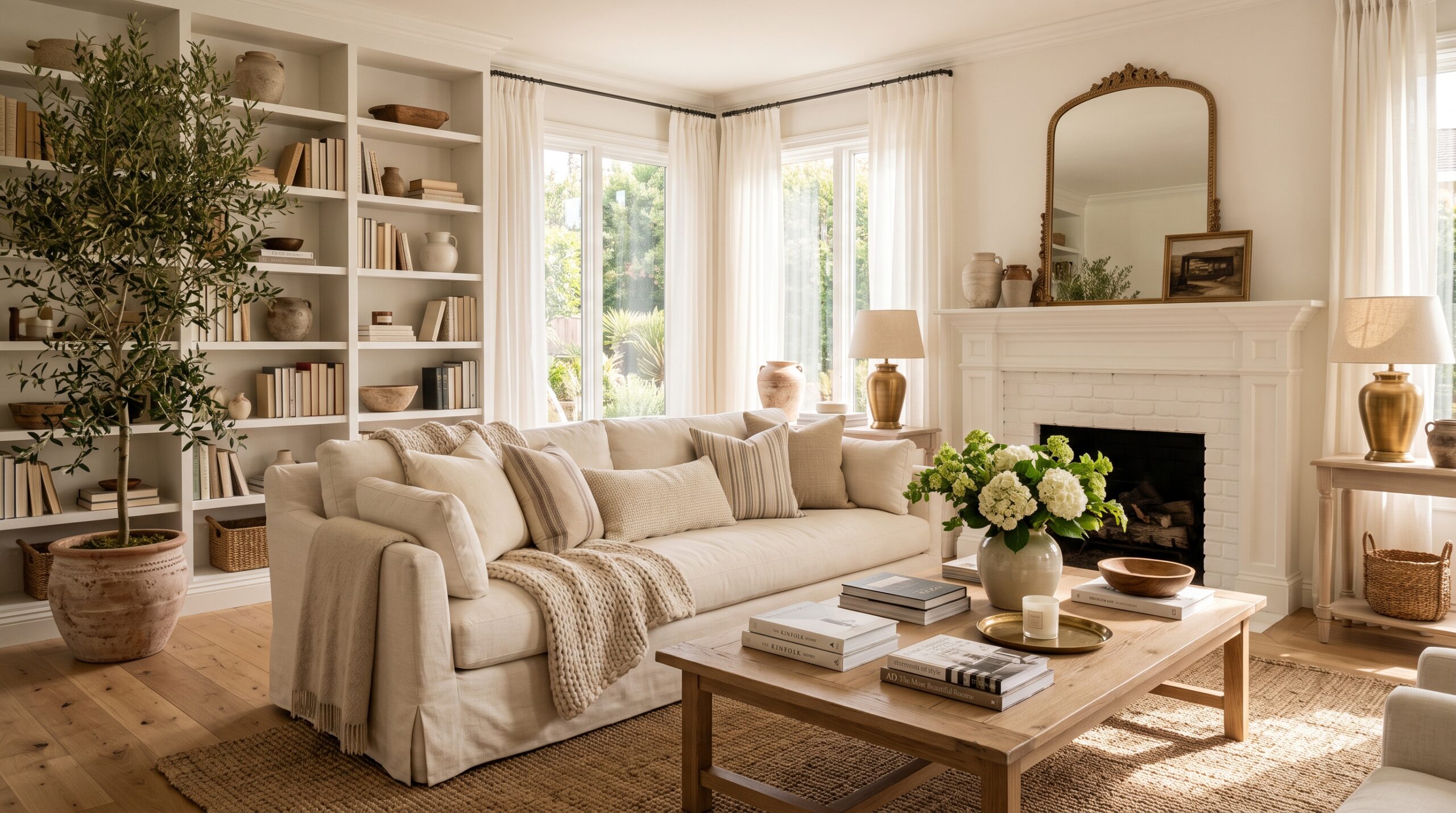
If you’ve ever paused a rom-com just to study the sofa in the background, you already understand the pull of a20 nancy meyers living room ideas youll love meyers living room ideas youll loveMeyers living room. Her sets — from Something’s Gotta Give to The Holiday to It’s Complicated — feel less like film décor and more like homes you could actually move into tomorrow. Sun-washed walls, soft linen upholstery, and furniture that looks like it’s been lived with and loved for decades. Nothing feels staged, and yet every single detail was chosen on purpose.
That’s the magic of the Nancy Meyers aesthetic: it’s aspirational without being unreachable. You don’t need a Malibu budget to borrow the formula — you need the right textures, the right light, and a handful of intentional choices repeated throughout the room. The look leans on quality over quantity: a handful of well-chosen pieces, a restrained palette, and a willingness to let a room feel a little imperfect rather than showroom-perfect.
What makes this style so enduring is that it isn’t tied to a single trend cycle. It borrows from coastal, farmhouse, and traditional design without fully committing to any one of them, which is exactly why it still feels fresh decades after her earliest films. Below are 20 ways to bring that same warm, collected, cinematic comfort into your own living room — from the big furniture decisions down to the small styling habits that tie everything together.
20 Nancy Meyers Living Room Ideas You’ll Love
1. Anchor the Room with a Cream Linen Sofa
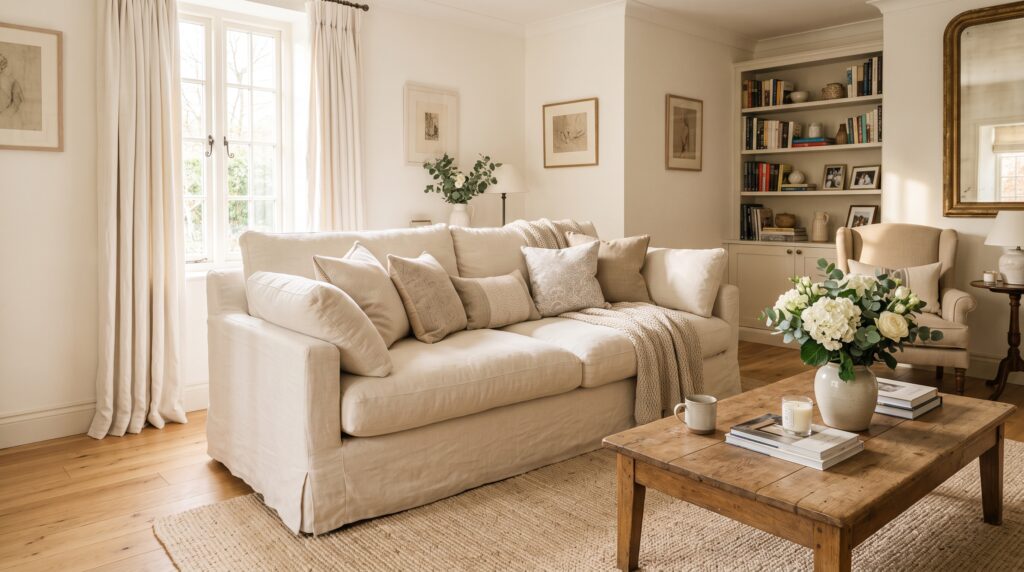
Everything in a Meyers-inspired room starts with the seating. A slouchy, oversized sofa in cream, ivory, or oatmeal linen sets a soft, neutral foundation that the rest of the room can build on. Look for relaxed slipcovers and deep, generous cushions rather than stiff, tailored upholstery — comfort should always read louder than formality. If you’re working with an existing sofa that’s the wrong tone, a simple linen slipcover can often get you most of the way there without a full replacement.
2. Build Warmth Through Layered Textures
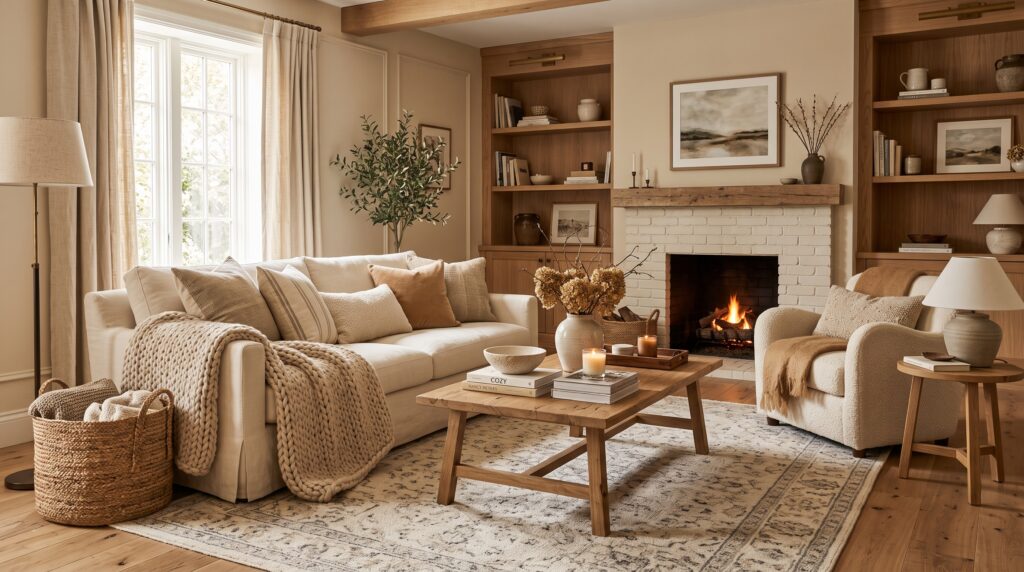
A neutral palette only works if the textures are doing the heavy lifting. Combine a chunky knit throw, linen pillows in varying weaves, a jute or wool rug, and a few handmade ceramic pieces. The goal is a room that feels rich and tactile even though the color story barely changes from one surface to the next. Run your hand across the room mentally — smooth marble, nubby linen, soft wool, cool ceramic — and make sure at least three or four different textures are represented within reach of the sofa.
3. Keep Fresh Flowers in Rotation
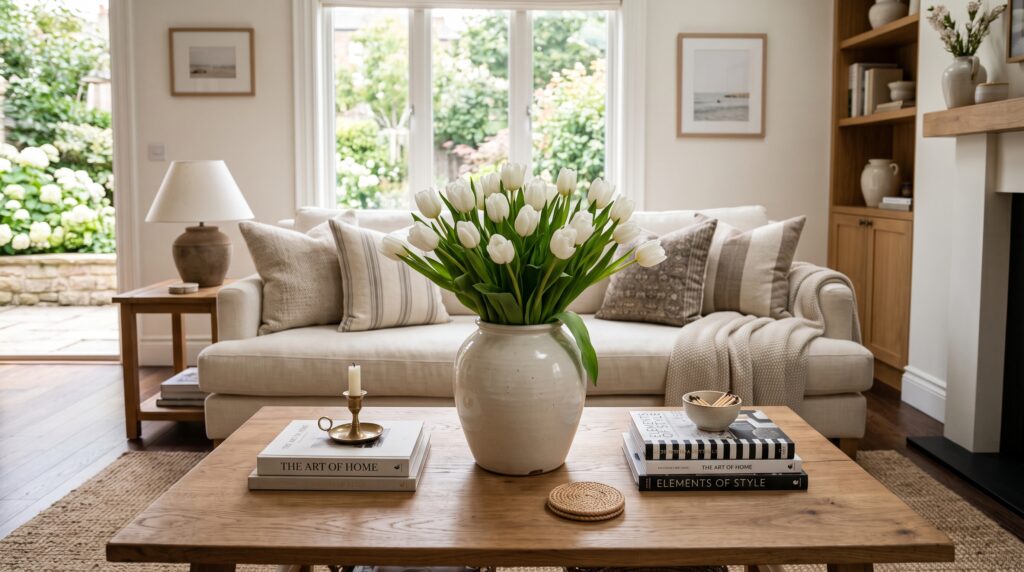
A vase of white tulips, hydrangeas, or garden roses does more for a room than almost any other single object. Set them on the coffee table or a console and refresh them weekly — it’s a small, simple habit that keeps the whole space feeling alive rather than static. Even a modest grocery-store bouquet, trimmed and arranged in a simple ceramic vase, reads as intentional the moment it’s placed with a little care.
4. Choose Furniture in Warm White Oak
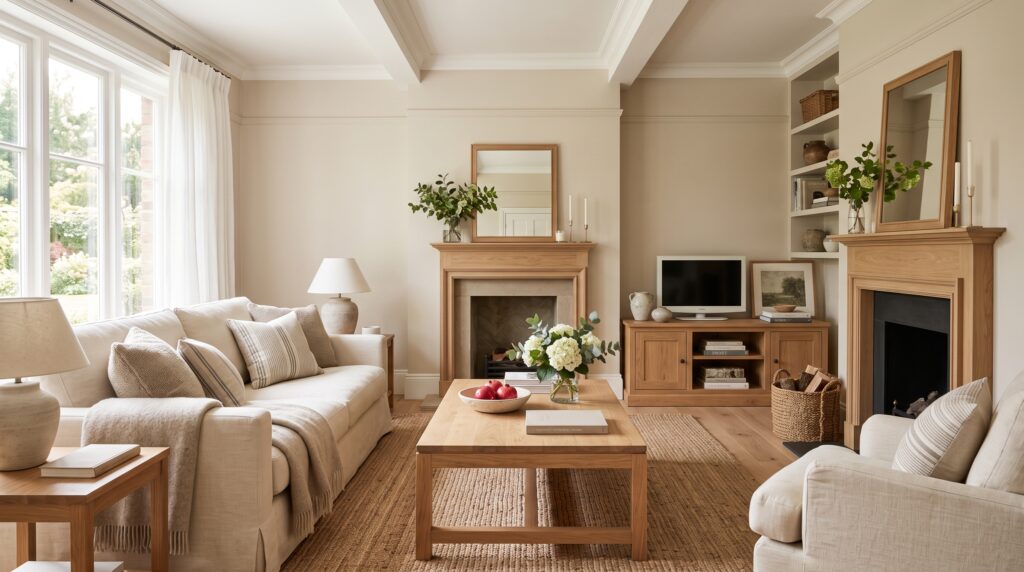
Skip the dark espresso finishes and opt for pale, warm-toned wood instead. A white oak coffee table, media console, or bookshelf brightens the room instantly and pairs beautifully with the soft linens and neutral fabrics that define this look. If you already own darker furniture, consider whitewashing or refinishing one key piece rather than replacing everything at once — a single lighter anchor piece can shift the whole room’s tone.
5. Let the Windows Do the Decorating
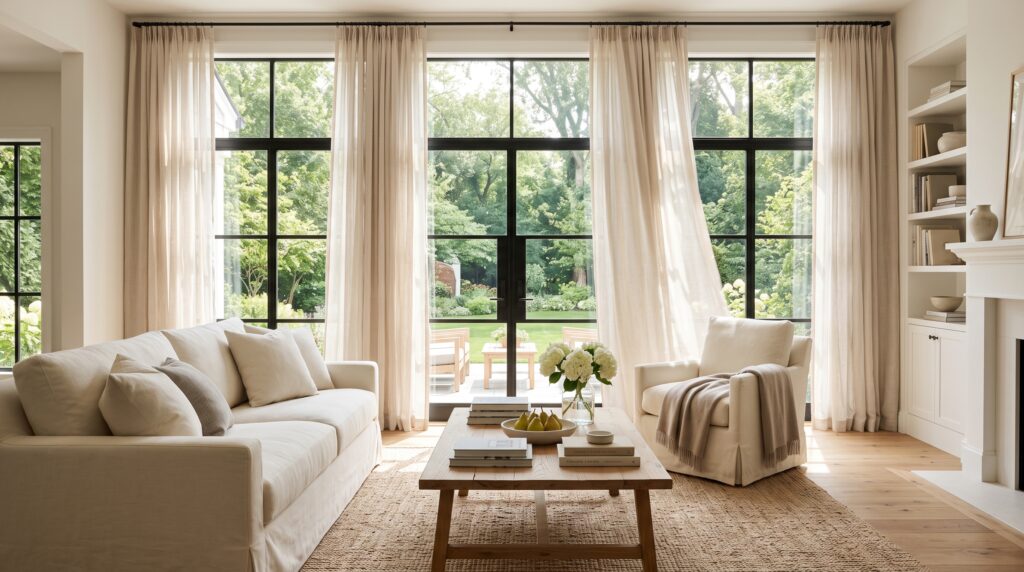
Natural light is arguably the true star of every Meyers interior. Hang sheer linen curtains that filter sunlight rather than block it, and resist the urge to over-dress the windows. A bright room instantly feels bigger, calmer, and more welcoming. Where privacy allows, keep window treatments minimal or skip them entirely — bare glass framed by simple trim is often more in keeping with the look than heavy drapery.
6. Style the Coffee Table with Restraint
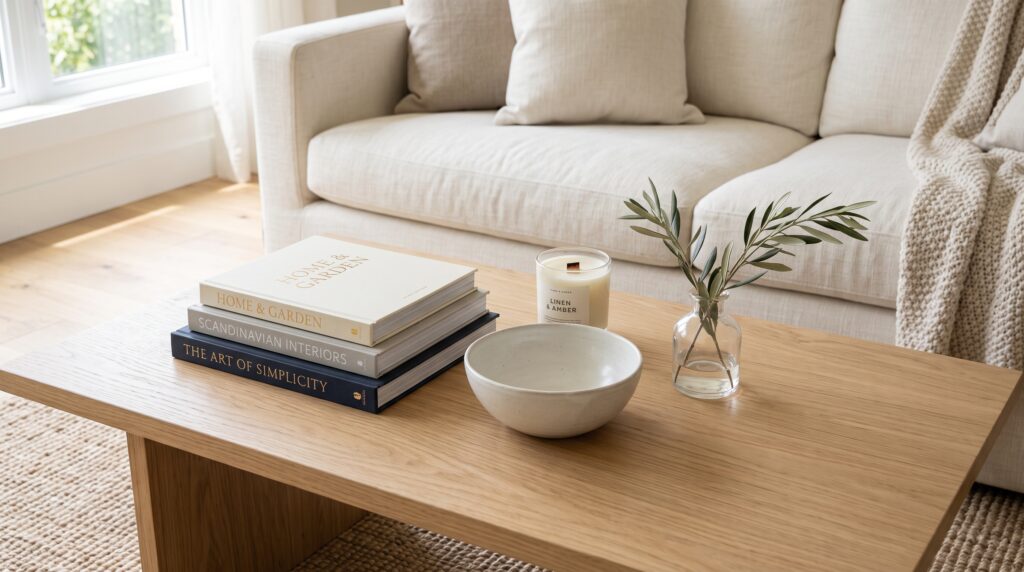
A curated coffee table beats a cluttered one every time. Stack two or three design books, add a low ceramic bowl, a single candle, and a small vase of greenery — then stop. Leaving visible empty space is what makes the styling feel intentional instead of accidental. Rotate the objects seasonally so the vignette stays fresh without ever growing crowded.
7. Install Built-In Bookshelves
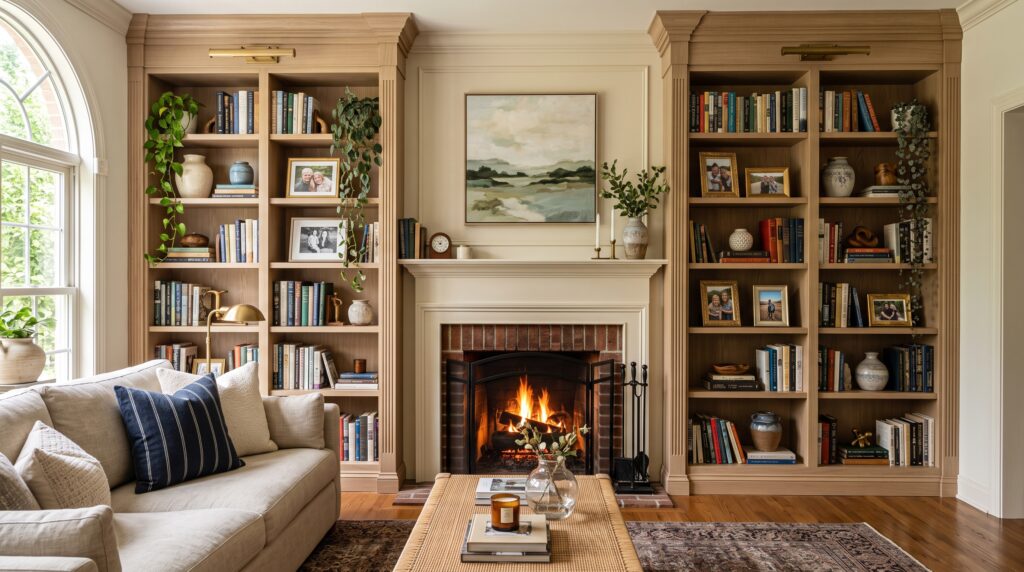
Few details say “collected over a lifetime” like a floor-to-ceiling bookshelf. Fill it with a mix of books, framed photographs, small ceramics, and a trailing plant or two. Keep some shelves sparse so the whole wall breathes instead of feeling packed. If built-ins aren’t an option, a tall freestanding oak bookcase styled the same way can create a similar sense of history and depth.
8. Arrange Seating for Conversation, Not Just TV
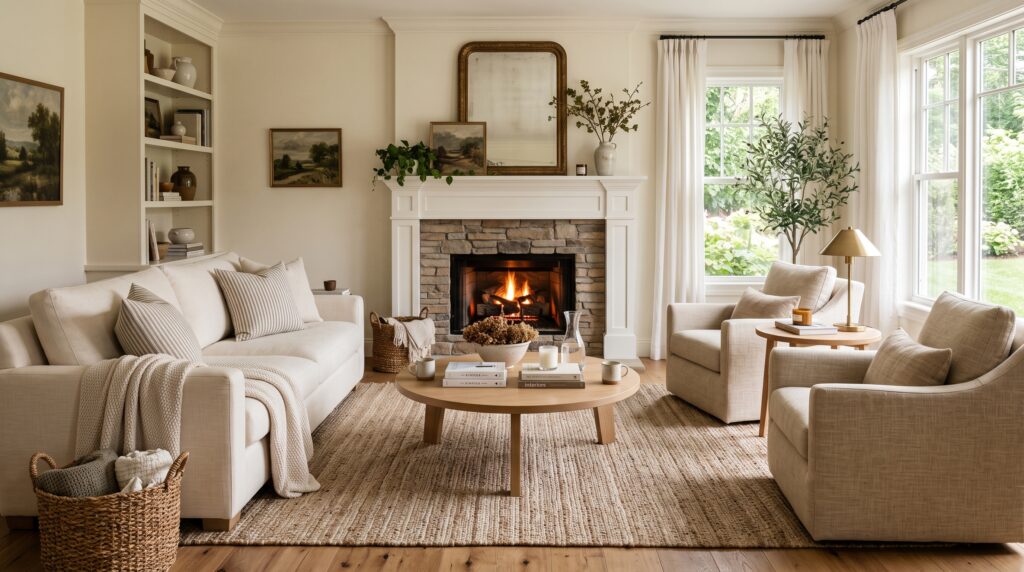
Pull furniture away from the walls and angle two armchairs toward the sofa with a round coffee table in between. This layout signals that the room is meant for gathering, talking, and lingering over coffee — not just staring at a screen. If a television is unavoidable, consider placing it off to one side rather than centering the entire layout around it.
9. Make the Fireplace the Focal Point
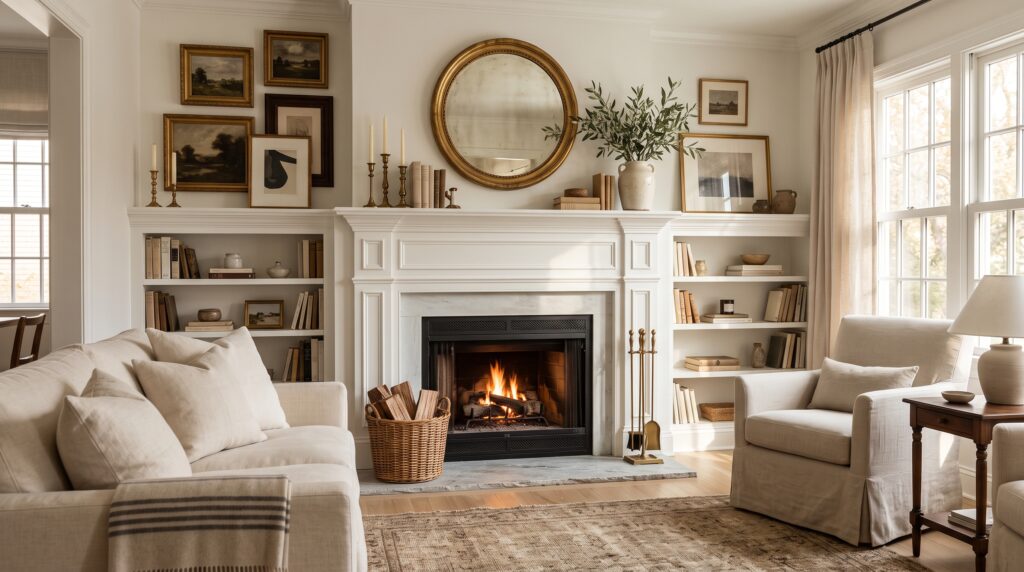
A well-dressed mantel can carry an entire room. Layer a piece of art, a pair of brass candlesticks, a small stack of books, and a sprig of greenery — enough to feel finished, not enough to feel fussy. Lean the artwork rather than hanging it flush against the wall for a slightly more relaxed, collected feel.
10. Hang an Oversized Vintage Mirror
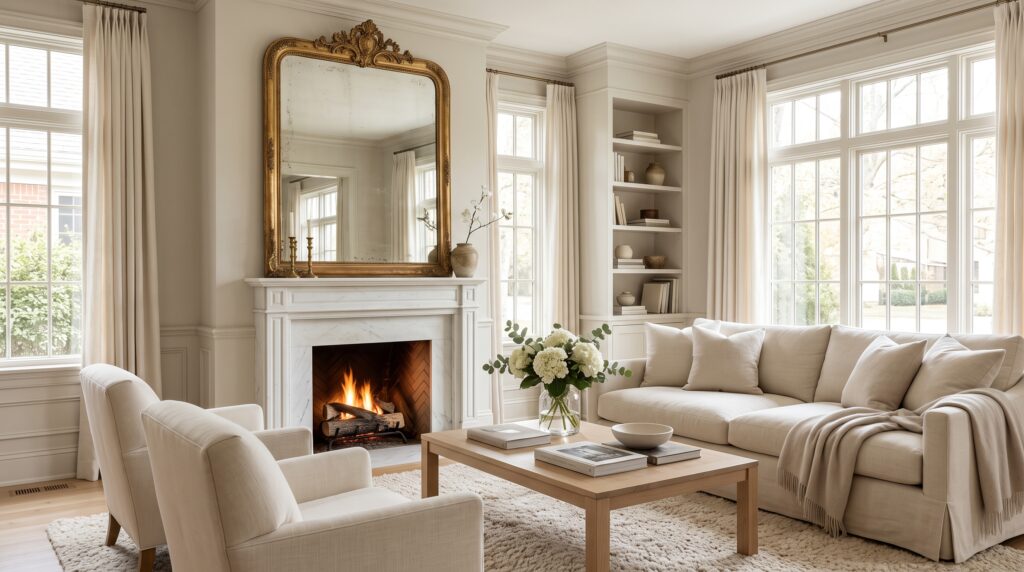
A large mirror in an antique gold or distressed wood frame bounces light around the room and adds instant character. Position it above the mantel or a console table so it doubles as both function and focal point. Vintage and antique shops are often a better source for this piece than big-box retailers, since a little wear and patina only adds to the effect.
11. Curate a Gallery Wall That Feels Collected
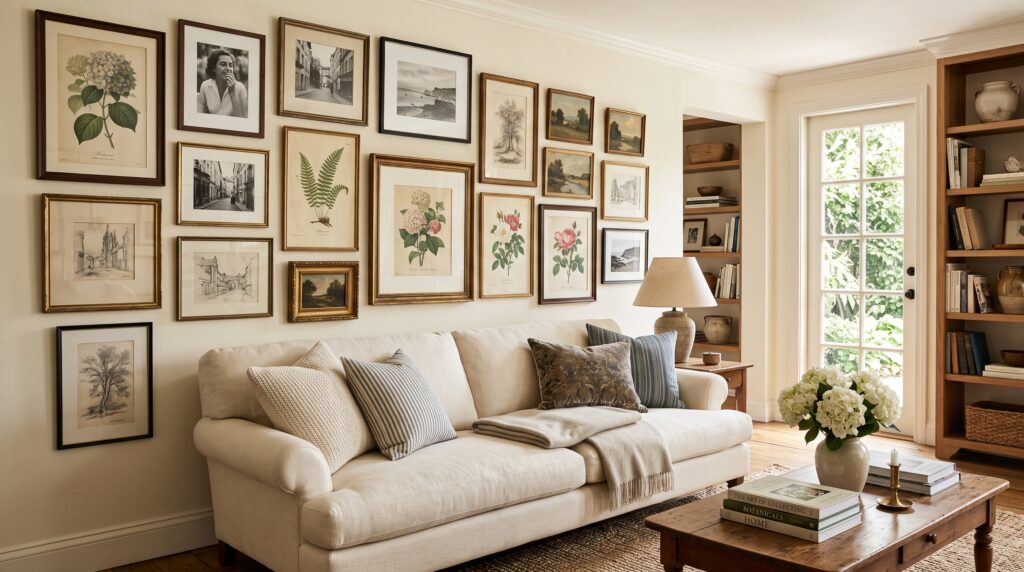
Skip matching frames. Mix botanical prints, black-and-white photography, and a vintage sketch or two, keeping the color palette cohesive even as the subject matter varies. It should look like it was gathered over years of travel and taste, not ordered as a set. Lay the arrangement out on the floor first and live with it for a day before committing to nail holes.
12. Add Brass in Small, Warm Doses
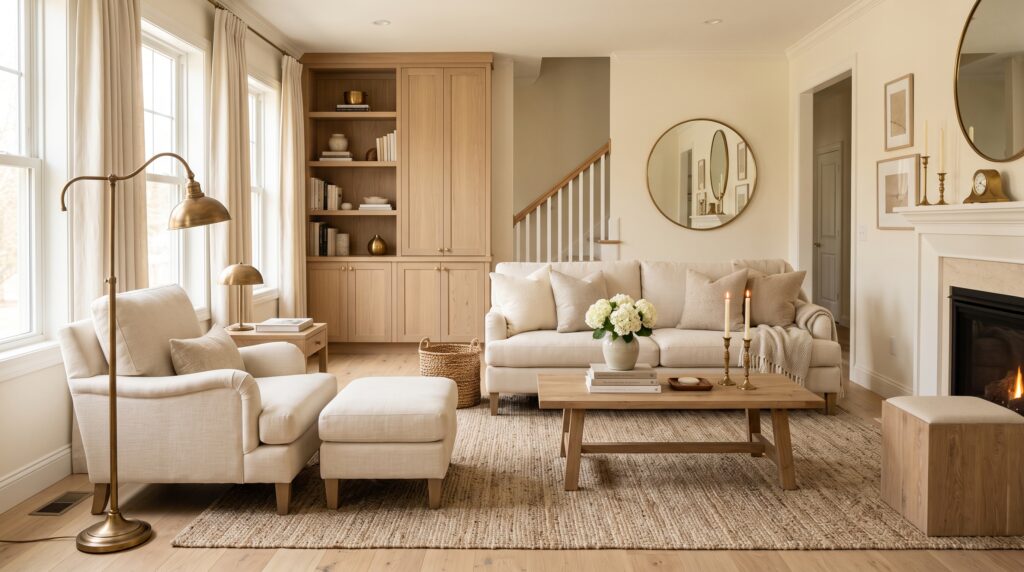
A brass floor lamp, a few candle holders, or updated cabinet hardware go a long way toward warming up an otherwise neutral room. The trick is restraint — brass should feel like a quiet accent, not a statement. Aged or unlacquered brass tends to fit the aesthetic better than a high-polish finish, since it softens and develops character over time.
13. Bring in a Tall Indoor Olive Tree
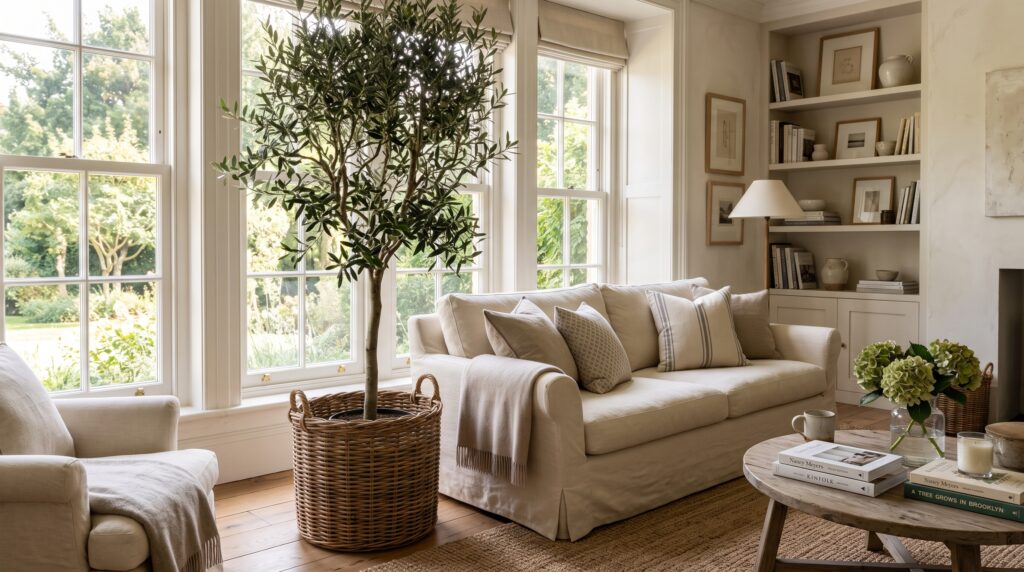
Few plants say “California quiet-luxury living room” faster than a mature olive tree positioned near a sunny window. It adds height, movement, and an organic softness that a room full of straight lines and neutral fabric can’t achieve on its own. A simple woven or terracotta planter keeps the focus on the tree itself rather than a busy container.
14. Layer Your Lighting
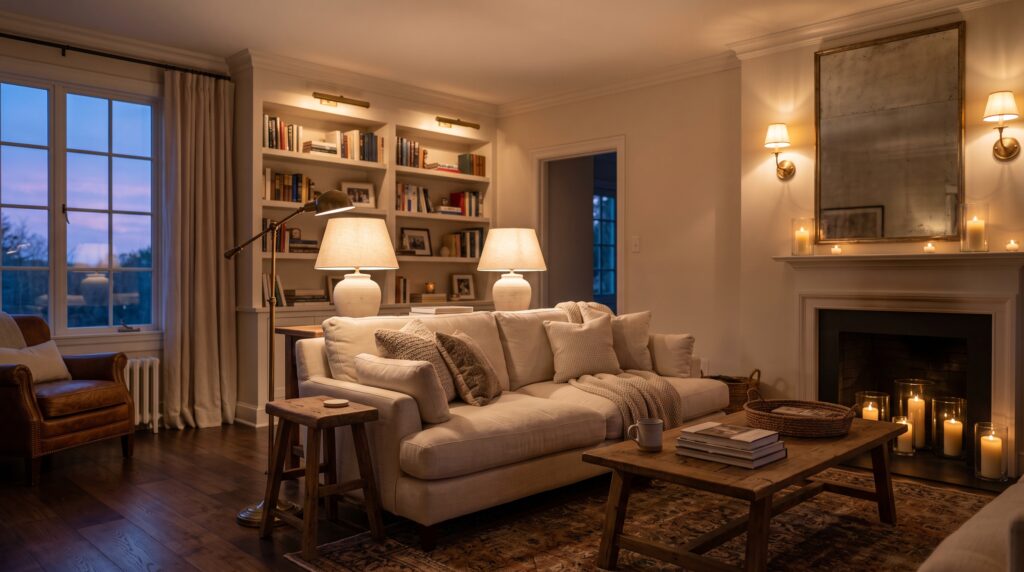
A single overhead fixture will always feel flat. Combine table lamps, a floor lamp, wall sconces, and a few candles so the room has multiple sources of soft, warm light once the sun goes down. Aim for at least three separate light sources at different heights around the room, and choose warm-toned bulbs over cool white ones.
15. Mix Vintage Finds with Newer Pieces
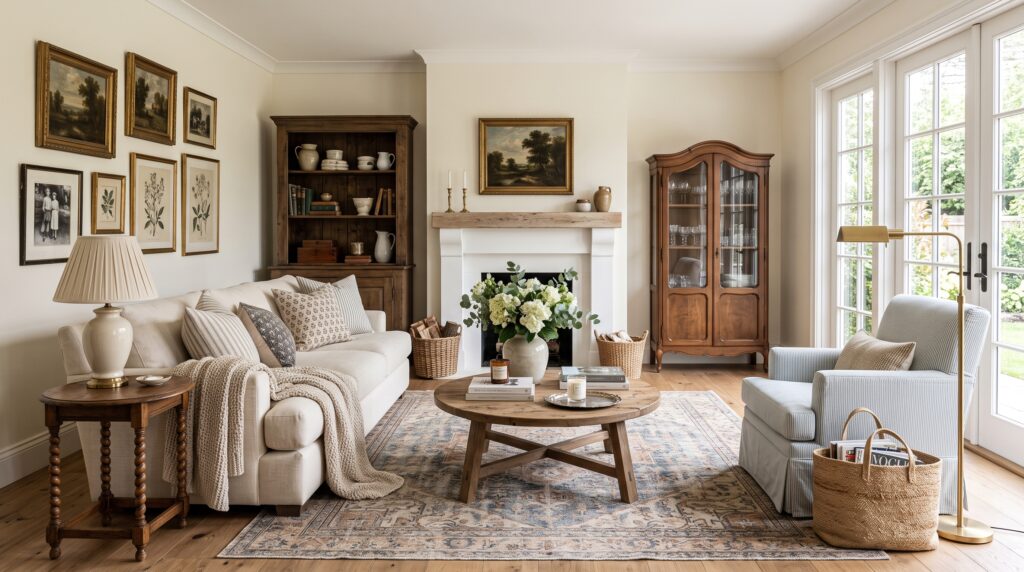
A room furnished entirely from one store will always look like a showroom. Pair an inherited wooden cabinet or a flea-market side table with a newer linen sofa so the space feels personal, layered, and lived-in rather than purchased all at once. Even one or two vintage pieces are usually enough to keep a room from feeling too new.
16. Commit to a Soft, Timeless Palette
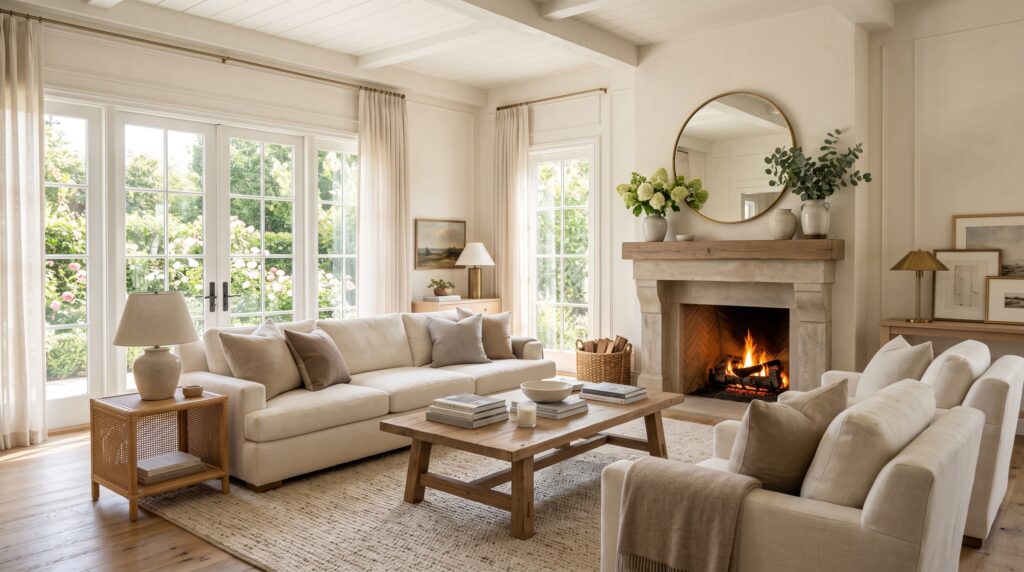
Warm white, oatmeal, light taupe, and soft gray are the backbone of this look. Staying within this narrow, quiet range is exactly what lets the textures and materials — not the color — do the visual work. If you want a hint of contrast, introduce it through a single deeper wood tone or a muted sage green rather than a bold accent color.
17. Choose a Round Coffee Table
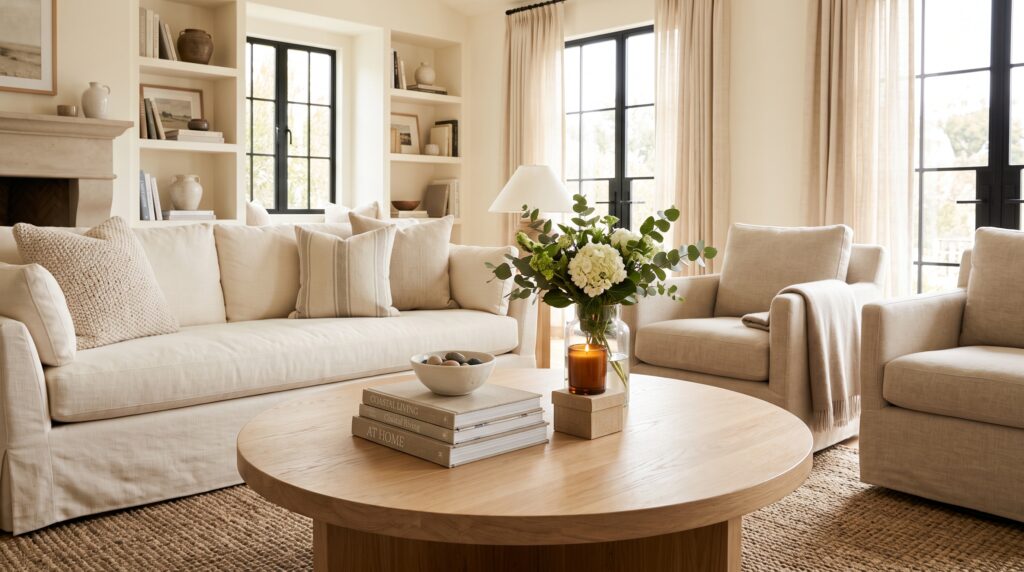
A round table softens all the straight edges in the room and naturally improves traffic flow. A white oak or light marble top styled simply with a stack of books and a candle keeps the whole arrangement feeling relaxed and conversational. Round tables also tend to work better in smaller rooms, since they eliminate hard corners that people have to navigate around.
18. Carve Out a Window Reading Nook
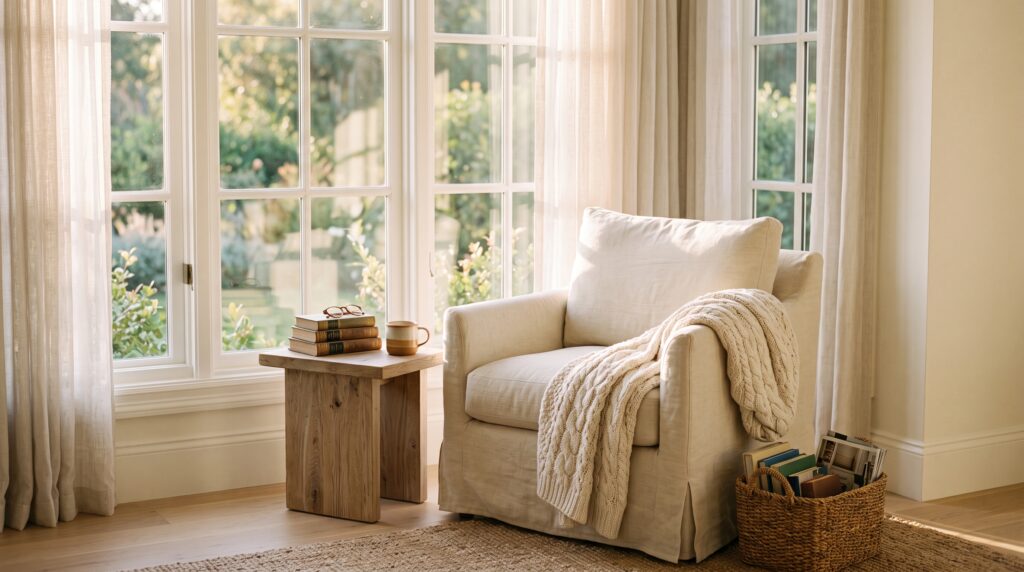
An empty corner near a window is an easy opportunity. Add a slipcovered armchair, a soft throw, and a small side table, then finish it with a woven basket of books close at hand. A small reading lamp beside the chair makes the nook usable well after sunset, not just during the day.
19. Introduce Natural Stone and Marble
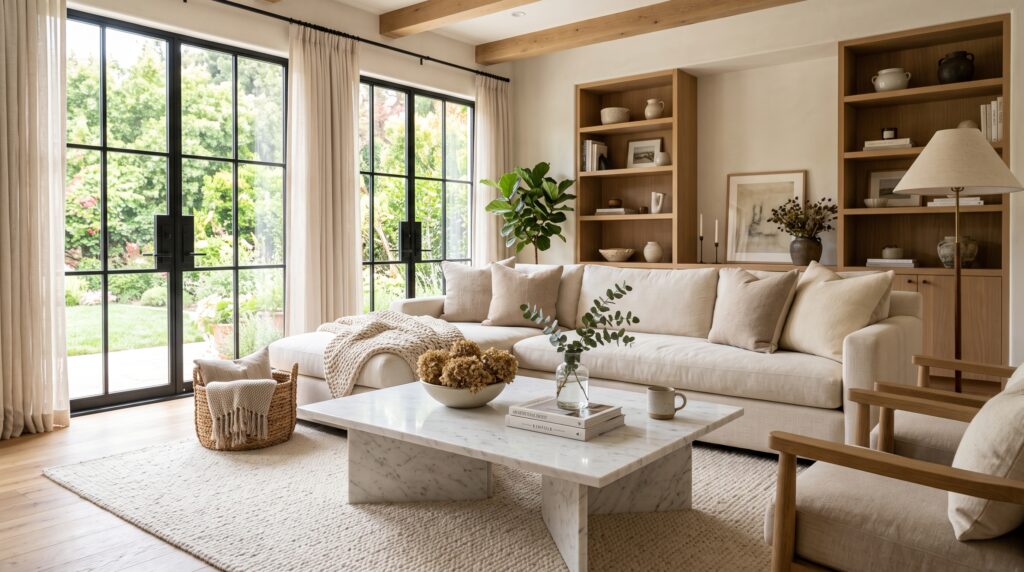
A marble coffee table, a travertine side table, or a simple stone bowl adds a sense of quiet luxury without ever feeling showy. Pairing stone with warm wood and linen is what keeps the material mix feeling balanced rather than cold. One or two stone pieces are usually plenty — too many can tip the room from warm to austere.
20. Let Personal Objects Tell the Story
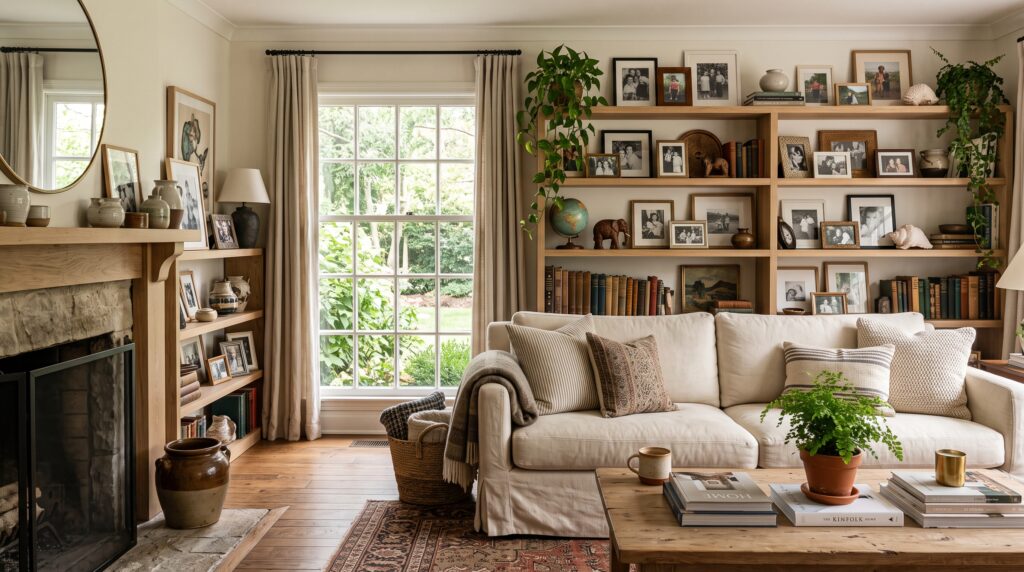
Family photographs, travel souvenirs, and well-worn books are what separate a genuinely lived-in room from a picture-perfect showroom. According to <cite index=”7-1″>Better Homes & Gardens, unique, collected decor items are central to recreating Nancy Meyers’ signature style in any home</cite> — so don’t be afraid to let your own history show through the styling. The goal isn’t a room that looks like nobody lives there; it’s one that looks like a full, happy life happens there.
Frequently Asked Questions
What defines a Nancy Meyers living room? It’s generally a soft, neutral color palette, natural materials like linen and white oak, layered textures, and a conversation-focused furniture layout, all pulled together with plenty of natural light and personal, collected details.
Is the Nancy Meyers style expensive to recreate? Not necessarily. Many of the defining elements — fresh flowers, a curated coffee table, layered lighting, a gallery wall — cost little to nothing. The look relies more on restraint and styling choices than on expensive furniture.
What colors work best for this look? Warm whites, oatmeal, light taupe, and soft gray form the core palette, occasionally warmed up with brass accents or a single muted green.
Final Thoughts
A Nancy Meyers living room isn’t really about a shopping list — it’s about restraint, warmth, and the confidence to let a room feel unfinished in the best possible way. Start with a comfortable sofa, layer in natural textures and light, and let the personal details accumulate over time. That slow, collected quality is exactly what makes these rooms feel timeless instead of trendy.
You don’t have to tackle all 20 ideas at once, either. Pick two or three that fit your space and budget right now — a linen slipcover, a round coffee table, a weekly bouquet — and build from there. The rooms that read as effortlessly “Nancy Meyers” are rarely finished in a weekend; they’re the result of small, consistent choices made over months and years, which is exactly why they end up feeling so genuinely lived-in rather than staged for a single photo.
For more on the design philosophy behind this look, Better Homes & Gardens has a great breakdown of the Nancy Meyers aesthetic and why it continues to resonate with so many homeowners.
Save this guide for the next time you’re ready to give your living room a warmer, more collected feel — one linen cushion and fresh bouquet at a time.